Home Blog Page 5

Beautiful Bites for thePerfect Party

A party feels special when the food looks inviting and tastes like it was planned with care. Guests walk in, spot the platters, and suddenly the room feels warmer. Beautiful appetizers do more than feed people. They create conversation, help guests relax, and set the tone for the rest of the evening. When each bite has good flavor and a clean presentation, the table becomes part of the celebration.

Once you think of appetizers as the stars of the event, choosing and preparing them becomes enjoyable. You can balance rich and light dishes, sweet and savory flavors, and a mix of textures. The recipes below are simple to prepare, easy to serve, and perfect for passing or setting out on trays. They look polished, but they are practical enough for real life.

MINI PULLED BBQ BRISKET SLIDERS
Serves: about 10–12 people
20–24 sliders
Ingredients
• 2 to 3 pounds slow-cooked brisket, shredded
• 1 to 1½ cups BBQ sauce, kosher
• 20–24 small slider buns or mini challah rolls, pareve
• 1 cup pickled onions, sliced thin

How to Prepare

  1. Place shredded brisket in a pan and stir in BBQ sauce.
  2. Warm gently over low heat until hot and coated.
  3. Lay out slider buns on a tray.
  4. Spoon brisket onto each bun.
  5. Top with a few pickled onions.
  6. Serve warm.
    These sliders feel hearty and festive, yet they are easy to hold and enjoy while mingling.

CHICKEN SATAY SKEWERS WITH TAHINI “SATAY” SAUCE
Serves: 6–8 people
Ingredients
• 1½ pounds chicken breast, cut into strips
• 3 tbsp olive oil
• 2 cloves garlic, minced
• 3 tblsps soy sauce or coconut aminos, kosher

Tahini Sauce
• ½ cup tahini
• Juice of 1 lemon
• 1 to 2 tbsp honey
• Pinch of salt
• Water, as needed

How to Prepare

  1. Mix olive oil, garlic, and soy. Add chicken and marinate at least 30 minutes in the fridge.
  2. Thread chicken onto small skewers.
  3. Grill or bake at 400°F until cooked through and lightly browned.
  4. For the sauce, whisk tahini, lemon, honey, and salt.
  5. Add water slowly until smooth and pourable.
  6. Serve skewers with sauce on the side or lightly drizzled.
    This dish brings bright flavor, simple presentation, and a lighter option to the table.

MINI MEATBALLS WITH POMEGRANATE GLAZE
Serves: 8–10 people
Ingredients
• 1-pound ground beef
• 1 egg
• ½ cup pareve breadcrumbs
• ½ small onion, finely minced
• 1 clove garlic, minced
• 2 tbsp chopped parsley
• Salt and pepper

Glaze
• 1½ cups pomegranate juice
• ¼ cup brown sugar
• 1 tbsp vinegar

How to Prepare

  1. Heat oven to 375°F.
  2. Mix beef, egg, breadcrumbs, onion, garlic, parsley, salt, and pepper.
  3. Roll into small meatballs.
  4. Bake 15 to 20 minutes until cooked through.
  5. In a saucepan, simmer pomegranate juice, sugar, and vinegar until thick and glossy.
  6. Add meatballs to the pot and coat with glaze.
  7. Serve warm with toothpicks.
    They add color to the platter and a sweet-savory taste that feels special.

SHAWARMA CHICKEN CUPS
Serves: 10–12 people
Ingredients
• 2 pounds chicken thighs, cut small
• 2 to 3 tbsp shawarma seasoning
• 2 tbsp olive oil
• Mini lettuce cups or small pareve tortilla-style shells
• 1 cup finely chopped Israeli pickles
• Techina for drizzling

How to Prepare

  1. Toss chicken with olive oil and shawarma seasoning.
  2. Cook in a skillet until browned and fully cooked.
  3. Spoon chicken into lettuce cups or shells.
  4. Top with pickles.
  5. Drizzle lightly with techina.
  6. Serve warm or room temperature.
    These bites feel authentic, colorful, and easy to eat.

Put these recipes together on one buffet and you get balance, variety, and flavor without stress. Each dish can be prepared ahead in stages, then heated or assembled before serving. With thoughtful portions and simple garnishes, your guests will feel cared for from the very first bite.

Styled with Intention

How Mothers and Grandmothers Thoughtfully Coordinate a Modern Brit Milah

A brit milah is one of the most meaningful moments in a family’s life, and for many households, the planning is guided by mothers and grandmothers. They are the ones selecting the pillow, assembling the ceremony set, choosing the baby’s gown and kippah, and coordinating what will be worn by those entrusted with carrying the baby. In recent years, these decisions have become more deliberate. Families are thinking carefully about how each element works together, creating a setting that feels dignified, calm, and beautifully prepared.

The process often begins with the brit milah pillow. While white remains timeless, many families are drawn to softer neutral tones that add warmth and depth. Ivory, cream, champagne, and pale stone are especially popular choices. These shades feel refined without drawing attention to themselves and work seamlessly in both synagogue and home settings. Beyond color, quality matters. A well-made pillow should feel substantial and balanced, offering secure support while maintaining a clean, elegant appearance. Fine stitching, thoughtful proportions, and restrained Hebrew embroidery signal craftsmanship that will stand the test of time.
Once the pillow is chosen, the rest of the ceremony pieces naturally follow. Mothers and grandmothers often coordinate the chair of Eliyahu HaNavi cover and wine cover to complement the pillow rather than mirror it exactly. Consistency in tone creates a cohesive look, while subtle variations in texture keep the overall effect layered and interesting. When the ceremony is held at home, many families also consider how these items will sit within the space, choosing pieces that feel aligned with the surrounding decor.
The baby’s gown is another detail receiving careful attention. Traditionally white or ivory, gowns today are chosen for their fabric, drape, and balance. Soft cottons and lightweight blends that move gently and feel comfortable are favored, especially since the baby may be held by several people throughout the ceremony. Length and weight matter. A gown that falls cleanly without excess fabric feels polished and well proportioned. Many families look for a gown that quietly echoes the tones and textures of the pillow and ceremony set.
The baby’s kippah, once an afterthought, is now part of the overall vision. Families are selecting soft fabric kippot designed to stay in place and feel proportionate to the baby. Neutral shades, subtle embroidery, or a refined metallic accent add just enough detail to feel special without overpowering the look.
Deciding between ready-made and custom pieces is often a turning point. Ready-made brit milah sets offer ease and confidence. They provide a coordinated foundation and eliminate much of the guesswork, making them an appealing choice for families who value simplicity and reliability. These sets are also practical for reuse and can be shared among family members, allowing items to be passed from sibling to sibling or kept within the extended family for future britot.
Custom pieces offer a more hands-on option and are often chosen for their personal significance. Many mothers and grandmothers work with local needlepoint or embroidery shops to design a custom brit milah pillow or chair cover. Others take on the project themselves, creating something by hand that reflects care and intention. This approach allows for creativity while still keeping the design restrained and appropriate for repeated use. When done thoughtfully, these pieces carry a quiet uniqueness that comes from knowing a family member invested time and effort into making them.
Even with custom work, restraint remains important. Families often avoid overly specific colors or details so the items can be used again and shared across generations. In many homes, brit milah pieces become heirlooms, brought out for each new baby and associated with years of family memories. Choosing durable fabrics and timeless designs helps ensure these items age gracefully.
Head coverings remain an essential part of the overall look. Mothers often select a scarf or shawl ahead of time, choosing something that feels comfortable, secure, and refined, and that can later be worn for Shabbat or other simchas. Grandmothers, particularly those bringing the baby in and out, are increasingly included in the coordination. Related head coverings acknowledge their roles and create visual balance, adding to the sense that every detail has been considered.
A layered approach helps keep planning manageable. Starting with the pillow and ceremony set provides a foundation. Adding the baby’s gown and kippah builds the look. Finishing with head coverings for the mother and grandmothers completes the picture. This method keeps decisions focused and ensures each piece has purpose.
Long after the day itself, families often proudly display images from the brit milah in their homes, alongside other meaningful milestones. Choosing pieces with care and restraint allows them to serve not just one celebration, but many families and many years to come.

Never Go EmptyHEADED

Where Style, Spirit, and Simcha Meet

For Sarah Rinette Azizo, fashion is both an art form and a form of devotion. An FIT graduate with a lifelong passion for style, Sarah’s journey began in childhood, when her mother would lovingly custom-make headpieces to match her outfits. What started as a personal expression of beauty has since evolved into a refined calling, one that places Sarah Rinette at the heart of the Jewish community’s most sacred and joyous moments.

Today, Sarah Rinette is known not simply for her designs, but for the experience she creates. From the moment a client enters her showroom, they are enveloped in a calm, intentional atmosphere. Soft music, a signature scent, and a carefully curated collection of hats and headpieces in every imaginable color, shape, and texture set the tone. The space feels almost meditative, a quiet pause before life’s most meaningful celebrations.
Sarah’s styling philosophy is holistic and deeply personal. She gives each woman her undivided attention, thoughtfully coordinating every element of the look, from shoes and dresses to gloves, accessories, and, of course, the headpiece. Her keen eye ensures that nothing is overlooked, resulting in ensembles that feel polished, elevated, and effortlessly cohesive. Clients don’t simply leave styled. They leave transformed, confident, radiant, and runway-ready.
Yet beyond fashion lies purpose. In religious settings such as Shabbat, bar mitzvahs, weddings, brissim, and pidyons, particularly in communities where women do not cover their hair daily, the hat becomes an expression of kavod (honor), honor to the Torah and reverence for the occasion. Sarah Rinette understands this nuance intimately. Through her designs, she helps women embrace these moments with dignity while still feeling beautiful, modern, and true to themselves.
Her mantra, boldly stated, “Never go EmptyHEADED,” is more than a play on words. It reflects a philosophy rooted in intention, that what we wear on our heads can elevate not only our appearance, but our mindset, our presence, and our connection to G-D.
Each of Sarah Rinette’s pieces is one of a kind, crafted with soul, elegance, and meaning. Above all, Sarah considers it her greatest privilege to be part of people’s happiest occasions, enhancing moments of holiness and joy while helping women feel seen, honored, and truly beautiful.

What Brides Are Wearing in 2026

The wedding dress has always reflected its moment, and 2026 is shaping up to be a year of quiet confidence and thoughtful design. Brides are choosing gowns that feel personal rather than performative, polished without being precious. The mood is modern, but grounded in tradition, with a strong focus on comfort and craft.

This shift is not about abandoning romance. It is about redefining it in ways that feel honest and wearable. Designers are responding with silhouettes and details that invite movement, personality, and ease, all while keeping that unmistakable bridal magic intact.
One of the most noticeable trends for 2026 is a softer approach to structure. Heavy corsetry is giving way to flexible bodices that still shape the figure but allow a bride to breathe, sit, and dance without feeling restricted. Built in support has improved, thanks to better pattern making and fabric technology, so gowns hold their form without stiffness. For brides, this means fewer outfit changes and more time enjoying the day without tugging or adjusting.
Fabric choices are also evolving. Matte finishes are taking center stage, replacing the high shine satins that dominated recent years. Silk crepe, soft mikado, and textured organza offer depth without glare, especially in natural light. These fabrics photograph beautifully and feel timeless, which appeals to brides thinking beyond the wedding album and toward how the dress will age in memory. Designers are also layering fabrics in subtle ways, creating movement that feels natural rather than dramatic.
Sleeves remain popular, but they are becoming lighter and more intentional. Detachable sleeves are everywhere for 2026, giving brides flexibility from ceremony to reception. Sheer long sleeves with minimal embellishment, soft flutter sleeves, and delicate cap sleeves offer coverage without heaviness. This trend speaks to a larger desire for adaptability, allowing one dress to carry multiple moods throughout the day.
Color is another area where 2026 stands apart. While ivory and white remain staples, designers are expanding the palette with soft champagne, warm almond, barely there blush tones and silver. These hues add warmth to the complexion and pair beautifully with outdoor venues and evening lighting. Brides who once felt boxed into a single shade now have options that still read as bridal but feel more personal.
Detail work in 2026 is refined and meaningful. Lace is still present, but it is more architectural than ornate. Instead of heavy floral patterns, designers are using lace as texture, placing it thoughtfully to highlight shape and movement. Hand sewn elements, like subtle embroidery or fabric covered buttons, add interest without overwhelming the gown. This trend reflects a broader appreciation for craftsmanship and the hands behind the dress.
For brides who value versatility, two piece looks and overskirts are gaining ground. A simple fitted dress paired with a removable skirt creates drama for the ceremony and ease for the celebration that follows. This approach allows brides to invest in one well-made base gown while still achieving a layered look that feels special and intentional.
Expert bridal stylists are also advising brides to think about their venue and season more carefully than ever. A 2026 trend is choosing a dress that works with the environment rather than competing with it. Lightweight fabrics for summer weddings, sleeves or higher necklines for cooler months, and trains that suit the space are all part of a smarter, more thoughtful approach to gown selection.
The final takeaway for 2026 is confidence through simplicity. These dresses are not about excess. They are about clarity, comfort, and personal style. Brides are choosing gowns that reflect who they are and how they want to feel, not just how they want to look. That sense of ease and intention is what will define the most memorable wedding dresses of the year ahead.

The Next Step Inaugural Gala

10 Years of Possibility

For ten years, The Next Step has stood beside amputees in Israel at the most difficult moments of their lives, helping them move from trauma to strength, from loss to independence.

As the organization celebrates “10 Years of Possibility” this February, we are looking back not just at the 4,800 lives we have empowered, but at the people who made it all possible.
Since the very beginning, the Sephardic Community has stood as a pillar of strength for The Next Step. When this organization was just a dream, it was members of this community who stepped forward with open hearts and unwavering support, understanding deeply the need to empower individuals who have experienced limb loss to regain independence, confidence, and a sense of purpose.
Some notable members of the Community include Joe Aini, Jack and Vicki Aini, Evet Balas, Ari and Sima Baum, Daniel Benun, Ezra and Korine Castro, David and Allison Chemtob, Abie and Rebecca Cohen, Marc Dwek, Yoel and Ruth Dweck, Edmund and Terri Harary, David and Adele Khaski, Aura Lagnado, Joey and Ronette Mansour, Steven and Randi Matsas, Joey and Leat Romano, Zaki and Freida Salame, Elliott and Olga Schweky, Ovadia and Stella Setti, Iris Shalam, and Elliot and Grace Simhon. You have all been our partners in turning trauma into strength and loss into independence.
It is fitting, then, that as we mark this massive ten year milestone, the spotlight falls on three incredible individuals from the Sephardic Community who exemplify this dedication.
At our upcoming gala, we are privileged to have as Guests of Honor, Mr. Stephen and Vered Shamosh. Their involvement for the past nine years represents the very best of our community’s values, hessed, leadership, and a steadfast commitment to ensuring that no amputee ever walks alone. We are also proud to present the Guardian of Israel Award to Mrs. Margalit Alnatan, another member of the Sephardic Community who has a longstanding commitment to ensuring that Am Yisrael is protected and taken care of.
This year’s Gala is more than a celebration. It is a launchpad for the future. The Gala will directly fund Israel’s first comprehensive Empowerment Center, a space dedicated to physical therapy, fitness, and community building for amputees.
We invite you to join us on Monday, February 23, 2026, at Capitale NYC. Come celebrate a decade of miracles, honor our cherished community leaders, and help us take the next step forward.
When you join us, you are not just attending an event. You are laying the foundation for a future where every amputee in Israel has a place to rebuild their strength and their life.
For more information, visit thenextstepgala.com. q

MDYHS Seniors Take On Israel

Yvonne Orfali

How realistic does it sound to wake up one HUNDRED AND TWO high school seniors at 4:00 a.m.? Take it one step further and imagine them seated on the bus by 4:30 a.m., waiting for their excursion to the Kotel.

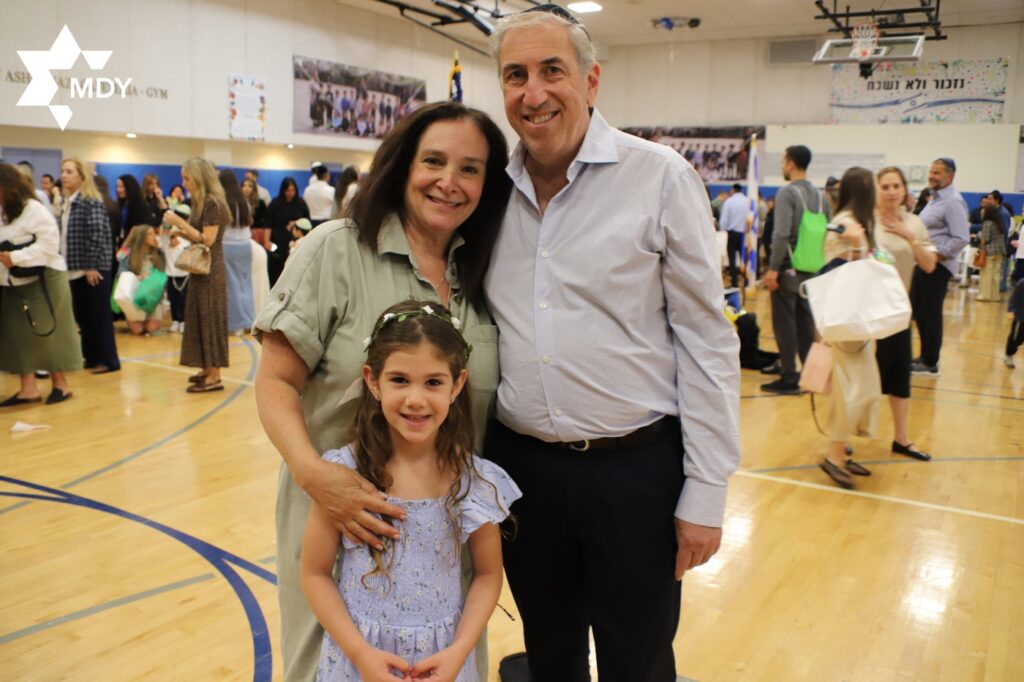
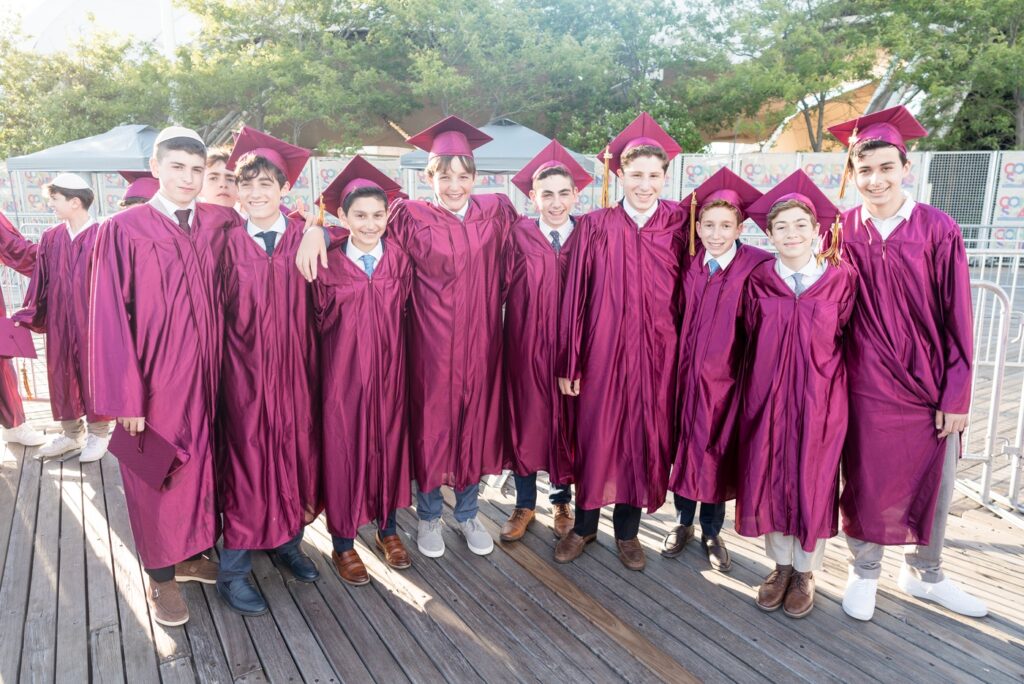
That scene greeted Rabbi David Elnadav, Dean of Students at Magen David Yeshivah High School, on May 26, 2025. “At 4:40 a.m. I exited the hotel and boarded the bus not knowing what to expect,” said Rabbi Elnadav, senior trip organizer and spiritual leader. “I was so proud to see a large amount of our senior grade ready and waiting to pray Netz (sunrise prayer) at the Kotel.” The day was extra special as it was Yom Yerushalayim. The seniors joined hundreds of fellow Jews there and left feeling uplifted as they continued their jam-packed day.
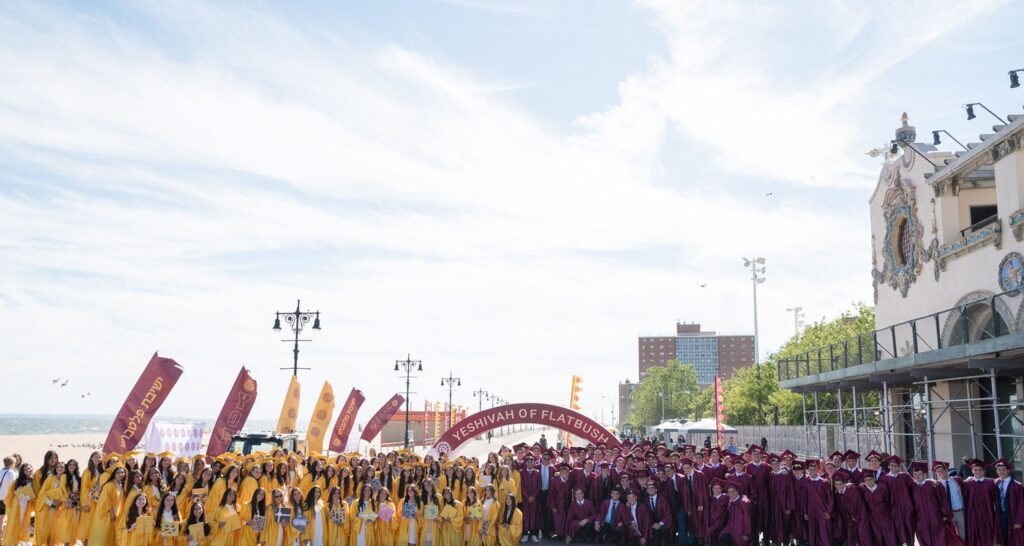
“We’re proudly connected to Medinat Yisrael (the State of Israel),” said Rabbi Elnadav in regard to MDYHS’ new initiative to host the senior trip in Israel, as opposed to Orlando or prior destinations. “It’s much more impactful marching down that graduation aisle after a trip to Israel.”
Last year, fifty-seven MDYHS seniors traveled first to Poland for four days and then met their remaining forty-five peers in Israel for an incredible six days. “Whether you started your journey in Poland or not, you will feel this trip is memorable,” said Rabbi Elnadav. Poland is focused on Holocaust remembrance, and the Israel trip thereafter displays the rebirth and growth of our Jewish nation. Carefully designed to be different from a bar mitsvah trip, students had the opportunity to experience a robust itinerary, from mimicking “Chopped” on a kibbutz, to bringing supplies to soldiers, packing sandwiches in Katamon for needy families, and even praying with Hacham David Yosef, Chief Rabbi of Israel. How fortunate the students felt to embark on this trip side by side with their peers.
“We are connecting to our roots and who we are all about,” said Rabbi Elnadav. “That is Am Yisrael (the Jewish people) in Erets Yisrael (the Land of Israel).” There is a time to pray, a time to learn, and a time to dance. Whether the seniors were praying in the cave at the famous pilgrimage site of Rabbi Shimon Bar Yohai, bearing witness to the atrocities of October 7 and visiting the memorial plaza in S’derot, or whitewater rafting in Kfar Bloom, they received a well-rounded exploration of our country alongside their classmates, developing a unique sense of camaraderie. Perhaps even more significant was a vital connection to their Jewish identity and nation.
Envision the emotion of singing with our hayalim (soldiers) in the IDF on Yom Yerushalayim. That special evening was preceded by visiting Ma’arat HaMachpela, where students had the privilege of reciting personal prayers and feeling the kedushat makom (sanctity of the place). These were two impactful highlights in a day filled with even more activities that will no doubt leave lasting impressions on MDYHS students. Rabbi Elnadav sent daily emails to parents outlining what transpired throughout the day. Parents eagerly awaited updates and were fortunate to be “in the loop” for the duration of the trip.
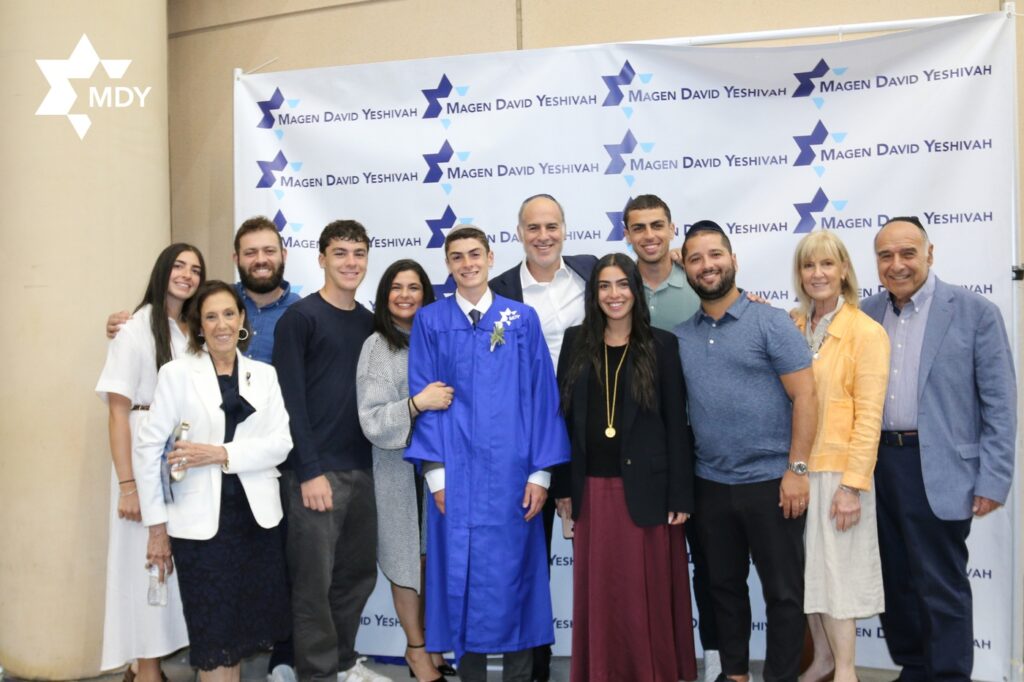
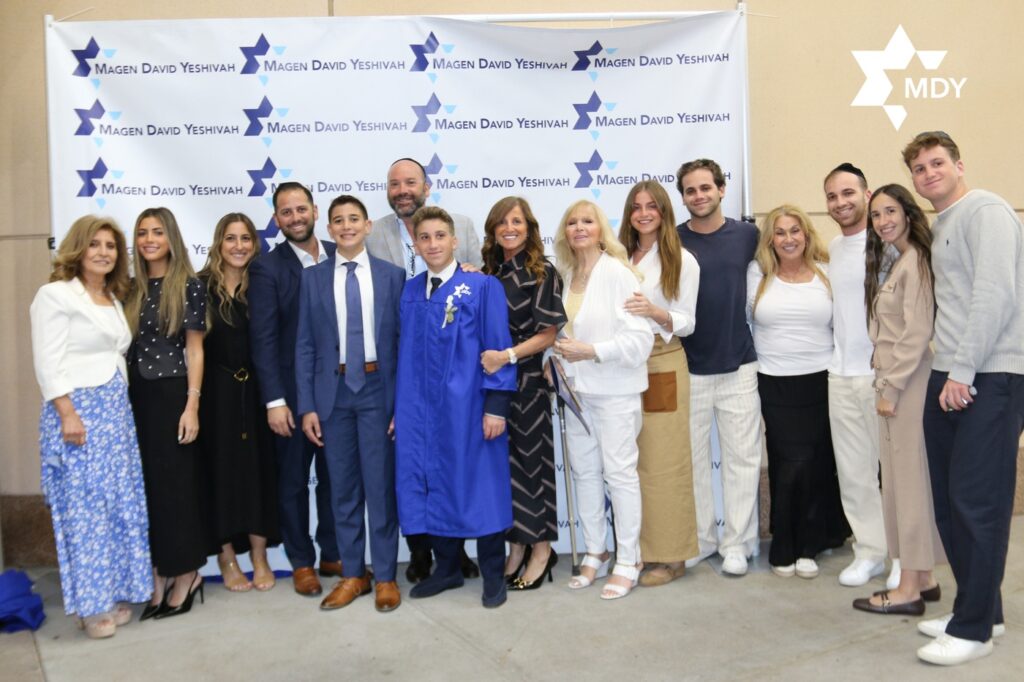
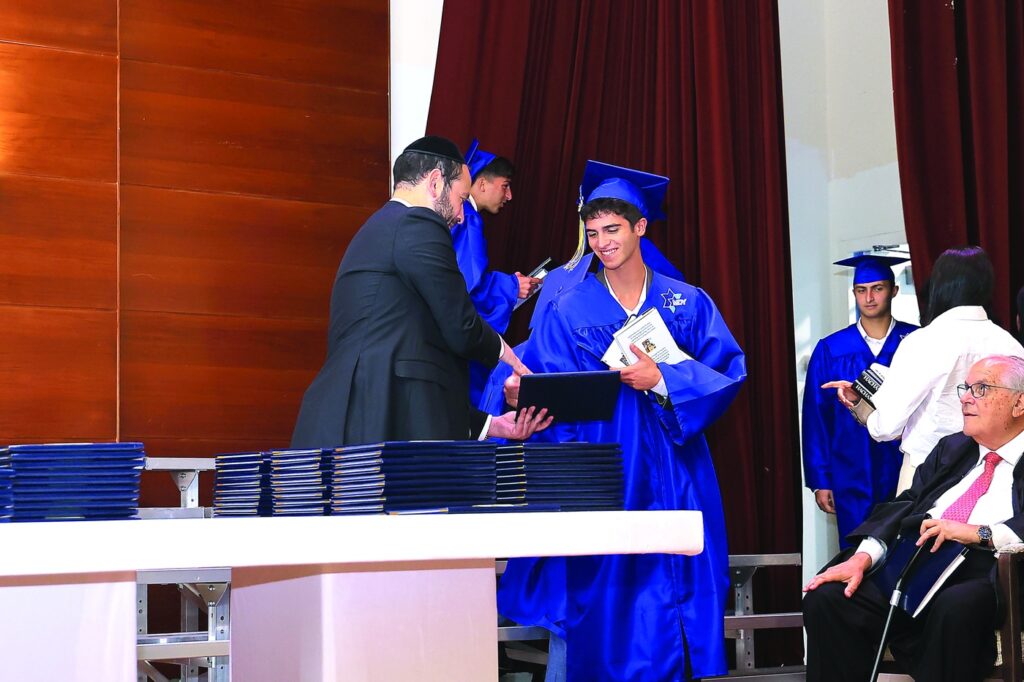
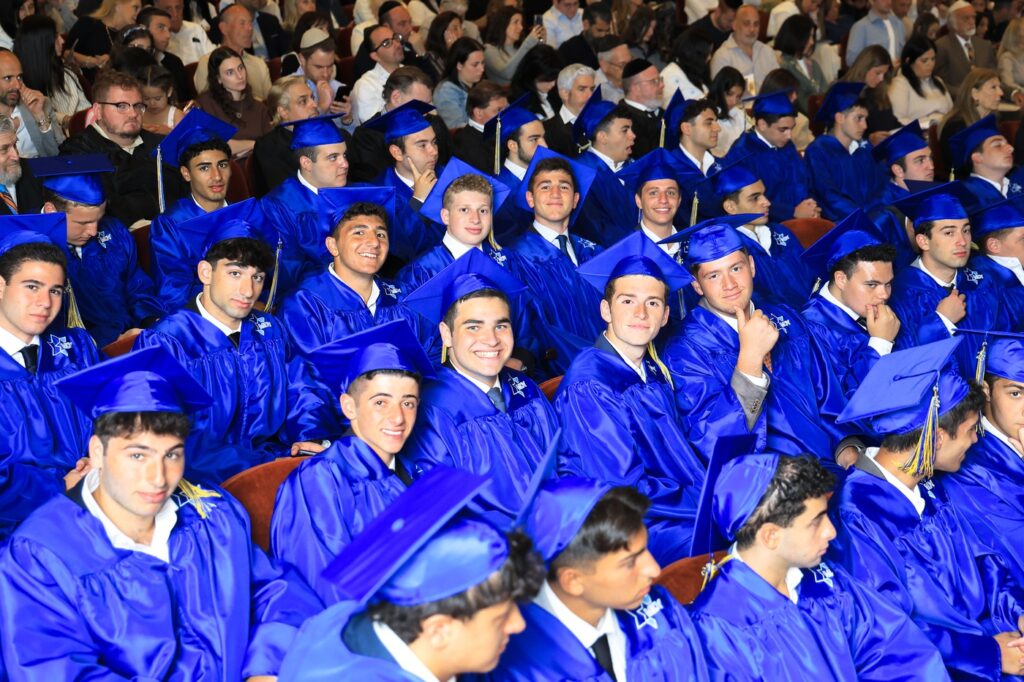
“Chaperoning our seniors in Israel wasn’t just a trip,” said Ms. Michelle Antar, MDYHS administrative assistant. “It was a return to our roots, a breath of fresh air, and a reminder of who we are and where we belong.” And that is exactly the message Magen David wants its graduates to leave with. “This trip might sound like the culmination of a twelve-year-long journey at MDY, but it’s actually their imprint on their forever connection and bond to our yeshivah, their friendships, teachers, rabbis, and Magen David legacy,” said MDY President Gladys Haddad. “In essence, we’ve only just begun!”
One might think high schoolers would be overwhelmed with such an intense itinerary, having an early start to the day and hopping from place to place across the country well into the evening. Instead, the MDYHS seniors were prone to adding more hesed (acts of kindness) opportunities and squeezing in supermarket runs for our fellow soldiers to show hakarat hatov (gratitude). “I run a tight ship,” said Rabbi Elnadav. “But when we go to Israel, these kids just want more.”
Yvonne Orfali is a member of the board as well as a parent of MDYHS.

Yeshiva Students Present at Jews from Arab Lands Conference

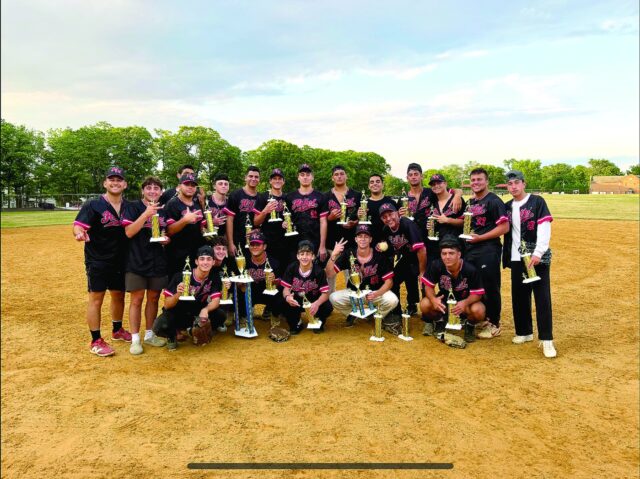
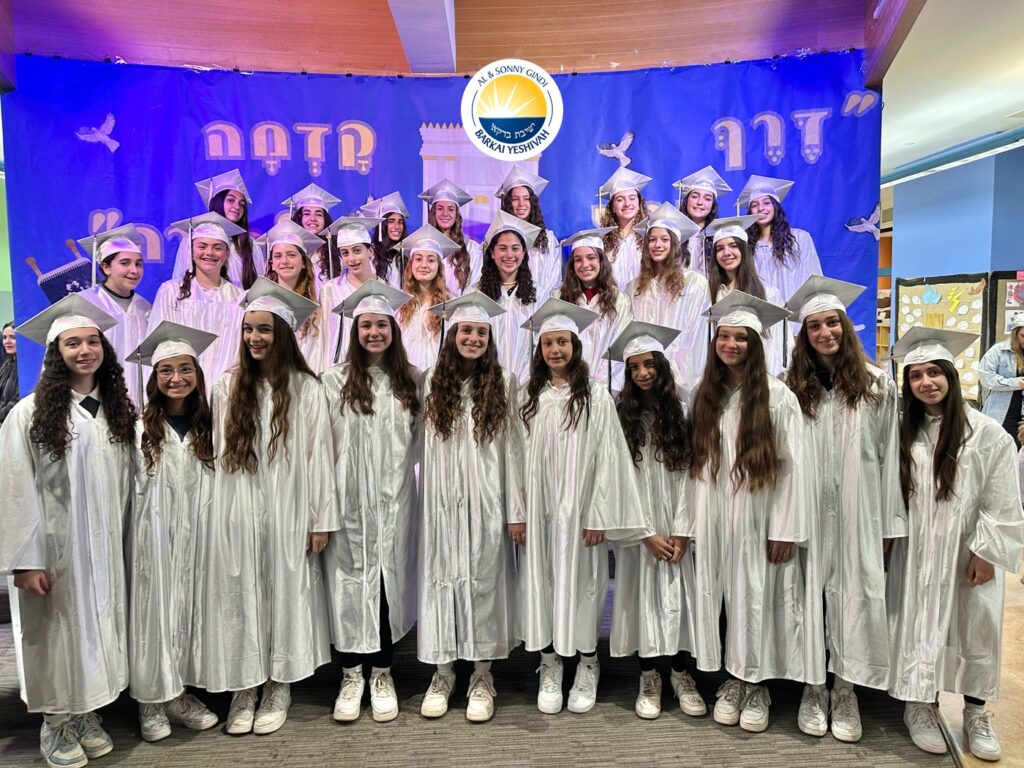
Students from Hillel Yeshiva High School at the Conference on the Departure and Exile of Jews from Arab Lands, with teacher Sally Cohen.

Sarina Roffé and Drora Arussy

Fourteen local yeshiva students took center stage at a major Manhattan conference on the Departure and Exile of Jews from Arab Lands, sharing their family histories before an audience of nearly 300 at the Museum of Jewish Heritage, A Living Memorial to the Holocaust, this December. The annual gathering, dedicated to raising awareness of the often-overlooked story of Jews forced to leave or persecuted in Arab countries, brought together scholars, community leaders, and descendants of Jews from across the Middle East and North Africa.

Organized by the Dahan Center at Bar-Ilan University, the conference was co-sponsored by the Museum of Jewish Heritage, JewishGen, the Sephardic Heritage Project, the Ben-Zvi Institute, and Jewish Unity Through Diversity, in cooperation with Israel’s Ministry of Diaspora Affairs and Ministry of Foreign Affairs. Welcoming remarks were delivered by Dr. Shimon Ohayon, director of the Dahan Center, and Yaakov Haogel with Michal Slawny Cababia, of the World Zionist Organization, who underscored the urgency of preserving the history of Jews from Arab lands for future generations.
Rabbi Elie Abadie, MD, former Senior Rabbi of the Jewish Council of the Emirates, Shaarei Mizrah, Rabbi of the Association of Gulf Jewish Communities, and Chairman of the Council of Sephardic Sages, delivered a keynote address titled “Who Are the Jews Who Were Expelled?” In a detailed historical overview, he described how Jews lived for millennia in Arab countries and traced what befell those communities in the twentieth century, including persecution, expulsions, and demographic collapse.
Rabbi Abadie highlighted that Jewish communities in the region are among the oldest in the world, predating Islam by many centuries. The Aleppo community in Syria traces its roots back to the time of King David, 3,000 years ago, the Yemenite community to King Solomon, approximately 2,900 years ago, the Iraqi and Iranian communities to the first Babylonian exile, 2,500 years ago, and the Egyptian Jewish community to more than 2,000 years ago. As World War I, World War II, and the upheavals of the modern Middle East reshaped the region, these once-thriving communities faced torture, imprisonment, ghettoization, alienation, and murder, ultimately dwindling to the point that most no longer exist in their ancestral lands.
Journalist Ben-Dror Yemini of Yedioth Aharonoth spoke on “The Jewish Nakba,” employing the Arabic term “Nakba,” commonly used for the displacement of Palestinians in 1948, to frame the parallel story of Jews who were uprooted from Arab countries in the same period. Additional academic presentations included Dr. Mordechai Kedar of Bar-Ilan University on “The Exile from Arab Countries and the Concealment of Property,” Dr. Benjamin Berman-Gladstone of Columbia University on “The Hell That Was Hashed, Yemen,” and Sarina Roffé, president of the Sephardic Heritage Project, on “The Jews of Syria, Persecution, Escape and Exodus.”
Interwoven between the scholarly lectures were moving student presentations from Hillel Yeshiva, SAR Academy, and Barkai Yeshiva, focusing on Sephardic family narratives of persecution, migration, and resettlement. To prepare, students interviewed relatives about life in their countries of origin, their journeys to the United States, and the challenges and opportunities of building new lives, while also collecting family photographs and documents to deepen their understanding of their heritage.
Hillel students Mimi Levy, Daisy Esses, Joy Cohen, Stephen Franco, Shelly Kassin, Eddie Habbaz, Sophia Barnathan, and Sonny Dweck presented under the guidance of their teacher, Sally Cohen, who has brought students to the conference for several years. From Barkai Yeshiva, presenters included Grace Tawil, Susan Caracoccly, and Benny Mizrahi, while SAR Academy was represented by Colette Alan, Abie Saliman, Netanel Sadigh, and Shana Katan. Their stories traced family origins from Egypt, Syria, Lebanon, Iran, Yemen, Iraq, and Israel. Students from Hannah Senesh, DRS Yeshiva for Boys, Yeshivat Frisch, Ramaz, Ben Porat Yosef, and Ma’ayanot also attended, highlighting the growing interest in Sephardic and Mizrahi history across the wider day school community.
The program included a vibrant presentation by Rabbi Dr. Moshe Tessone of Yeshiva University on “The Music of Jews of Arab Lands.” Drawing on the liturgical and folk traditions of various Sephardic communities and ethnicities, he engaged the audience in the distinctive melodies and modes that once echoed through synagogues and homes from Baghdad, to Aleppo, to Sana’a, offering a powerful reminder that the cultural legacy of these vanished communities continues to live on in song.
You can watch a recording of the full program on YouTube https://youtu.be/p_P1odG-C6w

A genealogist and historian, Sarina Roffé is the author of Branching Out from Sepharad (Sephardic Heritage Project, 2017). She is researching a new book: Syria – Paths to Freedom. Sarina holds a BA in Journalism, an MA in Jewish Studies and an MBA.
Drora Arussy is the Executive Director of Jewish Unity Through Diversity and the author of Leah Nassi of Lisbon. She is an active content creator and scholar of Mizrachi and Sephardi heritage and history.

Discovering Passions

Seventh Grade Electives at MDY

Seventh grade is a pivotal year at MDY, a time when students begin discovering who they are, what excites them, and how they learn best. Our elective program is intentionally designed to support that journey, giving students the opportunity to choose experiences that spark curiosity, build confidence, and encourage ownership of learning.

These electives are not extras. They are a meaningful extension of our belief in educating the whole child. Alongside academic rigor, MDY values creativity, responsibility, discipline, and self-expression. Through choice-driven learning, students begin to see themselves not just as learners, but as capable, confident individuals.
Below are a few electives that highlight the depth and purpose of our seventh-grade program.

Tech Tools & Tips: Work Smarter
This elective empowers students to work smarter and more efficiently in the digital spaces they use every day. Students built practical skills such as typing faster, using shortcuts to move quickly through their work, and exploring creative tools like Canva elements. One student excitedly explained how the quick shortcuts he learned became part of his daily workflow. He tackled his schoolwork confidently and quickly by incorporating what he learned.

Dissection: Learning by Doing
For many students, dissection is a moment of true discovery. Instead of reading about anatomy or watching a video, students explore real specimens firsthand, examining structures and systems up close. One student remarked that it was the first time science “actually felt real.” Another noted how interesting it was to see common elements like intestines in multiple specimens.

Playing with Plays: Finding a Voice
Through acting games, improvisation, and original skits, students build confidence and creativity in a supportive environment. For some, it is a chance to discover a voice they did not know they had. Students especially enjoyed the diversity of the skits, allowing them the chance to play different roles and characters. “I loved this elective. I love plays,” said one enthusiastic student.


Money Matters: Real-World Responsibility
Money Matters introduces students to practical financial concepts such as budgeting, investing, and responsible decision-making. Through a series of guest speakers from the world of finance, students begin to understand how today’s choices shape tomorrow’s opportunities. Students noted that playing games that test their stocks knowledge and foreign exchange understanding is a great way to learn. They especially enjoyed the Q&A portion of their guest speaker sessions.
Together, these electives reflect MDY’s commitment to nurturing well-rounded students who are curious, capable, and confident. By making meaningful choices, taking risks, and discovering what excites them, seventh graders develop the self-awareness and independence needed for middle school leadership, thoughtful high school decisions, and confidence in themselves. At MDY, electives are more than a schedule choice, they are a foundation for what comes next.

Investing in Our Youth,and Our Community

Investing in Our Youth, and Our Community

A Call to Employers and Camps to Hire Through SYEP This Summer

Ari Baum, CFP®

Every summer, our community has a powerful opportunity to shape the next generation, not only through education and values, but through meaningful work experience. The NYC Summer Youth Employment Program (SYEP) is back, offering employers, camps, and organizations a simple and impactful way to hire community youth this summer, while strengthening your own operations.

As Treasurer of COJO Flatbush and a volunteer Career Coach with SBH, I see firsthand how transformative early work experience can be. A summer job is often a young person’s first exposure to responsibility, accountability, teamwork, and earning their own paycheck. It builds confidence, practical skills, and a pipeline of capable, motivated young adults who are better prepared for college, careers, and leadership within our community.

What Is SYEP?
SYEP is New York City’s largest youth employment initiative, serving people ages 14-24. Participants are placed in structured, paid summer work opportunities for up to six weeks, with wages fully covered by the program.
• Ages 16-24. Up to 25 hours per week, earning up to $2,550
• Ages 14-15. Project-based learning and work experiences, earning up to $700
Applying does not guarantee selection. Participants are chosen through the SYEP lottery, with placement determined through COJO Flatbush and employer matching, making community employer participation essential.

Who Can Sign Up as an Employer?
SYEP is flexible and employer friendly. We strongly encourage participation from small businesses and professional offices, nonprofits and community organizations, and day camps, overnight camps, and specialty camps.
Employers provide in-person, supervised work experiences that allow young professionals to gain real-world skills while contributing meaningfully to daily operations.

Additional Career Readiness Support (Separate from SYEP)
Independent of SYEP, the SBH Career Division supports young adults ages 18 and over through career readiness programming, mentoring, coaching, and job and internship placement. SBH works closely with young professionals to develop essential workplace skills, including professionalism and workplace expectations, as well as résumé development and interview preparation.
I volunteer as a Career Coach with SBH, working one-on-one with young professionals as they prepare to enter and succeed in the workforce. COJO Flatbush and SBH are entirely separate organizations, and SBH does not manage SYEP placements or employer matching.
Learn more about SBH Career Services:
https://www.sbhcareer.org/about-us/services/

Employer Sign-Up Is Simple
Employers register directly through the official NYC SYEP Worksite Portal:
https://worksiteportal.nycsyep.com/
Once registered and approved, employers have complete discretion over whom they choose to hire. There are no restrictions on selection. Employers interview candidates, may choose applicants they already know, and control role descriptions, schedules, and responsibilities, within SYEP guidelines. This flexibility allows camps and businesses to confidently bring on students they trust and believe will be a good fit.

Why Hire Through SYEP?
Hiring through SYEP is not charity. It is a strategic investment of time and mentorship, with wages fully paid by the program.

  • No wage cost to the employer
  • Flexible placements tailored to your real needs
  • Motivated students bring energy, tech fluency, and fresh perspective
  • Meaningful community impact that strengthens our shared ecosystem
    Students can assist with office administration and scheduling, communications and social media, data entry and organization, educational and program support, and camp operations and logistics.

For Camps and Community Organizations
Camps can place students as counselors, CITs, office support, logistics staff, programming assistants, or within specialty departments. Community organizations can engage youth for administrative work, preparation, or outreach. Just as important, this is a chance to model workplace values, including punctuality, professionalism, responsibility, and pride in one’s work.

A Community-Wide Effort
Important Deadline: February 27
Applicants must apply through https://application.nycsyep.com/ and select “Council of Jewish Organizations of Flatbush” as their referring organization. COJO Flatbush serves as the primary community coordinator for placements. To be eligible for consideration, applications must be submitted no later than February 27. When employers step forward, applicants win, and so does the community.

A Personal Note
Our community thrives when we think long-term. Hiring one adolescent for the summer may seem like a small step, but its ripple effects are lasting. I encourage every business owner, camp director, and organizational leader to ask if they can bring on one more young professional this summer. If the answer is yes, even in a limited capacity, you are making a meaningful difference. Our youth are ready to work. Let’s give them the opportunity.
For guidance or coordination, please reach out to COJO Flatbush, and register today at: https://application.nycsyep.com/

Wouldn’t it be great if every child came with instructions

Miriam Barry

Imagine having just given birth, and the nurse brings you your beautiful baby, freshly bathed, sweet smelling, and bundled in a soft, cuddly blanket. Tucked into the corner of the blanket is a small book that says “User Manual.” Of course, this is fiction. Each child needs a different manual every year, and sometimes every week.

All stages of childhood are a learning experience for most parents, and as time goes on, we mostly get better at it. School age children can present unique challenges, particularly if they are having difficulty in school. While we can’t offer you a user manual for your child, we can offer you the next best thing, and that is the Parent Engagement Center, the PEC. The PEC offers parents two to four months of weekly individual parent coaching to give them the skills and tools to manage the issues the child may be facing that impact his or her ability to succeed in school.
This program is free of charge, does not involve any insurance, and is done by phone or Zoom, one on one and completely confidential.
Our counselors are experienced, familiar with our community, and give parents weekly “homework” to hone the skills they need for successful parenting. Both moms and dads are encouraged to participate in the sessions, so that everyone is learning the same tools and at the same pace. One of the most important facets of this program is that the counselors are well versed in childhood development, which helps parents understand when their child’s behavior is age appropriate and when it isn’t.
The PEC was created in early 2020 to utilize Title 1 funds, which are earmarked for private schools and yeshivot. It was developed in recognition of the concept that children’s struggles in school could be addressed in the home with direct parent coaching. At first, only children in schools that had Title 1 were eligible, but the program has expanded to utilize other funding to open it up to all parents of children in our community yeshivot.
Parents interested can call Frany at 718-787-1100 ext. 532 to see if they are eligible for this program and to register if they are.

“I really didn’t understand why my son was acting the way he was. Once I had a new perspective, it changed the way I reacted. This in turn, changed his behavior.”

“My daughter was afraid of a lot of things, and I didn’t know how to handle it. I kept trying different things, but none of them worked. My counselor gave me specific tasks and homework to do to help my daughter with her anxiety, which really made a big difference.”

“I didn’t realize how different my parenting style was from my husband’s. When we both worked with the counselor, we realized that our differences were actually causing the troubling behaviors! Once we got on the same page, things got a lot better.”

“My son did something that really bothered me. I spoke to the counselor about it, and found out that this is pretty normal behavior for a kid his age. Once I stopped freaking out about it, I was able to deal with it calmly and rationally.”

Miriam Barry joined SEARCH in 2001 and became Director in 2006, bringing 25 years of teaching experience in community yeshivot. With her trained staff, she has helped over 5,000 children access services through the New York City Department of Education, guiding parents through school placement decisions, psychological evaluations, and a deeper understanding of their children’s strengths and challenges. Knowledge gained through SEARCH empowers parents to make informed decisions and better support their children’s success in school.

Prime Minister NetanyahuComes to South Florida

Prime Minister Benjamin Netanyahu is presented with a custom Florida license plate reading “BIBI,” a symbolic and lighthearted gesture referenced in the article, during the South Florida gathering. Photo credit: Carlos Chattan

Inside a historic first for Florida and the Jewish community

Linda Argalgi Sadacka

Security was tight long before the Prime Minister arrived. Roads were blocked for miles, and residents received alerts restricting movement. Law enforcement presence underscored the seriousness of the moment. This was not routine. It was history unfolding under heightened threat.

Recently, I wrote to readers about my time in Washington, attending the White House Hanukkah reception and later visiting the Vice President’s residence at the Naval Observatory. This brought a different but no less historic chapter, standing in South Florida as Prime Minister Benjamin Netanyahu made an unprecedented appearance. No Israeli Prime Minister has ever visited Florida in an official capacity.
Before the public program began, the State of Florida marked the visit with a quiet but deliberate gesture. In a private setting, Prime Minister Netanyahu was presented with a custom license plate reading Florida Stands With Israel, bearing his name, Bibi. It was not theatrical. It was intentional, a signal of alliance and permanence.
History does not emerge by accident. It is shaped by people who understand timing, trust, and consequence. This moment happened because of my dear friend, Tila Falic.
The Prime Minister himself described her publicly as a force of nature. It was not a courtesy. It was recognition. Every substantive element of the event flowed through her leadership, bringing Prime Minister Netanyahu to South Florida, assembling the right voices in the room, and creating a program that balanced political gravity with moral clarity. This was not ceremonial hosting. It was leadership exercised through credibility, precision, and long-standing relationships.
That intention was evident from the outset. Students from Jewish Culture High School, founded by Tila Falic and Rabbi Aharon Assaraf, played an active role in the program. They sang to welcome the Prime Minister and the First Lady, offering a gesture of gratitude that was dignified and deeply human. They were not spectators. They were participants, experiencing the moment as it unfolded.
When Simon Falic, Tila’s father, addressed the audience, his words carried weight because they were measured. One phrase settled the room. He described Prime Minister Netanyahu as a leader of biblical proportion. It did not sound lofty. It sounded precise, leadership forged under existential pressure, shaped by history, and burdened with responsibility that extends far beyond one political chapter.
Spiritual grounding came from Rabbi Lipskar, whose remarks framed the gathering in faith, continuity, and responsibility.
I attended the event in overlapping roles, as press, as an activist, and as a long-standing advocate for the Jewish people. Press credentials placed me in the front row within the press core at stage level. It was the clearest vantage point in the room, not only physically but substantively. That distinction matters. I do not enter rooms like this for optics. I enter them to engage seriously.
When I speak of my community, I am not referring to a single neighborhood. I am referring to a global audience. While my visible following numbers in the tens of thousands, the reach of my work extends into the millions each month. That reach carries obligation, not spectacle, and it informs how I show up in moments that matter.
From that vantage point, the atmosphere was unmistakable. The room was full. The energy was confident, warm, defiant, and resolved. This was not an audience seeking reassurance. It was an audience prepared to stand firm.
Prime Minister Netanyahu met that resolve directly. At one point, he delivered a line that reverberated far beyond the room, clearly echoing a page from President Trump’s playbook: “Do not be intimidated. You must fight. Fight. Fight.” The response was immediate because the message was already understood.


The seriousness of the moment was reflected not only in tone but in who showed up. In the room were Lieutenant Governor Jay Collins, Senator Moreno of Ohio, Florida Attorney General Ashley Moody, Speaker of the Florida House Danny Perez, Representative Randy Fine, Representative Carlos Gimenez, mayors and municipal leaders, and Leo Terrell, the renowned civil rights attorney and senior official at the United States Department of Justice. These were not symbolic appearances. These were leaders whose support has been demonstrated through action.
The emotional center of the event came when Prime Minister Netanyahu introduced the family of Ran Gvili. Gvili was among the first to rush forward on October 7 to save Jewish lives, despite an existing injury. He was shot twice, taken captive, and remains the last hostage still held. The standing ovation that followed was immediate and reverent, collective rather than performative.
Seated near the Lieutenant Governor, I watched as Tila later spoke from the podium about the Lieutenant Governor’s role in bringing children home from Israel during the war. Tears streamed openly down his face. When he addressed the audience afterward, he spoke not as a politician but as a father, saying plainly that he would do it again and again. The sincerity of both him and his wife was unmistakable.
Later that day, in a moment that captured the wider tension surrounding the event, Ran Gvili’s mother confronted a small group of protesters herself, tearing up their signs face to face, a mother defending her son and her people without hesitation.
The following day offered a revealing contrast. I spent time with Tila and her family as a friend, away from crowds and cameras. Sitting together, they casually scrolled through tweets and media reactions from Israel, many clearly intended to wound. Instead of tension, there was laughter. The commentary was met with humor and composure, as though it simply had nowhere to land. Watching that dynamic up close was striking. It was not bravado or defensiveness. It was confidence rooted deeply enough to remain unshaken.
During the visit, I also had the opportunity to speak privately with both the Prime Minister and the First Lady. They were gracious, thoughtful, and fully present, reflecting the same seriousness and humanity that defined the public moments of the day.
What stayed with me after leaving South Florida was clarity. Israel is not only defending Jews. Israel is defending the moral spine of the West. It stands on the front line of a broader struggle against intimidation, chaos, and tyranny.
Hatred is not rational. It rarely yields to persuasion. The task is not to chase those committed to falsehood, but to fortify those anchored in truth, to strengthen alliances, to reinforce moral clarity, and to empower leaders willing to stand without apology.
That is what unfolded in South Florida, and that is why this moment will endure.

Linda Argalgi Sadacka is a writer, political activist, and community leader. She is the CEO of the New York Jewish Council and the founder of Chasdei David, a 501(c)(3) charity. Her advocacy, sparked by the tragic murder of a close friend by Hamas, has made her a leading voice for the Jewish community in America and abroad. She was honored as a Woman of Distinction in 2022 by Senator Simcha Felder for her leadership and activism. Linda is also the host of The Silent Revolution podcast, where she shares weekly classes blending Torah, prayer, and real-world reflection, making ancient wisdom urgent and relevant for our times.

DSN Brings the Magic of Disney to Life at Annual Disney Breakfast

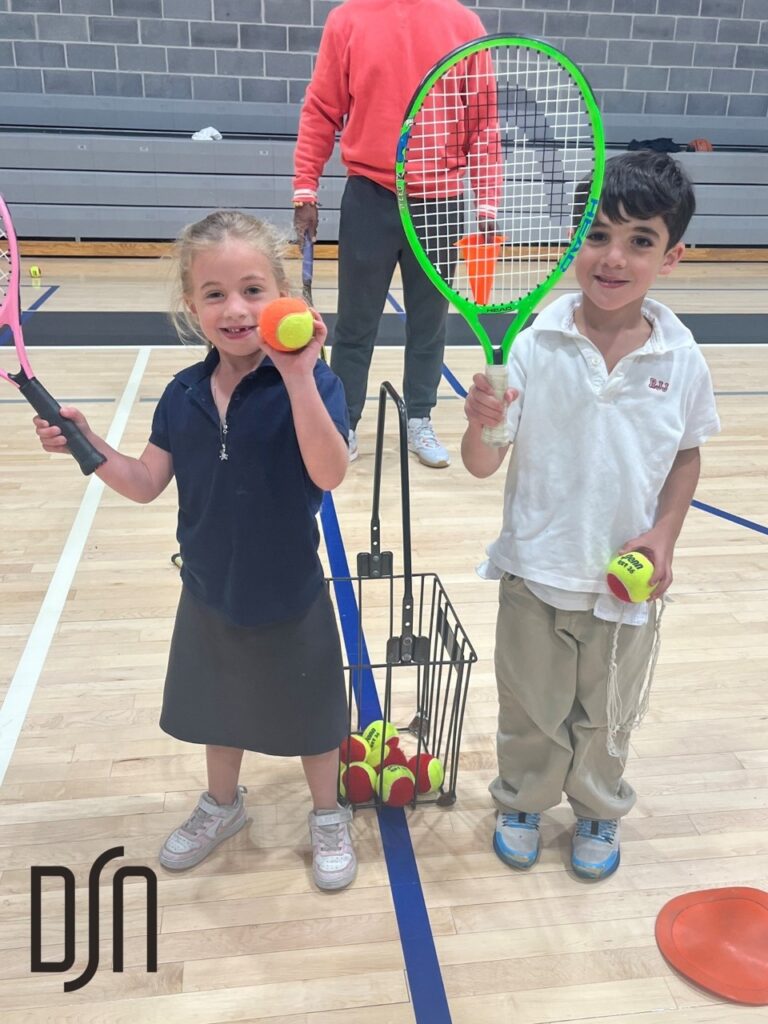
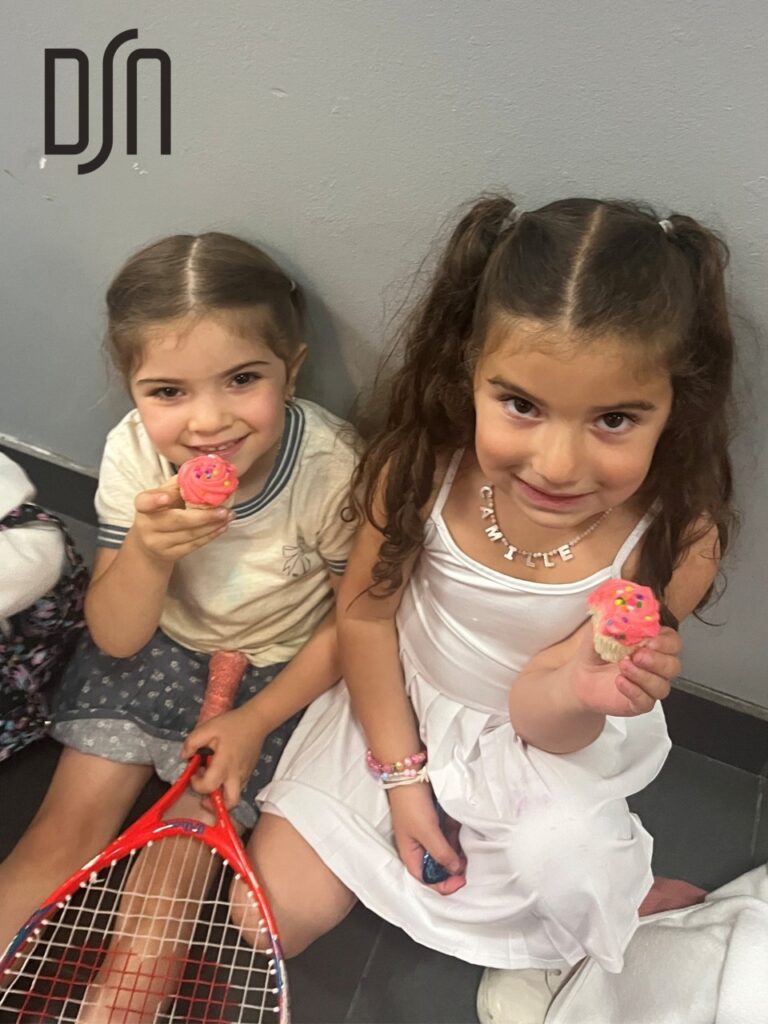
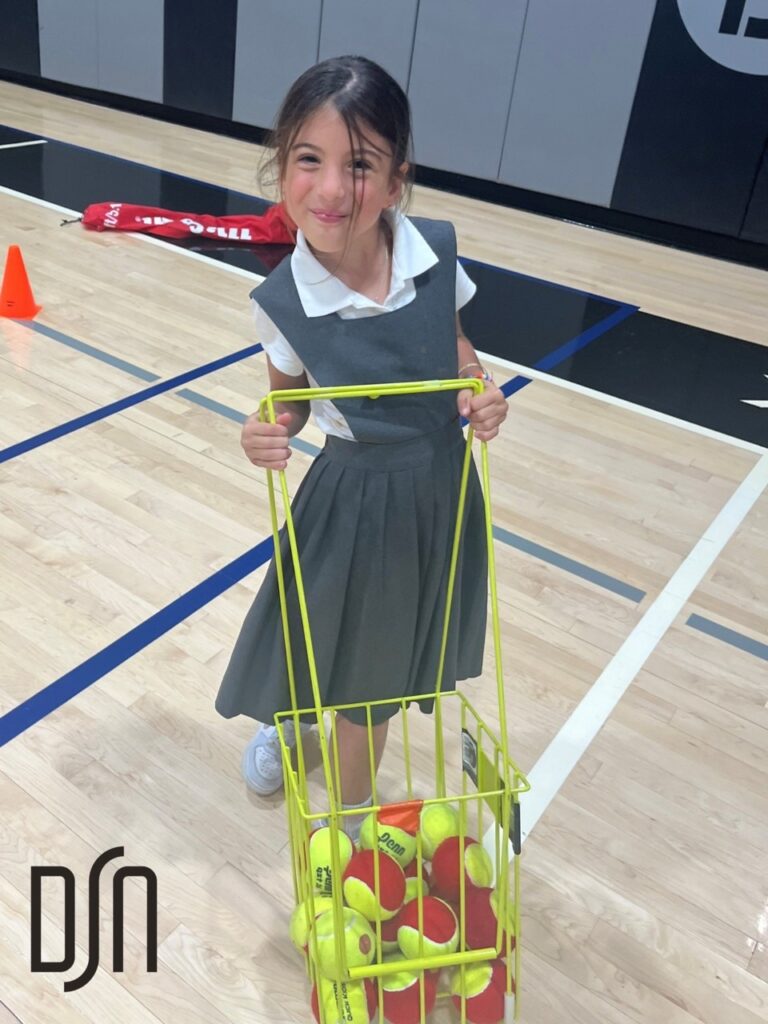
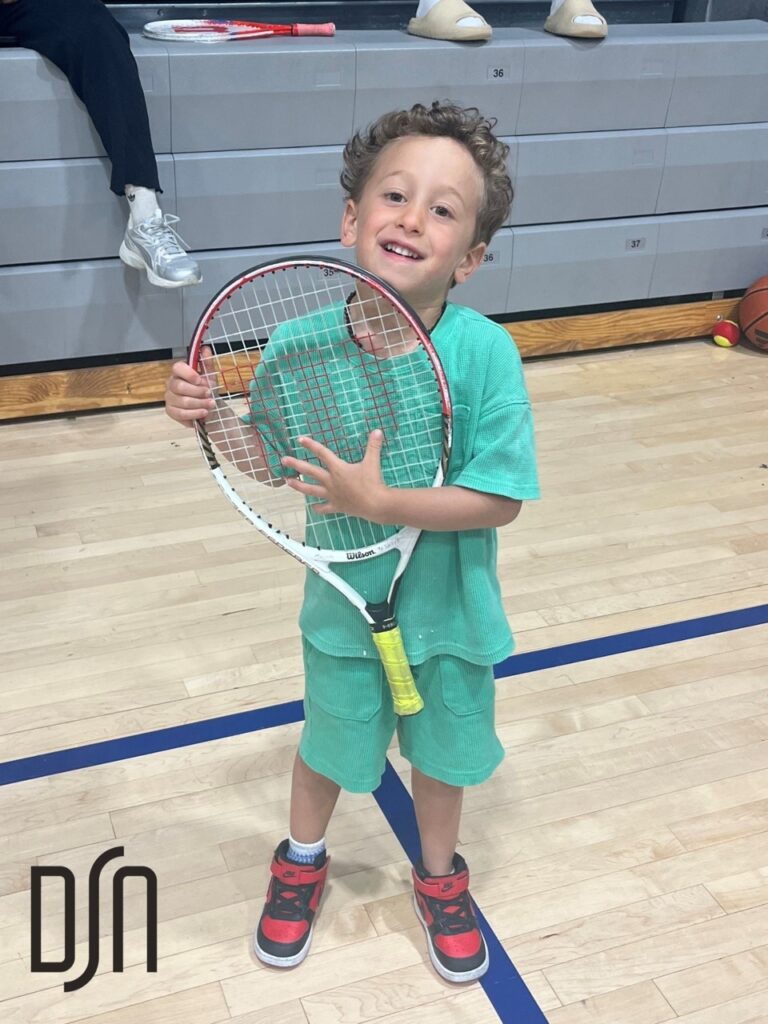
On Sunday, December 28, DSN transformed its gymnasium into a world of wonder as families gathered for the highly anticipated Disney Breakfast, a joyful morning filled with imagination, music, and unforgettable memories.

The magic began even before breakfast was served. Young children had the opportunity to participate in two enchanting pre-events, the Bippity Boppity Boutique and Superhero Academy. At the Boutique, sixty young girls arrived dressed as their favorite princesses to have their hair and makeup professionally done. The experience was topped off with a charming tea party alongside Cinderella herself, creating a truly royal morning.
At the same time, twenty-five young boys took part in Superhero Academy, where they had their hair styled, faces painted, and created their own superhero capes and masks. The excitement reached new heights as the children completed an obstacle course alongside a live Spider-Man, bringing their superhero dreams to life.
Following the pre-events, over 350 parents, grandparents, and children came together for the main attraction, the Disney Breakfast. Families enjoyed a plentiful and delicious spread including bagels and cream cheese, string cheese, Mickey Mouse waffles, grilled cheese, spanakopita, calzones, and salads, ensuring there was something for everyone. Attendees enjoyed a variety of giveaways including light-up books, pens, Mickey Mouse toys, and wands.


The highlight was an incredible live show that had the children cheering with excitement. Belle served as the Master of Ceremonies, guiding the audience through a magical performance featuring Cinderella, Elsa, Moana, Maui, Spider-Man, Mickey Mouse, Minnie Mouse, Daisy Duck, Donald Duck, and Goofy. Each character was introduced with flair, creating a truly immersive Disney experience.
Adding to the magic, the DSN Dance Academy Dance Team took the stage to perform and proudly introduce Mickey Mouse, dancing alongside the characters to the delight of the crowd. At the end of the entertainment, the children eagerly lined up for autographs and picture-taking with their favorite characters.
This beloved event served an important purpose as a DSN fundraiser, raising money for the DSN Children’s Scholarship Fund, which enables children in need to attend programs.
DSN Youth Program Director Frieda Shammah shared, “The happiness on the children’s faces said it all. The energy in the room was incredible, bringing the magic of Disney World right to DSN.”


The event’s success was made possible by a dedicated committee that worked tirelessly behind the scenes. Committee member Brenda Mamiye reflected, “Attending the Disney Breakfast with my children was truly special. From the characters to the decor, every detail was thoughtfully done. It was a magical experience our family will always remember.”
Committee member Sally Mamiye was elated. “My kids had the best time and so did I! A morning we will never forget!” Her four-year-old son, Chuckie Mamiye, summed it up perfectly, declaring it “his best day ever!”
Committee member Brenda Antebi added, “I loved being part of such a special and memorable day. My kids were thrilled and smiled the entire time. Thank you to DSN for such a wonderful experience!”
With laughter echoing throughout the gymnasium and smiles on every face, the DSN Disney Breakfast proved to be a cherished event, one that brought community together, created lasting memories, and spread pure Disney magic for a meaningful cause.
DSN Executive Director Sammy Sitt was very proud. “It’s very satisfying to see a passionate committee of young mothers working hand-in-hand with our staff to put together a community event on a professional level. This is our winning formula, passionate volunteers, hard-working staff, and an amazing community. Congrats to everyone. What a success! May Hashem (G-D) continue to bless DSN!”

A Hanukkah Evening atthe White House

Elizabeth Pipko, a close friend previously introduced to readers by Linda Sadacka, speaks after being called to the podium by President Donald J. Trump.

Linda Argalgi Sadacka

What struck me first was not the event itself, but the space. The White House is not simply a venue. It is a witness. Within its walls, a nation has been formed, tested, fractured, rebuilt, and reaffirmed. Decisions that altered history were debated there. Wars were weighed. Peace was brokered. Presidents carried the burden of command through moments of triumph and national reckoning. Standing inside it, you are acutely aware that you are occupying ground where the American experiment has been continuously argued into existence.

Being there during Hanukkah, a holiday rooted in endurance and continuity under pressure, sharpened that sense of historical gravity. This was not simply a celebration. It was another chapter layered onto a long national record.
This year’s White House Hanukkah observances included two receptions. The earlier afternoon event brought together influencers with a small number of public figures. The evening reception, held at seven, carried far greater gravitas and was the one most people were trying very hard to attend. That room was filled with major donors, senior administration officials, lawmakers, ambassadors, and figures shaping both the present and future political landscape. I was invited to the latter, and I understood what that access reflected.
My husband attended with me, and we stayed nearby at the Adams Hotel. Walking past the White House at night, illuminated and secured, reinforced the seriousness of the setting. Institutions built to endure carry a weight that cannot be replicated elsewhere.
Entry into the White House was deliberate and controlled. Guests moved through multiple security checkpoints, with identification verified at each stage. The process moved efficiently, familiar terrain given prior attendance at a presidential inauguration and other White House events, yet it underscored the significance of the space.
Inside, the layout immediately mattered. We entered through the foyer, where a live ensemble performed Hanukkah music with elegance and restraint. The sound carried throughout the building and set the tone for the evening.
To the left was the East Room, where guests gathered while waiting for the President to arrive. Straight ahead was the central room, filled with historic artifacts that quietly remind you where you stand. To the far right was the State Dining Room, where food stations were arranged. Hors d’oeuvres and champagne circulated throughout all three spaces as guests moved freely, though many gravitated toward the East Room where the media had positioned itself in anticipation of the President’s entrance.
Just outside the dining area, one image drew sustained attention. A portrait of President Trump from the aftermath of the assassination attempt showed him with his fist raised, his face bloodied but resolute. The image became one of the most photographed moments of the night, eclipsing even many of the historic paintings nearby. Its symbolism was unmistakable.
The culinary execution reflected the scale of the occasion. Multiple chefs were stationed throughout, and the food was refined, abundant, and clearly intentional. Everything was prepared under the supervision of the Vaad of Washington. This was not routine event catering. It was a high level operation executed with precision.
As the room filled, it became clear this was not a casual social gathering. Lawmakers from both parties were present alongside senior administration officials, ambassadors, major donors, and influential voices shaping the national conversation. Among them were Commerce Secretary Howard Lutnick, Ambassador Lana Marks, members of Congress including Josh Gottheimer and Jared Moskowitz, and prominent figures such as Mark Levin and Sid Rosenberg, along with other senior officials and advisors whose presence underscored the seriousness of the gathering. Conversations were purposeful. Relationships were reinforced. Much of what mattered did not need to be articulated.
At one point, the seriousness of the setting asserted itself in an unexpected way. Someone in the crowd fainted, and my husband, a physician known for his diagnostic precision, along with several other doctors who were present, stepped into an adjacent room to assist until the individual recovered. Even in rooms defined by symbolism and power, human needs persist, and competence matters just as much as ceremony.


We met the father of Meadow Pollack, who was murdered in the Parkland school shooting, along with her brother Hunter, an attorney who works under Pam Bondi. We had known each other from earlier encounters after Meadow’s death, so this was not a first meeting. At one point, her father half jokingly remarked that Hunter needed a shidduch, calling him a good Jewish boy. It was said lightly, but it landed. Even in rooms shaped by tragedy and power, life insists on moving forward, often in unexpectedly human ways.
I also had a meaningful exchange with Howard Lutnick. The interaction quietly revealed how rooms like this function. Someone nearby was clearly trying to determine who he was without knowing, circling the conversation cautiously. I stepped in and introduced him properly. He immediately understood what was happening and found it amusing. We spoke briefly about the scope of his role and the long term impact of economic policy. I mentioned that I have two sons working in finance and how deeply these decisions matter beyond headlines. It was a small moment, but a telling one.
Another quiet exchange happened the evening before, at a separate reception held at the Naval Observatory, the Vice President’s residence. I had a brief, practical conversation there with Rabbi Levi Shemtov’s wife about kosher supervision, and we crossed paths again at the White House reception the following night, exchanging warm greetings.
When President Trump entered the room, the energy shifted immediately. He was fully engaged and clearly in command of the moment. He mocked the predictable media ecosystem, including CNN and the broader press corps, with timing and humor that had the room laughing. Humor, in that moment, was not incidental. It was a tool of command.
He spoke directly about rising antisemitism and the cultural pressures facing the Jewish community. In that context, he discussed plans for a new White House ballroom, emphasizing that it would be funded entirely by private donors, not taxpayers. The project has been publicly discussed at an estimated cost of roughly three hundred million dollars. He framed it as a practical necessity, particularly for future inaugurations, noting that many countries maintain formal ballrooms for major state occasions and that security is most effectively managed within a contained White House environment.
President Trump also introduced Miriam Adelson, a longstanding supporter of pro Israel causes and one of the most consequential donors in modern Republican politics. In doing so, he joked that when someone gives two hundred and fifty million dollars, you have to bring them on stage, before adding, tongue in cheek, that two hundred and fifty million is not what it used to be, so not to speak for too long. The room laughed. It was classic Trump.


At one point, the President made an observation that framed the evening precisely. For every person in the room, he said, many more had wanted to attend and could not. Attendance was intentionally limited. Access was selective. I was aware that I was the sole representative from my community present, and I carried that responsibility consciously.
As he acknowledged individuals, President Trump called out my close friend Elizabeth Pipko. Watching her be publicly recognized was the highlight of the evening for me. It reflected years of earned trust.
Toward the end of the night, just before guests began to depart, a minyan formed organically near the foyer, in the interior space connecting the central room and the dining area. My husband joined in prayer alongside Jason Greenblatt and several senior figures, including ambassadors and public officials. It was unplanned, quiet, and deeply grounding.
To watch my husband, whose family came to this country as refugees from Syria, standing in prayer inside the White House was clarifying. It captured something essential about America at its best. Faith does not need to be hidden. Origin is not destiny.
That moment carried meaning for me as well. I am Canadian by birth and now a legal American citizen. To stand in the White House not merely as an attendee, but as a recognized leader and representative of my community, was not something I took lightly. America allows ascent paired with responsibility. It tests what you do with the opportunity it offers.
What this evening illustrated is that in American political life, access and trust are not granted by visibility alone. They are earned through sustained engagement, shared priorities, and mutual understanding. The dynamics in that room foreshadow how alliances, narratives, and priorities will shape the political moment ahead.
In a political culture driven by optics, it is easy to confuse visibility with influence. Evenings like this offer a corrective. Real power operates quietly, relationally, and often out of public view. The official record will show the speeches and the candles. What it will not capture is how much of American political life still unfolds exactly this way.

Linda Argalgi Sadacka is a writer, political activist, and community leader. She is the CEO of the New York Jewish Council and the founder of Chasdei David, a 501(c)(3) charity. Her advocacy, sparked by the tragic murder of a close friend by Hamas, has made her a leading voice for the Jewish community in America and abroad. She was honored as a Woman of Distinction in 2022 by Senator Simcha Felder for her leadership and activism. Linda is also the host of The Silent Revolution podcast, where she shares weekly classes blending Torah, prayer, and real-world reflection, making ancient wisdom urgent and relevant for our times

A Civic Awakening

How Joey Saban Changed the Trajectory of Our Community

Sam Sutton and Ronnie Tawil

For more than twenty years, the Sephardic Community Federation (SCF) has served as the political and civic backbone of our community. Long before civic engagement became widely embraced, SCF was doing the quiet, necessary work, building relationships with elected officials, advocating for our institutions, and ensuring that community concerns were represented at every level of government.

Over time, our work produced real results. SCF helped secure tens of millions of dollars in government funding for community schools, synagogues, and social service organizations. It played a central role in defeating harmful proposals like the Coney Island Casino, advancing critical rezonings to protect community properties, and registering tens of thousands of voters.
Through years of advocacy and groundwork laid by SCF, the conditions were created for a deeper level of community involvement. Joey Saban is the byproduct of that foundation, reflecting the long-term impact of SCF’s efforts.
Joey Saban’s 2024 run for New York State Assembly was more than a campaign. It was a turning point in our community’s political consciousness. His candidacy ignited a passion for civic engagement that reshaped how our community saw itself and its power. Joey did not simply run for office. He inspired belief. Belief that leadership could come from within. Belief that participation mattered. Belief that our community could move to the center of political life.
Few believed a challenger could make a serious impact in that race, but Joey proved that assumption wrong. His campaign galvanized thousands, especially younger voters and families who had never before engaged politically. Neighbors became organizers. First-time voters became advocates.
By Election Day, more than fifteen thousand members of our community turned out to vote, an unprecedented show of engagement. But the most important result of Joey Saban’s campaign was not found in a vote total. It was found in a permanent shift in mindset.
Joey’s run put our community on the political map in ways we never even knew were possible. Leaders across New York State took notice, not just of a candidate, but of a community that had awakened to its influence and was ready to exercise it.
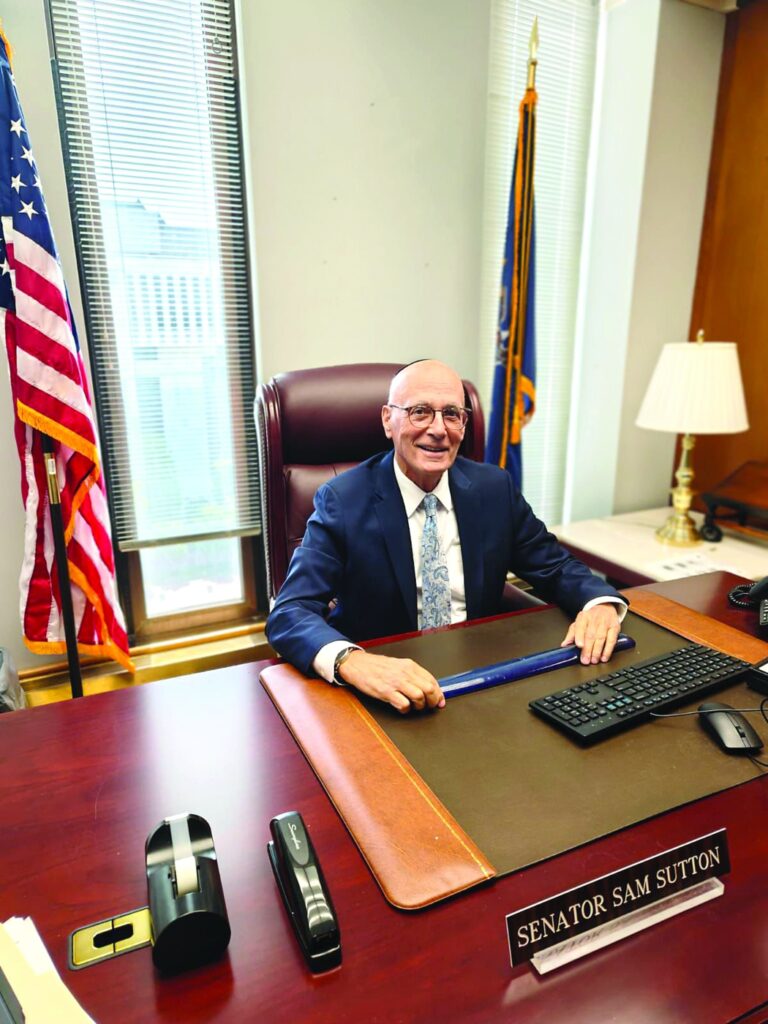
That awakening directly led to the election of Sam Sutton to the New York State Senate. Once again, this outcome was no accident.
From the earliest conversations to the final strategy, Joey Saban played a profound and indispensable role. Sam Sutton’s decades of relationships and political work opened doors in Albany, allowing Joey to line up the nomination for him and build the political infrastructure necessary for success. He then stepped fully into his role as Chief of Staff to Senator Sutton, where his impact has been nothing short of transformative.
Together with Senator Sutton, Joey has been deeply involved in shaping every major policy initiative, guiding strategy, building coalitions, and ensuring that the community’s priorities were not just heard, but delivered. The results speak for themselves.
In just a matter of months, Senator Sutton secured nearly thirty million dollars in funding for religious communities across New York State, resources that will strengthen schools, protect institutions, and serve families for generations.
Equally significant has been the introduction of landmark legislation to protect the Jewish community and confront antisemitism, including:

  • Legislation establishing buffer zones between houses of worship and protests, safeguarding the dignity and security of prayer.
  • A bill to codify the IHRA definition of antisemitism into New York State law, providing clear standards for accountability and enforcement.
    The momentum Joey ignited, with our guidance, has only continued to grow. This past summer alone, SCF and its partners registered over ten thousand additional community members to vote. That energy carried into the most recent mayoral election, with nearly twenty-five thousand Sephardic voters casting ballots, a powerful demonstration of a community fully awake to its strength.
    This is what sustained leadership looks like. A community that votes is respected. A community that organizes is heard. A community that believes in itself shapes its future.
    What began as a single political campaign has become a movement rooted in belief, participation, and results. With our mentorship, Joey Saban showed our community what is possible when vision meets courage. The momentum he created continues to grow, and as we set our eyes on the 2026 elections, its greatest impact is still ahead.

Sam Sutton and Ronnie Tawil are the founders of the Sephardic Community Federation (SCF).