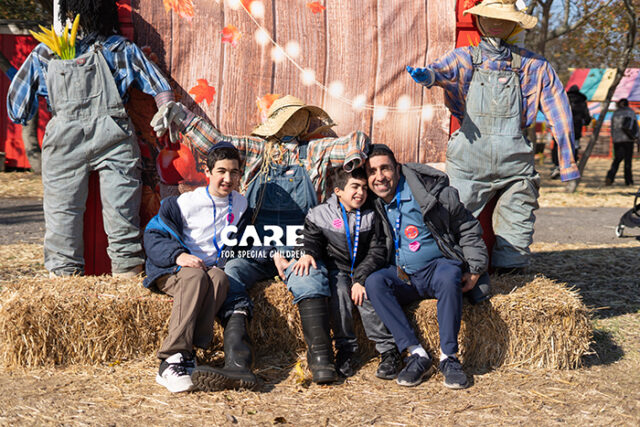
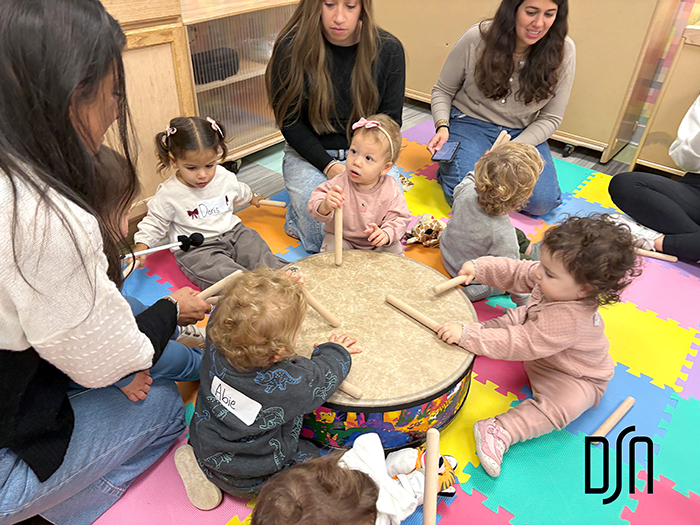
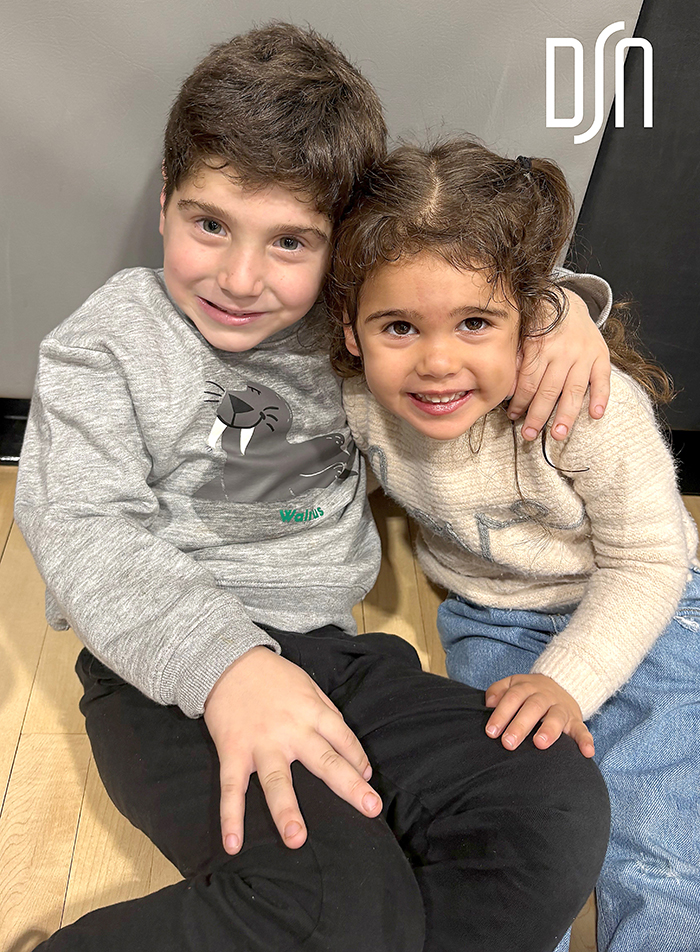
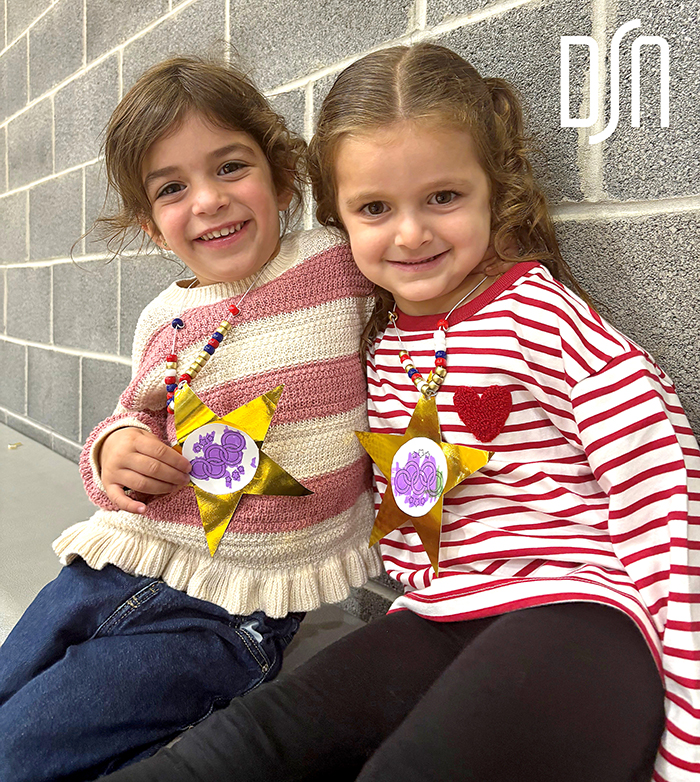
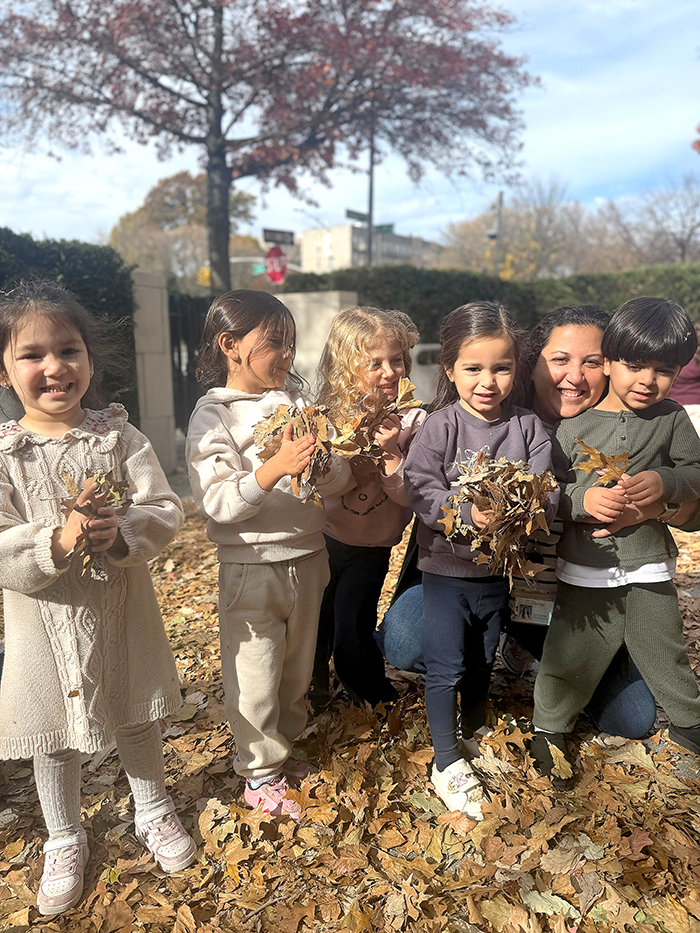
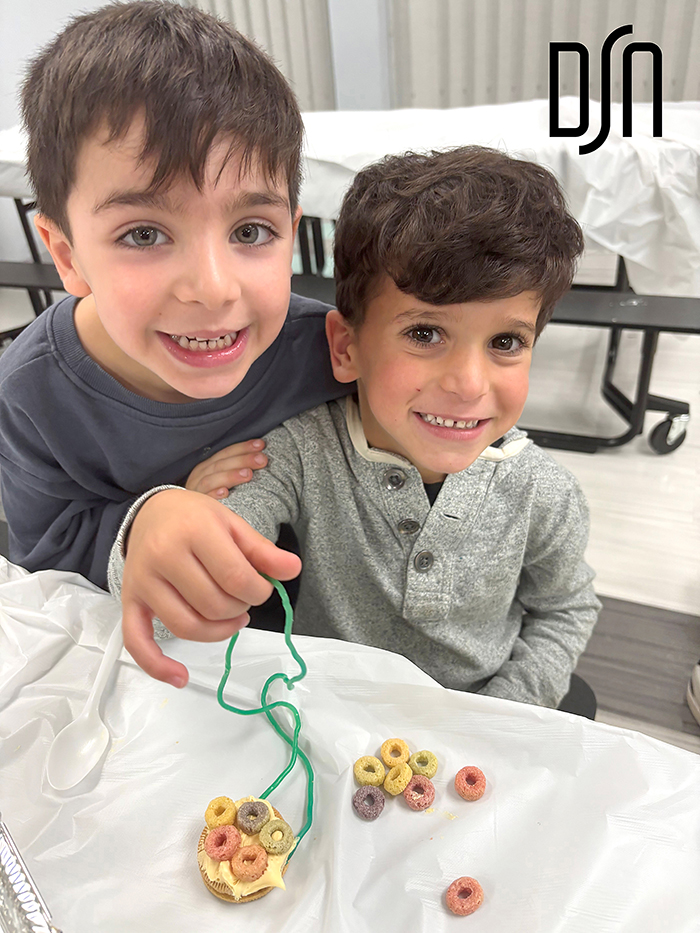
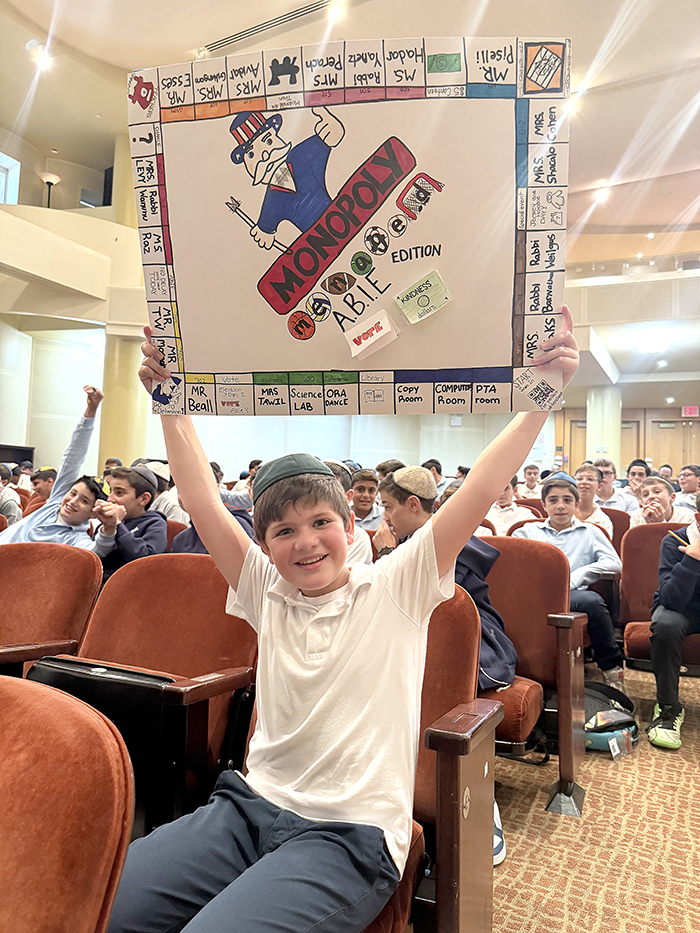
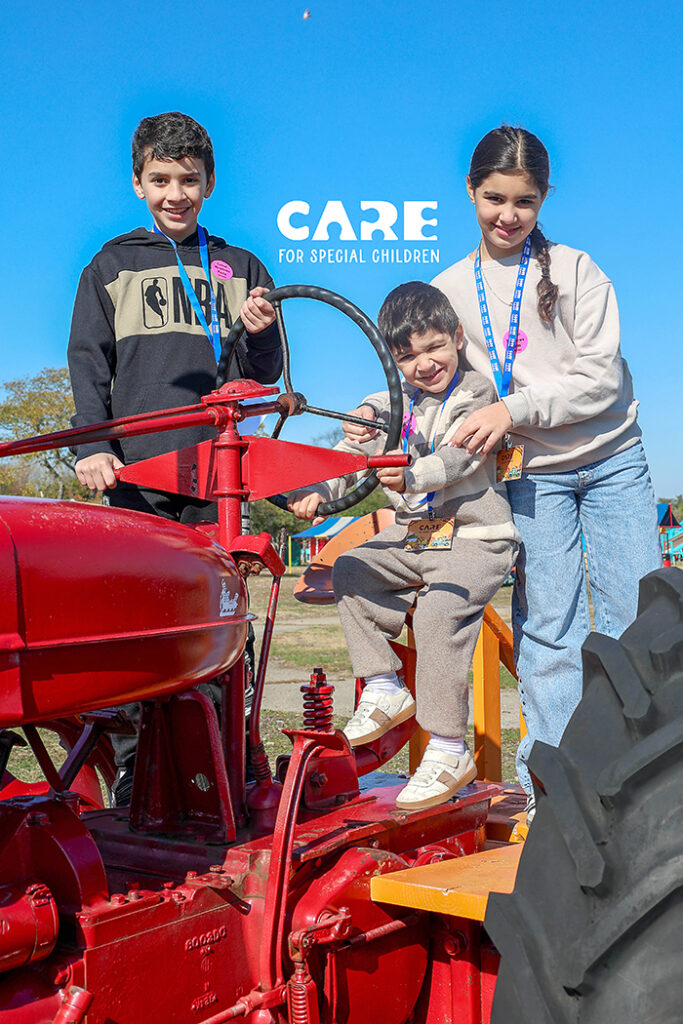
Hanukkah at DSN was a beautiful reminder of what our community does best, bringing people together through meaningful and inclusive experiences for all ages.
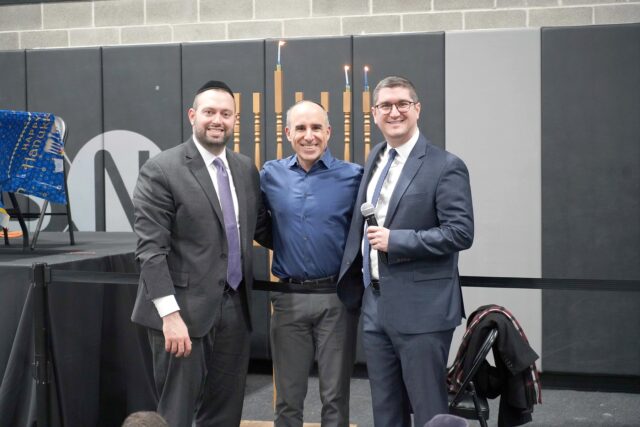
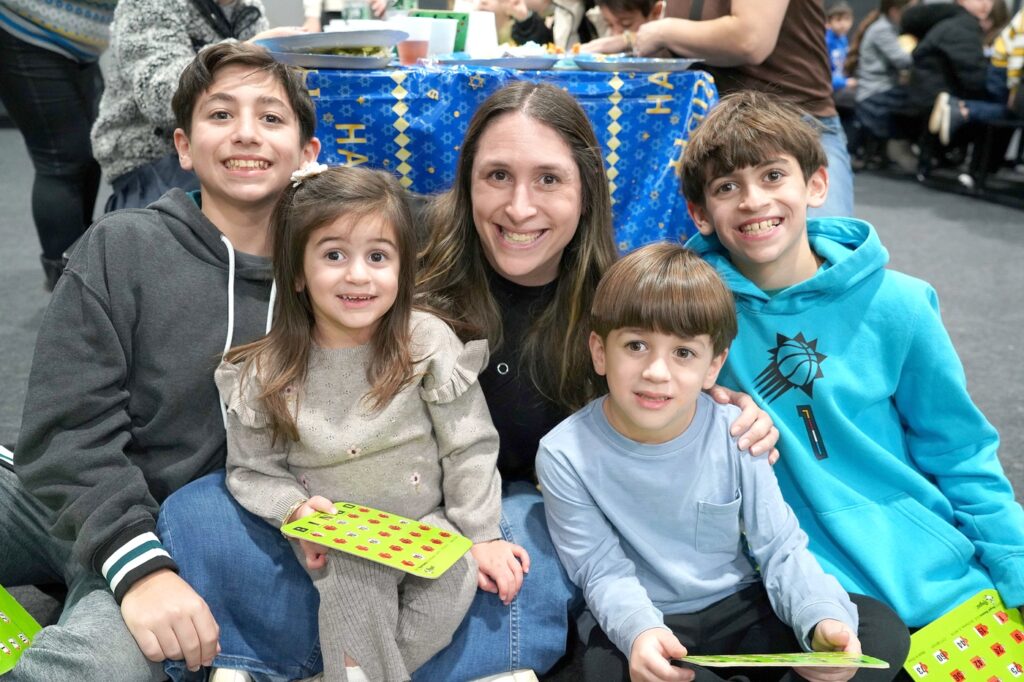
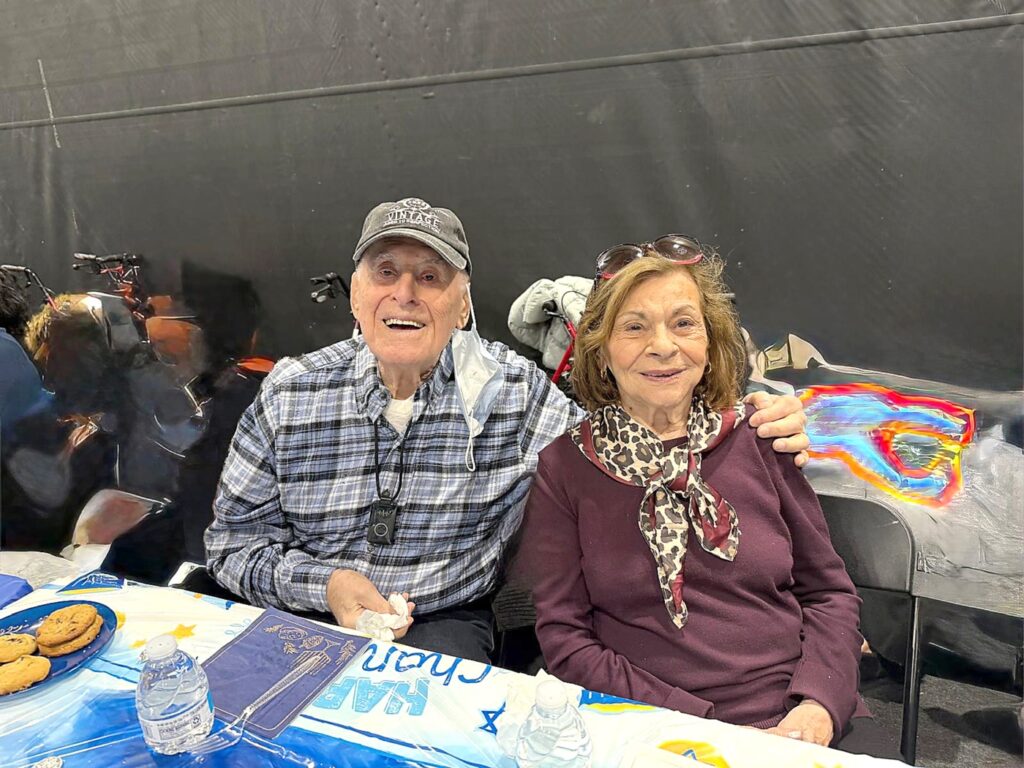
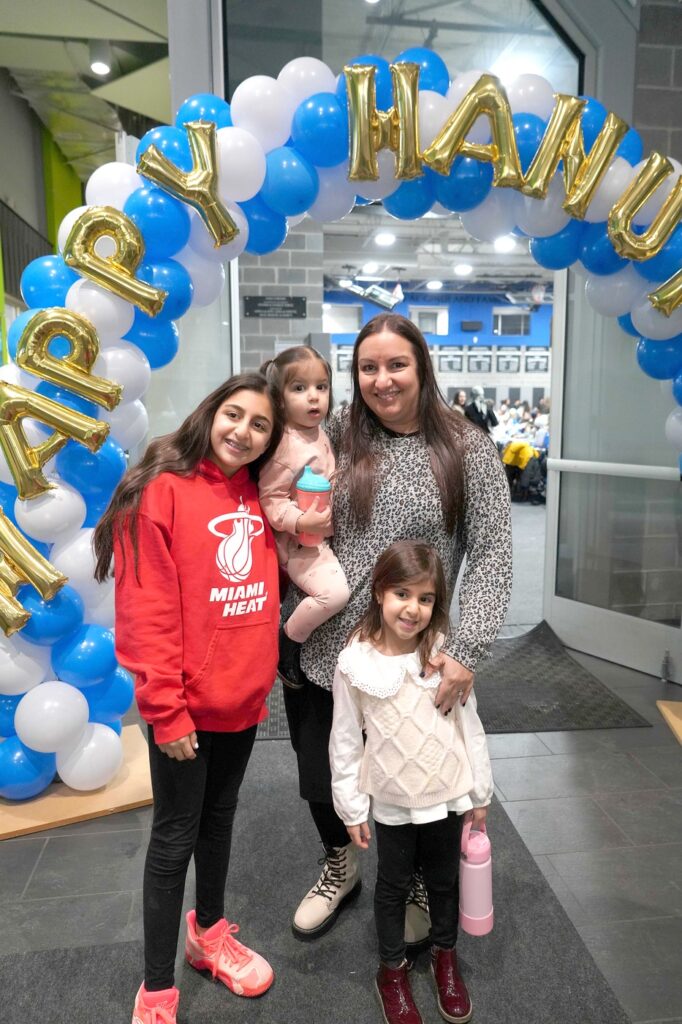
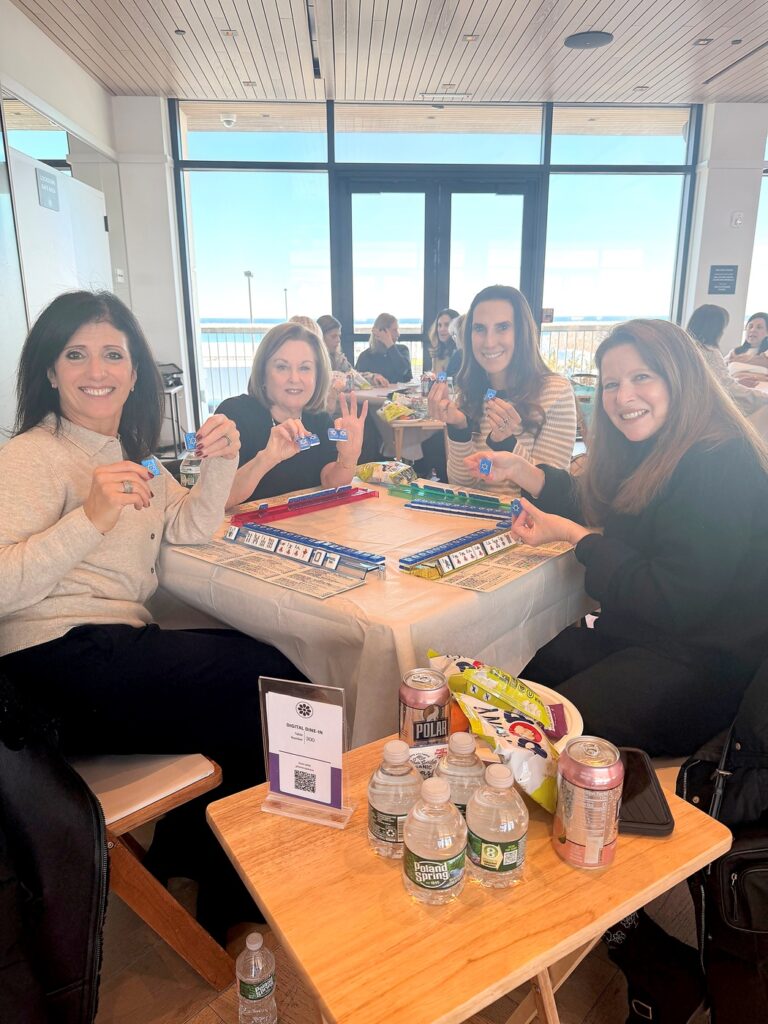
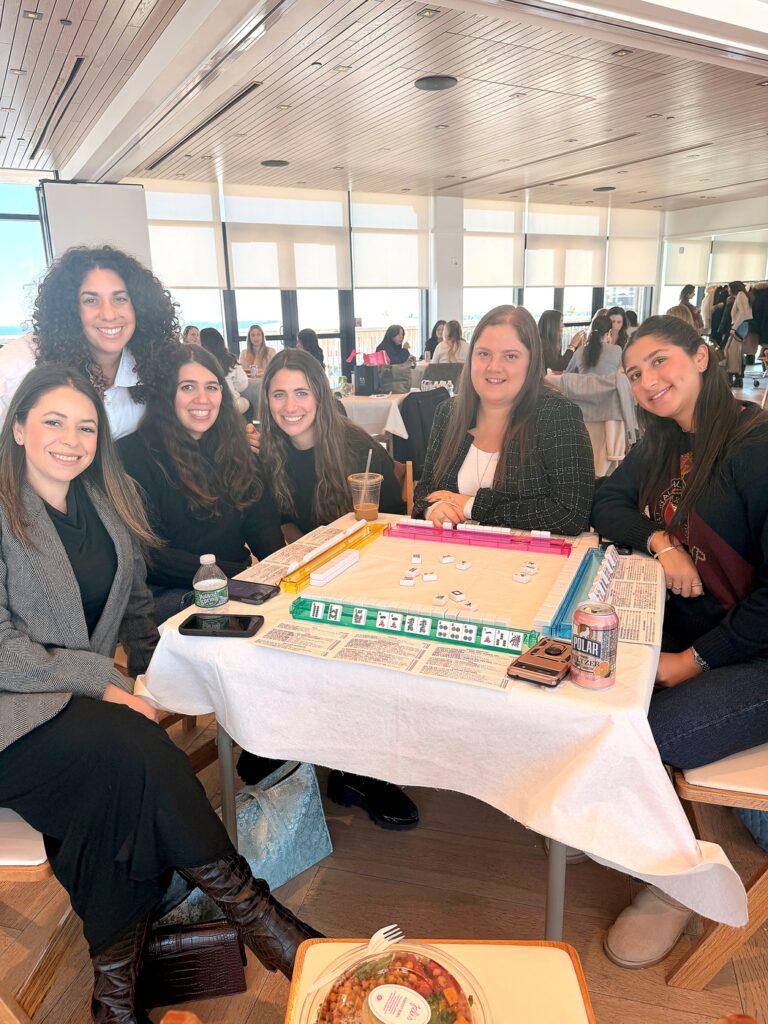
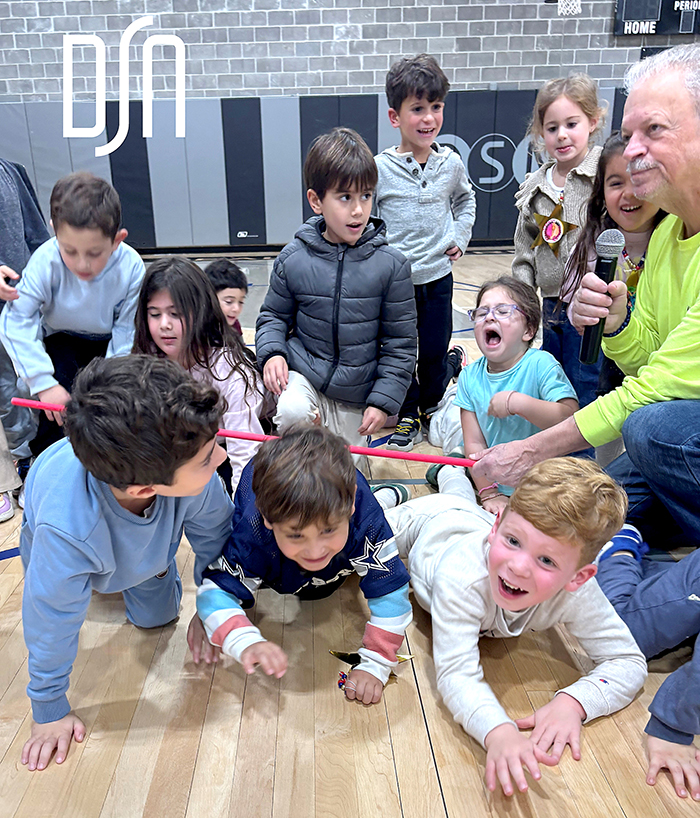
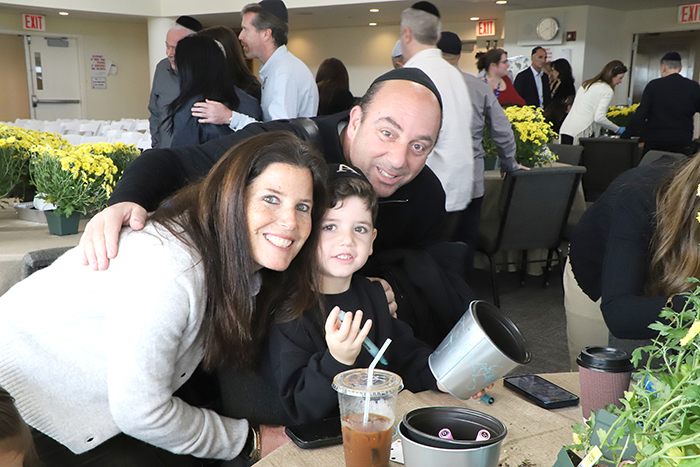
The celebrations began on Monday, December fifteenth, with the highly anticipated Annual Hanukkah Bingo Night at the DSN Community Center. One of the most beloved programs of the year, this free event welcomes all families and truly embodies the spirit of unity. The evening featured a menorah lighting with Rabbi David Tawil and Rabbi Joey Dana, a festive photo booth, and a dairy dinner for all, along with an array of over one hundred exciting prizes that kept the energy high throughout the night. Infectious enthusiasm filled the room as DSN’s Executive Director, Sammy Sitt, once again served as master of ceremonies, making it a night to remember for everyone. The festivities continued on Tuesday, December sixteenth, at the DSN Beach Club, where eighty women gathered for the Ladies Hanukkah Cards Extravaganza. With music and games in full swing and a lively gift exchange, the room buzzed with warmth and laughter. Canasta and mahjong enthusiasts enjoyed an abundance of themed prizes, while DSN generously provided donuts, latkes, and snacks. In the true spirit of Hanukkah, attendees also had the opportunity to drop off toys to be donated to SBH and other organizations supporting children in need, reinforcing that hesed is always at the heart of our community. Volunteer Chairperson for the event, Kelly Sabbagh, said, “Anyone who hasn’t spent a winter in Jersey can’t truly appreciate what it has become, a season filled with incredible programming by DSN and meaningful friendships that grow from it. Most special of all have been our Mahjong and Canasta Tuesdays, of which the Hanukkah Ladies Extravaganza was a natural extension. B”H (with G-D’s help), this is something we will continue every year.” The next day, Wednesday, brought a double whammy of meaningful programming. Earlier in the day, DSN partnered with SBH to host a Senior Hanukkah Celebration, welcoming seventy seniors for a truly special experience. Guests enjoyed cookie decorating, live music by Dan the Sax Man, and a delicious lunch provided by PKS. Thanks to the generosity of Astor Accessories, seniors were gifted beautiful scarves and hats, adding an extra layer of warmth, both literal and figurative, to the celebration. DSN’s Stephanie Massry, speaking on behalf of herself and co-Senior Director Vicky Schreiber, shared, “We love what we do. This is a highlight of the year, to see all the seniors come together and enjoy such a beautiful celebration.” Later that day, the DSN Beach Club welcomed parents and children for a hands-on sufganiyot (donuts) decorating event, where families bonded as children expressed their creativity by making their own donuts with an array of toppings, all in the joyful spirit of Hanukkah. As the candles were lit throughout the week, DSN once again demonstrated its commitment to connection, kindness, and community. We can all use a little more light, and DSN is proud to help provide it, one celebration at a time. Sammy Sitt summarized the week’s events, saying, “Hanukkah has always been one of the most impactful weeks of the year at DSN. We saw over one thousand people attending our Hanukkah events. It’s a credit to our amazing staff and volunteers. May Hashem continue to bless DSN to serve our growing community!”
What investors can learn from ocean swimming when the waves get rough
Ari Baum, CFP®
THERE’S A MOMENT DURING EVERY IRONMAN OCEAN SWIM WHEN THE WATER SHIFTS. THE CURRENT PICKS UP, A WAVE HITS YOU AT THE WRONG ANGLE, AND THE CALM RHYTHM YOU HAD GOING SUDDENLY DISAPPEARS. EVEN STRONG ATHLETES FEEL IT, THE QUICK SPIKE OF FEAR, THE INSTINCT TO STOP, THE URGE TO LOOK FOR SAFETY. BUT THEN YOU BREATHE, SETTLE IN, AND KEEP MOVING FORWARD. YOU DON’T QUIT THE RACE BECAUSE THE WATER GOT CHOPPY. YOU ADJUST, STAY PATIENT, AND LET THE ROUGH PATCH PASS.
Market corrections work the same way. They show up fast, they feel bigger than they are, and they test every investor’s nerves. Yet when you zoom out, most corrections end long before they ever threaten your long-term goals. Since the market bottom in March 2009, the S&P 500 has experienced more than thirty corrections over five percent. Most lasted only a few weeks. During that same stretch, including dividends, the index returned more than 1,200 percent. Before we go deeper, remember this: fear hits harder in the moment than the actual danger. That’s true in the ocean and it’s true in the markets. Corrections and Currents: They Both Come With the Territory Anyone who’s raced an Ironman knows the ocean is never perfectly still. Even on a calm day, the water rolls. Some swells lift you, others push against you, and sometimes you don’t realize you’ve drifted until you sight the buoy ahead. Corrections are the market’s version of those currents. They’re not signs of failure. They’re signs you’re in motion. Investors often expect the market to move in a straight line. It never does. There are waves, dips, and stretches where progress feels slow. But none of this means you’re off course. Just as you trust the race map, you trust the long-term trend of the market. Every correction has a reason that sounds scary in the moment, wars, inflation, politics, interest rates, a sudden headline that hits before the opening bell. Yet history shows those reasons fade, the market stabilizes, and the long-term trend resumes. When you look back, the correction becomes one brief bump in a much larger upward climb.
Why Volatility Feels Like a Rogue Wave Ask any athlete what makes open-water swimming different from a pool. It’s the unpredictability. You can train for months, feel ready, and still get hit by a wave that throws off your timing. In the moment, it feels personal even though it’s not. It’s just the ocean doing what the ocean does. Volatility hits investors with the same force. When your portfolio drops suddenly, it feels like something targeted you. Your brain jumps to worst-case scenarios. Your chest tightens a bit. You pull your head out of the water and look around for danger. That reaction is natural, but it usually leads to poor decisions. Most corrections are short-lived. They come fast, shake confidence, and fade. The emotional impact lasts longer than the financial one. Peter Lynch summed it up years ago: more money is lost trying to anticipate corrections than in corrections themselves.
Sight the Buoys, Not the Splash In ocean races, you learn quickly that staring at the water right in front of you is pointless. You sight the buoy ahead, lock in your direction, and let the waves move around you. Investing works the same way. Your long-term plan is the buoy. The splash and churn around you are the headlines. It’s tempting to react to every dip. But the goal isn’t to dodge every wave. It’s to keep your line long enough to reach the finish. When you focus on the next buoy, the long-term goals for your family, your retirement, your future, you stop worrying about the swirl of short-term motion. Perspective beats prediction every time. The Real Power Is Staying In the Water When the ocean gets rough, some swimmers tense up. Others pause. The experienced ones stay steady. They shorten their stroke, breathe consistently, and keep moving. They know the chop will pass, and they trust the work they’ve put in. The same patience pays off in your financial life. Most wealth is built by staying invested, not by jumping in and out. The people who try to time every dip often miss the recovery. They get stuck waiting for the “right moment” that never feels right. Meanwhile, the market keeps moving without them.
Let the Market’s Waves Roll, and Keep Your Rhythm Market corrections can feel loud and unsettling, but they rarely change your long-term path. Like a rough stretch in an open-water swim, they’re temporary. You breathe, steady yourself, and keep your eyes on the next marker. Over time, every correction becomes just another story, another set of waves you moved through on the way to something bigger. Investors who stay focused and patient, who trust the long-term process the way athletes trust their training, are the ones who reach the finish line strongest. q
The content is developed from sources believed to provide accurate information. Investing involves risk including the potential loss of principal. No investment strategy can guarantee a profit or protect against loss in periods of declining values. Past performance does not guarantee future results. Consult with a financial professional regarding your specific situation.
In a year that will long be remembered as a turning point in our community’s civic life, the Sephardic Community Federation (SCF) led an extraordinary effort to mobilize, register, and empower the Sephardic community as never before. What began as a bold voter registration drive this summer evolved into a historic show of unity and influence that has now firmly established our community as a powerful voice in New York politics.
From Vision to Historic Results The voter registration campaign was spearheaded by Haim Dabah, Marshall Aronow, and Jimmy Salame alongside Senator Sam Sutton and SCF leaders Ronnie Tawil, Eddie Esses, Joey Saban, Joe Mansour, Charles Chakkalo, and Sari Setton. They worked alongside the ground team led by Linda Ebani and Rebecca Harary and a phone banking team led by Pascale Kamagi. The campaign began with an inspiring meeting in August at Haim Dabah’s home in Deal, NJ. That evening, leaders from our schools, synagogues, and institutions gathered to launch what would become a movement. Meaningful funding was raised on the spot, and a clear mission was set—to ensure that every member of our community was registered to vote and ready to make their voice heard. Through tireless coordination and daily meetings, the SCF and its partners carried out a sweeping, multifaceted campaign that included rabbinical proclamations, registration mandates in schools and synagogues, door-to-door outreach, community event tables, and an extensive text-banking program. The results were truly historic: approximately 15,000 new community members registered to vote, raising the total number of registered community voters from about 25,000 to about 40,000. While an estimated 15,000 community members remain unregistered, the SCF continues its work to reach and register every eligible voter.
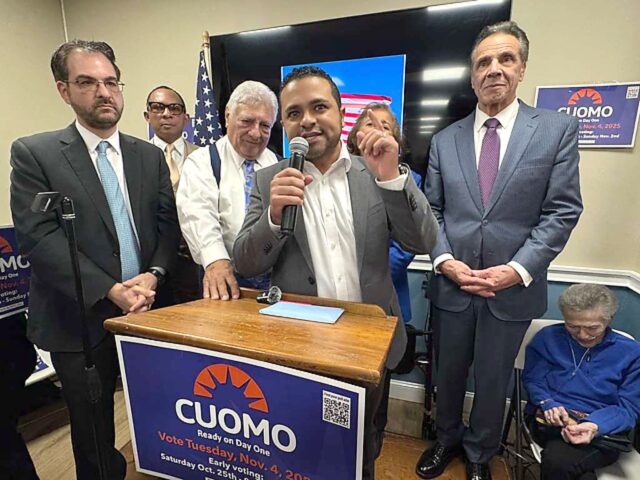
Record-Breaking Turnout The impact of this effort was felt immediately. In the November citywide elections, 43,911 voters turned out in Midwood/Flatbush and our community recorded the large majority of these voters—likely surpassing any previous turnout in our history, including major presidential elections. Total community turnout tripled compared to the previous city election, and our early voting numbers ranked among the top three districts in all of New York City. The data tells a powerful story: four of the five highest-performing districts for Andrew Cuomo were areas that include our community. This demonstrated beyond doubt that the Sephardic community has become one of the most organized and potent voting blocs in New York. Elected officials across the city and state have taken notice. Beyond the mayoral race, the community’s influence was reflected strongly as every other SCF endorsed candidate won their race, including Councilmembers Simcha Felder and Inna Vernikov, both longtime friends of our community, as well as Comptroller-elect Mark Levine, a strong ally.
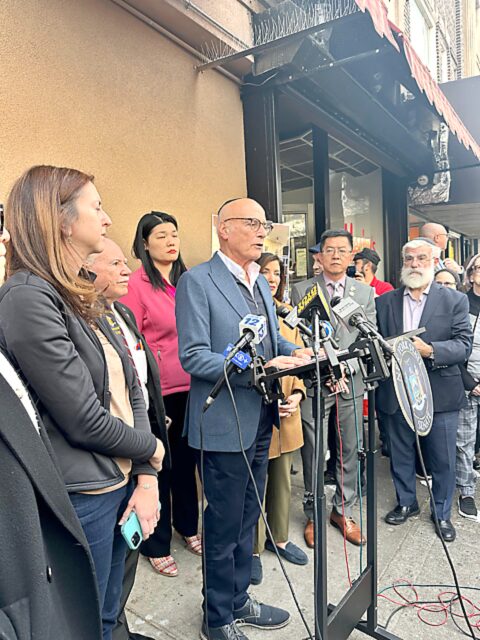
Influence in Action The strength of our new civic presence became clear just days after the election. On November 5th, when swastikas were found in front of Magen David Yeshivah, State Senator Sam Sutton and District Leader Joey Saban immediately mobilized state leaders and organized a press conference within hours. They were joined by a large group of elected officials—including Governor Kathy Hochul and Senate Deputy Leader Mike Gianaris —who announced $20 million in new security funding for religious schools. This extraordinary response did not happen by chance. It was the product of over two decades of relationship-building by the SCF and its partners, alongside the hard work of Teach NYS, which was founded by the SCF to advocate for our yeshivot and institutions. This is what real influence looks like—when our voice is heard, our concerns are respected, and tangible results are delivered for our families.
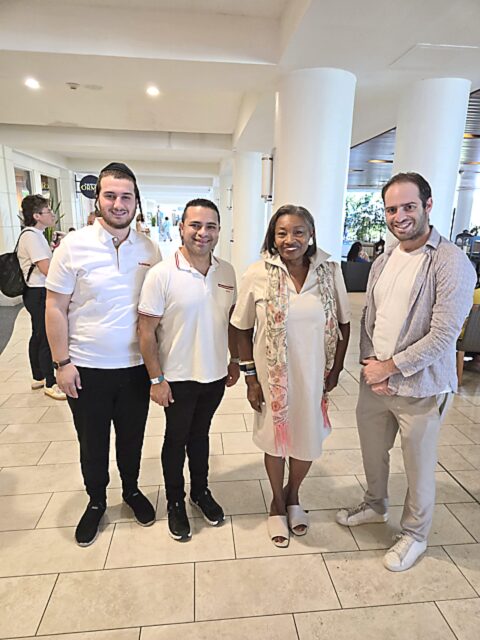
Building Relationships and Securing the Future Immediately following the election, the SCF board members Joey Saban and Eddie Esses attended the Somos Conference in Puerto Rico, one of New York’s premier political gatherings attended by the majority of the city’s and state’s elected officials. There, they deepened existing relationships and built new ones with key decision-makers at the highest levels of government. The trip served as a powerful reminder of the incredible value of being in the room and the big things that can be accomplished for our community when we have a seat at the table.
The Road Ahead The groundwork laid this year will serve as the foundation for the years to come—especially as we look toward the 2026 statewide elections, which will include races for Governor, State Senate, State Assembly, and Congress. With the growing civic infrastructure built by the SCF, and with the possibility of one or two of our own community members appearing on the ballot, the next chapter of our political journey is poised to be even more significant. The transformation of the Sephardic community’s civic engagement in just a few short months is nothing short of extraordinary. Through the vision of Haim Dabah, Marshall Aronow, and Jimmy Salame, the leadership of the SCF and Linda Ebani, the unity of our institutions and Rabbis, and of course Hashem’s help, our community has demonstrated what is possible when we come together with purpose, strategy, and faith.
At the SBH Career Division, our mission is simple yet deeply impactful. To help every job seeker find confidence, direction, and meaningful opportunity. We believe that when one person rises, the entire community rises with them.
Our Passion to Help Every day, our dedicated team of professional job developers, résumé writers, and volunteer coaches walks into the Career Division with purpose. We understand that searching for work, whether you are just beginning your journey or navigating a career transition, can feel overwhelming. At SBH, no one walks alone. The voices of our clients speak powerfully to this care. One individual shared: “You really helped me out with my résumé and connecting me with job opportunities. I’m waiting to hear back from a few companies and have a second-round interview on Monday thanks to one of the connections you made. Thank you for your assistance through all this. Wishing you a happy and healthy new year. Shanah Tovah (a good year).” Messages like these affirm the impact of our work every single day.
Our Process: Step by Step, Side by Side From the moment someone reaches out, we take the time to listen, to goals, concerns, and even insecurities. We create a personalized plan, offer targeted support, and remain alongside our clients throughout their journey. One client expressed this experience with deep gratitude: “Sheri, I want to thank you for being so available and patient with me through this process. I believe you must have a degree in social work because you addressed many of my insecurities. May Hashem (G-D) continue to give you the words to help all who rely on you. You have a special gift.” This kind of trust is something we cherish and strive to earn every day.
We’re Here for You Our professionals do far more than match résumés to job postings. They are motivators, strategists, advocates, and emotional supports. Clients consistently feel seen, valued, and believed in. As one person shared: “Nathan treated me like his only client and genuinely cared about the mission of finding me a new role. SBH, and those who reach out, are fortunate to have him. Thank you.” This level of care is not the exception. It is our standard.
Our Volunteers: The Heartbeat of Our Division We are blessed with an extraordinary network of volunteer job coaches and retention coaches who give selflessly of their time, experience, and hearts. They mentor, encourage, and inspire, often continuing their support long after a placement is made. One client captured this sentiment perfectly: “Thank you for your assistance. I definitely appreciate that you’re on the other end trying to make things better for everyone.” Their gratitude reflects the lasting ripple effect created by our volunteers’ compassion.
Our Supportive Services To help clients thrive, the SBH Career Division offers a comprehensive range of services designed to support both immediate goals and long-term success:
Professional Résumé Writing One-on-one collaboration to create polished, impactful résumés that open doors.
Skills Training Interview preparation, workplace readiness, and confidence-building support.
Job Coaches Personalized guidance through the job search process, from applications to offers.
Retention Coaches Continued support after placement to ensure stability, growth, and success.
Young Professionals: Building the Future We are especially proud of our Young Professionals Program, which empowers the next generation through:
Internship placements that provide real-world experience.
Mentor-mentee relationships that inspire and guide.
Industry events and roundtables that build networks and open career paths. These initiatives equip young adults with confidence, direction, and opportunity. At the SBH Career Division, we believe in people. We believe in untapped potential, new beginnings, and the power of community members lifting one another up. Our staff and volunteers, job developers, résumé writers, coaches, and mentors, work every day with one shared mission. To help you succeed professionally, personally, and confidently. We’re here for you. Always. q
As Antisemitism surges, reclaiming the meaning of chosenness, without arrogance or apology, may be the key to Jewish unity and moral clarity.
For many Jews, the idea of the Jewish people as the “Chosen People” is deeply uncomfortable. It sounds like superiority, exclusion, or moral arrogance. So if it comes up at all, it is often immediately deflected: “It doesn’t mean we’re better than anyone else.” “It doesn’t really mean chosen.” “It just means Abraham chose G-D.” And yet, the idea persists, not only in Jewish texts, but in Jewish history. Every time Jews make a blessing on the Torah, they thank G-D for choosing them from among the nations. Not as a slogan, and not as a boast, but as a description of a relationship, a covenant that shaped a people and gave them a distinctive way of living in the world.
What does this idea of being chosen really mean? To be chosen never meant comfort or privilege. It meant responsibility and obligation. It meant living within a demanding moral and legal framework that governed every aspect of life, from commerce and family, to justice and time itself. Jewish distinctiveness was not theoretical; it was practiced, carried, argued over, and often paid for dearly. This identity survived exile, persecution, dispersion, and powerlessness because it was portable. A people could lose land, kings, armies, and still remain intact if their identity was anchored in law, memory, and mission. The rupture came with the Enlightenment. As Jews entered European society, emancipation came with a price. To be accepted, Jews had to stop thinking of themselves as a distinct nation with a unique mission and start thinking of themselves as a religious subgroup within someone else’s civilization. Chosenness became an embarrassment. Nationhood became dangerous. Particularism became suspect. So Jews began explaining themselves away, to others and eventually to themselves. The World Never Forgot Who We Are, Even When We Did While many Jews stopped believing in chosenness, the world never did. Christianity and Islam, the two largest religions on earth, are both built on the premise that G-D chose the Jewish people. They disagree on what happened afterward, but the starting point is shared: Abraham and his descendants were chosen to enter an everlasting covenant with G-D. Antisemites also never doubted Jewish distinctiveness. No one persecutes a people for being ordinary. The Jewish people, small in number and scattered across the globe, have remained unusually visible, influential, and contested. No one obsesses over a people who do not matter. The attention, admiration, resentment, and hostility directed toward Jews has always far exceeded their size. That obsession is the shadow side of significance. History keeps sending the same message, even when Jews refuse to read it: You are not just another people.
Chosenness Is Not Superiority, It Is Assignment The central misunderstanding of chosenness is the belief that it means being better than others. It never did. Chosenness means being tasked. It means being assigned a role in the moral development of humanity, to introduce ideas that were once revolutionary and are now taken for granted: the sanctity of human life, the dignity of the individual, the idea that power is morally accountable, that time itself can be sanctified, that law stands above kings. These ideas did not emerge spontaneously. They were carried, argued for, lived, and often paid for dearly, by a people who believed their national existence had meaning beyond survival.
Why This Matters Now We are living through a moment when Antisemitism is no longer whispered but shouted. When Jews are murdered for gathering as Jews. When Israel is singled out obsessively, Jews are again being reminded that invisibility is not an option. At moments like this, assimilation does not protect us. Silence does not protect us. Apology does not protect us. What has always protected the Jewish people is clarity of identity. Strength does not come from denying who we are. It comes from embracing it. Re-engaging with the idea of chosenness does not require instant belief or religious transformation. It begins with something quieter: the willingness to take Jewish identity seriously again, not as a source of embarrassment, but as a source of responsibility. Today, Jews are needed to stand taller, speak louder, and unite more fully as Jews. Taking Judaism seriously means moving forward, through learning or action, into the responsibility that has always defined the Jewish nation. q
Individuals have entered the United States and used its freedoms as weapons against it. But citizenship should be a covenant of loyalty, not a loophole for subversion.
America was never meant to be a social experiment. It was founded as a constitutional republic built on ordered liberty, individual sovereignty, and the belief that freedom must be rooted in responsibility. For nearly 250 years, that sacred balance has made this nation the envy of the world and the target of its enemies. Today, those enemies no longer storm our shores. They walk through our gates, swear false allegiance, and use our democracy as a weapon to destroy it from within.
The Trojan Horse Within Our Gates From Paris to London to Dearborn, Michigan, the pattern is the same. Those who despise Western civilization’s values are using its freedoms as tools of conquest, exploiting our tolerance, our laws, and our moral restraint. In Dearborn, an American who questioned why a street was named after a man tied to the slaughter of US Marines was mocked by his own mayor, who called him unwelcome and even promised a parade when he left town. And now, in New York City, a self-declared socialist, Zohran Mamdani, has been elected mayor. His platform rejects every founding principle of our republic. Once, calling yourself a socialist or communist ended a political career. Today, it launches one. That is not progress; it is decay, the slow erosion of loyalty that once defined us.
The Constitutional Truth As you have always understood, Mr. President, the constitution was never meant to be neutral in the face of disloyalty. Article I, Section 8 gives Congress the power to establish a uniform rule of naturalization because the Framers knew citizenship was not a convenience; it was a covenant. When that covenant is violated, the law provides a remedy. In Fedorenko v. United States (1981), the Supreme Court held that naturalization obtained by fraud or concealment can be revoked, a principle reaffirmed in Kungys v. United States (1988). Fraud is not protected speech, and deceit is not dissent. The same Congress that ratified the Fourteenth Amendment also enacted measures to safeguard the Union from those who claimed loyalty while conspiring against it. The lesson endures: citizenship is a privilege anchored in allegiance to the United States of America.
A Crisis of Moral Clarity You, Mr. President, have always had the courage to say what others feared to say: that a nation without borders is not a nation. The same truth applies to loyalty. A nation without loyalty cannot endure. Under your leadership, America once again stood proudly for its people, its flag, and its values. You reminded the world that patriotism is not a crime but the foundation of civilization. And just as your administration acted decisively in removing foreign visitors who glorified acts of political violence, including those who celebrated the attempted assassination of Charlie Kirk, we must continue that same moral clarity now. We cannot allow individuals who enter or remain in this country to use its freedoms as weapons against it. These are modern-day Trojan Horses, people who exploit our democracy to dismantle it. If we fail to confront this, we risk losing not only elections but the republic itself. Those calling themselves “progressives,” yet acting as regressives, socialists, communists, and Marxists in disguise, will continue to rise, one office at a time. A recent poll found that Zohran Mamdani won 62 percent of the foreign-born vote in New York City, compared with just 24 percent for his opponent. This is not merely demographic; it is ideological. A movement of newcomers, often influenced by regimes hostile to our values, is being strategically mobilized to transform the character of our nation from within.
The Path Forward Mr. President, you have proven that the constitution is only as strong as those willing to defend it. You never backed down in the face of mockery or malice because you understood America’s promise, a covenant between a free people and their creator. I write these words not as a distant observer but as someone who chose this nation and its promise. I became an American citizen after coming from Canada, and with that oath came a lifelong commitment to protect the principles that make this country extraordinary. Since then, I have devoted myself to civic life and to ensuring that others cherish their right to vote and their duty to preserve the republic. That is what true citizenship means, gratitude expressed through action and loyalty proven through service. That same conviction is now needed to restore moral order and constitutional integrity. The time has come to reassess citizenship granted or exercised in bad faith, and to examine those who came here under the pretense of seeking freedom but instead use their status to advance radical agendas that undermine it. Those who exploit the privileges of citizenship to aid movements that seek to destroy America from within must be held to account under existing law. Such an effort would not be punitive; it would be protective. It would reaffirm that allegiance to the United States is not symbolic but substantive. It would ensure that citizenship remains what the Framers intended, a covenant of loyalty, not a loophole for subversion.
A Call to History America needs the same courage that built the wall, revitalized our economy, and restored pride in our flag. The constitution does not enforce itself; it depends on leaders of conviction. Mr. President, history already remembers you as the leader who stood firm when others faltered, who faced down chaos and never wavered in defense of the republic. The American people have never stopped believing in you because you never stopped believing in them. May G-d bless you with continued strength, wisdom, and the unshakable conviction that freedom and loyalty will always prevail. q This article is adapted from a piece originally published in The Jerusalem Post on November 9.
Here is the problem. To avoid recession, we have to give the economy a boost, which means spending more, which means borrowing more, which means higher levels of debt, which is what got us into trouble in the first place.
To put it the other way: in many Western economies individuals and governments have built up unsustainable levels of debt. To reduce them they must spend less and save more, which means lower consumer demand, lower government expenditure, lower employment and lower profits, which involves more need for state support, which is where we came in. Whatever economics is, it isn’t simple. Part of the problem is that economics is not physics. It’s not about matter in motion. It’s about human beings, and humans are not simple. They have a history. One generation is not like the next. The people who create economic growth are often not the ones who enjoy it. The German sociologist Max Weber famously argued that it was “the Protestant ethic,” Calvinism in particular, that gave rise to “the spirit of capitalism.” It combined three attitudes essential for the emergence of a new order. First it saw work as a vocation and a way of serving G-d. Second it frowned on luxuries and celebrated thrift. Third it saw earthly success as a sign of Divine favor. The result was a whole class of wealth creators, Benjamin Franklin was the role model, who worked hard, saved and invested, fueling a revolution in production in England and the United States. Hence the paradox: It was not consumerism that led to wealth-creation but its opposite, Puritanism. We can go deeper. In a memorable research exercise, the 1972 Stanford Marshmallow Experiment, four-year-old children were presented with a test. They were offered a marshmallow, but told that if they waited twenty minutes before eating it, they would receive an additional one. It was a neat and excruciating trial. Some of the children gave in to temptation immediately. Others did all they could to fight it. They closed their eyes, turned around, or even stroked the marshmallow, pretending it was a pet. Roughly a third succeeded in waiting the twenty minutes and received their reward. Simple enough, but what made the test a classic of its kind was that a series of follow-up studies was done of the children, years later. It turned out that their behavior at age four was a highly accurate predictor of their later success in life. The children able to resist the temptation were, ten and even thirty years later, psychologically better adjusted, more dependable, scored higher grades in school and college and had more success in their careers. The differences were measurable over a lifetime. Success depends on impulse control, the ability to delay gratification, which is precisely what a consumerist culture undermines. At every stage, the emphasis is on the instant gratification of instinct, the must-have handbag, the new generation smartphone, next year’s designer trainers. In the immortal words of the pop group Queen, “I want it all and I want it now.” Worst of all, our children are being groomed to be mini-consumers. They are being taught by every siren signal of our culture that they are entitled to the marshmallow without delay. A whole culture is being infantilized. The best commentary on all this was given by Moses in the book of Deuteronomy. He is addressing the next generation, the children of those who had been liberated from slavery. He tells them, surprisingly, that the real trial is not poverty but affluence. Affluence dulls the senses. It makes you forget where you came from. You start taking prosperity for granted, not realizing how vulnerable it is. Bad things begin to happen. Inequalities grow. The social bond becomes weak. The nation forgets who it is and why. Moses therefore restates a series of commands designed to teach the Israelites how to control their impulses and safeguard the future. Rest every seventh day. Cancel debts every seventh year. Place spiritual, not material, values at the heart of society. Fight poverty. Pursue justice. Treat employees decently. Care for the widow, the orphan and the stranger. Ensure that everyone has dignity. Deuteronomy is not about short term growth but about long term sustainability. Ultimately, the wealth of nations depends on more than economics. It depends on the degree to which a culture teaches us to act today for the sake of blessings tomorrow, a hard lesson but a necessary one. q
Whether you play basketball, hockey, football, or even non-contact sports like gymnastics or pickleball, your smile is always at risk of injury. A sudden impact or accidental fall can cause chipped, broken, or even knocked out teeth. These injuries can be painful, costly, and permanent.
That’s where a sports guard comes in. Also known as an athletic guard, this small but powerful piece of equipment acts as a cushion between your teeth and the soft tissues of your mouth. It absorbs and redistributes impact forces, helping prevent damage to your teeth, gums, lips, and even your jaw.
While store-bought guards may seem convenient, they often provide limited protection and an uncomfortable fit. A custom-made sports guard is designed specifically for your mouth, ensuring superior comfort, breathability, and protection. You’ll be able to speak clearly, focus on your game, and stay confident knowing your smile is safe.
At Bass Dental Group, we care deeply about helping our patients protect their oral health, on and off the field. That’s why we’re offering free custom sports guards until December 31. It’s our way of promoting safer play for athletes of all ages in our community. Don’t wait until it’s too late, your natural teeth are irreplaceable. Call our office today at (718) 339-7400 to schedule your appointment, and get your free sports guard.
Whether you play basketball, hockey, football, or even non-contact sports like gymnastics or pickleball, your smile is always at risk of injury. A sudden impact or accidental fall can cause chipped, broken, or even knocked out teeth. These injuries can be painful, costly, and permanent.
That’s where a sports guard comes in. Also known as an athletic guard, this small but powerful piece of equipment acts as a cushion between your teeth and the soft tissues of your mouth. It absorbs and redistributes impact forces, helping prevent damage to your teeth, gums, lips, and even your jaw.
While store-bought guards may seem convenient, they often provide limited protection and an uncomfortable fit. A custom-made sports guard is designed specifically for your mouth, ensuring superior comfort, breathability, and protection. You’ll be able to speak clearly, focus on your game, and stay confident knowing your smile is safe.
At Bass Dental Group, we care deeply about helping our patients protect their oral health, on and off the field. That’s why we’re offering free custom sports guards until December 31. It’s our way of promoting safer play for athletes of all ages in our community. Don’t wait until it’s too late, your natural teeth are irreplaceable. Call our office today at (718) 339-7400 to schedule your appointment, and get your free sports guard.
“Carbs are bad.” “Carbs are essential.” “Fasting is dangerous.” “Fasting is the secret to health.” If you’ve ever felt confused by food advice, you’re not alone. Every day we’re bombarded with conflicting messages, making it hard to know what’s “right.”
Whether you’re a student, a professional, a parent, or someone navigating later stages of life, food can feel like a minefield of rules and restrictions. But it doesn’t have to be that way. The key is food freedom, a way of eating that’s rooted in balance, trust, and joy instead of fear.
Why So Much Confusion?
Trends and fads play a major role. Nutrition culture thrives on extremes, whether it’s keto vs. plant-based or fasting vs. grazing. Social pressure adds to the mix, with social media making it easy to compare your plate to someone else’s. Many people also have a history of dieting, growing up with food “rules” passed down from family, peers, and media—beliefs that can take years to shake off.
The Problem with Food Fear
Food fear doesn’t just affect your plate, it affects your life. Maybe you feel guilty for eating dessert, anxious about eating out, or ashamed if you “give in” to cravings. But the cost is high:
• Restriction often leads to overeating or bingeing.
• Guilt disconnects you from enjoying meals and social experiences.
• Anxiety around food drains energy you could be using for things that really matter.
What Food Freedom Really Means
Food freedom isn’t about ignoring health, it’s about releasing the fear and guilt that keep you stuck in cycles of restriction. It means:
• Flexibility. Foods can fit. There’s room for salad and pizza.
• Balance. Most meals include a mix of protein, healthy fats, and fiber.
• Joy. Eating is about connection, culture, and pleasure, not calories.
• Confidence. Trusting your body’s cues instead of external rules.
Practical Ways to Start
1. Reframe your language. Swap “I can’t eat that” for “I choose what feels good for me.”
2. Add before you subtract. Focus on adding nourishing foods, like veggies, protein, or omega-3s, rather than obsessing over what to cut out.
3. Gentle structure. Regular meals and snacks support stable energy, mood, and focus.
4. Practice compassion. One meal never defines your health. Progress is about patterns, not perfection.
Why Food Freedom Matters at Any Age
Food freedom matters at every stage of life. For teens and young adults, it helps prevent harmful cycles of dieting and disordered eating. For busy adults, it creates mental space and supports a healthier, more positive relationship with food. Later in life, it frees you from years of yo-yo dieting and helps support lasting health. Food freedom gives back confidence, energy, and peace of mind.
The Emotional Side
When you let go of food fear, you also let go of unnecessary stress. Meals become about nourishment and connection, not judgment. Many people describe this shift as life-changing. It’s like reclaiming parts of themselves they didn’t realize dieting had taken away.
Closing Thought
Food freedom is for everyone. It’s not about perfection or extremes, it’s about making peace with food, trusting your body, and focusing on nourishment over rules. When you stop fearing food, you create space for balance, joy, and health that lasts a lifetime.
Laura Shammah, MS, RDN, specializes in eating disorders and works with a wide range of clients, including those managing PCOS, infertility, hypertension, high cholesterol, Crohn’s disease, diabetes, and cancer. She also supports clients training for marathons, women who are pregnant, and individuals seeking to lose or gain weight in a healthy way.
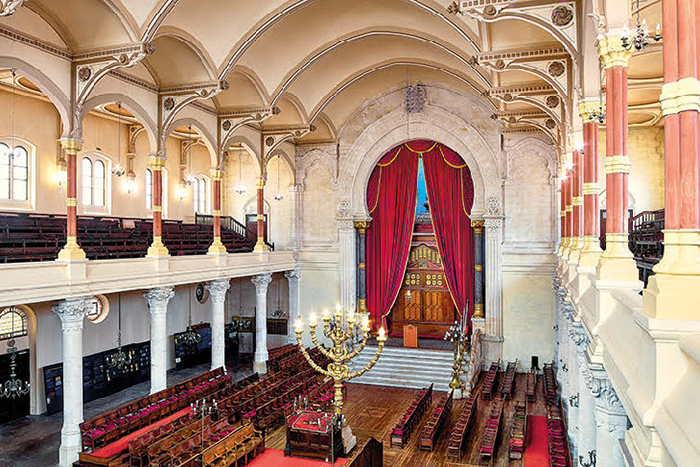
Journey through Europe’s most beautiful synagogues — timeless sanctuaries where art, history, and faith unite. These photographs reveal a heritage of beauty, resilience, and devotion.
Step into a world where art, history, and faith intertwine — a journey through the majestic synagogues that have graced Europe for centuries. These sacred spaces are more than architectural marvels; they are living testaments to the endurance, creativity, and spiritual depth of Jewish life across the Old Continent.
Each synagogue, whether standing proudly in a bustling capital or hidden away in a quiet town, tells its own story — of devotion and exile, of resilience and rebirth. From the monumental Great Synagogue of Budapest to the luminous Spanish Synagogue of Prague, from the ornate sanctuaries of Venice to the refined elegance of London and Amsterdam, these edifices reveal a Europe once resplendent with Jewish culture and community. Even the forgotten gems of Romania and the subtle harmonies of Italy’s hidden synagogues speak of a shared legacy that refuses to fade.
The following photographs are drawn from “The Synagogues of the Exiles”, an exquisite art volume illustrated with 180 never-before-seen images that capture the soul of 80 synagogues across 17 European countries, alongside five architectural treasures from North America that echo their European counterparts.
Bordeaux, France
Designed by the architect Charles Durand, after nearly a decade of fundraising and negotiations, the new Grande Synagogue of Bordeaux opened its doors on September 5, 1882, offering a sanctuary for peace and prayer just before the High Holy Days.
Synagogue de la Victoire, Paris, France
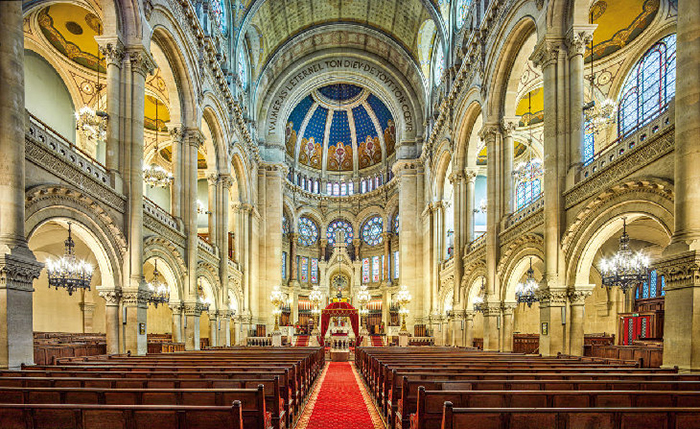
The Synagogue de la Victoire was inaugurated on September 9, 1874, just in time for Rosh Hashanah. It took a few more months to complete the interior, with the synagogue opening fully to the public in 1875. The sanctuary is the work of architect Alfred Philippe Aldrophe. A knight of the Legion of Honor and architect for the City of Paris, Aldrophe understood both the requirements of the Jewish community and their new customs. Romanesque in style, the building is adorned with Byzantine moldings and follows a basilica layout.
Casale Monferrato, Italy
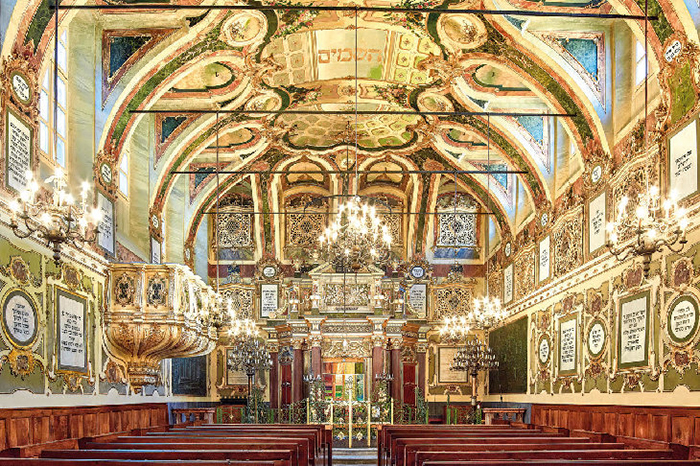
Nestled in northern Italy, between Turin and Milan, this town stood at the crossroads of countless battles from the 15th to the 18th centuries. The Jewish community, long settled here, took an active role in defending the territory — even financing the construction of its fortifications. Despite enduring many restrictions, they remained steadfast, determined never to face exile again. Their unwavering loyalty earned them rare privileges, first from Duke Gonzaga in 1560 and later from the Duke of Savoy in 1708. Yet these honors did not divert the faithful from their true source of devotion: the synagogue.
Located in an unassuming alley in the center of the Ghetto, the Synagogue of Casale Monferrato is the oldest in Piedmont. It was inaugurated in 1595 during Sukkot, as attested by the inscription: “This plaque commemorates the fact that in the year 5355-1595 this oratory was erected in honor of the G-d of Israel.”
Lausanne, Switzerland
On November 7, 1910 (5 Heshvan 5671), the Synagogue of Lausanne was officially inaugurated. Situated in the prestigious Belle Fontaine district, the synagogue stands out as a beacon and a landmark, embodying both civic presence and the heart of Jewish communal life.
The synagogue was the result of collaboration between renowned architects Charles Frédéric Bonjour, Adrien Van Dorsser, and Oscar Oulevey.
Augsbourg, Germany
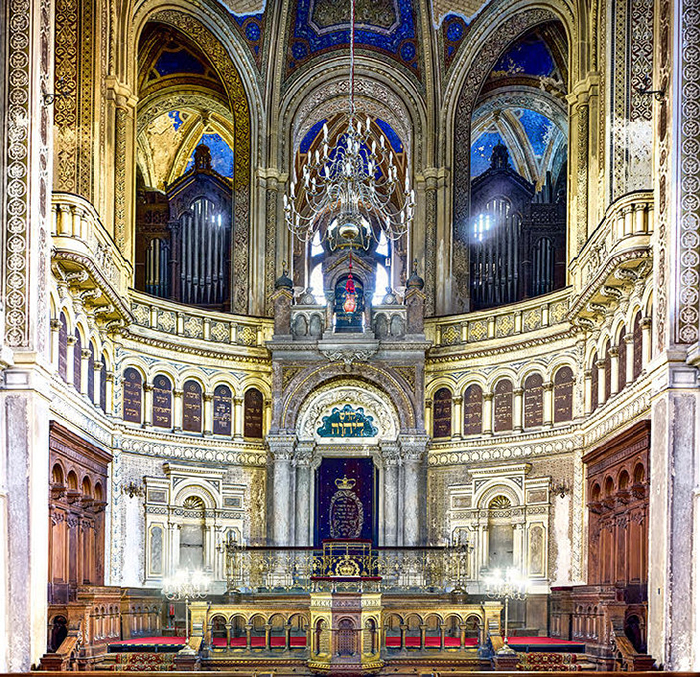
In 1913, the community entrusted the realization of this modern and ambitious project to the young Jewish architect Fritz Landauer. Collaborating with Dr. Heinrich Lompel, they conceived a building that embraced Art Nouveau with Moorish and Art Deco influences. During Kristallnacht in November 1938, the temple suffered significant damage but survived. During World War II, its proximity to a fuel depot spared it from the bombings. A near-miraculous survival, as countless other Jewish places of worship were utterly destroyed by the Nazi regime. Majestic, charismatic, and deeply moving, the Augsburg Synagogue stands as one of the city’s most important monuments.
Łancut, Poland
The Łancut Synagogue is one of the few surviving examples of Poland’s rich Jewish architectural heritage. It epitomizes the four-pillar synagogue style with majestic vaulted ceilings found throughout the region. While most of its original interior has been lost, a watercolor painted after 1786 by Polish landscape artist Zygmunt Vogel (under the pseudonym Ptashek) offers a rare glimpse of its past glory. The stone edifice measures 18 meters by 15 meters and stands on land that once belonged to the Lubomirski family, members of Poland’s high nobility and longtime owners of the city. Its modest exterior façade belies the stunning polychrome decorations, stucco work, and Torah scenes that adorn its interior. The synagogue’s floor, located below ground level, reflects a clever architectural workaround to comply with Church restrictions on synagogue height. Descending a few steps from the entrance, worshippers would enter a bright, airy prayer hall.
Plzen, Czech Republic
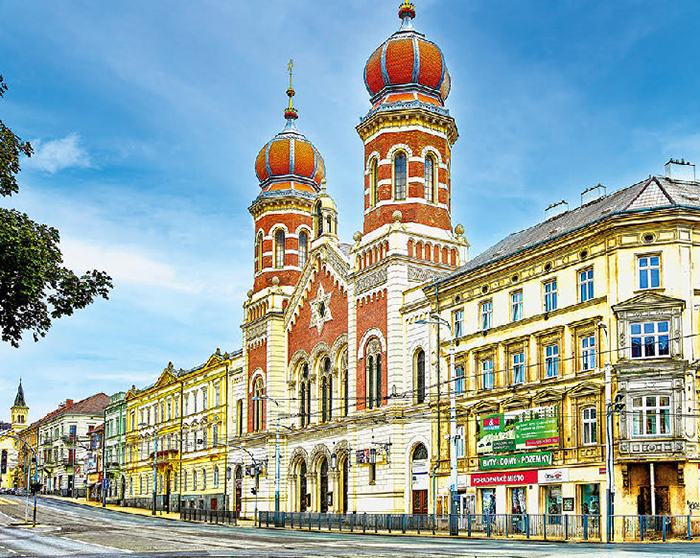
In 1867, a new constitution granted Jews political and religious equality, paving the way for the magnificent synagogue. With a population of 3,000, the Jewish community of Plzen embarked on building a sanctuary as sumptuous as it was monumental. Their ambition was first entrusted to Viennese architect Max Fleischer, who envisioned towers soaring 65 meters high, reminiscent of Budapest’s Great Synagogue. However, this grandeur exceeded both the project’s budget and the city council’s approval, as nothing was to overshadow the skyline dominated by St. Bartholomew’s Cathedral. A more measured approach was taken with architect Emanuel Klotz, who revised the plans, lowering the towers by 20 meters and optimizing the space to accommodate 1,200 seats. Construction began in 1888, with the cornerstone laid on the 40th anniversary of Emperor Franz Joseph I’s coronation. A few years later, the Velká Synagoga opened its doors on Thursday, September 7, 1893, just in time for the Jewish New Year, 5654.
David Abitbol is a resident of Jerusalem and is the author of the book “The Synagogues of the Exile.”
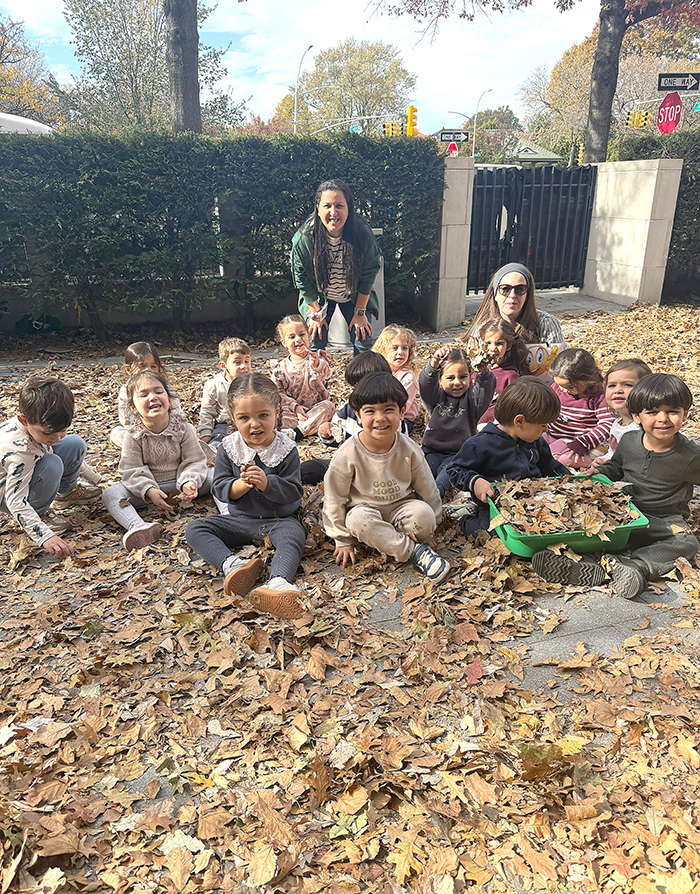
This month’s Community Photo Album celebrates the energy and color of the fall season. From classroom projects and school activities to programs at our community centers, these moments show how our students embraced the crisp weather and changing leaves. Autumn brought a mix of learning and time spent outdoors. Students explored creative art projects, joined special events, and took part in trips and seasonal programs. Each photo reflects connection, joy, and the simple beauty of fall.
A brief guide on how to maintain mutual respect and positivity
Sarah Pachter
The mother-in-law/daughter-in-law dynamic is one of the most delicate relationships to navigate, but it’s crucial to learn to maneuver this relationship if you want to live harmoniously. Here are the top six rules that both need to follow to maintain mutual respect and positivity.
1. Play fair
Congratulations! Your son is married. Now, it’s time to play fair. As awkward as it may feel at first, you need to treat your daughter-in-law like your own child. If you buy your children jewelry or take them shopping, do the same for your daughter-in-law. If you make purchases for your son, make similar ones for your daughter-in-law.
One of my students shared that when her husband’s brother got engaged, her mother-in-law paid for all her daughters to get their makeup done—and didn’t even offer this courtesy to her daughter-in-law. She felt slighted that she wasn’t included in the family preparations.
Another student shared that her in-laws would buy all of their son’s clothing on their credit card, while her clothing was to be purchased from the couple’s joint budget.
In both of these scenarios, the solution is simple: Do for both or do for neither.
Moments like these are opportunities to create closeness and connection. If you fail to pursue them, you can create a chasm that is difficult to repair or bridge. Your daughter-in-law will remember these gestures for a long time to come—for better or for worse.
Playing fair is not exclusive to mothers-in-law. Daughters-in-law also have to follow this guideline. Treat your mother-in-law like your own mother. Call them both equally, and spend time with them equally if you live in the same city. Give your children the gift of both sets of grandparents, instead of favoring one set. Do your best to create an equal playing field, and include everyone as much as possible. Here’s the big secret: the more you include your in-laws in your life, the less they intrude. Whatever “extras” you do for your mother, do for your mother-in-law.
2. Quit Taking It Personally
A student called me to complain about her fiancé’s parents. “I know they hate me! I went to their house for the first time, and they were so quiet. They didn’t even want to talk to me!”
I reminded her that perhaps their silence had nothing to do with her. Maybe they had just received bad news, or were nervous about making their own good first impression. Sometimes the lack of conversation is not about you.
We are too quick to assume others’ behaviors are about us. Most likely, they are entirely unrelated to us!
Sometimes a neutral action can be taken the wrong way.
A student once called to complain, “You won’t believe this! My mother-in-law made dinner for me and brought it over. Does she think I don’t know how to cook? Now I have all these leftovers that I don’t even need! I can’t stand her need to control everything!”
I tried to explain that this very scenario would be someone else’s dream come true!
Stop taking everything personally and let go of the burden of judgmental thought patterns.
3. Find a way to praise and thank
Even if you find your mother-in-law overbearing, you can still find something to praise and thank her for. After all, she birthed and raised the man you found worthy of marrying.
And for mothers-in-laws, even if you think your daughter-in-law is not up to your standards, there’s always something genuine you can say to praise or compliment her. After all, your son did choose her!
Lavish genuine praise and gratitude as much as possible. Find something to sincerely compliment her with. You can always thank her for working hard to take care of your son, herself, and your family.
As much as you may dislike one another, the family unit would be incomplete if one of you was missing.
4. Help as much as you can
Most mothers-in-law and daughters-in-law view themselves as generally helpful. So why does everyone tend to complain that the other is not helping?
Sometimes your definition of help may not be very helpful to your in-law.
For the sake of clarity, ask your in-law, “I’d like to help you in any way you need. What can I do that will actually be of help to you?”
Once you define help, do that as much as you can. Generally, well-received help includes watching their children, or paying for domestic help such as a baby nurse, cleaning service, or a handyman. You can also offer to cook for them, send gifts, and provide financial assistance if you are in the position to do so. The only caveat is that real giving requires no strings being attached. Don’t use your help as a means to control the other person or to clear your own conscience.
A phrase I love is, “Zip your lips closed and zip your wallet open.”
Help goes both ways—sometimes at different life stages, and at other times, simultaneously. As a daughter-in-law, you can and should be generous with your in-laws as well. Thoughtful gifts, flowers, and other personal, well-intentioned gestures can go a long way. Helping while visiting their home is a necessity. And make sure that you and your children respect their home and make the effort to keep it clean while there.
5. Choose connection over control
Control and connection are polar opposite forces in any relationship. The more we exert control, the less connection we will have.
One of my students shared that her mother-in-law insisted that she and her husband join them every Friday night for dinner.
“I do not want to go there every single Friday night! What if we want to join my parents, see friends, or be alone?”
Even if the couple goes because they are coerced, they will not enjoy the time or feel a connection. A better method is to give space to your in-law and allow them to join you at their discretion. They may not come as often, but when they do come, you will know that they actually want to be there.
Daughters-in-law also need to remember the concept of avoiding controlling behavior. They will sometimes use their children to draw out certain behaviors from their in-laws. Purposely preventing your children from seeing their grandparents is manipulative, and must be avoided at all costs.
When we choose connection over control, we can start to move the relationship forward in a positive direction.
6. Accept and respect
It is crucial for the mother of a married man to accept and respect that the relationship you once had with your son has now changed. It is not better or worse, just different. He now has to create and nurture his own nuclear family. You will still be an important part of his life, but you also need to trust in all you have taught him along the way to adulthood, and give him the space he needs to pass those lessons along to his children. Respect him enough to show you how you will now fit into his life, rather than forcing yourself in.
You may never officially “like” your mother-in-law or daughter-in-law, and that’s okay. You just need to accept the fact that you are part of the same family, and choose to respect each other, no matter what.
Very often, mothers-in-law and daughters-in-law begin their new relationship with unrealistic expectations. They tend to seek love, appreciation, and recognition within the in-law relationship. Don’t look for that. Instead, just look for respect. If we drop expectations and choose respect over everything, then eventually even a sour relationship will turn sweet and fulfilling.
As a daughter-in-law, you don’t have to love your mother-in-law, but you do need to respect her. This is a requirement that falls under the category of honoring your parents.
As one wise woman shared, “Don’t try to change the other person. You will lose this game.” When faced with a difficult circumstance, I try to think, Stop worrying about who is right, and focus on what is right. Respect is correct.
At the end of the day, you have to look in the mirror and feel proud of who you see, and that feeling extends to one’s family. When you choose to respect your family, you simultaneously gain inward respect.
The in-law dynamic is a tough one to balance. You can use these skills to create and sustain the best possible relationship.
Sarah Pachter is a dynamic, motivational speaker who has lectured throughout the US and Israel. For the past thirteen years Sarah has passionately taught women of all ages and levels of Jewish observance. In addition to lecturing for many organizations, schools, and synagogues, she is a kallah teacher, dating coach, and mentor. Sarah runs growth groups in private homes and meets with individuals for one-on-one private sessions.