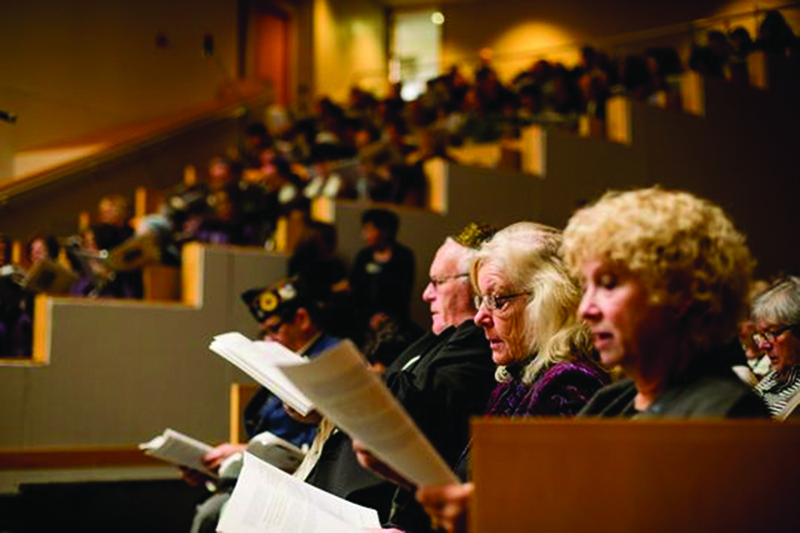
Have you ever felt very relaxed when listening to music? Have you listened to music that instantaneously brought up strong feelings, or brought you back to a special time in your life? Have you felt a sense of inner strength or spirituality when listening to music? Have you sung a lullaby to help comfort a crying baby, or the alphabet song to teach a young child? If you answered “yes” to any of these questions, it’s because you have experienced the power of music.
Music can evoke emotions, memories, spirituality, social connections, a sense of security, and comfort, as well as provide a means of expressing feelings. Music also provides a fun way for children to learn. Music has a powerful impact on people, and for those reasons music therapy has served as a healing method for physical illnesses for generations. Music has the ability to neutralize negative feelings and enhance the body’s natural stress tolerance level. People of all ages are candidates for music therapy.
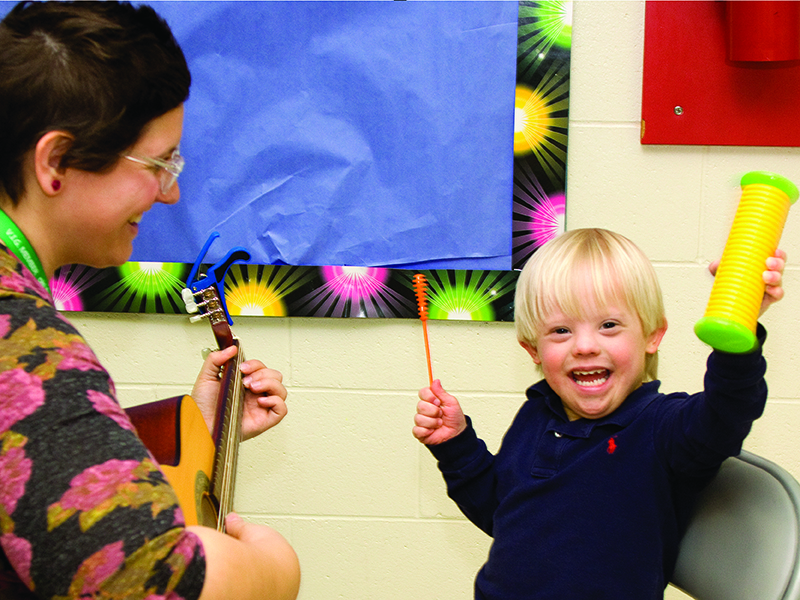
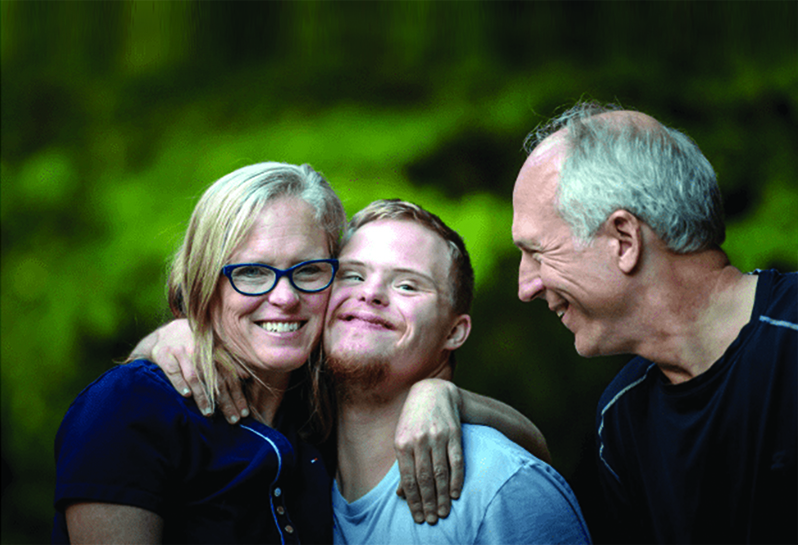
Traditionally, music therapists work in institutions, such as hospitals, nursing homes, and schools for children with special needs. Music therapy uses music as a vehicle to achieve non-musical goals. When a child has special needs, music may be one of the most powerful ways to reach him or her (we’ll use him from here on), and help him function at his full potential.
Music therapists work with individuals of all levels of abilities and challenges, including disorders such as autism spectrum, cerebral palsy, Down syndrome, developmental disorders, ADD and ADHD, to mention a few. Common music therapy goals include improving motor skills, communication, academic skills, social skills, attention span, improving behavior and mood, following directions, and eye contact. Music therapy can sometimes be covered through the I.E.P. (Individual Education Plan), Medicaid waiver reimbursements, and sometimes must be paid out of pocket.
Both sides of our brain experience the benefits of music, it bridges the gap between our brain’s right and left hemispheres, appealing to the whole mind. Music has the power to stimulate the senses, because when we experience music almost all our brain’s functions work at once. Children can more easily absorb information, and communicate better through music or song, and improve cognitive activity and self-awareness—which is a neurological dream come true, and which also helps explain music’s soothingly therapeutic benefits. While music has long been recognized as an effective form of therapy, parents, caregivers, and family members can use it to treat physical ailments, reduce stress, and to do a whole list of other things.
Listening to music helps develop the brain.Popular songs can be used to teach. You can take the song “BINGO” and change it to spell the child’s name. The tempo of a lullaby matches the tempo of a heartbeat. Lullabies can be used to comfort crying babies and help them feel secure. Incorporating lullabies into a bed-time ritual can help children make the difficult transition into sleep. Calm, quiet music can be used to reduce stress and enhance relaxation. Simply having relaxing music in the background can change the way you feel. Play relaxing music in the morning to reduce the stress of the morning routine. Even around dinner time, it can calm children, and help them unwind from school. This will help you relax as well.
Relaxing music can be used to reduce anxiety prior, during, or after surgery or in any medical situation where you or the child feels anxious. As children grow older and listen to more music, they will begin to have preferences. We all have favorite songs that we identify with. These songs may express an emotion that we feel, or talk about an experience we are coping with. Music is an expression of emotion and the words an expression of thought. Periodically, listen to your child’s favorite music with him.
This is a good way to communicate with your child. Asking why he enjoys a certain song can help you get a sense of things that you may not be aware of, or know about your child. Singing or playing music as a family can be a fun way to enjoy being together. Where words fail, music speaks. Music can change the world, because it can change people. It’s the one language we all speak.
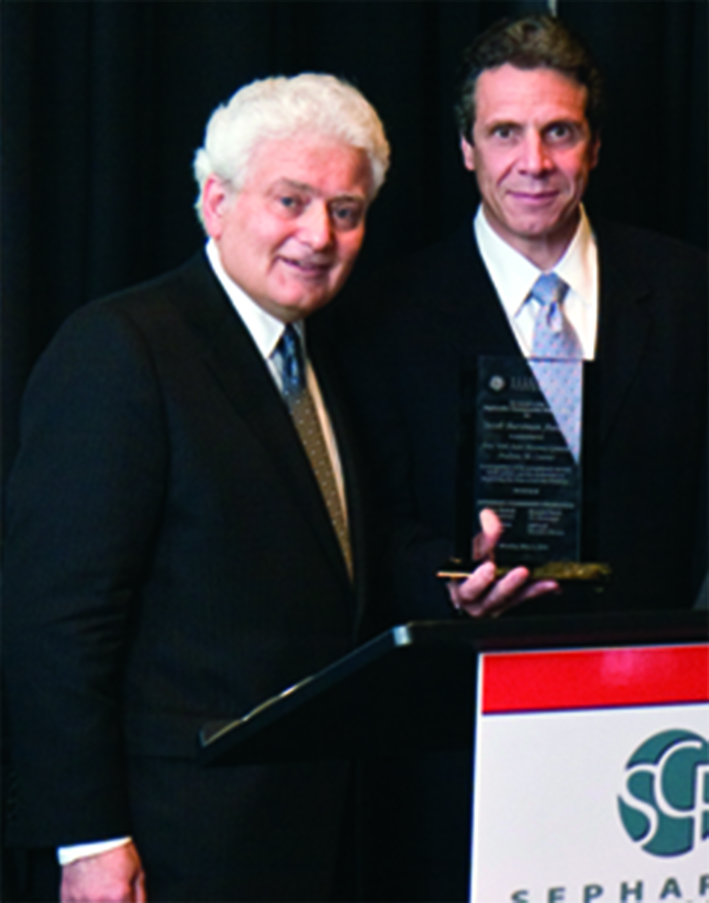
In 2013, Governor Cuomo proposed a $2 billion bond titled The Smart School Bond Act. These general obligation bond funds, to be paid for by tax levy dollars, were earmarked for the construction of new schools and upgrading technology across the entire New York State school system. It was a major funding plan, usually reserved for new highways or dams. There was just one problem: non-public schools were excluded from the bond proposal even though the Bond Act would be funded by our tax dollars.
In November 2013, the Sephardic Community Federation leadership received a call from the Catholic Conference. The Conference and Agudath Israel were focused on passing a School Tax Credit bill. They decided that the tax credit would be the only request from the State Legislature and Governor Cuomo, on behalf of non-public schools. That strategy precluded them from advocating for the inclusion of non-public schools (and yeshivot) as part of the Smart School Bond Act. For this reason, the Catholic Conference reached out to their friends, The Sephardic Community Federation (SCF). They asked us to spearhead securing the inclusion of funding for non-public schools in the proposed Bond Act. It is well known that a request like this usually takes months of lobbying by all of the affected constituents and most often, the efforts are not successful.
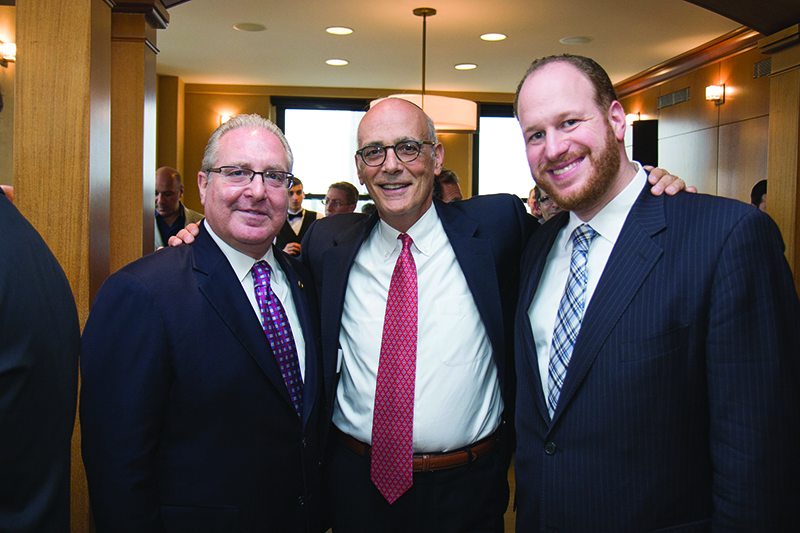
In this true “David versus Goliath” challenge, the road to success began with jelly donuts. SCF President Sam Sutton along with Co-Chairman Ron Tawil, received an invitation through the good auspices of our Assemblyman, Steven Cymbrowitz. The invitation was to enjoy a Hannukah morning get-together with the then Speaker of The State Assembly who truly enjoyed sufganiyot (jelly donuts). The Speaker would allow us to discuss one pressing issue with him.
Sam and Ron routinely nurture strong relationships with dozens of elected officials to promote the benefit and welfare of our community. Essentially, they were being called upon to persuade the Speaker (the second most powerful man in New York State) to include an additional $75 million of funding to the Smart School Bond Act.
To their pleasant surprise, only four weeks later, the New York State Assembly proposed budget added $200 million to the Smart School Bond Act, and included non-public schools. The final version which was passed by the State Legislature in March 2014 (and approved by a public vote in November 2014) remained at $2 billion but was revised to include technology funding for all schools, including non-public schools.
From the date of that vote, it took four years to finalize the allocation details. The Sephardic Community Federation, along with Agudath Israel, were repeatedly called upon to ensure that our schools would not be excluded on any technicalities. The final result was that every school is eligible to apply for $196 per child for technology assistance from the state, in the same manner as they would receive aid for textbooks.
This is how two men, aided by the power of sufganiyot and working L’shem Shamayim, were successful in securing $28 million for yeshivot throughout the State of New York.
The SCF develops relationships with legislators, and advocates on behalf of policies that benefit our community. Through cultivating these relationships, the SCF succeeds in making great strides for our community.
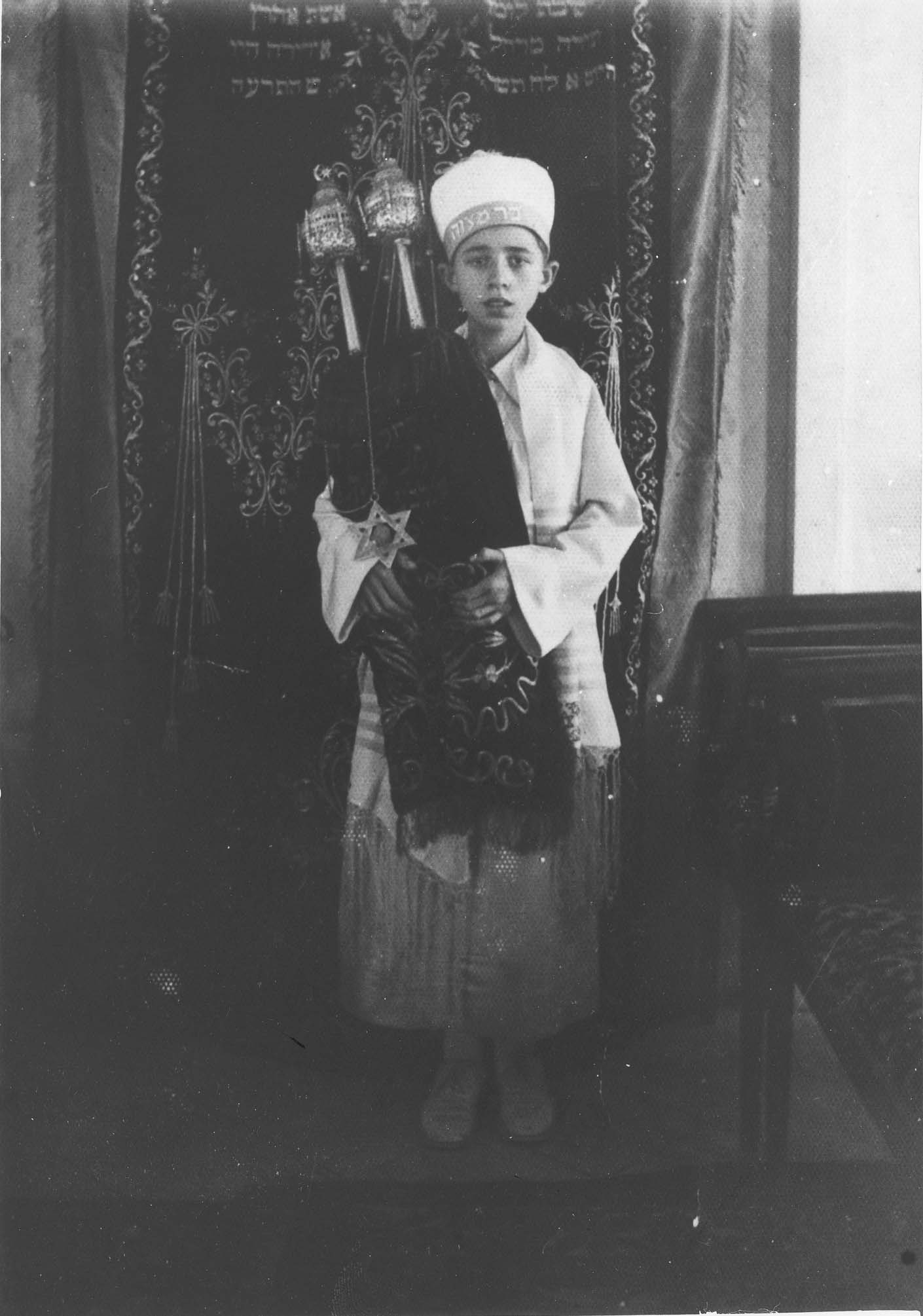
Bar Mitzvah ceremony of Into Shymshi in the “Burla” Synagogue in
prewar Salonika, 1936. Courtesy Yad Vashem Photo Archive
Moshe Porat remembers how one day in June 1944 his uncle woke him up in the middle of the night telling him “Moshele, do you realize that today is your Bar Mitzvah? Wake up quickly.” Through the sleeping bodies that were scattered on the floor, they trekked an hour or so to a hidden place where 10 men gathered with a Torah scroll and that is how he celebrated the special life cycle event in Jewish tradition, the day of becoming a man.
Moshe was born in 1931 in Hajdúnánás in southeastern Hungary to Jozsef
Levy and Gizella-Naomi – an observant Hasidic family of seven. In March 1944,
the Germans occupied Hungary. By the end of May, a ghetto was established
in the city. The men were sent to forced labor, and the community was left with
only women, children and the elderly.
On 17 June, the ghetto’s inhabitants were deported in cattle cars to
Debrecen, where they were concentrated in a brick factory. It was there that Moshe
observed his Bar Mitzvah on 21 June 1944: “I took my new set of tefillin (phylacteries),
which my father had given me during his last leave, out of my backpack. I
concealed them in my shirt and my uncle led me to a hidden nook where I read
from the Torah.”
Moshe
survived the Holocaust and later immigrated to Israel, where he had four
daughters, 15 grandchildren and 11 great-grandchildren. But many Jewish children
from Europe and North Africa were not as fortunate. Of the
nearly 1.5 million Jewish children murdered during the Holocaust many never had
the opportunity to reach the age of Bar or Bat Mitzvah.
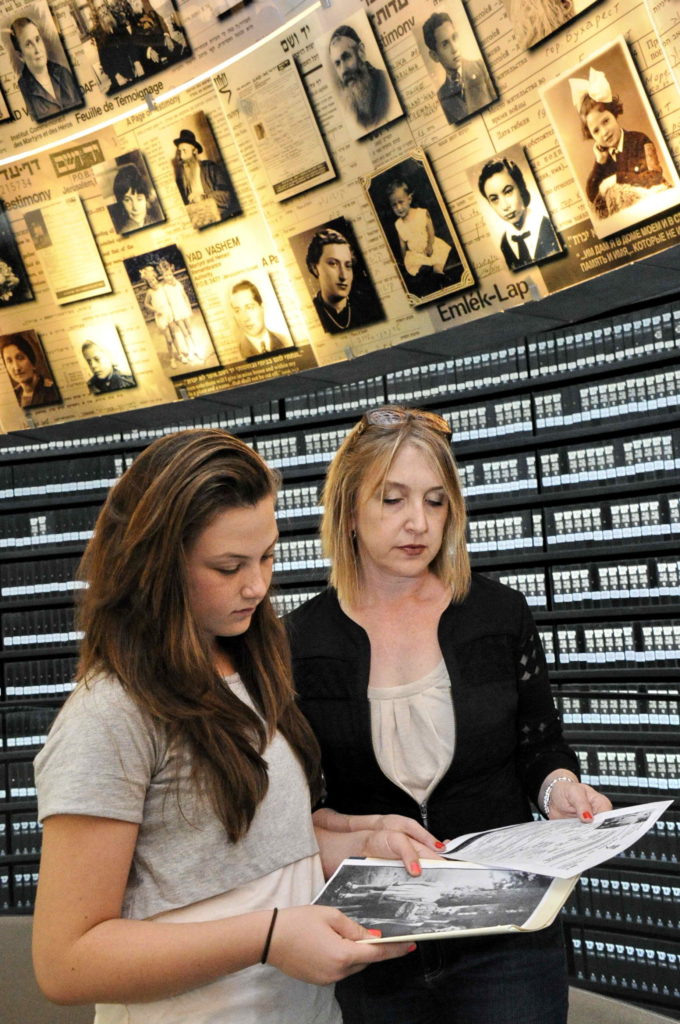
Twinning Ceremony at Yad Vashem’s Hall of Names
A bar or bat mitzvah signifies the moment a child accepts his place as a
Jewish individual and takes his or her part in the fabric of the Jewish people.
In honor of this milestone, Yad Vashem offers a special
Twinning Program as a unique way to mark this special occasion. The
program connects a Bar/Bat Mitzvah boy or girl to their past by bonding them
with the memory of an individual child who was murdered during the Holocaust.
The boy or girl being remembered will share something with the child
celebrating – a birthday, a name or place of origin.
Recently,
Yad Vashem has expanded this project to include youth from all over the world
who are celebrating this special occasion in their hometown. Hallie Kopel, a
Bat Mitzvah girl who twinned with a Shoah victim as part of her Bat Mitzvah
Ceremony said, “it is important to know where you’re from, so that you
know where you are going.”
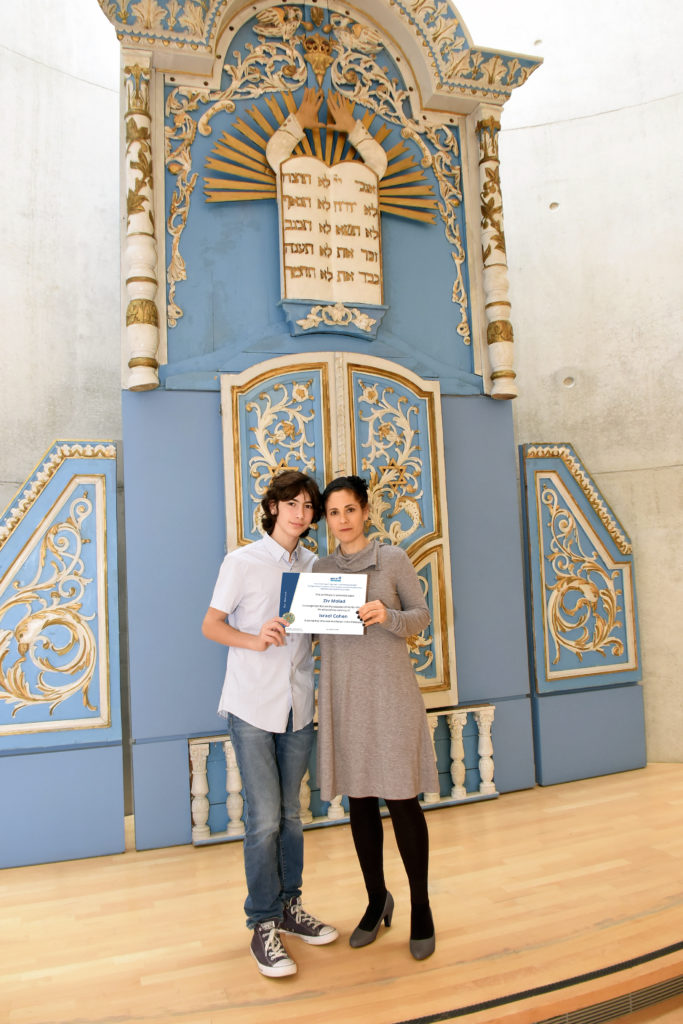
Twinning Ceremony in the Synagogue at Yad Vashem
Families
who have marked this occasion at Yad Vashem describe it as the “highlight
of their visit to Israel.” Following the twinning ceremony of her son
Caleb at Yad Vashem, Debra Rinn reflected: “It was very special for us to
have the opportunity to share our son’s Bar Mitzvah with the memory of a boy who
was murdered in the Holocaust.”
As
time passes, remembering those who were murdered in the Holocaust as individuals and not just a number
becomes
more important. We must
engage the next generation to continue carrying the memory forward. Yad Vashem’s
goal is to infuse a sense of pride in our shared heritage through a myriad of remembrance
and educational activities in order to strengthen Jewish continuity and to
create memory with meaning for future generation. The Twinning Program helps ensure
that youth today remain connected to our shared past and gives us an
opportunity to honor those murdered during the Holocaust.
Every parent prepares for the day their child leaves home. From the moment their child is born, time marches toward that day of separation. For most typically developing children, that separation begins when the child starts school, then college or yeshivah, and culminating in marriage when he/she (we will say he from here on) leaves to start his own independent life.
For children with special needs, the road to independence looks quite different. In most cases, total independence is never achieved. In some cases, the child remains completely dependent on caregivers, even when he becomes an adult. However, this does not mean that separation does not take place.
For a special young adult, leaving his home to move into a residential home can be looked at as a new stage in life, like a boy going to yeshivah out of town or marriage. For his parents, the separation carries with it the same bag of emotions that all parents go through—with some others that are thrown in, that are unique to parenting a child with special needs.
Raising a child with special needs takes a lot of energy, patience, and love. It is a job that takes over a parent’s life. There are many factors that can make parents decide that it’s the right time to put their child in a residential home. For some it’s the realization that the intensive physical care is beyond their capabilities anymore. For some, the decision is based on the social benefits for their typically developing children. And for others, there comes a point in a child’s life that he needs the expertise of professional staff and equipment to help him advance and develop in a way that he wouldn’t be able to if he stayed home. Often, the parents see that their children end up achieving a higher level of independence and a higher level of functions after leaving home. These children need a home where all their needs are met. We, as parents, have the job to give our children what they really need, even if it isn’t necessarily what we prefer.
Its not so easy to get placement. It can take years. The best advice I can give, even for the parents that aren’t ready to take this step, is to put their child’s name on a waiting list. If and when the time comes, and you are ready or desperate, you won’t have to wait years for placement. There are very strong emotions that come into play with this big decision. Your first thought is “never, no way!” “How could I?” “This is my child.” “What kind of parent sends his/her child to a home for someone else to take care of? These are all very normal reactions, thoughts, and feelings. Parents have an obligation to their entire family, including the special child, to evaluate the entire picture and do what’s best for everyone as a whole.
What’s best for the child? To be in your house, but not have the proper equipment, carryover from school, or care to have him reach his full potential? What’s truly best for this child?
While separation anxiety might be felt by the child, we all know that deep down, we as parents, are the ones that are going to truly feel it. So by keeping this child home, are we truly doing what’s best for the child and the family as a whole or it is just for your own “selfish” reasons, such as “I cant hug him every day. How can I give up my child. He needs me. No one will do what I do.”
Think about what’s best for your other children. Are there social issues, because they can’t have friends over, or don’t get your proper attention? They could physically be in danger of being hurt by their sibling with special needs. What makes it the right decision to keep this special child home and choose him over the rest of your family? What’s best for you and your spouse? Is it best that you should be physically exhausted or mentally tapped out? Is that fair to you, your spouse, or your other children? Are you are too physically or men tally tired to be a proper spouse or parent? You have an obligation to them, just as much as you do to the special child.
While there is no replacement of a mother or father, the level of professionalism and care can be unsurpassed when placed in the right residential home. You can be as involved as you would like, and make all the final decisions, and visit as often as you would like, and at any time. Your home will always be his home. You are not giving up your child—he is still your responsibility, and no one can take that away from you.
Everyone must do what’s best for them and their families. The statement, “If Hashem gave you this challenge, then he gave you the strength to deal with it,” implies that parents who send their child to a residential program have failed their challenge, is false! Guilt is a very powerful emotion, but doing what’s truly best for the child and your family is not failing.
At the end of the day, ensuring that your child lives up to his potential in the setting that is best tailored to his needs, is dealing with this unique challenge in the best way possible. You are actually passing the challenge with flying colors. Take it from me, I have struggled internally with this same issue, it takes great strength to make this very emotionally difficult decision, with an open mind.q
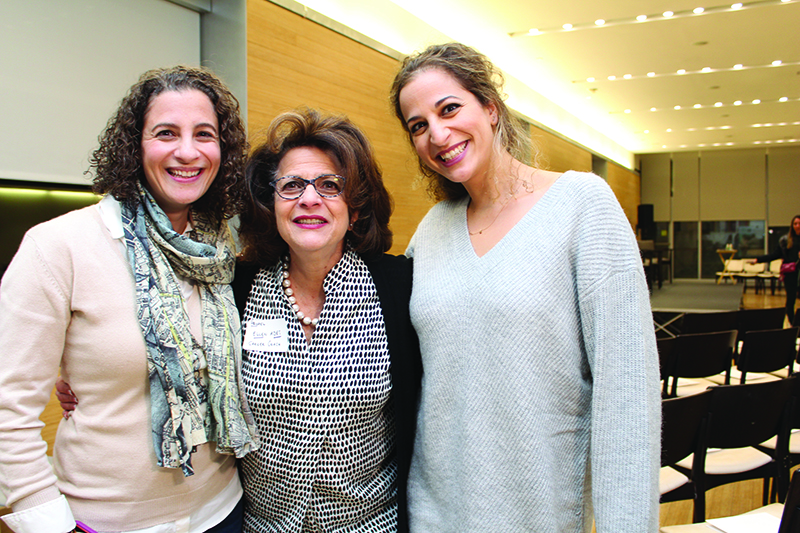
Presented by SBH Career Division & PROPEL, a panel of three inspiring mother-daughter duos spoke to a crowded audience of enthusiastic women about finding their path. Each of our panelists— Betty and Grace Esses, Claudia and Lottie Bildirici, Linda Benun and Esther Hidary—shared compelling, genuine and even humorous accounts of how they got to where they are today. Each panelist, as well as our brilliant and poised moderator, Sarita Bakst Salama, had priceless advice. Of the many valuable lessons they had to share, here are 10 that really stood out.
Even if you have no clue what you’re doing, roll with it as you go. Learning on the job is absolutely normal. You may not think you know what you’re doing, but as you roll with what tasks need to get done, you will certainly find your way.
Getting out of your comfort zone is incredibly rewarding! Our comfort zones often feel like good friends we don’t want to leave behind. Our panelists illuminated all the exciting opportunities they encountered only once they pushed beyond what they were used to.
Even if you’re scared, keep going. Starting something new can be frightening. Know that you are not alone in that fear. It’s okay to be afraid and to do it anyway. As you push forward, the fear subsides.
Working gives women a sense of confidence and direction. As women, we are balancing so many different aspects of our life. We are taking care of our families and playing active roles as community members. Having a career that is uniquely our own allows for self-confidence to develop.
It’s important to keep reinventing yourself. One of our panelists spoke about how important it is to know your limits and see when it’s time to move on. It’s never too late to try something new.
It’s invaluable to invest in your education. One of the reasons education really pays off is because it gives you a profound sense of mastery in your field.
We grow up all the time. Nothing in life is static, especially who we are as people. We are constantly developing, even if we don’t see it. There is no limit, age or otherwise, to our growth as individuals.
Choose a career path that is an expression of your personal mission and identity. Several panelists spoke about the value of creating a career around what is important to you, and what you are most passionate about.
Apply your vast skill set. In each stage of life, we acquire new skills. Whether it be as students, mothers, wives or in any other role we play, we are building a strong toolbox of skills. Organization, communication and interpersonal skills are some that are extremely applicable to nearly every profession.
We have a strong network of working women in the community who are so willing to help each other out. The event served as a testament to this robust and growing network of women who are giving their time, advice, and experience to help each other succeed professionally.
Lastly, but most importantly, we couldn’t be more impressed with the huge crowd of women who came ready to take on something new and develop a career they feel empowered by and proud of.
A very large thank you to Sarita Bakst Salama for sharing her journey and moderating the panel, as well as Frieda Schweky from @photos_by_Frieda for photographing, and the Sephardic Community Center for hosting the event.
Take the next step! Feeling excited or even intimidated by the prospect of new opportunities? Give PROPEL a call at 646-494-0822 or visit www.thepropelnetwork.org.
Are you ready to enter the workforce? Contact the SBH Albert J. Sutton & Sam N. Sasson Career Division to learn more about our free computer workshops, resume writing, interview prep, and job opportunities, at 718-787-1400, or visit www.sbhcareer.org.q
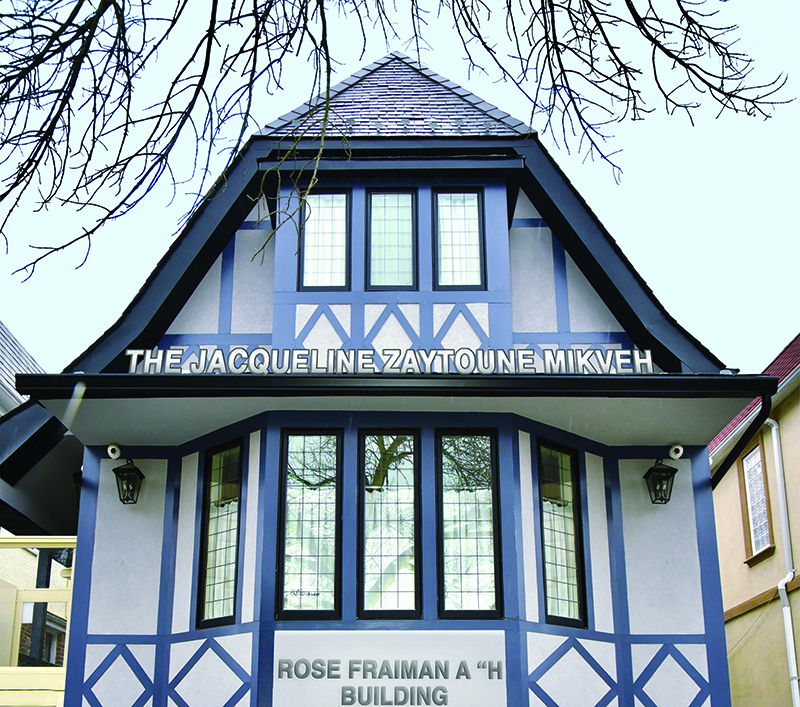
Certain projects make me happy. They feel close to home and close to my heart, and this is one of them. This fall, for the very first time, the doors opened at the new mikveh in Manhattan Beach. Almost ten years in the making, it is luxurious and cozy, delightfully zen, and spa-like at its core. It is homey, private and welcoming, and so beautifully convenient. This is truly a momentous occasion.
The community of Manhattan Beach has been through a lot. We are tight and close knit, brought together by proximity, dedication, the love of privacy and of nature, and of course, our beloved shul, Ohel David and Shlomo. A decade ago, Rabbi Greenwald A”H, and his lovely wife Judy dreamed of opening a community mikveh right here in the neighborhood. Since then, so many people have come on board to bring the project to fruition, but there were also many roadblocks—both financially, and logistically, and then of course, Hurricane Sandy.
Like everything in life, nothing worth having comes easy, but we are so proud and humbled that the hard work of so many has finally come to fruition. Tremendous thanks goes to Jackie and Moise Zaytoune, Steven and Renee Adelsberg, Gregory and Edmond Dweck, the Laboz family, Maureen and Solomon Cohen, Nathan and Aida Hasson, and Alan and Helene Shamah, among so many others. Many donors also came from the greater Sephardic community, in addition to different Jewish communities nearby, turning this mission into a sort of tapestry, making the finished product both unique and exquisite.
Located at 94 Amherst Street, right off of Hampton Avenue, the new mikveh is discreet, yet beautiful. Inside, the aromas are delicious and welcoming, as is the smile of the attendant at the desk. Offering privacy and tranquility, this establishment is respectful of all customs and preferences, and our guests are free to follow the halacha as they choose. Mrs. Coty Bitton and Rabbi Moshe Plutchok are both available by telephone to answer any questions or concerns that may pop up. There is also wheelchair accessibility, if necessary
The word mikveh brings up so much joy for me. In my mind the ritual symbolizes a chance to start anew. It’s a moment to think and to ponder, an opportunity to be alone, but to feel Hashem around you. It’s a reset button, for both husband and wife. It’s about reviving yourself, and it’s about today; not yesterday or tomorrow, but the present, and that above all, is a gift to ourselves
The new mikveh boasts seven different changing rooms, including a special one for kallot, our most sacred brides. Each room is brand new, lavish and luxurious, featuring top-of-the-line soaps and toiletries, lush towels and bathrobes, and immaculate marble interiors. Fresh combs, brushes, toothbrushes etc., are all ready and waiting for each guest to prepare herself for a new month and a new opportunity for luck in any way she can imagine.
In addition to the two ritual baths, there is also a keilim mikveh on the lower level for immersing dishes and home goods. As an added extravagance, this area is accessible through a separate door all day long, and is both functional and beautiful, making the process far easier for all. Every aspect of the building makes this newest jewel in the Manhattan Beach crown better and better.
The Manhattan Beach Mikveh is truly spectacular and we welcome all who would like to join us in our cozy little neighborhood bath. Here you’ll find the intimacy needed for this most intimate mitzvah. You’ll find privacy, the convenience of easy, free parking, fully equipped modern bathrooms, kind and respectful attendants and flexibility in hours and amenities. Follow us on Instagram @ManhattanBeachMikveh, visit our website MBmikveh.com, or call (718) 646-0560. A donation of $30 per visit is customary, or if you prefer, a yearly tax-deductible donation of $360 is also an option. Plaques are still available if you would like to honor a special woman in your life, or if you just want to help establish this important institution.
Please come visit anytime. No matter where you come from, or where you are going, Manhattan Beach’s doors are open to all, ready and willing to provide the most beautiful service for a most beautiful mitzvah.
Recently, the second Semi-annual Weekend Walk took place on Kings Highway from McDonald Avenue to East 4th Street. The event was brought to the community by the Kings Highway Beautification Association, or KHBA for short, in partnership with the Department of Transportation or DOT.
KHBA is dedicated to assuring that the streets and buildings of Kings Highway, Avenue P, and Avenue U in Brooklyn, from McDonald Avenue to Ocean Parkway, are clean, presentable, and inviting. KHBA is to thank for the periodical removal of graffiti from buildings and storefront gates, for high end litter baskets that were purchased and placed on every corner to avoid littering, for the sweeping of sidewalks daily, and much more
KHBA works closely with several government agencies to accomplish all they have done thus far and continue to do for the district they represent. The DOT is one of these agencies, and they approached KHBA with the proposal to host a Weekend Walk. The idea was to have a day to close down traffic and give the streets to the neighbors and pedestrians. This is just what KHBA did
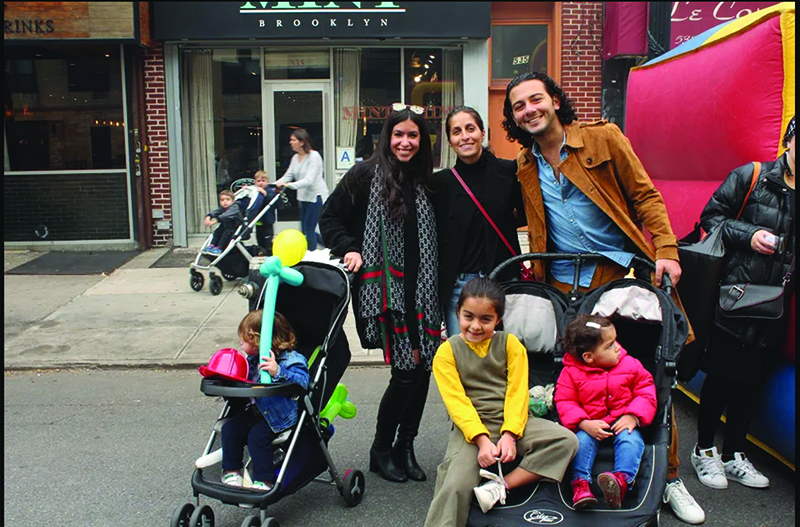
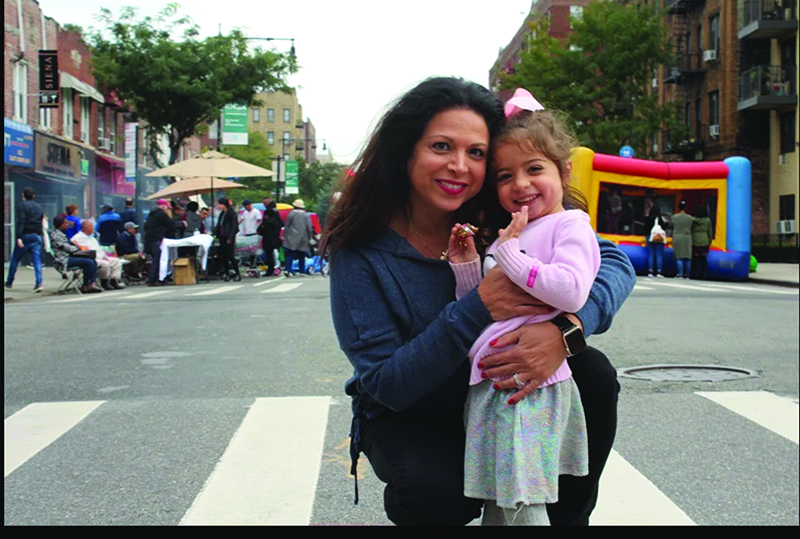
During the hours of the Weekend Walk, the streets were closed to cars, trucks, and busses, and open to the public to come enjoy the festivities. Holon Middle Eastern Grocery Store set up a large barbecue station at the heart of the event. There was a moon bounce, an inflatable obstacle course, and a giant slide, with free admission for all! Children enjoyed balloon art, which was handed out by clowns as well as face painting. There was also an arts and crafts station where children could make spin art with paints
The police department and fire department set up booths to interact with the public and to convey some safety knowledge to them. Firefighters, who were stationed alongside a fire truck, gave out replacement batteries for fire alarms, coloring books, and other fire-safety related goodies. The police officers set up an experiment for adults to participate in. This is how they conducted it: a police officer asked a participant to put on hazy smudgy goggles and attempt to walk down a straight line, pick something up off the floor, and then catch a ball. The idea was to replicate a person’s vision while intoxicated. Since most participants found these seemingly simple tasks quite difficult, the police felt they made their case and point: if you can’t walk a straight line in dirty goggles, you definitely should not attempt to drive a vehicle when drunk.
An option of bright blue sunglasses or a flashlight was offered to the participants for being good sports as the policemen taught them this valuable lesson
It was truly a great day for the community to come together and enjoy some family fun. The city and neighbors were grateful to Kings Highway Beautification Association and the DOT for this wonderfully successful day!
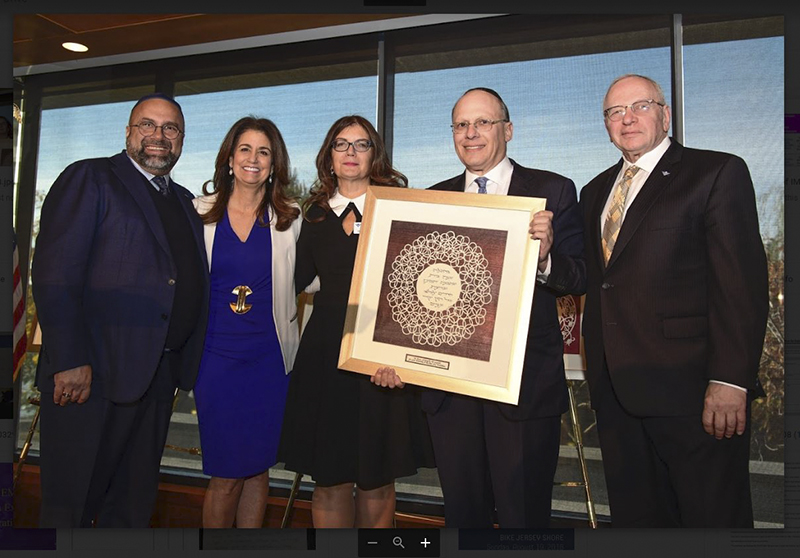
To celebrate 110 years of building a more inclusive, healthy, and vibrant Israel, Bnai Zion Foundation recently hosted their Annual New York Gala. Over 250 guests came out to the Museum of Jewish Heritage to support the organization’s work, raise funds, and honor four individuals who have truly embodied Bnai Zion’s ideals. The four esteemed honorees included Rabbi Elie Abadie, M.D., Founding Rabbi of Manhattan East Synagogue and Founder and Head of School of The Sephardic Academy of Manhattan; Kenneth Abramowitz, Managing General Partner and co-Founder of NGN Capital and Founder of SaveTheWest.com; Mark Langfan, Managing Partner of The Langfan Company, a Senior Fellow of the London Center, and the Arutz Sheva Correspondent to the UN; and William K. Langfan, a philanthropist and WWII veteran who received the French Legion of Honor Medal.
The gala, which started with a reception at noon, gave attendees a chance to mingle before settling into their seats for the upcoming speeches, while enjoying a buffet lunch. The four honorees each received an award, as well as standing ovations for their outstanding contributions to their respective fields.
Ambassador Dani Dayan, Consul General of Israel in New York, was in attendance, and gave a rousing speech about Israel’s solidarity with the Jews of the diaspora in the wake of rising anti-Semitism and the shooting in Pittsburgh.
For Public Relations and Marketing use only. Not for any additional use unless a written permission granted by SA PRO, Inc.
MUST INCLUDE PHOTO CREDIT: SHAHAR AZRAN
“I have never shared so many common values and beliefs than with the honorees at this particular event,” said Ambassador Dayan, before moving on to more somber sentiments. “In a few weeks we will mark Holocaust Remembrance Day. We always say never again. I believe that never is now.” Stephen Savitsky, Board President, spoke beautifully about Bnai Zion’s ability to bring together people from across the religious and political spectrum. Acknowledging the stunning view of the Statue of Liberty from the museum, he said: “That’s our mission. Give us your tired and your poor. Give us people in Israel who need our help—because regardless of politics, regardless of religious belief, we come together to work for the children, for the people, and for the State of Israel. We are the answer to Jewish unity in the world, at a time when we need Jewish unity so badly.
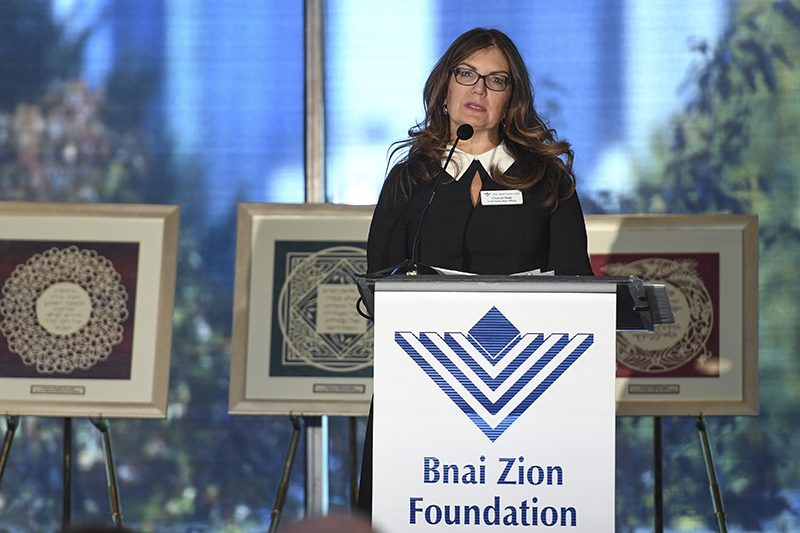
Other speakers included Cheryl Bier, CEO, who spoke about our power to unite in the face of tragedy and rally around our common cause—our love of Israel; and George Schaeffer, Chairman, reminisced about Bnai Zion’s incredible work over his 53 years of involvement in the organization. The program ended with an intriguing performance from Mentalist Oz Pearlman, who captivated guests with his “mind-reading,” guessing everything from Master of Ceremonies Harry Adjmi’s favorite dessert, to what various guests were thinking about. Afterwards, the guests retired to the cocktail room for dessert, where Senior Vice President Rebecca Harary led the drawing of an exquisite auction with exciting prize packages, all donated in support of Bnai Zion Foundation.
“This was our best event yet,” said Cheryl Bier. “I was so happy to have such movers and shakers in the room, including our amazing honorees and emcee Harry Adjmi. With everything going on, it was wonderful to have the chance to celebrate Israel.
Bnai Zion Foundation is an America-based nonprofit that identifies and funds capital projects in Israel in the areas of social inclusion, health, and culture. Over the past 110 years, Bnai Zion has completed over one hundred humanitarian projects in Israel that have contributed to the physical, mental, and social well-being of the people of Israel.q
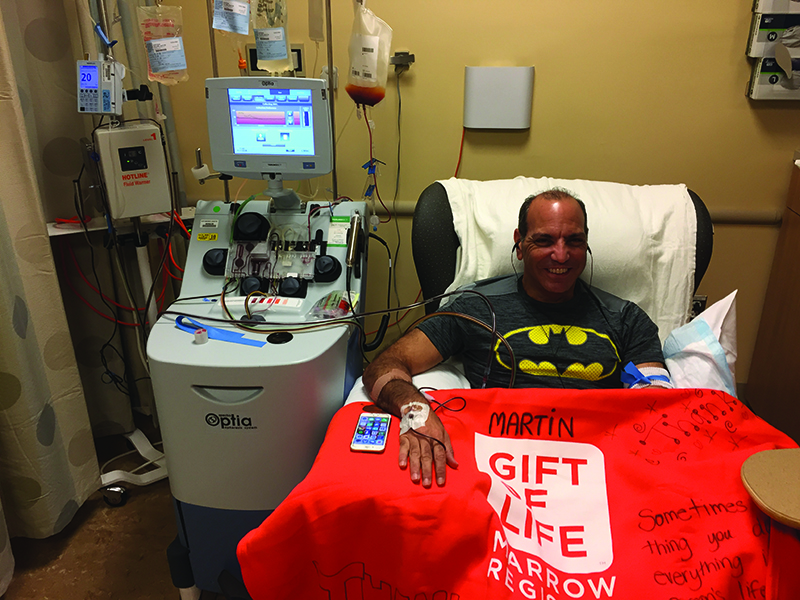
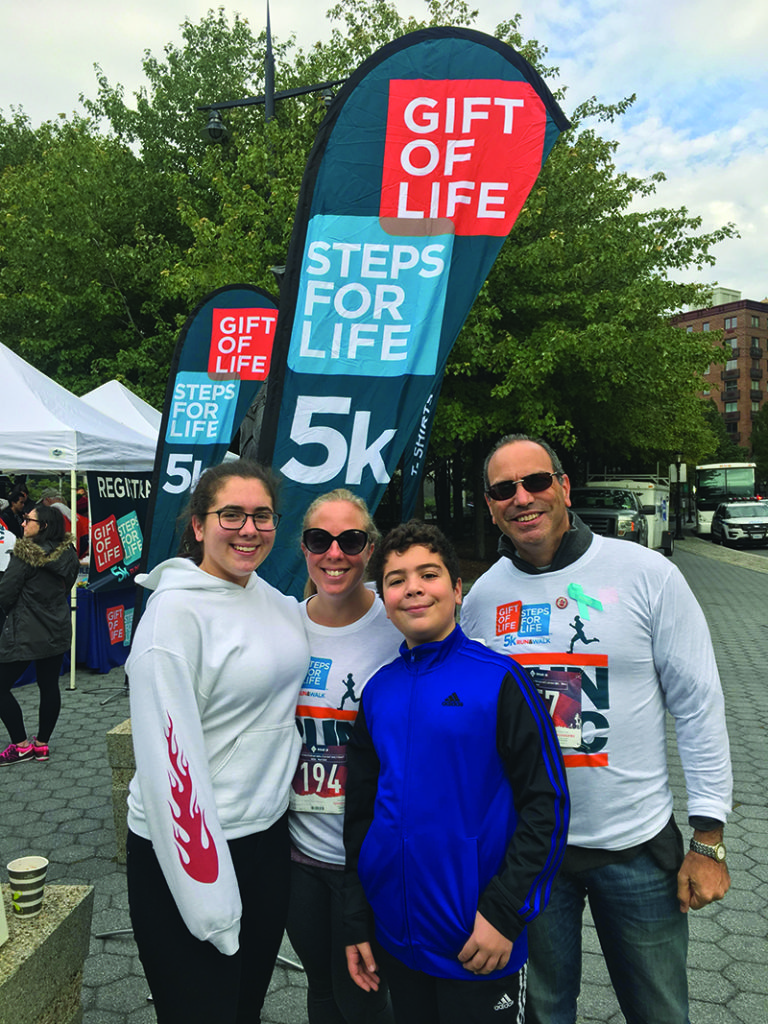
In August, 2006, Martin Salama and 1,504 other people came to the Synagogue of West Deal, in New Jersey, with hope in their hearts. An appeal from the Gift of Life Bone Marrow Registry had gone out to try help save the life of 6 year old Stella Liniado A”H. Stella was diagnosed with a rare form of leukemia and urgently needed a bone marrow transplant. In just a few days, more than 3,000 people where tested, but a match could not be found in time. Stella’s legacy is carried on by her family and the Stella Liniado Rainbow Foundation, an organization that continues to support Gift of Life advocate for donors to join the registry, and sponsors the Steps for Life 5k of New York City every year, among other events. Martin remembers he understood the importance of being a donor. Twelve years later, in May 2018, his miracle call from Gift of Life finally came, “You may be able to save a 44 year old man who is battling leukemia,” he was told
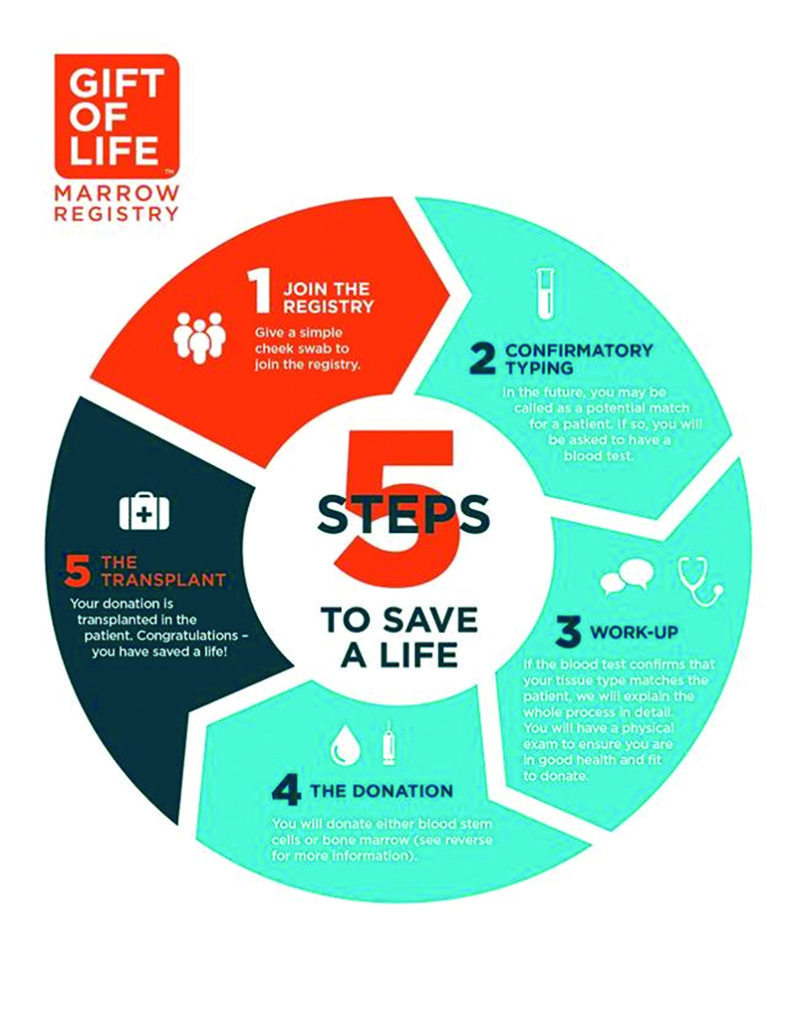
“I was over the moon to be called as a match,” said Martin. “I knew I would donate either bone marrow or stem cells, whatever was needed. All that mattered to me was a man’s life could be saved. It only takes a few hours, and you don’t even need to have surgery or give up an organ, it’s an outpatient process.
With great excitement, Martin documented his journey on his Facebook page, encouraging others to join the registry as well. He also had great support from his family. One of his sisters, Nancy Sutton, started a medical referral service years ago that has now evolved into The Morris I. France Cancer Center in Brooklyn. The Center helps individuals through their medical journey as smoothly as possible, supporting them every step of the way
Martin was ready for his day of donation, arriving with a queue of videos on his laptop to binge-watch while his stem cells were being collected. A Gift of Life community engagement coordinator went with him to make sure he was taken care of. “It was very relaxing,” he said. “I am so lucky! I donated to help someone and hope I can meet him someday.
Martin plans to write a letter to his recipient, which he can do anonymously for the first year. Donors receive updates about their recipient several times, and after a year they can apply to meet their recipient if both parties agree.
“I want people to know how simple this is,” said Martin. “People think you have to be a hero to donate stem cells, but it’s so simple. Thank G-d we have such technology to save so many lives. No one should pass up this amazing opportunity.
Albert Liniado, founder of “The Stella Liniado Rainbow Foundation,” said, “So far we have tested over 7,000 people from our community, and 27 of them have donated their marrow and saved lives. This tested-to-match ratio is extremely high compared to the national statistics, which say of every 10,000 Americans tested they will only get one match. Albert believes this is because of the close-knit aspect of our community. The Foundation’s goal is to test 25,000 people. We must keep fighting this dreadful disease.
Gift of Life Bone Marrow Registry & SLRF believes every person battling blood cancer deserves a second chance at life—and they are determined to make it happen. They are passionate about engaging the public to help them get everyone involved, either as a donor, a volunteer, or a financial supporter. It all begins with one remarkable person, one life-changing swab, and one huge win—finding a match and a cure.
Facts
• Approximately every 3 minutes a person in the United States is diagnosed with a blood cancer.
• An estimated combined total of 174,250 people in the US are expected to be diagnosed with leukemia, lymphoma or myeloma in 2018.
• New cases of leukemia, lymphoma and myeloma are expected to account for 10% of the estimated 1,735,350 new cancer cases diagnosed in the US in 2018.
Stella Liniado Rainbow Foundation’s Mission & Goals
• Test & register over 25,000 people in our community ($100 each kit) to put a blanket of protection over all of us and our families.
• Implement bone marrow testing within our yeshivah high schools for young adults reaching the age of 18, as part of their high school curriculum.
• Educate about the simplicity of donating bone marrow and stem cells to help save a life.
Getting Tested—Easy as 1, 2, 3 and Free
Cotton swab of the inside of check is taken for the DNA.
Fill out name, date, email address and sign.
Respond to email questionnaire about your health, in the privacy of your own home.
30 days later you will be entered into the National Bone Marrow Registry for life.
Donors Must be between the ages of 18 and 50 and be in good health. You only need to be tested once.
SLRF will test up to 10 people at any location, in the NY and NJ areas.
For an appointment, contact Info@stellasrainbow.org.
Please help support our cause!
For dedications and/or sponsorship for the Stella Liniado Rainbow Sports Tournament in Deal, NJ every summer, or for the Guys Night Out event in Manhattan every summer, or for bone marrow testing kits, so donors can be tested for free at many of our bone marrow drives throughout the year, visit stellasrainbowfoundation.org/donate.html
To donate a car, call 855-500-RIDE.
A Message from Rabbi David Ashear : We should feel so fortunate that we have organizations like the Stella Liniado Rainbow Foundation. Not only are they saving lives, they are giving us the opportunity to take part in it. Imagine that we were told that there was a whole family in grave danger, and if we had to do was donate some of our bone marrow or stem cells to save all of their lives—we would jump at the opportunity. What if we were told that an entire congregation of 500 people were at risk and our bone marrow could save all of them. We would be thrilled to help. What if we were told that an entire city was in need of bone marrow or stem cells and we alone could save them all. t would most probably be considered our greatest accomplishment in life. Our Talmud says if we save even one life it is not equivalent to saving just one family, or even a whole city, rather Hashem considers it as if we saved the entire world. That’s 7 billion people! With a few minutes of our time we can be tested and enroll ourselves in the real Power Ball lottery, a chance to save the world!
Stella’s Story Written April 16th 2007 By Stella’s Mommy Where do I begin? April 28, 2000 was the most special day of our lives. A beautiful perfect child by the name of Stella was brought into this world. We all knew with a name like that she could only turn out to be an extraordinary and loving person, just like the woman she was named after, her Grandmother (Sitto) Stella. This world for me had consisted of a house full of men. From the beginning, we knew that we had found our queen to our thrown. Just like that, a house filled with baseball hats and dirty sneakers was consumed by pink, pink, pink. From bows to gingham to polka-dots, we couldn’t get enough of her. I finally had my own Barbie doll to dress up and play house with. Sometimes I would dress her up 6 times a day; I couldn’t get enough. Stella was my best friend, she was a 30 year old in a little girl’s body. From beauty to brains and an abundance of love, she had it all. She ruled our house, but most of all she ruled our world. We shared secretes and promises and lived through each other. As Stella grew so did our world of pink
Stella would dress her brothers and she told them when to eat, when to sleep, and if their homework wasn’t done she made sure I knew it. Boy, she ran a tight ship. Stella kept growing more and more beautiful, inside and out; she taught me about love and life. When she began school, the thought of letting her go out into the world frightened me. I wanted Stella with me all the time. My days became shorter always running home to make her bus and my morning routine changed. I would wake up extra early to workout and get home in time to dress her, do her hair, and put her on the bus. I had to be the last one to see her go and the first to see her come off the bus—I never missed a day. We were so attached, that Stella would refuse to go on play dates and to birthday parties unless I tagged along. Even in kindergarten, she would play sick just to go to the nurse’s office so she could call me to hear my voice. Our love was like no other. I could go on and on, but she was so special, there are not enough words invented to explain her
When Stella got sick, no one would ever have known it. She was not in pain, and if you saw her you would never believe it. Stella never complained! Through days of chemo, we would play and our bond became unbreakable. Even at over nights in the hospital we ate Marino ices and Tootsie Rolls, sometimes until midnight. We had our own pajama parties. Stella’s nights with Dad at the hospital created a bond between father and daughter like no other, She was his princess, and he, her king. They were a match made in heaven
From art projects to pottery and mosaics, we did it all. Now I realize that doing it all was never enough. All in all, life flies by. If I only had one more second, one more “I love you,” one more kiss, one more touch, one more, one more, one more. As Stella got better there was hope—we thought. Our visits to the hospital became fewer, but Hashem had different plans for Stella At the bone marrow drive last summer, Stella attracted 6,000 people in two days, to be tested to help save her life
Now there are 6,000 more people in the registry that will save other lives. All because of Stella, from people in our community to strangers who saw her picture and wanted to save her life. Well, Stella, they couldn’t help save your life, but you my baby will be saving the world for the rest of time. It’s funny, I didn’t want her to save the world. As a mother, my only thoughts were of saving Stella. But this was her plan. When Stella’s last days approached, we were in shock. Stella had a fever and an infection that made her doctors confused. Two days prior to that, she was being Stella, ruling the house, playing with the Wii, Playstation 3, and making cupcakes. Oh did I forget to mention I became a baker? Visitors would stop by to play games with her, which she would always win. Everyone who met my Stella would fall in love with her, from strangers in restaurants and elevators, she was always noticed and asked her name
That was Stella, yet she never cared what people thought. She had Mommy, her best friend. With me by her side, we took on the world. Stella knew her life was the best. She had three brothers who adored her, and a father who was her Superman and made all her dreams come true. Stella left us much too soon, but she never left me. I still have Stella. We all do, especially people who knew her, and the people who will learn that because of this little girl they have a second chance at life. Well Stella, I hope you are looking down at me. From the rainbows you sent us on our kitchen floor to all the love letters she wrote me when I would run on errands. What a gift I had—love letters from my daughter just because I left the house for 20 minutes.
Stella would also text message me, “I love you” from her pink Razor phone, while we were next to one another in bed. I will never, ever, be able to tell you what I had
So this is a brief story about our beautiful Stella. We hope that somewhere over the rainbow Stella sees us and blows us kisses like snowflakes. So please come visit Stella’s rainbow any time, and help us fight our biggest fight ever. Stella, we love you. You are our rainbow and our star that will shine forever in our hearts.q
Stella’s Story Written April 16th 2007 By Stella’s Mommy Where do I begin? April 28, 2000 was the most special day of our lives. A beautiful perfect child by the name of Stella was brought into this world. We all knew with a name like that she could only turn out to be an extraordinary and loving person, just like the woman she was named after, her Grandmother (Sitto) Stella. This world for me had consisted of a house full of men. From the beginning, we knew that we had found our queen to our thrown. Just like that, a house filled with baseball hats and dirty sneakers was consumed by pink, pink, pink. From bows to gingham to polka-dots, we couldn’t get enough of her. I finally had my own Barbie doll to dress up and play house with. Sometimes I would dress her up 6 times a day; I couldn’t get enough. Stella was my best friend, she was a 30 year old in a little girl’s body. From beauty to brains and an abundance of love, she had it all. She ruled our house, but most of all she ruled our world. We shared secretes and promises and lived through each other. As Stella grew so did our world of pink. Stella would dress her brothers and she told them when to eat, when to sleep, and if their homework wasn’t done she made sure I knew it. Boy, she ran a tight ship. Stella kept growing more and more beautiful, inside and out; she taught me about love and life. When she began school, the thought of letting her go out into the world frightened me. I wanted Stella with me all the time. My days became shorter always running home to make her bus and my morning routine changed. I would wake up extra early to workout and get home in time to dress her, do her hair, and put her on the bus. I had to be the last one to see her go and the first to see her come off the bus—I never missed a day. We were so attached, that Stella would refuse to go on play dates and to birthday parties unless I tagged along. Even in kindergarten, she would play sick just to go to the nurse’s office so she could call me to hear my voice. Our love was like no other. I could go on and on, but she was so special, there are not enough words invented to explain her. When Stella got sick, no one would ever have known it. She was not in pain, and if you saw her you would never believe it. Stella never complained! Through days of chemo, we would play and our bond became unbreakable. Even at over nights in the hospital we ate Marino ices and Tootsie Rolls, sometimes until midnight. We had our own pajama parties. Stella’s nights with Dad at the hospital created a bond between father and daughter like no other, She was his princess, and he, her king. They were a match made in heaven! From art projects to pottery and mosaics, we did it all. Now I realize that doing it all was never enough. All in all, life flies by. If I only had one more second, one more “I love you,” one more kiss, one more touch, one more, one more, one more. As Stella got better there was hope—we thought. Our visits to the hospital became fewer, but Hashem had different plans for Stella At the bone marrow drive last summer, Stella attracted 6,000 people in two days, to be tested to help save her life. Now there are 6,000 more people in the registry that will save other lives. All because of Stella, from people in our community to strangers who saw her picture and wanted to save her life. Well, Stella, they couldn’t help save your life, but you my baby will be saving the world for the rest of time. It’s funny, I didn’t want her to save the world. As a mother, my only thoughts were of saving Stella. But this was her plan. When Stella’s last days approached, we were in shock. Stella had a fever and an infection that made her doctors confused. Two days prior to that, she was being Stella, ruling the house, playing with the Wii, Playstation 3, and making cupcakes. Oh did I forget to mention I became a baker? Visitors would stop by to play games with her, which she would always win. Everyone who met my Stella would fall in love with her, from strangers in restaurants and elevators, she was always noticed and asked her name. That was Stella, yet she never cared what people thought. She had Mommy, her best friend. With me by her side, we took on the world. Stella knew her life was the best. She had three brothers who adored her, and a father who was her Superman and made all her dreams come true. Stella left us much too soon, but she never left me. I still have Stella. We all do, especially people who knew her, and the people who will learn that because of this little girl they have a second chance at life. Well Stella, I hope you are looking down at me. From the rainbows you sent us on our kitchen floor to all the love letters she wrote me when I would run on errands. What a gift I had—love letters from my daughter just because I left the house for 20 minutes.
Stella would also text message me, “I love you” from her pink Razor phone, while we were next to one another in bed. I will never, ever, be able to tell you what I had
So this is a brief story about our beautiful Stella. We hope that somewhere over the rainbow Stella sees us and blows us kisses like snowflakes. So please come visit Stella’s rainbow any time, and help us fight our biggest fight ever. Stella, we love you. You are our rainbow and our star that will shine forever in our hearts.
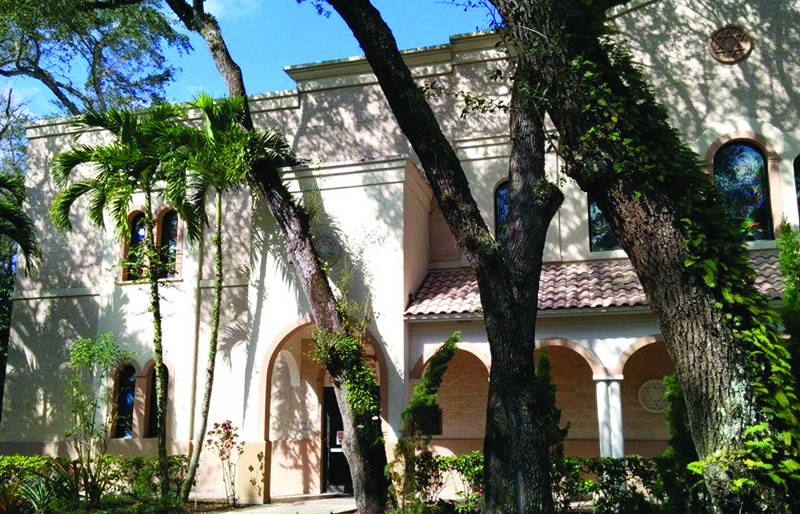
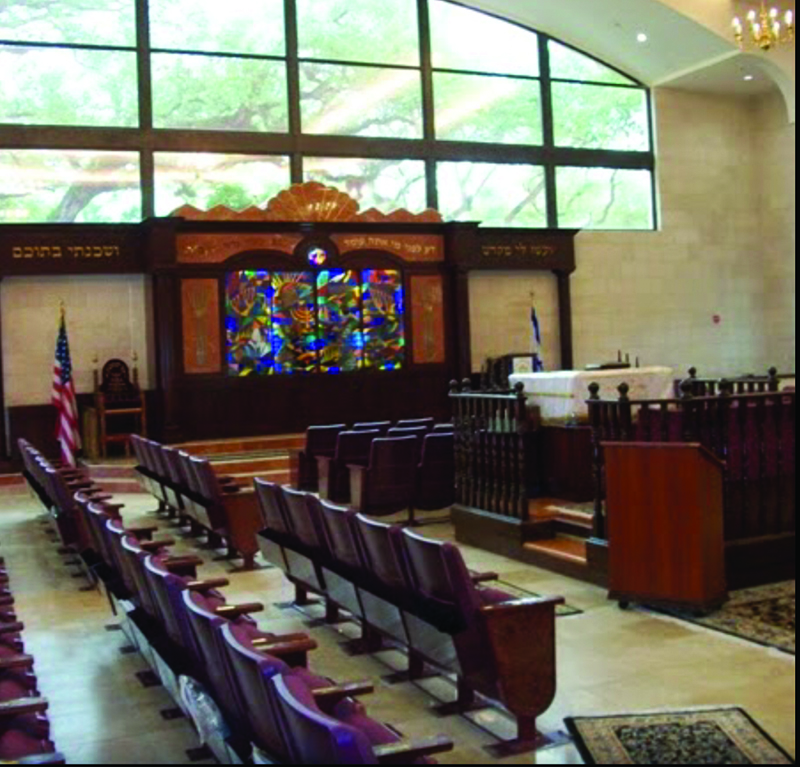
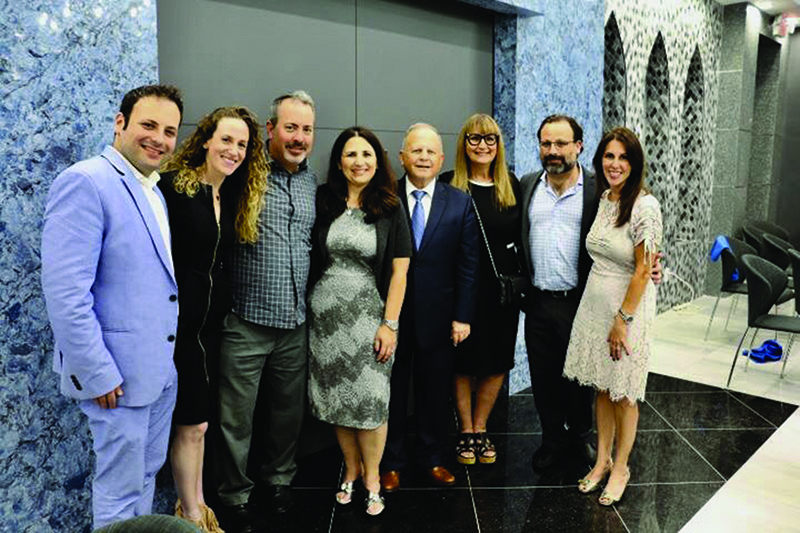
A dream that began in 2007 became reality in September for Congregation Bnai Sephardim of Hollywood Florida when the Anidjar Mikveh had its grand opening. The momentous occasion was celebrated by close to 200 congregants on September 16, 2018 at the synagogue on Stirling Road with a catered dinner and much fanfare.
Nestled among 80 year old oak trees, B’nai Sephardim is Broward County’s oldest and largest Sephardic synagogue. Founded in 1970, it has grown to serve over 700 families in the community during the High Holidays. The Congregations’ history and heritage are rich and varied, as its members are descendants of Jews from Spain, Portugal, North Africa, the Middle East and Latin America.
Though English is the first language of most of its congregants, it’s not uncommon to hear Hebrew, Spanish, French, and Arabic being spoken, sometimes all within the same conversation. They have an active Sisterhood, Torah study groups, as well as social, educational, youth and singles’ activities throughout the year.
Every Shabbat they provide a hot sit down luncheon and a youth program within a warm inviting environment and they can now boast the addition of a ladies/mens/utensil mikveh which was built under and adheres to strict Orthodox tradition.
A significant milestone in the development of Bnai Sephardim’s community occurred in 1985 when Rabbi Yehuda Benhamu joined as spiritual leader. He remained with the congregation for decades until his retirement a few years ago. The new spiritual leader, Rabbi Yaacov Laredo, was born and raised in Montreal, Canada and is of Moroccan descent.
Rabbi Laredo is fluent in English, French, Spanish and Hebrew. His dedication and exuberance are clearly appreciated, and in a short time he has become an integral part of the congregation.
“Building the mikveh was a labor of love, and a huge time consuming project,” said Isaac Anidjar. “The realization of this dream was made possible by many people. I would like to thank the women’s committee, consisting of my wife Reina, Rabbi Laredo’s wife Sara, and Elayna Ifrah for their invaluable participation. I also extend my gratitude to everyone who worked on the project and to all the donors who made this addition to our congregation possible.”
As we had already departed New York, and were cruising somewhere in the Caribbean, I felt excluded from all the activity that was taking place throughout the world. I felt cut off from those Jews who were mourning the loss of their families and friends in Pittsburgh. Shul services were being arranged, and I wouldn’t be able to attend them. I needed to do something on the cruise, to reclaim Shabbat in the name of love and to show solidarity with those Jews around the world who were all attending shul services on Friday night.
The Crystal Cruise that we were on, appeared to have just a handful of Jewish people onboard (only seven attended services the previous Friday night), but I was determined to do something. I spoke with the cruise director and told him I had an idea to hold an interdenominational service. He understood the importance of identifying with the cause, and immediately responded positively to my idea. At that point, I had a service in place, but nothing more. I had to structure the event; I had a two-part plan. The first part would be interdenominational, and the second part would be a standard Friday night service
For the first part, I needed to find someone to lead the service, I needed to attract people of all faiths, and I needed to get the ship’s chaplain involved. The cruise director and I approached the chaplain, who was only too happy to get involved. I told him what I expected from him, and he said he wanted to add a bit of piano music—Amazing Grace. I suggestion Psalm 23, a Psalm of David, to complete that segment. We agreed, and I was happy that part was taken care of
The cruise director was a great help. He publicized and promoted the service, placing notices in the ship’s daily news bulletin for three days. I thought about my opening remarks, I wanted to say something of substance. So, I reached out to my rabbi, Rabbi Mendel Solomon, from Short Hills, New Jersey. I asked him to send me a copy of what he was going to say in his Chabad service that same night. Rabbi Solomon obliged. I had to modify what he sent to suit my time slot. I would read his beautiful abridged message, after my opening address
As fate would have it, at breakfast the next morning I met two sisters who were Holocaust survivors. I told them what I was preparing, and asked them to talk about Anti-Semitism, something they had encountered at a very early age; they agreed immediately
It was all starting to fit together. All I needed was someone to conduct the Shabbat service. If I couldn’t find anyone, I would do it myself, but I preferred to find someone else, as I already had enough on my plate. The following day, I told two of the people who had attended the previous week’s service about my plan, (remember, there were only seven). When I mentioned that I needed someone to conduct the service, they immediately offered their services, assuring me they would do everything
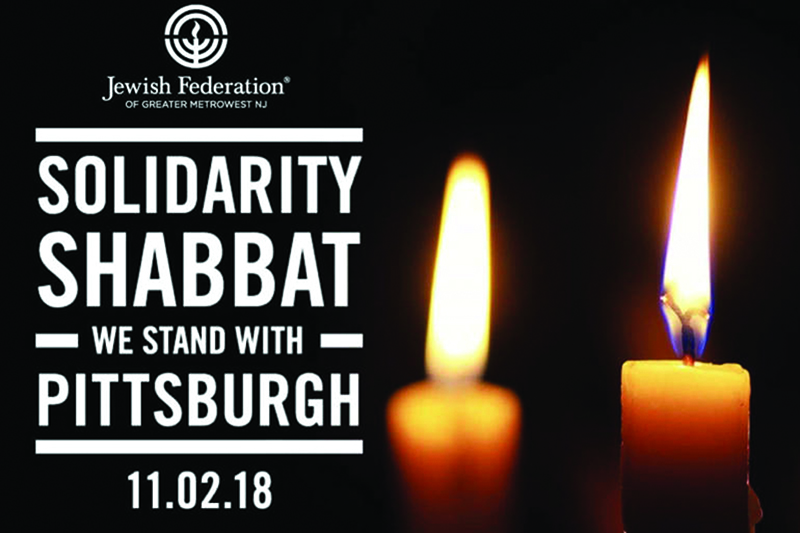
On Friday morning we printed out details for the Solidarity Sabbath Service. Not knowing how many people would show up, I thought 25 would be enough. The cruise director suggested that we print 75. At 5:15 that afternoon, when the service commenced, the theater (which holds 134 people) was full and even more people were standing in the aisles. Towards the end of the service, I asked the audience if anyone else would like to say a few words. A cardiologist from Miami came on to the stage. He gave a very powerful speech about his experiences of anti-Semitism, in Florida
After he spoke, I mentioned that everyone would be very welcome to stay for the Friday night service. About half stayed! To put this all into perspective, the ship had less than 700 passengers on board, and approximately 20% of them came to the service. I couldn’t believe it
The evening ended after about 75 minutes, with kiddish, hamotzi, Gefilte fish, and everyone singing Hatikvah. It was a resounding success. My team did exceptionally well, and I was pleased to receive so many accolades
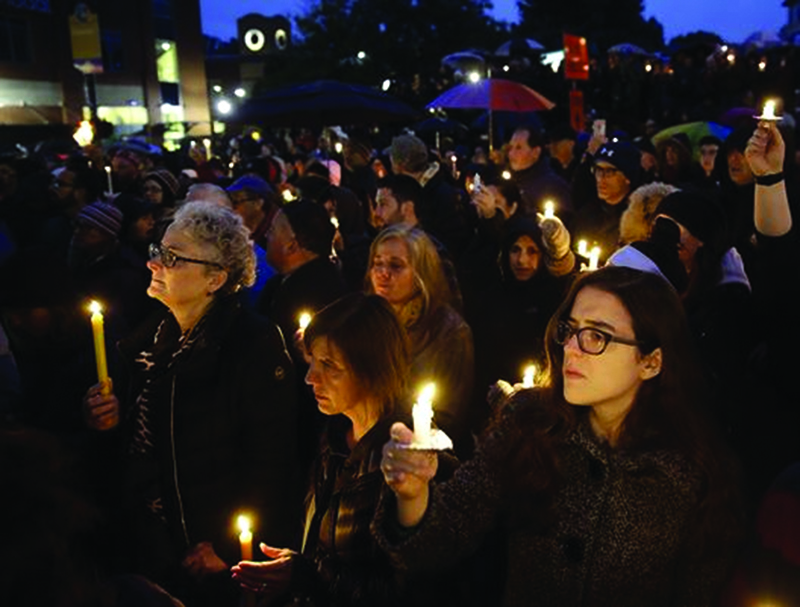
I was happy that we managed to do our bit, and put the Solidarity Sabbath evening together—on this very sad occasion—joining with all the synagogues around the world in protest and defiance against the worst attack on Jews in America’s history.