It was the late 1990’s and I was running myself ragged on a hamster wheel. Almost broke, barely making it, every day I’d wake up, put on a suit, and head to a job with no joy, no potential for growth, and no future. Do you relate?
It was soul sucking, but I kept at it because I was running my life under the same misconception many people have—that in order to be who I wanted to be, I had to have money and things. And that in order to have said money, I had to do more.
In fact, I was so focused and driven to work harder and do more, I lost sight of who I truly wanted to be.
Then, one day I woke up to a paradigm shift. I realized that, if I wanted to build a future for myself, first and foremost I had to be real, authentic, and focus on who I could be. Only then would I have what I truly wanted out of life. With this clarity, I gave my current boss notice.
It was terrifying. I didn’t have a plan, or another position lined up. I had nothing but the knowledge and clarity that I not only wanted more, but that in order to get my life where I wanted it to go, I needed to be more. What happened next was nothing short of miraculous, and it taught me some important life lessons.
Be Present & Get Real
Every one of us faces challenges on a daily basis. Some of them are minor nuisances, while others are full scale crises. In the moment, when we’re facing a challenge, what really matters is how we deal with it. Do we curl up in a ball and hide? Do we freeze up or can we somehow find the courage to be real, to be present, and face the challenge head on? After all, courage is not the absence of fear. Rather, it’s taking action despite the fear.
Perception Is Key
I’m currently working with a young entrepreneur. He’s on his third business, and struggling. He’s so hard on himself, bemoaning “I’m a loser, a failure,” and yet he’s just 26 years old, and he’s overcome the odds so many times, worked, sweated and built businesses from scratch!
He’s learned what works, and what doesn’t. He’s learned how to manage a team, how to speak to clients, how to negotiate and operate. His first businesses may not have been sustainable or profitable, yet as a person and entrepreneur he’s grown tremendously. He’s well on his way to success.
I like to think of Thomas Edison, who tried and failed to invent the light bulb many times. Each time he failed, he said, “I found another way a light bulb won’t work.” In coaching, we talk about structure of interpretation (SOI), the language we use to describe a situation and/or the lens through which we view it. Changing your language or your lens changes everything.
Reframe: Leverage StrugglesTo Your Benefit
Often, the solution to our struggles is staring us straight in the face. Sometimes we only get to the solution through the struggle itself.
Another one of my clients works in real estate. When he was first starting out, he struggled for a bit until he closed a few good deals. He then upped his game and took on greater risks. All it took was a little more debt and bang, he was in trouble. He was overleveraged and really struggling. His initial investors and funding sources were tapped out. This challenge forced him to find new methods and resources, which ultimately opened doors to even greater funding, bigger deals and profits.
Back to my personal miracle. Six months prior to leaving my job, I had worked a sales lead. I put my heart and soul into this deal, meeting and negotiating with their entire executive team. When this deal fell apart, I remember feeling crushed and saying out loud I may not understand, but it’s what G-d wants. Little did I know how impressed they were with me. As soon as they heard I left my job, they reached out immediately to recruit me with a generous offer.
Part of my decision to give notice that day was because I calculated my income requirement and realized it would not happen where I was. Incredibly, BH, their offer matched this number precisely.
When we strategically think about who we want to be, truly, and where we want to go, we’ll be able to take the right steps in order to do, and ultimately have the life we always dreamed of.
Let’s stop the focus on “doing” and start becoming! Give it a try. And if you need a little extra support, give me a call at 718.377.3900, or email yes@themaxmethod.net.
This has been a groundbreaking year for SAFE. Through a series of remarkable events and initiatives the agency has embarked on a campaign to change the way we think about addiction and substance abuse. We are shining a light on this important issue that’s touching all corners of our community by raising public awareness with a new look, important volunteer initiatives, innovative events, and expanding our critical therapy services and educational programming.
The goal for this next generation of SAFE’s work is to destigmatize addiction, so those who need help receive the support and acceptance necessary to achieve a life full of health, family, and success. We need to change the message because receiving help for substance abuse can no longer be a story of shame; rather, it’s a story of strength, resilience, and of family caring for each other. Whether you—or a loved one—are experiencing addiction, or you simply want to educate yourself on this pressing topic, SAFE has the information you need. By being the leaders in challenging this stigma, we are securing the present and future wellbeing of our community. Addiction is a problem that can affect anyone regardless of who they are. So, let’s talk about it!
Under the leadership of Board President Charlie Tebele, and Founder and CEO Ike Dweck, SAFE is strengthening our community engagement work and growing its operations from the ground up. Even though we are already a leader in the field of substance abuse and addiction and have some of the highest success rates in New York, we don’t stop there. We are committed to constant innovation of our successful treatment model through strategic hiring and expansion, and staying ahead of trends in the field. This means that our treatment team is staffed with experts who are proactive in responding to new issues in addiction, and our services are at the cutting edge of treatment. Along with a new look and logo, SAFE’s internal operations are expanding to comprehensively meet our community’s growing needs. In addition to our highly qualified team of doctors, therapists, and staff, we have hired new directors and created positions to update the Project SAFE school program and drive our community engagement work with tremendous success. As a result of the board’s dedication and vision, we now also have volunteers bringing awareness of the SAFE approach to all parts of the community. Thanks to these efforts more community members are getting the help they need than ever before! Together the SAFE board and staff, along with volunteers of all ages (singles, marrieds, and parents alike), are taking part in the process of shaping a safe future for those they love and the generations to come. Bringing Light & Hope To A Sensitive Subject.
Recently, two key events were hosted by SAFE where several brave individuals broke the isolation and shame inherent in addiction and took the stage to share their stories and their journeys to recovery. By breaking their silence, they were able to connect the dots for us on how addiction can slip into one’s life without one’s knowledge. Their stories were a powerful example of both heartache and hope, yet in the telling of them they created a legacy of change
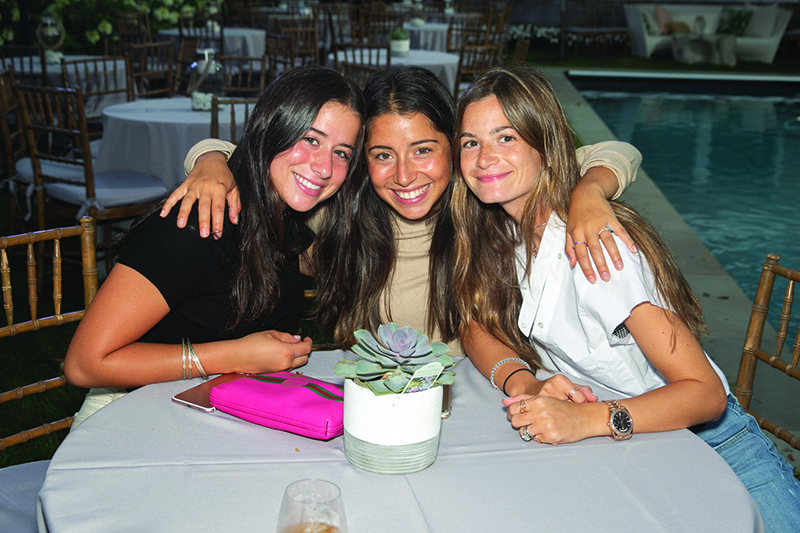
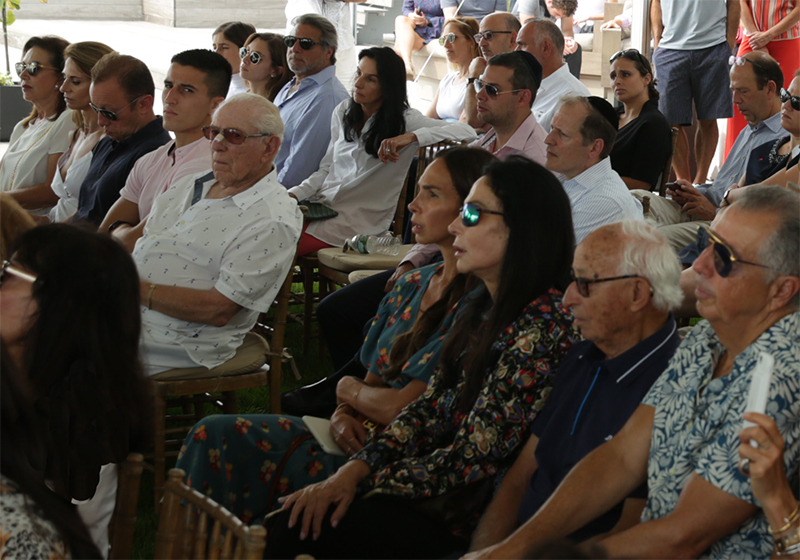
At the annual summer fundraiser, graciously held last year at the home of Ricci and James Haddad (board member), and honoring former Board President Isaac Chera, we heard the powerful story of a young woman who battled with a drug and alcohol dependency, despite having a supportive family and good friends. The audience was riveted as this young woman spoke about the insecurities that lead her to use, bringing forth the humanity that lives behind the hard wall of addiction.
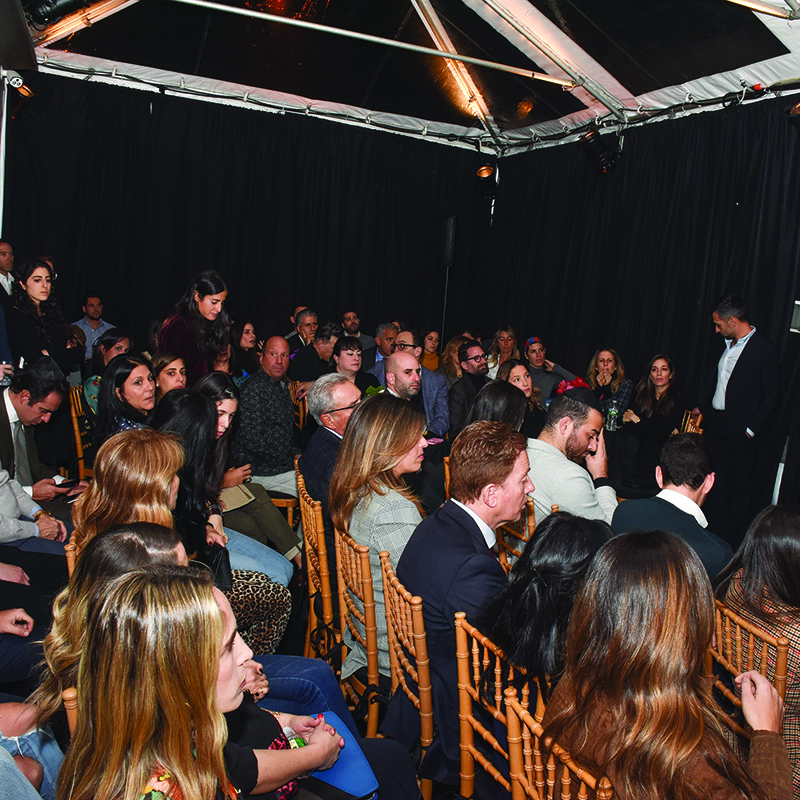
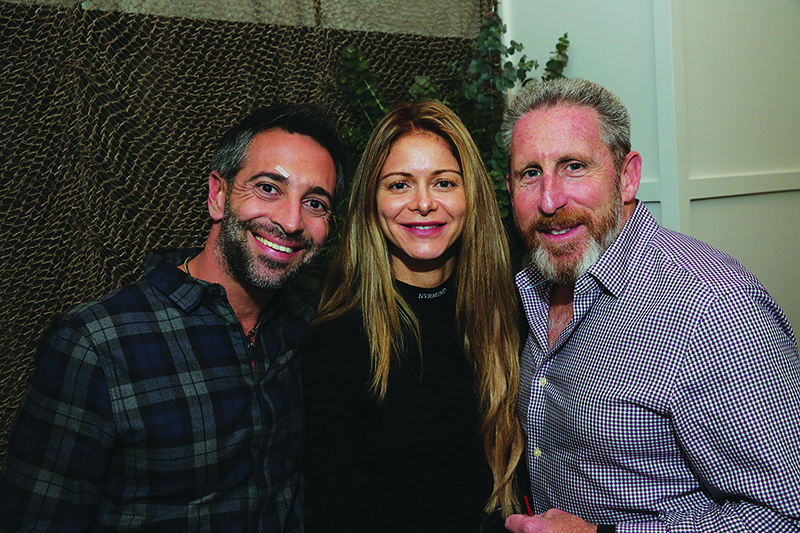
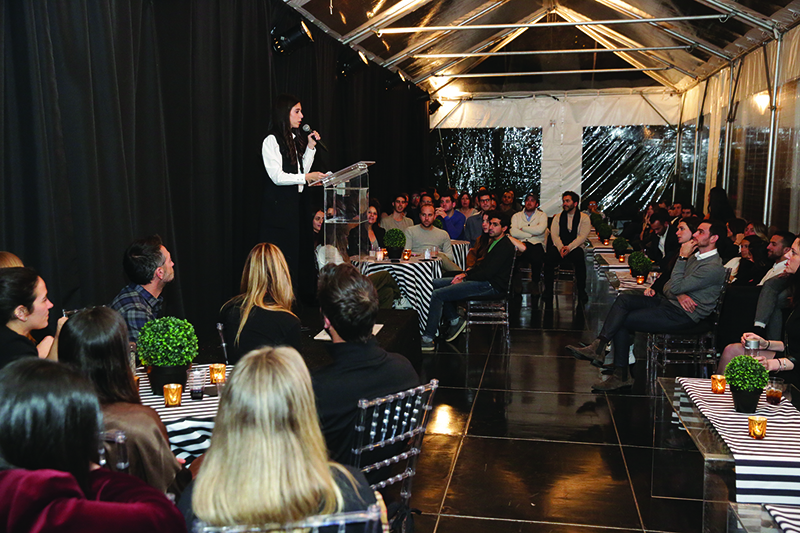
The next event was our first ever SAFE TALK. The event, I’m Fine: Why We Say We Are When We Aren’t, was spearheaded by our next generation volunteer committee and hosted by Ruthie and Jeffrey Terzi in memory of Ronnie Terzi A”H. In what turned out to be a groundbreaking night, over 200 young adults single and newly married, came to mingle, enjoy a delicious dinner, and hear inspirational stories from their peers. The crowd heard from two young men and one young woman, who had found recovery from drugs and, for one, from gambling. Their talks were followed by an informative lecture with a psychologist who specializes in working with addicts and their families. The evening closed with a Q & A session, so audience members could ask Charlie Tebele, Ike Dweck, and the speakers a host of questions. This event was made successful in no small part due to the help and promotion of the members of our next generation volunteer committee: Jaclyn and Richard Adjmi, Margo Adjmi, Isaac Ashkenazi, Frances Cohen, Morris Franco, Ginette Gammal, Arlette Kassin, SAFE Board Member Joseph J. Sutton, Joseph A. Sutton, and of course, the hosts Ruthie and Jeffrey Terzi.
This event was so successful that by early Fall two more SAFE TALKS were under way. Inspired by the poignant sharing, the influx of people wanting to volunteer and get involved with promoting our mission skyrocketed. Planning committees came together, and more people were contacting SAFE to ask questions about helping a friend or loved one. Missing The Signs: When A Loved One Is Struggling was held at the home of Ginette and Isaac Gammal, where daughters, sons and siblings shared their stories. Some had lost their loved ones while others told stories of living with family members who were lost and disconnected. This was followed by a compelling clinical recap by Laura Mizrahi, primary therapist at SAFE, who tied together these experiences with an understanding of our holistic treatment approach.
The Ripple Effect: The True Impact of Addiction, another powerful evening, held in the home of Lorayne and Gabriel Shehebar, drew a standing room only crowd. Put together by the parents volunteer committee chaired by SAFE Board Member Joseph Cabasso, with the volunteer efforts of Serene Azar, Marilyn Cabasso, Nicole Dweck, Simone Dweck, Sheila Gindi, Lorayne Shehebar, Zudy Shehebar, Beatrice Sutton, and Elana Wahba, the event was geared towards people in their 30s and 40s. Here, a wife told her story of how her spouse’s addiction took her down a long, dark road of loneliness and confusion. A young man, now married and in recovery, shared his gratitude for the gift of reclaiming his self-esteem and his life. The night dedicated to David Dushey A”H, was a poignant reminder of the hurts and loss that can come along with watching the deadly progression through addiction of someone you love.
Defining The Future
Today, the accessibility of drugs and alcohol, and addictive behaviors, are reaching epidemic proportions. Thanks to the Internet, the legalization of marijuana and the trend of juuling, our youth are experimenting at a much younger age. Today the whole family system must be educated and fortunately we specialize in working with the family as a whole. Cynthia Kassin has been hired as the new Director of Community Education to collaborate with community schools and to further develop the Project SAFE school curriculum. This already popular curriculum is building skills in our children so they will know how to take care of themselves when faced with everyday challenges. Every week, students are not only learning about the dangers of addiction and addictive behaviors, but they are also being taught life skills such as confidence building, how not to succumb to peer pressure, and what to do about bullying. They now have a forum within their schools to openly discuss these and other important topics. They are asking valuable questions and participating in healthy dialogues about the struggles they face together as teens.
In terms of family education, we are not stopping there. SAFE volunteer Corie Adjmi is leading her own committee working to bring parenting workshops and specialists in the field of child psychology to teach the most up-to-date information on raising healthy, well-adjusted children. Just this past April, this committee presented a Conscious Parenting Workshop, hosted by Joyce Ashkenazi and facilitated by Dr. Tamar Perlman, where mothers learned new ways to communicate with their children to empower them from within. Another informative night happened last November when Michelle and Jack Haddad hosted Born to Be Wild, where parents heard author, professor and child and adolescent psychiatrist Dr. Jess Shatkin speak about why teenagers take risks.
What’s Next?
Looking ahead, SAFE has plenty more in store for the community. All of our beautiful events to date have been planned through the generosity of Norma Cohen of Norma Cohen Productions—an amazing and inspiring friend and partner to us, whose gorgeous designs have made these events truly unique and safe spaces to share these journeys. Keep an eye out for more of these groundbreaking events, programs and peer advocacy trainings, or reach out to host a program in your home!
This summer SAFE will be sponsoring its annual FARM event, led by Isaac Ashkenazi, which is a night of art, creativity, and good quality fun. Community members up to 30 will be showing their art, shopping at community vendors, and performing poetry, comedy, music and more. SAFE trained mentors, led by Lorayne Shehebar and Marilyn Cabasso, will be visiting community schools to listen to, coach, and support the girls in small classroom settings. Serene and David Azar will be hosting an evening of Empowered Parenting at their home on June 4th.
While we have a new logo, which was created with the guidance of our board member, Marlene Mamiye, it’s not our only new look! Our lobby will also be undergoing renovations, thanks to Joyce Silverman of Joyce D. Silverman Interiors. In collaboration with board member, Michelle Haddad, and volunteer, Mikki Terzi, Joyce has volunteered her time and efforts to redesign our lobby to be an even warmer, welcoming place for those who come through our doors. There are peer advocacy training groups in the works, as well, and we are always looking for volunteers to host these important small group workshops where we send one of our staff to answer your questions.
Stay tuned for more parenting workshops and classes geared towards improving relationships, understanding parenting techniques, and individual wellness. Everything from prevention to intervention to education is being planned.
Most importantly, we want to hear from you! We are inviting all community members to get involved by either joining a committee, sending requests for event topics, reaching out to ask questions or offering suggestions, hosting a training event, or workshop in your home, and more. Lastly, but most importantly, SAFE is here to protect the confidentiality and anonymity of everyone who reaches out for help. Our main mission is to save lives and restore families, because we’re not just about treatment, we’re about hope. All calls and visits are confidential and SAFE is here to help 24/7. If you, or someone you love, needs help or has questions about treatment please call us at (718) GET-SAFE. For more information on volunteering or events email us at ask@thesafefoundation.org or follow us on Instagram @thesafefoundation.
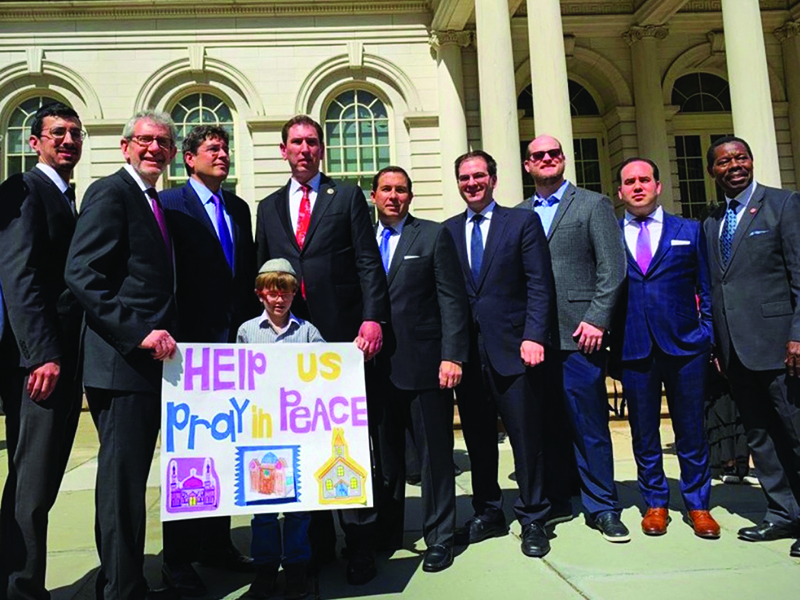
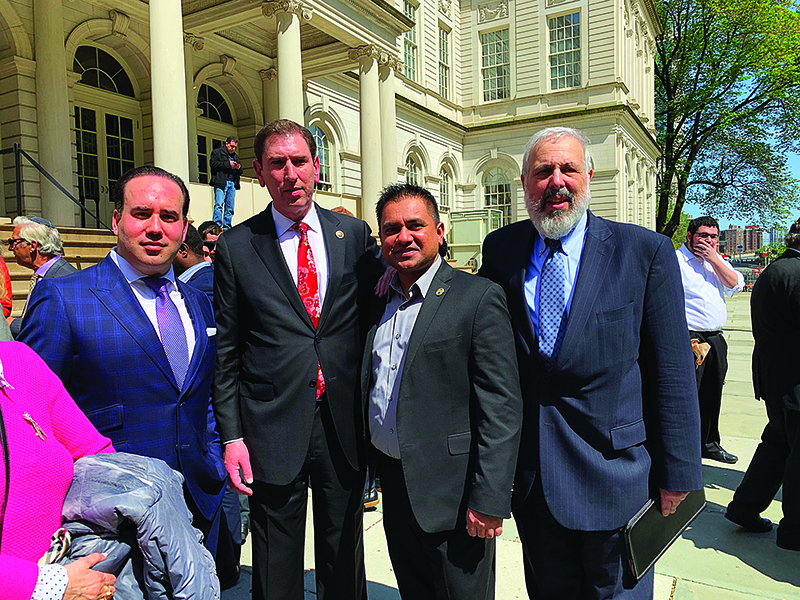
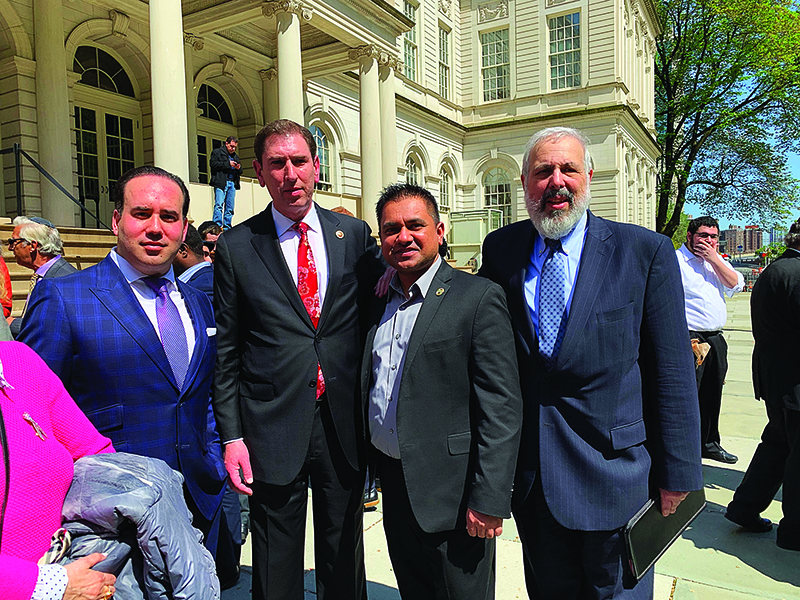
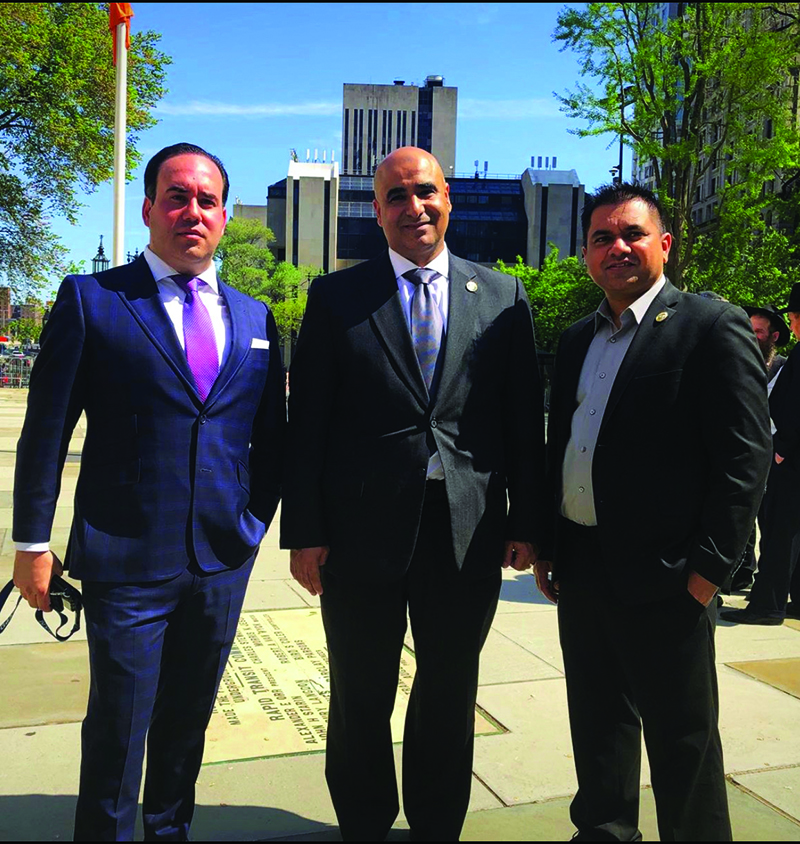
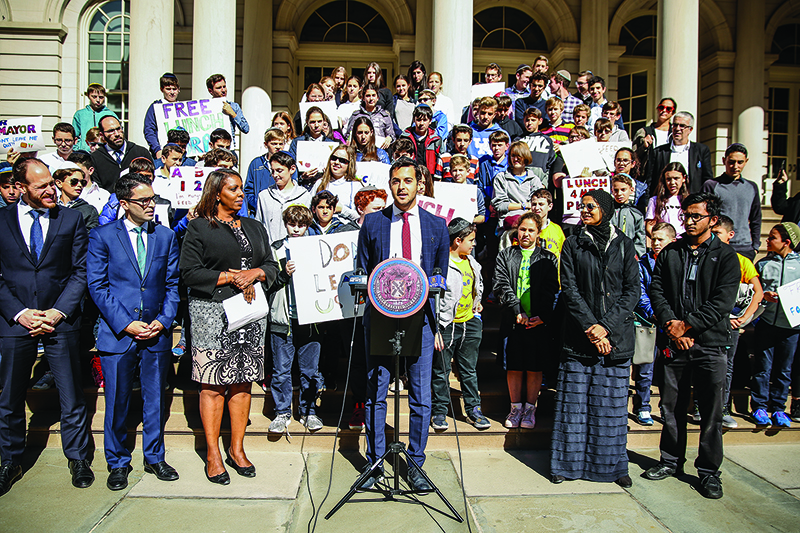
Faith leaders from across the city recently gathered on the steps of City Hall to call for security funding for houses of worship across the city. Hosted by Councilman Chaim Deutsch, the rally was attended by dozens of community leaders and activists representing a variety of ethnicities and religious backgrounds.
“In the wake of tragedies in Poway, Pittsburgh, New Zealand and Sri Lanka, it is clear that our houses of worship are vulnerable to threats,” said Councilman Deutsch. “New Yorkers of faith deserve to be safe as they worship—it’s as simple as that. Houses of worship need a layer of protection to keep congregants safe, such as an armed guard. We must be pro-active and fund security,” said the Councilman.
Councilman Kalman Yeger, who recently introduced a bill calling for armed security guards at houses of worship, also participated in the rally. He said that “government has certain very basic obligations. The most predominant of all is to keep its citizens safe. We have to know that we will be protected in our own house of worship. Our bill will allow any house of worship to hire private security, submit for reimbursement, and have the city pay the bill. “This is our city and our money, and safety in our houses of worship is our most fundamental right.”
Also in attendance was David Heskiel, NYPD clergy liaison, and Sephardic community liaison to councilman Deutsch.
Majority Leader Laurie Cumbo, Councilman Ruben Diaz, Councilman Mathew Eugene, Councilman Mark Treyger, community and faith leaders from across the city, including Rabbi David Zweibel from Agudath Israel of America, Eric Goldstein CEO of UJA Federation of America, Josh Melhman FJCC president, Rabbi Michael Miller CEO of the Jewish Community Relations Council of New York, Devorah Halberstam Director of External Affairs at the Jewish Children’s Museum, NYPD Community Affairs Detective Mohamed Amen, NYPD Captain Rana and representatives from numerous synagogues, churches and mosques throughout the city, were there to lend support, as well.
When parents have a child with special needs, they grapple with all sorts of emotions. At the same time, they have to learn to decode all the foreign language that comes along with it. If you are one of those parents, you might also worry that your child isn’t getting everything he/she needs. Know that your experience can be influenced by how you present yourself and your child’s needs, because information is power!
Parents need to start with the facts about their child’s special needs, while trying to keep their emotions out of it. Be current with fact-based knowledge from doctors, specialists, special education experts, attorneys, and teachers. C.A.R.E. for Special Children can help with deciphering, obtaining and understanding this information.
Ask a lot of questions like “who, what, where, when, and why.” Listen carefully to the answers you receive. Document the responses instead of relying on your memory. Learn how to best ask questions so they don’t come across antagonistic or defensive. It’s the best way to get open and honest replies.
I know that approaching school teachers, administrators, doctors, lawyers, etc. can be nerve-wracking and downright intimidating, but you know your child best, you spend more time with him than anyone, you are the expert, which is why you are your child’s best advocate. A parent’s perspective is invaluable and something only you can bring to the table. No one knows what is best for your child like you, so trust your instincts when something feels off and don’t be intimidated. Fake your confidence if you must, find a source of strength to be that confident parent when talking to a professional. If you think your child needs more therapy, then ask for it. Call an I.E.P. (individual education plan) meeting and express your concern.
Under the law, and practically speaking, parents have the most power to influence their child’s school program, medical protocol, etc. Knowing your rights is one way to find the confidence you need. Be seen, it’s very important that you are seen in all the circles where your child is being serviced or cared for. Let the doctors see and hear you, let the teachers and school administrators see you at meetings and school events and hear from you via email. Make friends with the doctors and their office staff, with the professionals, and teachers.
Smile when you see them and take the time to get to know them. Develop a connection, because remaining a presence tells them that you care about their efforts to help your child. Set emotions aside, (it’s not easy of course) and approach your meetings with schools or doctors, like a business negotiation. Keep a professional tone. Adopt an approach of cooperative problem solving. Working with your child’s teachers, therapists, or doctors, typically equals better results.
Propose solutions or help create a plan that works best for everyone involved. Be open-minded and hear proposed solutions from the other side as well. While in the hospital, if you think you need to get all your doctors on the same page, ask for a team meeting. The worst outcome— you won’t get what you want. Even if that occurs, you’ve demonstrated that you’re an engaged and thoughtful parent, committed to your child’s best interest.
Bring backup, ask family members, friends, or your local community advocate to accompany you to these appointments, meetings, or events. The importance of their input may surprise you. It always helps to have a second pair of ears, and another perspective. It also shows that you have support and a community advocate behind you.
Also, know your limitations. Advocating for your child with special needs can be very demanding, so it is important to know your strengths and weaknesses. It is especially important to pay attention to those weaker areas and find others who can assist you where you need it.
Time and time again, we see that when children are in the right environment in school, or getting the right care in the hospital, with the right doctors they thrive—and that is our goal. So, be a force for your child—a kind, thoughtful, and polite force—but a force, nonetheless, to be reckoned with.θ
A thriving business stays successful by remaining relevant. It is always evolving to ever-changing times and advancing technology. Matchmaking is not your conventional business, yet it benefits from the same notable attention and advancements. The challenge is to bridge technology with the warmth and sensitivity necessary to assist our singles in discovering their match. Congregation Shaare Zion has taken on the responsibility to embark on this blessed and important mission to change the face (and results) of matchmaking as we know it.
Shaare Zion has created SZ CONNECT, a unique service uniting community matchmakers. SZ Connect combines all community matchmaking resources in one Match Center along with a highly confidential master database. Rabbi David Maslaton and Mr. Jimmy Tawil are leading this incredible team thanks to the enthusiastic support of SZ President Dr. Victor Sasson.
“This is so crucial,” begins the Rabbi. “There are so many singles out there who deserve our utmost attention. Our Sages teach that from the day Hashem completed the creation, he occupied himself with matchmaking!”
At SZ CONNECT the mission is to emulate Hashem’s work by matching every day! As a result, The Match Center is open daily and allows the Matchmakers to convene, either for a formal meeting, or a quick visit between their day-to-day errands. Mrs. Chaya Maslaton, a beloved veteran matchmaker says, “Women in general are very busy, and when you are a matchmaker you do this while waiting on lines, raising kids, making dinner, and cleaning for Pesach too. With the new Match Center, women can now put aside a couple of hours where they can come to SZ to brainstorm, think and focus on matches. It is our pleasure to set aside a few designated hours a week to do this important work alongside everything else in our lives.”
“Few projects encompass the whole community,” says Mr. Jimmy Tawil, “and that’s one of the greatest and most unique things about SZ Connect; it’s a total community collaboration—its for everybody!”
Not only is this an incredible resource for singles of every age group, it is also for every religious level. The matchmakers involved are just as diverse as the singles they are bringing together.
Whether they are called matchmakers, shadchans or agents, the incredible mix of this team and each of their collective inventories, has resulted in some very novel and interesting matches. Mrs. Vicky Elbaz, an integral part of the team, explains: “Just the other day I went into the Match Center office in Shaare Zion for a meeting, where two matchmakers I never worked with before were busy adding new singles to the database. In moments we came up with four viable suggestions for older singles. We made some calls on the spot, and we got to work getting these people together for dates!”
The beauty of this venture is that all who are involved care greatly about the people they work with. They are honored to be able to work with like-minded individuals in this important capacity. There is a reassurance that they can rely on each other to ask questions and seek advice, especially from those who have many years of experience.
Mrs. Molly Haber, esteemed community matchmaker and Rebbetzin, is an important part of the team and is always willing to advise any matchmaker who can benefit from her knowledge.
Matchmaking today is quite different than it was in years past. Melanie Kishk, another enthusiastic team member, recalls “Not so long ago, there was a time when we knew everybody, but now the community is growing at a very quick pace and it is hard to know everyone and get to know them like we used to. SZ Connect is here to help link us to all the people we may otherwise not have any access to. It’s like a dream come true!” She adds, “I see that everyone is associated to somebody else. I love the idea of being able to correspond with new singles through second or third party connections. It makes our potential possibilities endless.”
A most efficient and beneficial aspect of the SZ Connect concept is that the singles are added to the database that is only able to be accessed confidentially by approved matchmakers.
Mrs. Frieda Betesh, an agent who has tirelessly helped to coordinate the database exclaims, “Now it’s all at our fingertips and we don’t have to chase people for information. Here you have everything—it’s efficient, faster and more productive!”
Mrs. Vicky Elbaz adds, ”What this organization is doing is truly amazing. Hours are spent organizing files in a user-friendly program that is so helpful to the matchmakers. It creates the opportunity to network with so many shadchanim in a timely manner. Dates are happening! I believe that this united effort will help take many of our singles out of our database, as they hopefully meet and build a bayit ne’eman (a faithful home) B”H.”
While SZ CONNECT officially began operation after Pesach, there were many matches and engagements already made in the preliminary process alone! Anyone who has ever worked with any of the outstanding matchmakers in the SZ network is already in the database or in the process of being added.
You can rest assured that the entire process is discreet. Anyone new who wishes to join, or for inquiries or guidance, please reach out via email to ShaareZionConnect@gmail.com or text (929) 400-7691. Singles are encouraged to meet with one of the matchmakers in person to insure maximizing the probability of success with this service. Tizku L’Mitzvot and may we share many semachot!
Throughout my life, I have had the privilege of visiting Israel more times than I can remember. I can honestly say I have been almost everywhere and seen almost everything. I have seen Israel through the eyes of a local, a tourist, a student, a journalist, and even as a guest of the government. I love Israel—its history, the land, the people, the food—and understanding its past and present struggles makes me love it even more. Each time I visit Israel I see new things, learn new things, and experience new things. Every trip touches a different place in my heart and leaves me yearning for more.
So, when Rebecca Harary, Senior Vice President of Bnai Zion Foundation (BnaiZion.org), invited me to join a week-long mission to Israel, how could I say anything but yes! But what could Bnai Zion Foundation teach me that I had not learned or experienced before? It’s simple and can be stated in just one sentence: “Bnai Zion is Israel, and Israel is Bnai Zion.”
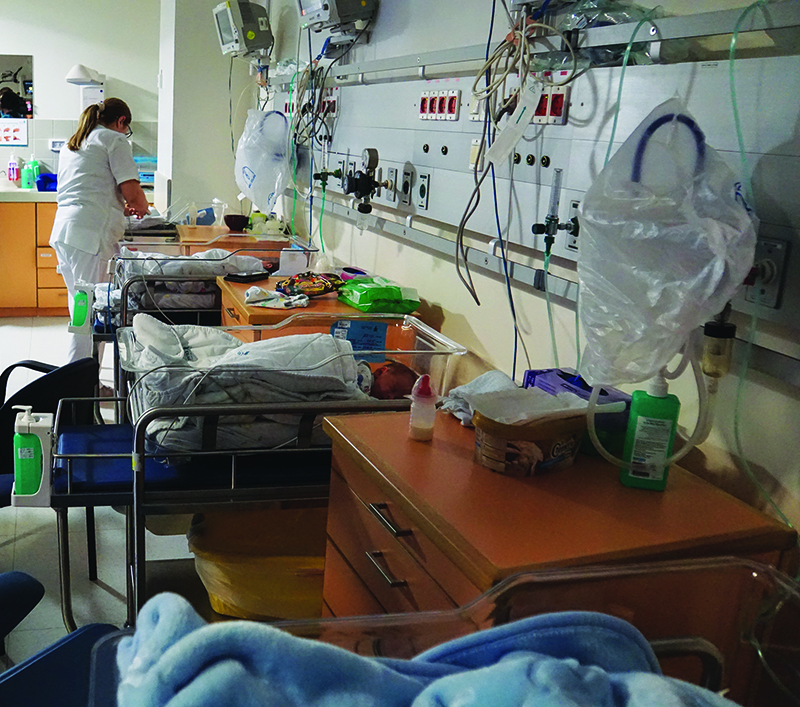
The neonatal unit at Bnai Zion Medical Center
Over the past 111 years, Bnai Zion has raised millions of dollars, and completed over one hundred capital and humanitarian projects that have contributed to the physical, mental, and social well-being of the people of Israel. Bnai Zion’s work has made Israel a more transformative, innovative, welcoming place, and strengthened the significant and enduring ties between America and Israel.
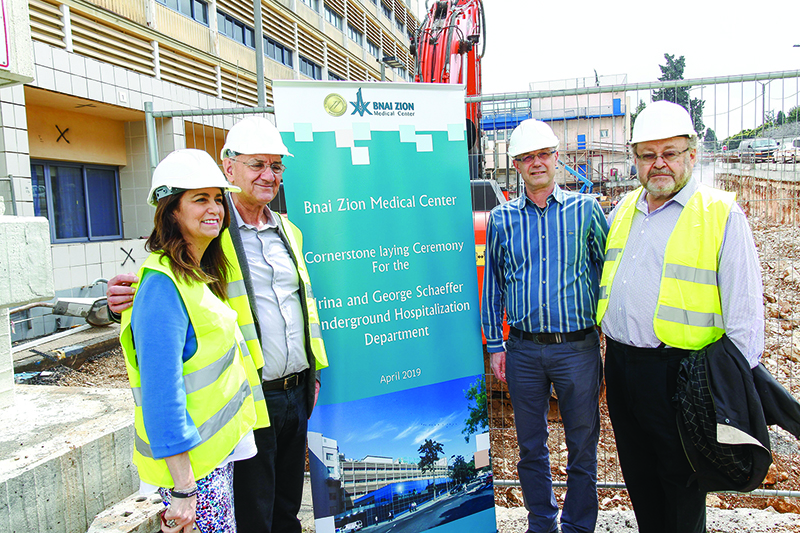
Bnai Zion SVP Rebecca Harary with BZMC CEO Dr. Amnon Rofe and Chairman George Schaeffer at the cornerstone dedication of the underground, bombproof ER
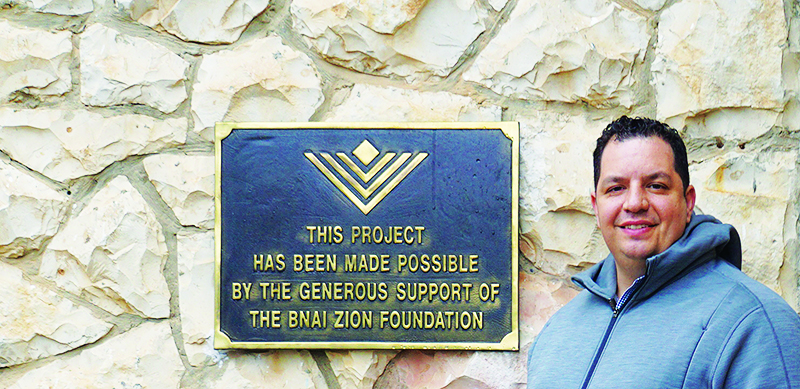
It seems as if Bnai Zion Foundation is a household name in Israel. As we traveled throughout the Jewish homeland, Rebecca pointed out buildings with plaques that all bore the same message: “Funded by Bnai Zion Foundation.” Many projects date back before the State of Israel was established. For example, in 1928, Bnai Zion’s financial contributions allowed for the reopening of Israel’s foremost higher education institution for the arts, The Bezalel Art School. In 1941, leaders of Bnai Zion helped found Magen David Adom, Israel’s equivalent to the American Red Cross. Millions of medical supplies and 125 ambulances were donated. Since its founding in 1908, Bnai Zion has funded hospitals, rehabilitation centers, youth and senior centers, educational programs and institutions, programs and cultural centers for Holocaust survivors, assisted living villages for people with disabilities, music and cultural programming, a youth village for abandoned or abused children; and more.
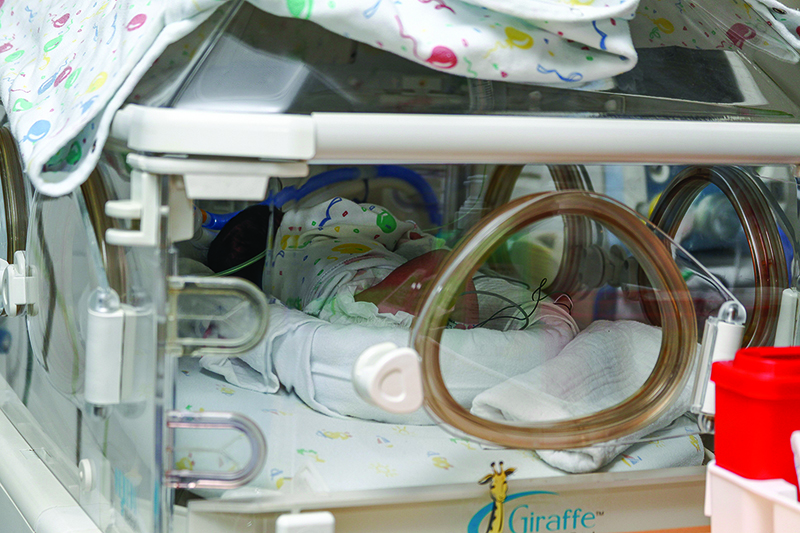
A tiny baby in the neonatal unit
We traveled Israel from north to south, stopping along the way to see many of these places. While each project serves it purpose, a few stops stirred this writer’s emotions and truly stuck with me.
Bnai Zion Foundation & Bnai Zion Medical Center in Haifa
Going to the hospital is always a difficult experience. Going to the hospital in Israel could be deadly. How so? Bnai Zion Medical Center, a world renowned hospital, is located in Haifa. Across the bay—no more than a few miles away—lie Syria and Lebanon. On a clear day you can easily see both. Missile attacks, unfortunately, have become common and terrorists love to target hospitals. When the missile siren goes off, the hospital has only seconds to secure the safety of their patients. Some of the older wings of Bnai Zion Medical Center have little protection. In 2006, during the second Lebanon War, a Hezbollah rocket landed mere feet from the Medical Center, damaging the facility with shrapnel. The staff had to contend with treating those injured in the attack on Haifa, while also keeping their patients safe from the danger on their own doorstep. The physical damage was repaired, but the tension lingered.
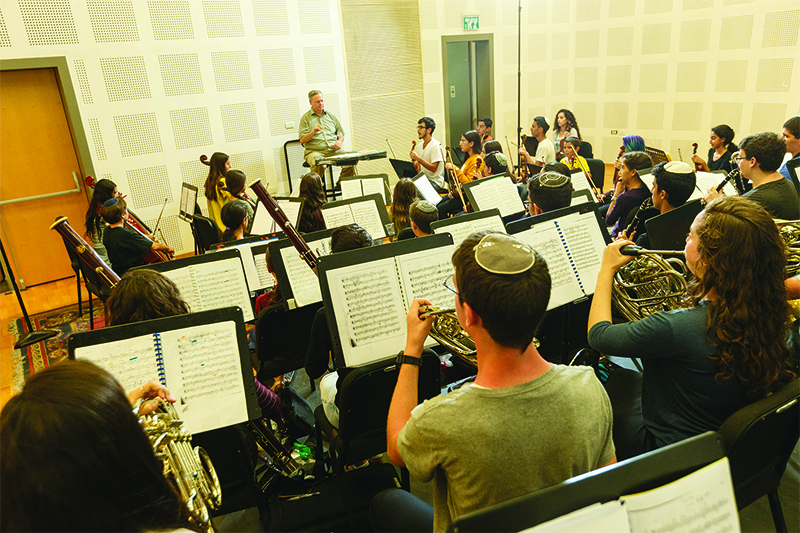
Youth Symphony Orchestra in Ma’Ale Adumim during a rehearsal
“The question is not if we’ll suffer another missile attack, but when. We must be prepared,” said Dr. Amnon Rofe, CEO of Bnai Zion Medical Center. In order to ensure that the hospital can continue to deliver the highest level of care to its patients, Bnai Zion Foundation is raising the funds needed to construct a bombproof emergency room that will be fortified against nuclear, biological, and chemical attacks to ensure that all who need emergency medical care can receive treatment in a secure facility.
I had the opportunity to tour the construction site. This new, underground ER will offer state-of-the-art technology, will have a capacity of over 150 beds, and will be completed within two years. Thankfully, with the immense help of Bnai Zion Foundation, more than $16 million has already been raised toward the construction of this $18 million project.
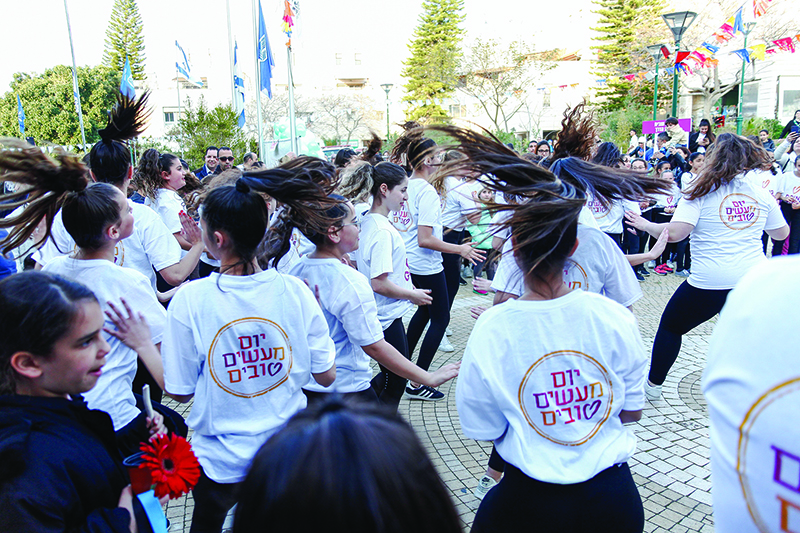
Children dancing in the town square in Ma’Ale Adumim
As part of the tour of the hospital, we also visited the bombproof Neonatal Unit. I can only wonder how new parents might have to deal with issues of a premature newborn while also worrying about the hospital being bombed! The nurses demonstrated how—on a moment’s notice—they must seal the bombproof doors in order to protect all of the tiny preemie babies, some only weighing a couple of pounds. Dressed in scrubs, I had the honor of meeting a very brave baby boy that weighed a mere 1.8 pounds. Now I pray for him every day.
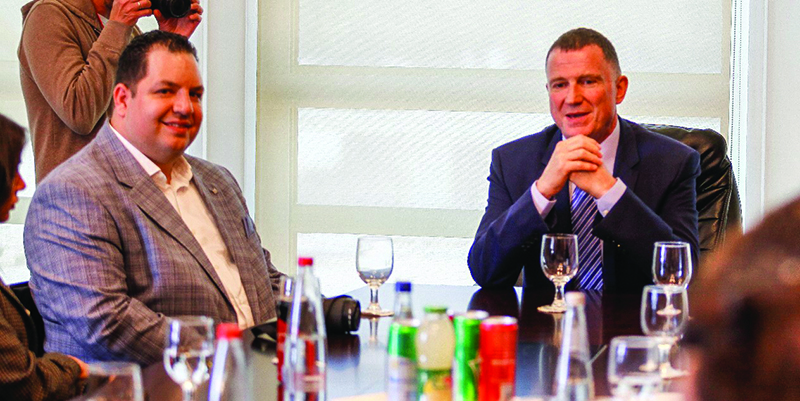
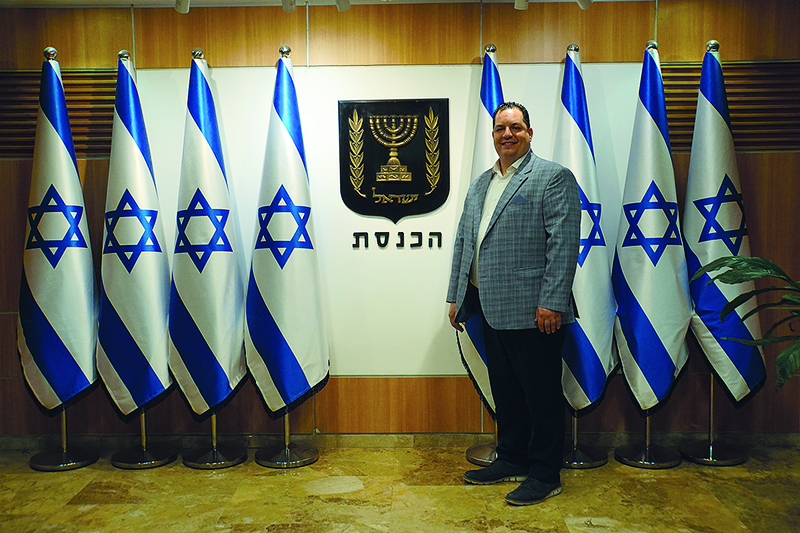
Steven Matsas with Speaker of the Knesset Yuli Edelstein.
Bnai Zion Foundation & Israel Elwyn
How a society deals with its special needs community says a lot about its character. Throughout history, people with disabilities have been hidden away in institutions— powerless and voiceless. Deep inside, these beautiful people have always known they could do more with their lives. Their desire to come out of the shadows and be a part of society is always present. Bnai Zion Foundation has embraced this population since the early days of the organization, and over 50 years ago built a residential center for people with intellectual and physical disabilities in Jerusalem.
Steven Matsas with Mayor Benny Kashriel of Ma’Ale Adumim
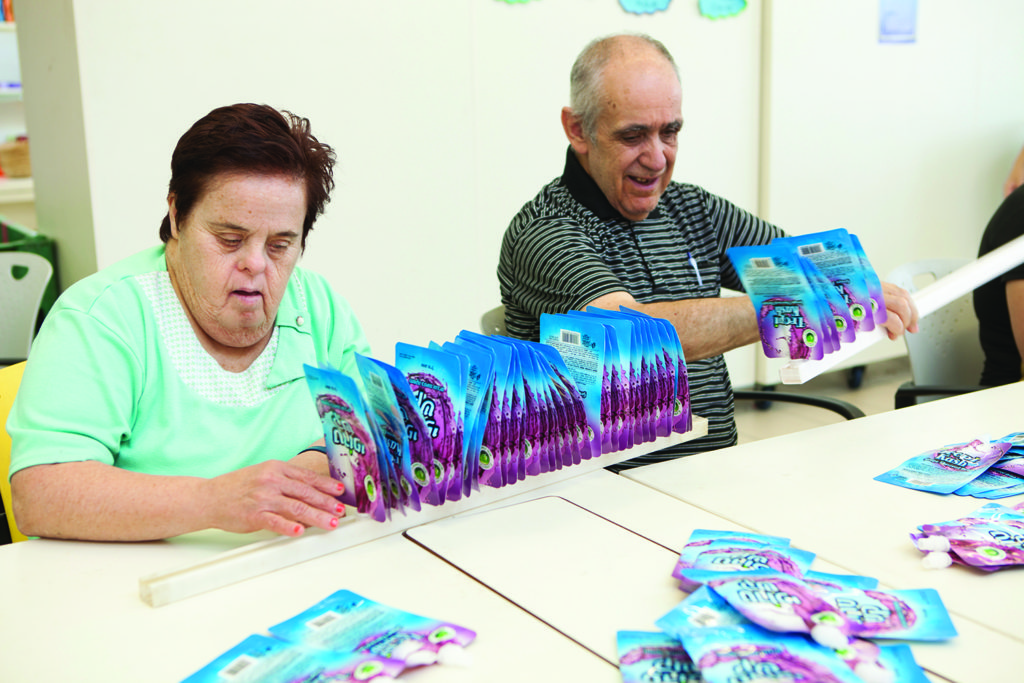
In 1988, Israel Elwyn took over management of Bnai Zion’s Zvi Quittman Center from the Israeli government, and Bnai Zion Foundation has been a major supporter ever since. Today, Israel Elwyn serves more than 4,500 children and adults with severe disabilities throughout Israel. Israel Elwyn believes in the principle of inclusion, and that everyone has the right to be a full part of the community. The residential center’s ultimate goal is to provide individuals with the right tools to enable them to make sound decisions about their own lives and to gain more independence for living and working in the community. With the support services received there, hundreds of adults now work in jobs in the community. Hundreds of children and adults lead more dignified and productive lives, thereby enhancing their overall quality of life by accommodating their disabilities in order to take advantage of their abilities. As a cutting-edge leader in Israel in rehabilitation, early intervention, supported living, youth transition programs, vocational training, employment services, and self-advocacy for persons with disabilities, one of Bnai Zion Foundation’s many goals is to help provide these individuals with the means to achieve independence, inclusion in the community, and dignity.
As I walked around the Israel Elwyn Jerusalem campus, I saw how proud a person with severe disabilities can be when they make their own life decisions and are in control of their own lives. They work, they earn money, have their own bank accounts, spend their money as they choose, and even get married. Now with the help of Bnai Zion and Israel Elwyn they can even choose where to live. Currently, Bnai Zion is working with Israel Elwyn on an initiative to secure more long term rentals on apartments in the greater community for Israel Elwyn residents, in order to align more completely with their principles of inclusion and integration.
Bnai Zion Foundation & Ahava Village for Children & Youth
Unfortunately, like the rest of the modern world, Israel must also account for the thousands of children who are affected by their parents’ drug and alcohol addictions, poverty, violence, and physical and emotional abuse. The adults might be the addicts or the abusers, but their children are the victims. These kids are removed from their parents’ homes for their safety. What happens to these forgotten children? The State of Israel simply cannot handle the amount of traumatized children that enter the system every year. Many become orphaned, and literally have nowhere to turn. They need a home where they will be shown love!
Steven at the Knesset
Enter Ahava Village for Children and Youth, a safe, residential space for those 6 to 18 years old, who have been removed from their homes by the state due to violence, abuse, neglect, and other forms of familial trauma.
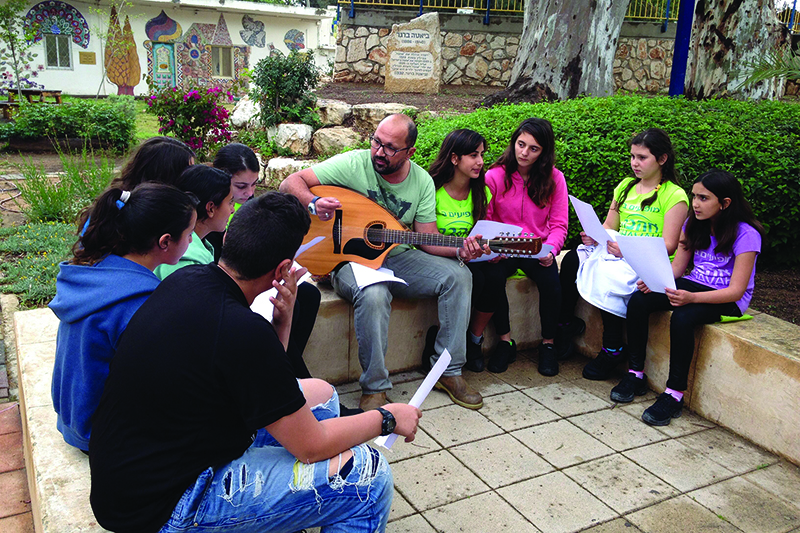
There are over 250 children at Ahava, and they often suffer from emotional and behavioral issues that make it too difficult for them to fit into Israel’s foster system. Thanks to funding by Bnai Zion Foundation, they receive vital therapies and a loving environment to heal from their traumas and to begin building a foundation for healthy lives. The majority of Ahava’s residents are placed in residential units, where a married couple commits to raising them (often alongside their own children) until they turn 18. This provides the children with stability, a loving environment, and a model for healthy, normative family dynamics.
Residents of Israel Elwyn learning vocational skills
Bnai Zion also funded the creation of an Emergency Center at Ahava, for children coming from crisis situations. This Emergency Center gives children in imminent danger (usually from a parent) a safe space to acclimate during this very fragile time. Each child is carefully assessed to determine which therapies will be needed, and then matched with a suitable family and residential unit.
Most recently, Bnai Zion Foundation raised funds toward Ahava’s construction of a new Therapy Center, which was completed in February. The Center will provide the children with the life-changing, and often life-saving, therapies they need in one central location, allowing the therapists easier access to therapeutic tools and equipment and enabling more frequent cross-disciplinary collaboration on the children’s therapeutic plans.
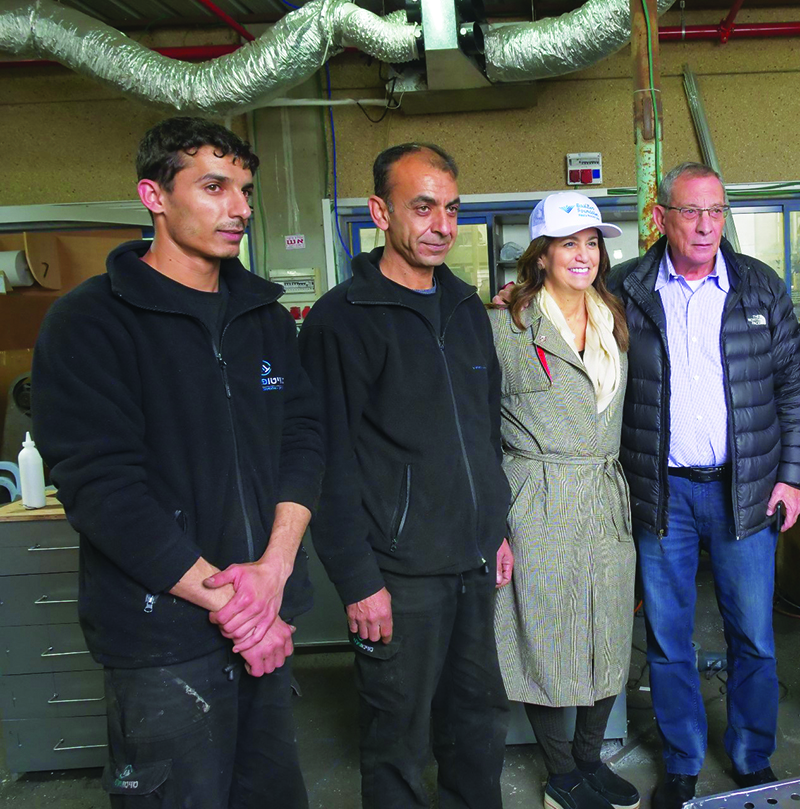
Rebecca Harary with Factory Owner Israel Twito and2 Palestinian workers in Barkan Factory
Yoav Apelboim, the Executive Director of Ahava Village (but more like a grandfather to all of the children) proudly told me that many of “his” children have moved on to live normal, productive lives. This was a touching moment, as Yoav was quite emotional while talking about some of “his” children and their successes—and even their failures. The love and pride he feels for each of them is palpable—so much so that many keep in contact with him long after they leave.
Bnai Zion Foundation & The David Yellin Teacher’s College
Peace between the Arabs and the Jews in Israel always seems just out of reach. We can debate how the problem started and who is at fault, but Bnai Zion Foundation is actually doing its part to find a solution. They believe in education and working together. I visited two places in Israel that demonstrated that a peaceful coexistence is possible. David Yellin Teacher’s College is a school where both Arabs and Jews study to become teachers. Classes are given both in Arabic and Hebrew. The classes are integrated so the students learn about each other’s lives and cultures. Most inspiring is that many long lasting partnerships have been created from attendance at the college. The College’s commitment to promoting tolerance and combating violence is demonstrated by a number of programs and workshops aimed at promoting dialogue between Jewish and Arab students, and educating students about people of diverse backgrounds. I was genuinely shocked when I walked into a class of Jews and Arabs studying together and analyzing both Torah and the Quran. One Arab student stated, “We found we have more things in common than we do differences.” That one sentence gave me so much hope for the future of Israel, and the Middle East.
Over the years, Bnai Zion Foundation has contributed hundreds of thousands of dollars to this institution that is doing so much work to educate Israel’s future teachers to embrace peace as a goal.
The territory of Judea and Samaria is just one flash point in the Arab-Israeli conflict since the land was liberated during the 1967 War. Whether it’s two states or one state for two peoples, if you talk to either side you will probably hear the same thing: “Peace will never be achieved.” Maybe people are not looking hard enough. We visited Barkan Industrial Park in Section C of Samaria, and it sure is working there. While the industrial park itself is not one of Bnai Zion Foundation’s projects, it demonstrates the principle of inclusion at the heart of the organization’s mission.
There, Jews and Palestinians work together, side-by-side in Jewish owned factories. They get equal wages and enjoy equal benefits. In several cases, the Palestinian employees are not just the workers, they are also the management. Interestingly, their relationships do not stop at the office door. These Jewish and Palestinian coworkers celebrate birthdays, graduations, weddings, and births of babies together. What is striking is that the BDS movement targets these factories and asks people not to purchase their goods, which is oxymoronic, since boycotting these factories ends up directly hurting the very people they claim they are advocating for—the Palestinians. Copying this model of employing both Jews and Arabs throughout Judea, Samaria, and Gaza could bring peace, coexistence, and prosperity to both the Jews and Palestinians.
Kids singing with their music instructor at Ahava
Bnai Zion Foundation’s Partnership with the Israeli City of Ma’ale Adumim
We’ve all heard the stories and seen what the news portrays on television—the West Bank and settlements are part of some kind of war zone with soldiers, walls, fires, and barbed wire. But when we crossed over the “green line” and entered the town of Ma’ale Adumim, I saw no such thing.
Ma’ale Adumim is a magnificent city of approximately 42,000 Jews, located near Jerusalem. It serves as an anchor for other communities further east, whose residents rely on Ma’ale Adumim’s commercial center, library, and other cultural venues, many of which have been continually funded by Bnai Zion Foundation for more than 15 years. This growing Jewish population includes over 4,000 seniors, over 700 of whom are Holocaust survivors.
The care and dignity of the elderly population in Ma’ale Adumim has always been a high priority, which is why Bnai Zion Foundation is working with the government of the city to expand their only senior center, the Yuvalim Center. Bnai Zion has also raised funds for the Library of Peace, which is the city’s municipal library, which provides services and educational programming to both Ma’ale Adumim and the surrounding areas.
Bnai Zion has contributed to various initiatives to improve the city, including funding upgrades to playgrounds and kindergartens, a new scenic overlook for the city, improved security measures, holiday meals for residents living below the poverty line, and computer labs in area schools.
Three buildings are named for Bnai Zion Foundation’s Chairman, George Schaeffer, in recognition of his contributions to their construction. The George Schaeffer Music Conservatory is home to the popular Ma’ale Adumim Youth Symphony, which has played internationally, is headed by renowned cellist Benjamin Shapira. This past December, they played a sold out concert at Carnegie Hall.
A child at Ahava does homework with her surrogate mother
The George Schaeffer Cultural Center provides a venue for cultural events, with a 600 seat auditorium, and is further beautified by the nearby Irina Schaeffer Serenity Gardens. The George and Irina Schaeffer Bnai Zion Foundation Regional Communities Support Center provides programming for children with special needs, and houses the community’s synagogue. When I spoke with Ma’ale Adumim’s Mayor Benny Kashriel, he had nothing but words of praise and gratitude for Bnai Zion Foundation and its Chairman George Schaeffer, who joined us for the tour.
Bnai Zion Foundation & The Israeli Government
Bnai Zion supports projects that have a long term, positive social impact on the people of Israel, independent of a political or religious agenda. As such, it is the only organization pursuing capital projects for social impact causes that unite supporters of Israel across the political and religious spectrum.
Rebecca Harary told us that over the past 111 years, Bnai Zion has raised tens of millions of dollars, and completed over one hundred humanitarian and capital projects in Israel. But don’t misunderstand, just because they choose not to have a political agenda does not mean Israeli and American politicians are not very respectful of Bnai Zion Foundation.
In fact, it’s the opposite. Our mission to Israel included a visit to the Knesset, as well as the new American Embassy in Jerusalem. At the Knesset, we met with Speaker Yuli Edelstein. To demonstrate just how much he understood the importance of the long and productive relationship between Bnai Zion Foundation and Israel, he left the campaign trail during the week leading up to the Israeli election just to meet with us!
Once again, we heard nothing but gratitude and praise for all Bnai Zion Foundation has done, and continues to do, for the State of Israel. We were also impressed when we visited the newly opened American Embassy in Jerusalem. Rabbi Aryeh Lightstone, Chief of Staff and Senior Adviser to US Ambassador to Israel David Friedman, spoke at length about the long relationship that exists between America, Israel, and Bnai Zion Foundation, detailing the positive impact Bnai Zion has had on the land and for the people of Israel.
My experience with Bnai Zion Foundation in Israel is something I will never forget. I was honored to witness a side of Israel that all Israelis have come to know—the benevolent, nonpolitical, and compassionate projects built and supported by Bnai Zion Foundation, and enjoyed by all. Instead of making political statements that might divide us, Bnai Zion concentrates on what unites us. I recommend joining one of their upcoming missions to Israel, so you too can see firsthand all the good they do.θ
Shehebar Sephardic Center (SSC) places rabbis in new or small communities around the globe. These rabbis are linked together through Rabbi Sam Kassin at the SSC yeshiva in the Old City of Jerusalem. Many of them perform multiple duties. They are shokhets, sofers, congregational rabbis, hazanim, mohelim, and mashgiachs, often all rolled into one person. They perform weddings, teach Jewish children, prepare boys for bar mitzvahs, advise community members, give classes, oversee kashrut and many other duties.
The following story is a first-person account from Rabbi Jonathan Francis Goldschmidt, an SSC rabbi recently placed in Cochin, India.
I had been studying at Midrash Sephardi in the Old City since returning from South Africa. It was just a few months before that my son Asher David was born, and I spoke with Rabbi Sam Kassin, about my job options.
I had studied at a variety of yeshivot, including the Leshem Yeshiva in Jerusalem focusing on philosophy, mysticism, and Jewish law. However, in order to pursue semicha, I was referred to Midrash Sephardi, the rabbinical program of Shehebar Sephardic Center, to study under Rabbi Yaakov Peretz, whose books on halakha inspired me and had very clear explanations
When our latest child, Asher David was born at home, our lives began to focus on our new baby and I found myself less at kollel than usual. Until one day, Rabbi Kassin asked me if I would fly to Cochin, in Kerala, India for a job interview with Star-K Kosher. The job was a mixture of kosher food production auditing and running the Paradesi Synagogue in Jew Town (a quarter of Old Cochin) one of the oldest synagogues in the commonwealth.
My wife and I had previously been involved with the Muizenberg Synagogue in Cape Town, South Africa. We had experience running small communities both in South Africa and in Jerusalem. We saw this as an amazing once in a lifetime opportunity to travel to India and to provide support for the Jewish travelers visiting Cochin
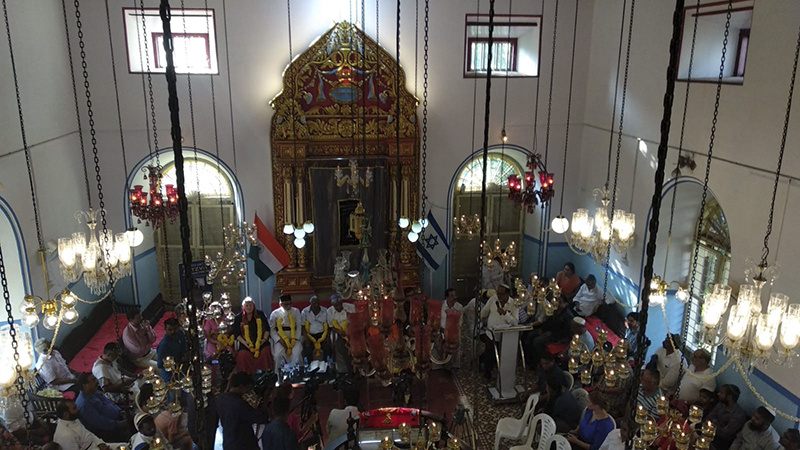
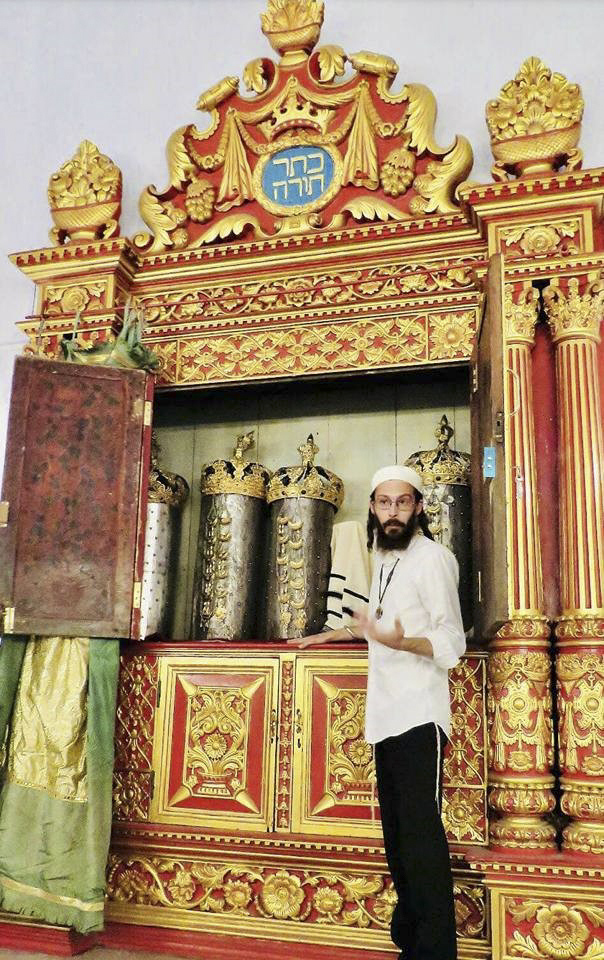
Upon entering the synagogue, my first impression was of awe and real inspiration. I saw the original Torah scrolls in their silver covered wooden boxes. I walked over the original ceramic tiles, a gift from the emperor of China to the Maharaja of Cochin in the 1500s.
The Synagogue had been lovingly cared for by Joy, a local Indian, whose grandfather, father, and now his son have spent their lives dedicated to the care and maintenance of the synagogue. In the center before the Ark burnt a singular Ner Tamid (eternal light), lit with coconut oil as a symbol of his family’s ongoing dedication to the Jews of Cochin, who had once numbered in the thousands and dwindled now to only a handful
Whilst I took in the enormity of the beauty and majesty of the synagogue, my contact from Star-K, Rabbi Joel Weinberger, took me carefully through the inspection process that is vital for the many food products regularly imported from India. After a few more trips to India to train in local kashrut and to train to take on the services of the synagogue, we decided on a trip with my entire family for Rosh Hashanah, Yom Kippur and Sukkot.
It was essential that my wife, Elisheva, who had never been to India, be comfortable with the conditions and with the long-term reality of living there with two small children. We spoke to many rabbis including Chabad couples who had been posted in India for long periods of time, got the necessary vaccinations and planned our trip.
Before we left, we collected a Kosher Sefer Torah from Midrash Sephardi in the Old City to take to India with us
For me, this posting in India has been a return to self. I grew up in a family where my mother and father had extensively travelled in India. I grew up with stories of the streets of Delhi and the smell of my parents’ suitcases when they would return from their trips. My mother would cook excellent Indian food, and I had travelled to the north with my father by train and been deeply moved by this
As a family, it has been a wonderful experience. We were honored to bring a new Sefer Torah to the rebuilt Kadavumbagam Synagogue in Ernakulum and with the 450th anniversary celebration of the Paradesi Synagogue in Fort Kochi
Constructed in 1567, it is one of seven synagogues of the Cochin Jewish community in the Kingdom of Cochin. Paradesi is a word used in several Indian languages, and the literal meaning is foreigners. It was applied to the synagogue because it was built by Sephardic or Spanish-speaking Jews, some of them from families exiled in Aleppo, Safed and other West Asian localities. It is also referred to as the Cochin Jewish Synagogue or the Mattancherry Synagogue. It is located in the quarter of Old Cochin known as Jew Town, and is the only one of the seven synagogues still in use.
No one has been more supportive and dedicated than my amazing wife Elisheva, as she now runs the community, the mikveh and has set up a kosher kitchen that feeds many Jewish travelers.
We know that this placement is an amazing opportunity to do something really unique. We have met incredible people and already forged deep, meaningful relationships. Although we are only in the beginning of this Indian experience, we feel very privileged to have been considered for it and are genuinely excited to see how it will develop.q
Teach NYS, a project of the Orthodox Union, was formed in 2013 with a singular purpose: securing government funding for nonpublic schools. Through grassroots advocacy, Teach NYS says its secured $450 million in state funding for New York nonpublic schools. This year’s budget includes $15 mil-lion for nonpublic schools to hire Science, Technology, Engineering, and Math (STEM) teachers—a $10 million increase over last year, when the program began. It also includes $15 million to strengthen security in nonpublic schools.What exactly is grassroots advocacy?
According to Teach NYS Grassroots Engagement Director Annie Watman, it means getting Jewish community members to register, vote, and speak to their legislators in large numbers. Teach NYS has initiatives to engage the community in each of these ways, and Watman says they are always look-ing for more community members to get involved.In 2016 and 2018, Teach NYS ramped up its voter registration and “Get Out the Vote” activities.
They educated day school parents through partnerships with over 50 yeshivah day schools, and made tens of thousands of phone calls reminding Jewish parents through-out the state to register and vote. Last year, they launched an online platform using Turbovote, which allows community members to register and get reminders to vote on their phones, tablets, or computers.In addition to voting activities, every year Watman and the Teach NYS grassroots team organize a Mission to Albany. Teach NYS brings hundreds of community members, teachers, rabbis, and students to meet with their state legislators and request funding for day schools.
“Legislators are bombarded all day by lobbyists and political operatives,” Watman said. “So legislators pay close attention when their constituents come in-person to explain why our schools need state funding.”This annual event complements Teach NYS’ Ambassador Network program, which pairs community members with legislators to build lasting, impactful relationships.
“Teach NYS Ambassadors give a human face and voice to New York State’s 1.7 million Jews, which is crucial for showing legislators that we’re more than just another interest group,” Teach NYS Director of Lay Network Development Avi Spitzer said. Consider Abe Sultan.
He’s no lobbyist or political operative—he works in real estate—but in February 2018, Abe was sitting in the office of Assemblywoman Alicia Hyndman explaining why she should support security and STEM funding for New York day schools. Four months later in June, Abe brought the assembly-woman to the Yeshivah of Flatbush to see how the state’s STEM will be spent—in the school’s computer lab, robotics program, and math enrichment initiatives.
“She had never been inside a yeshivah before, but when I took her through, she was very impressed and reaffirmed her commitment to help in any way she could,” Abe said.Joey Braha is another one of Teach NYS’ roughly 50 Ambassadors; he is paired with State Senator James Skoufis, whose district in Orange County encompasses the heavily Satmar Hasidic village of Kiryas Joel. Braha said school visits by legislators go a long way towards dispelling myths about yeshivah day schools, such as Jewish schools are monolithic, ignore secular education, or are for wealthy families only.
“Elected officials may have a certain image of how a yeshivah operates—from the students to the administration to the curriculum,” Braha said. He continued, “That’s why it’s imperative we take the initiative and show legislators how a modern yeshivah functions. Once they witness firsthand that our children are well-versed not only in Judaic studies but also in STEM, English language, and the arts, then they generally understand what we would like to accomplish with their help. It’s crucial to have strong relationships with elected officials,” he added, “because that’s how we communicate the centrality of Jewish schools to our communities.
Fostering those relationships is what the Teach NYS Ambassador program is all about.”Joey Oved, another Teach NYS Ambassador, said building relation-ships with legislators is eminentlydoable. “It’s meeting with your assigned legislator once or twice per year, making a phone call or email every few months, and hosting them at your home or school once per year.”
All told, Oved said, it’s an investment of about 5 to 10 hours per year. Each hour Ambassadors invest has an outsized impact thanks to the hard work and expertise of the Teach NYS staff. “You don’t need to be a political genius or formulate the strategies because Executive Director Maury Litwack, Annie Watman, and Avi Spitzer have already figured that out,” Abe Sultan said, referring to the Teach NYS team. According to Abe, the staff pairs Ambassadors with legislators, coaches them on the policies, suggests when and where to schedule school visits, and gives regular reminders to contact their elected officials. Teach NYS Director of Lay Network Development Avi Spitzer said he works one-on-one with the Ambassadors to ensure they are fully equipped and comfortable with their roles.
Joey Oved said Ambassadors’ relationships with elected officials, like all meaningful relationships, should be long-term. For years, Oved has had a relationship with Tish James, former NYC Public Advocate. James’ help was instrumental in a successful push last year to create a $1 million kosher free lunch pilot program for pub-lic and nonpublic school students.
Last month, James took office as the New York Attorney General, and Oved said he looks forward to continue working with her for many years to come.According to Avi Spitzer, the high impact of the Teach NYS Ambassador Network program means they are always looking for more Ambassadors. “If you’re not sure about becoming an Ambassador, join our Mission to Albany on March 12, 2019 and try it out.
”The Missions to Albany make a huge difference, Joey Braha said. He related how two years ago the Teach NYS group was addressed by Governor Cuomo, who took the opportunity to announce $25 million in security funding for non-public schools. “It’s important to understand that the legislators in Albany, along with their staff, are keenly aware of the Governor’s where-abouts at all times. When Cuomo speaks to our group as he did then, that puts us on the map. I’m not aware of any other school group doing this.” And the fact that many participants choose to become Ambassadors is a nice bonus, Spitzer concluded. For more information please visit www.teachnys.org
Benyamin Mazoor moved to Beth Shemesh close to five years ago from a secular area in Israel so that his children can have an Orthodox education. Under no circumstance was he able to find a school suitable for his children due to their Sephardic background. After searching for a proper solution, he was introduced to the distinguished great Tzadik and well known spiritual and major community leader Hagaon Rabbi Chaim Fogel Shlit”a. Rabbi Fogel remembers and admires the love and concern of the first Grand Rabbi Yoel of Satmar O. B. M. had for our Sephardic and Yemenite brothers and sisters. He told Mr. Mazoor that his only choice is to create a new Yeshivah for Sephardic children in Beth Shemesh and that he is obviously prepared to help him to make it a reality.
Within a year Talmud Torah Toras Chaim was established. Which is the only Ultra-Orthodox Sephardic School in Beth Shemesh and surrounding areas accommodating 70 students in six classrooms with a policy that “No Child Will ever Be Left Behind”. This past year Mazoor also founded the first Orthodox Sephardic Girls School with 30 students. A year ago Rabbi Shlomo Braun who has succeeded in assisting many organizations and individuals in the past 50 years, learned about the uniqueness of this school from some friends in Brooklyn and decided that on his next trip to Israel he will visit the Yeshivah. During the last Chanukah season Rabbi Braun appeared unannounced to the Yeshiva, and Benyomin Mazoor gave him an impressive tour and invited Rabbi Braun to interview and test the children’s knowledge of their learnings. Rabbi Braun having visited many Educational institutions in his lifetime was pleasantly surprised and considerably amazed at their behavior, self confidence and above all how much these children have absorbed in themselves the knowledge, respect and admiration of their Torah teachings. The distinguished administrator, Mr Mazoor later shared with Rabbi Braun that the driver who transports morning & evening ten children from an area where there is no Orthodox education has not been paid for over one year. it is unfortunately due to the severe financial burden on the Yeshiva and the poverty level of their parents that caused that the driver has not been paid. The driver gave an ultimatum that if he doesn’t receive the funds owed to him soon, he will have no alternative except to cease transportation services for these children, (which may have left them uneducated). All other children of this school live in walking distance and have no need for transportation.
Mazoor also mentioned to Rabbi Braun that the small house on Rechov Sinai 30/B in Beit Shemesh where the current Yeshiva has been for the past for years is unable to accommodate many additional children on the waiting list because there is no room for them. The School has an opportunity to purchase the house adjacent to them but needs a minimal fund of $100,000 for a down payment.
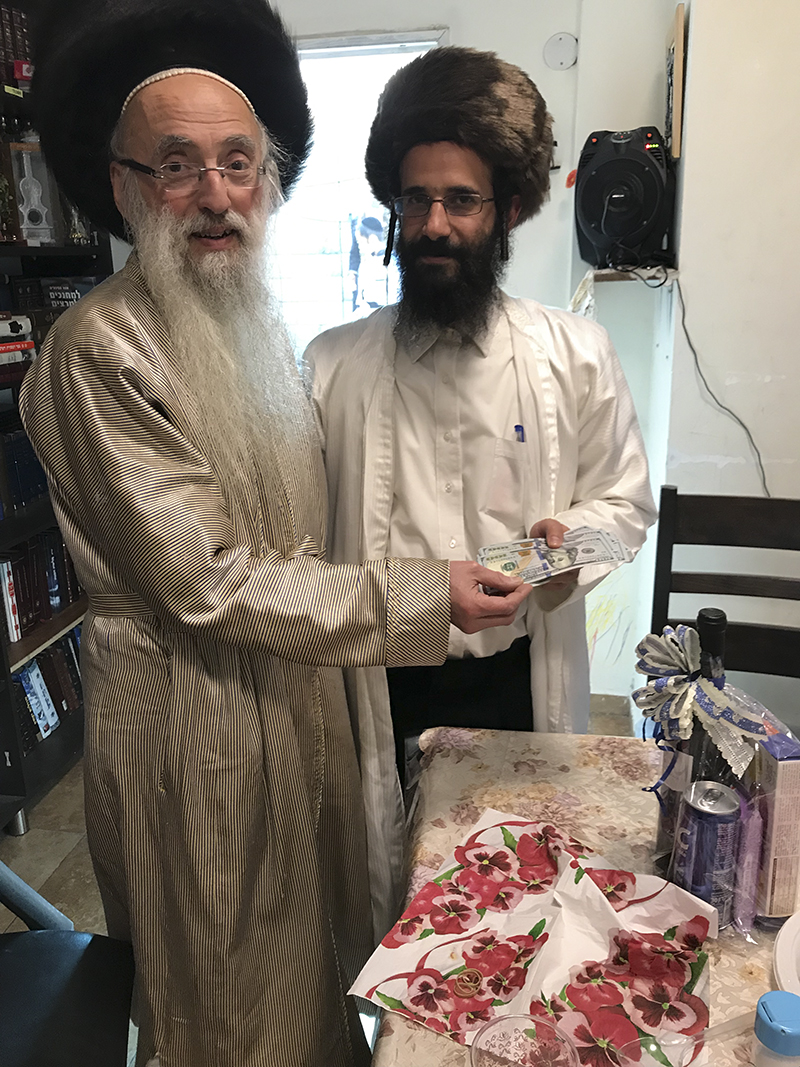
The first request about the transportation Rabbi Braun accommodated by bringing on the recent day of Purim several thousand dollars in cash! To pay out the entire balance owed to the driver. (See photo) As Rabbi Braun presented him with the unexpected amount of money Mazoor stated, “it is extremely difficult to convince tourists from the USA to pay a visit to this outstanding school”. He is certain that Rabbi Braun was a messenger sent by the one and only, and therefore came to visit our school earlier this year and returned again with the generous gift that he raised in the USA in the Boro Park in the main Satmar Congregation on 53rd Street.
Mr. Mazoor thanked Hashem for his unusual success in the past four years and prayed to almighty G-D that he be blessed with a few additional friends like Rabbi Braun.
The second request is being addressed. Everyones help is desperately needed. For additional information please call 0533122354 or email to Benyamin Mazoor at mmm96362@gmail.com
Portrait of smart schoolgirls and schoolboys looking at the laptop in classroom
Gesher Yehuda Yeshiva, a K-8 special education school, has implemented a range of cutting edge improvements designed to offer a state-of-the-art education to children with learning challenges. After careful review of new pedagogical and therapeutic research, the changes are designed to contribute to an exciting learning environment.
Changes include:
• A sensory gym that will meet student needs in innovative ways. It will feature a variety of swings, a crawl tunnel and a rock climbing wall.
• A cutting-edge NeuroNet program designed to build neural pathways, enhance critical math, reading, and handwriting skills and facilitate higher-levels of learning.
• ClassStars a computer-based program that allows teachers to record behavior in real time facilitating classroom management.
• A 3 Cs program that rewards children for good behavior and diligence as it contributes to a joyful school learning environment.
• A fully elaborated information technology platform including smart classrooms, a computer lab and universal WiFi. Now in its 26th year, Gesher Yehuda Yeshiva educates children with learning differences in a comprehensive program.
A dual curriculum of Judaic and General studies is tailored to provide students with appropriate instruction within a personalized and encouraging setting. Gesher Yehuda views each student as an individual whose interests and abilities motivate their desire to learn.
Through a flexible and comprehensive interdisciplinary approach, Gesher devises learn-ing strategies based on students’ strengths. Our professional staff provides clearly structured, multi-sensory experiences in all subject areas. Small class settings, tailored groups and innovative individual instruction provide opportunities in a challenging yet nurturing environment. For more information about our programs or to schedule a tour please contact Sury Fleischman at info@gesheryehuda.org or visit gesheryehuda.org.
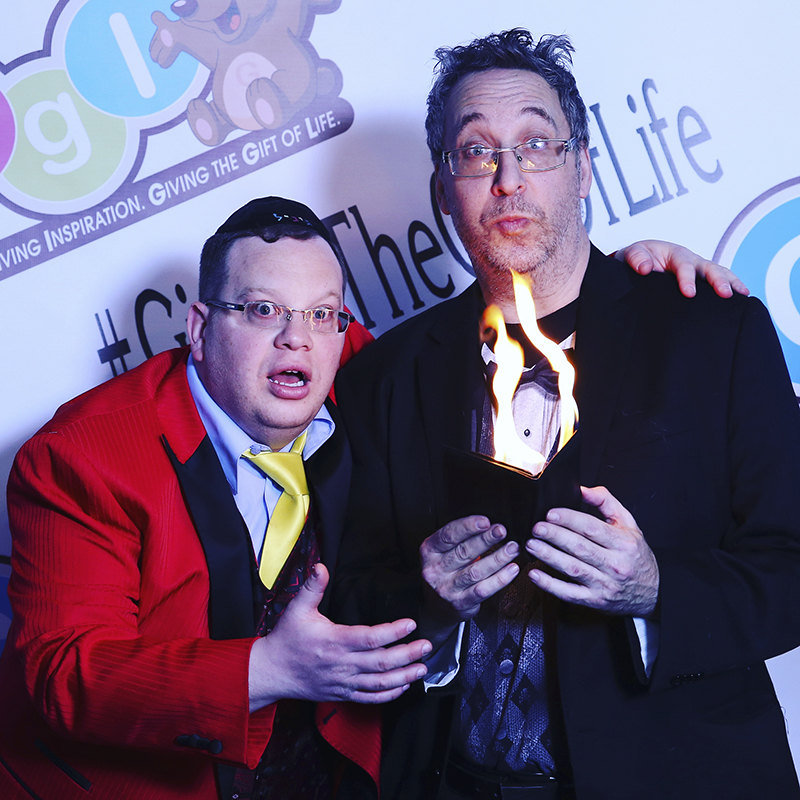
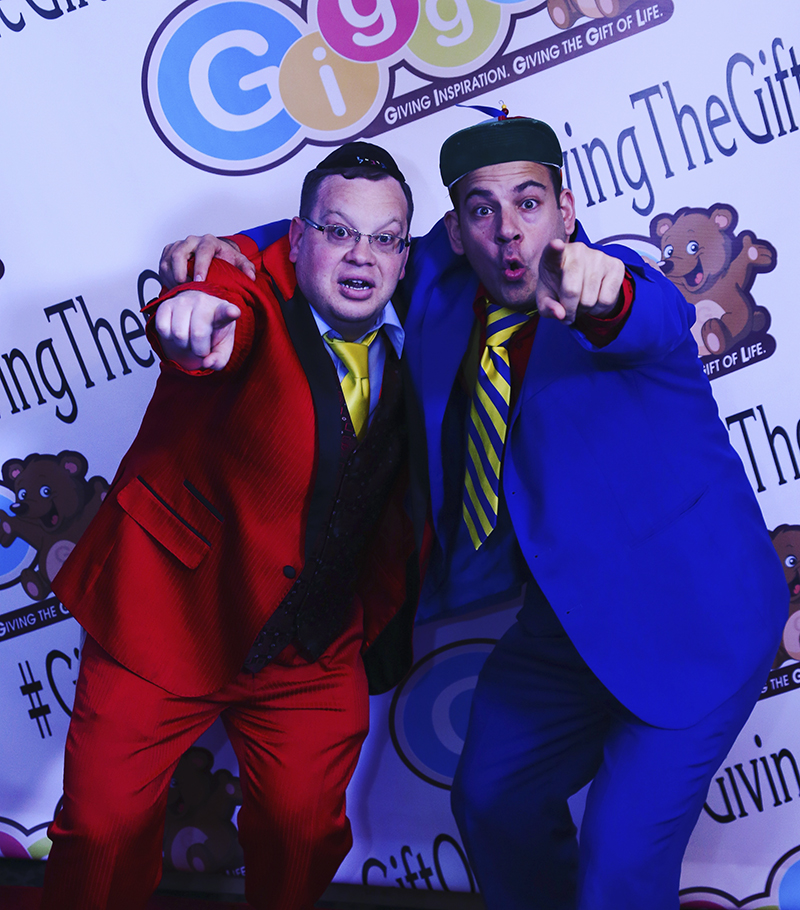
What’s GIGG’L? GIGG’L is an acronym for Giving Inspiration Giving the Gift of Life. It is a Brooklyn-based organization, which specializes in Putting smiles and laughter on the faces of brave children, battling life-threatening illnesses!
How do they do this? By arranging stunning parties and events, complete with delicious food and magnificent entertainment, allowing the patients and their families to escape harsh reality for a precious few hours.
To whom do they cater? GIGG’L serves a plethora of families in the tristate area and beyond, with children who are battling dreaded diseases.
Who runs it? GIGG’L is run by its Founder and President, Menachem Tzvi Roseman, under the guidance of its board of directors and with close rabbinic consultation.
How did Menachem Tzvi Roseman come to be involved in a project of this nature? Menachem Tzvi began his career of cheering ill children when the daughter of a close friend, Rabbi Yisroel Landsman, took ill and battled a dreaded disease for several years. Throughout this long and arduous road, Menachem Tzvi continuously searched for ways and means to bring cheer and good spirits to Rabbi Landsman’s daughter, and her family, at large. Menachem Tzvi was there for them 24/7—liter-ally.Sadly, four years after Nechama was diagnosed, Rabbi Landsman was diagnosed, as well, with a dreaded disease and passed away only a few short months after his dear, beloved daughter.This experience, and his upbringing in a warm, caring home, where looking out for your friend, neighbor or acquaintance, and going the extra mile for them, was stan-dard protocol, provided Menachem Tzvi with the impetus to embark on this ambitious, arduous undertaking and create GIGG’L, which he founded in 2013.
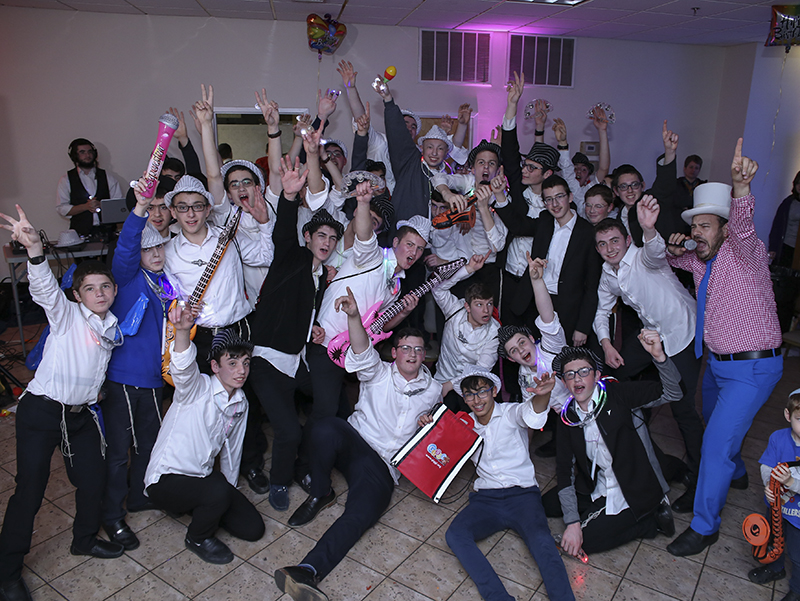
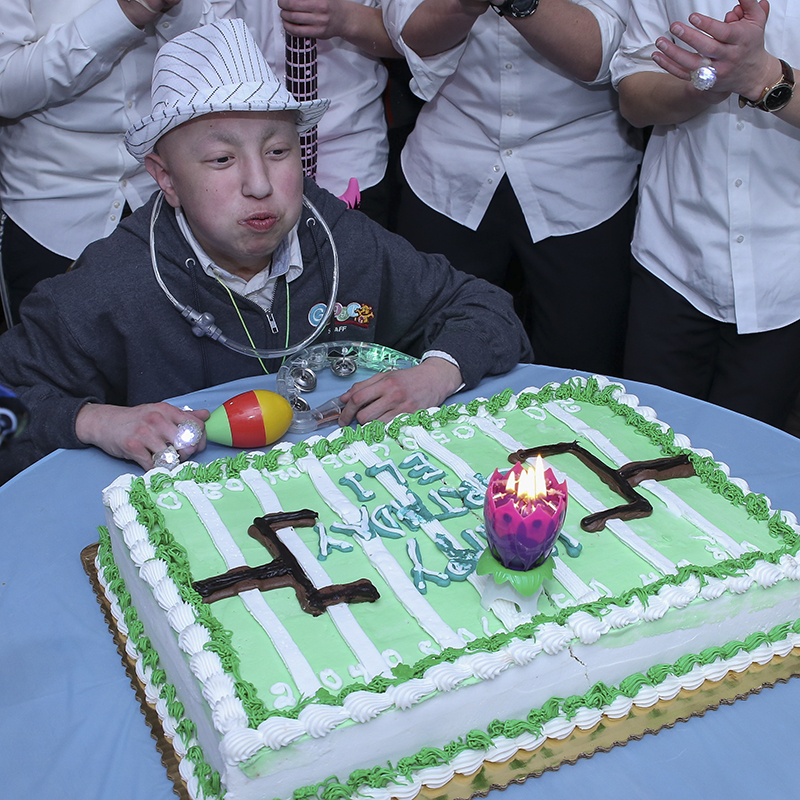
Have you seen the organization in action? We were at one of GIGG’L’s parties and it was absolutely amazing! I’m not sure what the kids enjoyed most, the beautiful array of happy lights, the superb props, the fantastic, colorful costumes, the delicious, plentiful food, the lively music, the trained, dedicated and professional volunteers, the exciting games, the fun toys, or the generous gifts that they distributed.
What I enjoyed most was the giggles and the smiles on the faces of the children and their families! We were awestruck by the outpouring of love and care exuded by GIGG’L, and this feeling is clearly reflected on the children’s radiant faces! It’s absolutely an amazing, mind-blowing experience! GIGG’L utilizes many avenues to stretch each dollar spent to the maximum. For example, the organization is staffed entirely by volunteers, which cuts down significantly on the costs. Another example, Menachem has built many valuable relationships with vendors and venues over the years and can often get a very reduced rate on services, products and venues—again significantly cutting down costs. Finally, GIGG’L does not employ professional fundraisers, ensuring that every dollar raised is directly applied toward helping the children and their families.
And yet, GIGG’L is dependent on the public’s generosity to continue their blessed work. It is the broader community that it depends on to fund their activities and enable them to continue to bring smiles and relief to the ill children and their families. If you would like to donate to GIGG’L, or perhaps would consider sponsoring a party, or would like to assist in any other way, please contact them! You’ll be glad you did. GIGG’L is a 501c3 approved organization.
To learn more about GIGG’L, please visit their webpage: www.giggl.org, or follow them on Instagram at giggl_official, or email Menachem Tzvi Roseman, directly at menachem@giggl.org. Please make checks out to: GIGG’L. Their mailing address is 515 East 9th street, Brooklyn, New York 11218.