Read Jewish Image Magazine Online – August 2020

DSN’s continued strength and success has demonstrated resilience and hard work through new unforeseen difficult challenges. As the state began re-opening, DSN once again was on the forefront.
DSN’s youth are the future of tomorrow, and we know how tough it has been on all children during quarantine. Accordingly, DSN strived to provide multiple cooking and baking demos by amazing volunteers.
For kids in the food category, DSN organized string cheese and yebra making with Nicole’s Kitchen, baking with adolescent girls with Sari’s Sweets, Macaroon making for kids with Alexis Cohen, ka’ak and rice pudding making with Evelyn Safdieh, kelsonnes making with Norma Blanco, a challah bake with Shelly & Frieda, and a tutorial on how to make TEENie S’mores pies by editors of QuaranTEEN magazine Jacob Smeke and Marilyn Chehebar.
DSN also had an eyebrow quick fix and makeup tutorial with make-up artist Stephanie Hassoun. PJ Jams are also a continued success with DSN, along with hangouts that now include Kahoot personalized trivia for 3rd, 4th, 5th, and 6th grades.
Frieda Betesh, a DSN mother of two, exclaimed, “No matter what, PJ Jam is a night we never try to miss. DSN always provides the best entertainment and my kids never fail to enjoy!”
Other activities have included Story Time with children’s book author Marilyn Harary, Yoga & Dance Movement with Sally Cohen, and an awesome dance party with DJ Ike Douek. For Erev Shavuot, DSN created an awesome garden-themed day program with tutorials on gardening, making edible dirt cups, art flower centerpieces with Jill Levy, and a tutorial on gorgeous Har Sinai cupcakes by Michelle Saka. DSN never skipped a beat.
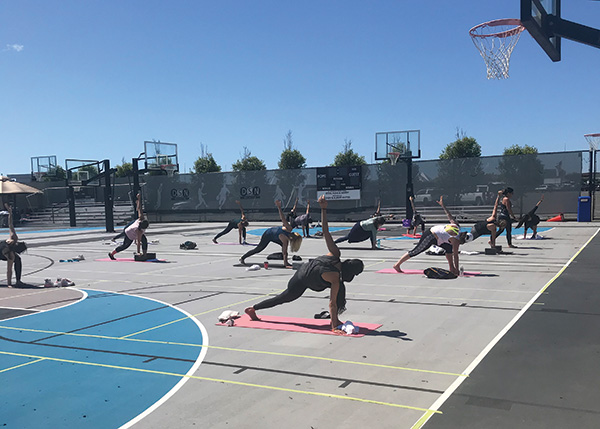
On Sunday, June 7, DSN quickly converted the outdoor basketball courts at the DSN Beach Club to a massive group exercise studio. Starting with a class of 25, per Governor Murphy’s outdoor gathering limit, DSN’s app came in handy allowing members to book a spot in one of three classes per day. As soon as the limit was extended to 100 people, class capacity increased to allow for more members to join in. Each member who books a class on the app gets a 12’x12’ marked-off area to stand in. DSN provides sanitized equipment and towels for members to use which are then disinfected after class. DSN’s year-round instructors provide a variety of types of classes at the beach club including dance fitness, strength and toning classes, boxing, Pilates and yoga. Members keep coming out to take classes and expressing gratitude to be able to exercise with DSN.
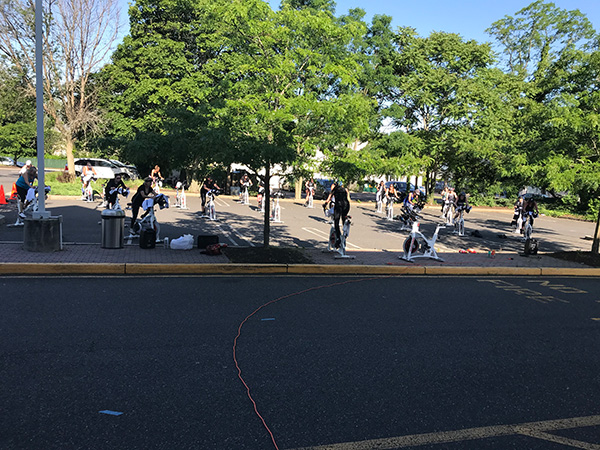
In addition to the classes being offered 6 days a week, there are also evening outdoor cycle classes in the parking lot in front of DSN. This started with 25 participants and the capacity has been increased to allow for 15 more.
Men’s classes take place in the back parking lot and instructors have been creative, using the soft playground area, the back trailer and parking lot lines. On Sunday mornings and Monday and Wednesday evenings, guys can be seen running through the parking lot, performing cone drills, using battle ropes and having a great time while getting fit!
DSN’s senior fitness has continued to thrive on Instagram with weekday classes on @dealdsn account. There is no limit to the number of participants in these classes since they are virtual. One Brooklyn participant, Faye Sued who began the classes virtually during quarantine, sent a message, “Thank you so much. It took away the boredom and got me strong before my hip surgery.”
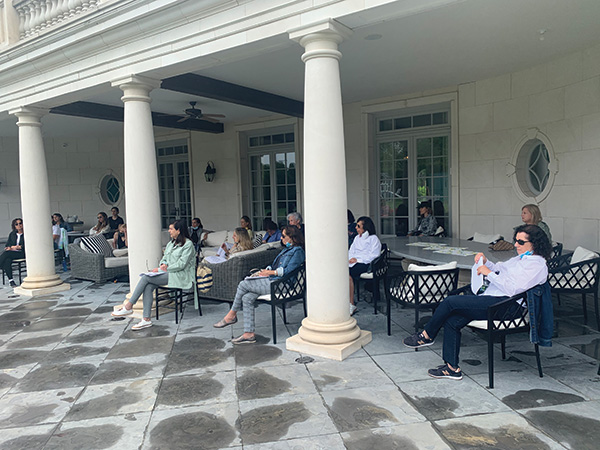
DSN has offered numerous, diversified virtual classes to stimulate and invigorate adults physically, as well as intellectually and emotionally. Some of the adult non-exercise classes have included a book club with Emily Labaton, cooking with various chefs, including Raquel Amar and Sarah Hanan, maintaining beauty during quarantine with beauty expert Sylvia Hamowy, summer styling with Instagram Influencer Fortune Dushey, baking with Susan Harari, arts and crafts such as plant holder making, and an outdoor short story in-person class with Sally Taylor Tawil.
One participant, Frieda Sabbagh, from Jenny Tawil’s Family Purity Refresher class on Zoom, spoke with the DSN Adult Program Director, Caleigh Silvera. She said “Jenny’s class was amazing! I was so appreciative to have had DSN print and drop in-depth materials on my doorstep prior to the class. Jenny was informative, warm and lovely. I learned so much and was so happy to have this Zoom in the evening after my children were asleep.”
Another participant from a cooking Zoom, Adele Dayan, stated, “DSN bounced back! They adjusted their sails as swiftly as possible and remain not only relevant but critical to our Jersey community life. I am grateful for them, as their cooking Zooms help dictate my grocery list and weeknight meals.”
DSN raised the bar and remains a dependable resource that has been—and continues to be—there for the community. They continue to listen to the needs of the community, and reflect this by providing structured, engaging programming for seniors, adults, youth and family for entertainment. As no one knows what the future holds or how it will look, one fact remains certain—DSN is here for you

I am a Brooklyn girl. I was born in New York to immigrants from Syria and spent my life as part of the Sephardic community. Excluding summers, all the places I resided in are within a four mile radius. As a child and teenager I was unaware of the implications that had on me. Of course I knew my food was different and that I had a wonderful, large, close family but for me it was all regular. Life was the way it was, and I didn’t realize how fortunate I was to belong to such a wonderful community. Today, I can say that I was never prouder or more appreciative to be a Sephardic Jew and part of this magnificent world that was created here in Brooklyn. Wherever I go, I take the lessons and values that I experienced all through my life along with me.
In my late teens and early twenties, my feelings were quite a bit different.

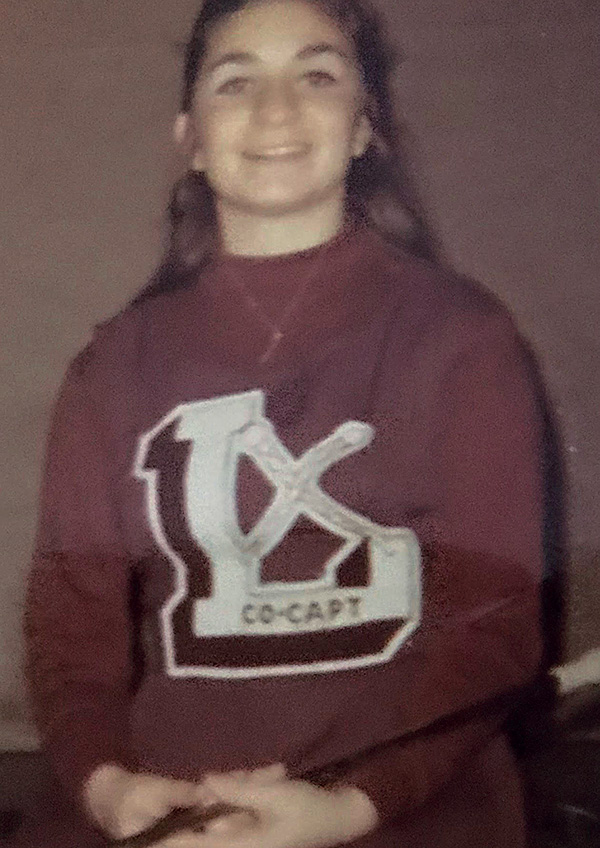
After much pressure from my older siblings and the Lafayette High School college counselor, my father relented and allowed me to attend Brooklyn College. In the early 1970’s education was not stressed. Boys were expected to join family businesses. A Sephardic girl attending college was quite unusual. Imagine an 18-year-old girl being driven to and picked up from college every day by her father. That was my reality my whole freshman year.
While attending Brooklyn College I removed my bangle bracelets to avoid being identified as Syrian, because I abhorred hearing the remarks of others who had stereotyped our people. “You can’t be Syrian, you’re smart” or “I didn’t know you were rich,” “You’ll never graduate,” and “You’ll be married tomorrow,” were among the comments I heard often, and truthfully resented. Thankfully, I was able to find a great group of friends and completed my degree.
As I slowly moved down life’s path, married, and had a family of my own, I slowly began to comprehend the enormity of what our community entails and what is available to us. Our schools and organizations became an integral part of my life. There was guidance for every situation that arose, an organization or a group with up-to-date knowledge in every field. Help, when needed, was and still is available for almost every issue imaginable. Community members giving their time and energy with dedication and love are the norm here. Helping one another is paramount in our world.

The last few months, during the corona pandemic, have been challenging for the world and unfortunately our community is not exempt. The foundations of our lifestyle crumbled like buildings in an earthquake. All of our core beliefs and normal ways of life became nonexistent. We were separated from our families, spent holidays alone, our yeshivahs and synagogues were closed. Many people became ill and the death toll was devastating. Our plans for weddings and parties were cancelled. The life that we once knew evaporated into thin air. As we followed the guidelines, and remained home, tension and fear of the unknown enveloped us. The economic impact of the pandemic is staggering. Then the rioting, looting and destruction of our city began. Reports of bricks and pipes being left in our neighborhoods were terrifying.
Just when I thought things couldn’t get any worse, social media became ablaze with horrifying news. A community member was missing. Everyone rallied by joining together to help. We checked our closed circuit videos, we searched the streets all night long, we prayed and prayed. Shomrim coordinated the effort with professionalism and I thank G-d our prayers were answered, and the individual was found and returned home safely. In the midst of despair overwhelming joy and hope for a brighter future triumphed.
I believe, that as a community working together and united, we can overcome anything and we will prevail. This too shall pass. I want to thank our forefathers for the vision that they had, and for their dedication to make their goals a reality. I thank our community leaders for following in our predecessors paths. I thank every organization, rabbi, yeshivah, teacher, volunteer and everyone who donated hard earned funds or time to any of the worthwhile causes which support us.
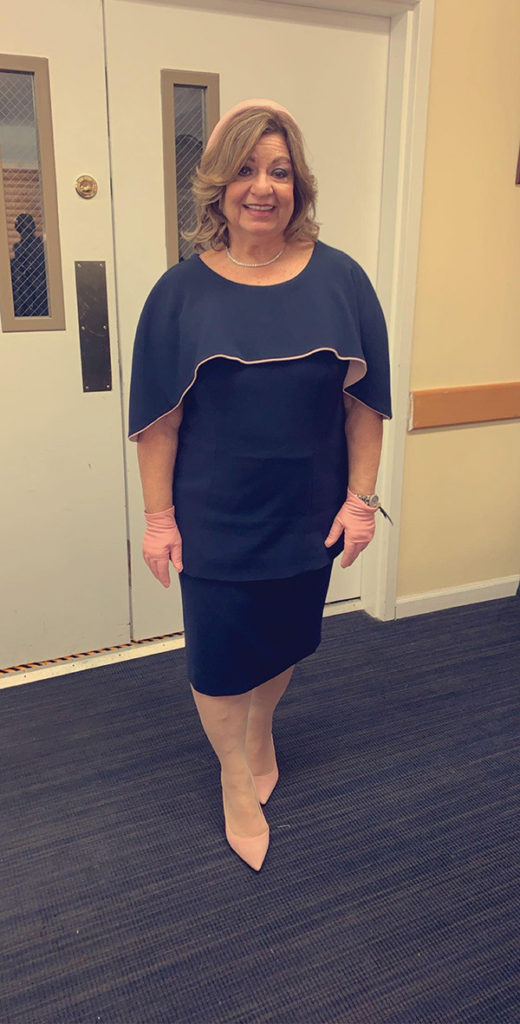
I have enormous respect for each and every community member and I thank everyone for the part they play in making us who we are today. We are all special, and our community is unique—a diamond in the world.
Today, I proudly wear my bangles. I am no longer intimidated by others and I am prepared to defend our way of life, and all that we collectively have been able to accomplish. I thank G-d every day for making me a part of this wonderful community.
I’m Syrian and I’m proud.

America’s response to the coronavirus pandemic has revealed truthfulness. So many rules and regulations, that we were told were impossible, were a matter-of-fact all along. In 2011, when activists demanded debt cancellation for student loans and medical debt, they were laughed at. Activists continued to push and have been repeatedly told their demands were unrealistic. Now, we see the rules we have lived under can be broken.
Rental evictions were avoidable, the homeless could’ve been sheltered in government owned buildings, utilities didn’t need to be turned off for people who were behind, paid sick leave could be made available to all workers, paying your mortgage late didn’t need to lead to foreclosure and creditors could have been much more flexible. President Donald Trump has already put a freeze on interest for federal student loans, while New York Governor Andrew Cuomo has paused all medical and student debt owed to New York State. Talks are being held that will involve the possibility of suspending collection even canceling student loans as a larger economic stimulus package.
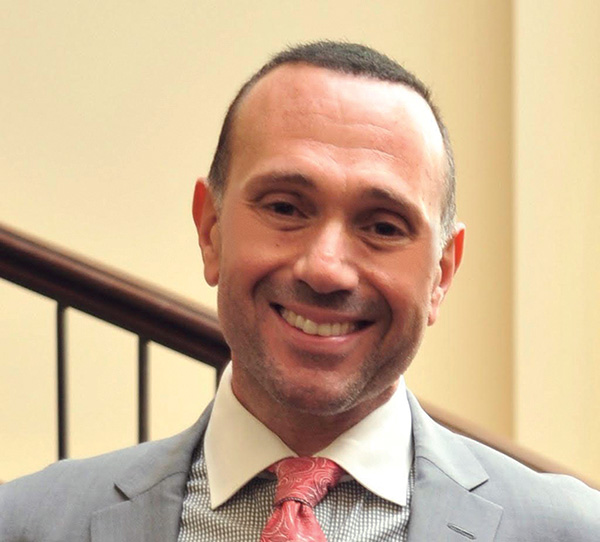
If you have been financially affected as a result of COVID-19, contact each of your creditors and let them know. Be descriptive about how coronavirus has impacted your ability to make payments and inquire about the different options that are available for instant relief.
Unfortunately, we are finding that not all institutions are adapting to the new form of flexibility. The Consumer Complaint Database of the Consumer Financial Protection Bureau (CFPB) has its eyes wide open looking for problems in the financial marketplace.
As might be expected, the effects of the economic crisis created by the COVID-19 crisis are beginning to show up in consumer complaints to the agency. Since around the time the COVID-19 pandemic began, consumers have submitted more than 5,000 complaints about debt collection practices.
COVID-19 is highly stressful in many ways, with health concerns, apprehension about taking care of loved ones, lost jobs, reduced income, the unknown, and the stress from home. Harassment from debt collectors is the last thing Americans need to deal with. Yet, according to the reports, that’s just what is happening.
Yet, since the crisis began, the CFPB has chosen not to actively get involved, on both debt, collections and other areas of concern to consumers.
The need for action is urgent. A Forbes article warns that debt collectors could be readying to jump in and garnish the stimulus checks that we received. The Association of Credit and Collection Professionals is making a push to ensure they can keep on collecting throughout the crisis.
Forbearance is temporary postponement of mortgage payments granted by the lender or creditor in lieu of a foreclosure. Many creditors allowed you to hold off on paying bills right now.
At the end of the hold off period, all of those unpaid payments are due. And while you may have heard that these payments can simply be tacked on to the end of your loan, there’s no one-size-fits-all solution. Deferring payments may be possible, but it’s not that simple. There is still a lot of confusion about what exactly that help looks like and most importantly, what happens afterwards, when the payments are due in one lump sum?
I predict that structuring a payment plan will be even more difficult than the big crash of 2008. Restructuring loans will most likely require completing a confusing application proving proof that you were financially affected by the virus but you now have the means to make a newly restructured payment (if approved) which will likely result in a higher monthly payment. So, what can you do?
We have taken a proactive approach exploring every option available. We begin by requesting in writing forgiveness of payments that were put on hold and, in some cases, successful in full forgiveness of the entire debt! We know who to call and how to submit a proposal. Our staff will assist in finding the best solution for your situation.
Angels of Debt is a family owned and operated business, with over fifteen years of experience in servicing the Jewish communities throughout the United States. Having successfully helped well over 30,000 clients settle credit card debt, lines of credit, loans of all types, taxes, mortgages and any other debt conceivable both personal and business. We complete the job by removing negative items from the credit file. In addition, we help you build your credit score better than it was before. Angels of Debt understands financial crisis and how to solve them. We pride ourselves in being the pioneers and number one in the industry.

Before calling us, make a list of your monthly bills: rent/mortgage, car payment, utilities, student loans, medical bills, and anything else. Factor in how much you need for food, medicine, and other necessities.
We listen to each and every client with an open heart offering sincere and logical advice. Our motto is “It’s not just business, its personal.” For every one client that hires us we give free advice to ten! Like any other trade or industry, the more service rendered or products sold the more experience you gain. Don’t waste time or money hiring someone with very little experience. My father (may he rest in peace) always said “You don’t get what you don’t pay for.” For help with your financial burdens call Angels of Debt at 718 766-5193


This is an unprecedented time in history. Never before have we been told to stay in our homes, 24/7; and never before have we stock piled food. However, it’s hard not to buy in bulk when you don’t know when your next delivery will be.
So, now we’re at home, all day and all night, with more food than usual in our cabinets, our kids want snacks (and so do we) and everyone is stressed—this is the perfect storm for gaining weight.
Now is not a good time to start a diet, but you can try to maintain your weight. If you don’t gain weight during this pandemic, you’ll be so happy your clothes still fit when it’s over (and it has to end some time).
If you find that you’re always in the kitchen, thinking about your next meal, eating more than usual or stress eating you’re not alone. Here are some tips you can follow to stop overeating.
One of the benefits of being home during the day is being able to take your time and cook your family healthy meals for breakfast, lunch and dinner. If you’re not sure what to prepare, visit one of dozens of kosher cooking websites, like kosher.com. Look for recipes that focus on protein, fiber, fruits and veggies—and drink plenty of water.
If you and your family drink sugary drinks with your meals, this is a good time to switch to flavored seltzer. If your kids drink lots of fruit juice, look for nutrient dense, fruit juice with no added sugar and added vitamins. Milk is good for children, as well, and unsweetened green tea is an excellent choice for everyone. Of course, if you can get your kids to drink water, encourage them to do so.
Chances are your children want more snacks than usual, because they’re home more than usual. This is another teachable moment. You can explain to them that cookies and chips contain lots of ingredients that are harmful for them—so you’re going to focus on healthy snacks from now on.
Then, the next time you order food, select healthy snacks. (If you don’t have junk food in your home you can’t eat it.) Stock up on yogurt, nuts, low fat cheese sticks, fresh vegetables and fresh fruit. If your children still want chips or cookies, that’s ok. Don’t stress your kids out because you don’t want to overeat. Of course, if you buy baked chips or bake your own cookies (which is a fun activity and you control the fat and sugar) that’s even better.
Remember, these are just tips. You don’t have to change everything at once. And you definitely shouldn’t feel bad if you don’t.
Laura Shammah
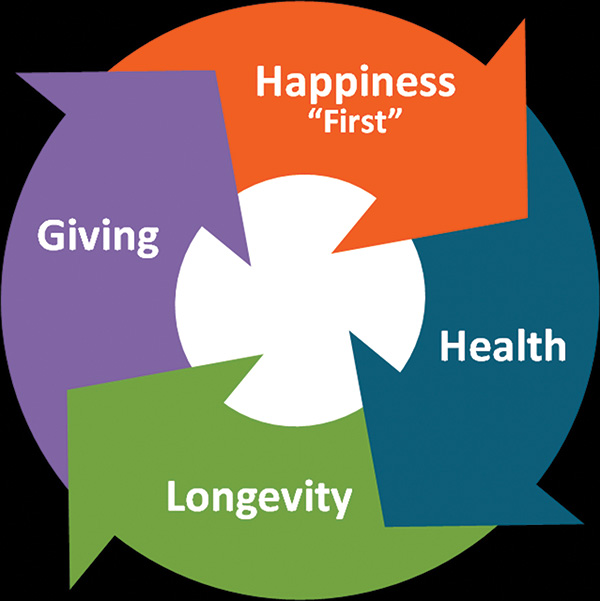
Judaism says “Happiness is not a happening. Happiness is a state of mind.” You can have everything in the world and be miserable or have relatively little and feel a sense of joy.
The question then arises “Who is rich? The one who appreciates what he has.” (Pirkei Avot 4:1).
How is happiness related to health? Researchers have been studying well-being, life satisfaction and happiness and its positive effect on health.
Research indicates that there is quantifiable evidence that optimism can add years to one’s life. A study conducted at the Mayo Clinic tracked 839 people over a period of 30 years. Those who scored high in pessimism on a standardized scale had a 19% greater chance of premature death than those who scored more optimistically. Optimists get fewer colds, have more effective immune systems, recover from major surgery sooner, with less trauma, and usually meet with stressful events with better resources.
Dr. Martin Seligman of the Center of Applied Cognitive Studies at the University of Pennsylvania said that one can identify optimists and pessimists by the way they perceive and interpret adversity and success.
He identifies these differences with three words:
When bad things happen, a pessimist thinks: It’s my fault (personalization); it’s never going to get better (permanence) and it’s going to effect every part of my life (pervasiveness). An optimist takes the same event and thinks: I will do better next time (personalization), the problem is temporary (permanence) and this too shall pass (pervasiveness).
Further research indicates that there is no correlation between an individual’s social status, income, gender or physical attractiveness and happiness. Having more things is not a guarantee for happiness. It is interesting to note that when one achieves more material comfort, the individual is seeking more. The act of striving for better and better never truly allows one to feel satisfied or content.
Our sages have taught us that the key to happiness is pure appreciation for all our blessings. Perkei Avot 4:1, says “Who is rich? The one who appreciates what he has.”
Through Torah and scientific research, we can deduce that happiness is directly associated with health and longevity. It is important for you to begin to consciously notice and appreciate what you have. Start by thanking G-d for life.
To begin appreciating life, think about things you are grateful for and notice them everyday. Set some time each day to contemplate these pleasures and feel gratitude. Become conscious of these feelings by writing them down. By doing this we can begin to see what we have and not what we don’t have. Take a moment each day to appreciate all those around you. Acknowledging each pleasure enforces how much you truly are blessed. Once this realization is embedded into your being, you can experience happiness and peace. This subsequently will result in peace of mind and well-being.

For the past two years, many states have proposed new legislation and programs which would allow businesses and individuals alike to take advantage of the booming industry known as industrial hemp. Cannabidiol, better known as CBD, is a plant-based component found in cannabis that is non-intoxicating and may have several medical or therapeutic benefits for anxiety, pain, nausea, muscle spasms and seizures. Due to its extremely low levels of THC, hemp is not used to produce psychoactive effects. Rather, it is generally used to produce fibers, oils and seeds. Hemp fibers have been used in manufacturing clothing, rope and construction materials, while hemp seeds and oil can be found in cooking oils, cosmetics and delicious snacks.
The production and sale of hemp and hemp-based CBD products is a multi-million dollar industry that is sweeping across the country and is showing no signs of slowing down. While the federal government has put into place certain restrictions surrounding the use of hemp-based products, each state has been given the authority to regulate the cultivation and production of hemp and hemp-based products within their own borders. For example, New Jersey allows hemp-derived CBD to be combined with food and beverages. On the other hand, it is illegal in New York to infuse food or drink with hemp-derived CBD.
Following is important information for anyone interested in participating in this economic opportunity.
In 2014, the Federal Government passed the 2014 Farm Bill distinguishing hemp from cannabis. The 2014 Farm Bill distinguished hemp as having no more than a concentration of 0.3% Tetrahydrocannibinol (THC) by dry weight. The law stated that hemp could only be cultivated by state departments for research purposes.
Thanks to a recent law passed in 2018, known as the 2018 Farm Bill, hemp, hemp derivatives, extract, and hemp-derived CBD were removed from the controlled substances list of the Controlled Substances Act. As a result, hemp grown within either a state or federal program is now an agricultural commodity rather than a research project.
The US Food and Drug Administration regulates hemp products and is still working to develop appropriate production standards, testing and labeling. The US Department of Agriculture (USDA) has adopted federal regulations and established a national licensing system. Every state has the opportunity to submit its own USDA-approved plan to implement its own licensing and regulatory system.
New Jersey is one of only seventeen states with an approved plan for hemp cultivation and processing. It is now legal within the borders of New Jersey to grow, sell and purchase products infused with hemp-derived CBD oil, as long as the producers of the industrial hemp are licensed and conform with state and federal laws. Retail sales of hemp-based products, including CBD, may be conducted within NJ when the products and hemp used in those products were processed and grown legally in another state with similar requirements for processing hemp products. Sales of hemp products transported across state lines and exported to foreign countries must comply with federal law and the laws of the respective foreign countries.
The law in New Jersey allows hemp-based CBD oil to be added to food, drink and cosmetic products. When selling hemp-based CBD, New Jersey requires labels that show the amount of oils or extract, the percentage of THC and/or CBD extract contained in the hemp product, and all labels must distinguish between hemp extract, CBD, or hemp oil. In addition, the FDA has warned many companies about the language used in advertising and labeling certain CBD products.
In order to grow hemp in the State of New Jersey, you must first apply for a license. There are three types of licenses which require separate applications and annual fees: grower, handler, and processor.
A Grower License enables one to, you guessed it, obtain and grow/cultivate, process, or handle hemp seeds. The application process requires a small initial fee and that the applicant provide detailed information, including the exact GPS location where the hemp will be grown, the applicant’s experience in farming, all individuals who will primarily be responsible for growing or handling the hemp, and the reason for seeking a license.

A Handler License allows you to store a hemp plant on premises owned, operated, or controlled by a hemp producer. For example, handlers include laboratories, traders, seed cleaners, and brokers. This does not include possession or storage of finished hemp products.
Processors obtain raw hemp materials and turn them into finished products. There are two types of Processor Licenses. The first license allows you to process hemp materials for grains and fibers. The second type of Processor License allows you to process hemp materials for floral/hemp oil/CBD extracts. *Licensed growers do not require a separate Processor License.
It is important to note that licensees and their business participants are subject to annual background checks, inspections by the NJDA, and must submit planting reports for pre-planting, harvesting, disposal, and annual production.
New York laws regarding hemp regulation have always been murky. Fortunately, a new law was passed in March 2020 splitting hemp licenses into “industrial hemp” and “hemp extract.” Industrial hemp is a product grown for industrial fiber or grain purposes. Hemp extract is a product made or derived from industrial hemp intended for human or animal use or consumption. There will be three types of hemp extract licenses which must be obtained through the New York Department of Agriculture and Markets: CBD Grower, CBD Manufacturer (e.g. Manufacturing and selling CBD products other than oils), and CBD Extractor (e.g. extracting and manufacturing CBD oil).
The new law in New York looks to provide the framework for:
The USDA allows states to establish hemp pilot programs operating under the 2014 Farm Bill. The 2014 Farm Bill allowing states to establish individual licensing programs will expire on October 31, 2020. Because New York is one of the very few states that has not submitted a state-wide plan to the USDA to regulate hemp production, if you want to start growing hemp, you will need to apply to the state’s Industrial Hemp Agricultural Research Pilot Program.
The laws surrounding growing, manufacturing and processing of hemp and hemp-derived CBD are evolving every day. Whether you want to grow industrial hemp, are curious about CBD processing and retail, or want to learn more about the rapidly expanding non-THC cannabinoid industry, The Law Office of Michael Botton, LLC is here to offer insight, guidance and legal services.
Applying for and obtaining a license in New Jersey and New York to grow, handle, or process hemp and hemp-based products can be complicated.
Many businesses apply, yet few are ultimately accepted. If you or someone else would like to get involved in the industrial hemp industry, call the attorney at The Law Office of Michael Botton, LLC for a consultation, (732) 894-3686 or email michaelbottonesq@gmail.com.
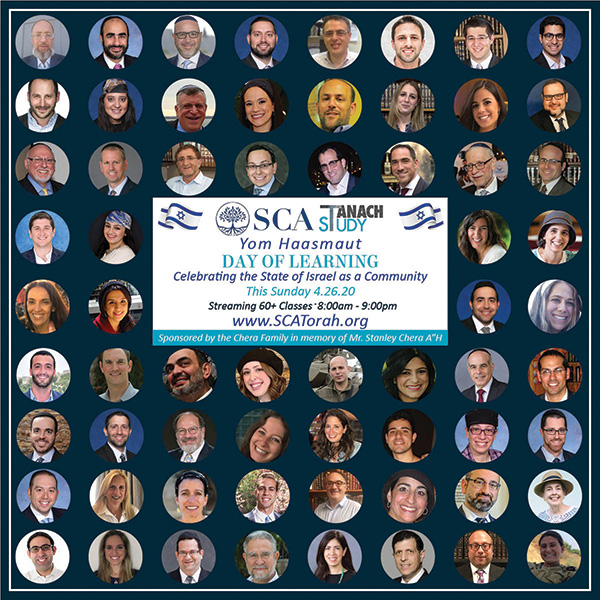
If there’s anything that these unprecedented times have taught us, it’s that with a little creativity, we can still be together—without actually being together. Yom Ha’atzmaut is the perfect example of this concept. Most community members associate Israel’s Independence Day with an exciting day of school filled with blue and white donuts, a special classroom curriculum, informative assemblies and lively dancing to celebrate our homeland.
This year, with most of our traditional customs off-limits, things had to be a little different. While we needed to find a way to recognize the 72nd year of Israel’s official statehood safely and at home, the celebration needed to be big and impactful. After all, Israel deserves it.
In came the SCA, the organization that has been turning an otherwise bleak several months into an opportunity to learn, connect and grow—at any time of day—from the comfort of home. To commemorate Yom Ha’atzmaut, the SCA planned an exciting series of programs in conjunction with Tanach (bible) study, to honor Israel.
The programming was dedicated by the family of Mr Stanley Chera A”H to his memory. Mr. Chera was one of the founders of the SCA. He was a visionary leader whose dedication to our community spurred the formation of this amazing organization, and many other organizations in our community—and the world-at-large.
From Sunday, April 26th through Wednesday, April 29th, the SCA hosted hundreds of hours of content dedicated to celebrating our homeland. Streamed from SCATorah.org and over Zoom video, over 4,000 people were able to celebrate this holy and joyous occasion.
First up was the Yom Ha’atzmaut Day of Learning on Sunday, April 26th. From 8 am to 8:30 pm, over 60 classes were live-streamed. The program offered dozens of insights into the miracle of Israeli independence, each from a different perspective, from rabbinical and Torah insights, to the thoughts of soldiers and community members.
Paul Kopyt, who recently made the dream of aliyah a reality, led a session featuring Cynthia Benun, a young community member who shared her experience serving on the front lines with the IDF. A session led by Rabbi Joseph Beyda helped us picture Israel on her 100th birthday; while Mrs. Emily Labaton took us back in time to study some of the earliest voices of Zionism. Major Yaakov Selavan led an exciting, heart-racing talk that felt like it was straight out of an episode of Fauda. He took us into a bunker near the border of Syria and told the story of how an IDF unit was miraculously saved from certain death.
The SCA also offered an array of programming for children. Mrs. Jacqueline Terzi led an Israel Scavenger Hunt and Mrs. Liat Dahan taught about the greatness of our tiny homeland. Rabbi Nathan Zaboulani took an in-depth look at the city of Hebron and ended his segment with a captivating video featuring the Abraham family’s clandestine purchase of a major building in the middle of Arab-held Hebron, more than a decade ago. Dozens of other sessions kept thousands glued to their screens all day, all in celebration of Israel.

On April 28th, the SCA partnered with AIPAC, The Sephardic Community Center, DSN, Hillel, Barkai, and Magen David Yeshivahs for a special tribute to our fallen soldiers. There was a musical performance, and an important message about our community’s connection to Israel. It was a beautiful way to recognize the important role we play as Zionists in America on the eve of Israel’s 72nd birthday.
Wednesday marked Yom Ha’atzmaut here in America, which would typically be the day our schools would transform into mini-Israels, with Hebrew music pouring out of loudspeakers, and Israeli flags and streamers filling the hallways, as we felt an outpouring of pride for our homeland.
The moment the SCA kicked off the celebration, it was clear that all of these traditions were still on deck, only this time they were happening at home. As families tuned in to the different programs on Zoom, many featured hand-drawn Israeli flags in the background, homemade Kotel walls made out of construction paper, and even a few virtual background changes that transported attendees to their favorite spots in Jerusalem.
It was the perfect way to set the tone for an uplifting day, which featured special addresses from rabbis and leaders, classes, music, and a movie to mark the occasion. Over a dozen different sessions streamed throughout the day, including a live Q&A with Joey and Kady Harari, which allowed viewers to ask the couple their most pressing questions about life after aliyah.
An interview with Mr. Jeffrey Beyda revealed inspiring details about his decision to enlist in the IDF almost 30 years ago. The re-telling of his experience as an IDF veteran was an impactful follow-up to the session with the Friends of the IDF.
Addresses by Rabbi Shimon Alouf, Rabbi Lord Jonathan Sacks from London, and Rabbi Shabtai Sabato from Jerusalem provided further insights into the day, while Dr. Joe Friedman’s virtual tour of Israel made us feel like we were there.
The day culminated with a screening of the documentary Beneath the Helmet, which helped us better understand what it’s like to risk it all while defending Israel with the IDF.
In many ways it was one of the most impactful Yom Ha’atzmaut celebrations I’ve ever experienced. The SCA rose to the occasion and flooded us with loads of inspiration. The overwhelming love and excitement was felt by all who participated.
Thank you to the rabbis, teachers, speakers, IDF soldiers and veterans who gave of their time to enlighten us. And to all of the SCA affiliate organizations for helping us make this year so special and unique. While this Yom Ha’atzmaut may not have been the traditional one that we were used to, it certainly was a memorable one that we’ll tell our children and grandchildren about years from now—hopefully, in Jerusalem!
The Democratic Primary Election is June 23rd. The Covid-19 pandemic has certainly caused us to rethink many things we considered routine. Politicians have had to adopt new procedures and protocols to help preserve our rights and privileges. Primary elections this year in New York City will be conducted in a way previously reserved only for those who were out of town. For the first time in New York State history, every registered Democrat will be able to vote by mail (by first requesting an absentee ballot) in the June 23 Democratic Primary.
Last month, Governor Andrew Cuomo signed Executive Order 202.23, which states that every registered voter will be sent an absentee ballot application. The Board of Elections will be mailing absentee ballot applications to every household in which there is at least one registered voter. The application must be completed and returned to receive a mail-in ballot. Voters can mark the reason for their request as “temporary illness,” which now includes the risk of contracting coronavirus. If you are away from home, you can request that an absentee ballot be sent to your current location. This is especially beneficial to anyone who will be at a summer location.
In case you do not receive an application, you may request one be sent to you by June 16. There are several ways to request an absentee ballot:
• Online – nycabsentee.com
• Mail an application to the Board of Elections
• Call 1-866-Vote-NYC
• Scan and email an application to absenteejune2020@boe.nyc
• Fax an application to 212-487-5349
As of the writing of this article, a federal judge ruled that the New York Presidential primary is back on the schedule for June 23. This ruling might be appealed.
Regardless, almost every community in NYC will have a local or state primary on June 23, so please request your absentee ballot now.
Voting during this pandemic could not be easier, or more important. By voting, we participate in the democratic process. We choose those who represent us, and our ideals. If not, others will be making those decisions for us. This is particularly important in local races. We must show our elected officials that our community has a voice.
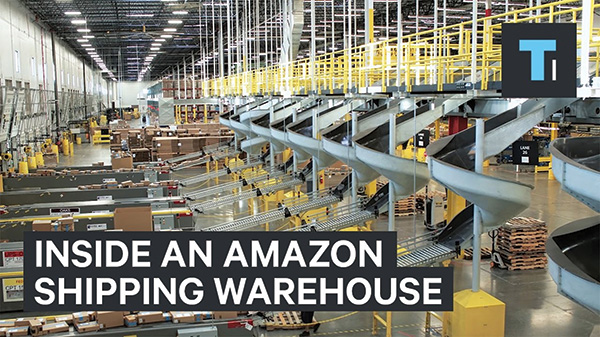
Amazon is the world’s largest online retailer, with more than half of its sales being generated by third party sellers on the platform. In the face of COVID-19, the worldwide pandemic that is currently making its way across the United States, Amazon has found itself in an unprecedented position. The global pandemic has forced the shut down of most retail stores in the US and people are staying home as much as possible. Almost overnight, the number of people turning to Amazon as a source for their essential needs grew exponentially.
In order to keep up with the demand, Amazon put emphasis on shipping essential goods (toilet paper, Purell, face masks, etc.) over non-essential goods (apparel, electronics, etc.) and set out to hire tens of thousands of new employees to bring their delivery services back up to speed.
On March 17, 2020, Amazon took it a step further, they announced the restriction of all non-essential inbound shipments to their warehouses. This meant that third party sellers who did not sell essential goods would no longer be able to make new inventory available for sale via the Prime shipping service most consumers look for when shopping the site.
At this time, most of these inbound shipping restrictions have been lifted, but not without new restocking limits that have been put into place. These current restrictions may or may not be lifted by the time this article is printed. As all experienced sellers are well aware, Amazon’s policies change on a whim without any notice to sellers.
Third party sellers of non-essential goods that rely on Amazon’s platform for some or all of their sales found themselves in uncharted territories. They were facing about three weeks with no ability to restock inventory at all, and now have only limited restocking options with slower than normal receiving times. Maximizing profit on inventory already at Amazon was more pressing than ever.
Also, once a seller runs out of inventory on an Amazon listing the sales come to a complete stop. With Amazon’s ranking algorithms, the longer a seller remains out of stock the longer it takes to gain sales momentum back once business resumes. This means that running out of inventory at Amazon’s warehouses could leave lasting damage.
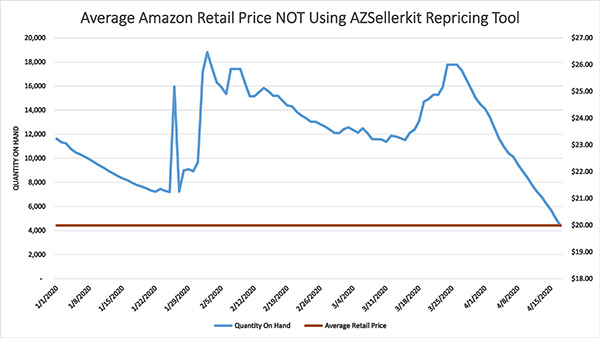
The solution to this problem is having a dynamic repricing software that maximizes profitability by recognizing when inventory is running low and incrementally pricing up to slow sales down and avoid running out of stock completely.
This is where a software like AZ Seller Kit comes into play. The software offers a repricing feature that prices based on rate of sales and inventory levels (see chart). All the seller has to do is set their minimum and maximum prices and watch their average price increase as their inventory dwindles. Once Amazon restocks, the software will bring the price back down to insure that the product is selling at the rate the seller wants.
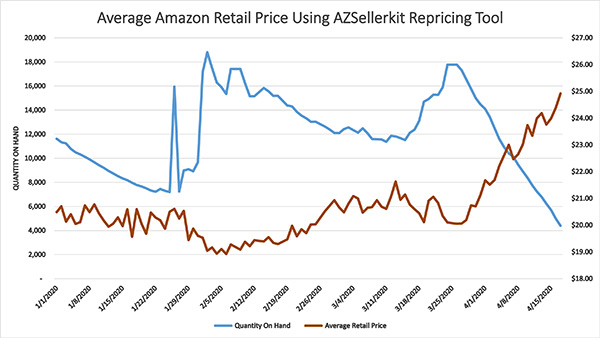
Every Amazon third party seller needs an automated repricing tool, no matter the size of their catalog. It simply isn’t humanly possible to catch every trend in real time and make the proper adjustments the way a software would. It’s an essential part of running a successful Amazon business, even more so amidst the fallout of this pandemic.
Jason Hanan and Lenny Ash are the creators of AZ Seller Kit, and have 17 years of experience in the Amazon marketplace which has informed and inspired their development of this innovative software solution for Amazon sellers. AZ Seller Kit is an all-in-one management software that provides sellers with custom forecasting and lost sales reports, financial reports, tracking of inbound shipments and removal orders, dynamic repricing for maximum profit and more. For more information email jason@mmxdist.com
While we are doing our best to stay healthy and compliant, there are things we can accomplish from the comfort of our homes to ensure future federal and state funding and representation decisions. The United States Census is not only beneficial, it is an obligation that greatly benefits us.
The Census, taken once every 10 years, asks us questions. The answers to those questions help the government know, for example, how many people live in a certain area. This determines funding for the entire next decade. Based on population and other factors, $675 billion dollars is allocated for infrastructure (roads and bridges), health care (first responders, Medicare, Medicaid, and hospitals), education (special education grants, security), funding against terrorism, and much more. Especially in times of crisis it is important for the government to know how many people live within a certain area so that needed resources are allocated properly.
In 2010, the US Census participation rate averaged 76%. The Sephardic community response rate was a mere 58%. Since 2010 we have been under-counted, underfunded, and underrepresented.
We are not receiving the funds we deserve. Just like voter turnout numbers, politicians and others use this as an indicator of a community’s willingness to help themselves, to have a voice, and to show they are a force to be listened to. We hurt ourselves, our friends, neighbors, and community when we do not participate. The good news is that we can correct that now.
By now, most of us have been mailed 2020 Census forms. Responding is straightforward and not burdensome. It is less than 10 questions, takes less than 10 minutes to complete, and ensures 10 years of funding. There are a few easy ways to participate. You may fill in and mail the Census form sent to you, you may respond by phone (844) 330-2020, or you may participate online at www.2020Census.gov. Regardless of how you respond, your information is kept confidential and can only be used to produce statistics. The Census Bureau will never ask you for your social security number, money, donations, anything for a political party, bank or credit card numbers.

The SCF is always working for the community. We know that you trust us to advocate for you, and to inform you. We urge you to please accept this invitation to use this time to invest in our future.

Chief Rabbi of Morocco’s Heartrending Call: “We Must Keep Our Children!”
In a lecture broadcast to thousands of viewers worldwide, Rabbi Yoshiyahu Pinto delivers dire warning of assimilation * Economic crisis instigated by coronavirus pandemic endangers hundreds of children in Jewish schools across America * Rabbi Pinto’s urgent plea to school principals and administrators: “Have mercy on the children whose parents were impoverished by the crisis!” * Unable to meet steep tuition payments, dozens of parents have transferred their children to public schools * Spiritual calamity!
In the course of his popular lectures which are viewed worldwide by thousands, Chief Rabbi of Morocco and director of Shuva Yisrael Institutions Rabbi Yoshiyahu Pinto described the unfortunate state of Jewish education in the United States. “Without a doubt, schools are doing an excellent job, doing their utmost to fulfill their sacred mission. Yet to our grave misfortune…[education] has evolved into a business, which is perilous. Every day, we hear of families that have sunk to financially hard times, and their reaction is to transfer their children into public schools. This is a grave and tragic injustice…that leads to assimilation and scars the child’s soul irreparably.”
Rabbi Pinto related that he was recently visited by a family who had abandoned Orthodox Judaism in her adolescence after her parents had been unable to meet monthly tuition fees. Left with no choice, they sent her to public school where, surrendering to spiritual and social challenges, she left the fold.
“Obviously, such tragedies occur only because the schools themselves struggle to remain financially afloat. It is thus our moral obligation to support [the schools] to ensure that under no circumstance will a Jewish child whose parents cannot afford tuition fees forfeit traditional Jewish education. This is a catastrophe that has potential to wreak spiritual devastation on future generations!” exhorted the rabbi.
The financial situation of many Jews in America and around the world is harsh. Large families specifically are beleaguered with steep mortgage payments and the high cost of living. The above is aggravated by costly private education which, for many, can reach a sum of tens of thousands of dollars annually. On a daily basis, Rabbi Pinto receives agonizing questions and requests from distressed couples who are in debt and unable to meet their monthly tuition payments. Dozens, and perhaps hundreds, have unfortunately chosen the seemingly easy way out by pulling their children out of their Orthodox institutions and transferring them to local public schools, where the devastating results are not long in coming.
“My point is neither to condemn nor to rebuke,” Rabbi Pinto expresses earnestly, “yet this anguished shout must be sounded and heard! Unfortunately, many in America’s Jewish community are suffering from the global economic crisis. Thousands have plummeted financially, while few have remained unaffected or even on solid financial footing. There are many people who, especially now, are living from hand to mouth, and the stress of paying tuition fees only serves to exacerbate a dangerous situation. There are parents who have surrendered and taken the drastic step of transferring their children to schools where their Judaism and faith will surely suffer. It is impossible to assess the spiritual calamity that can result from this.”
The rabbi continued that while no one is to blame for the status quo, school principals, rabbinical boards and administrators must appreciate that although they are surely right in stating that it is difficult for them to contend with the exorbitant costs of running a school, it is still their foremost responsibility and obligation to raise the next generation of Jews to be Jewish! He expressed that they must exercise their Jewish attribute of compassion, sympathize with Jewish parents who are currently unable to afford the prohibitive costs of education, and avoid transforming Jewish schools into schools of the privileged. It is untenable, he insisted, that parents who cannot afford school tuition should be compelled to send their children to public school, where not only the education, but also the environment, is free for all.
Rabbi Pinto likewise presaged that conditioning Jewish education to payment of tuition fees has potential to instigate a terrible chillul Hashem if word leaks to the media. “Principals and administrators must be vigilant and exercise caution, knowing when to put pressure and when to let up. They must seek to base their income more on donations and less on tuition… This is a very delicate issue which incites deep grievances, not to mention pressure on the children, which is both spiritually and emotionally unhealthy.”
Rabbi Pinto concluded with a heartfelt blessing and piece of sage counsel. “When one searches for new paths, the Holy One Blessed is He inevitably assists those who engage in sacred endeavors. Even when the channel of bounty is cut short in one area, He opens a larger channel of blessing elsewhere. Surely the sacred merits of raising beautiful Jewish generations who are faithful to G-d and His Torah shall safeguard all our principals and administrators!”
Link: https://www.hidabroot.com/chief-rabbi-of-moroccos-heartrending-call-we-must-keep-our-children/