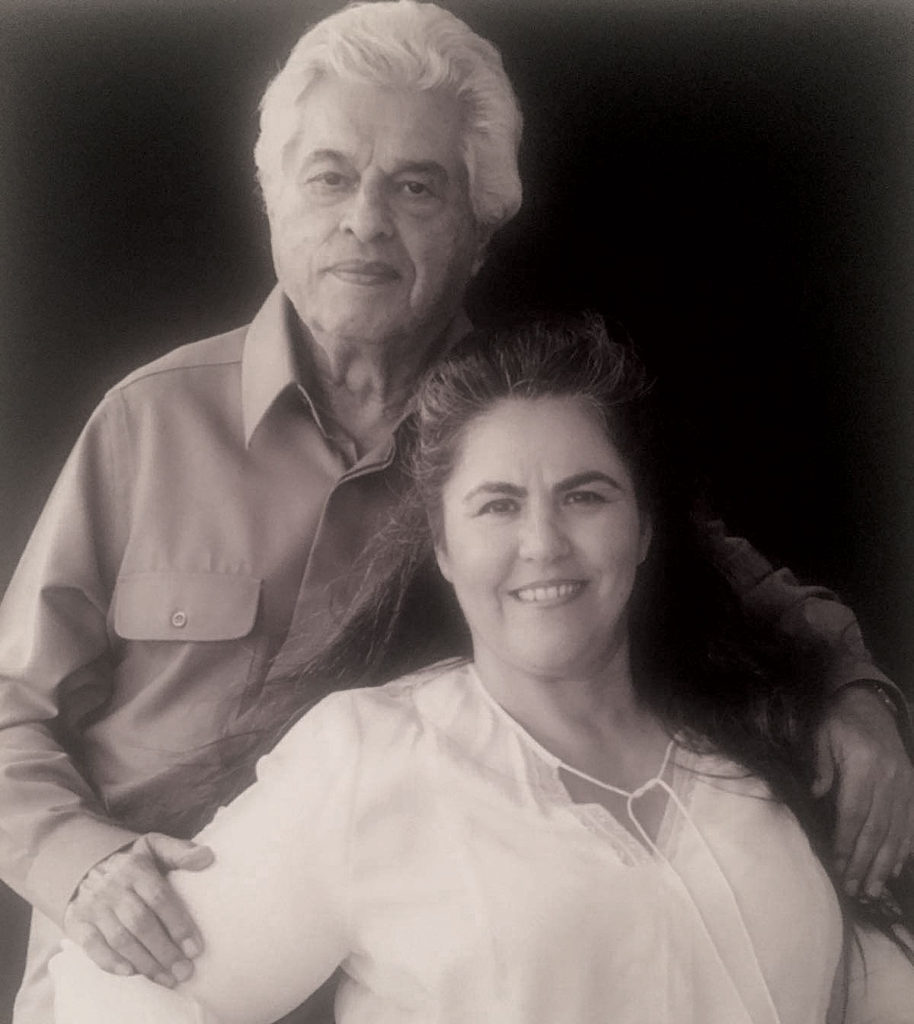
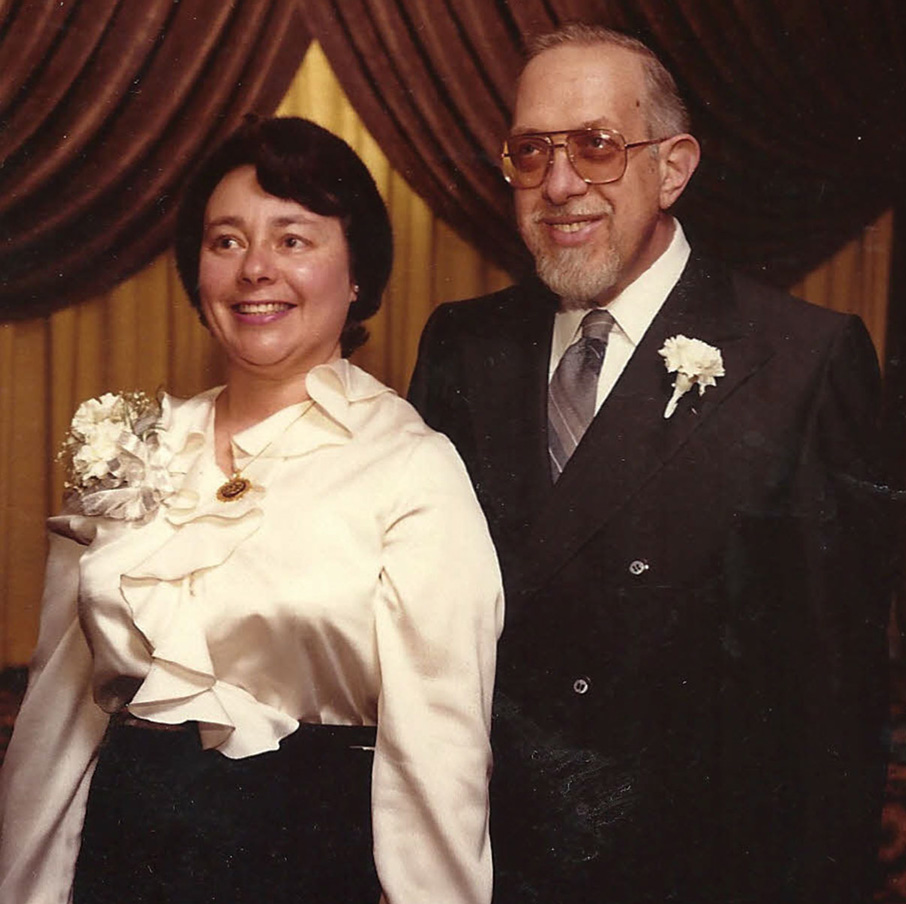
ABRAHAM WAS TOLD BY HASHEM TO SACRIFICE ISAAC HIS ONLY SON. THE FIRST JEW WAS ABOUT TO SACRIFICE THE ONLY SECOND JEW IN EXISTENCE. THIS SCRIPTURE IS SO IMPORTANT BECAUSE IT DEFINES WHAT IT IS TO BE A JEW, A GREAT FATHER AND TO LEAVE BEHIND A TRUE LEGACY. SACRIFICE, HONESTY, HONOR, HUMILITY, LOYALTY, DEVOTION, COURAGE, COMMITMENT AND CHARITY ARE ALL QUALITIES MY FATHER HAD BUT THE GLUE WHICH BOUND THEM TOGETHER WAS SACRIFICE, AS EVIDENT IN HIS STORY AND IN HIS FAMILY.
They say we are the chosen ones, and I believe that to be true, because we are chosen to sacrifice our today for a better tomorrow. It takes seeds of sacrifice that we have to plant with blood, sweat and tears in our present time, so our children and children’s children can reap and sow the rewards that we will never see—that is exactly what my father did. Chaoul Aini was born on March 15, 1933, the eldest son of Jacob and Victoria Aini. Being the eldest of his siblings (Laura, Joe, Sellie, Nina and Albert) he knew what sacrifice meant at an early age.
Victoria, their mother, died at an early age leaving the children to grow up quickly and to help one another get by. My Grandmother Rachel Abed (from my mother’s side who had 10 children of her own to raise) helped them by cooking, cleaning and doing other chores. She shared her knowledge and motherly advice with all the young children.
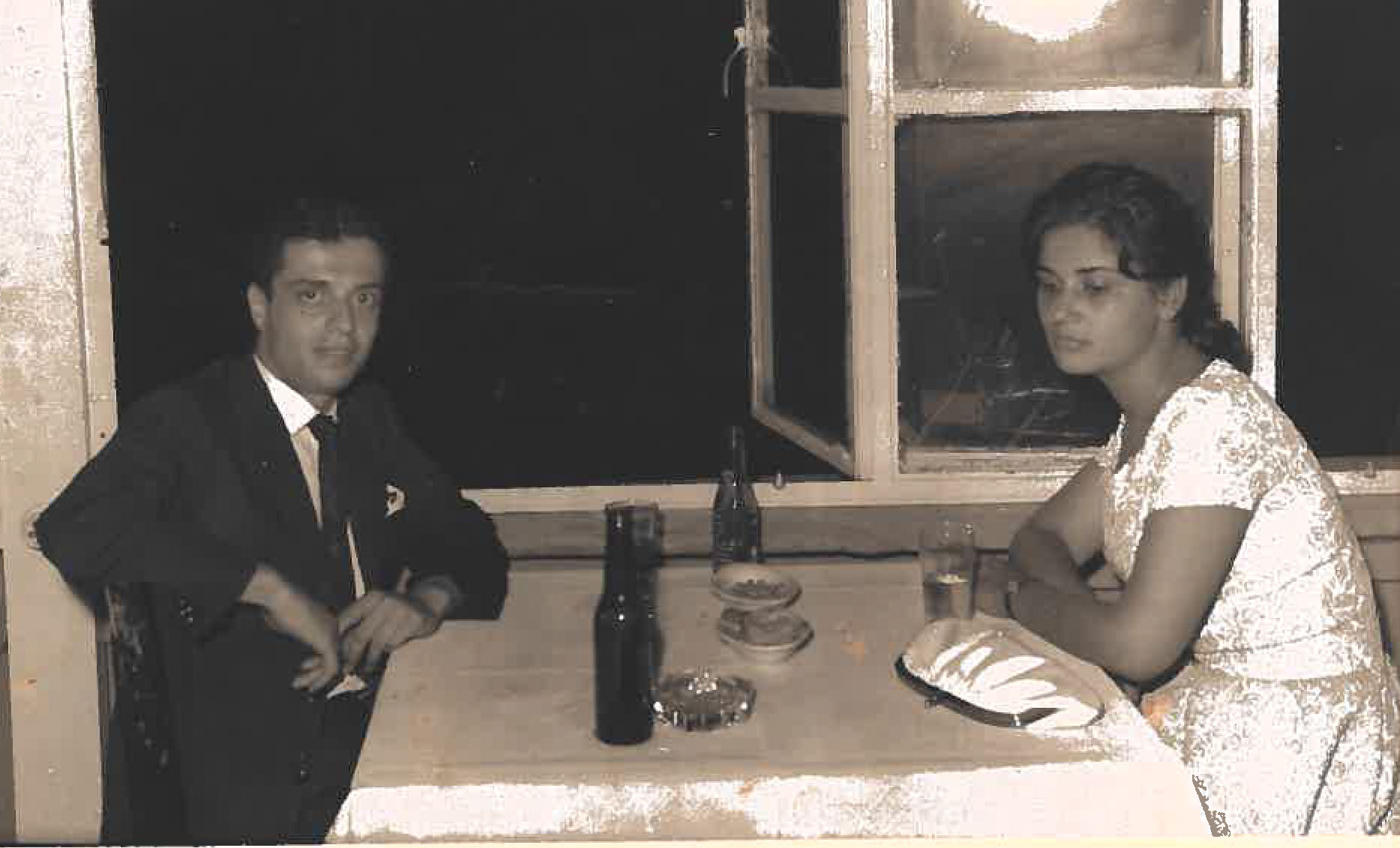
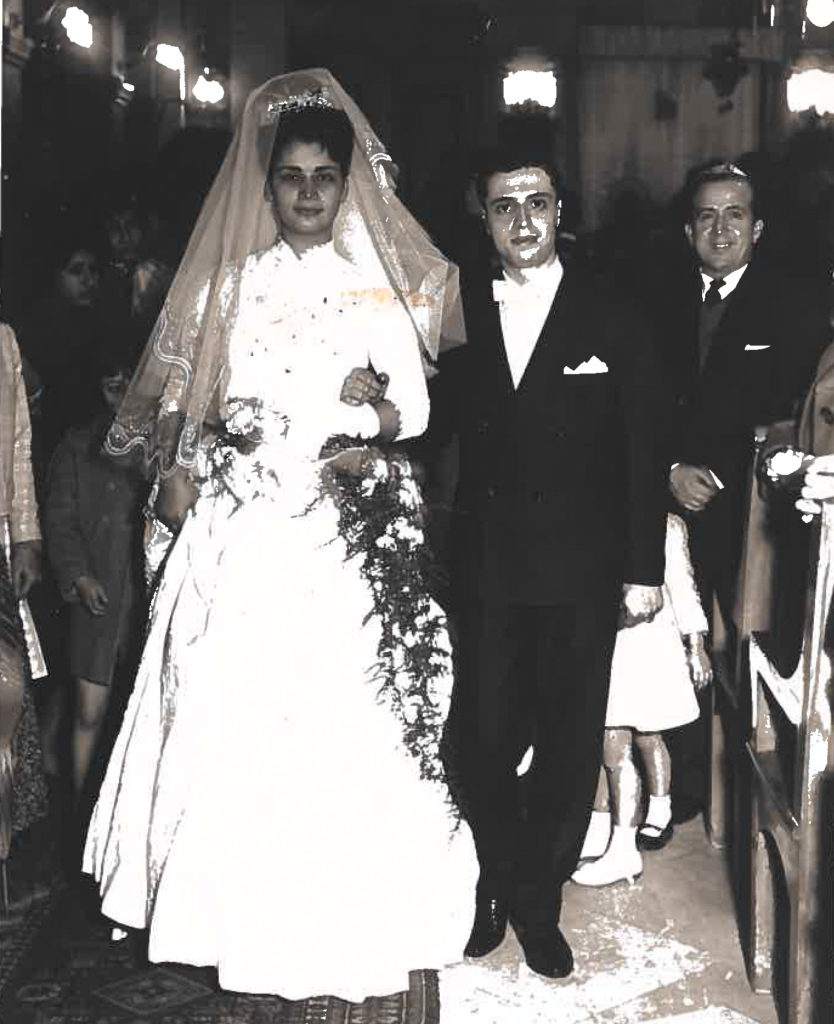
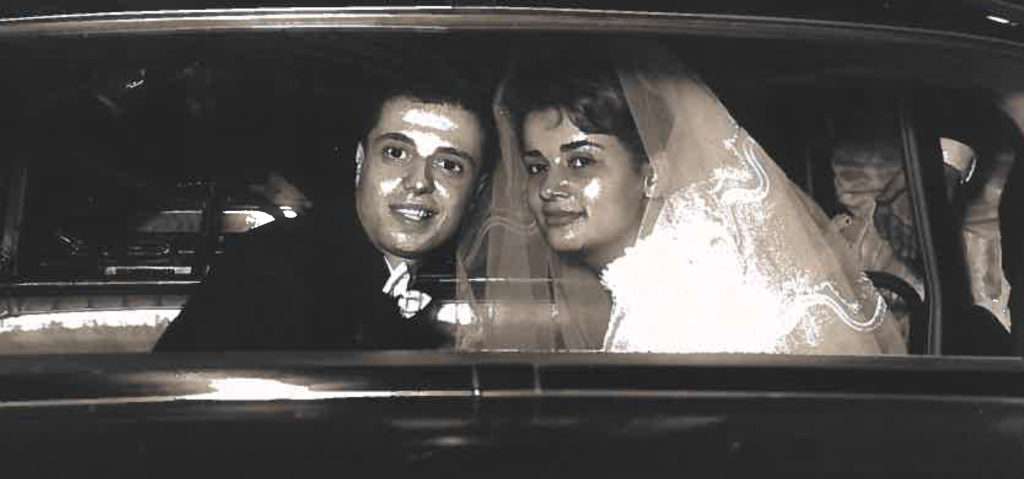
My father literally married “the girl next door,” my Mom, Samira. Then there was the expulsion of Jews from Lebanon during 1967, he and my mother then sacrificed everything they had in Lebanon, as did all my aunts and uncles (Ainis and Abeds), as well as all the other Jewish families living there to leave for a better tomorrow for all their children.
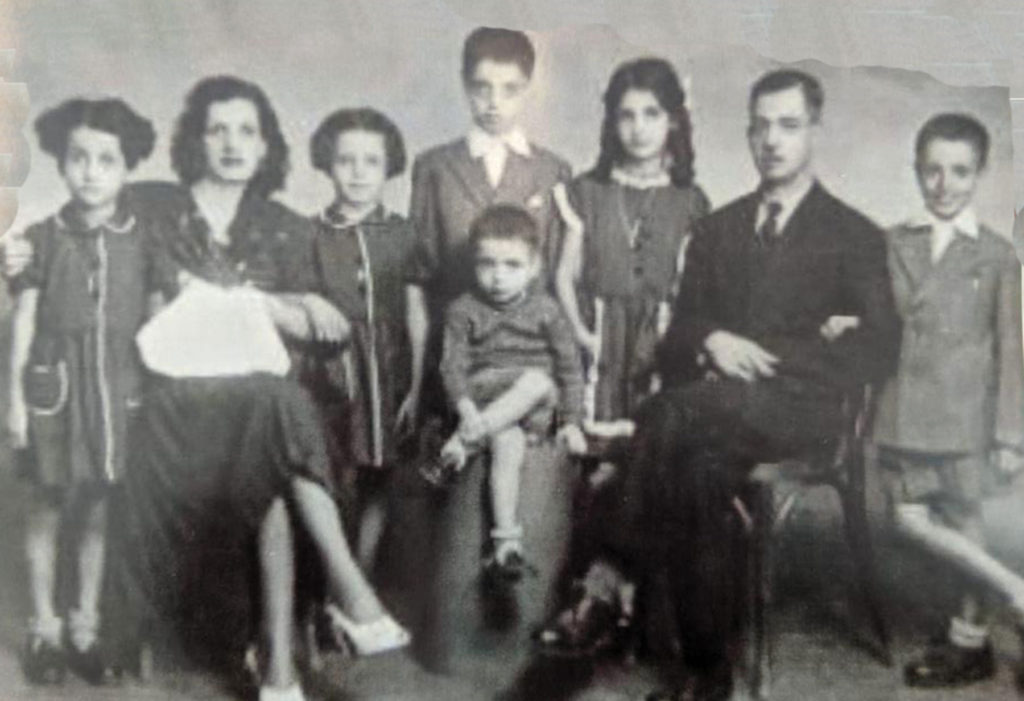
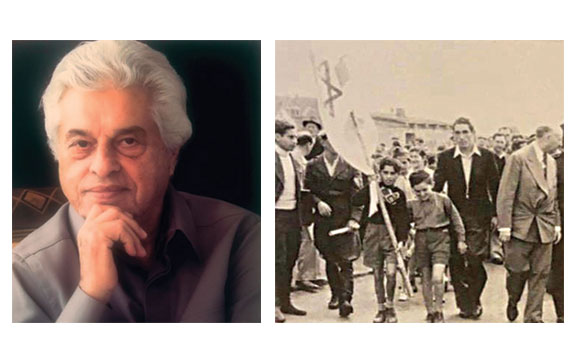
(l-r) Sellie Aini, Victoria Aini, Nina Aini, Chaoul Aini, Jacob Aini, Joe Aini, & center front Albert Aini, 1945 – Beirut Lebanon
When he arrived in NYC, he was a stranger in a strange land, doing menial work and hard labor to get by. He toiled the land in blood, sweat and tears, planting seeds, though he would never reap the rewards. He and Mother worked hard to give us a Jewish education so we could become the people we are today.
My father worked long hours and shunned the spotlight in all its forms, he was humble, honest and never spoke ill of anyone. He was a gentleman’s gentlemen in every sense of the word.
My brother Harry spoke about his integrity and how he returned a bag full of money that he found to the bank in the early 70s, at our fathers funeral.
In my brother Jacob’s eulogy he spoke about my father’s honesty and his motto “A good name is worth more than money in the bank.”
Both of my brothers share those qualities, among a multitude of others too numerous to mention, yet the glue which bound all of those qualities together was sacrifice, which my brothers continue to do in their lives.
As I was sitting shiva, I noticed that the entire family stopped whatever schedule they had and took time to pay their respects and share their warmth—our children, aunts, uncles, cousins, nieces, nephews, friends, acquaintances all helped ease the process of sitting shiva.
Laurie, my brother Harry’s wife, opened her home twice (once for my Mom’s shiva), made the shiva easier for us to bear, due to all her beautiful qualities, kindness, thoughtfulness, humility and empathy.
Rachel, my brother Jacob’s wife, was like a daughter to both my parents, and a sister to us. She was there when my mother or father needed anything—no matter the circumstance, or the task—she always went above and beyond, in this world and even in the next, by making sure to keep them together in their grave site.
The legacy that my father leaves behind is in us—all of us—everyone he helped and those he met along his journey. His memory and legacy shall always be alive in his brothers, in his sisters, in his children, in his grandchildren and in his great grandchildren.
THERE IS NOTHING MORE IMPORTANT THAN A JEWISH EDUCATION
SARINA ROFFÉ
“WITHOUT CHILDREN LEARNING TORAH THERE WILL BE FEWER JEWS IN AMERICA IN 20 YEARS. WE HAVE TO PROVIDE THEM WITH A TORAH EDUCATION,” SAID SAM DOMB, HOTELIER, VOLUNTEER AND PHILANTHROPIST. “INTERMARRIAGE INCREASES EACH YEAR, SO I DO WHAT I CAN TO HELP SCHOOLS AND YESHIVAHS SO CHILDREN CAN LEARN TORAH. MANY PARENTS CANNOT AFFORD TO PAY $20-30,000 FOR THEIR CHILD’S JEWISH EDUCATION.”
A Holocaust survivor, Sam narrowly escaped death at the hands of the Nazis during World War II. He spent his formative years wandering through the forests of Eastern Europe to Russia, lived in Siberia and other places until the end of the war. His story is one no child should have to endure.
On September 26, 1939, the family was awoken in the early morning hours, had to leave everything behind and were forced to begin marching with the rest of the community, many still in their night clothing. Sam’s mother was holding him in her arms when she tripped and fell and was subsequently shot by the Nazis as Sam and the rest of the family watched.
They continued to march and during a break, Sam’s father tried to hide the five-year-old with a Polish friend, as they were leaving Poland. But the friend turned Sam and other hiding children over to the Germans. Sam, who was courageous even at age five, saw the Germans begin killing the others in groups of 10. He ran deep into the forest with another boy only a few years older than he, whom he called “my angel.” Sam and his friend wandered through the forests until they passed into Russian territory. They walked along arduous paths, starving and thirsty, they hid in basements and crevices, in forests, beneath bridges and between corn stalks, utterly destitute and sometimes freezing.
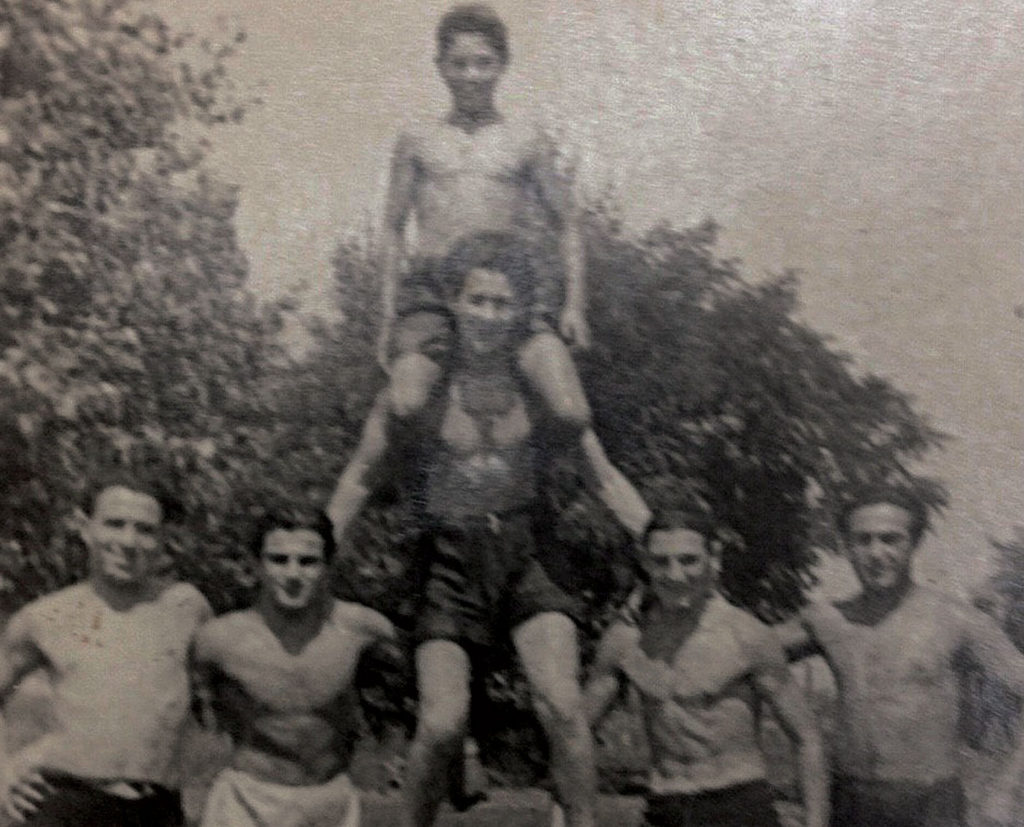
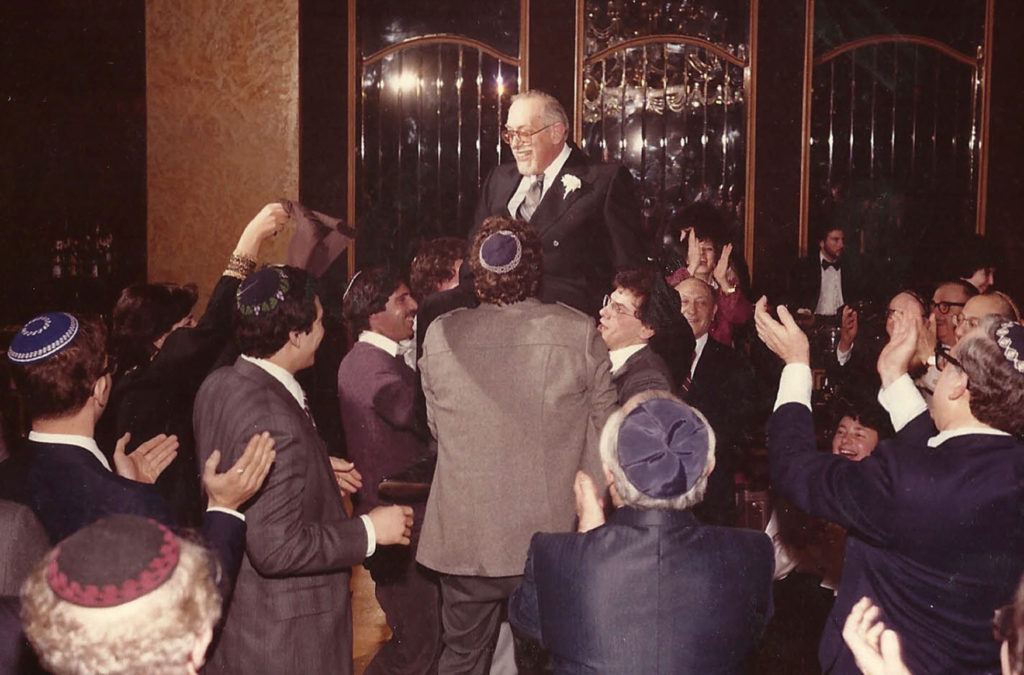
Sam (on shoulders) with friends in displacement camp
The author of He Hath No Let Me Die! From Ashes To Life, Sam did not have the luxury of a formal education. As a child, he saw evil and destruction in its most ugly form and survived against all odds. After the war, he was 11 when he first attended a school and received some Jewish education. Later he moved to Israel where he lived on a kibbutz and served in the Israeli Defense Forces (IDF). In Israel he married his wife Sara, a Yemenite Jew, and the granddaughter of the Chief Rabbi of Yemen, and they moved to New York.
Sam’s story is one of rags to riches. He washed dishes, operated an elevator and did many menial jobs before a few breaks helped him enter the hotel industry. Through hard work and dedication, Sam was able to develop his business and help the Jewish community in many ways. And it is that generosity, that commitment to helping others for the future of Klal Israel, that makes him the focus of this month’s profile.
“We were born Jewish, we have to continue and remain strong and powerful,” said Sam. “In the Diaspora, it is easy to intermarry. If we send children to learn Torah, if a father says kiddush on Friday night, then his son will say it, and the tradition continues.”
While many Holocaust survivors began to question G-d’s role after the war, Sam said, “an inner voice instructed me not to abandon the faith of our forefathers.” Over the years, Sam’s devotion to Jewish causes grew, as did his observance. Among them the National Jewish Outreach Program, which sponsors programs like Shabbat Across America and heritage projects, as well as Hebrew instruction.
Indeed, Sam is the angel for many schools and synagogues. Manhattan Day School, Ramaz, Ohel Moshe and Ahi Ezer Yeshiva are just a few of the schools that he generously supports.
“He lives his life to put children in yeshivahs. He supports many yeshivahs in a very big way every year. He makes sure children get educated,” said Bunny Escava, the president of Ahi Ezer.
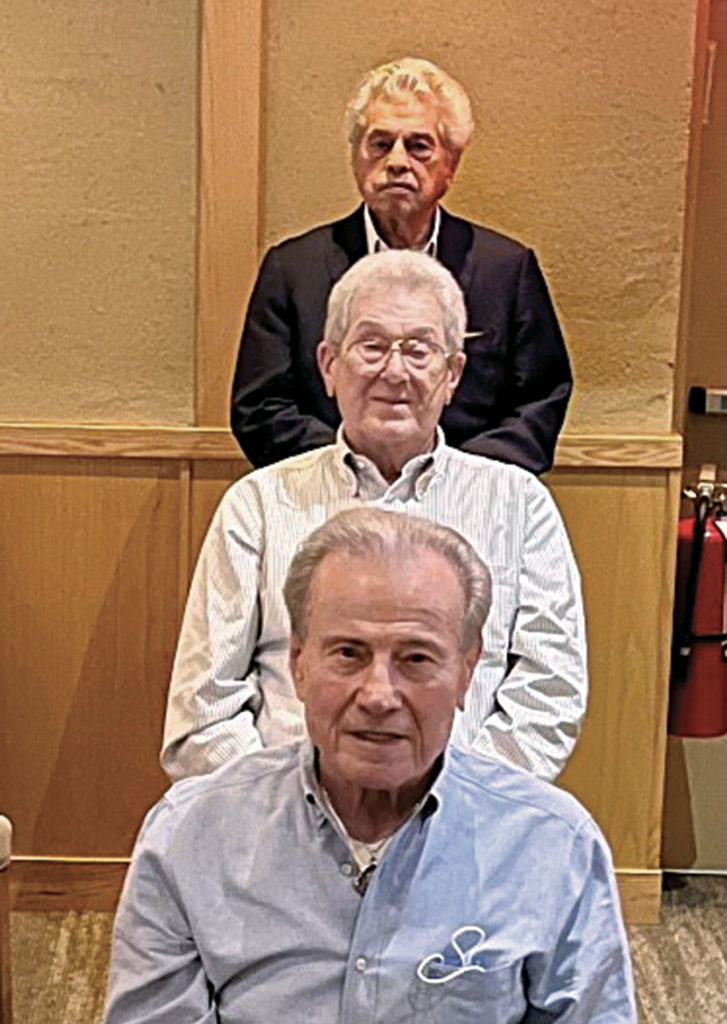
Sam meeting recently with friends from the DP camp
“I personally view Jewish education as a key factor in our nation’s struggle for survival. I have established a one-man enterprise in which I invest all my energies in supporting educational institutions and Jewish schools,” said Sam. “Jewish education is the best guarantee of Jewish survival, and it is that which will protect us from assimilation.”
He has also rescued several synagogues from disrepair, including the Carlebach Shul, Ramath Orah, West Side Institutional Synagogue, and Congregation Ohev Sholom in Manhattan, as well as synagogues in Israel.
“I just felt obligated in my heart because of the darkness of my past. I had to do something to light the future. It’s a great spiritual feeling sitting in a synagogue that has been restored. That is when I feel G-d smiles at me.”
Sam is the founder of Young Israel of Jamaica Estates and Tifereth Israel, a Yemenite Synagogue in Manhattan that his children Ronnie, Jay and Michele attend. After his wife Sara died in 1992, Sam established the Sara Domb Youth Center in Queens to offer educational activities for Jewish youth and the Sara Domb Scholarship Fund for Jewish studies.
Today, Sam is a business mogul, supporting the State of Israel and is a passionate advocate for Jewish issues around the world. He remained involved with Israeli politics most of his life and developed friendships with the Chief Rabbis
“Sam took me to see President Clinton in 1992, just the two of us,” said Bunny Escava. “We stood in line and when it was our turn, he spoke to President Clinton for 10 minutes about what he wanted him to do for Israel and he kept the whole line waiting.”
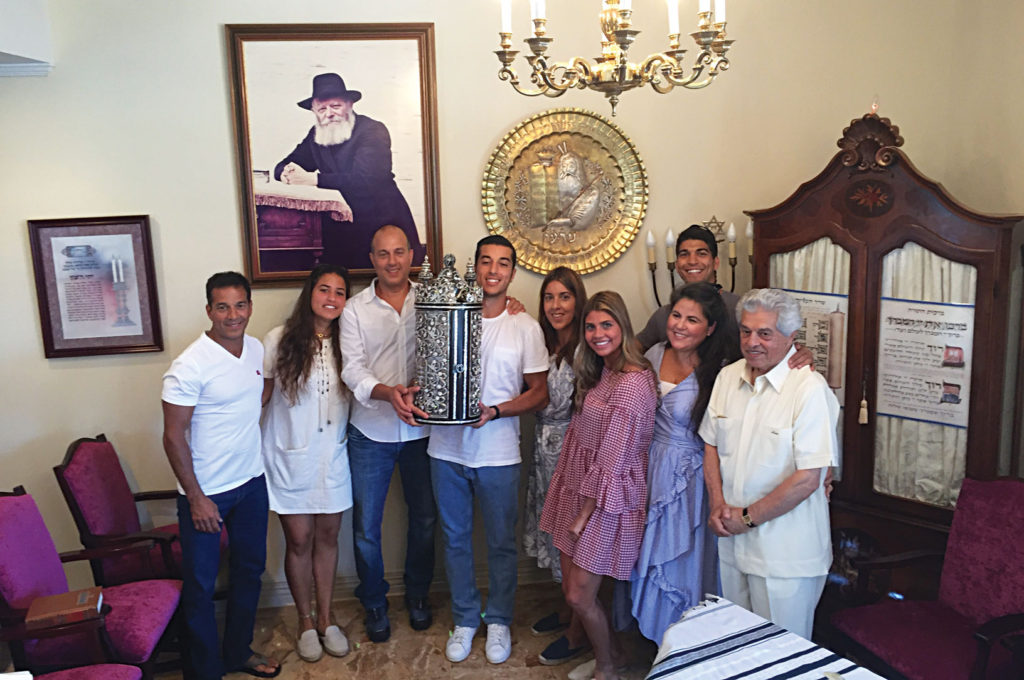
Sam with familySam with life partner Orly Gal
Sam has spoken at many events and has been outspoken about the importance of Israel and Jewish education to the continuity of the Jewish people. Bunny noted that on Friday nights in Florida, Sam and his life partner, Orly Gal, who has become an important part of his family life and his philanthropic endeavors, make a lavish dinner and always invite people for Shabbat to his apartment. It’s really special.
“Always generous and welcoming, Sam and Orly are the perfect hosts, plus Orly is a wonderful cook, which makes for the most memorable and delicious Shabbat dinners. You never know who you’ll meet at their dinners, because their guests are the most interesting and diverse people from around the world. The dinner conversations are always riveting and often reveal Sam’s insight on a variety of subjects. I feel blessed to count Sam and Orly as my friends and to be included in their spectacular Shabbat dinners,” said Rachelle Matsas.
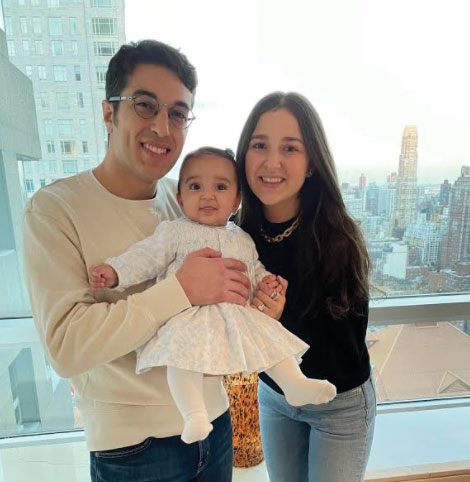
Adam and Anna Ashendorff Amsalem
One of the greatest joys of Sam’s life was the recent birth of his great-granddaughter Stella Sara Mazal, daughter of Adam and Anna.
Sam wrote “For me, the Land of Israel and Jerusalem comprise one complete unit. This unity can never be surrendered because Israel and Jerusalem are bound together. Forever.”
A genealogist and historian, Sarina Roffé is the author of Branching Out from Sepharad (Sephardic Heritage Project, 2017), Sarina holds a BA in Journalism, and an MA in Jewish Studies.
SEPHARDIC COMMUNITY CYCLISTS RAISE MONEY FOR ISRAELI AMPUTEES
Aura Lagnado
It’s been a while now, but somewhere in my cycling journey I grew a soft spot in my heart for amputees. Maybe it was the fact that I met a few amputee cyclists riding strong and inspiring me to go further, push stronger, ride faster, and give it my all.
At first they were just like all the other cyclists, enjoying life while riding around in circles in Prospect Park, but as cycling became a bigger part of my life, and I was spending more and more time on my bike in the park, I got to know a few of these amputee cyclists. I began to ride with them and open up conversations with them. I got close enough to a few of them to feel comfortable asking about the stories behind their missing limbs. A strong connection formed for me. I started reading up about amputations and the life, struggles, and phantom pain with which they suffer.
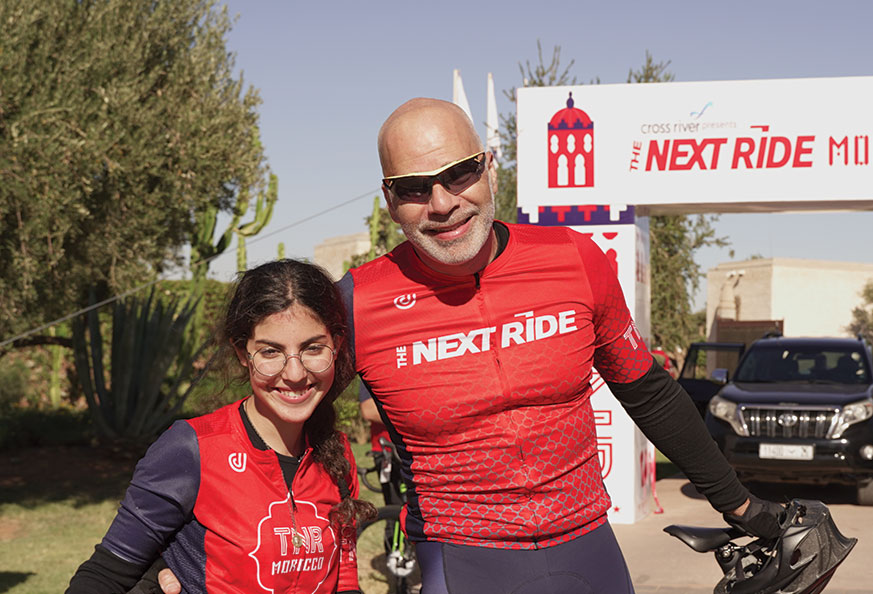
I am not exactly sure how and when I heard about The Next Ride (TNR). But when I did I had this strong desire, want, and need to be part of it.
The Next Ride is a subdivision of an Israeli non-profit organization called The Next Step. The Next Step is more than just any non-profit, it is community, it is family, it is the force that gives strength to amputees. It gives them the strength to stand tall, stand straight, and stand with pride. It gives them the strength to take their Next Step—to move forward and journey through life with a smile on their faces knowing they can do anything they ever dreamt of.
November 2020, due to covid and the changes that came with it, I was not going into work as often as I would normally, and so when someone posted on a WhatsApp group chat that there were six openings for TNR, I saw it as my chance—one that may not come again if I didn’t jump on it. So, needless to say, I signed up. It was just two and a half weeks before the ride through the Dubai deserts with a dozen or more amputees.
During the short time I spent with the TNR family, I got to know a number of the amputees that benefit from The Next Step. On bus rides, we discussed their challenges of adapting to a new life, the stories behind their amputations, the downs, the ups, and how grateful they are for the Next Step, and their American family, who are there to help them through it all.
To me, this trip was very much about the amputees. I tried to spend as much time as possible with them, with their doctor, and with their families, getting to know as much as I could about them. It is amazing to see how happy they are on a daily basis—how they see the good in everything around them. But then when they speak of their stories, the sadness, the hard times, the feelings of depression that they fight off, it’s all so real, it’s a harsh reminder of why we do this, of why we ride, of why The Next Ride came about.
As one young woman told the story of her depression, of her three attempts at suicide, her doctor sat quietly listening to her speak, tearing up while reliving it all with her. I tried to be strong, holding the tears at bay, but hearing her speak her story, seeing her doctor start crying, and understanding the difficulties these amazing people overcome, it was too emotional to hold back my tears.
One amputee said it took him three years to find himself and come out of his depressed state. For him, it was sports, cycling, adventures and thrills which reminded him of the life he loved and can still live.
On the outside we see these amputees smiling, we see them running, jumping, cycling and living a life just like any other, but like everything, there is a story, a journey, and a community of great people to help each and every one of them get to that place of happiness and pride, the place we see them in today.
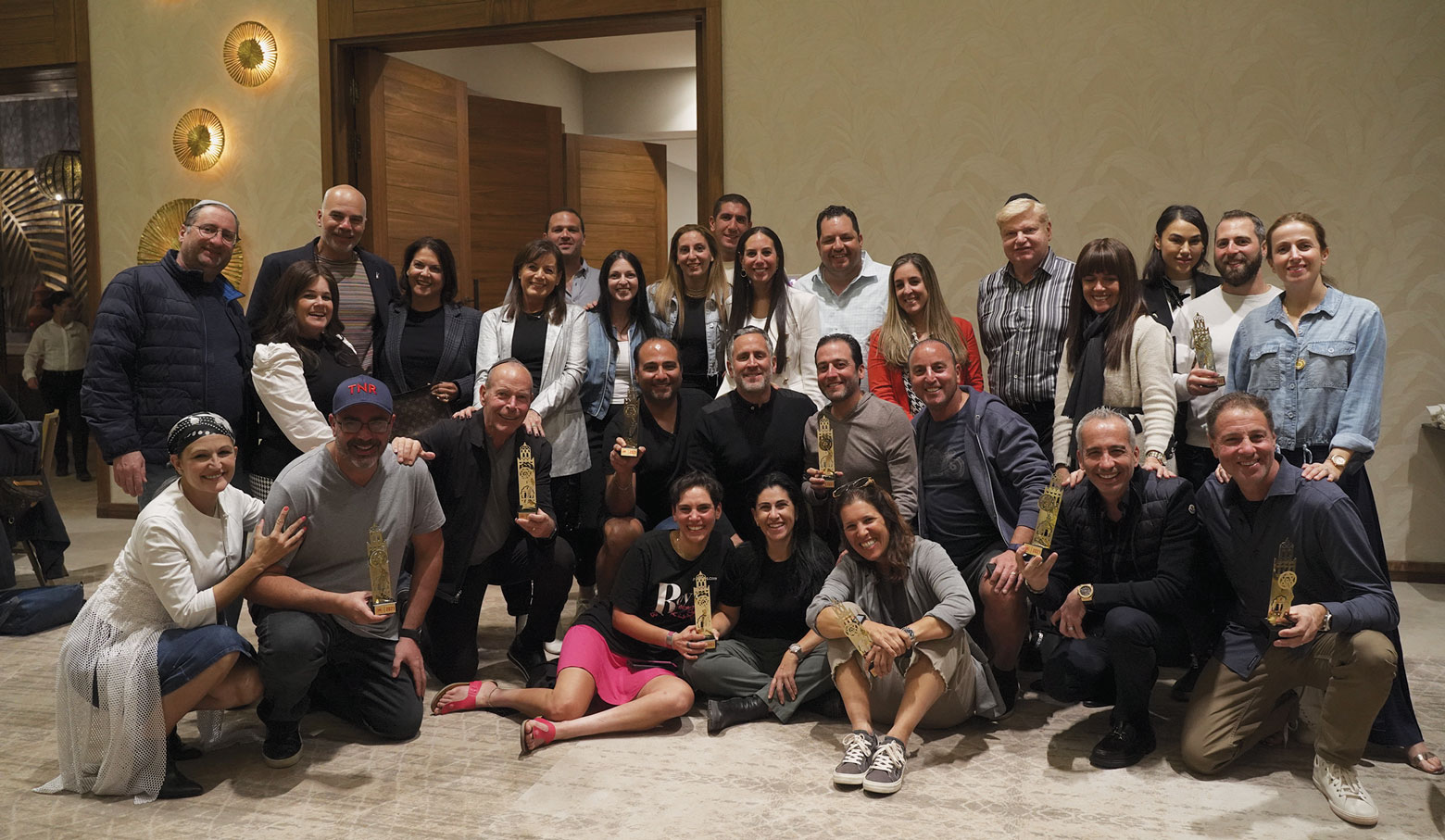
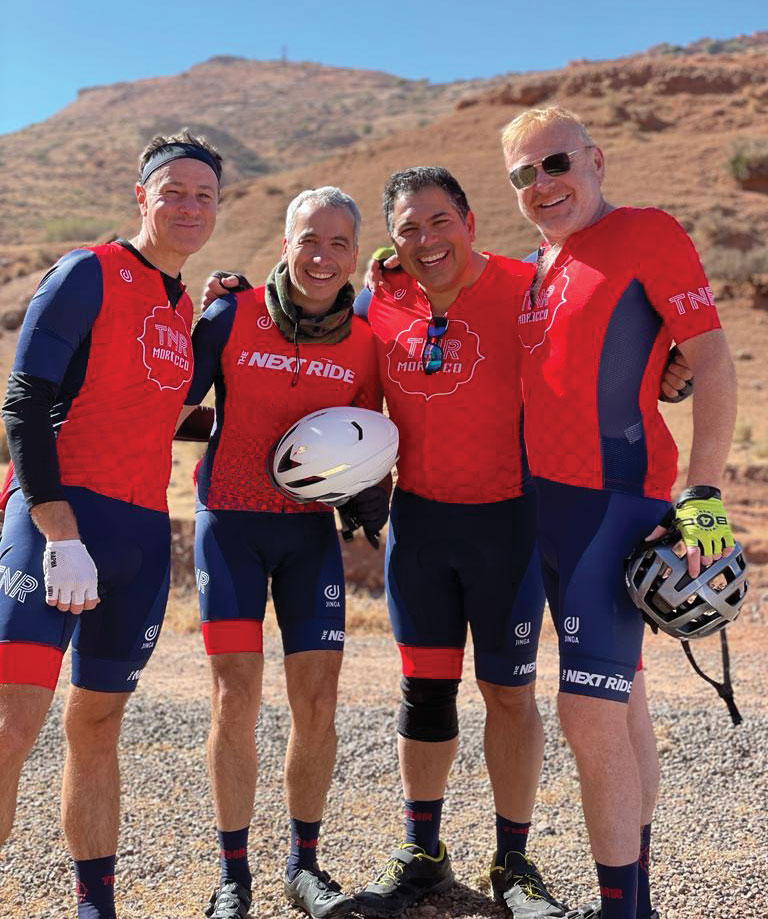
When I signed up in 2020, I thought it would be a one time shot for me. I would do my part, contribute, raise money for a cause I hold dear, ride, and check it off my bucket list. However, the strong connections that were formed over the week had me coming back for more. As tough as it was for me to raise the funds, missing every fundraising deadline, I refused to back-down and quit, I had to go back, I had to see these special souls, and so, I joined 30+ Syrian Sephardic community members and took a flight out to Morocco to do it all again this year! To ride with the TNR family and strengthen the bonds created! Whenever there is a genuine need for help you will find the Syrian Sephardic community taking part.
This year, right before Shabbat, TNR heard of a special case that was considered hopeless. After many calls and research, they found a glimpse of hope. A glimpse of hope that came with enormous costs. At our Shabbat lunch in Morocco, it was the Sephardic community that jumped into action and started collecting money for this case, collecting money as they would do for an aliya in shul. I cannot say how much was collected, but it was heart warming to see the goodness of our community in action, at a spontaneous moment.
A month ago, I would have said TNR 2021 is my final year, but once again, after spending the week with this special community and family that has been formed, I find myself thinking of ways to go back, ways to help these individuals, ways to bring their dreams to life! TNR 2022—let’s do this—bigger and better! All the money we raise is going to a great cause!
Aura Lagnado earned a Master of Science in Oriental Medicine, specializing in acupuncture and herbs. She achieved the Valedictorian Award in 2018 when she graduated Pacific College while also working full-time. Aura flew to Taiwan to learn and intern under the doctors in the China Medical University of Taichung, right after graduating with her Master’s degree. Upon returning to the States she took no time before starting her Doctorate program at Pacific College of Oriental Medicine. She is currently a Doctor of Oriental Medicine and a NYS licensed acupuncturist.
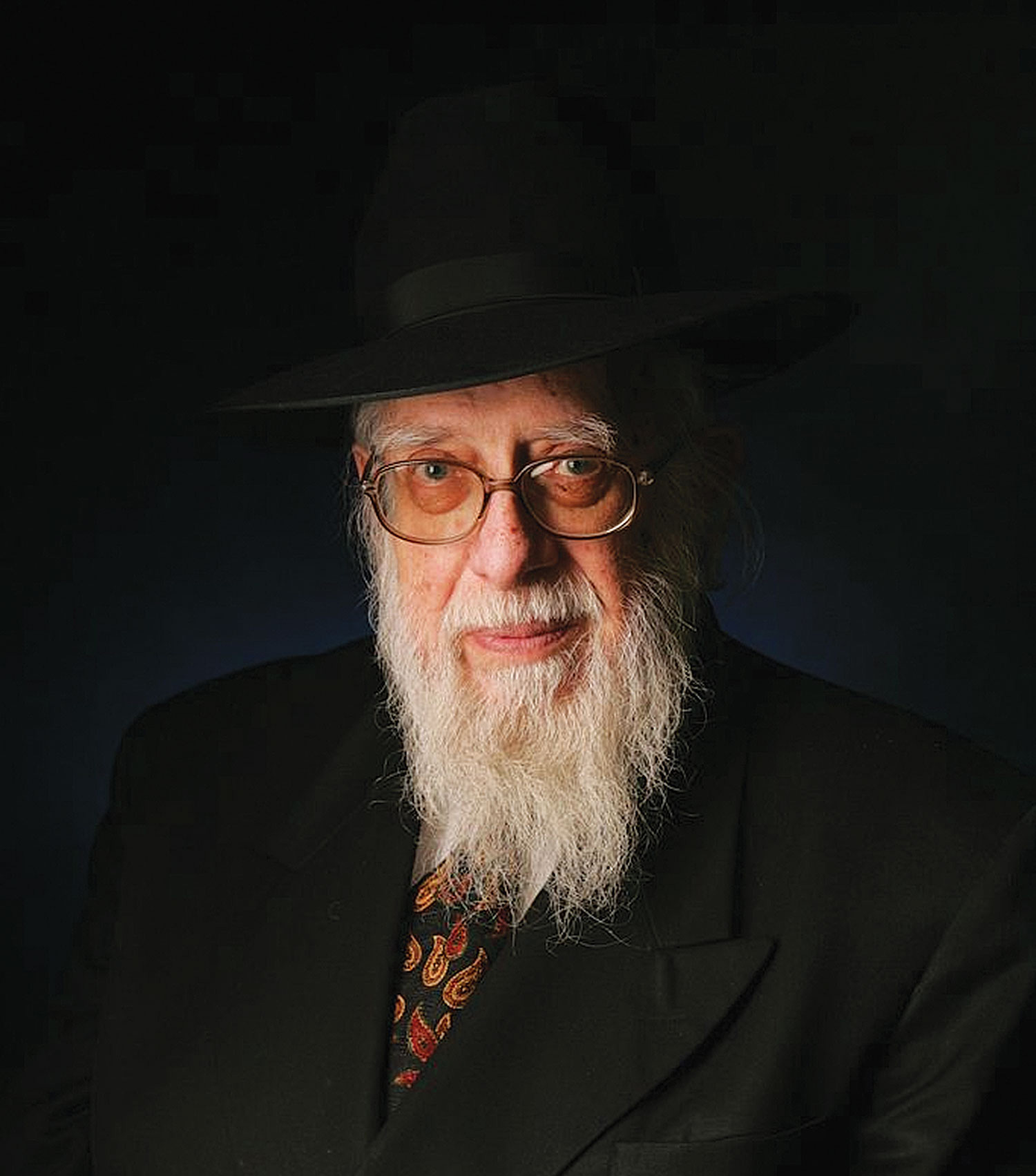
IF ONE WERE TO THINK OF A STERLING EXAMPLE OF A RABBI, ROSH YESHIVA, MENTOR, SPIRITUAL GUIDE, ORATOR AND TEACHER, ONE INDIVIDUAL COMES TO MIND—RABBI DR. ZVULUN LIEBERMAN ZT’L. NINE YEARS AGO, WE BADE FAREWELL TO OUR BELOVED RABBI. THE LOSS OF THIS TZADIK AND TALMID HAKHAM RESURFACES WITH GREATER INTENSITY EACH YEAR. IT TRANSCENDS THE PASSAGE OF TIME.
As we commemorate his ninth yahrzeit, we remember the depth of his outreach, wisdom and sensitivity toward his fellow Jew, and the profundity of Torah substance, and luminosity which he embodied and radiated both in Eretz Yisrael and in the diaspora.
It is most fitting that I convey my heartfelt gratitude to Hashem for having allowed me to immerse myself in his teachings. I was a beneficiary of his support and guidance. The Rabbi established a strong foundation in Torah learning. He stressed the efficacy of tefilah, hesed, and love for Eretz Yisrael and Am Yisrael. His inextricable bond with his family, students, congregants, and colleagues have remained deeply embedded and will never be severed.
Let us begin with the Rabbi’s childhood in the Bronx. His first language was Yiddish. His mother Yehudith and father Hillel natured and nurtured him in a monetarily strapped environment. The paucity of material resources was overshadowed by unconditional parental love, derech HaTorah and the necessity to uphold the tradition of our rich Jewish heritage. The primacy of receiving and internalizing Hashem’s directives remained with him from childhood through adulthood.
Rabbi Lieberman formed an idyllic partnership with his brother Paul Lieberman, who eventually became a judge. The Rabbi always strove to give honor to his parents. He was an exemplary student who excelled scholastically in a myriad of disciplines, leading to his candidacy and acceptance into the Semicha program at Yeshiva University. He was admired and highly respected by his professors, including Rabbi Dr. Joseph Ber Soloveitchik zt’l, Rabbi Shatzkes zt’l, Rabbi Dr. Belkin, zt’l, Rabbi Dovid Lifschitz, zt’l and HaRav Ovadia Yosef, Rishon Lezion zt’l and Ha Rav Mordechai Elyahu, Rishon Lezion, zt’l, all of whom signed his Semicha.
When the Rabbi was seventeen years of age, a tidal wave came crashing down on his family. He suddenly came face-to-face with a harsh reality which he had never before encountered. His father was suddenly taken from his midst leaving the family in dire circumstances. With the inner fortitude to persevere, he obtained part time employment. His G-d given inner voice opened up a new vista of understanding. He brought healing and great consolation to his mother and brother. He proved himself beyond the shadow of a doubt more than capable of providing assistance, lending a strong hand and taking upon himself the mantle of leadership. The Rabbi never recoiled in despair but conditioned himself to confront and overcome seemingly insurmountable challenges.
In 1955, Rabbi Lieberman married Rebbetzin Bracha, a very special woman. He mentioned to his colleague Rabbi Meir Goldwicht, she is not only a good wife she is a great team partner. The zechut he had to marry Rebbetzin Bracha carried over into their offspring Tehila, Elyorah Chaya and Hillel Elyahu, grandchildren and great grandchildren.
The Rabbi’s fervor for spiritual growth and Talmudic studies was manifest in the lofty heights he reached. We marvel at the plethora of his achievements. He ultimately reached the pinnacle of success, Yoreh Yoreh Yadin Yadin, Rosh Yeshiva of Sephardic Studies at Reits, Av Beth Din of Syrian Beth Din, Dayan, Principal of Yeshivah of Flatbush, Ramaz upper school, Maybaum Chair Professor of Sephardic Studies Talmud and Halacha at YU Azrielli Graduate School and Professor of Education at the Teachers Institute for Women.
In October 2000, a second tidal wave gripped the Lieberman family, the brutal murder of Hillel Elyahu. Years earlier he met his future wife Yael in Israel. Their trajectory took them to Elon Moreh in the Shomron. As strong advocates and residents of Elon Moreh, they had established a loving family and a non-negotiable foothold in Eretz Yisrael, ensuring that the legacy of our Avot and Emahot would not pass into oblivion. They reinforce the unshakable connection of our homeland to its people. The apocalyptic act of evil committed by the Arabs turned their world upside down. Un etre vous manque et tout est depeuple. (Sometimes, only one person is missing, and the whole world seems depopulated.)
The Rabbi had been leading the Yom Kippur service when he received this news. Solitary in his lamentation he nevertheless kept his emotions in check. The news did not derail him from his Rabbinic responsibility, a true testimony to the grandeur and humility of an exemplary Rabbinic leader. Today the courage and strength of his character is manifest in his two grandsons, Moshe Yair who is currently serving in the Paratroopers and Yosef Yisrael who is serving in the Golani Brigade division of the Israel Defense Forces.
I wish to express my gratitude to the following interviewees who have willingly shared their personal connection to Rabbi Dr. Zvulun Lieberman zt’l, Rabbi Meir Goldwicht shlita. In Mesechta Avot it is written, “One who is rich is satisfied with his lot.” Rabbi Dr. Lieberman gave an alternate explication and expounded on this. “One is also happy when he sees the success of others.”
Rabbi Lieberman with Rebbetzin Bracha
MEMORIES OF RABBI LIEBERMAN Z’TL
I met Rabbi Lieberman zt’l at Yeshiva University. He encouraged his students to check and investigate what was happening in Eretz Yisrael. “We need to feel that the diaspora is temporary, and understand that the real life is in Eretz Yisrael. If people internalize this message, they will develop the power and motivation to go to Israel in the future.”
Rabbi Dr. Lieberman made each of his students feel unique. They gleaned so much from his lectures. I admired his patience in listening to individuals. When the opportunity availed itself, I sought sagacious advice from my beloved colleague. He integrated the parashat into everyday mundane situations. We all miss him. His passing is a tremendous loss.”
Rabbi Ezra and Schifra Hanon remember, ”Ours was the first wedding in Congregation Beth Torah. The Rabbi was the Misadar Kedushin on Sept. 12, 1971. Our children prayed in Congregation Beth Torah. It received many awards for architectural beauty.”
Rabbi Ezra continued, “Rabbi Dr. Lieberman zt’l taught me how to endear children. His son Hillel Eliyahu came to Bet Knesset. I can recall Hillel at age 5 or 6 frolicking. He sat on the Rabbi’s lap for 15 minutes. This was his favorite introspection spot. Hillel was quite active.
We were guests at the Rabbi’s home several times. He taught my children at the Azrelli graduate school. He was truly a master teacher. He also cemented the relationship between my wife Schifra and me. Schifra was firmly planted in Ashkenazi traditions and mine are Syrian. Rabbi Dr. Lieberman fused the two families and societies. He emphasized the love of Jew for Jew.”
“The Rabbi was a Renaissance man, powerfully erudite in many fields. He integrated Sephardic traditions into Congregation Beth Torah and the committee abided by his decisions.”
“The Rabbi was a Renaissance man, powerfully erudite in many fields. He integrated Sephardic traditions into Congregation Beth Torah and the committee abided by his decisions.”
“Following the six-day war in 1967, he asked the following question. What do you think a normal warring victorious nation does after defeating its enemy? Israel sent milk into the Old City, Yehudah and Shomron for Arab babies. This shows the heightened moral conscience and integrity of the Israelis.”
“My siblings were so inspired by Rabbi Dr. Lieberman. My sister boarded the Zion ship departing from the US, destination Tel Aviv. She credits Rabbi Lieberman for giving her inspiration and love of Eretz Yisrael.”
Rabbi Ezra Hanon is the Health Care chaplain at NYU Coney Island Hospital. Schifra Hanon is Director of Pathfinders at the Yeshivah of Flatbush.
”Everyone was enamored by the Rabbi’s countenance. He ingratiated himself and inspired people—5 through 95 years old. He engaged the students and every morning he would get on the PA system. May his memory be a blessing.”
Mr. David Dweck, one of the founders of Congregation Beth Torah said, “I moved in 1968 to the Avenue J area. We were praying in the basement of Club 100 with a small minyan. From its inception, Rabbi Dr. Lieberman was the Rabbi of Congregation Beth Torah. Abie Tawil was getting bar mitzvahed. I marvel at the fact that the Rabbi, Ashkenazi from birth, had to think outside of the box. He adjusted so masterfully to the Sephardic customs and rituals. People sought his counsel. On holiday evenings he invited people from the block to an intimate reception for a Sefer Torah reading after synagogue services. I purchased permanent seats for my family. The congregation grew by leaps and bounds under his leadership. The aura of ongoing Torah classes and minyanim created such a spirit of congeniality, thanks to the Rabbi’s initiative and toil.”
David continued, “He was such a template. Whenever I asked a question, I received an answer on the spot. The congregation honored him. They always gave him the respect he deserved. They escorted him up to the podium. The Rabbi was so lovable. His passing has left an inexplicable void within us.”
“Beloved Rabbi Dr. Zvulun Lieberman zt’l, it has been nine years since your passing. You transformed the month of Tevet into tovot. You gave us the courage to access the sparks of G-dliness within us. You celebrated our successes and your humility generated such charisma. I can recall when I visited you at NYU Hospital, the Haitian nurse remarked “I want to adopt the Rabbi as my father. He is the best patient ever.”
“When I gaze at your portrait in Congregation Beth Torah I am reminded of your inimitable smile, heartfelt compassion and Torah words of Emet. You shepherded your family, congregants and students for over six decades. You fled from honor, never seeking the limelight, no special privileges. You were the candle that ignited thousands of neshamot. You saw the intrinsic beauty in every Jew. In the zechut of your self-sacrifice may we be zocheh to witness the ultimate geula and once again be in your presence.”
Rabbi Dr. Zvulun Lieberman is survived by his wife Rebbetzin Bracha, his brother Judge Paul, Esq., his daughters Tehila and Elyorah, his daughter in-law Yael, grandchildren and great grandchildren both in Eretz Yisrael and in the diaspora. Yehi Zichro Baruch.
I wish to thank Rabbi Azancot for preserving the legacy of Rabbi Dr. Zvulun Lieberman zt’l. May the Rabbi be blessed.
HAVE YOU EVER LOOKED AT YOUR FINANCIAL PORTFOLIO AND, TO YOUR DISMAY, DISCOVERED THAT YOU’RE INVESTING IN A COMPANY WHOSE PRACTICES MAKE YOU CRINGE? DO YOU HAVE STRONG BELIEFS ABOUT HOW THE WORLD COULD BE BETTER?
Maybe you support the work of some nonprofit organizations, or you’re involved in taking direct action to make the planet a better place to live. Wouldn’t it be great if you could align the way you manage your wealth with the values that you hold closest to your heart?
Believe it or not, it is possible to make money and still manage it in a way that supports your purpose. In fact, in certain circumstances, ethical investments may potentially outperform their peers.
With so many options now available, strategies that align with your personal values and beliefs can satisfy investing with integrity while still maintaining a diversified portfolio.
However, sometimes it can be difficult to find the right investments. Investment companies may take very different approaches to what might seem like the same value system.
When you want to make sure that your money only supports organizations that you approve of, it’s critical that you know what your purpose is. Do you want to specifically invest only in something that you believe in, or do you want to screen out the ideas that don’t serve your beliefs? Or both?
If you dread finding out that something you disapprove of is in your investment portfolio, you’ve come to the right place. This step-by-step guide is specifically designed for ethical people with strongly held beliefs just like you who are searching for a way to manage their money without losing integrity. While you want to invest with purpose, you also need to make sure that your portfolio can help you reach your financial goals.
As a values-driven investor, you may be asking yourself questions like these:
• Does my current portfolio align with my beliefs, and if not, how can I change it? • Where can I find investments that get me to my goals, but that I can also feel good about? • Is there anything I’ve overlooked in my search for ethical finances? • How can I make sense of all the choices available to me? If any of these questions had an impact on you, keep reading.
STEP 1: ALIGN YOUR BELIEFS AND VALUE SYSTEM WITH YOUR FINANCIAL GOALS
In your eyes, what constitutes a company with ethics and integrity? Think of a couple of businesses that you would be happy to invest in. Are there certain industries you want to avoid because the entire field is harmful to the world in some way? What are their characteristics?
Connect with what’s deeply important to you. What are you on this planet to do—what is your purpose? What matters most about the impact you want to have on the world? Identify your priorities so you can determine more easily what you want to include and what you prefer to exclude.
Once you’ve harnessed the power of your own purpose, consider your financial goals, too. One of them is likely building a nest egg for retirement, but you may have others as well. You want your investments to do well (in terms of performance) and to do good (in terms of ethics). But don’t worry, those two categories are not always mutually exclusive!
STEP 2: TRANSFORM YOUR CURRENT PLAN INTO A PURPOSE-DRIVEN SRATEGY
It’s pretty common for people to save for retirement without really having a concrete plan for their nest egg. Often, they decide to save “as much as they can.” Many times they invest in securities that people they know have recommended. Saving and investing in something is better than nothing, but this isn’t a plan that’s likely to get you to where you need to go.
Think of a couple of businesses that you would be happy to invest in.
On the other hand, you might have someone who’s knowledgeable about money helping you with a financial strategy. But while they understand the stock market, they don’t understand your value system. Or they may not understand how to invest specifically in alignment with your beliefs.
You might have a strategy, but your heart isn’t in it.
Either way, you don’t have an approach that unites your values with your financial goals. Aligning your beliefs and your investments requires some forethought on your part. It’s critical to develop a framework with the timelines for your goals as well as the plan to get you to those goals and ensure that all the tools you’re using line up with your values.
That way you can reimagine your plan to account for both financial and non-financial desires, without giving up either. You’ll need to understand what’s currently in your portfolio, and what might need to change so that you can finally feel good about your investments.
STEP 3: MAKE AN IMPACT WHILE BUILDING YOUR WEALTH
You can help build a better world for your family and your community, and also pursue your financial goals.
Many folks are content to invest without considering their values and simply donate to the charities of their choice. But by investing in ways that you can ethically support; you’re living your values every day.
STEP 4: VET YOUR INVESTMENTS
Many companies include purpose and values in their mission statements and many of them don’t live up to their own hype. But how can you tell which is which?
Investing with integrity means results matter. It’s not just about claiming that the company is doing good in the world, it’s about the company actually making a meaningful impact. As a result, examining these companies is key for ethical investors.
STEP 5: FIND ALIGNED INVESTMENTS
You might be wondering where all these wonderful opportunities are hiding. Maybe you’re already aware that there are certain mutual fund families and ETFs whose values are like yours. But you want to make sure you’re not missing out on anything.
You may not want to spend time wading through the thicket of opportunities to find the ones that are just right for you and your family. Even if you’d like to, you may simply not have the availability. You want to spot these investments quickly, ensure that they’re up to your standards, and start investing in them as soon as you can.
Who wants to waste any more time supporting companies you really don’t care for, when you could have an entire portfolio that’s aligned with your ethics? Screening for industries, companies, and investment managers that share your values will help you bring your portfolio into alignment.
TRANSFORM YOUR PLAN TO A HEART-DRIVEN STRATEGY
Imagine knowing that every day that you’re not trading performance for integrity and you’re only supporting companies who align with your ethics. You’re actively making the world a better place with your money.
Because you have a strategy that combines your ethics, your beliefs, and your heart with your financial goals.
The purpose-driven investment world is wide, which means that you have plenty of opportunity to ensure your investment options align with your values.
You’ve already made a wise decision to read through this step-by-step guide. Your next smart move is to schedule a Heart-Driven Planning Session with a financial professional so you can get started with ethical investing.
This material is for informational purposes only. It has been compiled from data considered to be reliable, but we do not make any guarantees regarding accuracy, adequacy, or completeness. Investing involves risk including the potential loss of principal. No investment strategy can guarantee a profit or protect against loss in periods of declining values. Past performance does not guarantee future results. Consult your financial professional before making any investment decision.
Ari Baum, CFP® is the founder and CEO of Endurance Wealth Partners, with over two decades of experience in the Financial Services industry. He brings his in-depth experience to Conceive. Believe. Achieve. for his clients.
Brokerage and Advisory accounts carried by Wells Fargo Clearing Services, LLC. Securities and Advisory services offered through Prospera Financial Services Inc. Member FINRA/SIPC.
Above photo by GIFTERPHOTOS, all other photos by David Heskiel
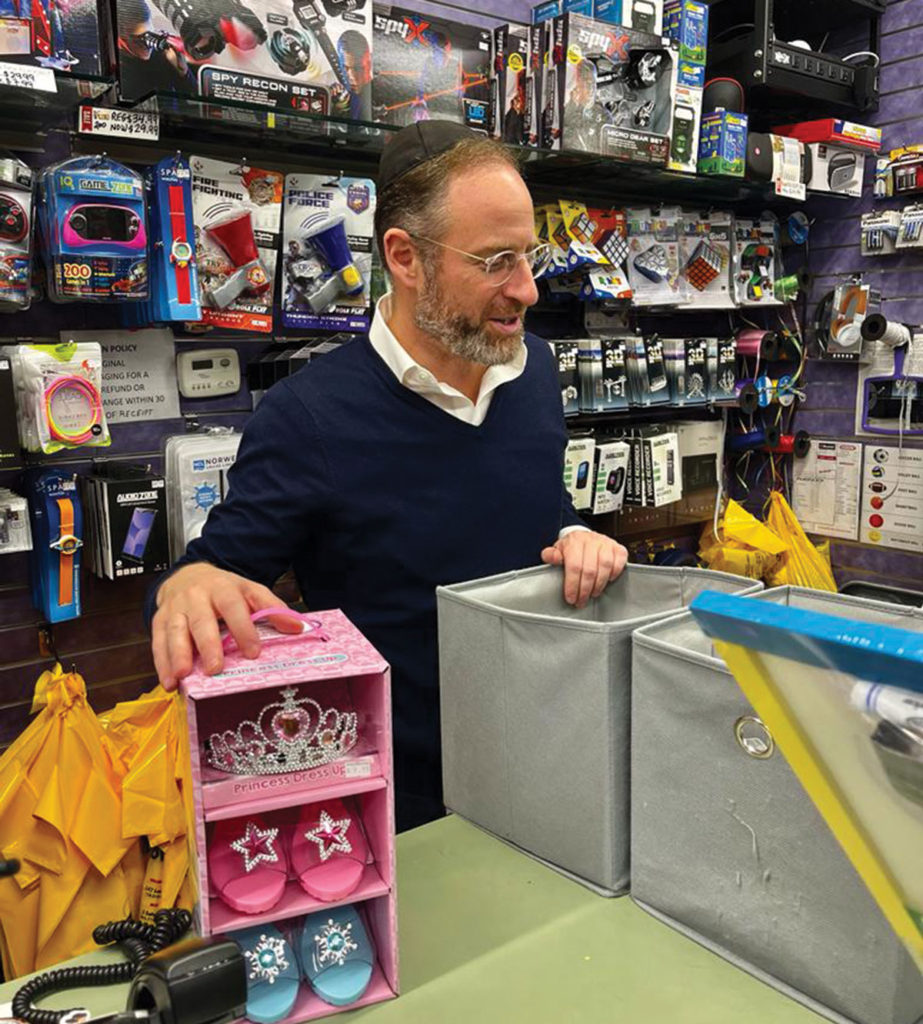
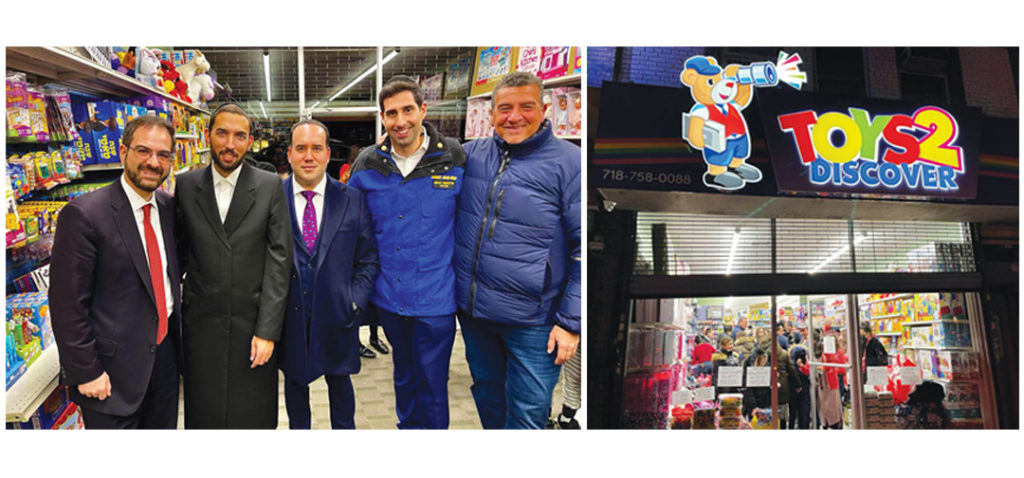
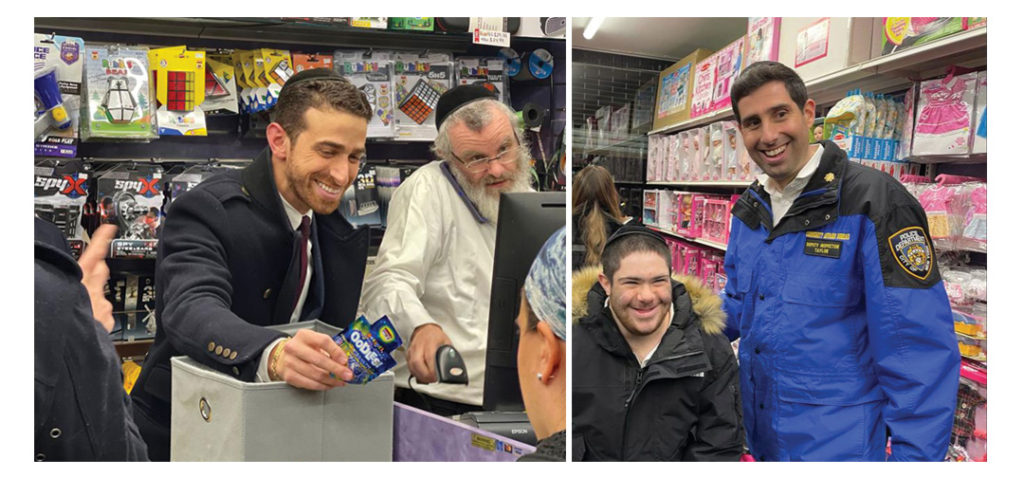
THE INCREDIBLE ORGANIZATION C.A.R.E. (COMMUNITY. ADVOCACY. RESOURCES. ENCOURAGEMENT.) HOSTED A TREMENDOUS HANUKKAH TOY GIVEAWAY FOR OVER 400 FAMILIES WITH SPECIAL NEEDS CHILDREN. THE EVENT WAS HOSTED BY TOYS 2 DISCOVER ON CONEY ISLAND AVENUE AND AVENUE K. THE BEAUTY OF THE EVENT WAS THAT TOYS WERE NOT ONLY GIVEN TO CHILDREN WITH SPECIAL NEEDS BUT WERE ALSO GIVEN TO THEIR SIBLINGS ON THEIR BEHALF.
This created thankfulness to the special needs sibling for ensuring all their siblings received a special high-quality Hanukkah gift.
C.A.R.E. was founded by Meyer and Victoria Safdieh who led the toy giveaway event with dozens of volunteers. Also in attendance, to support this meaningful community event, were NYPD Clergy Liaison David Heskiel, NYPD Deputy Inspector Richie Taylor, Community Leader Linda Sedaka, and Flatbush Fund Executive Director Yitzy Weinberg.
A special acknowledgement to the following dedicated and respected elected officials who came to the event is deserved as well: Senator Simcha Felder, Assemblyman Simcha Eichenstein and Councilman Kalman Yeger. Their leadership and tremendous support is invaluable.
Thanks to a few anonymous donors, the kids walked into the fully stocked toy store and were given vouchers which were used to purchase whatever toys they chose. To sweeten the night, each child received Hanukkah gelt chocolates on their way out.
May the Festival of Lights brighten up these dark, tough times and may everyone involved in this loving hesed be blessed to continue doing great things for the community.
Families that were unable to attend were not forgotten. They received toys at home, from generous congregants of Shaare Torah.
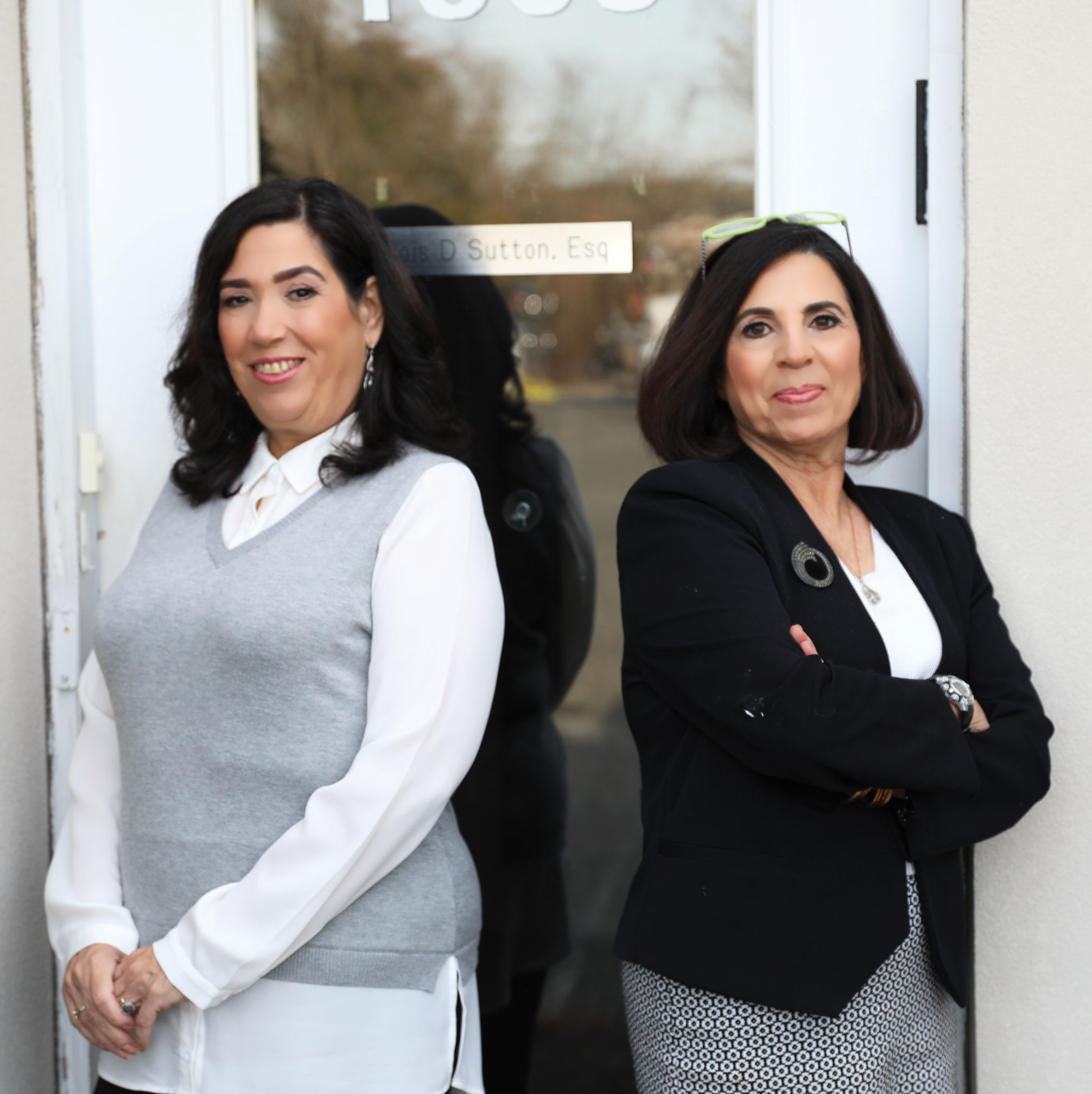
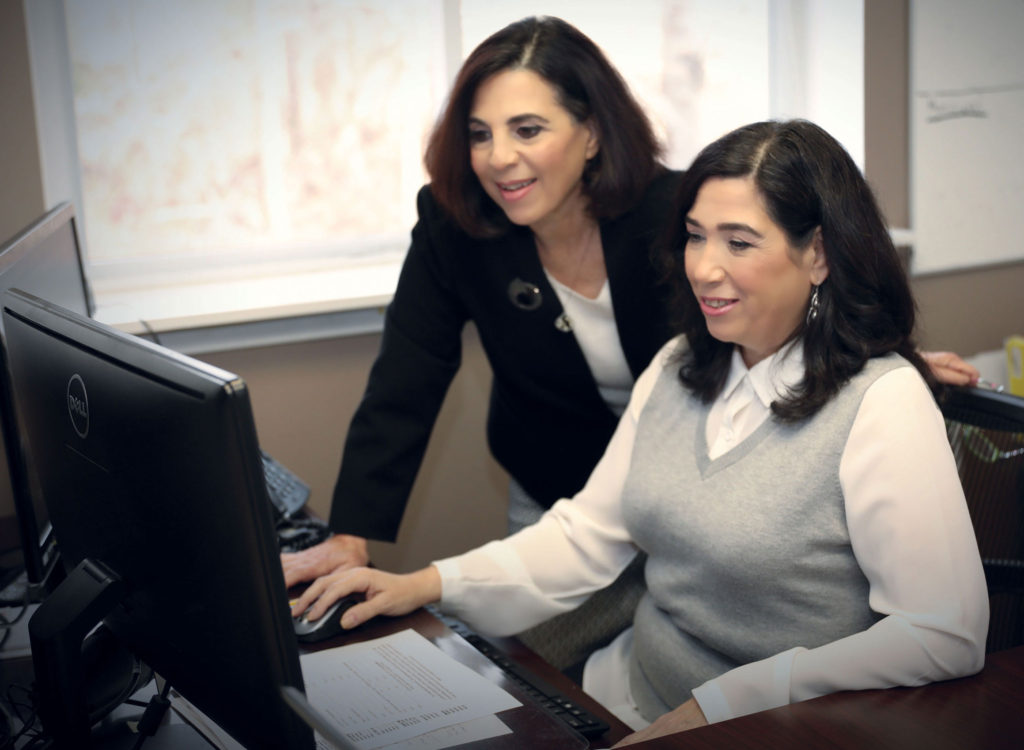
NOTHING FEELS BETTER THAN USING ONE’S KNOWLEDGE, EXPERIENCES AND TALENTS TO SUPPORT ANOTHER WOMAN’S QUEST FOR SUCCESS. NOBODY KNOWS THIS BETTER THAN LOIS SUTTON, ESQ., AND SANDRA NASSER MAXWELL. SANDY PROGRESSED FROM BEING A PART-TIME ADMINISTRATIVE ASSISTANT IN LOIS’ LAW OFFICE (LOIS D. SUTTON LLC) TO HAVING A FULL-TIME POSITION AS A CERTIFIED PARALEGAL WITH THE FIRM IN JUST TWO-AND-A-HALF YEARS. THIS IS THEIR PROPEL MENTORSHIP SUCCESS STORY.
After getting divorced in 2018, Sandra moved to New Jersey. Although she had an Associates degree in music from Kingsborough Community College, Sandy never had the opportunity to use her training professionally. In 2019, Lois D. Sutton hired Sandy as a part-time administrative assistant for her law office, handling the front desk and performing other secretarial tasks.
“Last month, I completed my paralegal certificate program with honors as a member of Phi Beta Kappa, having maintained a position on the Dean’s list for the duration of my studies at Brookdale Community College,” gushed Sandra when asked about her journey.
The magic ingredient in this story is the power of mentorship and the role it played and continues to play. You never know when an opportunity will arise. Sandy began working at the offices of Lois D. Sutton, Esq., two-and-a-half years ago. If she hadn’t taken the part-time receptionist/secretarial job at the firm, she never would have experienced this chance to change her life.
At 59 years old, Sandy continues to work hard to improve herself every day. She truly believes that her maturity and life experience brings value to her employer. “I’ve learned to go out of my comfort zone to succeed in life. For me, it meant adding school to an already busy schedule.” She is happy that throughout this journey she made sure to be there for her family, although she did have to minimize her social life.
“I was working two jobs and going to school. I was driven to reach my goal because I knew once I finished my training and could begin working in a professional capacity, I would be able to support myself and continue to be there for my two grown sons and daughter-in-law.” In other words, the hard work was well worth the sacrifice. Sandy contrasts her vision of the future with what it felt like to be newly divorced and financially vulnerable. “It was a constant struggle, juggling jobs and trying to make ends meet. Today, I feel accomplished. I’m a professional and I love the security of knowing I can support myself,” she said.
“I cannot commend Sandy enough for her diligence and persistence in reaching her goal,” said Lois, her employer and mentor. “I am grateful to PROPEL for enabling and empowering her to do it. I am proud of Sandy and look forward to her continued growth in the paralegal field,” continued Lois.
Lois Sutton is a sole practitioner in New Jersey who brings four decades of solid experience to her legal practice, both academically and professionally. She specializes in wills, trusts, estate planning, probate, real estate and business law. She earned her Bachelor of Science at Brooklyn College and graduated Magna Cum Laude from the Rutgers School of Law–Newark, after she married and had her first two children. She held positions as in-house counsel for what is now Wells Fargo Bank, Endowment Director for the Jewish Federation of Monmouth County, and has worked as an attorney for several well-established law firms before opening her own practice eleven years ago. Her experience has allowed her to successfully represent the interests of generations of community families with a wide scope of legal needs. Lois acknowledges the support of her husband and family throughout.
“I’ve been trying to steer community women into the paralegal profession for years because it’s a lucrative, very rewarding career and it can often be structured with flexibility in mind,” she added.
Paralegals are in high demand in New Jersey, New York and elsewhere. It is a dynamic profession. A paralegal can work part-time, full-time, or per diem, in an office or remotely. The paralegal is typically the first person a new client speaks with, maintaining this relationship, often meeting with the client and making sure the client is kept informed and the file is moved forward expeditiously. A paralegal has many responsibilities, including handling the court and appointment calendar and deadlines, maintaining files, and reviewing and preparing documents and other materials under the supervision of an attorney. “If Sandy doesn’t do her job, I can’t do mine,” said Lois.
An experienced paralegal can build her own practice or service providing support for other law offices and even supervise other paralegals. As Lois further explained, “A paralegal can also specialize in the type of law and office that interests her most, including fast-paced litigation in a large firm, real estate and contracts for a solo practitioner, and everything in between.”
So, how did Sandy go from getting hired as a part-time receptionist/secretary to a full-time paralegal? Mentoring is absolutely the answer. Lois said that when she first hired Sandy, she immediately recognized her aptitude. “She was intelligent, inquisitive, conscientious, had a great phone manner and client rapport, and she was eager to learn and acquire new skills. With the retirement of the office’s long-time paralegal, Sandy was positioned to make the move,” said Lois.
Lois truly enjoys being a mentor. Over the years, she has met with and guided many community members interested in becoming lawyers, paralegals and legal assistants. She finds immense gratification helping a person move forward. Therefore, it was natural for Lois to encourage Sandy to engage with PROPEL. The rest, as the saying goes, is history.
For her part, Sandy is thankful and appreciative. She describes her mentor as being generous and informative, sharing in-depth context that helps her understand what is behind the tasks she is asked to perform. “I come to the office every day with a smile on my face, ready to proceed with the work at hand,” said Sandy, adding, “it is never routine, which keeps the work interesting.” It fulfills her desire to keep learning new things. She especially enjoys assisting clients, building rapport and keeping them updated. Mentorship plays a continual role in this relationship because Sandy is new to the profession. As a matter of fact, a portion of their daily interactions as lawyer and paralegal is specifically and intentionally dedicated to mentorship.
Thanks to a grant that PROPEL received from the UJA Federation of New York, PROPEL’s Weaving a Network: Women Helping Women mentorship program was established. The goal of the program is to help women in a variety of professions support each other, and expand their career opportunities. Supervised by PROPEL’s educational consultant, Gitta Neufeld, the first groups are actively engaged in team-building and mentoring.
Lois believes that this new mentorship program will have an enormous impact on our community. “The hardest thing about identifying and traveling down a career path is finding a mentor,” said the attorney. “PROPEL’ s mentorship program is a game changer. I am very excited to be part of this initiative and look forward to using my experience and contacts in the legal world to benefit our mentees,” stated Lois. And as for Sandy, she said “Bless PROPEL and the new mentorship program. PROPEL made this positive change possible.”
If you are interested in joining PROPEL’s cohort of mentors in PROPEL’s Weaving a Network: Women Helping Women program or being paired with a mentor, please email PROPEL at Info@thePropelNetwork.org.
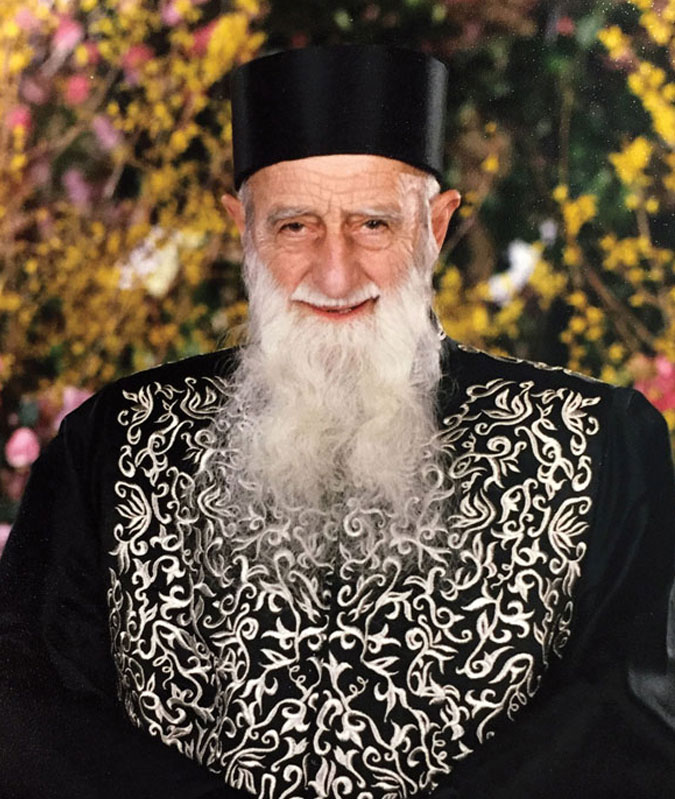
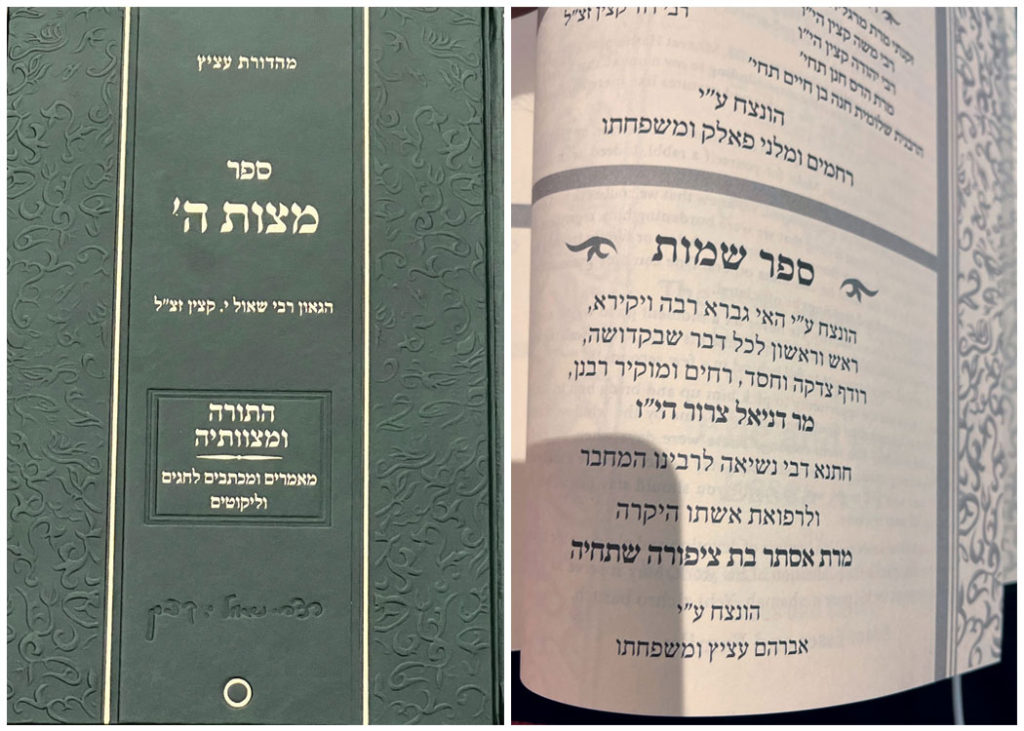
WE ARE VERY HAPPY AND EXCITED TO ANNOUNCE THE PUBLICATION OF OUR CHIEF RABBI SHAUL J. KASSIN’S ZT’L SEFER, MITZVAT HASHEM WHICH COINCIDES WITH THE THIRD ARAYAT OF THE RABBI. THE SEFER BREAKS DOWN THE MITZVOT THAT ARE APPLICABLE IN THE DIASPORA BY PARASHAH, WITH BEAUTIFUL ADDITIONS AND COMMENTARIES. IT ALSO INCLUDES ARTICLES PERTAINING TO THE JEWISH HOLIDAYS AND A COLLECTION OF LETTERS ON TORAH TOPICS.
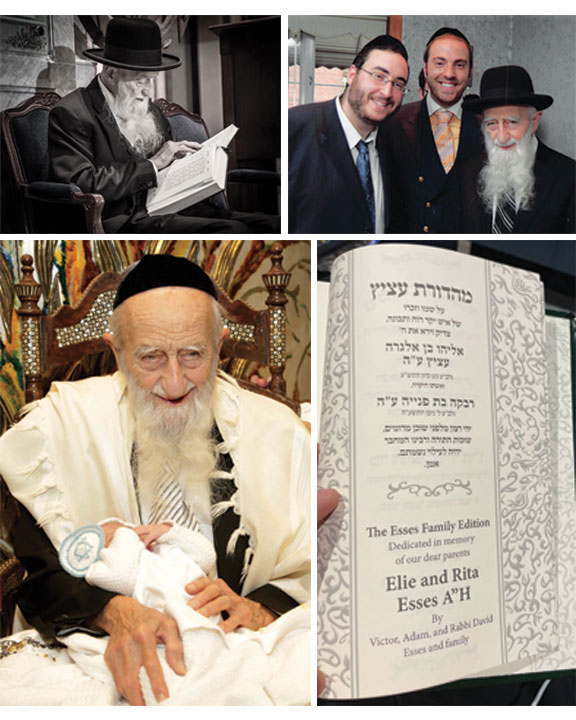
THERE ARE BEAUTIFUL INTRODUCTIONS WRITTEN BY OUR FORMER CHIEF RABBI JACOB S. KASSIN ZT’L, HACHAM OVADIA YOSEF ZT’L AND HACHAM SHELOMO KASSIN ZT’L. THE SEFER WAS A TWO YEAR PROJECT THAT WAS COMPLETED WITH THE METICULOUS WORK OF RABBI PINCHAS SHELBY SHLITA. THIS PROJECT IS DEDICATED BY THE ESSES BROTHERS VICTOR, ADAM AND RABBI DAVID ESSES IN MEMORY OF THE RABBI, THEIR PARENTS AND IN HONOR OF DANNY SROUR.
When my siblings and I were growing up, our mother would wake us up early on Shabbat mornings to make sure we got to k’nis on time. Our weekly Shabbat morning ritual included a visit to Shaare Zion’s “dome,” where we would receive a blessing from our father, who would then send us up to the stage to receive a blessing from Hacham Shaul Kassin zt’l and the other rabbis. Only afterward would we attend our youth minyan.
When we got older, we began to appreciate Hacham Shaul’s piety and humility. We noticed how he would always enter the synagogue from a side entrance so that the congregation wouldn’t stand in his honor. We observed how he walked quickly, with his head down, attempting to avoid the spotlight as much as possible. Our father would often remark that Hacham Shaul was the humblest person he had ever encountered.
With time, I grew closer to the Rabbi and started going to his Wednesday night shiurim in Shaare Zion’s library. These classes delivered a wide range of topics including Gemara, Mishnayot, Halachah and Parashah. Interspersed throughout his classes were stories and vignettes from his youth among the saintly rabbis of Yerushalayim of old. He would also deliver a shiur on Friday nights after Arbit. These classes invariably concluded with a riddle from his father, Chief Rabbi Yaakob Kassin zt’l, in his work, P’ri Etz Hagan. (We would call him all week with our answers; he would smile and give us berachot, and rejoice when we were able to answer the riddles quickly.)
Hacham Shaul once gave me an earlier printing of this sefer, Mitzvat Hashem, as a gift. In his classic thoughtful way, he inscribed in it the verse alluding to my name so that I could recite it at the end of the Amidah each day. He performed gestures like these hundreds of times throughout his life.
He was uniquely approachable. With his soft-spoken and humble demeanor, he made it so easy for us to fulfill our Sages’ dictum: Make for yourself a rabbi. Indeed, with him, one often felt as if he had fulfilled the next command as well: Acquire for yourself a friend. With every question or issue we encountered, we knew that we could ask him and receive an immediate answer without feeling that we were burdening him, regardless of what time we were calling. Whenever there was a happy occasion or family tragedy, he was there for us. And he did the same for countless others. One can only guess at how many shidduchim he arranged and weddings he officiated.
Hacham Shaul personified zerizut, alacrity. He never let a moment go to waste, and he was exceedingly quick to perform every mitzvah that came his way. (When walking with him to tashlich, it took all of our energy not to fall behind in a few seconds!)
In his later years, I often had the opportunity to pick him up and bring him to Minha. Whenever I arrived at his home, he would be waiting for me by the window. Rain or snow, nothing could ever stop him from coming. There were days when we tried to dissuade him: “It’s pouring outside, perhaps you should stay home.” But the rabbi would not hear of it. “I don’t want you to get wet, so maybe you should stay home, but I am going,“ was always his ready response.
As we reflect on our beloved Rabbi and his lifetime of devotion and piety, we are humbled to have merited to take part in the publication of his work. May it serve as a fitting tribute, and an elevation for his pure neshamah. Yehi zichro baruch (May his memory be a blessing).
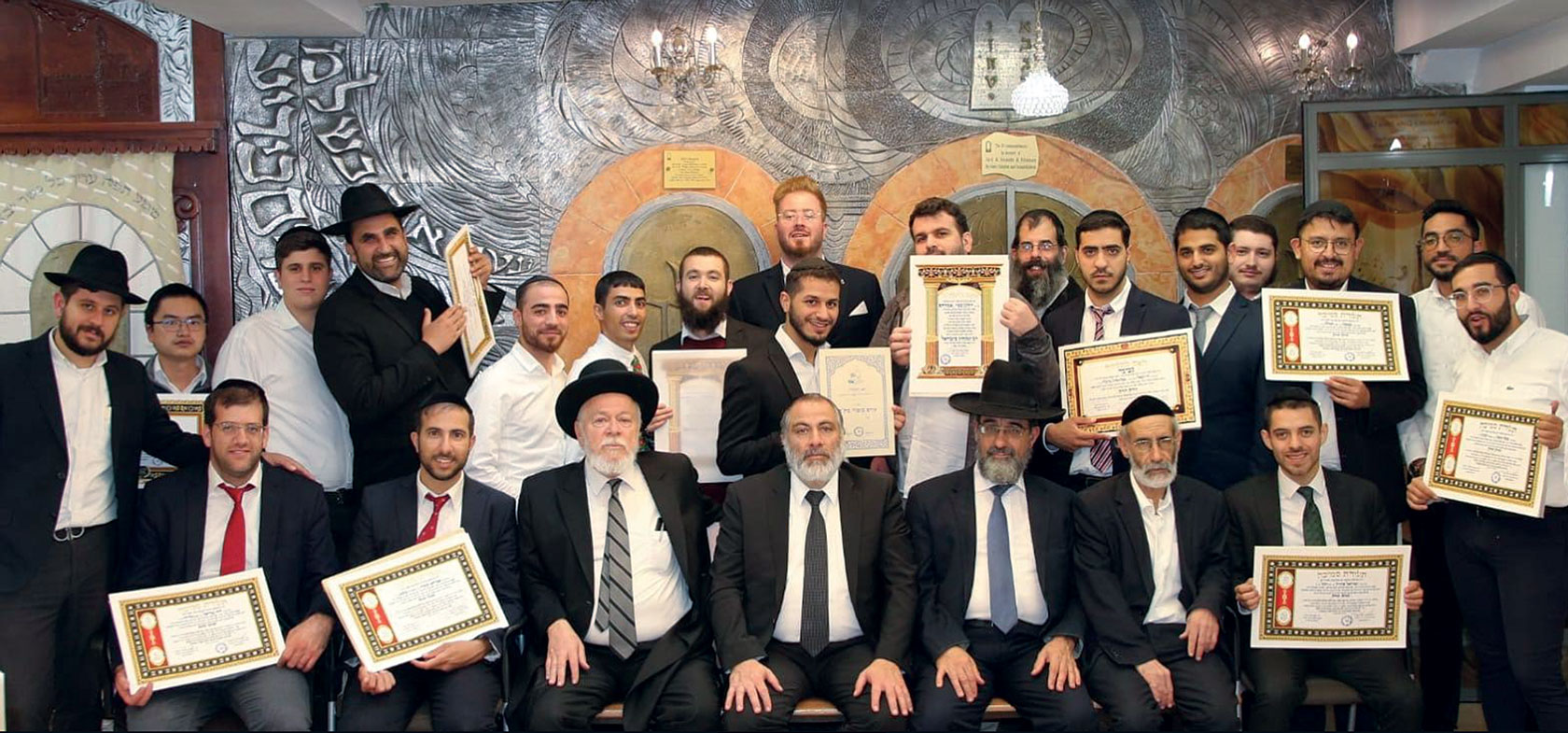
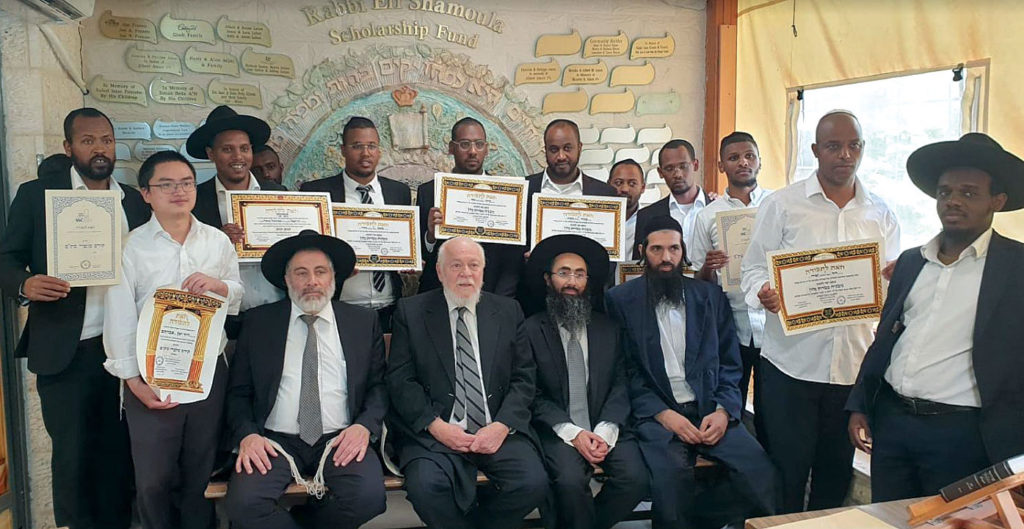
SHEHEBAR SEPHARDIC CENTER (SSC) RECENTLY HELD ITS FIRST GRADUATION IN TWO YEARS. TWENTY STUDENTS, SOME OF THEM FROM THE ETHIOPIAN PROGRAM, RECEIVED THEIR CERTIFICATES, AND IT IS HOPED THAT THEY WILL SERVE COMMUNITIES AS SOON AS THE PANDEMIC ALLOWS.
The gala graduation was held in Jerusalem. It was sponsored by its Los Angeles donors, California supporters including the Laureano, Donaty, Nessim, and Avrahamy families, as well as the Jebb Levy Foundation and from Israel, the Mouallem family and from Israel and Singapore, the Abraham family. These supporters had foresight, and understood the urgency of being prepared to send our 20 new rabbis to communities to help their Jewish brothers in need.
Seven graduates are Ethiopians, they are Rabbis Oded Kasu, Hayim Gashu, Amihai Muche, David Zawadi, Daniel Yehoela, Avraham Beikadi and Sassoon Mahari. They will be placed in positions in Israel. They bring pride and dignity to the Ethiopian community. There are 180,000 Ethiopian Jews in Israel in desperate need of inspirational leadership. Thirteen other students received their rabbinical ordinations and are ready to be placed as soon as the pandemic allows.
Thirteen more rabbis from our rabbinical program received their semikaa. They are Rabbis Yochanan Kanfield, Aharon Kindi, David Yan Ben Avraham, Akiva Ben Ezra, Shimon Karmago, Gavriel Vittal, Asher Moshe Cohen, Shalom Katanov, Avishai Braun, David Mizrachi, Eliyahu Franco, Avi Sova and David Gedallovich.
Dignitaries who attended the event were the Chief Rabbi of Israel Yona Metzger who talked about he miracle of being prepared for the future, that while all of Israel was focused on surviving the pandemic, the SSC continued to train rabbis and spiritual leaders for the world.
The Chief Rabbi of the Ethiopian community, Rabbi Reuben Wabshat praised Rabbi Sammy Kassin for being the first to open up a yeshivah for the Ethiopians, and because of his success, two more Ethiopian yeshivahs opened their doors.
M K Rabbi Moshe Abutbul, who has been advocating for the Ethiopian community for at least five years, said the Ethiopian people owe a debt of gratitude to SSC and Rabbi Sammy Kassin for what he has done for them.
The Head Rabbi of all the Beit Adin of Tel Aviv Area, Rabbi Zvadia Cohen said that in his experience, perseverance always pays off and Rabbi Sammy Kassin and SSC blazed the trail of sending rabbis all over the world and developing an all-inclusive Ethiopian program.
Rabbi Yoseph David Sacks Krupp whose family opened the SSC Ethiopian Program five years ago, presented graduation certificates to the Ethiopian graduates. After the speeches, there was a gala dinner where the proud families of the graduates celebrated. The graduates quoted the SSC’s motto: “Changing the World Through Education.”
HOW DID THE YESHIVAH MANAGE DURING THE COVID PANDEMIC? The COVID-19 pandemic affected the Jewish world in ways you cannot imagine. Still, thankfully, the SSC was one of the few rabbinical schools to operate and keep its doors open. And now our graduates are ready to be placed in rabbinical and teaching positions to help Am Yisrael.
Single students were permitted to remain in the yeshivah dorm, but they could not leave except to go into Nakash Family Garden adjacent to our building. Since a majority of our staff had to remain home due to the pandemic, everyone pitched in to clean and cook. Since Rabbi Sammy Kassin was at high risk, he had to remain at home for a year, when he contracted Covid 19, and healed from it.
Our married students were relocated to a site outside the city. Most of the well-known rabbinical schools closed down or drastically diminished their rabbinical placements and student bodies as they had no way of knowing when the pandemic would end. The SSC knew that there would be a need for rabbis overseas and enlarged their rabbinical student body. During the pandemic, the SSC observed all the regulations (social distancing, masks, vaccines) to keep our staff and students safe and healthy.
AROUND THE WORLD During the past two years, the Jewish world paid a heavy price as COVID-19 basically shut down operations across the globe. We paid a heavy price with many deaths, the elderly and the young, the sick and those who had been healthy—the virus knew no bounds and crossed all socioeconomic levels. Jewish schools, clubs and kosher restaurants were forced to shutter their doors.
With people praying at home, synagogue buildings were closed. Unemployment caused a financial stress on congregations as people couldn’t pay their bills. The inactivity resulted in rabbis being laid off and their salaries reduced. It has been a tragedy in the Jewish World.
The SSC believes that within the next year people will return to their synagogues and schools and reach out to Shehebar Sephardic Center for spiritual leaders. In anticipation, the SSC is working on a post coronavirus program to prepare our rabbis for what is to come. The SSC staff, Rabbi Ralph Tawil (Tel Aviv), Rabbi Ari Azancot (Beth Torah, Brooklyn via WhatsApp), Mr. Edwin Shuker (via Whatsapp), Rabbi Sammy Pinto (Sao Paolo, Brazil via WhatsApp) and Rabbi Eliyahu Azaria (the Philippines via WhatsApp) are developing the new program to tackle the problems arising from time spent at home.
As more people receive their vaccinations, and observe the guidelines our health professionals provide, the world will be a safer place and Am Yisrael can return to synagogues and schools, and enjoy many simchot!
A genealogist and historian, Sarina Roffé is the author of Branching Out from Sepharad (Sephardic Heritage Project, 2017), Sarina holds a BA in Journalism, and MA in Jewish Studies and an MBA.
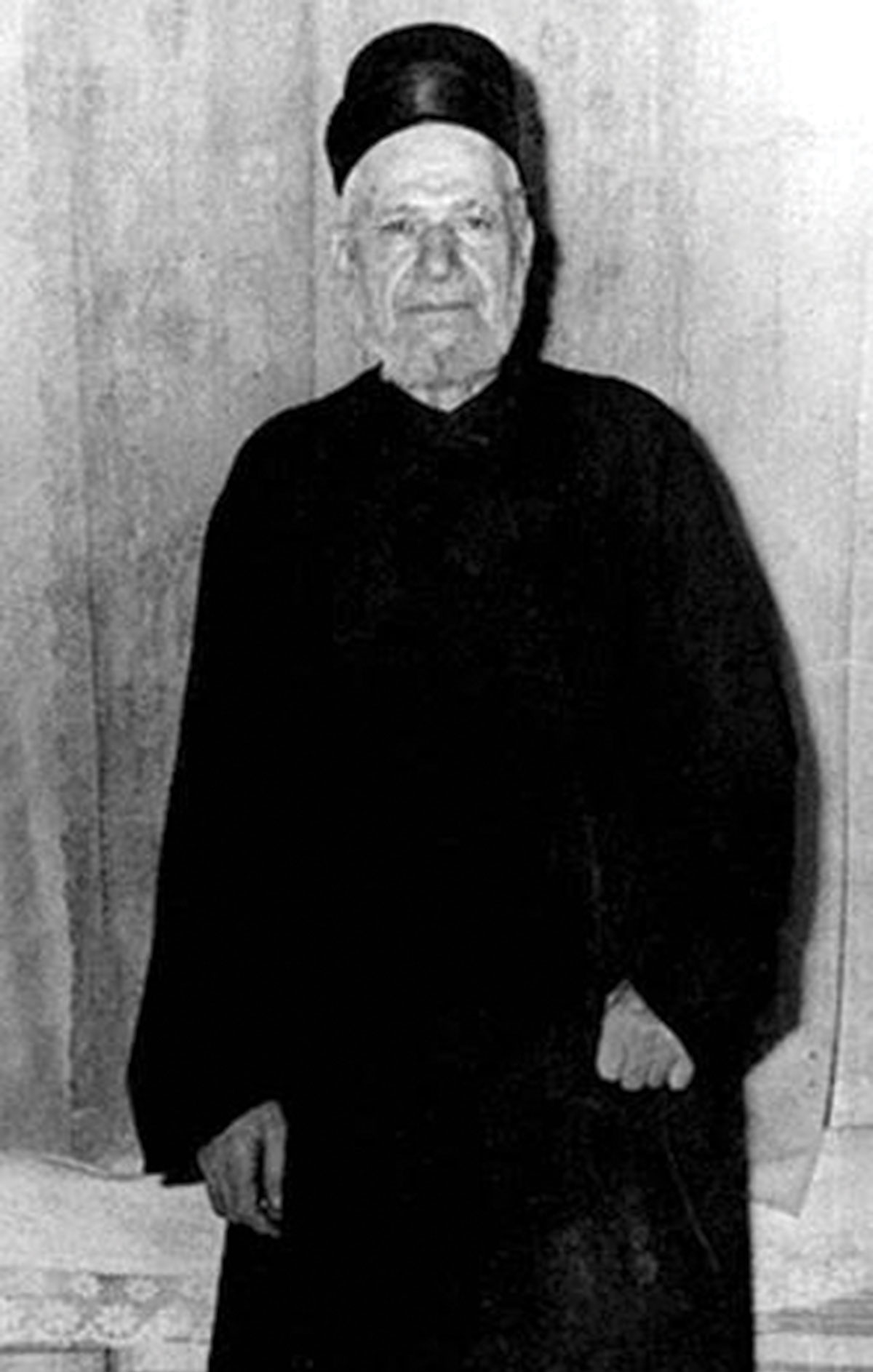
HACHAM NISSIM INDIBO, CHIEF RABBI OF DAMASCUS AND A DISTINGUISHED LEADER OF THE BET DIN, WAS A STUDENT OF HACHAM YISHAK ALBUAFIA. HE LIVED A LONG LIFE AND HIS MIND WAS TOTALLY CLEAR UNTIL HIS LAST DAY. HACHAM NISSIM, SENSING THE DAY HIS PASSING CALLED HIS STUDENT HACHAM YISHAK ASSA TO HIS BEDSIDE.
Hacham Nissim’s children and grandchildren, all kohanim, were at his bedside as well. When the family was ready to leave, Hacham Assa was going to leave with them, but Hacham Nissim asked him to stay longer. The two men prayed together and after saying the Shema, Hacham Nissim passed away silently. He is buried right outside the room where Rabbi Haim Vital A”H is buried. On his stone it says “The Greatest Rabbi.”
Hacham Yom Tob Yedid A”H would send his best students to get blessings from Hacham Nissim Indibo, one of whom was Rabbi Edmond Nahum. Hacham Yedid only eulogized one person in his lifetime, that person was Hacham Indibo. In his eulogy he stated, “The passing of such a giant is as difficult as watching a Torah scroll get burned.”
Hacham Nissim was indeed a giant of the Torah world and kabballah, as well as head of the Bet Din. He always had smile on his face and greeted everyone nicely. He was very empathetic when it came to people’s feelings. He was known for his patience and as Chief Rabbi, he treated everyone—children and adults—with a great deal of respect. Whenever he was seen walking in the Jewish Quarter, everyone would gather around him, even other rabbis, and escort him wherever he was going.
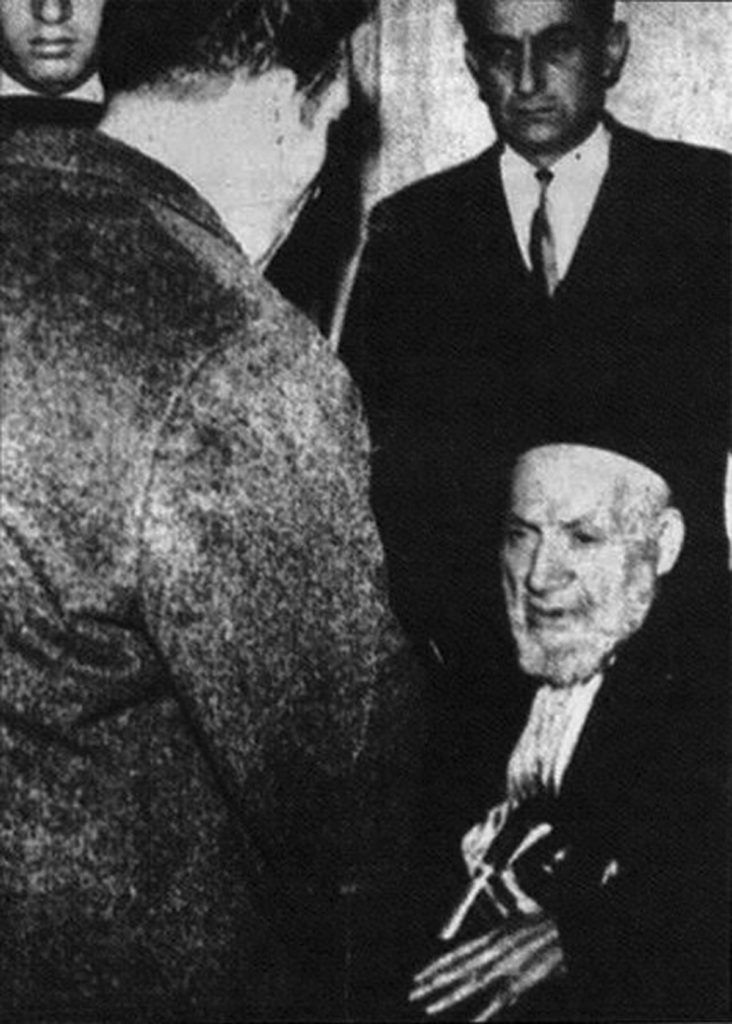
Hacham Nissim was given rare permission by the Syrian government in the most difficult time for the Jews in Syria. When the famous Israeli Spy, Eli Cohen, was given a death sentence, his last request was to see a rabbi. Hacham Nissim was allowed to go to Cohen’s cell. Once he was with Cohen, he helped him write a heart-wrenching letter to his wife Nadia and his children. Everyone who saw the two men together, even the Syrians, noticed the affection and the pain they felt. Moments before Eli Cohen was hung, he and Rabbi Nissim recited the Viddui (a prayer of atonement) and the Shema.
Hacham Nissim lived next to Kneset Shebet Ahim and every single night, without fail, from midnight until morning he would teach and learn with all his students. They would work from midnight until it was time for Shahrit. After that, he would go to his shop in the Jewish Quarter where he sold wheat and oil, because he did not want any benefit from being a rabbi.
Hacham Nissim officiated many religion ceremonies without accepting anything for his time. He wanted to do everything in honor of Hashem. He wrote books and a preface to Hacham Obadiah Haday’s 8 volume “Yiskil Abdi.” Hacham Hadaya A”H appreciated Hacham Nissim, who had a great deal of knowledge about halacha and the bet din. Rabbis would travel from far away to ask him questions, even Ashkenazi rabbis. Ashkenazi Rabbi Eliezer Rublin traveled from Yershalayim to Damascus to meet Rabbi Nissim and wrote about the visit, stating that he was very impressed by Hacham Nissim’s massive knowledge on Torah. He wrote how Rabbi Nissim studied all night and only slept for a few hours, and that he was incredibly impressed with all the books Rabbi Nissim had, calling it “a massive library.” He added that he had never seen anything like it.
Jews and non-Jews went to Hacham Nissim for blessings, advice and to ask him to pray for them, when they were in need of salvation. Rabbi Nissim’s blessings came true for many people.
He reminded the Jews that in every generation someone wants to wipe the Jews off the planet and Hashem always saves us from their hands.
Hacham Nissim Indibo facing Eli Cohen inside his prison cell. The man behind the rabbi is the Syrian intelligence officer who caught Eli Cohen spying for Israel
When the government tried to move the grave of Rabbi Haim Vital (Marhu) A”H, who is buried in Damascus, to make way for new a highway, those who objected went to Hacham Nissim for help. After that, any time the government tried to dig up the area around Rabbi Vital’s grave, they would be faced with fire and snakes. But it was a difficult time for Jews in Syria and Hacham Nissim knew that if Rabbi Vital’s grave was not moved the Jews’ lives would become even more difficult. So, he moved Rabbi Vital’s grave, twice. Once across the highway, but the government went after him again, so Hacham Nissim moved the grave to the Jewish Cemetery, and thus when Hacham Nissim passed, he merited to be buried right outside Rabbi Vital’s place of burial.
Hacham Nissim would leave to go to the Rabbi Rafael Halevi Synagogue on Friday nights, two hours before Shabbat, because as he made his way to synagogue in his long and distinguished gown, people would line up to kiss his hand and receive a blessing. His picture was hung in almost every Jewish shop in Damascus, and many non-Jewish shops as well.
Every Erev Yom Kippur the Jews of Damascus had a tradition to visit the Jewish cemetery and the grave of Rabbi Haim Vital, where Rabbi Nissim was buried as well. May his memory be a blessing.
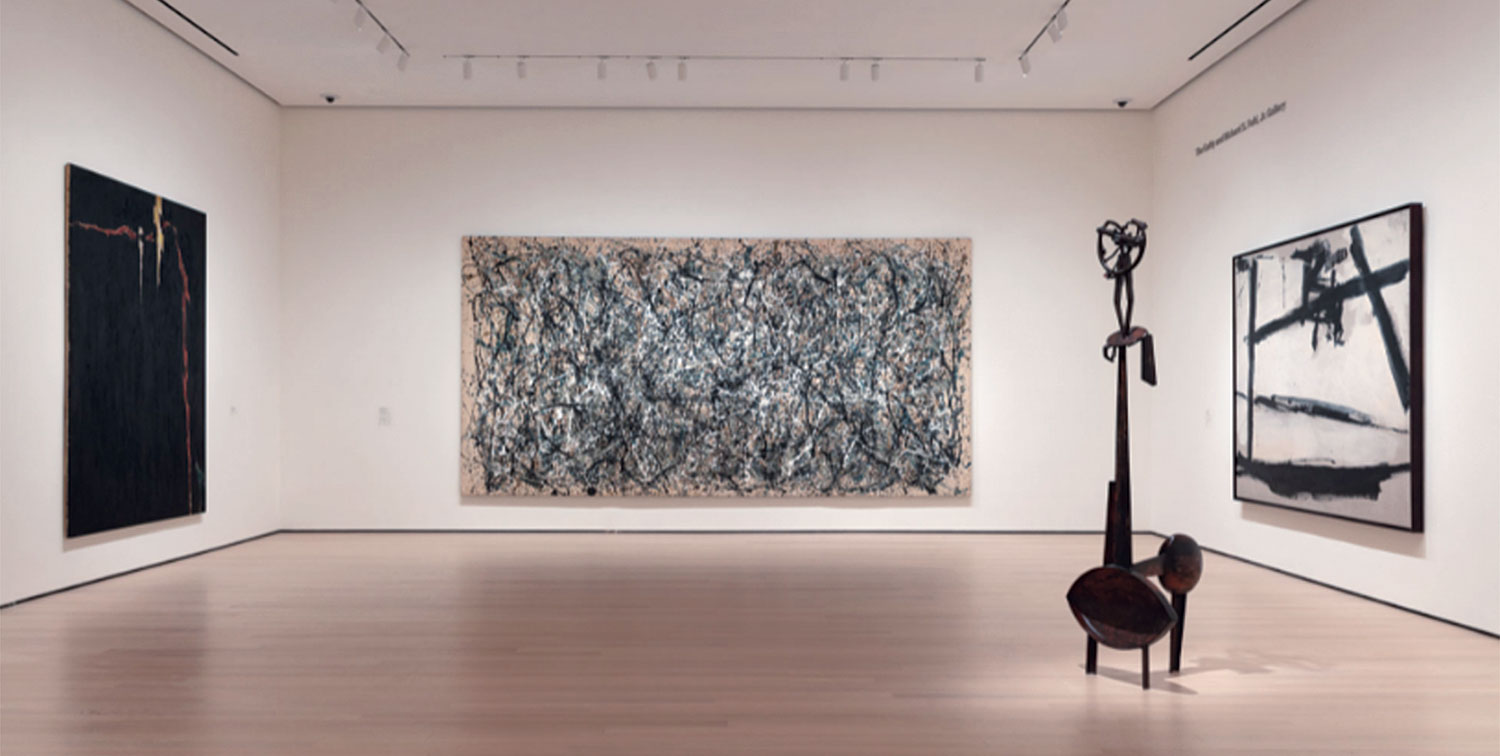
THERE IS NO BETTER WAY TO SPEND A COLD AFTERNOON THAN VISITING A MUSEUM, AND WE ARE SO FORTUNATE AS NEW YORKERS TO HAVE SEVERAL WORLD-CLASS MUSEUMS IN OUR CITY! IF YOU WANT TO SEE MODERN ART, THE BEST MUSEUM TO VISIT IS MOMA—THE MUSEUM OF MODERN ART, LOCATED IN THE HEART OF MIDTOWN MANHATTAN AT 11 WEST 53RD STREET.
MoMA concentrates its collection on only modern and contemporary art, from the 1870’s until the present. You will not find any Renaissance or Old Master paintings there.
In the middle of the 19th century, artists began to move away from the subjects of religion, history and mythology and began to paint what they saw in everyday life, especially scenes of how middle class Parisians spent their leisure time. This may seem mundane to us, but it was quite radical at the time, and crowds would flock to the exhibits to poke fun at and critique this new type of art. Realism (1860s) and Impressionism (1870s) were revolutionary to the development of modern art, and much of what we love about modern and contemporary art is looked at through the lens of these two movements.
MoMA begins its permanent collection with French Impressionism and Post-Impressionism (1870-1880’s) and that is how I would suggest you begin your visit to MoMA.Take the elevator to the fifth floor to begin your journey through modern art.
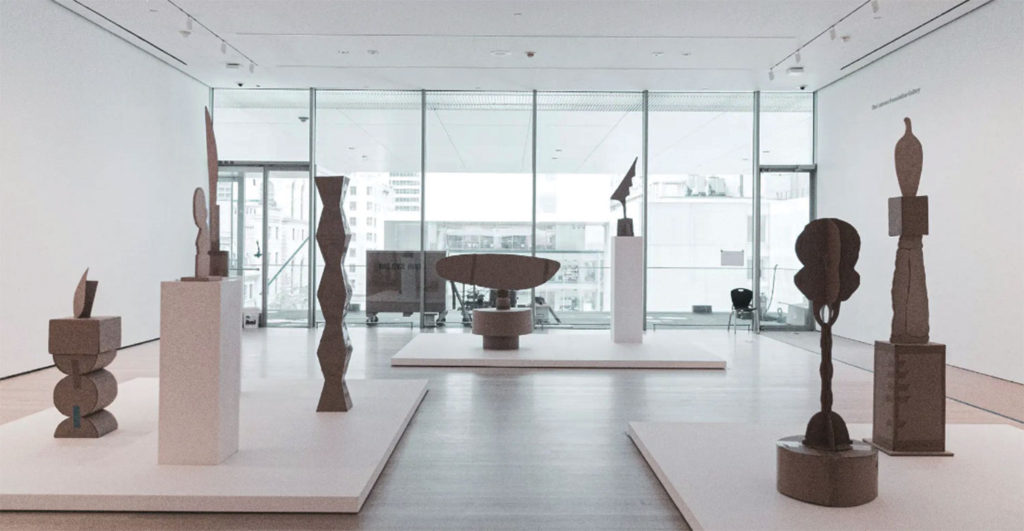
Before you enter through the doors, you will see a group of sculptures by artist Constantin Brancusi (Gallery 500). Brancusi’s simplified forms are fun to look at, especially for kids. Try to guess what he was sculpting before you look at the wall text. The simplified forms push towards abstraction and this gallery sets up the visitor for what they will see next. Abstraction is the absence of any representation of form. In modern art, much of the earlier artwork still has forms we can understand until there is a point where artists stopped thinking that representational forms needed to be there to understand the art. As you move through the museum, try to look for the point where true abstraction began.
In the first gallery (gallery 501), you will begin with the Post-Impresionists; Seurat, Van Gogh and Cezanne. These painters worked in the 1880’s and were interested in painting in a new way. Their techniques are all quite different than their predecessors.
Look at Seurat’s brushstrokes. He took a scientific approach to painting, and used a system of dots. When looking at his paintings very closely the colors are broken up, but when viewed from a distance they appear to show shading and shadowing. This is similar to the contemporary idea of pixilation.
Don’t miss Vincent Van Gogh’s Starry Night. There is usually a crowd of people around it. If you can get close to the painting, note the thickness and the expressionist movement in Van Gogh’s brushstrokes. This was painted while Van Gogh was spending time at an asylum. He woke up early, looked out his window and this is what he saw. You can almost feel his emotion while looking at this wondrous scene of nature, with it’s swirling stars and cypress trees moving in the wind.
Walk through to the other galleries. MoMA used to arrange their artworks in chronological order with the earliest ones displayed first, but recently they have added more contemporary works sprinkled among the older ones.
Stop in the gallery displaying works by Picasso (gallery 503) and look at his masterpiece Demoiselles de Avignon. Picasso was 25 years old when he painted this groundbreaking work of art. This painting makes a radical break from traditional composition and perspective in painting. It depicts five women composed of flat, splintered planes whose faces were inspired by Iberian sculpture and African masks. Many consider this painting the beginning of the cubist movement and one of the most important contributions to modern art.
As you continue to move through the fifth floor, take in the paintings of other modern masters; of particular note (gallery 506) Henri Matisse. Matisse used color to push his idea of modern art. Look at The Red Studio, where he paints his work-space filled with paintings and sculptures. He uses color, not perspective to show us his studio.
Keep going until you reach gallery 517. This room is filled with Surrealist works. Surrealism is based on the idea of dreams and psychology. Many of the works are dreamlike, eerie or nightmarish. Look for the tiny masterpiece by Surrealist artist Salvador Dali, The Persistence of Memory. Many of you might be familiar with this dreamscape of melting clocks and decaying forms. Time is the subject here, and in this painting Dali is grappling with time, death and decay.
Do not miss Gallery 515 with Claude Monet’s Water Lillies! This entire room contains only the 3-panel triptych, Water Lillies, which is a beautiful example of French Impressionism. Monet and his fellow Impressionists wanted to be able to paint the effects of air and light. This was painted late in Monet’s life, when his eyesight was failing. The paintings are inspired by Monet’s gardens in Giverny. At the center of this composition there is a pool of greens and blues with lilies blooming. There are areas of sky, clouds, water and flowers. The entire composition is very close to abstraction and leaves the viewer with the feeling of being totally immersed in the garden.
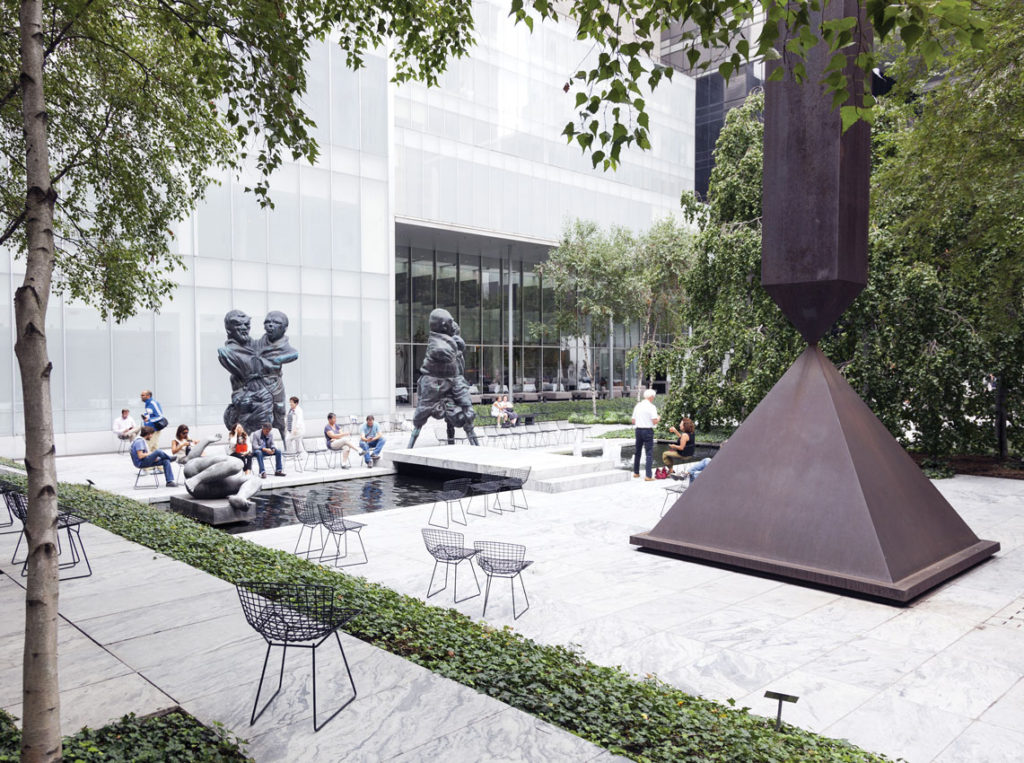
At this point in your tour, you might feel that you are completely saturated with modern art, so perhaps it is time for a break. A wonderful place to sit is the Abby Aldrich Rockefeller Sculpture Garden.
The entire museum, newly renovated, is in itself a work of modern architecture. The sculpture garden is a lovely place to contemplate the juxtaposition of modern sculpture and the busy city. You can relax here and decide what you would like to view next. Do you want to see artist’s works from the 1940s to 1970s, such as Jackson Pollock, Mark Rothko and Andy Warhol or would you prefer to see some of the architecture and design exhibits? Perhaps you would be interested in some modern photography exhibits? These are all part of MoMA’s permanent collection.
MoMA always has some temporary exhibits on display, and it is usually worthwhile to check those out as well. Currently there is a show called Automania, which is great for kids! Automania brings together cars, car parts, models drawings and films dedicated to the automobile. In keeping with the MoMA theme, the show addresses the automobile’s impact on design in America.
It is best to secure your ticket to MoMA ahead of your arrival with a timed ticket, so you should check their website for advanced ticket sales.
Enjoy your visit to MoMA!
Natalie Senior Greenberg is a Brooklyn College Art History professor, and the founder, curator and owner of an online art gallery.
WHAT IS MISASKIM? ASK ANY PERSON ON THE STREET AND YOU WILL HEAR ABOUT THE SHIVA DELIVERIES THAT SO MANY IN OUR COMMUNITY HAVE UTILIZED. HOWEVER, FIND AND ASK A MISASKIM VOLUNTEER WHAT MISASKIM DOES, AND THEIR ANSWER WILL KNOCK YOU OFF YOUR FEET.
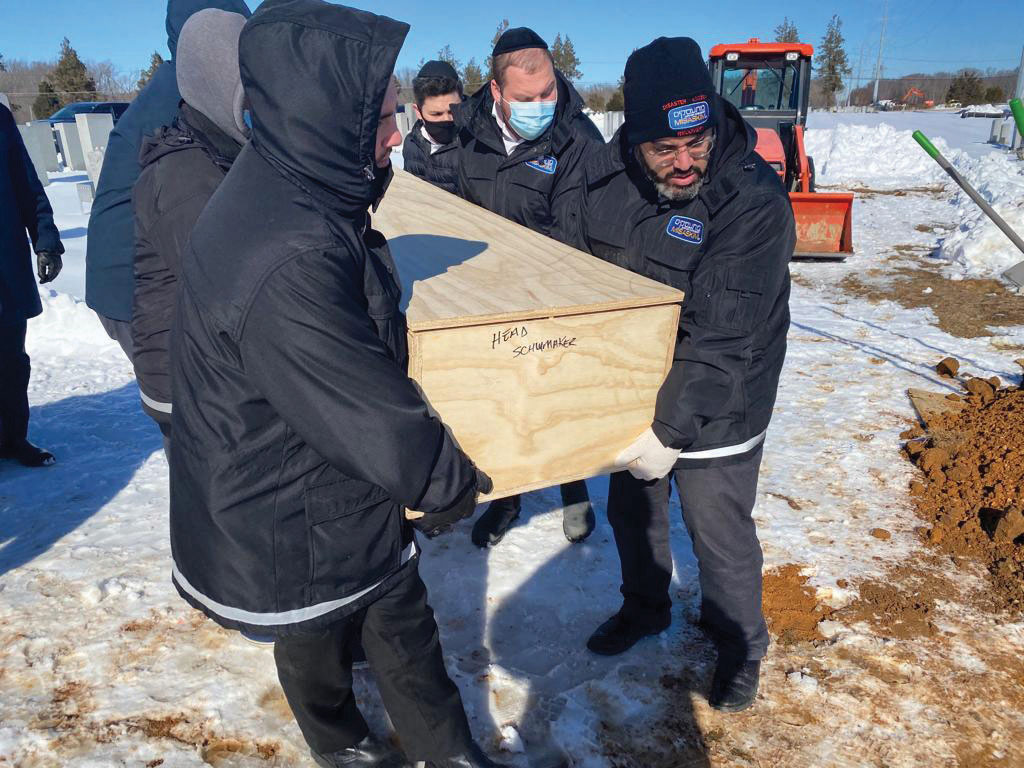
Misaskim is well-known for their disaster recovery services as well as the service provided to those grieving a loss. But there is so much more that goes on and people have absolutely no idea about it. For years, the volunteers at Misaskim have shied away from the public eye, preferring instead to do much of their holy work secretly and without anyone knowing about it. But now for the first time, in this exclusive piece on the organization, we are going to uncover some of that mystery.
MOURNER’S NEEDS When a loved one passes, Misaskim is at the forefront in providing for the family during the week of shiva. Beyond the shiva necessities such as delivering the chairs, water and prayer books, an additional incredible act of kindness is what the team of volunteers does to the shiva home come Shabbat, when there are young children sitting shiva for a parent. When a family is mourning, going into Shabbat with the mirrors covered and the furniture moved out of the way makes a difficult time feel even more so. Volunteers come into the home on Erev Shabbat to pack all the paraphernalia away and then put it all back out on Saturday night. It is a small kindness that goes a long way, bringing many families to tears.
Misaskim’s volunteers are trained to look around the shiva house they are servicing, and to take note of anything that might be missing that would be needed. Whether it is a light bulb that needs to be changed, or a fridge that needs to be stocked or laundry that needs to be washed, the volunteers will go above and beyond to do what is needed.
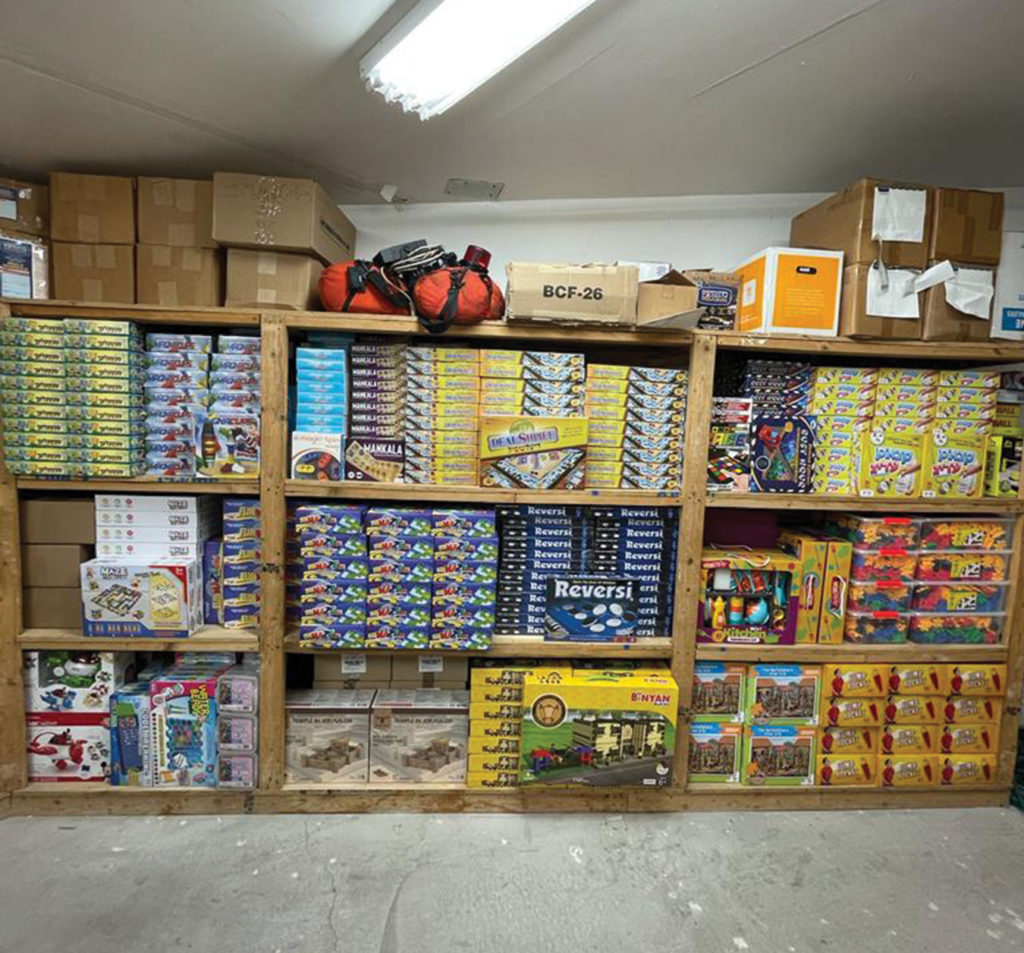
When there are young children in the shiva home, volunteers will show up with toys that are age appropriate to keep the kids busy. Master storytellers and entertainers are also sent to the home to bring some joy to these young neshamot. Misaskim stores all their toys in a warehouse to ensure they have supplies whenever they may be needed.
Misaskim goes above and beyond to help those sitting shiva, but their work begins before and extends way beyond the shiva.
There are families who cannot afford to bury their loved one. There are families who do not care to bring the deceased to a Jewish burial at all and would rather go the cremation route.
And then there are those who pass away with no family at all, r”l. Who will hold a funeral for this person and ensure he receives proper kevura (burial)?
Misaskim has helped thousands in all of the aforementioned scenarios, over and over.
BEYOND THE WEEK OF SHIVA One of the most closely guarded and beloved secrets of Misaskim operations is the work they do for the almonot (widows) and yetomim (orphans) of the community. There is a whole world of hesed performed that is completely under the radar. Part of the reason for this is the humility and secrecy in which the volunteers operate. Much of the hesed is done quietly, and while the acts may seem small, they make a world of a difference to a family suffering a recent loss.
It’s changing the light bulbs for a family who lost a small child and the parent says, “I’ve been meaning to get to that for 18 months, but life was—you know.”
It’s putting up the basketball hoop for the boys who lost their father, with their mother standing in the doorway watching with a sad smile.
It’s the call from the new almanah (widow) whose husband just died because she needs a ride home from the medical examiner’s office.
These are the details that make Misaskim great. Indeed, it is these acts of kindness that will remain as a child’s core memory, even after time has passed and the volunteers have long forgotten it. Misaskim wastes no time assisting those in need and they do not turn away or give up, even when the situation seems daunting. Long after shiva has ended and others have moved on with their lives, Misaskim volunteers receive call after call from almonot or families for assistance in a variety of matters, and they never turn anyone away.
When a person calls Misaskim, they know that their requests will be handled with their dignity intact, and with the utmost privacy. Both are essential aspects that every volunteer within the organization is trained in, and it makes all the difference.
COMMUNITY AWARENESS The official mission of Misaskim is to alleviate tragedy and coordinate crises. One may begin to wonder why is Misaskim always in the forefront of news when it comes to community awareness? Why has Misaskim become the organization that other organizations call when they need assistance in dealing with local agencies? It all began decades ago, with Yanky Meyer, the founder and director of Misaskim. In the event of an unusual or tragic death, there is a process that needs to be followed. Local police are called, and then the body is sent to the medical examiner’s office for further investigation. Meyer would observe grieving families waiting hours to get the niftar (dead person)released by the medical examiner’s office. In his effort to help the community, Meyer spent endless hours over a span of months establishing connections with local law enforcement and government agencies to educate them on the Jewish custom of not delaying funerals or burial. They worked together on a solution that would help expedite the process of releasing a body. There is a reason that this system is set in place, and in no way does Misaskim stand in the way. Rather, after realizing that this was a process that took anywhere between 8 and12 hours, and that families were going through so much anguish due to the delayed levaya (funeral), Yanky Meyer worked for many months to streamline the process. Nowadays, instead of 8 to12 hours, it can take as little as two hours for the medical examiner to release a body.
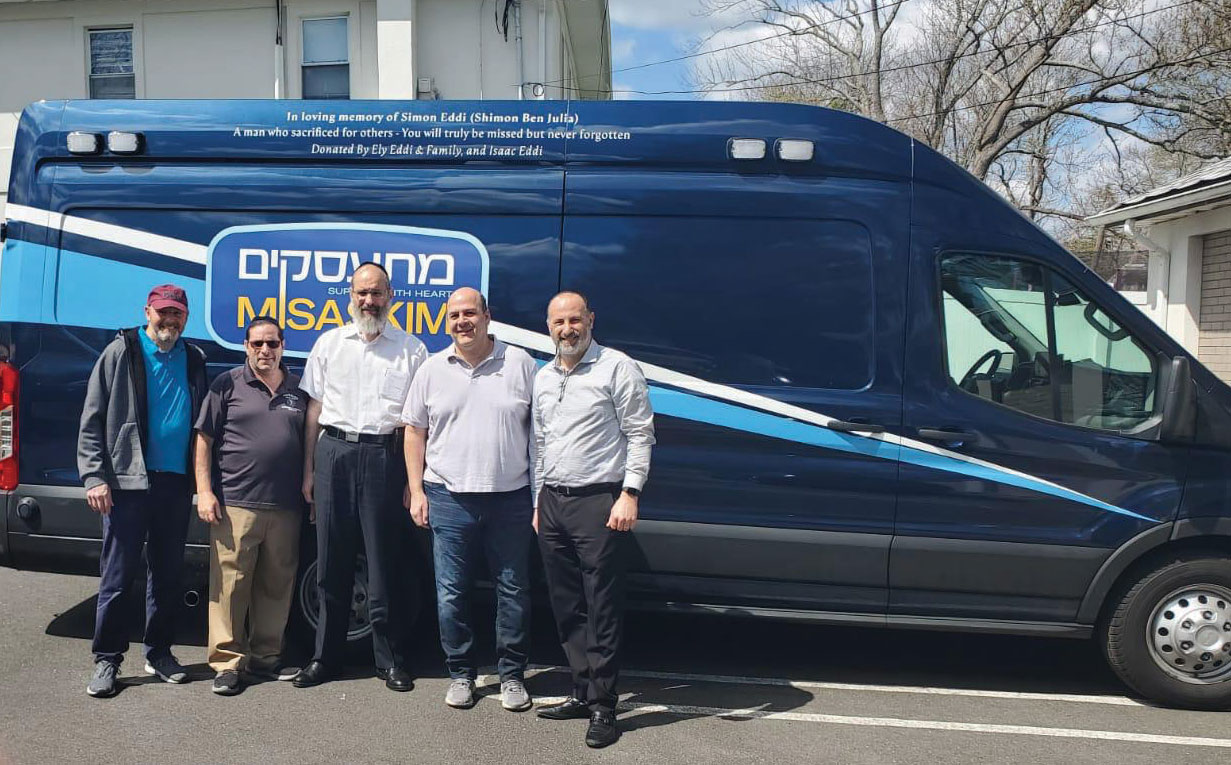
Misaskim services the greater Jewish community in the tri-state area, with warehouses and garages in 11 neighborhoods to date, including Deal. The van used in Deal was donated this summer by Eli and Isaac Eddi in memory of their father Simon Eddi.
FREE TIME IS TIME THAT IS NOT SCHEDULED WITH ANY OBLIGATIONS OR RESPONSIBILITIES—TIME THAT IS YOURS TO SPEND PURSUING WHATEVER IS IMPORTANT TO YOU, MAKES YOU FEEL HAPPY, AND SUPPORTS YOUR PERSONAL GOALS. THE STUDENTS AT MAGEN DAVID YESHIVAH ELEMENTARY AND MIDDLE SCHOOLS ARE CHOOSING TO SPEND THEIR FREE TIME LEARNING TORAH! THAT STATEMENT ALONE SPEAKS VOLUMES ABOUT THE PRIORITIES AND PASSIONS OF OUR STUDENT BODY.
Over 200 students from grades 4 to 8, and 25 staff members gather together on Sunday mornings between the hours of 9 and 11 a.m. to participate in our extraordinary Torah Hayim program. During these two meaningful hours, both boys and girls pray and learn Torah with their rabbis and teachers.
Fathers join their sons to pray Shaharit together and share in a deluxe breakfast. Afterwards, the boys sit with rabbis from our school and learn Torah through inspiring and thought provoking discussions and activities. Each week includes a special Halacha presentation and highlights of the Parasha. The girls enjoy their delicious breakfast first and then are led by one of their most cherished morot (teachers) and pray together. Next, the girls will have their learning sessions with their teacher about a variety of Torah topics. Some content revolves around the Parasha, as well as fundamental concepts and values. Our teachers are utilizing their classroom skills to create small groups and develop hands-on activities to drive home the big ideas while establishing a fun and exciting environment.
On Sunday mornings, all our students interact with Torah concepts through many dynamic and creative activities. The rabbis and morot have created game shows, technological presentations, and arranged SBH and community museum events. Students are enthusiastic and eager to join together in this remarkable program. The bonus of earning prizes, raffle tickets, and spending time with friends are secondary to the spiritual heights they soar during this uplifting path to start their week!
Our MDY Torah Center is busy with learning programs three evenings a week. Girls in grades 4 through 8 meet up on Tuesday evenings to spend special time with their morot and peers to learn Torah from 7 to 8 p.m. and highschool girls learn from 8 to 9 that same night. Mondays and Wednesdays are boys’ evenings which include praying Arbit. Each week we have over 500 students volunteering to enter the school building and learning Torah during their free time. Besides the beauty and kedusha (holiness) of Torah, we offer the children treats such as pastries, mazza, sushi and drinks, as well as raffles and prizes. Again, these physical incentives are only the surface while deep down in their neshamot (souls) the students are reaping the greatest rewards possible.
Here again, our precious ones are choosing Torah when there are many other activities available. Our engaging and loving rabbis and morot are using these rare opportunities to build meaningful relationships and foster connections to instill a true love of Torah and mitzvot with their students. The students leave each evening feeling a sense of fulfillment and satisfaction in knowing they have spent their time in the most positive and holy way possible. These moments they share will have an everlasting impact on their lives and provide a healthy and strong foundation to last them through their coming challenges.
Through participating in our Magen David Yeshivah Torat Hayim and Torah Center programs, the students are gaining a true understanding of how Torah is life and learning, it is not simply a subject in school, but an essential way of life.
Mrs. Nechama Spero has been teaching at Magen David Elementary school for 21 years and was recently appointed Assistant Principal for General Studies of the Middle School. She is a lifelong Brooklyn resident and graduate of a yeshivah education. She holds multiple college degrees, and is a mother of five children.