
Read Jewish Image Magazine Online – April 2021

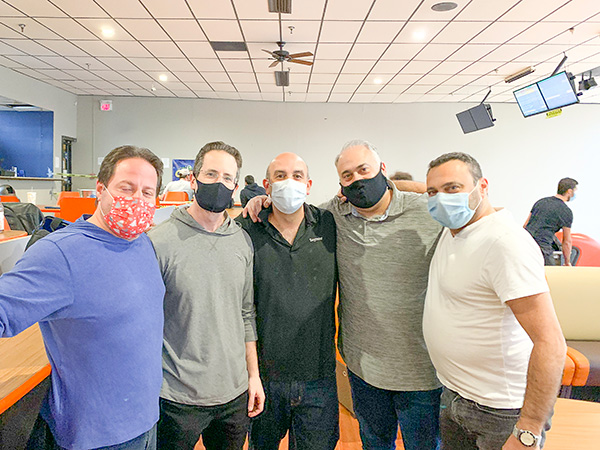
ONE OF THE CONSTANTS FOR THE ALL-YEAR-ROUND COMMUNITY ON THE JERSEY SHORE HAS BEEN THE MEN’S BOWLING LEAGUE. THE LEAGUE HAS EVOLVED INTO THE WINTER SOCIAL MAGNET ON THE SHORE. MEN AGED 20-75 COME TO PLAY, EXERCISE, INTERACT, ENJOY AND RELAX.
The bowling league has adapted to Covid protocols and safely distanced its way to yet another successful season. Albert Antebi, a league player, remarked “Through all the craziness of Covid, we are still able to have fun and be safe at the same time. The league is providing a much-needed break for everyone involved.” With 18 weeks completed through February, it has been smooth sailing for all.
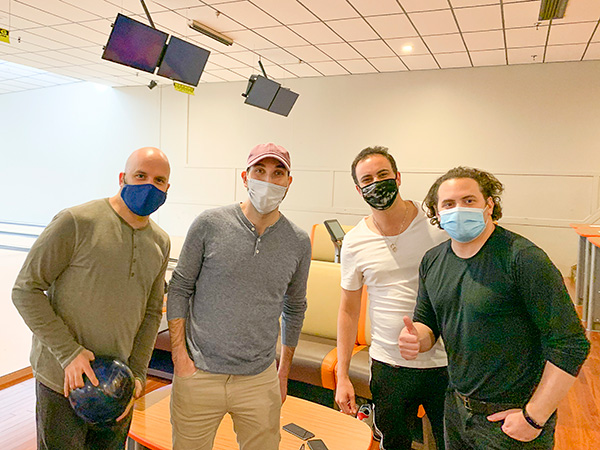
Many young men, having just moved to Jersey, have joined the league to socialize and celebrate the Jersey night life. Newcomers are promptly directed by friends and community members to join the league for sanity and fun. “It’s the item that keeps us together,” says longtime bowler David ‘Labo’ Labaton. The league meets one night per week, from the end of Sukkot to the week before Pesach, taking time off for winter vacation.
“The league has become as essential as a summer mazza party,” said bowler Richie Braha. It’s geared to ensure that everyone is on a level playing field. To that end, each bowler receives a handicap. Weaker bowlers have points added to their average so they can compete with better, more established bowlers. “All the games are pretty close,” explained Bowling Commissioner David ‘Sut’ Sutton. Each team has four players with teams rotating to play a different opponent each week. Standings and statistics by team and individual are emailed to players each week.
The bowlers’ scoring averages are between 100-200. There was even a perfect 300 score game! As the Jersey Shore continues to grow, the DSN Bowling League simultaneously continues to grow. Albert Hakim, a bowling committee member, shared how the growth has been handled. “The league has worked hard to ensure we don’t turn away any community members.”
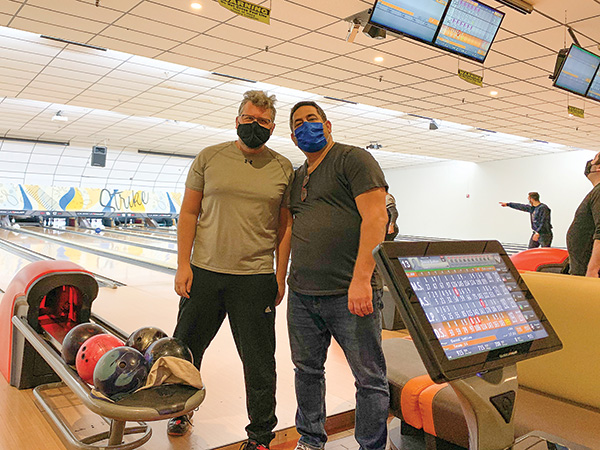
Sammy Sitt, DSN’s Executive Director summarized, “The DSN Bowling League has emerged as the staple, go-to winter activity for our men. We are thrilled that it has been a huge success. Providing our men with an active, social and fun environment is important now more than ever.“
THE SEPHARDIC COMMUNITY ALLIANCE (SCA) HAS BEEN USING TECHNOLOGY TO ENSURE LEARNING AND ENGAGING WITH THOUGHT-LEADERS CAN CONTINUE AND EVEN THRIVE, DESPITE THE LIMITATIONS CAUSED BY THE PANDEMIC. THIS IS EVIDENT IN THE EXPANSIVE OFFERING OF DAILY CLASSES, SPECIAL HOLIDAY-THEMED DAYS OF LEARNING, AND IMPORTANT MEDICAL FORUMS ORGANIZED BY THE SCA.
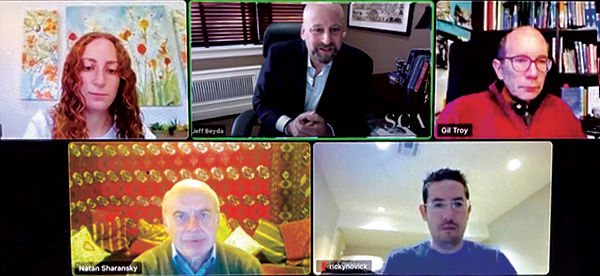
On December 22, the SCA ran an incredible interactive program, this time with Jewish Human Rights Activist Natan Sharansky and Gil Troy, the co-author of his new book, Never Alone: Prison, Politics, and My People. This talk was especially unique in that it was designed specifically for our community high school seniors. The students of Magen David Yeshivah Joe & Celia Esses High School, Hillel Yeshivah High School, and Yeshivah of Flatbush Joel Braverman High School were able to digitally watch and speak with Sharansky and Troy.
Thanks to the generosity of Mr. Joseph Shamie and the SCA, students from all three schools received copies of the book prior to the talk. This allowed students to explore Natan’s incredible story and discuss the material with their teachers before the event.
Moderated by SCA Trustee and Board Member Jeffrey Beyda, the first half of the program explored the importance of Jewish identity with connecting to something larger than yourself, the role of student activism in the freeing of Soviet Jewry, the importance of continued student activism to advance support of Israel and to fight anti-Semetism, and a discussion about the parallels Natan sees in the pressures he experienced in the Soviet Union to conform to “acceptable opinions’’ with those felt by students today on college campuses.

Jeffrey Beyda explained “The pressure our college students are under today on campus to check their Jewish identity and pro-Israel beliefs at the door—just to be accepted—is enormous. This is why the SCA has made helping prepare our college bound youth for this difficult reality a major focus.
Natan’s story is a real-life example of how tapping into the power of Jewish identity can help one overcome these pressures to conform, and to become an activist who fights back peacefully, with dignity, and in a way that inspires others to bring real and lasting change. Natan is an amazing role model for many of us in this regard, and is especially relevant for our kids who are heading off to college.”
The second half of the program saw thoughtful questions posed by the students which led to discussions on a variety of topics including how the campus environment changes from one US administration to another. Gil Troy, co-author and world renowned presidential historian, academic and Zionist, portrayed for the students how the college environment might evolve over the next few years, and what tools students can use to cope.
Rabbi Joseph Beyda, Principal at the Yeshivah of Flatbush said “Natan Sharansky is a generational leader and therefore one the students will always be proud to say, “I was on a Zoom with Sharansky.” Mrs. Esther Tokayer, Associate Principal at Magen David Yeshivah High School, echoed the same sentiments, saying that her students “truly did feel that they were engaging with people who lived Jewish history, and are proud representatives of the Jewish people.”
Ricky Novick, SCA Board Member who arranged for Natan and Gil to speak to the students said “This program truly was an incredible success in connecting our youth across three schools with one shared goal: to give our kids the opportunity to talk with a true history maker, and to help prepare them for the world they will find themselves in when they reach college. We look forward to many more programs like this one.”
Sarah Sarway, IS A Board Member of the Sephardic Community Alliance. Visit scaupdates.org for more information.
SARAH SARWAY

I CAN MAKE A MEAN CEDAR PLANK SALMON ON THE BBQ. IT DIDN’T JUST HAPPEN, THERE WAS AN EVOLUTION AND A LEARNING CURVE TO BRING IT TO THE PERFECTION THAT IT HAS BECOME. IT EVOLVED BY TRYING DIFFERENT TECHNIQUES OF SOAKING THE PLANKS, ADJUSTING THE HEAT, AND FINDING THE RIGHT BALANCE AND RATIO OF ROSEMARY AND LEMON PEEL TOPPING.
Due to my precise and orderly rituals, stringent prep rules, and the fresh and meticulously proportioned ingredients, the final product is one that will make palettes dance in ecstasy.
Finding that balance took trial and error as well as time, and when I think of my first blundered attempt at creating this recipe, it’s now obvious what I did wrong. I’m a fan of rosemary. It’s the type of flavor and aroma that one has to acquire, but once you do it treats your taste buds to an exquisite pleasure. Because I’m so fond of this aromatic herb, I used it very generously in my first crack at the recipe. I took dried sprigs and ground them to rub coat the entire salmon’s surface, and a few fresh uncut stems to garnish the top. It surely looked amazing and smelled pungent, but the flavor was so overpowering that you couldn’t even taste the salmon itself. As odd as it sounds I had ruined it by adding too much of my favorite flavor.
This was my first self-taught lesson in cooking—that less can actually be more. I learned that my number one herb is better enjoyed in a subtle presence than it is in an in-your-face packed punch.
The recipe for life, much like in cooking, is all about balance. Some say too much is never enough, or the more the merrier, but there are times where the opposite mindset prevails. Sometimes, a single rose can be even more poignant, beautiful, or sentimental than the clumsily slapped together arrangement.
One of the things that I loved, particularly in this past year, was the smaller weddings I attended. The pandemic has downsized our celebrations but in my opinion, the intimacy gave them an atmosphere that embraced its guests and brought us closer to the core of the event. The mere fact that the guest list had to be reduced by hundreds highlighted the fact that the people who did make the guest list are the ones who matter the most. The venues were quaint and personal, and whether it was a tented backyard or a smaller banquet room at a country club, it captured the moments with the distinctiveness of a close family gathering, which is a feeling that the grand humongous, opulent ballrooms we’re used to just can’t provide. There was a beauty in the simplicity that couldn’t be duplicated in a larger setting. It worked well. Just like scaling down the rosemary on my salmon, we were able to appreciate the less—all the more.
As humans we know what we like and we want what we want. Our society is one of excess. We tend to crave the elaborate over the simplistic. But if we learn to focus on the essentials, we might find enhanced fulfillment. It just might be that the secret to happiness is not found in seeking more, but in developing the capacity to appreciate less.
BRIAN MARCUS
Brian Marcus is a community member who loves to write. He has contributed to IMAGE Magazine many times.
 In February of 1833, Horace de Gunzburg was born in the town of Zvenigorodka, Ukraine. The grandson of Chabad hasidim, while not affiliated with the movement, he lived his life emulating the Chabad creed of helping one’s fellow Jew, and actually assisted the Lubavitcher Rebbe in many public endeavors.
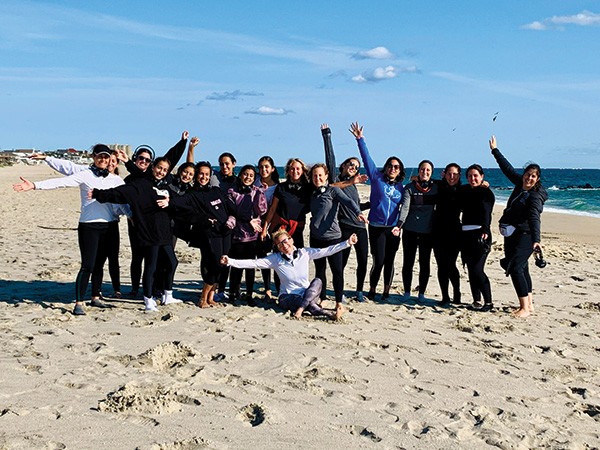
THIS MORNING, I WENT ON A WALK WITH SHIRLEY CATTON THROUGH PROSPECT PARK. I WOULDN’T CALL IT A WALK, EXACTLY, IT WAS MORE OF AN EXPERIENCE, A HAPPENING—MAYBE EVEN A JOURNEY. IN 2021, AFTER ALL WE’VE BEEN THROUGH, IT FELT LIKE FREEDOM.
Let me backtrack. “Curly Shirley,” as she is known, is a character like no other. She jokes that her hair, blonde and corkscrewed, has its own zip code; her followers know it is only part of her charm. Her outfits are bright and sunny, like her smile. Her energy is contagious. Her sincerity is real, and deep.
In the summer I had seen Shirley leading a group of women across the beach on the Jersey Shore. Each girl had a headset, and skip in her step. Though I couldn’t hear the music, I could feel the joy they were experiencing. She calls the workout, “High on Life.” I wanted to know more.
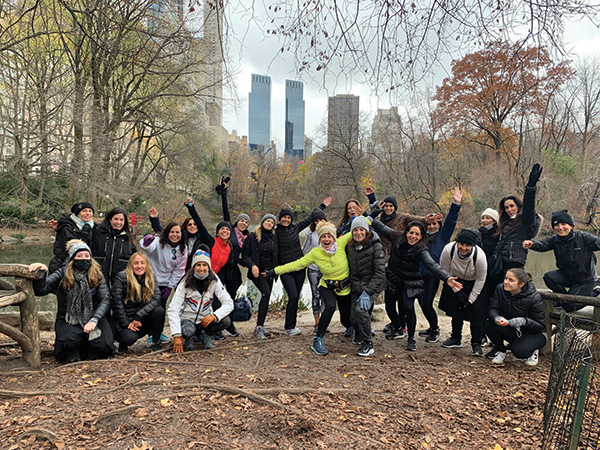
Shirley had been a fitness instructor teaching Zumba and Barre for many years, but in November 2018, a full year before we’d ever heard the word Covid, she decided to take a break. Her body spent, her mind tired, she took the time for herself. She would bring her headphones to the park and explore, understanding that sometimes you have to get lost to be found. She took different paths, just feeling the sounds and beats of her music, and sometimes she just couldn’t help but dance. A teacher at heart, she thought, what if I brought people here to walk and dance with me? Would they enjoy it as much as I do?
Shirley was hesitant. She was on the threshold of a brand-new concept, and it was scary to think about starting over, but she saw the fall leaves changing color and knew it was now or never. On her birthday in November 2019, she sent a text out to her students, “This is only happening once. Meet me in the park to do something weird. Come on time, and make sure you are hands-free. We start at 9:30 am.”

About twenty girls showed up for that first class in Prospect Park. Shirley had a giant speaker in her mesh backpack and 586 acres of park to discover. She recalls, “The park has such great energy; there are so many different paths and tunnels and the music echoes in such a cool way in those spaces! I became a staple there, in my neon yellow jacket, and the park regulars would cheer us on as we came by, jumping, moving and grooving right along with us.”
For the first few months, life was normal, and the class built up a nice momentum. Even as we started hearing about Coronavirus, Shirley continued to teach because outside, they were safe in nature. Of course, in March 2020, the virus creeped into every crevice of our lives. We hoarded Lysol and toilet paper and even meat, and both indoor and outdoor activities quickly screeched to a halt. Shirley recalls, “We had been through so much anguish in those spring months. But by the time summer came around and we started getting out again, I came back to teaching in a unique position. My class was already outside. No one wanted to be indoors, and I was prepared. I can’t help but think that Hashem prepared me.”
During her year to herself Shirley explored more than the park. She merged body and soul, meditated, and concentrated on her breathing and mental health, incorporating all of it into her High on Life Experience. “I learned something: It’s not about the grind—it’s not about how high you can jump or how low you can squat—those are the attitudes that wear us down. Life is too hard to worry about that. Nature is huge. The scenery is always new, and the backdrop always changing; there’s always something fresh to see. It’s so much more than just a workout.”
When summer came, Shirley switched from her giant speaker to silent disco headphones so as not to disturb the peace in New Jersey, but that in itself added another element. She explains, “The headphones create a less chatty atmosphere. You’re in your head, but with people. You’re alone, but together. It’s you and the music. There’s no front row. We move together, engaging in nature. There are no mirrors, and no one to impress. It’s grounding, and yet it’s also always shifting and moving. It’s free from stress; a time to just let go, and be.”

Shirley takes her students barefoot on the beach, running through the rain, and rambling under the golden sunset. As we trekked through fresh snow last week in Manhattan Beach, one of the girls said, “If you told me a year ago I’d be outside working out in 20 degrees, I would have laughed at you. Today, I’m not even thinking about the cold.” We’ve grown a thicker skin this year, and all this positivity is priceless in the era of Corona. Shirley chooses her music carefully, infusing thoughts about gratitude, choosing life, and staying focused in the present. She plays a Hebrew song called, Rak Hayom, (Just Today). Another favorite is, “I Feel Human,” and another is, “Brand New,” encouraging us to fly through an open field like the birds overhead. Picture twenty girls with their arms out, taking flight. I kid you not—this is liberty.
Shirley explains, “We don’t pay enough attention to our anxieties, worries, stress, uncertainties, each of us is like a big balloon that needs some air let out, before it bursts. We need to breathe and to feel our breath. I am offering this hour, not only to exercise, but to release.”

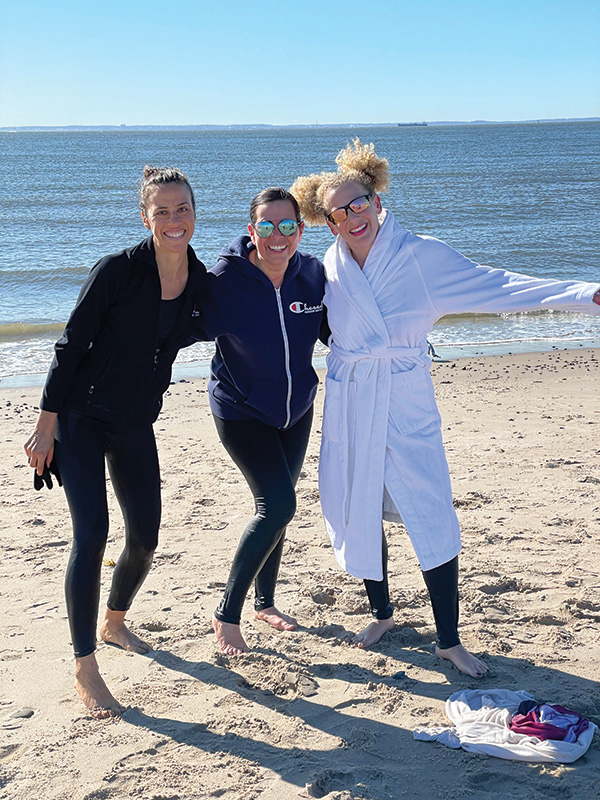
High on Life could not have come at a better time. There’s a doorway out of this nightmare but it only exists in our minds. Blending fitness, nature and happiness, Shirley “thinks in lyrics and moves through song.” Through music, laughter and spontaneity she opens us up to gain a deeper appreciation for the simple things. “We can all do better than taking pictures with our phones,” she says, “Blink, fast. Take a snapshot through your mind’s eye. Hold onto this moment, this one glorious breath. Savor it.”
2020 was impossible, heartbreaking, cold and unforgiving, but it also filled us up with so much love for the things we did have—home, family, nature, faith. We often ask, why? What is the message? Maybe, as we developed an unparalleled appreciation for the quiet joy, the unbridled laughter, and spent many, many days, weeks and months embracing each other in every way we could, we learned to live with less, and found satisfaction within ourselves. Shirley Catton, through High on Life, taps into the fact that we need to let go. Most people want to be in control, but now we cannot. We need to trust in Hashem. We need freedom from worry. Everything is as it should be. We watch the news. We read the paper. We understand clearly now that we know nothing. Let go. We don’t know how this story will end, but eventually we will see it all with great clarity. Maybe, High on Life is just a fitness class, or maybe it is more.

After dancing, running, jumping and walking through the park with Shirley I am truly spent, in a good way. I’m feeling alive, tired and energized all at once. I have been to Shirley’s class in the studio, but I think the space was never big enough to contain her spirit. The sky is the limit with her, and she has taken her experience all over, from lakes to beaches, to Central Park and hopefully soon, over the Brooklyn Bridge. You never know where you’re going to be or what it’s going to look like. When you don’t know where life is going to take you, you just need to keep moving.
Find #HighOnLife @curlyshirleycatton on Instagram
Sophia Franco, 53, is a mom and grandmother who has been feeding her love of reading and writing for as long as she can remember through poetry, community journalism, and songwriting. She has written many songs with Yaakov Shwekey but the first, I Can Be, has become an anthem for the Special Children’s Center and the community at large.
SOPHIA FRANCO
Photos by RENEE MENASHE

LAUREN IS A MOTHER OF FOUR WHOSE YOUNGEST CHILD, RENEE, HAS FACED LIFE-THREATENING HEALTH CHALLENGES SINCE HER BIRTH, 16 YEARS AGO. WITH PROPEL’S SUPPORT, LAUREN WILL BE BEGINNING COLUMBIA UNIVERSITY SCHOOL OF SOCIAL WORK’S MASTER PROGRAM IN SEPTEMBER.
When you meet Lauren Dayan, one of the first things she says is, “I’m just like all mothers.” Well, that might be true—if every mother is Supermom! A graduate of Hillel Yeshiva, Lauren got engaged in her senior year of high school and married shortly after her 18th birthday. She went to FIT for a year, focussing on interior design, but then put her schooling on hold as she and her husband began their family. Lauren became involved in her children’s school, working with the PTA, serving lunches, going to Little League games—“like every other mother.”
After having three sons, she became pregnant for a fourth time, and was ecstatic to discover that she would be having a girl. During this pregnancy, she points out, she was very involved in many hesed activities in the community and beyond.
When Renee was born, life took a turn. Lauren held her for a few minutes and then she was whisked away to the NICU. She recalls hearing a woman in the next room crying because her baby wouldn’t nurse properly, and thinking, “At least she can hold her baby.” The Dayans began a journey which continues until today. After shuttling from hospital to hospital, Renee ended up in Boston Children’s Hospital, with a feeding tube, where she remained for almost a year. Lauren would spend all week with Renee and fly home for weekends to be with her husband and three young sons. Her mother moved in, and ran the Dayan household. Lauren says that she could not have gotten through this first “new normal” without the love and support of her parents, husband and sons.

When Renee came home, Lauren recalls, “I had to change what I thought was my perfect life to the new normal. I could accept it or say, ‘Why me?’ Everyone has challenges—and this was ours.” Caring at home for a child with such significant medical needs was uncommon, but the community rallied around the family, providing volunteers who helped with any task. Lauren says, “My sons (now 20, 22 and 24) are amazing. They have helped shape my life. Their compassion and love for their sister and support of Mommy helped me continue to be the mother that I am.”
When Renee was old enough for preschool, Lauren contacted Magen David Yeshivah, but warned them, “She isn’t like a normal kid.” Rabbi Hilsenrath’s bemused response was, “What’s normal?” and Renee was accepted. With Terri Mizrahi’s leadership at the Early Learning Center, Renee went to school every day with a nurse and received all her services at school. With Renee at school, Lauren decided that it was time for her to return to school. She was no longer interested in interior design; rather, she wanted to help others, and decided to pursue occupational therapy. She began at
Kingsborough, earned her associates’ degree and then transferred to Brooklyn College, where she continued her pursuit of excellence.
At age 11, Renee transferred to the Shefa School in Manhattan, where she quickly became part of the school family. One day, the psychologist called Lauren and said “she’s not acting right,” but by the time Renee was home, she seemed her usual self. That weekend, as she was studying for finals, Lauren noticed Renee slurring her words and complaining that she had numbness in her arm. Having just taken a course in stroke and aphasia, Lauren says, “I knew there was something going on.” A visit to the hospital ended with them being sent home and a round of misdiagnoses.

The family pediatrician revealed that Renee was having transient strokes, where she would “space out” and, by the time they got to the hospital, be back to herself. Desperate, Lauren videotaped one of Renee’s episodes so that she could qualify for an MRI. After being told that there was “nothing wrong” with Renee, and that these episodes were a psychological and behavioral issue, the Dayans returned to Boston Children’s Hospital, where they were told that due to the strokes, Renee needed brain surgery. The surgery was scheduled for a few months out, and Renee continued to go to school, with Lauren at her side. The plan was that she would return to school after the surgery, and life would resume.
Lauren reminisces, “We plan and G-d laughs.” Renee had a massive stroke, and the family now had a new—new normal. With help from family, friends and the community, the house was modified and extended to meet Renee’s needs. After another year in the hospital, Renee came home. With nurses, therapists, family members and volunteers, and Lauren coordinating the entire picture—life became normal. Renee was bussed to school in Blythdale Children’s Hospital (in Westchester) every day, and Lauren returned to college. And then Renee caught the flu and almost died. Ironically, one of Lauren’s classes that term was Death and Bereavement. She felt that she was living what she was learning. Lauren got permission from her professors to learn remotely—before COVID! This continued when the pandemic struck, and all colleges transitioned to distance learning. She acknowledges the support of Brooklyn College and its faculty in helping her achieve her degree, which she earned with the high honor of summa cum laude.
At this point, Lauren stopped thinking about becoming an occupational therapist. With the support of Renee’s doctors, therapists and caregivers, she started exploring how she could help other parents who experience sudden trauma with their children. Her experiences taught her that she could be a source of inspiration, compassion and support. She started a parents group at Blythedale for parents “who I met in the hallway whose lives were turned upside down.” She felt they needed to hear from others that, even though things would be different, they would be okay. “Perfect,” she says, “is boring.” COVID complicated matters. For three months, Lauren could not leave the hospital. Her family could not visit. It was lonely. Now, Lauren goes home for Shabbat and on Sunday to be with her family, who FaceTime Renee daily. As Lauren says, “her eyes and her smile communicate.”
Encouraged by the doctors at New York Cornell, she set her sights on the Social Work program at Columbia University. Lauren reached out to PROPEL for help with the application process. Working with the PropelED team, Lauren refined her essays, and was accepted for the next cohort. She will be beginning her graduate studies in September 2021. Her immediate goal is to get Renee home and get her the care that she needs. Lauren knows that it will be a challenge to be a wife, mother, caregiver and graduate student. But, she says, “I feel that Hashem helped me through all these hurdles—this is just another one.”
Lauren’s Advice: Self-care is important. If you care for yourself, you will be better able to care for others. Every person has one kind of journey or another. If you have a dream, go for it! Don’t let tough challenges hold you down—let positivity push you forward. The sky’s the limit!
If you are interested in a career, please reach out to PROPEL. We can help you fulfill your professional goal. Follow PROPEL on Instagram @PropelNetwork
Call: 646-494-0822 or email info@thepropelnetwork.org.

SINCE ITS INCEPTION, THE SYRIAN SEPHARDIC JEWISH COMMUNITY HAS CULTIVATED AND NURTURED A STRONG BOND WITH THE LAND OF ISRAEL. WE ARE EDUCATED ON ITS HISTORY IN OUR YESHIVOT. FAMILIES HAVE LONG MADE IT THE CENTERPIECE OF THEIR MILESTONES, CELEBRATING BAR MITZVAHS AND WEDDINGS ON ITS HOLY GROUNDS.
There is no disputing the relationship that any one of us have towards Israel and yet, the possibility of investing in a second or primary residence seems remote and untenable to many. SY Israel Link, a new non-profit presided over by Rabbi Moses Haber, hopes to dispel any notions of impracticality. The board is composed of a dynamic group, including VP Moshe Laniado, Secretary Eli Mizrahi, Treasurer Ralph Sasson and Director of Marketing, Daniel Levy. They all work tirelessly towards one goal, to deepen our community’s commitment towards the Holy Land.
SY Israel Link was founded with a simple mission: to promote and facilitate the strengthening of our community’s bond with Israel. It is their belief that moving towards investing, whether it be as a business opportunity or a temporary residence, is one realistic way to begin. Apparently, others agree. A survey conducted by SY Israel Link uncovered a keen interest amongst participants, ages 35 to 65, in purchasing property in Israel. Overall, their reluctance stemmed not from a lack of desire, but trepidation surrounding the process. Common concerns included: Which city should I look in? What kind of neighborhood best suits my needs? Where do the majority of the other Syrian Jewish families live? In other words, people did not know where to start. Consider then, SY Israel Link as your resource.
The group continues to survey community members in order to gage a clear picture of the wants and needs of those who are considering an investment in Israel. For example, they’ve found that 34% of participants view an investment as a stepping stone towards moving. But their reasons vary; 23% see the residence as a security home, while 21% would like to move full-time and 10% are more interested in a vacation home. As they gather more data from the community, SY Israel Link is better positioned to guide prospective buyers through their process. So far, the organization has identified over 150 Syrians who have made aliyah over the last 35 years. They include members from all segments of our community, from teachers and rabbis to lawyers and tech entrepreneurs. SY Israel Link has mapped out their locations and they can be viewed on the organization’s website. They’ve also contacted many of these individuals, who are ready and eager to help and welcome new community members in any way that they can.
The organization is poised and ready to inspire, educate and simplify the process of investing in our homeland. They understand the hesitancy to jump into an investment. Rather, SY Israel Link encourages incremental steps towards a longer term goal: the establishment of a flourishing Syrian Sephardic community in Israel. These steps can include more Friday night dinner conversations, formal and informal education, or a family commitment to visit Israel if and whenever feasible.
The current tenuous political climate, growing anti-Semitism and a government that seems increasingly divided has left many in our community feeling lost and untethered. More and more, Israel represents a beacon of hope for those seeking opportunity, whether that be via professional advancement or spiritual growth. And while it has become apparent, perhaps more than ever before that Israel is our one true home, there is much to uncover without making the move just yet.
SY Israel Link is not asking you to pack your bags tomorrow, but rather, to begin the process of genuinely understanding what it might look like to plant the seeds of your future in Israel. The data clearly shows that many in our community are seriously considering an investment in Israel. SY Israel Link asks that you complete and share their survey so they can continue to better their efforts in abetting this process, bringing our community one step closer to our homeland.
You can find it and other resources at their website: syisraellink.com.

Every little girl dreams of her fairy tale wedding, whether it is an event flowing with orchids and pure white organza, or a dramatic backdrop, dressed up with mirrors and red roses by the thousands. She pictures her ball gown and veil, in lace or in satin, and envisions her groom beside her, love permeating it all. In order to achieve such memorable glamour, many turn to the professionals, and Norma Cohen Productions is the best of the best. Recently recognized in Brides Magazine’s Top 100 Wedding Planners in America, Norma has spent most of her life as an event planner, and like the finest of wines, she only gets better with age. She explains,
“There is nothing that gives me greater joy than seeing the look on the couple’s faces when they walk into the room for the first time. If I did my job correctly, the decor tells their story. It looks and feels like them, it’s a place where they can feel good taking their first steps as man and wife. It’s not a home, exactly, but it’s the place where their story as Mr. & Mrs. begins. It’s important to get it right.”

These spectacular evenings do not happen by accident. Meeting after meeting produce design inspiration and allow for a true relationship to grow between Norma and her clients. “I listen, and learn, and get to know the couple. This is crucial to the planning process.”

This is an intimate time in a person’s life and Norma is there for all of it, not only as a planner, but emotionally, as a confidante, adviser, and friend. There were more hugs than handshakes.
Norma began planning parties at just 16 years old. She was mentored by the best, volunteering in the Sephardic Community Center, planning teen events, fashion shows, concerts and more. A prodigy, she was the first female teenager to join the board of directors, helping giants like Morris Bailey, Bunny Escava, Eddie Catton A”H, and Gita Sultan keep their fingers on the pulse of the young generation. This is where Norma got her education, not only in organization and planning, but in being a community leader. From there she began to plan business events and gatherings, bar mitzvah’s, sweet sixteen’s, 40th birthday parties, and finally weddings.
Today, Norma’s events know no bounds, spanning the world itself—from every premier venue in NYC to London, Paris, Puglia, Sardinia, and beyond. And still, interwoven in every moment of work is the knowledge that community comes first. The volunteer work she has done over the past forty years is indescribable. The same effort that is given to a wedding in the Pierre is lavished on a SAFE breakfast in Deal, or a Special Children’s Center dinner in Cipriani. There is no charitable organization that she refuses.

Norma’s years of experience, as well as her on-the-job-training have led to the most beautiful and elegant weddings in the world. After agreeing upon a budget, a venue is chosen, a caterer, florist, musician and lighting crew. Invitations, valet, and thousands more details must be arranged as well. The design of the party is the most fun and memorable, and no one does it like Norma Cohen. She explains, “For so many years I would be planning events for the same people in the same venues, week after week, year after year. The need for originality was fundamental. I wanted the guests to walk into a venue like Shaare Zion and feel like they were in Central Park, and it worked. Sometimes the Pierre looked like a winter wonderland, and others it looked like the Garden of Eden. For a bar mitzvah, maybe I’d bring the Polo Bar to Brooklyn. It’s all in the details. We always look for new ideas, new centerpieces, new twists on tradition and new ways to turn things around. Today, social media has changed the way we entertain. With Instagram and Snapchat, every event is on display for the whole world to see, captured in a photo and sent around the world in seconds. I have to keep reinventing the wheel. It’s challenging, but it’s also fun when it all comes to life.”
Dressed in six-inch heels at all times, Norma is upbeat and positive—a force of nature, setting the mood for the once-in-a-lifetime events she is famous for. She is ready for anything, because in her experience, anything can happen. Not to worry, though. Norma is a fast thinker, always on her toes and always prepared with a back-up plan. This has come in handy over the past year, as 2020 has kept us all on the edge of our seats.

“During Covid, we have all had to learn how to pivot. Weddings have gone from 600 people extravaganzas to 20 people gatherings. Engagements have transformed into wedding days and zoom has become a household word. Laws change on a dime, and from one moment to the next, we never know what to expect. We still don’t. My advice to the brides of 2020, from day one was the same. Marry now—party later. Some days we were able to party harder, others, not so much, but what is most important, as I’ve always said, is the bride and the groom. When they wake up the next morning as husband and wife, all is right in the world. Throughout this pandemic I have done my best to give the brides confidence, to respect the times and ensure that every couple had the most beautiful wedding—a fairy tale wedding—even if it was just a family event, because as we have all learned, especially this year, family is most important.”
A role model for women, Norma works hard, but puts family first. Her office staff acts as her right hand, helping with computer work, ordering and logistics. She has go-to vendors whose performance and reliability she depends on to assure she delivers a high-quality, one-of-a-kind wedding to her clients. Her proudest moment? Her son’s wedding! Both professionally, and personally. She explains, “I’m busy, I won’t lie. More days than not, my calendar is jammed with back to back meetings. I don’t have time for book clubs or tennis leagues, but I make time for the people I love—my children, my parents, my close friends. And very often my clients become those friends I’m making time for. I love what I do. I love having a hand in creating an event that people will remember for years. I love being an instrumental part of the most important day of a couple’s life. I love seeing my brides years later, toddlers in hand, reminiscing on that magical evening. Most of all I love how my experience guides me in everything I do.”
SOPHIA FRANCO
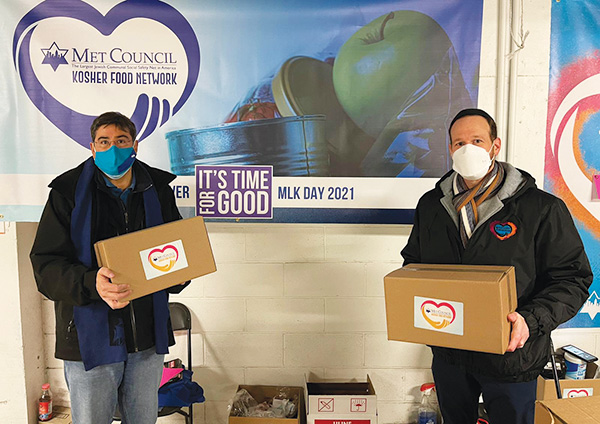
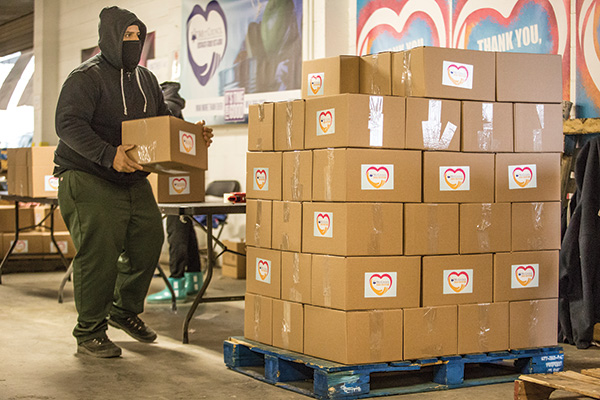
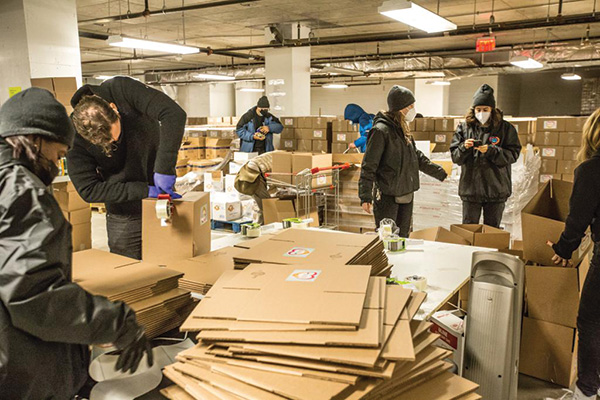
In celebration of Dr. Martin Luther King Jr., hundreds of volunteers joined Met Council for its annual MLK Day of Service and signed up for shifts at Met Council’s Greenpoint Fulfillment Center to help package emergency food deliveries for Holocaust survivors on the January 18th holiday. Four, 90-minute socially distanced shifts HAD NEW YORKERS PROUDLY FILLING THE immediate demand FOR FOOD, in service of their neighbors.
The city funding behind the Greenpoint warehouse has run out and unless the city comes up with emergency funding for food providers, thousands fewer deliveries will be made. In May, the city acted boldly to get $25 million distributed to soup kitchens and food pantries that knew their communities best. More than 575 pantries benefited from that emergency money and were able to increase capacity, staffing and food distribution. Unfortunately, that grant ended on December 31st.

“It was a true joy to see so many volunteers turn out in service of their neighbors and giving their time in honor of Dr. King’s legacy, but our capacity to manage big distributions like this will suffer unless the city comes through with more funding,” said David G. Greenfield, CEO, Met Council. He continued, “It was an incredibly hopeful moment in what has been an otherwise dour start to the year. I hope the city recognizes the great need in our city and prioritizes emergency funding for food providers like Met Council. Our staff and volunteers have worked nonstop since this pandemic hit, but we need more help.”
“The influx of volunteers who signed up for these shifts on Martin Luther King Day was truly impressive and we are so thankful for the response,” said Leah Schechter, Met Council’s Senior Director of Volunteer Services and Donor Engagement. “The community really showed up to help us in our effort to feed our fellow New Yorkers. And I was proud to see all the young faces eager to learn and quick to embrace empathy at the S.N.A.P. Grocery Store Challenge on Monday evening. New Yorkers are at their best when they come together to help each other.”
In partnership with the UJA Federation of New York, Met Council called on volunteers to sign up for a shift, hundreds of volunteers quickly signed up. PPE was distributed to all workers and masks were required at all times, as they always are at Met Council volunteer locations.
Though the typical, in-person acts of service had to be limited to the volunteer shifts, Met Council also hosted a virtual S.N.A.P. Grocery Store Challenge on Monday evening so families could get involved and support Met Council’s clients. The one-hour interactive event was centered on building empathy and solidarity for clients of Met Council and all those who receive federal food benefits.
Met Council has delivered thousands of meal packages to struggling families, Holocaust survivors, and other homebound New Yorkers since the start of the pandemic. As economic conditions worsened, Met Council expanded their operations, rapidly scaled up deliveries, and opened a new warehouse in Brooklyn. With so many Holocaust survivors vulnerable to COVID-19, Met Council pledged to provide weekly deliveries through not only the end of the pandemic, but for the rest of their lives.
Met Council is America’s largest Jewish charity dedicated to serving the needy. The organization’s ten different departments are staffed by experts who help hundreds of thousands of clients each year and advocate on behalf of all needy New Yorkers. Met Council’s programs range from 100% affordable housing at 20 locations to an award-winning family violence program, Holocaust survivor assistance, senior programming, crisis intervention, to the largest free kosher food distribution program in the world. Met Council’s network of 101 food pantries, affordable housing sites, and JCCs provide services directly in neighborhoods across New York.

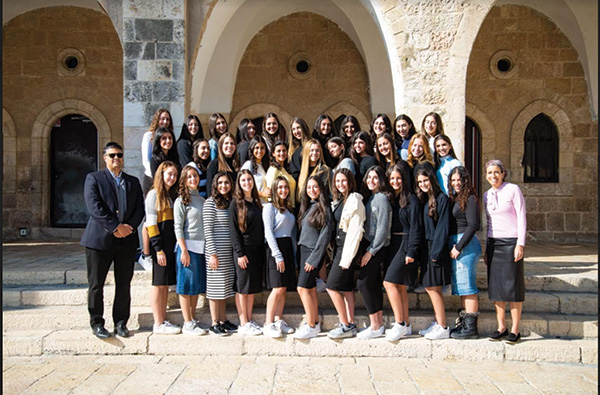
LEAVING MY FAMILY, FRIENDS, AND THE COMFORTS OF MY HOME FOR A YEAR IN ISRAEL WAS DEFINITELY NOT AN EASY THING TO DO, ESPECIALLY DURING THE WORLD PANDEMIC THAT WOULD RESTRAIN US FROM HAVING A NORMAL GAP YEAR EXPERIENCE. IT WAS EXTREMELY DIFFICULT FOR ME TO PACK UP AND LEAVE EVERYTHING BEHIND.
However, going to Israel for the year has been a dream of mine since I was young and I’m so content with my decision to do so. I was debating for the longest time whether seminary was the right fit for me. Choosing Midreshet Eshel to be my home for a year or so was the best choice I ever made.
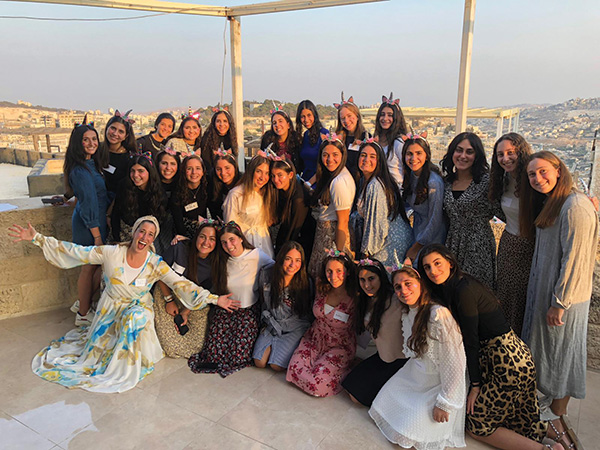
Leaving my family and friends for the holidays was very hard for me and for the first time in my life, this year I spent all the High Holidays without being surrounded by my immediate and extended families. It was definitely unfamiliar and difficult considering the fact that we spent Rosh Hashana, Yom Kippur, and Sukkot all under lockdown in the Old City of Jerusalem. However, to be quite honest, these holidays were so touching and meaningful and I will remember them for the rest of my life.
Learning and studying about the Kotel and the Old City and its history came to life when I moved into Eshel in September. My Rosh Hashanah experience was indescribable, we had the entire Kotel to ourselves as no one else was allowed in the area due to the Covid-19 lockdown in Israel. All the students spent the entire holiday getting to know one another and developing deep, personal friendships. With no phones in sight and sharing incredible experiences with one another, we quickly became a family. During Rosh Hashanah, we completed reading a full book of tehillim by Kever David and we danced and sang in the streets feeling Hashem’s presence dwelling within us. We prayed and sang with so much passion and meaning at the Kotel. Nili, one of our beloved teachers was instrumental in making this holiday season an incredible experience.

Hearing Selichot live at the Kotel and being one of the very few fortunate people who were allowed to even go to the kotel was a huge miracle for me and enhanced my relationship with Hashem so much. Yom Kippur was spent like no other in my entire lifetime. Usually, it’s routine to go to shul, pray without really understanding what I’m saying, and sleep off my hunger. However, here in Eshel, I learned what Yom Kippur was all about and how we are really supposed to be spending this holiday. Instead of just reciting words that no one really understands, all day, our teacher led Minyan and taught us all about the meaning behind everything we were saying. It was the most meaningful, and connecting prayer. I will never forget the stories, teachings, singing, and thoughts that were shared.
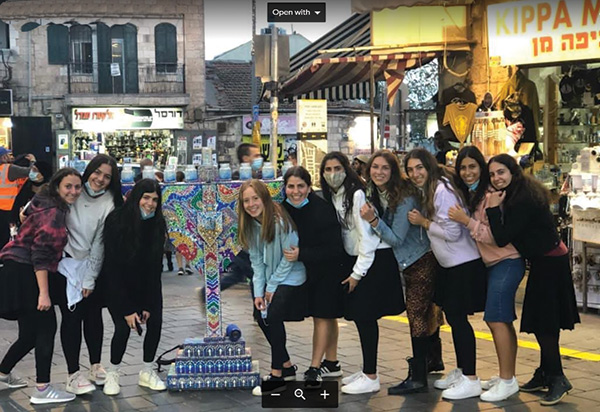
After the holidays were over, we jumped straight into creating a steady daily routine of learning. The classes given at Eshel are ones you would never think are being taught at a seminary. I thought I would be sitting all day learning about Jewish history which would not pertain to my life. However, after being here and attending countless classes at Eshel, I realized how wrong I was. The teachers and rabbis bring the Torah to life by relating everything we’re taught to our own personal lives and struggles. We learn the proper tools to help us become our best selves, improve our midot, and deal with struggles or conflicts which are part of life. The classes have helped me build my character tremendously and I feel my new positive outlook on life radiating onto others as well.
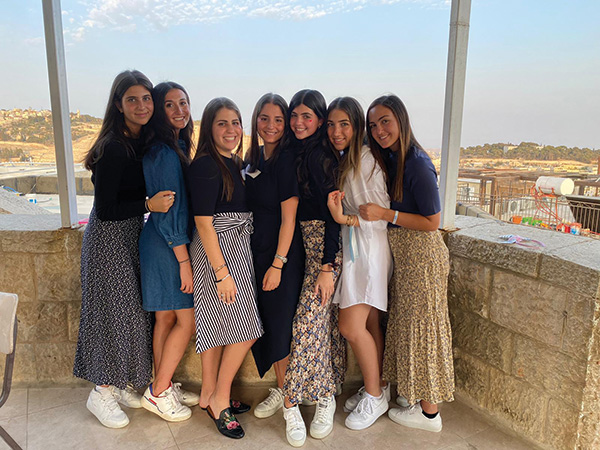
I feel great appreciation and gratitude for all I have, especially during the world pandemic where there is so much illness and uncertainty. Miriam Tawil, our exemplary school director always makes sure her students get the full experience of Eshel despite the limitations coronavirus puts on trips, and Shabbatons. The remarkable rabbis here build personal relationships with each student and have become mentors in all of our lives. Even though I miss my parents, siblings, and friends, here at Eshel I am happily a part of a wonderful family

The SCF helps Yeshivot access new government regulations resulting in $2 to 3 million benefits to NYC Yeshivot & Families this year.
WHEN COVID-19 HIT LAST MARCH, IT CAUSED MILLIONS OF PEOPLE TO LOSE THEIR JOBS, CLOSE THEIR BUSINESSES, OR STRUGGLE WITH STAGGERING REDUCTIONS IN SALES REVENUE. NO PART OF THE COUNTRY HAS BEEN SPARED AND THAT INCLUDES THE NEW YORK AREA SEPHARDIC COMMUNITY.
For the first time ever, many Community families found themselves struggling with food insecurity. The Federal Government acted to make sure its food programs, including the National School Free Breakfast and Lunch programs, would be available—even though schools were shut down.
During the initial and most challenging months of March, April and May, Shaare Torah Yeshiva and other schools that had been operating a meals program, kept their kitchens open. They further expanded their distribution so that no family would be turned away.
With the onset of the 2020-21 new school year, the Sephardic Community Federation (SCF) helped the yeshivot that had not previously participated in the food distribution program, secure millions in government dollars, so that every yeshiva child would be able to get free breakfast and lunch.
When schools reopened this September, a just-issued USDA-Food and Nutrition Services program waiver went into effect, allowing any school, public or private, to serve free breakfast, lunch, and snack, to all enrolled children regardless of income. This meant that Community schools could now offer free meals to all students. All families could get help without having to be singled out as “the new poor.” The waiver is in effect through June 30, 2021.

While Shaare Torah and other schools that had been giving out food to the public last year knew about this program waiver, other schools, however, could not have realistically known about it (unless they staffed a dedicated person to track and carefully study the fast changing, weekly flow of COVID-19 government regulations and waivers). The Sephardic Community Federation retains a consultant, Mr. David Rubel, to do just that. For the past 12 years, Mr. Rubel has worked closely with Mr. Sam Sutton, President of the SCF, on connecting Community schools to a myriad of government programs, translating to tens of millions of dollars in benefits over the years.
The team of Rubel and Sutton first alerted Magen David Yeshivah Elementary School to the fact that all their students are now eligible for the new free school breakfast, lunch, and snack program. MDYES immediately jumped on the opportunity to receive approval from the New York State Education Department-Child Nutrition Office (NYSED-CN). In practical terms, this means that for this year, the cost of all meals is covered by the government.
In addition, all MDYES students also received the COVID-19 Pandemic-Electronic Benefits Transfer (P-EBT) cards worth $420 per child for school year 2019-2020 totaling $520,000 given directly to parents. There will also be a second P-EBT card coming later this school year, albeit smaller, due to new government rules. All told, including the second round of P-EBT, MDY and its parents will have received close to $1,500,000 in newly granted government funding.
Next, SCF rushed to alert other Community yeshivot that had never operated a Federal-State funded meals program. In addition, all students enrolled in these schools will also be eligible for the waiver to receive the free breakfast and lunch, regardless of income. Schools that are new to the government breakfast/lunch program, needed to apply to NYSED-CN for approval.
After SCF discussions with Barkai Yeshiva, Yeshivah of Flatbush Elementary School, and Yeshiva Darchei Eres (YDE), all three schools completed and submitted applications with help from the SCF. Once these schools are approved, all their students will be eligible for the 2020-21 school year as well as the Pandemic-EBT program. This should lead to significant savings for all three schools. The total benefit to schools and their parents for this school year could reach an astounding total of $3,000,000!
The SCF is always working hard for the Community. Our decades-long established role as the Community’s liaison to our elected officials and government programs has positioned us to advocate for and deliver benefits for the overall well-being of our Community.
Sam Sutton is the President of the Sephardic Community Federation. Ron Tawil is Co-Chairman.