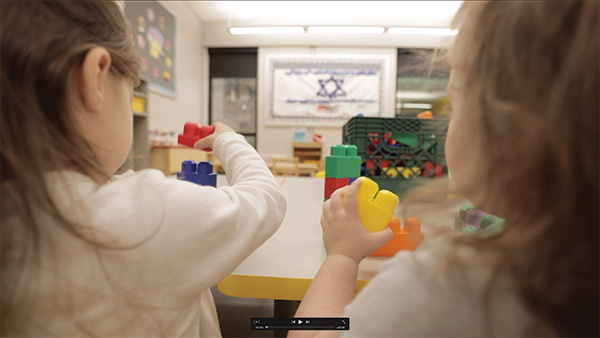
MARCH 2020, AS WE ALL KNOW, SAW AN ABRUPT CHANGE TO LIFE AS WE KNEW IT. CHILDREN STOPPED GOING TO SCHOOL, THERAPY WAS CANCELED, SOCIAL INTERACTIONS WERE NONEXISTENT AND WE STRUGGLED TO CREATE SOME SEMBLANCE OF NORMALCY AMONGST THE CHAOS.
The repercussions of this on the social emotional wellbeing and development of our children was significant. Zoom sessions proved to be extremely challenging specifically for the younger population. Heavy use of technological devices with minimal social interactions caused significant social and developmental delays for many children, and the lack of structure and learning hindered normal function and progress.
As the summer came and more venues started opening up with caution, Bridge Linx was prepared to help meet the new challenges now facing the children. Schools were opening. Many new families were moving to the Jersey shore, flooding the schools and making it more difficult to meet the individual needs of these students. And many students needed help getting back on track and bridging the gaps and deficits they now faced.
Over the summer, Bridge was in full gear offering therapy services, working closely with the community schools, and evaluating many new students to set up individual plans to ensure their success transitioning into school.
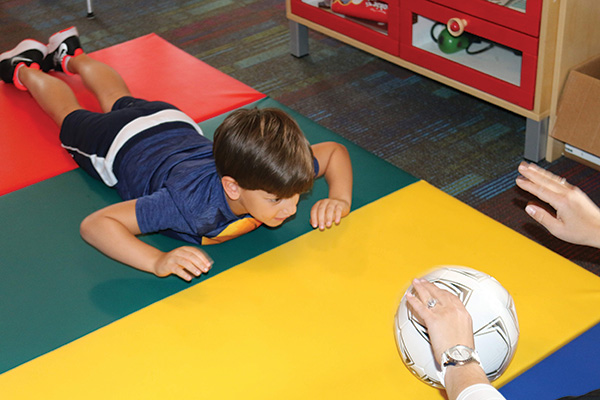
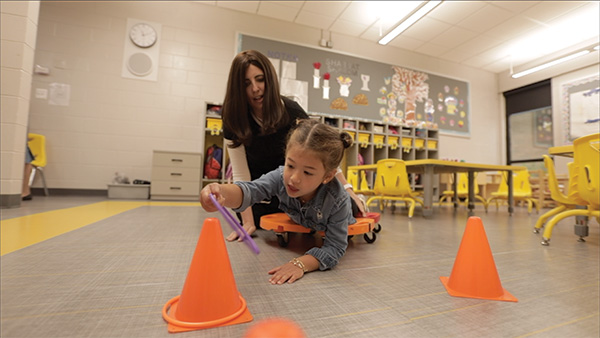
Bridge Linx offers therapy services including OT, PT, Speech and Social Behavior therapy to school aged children. Therapies are offered in our state of the art facility as well as in some community schools. We work closely with the child’s parents and school to ensure the goals are carried over and met. Many mainstream and bright students are challenged with specific deficits that need to be addressed in order to succeed and thrive. Following are some examples of areas that typical therapy may cover.
Speech and Language
Much of the learning environment is dependent on good language skills. These would include being able to follow directions and to follow and comprehend an oral lesson. In addition, proper note taking, including understanding the main idea and supporting details as well as sequencing events, are important skills. Proper social interactions involve processing the environment and expectations as well as communicating appropriately and effectively. Speech and language therapy can help children struggling in these areas.
Occupational Therapy (OT)
The way a child functions and completes his daily chores involves many OT skills. These would include dressing, manipulating toys and objects, copying from a board, handwriting, tracking with the eyes and coordination. Some other areas would be core strength and sensory processing. OT services can help a child function better in the classroom by improving these skills.
Physical Therapy
PT targets gross motor movement. These would include balance and strength, coordination, safety awareness and specific muscle strengthening and movement.
Social Behavior
Sometimes children have trouble functioning in school settings for various reasons. Some of the goals and areas worked on to help them in this area would include emotional regulation, organizational skills, following directions and routines, social expectations, and problem solving. Social Behavior therapy is provided in the school setting, and coordinated with the classroom teacher and parents to ensure that the goals are followed up and met. This Social Behavior program has enabled many students to succeed in the mainstream yeshivah environment and not have to attend self-contained or public school programs in order to meet their needs.
Bridge Linx continues to grow and meet the needs of the children in the community. We are a nonprofit therapy center and work with most insurances. We also offer private scholarships as needed so that we can ensure every child gets the help they need regardless of financial ability.
EVERYTHING YOU NEED TO KNOW TO VOTE IN THE JUNE 22 DEMOCRATIC PRIMARY ELECTION.
VOTING IS NOT ONLY A RIGHT, BUT A CIVIC RESPONSIBILITY. THE SCF, ALONG WITH OTHER PROMINENT ORGANIZATIONS AND LEADERSHIP HAVE BEEN ADVOCATING FOR EVERYONE TO BE REGISTERED AS DEMOCRATS SO THAT WE MAY ALL HAVE A VOTE IN THIS CRUCIAL PRIMARY.
Here is all you need to be ready:
1. You must be registered to Vote (as a Democrat).
2. If you are unable to vote in person or you will be out of town on Election Day (June 22, 2021), request an Absentee Ballot, or participate in Early Voting.
What’s “Early Voting”?
Early voting runs from June 12 to 20. Essentially, you can vote early, in person, at a site that is set up for this purpose. You can find your early voting site at findmypollsite.vote.nyc. Your site will have its hours posted there. Note that the link above will display both regular AND early voting sites
What’s an absentee ballot?
An absentee ballot is a way to vote without going to the polls on Election Day. It is often referred to as “voting by mail”, but you can also drop an absentee ballot off at a voting site or the Board of Elections office. You don’t NEED to mail it in.
Because of the pandemic, ANYONE can request an absentee ballot this year. In March 2020, state lawmakers passed a law that said a voter’s concern over spreading or getting COVID-19 counts as a “temporary illness” when requesting an absentee ballot. That means that anyone can still claim “temporary illness” as a reason to request an absentee ballot, regardless of the availability of vaccines or any other factors that may have changed since last year.
How do I request an absentee ballot?
You can request an absentee ballot at www.nycabsentee.com, or by calling 1-866-VOTE-NYC.
When can I request an absentee ballot? (And when is the deadline to do so?)
You can request one any time before June 15 to vote in the June 22 primary. But an important note: The deadline to request an absentee ballot may change to June 7, so best to request before then.
When can I expect to get my ballot in the mail?
Even though you can make the request right now to get an absentee ballot, you won’t get your ballot in the mail until at least the last week of May. That’s because Board of Elections officials are still determining which candidates will be on the ballot, and they have a policy to not send out ballots until 32 days before the election.
What do I need to know when filling out my absentee ballot?
You want to make sure you fill out your ballot correctly when you vote absentee. An error could get your ballot thrown out. This year, with ranked choice voting, be careful not to rank two candidates in the same column. That’s called over voting, and it makes your ballot invalid. With ranked choice voting, you’ll be choosing up to five candidates in order of your preference. The SCF has provided our recommendations on a full page tear out in this month’s issue. To learn more about ranked choice voting, and how it works, please visit nyccfb.info/nyc-votes/ranked-choice-voting/
When mailing your ballot, keep these things in mind:
After you fill out your ballot, put it in what’s called the oath envelope (the smaller one with the signature line). Then, sign the outside of the oath envelope and put it in the mailing envelope.
The mailing envelope will be pre-addressed to your county board of elections office, but you need to use your own stamps.
Campaign Finance Board officials recommend putting three stamps on just to be safe.
You need to mail your ballot by the day before Election Day. As long as it has a postmark on or before June 21, you’re good.
But you don’t have to mail it. Here’s what to do to drop it off.
You can drop off your absentee ballot at ANY board of elections office, ANY early voting poll site or any election day poll site up until when the polls close on election day. Note: You can also drop off absentee ballots for other people, as long as they’re properly signed and sealed.
OUR COMMUNITIES ARE HURTING. OUR FAMILIES HAVE LOST LOVED ONES, MANY BUSINESSES ARE ON THE BRINK OF BANKRUPTCY, SENIORS AND PEOPLE WITH UNDERLYING CONDITIONS ARE STILL TRYING TO RECEIVE A VACCINE NOT FAR FROM THEIR HOMES. HIGH UNEMPLOYMENT AND UNSAFE STREETS HAVE CREATED A SENSE OF HOPELESSNESS AND CYNICISM OVER THE ABILITY OF OUR STATE AND CITY AUTHORITIES TO SUCCESSFULLY GUIDE US OUT OF THIS CRISIS.
I am running for City Council to represent the great communities of Southern Brooklyn because I am convinced that public service starts with a sincere desire to help people.
My family and I immigrated to the United States from Belarus in 1993. The very next day after our arrival, I showed up at the JCH of Bensonhurst and asked to volunteer. For the last 28 years, I volunteered as Vice President of the Holocaust Memorial Committee, served as a board member of the Association of East European Jewry, Bensonhurst Business Club, and other important non-profits.
With the help of my mother-in-law, my wife and I raised two beautiful children in Southern Brooklyn. I graduated Baruch College, City University of New York, with a Bachelor in Business Administration and worked for over 20 years as a journalist for Russian language TV, radio and newspaper. I also served as a community liaison for a US Congressman and later—for two City Comptrollers, representing them in Southern Brooklyn and helping local communities overcome the terrible consequences of Super Storm Sandy.
Since January 2020, I have been working as District Director of Operations for Councilman Mark Treyger. At the height of the COVID-19 pandemic, I hosted multiple food and mask distributions across Southern Brooklyn, helped hundreds of people who lost their jobs to obtain their unemployment benefits, and coordinated private donations of food and PPE to Coney Island Hospital. I also supported small business owners by bringing them masks and sanitizers, promoting them on social media, and helping to connect them with Small Business Services.
In 2012, I was honored to be elected to the volunteer position of Democratic District Leader in the 45th Assembly District. Together with my partners, I founded Bay Democrats club that quickly became a strong voice for local communities. Our club hosted annual Jewish Community Leadership Award ceremonies and Holocaust memorial events, condemned BDS and the surge of anti-Semitic incidents in New York.
As District Leader representing a large segment of the Sephardic community, I supported the important work of many local non-for-profit organizations. As your councilman, I will fight to ensure that Sephardic Community Center, Sephardic Bikur Holim, Reach for The Stars, Harmony, The Morris I. Franco Cancer Center, and the Kings Highway Beautification Association are fully funded to meet the needs of the community. Also important—we need to fight in City Council and in the state legislature to provide financial relief to yeshivah families. I will always support and protect our yeshivahs. In 2018, I endorsed the election of a highly qualified jurist, Gina Levy Abadi, to the Brooklyn Civil Court, and I am supporting her candidacy this year for her appointment as a Kings County Supreme Court Justice. Together with my friends, I hosted Israel Solidarity Rallies and have always stood up against hate and anti-Semitism.
Over the years, I have continuously supported our brave police officers and I categorically oppose the “Defund NYPD” movement. Fighting for public safety would be my priority in the City Council. I strongly oppose the construction of a new “motel” at Coney Island Avenue and Avenue T that might be easily converted into a homeless shelter. I will strongly oppose any property tax or water rate increases for homeowners. Homeowners should not be overlooked during the post-pandemic recovery. I will push the Department of Parks to commence the long overdue renovation of the McDonald Park ASAP.
It would be my honor to receive your support and your vote on Tuesday, June 22, during the Democratic Primary for City Council. Together we will overcome this terrible pandemic and its after affects—it is personal to me. I will never abandon our fabulous community and will serve you with dignity and perseverance.
Ari Kagan is a candidate for City Council in the 47th District (Coney Island, Gravesend, Bensonhurst) and Democratic District Leader in the 45th Assembly District. Paid For By Ari Kagan 2021.
As we approach the holiday of Shavuot, I’m asking myself, What is this holiday about? What lessons can we learn and what are we going to accomplish? Shavuot celebrates the revelation of G-d and giving the Torah to the Jews about 3,300 years AGO, just after being taken out of slavery in Egypt. In fact, it’s the only event in history with a national revelation of godliness to an entire nation of approximately 3 million people.
You may ask, what does something that happened 3,300 years ago have to do with me today? Or, how do I connect to and commemorate this event? The truth is, Shavuot is not just celebrating this historical event; it’s actually a current event. We need awareness that the giving and receiving of the Torah continues. It’s happening again, right now, for all of us. Shavuot is a unique opportunity to tap into the spiritual DNA of accepting the Torah and Mitzvot and re-committing to it. As the Pasuk says, we bring a Mincha Chadasha (a new offering).
The holy Or H’Chayim teaches a powerful lesson from the story at Mt. Sinai that we can apply in our lives. First, Moshe began to ascend the mountain. Then, the Almighty spoke to him. We have a general rule, B’deresh Sh’adom Rotze Le’lech in the path a person chooses, they receive divine support in that direction (either in an upward or downward spiral). Moshe began, and the Almighty engaged. Whenever we want to grow and develop, we must set an intention and take a step toward our goal.
From Pesach to Shavuot, we counted down the 49 days of Sefirah to be worthy of receiving the Torah—building our character, improving, and upgrading relationships. Because this is required to be complete within and have unity. As the pasuk says, K’ish Echad, B’lev Echadm (a nation unified like one person with one heart.) This process reminds me of the following: I’m currently working with a young man who used to be very overweight and depressed. He wakes up at 4:45 every morning to work out and get to Minyan (prayers) to ensure he has a good day, feels strong, and maintains a healthy weight. We discussed how he still felt miserable, confused, and so down on himself despite the intention and routine.
Together, we realized what was missing for him was celebration. He wasn’t celebrating his wins. His routine didn’t allow him to internalize his personal growth. He wasn’t valuing the weight loss, improved physique, or ability to interact with other people and the positive steps he was taking. We realized that he didn’t expect things to be better because he was stuck in the past. In a previous mindset, when times were difficult, his self-esteem was low, and his self-talk was negative. He wasn’t releasing the past and did not accept and embrace what has become the new him. He was disconnected from his journey and his new reality. The new experience he created, where he feels productive, alive, healthy, and strong—we now regularly celebrate this.
How do we celebrate Shavuot?
Pesach eat matzah, Succot shake the lulav, what do we do on Shavuot (besides eat cheesecake)? Many have the custom to stay up and study Torah subjects all night until Shacharit (morning prayer). Others say all of Tehillim (Psalms) because they were written by King David, whose Yahrzeit is on Shavuot. This is an application of internalizing the Torah on this holiday.
We read the Aseret Hadibrot (10 commandments) in the morning. In some communities, entire families, including tiny babies, make sure to attend synagogue to hear this portion because every Jew was present for this at Mt Sinai. One of the reasons why the Torah reader stands is because, “Every time we read from the Torah in the synagogue, it’s like we are receiving the Torah again.” In this vein, most people stand while the Dibrot are being read.
What’s the lesson?
We all have innate potential. One of the lessons from Shavuot is that we can harness our potential and bring it into reality through looking forward, visualizing, taking action, anticipating and expecting success.
Many of us feel or think that we can’t succeed because:
I’m not worthy I’m not capable It’s too difficult I have stressors I have disabilities I failed last time I tried
Therefore, when it comes to studying Torah, parenting, work, running a company, interacting with people, or any initiative to move life forward, we don’t even try. We give up before we get started. We take the essence of humility, which is actually a necessary component to success, and we misappropriate it. Using it as an excuse to remain stuck and stay small. Sound familiar? Shavuot reminds us that everyone was unified in the entire community. Young and old, strong and weak, rich and poor—at Mt. Sinai, all were unified.
Together, we are stronger. We have a way to find ourselves and our path. Together, we can help each other when linked, interconnected, and working as one. It’s been said, we are like a bundle of reeds that you can’t crack. When it’s just a single reed alone, even a child can break it. We need to harness our combined strengths and operate as a bundle. Shavuot is an opportunity to step out of the old and step into our new selves. However, if we don’t prepare, work on ourselves, develop, upgrade our perspectives, tools, and skills, we will not achieve our desired reality. Our dreams will fall flat.
This process isn’t about doing something wrong—it’s about doing something right. The simplest, easiest thing we can do for Shavuot is commit to some form of Torah study. Maybe, you didn’t have a set study time or missed prayers. Perhaps you did and fell off the schedule. Maybe, for you, it’s prayer or Tehillim every day. You can commit to a certain number of words, pages, chapters of Psalms that you will say every day, no matter what. Perhaps, you thought you could not study the next level, be it Chumash, Mishneh, Gemara or Halacha, and now you can and will. You are not the same person you were last year or two years ago. You are new and you’re able to do more. You can partner with someone to help and support you because together, you are more resilient.
Guarantee a change in your life and upgrade your reality. What are you committing to this Shavuot?
As the difficult time of COVID-19 continued to limit travel, many seminaries and yeshivahs were unsure what to do for Pesach. Lucky for me, Midreshet Eshel, my home since September, decided to create their own Pesach program for all the girls, and it was an incredible and eye opening experience.
We were taken on an overnight trip to Mitzpe Ramon which was packed with fun activities. Our group was treated to the most beautiful views of giant craters, with the knowledge of thousands of years of history behind them. At night we went skygazing in the middle of the desert and it was absolutely beautiful to see millions of stars covering the sky. After this overnight, we were able to visit Kever Rachel and Maarat Hamachpela and actually entered our Patriarch Yitshak Avinu’s tomb which is closed during the year. Margo Goldstein recalled the trip as, “a very spiritual experience being in the same place where the greatest people of Tanach are buried. At each grave, we prayed meaningfully and felt very connected to our heritage.”
We also visited the city of Shiloh, where the tabernacle stood for 369 years. The girls sang Hallel together among the remnants of the tabernacle, as well as where Chanah prayed silently to have a son. Our amazing tour guide used the Tanakh as the basis of his explanations and made the text come to life in such an awe-inspiring way. Paula Guindi said, “We got to visit a replica of the Mishkan which is now a functioning shul. We also stopped at many sites along the way, including the rocks where Yaakov Avinu had his dream of the ladder and angels ascending and descending in Beit-El.” A few more trips helped us strengthen the connection to our beautiful, inspiring, and historical land, Eretz Israel.
After all the trips, we had the most unique and interactive Seder I’ve ever been a part of. Audrey Sutton wrote the following detailed summary of what our Pesach Seder looked like: a Seder in the heart of the holy city of Jerusalem, minutes away from the Kotel—and future Beit Hamikdash—what could be better than that? Our very own Midrasha classroom was covered in blue drapes decorated with seashells and bright blue pearls hanging from the ceiling to create an under the sea theme. A huge Moroccan carpet covered the floor along with many mattresses where we sat during the Seder. Everyone wore blue to match the under sea theme and prepared ourselves to run and greet Moshiach and Eliahu Hanavi by the Beit Hamikdash.
Before the Seder even began, we all shared our own “Egypts” that we wanted to escape from this year. This included anything we struggled with or were bothered by that we didn’t want to take along with us in the future. After sharing, we all walked out onto the terrace through two rows of tables decorated to look like the split sea, and imagined ourselves leaving behind all of those issues. When we walked back into the classroom, our teacher Nili who joined us for the Seder, surprised us with costumes all related to the story of Pesach and the 10 plagues. The group dressed up and truly felt as if we were living the story of Pesach.
When the Seder began, each of us chose one part of the Haggadah to tell a Dvar Torah on. This really helped us connect to the Seder and understand the text in ways we never did before. Because all of us come from different backgrounds and have different customs and tunes from our families back at home, we had the ability to bring them all together and enjoy a unique and international Seder. We took the Syrian custom of saying “Misharotam,” and holding the bag of matzah over our shoulder, a Morrocan custom of swinging the Passover platter around our heads, and a Persian custom of hitting each other with scallions during Dayenu.These customs really helped keep us engaged in the Seder, and made us feel as if we were home.
As we read about the plagues, Nilli (who brought all different props with her) brought them to life. We had red slime to imitate the blood that took over Egypt. Little pieces of heart confetti thrown into our hair for lice, and so on for each of the plagues. When the time came to finally have our first piece of matzah, we took a few minutes of silence to really take in the moment. As we ate the matzah, we pictured ourselves being freed from everything we struggled with. Sitting there, just simply eating matzah, was a powerful experience.
After our meal, we went on a scavenger hunt around the school looking for the afikoman. Then it was time to welcome Eliyahu Hanavi. We all lit candles and walked around the entire Jewish portion of the Old City, singing songs about Eliyahu to give him a nice and proper welcome. If our candles went out, our friends would relight them for us. That was a deep and powerful lesson we were able to take for life. We, as Am Yisrael, will always be there to help each other and spread our light in times of need.
We got back to the classroom, sang songs and had some classes about the Red Sea, and before we knew it, there were two hours till sunrise. A group of us sang and danced around the classroom keeping ourselves awake and having a great time until sunrise when we walked down to the Kotel and prayed.
This was a Pesach experience like no other; one I will always cherish. I intend to bring the lessons, customs, and ideas I have learned and experienced Beezrat Hashem to my own home in the future.
There is a long list of attributes career coaches discuss when advising clients. Talent is discussed but that can always be developed. Integrity, discipline, and resilience are not discussed often enough, but they are qualities that can certainly impact a person’s trajectory towards a successful career. Clients and coaches always focus on current skills. One strategic question that directly impacts continued success might be, “What skills can be learned next?”
What actually delivers opportunity? What puts a person in a place of choice? What moves you towards better earnings and overall success? Skills.
Just as you have legs that move you towards a local destination, and a car moving you on longer distance journeys, skills are the vehicle that moves you onward and upward throughout your career. Just as eating creates energy, or putting gasoline or electricity in your car makes it go, you must continually acquire skills to keep moving forward professionally. Skills fuel your career.
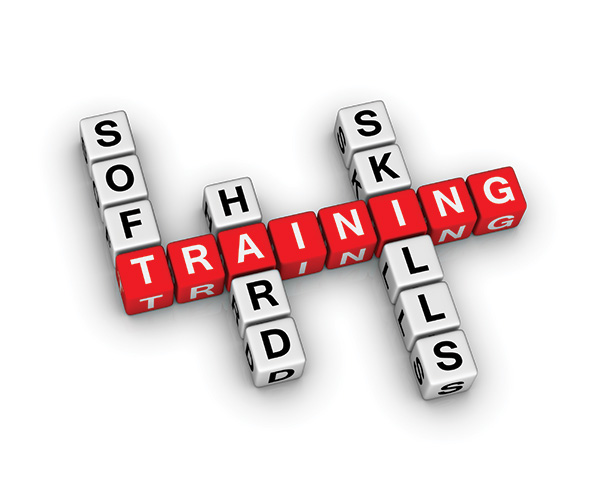
There are both hard and soft skills. Some skills that were once important are no longer useful and new ones are continually emerging and demand acquisition because they have become essential to growth.
Soft skills are often overlooked but paramount in getting ahead at work. Being able to recognize and manage your own emotions, and your relationships with others is key. Playing well with others is not only essential to workers; if you run your own business, it allows you to evoke better results from employees.
Historically, the most basic of these soft skills were learned naturally as a part of growing up. We learned by communicating face-to-face with parents; then we learned in the sand box: then school: then the larger world. Today, because so much human interaction is done through technology, and so much focus has been lost to staring at a screen, younger people don’t have the requisite experience with face-to-face communication. They must put effort in honing those ‘people reading’ skills and many do.
You might not know when opportunity will knock, but you can position yourself to take advantage when it shows up. Communication skills both aural, oral and written must be constantly upgraded. You can learn in school or on your own. Listening skills are barely taught but are so valuable. You’d be surprised how much insight one can gain by observing. Reading well-written books may not only improve your vocabulary but your sentence phrasing as well.
Effective speaking can deliver better results on interviews and on the job. Toastmasters International is a non-profit devoted to improving speaking skills. They have groups everywhere. Those considering an upgrade in verbal communication might consider familiarizing themselves with the Toastmasters mission. Find a group that fits your style and be prepared to learn and enjoy at the same time.
Anything is possible if you have a growth mindset and can commit to being a life-long learner. Our brains have a wonderful capacity for passive learning. We can pick up skills painlessly through association. We are affected by our surroundings so we can improve by exposing ourselves to excellent influences. Take advantage.
One cannot speak about skills without mentioning technology. Do not underestimate the continual unfolding opportunities in technology and not just in e-commerce. A World Economic Forum report says that by 2025 time spent on tasks by machines and humans will be equal but that 97 million jobs will be created globally. To remain relevant in an automated world, employees will need to learn new skills to suit the new technological landscape.
There are some serious skill-building initiatives in the technology sector being promoted by Microsoft, Amazon and Google. Some are cost free to participants, but you have to be seriously committed. Others have a modest cost. The American business magazine, Fast Company, has described these initiatives recently: “Microsoft Corp said this year that it aims to place 50,000 people in jobs that require technology skills as part of a broader push being undertaken with its professional networking website LinkedIn to help workers affected by the coronavirus pandemic move into new fields.” LinkedIn made free many of its digital skills training courses, covering topics such as software development, data analysis and financial analysis. LinkedIn announced it will extend the free courses until the end of this year.” Microsoft and LinkedIn had aimed to get 25 million people to try the courses and that the figure has already hit 30.7 million, most from the United States but with many from almost every other part of the world.”
Investigate Amazon’s Tech Academy. “The program, part of Amazon’s $700 million investment in upskilling, is open to any nontechnical employee (such as truck drivers and warehouse maintenance staff). It provides intensive reskilling with the goal of hiring students as Amazon software developers. Participants have gone on to be successful members of Amazon’s technical teams.”
Fast Company reiterates what we have read for the past few years. “Even before the pandemic, young developers in particular utilized nontraditional learning: In early 2020, 71% of Gen Z developers reported using YouTube to learn new coding skills. Now, coding boot camps are reporting historic enrollment surges.”
Google has partnered with Coursera, the online learning platform, to offer Google Career Certificates through self-paced courses in data analytics, project management, UX Design and IT Support. The program charges a modest $40 per month and is self-paced so that depending on your personal timeline it can be a low cost skill builder with a great return on your investment.
I’m a believer that you must strive to thrive. Get ready to bloom by adding new fuel to your career journey. Information about these programs is easily accessible. Look online, read about these programs and of course, contact PROPEL for guidance and support.
BEFORE THE 1900’S, PEOPLE USED VEGETABLE STARCH AND APPLE CIDER VINEGAR TO CLEANSE THEIR SCALP AND REMOVE EXCESS OIL. IN 1930, JOHN BRECK INTRODUCED THE FIRST LIQUID SHAMPOO IN THE US. IT CONTAINED 14 INGREDIENTS, COMPARED TO 24 IN MOST SHAMPOOS TODAY.
Breck shampoo became extremely popular in the following decades, due to advertisements that featured up-and-coming celebrities like Brooke Shields, Christie Brinkley, and Cybill Shepherd.
The main message of these campaigns was you must shampoo multiple times a week if you want to have healthy hair. Other companies began to jump on the bandwagon, and the shampoo industry exploded. Shampoo is the most basic part of your hair routine, and can be the most complicated. If you identify your hair’s most pressing needs and understand the ingredients that best address them, you will be lead to the perfect formula for you.
WHAT IS SHAMPOO AND HOW DOES IT WORK?
Today, shampoo is usually a liquid. Your typical formula contains surfactants—like sodium lauryl sulfate or sodium laureth sulfate—which emulsify oil and dirt on the hair and scalp. The loosened debris is then swept away when the hair is rinsed. Most formulas contain some kind of preservative to inhibit microbial growth, and some have fragrance to provide that fresh-from-the-salon smell.
HOW TO USE SHAMPOO CORRECTLY
Believe it or not, there is a right and wrong way to shampoo your hair. In order to get the most out of your wash, first drench hair with water. The wetter the hair, the less shampoo you will need. Take about a tablespoon of shampoo into your hands and begin applying it to your scalp. Concentrate your shampoo on your scalp because that is where most oil is produced and most noticeable. Lightly wash through the rest of your hair. Avoid piling hair on top of your head when lathering up—you’ll create tangles. Simply massage in an up and down or side to side motion with the tips of your fingers. Once your scalp is scrubbed, rinse thoroughly. If you hold a section of your hair it should squeak a little when you run your fingers over it. Chemists at TRI Princeton found that rinsing with cold water did not increase sheen. If you use conditioner, apply a little on the ends and continue rinsing.
WHAT TYPE OF SHAMPOO SHOULD YOU USE?
Choose your shampoo according to your hair type: normal, oily, dry, or silky. Some shampoos specialize in removing dandruff, others can help straighten hair, while other shampoos create volume. Only a small group need to shampoo daily, those with fine hair, someone that exercises a lot, or someone with very oily hair. The thicker your hair, the less you need to shampoo.
TYPES OF SHAMPOO
• Regular: Designed for those who don’t have any specific needs. • Clarifying: Removes stubborn buildup, do not use when dyeing hair • Anti-Breakage • Purifying • Dry • Moisturizing • Volumizing • Dandruff
That said, there are eight billion shampoos on the market and sifting through to find your match is a massive undertaking.
INGREDIENTS TO AVOID IN YOUR SHAMPOO AND CONDITIONER
• Sulfates: Help a shampoo strip oil and dirt away from the hair. However, the hair needs to retain a bit of its natural moisture and oils to stay healthy. Sulfates may strip away too much moisture, leaving the hair dry and unhealthy and the scalp dry and prone to irritation. • Parabens • Polyethylene Glycol • Formaldehyde • Synthentic Fragrances And Colors • Dimethicone • Retinyl Palmitrate
The most popular shampoo
Head & Shoulders is the most sold shampoo in the world. They sell 29 million bottles per year!
THE TOP 3 SHAMPOOS OF 2021 FOR ALL HAIR TYPES
• Pureology Strength Cure Strengthening Shampoo • Paul Mitchell Lemon Sage Thickening Shampoo • L’Oreal Paris Frizz-Defy Shampoo.
DO YOU HAVE INFREQUENT AND IRREGULAR PERIODS OR EXCESS FACIAL OR BODY HAIR? IF SO, YOU MAY BE SUFFERING FROM POLYCYSTIC OVARY SYNDROME (PCOS), WHICH IS A HORMONAL DISORDER COMMON AMONG WOMEN OF REPRODUCTIVE AGE, ALTHOUGH IT CAN BEGIN IN PUBERTY AT THE TIME OF THE FIRST MENSTRUAL PERIOD.
A diagnosis of PCOS is made when you experience at least two of the following symptoms:
• Irregular periods. Infrequent, irregular or prolonged menstrual cycles are the most common sign of PCOS. For example, you might have fewer than nine periods a year, more than 35 days between periods and abnormally heavy periods. • Excess androgen. Elevated levels of male hormones may result in physical signs, such as excess facial and body hair, and occasionally severe acne and male-pattern baldness. • Polycystic ovaries. Your ovaries might be enlarged and contain follicles that surround the eggs. As a result, the ovaries might fail to function regularly. Obesity is associated with PCOS and can worsen complications of the disorder.
See your doctor if you have concerns about your menstrual cycle, if you’re experiencing infertility, or excess facial hair. Take your daughter to the doctor if she is experiencing irregular periods followed by heavy ones, because PCOS is often overlooked in teens.
The exact cause of PCOS is not known. However, insulin resistance is a key feature of the disorder. Insulin is the hormone produced in the pancreas that allows cells to use sugar, your body’s primary energy supply. If your cells become resistant to the action of insulin, then your blood sugar levels can rise which can cause the body to produce more insulin. Excess insulin can increase androgen production, causing difficulty with ovulation. Low grade inflammation also plays a part. This term is used to describe white blood cells’ production of substances to fight infection. Research has shown that women with PCOS have a type of low-grade inflammation that stimulates polycystic ovaries to produce androgens, which can lead to heart and blood vessel problems.
Complications
PCOS can cause several complications including infertility, gestational diabetes, pregnancy-induced high blood pressure, miscarriage or premature birth, and nonalcoholic steatohepatitis—[a severe liver inflammation caused by fat accumulation in the liver.
Other complications high blood pressure, high blood sugar, and abnormal cholesterol or triglyceride levels that significantly increase one’s risk of cardiovascular disease, Type 2 diabetes or prediabetes, sleep apnea, depression, anxiety and eating disorder, abnormal or uterine bleeding, or cancer of the uterine lining (endometrial cancer). Obesity is associated with PCOS and can worsen complications of the disorder.
To help decrease the effects of PCOS
• Maintain a healthy weight. Weight loss can reduce insulin and androgen levels and may restore ovulation. • Be aware of carbohydrates. Low-fat, high-carbohydrate diets might increase insulin levels. • Be active. Exercise helps lower blood sugar levels. Do aerobic exercise and weight training. Yoga can improve insulin sensitivity. • Eat high-fiber vegetables with every meal. Broccoli, kale, and spinach, can help combat insulin resistance and reduce inflammation. • Eat lean protein at each meal. • Sleep eight hours a night. • Learn to meditate. • Limit dairy to 2 servings day.
The goal of treatment for PCOS is to decrease symptoms, improve fertility and prevent health risks. For some medication is needed to improve metabolic and reproductive parameters. Early detection of PCOS and treatment is essential. It can prevent excess weight gain, prevent infertility and reduce risks of chronic disease. Weight loss or prevention of weight gain is a main concern in treatment
If you need help finding the right doctor, with nutrition or anything else, contact A-TIME. You can visit their website at www.atime.org.
PANDEMIC OR NOT, DSN KEEPS RAISING THE BAR, PROVIDING UNIQUE ACTIVITIES FOR OUR CHILDREN. STUDIES SHOW THAT KARATE STRENGTHENS THE ENTIRE BODY, IMPROVES COORDINATION, QUICKENS REFLEXES, BUILDS STAMINA AND INCREASES ONE’S OVERALL HEALTH. WITH THAT IN MIND, DSN STRUCK A PARTNERSHIP WITH A PROFESSIONAL KARATE ORGANIZATION TO BRING KARATE INTO THE DSN COMMUNITY CENTER.
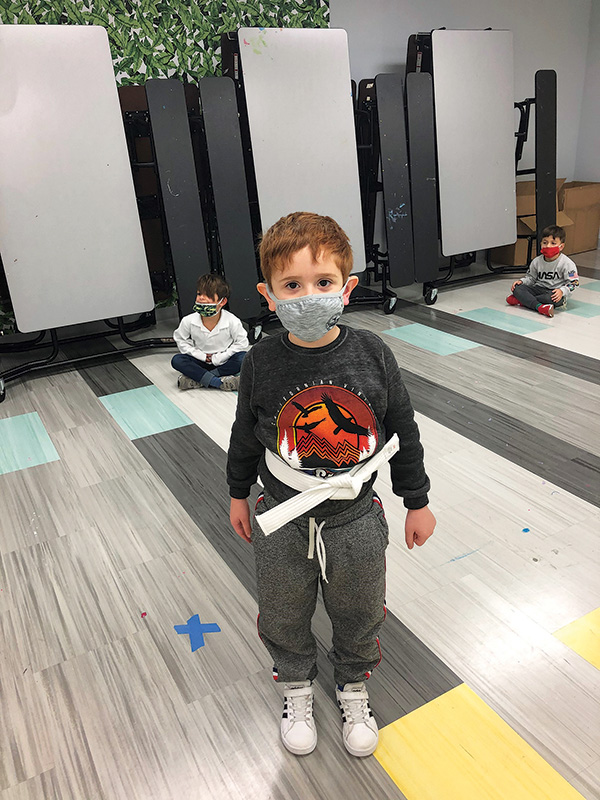
Joy Assoulin, one participant’s mother, gushed “Karate at DSN is truly remarkable. My son Jared learned the basic fundamentals and even earned a white belt! I was so proud. He was so excited for every Tuesday’s karate class and is now very excited for other future classes”.
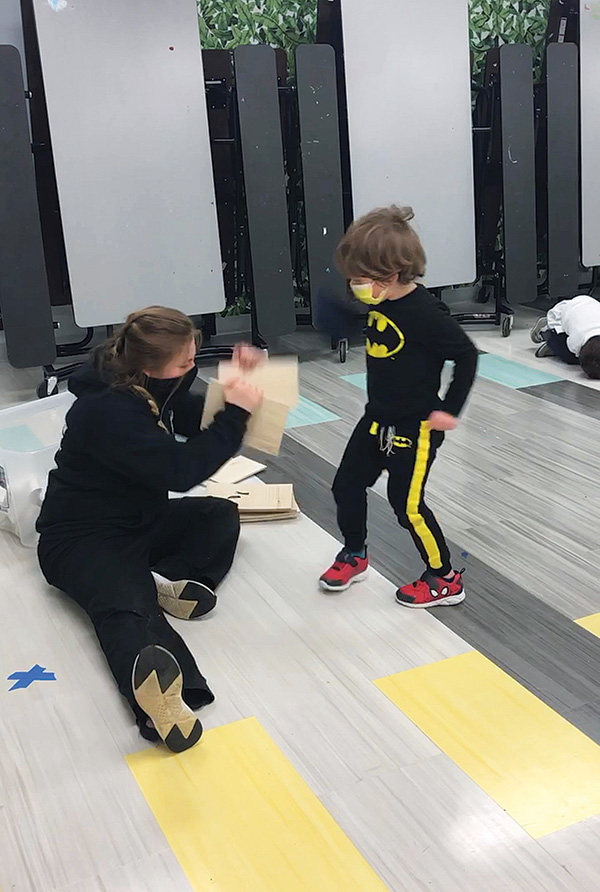
From November through March, 15 children in grades Pre-k through 4, came to DSN weekly to learn karate. Each week, they focused on a specific skill as well as a power word. One week, for example, the children learned the skill of balance. They learned that balance means to keep something or someone in a steady position, so they do not fall. They learned that when they do their martial arts moves, they must focus on good balance so they are strong and steady. They learned different types of kicks and combinations that were demonstrated at their final graduation at the end of the semester.
Frieda Shammah, DSN’s Youth Program Director, stated “There was a noticeable difference in the children’s ability from the first day to the last! On top of that, they were always so excited each week to walk through DSN’s doors for their program.”
Every single child passed all of the planned stages and received their white belt, which represents the very beginning of martial arts growth, the first stage of controlling both their minds and bodies with a clean slate and willingness to learn. One week, a power word was confidence. Confidence is when one believes in themselves and knows that they can do something, which is not only a karate term but, more importantly, a life lesson! The more the children believed in themselves, the more they excelled.
Sammy Sitt, DSN’s Executive Director, explained why the organization has made karate lessons a priority. “Karate provides our youth with lifelong lessons of self-defense and discipline while instilling the important values of confidence and leadership. It makes us proud knowing we are preparing the next generation of leaders with the qualities for success.”
REBECCA HARARY IS WELL KNOWN IN THE JEWISH COMMUNITY AS AN ACTIVIST, A MOVER AND SHAKER; SOMEONE WHO GETS THINGS DONE. SHE IS A NATURAL LEADER, WELL SPOKEN, PERSONABLE, EASY TO GET ALONG WITH, AND ALWAYS LOOKS ON THE POSITIVE SIDE. HER DEMEANOR MAKES YOU WANT TO HUG HER, TO SHARE YOUR WORRIES, TO BE HER FRIEND. SHE MAKES THOSE AROUND HER WHO ARE STRESSED FEEL RELAXED.
Over the past few decades, Rebecca’s volunteer contributions to the community have been unrelenting and the results have helped countless families in ways we cannot imagine. Children with learning disabilities and challenges educated in two different community schools, marriages stabilized, and hundreds of thousands of dollars saved in education and tuition assistance costs. From the formation of Imagine Academy, Gesher Yehuda’s Yeshiva Prep High School, and Propel Network, Rebecca had the idea, the stamina and the determination to make each dream become a reality. And it didn’t stop there. She had her own event planning business, raised six accomplished children and ran for elected office, all with her supportive husband Joe Harary at her side. Her mother Joyce Salame has always been her role model; a woman who went to work to help her own family.
“I like to look for things that need to happen—voids— and I like to fill them,” said Rebecca in an interview. “My mother put her shoulder to the wheel, so to speak, to help our family, and I learned from her.” Rebecca serves on at least four boards of directors.
The oldest of eight children growing up in Fort Lauderdale, Rebecca Salame Harary helped her mother, Joyce (Hanan) Salame raise the younger siblings, as her father, Robert Salame A”H, worked in retail. Her father was an excellent businessman, and he taught Rebecca a lot about the art of selling, and how to form trusting relationships with clients. Her mother is a take charge woman who, among many other things, took an H&R Block class in tax prep to help her family financially. A year later, Joyce was running several H&R Block offices on the East Coast of Florida. When the family moved to Brooklyn in 1981, Joyce had the family’s eighth child, and then eventually went back to school. She earned a teaching degree as well as two masters’ degrees in administration and became a full-time English teacher and then assistant principal at Yeshivah of Flatbush for 25 years.
After being married a decade and having four children, Rebecca returned to school and graduated FIT with a degree in Display and Exhibit Design. She then started her own successful event planning business—Rebecca Designs. She later applied the business lessons learned from running Rebecca Designs with 30 full time employees to community issues. After shuttering the business in 2000, when she was expecting her sixth child, she eventually became President of the Ladies Auxiliary at Yeshivah of Flatbush, raising a record $300,000 in 2003, and taught at FIT as an Adjunct Professor in the Display and Exhibit Design Department.
Rebecca’s cousin has a child with autism and was going through a difficult time. Rebecca learned there were several other community families in the same situation, each with a child in a different school, with one paying as much as $100,000 a year for their child, with no insurance, and no Jewish education attached.
Having a child with a disability was hush-hush, a stigma, and families were afraid to be public about it. A support group of several families were meeting monthly, and Rebecca visited the group. She listened to them and suggested they start their own school for autism for community families. After forming a board of directors with four other community couples, a summer fundraiser raised over $1 million. Imagine Academy for Autism opened by September, 2004 in Brooklyn with 10 children and a waiting list of 30 more. Teaching the children in a Jewish environment, the school has become a national model for educating children on the autism spectrum, merging two popular schools of thought about educating children with autism into one school. Today, the school has more than 70 children enrolled. The building where the school is located in Brooklyn was a former condo building, and two apartments were left to teach the children life skills.
As if that wasn’t enough, Rebecca observed that there were many children in the community going into high school with milder learning challenges who were not succeeding in the typical yeshivah classroom. These children needed more support than the yeshivot could provide. Gesher Yehuda Elementary School, which was founded in 1993 by Jack and Claudie Setton to help children with mild learning challenges, with the goal of having the students return to the regular education setting, was the perfect lead to form a new community high school.
Together with Jack Setton, Rebecca founded Yeshiva Prep High School for students who needed additional academic support. The school opened in 2005 to help those students aging out of the K to 8 schools who were not yet ready to attend a high school. An agreement with Yeshivah of Flatbush High School allows Yeshiva Prep students to participate in non-academic and social activities such as morning prayers, Shabbatons, plays, gym, computer classes and more. It is mutually beneficial for Yeshivah of Flatbush, as the yeshivah may send a child to Yeshiva Prep High School for support in a particular subject.
Feeling she wanted to learn more about nonprofit management, Rebecca sought and earned a Master’s Degree from Columbia University in Nonprofit and Business Management in 2016; a degree she felt she needed when she took on the role as the founding Executive Director of the Moise Safra Community Center in Manhattan in 2012. The idea for the community center germinated while Rebecca worked as Director of Programming under Rabbi Dr. Elie Abadie at the Edmond J. Safra Synagogue in 2010. As the Upper East Side community grew with more and more Sephardic families, they needed a school and community center of their own.
As the economic crisis grew, and yeshivah tuition rose, many community families could no longer rely on one income. The number of families on tuition assistance rose, according to Project Education, to nearly 50%. It was an unsustainable situation. Women needed to contribute to their household income.
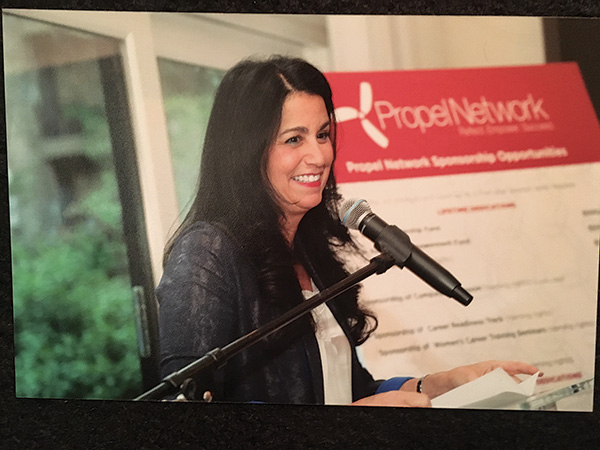
After Rebecca received hundreds of calls from women who desperately needed to work but had no career training or computer skills, she realized the community needed a place for women to gain training and marketable skills. These women needed jobs, to earn money, and the ability to contribute to the household. No one was helping them. Many women didn’t even know how to write up a resumé. Seeing the need, Rebecca wrote a business plan, and together with Ezra S. Ashkenazi, she found a space, and identified major donors to launch PROPEL Network in 2015.
The board Rebecca recruited asked her to be its first Executive Director. She hired life coaches and other professionals. Today, with co-Executive Directors Alissa Shams and Randi Eisenstein, the organization gives computer classes, coaching, resume writing, office skills and many other types of skills training. Propel Network pays for women to receive training in marketable careers such as nursing, graphic design, culinary arts, teaching, and a variety of skills. The organization helps our community women in every way possible while they are in school and receiving their certification and degrees in their chosen career paths.
By being independent and able to earn an income, many of these families have been able to reduce or even eliminate the dependency on other community charities, such as the Sephardic Food Fund, Sephardic Bikur Holim, and yeshivah tuition assistance. Financial issues can have a huge impact and place enormous stress on marriages, and the additional income has helped to save many. Women who have become PROPEL Network clients have seen their self-esteem restored as they become self-reliant and able to proudly contribute financially to their household budgets.
“We wanted to give these women meaningful and practical careers so their families were not entirely dependent on one income,” said Rebecca. “Raising children is a critical and important job of course, and we can do other constructive things as well. The culture in the community has changed and PROPEL has helped that cultural shift away from a man-centered society. Today, women can pull their weight and share in meeting the financial demands of the family.” By helping to train women to enter the workforce, PROPEL has helped women bring in almost $10 million of fresh revenue into the community. More than 700 community women have already received training, and are excelling in their new careers, while never taking their eyes off of their children and families.
Rebecca is certainly a woman to admire as she goes from one project to another. She attributes much of her success to her husband Joseph Harary, an attorney and CEO of a publicly traded company. “My husband has been supportive every step of the way and I could not have accomplished anything without him.”
The couple met in the Deal Casino. Joe was raised in West Palm Beach. Being raised with Ashkenazic friends and neighbors, they both understood the importance of higher education. “In Florida, our parent’s friends were all doctors and lawyers,” she said. “Education was first and foremost in ensuring a solid future.”
They have also been active politically. Rebecca ran for office in New York City twice and recently formed a non-partisan pollical action committee named CASEPAC (Combat Anti-Semitism Everywhere) to fight anti-Semitism in America, and help federal candidates, who want to support legislation that will fight Jew hatred, get elected to office. She is also concerned about security issues in our own community as anti-Semitism rises.
Joe and Rebecca have passed on their values to their six children, all of whom are college graduates with careers as a teacher, a chef, a pediatric nurse practitioner, a guidance counselor, business men and women. “They understand that there is joy in working in a meaningful career. They also understand that working enables us to enjoy the fun things in life,” said Rebecca.
Rebecca is not only a volunteer; she is committed to solving problems and helping those around her in any way she can. Maimonides listed eight levels of tzedakah (acts of loving kindness) in the Mishneh Torah. The most important level is one where the recipient can be self-reliant. It is often referred to with the phrase “Give a man a fish and you feed him for a day; Teach a man to fish and you will feed him for a lifetime.” Rebecca has fulfilled this level of tzedakah multiple times.
A genealogist and historian, Sarina Roffé is the author of Branching Out from Sepharad (Sephardic Heritage Project, 2017), Backyard Kitchen: The Main Course, Backyard Kitchen: Mediterranean Salads, and the cooking app, Sarina’s Sephardic Cuisine. Editor of awardwinning journal Dorot for the JGS of NY, Sarina holds a BA in Journalism, and MA in Jewish Studies and an MBA. She is President of the Sephardic Heritage Project, Co-Chair of the Brooklyn Jewish Historical Initiative and Chair of the Sephardic Research Division of JewishGen.
My grandmother always told me that it’s a man’s world. She had an old Arabic saying to go with it, but I think it’s better if I don’t share that here. You can use your imagination. Going back thousands of years we can recall that men were permitted to marry over and over again, while the women were not. Still, the Torah was infamously progressive at the same time, allowing for mistakes, regrets and the breaking of the marriage contract when necessary. In the book of Devarim, chapter 24, the rules for divorce are laid out clearly. It is available to ailing couples, but because the responsibilities lie in the man’s hands, so do the logistics and power. While the laws still stand, and my grandmother may have been right in her time, today women are enlightened and empowered. We live in an era of total transparency, forcing men to be held accountable. Before we think it, it is out there on the Internet for all to see. Our girls and women are no longer alone.
I had never heard the word “Aguna” before, but as I type, the “aguna crisis,” as it is being referred to, is literally blowing up all over Brooklyn, Deal, Lakewood, Monsey, Boston, Denver and even as far away as Los Angeles and London. In order to explain though, I’ll have to start from the beginning.
A halachic Jewish divorce is called a “get.” A get must be given of the husband’s free will; however, consent of the wife is not biblically mandated. The laws, stemming from the fact that men were permitted many wives, only provide for a divorce initiated by the husband. He either must release her, or be dead, in order for her to be free. While today our religion does not allow polygamy, the ancient laws regarding divorce still stand. While the wife has the right to sue for divorce in a rabbinical court, sometimes a man will completely refuse to grant it, which leaves his wife with no possibility of remarriage within Orthodox Judaism. She remains sanctified to this man and “chained” to the marriage, like an anchor to its ship. This woman is referred to as an aguna.
Free Chava
Just a few weeks ago, I came across a few Instagram posts saying, “Free Chava.” Inquiring further, I found out that Chava was a fourth-grade teacher at Flatbush. She had been trying to get her husband to give her a get for 8 years. He disappeared completely a few months ago from her and her children’s lives, literally holding her hostage, by not giving her a Jewish divorce. Scratching my head, I could not fathom what she was going through, or why he would do this to her. Can’t she go to the rabbis, I kept thinking. Where are her family, her friends—why aren’t they helping her? Little did I know, she had tried it all, and done it all, again, again, and again.
Rumor has it that in Israel, the rabbinate may confiscate passports, put get-refusers in prison, and even go so far as showing a get-refuser an unmarked grave, implying it could be his, if he refuses to comply. In London, it is illegal for a man to refuse his wife a get. Here in America, with clear separation of church and state, the aguna problem is far more difficult to solve. Divorcing parties are not automatically subjected to a beit din’s jurisdiction, and furthermore, Orthodox rabbis have pointed to many years of rabbinical sources stating that any coercion can invalidate a get, except in the most extreme of cases. Here in the United States a get-refuser may be ostracized by his community in an effort to force a get, but even these actions are difficult to enforce. Take the example of Chava’s husband, who moved to Los Angeles, where he was unknown. There he found work as a kashrut mashgiach, (of all things!) and is often invited into people’s homes for Shabbat dinners.
Enter, Mexican Pacino
Abe Manopla is 36 years old. He moved here from Mexico City when he was 16. A true character, his friends call him Plat, short for platanos. During Covid, inspired by “Live with Lee,” and the myriad of Instagram broadcasts entertaining and uniting us during this dreadful time, Manopla started his own Instashow with various interviews and food reviews, which he called Mexican Pacino. Monday night, March 8, 2021 as I sat at dinner with my kids, I noticed his “live” popping up on my feed. Curious, I joined, just as he began interviewing a get-refuser.
“I saw a post on community news,” he explained. “It said, Free Elizabeth! And I realized, that’s my friend’s wife. I decided to get him on air, to give him a chance to explain himself. I felt for him; I had my own marital problems over the years. My wife and I had actually separated, gotten divorced, and came back together a year later, to get remarried. Just to be clear, I gave her the get on the day she asked. Since then I learned a lot about listening, giving and understanding. I didn’t have any inkling as to the can of worms I was opening.”
Since that moment, Mexican Pacino has become a true cultural phenomenon. Both a chazzan and a devoted student of Hacham Aaron Haleva and Rabbi Nahum (He gets up at 5 am every morning to go to class), Manopla has become a catalyst in a movement that has taken on a life of its own. Dalia Oziel brought Chava to the limelight, and Rabbi Eli Mansour had endorsed the first GoFundMe, which broke the stigma of silence, but Instagram put it in the hands of the people. “Together we will help the oppressed,” said Rabbi Mansour on Abe’s broadcast. Giving voice to the voiceless, Manopla is using his strength to do Hashem’s work.
Abe’s viewership has tripled, and then tripled again. He explained, “The people had heard enough; they weren’t going to stand for it. The following night Evet, another aguna came on to tell her story. She was not halachically divorced, but her husband had remarried and had three kids with his new wife! Two thousand people watched and before the end of the night, 17,000 more viewed! Between the guests and the comments, so many people were heated up and angry. They wanted to do something—and they did. When I said, “let’s rally behind them,” I meant, in spirit, but in the comments the viewers joined forces—and showed up, in front of her estranged husband’s house. East Fifth Street became mobbed with protesters. And at the same time, in Long Branch, another get-refuser’s house was surrounded as well.”
Double Down
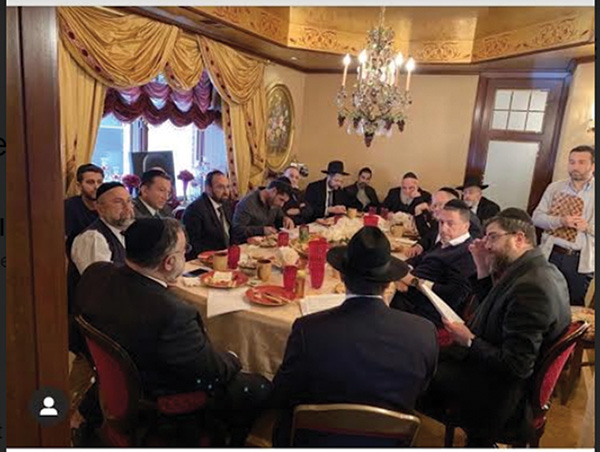
The day Harry Adjmi was released from the hospital last April after his life-threatening bout with Covid19, he celebrated and danced in the streets as we all watched on Instagram live. All his life Harry ran after mitzvot, helping people, but now he was a visibly changed man. “Double down,” he told the community. “We can do more.” This video was played and replayed, inspiring countless watchers to volunteer, donate, pray and help make this community better. Hearing the sad plight of these women, Harry could not stand by. The Mexican Pacino had lit the torch, and now Harry took over. He began inviting get-refusers to his home, together with Rabbi David Ozeri. Now the real work of getting these gets would begin. Harry explained, “We are working together, and it’s a Herculean effort, simply for one goal; for shalom in our community. Fighting a war is not the answer. Each of us has to have the desire for peace.”
The following day brought more live broadcasts, from activists, bloggers and laymen. Damaging voice notes and photos circulated. The consensus was clear. We must separate the topics. A get cannot and should not be used as leverage in a divorce. It isn’t a term of negotiations or a bargaining chip to win custody or alimony. These factors are for the civil courts to decide. If a marriage is over, the get should be given. Plain and simple. The more noise was made, the more agunot came forward. I am sure these women were ashamed at first; the secrecy is part of the problem. They didn’t want to talk badly about their spouses. They didn’t want their pictures and stories out there, subject to scrutiny; but now they saw that it was making all the difference.
Murray Betesh, a friend of Manopla and a man of faith, action, and respect gave a welcoming space to some of these victims to tell their stories. He had never done anything like this before, but now he found himself in the center of a revolution. He explained, “I was getting so many calls asking for help—and I was trying my best to do everything possible to bring people to the table. Nobody realizes how the pain and trauma a person goes through affects the families and their children. I wanted to help bring peace.” In one day, Murray raised tens of thousands of dollars for the agunot. Everybody watching felt hopeful. A year ago, the world was shutting down and a black cloud was settling in. That day, with Pesach fast approaching, it seemed that sunshine and freedom were palpable.
The Get-Busters
John Stockton and Karl Malone, NBA players, have been described as the greatest pick-and-roll combination of all time. Once the Mexican Pacino had lit the aguna fire, Harry, the go-to “closer” and friend to all community members, took over the play running. Social commenters like @TheGhettoGourmet, @LyndaLevy, @The_Divorce_Specialist and so many others joined the social media frenzy, and this phrase, “Stockton−Malone−YES!” became a symbol of the fight on every live broadcast. These were the Get-Busters, and we had all become a part of their team, fighting for the right; an entire community of players creating change. While “taking it to the streets” is not usually our way, many rabbis spoke out in support of the rallies, because they saw a partnership happening. Sometimes the people can accomplish things that the rabbis want to, but struggle to act on, and achieve peacefully; Rabbi Raymond Harari explained, “I would rather have a community of people who are really upset about injustice and act on it, than a community who say, please rabbis take care of this. We are teaching the people to feel, and that’s not a bad thing.”
Sari Dana, a life coach teaching a Zen approach to young girls and women’s empowerment described the night of the first rally, “I had no idea what was going on, but it was around the corner from me, and I could literally hear the chanting from my bedroom; ‘No Get—No Peace!’ I walked over and it was surreal. I felt it was important to show up, and I’m happy that we are finally using loud voices for what used to be a silent issue.” Murray played a big part in making these rallies happen. He gave agunot like Esther the courage to get on air and be heard, validated and recognized for the first time in so long.
Lynda Levy, a vibrant community member, became involved in the social media storm. She explained, “At that first rally there was just so much craziness. People were outraged. I started to broadcast live on Instagram directly from there and the viewers were just in awe. They were angry! Instagram became like a lifeline and they were glued to their phones, for days. These were real atrocities and it gave people a direct opportunity to connect and make change. I think it gave us all a sense of unity. It was sad, but really gratifying at the same time.“
Maybe the community outrage shamed the get-refusers, or maybe it put pressure on their families to make a move. Either way, standing united, they helped accomplish in a few days what the rabbis had been trying to do for many, many years. On Thursday, March 11th, after 5 years of waiting and fighting, Elizabeth got her halachic get in Harry and Alice Adjmi’s home, surrounded by a roomful of our most dedicated rabbis and community leaders. Rabbi Mansour texted Pacino the code word, “g’mor,” meaning “done,” and again, we watched the celebration on Instagram in real time as the power of the people prevailed. Still, we have questions. Why did it take so long? Where were the rabbis? Why is it that we didn’t hear about these cases on an individual or collective basis until two weeks ago? And finally, why, oh why were there only men around the table that night?
Rabbi Shlomo Farhi answered the last question on one of Murray’s live broadcasts, agreeing that there should be women at the table, “but that’s just the first table,” he said. The rabbis had to finish what they started, and for the record, Alice was there. As for the decades-long delays, Harry explained that the answer is just not good enough, “Don’t you think if there was something they could’ve done for these women 5, 10 or 15 years ago, they would have? The rabbis have always cared about women that are stuck. They have spent thousands of hours on some cases, but the truth is, they just don’t have the power to do what is needed to be done. They were following Jewish law, but those laws don’t give them the authority or ability to force the hands of these men.” So now, Elizabeth was free, but there were so many more still chained. Evet, Chava, Michelle, Nechama, and Rikki, and so many others—now with faces and stories behind them.
Meanwhile, the group of get-refusers coach each other on how to extort money, how to deal with the rabbis and how to evade enforcement of the laws. The common denominator—unfortunately too many of the wives are battered, and too many of these men have a flaw, a disturbance, or significant mental health issues. @Project soulmate says, “Narcissists thrive on power and putting others down—in their minds they’re right, even when they’re wrong.”
Harry added, “Nobody wants to air their dirty laundry. None of us like the bullhorns or the rallies but if it pushes that man or his family a little closer to the table, I’m okay with it. You would think they would want to move on with their lives, get remarried, and find happiness, but they are just not thinking clearly.” Many of them live in their parents’ basements, surrounded by enablers. Others just run away. Some of them are too smart for their own good. Some think they’re going to get a better deal. Others think they’re going to get their wife back. Still others are simply looking for attention; they may not have money but withholding this get gives them power. They are not only holding on to the get, they are holding on to the anger, resentment and pain that fuel their actions. Perhaps, once their energies are redirected, they can heal, and be free of that burden, too. Rabbi Eli Mansour reminds us that withholding is just another form of abuse, and is a sign that there was surely abuse present in the marriage. That is the most frightening of all. Over three days’ time, Elizabeth, Evet, and Michelle have each received their get. Evet was waiting 17 years. Collectively, they have waited almost 30 years for their freedom. Alyssa Shams, from the organization PROPEL, said, “People are calling this a revolution, but to me it is an evolution. To see women railing against injustice gives me hope. This is only the beginning.” Hopefully, by the time this article is printed, there will be more women freed. There are still too many agunot waiting, but change is here, and the “sweep it under the rug” mentality is long gone. It seems that the social media coverage is equal to the “lashings” that get-refusers received in days of old.
Rabbi Ozeri explained, “We are living in historical times. No community has ever seen anything like this, where a number of gitin have been given to agunot in such a short time. Every man who is holding back a get from his wife should take heed and realize that this is the time to come forward and do the right thing. The community has no more patience for men who refuse to give their wife a get. Our way is a way of pleasantness and peace. No one is looking to fight, and no one is looking for protests. It is time to do the right thing.” To the refusers, he says, “come forward, speak up and we will help you through this agonizing time in your life.”
A Rock and a Hard place
Nothing is better than a beautiful marriage, and the Torah teaches us how to find that, but sometimes the world is cruel. I have heard the mikveh ladies whispering about the bruises they’ve seen, but often there is nothing they can do about it. The women stay silent; what will the neighbors think? What will my mother think? And the worst one, maybe I deserved it. The rabbis often encourage women to go back and try to make the marriage work, again and again. They do, because they are G-d fearing, religious women. Their stomachs are in knots—is tonight the night he will beat me? Will he berate me in front of my children? They practice the answers, telling themselves that they will fight back this time. They blame themselves. They worry about the effects a divorce will have on their kids. They feel lost and alone, even when family and friends are doing their best. “If I were the daughter of a rabbi or the daughter of a prominent community member, I would not still be waiting for my get,” one aguna said to me. This is sad, but I don’t believe it is true. No matter who you are, it is very hard to force a man’s hand. Jewish law states that he must give the get willingly. This takes much finesse.
Our sources tell us that the mizbaeach cries when a get is given, but sometimes these are tears of happiness. It is said that Hashem has spent every day of the last 5781 years choosing partners and pairing each of us off. He does not want even one of his children to ever be in pain, or feel alone.
Alice Adjmi has been in the room as Harry and Rabbi David Ozeri try to reason with these men. She reveals, “You have no idea how challenging it is. People ask me, why the pat on the back for this heartless man who kept a woman chained for more than a decade? Why the applause when he finally does the right thing? The answer is, he is a ba’al teshuva (someone who has done wrong, regretted his behavior, and then did the right thing). It’s a delicate balance. We are looking to the future, not at this one husband, or this one marriage. These men, and anyone you are trying to lead on a better path, need positive reinforcement. Nobody’s all good, or all bad. We must give them positivity. We want them to be happy and to go on with their lives.”
Harry continued, “As these cases have overwhelmed me in the last two weeks, I’ve seen that almost none of the moms said that these men are bad fathers. Unless he deserves to be incarcerated, he should be allowed to be with his children. On both sides, the get cannot be a bargaining tool. It’s just not right. After her son finally signed the get, one mom said to me, ‘It’s the first good night’s sleep I’ve had in five years.’ These men and their families are dueling within themselves. We are trying to give them a path to clarity.”
Harry is angry. He is angry that both our community and the Ashkenaz communities allowed this to go on for so long. “There’s frustration, but we all have to calm down. It’s a process; and it takes time. Push the men our way and we can then hope that the balance of what has to happen, can happen, and will happen.” Harry is also well aware that the success we are seeing right now is not accidental. “We are each doing our part, but there is a divine presence at work here; we all must understand this. After all these years, why now? Hashem is giving us the strength to get through these cases, one by one. As for the men who are coming forward, success is contagious, and everybody wants to get in bed with the winners. They are seeing that it’s not that painful; you can do this, you can be a hero. We have to do every single thing we can to set these women free and get their lives back. Everyone deserves to be happy.”
Solutions
Evet is a newcomer; her family arrived in America in 1992. She stated, “When I told my parents I wanted a divorce, they said, ‘what’s a divorce?’” Seventeen years waiting for her get, today she is a thriving business owner of a lighting store called Light Lab Designs, and encourages other women to stay strong. “I can’t be angry at the world. It isn’t productive and you can’t live your life that way. You’ll only end up raising angry children. My advice: don’t allow them into the mess. Try to be positive. I didn’t slip through the cracks—I called the rabbis every day for ten years. Every Shabbat I’d ask, ‘any good news, rabbi, so that I can light my candles?’ Rabbi Ozeri, Rabbi Saul Maslaton, and others, they really tried. Marvin Azrak, A”H was incredible. He was spearheading a movement to help agunot before he passed, and put so many hours into my case. I went to 127 beit dins, from most lenient to most conservative. I fought for my freedom for years. I have seven filing cabinets filled with beit din papers in my basement. I would have loved if there was an edict or a way of enforcing the law, but I cannot look back—only forward.”
Evet is a role model, and a symbol of hope and strength for us. If she can get through this, anyone can. Looking forward, we can only speculate. Our rabbis are clear, it is a commandment for these men to free their wives if the marriage is over. Back in the day, married men took this mitzvah so seriously, that if they went off to war they would sign the get and leave it with the rabbi, just in case they went missing. They are sinning every day that they deny their wives the get, but even as the rabbis work tirelessly to find answers, the solution is complicated. So how do we protect our children? How do we prevent this from happening even one more time?
Rabbi Raymond Harari and many others go by the RCA Beit din of America prenup, which provides a fee of $150 dollars a day, paid to the wife every day from the time she asks for the get. This amounts to over $50 thousand a year, and can be enforced in a court of law. Still, if the husband is bitter, hostile, or broke, as is often the case, he is not paying alimony, child support, or this fee. Can we put a time limit in the prenup on giving the get? Maybe this is the answer. And still there is a stigma surrounding the prenup in the first place; number one, isn’t it unpleasant to be discussing divorce, when two people are starting their lives together as man and wife? Also, is it creating an easy road to divorce—something none of us want? Rabbi Harari answered with an example, “When we build a shul, we put in a sprinkler system. We hope there will never be a fire, but we still secure the mechanism to protect us in an emergency.” Number two, it is embarrassing for parents to have to ask their new son-in-law to sign a prenup. Some leaders recommend mainstreaming the prenup; taking it out of the hands of the couple and incorporating it into the marriage formalities. By signing, they are saying to their prospective spouse, I love you so much, I never want to hurt you. Others think this is still not enough. While we cannot change a law from the Torah, we can “put a fence around it.” The same way our leaders wrote an edict 70 years ago, and reaffirmed it six times since, why can’t we create an edict to address this problem?
Rabbi Shlomo Farhi, on a live broadcast, discussed several other ways to address the problem. “We shouldn’t only focus on fixing the broken marriages, but helping people get into the right marriages. To do that, we need our children to understand what marriage and love are, and what they are not. What are they expecting? Often for each of us its different, and that is when we feel let down. It’s about bending yourself to be there for your spouse. It’s about acceptance, and forgiveness. We know there will not be a ‘one size fits all’ solution here. Each case may need a task force of a rabbi, an attorney and a psychologist in tandem to chart the smartest way forward. Ultimately, we need an ironclad system that blocks every exit. It needs to be legally enforceable, and it needs to be something that everyone can sign on for. A combination of education before marriage, the best kind of prenup approved by all of our Sephardic rabbis, a get-refuser registry, and the right type of person applying the right type of pressure when problems arise. We will try to free everyone, but it’s incredibly important to understand that what works in one case, may hurt in another. One person may be the type to cave to pressure while another might dig his heels in. There is nothing more dangerous than someone who has nothing to lose.”
Rabbi Joey Haber reminds us that we have to look further back, listen to the people who are suffering more diligently, and see situations for what they are before they come to a boil. “The fact that the community is coming together on this is a good thing, but to prevent this from happening to them, our children should try to choose people for the right reasons who can be their partners and best friends. Look at the midot of the person, do they anger easily? Are they demeaning in public or when they get upset? Once married, as couples, we need better ideals. The hardest work is the time spent understanding each other. We need to try to understand and validate each other on the deepest level. We are each kings and queens. This is a wake-up call for all of us. Every husband and wife must step up their game. We need to inspire the good to be better.”
Rabbi Eli Mansour reminds us that marriage is a two-way street, and that there are two and three sides to every story. “There are also women who refuse to receive gets. They stop the father from seeing the children, they hold it as a tool to get a better settlement. It is ugly all the way around, but these cases are only a small percentage of the norm. In reality, we are implored to treasure the sanctity of marriage. We have to work harder, teach our children better, and try not to give in to the careless way people are treating marriages today.
Pauline Dushey heads an organization called Harmony; before we take the wheel of a car, we all take driving lessons—these are lessons in getting along. Of course, if the relationship is abusive on either side, and the marriage is over, a get should be given, but a contract is only worth something if its enforceable. We need to come up with a kosher halachic prenup—with endorsement from our rabbis. Our community organizations are also available; SAFE, Bikur Holim, The Shalom Task Force, ORA, which has been helping agunot for years, and many others are all here for us. It does not have to come to this.”
We are braver than we think, and stronger than we know
The fabric of our community is based around family and Torah values, and everything that is happening today is working towards that. Many women are still leading double lives; chained, but taking care of their families and doing what they have to do. Today, a transformation is happening. Photos of get-refusers are now in the lobbies of our synagogues and community support is out in full force. Is that a good thing? Is it fair to the children and families of the get-refuser? Silence and secrecy are toxic, but shame is sometimes worse than death. We are still the children of Israel; of Aram Soba. We don’t need to know the details, and we don’t need to speak lashon hara. We need to make changes in the way we behave, so this doesn’t happen anymore. We shouldn’t have to choose between justice and integrity, but this situation is forcing our hands. We can and must do better.
My phone is next to me, permanently plugged in, because what battery could possibly stay charged while watching Instagram around the clock? Thousands of viewers tune in to Mexican Pacino’s broadcast every day. People of all different ages and types are coming together to support this issue; layman, rabbis, liberal and conservative. This crisis has taken on a life of its own, using social media, finally, for good. As I go over the events of the past few weeks, my heart breaks, over and over again. While it may or may not be a man’s world, it’s beautiful to see both men and women standing up for what’s right. I can’t help but turn to the women in the Tanach who were so strong. Sara, Rivka, Rachel and Leah, Miriam, Devorah, Yael, and Esther, each changing the world in her own way. My grandmother taught me a lot, but mostly she taught me that our power comes from the inside. If we raise our sons and daughters with confidence and self-esteem, then maybe we will see less of these traumas in the future.
“The winners are the do-ers,” Harry said, so that’s who we are going to be. What can I do, I keep asking myself; how can I help? I can write, I say. As Rabbi Ozeri said, “May peace reign in our community and may we see the coming of the mashiach speedily.”
Thank you to everyone, mentioned and not mentioned, who spoke to me and allowed me to share their thoughts in this article. Whenever I write for the community, I am extremely careful with my words, but this piece was particularly volatile. What happened to these women is inexcusable. I wrote with a full heart aching for them, and I hope that I did not inadvertently hurt or insult anyone in the process. May Hashem watch over my words and our community and never allow anything like this to happen again. ~ Sophia Franco, community writer and lyricist