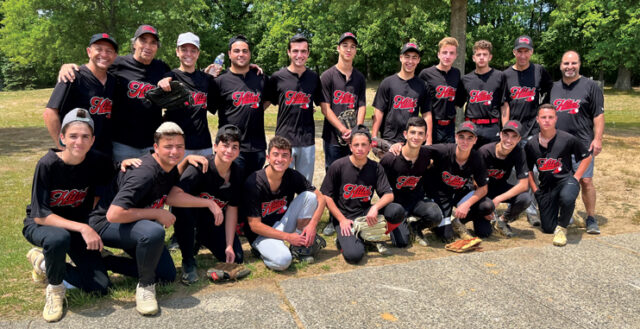
HILLEL YESHIVA HAS LEFT AN INDELIBLE MARK ON THE MYHSAL SOFTBALL LEAGUE, IMPRESSIVELY WINNING FOUR VARSITY AND TWO JV CHAMPIONSHIPS IN THE PAST DECADE!
The flourishing Deal community, with its growing passion for softball, proved to be the ideal match. Thanks to the Deal Sephardic Network (DSN), our youth softball leagues have experienced a remarkable rejuvenation, equipping players with valuable skills.
The 2023 Hillel Heat Varsity team, under the guidance of coaches Jackie Picciotto, Jackie Ashkenazi, Joey Mizrahi, and David Rishty exhibited exceptional teamwork. Their chemistry, coupled with the expertise of the coaching staff, propelled them to a flawless 7-0-1 record, securing the Western division title. The spirited “WHO WHO WHO” boys were renowned for their uplifting chants and profound respect for both teammates and opponents alike.
In the opening round of the playoffs, Hillel delivered a commanding 5-0 victory over MAOR, showcasing impeccable defense and precise pitching by Marty Cohen. The semifinals saw a fierce battle against YDE, resulting in a scoreless tie until David Seruya’s pivotal hit, with Bruce Zekaria scoring the run to claim the lead. Eddie Kassin’s double and two RBIs sealed the outcome with a 3-0 triumph. Once again, Hillel’s unshakable defense, combined with Marty Cohen’s pitching, held YDE scoreless.
On June 19, 2023, Hillel traveled out to Long Island for the championship game facing off against the reigning champions, Mesivta Ateres Yaakov (MAY), in Valley Stream, NY. Despite MAY’s formidable 21-game winning streak, Hillel emerged victorious in the finals, triumphing with a hard fought 3-1 championship win. Noah Hakim’s diving play in the sixth inning saved the game, while Elliot Stein, Stevie Shalom, and David Seruya showcased their prowess with impactful hits and defensive plays. Marty Cohen’s superb pitching, allowing only one run across three playoff games, earned him the well-deserved MVP award.
The culmination of the season was a Deal-Brooklyn High School All-Star softball challenge at the C.A.R.E. Tournament. Deal all stars won an 8-6 thriller in 14 innings and Noah Hakim of Hillel Yeshiva won MVP honors.
Hillel extends their gratitude to commissioner Seth Gordon and the MYHSAL league for a fantastic year, and look forward to next season. Go Heat!
2023 HILLEL HEAT TEAM ROSTER
PLAYERS Morris Ades Joe Assa Yosef Betesh Albert Chehebar Marty Cohen Joe Dweck Eli Franco Isaac Gindi Noah Hakim Eddie Kassin Abie Labaton Isaac Mizrahi Zvi Rishty David Seruya Stevie Shalom Charles Shayo Elliot Stein Bruce Zekaria
COACHES Jackie Picciotto Jackie Ashkenazi Joe Mizrahi David Rishty
WHILE FATHER AND SON BONDING CAN ALWAYS BE A POWERFUL EXPERIENCE, A RECENT TRIP TO ISRAEL TOOK THAT EXPERIENCE TO A WHOLE NEW LEVEL FOR A GROUP FROM BROOKLYN. THEY WERE INVITED FOR A UNIQUE GLIMPSE INTO THE WORK OF COLEL CHABAD AND ALL THEY’RE DOING FOR ISRAELI CHILDREN AND FAMILIES.
Founded in 1788, Colel Chabad is the longest continuously operating charitable organization in Israel, and is involved in a wide variety of activities to support the country’s needy populations. These activities range from direct financial support, to nutritional support, as well as a network of social programs and activities.
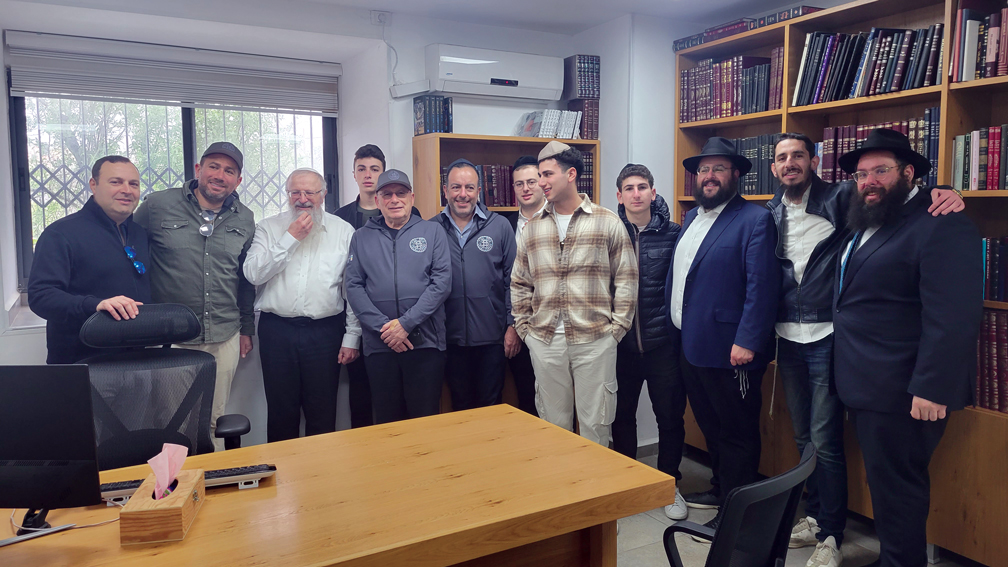
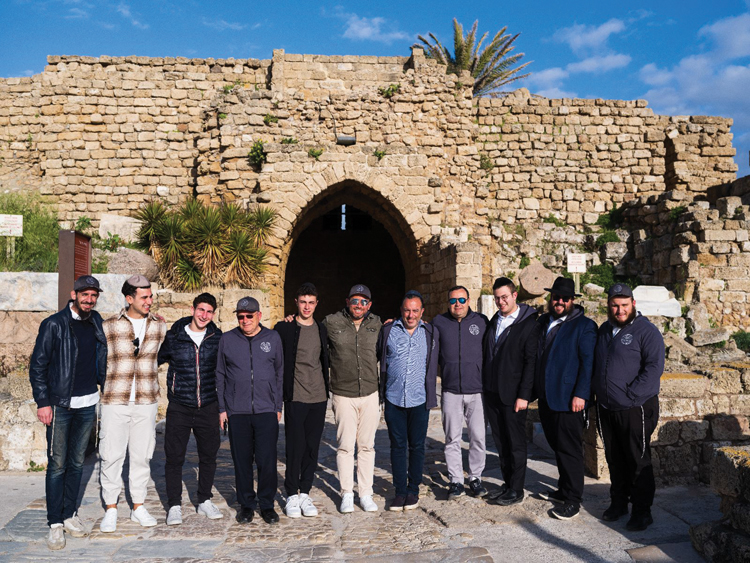
As part of the fathers-son trip, the group including Raymond Zaytoune, Henry Guindi, Nemo Gindi, Leon Guindi, Elliot Gindi, Jacob Yedid, Jacky Yedid and Joseph Guindi, had the chance to join Colel Chabad’s Bar Mitzvah For Orphans program that everyone described as an emotional highlight of their time in Israel. The bar mitzvah (a similar program is offered for bat mitzvah girls), brought over 120 boys to the kotel for their aliya l’Torah, followed by a fully-produced and catered party for family and friends. The boys have all lost a father or mother under tragic circumstances and for many of them, financial or practical considerations would mean they wouldn’t experience that rite of passage of entering into Jewish manhood that most take for granted.
“Being there to experience a bar miztvah with these boys, many of whom without a father to guide them, dance with them, or show them how to put on their new set of tefillin, was extremely emotional for the members of our group,” explained Colel Chabad’s Ephraim Duchman. “It allowed all of us to appreciate the power of Tzedakah, both financial and personal, to impact the lives of others for the better and that we have the power to make that difference in so many ways.”
Duchman said that Colel Chabad has been blessed to have a very close relationship with the Syrian community for many years and he is confident that this father-son trip will be instrumental in taking that legacy of support to the next generations. “It was incredible to watch how these kids became so quickly aware of the impact of their parents’ actions. It is one thing to know that our parents are caring for others by providing financial support, but when we are able to see those funds in action it takes that understanding to a whole new level.”
The group also visited the Beis Finger Rehabilitative Center, a home for adults with degenerative neurological conditions, where they can live in dignity and with full support for a productive life. Then they went to the “Warm House” in Tzfat, which takes care of children after school through bed time, providing them with food, tutoring, a hot shower and breakfast for the following morning.
Among the most popular and transformative programs operated by Colel Chabad is Pantry Packers. Well-known as part of any well-planned Israel itinerary, Pantry Packers invites families and groups of tourists to come to their Jerusalem warehouse to pack food packages that are then delivered to people in need all around Israel. Since its founding, 10 years ago, thousands of groups have participated in the experience.
The father-son group were treated to a special tour of the facility hosted by Rabbi Menachem Traxler who thanked them for their visit saying, “You are all proof of what it means to teach our kids by example and they will all return home knowing what it means to help others,” he said.
Rabbi Traxler and the Colel Chabad team are looking forward to seeing the families again at their annual summer concert with Mordechai Shapiro in Deal on August 22 and welcoming members of the Syrian community back to Pantry Packers in Jerusalem on their next trip.
Sharon Givati is a Jerusalem based freelance writer. Originally from New York, she lives in Israel with her husband and five children.
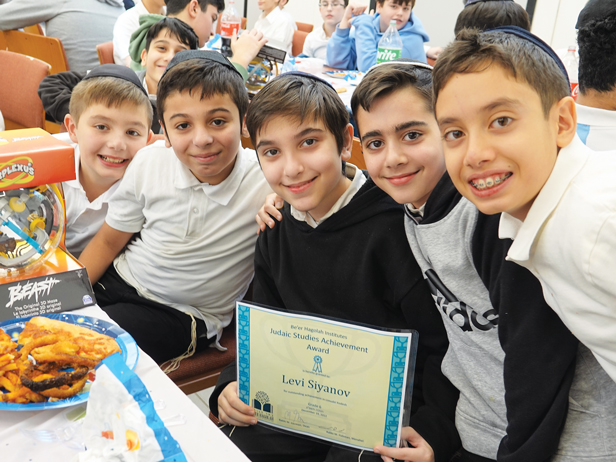
RABBI MORDECHAI GERMAN, THE DEAN OF BE’ER HAGOLAH INSTITUTES IS NO STRANGER TO JEWISH EDUCATION. ASIDE FROM HIS PERSONAL EXPERIENCE AS AN EDUCATOR FOR MORE THAN TWENTY-FIVE YEARS, HE ALSO GREW UP IN A HOME STEEPED IN A CULTURE OF CARING FOR OTHER JEWS.
The home of his parents, Rabbi Avner and Rebbetzin Leya German of blessed memory, was a fortress of Jewish education and love for everyone. I reached out to Rabbi German to ask for his perspectives on Jewish education and for his dreams and aspirations for Be’er Hagolah and its students.
This is what he said: While Be’er Hagolah just celebrated its forty-third year, it is in a sense a young and fresh institution. “We are constantly looking to innovate and discover what it is that our students and families need. When we identify a need, we do everything we can to deliver a solution for the benefit of our students. We are now focused on the quality of our education more than ever. Whether it is advanced trainings for our staff, higher education degrees, or state certifications, we are building a hand-picked team of highly qualified educators.”
My vision for the school is that it should be a warm, safe, secure, and vibrant environment which our precious students delight in coming to every morning. My vision for our students is that they graduate from Be’er Hagolah ready and prepared to take on the world. They should hold their heads up high — proudly as Jews who will build families and contribute to our community in their own way. Whether they continue on to college immediately or first spend a year in Israel, they will have the foundation and relationships to build a career rooted in a lifelong attachment to Torah, mitzvot, and community. We are deeply proud of our thousands of alumni who have gone on to establish families and communities across the world.
The leadership team at Be’er Hagolah excites me. Each and every principal shares the same vision for our school and our students and they have dedicated their lives to educating the next generation. This year, we departmentalized our boys’ middle and high school divisions and we’re very proud to have Rabbi Michoel Grunhut as the principal of Judaic Studies and Rabbi Yehuda Waxman as principal of secular studies. We welcome the newest addition to our team, Mrs. Leah Kirzner, principal of the elementary school secular studies department, who brings us her expertise in curriculum building and teacher training and mentoring.
Mrs. Yeva Rakhamimova, who is a mother of three current BHI students and practices as an immigration attorney, shared her reflections. “Be’er Hagolah is a very nurturing community where relationships are made with parents, teachers, and the administration. My children are not only receiving the best Jewish education possible, but are also striving in secular studies. They are beginning to think like future developers and entrepreneurs. BHI offers top notch security, including armed guards, and constant communication between the parents and teachers. Be’er Hagolah is a family setting that gives care and love to the children and the parents. The office staff knows each parent by name and Rabbi German and other administrators are always eager and happy to try to resolve their concerns as best as they can. I’m so happy to be seeing my children grow up and prosper socially and academically in such a nourishing environment where they’re making lifelong friendships in a great community.”
Hirsch Ibn Yisroel is an accountant based in the American Midwest. He is also a freelance writer with a special interest in jewish life.
ARE YOU TIRED OF KEEPING TRACK OF YOUR ENTIRE BUSINESS IN YOUR HEAD? ARE YOU READY TO START MAKING BUSINESS DECISIONS BASED ON FACTS INSTEAD OF PURE GUT FEELING? THEN THE FIRST THING YOU NEED TO DO IS BEGIN PROPERLY TRACKING YOUR BUSINESS EXPENSES.
BUSINESS EXPENSES Business expenses are the things your business spends money on to keep operating. They include things like:
Rent
Computers and other equipment
Phone, internet, and utility bills
Marketing and advertising costs
Bank and merchant fees
Gas, car, and other transportation costs
Postage and shipping
Keeping tabs on these items helps you keep track of cash flow, takes the guesswork out of paying estimated taxes and claiming deductions, and most important, it helps you understand what you need to do to increase your profitability.
You’ll also need to keep track of your business expenses if you ever approach a bank for a loan, want an investor to put money into your business, or get audited.
Catching up on a backlog of improperly tracked expenses can take some time. However, it’s a fairly straightforward process.
HOW TO KEEP TRACK OF BUSINESS EXPENSES
Step 1: Separate them from your personal expenses Tracking business expenses can be difficult when your business purchases come out of the same checking account you use for personal expenses. It also makes it challenging to understand the health of your business when you have additional expenses that aren’t relevant to the business.
For these reasons, it is best to open a separate, dedicated business bank account — with its own dedicated debit card or business credit card — for your company.
Step 2: Make sure you’re categorizing the transactions properly
Properly categorizing and recording your transactions helps you claim more deductions, make your life easier if you ever get audited, and generally makes looking through your financial records a much less painful experience.
Step 3: Hold onto your receipts Did you know that the IRS requires you to keep records and receipts for any expenses you claim on your taxes at least three years after filing the return?
A great way to avoid breaking this rule while also saving time on your bookkeeping is to digitize your receipts using a receipt-scanning mobile app like Shoeboxed or a cloud-based system like Dropbox, Evernote, or Google Drive.
Step 4: Reconcile expenses with your bank accounts This involves looking at the expenses you’ve recorded in your bookkeeping system and making sure that they match up with the expenses on your bank statement.
Bank reconciliations are your first line of defense against any mistakes you might make when recording your expenses. Ideally, you should be doing them at least once a month.
Step 5: Make sure you aren’t missing any of these popular small business expenses
To make sure you aren’t forgetting anything, we’ve put together a large list of the most common types of business deductions, broken into 16 different expense types.
Advertising and promotion
Business meals
Business insurance
Business interest and bank fees
Business use of your car
Contract labor
Depreciation
Education
Home office
Interest
Legal and professional fees
Moving expenses
Rent expense
Salaries and benefits
Telephone and internet expenses
Travel expenses
Remember that even if an expense is ordinary and necessary, you may still not be able to deduct all of it on your taxes. The rules around the tax-deductible portion of the rent you pay for your home office, client entertainment, and R&D costs, for example, can get particularly complicated.
Step 6: Make expense-tracking a habit If you’re a busy small business owner with a million things to do, it’s easy to let bookkeeping fall by the wayside. One way to avoid that is to make it a habit.
Try setting aside and scheduling a ‘bookkeeping day’ once a month to stay on top of your transactions. Use that day to enter any missing transactions, reconcile bank statements, and review your financial statements from the last month.
Sandra Lazar graduated Brooklyn college in 1995. She has served as a CFO in a variety of businesses for the past 25 years.
AMONG MANY POPULAR EVENTS AT THE DSN BEACH CLUB THIS PAST SUMMER, FAMILY MOVIE NIGHTS EXCEEDED ALL EXPECTATIONS. THE PICTURESQUE COASTAL DESTINATION, EMBRACED OUR COMMUNITY’S TRADITION TO COME TOGETHER FOR ENTERTAINMENT AND FAMILY FUN.
These enchanting evenings under the stars captured the hearts of over 500 parents and children. Beach Club Program Director Caleigh Silvera stated “DSN Beach Club has fostered a sense of community and togetherness through the power of film.”
The first movie shown at the DSN Summer Stage was The Parent Trap. The event drew an excited crowd of eager moviegoers who were treated to an array of delightful offerings. Attendees had the opportunity to indulge in sushi from Outpost and savor a curated menu from Jelis, catering to diverse culinary preferences. The availability of DSN merchandise, popcorn, movie theatre snacks, pizza and much more enhanced the authentic movie experience. The ambiance was further enriched by crackling fire pits, the soothing beachfront location, and the mesmerizing starry sky, ensuring a captivating atmosphere for families to enjoy the massive outdoor screen.
Responding to popular demand due to the resounding success of the first movie night, DSN quickly hosted another unforgettable evening the following week. That next film was The Greatest Showman. DSN member Grace Chehebar stated, “Best movie ever! I love seeing DSN have this for our community.” Once again, DSN delivered an extraordinary event that brought families together. With a specialized menu designed to delight the taste buds, there was captivating entertainment and a breathtaking setting that continued to strengthen the sense of community and camaraderie among those in attendance.
Beach Club General Manager Keith Acker felt fulfilled. “Fostering community spirit through these nights exemplifies community building at its finest.” By offering these events, DSN continues to create a sense of belonging and unity. These gatherings provide an opportunity for people to come together, connect and share memorable experiences. The ambiance of the beach, combined with the magic of cinema, fosters a sense of enjoyment and appreciation.
The DSN Beach Club has created a platform for building lasting relationships and strengthening the bonds of community. DSN Beach Club has uniquely established itself as the go-to destination. Frieda Shamah, DSN Youth Director, was excited. “The success of these nights demonstrates the power of shared experiences, good food, the magic of film and fostering community building with lasting memories.” DSN member Jacqueline Musry brought her family. “It was really such a special night! DSN is such an amazing organization that never stops impressing the community. We are so blessed.”
“A BEAUTIFUL GARDEN CAN CHANGE YOUR OUTLOOK FOR THE REST OF THE DAY!” SUCH WAS THE MINDSET OF RUTH JEROME A”H, WHOSE PASSION FOR OPEN LANDSCAPES TRANSCENDED GARDENING AND EXTENDED TO A DEEP INTEREST IN HOW A SPACE CAN BE UTILIZED AND TRANSFORMED INTO SOMETHING TRULY SPECIAL.
She imparted this love for landscape design to her son, Abe Jerome, and together they toured and enjoyed gardens all over the world. Four years after her passing, Abe Jerome carries on this legacy by leading the Ruth Jerome A”H Annual Garden Tour in collaboration with Director of the Sephardic Community Center’s Women’s Culture Club, Julie Sherr.
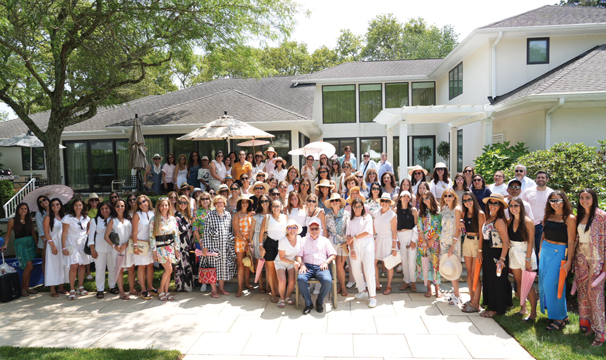
On July 12th, over 200 men and women gathered in Deal for the Garden Tour. The day began at the home of Rina and Ely Cohen, where guests received pink parasols and fans upon check-in. As guests entered the yard, they were greeted by delicious lunch options from Nicole’s Kitchen, which they enjoyed while overlooking a pool covered in hand-painted Italian tiles. Surrounded by palms and lush grass, the greenery perfectly complemented the ocean views and breeze. The group then proceeded to Jo Ann and David Levy’s home just across the street, which featured a yard and vegetable garden that overlooked the beach. The design of the garden was a perfect marriage between vintage and contemporary elements. This design approach was a common theme among many homes on the tour, as they had been occupied by multiple generations of the same family and managed to preserve family history while staying up-to-date.
After a relaxing moment enjoying the sea air, the group moved on to the home of Mimi and Lou Franco. There, they encountered a sprawling yard that included a miniature golf course, an expansive pool house, and an abundance of colorful flowers that created a delightful ambiance. With its diverse features and activities, it’s no wonder that the Franco family’s children and grandchildren gather at the home each weekend, with one even living there for the summer.
Following the visit to the Franco’s house, a short trip down the road led everyone to the home of Paulette and Morris Bailey, where they were served TeaToxx Iced Tea, which was a refreshing way for everyone to cool down. The different spaces in the yard, such as the tennis area, the pool area, and the patio, gave a sense of individuality to each activity while still bringing everyone together. These spaces were designed to cater to people of all ages and interests. Finally, the tour concluded at the home of Michelle and Jack Haddad. Guests traversed the expansive cobblestone driveway and were greeted by lush fountains circling over the pool, an expansive cabana, a dining table, seating area, and desserts. As everyone left the final stop, they received carefully curated gift bags containing a floral cocktail recipe book, a floral deck of cards, a colorful scarf, and Popsanity popcorn.
Each year, Abe Jerome and the Garden Tour Committee, in collaboration with the Sephardic Community Center, hand-select five or six homes for the Garden Tour. Not all of the featured gardens and pools are designed by Abe Jerome; sometimes none of them are. Nonetheless, Abe Jerome finds fulfillment in sharing his love and knowledge of gardens and spaces in honor of his late mother. The collaboration with The Center is the perfect alliance for what is not just a tour, but a celebration of family legacy, multi-generational use, occupancy, and development.
As we look ahead to the 5th Annual Garden Tour in 2024 B”H, we have a deeper love and appreciation for flowers, landscapes, and lineage. Abe Jerome’s wish is that a portion of the proceeds from the day will go to the Sephardic Center’s Senior Department. A heartfelt thank you goes to the staff of Abe Jerome and the Sephardic Center, as the Garden Tour would not be possible without their support. A special mention goes to Sonja Cabasso and Michelle Safdieh for their thoughtful and tireless efforts in making the Garden Tour a success. It is the hope of everyone involved that you not only stop and smell the roses, but also realize that the most lovely silence is that of growing things.
Inbal Khabieh is the Director of Education and Admissions for the Sephardic Center’s Early Childhood program. Preceding her career in education, Inbal’s first love was Journalism. She holds a Bachelors degree in politics and journalism She shares a passion for community, family, tradition and legacy – all the SCC’s core values. Inbal lives in Brooklyn with her husband Simon and 2 children.
IF YOU’VE EVER SEEN A LOVED ONE LOSE HIS OR HER CAPACITY FOR LIVING INDEPENDENTLY, YOU KNOW HOW DIFFICULT IT IS FOR THE WHOLE FAMILY. BECOMING IMPAIRED OFTEN STARTS WITH UNEXPECTED CHALLENGES.
All too often, struggles with the normal activities of daily living are accompanied by the loss of dignity and rapid depletion of savings. You need assistance but might not want members of your family to handle more delicate tasks.
Here’s the hard truth: hiring help for your “long-term care” is not covered by Medicare, nor by most employer or retiree health plans.
Help does not come cheap, especially when it’s all out-of-pocket. Many folks prefer to stay in their home for as long as possible. Whether you’re cared for at a facility or at home, the expenses add up.
If you’ve helped a relative through this process, you probably want to avoid the stress and loss of dignity that come with having your spouse and kids (or others) make decisions for you. Planning ahead will help you maintain your dignity and independence.
SENSITIVE TRUTH #1 We’re all at risk of losing our future independence. Your genetics could get in the way of the life you want in your upcoming years. Preparing a roadmap now, to provide for necessary care later, will help you feel less anxious about the risks. It will also help you navigate sensitive situations in the future.
Even if your family has no history of illness, the natural aging process causes all of us to lose our independence eventually. It’s not a matter of if it will happen, but when.
SENSITIVE TRUTH #2 Unforeseen expenses in your later years could empty your wallet.
Even with government programs such as Social Security and Medicare, the costs of living as an elder adult can come on suddenly and all at once. In fact, nearly a quarter of Medicare costs are spent in the last year of life. For example, the cost of a nursing home can exceed $90,000 per year — and could be much higher depending on where you get care.
What are the expenses? Even if you plan to remain in your home to avoid the high costs of a care community, you’ll need to prepare your home for aging in place. This could mean renovations, such as:
Widening doorways
Installing wheelchair ramps
Adding walk-in bathtubs
Remodelling the bathroom
Putting in non-slip flooring
Home help comes with a hefty price tag. The cost of a home health aide is about $52,600 annually for 44 hours a week of help. Plus, you may suddenly find yourself needing more care that, which can only be addressed by moving into a nursing home or an assisted living community. The cost of memory care, should you need it, adds an additional layer of expenses.
Any of these expenses will significantly raise your cost of living and threaten your long-term financial security.
SENSITIVE TRUTH #3 Living independently tomorrow requires preparation today.
Most people want to live independently for as long as possible, including staying in their homes. Right now, especially if you’re watching self-sufficiency slip away from a loved one, you may be worried about what will happen to you when the time comes.
If you need care, who will provide it? If you have children, they’re a potential resource. That’s assuming that they live close enough to you, they don’t have to disrupt their standards of living, and they’re willing and able to take over these responsibilities.
On the other hand, you might not want your children to bathe you, as you bathed them when they were little. Or you might not have children or other relatives who can help. In these situations, you’ll need to hire someone.
Knowing what you want for your later years is key in making these decisions. Designing your roadmap for eldercare now will help you make cost-effective choices you might not be able to access later.
SENSITIVE TRUTH #4 The opportunities you have today may not be available tomorrow.
When it comes to paying for long-term care, a number of options are available to those who are currently healthy. But you may not be eligible for them past a certain age, or once certain illnesses have occurred.
One common choice for covering care costs is to self-insure or pay the expenses out of pocket. The risk is that you will run out of money or hurt your spouse’s lifestyle. It’s sadly common for children to receive diminished legacies or none at all, because the money was spent on the parent’s care.
An alternative to that is to buy a traditional long-term care insurance (LTCI) policy. It’s specifically designed to cover just your long-term care needs.
Another option is to buy what’s called an asset-based policy, typically a life insurance or annuity contract with a long-term care rider. Each insurance company structures them somewhat differently. In general, though, the amount paid for your long-term care is subtracted from the benefit you would otherwise receive from the contract.
Bottom line: you’ve got options, especially if you start planning early. Don’t wait to set your course for self-sufficiency in your senior years. It’s crucial to develop a strategy now that can be implemented quickly when needed. You already know what kind of independent lifestyle you want when you age, but you may not understand how to pay for it without draining your wealth.
Ari Baum, CFP® is the founder and CEO of Endurance Wealth Partners, with over 25 years of experience in the Financial Services industry. He brings his in-depth experience to Conceive. Believe. Achieve. for his clients. Securities and Advisory services offered through Prospera Financial Services Inc. Member FINRA/SIPC.Brokerage and Advisory accounts carried by Wells Fargo Clearing Services, LLC.
FOR PARENTS WITH CHILDREN OF SPECIAL NEEDS, IT’S IMPOSSIBLE TO IMAGINE A WORLD WITHOUT THE SPECIAL CHILDREN’S CENTER. SINCE THE FIRST VOLUNTEERS BEGAN REACHING OUT IN 1996, THE PROGRAMS AND SERVICES CENTER OFFERS HAVE BEEN A GAME CHANGER FOR CHILDREN WITH COMPLEX DEVELOPMENTAL DISABILITIES AND THEIR FAMILIES.
Chaya Bender and Jenine Shwekey are the women who started it all and are the most public faces of the Center today. “We never envisioned the size and scope of the Special Children’s Center,” said Chaya.
Jenine Shwekey clarified. “We were kids. It wasn’t our plan.”
Chaya added, “We came across people who needed help and we helped.”
They couldn’t believe what was going on behind closed doors of families with special needs children. They met overwhelmed parents, neglected siblings, and lonely special children, all in need of extra helping hands and communal caring. Families were struggling to cope and fighting a losing battle.
Back then, having special children was seen as a stigma by too many people, and the struggling families suffered the fallout. Chaya remembered an incident where a mother insisted that Chaya call when she arrived so she could make sure that her neighbors weren’t outside.
What a tremendous contrast to 2023, when hundreds of girls are on a waiting list to work at the Children’s Special Center and the Deal Camp. Hundreds more dedicated volunteers willingly give up their entire Sundays for the children. Volunteers and kids alike proudly wear Center T-shirts and sweatshirts. It’s incredible to see communities and families embrace and “adopt” children with special needs as their own! Today, the Center proudly services over seven hundred special needs children and adults, across their locations in New Jersey, Deal, Brooklyn, and Long Island.
And the dreams continue! After 10 amazing years in Brooklyn, The Brooklyn Center will finally get a state-of-the-art home of their own! Thanks to Alex and Harry Adjmi and Jack Scaba a property was located — 2990 Avenue U! The purchase was made possible by Marilyn and Jouky Chehebar who have been there for the Center since the first day. The Marliyn & Jouky Chehebar Brooklyn Building is currently finished with the interior demolition and is awaiting renovations. The Center needs your help to make sure that every child with special needs in Brooklyn has a magnificent building where they can spend their days.
Originally, Jenine and her friends, all high school girls, would run from one family to the next to help care for the special children and lighten the load for the parents. But they knew this wasn’t sustainable and were determined to find a central place for the kids to come to. They found an apartment and approached a rabbi for help to make it happen and he presented their idea to a potential donor. They were excited and passionate, and their pitch seemed to have made a powerful impression. The potential donor said, “It’s heartbreaking,” however, he said to the rabbi, “next time, come to me with older girls who have degrees in their hands and can actually do big things. Don’t come to me with little kids.”
Hearing these words, the young girls weren’t dejected, but rather empowered. Heading to the landlord of the apartment they wanted for “their kids,” owned by Mr. and Mrs. Michael and Pearl Herzog, Chaya and Jenine related what had happened. “Girls,” Mr. Herzog said, as he turned to the drawer and took out the keys, “it’s all yours.”
That was it — the Center’s first home. Although they moved at least ten times afterwards, and not every space they used was optimal, that apartment was a truly meaningful start. Next, they got a house, a setup that would last them a while. When they had outgrown the house, the township in New Jersey granted them an acre of land for one dollar. All they needed was a building! Jacob Mermelstein, of Ray Builders was introduced to the Center and a lifetime friendship was formed! He had an idea to do a barn-raising with each vendor donating their trade. The girls sat with the board members Harry Adjmi, Richie Dweck and Elliot Tawil, and they said “let’s make this happen.” Their outpouring of support and love has made a huge difference and continues to do so — 20 years later!
In the beginning, people would make supper for ten, fifteen, then twenty kids. Then volunteers would pick up the meals. While some things do change, and they’ve grown a lot since then, some things remain the same. A longtime friend of the Center, Esther Arking, still coordinates the food for the volunteers on Sunday and it’s all donated by local vendors.
Originally, the Center offered respite to the families twice a week, after school. Then they went up to three, four, five days a week. Now the center covers literally every day that a child is not in school. Every day after school, every Sunday, every legal holiday when their regular schools are closed, holiday trips, mid-winter trips and Shabbats.
Chaya set the scene: “Children finish school at 2:30. The schedules are impossible — they’re off more days than in school. How can a mother hold a job? Families were falling apart. They needed something they could rely on.”
“Everything the Center does is with two goals in mind: First, the families should be able to function. The parents and siblings should be able to live regular, normal lives. We want them to know we will be there for them, and they will be okay. Second, we want to give the special kids a Center, a place that belongs to them, a place with friends and understanding, and most of all, a place where they know, they can be anything.
To that end, the Center offers extensive support for families to help relieve the inevitable stressors they encounter. The after-school program offers a well-structured and packed schedule of learning and fun in a calm and supportive atmosphere. Run by a cadre of professionals with years of experience, the program includes a full Jewish learning curriculum for after public school, a drama program where children are introduced to and taught performing arts, a literacy program, a sensory program, a science program, and more.
It’s important to understand what an undertaking this is. Every child’s individual dietary needs are met. Every child gets the attention he or she needs to make sure dinner is eaten; some children might need forty-five minutes of careful feeding. After this comes time in the bathing spa. The Center offers haircuts every four weeks provided by volunteer barbers and hairdressers. The children go home fed, bathed, in pajamas, and ready to be embraced by their loving families.
And if the families face even more extenuating circumstances, there is a Center house with sleep-over options. A child spending the night outside the home once or twice a week allows the parents to schedule appointments and play dates for other children in the family, and often, just time to breathe. As for the Shabbat option, every Shabbat, the facility is filled to capacity. Just knowing this is available to parents, is a help for them.
A parent called the Center from New York inquiring about sleep-over options. “Wasn’t there even one facility in New York that offered overnights?” was the reply. “Yes,” replied the parent, “but they only take kids who sleep through the night.”
“Those parents take priority?” wondered Chaya. Who needs the help? Who can’t get a babysitter? “We get the kids who won’t sleep through the night, who can’t be with other kids. We deal with the hardest of the hard.”
The Center also deals with some of the hardest times of the year: the gap time before and after camp. These are hectic days with no school coverage, days filled with errands and appointments, getting other children ready for sleepaway camp, and doing back-to-school shopping. Imagine adding a special needs child to the mix. The Center offers the children structure with a full-day program, with a dedicated staff, from the day after school ends the day camp begins, and from the day after camp ends until the first day of school. Center Camp provides six weeks of fun for the children who don’t have a school program during the summer! The volunteers give up their days and weeks to give love, fun, and structure to the children who wait for camp all year round.
The Center’s mission is to keep kids at home with their families, but as the kids age, they have social needs that might not be met. To that end, the Center offers residential services. They opened the first kosher group homes in New Jersey. Jenine Shwekey said, “These kids thrive. They live with goals, they live in the community, their families are part of their lives.”
The Center’s yearly budget is $16 million, of which $11 million is covered by the state. They may need to raise $5 million a year but they won’t use those numbers as baselines to determine what services a child will be given. While the Center will bill for whatever services they can, it’s all hesed. Jenine and Yaakov Shwekey make it very clear.
Chaya told the story of a very difficult child they were working with in Brooklyn. The staff was struggling to help with his extreme behaviors, so they added a second personal aid and then brought in a BCBA therapist. Six months later he is independent and so proud of himself. The mother marveled at how far the Center was willing to go for her child, after other programs he attended threw him out once they got the maximum billing they could get for him.
Their big budget comes with other big numbers: 380+ staff, 700+ volunteers and 850 children and their families serviced by the Center.
But Chaya was emphatic on one point. “Even as we grow, we maintain the same family mindset we started with. We never become big and industrialized. The parents and staff are family to us.”
Chaya and Jenine’s optimism and willingness to help anyone shines through so strong.
Does the weight on their shoulders ever get them down? “We don’t live our lives like that,” Jenine said. “We live on the high energy of what we’re doing, the happiness we’re bringing, the lives we’re changing. We focus on our dreams, what we still want to accomplish. We just live our vision.”
IN 1999, NORMAN D. LEVY FOUND HIMSELF AT A CROSSROADS. LIFE AS HE KNEW IT WAS CRUMBLING AROUND HIM. HIS BUSINESS WAS FAILING; HIS MARRIAGE DISSOLVING. HE WAS FACED WITH A CHOICE. EITHER RUN FROM HIS TROUBLES (ALL THE WAY TO CALIFORNIA FROM NEW YORK) OR STAY AND TRUST IN HASHEM — HE CHOSE TO STAY.
Leaning deeply into his faith and with the conviction that, more than anything else, he needed to be there for his children, Norman weathered the rocky roads that eventually led him into the light. Through prayer and resilience, he found his way to a better place, a happier life, surrounded by people he loves.
Through the course of his life transformation, Norman wrote about his experiences and then compiled those writings into a series of letters to his children. Each one included a lesson. In the letters he explained how to weather the storms, navigate the rough roads, and take moments to enjoy the path when it’s clear.
In 7 Highways of the Soul, we are shown that no matter what road you are on, if you invite Hashem to guide you, you will never be lost — only blessed.
Norman’s greatest wish is to assist others as others have helped him. He is strong in his faith and hopes that all those who are struggling find their way back home to Hashem.
“This book captures and describes so many great stories and lessons Norman learned over a lifetime facing many obstacles. Throughout, Norman illustrates and shares his wisdom and methods on how to persevere through challenging times to enjoy and create good times and memories to cherish forever,” said Sammy J. Sutton.
“This book should be kept close by, and read to your children and grandchildren to illuminate the road to leading a more meaningful life,” added David J. Beyda. Available for purchase on Amazon.
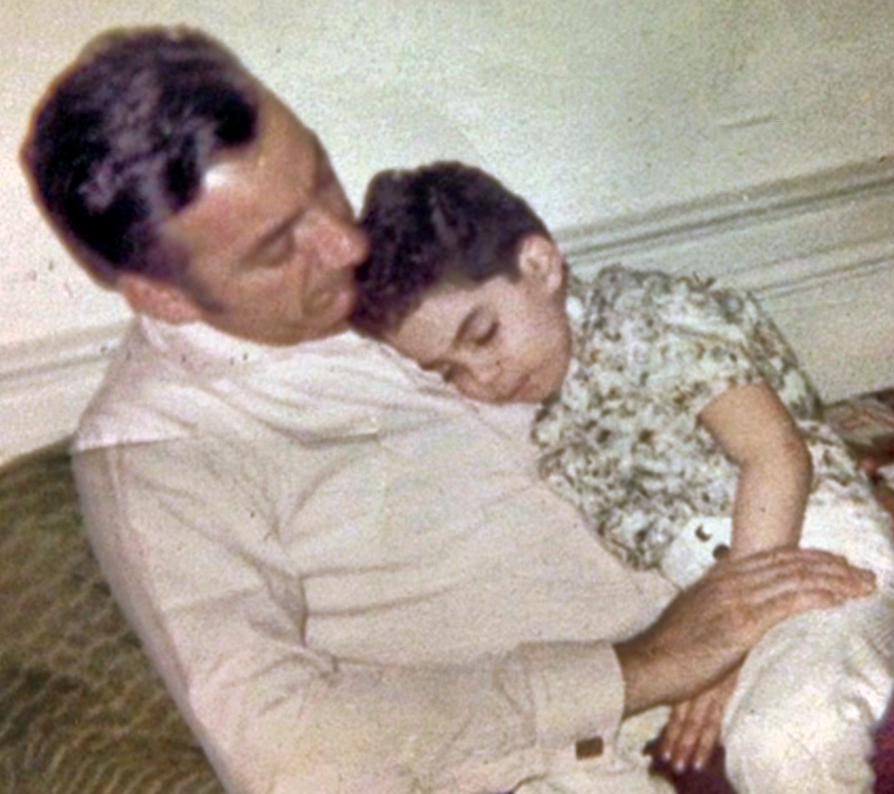
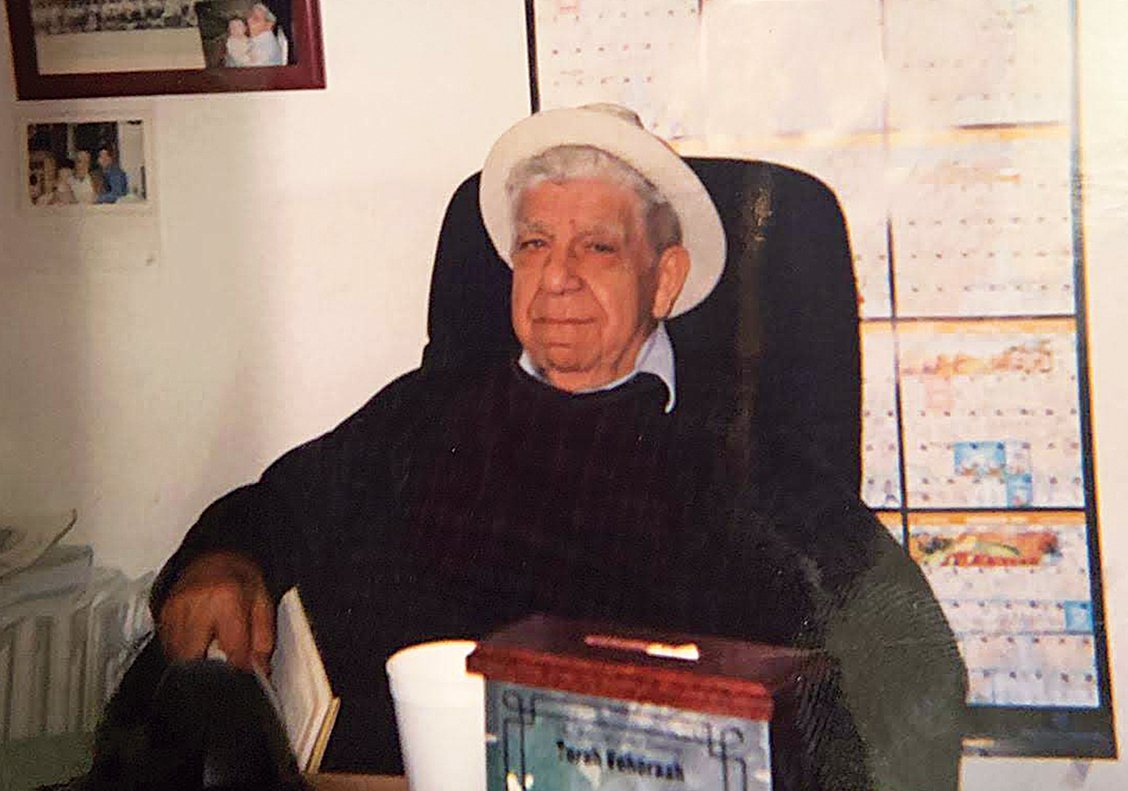
I WAS AROUND 20 YEARS OF AGE AND RIDING THE TRAIN WITH MY FATHER WHO WAS AROUND 72 YEARS OLD. WE RAN UP THE STEPS TO THE F TRAIN ON KINGS HIGHWAY. IT WAS AROUND 3 PM AND WE HAD THREE STOPS TO MAKE. THE LAST WAS TO PICK UP AIRLINE TICKETS.
“There is no way we will make it to El Al before they close.”
“Don’t worry,” my dad replied. That was one of his catchphrases. Whenever I would get stressed he would pull that out. Or, “99 percent of the things you worry about never happen.”
Still I was never convinced. We got to the city a little after 4, we walked (it felt like he was running) towards our first stop. The man there was so happy to see my father, they kept talking and talking. As we left I told him, “Dad, we are running out of time, it’s already 4:30.”
“Don’t worry,” he said smiling. It drove me crazy. How stupidly optimistic can someone be? I seethed inside. We made it to the next stop and once again the woman who met my father smiled and they spoke. We left at 4:55 and El Al was six city blocks away. “Dad we can’t make it.”
“Watch,” he told me, and he began his speed walk towards our final stop. “Are you hungry? Do you want something to drink?” He asked me. “Maybe after we get to El Al, Pop.” He smiled.
In my eyes he was walking way too fast for someone his age. But he didn’t even show any signs of fatigue. Me, on the other hand, I was perspiring a bit and I was kind of out of breath. We went to cross the avenue against the light. He literally took my hand, put his other hand up, the cars stopped, honked and the drivers made faces or threw out some curses.
“Dad.” “Don’t ever do this.” He said. It was 5:07 when we got to El Al building and went up in the elevator. “Dad they are closed.” Ignoring me, he rang the bell. “They all went home, Dad.”
The intercom. “We are closed.” “Tell Rivka it’s Sam Zalta.” I thought to myself, “As if they know or care.” Buzz, the door opened.
“Sam!” A tall man with a giant smile greeted him. An older lady ran to greet my father, “Come on in,” they said. There was a security guard who seemed to be an Israeli mossad agent. He smiled and said, “How are you Mr Zalta?”
I couldn’t believe this. We were not only late, but the office opened up and they actually made coffee for us. As we made our way back to Brooklyn he looked at me.
“You didn’t think I could do it, right?” I nodded. “Remember when there is a will, there is a way. Nothing is impossible.”
I was young, way more confident than I had the right to be. I was positive that I knew it all. I laughed at my father and in the end he got the last laugh. There were so many times in my life where I should’ve listened to him but I thought I knew better. It’s a disease of the young. They rush in where angels fear to tread and think they are invincible, they know better, and they will be smarter than the older generation. They think they know which key to use for each door which can lead them to the next room, the bigger office, the bigger house.
They think, “What does that old man know? ”How about years of experience failing and succeeding? It’s only now as I head towards my 60th birthday that I understand. So many missteps, so many keys leading to cold empty rooms. It’s only when it’s too late that the realization comes to us to admit we didn’t know as much as we believed we did.
So I think about my father, my parents really. The ability to understand that in the long run everything will make sense, an understanding that seemed to come naturally to them. But I understand that no one is born with that knowledge. The “you” you were at 21 is not the same “you” at any future date. We are meant to evolve physically and mentally. We must learn to discard the noise and embrace the music in our lives. Even in the silence when the noise of this world can be deafening we must find a way to make it through, and we will. That’s life. That’s the beauty of aging. We know so much more and are unafraid to admit when we do not. The inspiration, the experience and the evolution of ourselves guides us as we decide to “never go quietly into that good night.”
Freddy Zalta is an author for hire specializing in biographies.
UNITING STUDENTS, PARENTS & TEACHERS AT ATIDANYU OUR FUTURE SCHOOL
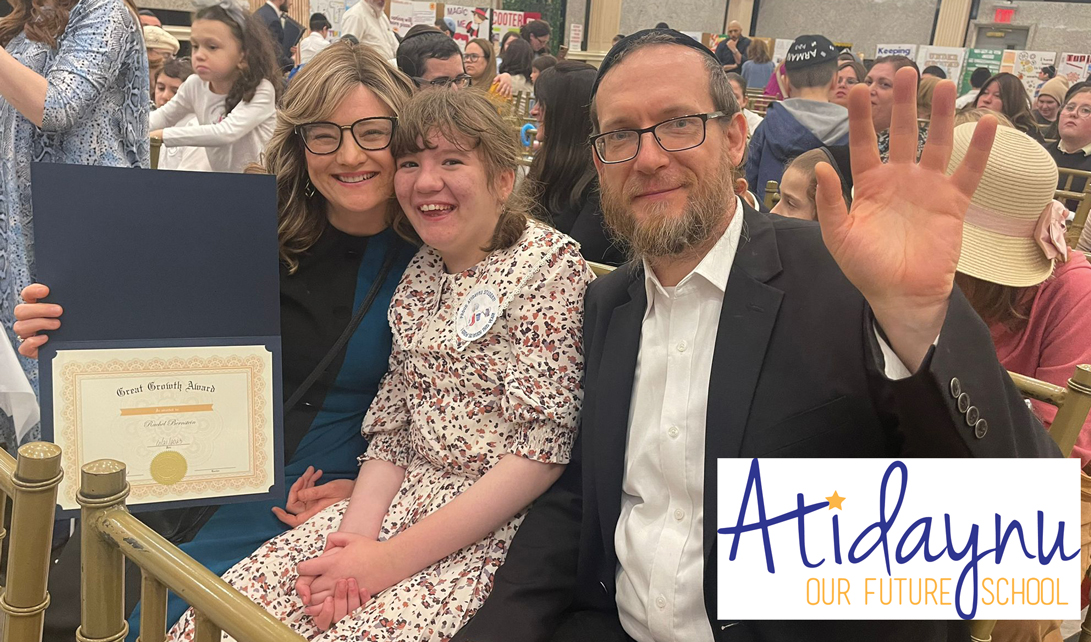
TO CELEBRATE THE REMARKABLE GROWTH OF THEIR STUDENTS THIS YEAR, ATIDAYNU OUR FUTURE SCHOOL HELD A CAPTIVATING GARDEN OF KNOWLEDGE – GROWTH GALA CELEBRATION. ATIDAYNU IS A SCHOOL IN BROOKLYN THAT IS GEARED TOWARDS STUDENTS WITH VARIOUS SPECIAL NEEDS WHO ARE SEEKING A WARM AND PERSONALIZED EDUCATIONAL EXPERIENCE.
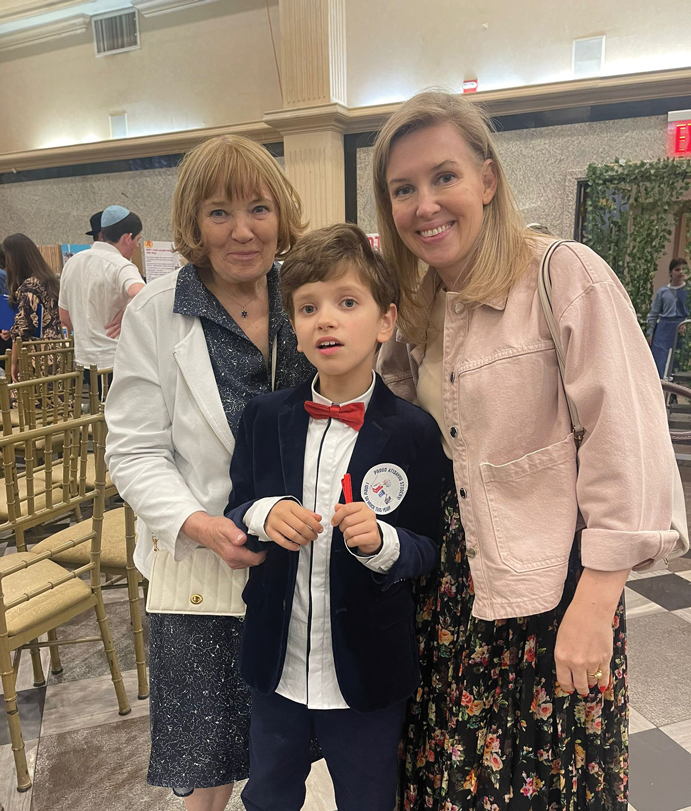
The end of the year celebratory gala was a fabulous opportunity for parents, students, teachers and therapists to come together to celebrate the hard work and accomplishments of the students. Educational Director at Atidaynu Simi Bazov commented, “The success of our students is brought through a collaborative effort, made possible by our incredible team, our beloved students and their supportive families. The end of the year is a perfect time to celebrate this collaboration.” Throughout the school year, Atidaynu students have joined forces to achieve various academic, social-emotional, and related goals. Hand-in-hand with dedicated, and individually matched providers, these remarkable achievements were proudly showcased at the gala, serving as a meaningful testament to their collaborative journey.
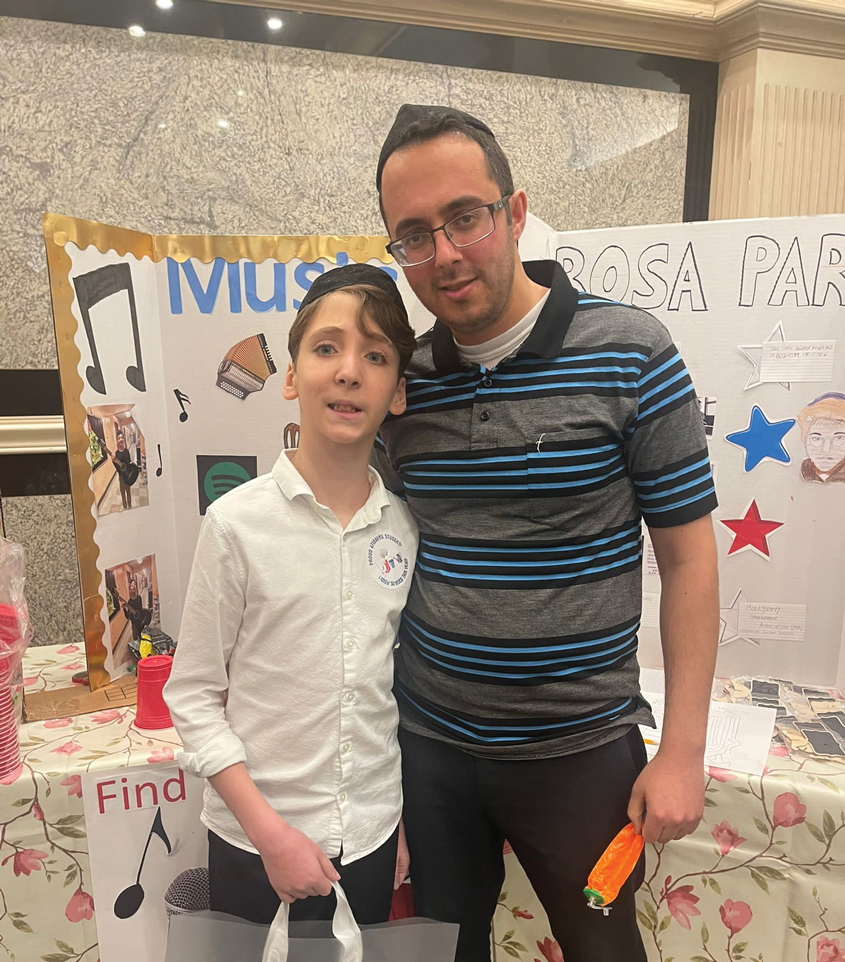
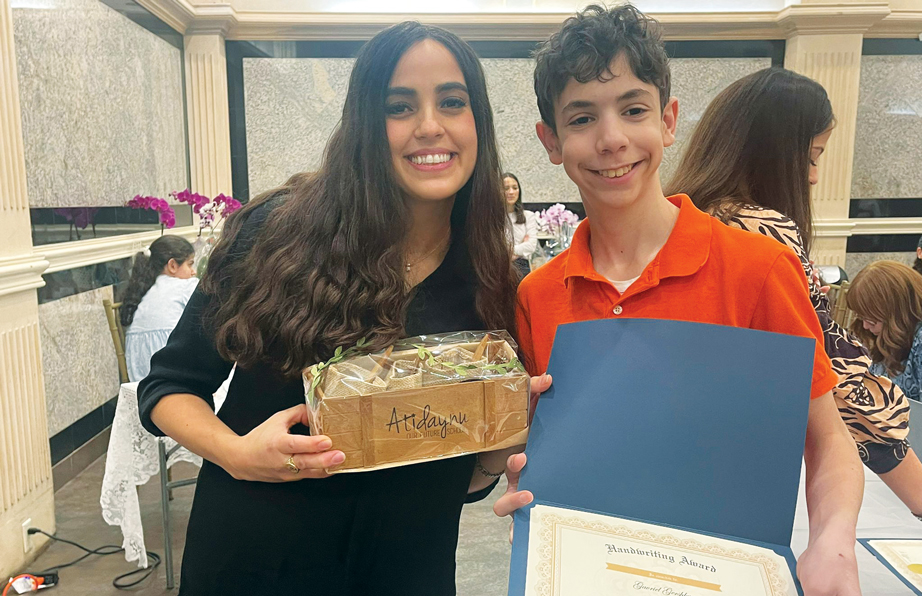
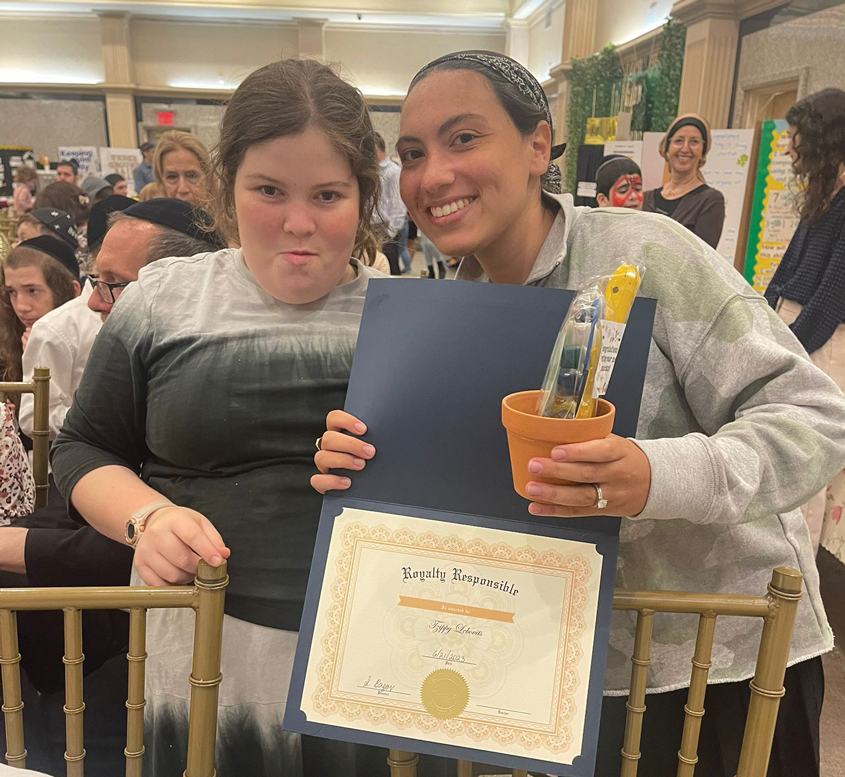
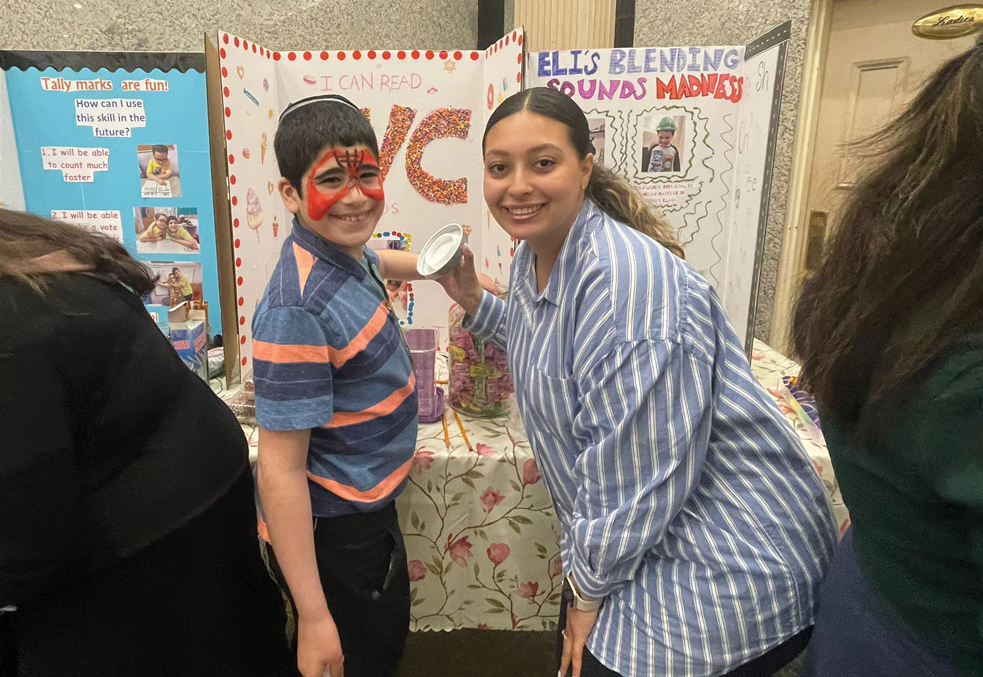
“This gala honed in on each of our student’s individual strengths,” a team member remarked. At the gala, students proudly displayed unique tri-fold exhibits, showcasing a significant aspect of their personal growth this school year. Each tri-fold display was co-created by a student with the support of a specific provider who worked with the student to achieve and finally showcase their goals. While some students worked with a therapist to shed light on their improved social, occupational, or physical therapy skills, others worked with a provider to proudly exhibit their academic accomplishments in areas like reading, writing, math, or even Mishnayot. Along with their tri-fold displays, students crafted activities and memorable items to hand out that represented their skill. One student, who chose to showcase her social improvements and efforts in speech-therapy, used a Polaroid camera to take and give pictures as mementos for her friends. “The exhibit offered students an opportunity to show off and work on their social skills as they stood in front of their friends and families explaining their booths,” a therapist noted.
The event also featured an awards ceremony, wherein each student was celebrated. “We believe that each student is worth celebrating — both for who they are and for the efforts that they make,” a provider explained. Students were presented with an award for their personal accomplishments in front of their friends, their family, and their providers. They also received growth-themed gifts, such as planting sets or flowers, commemorating their achievements. As a touching conclusion, an end-of-year memory video was presented, allowing everyone to reflect upon the memorable moments at Atidaynu this year that brought each student to this moment.
Atidaynu is a school specializing in special education, designed for students diagnosed with Autism, speech and language difficulties, and related developmental disorders or academic needs. We welcome elementary school age children from diverse ethnic, social and economic backgrounds. We offer a thoughtfully designed, comprehensive array of academic and support services in order to serve each child as a whole, identifying each child’s unique learning style.
Our program is tailored to meet the particular needs of each individual student, while delivering a complete elementary school curriculum including reading, writing, math, science, social studies, art, music and STEM.
Atidaynu strongly believes that passion, compassion and love are the best tools to nurture our students. The Garden of Knowledge – Growth Gala Celebration provided an enriching and memorable experience, not only for the students and their families but also for the dedicated staff who diligently supported their growth and development.
WATER TRANSPORTS NUTRIENTS TO ORGANS AND CELLS, CARRIES AWAY TOXINS, SERVES AS A LUBRICANT FOR JOINTS AND BONES, HELPS US REGULATE OUR BODY TEMPERATURE AND EVEN IMPACTS BRAIN FUNCTION. WITHOUT WATER, WE SIMPLY CANNOT SURVIVE. THAT SAID, YOU DON’T HAVE TO BE ON THE BRINK OF DEATH TO FEEL THE EFFECTS OF DEHYDRATION. EVEN A 2% DECREASE IN BODY WEIGHT DUE TO FLUID LOSS CAN IMPACT PHYSICAL AND MENTAL PERFORMANCE.
Many of us worry that our kids are receiving unhealthy snacks in camp but do we know if they are drinking enough water? Studies have found that more than half of America’s youth do not drink enough water. Though it changes depending on a child’s size and activity level, children should drink two to three quarts a day.
The concern is that a dehydrated child could also be a fatigued child and a distracted child. Thus could affect their attention level. Send your kids to camp with a water bottle and money to buy an additional one throughout the day. Talk to them about the importance of staying hydrated in camp. Encourage them to sip throughout the day, not just when they are thirsty.
Children aren’t the only ones who can get dehydrated, it’s equally important for adults to stay hydrated as well. Drinking too little water can have an enormous impact on our health and day-to-day function. Our body is composed of roughly 60% water and every major system is influenced by fluid balance.
The Institute of Medicine recommends 3.7 liters each day for adult men and 2.7 liters a day for adult women; however, I say you may need less or even more if you’re physically active or breast-feeding and during the warmer months. It’s also important to keep in mind that water loss varies from person to person, and some people naturally need more fluid than others. Everyone has a different requirement.
Roughly 80% of our hydration needs come from fluids like water, milk and tea. The remaining 20% comes from high-water foods such as fruit, veggies and yogurt. Some fluid and food choices are better than others for hydration. For example, alcoholic beverages are fluids that increase water loss by blocking anti-diuretic hormones.
Good fluids include water, both sparkling and regular, tea, and milk (especially for children). Good foods include most vegetables and fruits.
It’s important to drink more water when you exercise, in warm weather, when you drink alcohol, have a fever, diarrhea, or you throw up. Coffee was previously thought to be dehydrating, but recent research suggests this is not the case.
Before a workout, hydrate frequently throughout the day. Cap off your fluid tank with ½ to 1 cup of water 15 to 20 minutes before exercise. During your workout, drink ½ a cup of fluid for every 20 minutes of exercise. After your workout drink 2 cups of water. Add coconut water or an electrolyte supplement during and after exercise if you sweat profusely or work out for more than 60 minutes.
Common signs of dehydration include thirst, brain fog, fatigue and irritability, constipation, dark yellow urine, dizziness, rapid or irregular heartbeat, dry mouth, sunken eyes and dry skin, reduced urine or sweat output, headache, joint pain and cramps, and elevated body temperature.
Keep a water bottle everywhere else you spend a significant amount of time. Track your water intake with an app like MyFitnessPal. If you don’t like water, try adding fruit to it.
Drink a glass of water with every meal and snack, invest in good water bottles, many keep beverages cold (or hot) for up to 24 hours. Finally, start your meal with a broth-based soup or salad. Soups and salads contain water-rich ingredients.
Laura Shammah MS, RDN has a masters degree in health and nutrition and is a registered dietitian. She has been operating her own private practice in both New York and NJ for over 20 years. She is happily married and has four children.
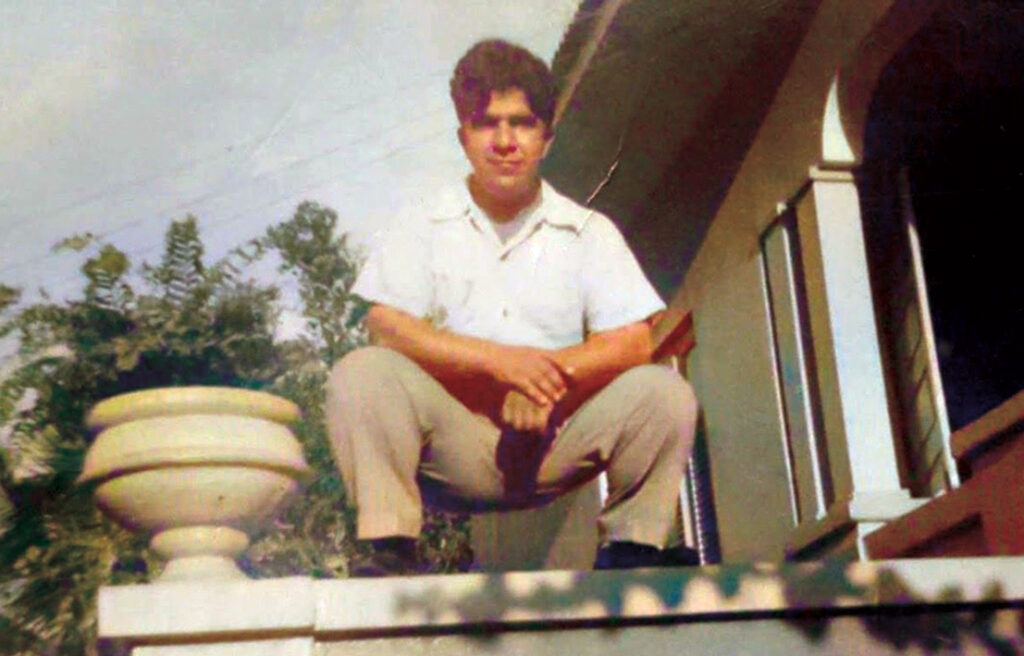
THIS IS THE FIFTH INSTALLMENT OF MY FAMILY’S EXODUS FROM EGYPT, CLEMENT SOFFER’S LIFE STORY. IN THE LAST INSTALLMENT, CLEM VISITED FRANCE, ENGLAND, SWITZERLAND, HOLLAND, BELGIUM, AND ITALY, THEN HE FINALLY RECEIVED A VISA TO GO TO THE USA, AS A STUDENT AT THE MIRRER YESHIVA. WHEN HE ARRIVED, HE FOUND THE SCHOOL VERY STRICT AND RAN AWAY. WE PICK UP AS CLEM SPENDS A SECOND NIGHT ON A PARK BENCH PONDERING HIS FATE.
That night I decided if something good didn’t happen the next day, I would return to Mirrer Yeshiva with my tail between my legs. I had been gone for 48 hours and I would have to suffer the consequences for leaving. I was humiliated and very upset that I was failing in my desire to improve my situation in America, but I needed help.
The following morning, as I washed my face in a park fountain, a young man about my age began talking to me. He asked where I was from and if I was Jewish. At first I didn’t answer, but eventually said I was from Egypt and I was Jewish. He told me that he was Syrian Sephardic, and he was going to Magen David Yeshivah, which was just around the corner and it was for Sephardic Jews. I felt this was a sign from the Almighty to continue on the road I had chosen.
I asked if there were many Sephardic Jews in this neighborhood. His answer — the entire neighborhood was inhabited by Sephardic Jews. I then admitted to him I needed help. He said I should go to the main synagogue to meet with Chief Rabbi Kassin, because he might help me. I immediately left the park and walked to 67th Street. As I was walking, the thought came to me that if I had gone to the right upon exiting Mirrer Yeshiva, instead of to the left, this wouldn’t have happened. This was another helping hand from Hashem.
I was going to ask Rabbi Kassin to help me get a job, so I could save my family ASAP. When I arrived at the synagogue there were many men praying. I waited until Rabbi Kassin went to his office and followed him, then told him my story and asked if he could help me get a job. Much to my surprise, Rabbi Kassin told me I was an ungrateful kid. It was illegal to work at my age and that the people at Mirrer were probably very worried about me. He told me that I had it all: housing, food, education in Torah and a proper visa and I ran away from it. He added that I must go back immediately to Mirrer Yeshiva. I pleaded, and although I told him how unhappy I was, he would not listen. As a kid it was difficult for me to understand this great Rabbi was trying his best to protect me and keep me in the USA.
He eventually saw how stubborn I was and wrote down the name of an Egyptian rabbi who might help me. Unbelievably, the name was familiar to me. He was the brother of Rabbi Abraham Choueka, Rabbi Aharon Choueka.
I could tell that Rabbi Kassin thought I was a bad boy. I walked out of his office with tears in my eyes. Here I was in America, where the streets were supposed to be paved with gold, yet I was starving, cold and dirty, but my pride would not let me go back to Mirrer Yeshiva.
As I walked, I heard a woman ask why I was crying. Her voice was kind and friendly, and she had a graceful look to her that was sincere. I told her what had happened with Rabbi Kassin. She understood and explained to me that he meant well, and was trying to protect me as a foreign boy in this country and that I was jeopardizing my visa status by leaving the yeshiva, and trying to work below the legal age would only jeopardize me more. I didn’t know these things when I left Mirrer.
She said I looked hungry and dirty and invited me to her home, where she directed me to take a bath and then fed me breakfast. She explained that she was of Jewish Syrian descent, and that her name was Sophie Maslaton. She said that she would like to help me, and understood why I wanted to get my family out of Egypt. It was the first time that a grown-up agreed with me. She made a phone call to a gentlemen named Isadore Dayan, but he was called Nouri. He was another Angel sent to me from Hashem. He was a philanthropist with a great, caring heart and president of another synagogue not too far away, called Ahi Ezer. He asked Sophie to keep me with her until the evening when he could come to see me.
After that, she sat me down and opened a box she called a TV. I had never seen one before. It was like a movie but smaller. I was glued to that screen full of amazement.
Sundown came and I finally met this wonderful human being named Nouri Dayan. He immediately understood my dilemma and explained to me that he came from Syria and lost his parents at an early age. He understood my need to bring my family as soon as I could. He explained that I needed first and foremost to adjust the status of my visa. He said that he could help me with that since Ahi Ezer Synagogue had a registered Sephardic yeshiva, and I could attend those classes. He arranged a transfer from the Mirrer to Ahi Ezer Yeshiva. However, he made it clear that I could not work for at least two years. That was a tough position to be in, but it was a fact that I had to accept.
He immediately provided housing for me in a home across the street and opened an account for me at a kosher restaurant. He told me to eat there daily and to attend the yeshiva, in addition he gave me a stipend and took care of all my expenses. I was in the hands of very warm people who wanted to help me. Every Saturday I ate all three meals at the home of his partner, another Angel named Rubin Bibi, and his wife Esther Bibi. I developed a great affection and respect for both of them, and it was reciprocated. They were real angels, and in all respects, they adopted me like a son. I respected and considered them my adopted parents.
I felt very much at home with this community. Ahi Ezer took over the sponsorship of my visa and immigration papers.
Finally, when I was old enough to get a job, I applied to be a messenger for a diamond polishing company. After a month, I asked if I could polish diamonds. But despite the protective goggles that I was wearing, by the end of the day my eyes were bloodshot. After a few days I got worried about this problem. I quit this job and I asked one of the sons of Mr. Bibi if I could work for his company, a wholesaler of chandeliers made in Spain and Portugal. He hired me. I worked for a while, but was not making enough money to bring my parents to Brooklyn.
One day I decided to see more of the beautiful USA. I went to the Port Authority and stopped at a counter by chance. I asked the ticket seller what the last stop on this Trailways bus line was. He answered, “Myrtle Beach, South Carolina.” The word “beach” was attractive to my mind. I paid $22 for the ticket and got on the bus. I had with me my work permit which was a part-time student visa, but I needed full time work. I thought if I worked full time in NY, the immigration department might pick me up, but it would be harder for immigration to find me in Myrtle Beach. I would be less conspicuous.
When I arrived, I walked straight to Main Street and East Ninth, and looked for a sign for employment. I found a beach store that was looking for help and started to work there for $1 an hour, 16 hours a day, 7 days a week, and time and a half for over 40 hours. It was more money than I ever made, but the owners were not kind to me. So, I quit that job and looked for another.
I found a job as a stock boy in a far bigger store. When I went to the basement to work, it was a mess. I asked the manager for some wood, and was given some 2” x 4” wood beams, nails and a hammer. With this I made shelving so I could organize the clothing by sizes and colors to better manage the inventory. I separated all the different items that the store carried. With the shelving it became a simple task. Then I figured out a way for the cashier to tell me what she needed without screaming. It worked like magic.
The owner came one day and complemented me on all the improvements that I had made. He asked me to come upstairs in the store and see if I could make some improvements there as well. I made some changes which pleased the customers and the owner, but the manager was not pleased at all. When he fired me, I took my bag, went back to Trailways and bought a ticket to a different city.
While waiting at the bus stop, the owner of another large beach store named Mr. Edward Massry passed by and saw me with a suitcase. He asked where was I going and why I left my job. I told him the manager fired me, because I kept increasing the productivity of the store. He laughed and offered me a job.
Mr Massry was a kind-hearted person caring and generous. I was hired to assist him as a salesman. A couple of weeks later he opened a new store and trusted me enough to make me the manager. My salary was increased and a bonus was added if the store performed well. This was a great incentive for me to do well So there I was at age 18 the manager of 12 employees, some of whom were much older than me. Finally, I was beginning to see the possibility of being able to save some serious money for my family. Hashem had sent to me another angel — Mr. Edward Massry.