Yom HaShoah, or Holocaust Remembrance Day, was established by the Israeli Knesset as a day to pause, remember, and honor the memories of the six million Jews who were murdered in the Holocaust. It marks the beginning of the Warsaw Ghetto Uprising of 1943, which was one of the first and largest acts of rebellion against the Nazis. While Yom HaShoah originated in Israel, it is observed worldwide as a day to remember the victims of the Holocaust.
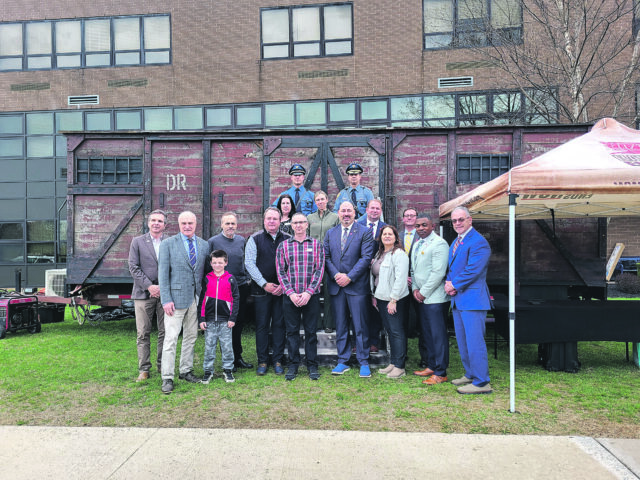
Last month, I had the opportunity to join county and state leaders, to experience a mobile Holocaust exhibit and original artifact collection organized by the Jewish Federation in the heart of New Jersey. The goal of the exhibition, housed in an exact replica of a cattle car used to deport Jews to the concentration camps, was to allow attendees the opportunity to witness a chapter in history that is typically reserved for history books and museums. Nearly 1,000 students from Marlboro Township and Freehold Regional Schools also participated in this moving experience. As elected leaders, it is so important to remember the victims of the Holocaust, and to share the stories of the survivors, to ensure that “never again” is not just a slogan but a call to action. Let us take this opportunity on Yom HaShoah to call out anti-Semitism and race/religion-based hate which is on the rise in the United States and around the world, and promote an inclusive and welcoming community for all. q
Erik Anderson is currently serving his first, three-year term on the Monmouth County Board of County Commissioners. Prior to joining the Commissioner Board, Commissioner Anderson served on the Shrewsbury Borough Council from 2016 – 2019 and served as Mayor from 2019-2024.
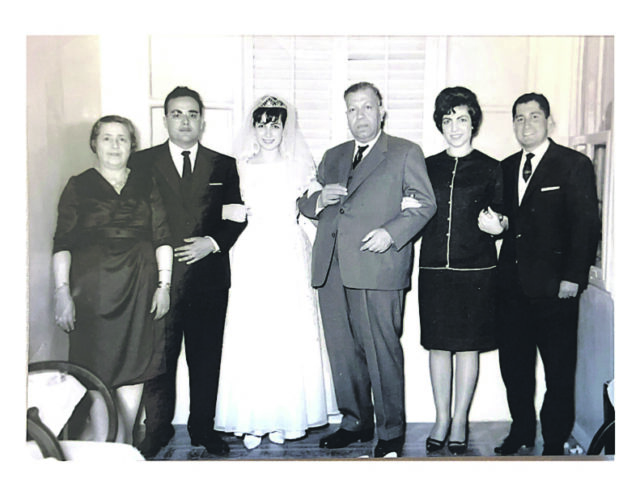
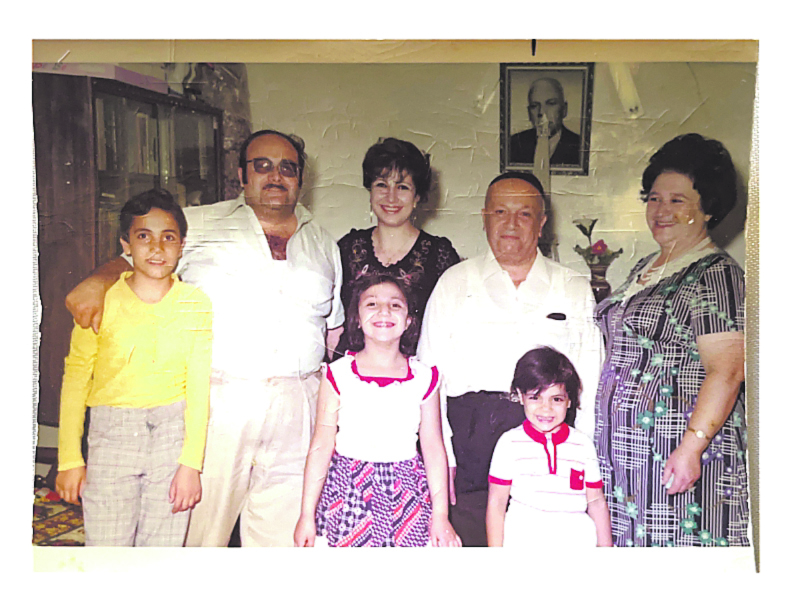
L-R: Rachel Shasho nee Catton, Murad and Linda Guindi, Yosef, Fortuna and Shahud Shasho. April 1962.
Sarina Roffé
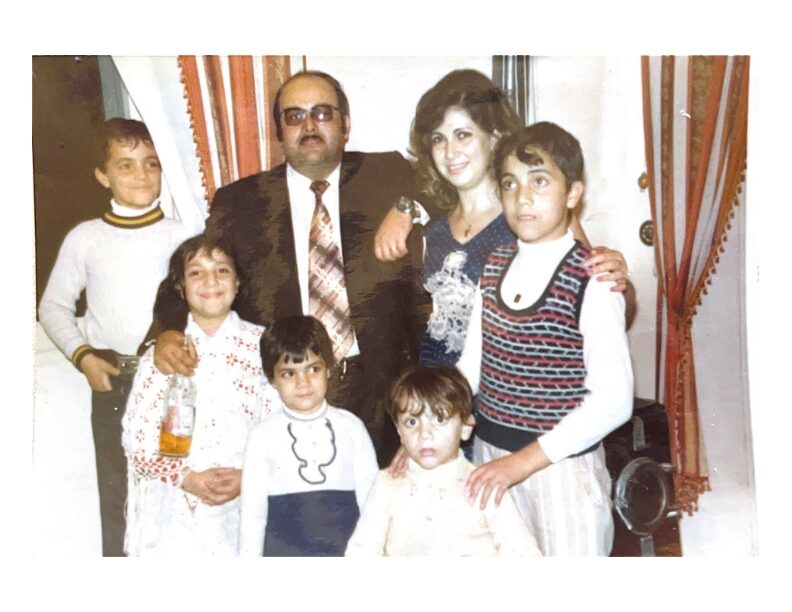
Murad and Linda Guindi married in Aleppo in April 1962. Murad had tried to escape once by going through Lebanon. He was caught, jailed for six months and beaten. The first time Murad came to New York legally was in 1975 when he came for two months with his mother. Linda had stayed behind with the children and Murad had posted bond.
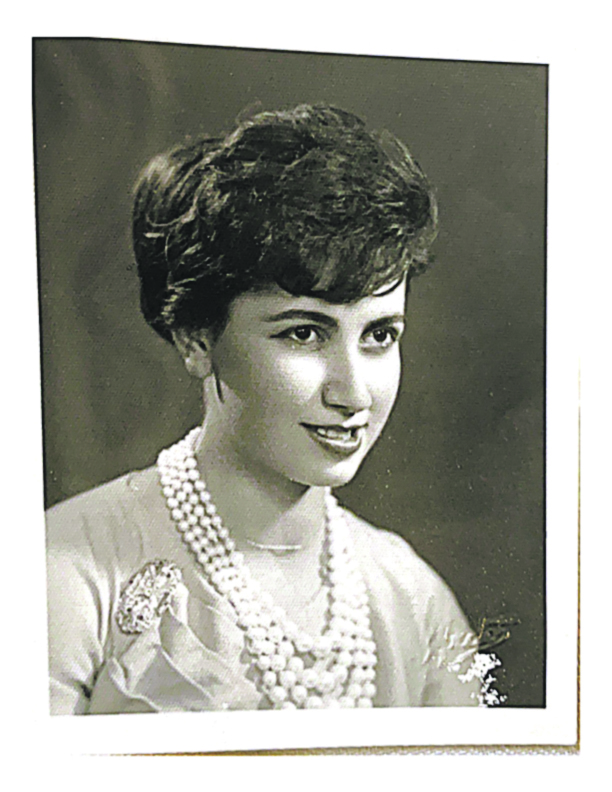
Linda Shasho at age 18 when she got engaged to Murad Guindi in 1962.The Guindi Family Rear (L-R): Albert, Murad, Linda and Henry Front (L-R): Bella, Shella, and EdmondGuindi Family travel document.Henry Murad, Linda, Henry and Latife Abadi. Front: daughters Bella and Shella
Linda Guindi came to the United States in 1977 and again in January 1981 with Murad and her three sons. They left three children behind. They rented a house in Brooklyn for four months and got green cards. But Linda had to go back to Syria for the other three children – two boys and a girl. There was a change in leadership in the Mukhabarat. Her parents were Rochelle and Yosef Shasho. Her mother came to New York in 1982 to see her brother and remained. Linda said: Murad and I came to New York again in 1977 with three of our sons. I saw people dancing in the streets with the Torah. And police were in front and behind, protecting the Jewish people. I was so happy to see this and was crying and I saw the freedom to be Jewish. I never imagined there is such a freedom for Jewish people. I was happy and crying because I had to go back to Syria. In Syria, we are scared there to even say we are Jewish. No one wore kippa even on the street and then I knew we had to get out of Syria. Many people were escaping Syria, mostly young single men, some of whom did not want to worry about escaping with a wife and family. This left many single women with no prospects for marriage. In an agreement with President Jimmy Carter, arrangements were made for 400 young single women to come out for the purpose of marrying proxy husbands. Steven Shalom went to Syria in 1977 to marry all of them as a proxy and bring them to New York where they would marry. The remaining brides, went to France and Canada, among other countries. The same year Steven Shalom and Congressman Stephen Solarz came and got the brides out. I invited them to my home in Aleppo and they came with Bert Chabbott, who was Shalom’s uncle. I served them on my best tablecloth from China. In Aleppo we eat with bowls and spoons. Not on flat plates and not with forks. I never saw a fork till I came to New York. When I first came to New York, they invited us and I saw three forks and two knives and I didn’t know what to do with them I didn’t start eating until I saw what other people were doing. I was so embarrassed. At the beginning of 1980, there were a few Jewish women who were raped by the Mukhabarat. They told the wives “If you say anything, we will kill your husband.” One of the husbands came home and saw his wife laying there, in shock and frightened. Those families were allowed to leave Syria legally. At the time, there was a change in the Mukhabaret and Murad was afraid. The Mukhabaret wanted money. In early 1982, Murad got a new passport and left Syria. Linda and Murad could not call or write letters to each other. But Murad tried to get Linda and the three children–daughters age 12 and 14, and a son, age 9–out of the country through smugglers. She was 38. It took three attempts. The first time she was going to escape, Linda realized the Mukhabarat was following her. At the time she didn’t drive. They followed her on foot. Another family was supposed to escape with her. It was a Thursday and because she didn’t want to be problem, they went without her and received a code after that they had gotten out safely. In December 1982, someone came from Harun Shamosh in Iskenderun, Turkey, to make arrangements to smuggle them out of Syria. She didn’t have any warning and didn’t trust him. He asked for money and had details, but they were details known about the family. She asked him to tell her something no one knew so she could trust him. Since Linda didn’t have any warning or reason to trust him, she was afraid. The Mukhabarat had been sending false agents to homes and they were watching. So she turned the smuggler away. The government called some community leaders from Aleppo to go to Damascus for a meeting. Linda’s brother-in-law, Shaul Shacalo, was at the meeting. The Mukhabarat sent a message that they knew she was trying to escape. They said if Linda was caught, they would slash her throat with a sharp knife. Shaul never told Linda until after she had gotten out safely. She asked her brother Murad Shasho to give the smuggler a code word and if someone came with a code word, she would go. It had to be with numbers. Numbers below five would mean it wasn’t safe. Numbers above five meant it was safe. As a woman alone with three children, Linda was in fear for their lives and felt she needed a man with them. At the time, another family had tried to escape and the man fell along the way. He couldn’t continue on the arduous journey, so they had to return to Aleppo, where he was put in jail. More women were being raped and a few murdered to send a message to their husbands. Linda said: I was frantic and ready to leave. Because I was being followed, I didn’t even want to go home. My children and in-laws were at home. That night, I slept in my sister’s Fortuna’s house and then got a call from my sister-in-law Nadia in New York. She said the children needed clothing in sizes 9, 8 and 7. These were not the sizes of her children, but they were the code that told me the smuggler was okay and it was safe to escape. I told them to send the clothing because it’s very cold and I need the clothing. And they sent the smuggler. A third smuggler came and arrangements for a time and place were made. I was still being followed. I was learning to drive. The guy from the Mukhabarat was following me was on foot so we took the car and it worked. We picked up kids from different places. My nephew Selim Guindi followed me in my car to bus stop, which was the meeting spot. We went 30 minutes early and we agreed that if he saw something wrong he would signal me. He didn’t see anything and I was more at ease because he was with me. If it wasn’t for my nephew, I couldn’t do it. We left December 8, 1982 through the mountains and into Turkey. The night of the escape, it turned out to be a different person. The fear intensified. We were told to wear plastic boots, a double set of clothing and to bring my jewelry. He was drunk. I thought the smuggler would rob me on the way, so I didn’t bring any jewelry. It was a moonless night when we drove into the mountains to the Turkish border. At some point we stopped and had to walk for 10 hours to a remote area of the border where the smuggler cut the fence and held it up for us to crawl under. There are three rows of fence and we had to get through all of them without being seen by the border guards. The border guards had orders to shoot. We passed under the first fence and crawled to the second fence. It was a cold night in December, Hanukkah, and there was snow on the ground. We fell many times. Once in Turkey, we still had to cross the street without being seen. It was about 5 a.m. when we got to the smuggler’s house, where we were allowed to rest and get something to eat. Then another smuggler took us to Iskenderun to the home of Harun Shamosh. We were still not safe as we had no papers. Once in Iskenderun, we were filthy and muddy, so we cleaned up and they threw away our clothing. Harun’s daughter got us new clothes. He arranged for a bus to take us to Istanbul. The bus stopped every hour. It was Shabbat. In Istanbul, we reported as refuges at the Israeli Consulate. Harun came on the bus with us to Istanbul. We had to pretend we didn’t know him. He sat in the very back of the bus. If there was a problem, we could say his name We were scared because we had no papers. But they didn’t ask a woman with three kids. In Istanbul, Linda met with the Jewish Agency and they gave her a laisse passez to go to Israel. El Al was on strike, so they sent a plane just for them. They were in Israel for two weeks. Linda’s green card had expired and It turned out she had to leave the three children in Israel with her brother. But at least they were safe in Israel. She flew to New York but again was afraid because her green card had expired and she had no luggage. Trembling, she went through U.S. Customs and they believed her story that she was not allowed to leave Syria. She then made arrangements to get passports for her children to bring them to New York. The family was finally reunited in April 1983.
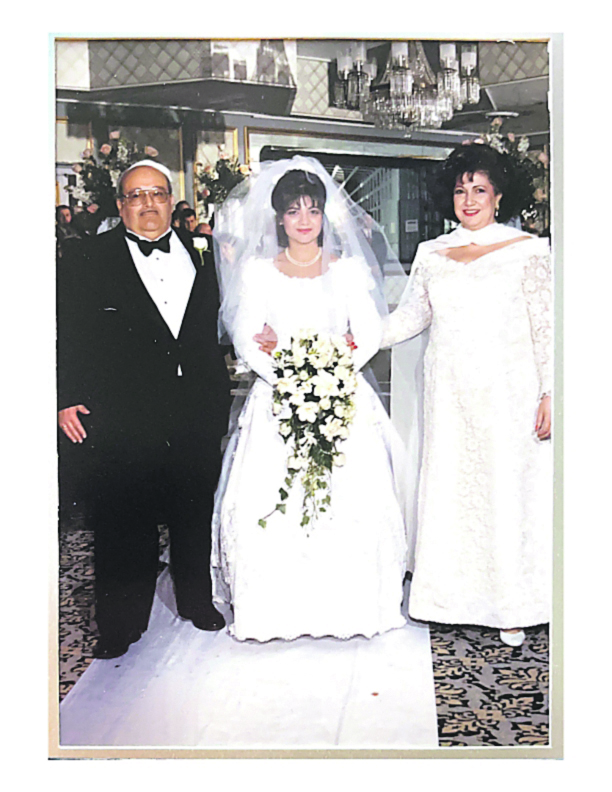
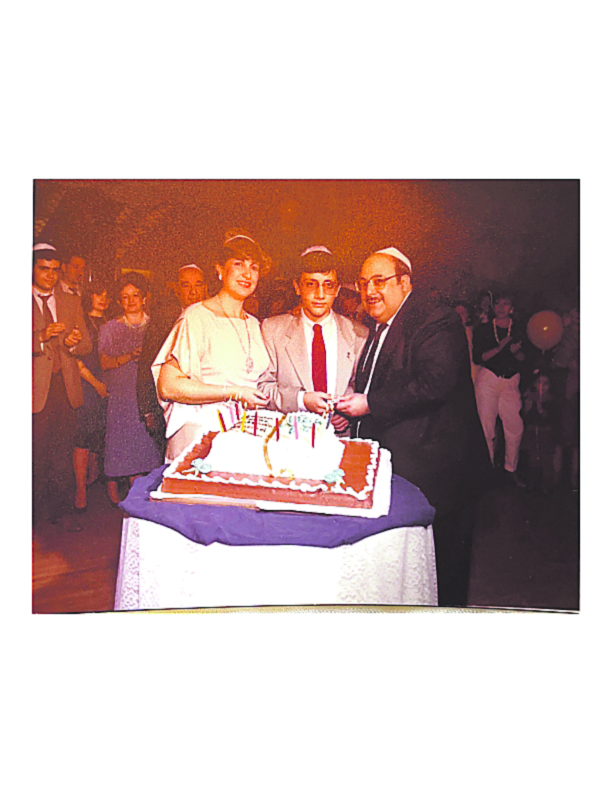
Linda and Murad walk their daughter Shella down the aisle at her 1994 wedding in New York.Linda and Murad cut the cake at their son Edmond’s bar mitzvah in New York.Linda Guindi reunites with her brother Shlomo Shasho for the first time since he escaped to Israel in 1963 at age 13. Linda had come to New York and he flew to see her. When they both left New York, her to Aleppo and he to Israel, she cried because she might not ever see him again.
A genealogist and historian, Sarina Roffé is the author of Branching Out from Sepharad (Sephardic Heritage Project, 2017). She is researching a new book: Syria – Paths to Freedom. Sarina holds a BA in Journalism, an MA in Jewish Studies and an MBA.
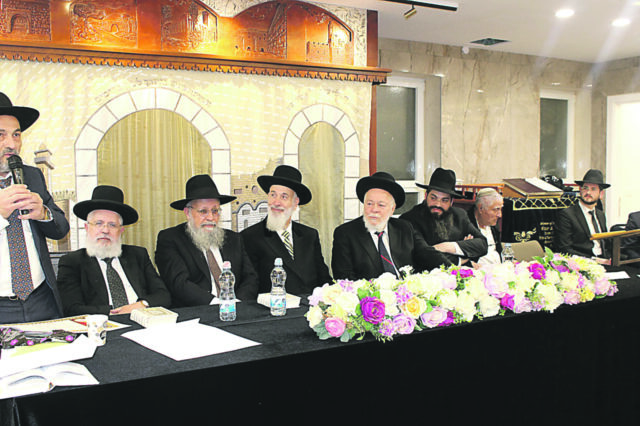
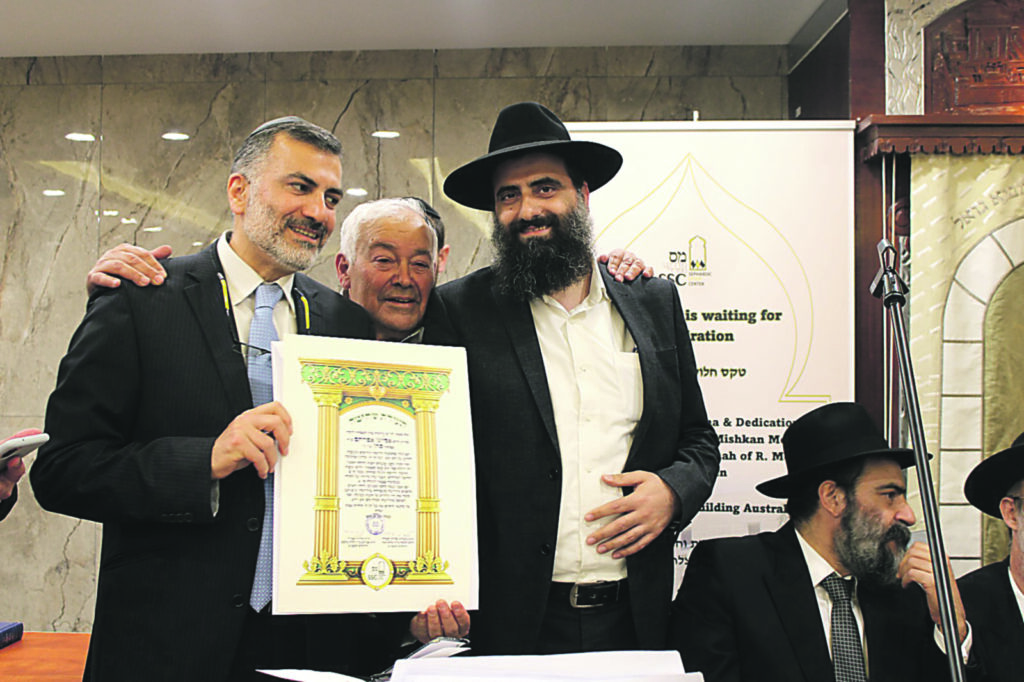
Rabbi Sam Kassin with the Chief Rabbis in Israel at the dais.
Something wonderful happened in Jerusalem. The Sephardic Study Center (Shehebar Sephardic Center or SSC) had a double celebration with the semicha of 10 rabbinical students and the dedication of its new building on March 27, 2025. Over 200 people came to show honor to the 10 rabbis who received their semichot and most of them will be leaving to small communities around the world that are in dire need of rabbis.
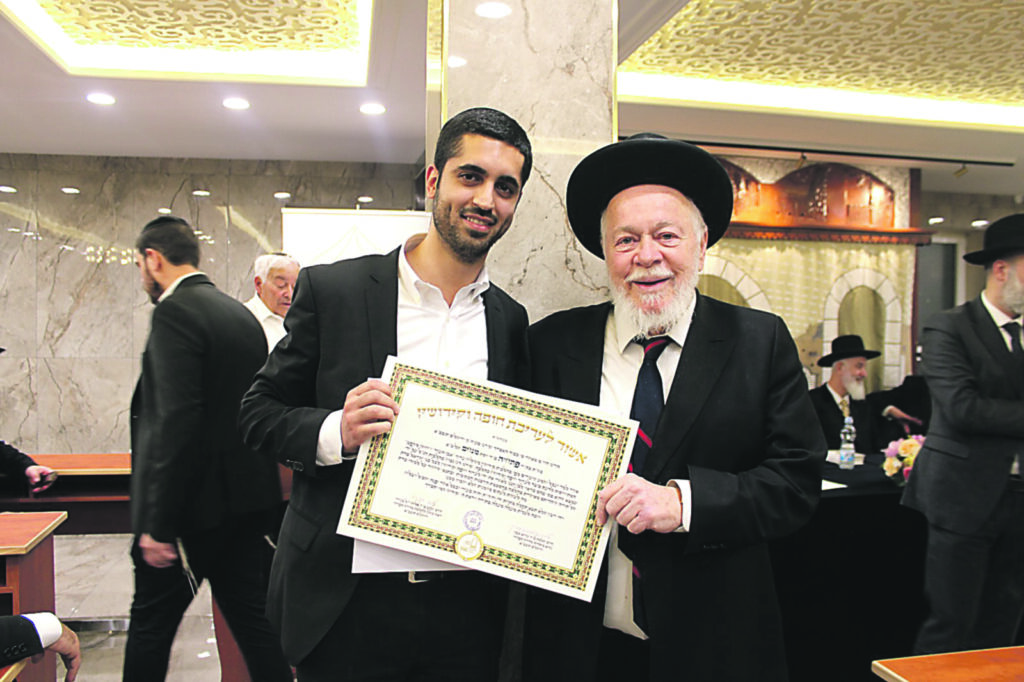
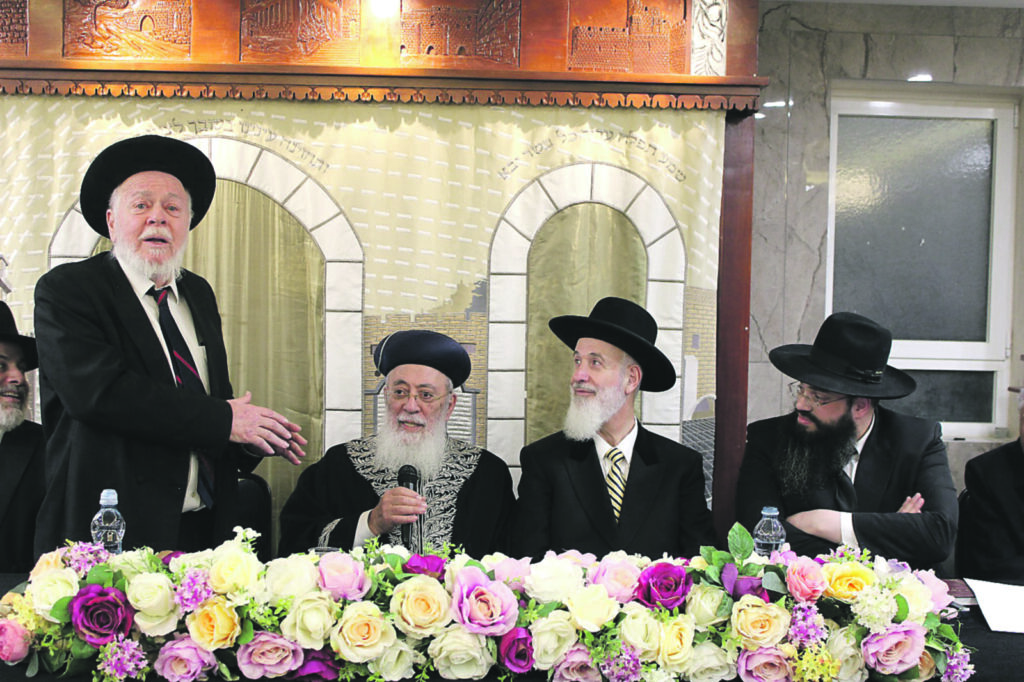
L-R: Rabbi Sam Kassin, former Sephardic Chief Rabbi Shlomo Amar, former Ashkenazi Chief Rabbi Yona Metzger and Rabbi Mualem.Rabbi Rafi Cohen, Rabbi Tuvia Kiel, and R. Elchanan Avraham Cohen holding his certificate in Shehitah.
The Chanukat Chabayit of its new building by the Carr Family of Sydney, Australia and the naming of the Midrsah Mishkah Meir after Rabbi Meir Sion Cohen. Special blessings went to the Carr Family in Sydney, Australia for the building. The evening was blessed by three of the Chief Rabbis and former Chief Rabbis of Israel. a. Rabbi David Yosef – Chief Sephardic Rabbi of Israel/Rishon LeZion b. Rabbi Shlomo Amar – Former Chief Rabbi of Jerusalem and Chief Rabbi of Israel c. Rabbi Yona Metzger – Former Ashkenazi Chief Rabbi of Israel. d. Rabbi Zvadia Cohen – Head of the Chief Justice/ Religious Courts of Tel Aviv, Israel. e. Rabbi Moshe Abutbul – Minister of Agriculture, Israel. f. Rabbi Erez Malul – Assistant Speaker of the Israel Knesset. The semicha ordinations were presented by the rabbis who spoke and also blessed the occasion. Ten SSC rabbinical students came in from France, Bulgaria, the United States, South America and the Far East and were present at this momentous occasion. Some of the exotic places that the rabbis will be going to are
Zambia
Mombasa, Kenya
Coimbra, Portugal
Los Angeles, California
Tucuman, Argentina
Santiago, Chile Ever since the tragedy of October 7, 2023, the SSC has been inundated with requests from small communities around the world that want to know how they can strengthen their small communities in the aftermath of the attack. The Chief Sephardic Rabbi/Rishon Lezion, Rabbi David Yosef, spoke about his personal relationship with Rabbi Sammy Kassin (SSC Dean) and how the SSC blossomed over the years to become the global source for Sephardic rabbis. Rabbi Yosef spoke of how the SSC helps the Chief Rabbinate when they need information on the different needs of small communities around the globe. Rabbi Shlomo Amar, the former Chief Sephardic Rabbi of Jerusalem and Chief Rabbi of Israel, spoke about how the rabbis who go to these communities give an unbelievable sacrifice and how they prevent intermarriage and assimilation. Rabbi Yona Metzger, the former Chief Ashkenazy Rabbi of Israel, blessed all of the sponsors with good health and happiness in all of their endeavors. He said that people really don’t know what Rabbi Kassin and his staff have done around the world. From this modest place, comes one of the biggest blessings for the Jewish People. Rabbi Zvadia Cohen, the Head of all the Beta Din of all the religious courts in the Tel Aviv area, noted that Rabbi Kassin, in his humble way, has done more for Sephardic Jewry worldwide than any other person. Whenever there is a problem of agunot (divorce) outside of Israel, the first person we go to is Rabbi Kassin for help in finding the husband or wife to solve the problems. Rabbi Zion Cohen dedicated the building in the name of the Midrash Mishkan Meir gave a shiur on the spirit of the Neviim in the study of Torah and bringing justice and love from Israel to all the nations of the world. After the speeches, there was a festive meal with music, singing and dancing in honor of our new building and in appreciation for the rabbis who are going out to work and inspire the Jewish People. Rabbi Refael Cohen said that 20 years ago when he was sent to his first rabbinical assignment, he asked Rabbi Sammy Kassin what should he do to help Jews follow mitzvot and return to more observant Judaism. At the time, Rabbi Kassin said that he should hug and kiss the Jewish People and then you win them over. He gave this message to all of the rabbis that are going out to new communities because when you sincerely love people, your love for them becomes inspiring and ignites a spark so they blossom in a Jewish atmosphere. Since its inception in 1980, the SSC has grown into a world-renowned institution with an outstanding reputation for high quality programs, as well as a resource for Sephardic communities worldwide to identify rabbis, teachers, mohels, shochets and spiritual leadership. The SSC also operates synagogues in the Far East and helps struggling Jewish communities around the globe. Each project is designed to help Sephardic communities combat assimilation and intermarriage with spiritual leadership. Vital in its approach and vibrant in its tradition, the SSC is the leading Sephardic Torah Center for learning and training of Sephardic rabbis. SSC rabbis are trained in Sephardic tradition and Jewish law. Embodying Sephardic tradition and our rich heritage, the three-to-four-year accredited rabbinical training program is responsive to community needs and provides a preeminent source of rabbinic leadership for the next generation and beyond. With their rich grounding of Jewish law and Halakha, SSC rabbis assume a broad range of leadership roles in the community while ensuring the perpetuation of Jewish scholarship.
Marriage is a journey, not a destination. The love and excitement that brought two people together may feel effortless in the early days, but over time, relationships require attention and effort to stay strong. Life’s responsibilities—work, family, and daily routines—can make it easy for couples to drift apart without realizing it. That’s why the 7-7-7 rule is a powerful way to keep love and connection alive. By prioritizing time together every seven days, seven weeks, and seven months, couples can ensure their relationship remains fulfilling, supportive, and joyful.
Time is one of the most valuable gifts partners can give each other. The 7-7-7 rule helps couples be intentional about their relationship, keeping romance and communication at the forefront of their busy lives. The idea is simple: every seven days, go on a date; every seven weeks, spend an entire day or weekend together; and every seven months, take a vacation. These scheduled moments provide a steady rhythm of connection, allowing couples to reset, bond, and continue growing as partners. The concept of the 7-7-7 rule has gained recognition in the relationship and psychology fields. Dr. Bruce Y. Lee discussed the 7-7-7 rule in an article for Psychology Today, highlighting its potential benefits for strengthening relationships. He explained that couples who consistently make time for one another build deeper emotional intimacy and are better equipped to handle conflicts when they arise. Lifestyle publications such as Stylist have also explored the 7-7-7 rule, emphasizing how it fosters connection and keeps the spark alive in long-term relationships. The first step of the 7-7-7 rule is the weekly date. It doesn’t have to be extravagant or expensive; what matters most is setting aside time to focus on each other. A dinner out, a coffee date, a walk in the park, or even a quiet evening at home without distractions can create meaningful moments. The goal is to break away from the usual routines and dedicate time to talk, laugh, and reconnect. It’s also important to be present—this is not the time to vent about work stress, complain about bills, or discuss household responsibilities. Instead, the focus should be on enjoying each other’s company, strengthening emotional intimacy, and rekindling romance. Every seven weeks, couples should plan a full day or weekend together. This is a chance to step away from daily obligations and immerse themselves in quality time. A day trip to a nearby town, a hike in nature, or a weekend getaway can bring a refreshing change of pace. These experiences create new memories and strengthen the emotional bond. More importantly, extended time together allows for deeper conversations and the kind of connection that can be difficult to achieve in short, everyday interactions. Just like with date nights, it’s crucial to keep these moments free from the stresses of daily life. Make it about enjoying each other, having fun, and deepening the partnership. The final step of the 7-7-7 rule is a vacation every seven months. Travel offers a unique opportunity for couples to escape from responsibilities and focus on each other without the usual distractions. Whether it’s a tropical beach, a mountain retreat, or an adventure in a new city, vacations help couples rediscover their sense of fun and excitement. Shared experiences build a stronger foundation, and stepping outside of routine environments can reignite passion and appreciation for each other. During these trips, try to keep work calls, emails, and family drama to a minimum. This time is meant to be a reset—a chance to strengthen the bond without outside interference. Planning these experiences together is just as important as the time spent enjoying them. Deciding where to go, what to do, and how to make the most of each outing encourages open communication and teamwork. Discussing preferences, expectations, and logistics helps couples develop better decision-making skills and strengthens their ability to compromise. Make sure the activity is something you both want to do—dragging your partner into something they dislike will only create tension rather than strengthen your bond. When both partners are involved in the planning process, it reinforces the idea that their relationship is a shared responsibility, built on mutual respect and understanding. Of course, life doesn’t always go according to plan, and flexibility is key. If a date night gets skipped one week or a vacation happens in eight months instead of seven, it’s not a failure—it’s just an adjustment. The most important thing is to maintain the intention behind the rule and continue prioritizing quality time together. And while making memories is important, so is financial responsibility. A romantic evening or getaway doesn’t have to break the bank. Keeping a budget in mind prevents unnecessary stress and ensures that these experiences enhance the relationship rather than create additional burdens. Over time, these scheduled moments of connection build a stronger, more resilient relationship. When couples regularly invest in each other, they develop better communication, deeper trust, and a greater sense of teamwork. Small conflicts become easier to navigate because there is a foundation of love and understanding. The 7-7-7 rule doesn’t just help keep a marriage strong—it helps it thrive.
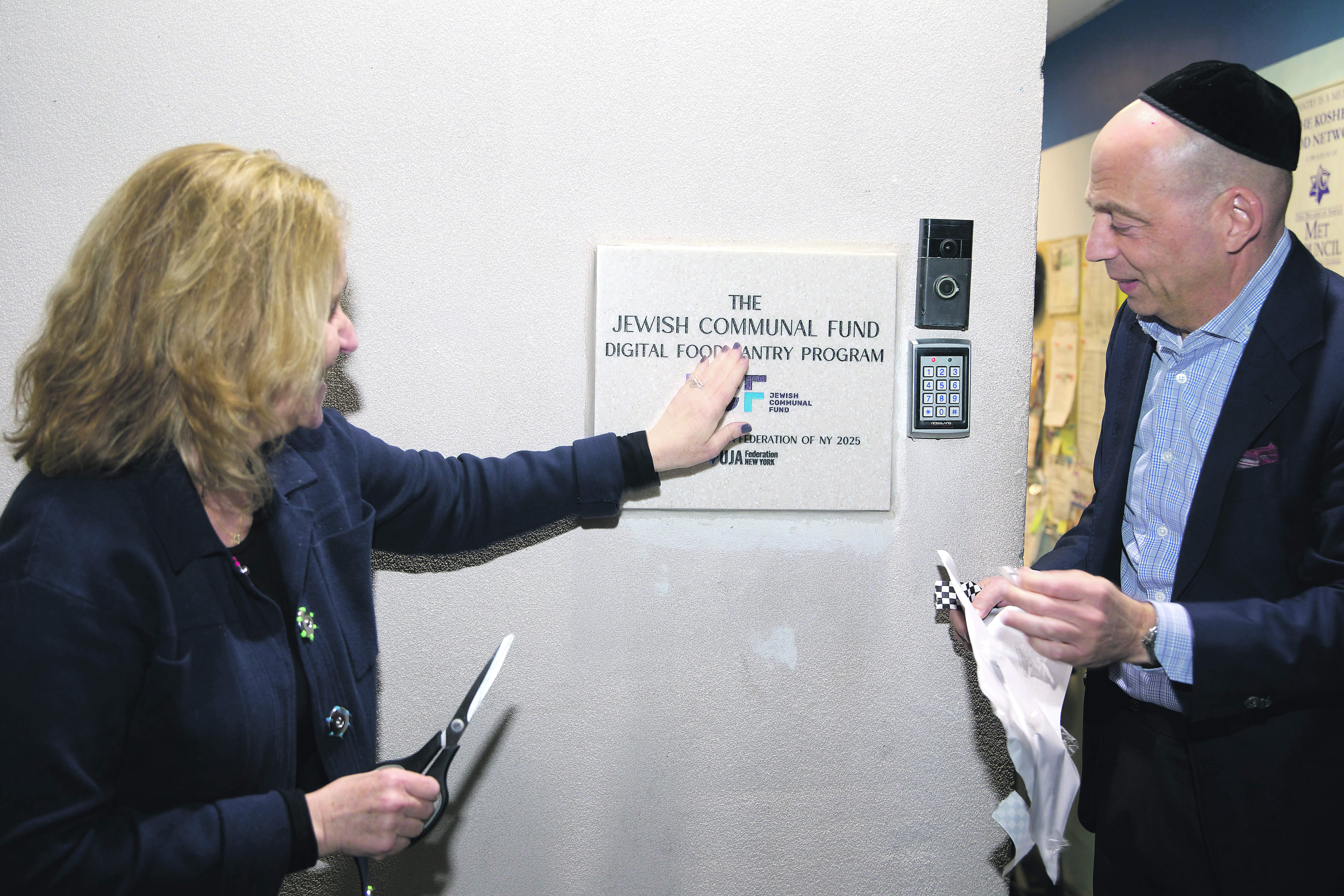
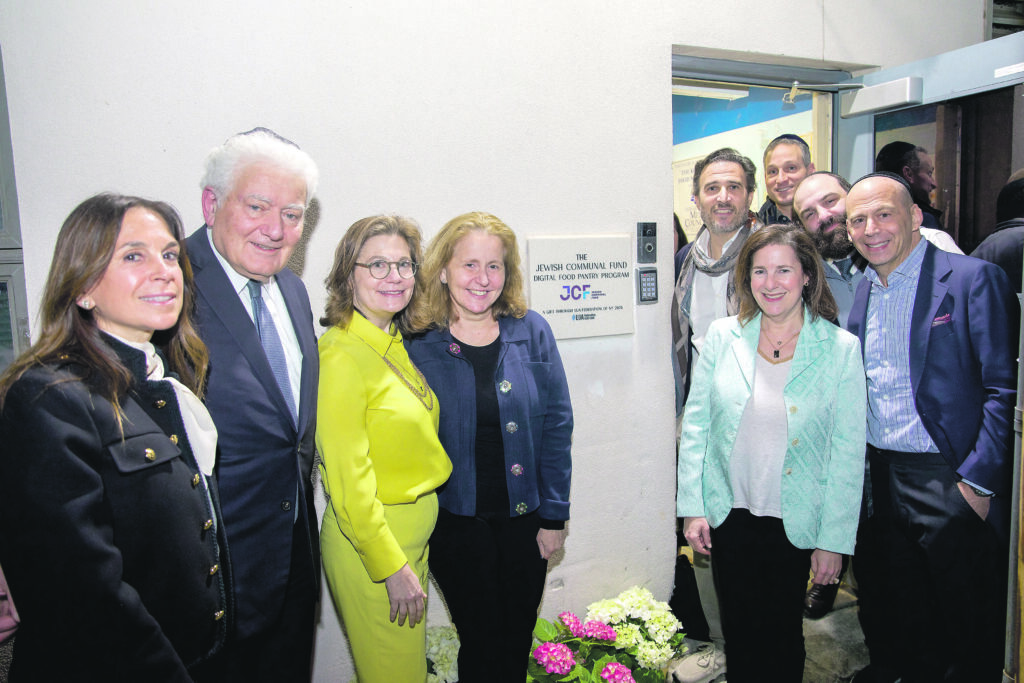
On Monday, March 31, SBH welcomed Jewish Communal Fund (JCF) and UJA-Federation of NY to its Kings Highway headquarters to celebrate a major milestone for the community: the official launch of the Jewish Communal Fund Digital Food Pantry Program. For decades, SBH’s Sarah Sutton a”h Food Pantry has been a resource for so many individuals and families. Visitors can visit the pantry and select the groceries they need, fitting their visits between carpool and work.
Now, thanks to a generous grant by JCF, the Sarah Sutton a”h Food Pantry just got the ‘Fresh Direct’ treatment with the implementation of a digital system. “You can now order online and you can arrange a pick-up time that’s convenient for you and your family,” said Rachel Schnoll, CEO of JCF. Only instead of paying with cash, “the system uses points instead of dollars,” added Vicki Compter, Vice President of Capital Gifts and Special Initiatives at UJA, at the launch. “Healthier foods ‘cost’ less points than less-healthier options, incentivizing clients to make better choices,” she said. “The whole goal of this pantry is to give people dignity, to help with health outcomes and to give people choices.” JCF is generously funding the first three years of the grant powering the digital pantry system, while UJA has committed to funding years four and five. “We’re stronger together because we’re able to fund so many programs and services through the support of these partners,” said SBH CEO Nathan Krasnovsky. “We’ve proudly offered our clients the most dignified experiences through our other divisions, and now through this new digital pantry, we can do the same with our Food Division,” added SBH former president and former JCF board member Lee M. Cohen. “Now there’s no need to wait on line and let the anxiety creep in as clients can place their orders in advance on their own and pick up a box of groceries discreetly.” Ray Chalmé, JCF trustee and board member of the UJA, spoke about the natural synergy between the three organizations–UJA, JCF and SBH. “It’s wonderful to see a partnership that works and continues to work.” Donors have allocated over $11 million in grants to our community institutions through JCF, along with an additional $2.5 allocated by their advisory board for special gifts and projects. The Sarah Sutton a”h Food Pantry runs through a few different forms of support. In addition to our generous community donors, bakers and volunteers, our partners at the Met Council, the Food Bank of New York City and City Harvest help keep shelves stocked. JCF’s support will allow SBH to modernize the way food is distributed, modernizing the entire process. Trained staff and volunteers at the pantry have been helping clients acclimate to the new system, which many adapted to pretty quickly. “I see the difference this is making first-hand,” said SBH Vice President Michele Levy. “One of our senior clients now places his orders on the phone!” Michele also spoke about a client who has been raving about the digital system. “She’s a single mom who would rush here between carpool and work and run into the pantry and quickly decide what her family would like to eat,” said Michele. “Now with the digital pantry, she can place her order in the comfort of her home at her own pace and plan out her week–the stress is gone!” “Through this grant, SBH will continue serving the community with the heart and soul it always has, only now the process of obtaining food will be further simplified,” said SBH President David J. Beyda. “Our model is to provide hundreds of different programs and services under one roof and now we can ensure our clients have a seamless, stress-free experience when feeding their families.”
Your life insurance policy may be growing, but is it growing in a way that actually benefits you? It’s time to take a closer look and make sure your policy is working as hard for you as it should.
Life insurance is one of those financial products that often gets a pass in the minds of many consumers. After all, you pay the premium every month and, ideally, you never have to think about it again. But if you’re not reviewing your in-force life insurance policies regularly, you could be missing out on opportunities to maximize your policy’s potential. When you initially signed up for that life insurance policy, you probably didn’t envision needing to look at it again until something tragic happens. But here’s the thing: life insurance isn’t a one-and-done kind of product. Especially for those with permanent life insurance, which can build cash value over time, it’s crucial to periodically review how your policy is performing. Most people know about the death benefit, the payout your beneficiaries receive when you pass. But what they often overlook is the cash value component, which is unique to permanent life insurance policies like whole life and universal life. Over time, the cash value can grow and be accessed through loans or withdrawals, offering you an additional financial resource that can help in emergencies, or even as a retirement supplement. But here’s where the problem lies: too often, brokers don’t structure a policy in a way that maximizes its potential for the client. They might focus on making sure the death benefit is high enough to cover initial needs, but in doing so, they might overlook how the cash value can be optimized for long-term growth. Even worse, some brokers will intentionally structure a policy to increase their own commission, rather than crafting something that actually benefits the client. It’s a sad truth in this industry—one that’s easy to overlook until you realize your policy isn’t growing as expected. What happens when your policy doesn’t perform as planned? Many policyholders feel stuck. After all, a life insurance policy can feel like a lifelong commitment, and no one wants to think about making changes when it’s something as important as life insurance. But just because your policy hasn’t performed as expected doesn’t mean you’re stuck with it. There are typically options available to help adjust the policy to suit your current needs—often without additional costs. For example, in some cases, you can use the accumulated cash value to increase the death benefit, providing better coverage for your family over the long term. This adjustment can be made at little to no added cost, leveraging your policy’s own growth to better meet your needs. At Power Forward Group, we take a different approach to life insurance. We don’t structure policies based on what generates the highest commission for us. We build policies that are tailored to your individual needs, focusing on what’s best for you. Our goal is to make sure that your policy is working for you—not just providing a death benefit, but also growing in cash value and offering flexibility over time. We understand that reviewing life insurance can feel overwhelming, but you don’t have to navigate it alone. At Power Forward Group, we offer free audits of your current policies. We’ll help you assess how your policy is performing, what options are available, and how to make any necessary adjustments to ensure that your coverage continues to grow with you, your family, and your financial goals. It’s never too late to start thinking about what’s best for your future—and your family’s future. So, before you settle into another year without checking in on your life insurance, take a moment to consider: Is your policy structured to meet your needs, both now and in the long run? If you’re unsure, or you suspect your policy isn’t performing the way you thought it would, consider reaching out to us for a consultation. Protecting your family starts with making sure your life insurance works as hard as you do. Let’s build a plan together to secure their future, so you can rest easy knowing you’re taking care of them in the best way possible. q
Registered representative of, and securities and investment advisory services offered through Hornor, Townsend & Kent, LLC (HTK), Registered Investment Adviser, Member FINRA/SIPC, 800-873-7637, www.htk.com. Power Forward Group is unaffiliated with HTK. HTK does not offer tax or legal advice. Always consult a qualified adviser regarding your individual circumstances. 7747113RG_Mar27
David Chabbott is a community member and financial advisor at Power Forward Group. He graduated Brooklyn College in 2001, and has spent the last 20+ years operating his small family business. David and his wife Aimee love getting involved in their children’s yeshivah, watching their 4 sons play basketball, and playing Barbie with their daughter.
What was once a tired and deteriorating building is now a shining jewel in the heart of Deal, New Jersey. The Shore Area Mikveh has been completely transformed—rebuilt with grace, beauty, and holiness, and elevated into a tranquil, spa-like sanctuary for Jewish women.
The driving force behind the transformation was Eddie Mizrahi, whose leadership, vision, and passion brought this monumental project to life. As president, he stepped up to fundraise, rally community support, and manage the renovation with unshakeable dedication. With spiritual leadership from Rabbi Shmuel Choueka and the esteemed rabbis Rabbi Shlomo Diamond, Rabbi Moshe Malka, Rabbi Saul J. Kassin, and Rabbi Edmond Nahum, and through the devoted work of Debra Shiloach, Richie Benedict of Ray Builders, and the entire team, the mikveh was not just renovated—it was transformed into a sanctuary of beauty and holiness.
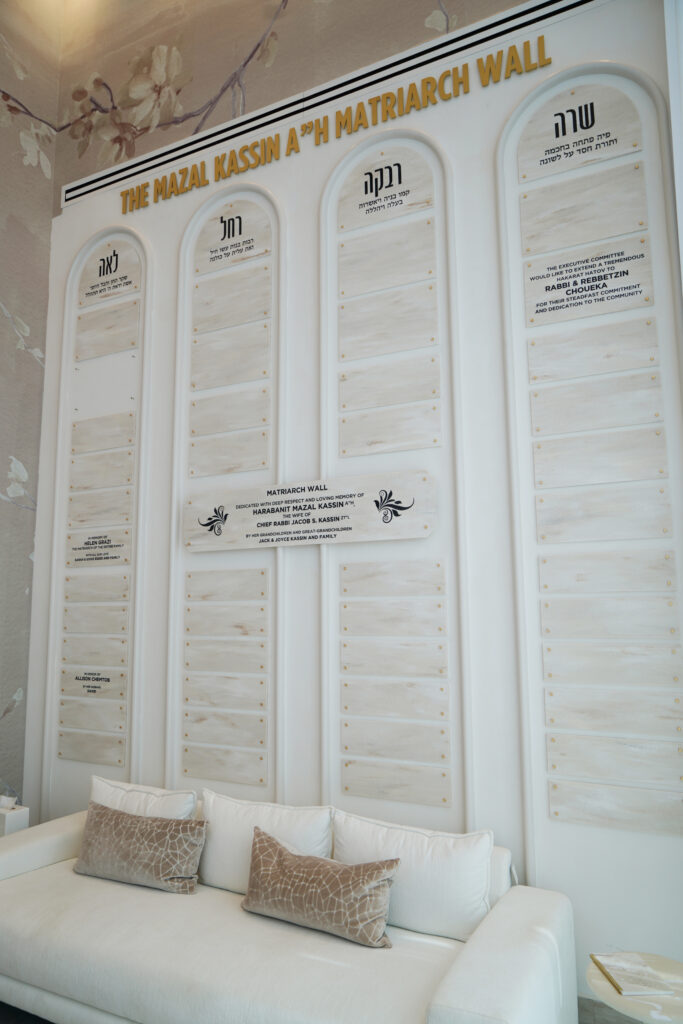
A Vision Comes to Life What started as a desperate need quickly turned into a divine opportunity. After years of disrepair—peeling tiles, broken compressors, and failing systems—the mikveh was no longer sustainable. Rabbi Choueka gave the green light for a total overhaul, and from that moment on, things moved quickly. Debra Shiloach, an experienced designer, immediately volunteered to take on the interior concept. Inspired by a wallpaper pattern she found, she crafted a space that now evokes peace, elegance, and spiritual beauty. Drawing on her previous work with mikvaot and her experience with top designers, Debra created a setting that would honor the mitzvah and elevate every woman’s experience. Elyse Kairey, the mikveh’s manager of 25 years, was deeply moved by the transformation. “I never thought I’d see the day this mikveh reflected the true beauty of the mitzvah,” she said. Today, the space includes 15 preparation rooms, a stunning bridal suite, and four pools—all painted in soft creams and whites. The now iconic Matriarch Wall, inspired by Eddie Mizrahi and dedicated by Jack A. Kassin in memory of Mrs. Mazal Kassin, the wife of Chief Rabbi Jacob Kassin, pays tribute to the spiritual women who built the foundation of the community.
Building Under Pressure Maurice Zekaria, vice president of the committee, stepped in to oversee construction. Known for his work on many community projects, Maurice faced intense challenges: the building had no plans, the timeline was tight, and the mikveh needed to reopen in time for Deal’s busy summer season. “We had to gut the entire interior. There was no way around it,” he explained. To complete the job in under six months, the team worked nonstop. Tradesmen—each one a religious Jew with deep respect for the mitzvah—worked shoulder-to-shoulder in tight spaces to meet the deadline. “It was my toughest project,” Maurice said, “but we had the right team and Hashem guiding us every step.” All of it was made possible by community generosity. “We had no money in the bank when we started,” Maurice recalled. “We had to raise funds on the spot, borrow, and pay contractors before we even had a fundraising event.”
Rallying the Community Eddie Mizrahi, known for his creativity and commitment to the community, led the fundraising campaign with energy and heart. He collaborated with graphic designer Stacey Gindi to develop a professional brochure that told the mikveh’s story and inspired donations. Rabbi Choueka, along with many leading community rabbis lent their voices in support, reminding the community of the mikveh’s vital role. Last Memorial Day weekend Eddie organized an elegant gala at the home of Ely and Rena Cohen, working alongside event planner Norma Cohen, Stacey Gindi, Debra Shiloach, Ellen Sutton, and a team of volunteers. They honored the mikveh’s original founders—Sonny Laniado, Ike Hidary, and Manny Haber—and showcased an inspiring video Eddie created with Joe Mansour. “With Hashem’s help,” Eddie shared, “we raised what we needed.” While construction continued, Elyse and her team coordinated with smaller local mikvaot to ensure women still had access. “We never stopped answering phones. We juggled and made it work,” she said.
What’s Next The mikveh reopened in June 2024—on schedule and against all odds. Comment cards now flood in with heartfelt thanks from women across the community who feel the care, warmth, and serenity in every detail. But for Eddie, the work isn’t over. He’s aiming to raise another million dollars: half for final touches, half for future upkeep. He’s also producing an all-women’s video to promote mikveh awareness and plans a Breakfast & Celebration this May in honor of community matriarch, Cookie Chera. It will be held in May at the home of Lisa and Lee Cohen, who along with the Setton family have generously sponsored the name of the campus. For more information or to sponsor a part of this special building, contact Eddie Mizrahi at (347) 260-0745.
EVERY BUSINESS BEGINS WITH A SPARK—AN IDEA, A DREAM, A NEED TO CREATE SOMETHING MEANINGFUL. BUT NOT EVERY BUSINESS BECOMES A LEGACY. A LEGACY IS SOMETHING THAT LASTS, SOMETHING THAT MATTERS BEYOND YOUR OWN SUCCESS. IT’S A BUSINESS THAT CAN THRIVE LONG AFTER YOU STEP ASIDE.
So how do you build something that stands the test of time? It takes more than good ideas and hard work. It takes clear leadership, smart planning, and a long-term vision for growth. Before we talk about the next steps and future goals, it’s important to take a moment and think about what legacy means to you. Is it keeping your business in the family? Is it making a lasting impact in your industry or community? Once you define what success looks like years from now, you can begin to build toward it—with purpose and direction.
Lead with Vision and Values The heart of every legacy business is strong leadership. But real leadership isn’t just about making decisions or hitting revenue goals. It’s about setting a clear vision and helping others believe in it too. Leaders who build legacies are consistent. They show up with integrity, communicate clearly, and take responsibility for the business’s culture. They also know when to listen. Employees and customers alike want to feel seen, heard, and respected. When you lead with empathy and confidence, your team is more likely to stay, grow, and help the business thrive. One key to leading with purpose is defining your business’s core values. These values should guide every part of the company—from hiring decisions to marketing campaigns to how you handle mistakes. Over time, these values become part of your brand identity and create a sense of trust and stability.
Build Smart Systems That Scale A business that can’t run without you isn’t truly built to last. That’s why creating strong systems is a major part of building a legacy. From your sales process to how you onboard new employees, you want your business to function smoothly—even if you’re not there. Document your key workflows. Automate what you can. Train your team regularly and give them the tools they need to succeed. When systems are in place, your business becomes more efficient and less vulnerable to change. Think of systems like a solid foundation—they may not be flashy, but they’re what hold the whole structure up.
Grow with Intention Many business owners think growth just means more money or more customers. But real growth is about expanding in ways that support your long-term goals. That might mean growing your team slowly but thoughtfully. Or it could mean focusing on better service instead of bigger numbers. Legacy businesses are built with care, not chaos. Always ask yourself: Will this growth help or hurt the heart of my business? Not all opportunities are the right fit. Smart growth is sustainable growth. It protects what you’ve built while allowing for meaningful expansion.
Prepare the Next Generation One of the hardest parts of building a business legacy is planning for what happens when you’re ready to step away. Succession planning can feel uncomfortable—but it’s one of the most important steps you’ll ever take. Start early. Whether you plan to pass the business to a family member, a trusted employee, or an outside buyer, the process takes time. You’ll need to train your successor, introduce them to key relationships, and slowly give them more responsibility. A good succession plan also includes legal and financial elements. Talk to your lawyer and accountant about how ownership will transfer, and how taxes or liabilities will be handled. The smoother the transition, the more confidence your clients and team will have moving forward.
Protect What You’ve Built As your business grows, so does your responsibility to protect it. That means putting safeguards in place—like insurance, cybersecurity, and updated legal documents. But it also means protecting the spirit of your business. What do you want people to remember? What should never change, even as your business evolves? Writing down your company’s story, mission, and values helps preserve your original vision for future generations. You may also consider setting up an advisory board or mentorship program, so future leaders have a support system in place to help them navigate big decisions. A true business legacy isn’t built overnight—it’s built over years of thoughtful, consistent action. It’s about leading with vision, planning for the future, and growing in ways that reflect what matters most. When you invest in people, build strong systems, and think beyond yourself, your business can make a lasting impact for decades to come. q
The content is developed from sources believed to provide accurate information. Investing involves risk including the potential loss of principal. No investment strategy can guarantee a profit or protect against loss in periods of declining values. Past performance does not guarantee future results. Consult with a financial professional regarding your specific situation.
Ari Baum, CFP® is the Founder and CEO of Endurance Wealth Partners, with over 25 years of experience in the Financial Services industry. He brings his in-depth experience to Conceive. Believe. Achieve. for his clients. Securities and Advisory services offered through Prospera Financial Services Inc. Member FINRA/SIPC. Brokerage and Advisory accounts carried by Wells Fargo Clearing Services, LLC.
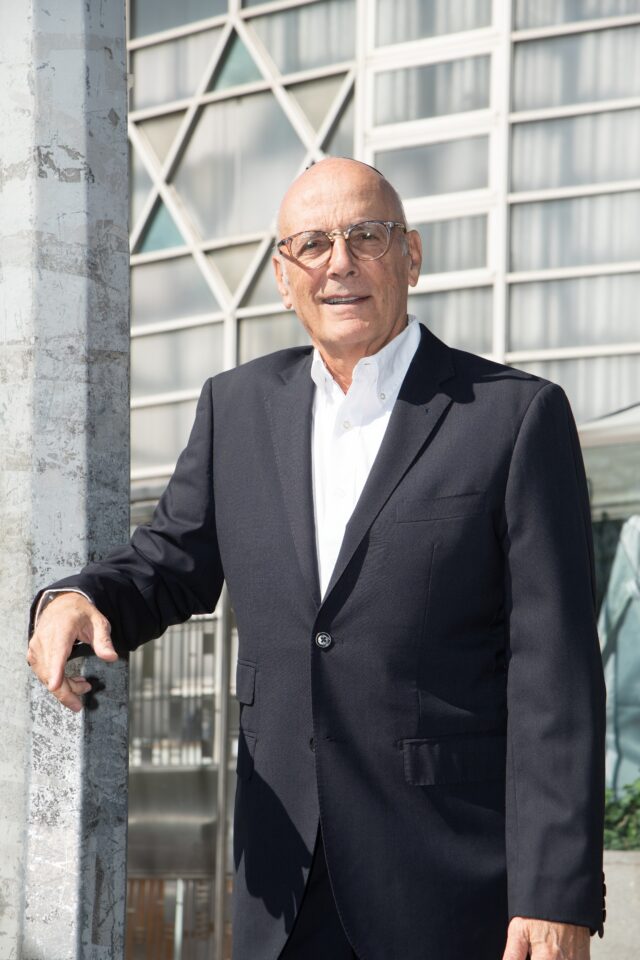
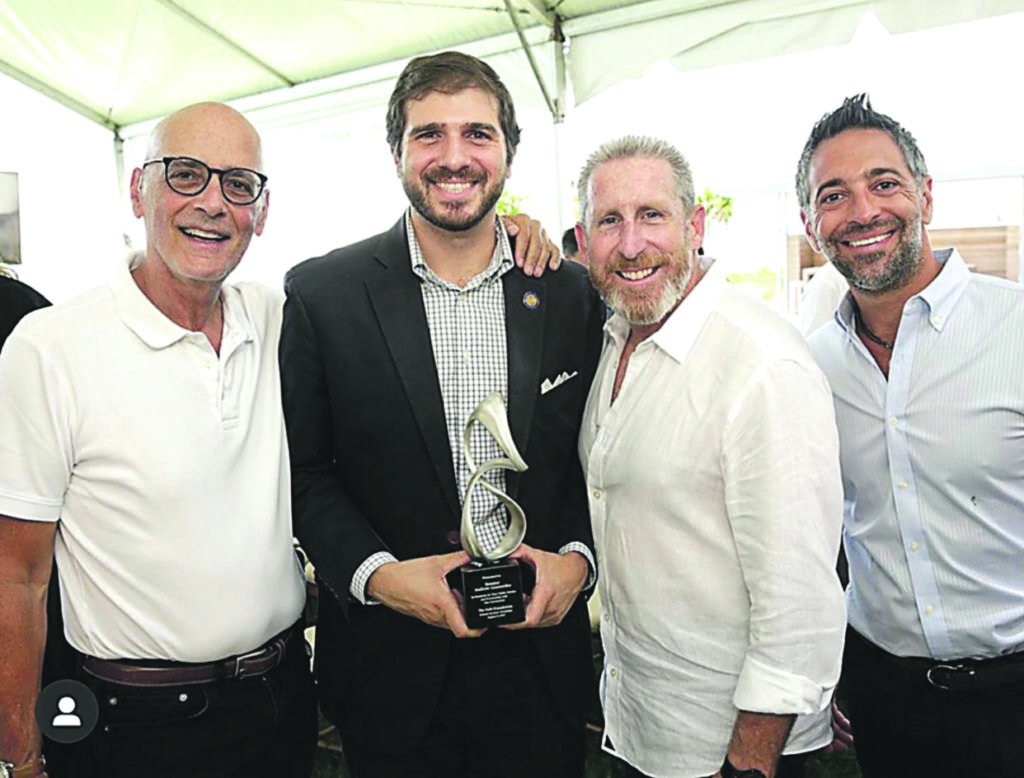
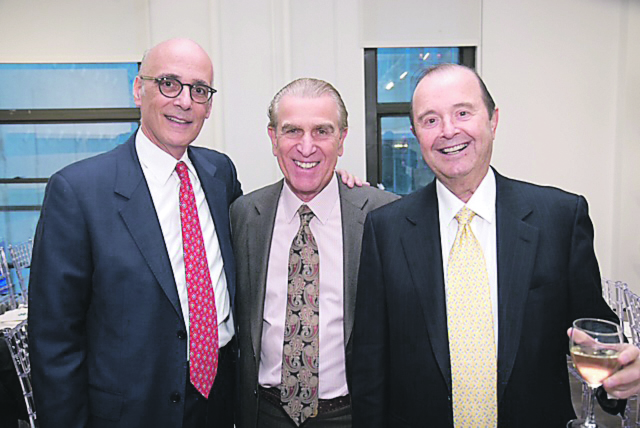
In a historic move, Sam Sutton, one of the Sephardic community’s respected leaders and long-time advocate, has officially launched his campaign for New York State Senate in the 22nd District, seeking to fill the seat vacated by Senator Simcha Felder. The special election will take place on Tuesday, May 20th, and could mark a monumental moment: the first time a member of the Sephardic Community would serve in the New York State Senate.
Sutton’s candidacy is more than a political run—it is a powerful statement about representation, community empowerment, and a long-overdue voice for a growing and vibrant constituency. As Sutton put it in his announcement, “Given our community’s growth and needs, we deserve a representative who is deeply rooted in our community and understands its dynamics.”
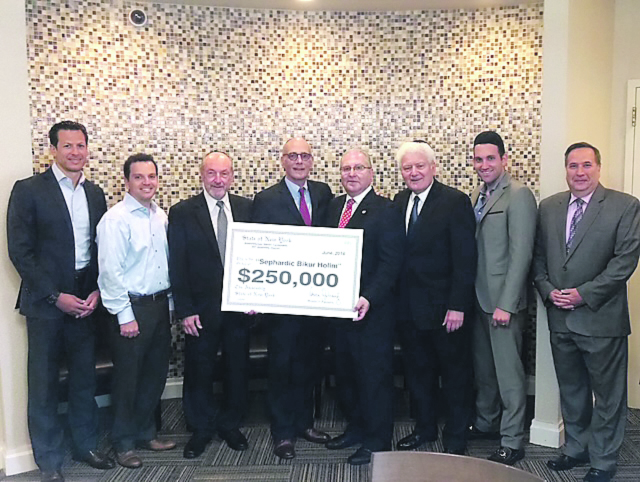
A Proven Civic and Communal Leader A lifelong Brooklyn resident, Sam Sutton’s decades of leadership and advocacy stretch across civic, educational, and humanitarian spheres. He served over 30 years on the board of Sephardic Bikur Holim (SBH), including five years as President, helping grow the organization into a multidivisional social service center. Sam also co-founded and is the President of the Sephardic Community Federation (SCF), the political and public policy arm of the Sephardic Jewish community, and has played a central role in securing government resources and legislative support for key community needs. His resume also includes supporting his wife Nancy when she founded the New York Cancer Center. He also was a founding board member of the SAFE Foundation. Sam also was privileged to serve as a Trustee at NYU Langone Hospital. An Advocate for Education and Jewish Continuity Education has long been at the heart of Sutton’s public work. Sam was chairman of the education committee at the Sephardic High School and shortly after chaired their fundraising committee as well. A graduate of Yeshiva of Flatbush (67’) and Yeshiva University (71’), he was nominated as a Trustee to CUNY Board of Trustees by Governor Pataki and served from 2006 to 2012. During his tenure Sam helped hire the Presidents of Brooklyn and City College. He is also the co-founder and current chairman of Teach NYS, an organization committed to securing government support for non-public schools. In 1973, Sutton, along with four other young men, founded the Sephardic Torah Learning Center, which was eventually brought over to Shaare Zion by former President David Cohen. Sam along with a few other community leaders, including Harry Adjmi, relaunched Ozar Hatorah NY in 2017, helping transfer over 3,200 children in France from public schools into yeshivot — a bold, international effort in Jewish continuity and education.
A Humanitarian with Global Impact While his civic accomplishments are impressive, Sam and Nancy are equally admired for their quiet, personal acts of compassion. Sam and Nancy were likely the first Sephardic family to become foster parents, after going through a 3-month training program. They opened their home to 14 foster children, including one with special needs who lived with them for 18 months and became like a sixth child. In 2005, in partnership with American Jewish World Service, Sam led a humanitarian mission to Senegal to launch a development project focused on clean water access and sustainable agriculture. Earlier in his life, in 1973, Sutton took part in a mission facilitated by the Nativ Division of the Mossad to the Soviet Union, countering false propaganda against Israel as well as facilitating individual efforts to escape the USSR.
A Moderate Voice at a Critical Time If elected, Sutton would bring a much-needed moderate voice to the State Senate—someone capable of bridging divides and working pragmatically on behalf of all constituents. In a political climate often defined by polarization, Sutton’s balanced, solutions-oriented approach would bring stability, clarity, and credibility to Albany. Sutton’s top legislative priorities reflect both local concerns and core Jewish values. Among other community priorities, he is committed to: Fighting antisemitism with zero tolerance, protecting Jewish students and institutions across New York. Unwavering support for Israel, ensuring state partnerships and moral backing for the Jewish state. Delivering increased funding to critical institutions like SBH, The Sephardic Community Center, SAFE, and the community’s Yeshivahs, ensuring they continue to thrive and serve all generations. Funding (not defunding) the Police and fighting against the current Bail Reform
A Community Milestone For the Sephardic community in particular, Sam Sutton’s campaign represents more than a candidacy—it’s a chance to make history. After decades of growth, contribution, and community-building, the opportunity to elect one of our own to such a high level of state government sends a clear message: our voice matters. “I believe it’s time for me to contribute directly from within government,” Sutton said. “We’ve come so far as a community—this is our moment to take the next step.” As May 20th approaches, the momentum behind Sutton’s campaign is growing, fueled by grassroots support and the recognition that this is a once-in-a-generation opportunity to secure representation that truly reflects the community’s values, heritage, and future aspirations.
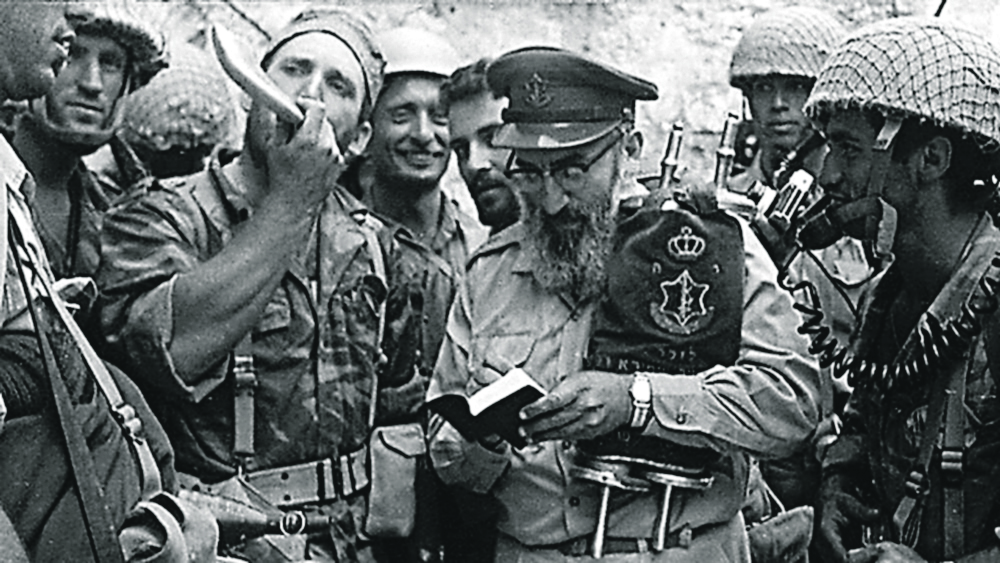
There are times when you know you are living through history: that what you are witnessing will be remembered for centuries. That is what I, and surely every Jew, felt on the day when the word went round the world: Har haBayit beyadenu, “The Temple Mount is in our hands.” That day, 28 Iyar, the Chief Rabbi of the Israel Defense Forces, Rabbi Shlomo Goren, carried a Sefer Torah to the Kotel, blew the shofar, and recited Psalms.
Rabbi Lord Jonathan Sacks ZT”L was an international religious leader, and philosopher. The author of over 30 books, Rabbi Sacks received multiple awards in recognition of his work. Sadly, he passed away in November 2020.
Yitzhak Rabin, Chief of Staff at the time, described the scene: “We stood among a tangle of battle-weary men who were unable to believe their eyes or restrain their emotions. Their eyes were moist with tears, their speech incoherent. The overwhelming desire was to cling to the Wall, to hold on to that great moment as long as possible.” When the Israelis reached the Jewish Quarter, they discovered that it had been reduced to rubble. Synagogues had been destroyed and holy places desecrated. Moshe Dayan made an immediate public announcement that Israel would act differently: “To our Christian and Muslim fellow citizens, we solemnly promise full religious freedom and rights. We did not come to Jerusalem for the sake of other peoples’ holy places and not to interfere with the adherents of other faiths, but in order to safeguard its entirety.” Israel has kept that promised since. No people has ever loved a city as, for 3,000 years, Jews have loved Jerusalem. The Book of Psalms calls it “beautiful in its heights, joy of all the earth, city of the great King.” The word ‘Jerusalem’ appears almost 700 times in Tanach. There are few laments that speak to us with such undiminished force as the words Jews said, twenty-six centuries ago, when Jerusalem was conquered by the Babylonians: “If I forget you, Jerusalem, may my right hand forget its skill. May my tongue cling to the roof of my mouth if I do not remember you, if I do not consider Jerusalem my highest joy.” Wherever Jews prayed, they prayed towards Jerusalem. At every wedding they broke a glass in its memory. At the two great climaxes of the Jewish year, on Pesach and at the end of Yom Kippur, they sang, L’shanah haba’ah biYerushalayim. It is said that once Napoleon was passing a synagogue and heard sounds of lamentation. “Why are the Jews crying”, he asked. “They are mourning the loss of Jerusalem”, one of his officers replied. “How long ago was that?” he asked. “More than seventeen centuries ago,” the officer replied. “A people that can mourn the loss of Jerusalem for so long, will one day have it restored to them”, Napoleon said. And so it was. It is worth remembering that on the first day of the war, 5 June 1967, Israel sent three messages to King Hussein of Jordan – one through the United Nations representative, another via the American ambassador and a third directly. Israel would not attack Jordan if Jordan did not enter the war. Israel would “honor the armistice agreement with Jordan in its entirety.” The West Bank, East Jerusalem, and the Old City, would remain under Jordanian control. There was no reply. Instead, Jordan attacked. Had King Hussein not hardened his heart, Jerusalem would still be in Arab hands. It is one of the great ironies of history. I remember the first time I looked down on the Old City and the Temple Mount. I was standing on Mount Scopus, the original and now rebuilt site of the Hebrew University. I recalled the moment described in the Talmud when Rabbi Akiva and his colleagues stood on the same spot, looking down at the ruins of the Temple. The Rabbis wept. Rabbi Akiva smiled. “How can you smile?”, they asked. “The place that was once the most sacred spot on earth is now laid waste and a fox is walking across the Holy of Holies where once only the High Priest was allowed to enter, and only on the holiest of days.” “I smile”, Rabbi Akiva replied, “because the prophets prophesied that Jerusalem would be laid waste, and they prophesied that it would be rebuilt. Now that the one prophesy has been fulfilled, can we doubt that the other will be likewise?” That was when I realized the power of faith. Jews never lost faith that one day they would return. And they did. It was faith that brought the Jewish people back to Israel and rebuilt the ruins of Jerusalem. So, as we remember those events, let us thank G-d for the freedom to stand once again in David’s city, joining our prayers to those of our ancestors in the place the Divine Presence never left and to which the Jewish people has now returned.
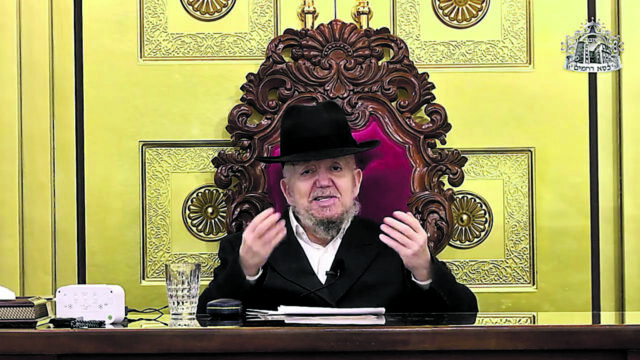
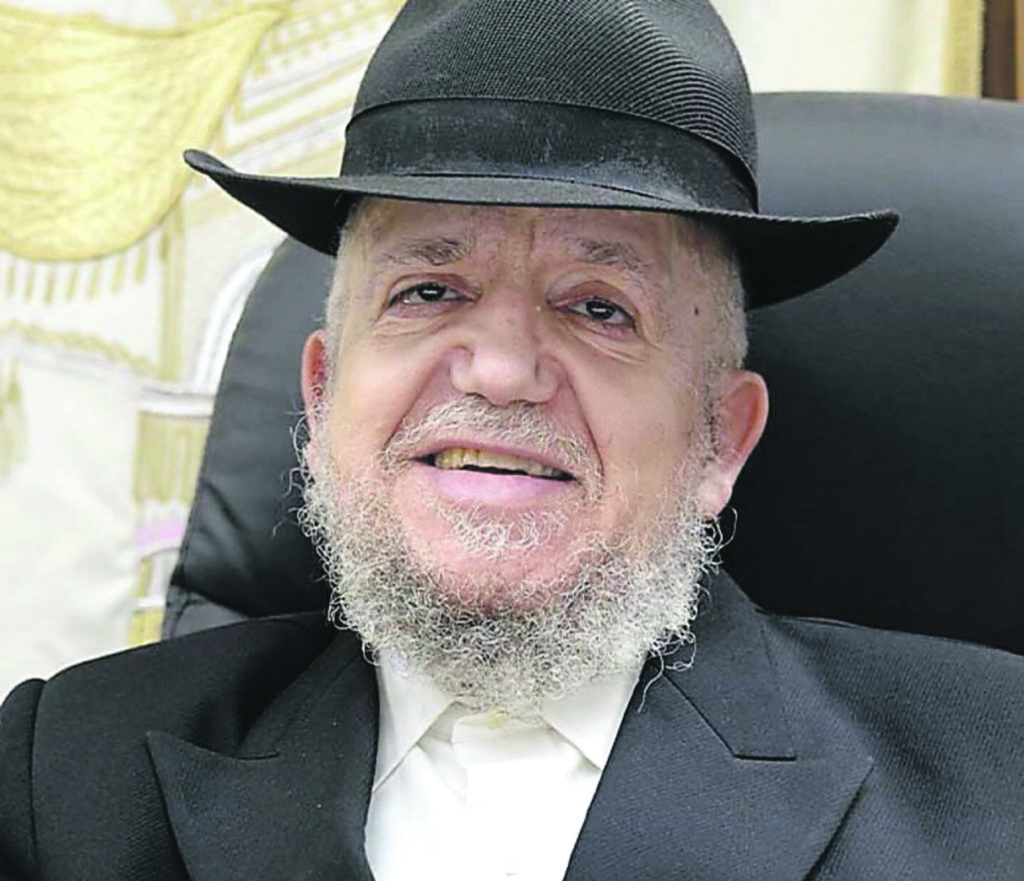
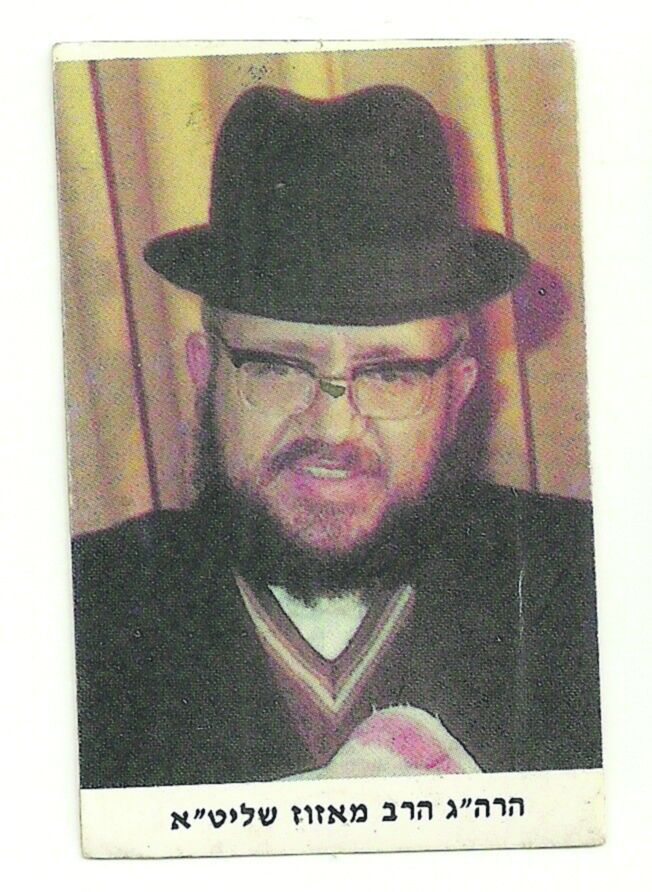
The Sephardic world is mourning the loss of Rabbi Meir Mazuz zt”l who passed away at the age of 80. Revered for his unwavering devotion to Torah (Jewish learning), his steadfast preservation of tradition, and his profound humility, Rab Mazuz was far more than a scholar—he was a spiritual anchor for generations.
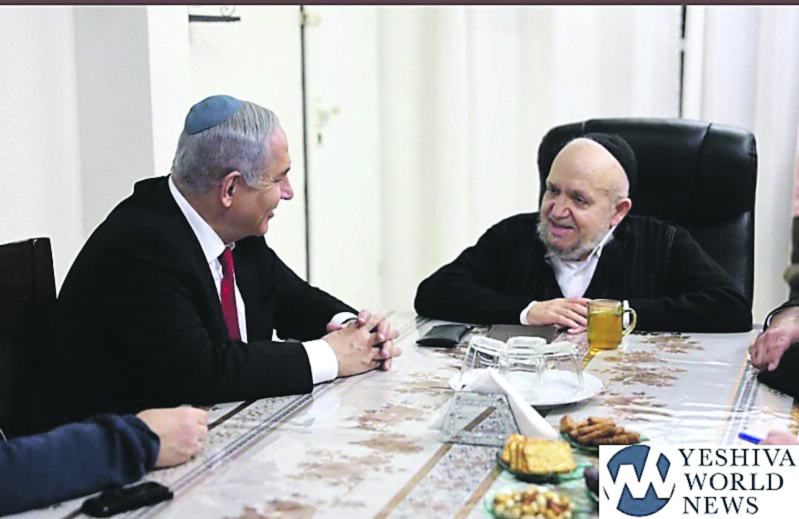
Prime Minister Benjamin Netanyahu visiting with Rabbi Meir Mazuz zt”l.
Born in Tunis in 1945, Rabbi Mazuz was raised in a home steeped in Torah and leadership. His father, the distinguished Rabbi Mazliah Mazuz zt”l, was a towering figure in Tunisian Jewish life. The path to leadership, however, was shaped by heartbreak. In 1971, the elder Rabbi Mazuz was assassinated in a hate-fueled attack. That same year, the family immigrated to Israel, carrying their Torah legacy with them. Together, the Mazuz brothers established Yeshivat Kisse Rachamim in Bnei Brak, reviving their father’s vision and planting seeds that would flourish into one of the most vibrant Sephardic Torah institutions in the country. Under Rabbi Meir Mazuz’s leadership, Kisse Rachamim became more than a yeshiva—it grew into a network of Torah life. Schools, kollelim, and educational centers were founded across Israel. The system now serves over 1,500 students, each touched by the warmth, rigor, and authenticity that defined the rabbi’s approach. Rabbi Mazuz was particularly devoted to preserving the unique customs and Torah style of Tunisian Jewry. He championed their method of iyun (deep, analytical study of Talmud) and insisted on precise Sephardic pronunciation in tefillah and Torah reading. He emphasized the beauty and importance of mastering Tanach, piyyut (liturgical poetry), and Hebrew grammar, weaving together tradition and scholarship with rare elegance. His teachings reflected not only intellectual brilliance but also a deep spiritual sensitivity that inspired awe and devotion. In halachic (Jewish legal) matters, Rabbi Mazuz followed a path of balance and clarity. While respecting the rulings of great sages like Rabbi Ovadia Yosef zt”l and Rabbi Shalom Mashash zt”l, he often charted his own middle course—grounded in sources, yet sensitive to the customs and needs of the Sephardic community. As the head of the Mishpat Tzedek rabbinical court, he guided many with thoughtful and compassionate rulings, always rooted in Torah truth. While he participated in public affairs and offered guidance on political matters, his true calling and greatest passion remained Torah education and spiritual leadership. Even as his voice resonated in the national conversation, his focus never wavered from the sacred mission of transmitting Torah and strengthening the Sephardic tradition. In 2014, he became the spiritual leader of the Yachad – Ha’am Itanu party, and he later offered support to Shas, Otzma Yehudit and Likud candidates. Throughout, he remained devoted to preserving the values of Sephardic Judaism and defending its voice within Israeli society. The Sephardic Chief Rabbi of Israel, Maran HaRab David Yosef Shlit”a, delivered an emotional eulogy at the funeral of HaRab Meir Mazuz zt”l. In tears, he stated, “Rab Mazuz commanded us not to eulogize him, but he didn’t command us not to cry for him… and so we will cry. How can we not cry?” Tributes poured in from across the religious and political spectrum. Prime Minister Benjamin Netanyahu called him “one of the greatest Torah scholars of our generation” and “a pillar of Jewish law and Sephardic tradition.” Rabbi Eli Yishai described him as a “pillar of fire” and “a faithful shepherd” who taught Torah to tens of thousands. Culture and Sport Minister Miki Zohar reflected on his humility and courage, while Interior Minister Moshe Arbel spoke of the honor of studying Torah in his home and the lasting impression of his noble presence. The following paragraphs were written by Rabbi Joseph Dweck, Senior Rabbi of the S&P Sephardi Community of the United Kingdom. He offered a powerful tribute that resonated deeply with those who knew Rabbi Mazuz or were shaped by his teachings: “How great a loss! Those who are gone—and the likes of them are no longer found. We say this often when someone passes, for every soul is unique. But there are rare individuals whose entire world, outlook and life are so singular, so deeply impact the fabric of Torah and tradition, that with their passing, an entire way of being disappears with them. Today Kelal Yisrael lost a giant—HaGa’on HaRav Meir Mazouz ztz”l Rosh Yeshiva of Kiseh Rahamim. He was a bastion of Sepharadi Torah—embodying the nobility of the Hakhamim of Tunisia, whose Torah he carried with pride, clarity, and unwavering strength. He never bent to the winds of influence around him. He remained firm in the way of his father Rav Masliyah Mazouz zt”l and the entire holy world of Torah in which he was raised. Rav Mazouz was legendary for his insistence on accuracy in speaking Leshon HaKodesh and for the need to be meticulous in language in all its facets—pronunciation, grammar, and structure. And from his care in these things, his Torah gained its power and splendour. His Torah knowledge was immense—not only in breadth, but in the surgical precision with which he learned and taught. With a single word in Mishnah, Talmud, a phrase in Rashi or Onkelos, a nuance in Rambam and Rishonim—he would uncover layers of meaning that few would notice. He boldly and fearlessly defended the sacred customs of Sepharadi Jewry. I often quote what he said about our responsibility to pass down Torah and our traditions: ‘Those who have children and do not pass on the Torah and customs of their ancestors are thieves! One day their children or grandchildren will come to ask for them, and they will no longer be there. It belongs to them—it is their inheritance!’ He also referenced thinkers and ideas from outside the Beit Midrash incorporating them into his shiurim to illuminate truth wherever it could be found—despite criticism from some. To him, it was all an endeavour to know HaKadosh Barukh Hu. I remember reading the introduction to Arim Nissi (his Talmudic commentary) on Masekhet Gittin. There he wrote pages upon pages detailing the greatness of Rambam and Rashi—not through stories or folklore, but by uncovering the brilliance and depth of their Torah with powerful and elegant examples that only he could present. Today, the Jewish people have lost a towering luminary. The Torah world has suffered a devastating blow. We have taken yet another step away from a world of Torah that was—impeccable in its toil and study, driven by its dedication to truth and connection with HKBH, and fearless in its integrity. Rav Mazouz lived and breathed it, and we are at a terrible loss without him. May his merit stand for his people and bring us to peace and salvation.” Rabbi Meir Mazuz zt”l leaves behind children, grandchildren, and thousands of students whose lives he shaped. His teachings, his writings, and the institutions he built will continue to illuminate paths of Torah and emunah (faith) for generations. His legacy stands as a testament to the power of holding fast to one’s roots while elevating the future. May his memory be a blessing, and may his teachings continue to inspire the Jewish people with strength, pride, and purpose.
Rabbi Meir Mazuz zt”l with Chief Rabbi Shaul Kassin zt”l.
In a surprise announcement on Sunday, former President Donald Trump declared that he is ordering the reopening and expansion of Alcatraz, the infamous island prison off the coast of San Francisco, as part of his latest campaign to crack down on violent crime.
Writing on his social media platform, Truth Social, Trump said, “For too long America has been plagued by vicious, violent, and repeat criminal offenders. Today, I am directing the Bureau of Prisons, together with the Department of Justice, FBI, and Homeland Security, to reopen a substantially enlarged and rebuilt ALCATRAZ.”
Trump added that the new facility would serve as a high-security site to “house America’s most ruthless and violent offenders,” and act as a powerful symbol of “law, order, and justice.”
A Controversial Legacy Revisited
Alcatraz, often referred to as “The Rock,” ceased operations as a federal prison in 1963, after being deemed too expensive to maintain. Located on a remote island in San Francisco Bay, the prison became notorious for housing some of the most infamous criminals in American history — including Al Capone, George “Machine Gun” Kelly, and Robert Stroud, the “Birdman of Alcatraz.”
Since its closure, the facility has operated as a highly successful tourist attraction managed by the National Park Service, drawing more than 1.5 million visitors annually. Trump’s proposal to reverse that and repurpose the island as a functioning prison has sparked immediate controversy and skepticism.
Criticism from Experts and Lawmakers
Legal experts and political opponents have raised practical and ideological concerns. Professor Gabriel Jack Chin, a legal scholar at the University of California, Davis, questioned the feasibility of the plan.
“It would take an enormous amount of money to make Alcatraz into a functioning prison again,” Chin told the BBC. “There are already many underutilized facilities in the federal system. The population is down by about 25% from its peak — there are a lot of empty beds.”
Chin suggested the move was less about practicality and more about political messaging. “Alcatraz has a reputation as a tough prison. Trump is trying to send a message that he will be tough on crime, regardless of whether it’s cost-effective or necessary.”
Democrats quickly condemned the proposal. Former House Speaker Nancy Pelosi, whose district includes San Francisco, labeled it “not a serious one,” while California State Senator Scott Wiener called it “deeply unhinged” in a statement on Instagram.
Background on Trump’s Penal Policy Push
The Alcatraz announcement comes amid a broader push by Trump to portray himself as the champion of “law and order” ahead of the 2024 election. His administration has drawn criticism for controversial proposals involving penal transfers, including a recent move to send over 200 alleged Venezuelan gang members to a prison in El Salvador — a country known for its harsh detention conditions.
Trump has also floated the idea of sending “homegrown criminals” to foreign prisons, arguing that current domestic policies are too lenient.
The Reality of Reopening Alcatraz
Turning Alcatraz back into a working prison would be a monumental logistical and financial undertaking. The facility was originally closed in 1963 primarily because it was nearly three times more expensive to operate than other federal prisons, due to its isolated location and infrastructure challenges.
Reopening the facility would require modernizing its decades-old infrastructure, rebuilding secure systems, and transporting materials and personnel to an island that lacks direct road access. Additionally, repurposing a site under the National Park Service would involve numerous legal and environmental hurdles.
Cultural Icon Turned Political Statement
Beyond its criminal history, Alcatraz holds a prominent place in American culture. It has been immortalized in films such as Birdman of Alcatraz, Escape from Alcatraz, and The Rock. To many, it represents both the mythos of American justice and the brutality of incarceration.
For Trump, however, the island represents something else entirely — a stage for projecting toughness and reclaiming what he sees as lost ground in the fight against crime.
Whether the plan gains any real momentum remains to be seen, but it has already added fuel to the fire in an increasingly polarized debate about criminal justice, incarceration, and presidential power.
President Donald Trump has announced a sweeping new policy aimed at reviving the U.S. film industry: a 100% tariff on all foreign-produced films entering the United States. The announcement, made during a campaign rally and later confirmed via an official statement, is part of what Trump called a “bold effort to bring Hollywood back home.”
The directive will be enforced by the U.S. Department of Commerce in coordination with the Office of the U.S. Trade Representative. Trump justified the move by citing what he described as an “unfair flood” of foreign incentives that have siphoned American film production overseas. He argued that this exodus has weakened not only the entertainment sector but also national cultural influence and economic resilience.
“Hollywood used to be the envy of the world — now we’re sending half our film budgets to foreign countries. That stops now,” Trump said. “We’re going to bring the magic of the movies back to American soil, with American jobs and American stories.”
Economic Context and Industry Decline
The decision comes amid ongoing struggles within the U.S. film industry. According to industry analysts, Hollywood production has dropped by more than 40% over the past decade, accelerated by pandemic-related shutdowns, prolonged industry strikes, and competition from global markets offering tax breaks and cheaper labor.
In 2023 alone, nearly 50% of U.S. film production budgets were spent abroad — a fact Trump cited as both an economic and national security concern. The new tariff, he said, is meant to level the playing field by making it more financially viable to shoot and produce films domestically.
Industry insiders note that locations such as Canada, the UK, New Zealand, and Eastern Europe have become increasingly attractive to U.S. filmmakers due to generous subsidies, skilled crews, and favorable exchange rates.
Industry Reaction and Global Fallout
The announcement has drawn mixed reactions. Some U.S.-based filmmakers and unions cautiously welcomed the move as a potential stimulus for domestic production jobs, though many expressed concern about its broader implications.
Critics warn that the 100% tariff could spark retaliatory trade measures from foreign governments, potentially damaging the international revenue streams of U.S. studios. Hollywood’s largest blockbusters now often earn more overseas than domestically, and foreign distribution is crucial to most studios’ financial strategies.
“This could backfire severely,” said Dana Welch, a media economist at UCLA. “Hollywood relies heavily on international box office receipts. If countries start banning or taxing American films in response, we could see a net loss instead of a gain.”
Cultural and Political Implications
Trump’s rhetoric framed the issue not only as economic but cultural. He accused foreign governments of manipulating soft power by promoting their own entertainment exports while “undercutting American culture” with favorable trade practices.
Supporters of the policy argue it’s long overdue. “We’ve been watching Hollywood decay from within, outsourcing creativity in the name of profit,” said filmmaker and Trump ally Peter Cavell. “This tariff forces us to invest in our talent here at home.”
However, opponents caution that the policy may stifle artistic collaboration and global storytelling, especially in an era where co-productions and international partnerships are increasingly common.
What Comes Next?
The implementation timeline for the tariff remains unclear, though Trump has called for “immediate action” if re-elected. Legal challenges and international disputes are almost certain, particularly through the World Trade Organization or bilateral trade agreements with major allies like Canada, France, and South Korea — all of which maintain robust film industries and export markets.
While Trump’s proposed tariff is unprecedented in its scale, it reflects a broader trend of economic nationalism that has marked his trade policies, from steel and autos to digital media.
As the U.S. film industry grapples with evolving viewer habits, streaming wars, and post-pandemic restructuring, Trump’s 100% tariff may set the stage for a dramatic clash between economic protectionism and global entertainment diplomacy.