Imagine having just given birth, and the nurse brings you your beautiful baby, freshly bathed, sweet smelling, and bundled in a soft, cuddly blanket. Tucked into the corner of the blanket is a small book that says “User Manual.” Of course, this is fiction. Each child needs a different manual every year, and sometimes every week.
All stages of childhood are a learning experience for most parents, and as time goes on, we mostly get better at it. School age children can present unique challenges, particularly if they are having difficulty in school. While we can’t offer you a user manual for your child, we can offer you the next best thing, and that is the Parent Engagement Center, the PEC. The PEC offers parents two to four months of weekly individual parent coaching to give them the skills and tools to manage the issues the child may be facing that impact his or her ability to succeed in school. This program is free of charge, does not involve any insurance, and is done by phone or Zoom, one on one and completely confidential. Our counselors are experienced, familiar with our community, and give parents weekly “homework” to hone the skills they need for successful parenting. Both moms and dads are encouraged to participate in the sessions, so that everyone is learning the same tools and at the same pace. One of the most important facets of this program is that the counselors are well versed in childhood development, which helps parents understand when their child’s behavior is age appropriate and when it isn’t. The PEC was created in early 2020 to utilize Title 1 funds, which are earmarked for private schools and yeshivot. It was developed in recognition of the concept that children’s struggles in school could be addressed in the home with direct parent coaching. At first, only children in schools that had Title 1 were eligible, but the program has expanded to utilize other funding to open it up to all parents of children in our community yeshivot. Parents interested can call Frany at 718-787-1100 ext. 532 to see if they are eligible for this program and to register if they are.
“I really didn’t understand why my son was acting the way he was. Once I had a new perspective, it changed the way I reacted. This in turn, changed his behavior.”
“My daughter was afraid of a lot of things, and I didn’t know how to handle it. I kept trying different things, but none of them worked. My counselor gave me specific tasks and homework to do to help my daughter with her anxiety, which really made a big difference.”
“I didn’t realize how different my parenting style was from my husband’s. When we both worked with the counselor, we realized that our differences were actually causing the troubling behaviors! Once we got on the same page, things got a lot better.”
“My son did something that really bothered me. I spoke to the counselor about it, and found out that this is pretty normal behavior for a kid his age. Once I stopped freaking out about it, I was able to deal with it calmly and rationally.”
Miriam Barry joined SEARCH in 2001 and became Director in 2006, bringing 25 years of teaching experience in community yeshivot. With her trained staff, she has helped over 5,000 children access services through the New York City Department of Education, guiding parents through school placement decisions, psychological evaluations, and a deeper understanding of their children’s strengths and challenges. Knowledge gained through SEARCH empowers parents to make informed decisions and better support their children’s success in school.
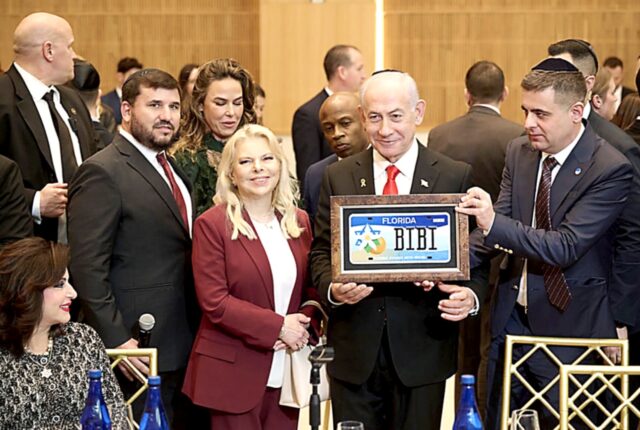
Prime Minister Benjamin Netanyahu is presented with a custom Florida license plate reading “BIBI,” a symbolic and lighthearted
gesture referenced in the article, during the South Florida gathering. Photo credit: Carlos Chattan
Inside a historic first for Florida and the Jewish community
Linda Argalgi Sadacka
Security was tight long before the Prime Minister arrived. Roads were blocked for miles, and residents received alerts restricting movement. Law enforcement presence underscored the seriousness of the moment. This was not routine. It was history unfolding under heightened threat.
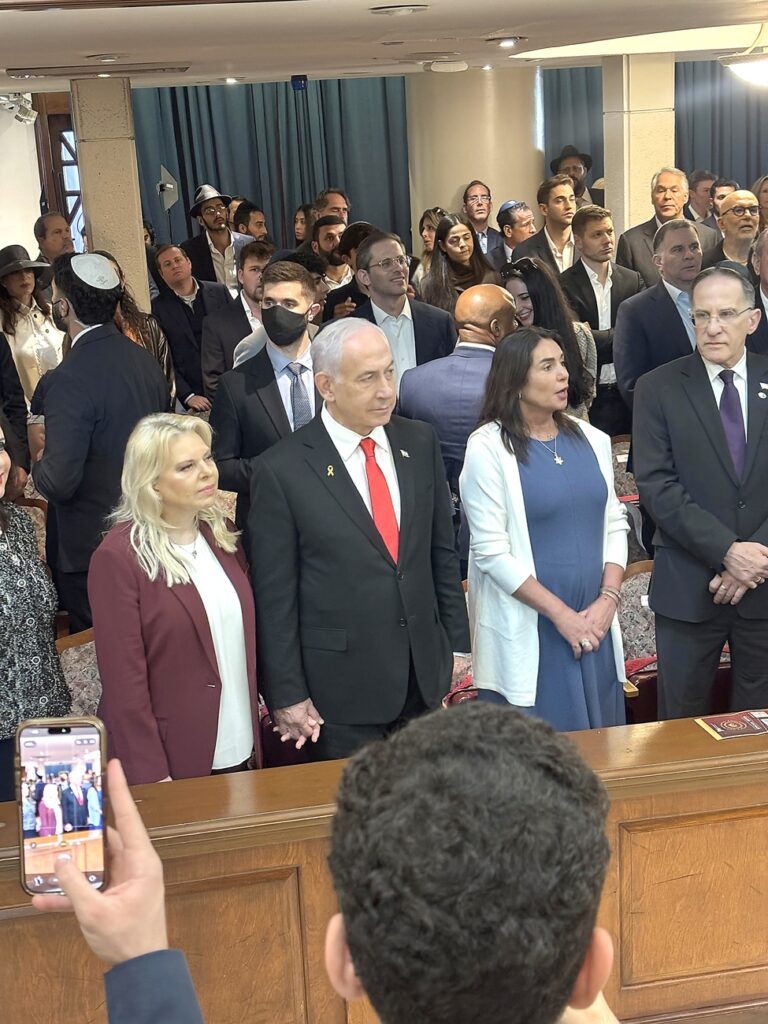
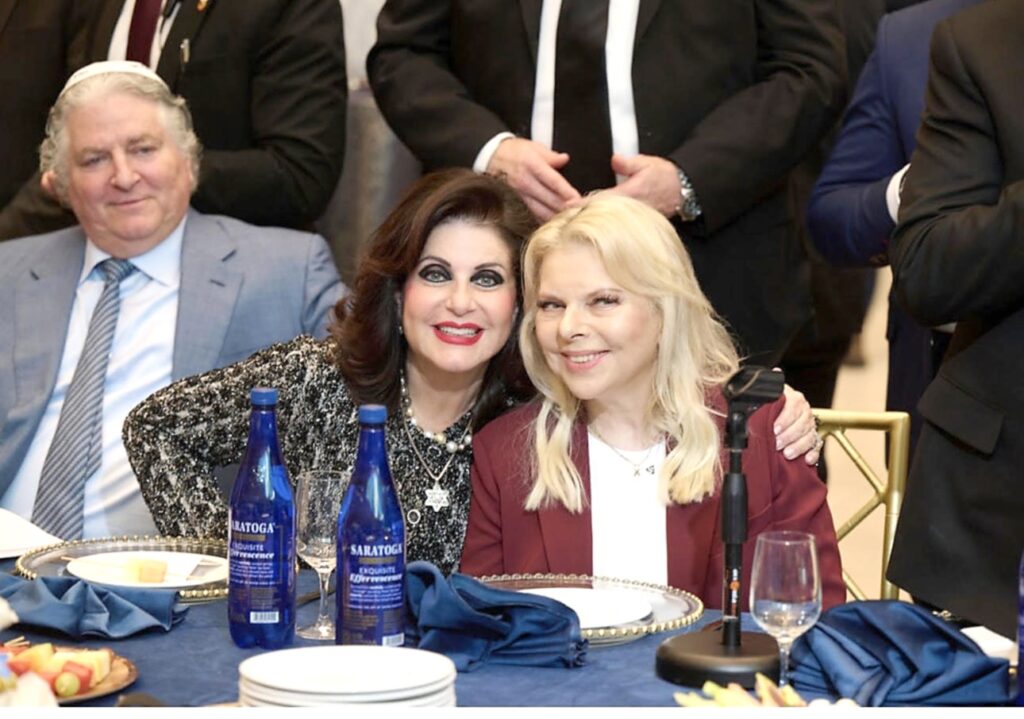
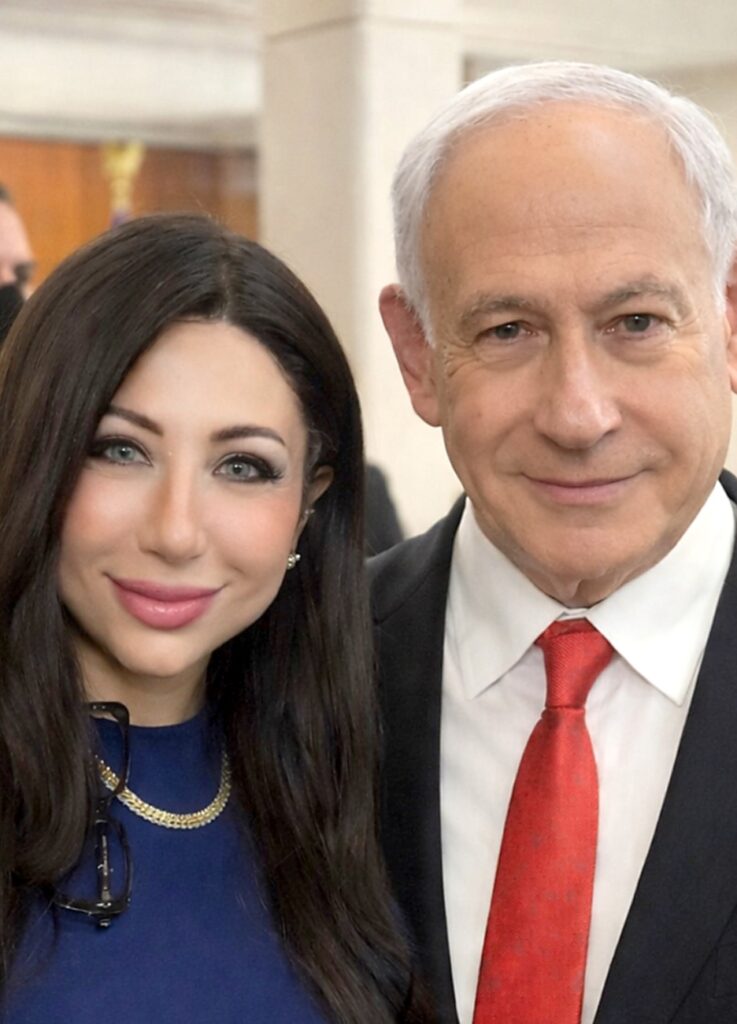
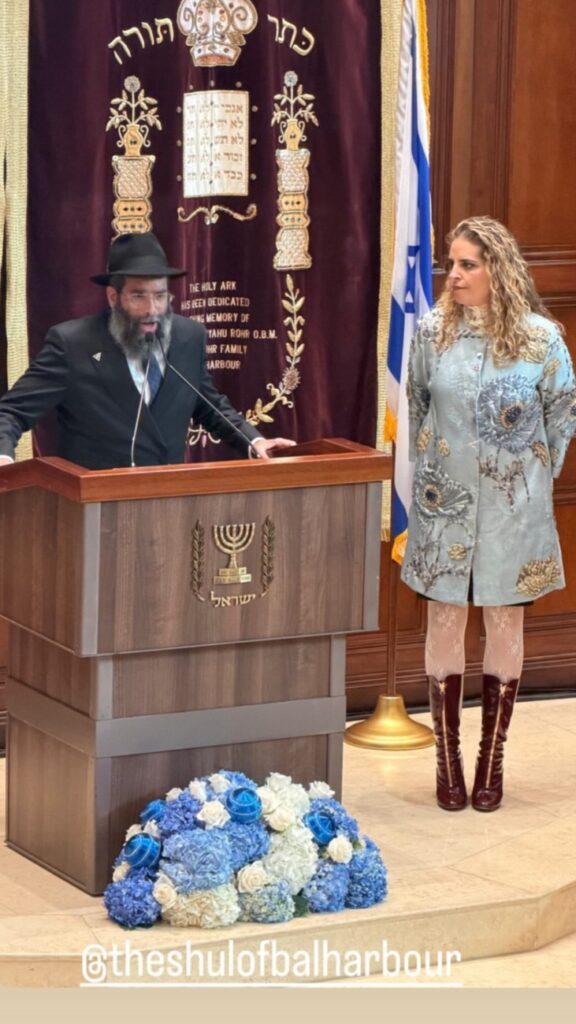
Moments before the address, the room settled into a quiet, collective focus.Jana Falic, pictured with her husband, Simone Falic, and Sara Netanyahu, First Lady of Israel, during an intimate moment at the event. Photo credit: Carlos ChattanLinda Argalgi Sadacka with Prime Minister Benjamin Netanyahu during his historic visit to South Florida.
Recently, I wrote to readers about my time in Washington, attending the White House Hanukkah reception and later visiting the Vice President’s residence at the Naval Observatory. This brought a different but no less historic chapter, standing in South Florida as Prime Minister Benjamin Netanyahu made an unprecedented appearance. No Israeli Prime Minister has ever visited Florida in an official capacity. Before the public program began, the State of Florida marked the visit with a quiet but deliberate gesture. In a private setting, Prime Minister Netanyahu was presented with a custom license plate reading Florida Stands With Israel, bearing his name, Bibi. It was not theatrical. It was intentional, a signal of alliance and permanence. History does not emerge by accident. It is shaped by people who understand timing, trust, and consequence. This moment happened because of my dear friend, Tila Falic. The Prime Minister himself described her publicly as a force of nature. It was not a courtesy. It was recognition. Every substantive element of the event flowed through her leadership, bringing Prime Minister Netanyahu to South Florida, assembling the right voices in the room, and creating a program that balanced political gravity with moral clarity. This was not ceremonial hosting. It was leadership exercised through credibility, precision, and long-standing relationships. That intention was evident from the outset. Students from Jewish Culture High School, founded by Tila Falic and Rabbi Aharon Assaraf, played an active role in the program. They sang to welcome the Prime Minister and the First Lady, offering a gesture of gratitude that was dignified and deeply human. They were not spectators. They were participants, experiencing the moment as it unfolded. When Simon Falic, Tila’s father, addressed the audience, his words carried weight because they were measured. One phrase settled the room. He described Prime Minister Netanyahu as a leader of biblical proportion. It did not sound lofty. It sounded precise, leadership forged under existential pressure, shaped by history, and burdened with responsibility that extends far beyond one political chapter. Spiritual grounding came from Rabbi Lipskar, whose remarks framed the gathering in faith, continuity, and responsibility. I attended the event in overlapping roles, as press, as an activist, and as a long-standing advocate for the Jewish people. Press credentials placed me in the front row within the press core at stage level. It was the clearest vantage point in the room, not only physically but substantively. That distinction matters. I do not enter rooms like this for optics. I enter them to engage seriously. When I speak of my community, I am not referring to a single neighborhood. I am referring to a global audience. While my visible following numbers in the tens of thousands, the reach of my work extends into the millions each month. That reach carries obligation, not spectacle, and it informs how I show up in moments that matter. From that vantage point, the atmosphere was unmistakable. The room was full. The energy was confident, warm, defiant, and resolved. This was not an audience seeking reassurance. It was an audience prepared to stand firm. Prime Minister Netanyahu met that resolve directly. At one point, he delivered a line that reverberated far beyond the room, clearly echoing a page from President Trump’s playbook: “Do not be intimidated. You must fight. Fight. Fight.” The response was immediate because the message was already understood.
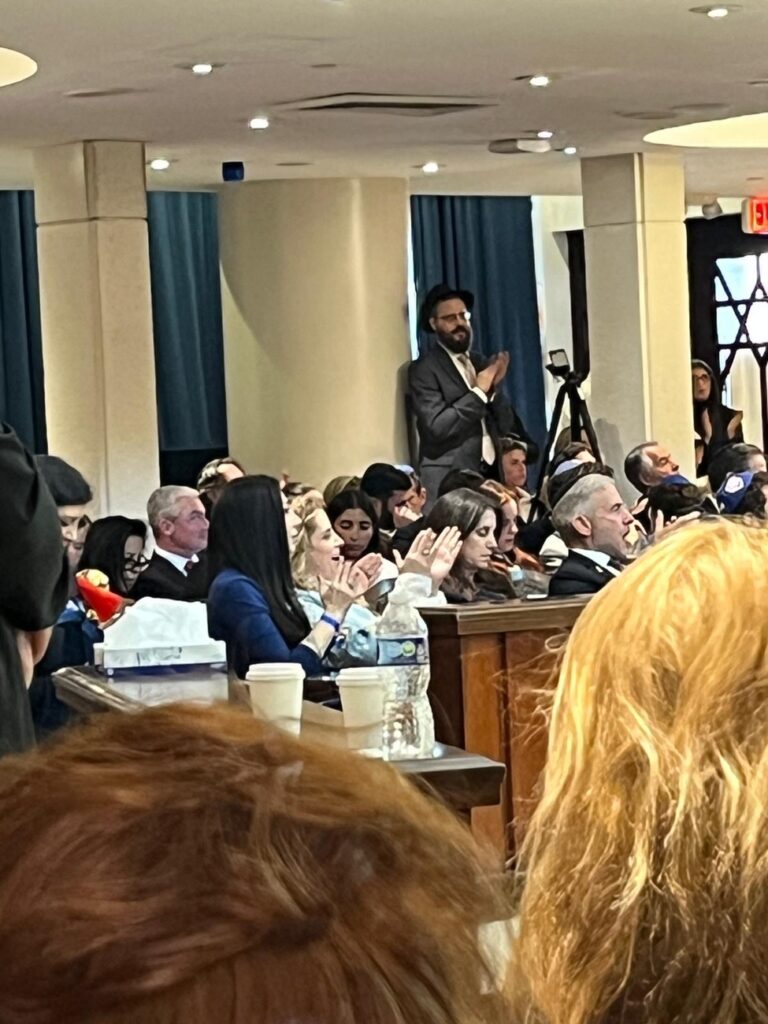
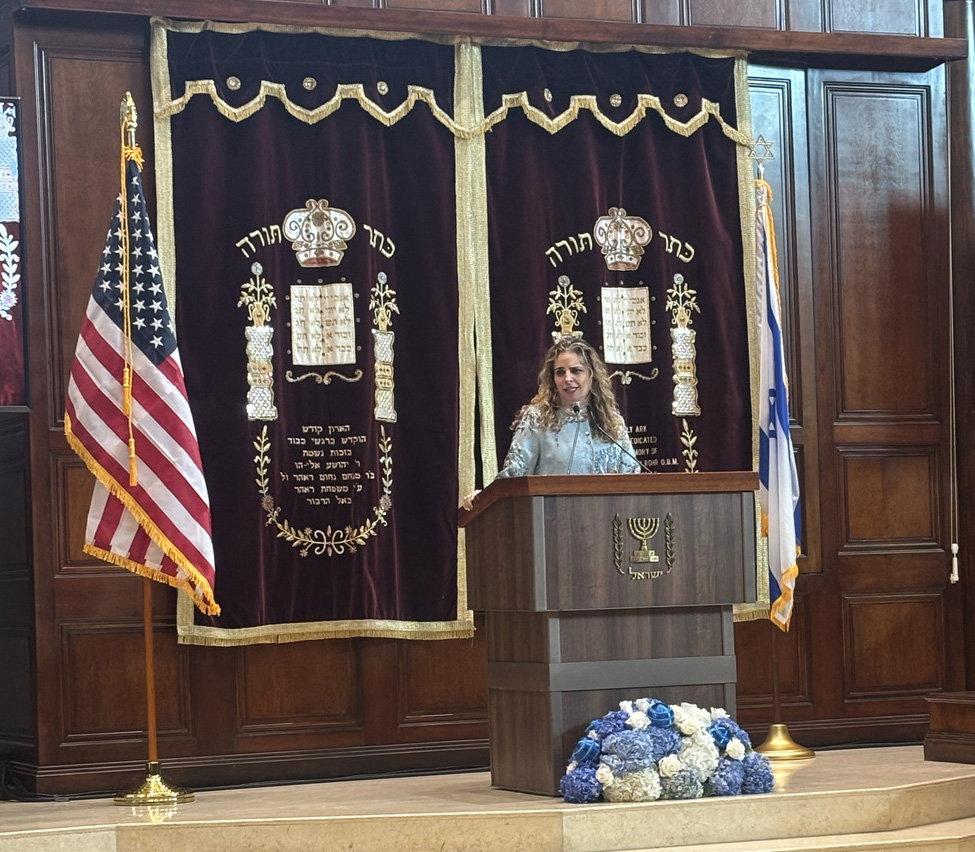
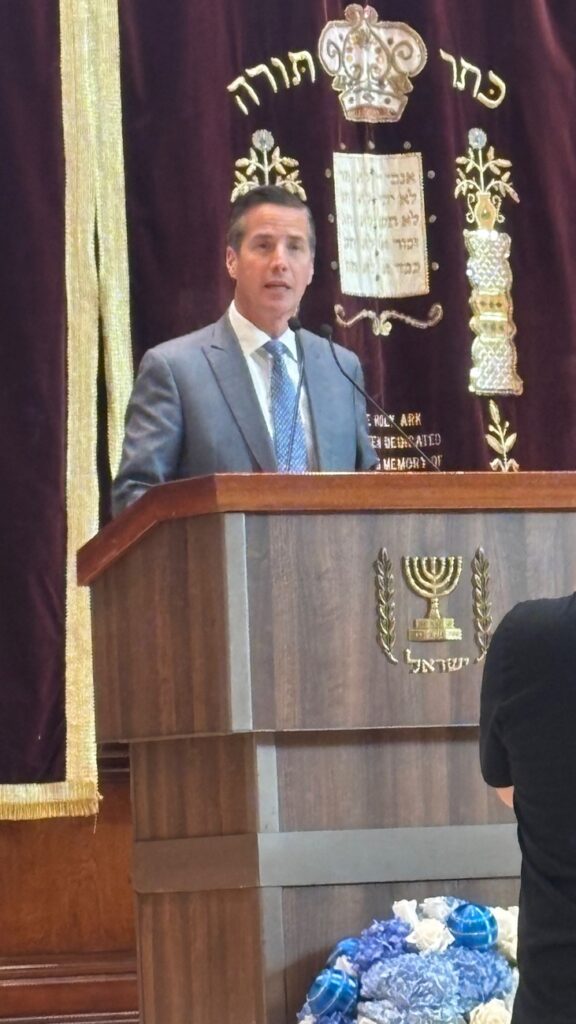
Host Tila Falic stands with Rabbi Lipskar during the opening remarks at the Bal Harbour Shul.From the audience, seated near host Tila Falic alongside community leaders and public officials, as dignitaries addressed the crowd.Tila Falic addresses the audience moments before the Prime Minister is introduced.Ohio Senator Bernie Moreno speaks at the South Florida gathering.Security presence visible from the podium during the Prime Minister’s address in South Florida.
The seriousness of the moment was reflected not only in tone but in who showed up. In the room were Lieutenant Governor Jay Collins, Senator Moreno of Ohio, Florida Attorney General Ashley Moody, Speaker of the Florida House Danny Perez, Representative Randy Fine, Representative Carlos Gimenez, mayors and municipal leaders, and Leo Terrell, the renowned civil rights attorney and senior official at the United States Department of Justice. These were not symbolic appearances. These were leaders whose support has been demonstrated through action. The emotional center of the event came when Prime Minister Netanyahu introduced the family of Ran Gvili. Gvili was among the first to rush forward on October 7 to save Jewish lives, despite an existing injury. He was shot twice, taken captive, and remains the last hostage still held. The standing ovation that followed was immediate and reverent, collective rather than performative. Seated near the Lieutenant Governor, I watched as Tila later spoke from the podium about the Lieutenant Governor’s role in bringing children home from Israel during the war. Tears streamed openly down his face. When he addressed the audience afterward, he spoke not as a politician but as a father, saying plainly that he would do it again and again. The sincerity of both him and his wife was unmistakable. Later that day, in a moment that captured the wider tension surrounding the event, Ran Gvili’s mother confronted a small group of protesters herself, tearing up their signs face to face, a mother defending her son and her people without hesitation. The following day offered a revealing contrast. I spent time with Tila and her family as a friend, away from crowds and cameras. Sitting together, they casually scrolled through tweets and media reactions from Israel, many clearly intended to wound. Instead of tension, there was laughter. The commentary was met with humor and composure, as though it simply had nowhere to land. Watching that dynamic up close was striking. It was not bravado or defensiveness. It was confidence rooted deeply enough to remain unshaken. During the visit, I also had the opportunity to speak privately with both the Prime Minister and the First Lady. They were gracious, thoughtful, and fully present, reflecting the same seriousness and humanity that defined the public moments of the day. What stayed with me after leaving South Florida was clarity. Israel is not only defending Jews. Israel is defending the moral spine of the West. It stands on the front line of a broader struggle against intimidation, chaos, and tyranny. Hatred is not rational. It rarely yields to persuasion. The task is not to chase those committed to falsehood, but to fortify those anchored in truth, to strengthen alliances, to reinforce moral clarity, and to empower leaders willing to stand without apology. That is what unfolded in South Florida, and that is why this moment will endure.
Linda Argalgi Sadacka is a writer, political activist, and community leader. She is the CEO of the New York Jewish Council and the founder of Chasdei David, a 501(c)(3) charity. Her advocacy, sparked by the tragic murder of a close friend by Hamas, has made her a leading voice for the Jewish community in America and abroad. She was honored as a Woman of Distinction in 2022 by Senator Simcha Felder for her leadership and activism. Linda is also the host of The Silent Revolution podcast, where she shares weekly classes blending Torah, prayer, and real-world reflection, making ancient wisdom urgent and relevant for our times.
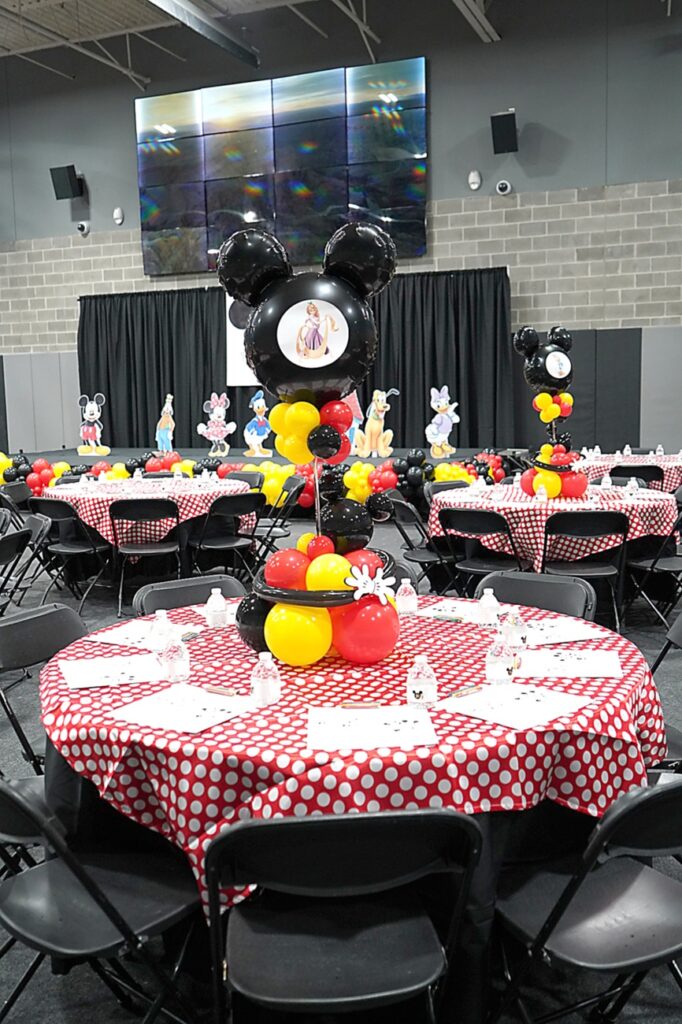
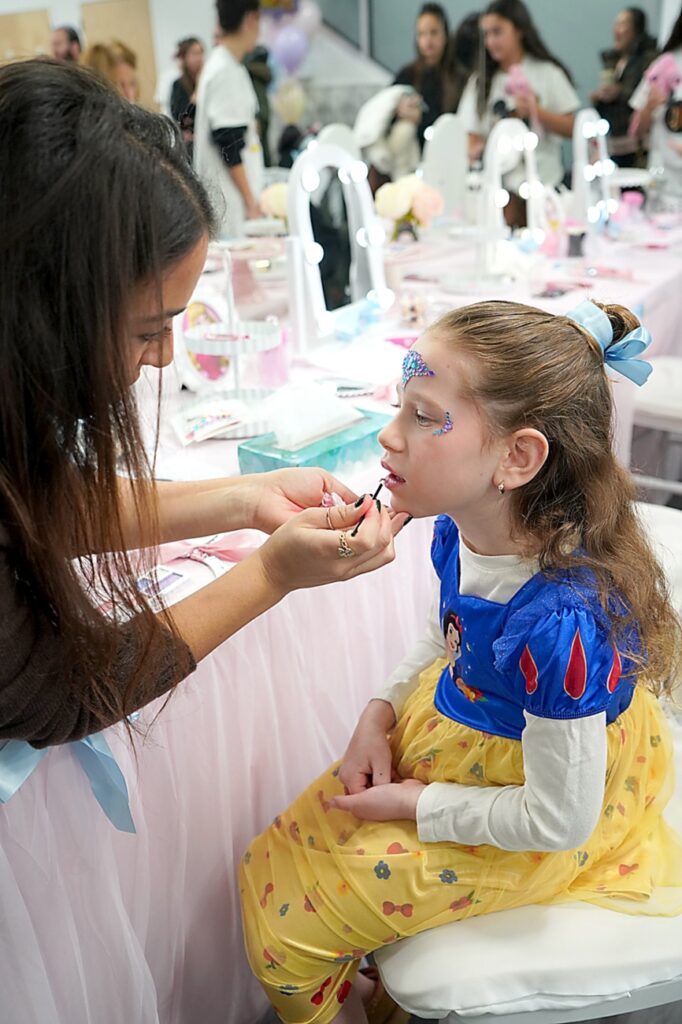
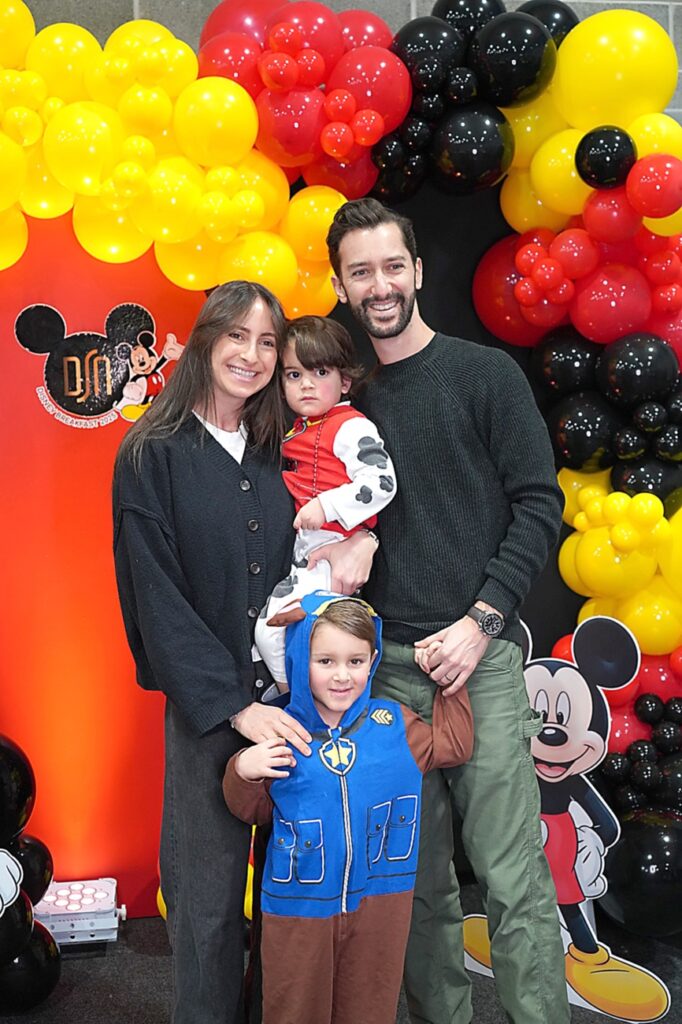
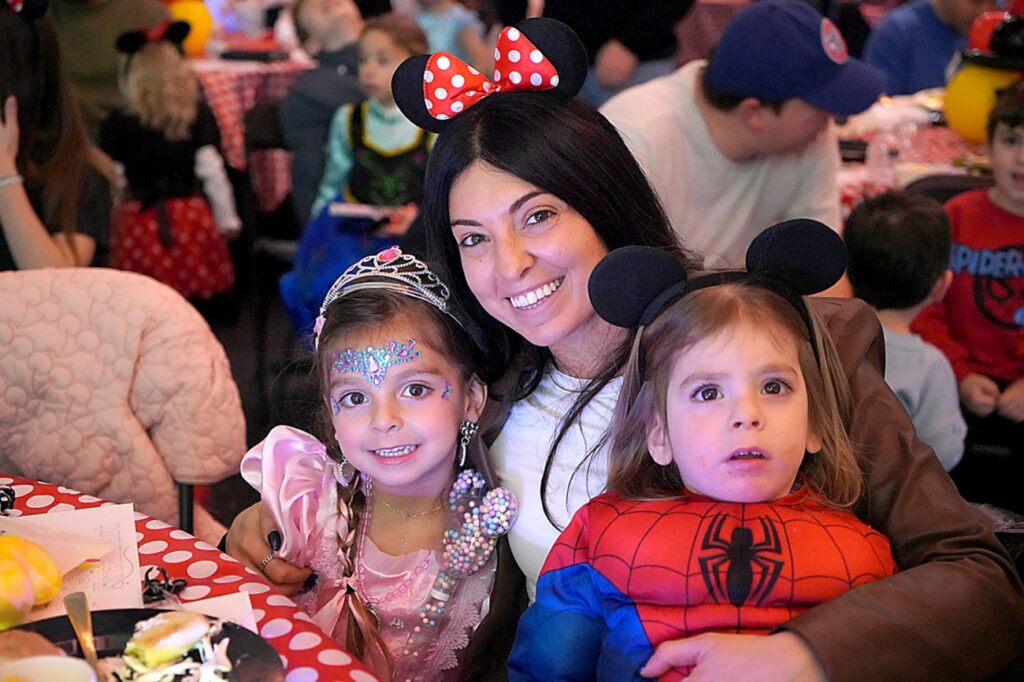
On Sunday, December 28, DSN transformed its gymnasium into a world of wonder as families gathered for the highly anticipated Disney Breakfast, a joyful morning filled with imagination, music, and unforgettable memories.
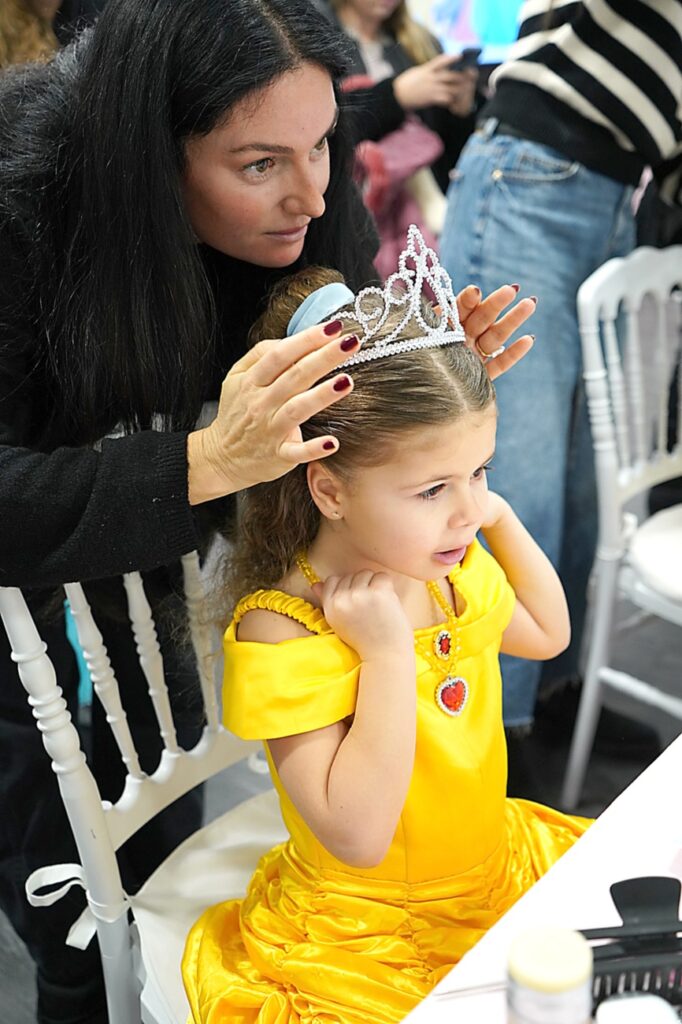
The magic began even before breakfast was served. Young children had the opportunity to participate in two enchanting pre-events, the Bippity Boppity Boutique and Superhero Academy. At the Boutique, sixty young girls arrived dressed as their favorite princesses to have their hair and makeup professionally done. The experience was topped off with a charming tea party alongside Cinderella herself, creating a truly royal morning. At the same time, twenty-five young boys took part in Superhero Academy, where they had their hair styled, faces painted, and created their own superhero capes and masks. The excitement reached new heights as the children completed an obstacle course alongside a live Spider-Man, bringing their superhero dreams to life. Following the pre-events, over 350 parents, grandparents, and children came together for the main attraction, the Disney Breakfast. Families enjoyed a plentiful and delicious spread including bagels and cream cheese, string cheese, Mickey Mouse waffles, grilled cheese, spanakopita, calzones, and salads, ensuring there was something for everyone. Attendees enjoyed a variety of giveaways including light-up books, pens, Mickey Mouse toys, and wands.
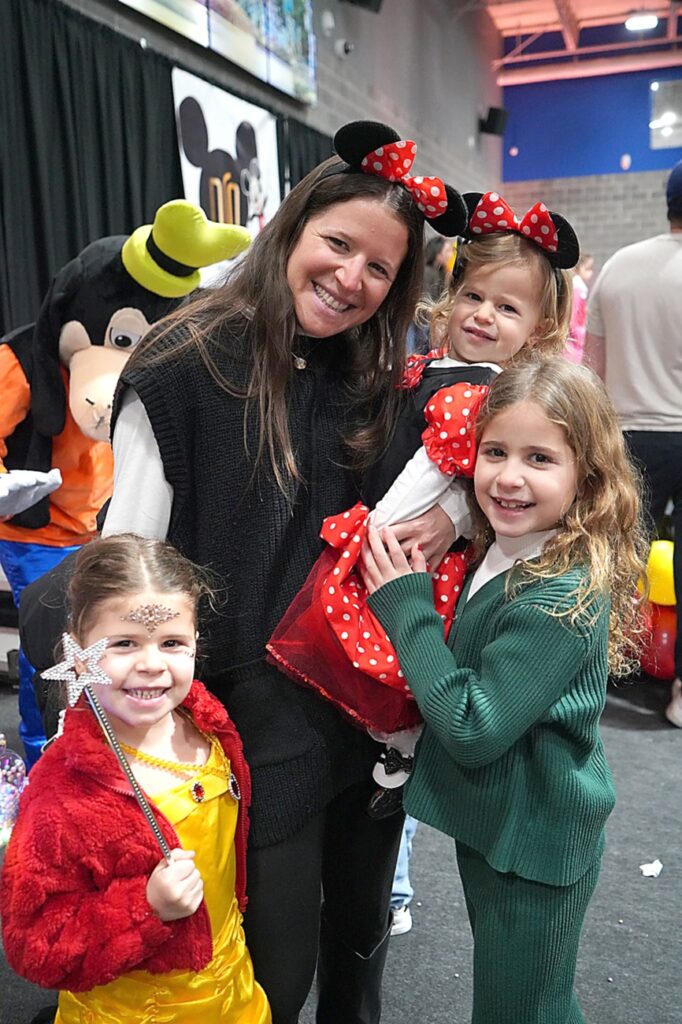
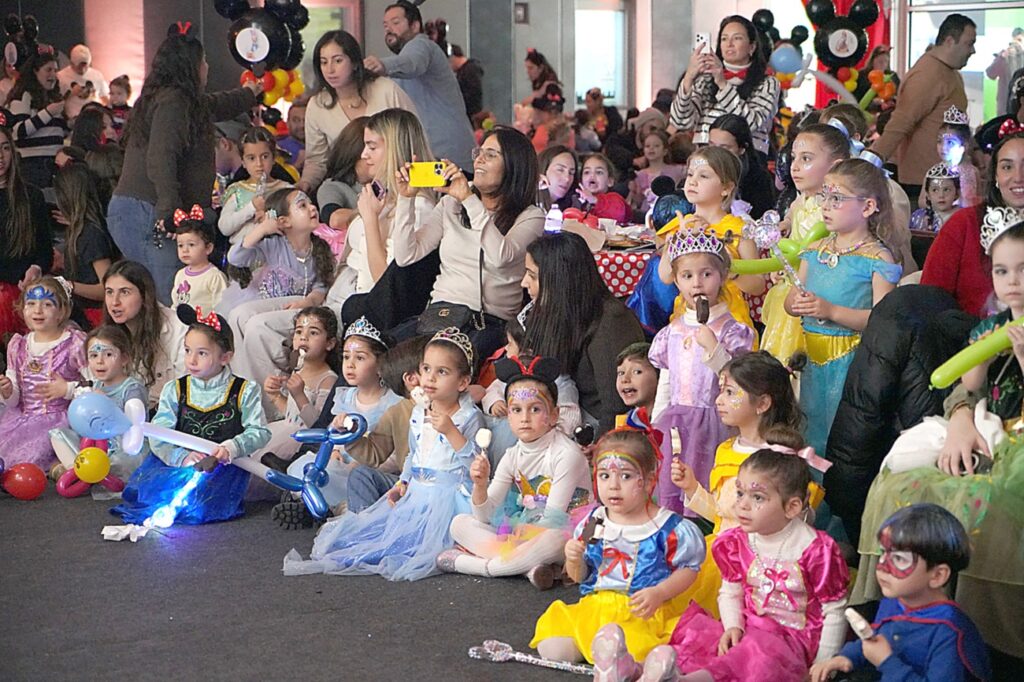
The highlight was an incredible live show that had the children cheering with excitement. Belle served as the Master of Ceremonies, guiding the audience through a magical performance featuring Cinderella, Elsa, Moana, Maui, Spider-Man, Mickey Mouse, Minnie Mouse, Daisy Duck, Donald Duck, and Goofy. Each character was introduced with flair, creating a truly immersive Disney experience. Adding to the magic, the DSN Dance Academy Dance Team took the stage to perform and proudly introduce Mickey Mouse, dancing alongside the characters to the delight of the crowd. At the end of the entertainment, the children eagerly lined up for autographs and picture-taking with their favorite characters. This beloved event served an important purpose as a DSN fundraiser, raising money for the DSN Children’s Scholarship Fund, which enables children in need to attend programs. DSN Youth Program Director Frieda Shammah shared, “The happiness on the children’s faces said it all. The energy in the room was incredible, bringing the magic of Disney World right to DSN.”
The event’s success was made possible by a dedicated committee that worked tirelessly behind the scenes. Committee member Brenda Mamiye reflected, “Attending the Disney Breakfast with my children was truly special. From the characters to the decor, every detail was thoughtfully done. It was a magical experience our family will always remember.” Committee member Sally Mamiye was elated. “My kids had the best time and so did I! A morning we will never forget!” Her four-year-old son, Chuckie Mamiye, summed it up perfectly, declaring it “his best day ever!” Committee member Brenda Antebi added, “I loved being part of such a special and memorable day. My kids were thrilled and smiled the entire time. Thank you to DSN for such a wonderful experience!” With laughter echoing throughout the gymnasium and smiles on every face, the DSN Disney Breakfast proved to be a cherished event, one that brought community together, created lasting memories, and spread pure Disney magic for a meaningful cause. DSN Executive Director Sammy Sitt was very proud. “It’s very satisfying to see a passionate committee of young mothers working hand-in-hand with our staff to put together a community event on a professional level. This is our winning formula, passionate volunteers, hard-working staff, and an amazing community. Congrats to everyone. What a success! May Hashem (G-D) continue to bless DSN!”
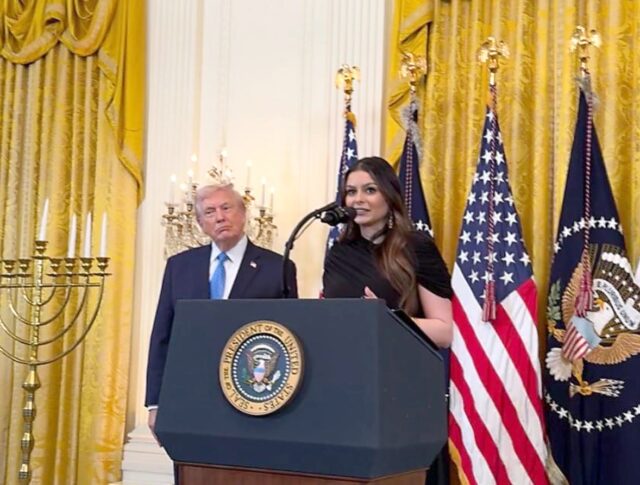
Elizabeth Pipko, a close friend previously introduced to readers by Linda Sadacka, speaks after being called to the podium by President Donald J. Trump.
Linda Argalgi Sadacka
What struck me first was not the event itself, but the space. The White House is not simply a venue. It is a witness. Within its walls, a nation has been formed, tested, fractured, rebuilt, and reaffirmed. Decisions that altered history were debated there. Wars were weighed. Peace was brokered. Presidents carried the burden of command through moments of triumph and national reckoning. Standing inside it, you are acutely aware that you are occupying ground where the American experiment has been continuously argued into existence.
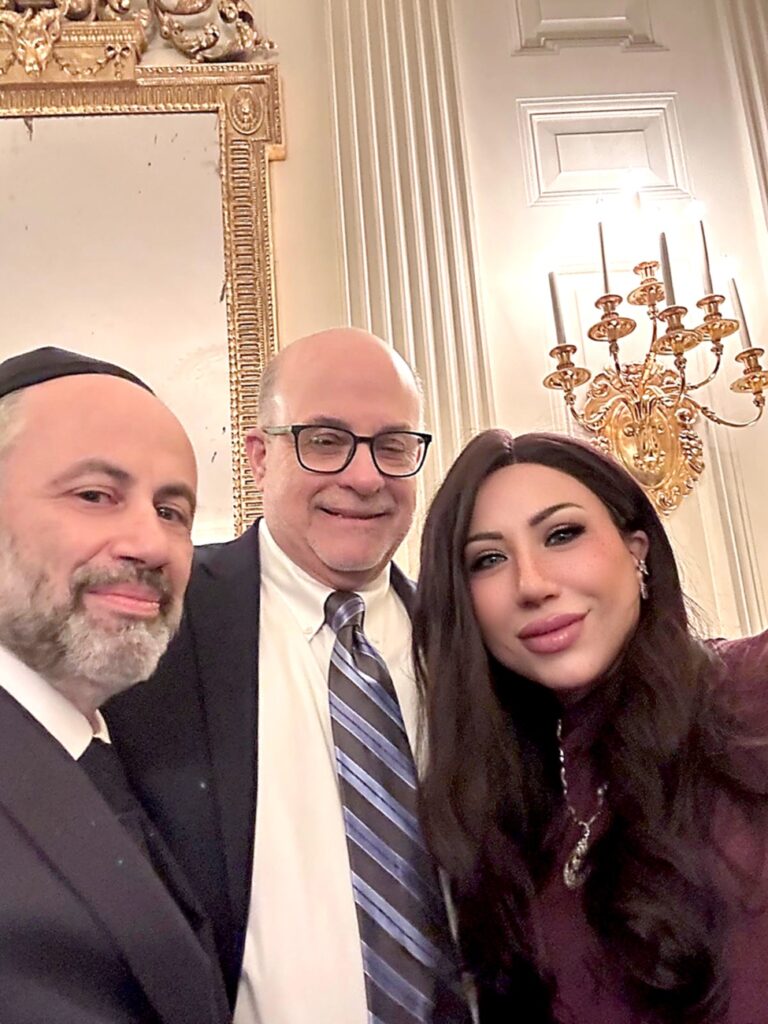
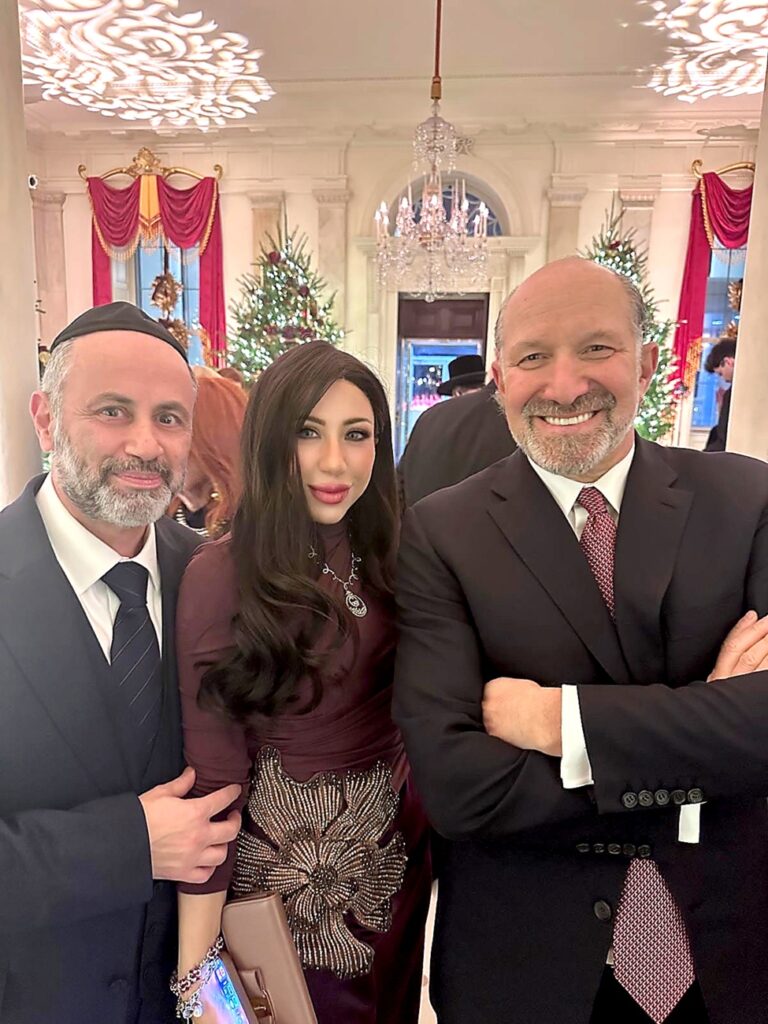
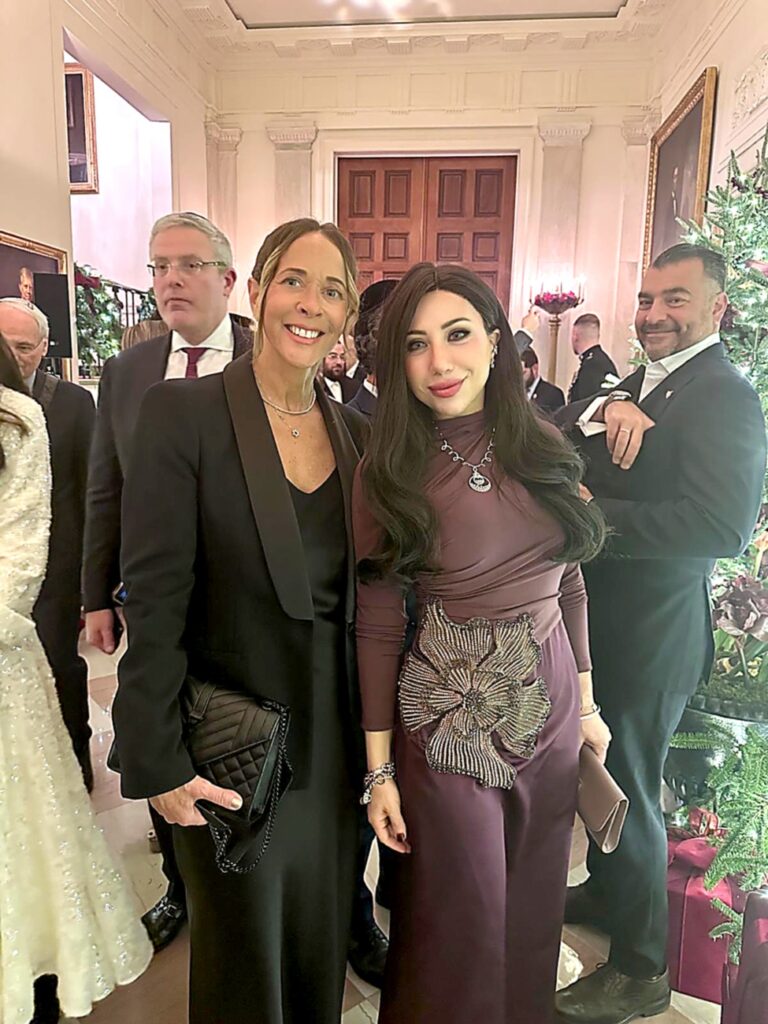
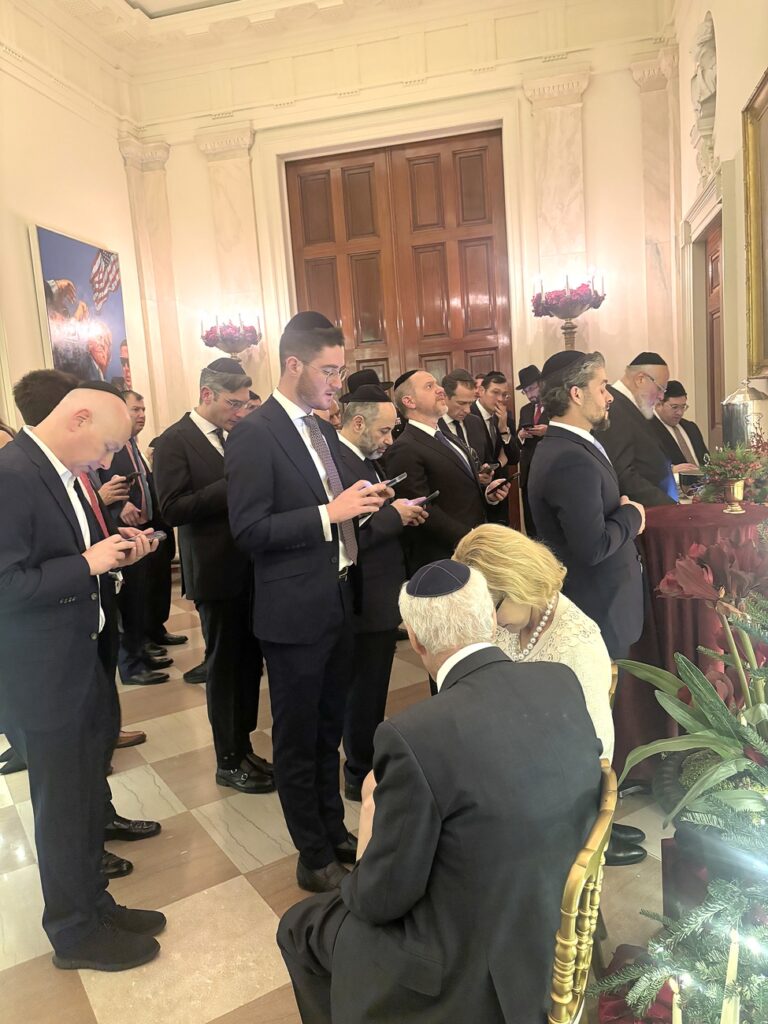
L to R: Dr. Jack Sadacka, Mark Levin, constitutional attorney and nationally syndicated radio and television host, and Linda Sadacka.L to R: Dr. Jack Sadacka, Linda Sadacka, and U.S. Secretary of Commerce Howard Lutnick, pictured in the Cross Hall of the White House.R to L: Linda Sadacka with Danielle Rosenberg, a close friend and the wife of nationally syndicated radio host Sid Rosenberg, photographed just outside the East Room of the White House.Dignitaries, ambassadors, and newsmakers gather for a spontaneous minyan (a quorum of ten Jewish adults required for communal prayer) in the Cross Hall of the White House. At center is Dr. Jack Sadacka, with former White House Middle East envoy Jason Greenblatt visible among those praying, while U.S. Ambassador Lana Marks is seated with her husband in the foreground, an intimate moment of Jewish prayer in one of the White House’s most historic ceremonial corridors.
Being there during Hanukkah, a holiday rooted in endurance and continuity under pressure, sharpened that sense of historical gravity. This was not simply a celebration. It was another chapter layered onto a long national record. This year’s White House Hanukkah observances included two receptions. The earlier afternoon event brought together influencers with a small number of public figures. The evening reception, held at seven, carried far greater gravitas and was the one most people were trying very hard to attend. That room was filled with major donors, senior administration officials, lawmakers, ambassadors, and figures shaping both the present and future political landscape. I was invited to the latter, and I understood what that access reflected. My husband attended with me, and we stayed nearby at the Adams Hotel. Walking past the White House at night, illuminated and secured, reinforced the seriousness of the setting. Institutions built to endure carry a weight that cannot be replicated elsewhere. Entry into the White House was deliberate and controlled. Guests moved through multiple security checkpoints, with identification verified at each stage. The process moved efficiently, familiar terrain given prior attendance at a presidential inauguration and other White House events, yet it underscored the significance of the space. Inside, the layout immediately mattered. We entered through the foyer, where a live ensemble performed Hanukkah music with elegance and restraint. The sound carried throughout the building and set the tone for the evening. To the left was the East Room, where guests gathered while waiting for the President to arrive. Straight ahead was the central room, filled with historic artifacts that quietly remind you where you stand. To the far right was the State Dining Room, where food stations were arranged. Hors d’oeuvres and champagne circulated throughout all three spaces as guests moved freely, though many gravitated toward the East Room where the media had positioned itself in anticipation of the President’s entrance. Just outside the dining area, one image drew sustained attention. A portrait of President Trump from the aftermath of the assassination attempt showed him with his fist raised, his face bloodied but resolute. The image became one of the most photographed moments of the night, eclipsing even many of the historic paintings nearby. Its symbolism was unmistakable. The culinary execution reflected the scale of the occasion. Multiple chefs were stationed throughout, and the food was refined, abundant, and clearly intentional. Everything was prepared under the supervision of the Vaad of Washington. This was not routine event catering. It was a high level operation executed with precision. As the room filled, it became clear this was not a casual social gathering. Lawmakers from both parties were present alongside senior administration officials, ambassadors, major donors, and influential voices shaping the national conversation. Among them were Commerce Secretary Howard Lutnick, Ambassador Lana Marks, members of Congress including Josh Gottheimer and Jared Moskowitz, and prominent figures such as Mark Levin and Sid Rosenberg, along with other senior officials and advisors whose presence underscored the seriousness of the gathering. Conversations were purposeful. Relationships were reinforced. Much of what mattered did not need to be articulated. At one point, the seriousness of the setting asserted itself in an unexpected way. Someone in the crowd fainted, and my husband, a physician known for his diagnostic precision, along with several other doctors who were present, stepped into an adjacent room to assist until the individual recovered. Even in rooms defined by symbolism and power, human needs persist, and competence matters just as much as ceremony.
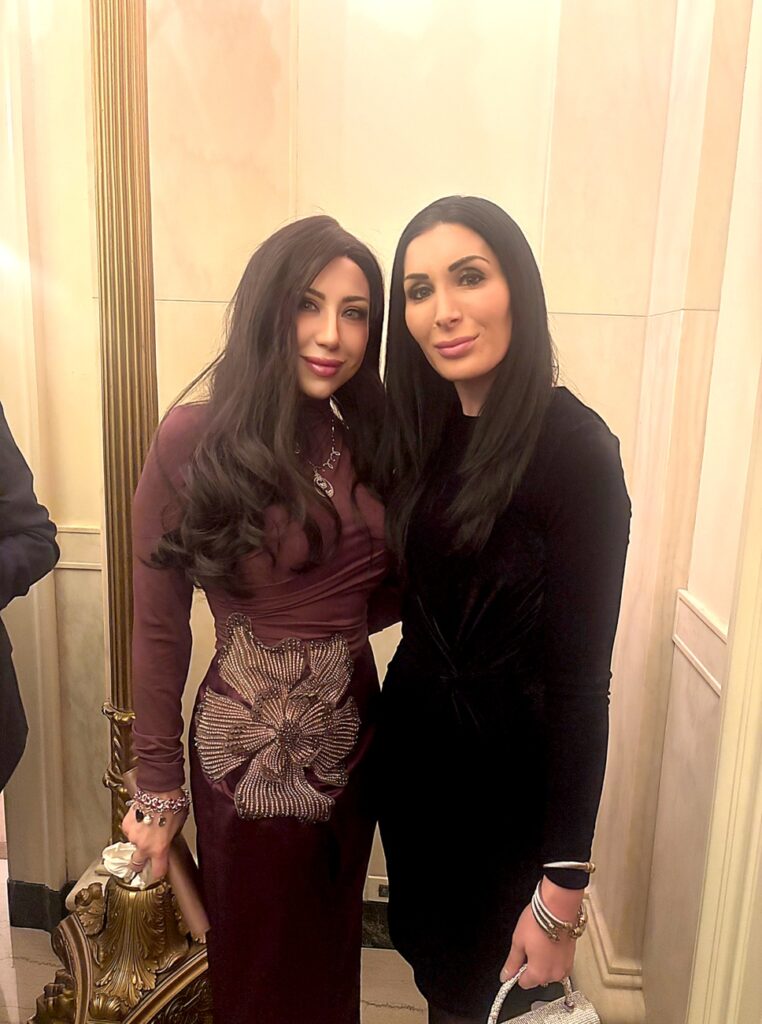
A contemporary portrait of President Donald J. Trump, displayed just outside the entrance to the State Dining Room of the White House, was one of the most photographed works on view, surpassing even many historic presidential portraits during the evening’s reception.Linda Sadacka (left) with Laura Loomer, political activist and commentator, photographed in the Blue Room of the White House.L to R: Linda Sadacka with Tessa Veksler, former student body president at the University of California, Santa Barbara, photographed in a main floor sitting room of the Vice President’s Residence.
We met the father of Meadow Pollack, who was murdered in the Parkland school shooting, along with her brother Hunter, an attorney who works under Pam Bondi. We had known each other from earlier encounters after Meadow’s death, so this was not a first meeting. At one point, her father half jokingly remarked that Hunter needed a shidduch, calling him a good Jewish boy. It was said lightly, but it landed. Even in rooms shaped by tragedy and power, life insists on moving forward, often in unexpectedly human ways. I also had a meaningful exchange with Howard Lutnick. The interaction quietly revealed how rooms like this function. Someone nearby was clearly trying to determine who he was without knowing, circling the conversation cautiously. I stepped in and introduced him properly. He immediately understood what was happening and found it amusing. We spoke briefly about the scope of his role and the long term impact of economic policy. I mentioned that I have two sons working in finance and how deeply these decisions matter beyond headlines. It was a small moment, but a telling one. Another quiet exchange happened the evening before, at a separate reception held at the Naval Observatory, the Vice President’s residence. I had a brief, practical conversation there with Rabbi Levi Shemtov’s wife about kosher supervision, and we crossed paths again at the White House reception the following night, exchanging warm greetings. When President Trump entered the room, the energy shifted immediately. He was fully engaged and clearly in command of the moment. He mocked the predictable media ecosystem, including CNN and the broader press corps, with timing and humor that had the room laughing. Humor, in that moment, was not incidental. It was a tool of command. He spoke directly about rising antisemitism and the cultural pressures facing the Jewish community. In that context, he discussed plans for a new White House ballroom, emphasizing that it would be funded entirely by private donors, not taxpayers. The project has been publicly discussed at an estimated cost of roughly three hundred million dollars. He framed it as a practical necessity, particularly for future inaugurations, noting that many countries maintain formal ballrooms for major state occasions and that security is most effectively managed within a contained White House environment. President Trump also introduced Miriam Adelson, a longstanding supporter of pro Israel causes and one of the most consequential donors in modern Republican politics. In doing so, he joked that when someone gives two hundred and fifty million dollars, you have to bring them on stage, before adding, tongue in cheek, that two hundred and fifty million is not what it used to be, so not to speak for too long. The room laughed. It was classic Trump.
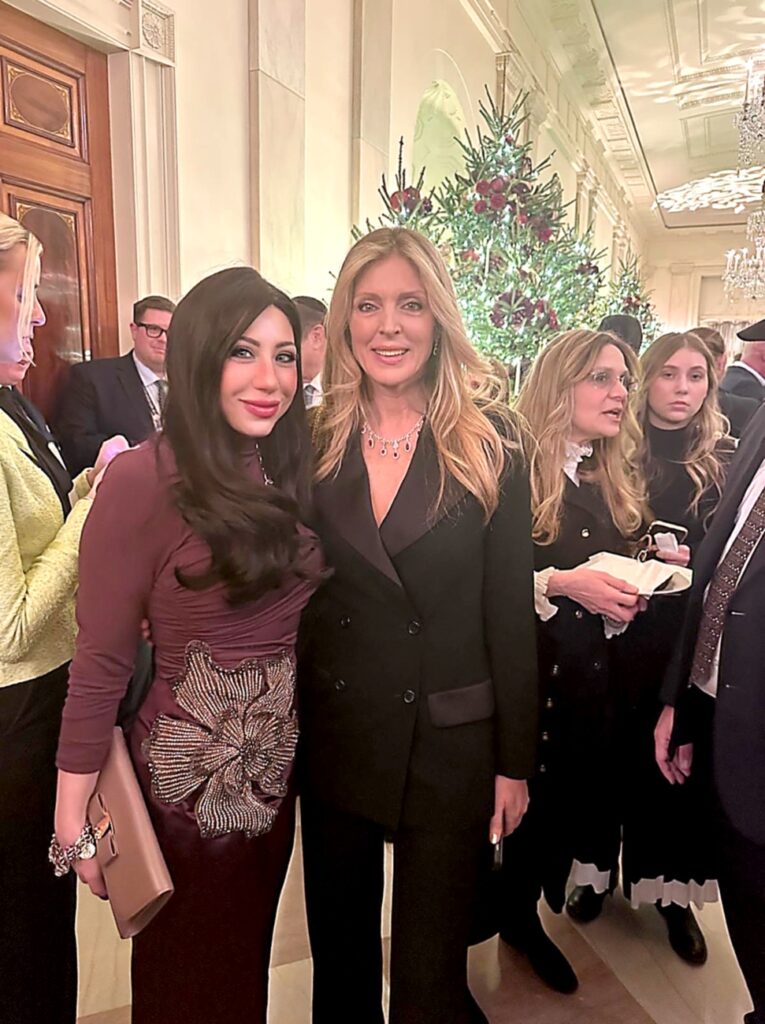
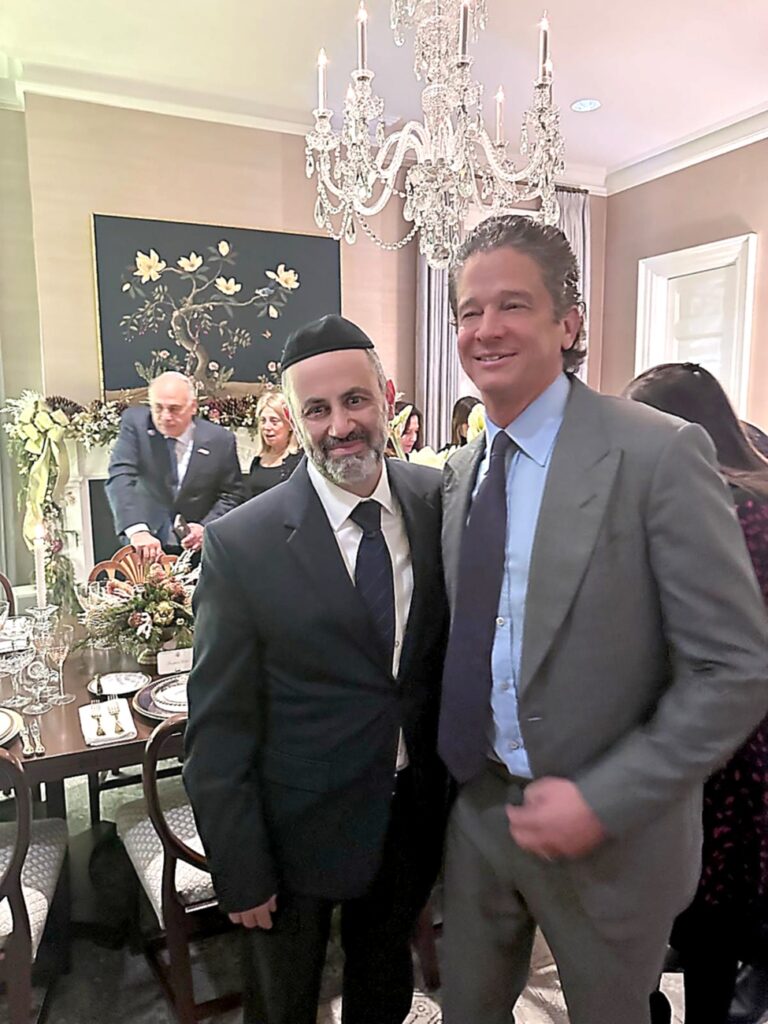
Linda Sadacka (left) with Marla Maples, mother of Tiffany Trump, photographed in the Cross Hall of the White House, just outside the East Room. Maples shared that she wore the necklace in tribute to her late mother, who gifted it to her and was deeply cherished by the President.L to R: Dr. Jack Sadacka is pictured with Ari Ackerman, businessman and real estate developer, in the Vice President’s Residence.Dr. Jack Sadacka and Linda Sadacka are photographed in the main living area of the Vice President’s Residence.Dr. Sadacka with Sid Rosenberg, host of New York City’s number one Nielsen-rated news talk morning show, a platform on which Linda is a recurring guest.
At one point, the President made an observation that framed the evening precisely. For every person in the room, he said, many more had wanted to attend and could not. Attendance was intentionally limited. Access was selective. I was aware that I was the sole representative from my community present, and I carried that responsibility consciously. As he acknowledged individuals, President Trump called out my close friend Elizabeth Pipko. Watching her be publicly recognized was the highlight of the evening for me. It reflected years of earned trust. Toward the end of the night, just before guests began to depart, a minyan formed organically near the foyer, in the interior space connecting the central room and the dining area. My husband joined in prayer alongside Jason Greenblatt and several senior figures, including ambassadors and public officials. It was unplanned, quiet, and deeply grounding. To watch my husband, whose family came to this country as refugees from Syria, standing in prayer inside the White House was clarifying. It captured something essential about America at its best. Faith does not need to be hidden. Origin is not destiny. That moment carried meaning for me as well. I am Canadian by birth and now a legal American citizen. To stand in the White House not merely as an attendee, but as a recognized leader and representative of my community, was not something I took lightly. America allows ascent paired with responsibility. It tests what you do with the opportunity it offers. What this evening illustrated is that in American political life, access and trust are not granted by visibility alone. They are earned through sustained engagement, shared priorities, and mutual understanding. The dynamics in that room foreshadow how alliances, narratives, and priorities will shape the political moment ahead. In a political culture driven by optics, it is easy to confuse visibility with influence. Evenings like this offer a corrective. Real power operates quietly, relationally, and often out of public view. The official record will show the speeches and the candles. What it will not capture is how much of American political life still unfolds exactly this way.
Linda Argalgi Sadacka is a writer, political activist, and community leader. She is the CEO of the New York Jewish Council and the founder of Chasdei David, a 501(c)(3) charity. Her advocacy, sparked by the tragic murder of a close friend by Hamas, has made her a leading voice for the Jewish community in America and abroad. She was honored as a Woman of Distinction in 2022 by Senator Simcha Felder for her leadership and activism. Linda is also the host of The Silent Revolution podcast, where she shares weekly classes blending Torah, prayer, and real-world reflection, making ancient wisdom urgent and relevant for our times
How Joey Saban Changed the Trajectory of Our Community
Sam Sutton and Ronnie Tawil
For more than twenty years, the Sephardic Community Federation (SCF) has served as the political and civic backbone of our community. Long before civic engagement became widely embraced, SCF was doing the quiet, necessary work, building relationships with elected officials, advocating for our institutions, and ensuring that community concerns were represented at every level of government.
Over time, our work produced real results. SCF helped secure tens of millions of dollars in government funding for community schools, synagogues, and social service organizations. It played a central role in defeating harmful proposals like the Coney Island Casino, advancing critical rezonings to protect community properties, and registering tens of thousands of voters. Through years of advocacy and groundwork laid by SCF, the conditions were created for a deeper level of community involvement. Joey Saban is the byproduct of that foundation, reflecting the long-term impact of SCF’s efforts. Joey Saban’s 2024 run for New York State Assembly was more than a campaign. It was a turning point in our community’s political consciousness. His candidacy ignited a passion for civic engagement that reshaped how our community saw itself and its power. Joey did not simply run for office. He inspired belief. Belief that leadership could come from within. Belief that participation mattered. Belief that our community could move to the center of political life. Few believed a challenger could make a serious impact in that race, but Joey proved that assumption wrong. His campaign galvanized thousands, especially younger voters and families who had never before engaged politically. Neighbors became organizers. First-time voters became advocates. By Election Day, more than fifteen thousand members of our community turned out to vote, an unprecedented show of engagement. But the most important result of Joey Saban’s campaign was not found in a vote total. It was found in a permanent shift in mindset. Joey’s run put our community on the political map in ways we never even knew were possible. Leaders across New York State took notice, not just of a candidate, but of a community that had awakened to its influence and was ready to exercise it. That awakening directly led to the election of Sam Sutton to the New York State Senate. Once again, this outcome was no accident. From the earliest conversations to the final strategy, Joey Saban played a profound and indispensable role. Sam Sutton’s decades of relationships and political work opened doors in Albany, allowing Joey to line up the nomination for him and build the political infrastructure necessary for success. He then stepped fully into his role as Chief of Staff to Senator Sutton, where his impact has been nothing short of transformative. Together with Senator Sutton, Joey has been deeply involved in shaping every major policy initiative, guiding strategy, building coalitions, and ensuring that the community’s priorities were not just heard, but delivered. The results speak for themselves. In just a matter of months, Senator Sutton secured nearly thirty million dollars in funding for religious communities across New York State, resources that will strengthen schools, protect institutions, and serve families for generations. Equally significant has been the introduction of landmark legislation to protect the Jewish community and confront antisemitism, including:
Legislation establishing buffer zones between houses of worship and protests, safeguarding the dignity and security of prayer.
A bill to codify the IHRA definition of antisemitism into New York State law, providing clear standards for accountability and enforcement. The momentum Joey ignited, with our guidance, has only continued to grow. This past summer alone, SCF and its partners registered over ten thousand additional community members to vote. That energy carried into the most recent mayoral election, with nearly twenty-five thousand Sephardic voters casting ballots, a powerful demonstration of a community fully awake to its strength. This is what sustained leadership looks like. A community that votes is respected. A community that organizes is heard. A community that believes in itself shapes its future. What began as a single political campaign has become a movement rooted in belief, participation, and results. With our mentorship, Joey Saban showed our community what is possible when vision meets courage. The momentum he created continues to grow, and as we set our eyes on the 2026 elections, its greatest impact is still ahead.
Sam Sutton and Ronnie Tawil are the founders of the Sephardic Community Federation (SCF).
A wedding is more than a celebration. It is the beginning of a shared financial journey. As two lives merge, so do goals, responsibilities, and resources. Combining assets does not have to mean combining everything right away. The key is clarity. Understanding what each partner brings into the marriage, how money will be managed day to day, and what values guide financial decisions.
Couples who take time early on to align around saving, spending, and long-term priorities often find that money becomes a source of confidence rather than conflict. Think of it like planning the wedding itself. When expectations are clear, the experience is far more joyful.
Starting a New Life Together Marriage marks a powerful shift, from individual plans to shared vision. Whether it is buying a home, growing a family, traveling, or building a legacy, the strongest foundations are built with intention. Early conversations around money help couples define what “success” looks like together. It is not about perfection. It is about partnership. Just as a wedding brings together family and friends, thoughtful financial planning brings structure and peace of mind to the life you are creating side by side.
Creating Clarity from Day One A helpful first step is creating a shared snapshot of your financial picture. Listing accounts, balances, debts, and recurring expenses gives both partners a clear starting point. This exercise is not about judgment. It is about awareness and transparency. Many younger couples find success with a “yours, mine, and ours” structure. Shared expenses like rent, utilities, and groceries are handled through a joint account, while individual accounts remain for personal spending. This approach supports teamwork while preserving independence. Couples who align early around spending and saving habits often avoid unnecessary friction later. Agreeing on spending thresholds, and when to check in before making larger purchases, can reduce misunderstandings and build trust.
Protecting Your Health, Together Health insurance is one of the most important, yet often overlooked, financial decisions newly married couples face. Marriage often opens the door to new options, from joining a spouse’s employer plan to reassessing coverage altogether, making it a natural time to review benefits side by side. Beyond monthly cost, it is important to understand how coverage works in practice, including access to doctors, prescription benefits, and potential out-of-pocket exposure. Comparing premiums, deductibles, and out-of-pocket maximums helps couples evaluate true costs and reduce the risk of unexpected medical expenses. Handled thoughtfully, coordinated coverage helps protect savings, stabilize cash flow, and support long-term financial goals. It allows couples to focus their energy on building a healthy life together.
Saving From Young, A Gift to Your Future Selves For newly married couples, time is one of the greatest financial advantages. Starting early, even with modest amounts, allows savings to grow alongside your life together. A simple but effective strategy is prioritizing an emergency fund before aggressive investing. Having three to six months of living expenses set aside provides stability and confidence, especially early in careers or during transitions. Once a foundation is in place, saving for the future becomes more flexible. Contributing regularly to workplace retirement plans, especially when employers offer matching contributions, is one of the most efficient ways to build long-term security. For couples with uneven incomes, coordinating savings across both partners can help balance progress. Planning should also leave room for joy. Allocating funds specifically for travel, celebrations, or shared experiences helps ensure that saving supports life rather than limiting it. When enjoyment is planned for, it feels earned and stress-free.
Built for the Long Run At Endurance Wealth Partners, we believe the strongest financial plans are built around real lives, shared values, and long-term purpose. Just like a marriage, a thoughtful plan evolves over time, supporting both the moments you celebrate today and the future you are building together.
The content is developed from sources believed to provide accurate information. Investing involves risk including the potential loss of principal. No investment strategy can guarantee a profit or protect against loss in periods of declining values. Past performance does not guarantee future results. Consult with a financial professional regarding your specific situation.
Ari Baum, CFP® is the Founder and CEO of Endurance Wealth Partners, with over 25 years of experience in the Financial Services industry. He brings his in-depth experience to Conceive. Believe. Achieve. for his clients. Securities and Advisory services offered through Prospera Financial Services Inc. Member FINRA/SIPC. Brokerage and Advisory accounts carried by Wells Fargo Clearing Services LLC.
Last summer, my family and I went to a secluded cabin in the forest. One night, I built a large fire pit and sat by it, alone, for nearly an hour, deep in thought. In a flash, I had an insight and called a friend to share it. He asked me, “Where are your wife and kids?” I answered, without thinking much of the question, that they were inside, and my wife was putting them to bed. He paused and said, “She is doing the real work. That is real life.”
His comment struck me, not because I believe we shouldn’t have moments of solitude and reflection, but because of the contrast between seeking grand moments and returning to the everyday rhythm once those moments subside. This is something I have struggled with, and his words brought it sharply to the forefront. The real question is not how we are in the grand moments, when our child is born or when we stand under the huppah, but how we show up when we return to daily routine. How do we show up once the excitement fades and life settles back into routine? When the focus needs to be on the ordinary, repetitive and often uncelebrated acts of responsibility. Benei Yisrael confronted this challenge after their huppah at Mount Sinai, when they entered into a covenant, a marriage, with G-D. The scene was one of cinematic grandeur: lightning, thunder and the sound of a booming shofar. The people prepared with awe and anticipation, and the experience was overwhelming. But in the quiet, unremarkable days that followed, sustaining that moment proved far more difficult. What gives the revelation at Mount Sinai its enduring meaning is carrying its commitment forward into ordinary time, day after day. This idea is at the heart of the story of Hannah (I Samuel 1). Hannah was a barren woman who longed for a child. At the height of her anguish, Hannah made a vow: If G-D would bless her with a son, she would dedicate him to serve in the Mishkan all the days of his life. G-D did, at last, answer her prayers. With excitement, Hannah returned to the Mishkan, the place where she had prayed for a child, and told the Kohen Gadol, Eli, “This is the boy I prayed for! G-D gave me what I asked for and what I requested of Him.” The story of Hannah could have concluded here with this happy ending, G-D answering her prayers. Instead, it continues to describe what takes place after, in the quiet, ordinary commitment of the life that follows. The text tells us that she would go year in and year out, miyamim yamimah, to the Mishkan with a new me’il qaton, a small, hand-sewn robe for her son. Why tell us about this detail? What was its purpose and significance? When you hear the word me’il, robe, in the context of the Mishkan, you would expect the splendor like that of the Kohen Gadol’s: ornate with intricate embroidery, pomegranates and bells sewn along the hem, a garment of glory. But the robe Hannah made for her son was just a simple little tunic, resized each year as her boy grew. This is the image of a mother buying her son new clothes as he grows, like taking our kids school shopping year after year as they outgrow their previous year’s clothing. It’s not glamorous, not a big moment, not a new height of accomplishment. That was Hannah’s me’il, the little robe. Every year, miyamim yamimah, a new size, another trip, another robe, continued commitment in the everyday moments. The emphasis is not on the miracle itself, but on the consistency that follows, miyamim yamimah, year after year. The simha at a wedding is not really about the wedding itself, but about what it points toward, the hope that two people will keep returning to one another day after day. We are not cheering only for the moment the hattan stands under the huppah. We are cheering for the days, weeks and years that come after. We celebrate the person who leaves in the morning and is eager to come home to his bride again each night, who is pulled in countless directions by the demands of life and yet remains drawn back, again and again, to the same relationship. That is the “real work” my friend was talking about that night in the forest. He was reminding me of the importance of the quiet, repetitive work of being a father and a husband. The miracle of a child or a marriage is the peak, but the meaning is given weight and impact through carrying the moment forward through daily commitments. That is Hannah’s me’il, the simple, unglamorous tunic that must be resized year after year as life grows and changes. It was Hannah’s continuous showing up that gave greater meaning and purpose to the blessing of a child. And so, miyamim yamimah has become my mantra. It grounds me in the daily commitments I once experienced as interruptions to my “real” work. When I feel the urge to tell my kids I’m too busy, I pause and remind myself, miyamim yamimah, this is the real work.
Rabbi Meyer Laniado is an associate rabbi at Congregation Kehilath Jeshurun and leads its Sephardic community on New York City’s Upper East Side. He teaches at Ramaz and is a growing voice in the broader conversation on Sephardic history, ideas, and culture, having shared perspectives at UJA, the Maimonides Fund, and the Bronfman Fellowship.
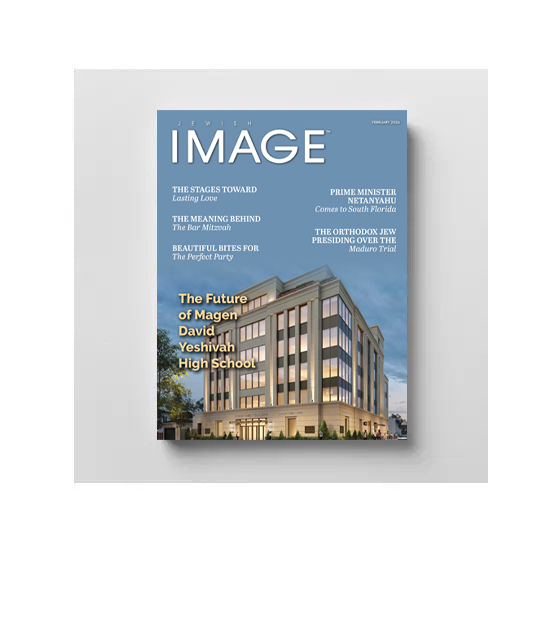
As Magen David Yeshivah High School looks toward the future, the momentum and excitement throughout our community continue to flourish. Through immersive Torah learning in Torat Hayim, meaningful hesed initiatives, hands-on access to the Bloomberg Terminal, and the launch of the Magen David Business Institute, our students benefit from opportunities that are both exceptional and purposeful.
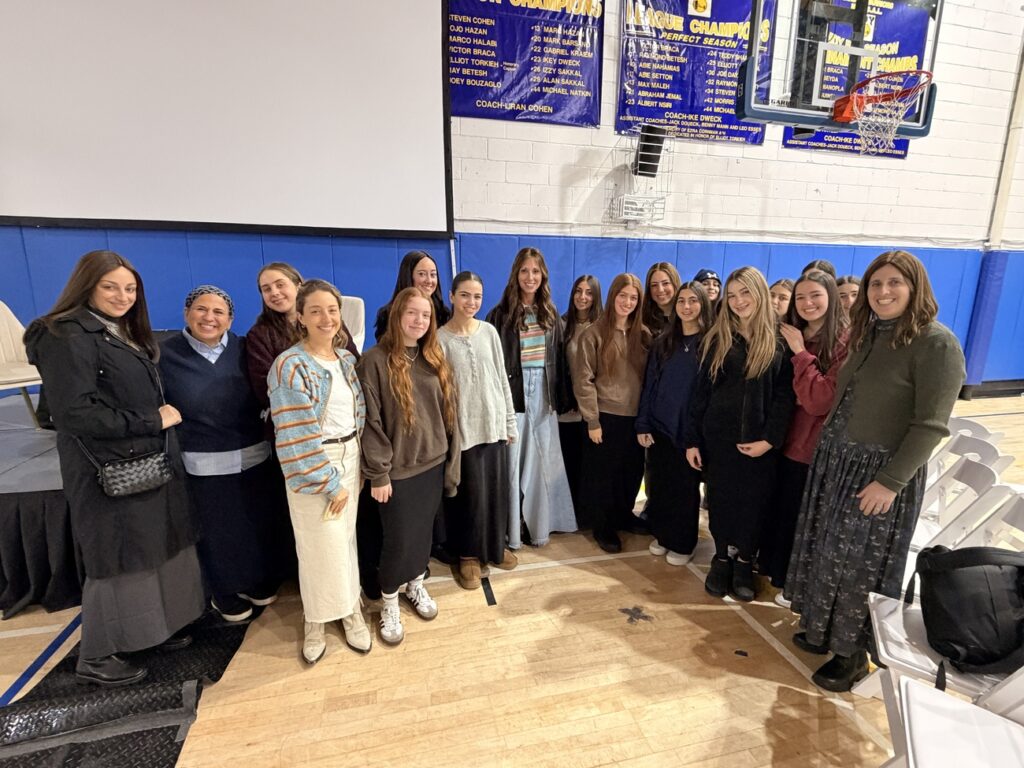
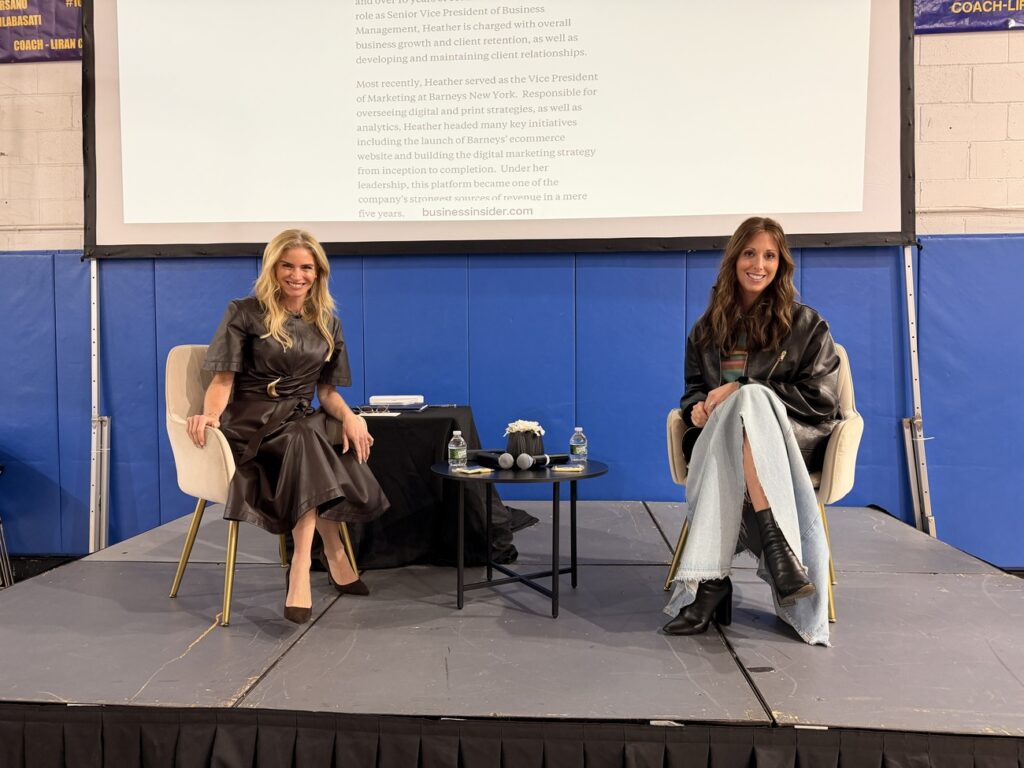
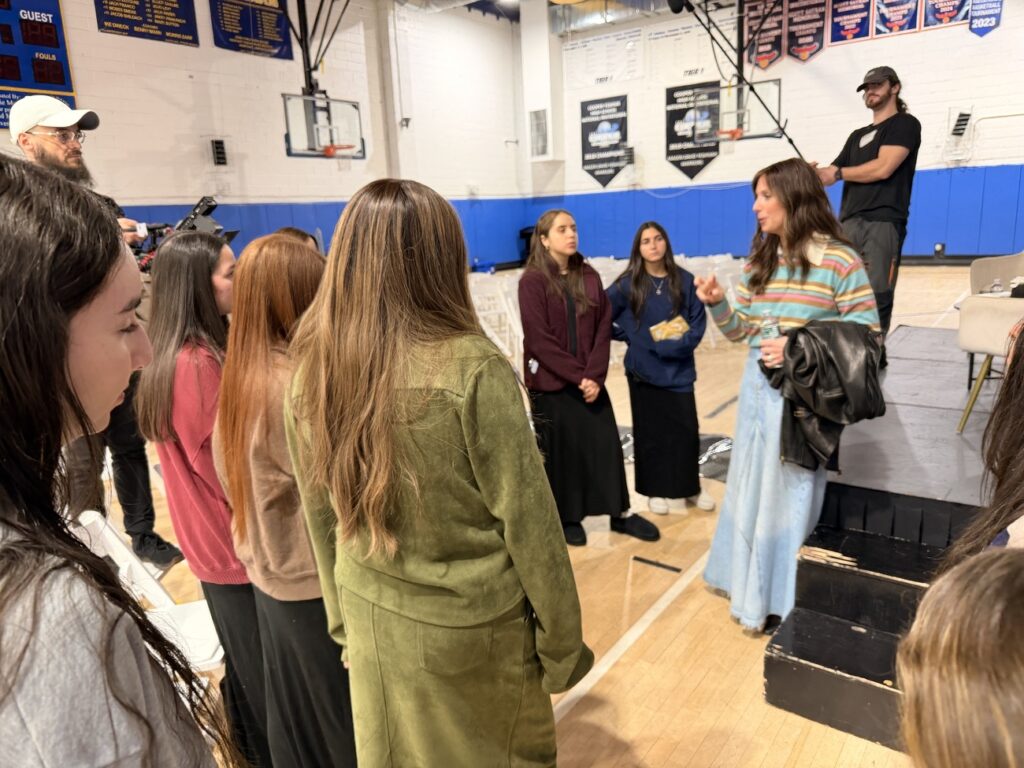
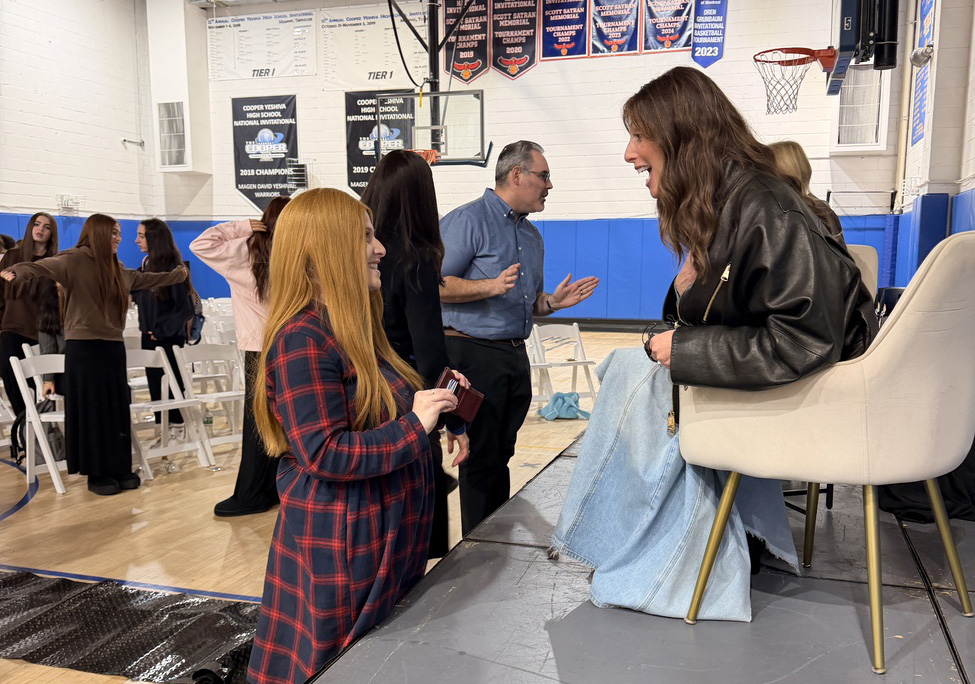
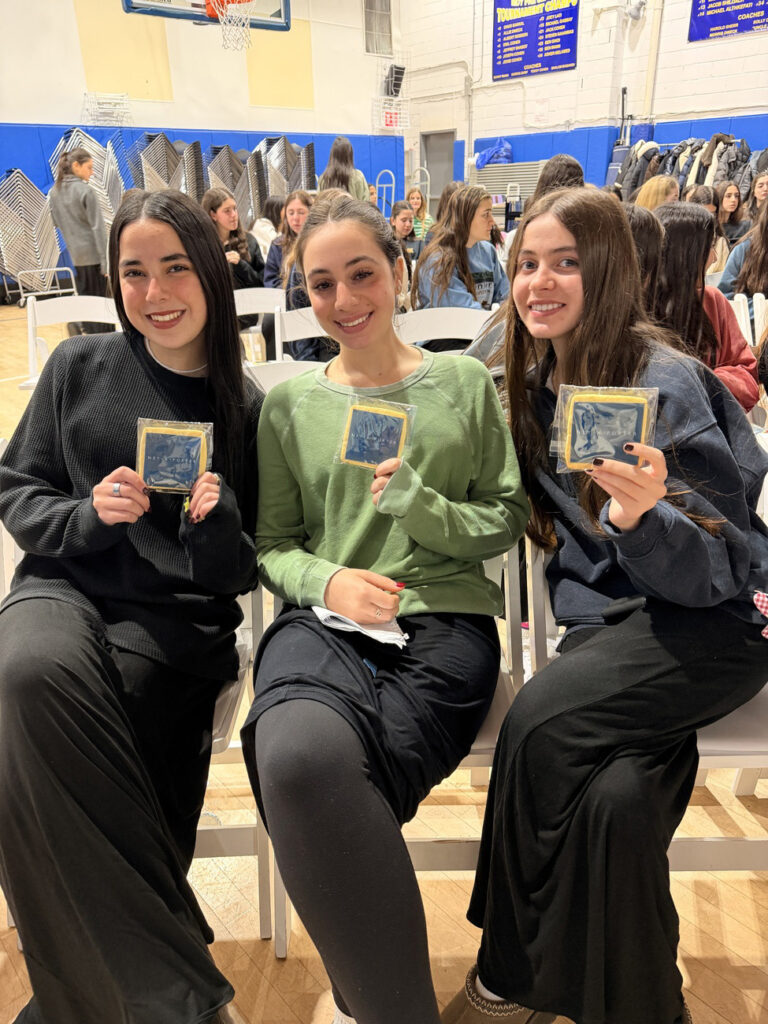
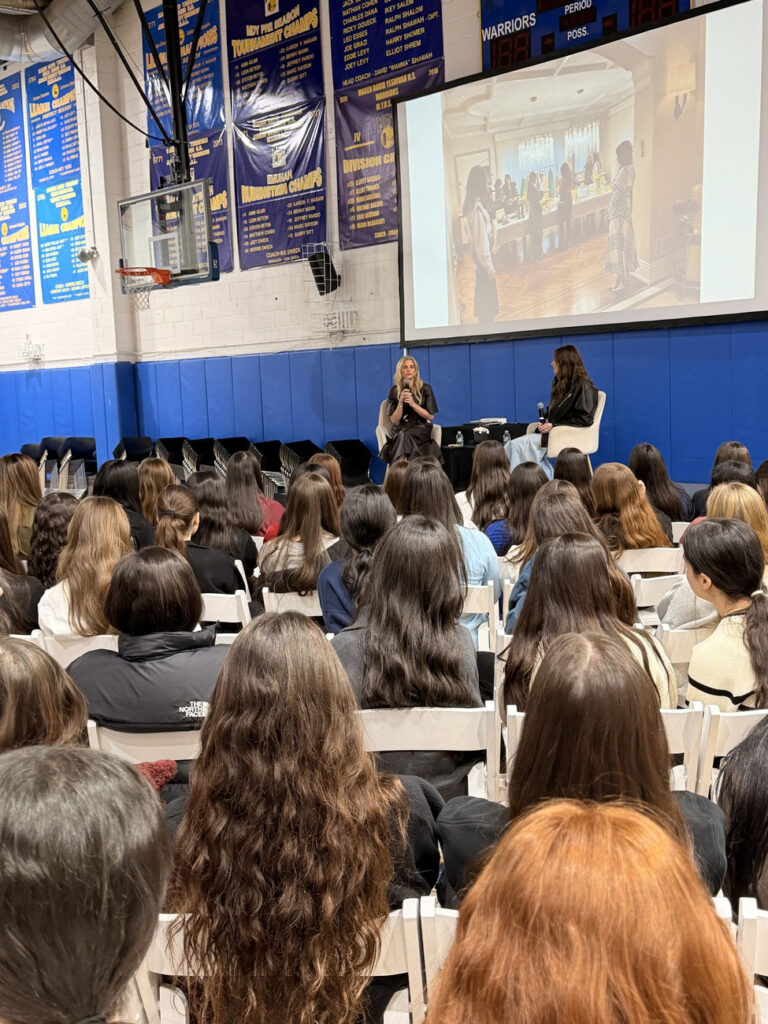
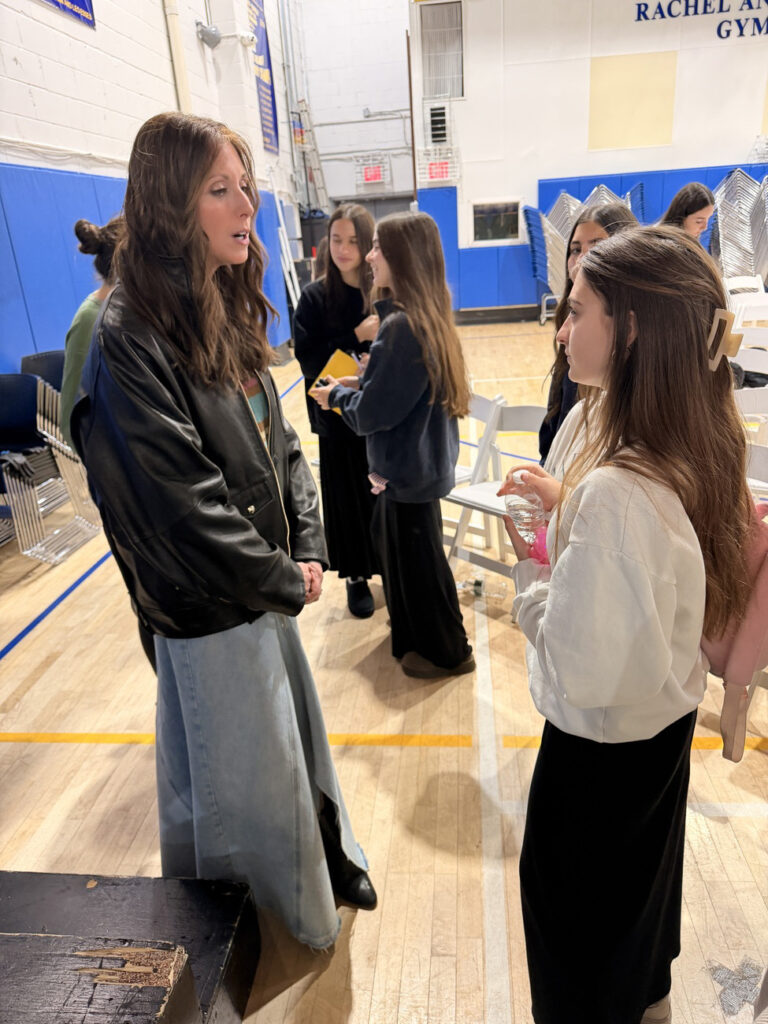
What was once a well-kept secret is now widely recognized, as interest in MDYHS has reached record-breaking levels, coinciding with the anticipation surrounding the opening of our new, state-of-the-art high school building in September 2027. Together, these initiatives reflect the distinctive educational experience that defines MDYHS: one that integrates academic excellence, strong values, and real-world exposure. A recent program for our girls featuring Net-a-Porter CEO Heather Kaminetsky exemplifies this vision, offering students meaningful access to a global leader who embodies integrity, ambition, and purpose—and who inspires them to envision their own potential and future impact. Magen David Yeshivah High School was honored to welcome Heather Kaminetsky, CEO of Net-a-Porter, for a meaningful schoolwide program for all of our girls, thoughtfully moderated by President Gladys Haddad. Ms. Kaminetsky shared her remarkable professional journey leading a global luxury fashion company. Yet what resonated most deeply was her openness about the fullness of her life beyond the boardroom, as a mother, wife, and grandmother, and how those roles have shaped her leadership style. She spoke candidly about the importance of asking for help and never being afraid to raise your hand when opportunity arises. She credited her husband’s unwavering belief in her, sharing how his support at home made it possible for her to step into leadership with confidence. She emphasized that parenting has strengthened her ability to manage, coach, and lead teams, teaching her patience, empathy, accountability, and the importance of developing others. Ms. Kaminetsky reflected on how her children grew more proud of her work as they got older, and how her dedication encouraged them to work hard and take pride in their own efforts. She shared a powerful message rooted in faith and integrity, always do the right thing, and Hashem will take care of the rest. The conversation also explored the reality of leadership and growth. Ms. Kaminetsky encouraged students to embrace risk and imperfection, sharing her belief in “leaving twenty percent room for failure,” because without failure, there can be no growth. She spoke honestly about commitment, explaining that success requires making things work even when it feels difficult. When discussing balance, Ms. Kaminetsky offered a refreshing perspective. She shared that she does not love the word “balance,” because some days one priority must take center stage over another. What matters, she explained, is clarity and boundaries. She noted that she is “always on, always, except for Shabbos and holidays,” boundaries she set early in her career and made clear were non-negotiable. Throughout the discussion, students and teachers alike were inspired by her authenticity, strength, and grounded sense of purpose. Ms. Kaminetsky’s message was clear, leadership, ambition, family, faith, and values are not mutually exclusive. You can build a meaningful career while staying deeply committed to who you are. We are grateful to Ms. Kaminetsky for sharing her wisdom and lived experience, and to President Gladys Haddad for guiding such a thoughtful and impactful conversation. Programs like this empower our girls to envision futures defined by confidence, integrity, and possibility.
The Stewardship Paradigm
Rabbi Lord Jonathan Sacks zt”l
Few texts have had a deeper influence on Western civilization than the first chapter of Bereishit, with its momentous vision of the Universe coming into being as the work of G-D. Set against the grandeur of the narrative, what stands out is the smallness, yet uniqueness, of humans, vulnerable, but also undeniably set apart from all other beings.
The words of the Psalmist echo the wonder and humility that the primordial couple must have felt as they beheld the splendor of creation: “When I consider Your heavens, the work of Your fingers, the moon and the stars, which You have set in place, what is humanity that You are mindful of it, the children of mortals that You care for them? Yet You have made them little lower than the angels and crowned them with glory and honor.” (Tehillim 8:3-5)
The honor and glory that crowns the human race is possession of the Earth, which is granted as the culmination of G-D’s creative work: “Be fruitful and multiply, fill the earth and subdue it.” This notion is fortified in Tehillim 115: “The heavens are the Lord’s heavens, but the earth G-D has given to humanity.” While the creation narrative clearly establishes G-D as Master of the Universe, it is the human being who is appointed master of the earth.
Grappling with the challenging notion of humans as divinely ordained owners and subduers of the earth, we come face to face with the fundamental questions of our place in the Universe and our responsibility for it. A literal interpretation suggests a world in which people may cut down forests, slaughter animals, and dump waste into the seas at their leisure, much like we see in our world today.
On the other hand, as Rav Kook, first Chief Rabbi of Israel, writes, any intelligent person should know that Bereishit 1:28 “does not mean the domination of a harsh ruler, who afflicts his people and servants merely to fulfill his personal whim and desire, according to the crookedness of his heart.” Could G-D have really created such a complex and magnificent world solely for the caprice of humans?
Bereishit chapter 1 is only one side of the complex biblical equation. It is balanced by the narrative of Bereishit chapter 2, which features a second Creation narrative that focuses on humans and their place in the Garden of Eden. The first person is set in the Garden “to work it and take care of it.”
The two Hebrew verbs used here are significant. The first, le’ovdah, literally means “to serve it.” The human being is thus both master and servant of nature. The second, leshomrah, means “to guard it.” This is the verb used in later biblical legislation to describe the responsibilities of a guardian of property that belongs to someone else. This guardian must exercise vigilance while protecting, and is personally liable for losses that occur through negligence. This is perhaps the best short definition of humanity’s responsibility for nature as the Torah conceives it.
We do not own nature. “The earth is the Lord’s and the fullness thereof.” (Tehillim 24:1) We are its stewards on behalf of G-D, who created and owns everything. As guardians of the earth, we are duty-bound to respect its integrity.
The mid-19th century commentator Rabbi Samson Raphael Hirsch put this rather well in an original interpretation of Bereishit 1:26, “Let us make the human in our image after our own likeness.” The passage has always been puzzling, since the hallmark of the Torah is the singularity of G-D. Who would G-D consult in the process of creating humans?
The “us,” says Hirsch, refers to the rest of Creation. Before creating the human, a being destined to develop the capacity to alter and possibly endanger the natural world, G-D sought the approval of nature itself. This interpretation implies that we would use nature only in such a way that is faithful to the purposes of its Creator and acknowledges nature’s consenting to humanity’s existence.
The mandate in Bereishit 1 to exercise dominion is, therefore, not technical, but moral. Humanity would control, within our means, the use of nature toward the service of G-D. Further, this mandate is limited by the requirement to serve and guard as seen in Bereishit 2. The famous story of Bereishit 2 to 3, the eating of the forbidden fruit and Adam and Chavah’s subsequent exile from Eden, supports this point.
Not everything is permitted. There are limits to how we interact with Planet Earth. The Torah has commandments regarding how to sow crops, how to collect eggs, and how to preserve trees in a time of war, just to name a few. When we do not treat Creation according to G-D’s will, disaster can follow.
We see this today as more and more cities sit under a cloud of smog and as mercury advisories are issued over large sectors of our fishing waters. Deforestation of the rainforests, largely a result of humanity’s growing demand for timber and beef, has brought on irrevocable destruction of plant and animal species.
We can no longer ignore the massive negative impact that our global industrial society is having on the ecosystems of the Earth. Our unbounded use of fossil fuels to fuel our energy intensive lifestyles is causing global climate change. An international consensus of scientists predicts more intense and destructive storms, floods, and droughts resulting from these human induced changes in the atmosphere. If we do not take action now, we risk the very survival of civilization as we know it.
The Midrash says that G-D showed Adam around the Garden of Eden and said, “Look at My works! See how beautiful they are, how excellent! For your sake I created them all. See to it that you do not spoil and destroy My world, for if you do, there will be no one else to repair it.”
Creation has its own dignity as G-D’s masterpiece, and though we have the mandate to use it, we have none to destroy or despoil it. Rabbi Hirsch says that Shabbat was given to humanity “in order that he should not grow overweening in his dominion” of G-D’s creation. On the Day of Rest, “he must, as it were, return the borrowed world to its Divine Owner in order to realize that it is but lent to him.”
Ingrained in the process of creation and central to the life of every Jew is a weekly reminder that our dominion of Earth must be l’shem shamayim, in the name of Heaven.
The choice is ours. If we continue to live as though G-D had only commanded us to subdue the Earth, we must be prepared for our children to inherit a seriously degraded planet, with the future of human civilization put into question. If we see our role as masters of the Earth as a unique opportunity to truly serve and care for the planet, its creatures, and its resources, then we can reclaim our status as stewards of the world, and raise our new generations in an environment much closer to that of Eden.
The Torah’s Perspective on Economic Growth
Rabbi Lord Jonathan Sacks ZT”L
Here is the problem. To avoid recession, we have to give the economy a boost, which means spending more, which means borrowing more, which means higher levels of debt, which is what got us into trouble in the first place.
To put it the other way: in many Western economies individuals and governments have built up unsustainable levels of debt. To reduce them they must spend less and save more, which means lower consumer demand, lower government expenditure, lower employment and lower profits, which involves more need for state support, which is where we came in. Whatever economics is, it isn’t simple.
Part of the problem is that economics is not physics. It’s not about matter in motion. It’s about human beings, and humans are not simple. They have a history. One generation is not like the next. The people who create economic growth are often not the ones who enjoy it.
The German sociologist Max Weber famously argued that it was “the Protestant ethic,” Calvinism in particular, that gave rise to “the spirit of capitalism.” It combined three attitudes essential for the emergence of a new order. First it saw work as a vocation and a way of serving G-d. Second it frowned on luxuries and celebrated thrift. Third it saw earthly success as a sign of Divine favor.
The result was a whole class of wealth creators, Benjamin Franklin was the role model, who worked hard, saved and invested, fueling a revolution in production in England and the United States. Hence the paradox: It was not consumerism that led to wealth-creation but its opposite, Puritanism.
We can go deeper. In a memorable research exercise, the 1972 Stanford Marshmallow Experiment, four-year-old children were presented with a test. They were offered a marshmallow, but told that if they waited twenty minutes before eating it, they would receive an additional one.
It was a neat and excruciating trial. Some of the children gave in to temptation immediately. Others did all they could to fight it. They closed their eyes, turned around, or even stroked the marshmallow, pretending it was a pet. Roughly a third succeeded in waiting the twenty minutes and received their reward.
Simple enough, but what made the test a classic of its kind was that a series of follow-up studies was done of the children, years later. It turned out that their behavior at age four was a highly accurate predictor of their later success in life. The children able to resist the temptation were, ten and even thirty years later, psychologically better adjusted, more dependable, scored higher grades in school and college and had more success in their careers. The differences were measurable over a lifetime. Success depends on impulse control, the ability to delay gratification, which is precisely what a consumerist culture undermines. At every stage, the emphasis is on the instant gratification of instinct, the must-have handbag, the new generation smartphone, next year’s designer trainers. In the immortal words of the pop group Queen, “I want it all and I want it now.”
Worst of all, our children are being groomed to be mini-consumers. They are being taught by every siren signal of our culture that they are entitled to the marshmallow without delay. A whole culture is being infantilized.
The best commentary on all this was given by Moses in the book of Deuteronomy. He is addressing the next generation, the children of those who had been liberated from slavery. He tells them, surprisingly, that the real trial is not poverty but affluence. Affluence dulls the senses. It makes you forget where you came from. You start taking prosperity for granted, not realizing how vulnerable it is. Bad things begin to happen. Inequalities grow. The social bond becomes weak. The nation forgets who it is and why.
Moses therefore restates a series of commands designed to teach the Israelites how to control their impulses and safeguard the future. Rest every seventh day. Cancel debts every seventh year. Place spiritual, not material, values at the heart of society. Fight poverty. Pursue justice. Treat employees decently. Care for the widow, the orphan and the stranger. Ensure that everyone has dignity. Deuteronomy is not about short term growth but about long term sustainability.
Ultimately, the wealth of nations depends on more than economics. It depends on the degree to which a culture teaches us to act today for the sake of blessings tomorrow, a hard lesson but a necessary one. q
Great real estate deals come in all shapes and sizes. Some people are hunting for their first home. Others are searching for a multifamily building, a mixed use property, or a small storefront that can generate steady income. No matter what the goal is, the best opportunities rarely sit around waiting. They move fast because the price is right, the numbers make sense, or the location has clear potential. The people who catch these deals early are not lucky. They are paying attention to signs that others overlook.
Before you dive into listings of any kind, it helps to understand why certain properties stand out. Every home, building, or store has a story behind its price, its layout, and the seller’s timeline. When you learn how to read between the lines, you can tell when an opportunity is worth acting on quickly or when there is hidden value waiting to be uncovered. Price history is one of the easiest places to start. A sudden drop on a one family home can signal a motivated seller, but the same is true for a vacant retail space or a six unit building that has sat for a while. Investors study these patterns closely. A building that has been reduced twice in a short period may be open to negotiation. A commercial space listed below similar properties on the same block often reflects an owner who wants to fill it without delay. Meanwhile, a property that has stayed at the same price for months in a busy market deserves a closer look, since some owners will accept a solid offer from someone ready to move forward without drama. Reading listings carefully can reveal even more. Real estate agents often use certain phrases when discussing value without spelling everything out. A home described as “needs updating” may look tired, yet the bones might be strong and the mechanicals newer. A mixed use property that says “bring your vision” often means the seller chose not to renovate before listing, which can create a price gap large enough for a buyer to add value. Even a commercial building that mentions “tenant improvement allowance” can be a sign that the owner is eager to fill the space and is willing to negotiate. Photos also tell a story beyond the surface. A limited number of pictures on a residential listing sometimes means the seller was in a rush, but the same situation with a warehouse or small store can indicate a fast moving deal. When you see only a few photos for a property in a prime area, reach out right away. Many investors jump on listings that appear undervalued simply because they were posted quickly without polish. Location plays a major role when spotting opportunities in both residential and commercial markets. A house priced slightly below the block average is not always a red flag. It could be close to stronger streets or near planned development. The same applies to an older mixed use building with steady foot traffic nearby. Buyers who take the time to walk the area, talk to local owners, and visit at different hours get a much clearer picture than those who rely only on maps or online reviews. Small stores near new housing projects, expanding colleges, or busy transit stops often pick up value faster than people expect. Activity level is another early warning sign that a property will move fast. Agents say that a spike in showing requests during the first day signals strong interest. This is true for homes being listed by young families and also for investors looking at a four family building. A commercial broker in Queens noted that if she gets more than a dozen calls for a retail space before the first weekend, she alerts her clients that they should act as soon as they feel comfortable with the numbers. Timing helps uncover deals too. Properties that hit the market right before a holiday weekend or during a slow stretch of the year sometimes get overlooked at first. If you check new listings daily and pay attention to off peak moments, you can catch opportunities before they rise to the top of search results. Finally, trust the details that make your instincts react. A solid inspection report on a home, clean financials on a small apartment building, or a long standing tenant in a storefront can signal a safer investment. The best deals often feel balanced. The price makes sense, the property has potential, and the seller is ready for the next step. When those pieces line up, you know it is worth moving quickly. Spotting a great real estate deal is not about luck. It is about patience, awareness, and the willingness to look deeper than the listing. When you understand the early signs that a property is worth a closer look, you place yourself ahead of the crowd and open the door to opportunities before anyone else notices them.
How to Stay Healthy on Vacation and Still Truly Enjoy It
Laura SHAMMAH MS, RDN
Whether you’re boarding a plane, packing the car for a few days away, or just planning family day trips close to home, getting away is a gift. And if you’re lucky enough to travel, enjoy it. If travel isn’t in the cards right now but you’re making memories locally, that counts just as much.
Vacation doesn’t need to be an all-or-nothing experience. You don’t have to throw out every habit that makes you feel good, and you also don’t need to be rigid or “perfect.” The goal is simple. Feel good in your body while fully enjoying the experience.
Travel Days Matter More Than We Think How you treat your body on travel days often sets the tone for the whole trip. If you can, prepare ahead. Bringing a meal with protein, like a salad with tuna or a grilled chicken wrap, can make a huge difference. Pack snacks you actually enjoy, and throw in some cut-up veggies as a backup. Hunger plus travel stress rarely leads to great choices. No time to prep? That’s okay. Picking up a healthy meal from a restaurant the day before your flight can be a lifesaver. You’ll thank yourself when hunger hits midair. Airports have come a long way. Even if you didn’t prepare, you can usually find solid options like oatmeal cups, Greek yogurt, nuts, fruit, or protein bars. Hydration is non-negotiable. Drink water before, during, and after your flight. A simple trick is to buy two large water bottles at the airport and aim to finish them before landing. It helps with energy, digestion, and jet lag. Alcohol on flights may feel relaxing in the moment, but it adds to dehydration and fatigue. Skipping it often makes for a much better arrival. Don’t forget to move. Sitting upright for hours isn’t ideal for the body. Stand up, stretch, and walk the aisle every hour or so. A little movement and hydration go a long way.
Why Vacations Trigger “All or Nothing” Thinking For many people, vacation flips a mental switch. Suddenly it feels like a green light to overindulge, and all the reasons you wanted to eat in a way that supports your health disappear. You don’t need to choose between enjoying your vacation and feeling good in your body. You can do both. How to Stay Grounded With Food Without Missing Out Start your day with breakfast. Even though vacation schedules look different, skipping the first meal often leads to feeling out of control later. At a resort, enjoy the breakfast buffet and focus on fruit, whole grains, protein, and healthy fats like whole-wheat toast, eggs, and avocado. Give yourself permission to indulge once a day. Vacation is meant for special moments. Maybe it’s a warm croissant from a bakery in Paris, or stopping for ice cream with your kids on a road trip. Eat it slowly. Savor it. Enjoy it without guilt. One intentional indulgence feels very different than mindless grazing all day. Walk as much as you can. Exploring a city, museum, boardwalk, or beach is movement that doesn’t feel like exercise. If something is within a mile, walk there. Pack comfortable shoes and let movement be part of the experience. Find fun ways to move. Not every activity needs to revolve around food. Play volleyball on the beach. Go for a hike. Take a bike tour. Paddleboard. Walk through a museum. Play a round of golf. Movement keeps energy up and helps you stay connected to your body without feeling like a workout obligation. Stay hydrated throughout the day. Traveling, heat, and busy schedules make dehydration common. Bring a water bottle with you and refill it often. Many people mistake dehydration for hunger or fatigue. If you’re shopping for food at your destination, make a simple list first. It keeps you focused and helps you buy foods that make you feel good, without overthinking it. Plan lightly, not rigidly. Try to stick to your usual eating rhythm when possible. Packing snacks, fruit, or a simple meal for the beach or a long day out helps you stay steady and prevents extreme hunger. And finally, relax. Truly. Between flights, jet lag, new environments, and family dynamics, travel can be exhausting. Stress and lack of sleep raise cortisol and increase cravings. Take deep breaths. Rest when you can. Be gentle with yourself. Vacations go by quickly. Focus on connection, laughter, movement, and moments that have nothing to do with food. Every meal and every choice is simply another opportunity for self-care, not perfection. Enjoy your time away. That’s the whole point.
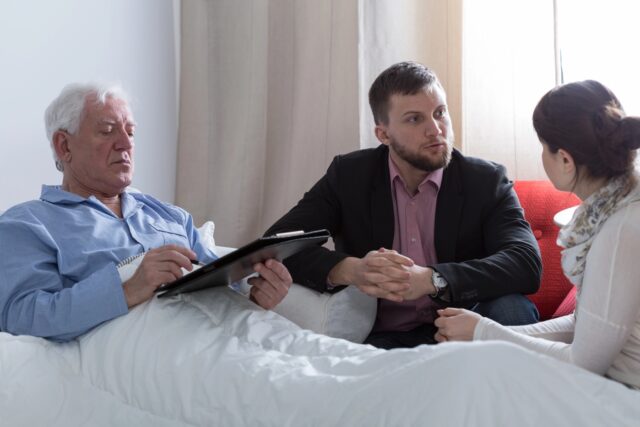
Rabbi Abram was admitted to a local hospital to take care of a gallstone. The entire procedure was to be no longer than an hour, two tops. Five hours later the family was called and told that the rabbi was near death. During the procedure a stent in his heart was shredded and he was now on life support. A week later he was gone and the family was shocked and devastated. Miriam was recommended to a “five star” rehabilitation facility after undergoing knee surgery. Every day she waited for the physical therapist to come and evaluate her so that they could get started doing the necessary exercises to strengthen her leg so she could walk well again. Days came and went and the PT did not show. First she was told that she couldn’t start because of her high pain level and that she needed to get stronger. After a week and a half she told the staff that she was in much less pain and feeling better. Still the PT did not show. When her nephew came to visit her he was told that the PT that specialized in knee recovery had left the home and that they were still looking for a replacement. It took another two weeks before Miriam started her therapy which was very disappointing. She was bitter and disheartened by the whole affair and wondered how she could have avoided all of the difficulties she encountered. Chaim was a very independent 75 year old who had no family that lived nearby. After being hospitalized for pneumonia he was discharged back home with the understanding that a nurse would come to evaluate his physical needs and to assign whatever specialists would be appropriate to help him get back on his feet. Once home Chaim found out that the agency that was assigned his case no longer took his insurance. The hospital social worker who was handling his discharge needs said that she would find him another homecare agency but a week later he was still waiting and without help or support. He was told that the first agency had not released his case so a new one could not pick it up. In the meantime, Chaim fell in his home and badly wounded his leg. By the time a registered nurse came to check on him he was in poor condition and had a third degree wound that was in urgent need of attention. It used to be that going to a hospital or a nursing facility meant a patient was going to be assessed for their presenting symptoms. There would also be an evaluation of any other comorbid conditions. Then the medical team would create a comprehensive plan on how to achieve the best health outcomes and the patient would be closely monitored to insure that these goals were met. This is no longer the case. For whatever the reason there are far too many cases of people going in for minor surgeries and not coming home. Patients who are getting hurt in long term care facilities with no one willing to take responsibility for the matter. There are too many people who are entitled to home care services that are receiving little to poor care. Med-Aid is an organization designed to help you and your loved ones get the best, most efficient care in your most vulnerable time.The staff has over 35 years of experience dealing with these medical bureaucracies and forging positive outcomes. Don’t delay. Call Lisa at 917 754-6278 and set up your free consult.