MDY Kindergarteners Take on the 2026 Winter Games!
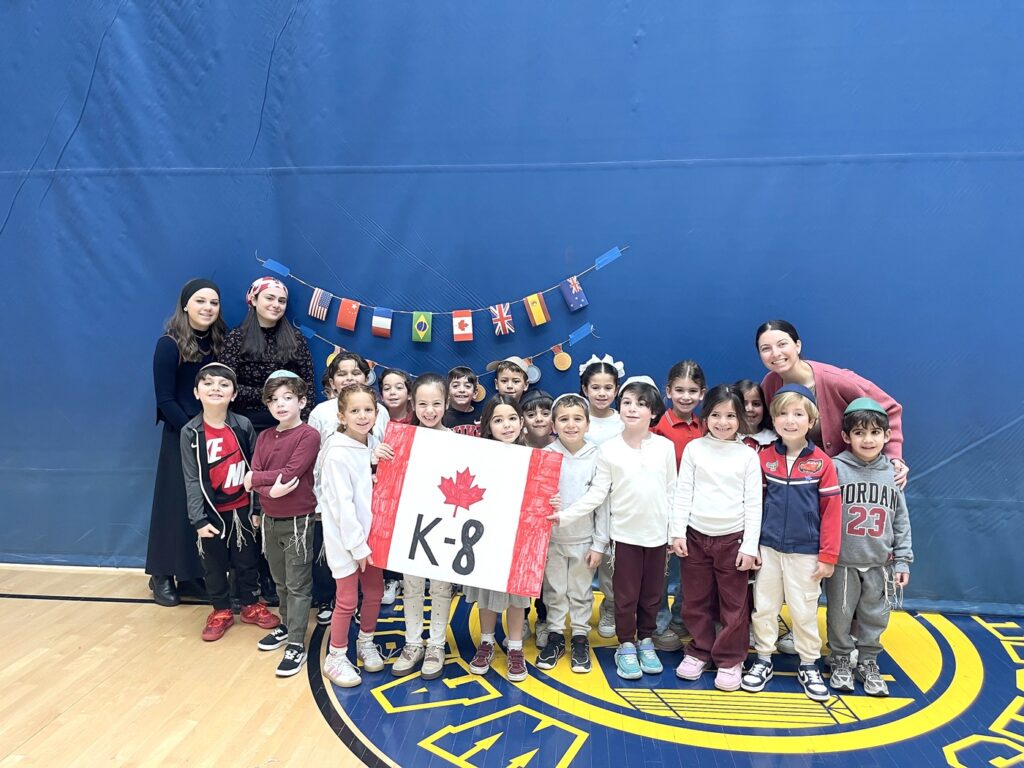
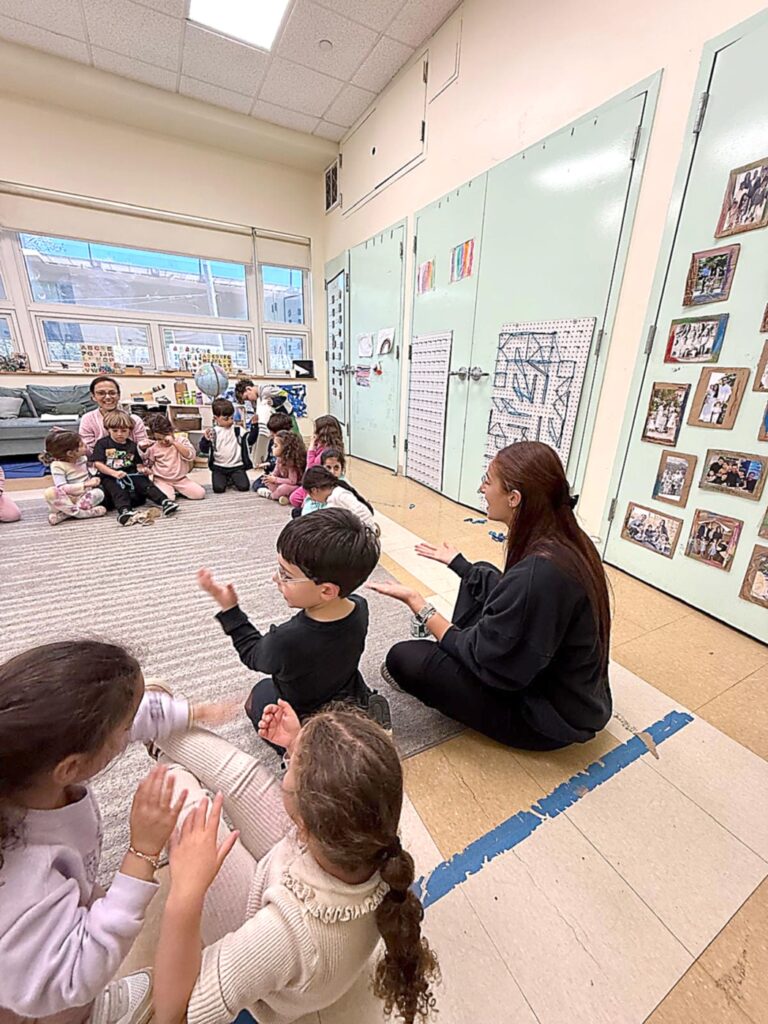
Who says you need two weeks to host the Olympics? The MDY Student Activities Department proved that you can travel the world and compete in the Winter Games, all from the comfort of the MDY gym! Our kindergarteners were treated to a high-energy, absolutely adorable “Winter Olympics” that transformed the gym into a global stadium.
Around the World in Minutes The event kicked off with a colorful “Parade of Nations.” It was heartwarming to see the children’s faces light up as they spotted the flags of countries competing in the 2026 Winter Games. Together, we spoke about how even though people live in different places around the world, we all come together to play fair, try our best, and celebrate one another’s achievements.
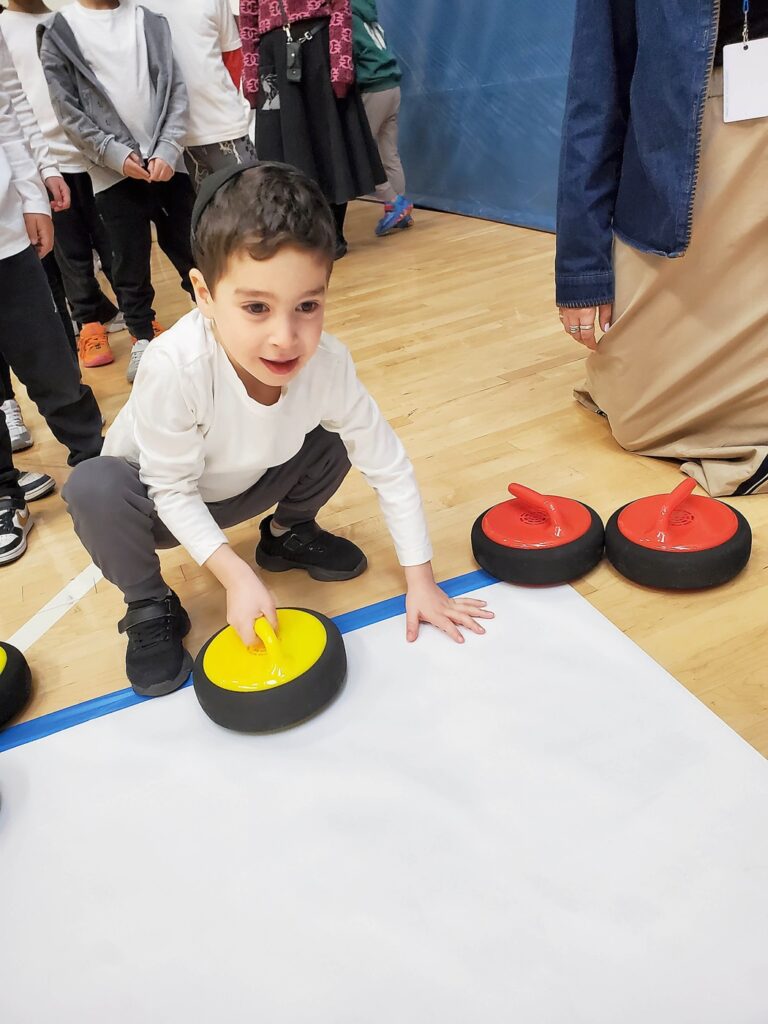
New Sports, Big Smiles For many of our students, the specialized sports played on ice and snow were brand new. But that didn’t stop them from becoming “pro” athletes in record time! The gym was filled with laughter and excitement as they tried their hand at: Curling: Learning how to “sweep” their way to victory. Luge: Experiencing the thrill of the track (without the sub-zero temperatures!). Speed Skating: Gliding across the floor and feeling the “wind” in their hair. Our kindergarten Winter Olympics was truly a win for everyone. Students not only had a blast, but also connected to current world events, gaining a sense of awareness about the real-life 2026 Games taking place. Most importantly, they discovered that while medals are exciting, teamwork and good sportsmanship are the greatest trophies of all. A heartfelt thank you to Lizzy Mizrahi, whose creativity knows no bounds. Our little champions walked away with unforgettable memories and a beautiful lesson in how healthy competition can be fun for all. They’re already looking forward to their next gold-medal moment!
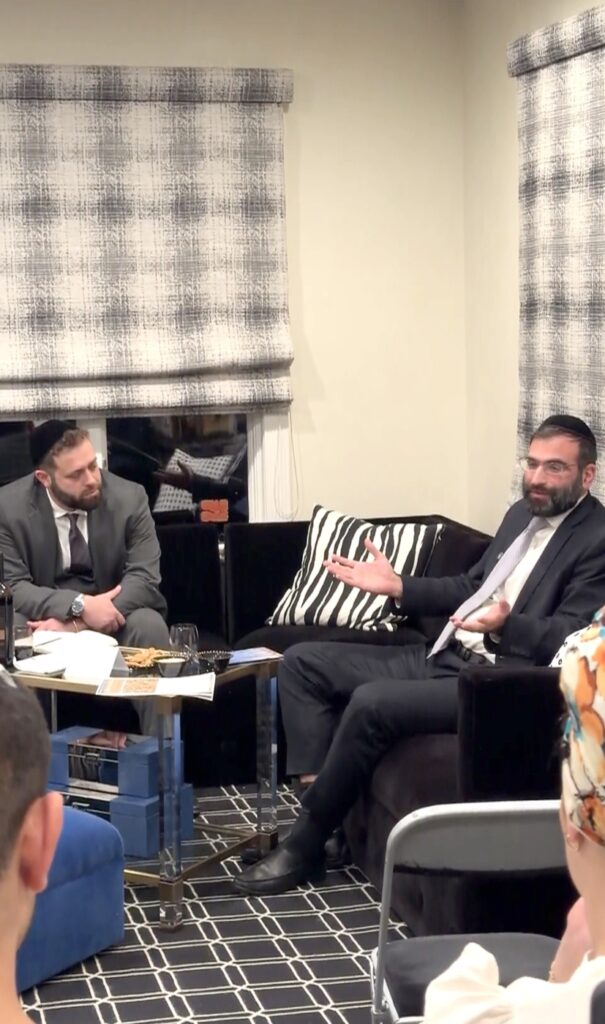
Our Men’s Mornings program has quickly become a favorite gathering for senior men looking to connect, stay active, and enjoy meaningful conversation in a warm environment. Held twice a month, Men’s Mornings offer a full and engaging experience that nourishes both mind and body, plus a good meal and camaraderie along the way.
The morning begins at 10:30 a.m. with Men’s Meetup, led by Martin Salama, our very own Career Division Job Developer. The men take part in thoughtful and wide-ranging discussions on current events, history, and life experiences. The conversation is lively, reflective, and filled with shared perspectives, all enjoyed alongside light snacks and refreshments. “There’s something powerful about watching a room full of men who have lived full lives still show up eager to learn, discuss, move, and connect,” adds Martin. “Men’s Mornings gives our senior men purpose and a place where their voices matter. It’s an honor to lead a group of men who continue to show up with wisdom, strength, and heart.” At 11:30 a.m., the group heads downstairs for Men’s Fitness with Morris Didia. This one-hour fitness session is designed to keep our men moving, energized, and feeling strong, with exercises that are both accessible and effective. The morning concludes with lunch served at 12:30 p.m., giving everyone a chance to unwind, continue conversations, and enjoy each other’s company. The men themselves often say it best. According to longtime participant Al Savdie, “If you would like to talk and express yourself amongst friends about any topic you’re passionate about, Men’s Meetup is the place to do it. And right after we have Men’s Fitness where you’ll definitely come out feeling younger, better, and able to leap tall buildings!” Men’s Mornings are more than just a program. They’re a space where friendships are built, routines are strengthened, and everyone leaves feeling a little more connected than when they arrived.
At Magen David Yeshivah High School, education extends far beyond the classroom. As we prepare for this year’s NEXT Senior Internship Program, we are once again focused on creating meaningful, real-world opportunities that shape our students’ futures in powerful ways.
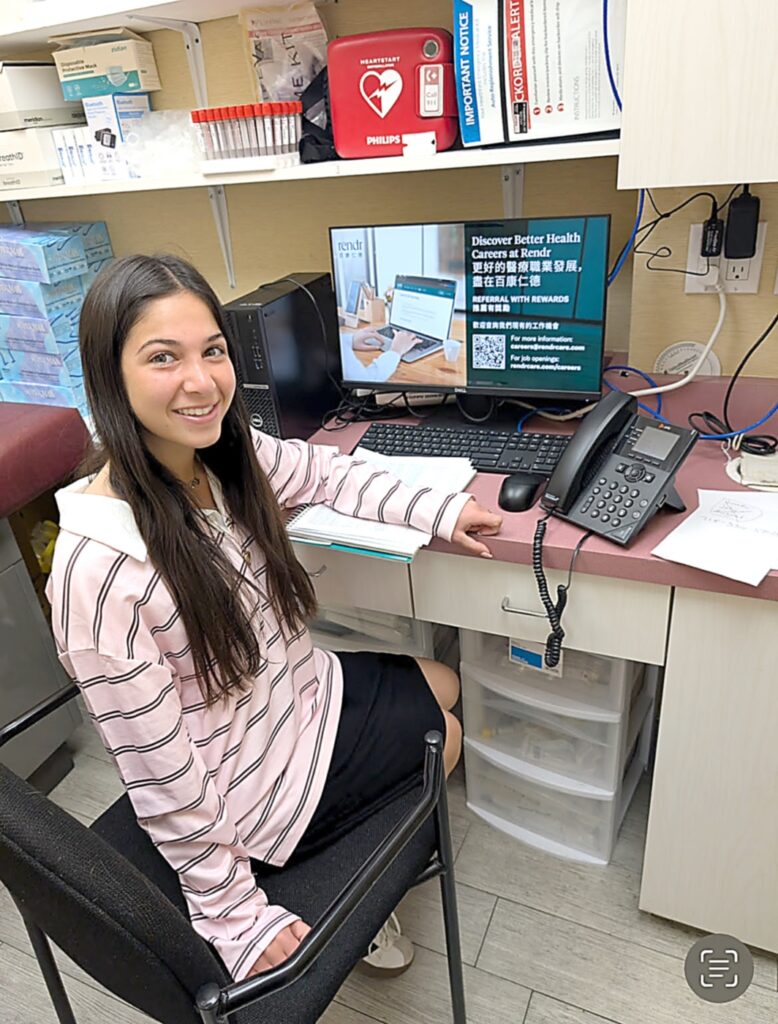
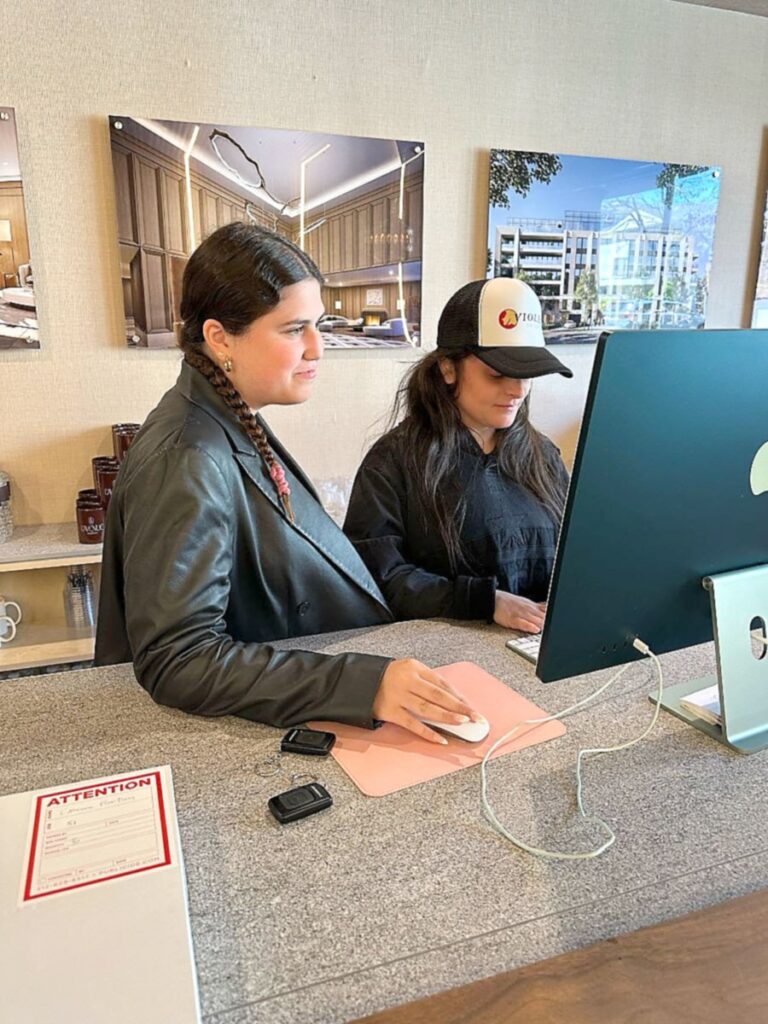
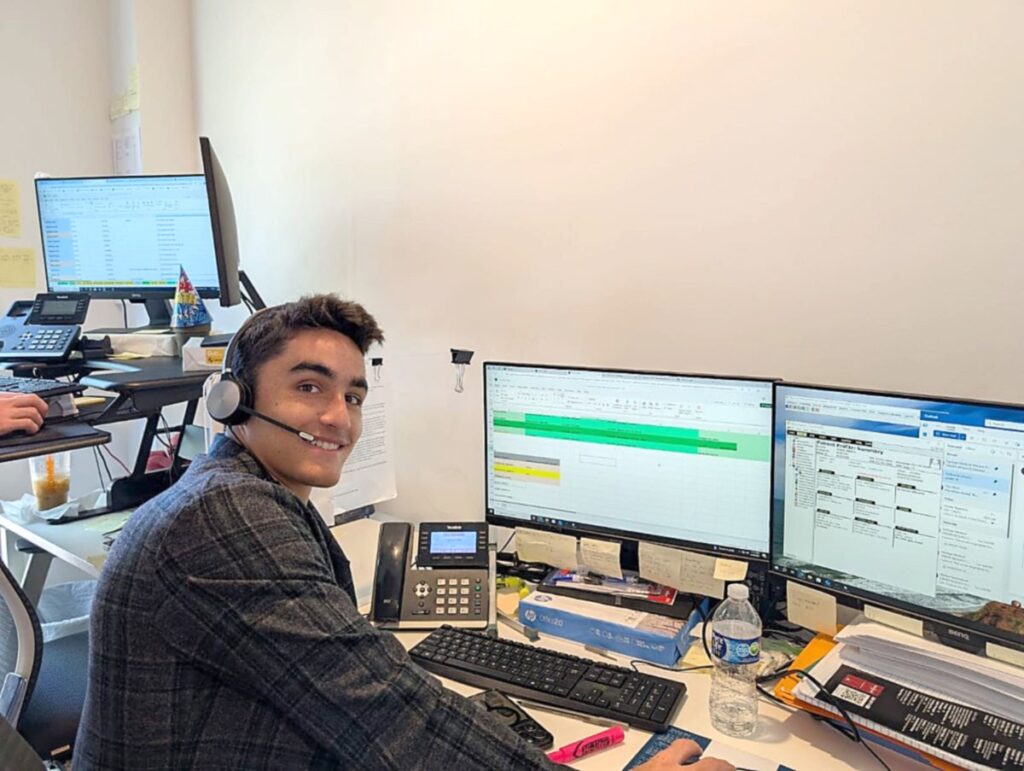
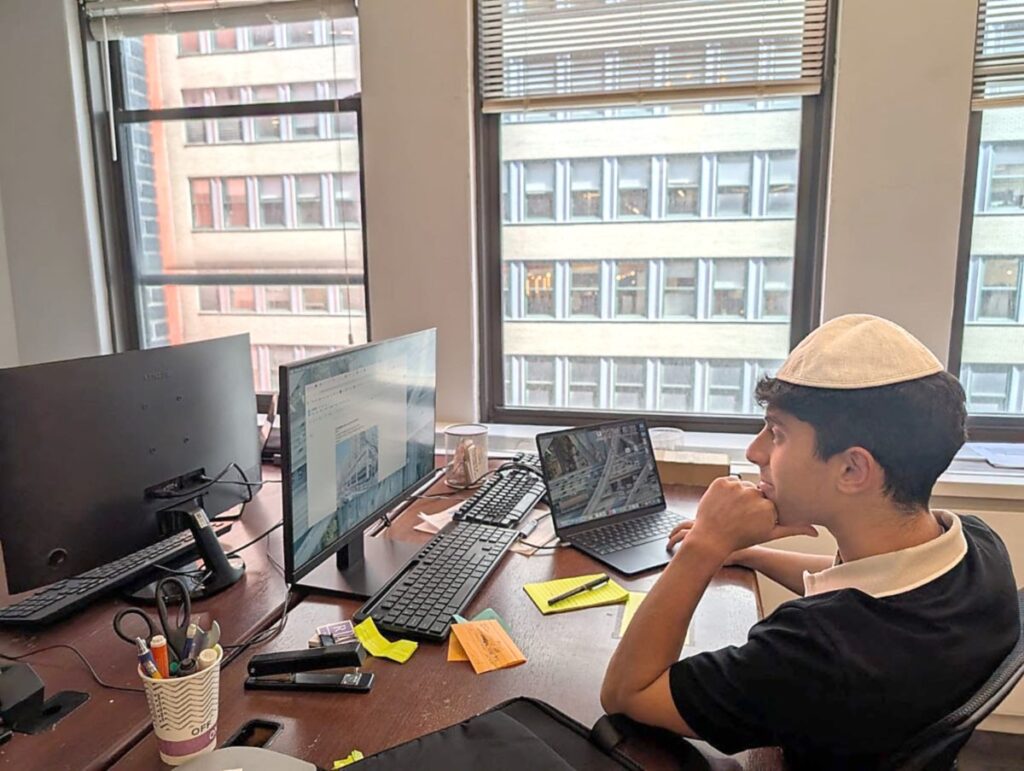
Running this year from April 16 to May 20, the NEXT Program is a defining experience of senior year. It is not simply about observing a workplace. It is about stepping into it. Students gain hands-on professional exposure, develop workplace skills, build confidence, and explore potential career paths under the guidance of accomplished mentors. Behind the scenes, thoughtful preparation is already underway. Program Director Mrs. Helene Dwek, together with Dr. Daniel Vitow and Mrs. Audrey Abade, meets individually with every senior to discuss goals, interests, strengths, and long-term aspirations. Students are guided through résumé refinement, interview preparation, and professional communication. From there, interviews are arranged if requested, and each student is mindfully placed in an in-person internship setting where they are positioned to thrive. The focus is never simply on finding a placement. It is on finding the right placement. What truly sets the NEXT Program apart is what happens after it ends. A remarkable number of our seniors are invited to stay on and continue working at their internship placements. Employers consistently recognize the maturity, professionalism, and strong work ethic our students bring to the workplace. What begins as a five-week internship often grows into summer employment, ongoing part-time roles, and lasting professional relationships that extend well into college and beyond. That continuity speaks volumes, not only about the strength of our partnerships, but about the caliber of MDYHS students. Through NEXT, our seniors don’t just prepare for the future, they step confidently into it. And often, they’re invited to stay. The story of last year’s program lives in these photos, in the faces of our students and the experiences that shaped them, reflecting the energy and growth that define NEXT.
Most serious movements don’t begin with press releases or ribbon cuttings. They begin quietly, with people who understand that waiting is no longer an option. Bonei Yisrael began in a garage. That detail matters.
During Purim 2023, Saul Ancona and Michael Kraiem were sitting together studying Torah. There was no agenda. No whiteboard. No planning document. Eretz Yisrael surfaced naturally, as it always does when the conversation is serious enough. The question that followed was not emotional, and it was not rhetorical: Where is the community actually going? What came next was not inspiration without consequence. It was commitment. A shared decision to build, rather than admire. To approach Eretz Yisrael not as a slogan or a trend, but as a mitzvah rooted in the Torah, because mitzvot are not symbolic gestures. They are obligations that move history forward. They were not debating whether Israel mattered. That question had already been answered. What remained unresolved, and urgent, was something far more demanding: What are we actually building? The answer to that question is Bonei Yisrael. For decades, Aliyah (immigration to Israel) was spoken about with reverence, but rarely with urgency. Bonei Yisrael reframes the conversation entirely. We exist because the old model no longer works. This is not about inspiration. It is about infrastructure, about turning conviction into a concrete plan.
What is Bonei Yisrael Bonei Yisrael serves as a liaison to communities in Israel already taking shape for the Syrian Jewish community, places that understand something essential: continuity does not happen by accident. It is designed. But Bonei Yisrael does not stop there. The aim is not to attach ourselves to what already exists. The aim is to build what comes next. Bonei Yisrael is working to establish a dedicated space in Eretz Yisrael, not a single building, but a comprehensive environment: homes, schools, synagogues, and the infrastructure required to sustain them. Not a retreat. Not an experiment. An extension of what has worked in Brooklyn and Deal, carried forward deliberately and built to last. That distinction matters. Because this is not about relocation. It is about rootedness. Relocation asks where people can live. Rootedness asks what a community chooses to preserve, and what it is prepared to leave behind. Rising costs. Public leadership that no longer governs with clarity or confidence. Institutions that have grown comfortable misunderstanding the communities they serve. An environment in which antisemitism is no longer an anomaly, but a statistic. These are not grievances. They are signals. And communities that know how to read signals do not wait for conditions to improve. They act before hesitation becomes habit. A community that builds its own space is not asking permission to belong. It is declaring permanence. It is stating, quietly and firmly, that it understands where history is moving and intends to arrive there together.
“We’ll do the work. You decide when to step in.” Under the leadership of Michael Kraiem and Saul Ancona, Bonei Yisrael has moved from idea to momentum with uncommon speed. Around them is a group of individuals who understand that vision only matters when it is translated into action. Isaac Zaccai is planning Bonei Yisrael’s pilot trip in 2026, setting the foundation for what comes next. Michael H. Mamiye opened his home as Bonei Yisrael’s operational base, hosting meetings and early gatherings. Albert Mizrahi is setting creative direction and cultural tone, shaping how the vision is experienced, not just explained. Jack Srour leads the Matobu Project, advancing large-scale development in Eretz Yisrael (Land of Israel) and opening resources to move the initiative forward. Sammy Saka, part of the Matobu Project, who is instrumental in transforming Jewish life and community in Deal, NJ, is bringing his real-world development expertise. Erez is on the ground in Israel, identifying and evaluating viable locations for the community. Zachary (Isaac) Levi handles public relations and communications for the initiative.
Bonot Yisrael (Women’s Division) Bonot Yisrael, headed by Sophia Shabot, Marsha Zakay, Hannah Elmekias, and Roz Levy, is not an auxiliary effort. It is a parallel leadership track focused on family life, education, culture, and the social fabric that determines whether a community merely exists or actually thrives. These are not symbolic roles. They are functional ones. Together, this group is building a framework for young families, one that allows Aliyah (immigration to Israel) to unfold not as a disruption, but as an upgrade: a vibrant Syrian Jewish community in Eretz Yisrael, designed to improve quality of life while preserving everything that matters.
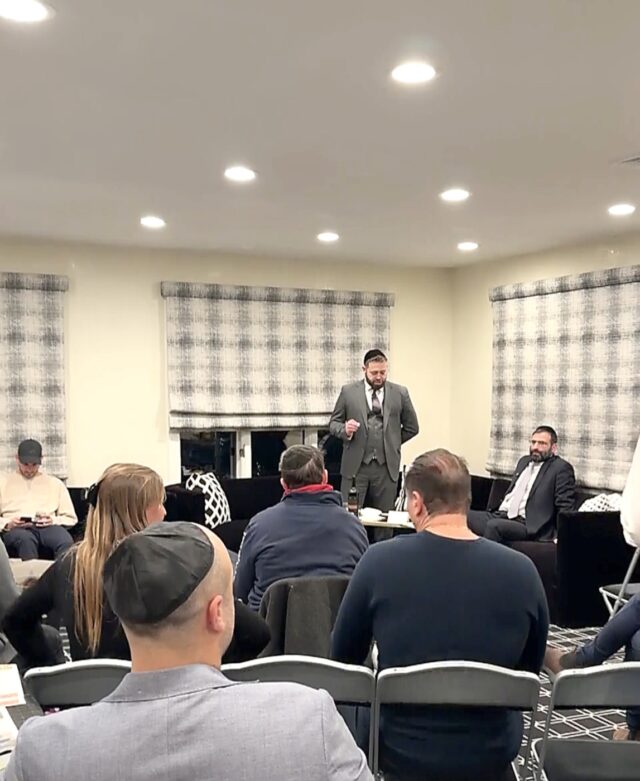
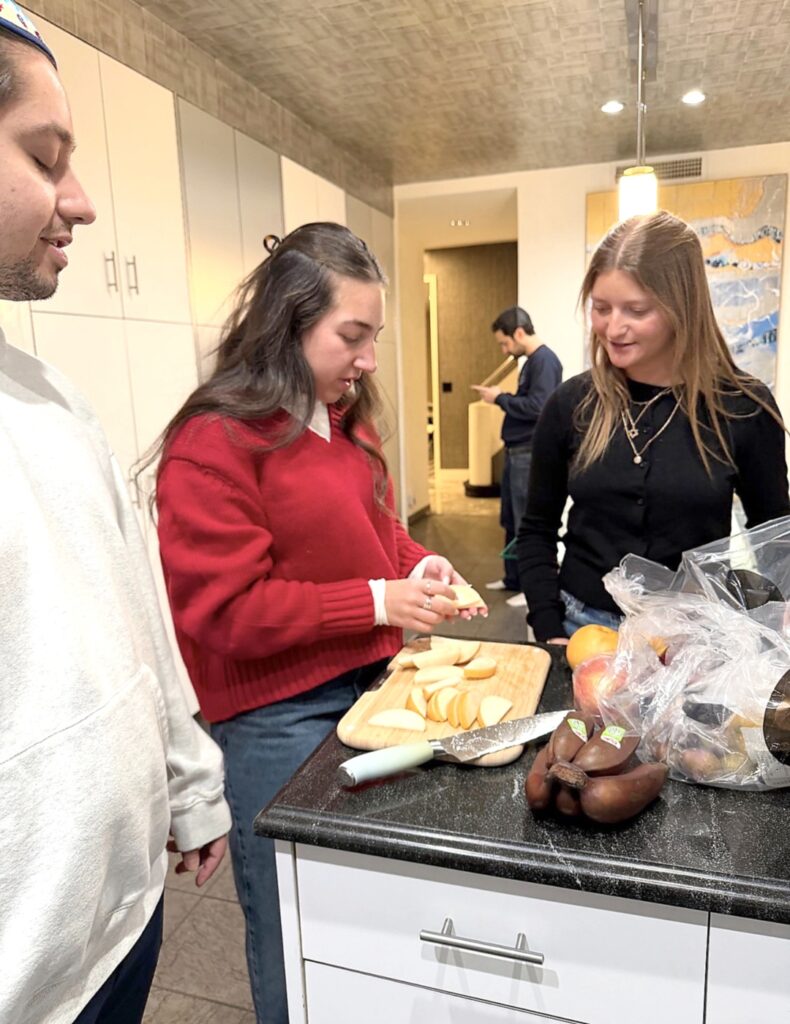
The First Event The first Bonei Yisrael event was not flashy. It wasn’t meant to be. Tu BiShvat. New fruit. Shared tables. Conversations about settling in Israel that were sober, practical, and quietly electric. No speeches designed to persuade. No slogans designed to sell. Just people confronting the same truth together. The kind of gathering where people leave changed, not because they were convinced, but because something finally made sense. That is how real movements announce themselves. They don’t shout. They organize.
Why This Matters Now History does not announce its turning points. It reveals them later. Bonei Yisrael exists because the Jewish future cannot be left to inertia. Because communities that last are the ones that build, deliberately, patiently, and together. What Bonei Yisrael understands, instinctively, is that communities do not drift into permanence. They decide. They plan. They commit. Every generation is tested not by what it believes, but by what it builds. The question is no longer whether Israel is central to Jewish life. That debate is over. The question is whether we are prepared to align our infrastructure with our convictions. Bonei Yisrael answers that question clearly. Not with slogans. With structure. This initiative is not asking people to leap blindly. It is offering something far more compelling: a place to stand. And once people have that, movement becomes inevitable. The real question is no longer whether Bonei Yisrael will grow. The real question is whether Brooklyn was ever meant to be the end goal?
At the heart of DSN Community Center’s vibrant wellness culture is its thriving Fitness Department, led by Fitness Director Sharon Carlstrom. With a year-round commitment to movement, motivation, and professional excellence, DSN’s Group Exercise (Group Ex) has become a cornerstone of daily life for so many, both men and women, young and old, in the community.
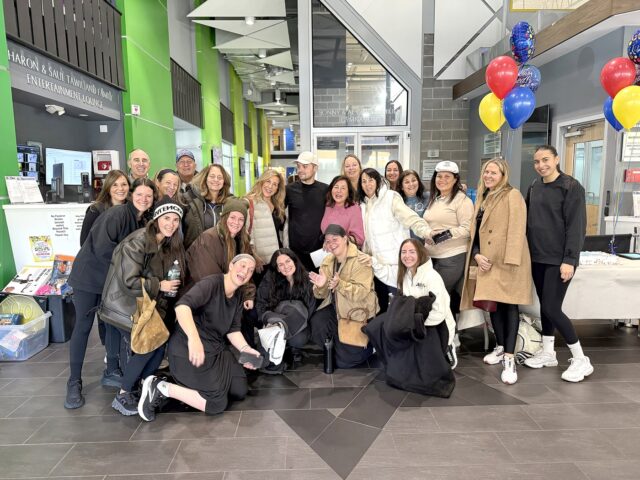
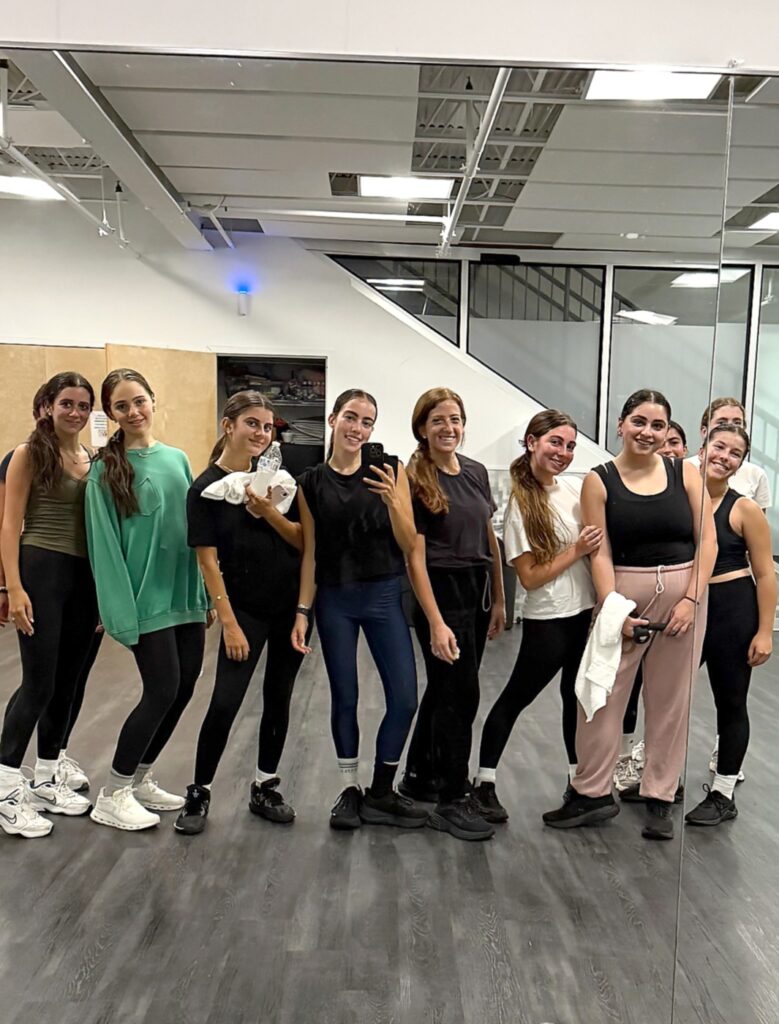
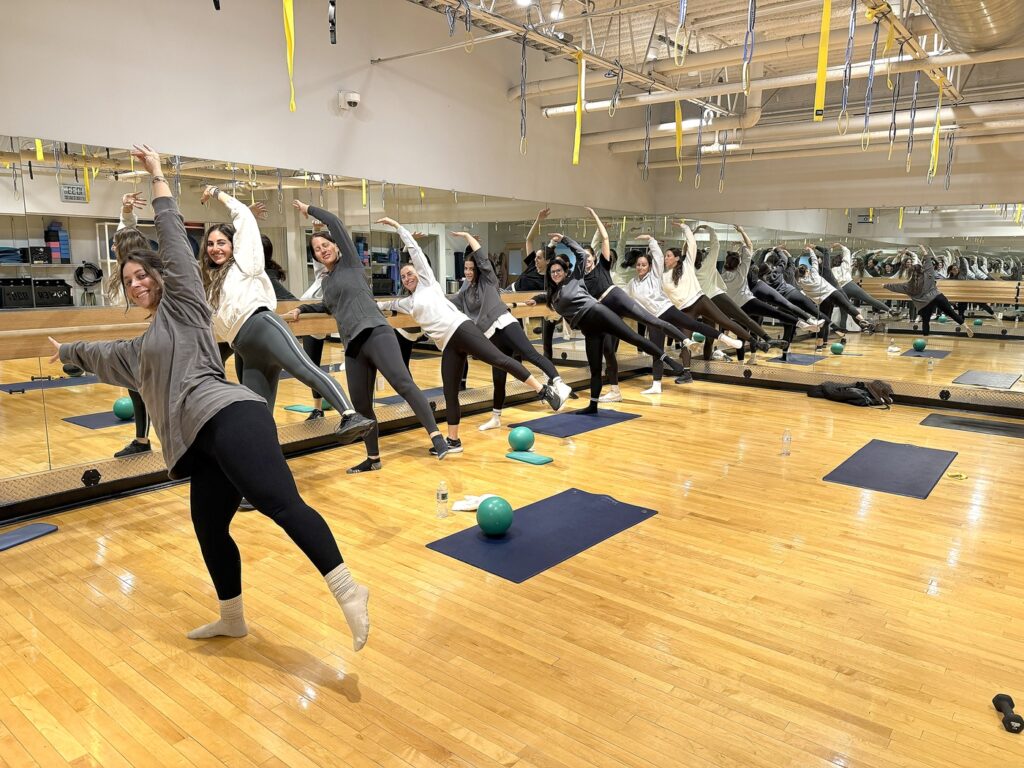
DSN’s Group Ex program offers an impressive average of 60 classes per week, drawing over 110 participants daily, as one can see from the parking lot. Whether members are looking to sweat, stretch, strengthen, or simply reset their minds, the schedule delivers something for every fitness level, interest, and goal. There is a class for everybody. The Group Ex schedule is thoughtfully designed and categorized to ensure balance, variety, and accessibility. Mind/Body Classes focus on flexibility, alignment, and recovery, including yoga, Wall Works, Pilates reformer & mat, foam rolling, guided and one-on-one stretch and barre. Cardio Classes bring the energy and elevate the heart rate with options like Kick A** Cardio, Sweat It Out, 305 Dance, Step, Spin, Boxing, Battle Ropes, and Fitness Center Circuits. Strength & Conditioning Classes help members build power and endurance through circuits, TRX, FeeLEEing It, Burn w/ Bren and Perspirology Toning. This wide-ranging lineup allows members to mix and match styles, prevent burnout, and stay consistently engaged with their fitness journeys. Earlier this year, the Pilates Reformers were relocated from the DSN Beach Club to Norwood Ave where the former Spin room was renovated to become a complete Reformer Studio, much to the appreciation of DSN’s members who find the space to be exclusive and the perfect vibe to match the reformer classes. The Spin bikes were relocated to a nearby space in Elberon where the space was renovated to create a Spin studio to accommodate 25 participants. Dani Rubin, owner of Pilates Blast, who provides instructors for DSN’s Reformer program, says, “Our instructors love the private, serene, fully equipped studio where every class includes access to all the props and thoughtful amenities.” What truly sets DSN apart is its unwavering commitment to quality, safety and professional excellence. All Group Ex instructors are required to hold certifications from nationally accredited organizations. A standard DSN takes seriously. Instructor Janie Fallas stated, “I love teaching at DSN because we have grown to be a family. Coming to exercise, seeing my friends, everyone with a smile on, sweating, laughing and having the best time is the best high in the world. The staff are all so accommodating and everyone greets you with respect and a smile. I feel so grateful to be a part of the DSN family.” To keep members inspired and energized, DSN offers semi-annual Group Ex incentive challenges, a favorite among participants. The first challenge of 2026 ran from December 28 through January 15, pushing members to stay active during a notoriously busy time of year. Participants received challenge cards with three class categories and were tasked with completing five classes per category, for a total of 15 classes in just 19 days. Every member who completed the challenge earned a DSN Fitness sweatshirt, and, of course, bragging rights. A special mention to the challenge winners, Rivka Bahary, Sherri Betesh, Danielle Brown, Suzie Chera, Lisa Cohen, Suzy Cohen, Allegra Cojab, Caroline Cornman, Danielle Gindi, Rena Golden, Elaine Grossman, Sally Grossman, Sarah Klein, Tzippy Maimon, Alison Mamiye, Laura Mizrahi, Jacqueline Shalom, Nicole Shamah, Joyce Shamosh, Gladys Sutton, Yvonne Tobias, and Leah Tobal Varver. Looking ahead, DSN is excited to launch its Six Weeks to Summer Challenge, kicking off April 12. Challenges are free to all Group Ex members, and details are shared regularly on Instagram at @dsngroupex. With inspired leadership, certified instructors, and a community that shows up day after day, DSN Community Center’s Fitness Department continues to prove that wellness is about more than exercise, it’s about connection, consistency, and showing up for yourself together. Sarah Kish, when asked for her thoughts on DSN’s Group Ex program, offered, “Classes at DSN are a highlight of my day and of Jersey life. The variety of classes keeps things always interesting, and it is a great social and healthy way to start my day. I also love babysitting and find it incredibly convenient and my kids love their early start at DSN.” Sharon Carlstrom reflects on how far DSN Fitness has come since opening eleven years ago. “Looking back at where we started, to the thriving programs and diversity of classes that we have today, is incredibly humbling. I am profoundly proud of how far this facility has come, but even more proud of our instructors and members who have evolved our classes to be more than just a workout, but a lifestyle. We’ve grown, we’ve adapted, and we’ve built something truly special together.”
Joey Cohen Saban Announces Campaign for NYS Assembly
Eddie Esses
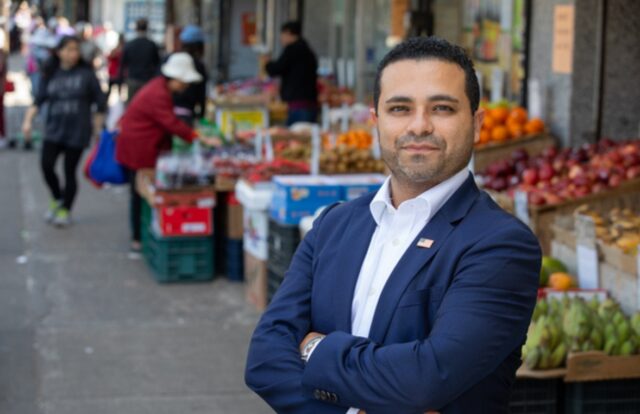
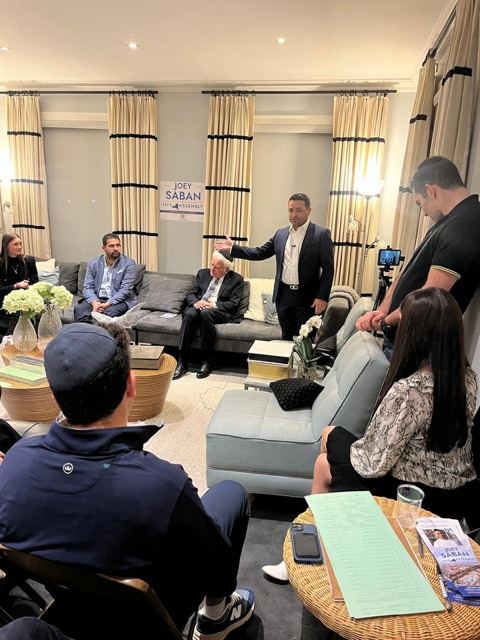
Community leader Joey Cohen Saban has officially announced his candidacy for the New York State Assembly’s 45th District, launching a highly anticipated rematch against the same incumbent opponent he nearly defeated in 2024 in one of the closest races in recent New York history.
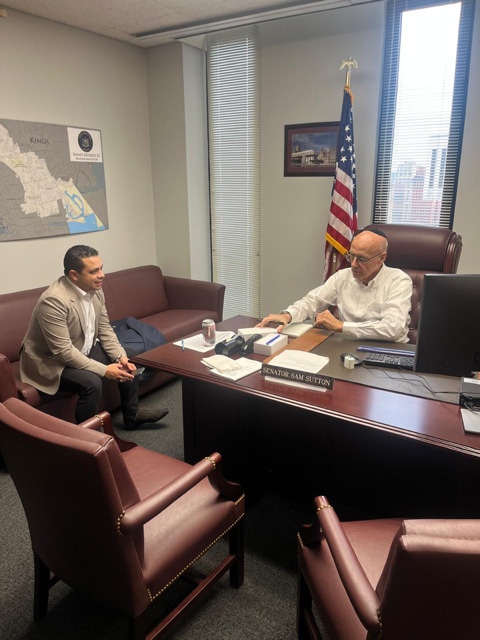
What was expected to be a routine election instead became one of the most shocking races in recent New York political history. Joey, a first-time candidate fueled by grassroots energy and community support, came within inches of victory and sparked a movement that continues to grow. Saban’s 2024 campaign energized the Sephardic community in unprecedented ways. Voter registration surged. Turnout reached historic levels. A new generation stepped into civic life. That momentum did not fade after Election Day. Instead, it expanded. Just months later, the same grassroots infrastructure helped power the successful election of State Senator Sam Sutton. As Sutton’s campaign manager, Saban built and executed the operation behind the win, organizing volunteers, coordinating outreach, and mobilizing voters across the district. The victory demonstrated what unified leadership and disciplined strategy could accomplish. Since then, Saban has served as Chief of Staff to Senator Sutton, playing a key role in shaping policy and delivering results in Albany. In the 2025 legislative session alone, he helped advance multiple bills into law and worked alongside Senator Sutton to secure $20 million in funding for religious institutions, along with millions more in capital grants for community organizations. He also helped craft legislation to prohibit protests outside houses of worship and has been leading efforts to codify the IHRA definition of antisemitism into New York State law. Beyond legislation, Saban helped spearhead one of the largest voter registration drives in the community’s history, adding approximately 15,000 new registered voters. The message was clear: this is a community ready to participate, organize, and lead. Now, with proven legislative experience, strong relationships in Albany, and a tested political operation, Saban says he is ready to finish what he started. His campaign centers on delivering funding for community institutions, fighting antisemitism at every level of government, strengthening public safety, securing security grants for synagogues and yeshivot, and ensuring the district has an influential voice in the state majority. Make sure to follow Joey throughout the campaign (@joeysaban on Instagram) and be sure to vote for Joey Cohen Saban for Assembly. He’s one of us, among us, and he will make sure our voice is heard in Albany. The movement that shocked New York once is returning. But this time it is stronger, larger, and more determined than ever. And it’s ready to win.
The Hidden Risks of Financial Advice on Social Media
Ari Baum, CFP®
Scroll through any social media platform today, and you’ll find no shortage of financial advice. One post promises early retirement through a “simple hack.” Another claims to reveal the “one investment” the wealthy don’t want you to know about. The messages are confident, urgent, and often wrapped in the appearance of authority.
For many, these voices have become the first stop for financial guidance. They are accessible, persuasive, and everywhere. But beneath the surface, the line between financial education and financial entertainment is far wider than it appears. Understanding that difference may be one of the most important financial decisions you make.
The Illusion of Credibility Popularity can create the appearance of expertise. A video with hundreds of thousands of views or a creator with a large following naturally feels trustworthy. But visibility and expertise are not the same. Social media rewards simplicity, certainty, and emotional impact. Real financial planning rarely offers those things. It involves tradeoffs, timelines, tax implications, and decisions that unfold over decades, not days. What works for one person in a specific situation may be entirely inappropriate for someone else. Without understanding your income, assets, goals, and risk tolerance, even well-intentioned advice can lead to unintended consequences. I’ve met investors who made meaningful financial decisions based on a single video or trend, only to later discover the strategy conflicted with their tax situation, liquidity needs, or long-term objectives. The advice wasn’t necessarily wrong. It was simply incomplete.
When Emotion Replaces Strategy One of the most powerful forces in investing is not logic, but emotion. Social media amplifies this effect. When thousands of people appear to be moving in the same direction, it creates a sense of urgency. This phenomenon, often called herd mentality, can push individuals to act quickly without fully understanding the risks. Fear of missing out (FOMO) becomes a stronger motivator than thoughtful decision-making. Financial decisions made under pressure rarely align with long-term success. Progress is not built on reacting. It is built on positioning.
Advice Without Accountability Traditional financial advisors operate under fiduciary standards. They are legally and ethically obligated to act in their clients’ best interests. Social media influencers operate under no such obligation. Their incentives are tied to engagement, visibility, and growth. The more compelling the content, the larger the audience. But there is no ongoing relationship, no responsibility for outcomes, and no understanding of your personal financial reality. Financial planning, by contrast, is not a moment. It is a process. It requires alignment, continuity, and accountability over time.
The Risk of One-Size-Fits-All Strategies Every financial decision exists within a broader framework. Income stability, tax exposure, family priorities, career trajectory, and long-term goals all influence what is appropriate. Generic advice cannot account for these variables. A strategy appropriate for someone early in their career may introduce unnecessary risk for someone focused on preservation. A tax decision that benefits one household may create unintended consequences for another. Context is what transforms information into wisdom. Without it, even correct ideas can lead to incorrect outcomes.
Financial Confidence Is Built, Not Found True financial progress rarely feels dramatic. It is built quietly through discipline, consistency, and thoughtful planning over time. It does not depend on reacting to trends or chasing certainty. It depends on having a structure that can withstand uncertainty. The purpose of a financial plan is not to predict the future. It is to prepare for it. When decisions are guided by a clear framework, short-term noise loses its power. Confidence no longer comes from what others are doing, it comes from knowing why you are doing what you are doing. The most valuable financial guidance does not come from someone speaking to millions. It comes from someone who understands you. q The content is developed from sources believed to provide accurate information. Investing involves risk including the potential loss of principal. No investment strategy can guarantee a profit or protect against loss in periods of declining values. Past performance does not guarantee future results. Consult with a financial professional regarding your specific situation.
Inside the Special Children’s Center’s Beautiful All-New Vicki & Joseph Safra Brooklyn Center Eleven years after opening its doors in Brooklyn, the Special Children’s Center embarks on a powerful new chapter, expanding its services in a breathtaking new facility designed to serve children and families on an even greater level.
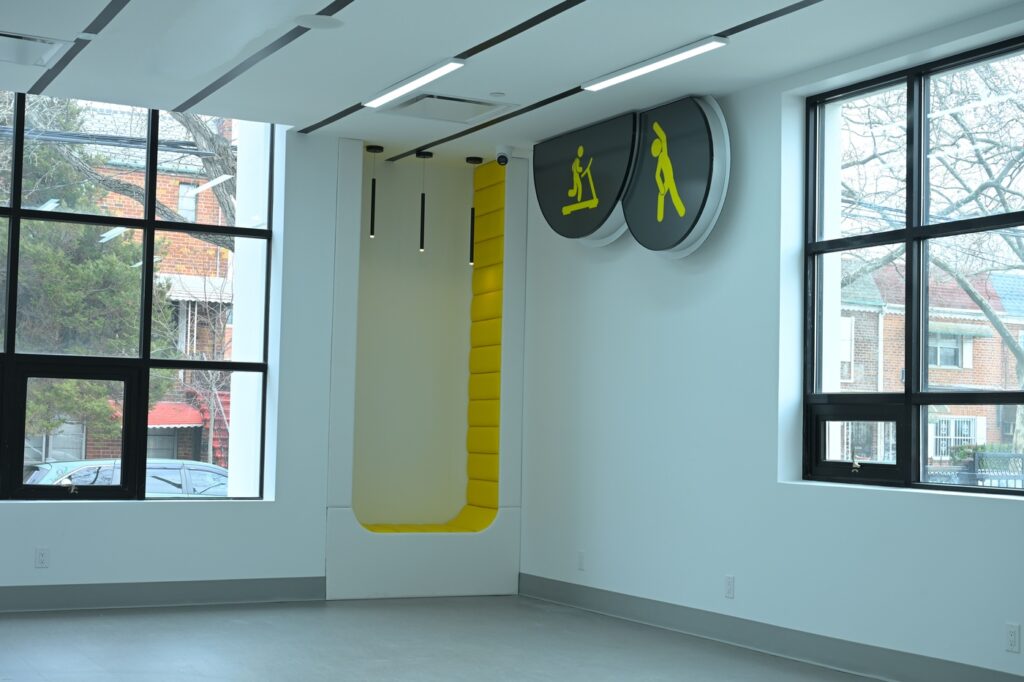
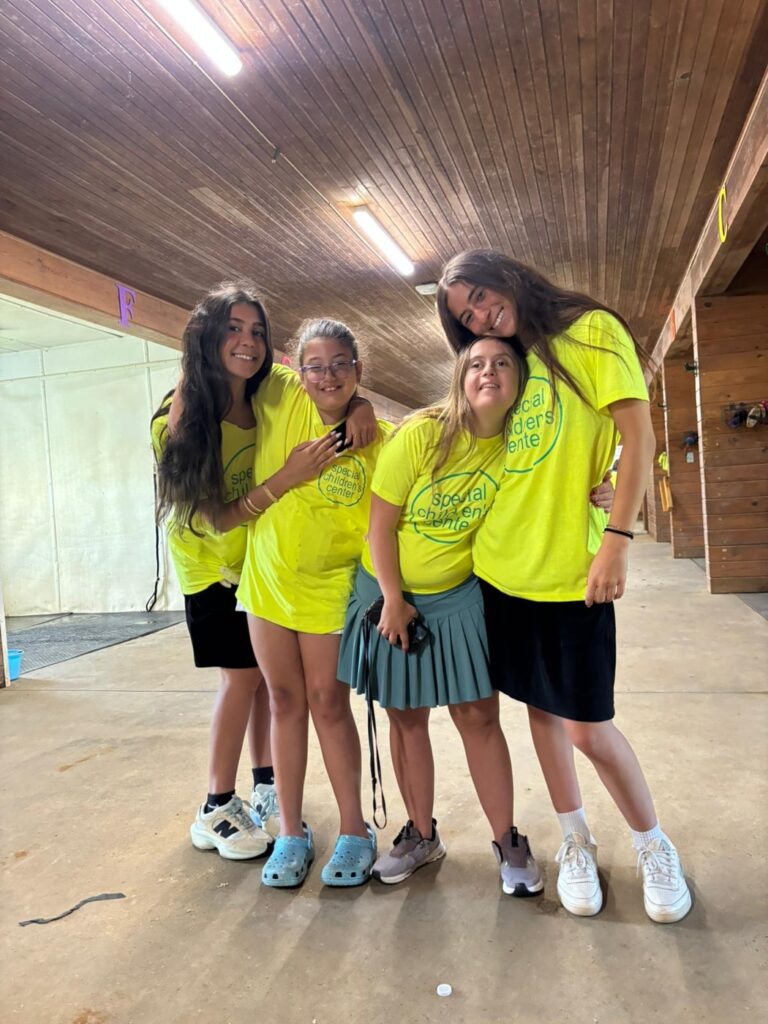
There are moments in the life of a community that feel transformative, when walls rise not just to house programs, but to hold dreams. The new Brooklyn home of the Special Children’s Center is one of those moments. Founded by visionary leaders Chaya Bender and Jenine Shwekey, the Special Children’s Center has always stood for one powerful promise: no family navigating special needs should ever walk alone. Now, with the opening of a breathtaking new building in Brooklyn, that promise is expanding in space, in services, and in heart. From the moment you step inside, it is clear this is no ordinary facility. Sunlight pours into thoughtfully designed classrooms. Wide hallways feel warm and welcoming. Every detail reflects dignity, safety, and care. There is a magnificent art room where children can build skills and confidence. A stunning music room where melodies become a language of expression, because music so often reaches where words cannot. A professional recording studio where voices can be heard and celebrated. A fully equipped baking studio, designed with child-height counters so small hands can measure, mix, and create with independence and pride. A spacious dining room will host wholesome, family-style meals prepared in the Special Children’s Center’s brand-new kitchens. There are classrooms for preschoolers and elementary students, spaces for services, and areas for adults in the program. A shower room and spa room offer both comfort and practical relief, easing the daily load for parents and allowing children to return home refreshed and relaxed. Parents often wonder: Will my child be cared for with dignity? Will they feel proud to be here? Inside these walls, the answer is yes. The Special Children’s Center has always been known for showing up when families need it most. Whenever school is closed, the Special Children’s Center is open. Legal holidays. Jewish holidays. Any day public school or yeshiva closes its doors, the Special Children’s Center opens wide. The respite programs are filled with laughter, warmth, and genuine joy. Designed to care for the children during a family’s busiest hours, these programs restore balance. Parents often share: “My child wakes up excited to go.” And perhaps even more telling: “For the first time, I can breathe.” While the Brooklyn Special Children’s Center already offers a robust range of services, such as after-school programming, Sunday programs including a special teen boys’ program, holiday programming, preschool and elementary classes, adult services, and support for children across a full range of diagnoses, this new building represents something greater. It represents growth. It represents capacity. It represents deeper opportunity. As Jenine Shwekey often shares, the Center’s mission is simple but profound: to truly be there for families on every level. Chaya Bender emphasizes that special needs care is not a part-time commitment. “Families don’t get days off,” she says. “So neither do we.” That philosophy is woven into the very structure of the new Brooklyn building. What makes this expansion so meaningful is not just the size of the space, but the spirit inside it. The Special Children’s Center does not see diagnoses first. It sees children: with personalities, humor, talents, and tremendous potential. In the music room, a shy child may find her voice. In the gym, a hesitant teen may discover strength. In the baking studio, a young boy may beam with pride over perfectly frosted cupcakes. And in every room, families find reassurance: We are not alone. This beautiful new building was thoughtfully designed as a work of love by Margalit Lankry Design as a gift to our children and their families. It is a testament to what becomes possible when a community comes together with extraordinary compassion and shared responsibility toward families navigating special needs. Heartfelt gratitude goes to Harry Adjmi, Alex Adjmi, Richie Dweck, Elliot Tawil, Izzy Nahum and Jack Scaba, who worked tirelessly to help ensure this vision became a reality. With deep appreciation, we thank Jack Chehebar and Marilyn Chehebar for dedicating our brand-new building, and the Safra family for dedicating our Brooklyn Center. There are no words adequate to express the enormous impact of your incredible generosity. Because of you, our children will grow, thrive, and shine in a space built just for them. As the doors prepare to open, the excitement is palpable. Staff members are eager. Families are counting down the days. This Brooklyn building is more than an expansion of services. It is an expansion of possibility. It stands as a promise to every parent navigating the complex journey of raising a child with special needs: We are here. We are open. We are ready. We will walk beside you, on holidays, on ordinary Tuesdays, on challenging days, and on days of celebration. Because every child deserves a beautiful experience. Every parent deserves support. And no family should ever have to do this alone. Reach out to get involved! 2990 Ave U 718-382-0099 dinag@thecenterny.org. Special Ride is coming up soon! Join the magic! specialride@thecenternj.org
Linda Argalgi Sadacka
The growing coordination between Jerusalem and Washington reflects a strategic reality that transcends any single diplomatic encounter. The subject is Iran.
Israel faces the Iranian regime as a direct security threat. Tehran arms and finances proxies on Israel’s borders and openly declares its intent to erase the Jewish state. Missiles are not symbolic. They are operational. The United States confronts the same regime from a broader vantage point. American forces remain positioned across the region. U.S. naval power secures critical maritime corridors. American deterrence shapes the behavior of adversaries well beyond the Middle East. If Iran alters the regional balance of power, the consequences will extend to both democracies.
The character of the regime is not speculative. It is visible. The world remembers Mahsa Amini, whose death in custody ignited nationwide protests. Teenagers like Nika Shakarami became symbols of a generation punished for demanding dignity. And now there is Diana Bahador. Nineteen years old. Known as “Baby Rider.” A young woman whose refusal to disappear behind imposed restrictions became an act of quiet resistance. She was shot by security forces during protests. These are not excesses of chaos. They are instruments of governance.
A regime that governs through repression at home does not transform into a reliable actor abroad. Internal strain does not soften ideological hostility. It can intensify it. When legitimacy erodes domestically, projecting strength externally becomes a tool of consolidation. This dynamic matters. Iran’s leadership defines itself in opposition to both Israel and the United States. Its hostility is structural. The rhetoric directed at Jerusalem and Washington is not incidental. It is foundational to the regime’s identity.
If Iran were to secure nuclear capability, the implications would not be confined to Israel’s security calculus. It would reshape deterrence across the region, embolden aligned militias, and test American credibility on a global scale. Alignment between Jerusalem and Washington is therefore not diplomatic theater. It is strategic necessity.
Israel cannot permit an existential threat to mature unchecked. Its doctrine does not allow it. If action becomes unavoidable, the repercussions will not remain localized. The United States would confront the strategic consequences whether by design or by default. The question is not whether the two nations are connected in this challenge. They already are. The question is whether that connection is acknowledged clearly enough to shape policy with precision rather than reaction. Iran views Israel and America as linked adversaries. Clarity requires that they respond as linked allies. A regime reveals itself first in how it treats its own citizens. The evidence is already before us.
Recognizing that everything, even experiencing the pain of a terrifying illness, is from the Almighty
Emuna Braverman
During the month of Adar, the Talmud tells us, we increase our joy. This sense of celebration culminates with the holiday of Purim, with costumes, Megillah reading, drinking, eating and the exchanging of gifts of food. Who doesn’t smile at the young girls dressed as Queens Esther or Vashti or the little boys acting as Mordecai or Haman? A little liquor, a little feasting – what could be more joyful?
Except that’s not really the source of the happiness. It’s not based on frivolity and laughter. It’s not based on sumptuous food and a good Scotch. It’s joy founded on a deep insight about the world, on important understanding of the Almighty’s role in our lives, of His constant providence.
When we drink on Purim there is only one goal (and it’s not what you think it is), to drink just enough to remove the barriers we’ve erected in our minds and psyches that block us from seeing the Almighty’s presence in the world. This is particularly true in situations that appear negative, desperate, painful or hopeless. Those are the moments when we are the most blocked, when we retreat behind our blockades. Those are the times we most need to peel back the layers and recognize that everything is from the Almighty and it is all in His hands.
The true lesson of Purim is that everything, the seemingly good and the seemingly bad, are one; they both stem from our perfect Creator. It is this realization that brings us joy. It is the recognition that everything is exactly as it should be, that there are no other forces at work, that allows us to accept our challenges with true joy.
All the commentators point out that the Almighty’s name is not mentioned once in the Purim story. At this bleak moment in the Jewish people’s history, He is behind the scenes, pulling the strings, turning sorrow into joy, revealing the meaning of our individual and collective travails.
This year, as I confront the medical challenges facing a loved one, I haven’t felt in the mood to celebrate Purim. Seeing and experiencing the pain of a terrifying illness, I haven’t been able to access that joy. I feel inclined to cancel all but the most obligatory of Purim activities.
But I know that’s a mistake. I know it actually misses the whole point of the day. This situation, too, is from the Almighty. This struggle too, is part of His plan. Although the curtains remain closed and we can’t peer behind them to discover the ultimate meaning, it is a fundamental tenet of our belief that the Almighty is in control, that there are no other powers.
We need to invest our experience of Purim with exceptional fervor on the years when it is hardest. It is the teaching of Purim, it is the relationship with the Almighty, it is the deeply internalized understanding that this too is good that will sustain all of us during our struggles. And that’s something to celebrate.
RABBI LORD JONATHAN SACKS ZT”L
THIS MONTH WE’LL BE CELEBRATING THE JEWISH FESTIVAL OF PURIM. IT’S A JOYOUS DAY. WE HAVE A FESTIVE MEAL; WE SEND PRESENTS TO OUR FRIENDS; AND GIFTS TO THE POOR, SO THAT NO ONE SHOULD FEEL EXCLUDED. ANYONE JOINING US ON PURIM WOULD THINK IT COMMEMORATES ONE OF THE GREAT MOMENTS IN JEWISH HISTORY, LIKE THE EXODUS FROM SLAVERY OR THE REVELATION AT MOUNT SINAI.
Actually though, the truth is quite different. Purim is the day we remember the story told in the book of Esther, set in Persia. It tells of how a senior member of the Persian court, Haman, got angry that one man, Mordechai, refused to bow down to him. Discovering that Mordechai was a Jew, he decided to take revenge on all Jews and persuaded the King to issue a decree that all Jews — young and old, men, women and children — should be annihilated on a single day. Only the fact that Esther, Mordechai’s cousin, was the King’s favorite allowed her to intercede on behalf of her people and defeat the plan.
Purim is, in other words, the festival of survival in the face of attempted genocide. It wasn’t until way into adult life that I realized that what we celebrate on Purim is simply the fact that we’re alive; that our ancestors weren’t murdered after all.
Like many of my generation born after the Holocaust, I thought antisemitism was dead; that a hate so irrational, so murderous, had finally been laid to rest. So it has come as a shock to realize in recent months that it’s still strong in many parts of the world, and that even in Britain yesterday a cleric appeared in court charged with distributing a tape calling on his followers to kill Jews. (This article was written 22 years ago, and since then antisemitism has just gotten worse.)
What is it about Jews — or black people, or Roma, or foreigners — that causes them to be hated? The oldest explanation is probably the simplest: because we don’t like the unlike. As Haman put it, “Their customs are different from those of other people.” And that’s why racial or religious hate isn’t just dangerous. It’s a betrayal of the human condition. We are different. Every individual, every culture, every ethnicity, every faith, gives something unique to humanity. Religious and racial diversity are as essential to our world as biodiversity. And therefore, I pray that we have the courage to fight prejudice, of which antisemitism is simply the oldest of them all. Because a world that can’t live with difference is a world that lacks room for humanity itself.
At 92, Orthodox Judge Alvin Hellerstein, guided by faith and decades of jurisprudence, presides over the trial of Venezuelan President Nicolás Maduro.
The trial of Venezuelan President Nicolas Maduro is gripping the world. Maduro’s arraignment was heard in a New York City courtroom, presided over by Judge Alvin Hellerstein, a 92-year-old judge who’s overseen some of the United States most famous cases over the past half century. An Orthodox Jew, Judge Hellerstein has said that his faith has helped him forge his singular legal career.
Facing Anti-Jewish Discrimination Judge Hellerstein was born in the Bronx to immigrant parents in 1933 and raised in an observant Jewish household. Always a prodigy, he attended the prestigious Bronx Science High School, then Columbia University and Columbia Law School, graduating from law school in just two years. In law school he served on the Columbia Law Review and graduated sixth in his class. “I thought that I was in pretty good shape. But I found that the gentile law firms were totally uninterested” in hiring a Jewish lawyer, he later recalled. “As a Jewish boy coming to interview at law firms, you met up with very strong discrimination, some of it overt, most of it implied.” Instead, he clerked for the progressive non-Jewish Federal Judge Edward L. Palmieri. In his first ten years of being a judge, Palmieri hired three Jewish women and four Jewish men to be his law clerks, an unheard-of practice for a non-Jewish judge at the time. One of his clerks, an Orthodox Jewish woman, recalled telling Judge Palmieri that as she was religious, she wouldn’t be able to work on Friday nights or Saturdays until after nightfall. Judge Palmieri replied that would be fine and even volunteered to come in on Sundays so she wouldn’t be alone in the office. After his clerkship, Judge Hellerstein became a Lieutenant in the US Army, working in the JAG (Judge Advocate General) Corps. He joined the firm Strook & Strook & Lavan where he made his mark handling extremely complex cases. One involved 11,000 pages of transcripts, 600 exhibits, and 60 meetings before arbitrators. At the time, he was one of the only Orthodox Jewish lawyers working for a major law firm in New York City. In 1998 President Bill Clinton appointed him district judge for the prestigious District Court for the Southern District of New York. As one of the first religiously observant Jewish judges in the US, Judge Hellerstein realized he was paving the way for other Orthodox Jews. “I was pleased to say that after me, that there were others, and some credit me with having broken the precedent. When I became a judge, it didn’t make any difference if I was Orthodox or not. It made no difference if I was religious or not. My capabilities as a lawyer were measured, as well as my character and other characteristics, but there was no discrimination.”
Guided By Faith Judge Hellerstein has spoken often about the important role his Jewish faith has played in his life and his work. He has also been clear that as a federal judge, his first duty is to uphold the laws of the United States. “I would argue that my Judaism is not a predictable influence on my judgments. Nor would I want it to be the case,” he wrote in a 2013 article for the Law Review at Touro University. He notes that the US Constitution prevents the “unlawful establishment of religion” and that judges must rule according to the laws of the United States, not their own religious feelings if they come into conflict with them. He wrote that “above all (the) influences (on his life), there is one category that stands pre-eminent–the Constitution, statutes and cases that I swore as a judge to follow and uphold.” “Yet,” he continued, “it cannot be denied that judges are influenced by who they are and how they were brought up…. I am accountable for all my rulings, orders, and judgments to the litigants, to the courts of appeal, and ultimately to G-D. For as the Psalmist said, and as we read every Tuesday morning (in the Jewish morning service), G-D sits in the congregation of the judged, rendering judgment on the judge. My rulings…are my record.” For years, Judge Hellerstein has been known for his empathy. “He, more than anyone, understands deeply the pain” his clients feel, recalled Norman Siegel, a lawyer for families seeking to recover the remains of loved ones who died on September 11, 2001. One of Judge Hellerstein’s former colleagues, Charles G. Moerdler, describes Judge Hellerstein as motivated by “a very high standard of morality and decency,” willing to turn down cases if he didn’t believe they were fair. Outside the courtroom, Judge Hellerstein has been active in Jewish causes. He worked to free Jewish refuseniks from the Soviet Union and served as President and Chairman of the Board of Jewish Education. He was devoted to his wife Mildred, who died in 2017. The couple had three children; today, Judge Hellerstein is blessed with many grandchildren and a proud legacy both professionally and personally.
“Justice, Justice Shall You Pursue.” On the wall of Judge Hellerstein’s chambers hangs a Hebrew language quote: Tzedek, tzedek tirdof–Justice, justice, shall you pursue (Deuteronomy 16:20). He has credited these timeless words from the Torah with helping crystallize his legal philosophy. Judge Hellerstein often tells the story of how these words affected a case he tried in which a Mexican national with American residency, Alejandro Orozco, was tricked into driving a truck from Mexico into the United States that contained narcotics. Orozco believed he was transporting groceries. Orozco had a wife and daughter who were American citizens; if he pleaded guilty, Orozco would lose his legal immigration status and be deported to Mexico and separated from them. Judge Hellerstein asked a friend of his to represent Orozco in US Immigration Court. Orozco gained citizenship and tearfully thanked Judge Hellerstein for all his work to allow him to remain in the USA. “Orozco, weeping, fell to his knees,” Judge Hellerstein described, “thanked me profusely and wanted to kiss my hands, if the Marshals would only let him. I stopped him. ‘All in the courtroom,’ I told him, ‘were engaged in the pursuit of justice–his lawyers, the prosecutor, and the judge.’ I told him the wisdom of Deuteronomy: ‘Justice, justice shalt thou pursue. ‘‘Justice has to be pursued,’ I told him, ‘because it is hard to find and hard to apply. And since you, Mr. Orozco, enabled us to find justice, we should be thanking you; you should not be thanking us.’”
Be a Good Person After a lifetime seeking justice, Judge Hellerstein says that trying to be a good person requires constantly questioning oneself, learning Jewish sources, and asking if one is living according to one’s ideals. In 2020, Rabbi Philip Moskowitz of Boca Raton Synagogue in Florida asked Judge Hellerstein what advice he would like to share before Yom Kippur. Judge Hellerstein responded with his usual compassion and humility. “I do feel that I have to account for what I do,” he answered. “Part of my accountability is to the Court of Appeals, where I can be reversed, and I often am. Another is my account to the individuals involved directly in the process. And third, I have to account to G-D. My purpose in life is to be as good a judge as I can be, and I have to ask for strength and wisdom in performing that job.”
Dr. Yvette Alt Miller holds a Ph.D. in International Relations from the London School of Economics and has taught at Northwestern University, London Business School, and lectured around the world. She is the author of “Angels at the Table: A Practical Guide to Celebrating Shabbat,” which had been praised as “life changing” and compared to having a friend guide the reader through a typical Shabbat, and of “Portraits of Valor: Heroic Jewish Women You Should Know”, which describes the lives of 40 remarkable women who inhabited different eras and lands, giving readers a sense of the vast diversity of Jewish history and experience.
A Bar Mitzvah is more than just a milestone; it is a defining moment in a young boy’s life, marking his transition from childhood into Jewish adulthood. While today’s celebrations often focus on grand parties and elaborate festivities, the true essence of a Bar Mitzvah lies in the spiritual transformation that takes place. Rooted in centuries of tradition, this sacred rite of passage connects a young man to generations of Jewish history, responsibility, and commitment to mitzvot.
Jerusalem Israel December 12, 2019 View of unknown kid and family participating in a Bar Mitzvah, religious ceremony in front of the Wailing Wall in the old city of Jerusalem in the morningDetail of a moment when a Jewish rabbi puts tefillin on the arm of a thirteen year old boy to say a prayer before the bar mitzvah. High quality photo
The origins of the Bar Mitzvah date back to ancient times, though the concept has evolved over the centuries. The Torah does not explicitly mention the age of thirteen as the defining moment of adulthood, but the Mishnah in Pirkei Avot (Ethics of the Fathers) states, “At thirteen for mitzvot,” signifying that at this age, a boy becomes obligated in the commandments. Before this time, his parents bear the responsibility for his actions, but once he turns thirteen, he is accountable for observing mitzvot on his own. This transition is not merely symbolic; it represents a fundamental shift in a boy’s spiritual standing. He is now counted in a minyan, can be called to the Torah, and is expected to take his place as a full-fledged member of the Jewish community. Throughout Jewish history, the ways in which a Bar Mitzvah was marked varied across different communities. In some Sephardic traditions, a young boy would take on the responsibility of fasting on Yom Kippur for the first time, while in Ashkenazi communities, the primary focus was on the boy receiving his first aliyah to the Torah. In medieval France, Rabbi Shlomo ben Aderet (the Rashba) described the custom of a father reciting the blessing Baruch she’patrani (“Blessed is He who has freed me from the responsibility for this child”) upon his son’s Bar Mitzvah, acknowledging the shift in religious obligation. While the formal celebrations may have varied, the essence remained the same—the moment when a boy publicly assumed his role as a responsible Jew, bound by Torah and mitzvot. Over time, the celebration of a Bar Mitzvah expanded. In Eastern European shtetls, families would host a modest meal after the young man’s first aliyah, often with Torah learning and words of Torah from the boy himself. In the Sephardic world, grand feasts with communal participation were common, emphasizing the collective joy in welcoming another young man into the covenant of Torah and mitzvot. However, it was not until the modern era, particularly in the 20th century, that Bar Mitzvah celebrations took on a more extravagant nature. Today, it is not uncommon to see lavish parties, live entertainment, and elaborate themes, sometimes overshadowing the spiritual weight of the occasion. While there is certainly nothing wrong with celebrating this joyous moment, it is important to remember the deeper significance of the Bar Mitzvah. It is not about the size of the event or the grandeur of the party, but about a young man stepping into his spiritual heritage with purpose and commitment. The heart of the Bar Mitzvah is found in his first mitzvah observances as an adult—donning tefillin, leading prayers, or delivering a Devar Torah. These actions reinforce the idea that becoming a Bar Mitzvah is not a culmination but a beginning, the start of a lifelong journey of Torah learning and mitzvah observance. For many, the experience of preparing for a Bar Mitzvah becomes a transformative period of growth. Learning to lay tefillin each morning instills discipline and a connection to Hashem. Studying a Torah portion, whether through traditional chanting or an in-depth explanation, builds confidence and pride in one’s heritage. Engaging in a mitzvah project, such as helping those in need or dedicating time to a meaningful cause, teaches responsibility beyond oneself. These experiences shape not only the Bar Mitzvah boy but also his family and community, who rally around him to support his journey into Jewish adulthood. Even as times change and customs adapt, the core of the Bar Mitzvah remains unchanged. It is a reaffirmation of our commitment to Torah, a celebration of continuity, and a moment of profound spiritual elevation. When a thirteen-year-old boy stands before the congregation, wrapped in his tefillin, reading from the Torah with conviction, he carries with him the hopes and prayers of generations past. His voice joins the echoes of history, uniting him with the countless young men who came before him and those who will follow in his footsteps. It is this unbroken chain of Jewish faith and responsibility that defines the Bar Mitzvah—not just the moment, but the mission it represents for a lifetime.