If you were in Deal or Brooklyn this summer, you could not have missed hearing about PROPEL’s inspiring graduation.
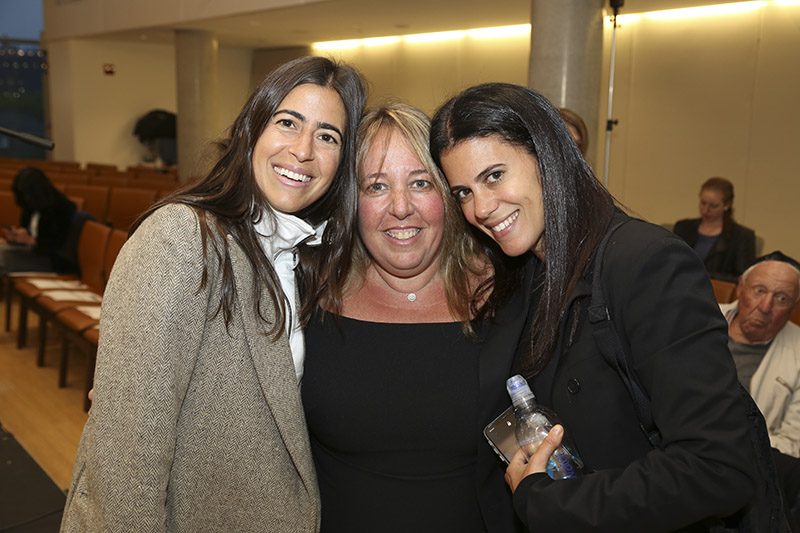
Graduates marched into the auditorium at The Sephardic Community Center in Brooklyn to Pomp and Circumstance to commence the celebration of their individual and collective accomplishments. Each of the graduates completed a certificate course of her choice, after being coached by PROPEL. Now each can be counted as an income producer in her family and our community. Moreover, each graduate is a role model for her children and grandchildren, as well as for other women aspiring to obtain a career.
Support Inspires Success is the title of the award presented to Bonnie Shams OTR/L, as the guest speaker and honoree at the graduation. As a beloved community occupational therapist, Bonnie supports countless children to be the best they can be. Similarly, PROPEL invests in coaching and guiding women to be the best they can be by finding suitable careers that generate income. PROPEL focuses on careers that make sense and honor the traditional values of the community. Women are heroines—they balance professional and family life successfully.
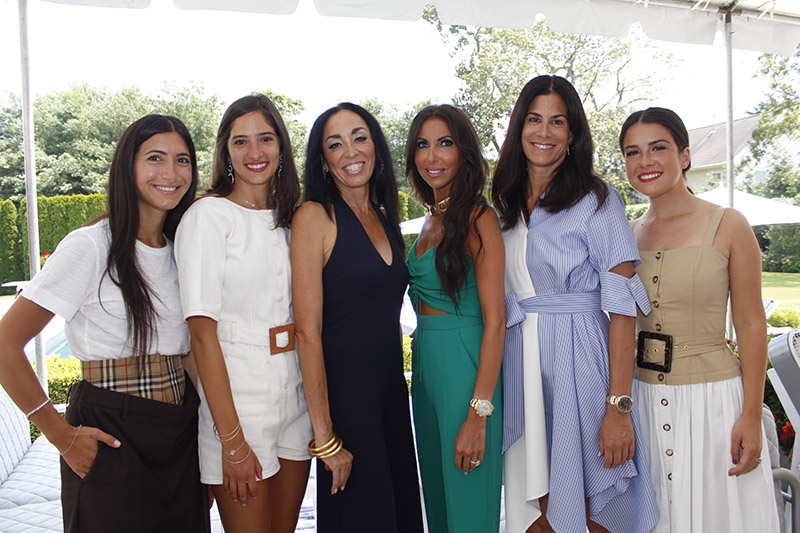
PROPEL sponsored many events in Deal over the summer. At the start of the season, PROPEL showcased RBG, a documentary about the life of Supreme Court Justice Ruth Bader Ginsburg, a true role model for women, and hosted a Vision Mapping event with Alice Chera.
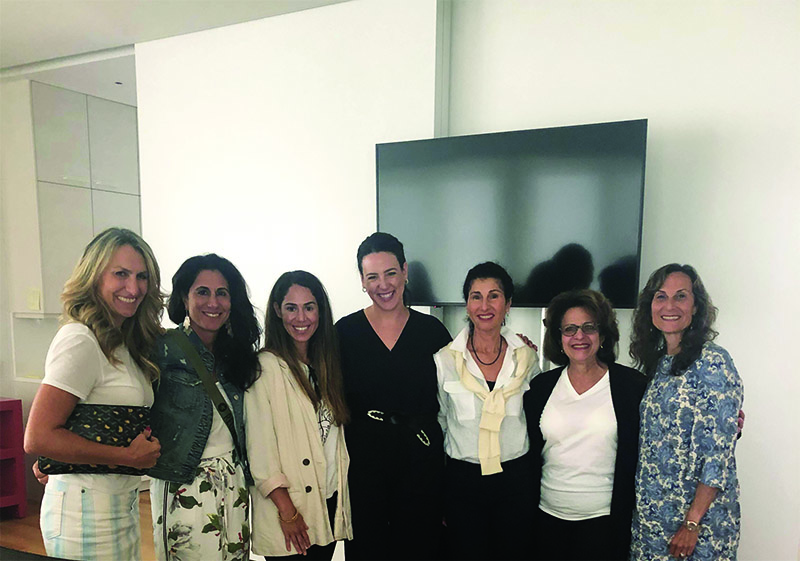
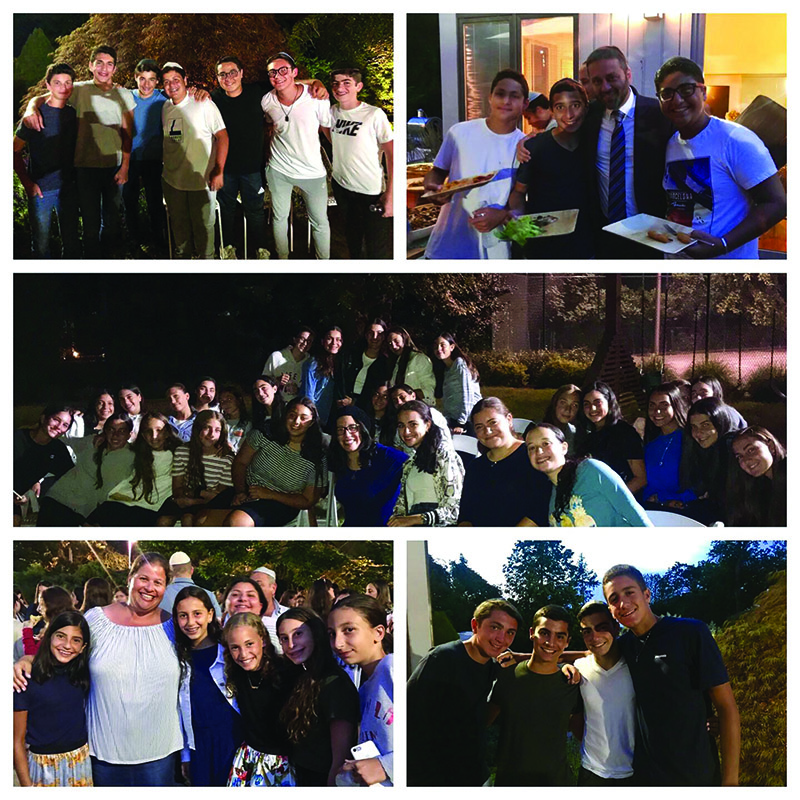
PROPEL’s When Opportunity Knocks event was arranged by Board members Dr. Gayle Krost, Carol Chera and Marcy Feldman. Gayle hosted this motivating panel discussion at her home. The event showcased six incredible women: Joyce Ash of Jerome Avenue Bakeshop, yoga instructor Vicki Grazi, fashion designer Grace Natkin, photographer Shelly Shmool (By Jackie and Shelly), Jaimee Shams, a registered nurse at NYU Langone Medical Center, and Susie Sutton, a teacher at Yeshivah of Flatbush.
Each panelist passionately described her career and the balance of her personal and professional lives.
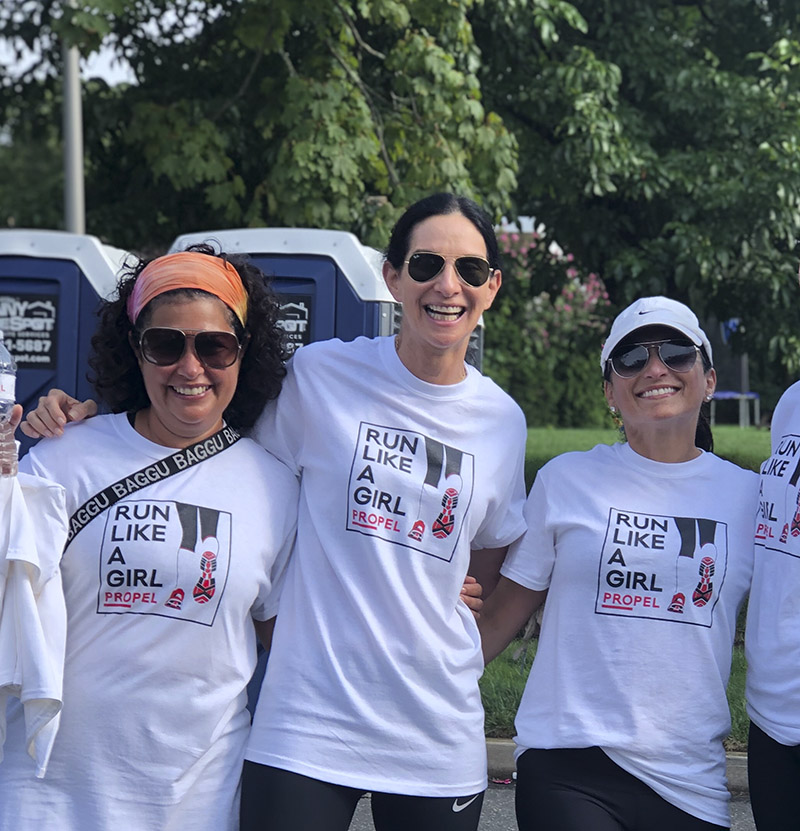
In addition, in collaboration with PROPEL board member Robin Braka and her daughter Rachel Khafif of RBK Art Advisory, PROPEL hosted Optimize Your Art Career, an event with Lauren Altman for women in the art business. Also, Team PROPEL was formed to take part in the SBH 5K race in memory of Diane Azrak A”H. PROPEL team members proudly displayed their Run Like A Girl t-shirts.
The PROPEL phone line has been ringing off the hook. Many women who attended summer events have enrolled in courses that began this fall. Women have been inspired to enter the workforce and this organization is here to support them.
Please follow PROPEL on Instagram @PropelNetwork to find out about upcoming programs and events.
If you are interested in a career, please reach out to PROPEL and we can help you fulfill your professional goal.
In 20 short years, Israel, the Start Up Nation, is on the road to becoming Israel, the Accessible Start Up Nation.
Thanks to two Israeli presidents, a determined IDF Lieutenant-Colonel paralyzed in a Cobra helicopter crash, the Access Israel organization, and the newly formed Friends of Access Israel (FAISR), the world now looks to Israel as a model in accessibility, services and sensitivity to people with disabilities.
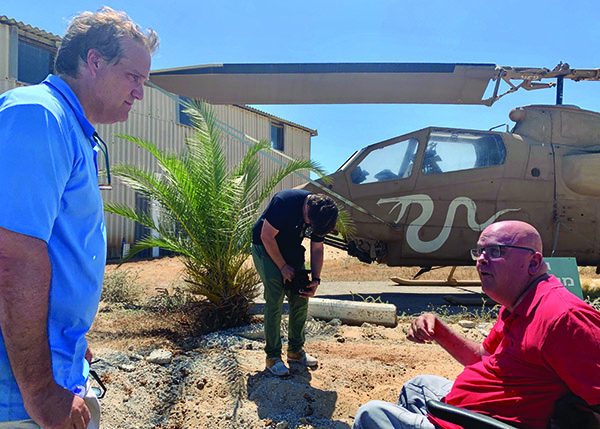
When Yuval Wagner was a child, he and his siblings helped take care of a father who used a wheelchair. They often carried him, as Israel was not accessible at the time. Wagner grew up and served as an Israel Air Force combat pilot. In 1987, at the age of 22, he and his squad were on a training exercise. The helicopter’s rotor malfunctioned, and all on board were killed—except for Wagner—he became a person with quadriplegia.
Access Israel Founder Yuval Wagner being interviewed in front of a Cobra helicopter
Following a long rehabilitation, Wagner returned to the Air Force, completed his degree in business management, got married and started a family. In the late 1990’s, the Wagners were excited to go on a vacation in the north of Israel. His wife made calls to make certain the accommodations were accessible. When Wagner arrived, he learned that the bathroom was not accessible.
He was frustrated, angry and determined. In 1999, he dashed off a letter to Israel’s President at the time, Ezer Weizman, a former combat pilot, commander of the Israeli Air Force and Minister of Defense. Weizman, the 7th president of Israel, invited Wagner to meet in person, where he apologized for Israel’s lack of accessibility, ordered him to start an NGO (non-governmental organization) to provide accessibility for the disabled and elderly, and invited Wagner to attend an official opening of the soon-to-be new organization in the main hall of the president’s residence.
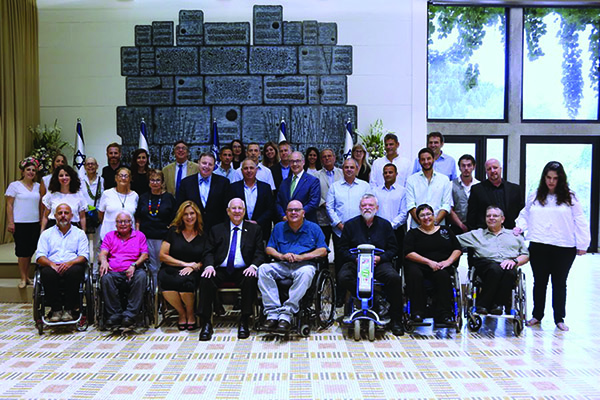
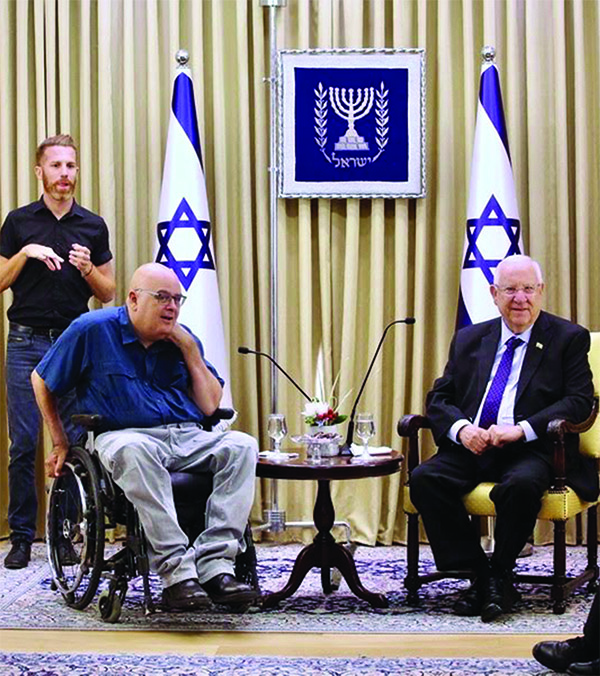
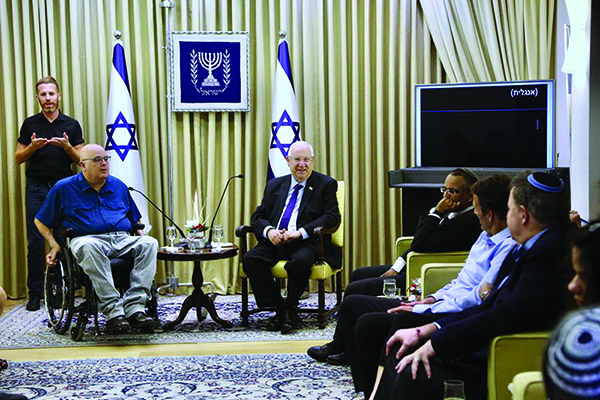
Yuval Wagner of Access Israel opens the 20th Anniversary Program at Beit Hanasi, President Rivlin’s home
The new organization would be known as Access Israel. The organization continues to grow, evolve, and lead the way for accessibility in Israel and around the world.
“We are the only Israeli organization that focuses on accessibility and inclusion—not only for people in wheelchairs, not only for people who are blind or who have hearing impairments—but for all kinds of disabilities and in all fields of life,” reported Wagner. Access Israel strives to integrate people with disabilities into all parts of Israeli society by focusing on dignity, equal rights, and maximum independence.
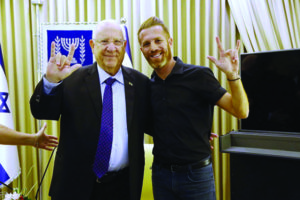
President Rivlin learning how to sign I love you.
The organization has dramatically improved accessibility for thousands of Israelis, by promoting accessible environments, increasing awareness, and helping draft laws and regulations. Access Israel has helped make it possible for wheelchair users to access such tourist attractions as the Old City of Jerusalem and the Western Wall.
Alan T. Brown, the Director of Public Impact for the Reeve Foundation in the United States and a person with quadriplegia, can attest to Jerusalem and Israel’s efforts to increase accessibility. Several years ago, Brown met Access Israel CEO Michal Rimon, expressed his desire to visit Israel, and shared concerns about lack of accessibility. Rimon enthusiastically invited Brown to Israel where he experienced accessibility first hand. “Something like this has to be done in America—something that is proactive and aggressive in attaining accessibility for all. I even went on the tour under the Kotel walls in a wheelchair!”
Lifelong friends Alan Brown of The Reeve Foundation (sitting) and Jamie Lassner of FAISR share a moment together at the Kotel
Brown experienced Israel’s advances in both physical accessibility and in leading the way in changing attitudes towards people with disabilities. “I am amazed at how Israel is using more than ramps to include the disabled. They are also doing it through corporate sensitivity training.”
Brown contacted his lifelong friend, Jamie Lassner and said, “In Israel they do it with much more dignity and we need to bring that worldwide. Jamie, are you in?” Brown and Lassner have been instrumental in starting Friends of Access Israel, which will help share the work of Access Israel more widely, and will help Wagner realize his goal of having the world view Israel as the Accessible Startup Nation.
A recent gathering in Jerusalem celebrated the 20th anniversary of Access Israel. Israel’s President Reuven Rivlin, members of Knesset, Access Israel staff and supporters, and leaders of the newly created Friends of Access Israel celebrated the organization’s strides in services, technology, education and advocacy on behalf of people with disabilities.
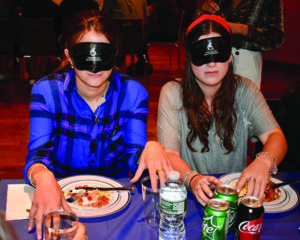
Two women try to eat blindfolded at a recent FAISR sensativity dinner at NYU
Rivlin congratulated Wagner and Access Israel for their “tenacity, futuristic vision, and drive for making Israel one of the most accessible countries in the world.” He acknowledged that the organization is improving the lives of people worldwide and spoke personally about how his late wife, who became disabled later in life, and benefitted from the work of Access Israel.
Michal Rimon addressed the gathering, “When I joined Access Israel 12 years ago, we were a small organization with a big goal—to break through barriers and enable people with disabilities to dream and fulfil their dreams.” Rimon, Wagner, and CFO Rani Benjamini have consulted internationally on accessibility and have shared the work of Access Israel at conferences in Russia, Spain, Latvia, Austria, and Ecuador. It is one of four organizations which advise the United Nations Convention on the Rights of Persons with Disabilities (CRDP).
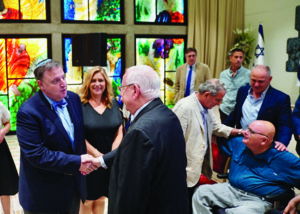
President Rivlin welcomes his guests from NYC
Rimon is excited to collaborate with FAISR and its Executive Director, Jamie Lassner. This new organization has already launched a well-attended sensitivity training dinner at NYU, cohosted by Realize Israel. They are planning such programs as Accessibility Accelerating Sensitivity Training Trips to several North American cities, Accessible Group Tours of Israel, Expeditions and The FAISR Accessibility Accelerator Tech Conference. Through these initiatives, organization leaders will travel to communities in the US to increase awareness of accessibility and inclusion, they will offer accessible Israel trips, climb Mount Kilimanjaro and host a conference which promotes accessible Israeli technologies.
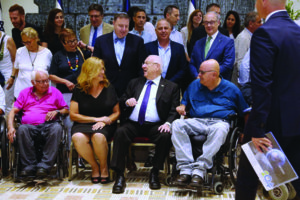
Guests receive a warm blessing from President Rivlin
Jamie Lassner served for several years as Director of Student Life at Magen David Yeshivah Elementary School. He learned of the work of Access Israel through Brown and through a visit to Israel last summer.
“I was amazed by the global difference they were making with their proactive strategies and programs. They had no global boundaries and a robust all-inclusive mission to gain equality and access for all disabled and elderly persons,” said Lassner who then decided to create FAISR. “As they say, the rest is history!” Lassner and board members Alan Brown and Abraham Eisenstat, friends from their many years, credit their late fathers for inspiring their work with FAISR. “They always made sure that all individuals coming into their community felt welcome.”
President Rivlin laughs with his guests
Rimon looks forward to collaborating with her American counterparts. “We also can’t ignore a sense of Israeli pride as we serve as an example to the whole world and unite on a common global issue. We have already learned a lot from our FAISR partners and find ourselves looking towards the future with great excitement at the vital things we will accomplish together.” Wagner added, “L’Chaim and Ya’alah” (onward) on our joint global goal to change the quality of life for the biggest minority of the world—the disabled. Together we are going to do amazing things for accessibility and inclusion, both in Israel and America.”
At the 20th Anniversary gathering, FAISR received a welcome endorsement from President Rivlin. “Our friends from abroad, from the United States—Welcome! We appreciate very much what you are doing, because this is a humanitarian need for everyone to respect human beings as human beings, not only as an Israeli or American, Brit, or Russian. We appreciate your cooperation and partnership. G-d Bless You!”
FAISR is a non-profit United States based 501-3C organization. You can follow then on Instagram: @f.Aisr, or on facebook: faisr.Org. For more info, email info@faisr.Org
Howard Blas is a freelance writer, social worker and Jewish special educator. He regularly writes for several Jewish publications and news services.
I remember her smile. When I think of her, it is the smile that comes to mind. It was her trade-mark—an expression of love for everyone who entered her home. I remember being in her kitchen with all my friends, laughing and having fun. I remember Lottie standing in the kitchen, hands always moving, always producing.
I can picture her rolling out the kaak, baking them, and then re-toasting them to get them really crunchy. I can smell the delicious Syrian smell—toasted sesame seeds, mahlab, yeasty, deli-cious kaak. Her famous fresh biscot-ti, yum, bring back such fragrant memories.
I remember her fondly—she and her smile and her kitchen—they were all one—an expression of giving, of caring, of love. In 2001, when Lottie passed away, the Chalom sisters Susan Menashe, Nina Cohen, Linda Dayan and Claudia Bildiricci, wanted to do something in her memory. They turned to Ezer Mizion to estab-lish a memorial connected to hesed with food.
That’s when the idea for Lottie’s Kitchen in Jerusalem was born. That large, new kitchen is now serving a couple of hundred thou-sand hot meals, sandwiches, and snacks each year. For close to 20 years, the Lottie’s Kitchen Summer Event on the Jersey Shore, has been one of the most well-loved and happy days in our community. It’s a beautiful day of warmth and fun, and all the women love it.
Every year the theme varies a bit, but it always has to do with our kitchen. This summer the theme was Our Elegant Syrian Kitchen. The beauti-ful home of Maureen and Salomon Cohen lent itself very well to the memories of architectural designs of Aleppo’s most beautiful family courtyards. It was sponsored by the family in memory of their moms, Josephine Tache, Fortune Haddad, and Annette Cohen, who smiled from above.
The day started with the fabu-lous live music of Josh Blanco and his Syrian ensemble. The sounds of Syria filled the air.Demos were done by Syrian women who are known for their authentic recipes. Coming in one of the last waves of immigration from our country to America they have that real touch with the spices.
Bella Zefrani prepared an amazing 52 t OCTOBER 2019 t IMAGE Arabic falafel salad. Shela Gindy gave us practical advice on the measurements of flavors for that perfect taste. She also showed us how to make proper Syrian pickles with green peppers and turnips. Her mom came in all the way from Panama. It was interesting to hear that women almost never went to the marketplace in Aleppo!
The men did the shopping. We learned how each family had their own way of preparing a pot of hameen and then taking it before Sabbath to sit in the oven overnight in the communal ovens. The famous Judith Tobal Betesh of Elvira’s All Natural was invited to demonstrate the mod-ern use of Tehina. Her degree in Integrated Holistic Nutrition made her information very much to the point.
Next up was Dorit Kanik of Nahoum Bakery who taught us that historically, Sephardic women have made all types of flat breads. For the Syrians it was pita bread. We’ve become accustomed to baking chal-lah which is really an Austrian tra-dition. We now have a beautiful simple pita bread recipe to high-light our Shabbat meals. Dorit actu-ally made it in a toaster oven.
Our friend, Rachel Gorcey, separated the required amount of dough to make the blessing and it was quite emotional to hear so many women respond “Amen,” simultaneously. The event featured the world famous French trained culinary expert Lior Lev Sercarz, founder of La Boite, who is noted for his 60+ beautiful blends of spices used in restaurants around the world.
He demonstrated his version of our own spice, baharat. Author of three books to date, Lior will soon be presenting his fourth, The Spice Companion, to an eager public. We finished our day with wise words from the most dynamic Rabbi Sholomo Farhi, from Edmond J. Safra Synagogue of Manhattan. The talk fit the day beautifully. He dis-cussed how important acts of kind-ness are to Hashem.
“Lottie prob-ably put an extra tray of her sem-bussak into her oven, because she was thinking of others who would appreciate it—and, look what has come of that,” he said. Rabbi Farhi’s address was powerful and inspiring in his expression of the beauty of our upbringing and how to carry that forth to a future generation.
A special thank you should go out to Maggie Bawaba, Bridget Ben Dayan, Margaux Betesh, Judy T. Betesh, Norma Cohen, Ricky Esses, Terri Harari, Ronni Kairey and Miriam Sabzheroo for their fantastic advice, and for doing an immense amount of work in so short a period of time.Much admiration to the Chalom sisters for their ongoing support to those in need.See you next summer!
Living in a fish bowl, you don’t know want kind of fish you are until you leap out into the sea and find yourself swimming with all the other marine life.
Now that I have returned to the Syrian-American Jewish community where I was born and bred, after residing in Manhattan for 20 years, I realize how much I missed my bowl. This is where I feel warm, secure, and thankful.
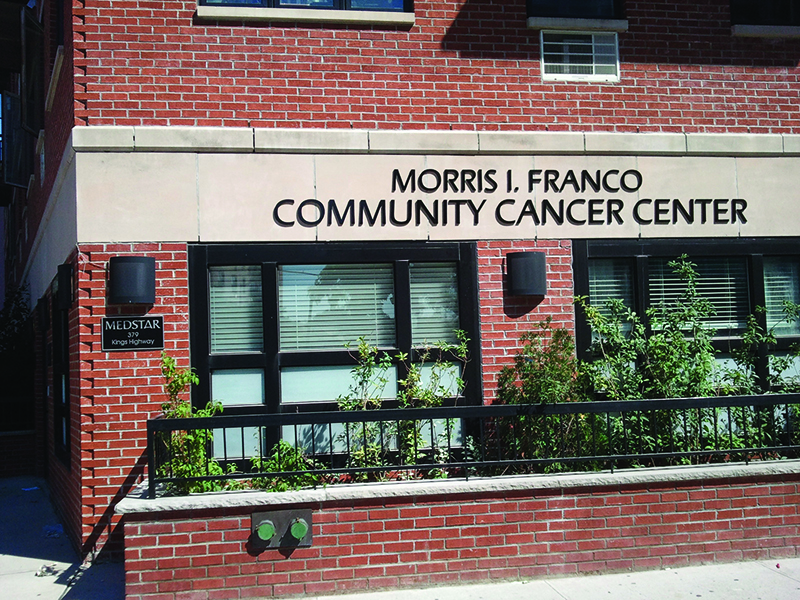
When my mother was diagnosed with terminal cancer, I saw the profundity of our community’s heart. It was on the eve of Passover that we learned of my mother’s fate. As Cornell medical teams delivered gruesome test results, we were faced with unalterable decisions. I called fellow community members, including doctors who joined us in the trenches, and I turned to The Morris I. Franco Cancer Center for guidance.
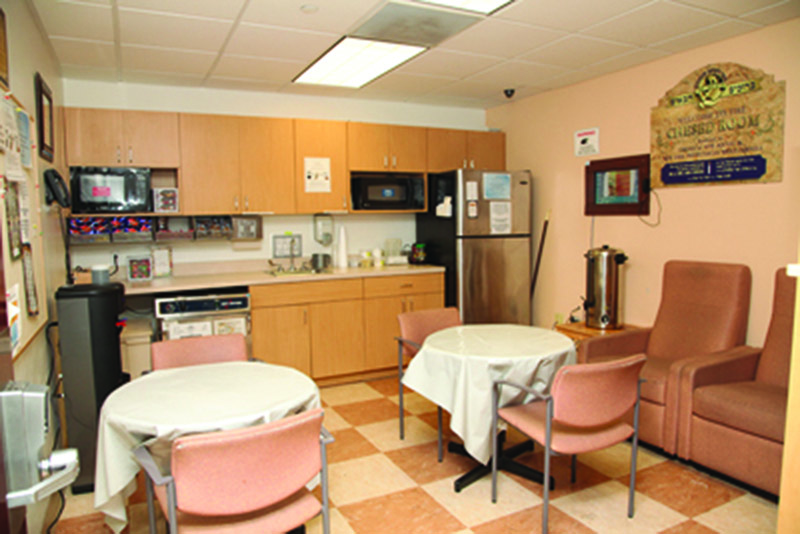
The Bikur Holim Hesed Room at Cornell
The 24/7 Bikur Holim Room at Cornell was another testimony to the generosity and support of the Jewish community at-large. Not only was it a place to get kosher meals every day, including Passover and Shabbat, but I had a respite from the doctors’ horrific news.
I was able to make a Seder and have the pleasure of including two Hasidic young men who welcomed the opportunity to be a part of their first Syrian Seder. They allowed me to lead the Seder, even though it was forbidden for them. That night they had visited patients and performed private Seders for them. Then, by allowing me to relish in a Seder of my own, they performed this mitzvah from a different angle. They even learned pizmonim.
Jews from different places and of religious spectrums including Hasidic, Ashkenazic and Sephardic backgrounds, congregated in the 24/7 Room, and were able to not only vent but to offer each other medical advice. As an Ashkenazic middle-aged man said, “This is a testimony to the kindness and ahdus (unity) of Klal Yisrael.”
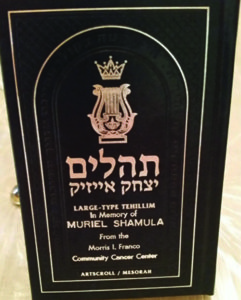
The book of Tehelim that the Cancer Center provided
Women brought meals throughout my mother’s stay, including homemade soups, pastries, smoothies, Friday night three course meals, and whatever else they could think of to entice her to eat. Of course, everyone kept our family in mind, bringing enough for all of us. People were aching to contribute to our efforts.
I created a Whats App for family and friends to coordinate visits. My mother knew everyone was thinking of her. One day, the thought of a pastrami sandwich tempted her waning appetite. Her friend posted this interest, and four pastrami sandwiches arrived that day, hand-delivered by family and friends.
Mom was in the hospital and a rehabilitation center for approximately two months. My siblings, a close friend, and I, alternated nights sleeping at both places, but we needed relief. I learned that the Mitzvah Man (MM) has a host of volunteers who would sleep in the hospital or rehab overnight, to provide relief for family members. This was a hesed I found mind-blowing. It was hard to believe there were multiple people with such a level of compassion and empathy.
I reached out to the Mitzvah Man and that day began receiving calls from volunteers who wanted to donate their time. I hired aides intermittently, but there was no comparison. Whenever a MM volunteer was on-call, Mom had a competent advocate. I was able to rest knowing they were overseeing the nurses, reporting to me what my mother ate, and how she was faring. I knew they were by her side all night, watching over her.
I’d greet my mom in the morning and she’d be touched that a fellow Jew had stayed overnight. “They’re angels,” she’d say. One has to be a special type of person to understand the need for—and perform—such a tough task. I cannot thank these women enough for the solace they provided my mom and my family during this trying time.
The Cancer Center played a pivotal role in our endeavor, as well. I consulted with them for referrals and reassurance that our doctors were highly recommended. They sent care packages for Shabbat and holidays, creams to help alleviate some of my mother’s discomfort, and scarves so she could look pretty.
Sephardic Bikur Holim sent out a text with my mother’s name and location, and visitors came, some with young children armed with handmade cards, candy, even a list of questions to trigger conversation. It was heartwarming. Seeing young fresh faces made the day interesting. Our extended family, and her longtime friends, visited frequently from Deal and Brooklyn even though she was in Manhattan. Their love and support kept us breathing.
Going through this trauma felt like being in the cockpit of a warplane. We fought the onslaught from the first night of Passover, April 19th, until July 7th, my mother’s final day. It was a horror, but having our community rallying around us made this challenge manageable. Their involvement helped us stay strong, comforted, and loved. We are blessed.
Valentine's Day Concept with illustration of a sad boy saying 'No time for Love'.
The question I hear most often from friends and family is one that was never asked of me until recently. That question is: “How’s married life?”
It’s a simple question, but it is loaded with curiosity and wonder, because they never thought I would be in a position to answer it! However, I can and I will. There are two cautionary sayings that reflect my life until now. They are, “Man plans as Hashem laughs,” and “Never say never.”
I enjoyed a bachelor’s life well into my forties not by design, but by a strengthening independence I created. An independence where the years progressed into decades. My initial intention upon completing my education was to be married by 26 years of age, but as I was developing my career, my focus centered on professional as well as financial success. My thoughts at the time were that a happy marriage could not exist, if my foundation to provide for a wife and family were still in the building stages. My sights were of myself and not beyond. My financial fears governed my social life, and the subsequent lack of commitment to anyone or anything outside of my career was the unfortunate by-product. By lacking faith in my ability to adequately provide financially, I found myself searching for a match I knew did not exist.
I missed out on, and overlooked, many great women whom I never gave a chance, as my assumptions and limiting beliefs governed my emotions. My criteria were unrealistic, and every excuse I could find would be a reason to stop dating. I broadened my horizons, yet the same obstacles I put up were keeping me from maintaining a relationship past a few dates, and it became a habit well into my fifties.
All the while, my siblings, my friends and even my younger cousins were getting married and raising families. Another generation was passing me by. I wrote earlier that I enjoyed a bachelor’s life and in truth I did—not because it is what I wanted, but because I refused to be unhappy.
I have been blessed with a close family, amazing friends and a fulfilling career. I have a lifetime of travel and learning experiences that I truly cherish, and would never trade. Ironically, the greatest lesson I learned is that even with all that, I was alone. Surrounded by my family and friends, I was alone. My family was growing, but not due to me. My friends were planning weddings and bar-mitzvahs for their children, and my contemporaries are now becoming grandparents!
The life I was planning to have was being fulfilled by everyone around me. I realize now, that I wasn’t looking for a partner, I was looking for my own perfection. I was blinded by my own reflection, rather than looking into the soul of a good woman whose life I could have shared. I perceived the encouragement I received from family and friends as pressure. When they wanted to fix me up, I was flattered but my first instinct was to turn the introduction down. I used the line: “I know her already.” Rather than see my friendly relationship with her as a built-in ice breaker to start a conversation, I did the opposite. I was set in my ways and set in my outlook. I gave up, threw in the towel, closed the book, and convinced myself that remaining single was what I always wanted. How else could I explain to myself why I wasn’t even in a meaningful relationship? Time marched on, as time does.
As I prayed each morning with my tefilin, after praying for my family, my personal prayer started to change from merely being happy, to having Hashem be my partner in opening me up. I’d pray to let the walls down and to come out from hiding. I prayed to recognize beauty and values that were beneath the skin. It was at this time, when I received the sign and feeling that everything needed to change and was going to change.
I started noticing that I was the only single person in the room. I began to feel the solitude and isolation I created. I declared that this was the final straw. My mind was suddenly in a different place, and I was open to whatever happened resulting from the walls coming down.
Once this shift occurred, the opportunities started to reveal themselves, and I was not going to pass them up this time. I was not going to use the old excuses or lines everyone was tired of. Another major lesson I learned is that the compromises one makes to stay single are so much less valuable and meaningful than the compromises one makes in partnership with a loving spouse.
Thankfully, I became successful but who knows how much more valuable life would have been had I been in partnership rather than a solo flyer? I made a life defining assumption that a woman was not going to start out with me as I was building a career. It was safer from a financial point of view, but not from an emotional one. The women of our community are assets and not liabilities. They are our partners.
Our wedding was a blessed celebration of love, of friendship, of family and the miracle of faith. I only pray you learn from my story sooner than later—and to make that point even clearer—I will use a quote from one of our favorite movies, When Harry met Sally (and I am paraphrasing) “When you realize you want to spend the rest of life with somebody, you want the rest of your life to start as soon as possible.”
You can plan all you want, just plan on opening your heart and mind to who may be right in front of you.
So, to answer the question: “How’s married life?” I respond, Truly a blessing, and an answer to my prayer. I wish I could have been able to answer that 20 years ago.
The Community Security Alliance (CSA), an umbrella organization for Brooklyn’s Sephardic community, with 23 buildings under its auspices, is proud to announce that for the fourth year in a row, we have assisted community organizations in securing large grants from the US Department of Homeland Security, to enhance building safety.
The nonprofit security grants have ranged from $75,000 to $150,000 depending on the year. Each year, six to seven CSA member institutions have received grants. In 2020, CSA believes at least 10 CSA members will be receiving grants of $100,000 each.
All around the community, extra cameras are being installed, guard protection has increased, locks are being changed, and entry doors to facilities are being more carefully monitored. The security of the 10,000 students attending yeshivot in our community is a major concern, as well.
What is more important than the safety and security of the thousands of people who enter our synagogues, our schools, and other community buildings? As a community, hundreds of millions of dollars have been invested in our infrastructure and these buildings—and the people who use them—must be protected.
Bias crimes against Jews represent more than 60% of religious based hate crimes, according to the FBI’s Unified Crime Reports. Three Orthodox men were attacked on their way to synagogue in August. The previous Friday night, there were two other attacks in Williamsburg. There was the Chabad shooting in Poway, CA and attacks in Pittsburgh and Los Angeles in 2018.
The world as we know it has changed. Global terrorism is now a fact of life. Jewish residents have become the target of hate crimes and terrorist attacks, many of which are increasingly violent and deadly. Threats to the Jewish community are constantly evolving, and it’s important that we, as a community, remain proactive in our efforts to understand and combat them.
CSA ensures the security and the safety of our community’s institutions through a thorough, carefully designed and coordinated plan of actions and protocols.
The organization has contracted with security professionals who specialize in risk assessments, operational training and security design for schools, camps, community centers, houses of worship, private businesses, and government institutions. These professionals also have decades of experience helping to better secure government facilities, power stations, military installations, embassies, and airports.
Volunteer-based initiatives have been effective worldwide. One of the most important parts of the CSA plan is the recruitment of teams of volunteers who will be trained to prevent incidents. We will train volunteers to protect and prevent incidents at their respective buildings. It is these volunteers who know the facilities, know the congregants and have a vested interest in protecting their families and friends. To become a trained security volunteer at your synagogue, visit: csalive.org/volunteer.
I was not sure what to expect when I applied and was accepted as the PROPEL summer intern. Was I going to be spending my time making coffee for others? Was this organization compelling and engaging?
What I discovered was an incredibly professional and well-run organization in our community that fills a tremendous need. PROPEL guides women who are entering the workforce. Women of all ages and levels of experience reach out to the organization and receive one-on-one career coaching and advice from an outstanding mentor, Ellen Ades.
I spent much of my time with Viviane Darwish, Director of Operations. I was involved in back office management, and used my knowledge of Excel to help with organizational details. My assignments included creating an online survey to help access the client experience at PROPEL.
The organization sponsored many events over the summer. I was involved in supporting the many details it takes to run a successful event. At the start of the summer, PROPEL showcased RBG, a movie reflecting the life of Supreme Court Justice Ruth Bader Ginsburg and hosted a vision mapping session with Alice Chera. I was inspired by these events and realized the potential each woman has to actualize a career of her choice.
PROPEL’s premiere summer event, arranged by Dr. Gayle Krost, Carol Chera and Marcy Feldman, “When Opportunity Knocks,” was a panel discussion hosted at the home of Gayle Krost. It showcased six incredible women: Shelly Shmool, a photographer (By Jackie and Shelly), Grace Natkin, a fashion designer, Joyce Ash of Jerome Avenue Bakeshop, Jaimee Shams, a registered nurse at NYU Langone Medical Center, Susie Sutton, a teacher at Yeshivah of Flatbush, and Vicki Grazi, a PROPEL graduate and yoga instructor.
The discussion was moderated by Co-Executive Director of PROPEL, Alissa Shams. I learned so much from the woman on the panel. They shared their personal journeys, what led them to choose their careers, how they balance work and family and their “aha moments” which inspired them.
The summer is not over yet. I am looking forward to our next two events—one is for women interested in the arts, sponsored by Robin Braka, a PROPEL board member, and her daughter Rachel Khafif, of RBK Advisory. The other is for Team PROPEL, a group we formed which will be running at the upcoming SBH 5K race. Look out for our fabulous pink PROPEL shirts.
After my summer experience at PROPEL, I am very proud to exclaim, “Run like a girl.”
Follow PROPEL on Instagram @PropelNetwork to find out information about upcoming PROPEL programs and events.
If you are interested in a career, please reach out to PROPEL. We can help you fulfill your professional goal. Call (646) 494-0822 or email info@thepropelnetwork.org.
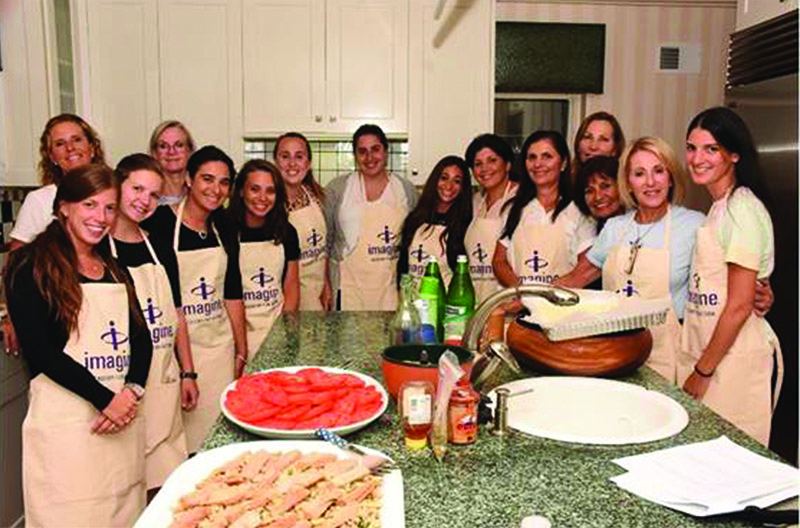
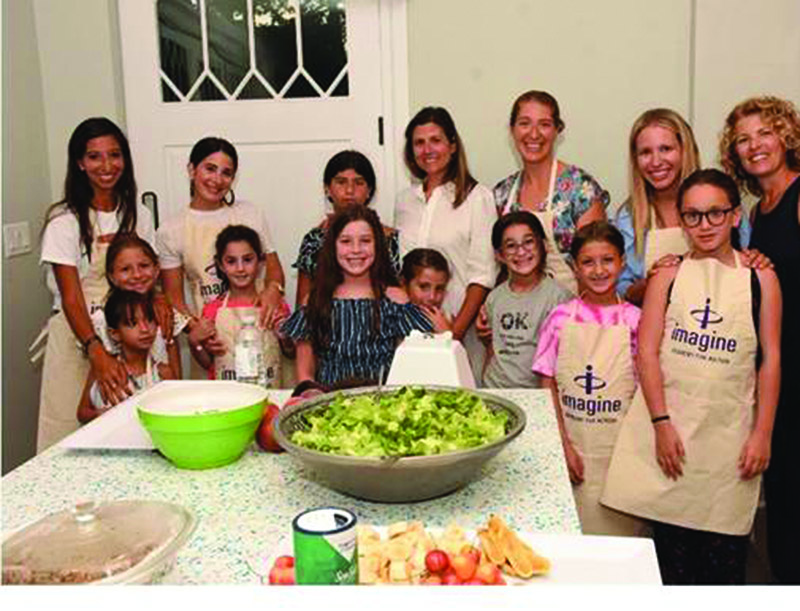
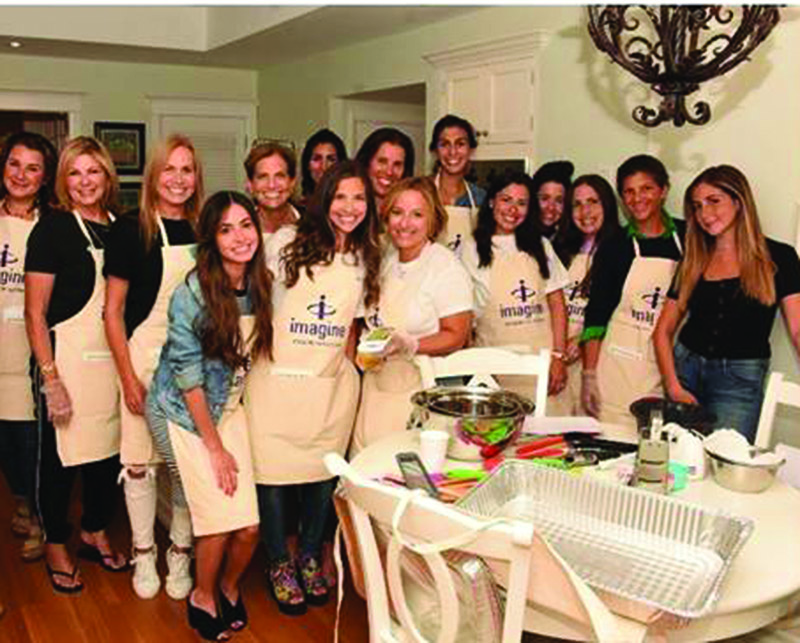
Imagine Academy recently held their first ever Cooking Collective in Deal, NJ. Imagine Academy, a school for children with autism, has a loving, dedicated staff that often go above and beyond for their students. At our very first meeting, Heather Deutsch mentioned they hadn’t had a summer fundraiser in some time and were ready for something new! With that said, The idea for the Cooking Collective was born.
In 14 different homes, chefs from the community held Demo and Dine parties to raise money and awareness for the school. Some chefs demonstrated at their own homes, while others were welcomed by one of our gracious hosts. As the night unfolded, there was cooking, laughing, and bonding! From the flowers to the aprons and sophisticated table-scapes, each and every party was an elegant affair complete with a gourmet meal. With much thought and preparations from the chefs, each dinner offered a unique experience for its participants. Adele Yedid featured a plant-based menu that was as healthy as it was tasty, while Michelle Gindi invited moms and their young daughters to her demo of a child-friendly meal. Alexis Cohen’s event focused on beautiful desserts and cake decorating, and the group with Aliza Salem were raving about the many innovated cooking tips they couldn’t wait to implement. Fannie Bouganin’s girls hung on her every word and Paulina Ashkenazi’s guests all agreed they felt transported to some European location, thanks to her menu and ambiance. Florence Chera’s crowd had a ball bonding through food, and Claudia Bildirici’s group spent just as much time laughing as they did cooking. Rachel Pahuskin’s gourmet menu had her guests excited from the moment they entered, and Eileen Missry’s dinner was a true family affair, with her mom and grandma beside her bursting with pride.
One guest who visited Sarah Hanan’s demo commented that the elegant setting, coupled with delicious dishes, created the perfect night out with the girls. Susan Harari wowed her guests with a tuna pizza, and Pamela Azizo’s homemade cherry tomato sauce is sure to be a new staple for all in attendance.
The dynamic duo of Stephanie Mosseri and Julie Ebani planned their recipes and menus to perfection, and their attention to detail didn’t go unnoticed. All the chefs and hostesses brought their best, infusing the night with their own personal flavor.
A highlight of the evening included different representatives from Imagine Academy who visited each home to speak about the importance of the school and what it means to them, followed by a moving video that brought their words to life. For the guests, hearing from these individuals in such an intimate setting made an impact. It elevated the night from a social gathering to a meaningful experience.
Guests asked questions and engaged with the speakers. In return, the founders of the school and long-time employees felt truly appreciated and valued by the listeners. As one speaker, Jane Sutton, mentioned, there are certain events that are fundraisers and others that are friend-raisers. This cooking event was definitely both. All the women left feeling moved and inspired. From the generous hosts and chefs to the eager participants, everyone joined together to make the night a memorable success. There was good food and better company! Each woman left with an exclusive cookbook featuring one recipe from each of the participating chefs, a full belly, and an even fuller heart!
Thank you to all the chefs and to the additional hosts: Rachelle Abady, Audrey Adjmi, Janelle Ash, Dianne and Annie Azrack, Jen Jemal, Cynthia Levy and Stephanie Levy. Thank you to the wonderful speakers, Heather Deutsch, Jane Sutton, Marcelle Shasho, Raquel Savdie, Danielle Azizo and Aura Varon. An extra special thank you to Victoria Mamiye for the exquisite flowers at each home, and Lisa Chakkalo for the beautiful photos that captured the night.
The icing on the cake was when chef Pamela Azizo won the raffle for the gorgeous jewelry, so generously donated by Roxana Warat of Warat Jewels. Thank you to Sarah Joy Dweck, Claudette Mathews, Sari Rishty, Adelle Soffer, and Sofia Tawil: your yummy confections were the perfect end to the fabulous meals. To Ruby Dweck, Francis Yedid, Claudia Azizo, Raquel Habert, and Marjorie Eida, and everyone else who donated their time and talent, because of you this night far surpassed anything we could have imagined.
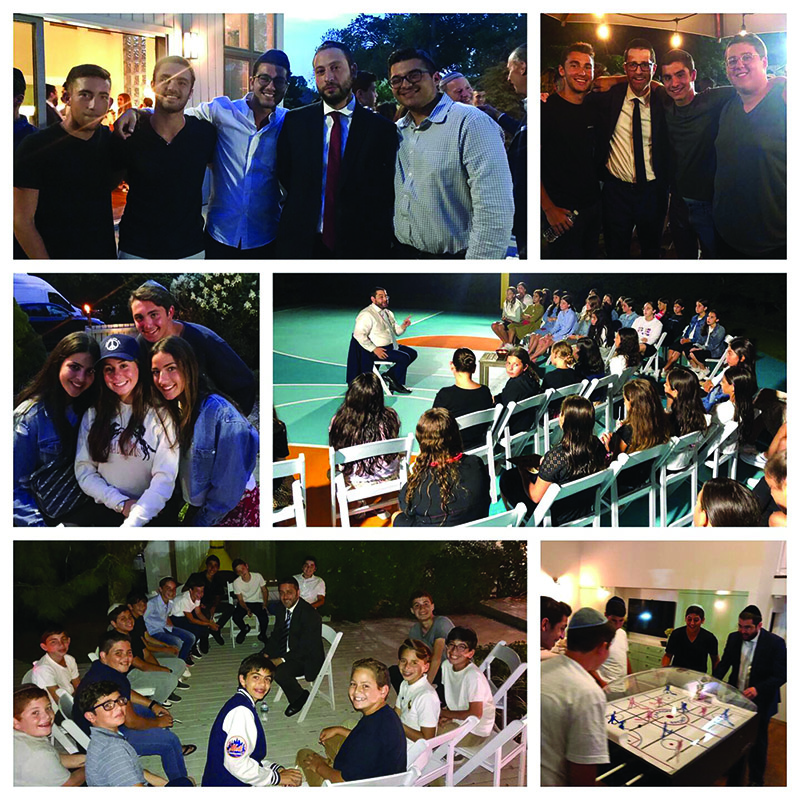
Recently, Magen David Yeshivah parents and students gathered at the home of Marshall and Jeannie Mizrahi for a beautiful night of learning. Titled: MDY Night of Learning and Unity, over 300 people showed up to learn together. Looking at them, spread out in the Mizrahi’s backyard, it was clear MDY achieved their mission.
While there are many opportunities to continue learning over the summer vacation, it is rare for students to interact with so many rabbis and teachers on one night and for one purpose—to learn together.
Different age groups were assigned to different locations, all within earshot of each other, and at each spot an MDY rabbi or teacher led a discussion. The buzz was incredible; everywhere you looked there were people asking questions, reacting to comments, and listening intently.
Rosh Yeshivah, Rabbi Harold Sutton, kicked off the event with words of Torah. He analyzed the rabbinic statement attributing the destruction of the Beit Ha’Mikdash to neglecting Birchat HaTorah (Torah blessings) and explained the key lesson—we cannot consider the Torah a subject we learn in school, or an intellectual pursuit; it should be studied as a guide to life and as our constant source of inspiration.
Following Rabbi Sutton’s address, the crowd scattered into their separate sessions. Rabbi Alan Berkowitz, the principal of MDY elementary school, opened the parent session and spoke about the proper way to approach a child’s education. He then introduced MDY’s new High School Principal, Rabbi Richard Tobias, who expressed that he was excited to work with the new administration and emphasizing the partnership between the various levels of Magen David.
Rabbi Tobias’ topic, “the worst things your child could tell you,” created a lot of speculation. Many in the audience were surprised to hear that the worst thing a child can say is, “I don’t care.” Life is filled with distractions and children can escape into a video game and social media. More and more of our youth are becoming apathetic and unwilling to engage with reality. They are losing their ability to feel and to cope with challenges and to build relationships and they need those skills in order to live meaningful lives in the future.
While their parents were discussing the Torah perspective on apathy with Rabbi Tobias, MDY students were learning as well. Seventh and eighth grade girls were led by Rabbi Joey Mizrahi and seventh and eighth grade boys were given a class by Rabbi Meyer Barnathan. High school girls were given a class by Associate Principal, Mrs. Esther Tokayer. High School boys learned with Rabbi David Elnadav. A class for college age students and young professionals was given by Rabbi Joey Haber.
A light dinner was served. Crust, by Raymond Tawil, made delicious pizzas, Rita’s ices refreshed the crowd and everyone enjoyed Dough Co. Doughnuts.
The evening was a tremendous success and all walked way inspired and excited about Torah, about Magen David and about the warm and talented faculty at both the elementary and high schools. A big thank you to Marshall and Jeannie Mizrahi for hosting this inspirational night, and a thank you to all of the students, parents, and faculty members who came and showed their dedication to, and support for, MDY.
The New York State Democratic Party, which has always had a moderate stance, is at risk of veering towards the radical left. Recent New York City mid-term elections were crucial to our community. Progressive Democrats, feeling empowered by a handful of high profile victories, have now thrown their weight behind any progressive trying to unseat moderate democratic incumbents.
Virtually all of the competitive elections in Brooklyn, Manhattan, and recently, Queens, are, and have been, decided by Democratic Party primary elections held in June of each year. The Governor, State Senate Majority, State Assembly Majority, Attorney General, Comptroller, Mayor, City Comptroller, every borough District Attorney, NYC Public Advocate, as well as 4 out of 5 Borough Presidents, and 48 of 51 New York City Council members, are all Democrats.
As the city and state continue a leftward tilt, it is clear that the community needs the ability to vote in the Democratic primaries. This will have influence on which Democrats run in the November elections. Strengthening our voting numbers in these primaries greatly encourages candidates to support issues vital to our community. The stark choice these days is between a moderate Democrat and a progressive one.
Since many community members are registered as Republican or Independent, they are excluded from voting in the Democratic primaries.
The SCF has always promoted an agenda of voter registration. Now, we are urging community members, who have not yet registered, to register as Democrats, and for those who are registered Independent or Republican, to change their voter registration to that of Democrat.
An individual must change his/her registered party one year in advance of being able to vote in the primary. Making the switch now would render one eligible to help elect candidates who support our community interests. Of course, in the general election, regardless of one’s party affiliation, he or she may vote for the candidate of his or her choice.
Chaskel Bennett, co-founder of the Flatbush Jewish Community Coalition (FJCC) wrote a powerful Op-Ed article about the diminished influence of Orthodox Jews in which he stated, “Like it or not, Orthodox Jews are doing this to themselves by registering as Republicans in New York City and disqualifying themselves from voting in the Democratic Primaries. Today, the big political battle in New York is no longer between Democrats and Republicans, instead it is the fight between moderate and progressive wings of the Democratic Party.” The SCF wholeheartedly agrees.
The too close for comfort primary for Queens District Attorney held in June, was only settled in August. Tiffany Caban was heavily backed by progressive Democrats. She conveyed reluctance to prosecute anyone other than those committing the most serious crimes. After recounts and protests, she conceded defeat to Melinda Katz, with a margin of only 55 votes. A victory for Caban would have given the progressive left a stronghold in that borough. This proves that every single vote counts, as 90,000 votes were cast in that race.
Registering as a Democrat or switching party registration is not a moral designation, it just gives one the ability to elect a candidate who can win and help our community. We want to make it very clear that this is not an argument to support Democrats over Republicans. We simply need to ensure that the moderate Democrats have our community’s full support and are not driven out by radicals. Political party registration, along with voting, is a critically important practical and tactical tool that permits us to have a voice in every aspect of the political process.
If you are not a registered Democrat and want to change your party registration or to register to vote for the first time, please visit: voterreg.dmv.ny.gov/MotorVoter.
Hurricane Dorian has battered the Bahamas with the strongest recorded Atlantic hurricane in history. 185 mph winds sent thousands scrambling to shelters. The people are in a state of shock. The Abaco Islands and Grand Bahama, where the eye made landfall, are completely devastated.
Chabad of the Bahamas, through its year-round center on Nassau Island,
is on the ground providing essential relief to all those in need. A designated disaster relief fund has been established to assist those most vulnerable and in need. The most urgent needs are supplies such as clean water, food, clothing, medical supplies, first aid kits and generators.
Those who have been the most severely impacted will be helped to recover and rebuild. Supplies and funds are needed to ensure we can help as many people as we can, as quickly and efficiently as possible.
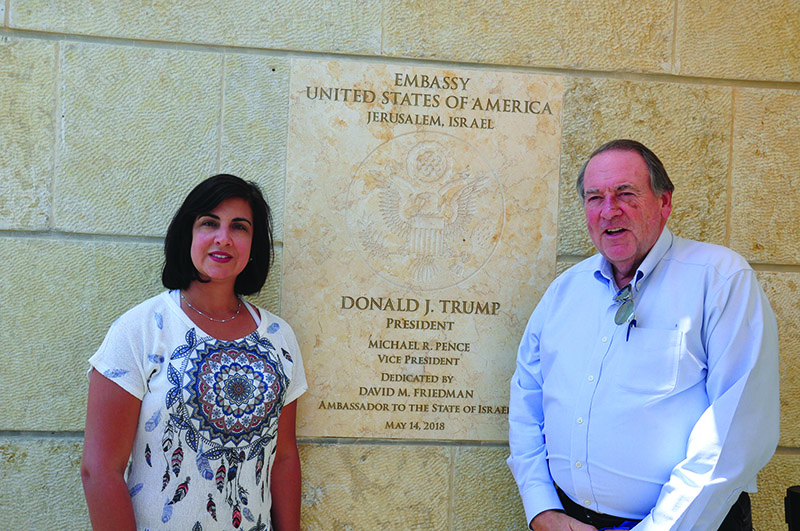
In mid-July, I visited Israel as part of a group that included former Governor Mike Huckabee of Arkansas and Nick Langworthy, the newly elected Chairman of the New York State Republican Party. The trip was hosted by the National Council of Young Israel and was intended to raise awareness of Israel and the challenges it faces as the Middle East’s only true Democracy.
Being my first visit to Israel, it truly was an eye-opener; it gave me a new perspective on the news stories that we read and see every day regarding Israel and the tensions in the Middle East. It allowed me to have a first-hand look at the faith of the Jewish people, the closeness and ruthlessness of their enemies and the problems faced by Israel’s government and military as they tirelessly work to protect its citizens.
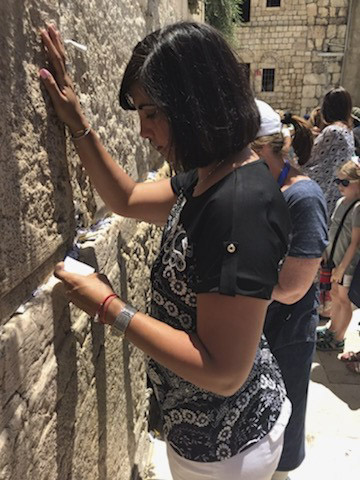
During my three day stay, I visited numerous locations, including: the new US Embassy in Jerusalem, Hebron, Bethlehem and the West Bank, the Gaza border, the Western Wall and the Yad Vashem Holocaust Memorial. Without a doubt, my visit to Yad Vashem and my opportunity to pray at the Western Wall were the most moving parts of my trip.
Yad Vashem gave me a new understanding of the unbelievable suffering of the Jewish people at the hands of the Nazi’s and underscores the faith and determination of those who escaped the “final solution” and went on to build the democracy we all know as Israel. It brought new meaning to the word’s “never again” and left a permanent mark on my conscience that we, as Americans, must be at the forefront of the fight against anti-Semitism and any other form of religious discrimination or hate. I also heard the concerns of average Israelis who worry that the US relationship with Israel is fracturing after hearing the anti-Jewish and anti-Israel rhetoric of a handful of Democrats in the US Congress.
Praying at the Western Wall made me contemplate the historic context of the Jewish religion, what Jerusalem means to all people of faith, the huge responsibility Israel has and the example it sets by preserving the rights of Jews, Christians and Muslims to peacefully practice their faiths within yards of one another.
Just as Israel protects the rights of others to freely practice their religion, the United States must continue supporting Israel’s G-d given right to exist and flourish while surrounded by forces that continually plot its downfall. The US must have the courage and fortitude to stand with the people and the government of Israel as they face-down the threats of Iran and its terrorist surrogates. We as a nation must never relinquish the responsibility of speaking out against anti-Semitism in all its forms; whether it’s on the streets of a European capital or in the halls of the US Capitol.
We’ve all heard how, in the first 5½ months of this year, anti-Semitic hate crimes rose by a shocking 82% in New York City. We’ve witnessed how the Boycott, Divestment and Sanctions movement (BDS) is aimed at destabilizing Israel, or we’ve heard the words of anti-Israeli elected officials on the floor of Congress. One thing is clear; anti-Semitism is on the rise and as freedom loving Americans we must stand tall, shoulder-to-shoulder with our Jewish friends and neighbors here in the US and with the State of Israel on the international stage.
No sooner had the wheels of my plane touched down on the tarmac at JFK than I was once again reading news stories about a resolution in Congress, sponsored by Rep. Ilhan Omar that defends the BDS movement and likens it to boycotts of Nazi Germany or the Soviet Union. The cynical words of the resolution make it all too clear where Rep. Omar and her radical-left comrades in Congress stand on the future of Israel and the Jewish people.
When Rep. Alexandria Ocasio-Cortez naively and maliciously called centers for illegal immigrants detained by the US Government, “concentration camps” we all gasped. It became obvious that she has no understanding of history, the Holocaust or the truly evil actions of the Nazis. Most importantly, she doesn’t recognize one simple truth, Americans don’t build concentration camps; we liberate them.
The leadership of Yad Vashem has invited AOC to visit. I hope she takes them up on the offer, because after spending a few hours there, she might decide to choose her words more carefully.
As shocking as their words are, the silence from other elected officials, especially the Democrat leadership in Congress, is far more worrisome; don’t they have the courage and decency to condemn their colleagues’ hateful words and actions?
During my five terms in the New York State Assembly, I have always fought hard for the Jewish community and its needs. My first trip to Israel (and I hope there are many more) has hardened my resolve and reaffirmed my belief that the US must never waiver in its support of Israel and its people. If, G-d willing, I am elected to Congress, you have my assurances that I won’t back-down in my support of Israel and the fight to stop anti-Semitism wherever it might emerge.