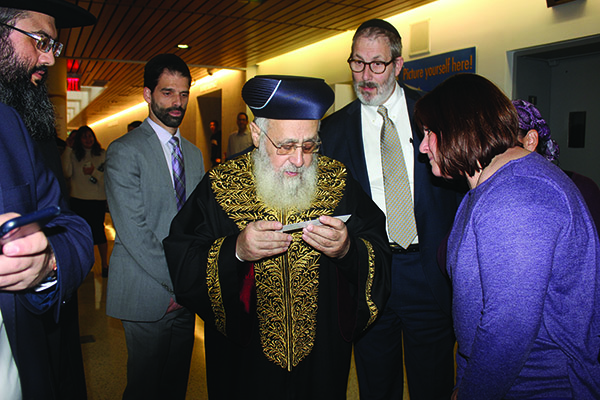
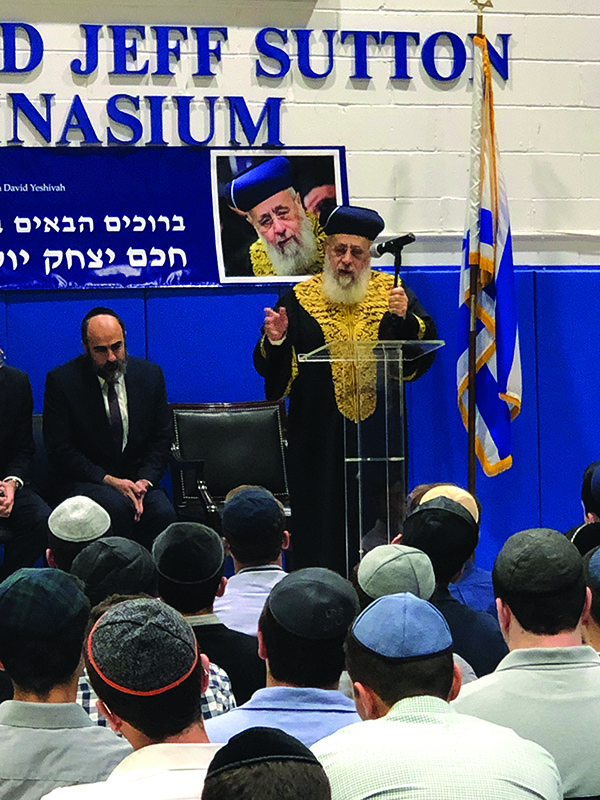
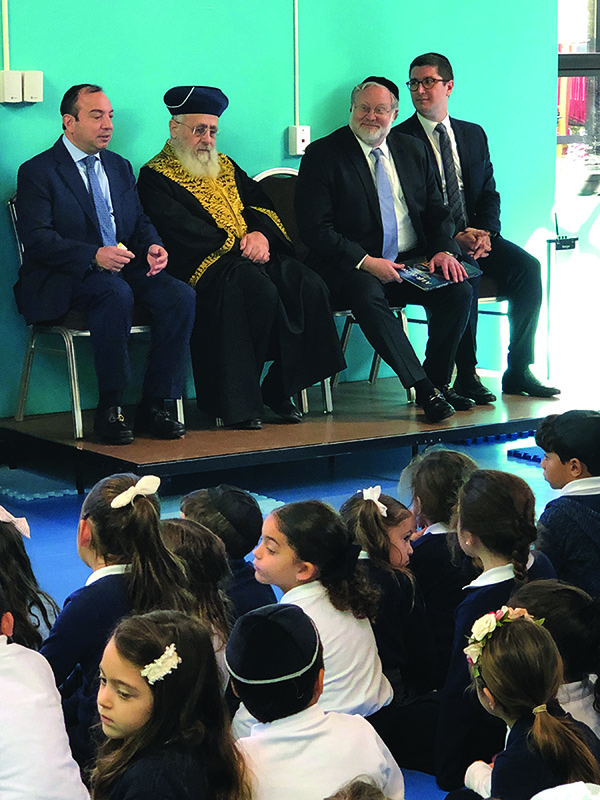
The Sephardic community was deeply honored by the recent visit of Israel’s Sephardic Chief Rabbi Yitzhak Yosef. He came to Brooklyn and New Jersey, spoke to students at Magen David Yeshivah, the Yeshivah of Flatbush, Hillel Yeshiva, and others. In New Jersey, community members gathered at Congregation Magen David of West Deal to hear him speak and he met with seniors at DSN. His words of wisdom and the blessings he bestowed on our community, wherever he visited, were cherished.
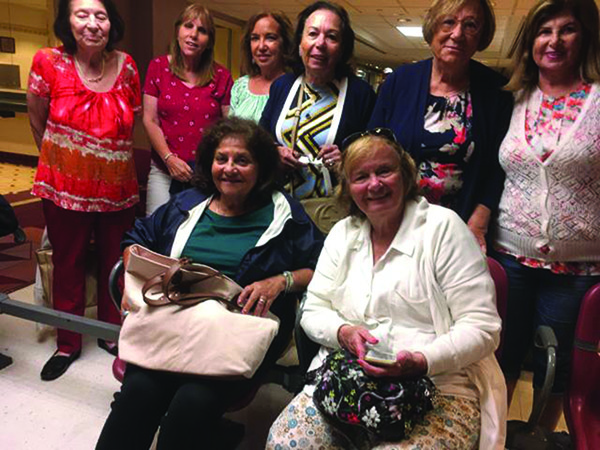
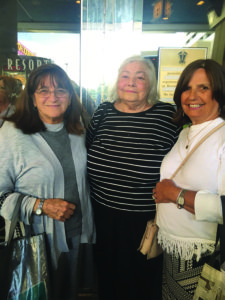
It had been three years since his last visit to DSN. Executive Director Sammy Sitt greeted him outside the building and led him into a room where 40 seniors were awaiting his visit. He was introduced by Rabbi Saul Kassin, who told the Chief Rabbi, “I want you to meet these seniors, because they are the people who built the Sephardic community in America.” The Chief Rabbi proceeded to speak words of Torah, and finished with a blessing. It was a great day.
Students and teachers at Magen David Yeshivah and The Yeshivah of Flatbush were honored to host the Rishon Lesiyon, Chief Rabbi of Israel. At Magen David, the children sat in awe as he spoke about the challenges that face them in the world today, and related that to what Abraham went through in the week’s parashah. At Yeshivah of Flatbush, students sang songs and pizmonim, then Chief Rabbi Yosef spoke and blessed them. It was a memorable morning for everyone. His words will resonate with all the children for years to come.
Hanukkah, the Festival of Lights, is a celebration of a great miracle—the victory of a small, beleaguered nation over her powerful oppressors. In lighting the menorah, we rejoice in the triumph of freedom over tyranny, goodness over evil, right over might, and light over darkness. Each year as we celebrate this holiday and kindle our menorahs, we add more light to the world.
Redemption, Against All Odds
In the time of King Antiochus, the fate of the Jewish people seemed grim, indeed. The vastly outnumbered Maccabees were up against the world’s most sophisticated military machine. They faced opposition from within, as well. Many of their brethren were meek, complacent, and all too willing to forsake their heritage and assimilate into the Hellenistic culture. It was the proverbial “darkest hour before the dawn.” Yet, sure enough, with the dawn came the miraculous, unprecedented victory. With G-d’s help and against all odds, the Maccabees were able to reclaim the Holy Land and rededicate the Holy Temple.
Throughout the ages, Hanukkah has signified the miraculous triumph of the weak over the strong, the pure over the impure and the righteous over the wicked. Whenever the integrity of the Jewish people is under siege, no matter how dark the night, the Hanukkah lights proclaim with confidence that the dawn of deliverance is near.
Spreading the Light
The menorah is lit either in the doorway, or in a front window, so that it can be seen outside in the street. It is not enough to bring light into our own homes, we must spread the light and warmth of Torah to the outer environment as well, as far as our influence can reach. Light the Menorah with the whole family! Use olive oil or candles large enough to burn until half an hour after nightfall.
Brighter and Brighter
Each night of Hanukkah, we add another light to the menorah, until all eight lamps shine on the eighth night. This signifies that in matters of holiness, we must always increase. With every added flame, we deepen our commitment to the values and traditions of our Jewish way of life.
Illuminating the Darkness
A great rabbi once remarked that “you cannot chase away darkness with a stick—you have to turn on the light.” The way to eliminate darkness—to rid the world of ignorance, negativity, hatred and greed—is to kindle the lights of knowledge, generosity, hope, and love.
Hanukkah reminds us that even in our darkest moments, the light of knowledge can shine brightly, and that redemption is at hand—if we will kindle just one more lamp.
Fun Customs
Hanukkah gelt for the kids! Reward your children and grandchildren with Hanukkah gelt for exemplary behavior such as diligence in their studies and acts of charity. Of course, this beautiful custom adds to the children’s happiness and festive spirit. Whether it’s money or chocolate it will put a smile on their little faces.
Play Dreidel! The dreidel is a four-sided spinning top, also called a s’vivon, in Hebrew. On each side is a Hebrew letter: Nun, Gimmel, Hay, and Shin. The letters stand for the phrase Nes Gadol Hayah Sham—a great miracle happened there. It is traditionally used to play a lively game.
Eat donuts and latkes and other foods fried in oil, to remember the miracle of the oil lasting for eight days!
Wishing you a Happy Hanukkah. May this Festival of Lights bring blessings upon you and all your loved ones for happiness and for health, peace and security in Israel, and usher in a better world for all of human kind.
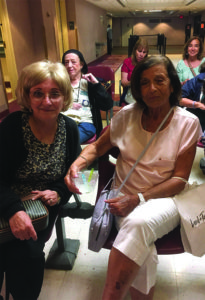
This past summer we took three one-day bus trips from Deal to Atlantic City. Each trip was to a different hotel— Resorts, Caesar’s and Tropicana—and all three days were terrific! On the bus, we raffled off prizes, told jokes, played Arabic music, and relaxed. In Atlantic City, we walked the beautiful boardwalk, saw an amazing military air show, and musical show, ate lunch, shopped and of course gambled. Everyone had a wonderful time.
ORT stands for Organization for Rehabilitation through Training. It is a network of vocational schools, which focus on teaching skills that are in demand in today’s world. There are ORT schools in Israel, New York and many other countries. ORT programs are guided by the spirit of tikkun olam (repairing the world and making it a better place). They believe in the saying, “If you give a man a fish, he eats for a day. If you teach him to fish, he eats for a lifetime.”
Many thanks to Joyce Dwek, for coordinating the fun fundraising trips. We couldn’t have had this experience without all of Joyce’s hard work, with the assistance of Sally Shamah, Louise Zalayet and bus helpers Norma Rezak, Joy Assoulin, and Frieda Lubin. The President of our chapter is Mrs. Freida Kassin. The ORT chapter was brought to our community by Estelle Marcus. We look forward to more great trips next summer.
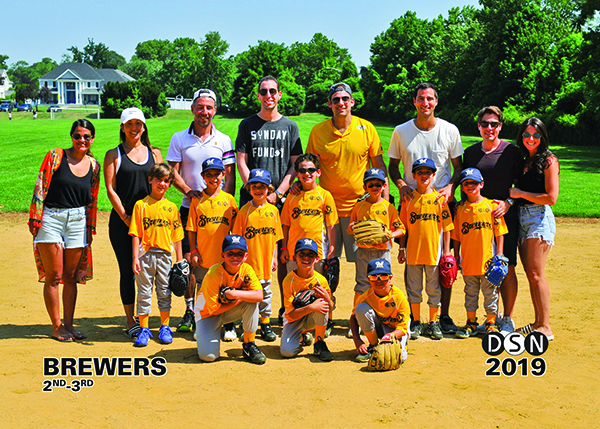
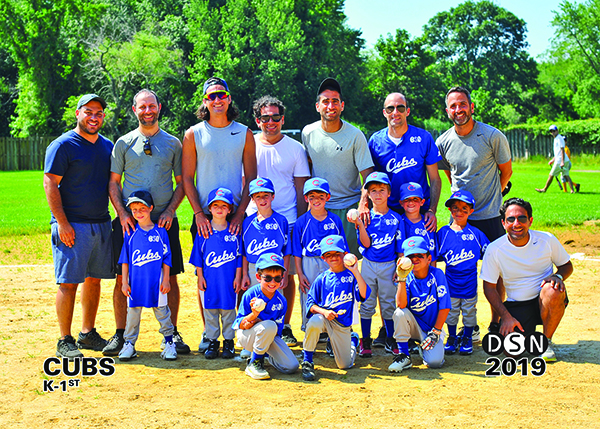
Baseball season may be over for this year, but the memories and friendships that DSN fostered in its Baseball League over this past sum-mer are everlasting.
Over 300 children, ranging in age from kindergarten to 5th grade, par-ticipated in a weekly Sunday baseball league. It was the largest participation rate to date, multiplying almost six times from the opening season in 2013!
Volunteer parent coach-es instructed the 32 teams each Sunday, spanning eight fields and attracting up to 1,000 spectators weekly. They taught the kids the rules and strategy of the game, with an emphasis on sportsmanship, camaraderie and team spirit.
Sol Chehebar, a DSN summer head coach, remarked, “DSN has transformed sports in the commu-nity and I am very grateful for the opportunity to coach my sons in the summer league. There is no better feeling than watching kids ages 5-10 learn, excel, and enjoy the game through the lens of a parent. It has become a highlight of the summer for the kids, parents and grandpar-ents! Thank you DSN, for your care and attention to the details. That’s what makes the league the greatest possible experience!
”The end of the season culmi-nates with an incredible trophy cer-emony, where the coaches give out awards, and the audience gets to enjoy a highlight reel from the season.
Jon Entel, DSN’s Director of Sports Leagues, can’t get over what a successful season it was. “This league is truly amazing. It’s an incredible community feeling with parent coaches teaching their chil-dren the game of baseball, amongst many life lessons during the season. May the DSN league be blessed to have many more years of growth and success!”
Teen boy making silly grimace - funny surprised face. Playful child isolated on white background. Emotional portrait of caucasian teenager looking at camera.
Imagine standing in line at a supermarket, at the next register you see a mom with a child of about nine years old. While unloading your groceries on the belt, you hear the child start to swear using a socially unacceptable word over and over again. You get uncomfortable and stare at the mom who is just standing there and continuing to empty her cart as if nothing is happening. She doesn’t stop him or reprimand him. You are probably thinking what kind of mother doesn’t stop and reprimand the child for speaking like that? What kind of mother allows her child to talk like that?
The answer: A mother with a child who has Tourette Syndrome (Tourette’s)—and she’s so embarrassed she wants the floor to swallow her. When you see children with special needs, your heart melts and if they walk funny, drool, or do anything that would normally be socially unacceptable, it’s acceptable, because it is justified by their special needs. A child/teen with Tourette Syndrome (which is one type of tic disorder) looks and acts normal until they have a tic. So, the parents and child are judged and embarrassed unless the people around them are educated and understand that he suffers from Tourette Syndrome.
Tourette Syndrome is a problem with the nervous system that causes the individual to make movements or sounds called tics, that they can’t control. It often starts in childhood and is usually more common in boys than girls. For most children, symptoms tend to improve by the end of adolescence with a small number becoming symptom free. The main symptom is tics, some are so mild they are not even noticeable, others happen often and are obvious. Stress, excitement, being sick, or tired can make them worse. There are two types of tics, motor tics involve movement, which include, but are not limited to eye blinking, facial grimacing, mouth twitching, head bobbing/jerking, shoulder shrugging, neck stretching, and arm jerking. Complex motor tics involve multiple muscle groups or combinations of movements and tend to be slower and more purposeful in appearance, for example hopping, twirling, and jumping. Vocal/phonics tics produce a sound. They include, but are not limited to sniffing, throat clearing, grunting, hooting, shouting, barking, yelping, coughing, repeating what someone else says, swearing. Complex vocal tics are words or phrases that may or may not be recognizable but that consistently occur out of context. In some cases, the words may be inappropriate, such as swear words, ethnic slurs, or other socially unacceptable words or phrases.
Before a tic occurs, (it has been explained that) the individual gets a sensation that can feel like a tingle or tension. The movement makes the sensation go away. They might be able to hold the tic back for a little while but can’t stop them from happening. Doctors aren’t sure why, but about half of people with Tourette’s also have symptoms of ADHD. (Attention Deficit Hyperactivity Disorder) and may have trouble paying attention, sitting still, and finishing tasks. They may have trouble focusing and paying attention because they are thinking about their tics and worrying about who may be noticing them. Sometimes anxiety, learning disabilities, such as dyslexia and OCD (Obsessive Compulsive Disorder, like washing hands repeatedly) are effects of Tourette’s, as well.
Children/teens experiencing Tourette’s may be frightened or embarrassed by the disruptive nature of their tics at school, in the community, and with extended family. When Tourette’s is not understood by teachers, peers, family or people in the community, the child/teen with Tourette’s may feel rejected or ridiculed, and the impact it could have is devastating. The teacher or family member needs to prepare the classmates, peers, and other family members with appropriate information about this condition, so they will feel comfortable with the child. This can prevent bullying and rejection before it starts.
People who are not familiar with the condition may believe that the individual is deliberately trying to attract attention or be disruptive. Fortunately, there is a lot that everyone around the individual can do to ensure that he/she can succeed in school or in life in general and have a healthy social life.
Get a thorough evaluation of your child. It will provide information about exactly how Tourette Syndrome (and any other conditions your child may have), will impact his/her life. You will get a report with specifics that you can share with the school, to help the teachers and everyone else that is in contact with your child, understand his/her needs. You must take a personalized approach, because each individual is unique; Tourette’s does not affect everyone the same way. Different strategies work for different people. Use the results of the evaluation, along with your knowledge of your child, to develop a plan that could work for him/her.
While the tics associated with Tourette’s are involuntary, a few treatment options do exist. In some cases, vocal tics can be lessened with medication. Getting proper treatment for other conditions your child may have such as ADHD, OCD, or even depression can help reduce tics. Be sure to discuss any medications prescribed for these conditions with your child’s doctor, as some may increase tics.
There are also behavioral-based approaches that may help reduce tics. Behavioral approaches may look for situations that trigger or increase tics, so that the child/teen can find new ways to cope with or avoid the triggers. Discipline and punishment will not work. The individual cannot stop a tic once the sensation begins. Tics are often described as an action that must be completed, like a sneeze. While some may be able to delay a tic for a short while, they cannot stop it, and unfortunately stress will increase tics in some people. Punishing someone for having a tic may lead to an increase in tics.
Encourage participation in extracurricular activities. Sports can provide more physical activity, which has shown to help decrease tics in some children and teens. It can also provide more opportunities to create friendships and work on social skills, which can be challenging for children/teens with Tourette’s.
Often the hardest part of living with Tourette Syndrome or living with someone diagnosed with it, is dealing with the embarrassment or frustration of having tics that can’t be controlled, and fitting in socially can be very hard for the child/teen. So, if you happen to be somewhere and notice a child with a tic, don’t stare or comment! Either look away as if you didn’t notice anything, or try and comfort the parent with encouraging words.
Young people are spending more time online than ever before, and this trend will not be reversing. A recent survey states that 95% of teenagers report owning a smartphone (or at least having access to one), and that 45% of teenagers are online, on a near-constant basis. Adolescents have limitless options when online, making it important for parents to teach them how to be savvy about their online presence.
SAFE knows firsthand about the need to educate students on the importance of Internet safety and the appropriate use of cell phones, social media platforms, and other online trends. Project SAFE’s classroom curriculum currently includes topics and lesson plans focused on staying safe online. Students in our classrooms are leaning lessons, and tackling tough questions, such as:
Q: How much and when is it appropriate to share personal information online? Q: Do colleges and employers really Google you before they make a decision? Q: What length of screen time is too much? Q: How do you manage friend requests and online communication with potential strangers?
These types of questions and concerns continue to evolve, as technology trends and platforms become omnipresent in our children’s live. Project SAFE works to stay up-to-date on these trends and provide current, clear, and relatable information for our students. These lessons work best when they are reaffirmed at home, therefore, SAFE encourages parents to discuss these important Internet realities and safety tips with their children:
Not everyone is who they say they are online. And sometimes the people you know in real life don’t behave the same way online, so it is best to remain in control of your personal information by not distributing it. When people want to get to know you using false identities online, it is often called a sockpuppet profile, or catfishing. Both center on hiding the person’s real identity in order to bully or lure others into inappropriate texting, emotional and financial scams, or to find out personal information.
Financial information should never be shared online with others. When online, as a general rule, individuals should only purchase products from reputable and verified companies, and financial information should never be distributed via social media, messaging platforms, or other one-on-one forms of communication. Friends don’t ask online for your credit card information; they’ll call you if they really need it. If you find yourself questioning if a company or online interaction is a scam—it probably is—and communication should stop immediately.
Online is permanent. Yes, there are companies that specialize in Internet scrubbing or disrupting search engine results, but they cost thousands of dollars and aren’t always effective. Even if an app claims to be secure, someone can still take a screenshot of it. Then they can show it to someone else. There is no real assurance that others will not see it (and potentially store it). A rule of thumb for social media platforms: if you are not comfortable with a post or remaining online indefinitely, you should not put it up at all.
Discuss privacy options and parental control. The majority of social media platforms offer several forms of privacy and profile access. All parents should sit with their children and review the level of access their children’s profiles permit—is it just for friends, or is it for friends of friends, and other individuals? Together, you and your children can find permission levels that you are comfortable with and you can help them understand why it is important to have a higher level of control over their information and pictures.
Limit screen time. Setting screen time limits is a challenging, yet important aspect of Internet safety (especially with young children). There is a wide range of thought available regarding the appropriate amount of time pre-teens and young adults should spend online, and it is a decision that should be made on an individual basis, based on factors like age, interests, performance in school, social activities, etc. With that being said, maintaining a time limit and sense of boundary helps reinforce the idea that technology, while a wonderful privilege and increasing necessity in everyday life, must be handled with the proper degree of restraint, caution and wisdom.
SAFE believes that an open, honest and transparent dialogue remains key in establishing appropriate measures of Internet and technological safety in one’s household. While it is important to address these very real concerns with your children, it is also important to acknowledge the benefits, joys, and privileges of using the Internet. In emphasizing both the pros and cons of technology, parents are more likely to come across as genuine and authentic in their concerns for their children.
Social network and new media web safety and Internet security concept 3d illustration.
One important recommendation is for parents and caregivers to familiarize themselves with the platforms their children are using, as this will help increase their overall knowledge of the risks and rewards their children are facing.
Allow your children to share their motivations and wishes for Internet and social media usage, and make the conversation an open and transparent dialogue.
It is important to have these conversations, because children will inevitably learn how to like, comment, and swipe up—somewhere—it’s better they learn from their parents and trusted adults.
The terrorist strikes perpetrated on September 11, 2001 impacted all New Yorkers. They were particularly painful for Brooklyn’s Jewish Syrian community, because that morning, Eli Chalouh A”H, a young Syrian Jew, woke up, went to work, and never returned. He was working at the NYS Department of Taxation and Finance, in the World Trade Center—he was only 23 years old. Eli left behind his parents, siblings, and a legacy of kindness, dedication, and perseverance.
Eli graduated from Magen David Yeshivah High School in 1996. Associate Principal Esther Tokater, along with a number of Eli’s classmates, many of whom are parents of current MDY students, organized a hesed event in his honor, on the 18th anniversary of the attacks.
The class of 96 invited representatives from many community organizations that are near and dear to their hearts. They, and current MDY students, committed to fulfilling Eli’s legacy of kindness by doing hesed projects for the organizations, in his name. Alumnus Albert Nigri, father of freshman Rosie Nigri, kicked off the event with an emotional speech in which he shared high school memories of Eli. He said Eli treated others with kindness and was always willing to help his classmates. Albert recalled Eli’s arrival from Syria, at the age of 14, and the language and cultural barriers he overcame to succeed in the United States. Eli seemed to be living the American dream, until his life was tragically cut short.
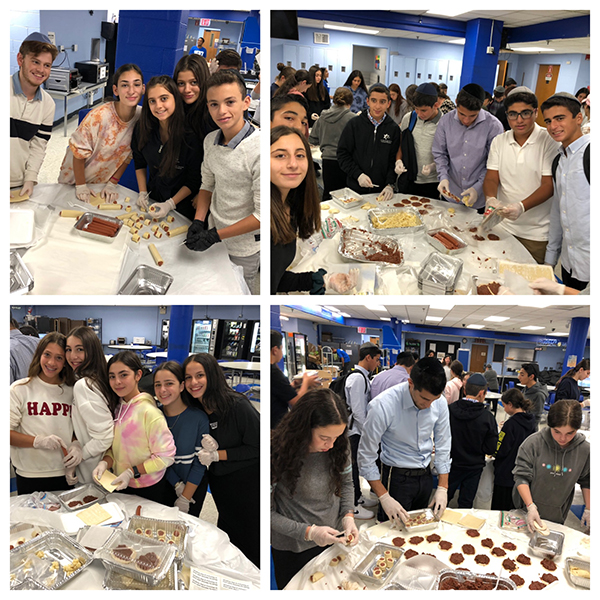
After Mr. Nigri’s speech, the audience was inspired to participate in hesed activities. Raquel Haber, mother of MDY senior Gabriel Haber, Jamie Waingort, (my mother) and mother of freshman Emily, and Marcy Franco, mother of senior Morris Franco organized a group to cook for the SBH Food Pantry. The crew prepared and packaged mazza, which was delivered to Sephardic Bikur Holim, that evening.
Albert Salama, father of freshman Ninette and junior Jacques, introduced students to Bonei Olam, an organization that helps couples achieve their dream of parenthood. Students were so moved by the work that the organization does, they committed to do mitzvot in honor of families faced with fertility challenges. They wrote notes to the families, describing the commitment they were taking on in their honor, and telling them that they’re praying for them to achieve their dreams.
Albert Nigri and Alan Nasar, father of sophomore Sarah, and senior Joel, helped students put together care packages to be distributed to Hatzalah volunteers. The packages included snacks and letters of encouragement and appreciation for our heroic, first responders.
Morris Cattan, father of junior Diane Cattan, helped students design sweatshirts for the orphans of Bet Elazraki, in Israel. Students drew original designs which Mr. Cattan will turn into actual sweatshirts, and personally deliver to the orphanage in Israel this spring. Richie Chalme, father of sophomore Jamie and senior Robyn, demonstrated the important role music plays in healing, explaining that he uses music when he visits the elderly and the sick.
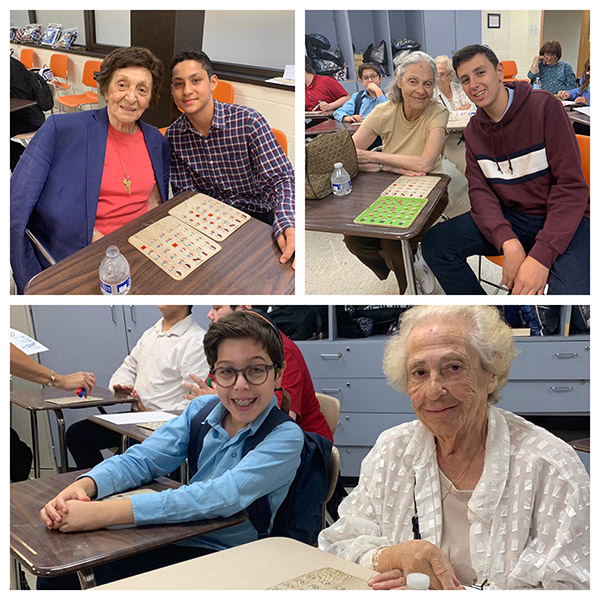
Sally Smouha, mother of junior Marc and freshman Abraham, and Sally Franco, mother of sophomore Allegra, invited a number of community seniors citizens to the event. They were delighted to go head-to-head with the students in a few intense rounds of Bingo.
In addition, MDY was honored to host members of the Chalouh family, including Eli’s sister Sarah, his aunt, and nephew. Eli’s nephew remarked that entering a school that he was not familiar with, seeing dozens of students he never encountered, doing hesed in memory of an uncle he never met, was a truly remarkable feeling. He was excited to meet his uncle’s classmates, who could share stories about him.
Walking around the building, and seeing classroom upon classroom filled with students doing hesed, was truly inspiring and certainly elevated the neshama (soul) of Eli Chalouh A”H.
Doing hesed is a beautiful way to honor someone you love and ensure his/her legacy will endure for years to come.
It was a night to remember for PROPEL, as the nonprofit organization celebrated its accomplishments on September 23rd at the Moise Safra Community Center (MSCC) in Manhattan.
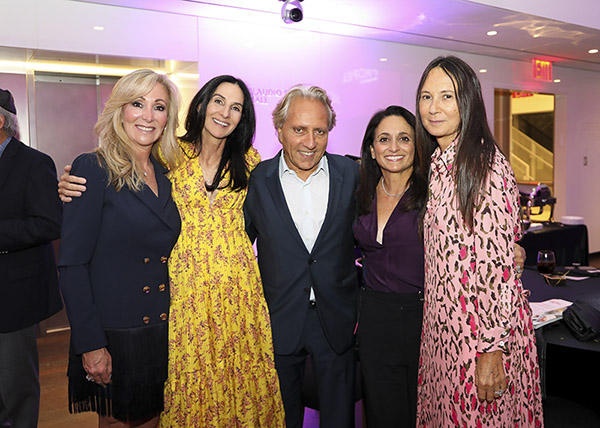
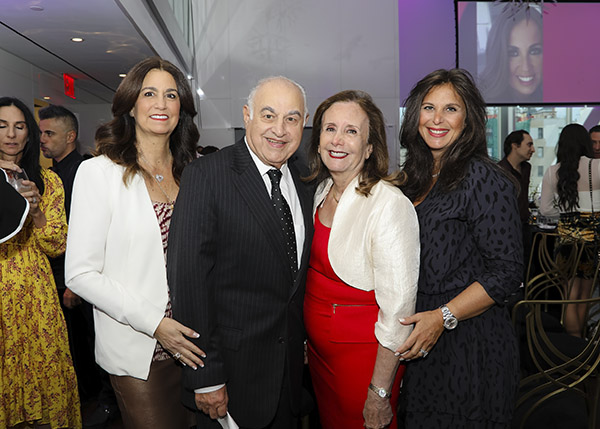
Approximately 150 guests— including community leaders and PROPEL board members, professionals and clients—gathered in the beautiful ballroom of MSCC to honor the wonderful women who inspired the PROPEL funds and schools Joyce Silverman, an interior decorator extraordinaire; and Cookie Cohen, an inspiring young entrepreneur.
Harry Adjmi, our community’s well-known emcee at many charity events, opened the event with a warm welcome. Then a video montage portraying the accomplishments of PROPEL graduates and events during the past year was featured on large screens.
PROPEL invests in coaching and guiding women to be the best they can be, by finding suitable careers that generate income. PROPEL focuses on careers that make sense and honor the traditional values of our community. Women are heroines—they are balancing professional and family life successfully.
The evening was beautifully organized to recognize the co-founders of PROPEL Rebecca Harary, in tribute to her mother Joyce Salame (in conjunction with proud son-in-law Marshall Aronow) and Ezra Ashkenazi, in tribute to his wife Sharyn. Rebecca and Ezra described how PROPEL was formed and how the organization has grown over the last four years.
Joyce Salame and Sharyn Ashkenazi, who inspired the PROPEL Leadership and Empowerment Funds, respectively, were each presented with an artistic rendering of Petihat Parnassa, the prayer for Sustenance, we recite on the High Holidays. That’s what PROPEL does—it helps families by guiding women into the workforce to provide a much needed second income.
PROPEL proudly honored the women that inspired some of the PROPEL schools: Rachel Khafif presented an award to her mother Robin Braka (School of Art); Ivette Dabah presented an award to her daughter-in-law Barbara Dabah (School of Technology); Freda Haddad Sutton presented awards to her daughter-in-laws Sharon Haddad and Nellie Haddad (School of Wellness); and Jimmy Haber was presented an award in memory of his wife Amy Haber A”H (School of Education). Each honoree was presented a plaque which contained the prayer Eshet Hayil, recited every Friday night. The prayer extols the virtues of women and enumerates both the familial and professional roles that women embody.
Sarah Gindi, longtime friend of our honoree Joyce Silverman (The Illumination Awardee) spoke eloquently about Joyce’s talents as an interior designer, as well as her benevolence. Joyce created The Nest Fund, which donates gently used furniture to those less fortunate.
Cookie Cohen, a role model for her generation, told the story of CocoBox, a successful start-up business supplying recipes with creative ingredients to a growing clientele. Her sister-in-law Sonia Cohen exquisitely elaborated on Cookie’s tremendous accomplishments and presented Cookie with The Young Leadership Award.
Probably the moment of the evening which allowed the guests to understand the instrumental work of PROPEL was when graduate, Frieda Schweky passionately told her story from the podium. Frieda is now a photographer and supports her family for the moment, as her husband builds his business. She acknowledged that none of this could have been done without PROPEL believing and investing in her. We are very proud of Frieda!
PROPEL is very thankful for a dedicated Board of Directors led by Co-Presidents Haim Dabah and Jacqueline Harary and Vice Presidents Michael Haddad and Gayle Krost, a committed professional team, and, of course, the clients who make the organization proud every day. PROPEL is extremely appreciative of all the community members who support this organization, and all the donations pledged at the event. The organization offers financial scholarships to its clients to cover part of the cost for certification courses and exemplifies “smart giving.”
By investing in women, each donation evolves into a salary which can help support a family, and ease the financial burden which is a reality in today’s world. As the Rambam proclaims, teaching a person a trade is one of the highest forms of tzedakah. PROPEL is committed to the financial success and future of the community by inspiring women to feel confident in careers of their choice.
PROPEL helps women discover their passion, profession and earning potential. PROPEL invests in family—one woman at a time!
If you are interested in a career, please reach out to PROPEL. We can help you fulfill your professional goal. Call 646-494-0822 or email info@thepropelnetwork.org.
Follow PROPEL on Instagram @PropelNetwork to find out information about upcoming programs and events.
In 20 short years, Israel, the Start Up Nation, is on the road to becoming Israel, the Accessible Start Up Nation.
Thanks to two Israeli presidents, a determined IDF Lieutenant-Colonel paralyzed in a Cobra helicopter crash, the Access Israel organization, and the newly formed Friends of Access Israel (FAISR), the world now looks to Israel as a model in accessibility, services and sensitivity to people with disabilities.
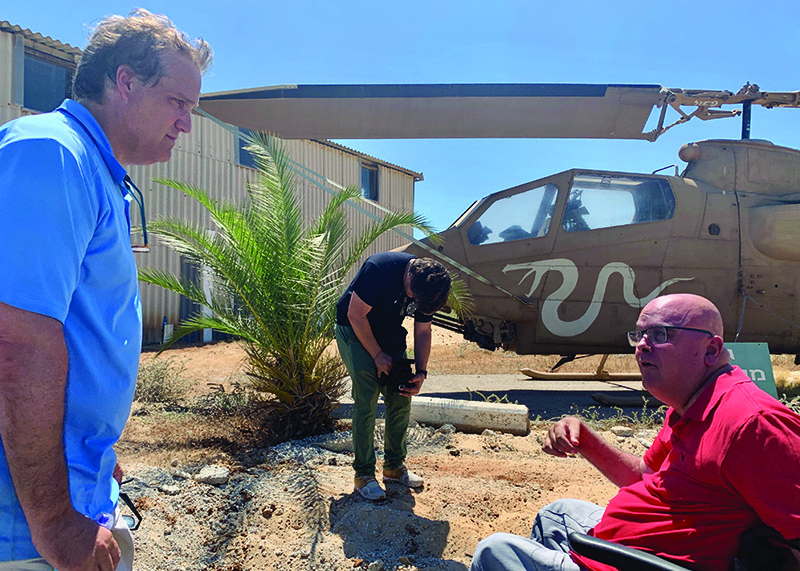
When Yuval Wagner was a child, he and his siblings helped take care of a father who used a wheelchair. They often carried him, as Israel was not accessible at the time. Wagner grew up and served as an Israel Air Force combat pilot. In 1987, at the age of 22, he and his squad were on a training exercise. The helicopter’s rotor malfunctioned, and all on board were killed—except for Wagner—he became a person with quadriplegia.
Following a long rehabilitation, Wagner returned to the Air Force, completed his degree in business management, got married and started a family. In the late 1990’s, the Wagners were excited to go on a vacation in the north of Israel. His wife made calls to make certain the accommodations were accessible. When Wagner arrived, he learned that the bathroom was not accessible.
He was frustrated, angry and determined. In 1999, he dashed off a letter to Israel’s President at the time, Ezer Weizman, a former combat pilot, commander of the Israeli Air Force and Minister of Defense. Weizman, the 7th president of Israel, invited Wagner to meet in person, where he apologized for Israel’s lack of accessibility, ordered him to start an NGO (non-governmental organization) to provide accessibility for the disabled and elderly, and invited Wagner to attend an official opening of the soon-to-be new organization in the main hall of the president’s residence.
The new organization would be known as Access Israel. The organization continues to grow, evolve, and lead the way for accessibility in Israel and around the world.
“We are the only Israeli organization that focuses on accessibility and inclusion—not only for people in wheelchairs, not only for people who are blind or who have hearing impairments—but for all kinds of disabilities and in all fields of life,” reported Wagner. Access Israel strives to integrate people with disabilities into all parts of Israeli society by focusing on dignity, equal rights, and maximum independence.
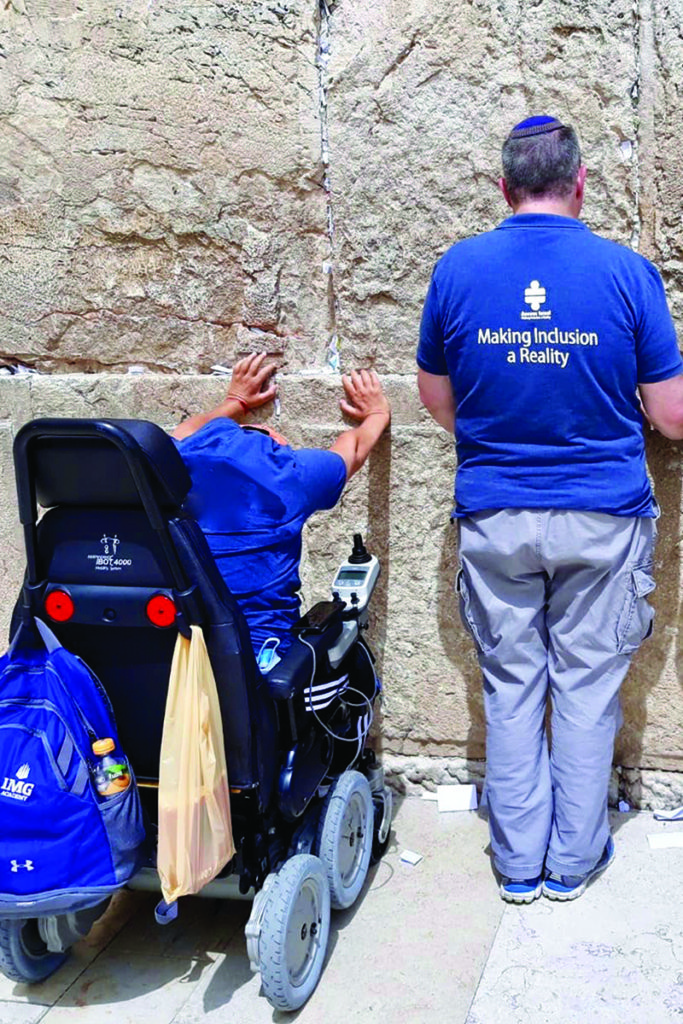
The organization has dramatically improved accessibility for thousands of Israelis, by promoting accessible environments, increasing awareness, and helping draft laws and regulations. Access Israel has helped make it possible for wheelchair users to access such tourist attractions as the Old City of Jerusalem and the Western Wall.
Alan T. Brown, the Director of Public Impact for the Reeve Foundation in the United States and a person with quadriplegia, can attest to Jerusalem and Israel’s efforts to increase accessibility. Several years ago, Brown met Access Israel CEO Michal Rimon, expressed his desire to visit Israel, and shared concerns about lack of accessibility. Rimon enthusiastically invited Brown to Israel where he experienced accessibility first hand. “Something like this has to be done in America—something that is proactive and aggressive in attaining accessibility for all. I even went on the tour under the Kotel walls in a wheelchair!”
Brown experienced Israel’s advances in both physical accessibility and in leading the way in changing attitudes towards people with disabilities. “I am amazed at how Israel is using more than ramps to include the disabled. They are also doing it through corporate sensitivity training.”
Brown contacted his lifelong friend, Jamie Lassner and said, “In Israel they do it with much more dignity and we need to bring that worldwide. Jamie, are you in?” Brown and Lassner have been instrumental in starting Friends of Access Israel, which will help share the work of Access Israel more widely, and will help Wagner realize his goal of having the world view Israel as the Accessible Startup Nation.
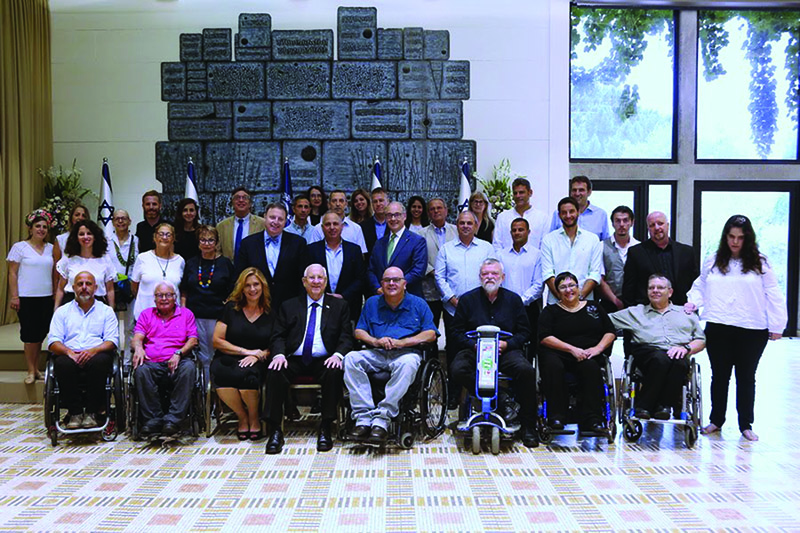
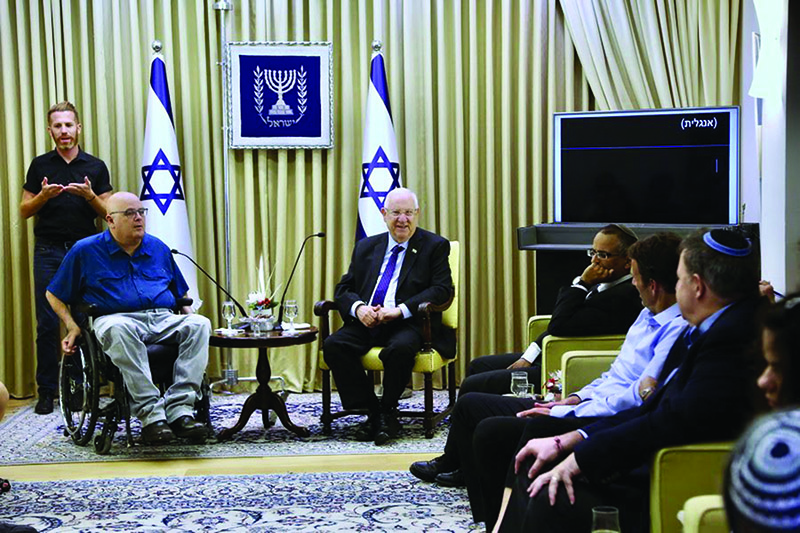
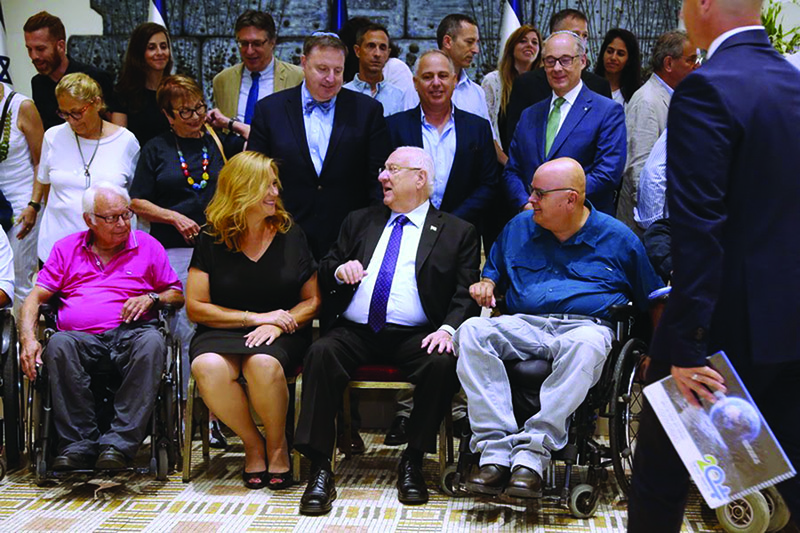
A recent gathering in Jerusalem celebrated the 20th anniversary of Access Israel. Israel’s President Reuven Rivlin, members of Knesset, Access Israel staff and supporters, and leaders of the newly created Friends of Access Israel celebrated the organization’s strides in services, technology, education and advocacy on behalf of people with disabilities.
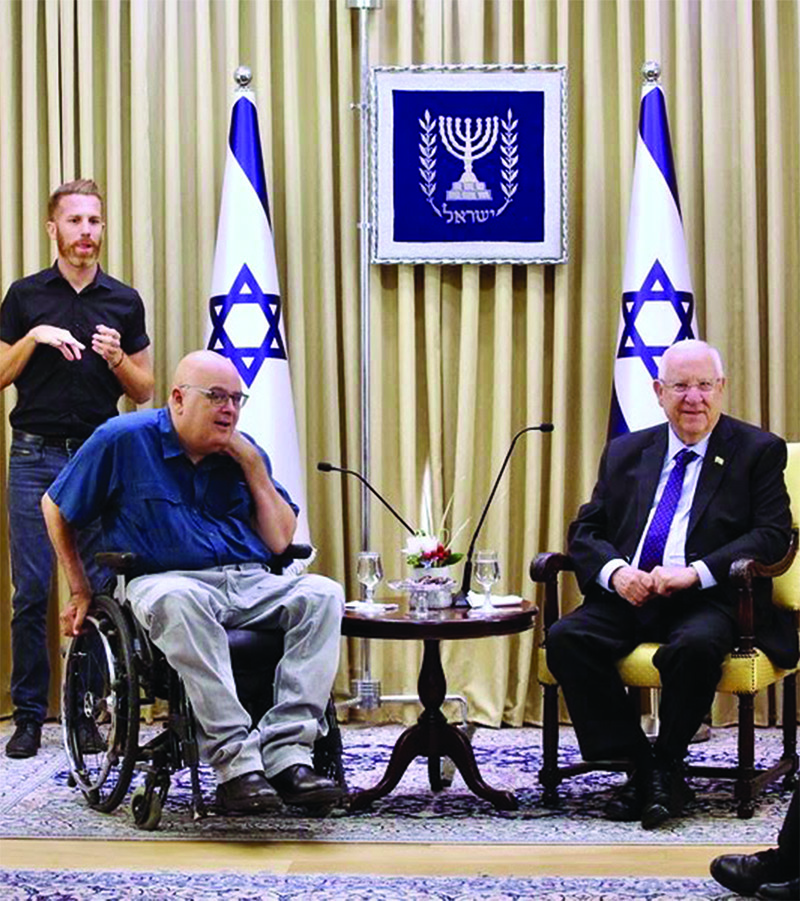
Rivlin congratulated Wagner and Access Israel for their “tenacity, futuristic vision, and drive for making Israel one of the most accessible countries in the world.” He acknowledged that the organization is improving the lives of people worldwide and spoke personally about how his late wife, who became disabled later in life, and benefitted from the work of Access Israel.
Michal Rimon addressed the gathering, “When I joined Access Israel 12 years ago, we were a small organization with a big goal—to break through barriers and enable people with disabilities to dream and fulfil their dreams.” Rimon, Wagner, and CFO Rani Benjamini have consulted internationally on accessibility and have shared the work of Access Israel at conferences in Russia, Spain, Latvia, Austria, and Ecuador. It is one of four organizations which advise the United Nations Convention on the Rights of Persons with Disabilities (CRDP).
Rimon is excited to collaborate with FAISR and its Executive Director, Jamie Lassner. This new organization has already launched a well-attended sensitivity training dinner at NYU, cohosted by Realize Israel. They are planning such programs as Accessibility Accelerating Sensitivity Training Trips to several North American cities, Accessible Group Tours of Israel, Expeditions and The FAISR Accessibility Accelerator Tech Conference. Through these initiatives, organization leaders will travel to communities in the US to increase awareness of accessibility and inclusion, they will offer accessible Israel trips, climb Mount Kilimanjaro and host a conference which promotes accessible Israeli technologies.
Jamie Lassner served for several years as Director of Student Life at Magen David Yeshivah Elementary School. He learned of the work of Access Israel through Brown and through a visit to Israel last summer.
“I was amazed by the global difference they were making with their proactive strategies and programs. They had no global boundaries and a robust all-inclusive mission to gain equality and access for all disabled and elderly persons,” said Lassner who then decided to create FAISR. “As they say, the rest is history!” Lassner and board members Alan Brown and Abraham Eisenstat, friends from their many years, credit their late fathers for inspiring their work with FAISR. “They always made sure that all individuals coming into their community felt welcome.”
Rimon looks forward to collaborating with her American counterparts. “We also can’t ignore a sense of Israeli pride as we serve as an example to the whole world and unite on a common global issue. We have already learned a lot from our FAISR partners and find ourselves looking towards the future with great excitement at the vital things we will accomplish together.”
Wagner added, “L’Chaim and Ya’alah” (onward) on our joint global goal to change the quality of life for the biggest minority of the world—the disabled. Together we are going to do amazing things for accessibility and inclusion, both in Israel and America.”
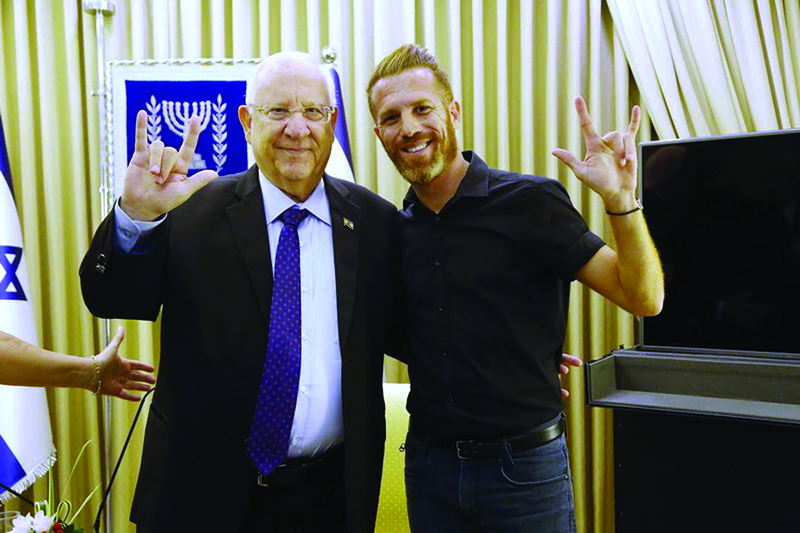
At the 20th Anniversary gathering, FAISR received a welcome endorsement from President Rivlin. “Our friends from abroad, from the United States—Welcome! We appreciate very much what you are doing, because this is a humanitarian need for everyone to respect human beings as human beings, not only as an Israeli or American, Brit, or Russian. We appreciate your cooperation and partnership. G-d Bless You!”
FAISR is a non-profit United States based 501-3C organization. You can follow then on Instagram: @f.Aisr, or on facebook: faisr.Org. For more info, email info@faisr.Org
Recently, about 50 young mothers gathered at the home of Joyce Ashkenazi for a SAFE sponsored parenting workshop. Guests were welcomed with a coffee bar by Brooklyn Baristas and were served delicious, healthy appetizers, as they sat down to learn about the emotional connections they build with their children each day. The topic, Conscious Parenting, was selected by SAFE’s Conscious Parenting Committee because building strong, healthy relationships with our children is one of the best ways to prevent them from adopting risky behaviors as they grow.
Corie Adjmi, chair of the committee, opened the discussion by reminding the crowd about their previous SAFE Talk, which was held at the home of Lorayne and Gabriel Shehebar. Corie then handed the discussion over to Dr. Tamar Perlman, a specialist in child psychology, who engaged the group with her warmth, sincerity, and tremendous insight into building meaningful relationships with our children. She shared her expertise on healthy family attachments and the essential nature of the bond between a mother and her child. When that attachment is strong, the child feels loved and supported, and their mother is the first person they want to share their successes with and the first person they go to for help fixing mistakes. The more trust that is built, the more our children let us into their lives, the more we can guide them in the right direction and the more self-esteem they feel.
Some of the other important takeaways from the workshop included suggestions that we adopt a curiosity about our children and their inner world; listening more and talking less; being empathic while still setting boundaries and maintaining discipline; and grounding our children in positive words and experiences.
Dr. Perlman noted that just as a mother would instinctively respond to her baby smiling at her by smiling back, our young children need and gravitate toward that same type of responsiveness. These gestures of love build self-esteem and the confidence to go out into the world and make smart decisions. The greatest way for us to create bonds and have impact on our children is by maintaining empathy and interest, and letting them know that their emotional wants and needs always matter to us. This is how we develop the trusting relationships that last a lifetime.
With all of the mothers in the room striving to be perfect for their children, one of the biggest points Dr. Perlman made is that research shows that parents don’t have to be perfect all the time for kids to grow up healthy. No one—parent, spouse, family, or friend—can always meet every need of their loved ones, but we all feel the pressure to do so. As long as moms are connecting and supporting and encouraging their children regularly, as they grow, children will know that their mothers are always there when they need them. Even if moms have to pay attention to other children or loved ones for just a moment! It is the consistent responses that are the key to forming healthy attachments with our children and key for children to know that they don’t have to be anxious; even if mom is helping a sibling, as soon as she’s free she’ll be there for you. It sends the message that the child is not alone with life’s demands. This workshop, and the many others to come, are about SAFE helping parents broaden their skills so everyone has the tools they need to provide the best foundation for their families.
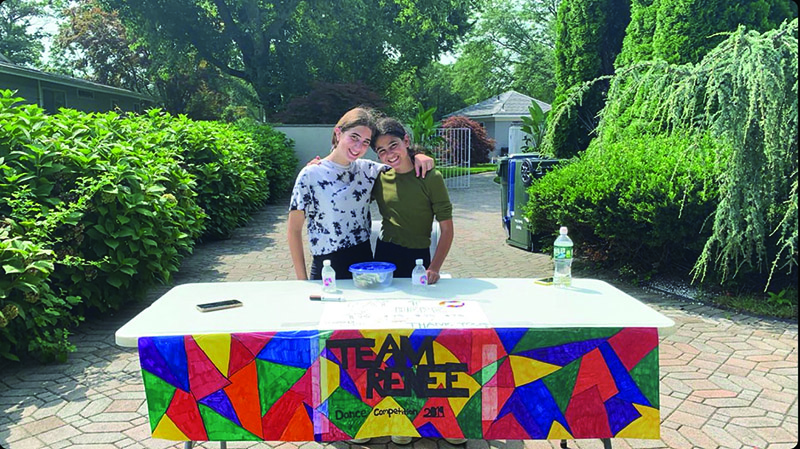
Two 13 year old girls, Rachel Fallas and Samantha Sutton, recently organized a dance competition in honor of their dear friend and classmate, Renee Dayan (Rina Chaya Bat Leah), who has been in the hospital for the past eight months.
They came up with the idea for the competition after they saw their friend Jamie Chalme selling sweatshirts that said “Team Renee,” with a prayer for her healing.
“We thought, we should do something in her honor, too, because we love her. Renee loved to dance, so we thought a dance competition would be very apropos,” said Samantha.
Everyone they told about the contest wanted to participate, including community dance instructors, who were happy to choreograph routines for the girls. Teams were made (8 teams of 8 to 10 girls), and everyone was anxious to learn their routines.
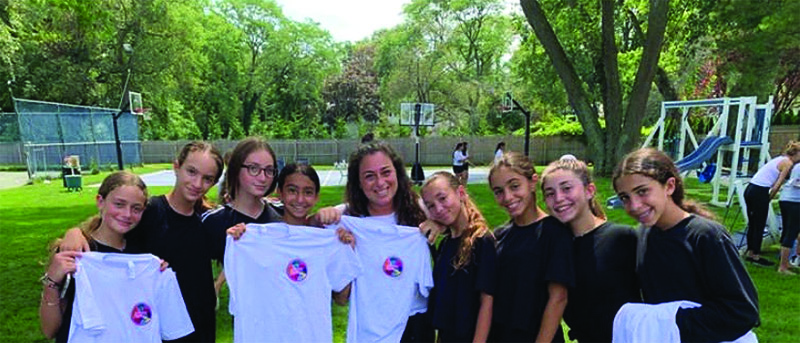
Before the day of the event, Rachel and Samantha spent all their time making plans. They decided to donate all proceeds to the Special Children’s Center in honor of Renee’s refuah shelema. They made sure there would be water bottles, sweatshirts, and t-shirts, all with the Team Renee logo, and took care of all the other details—little and big.
The Sunday morning of the event, seventy 7th and 8th grade girls gathered outside Rachel’s house to begin learning their dances. There were enough instructors involved for each team to have their own.
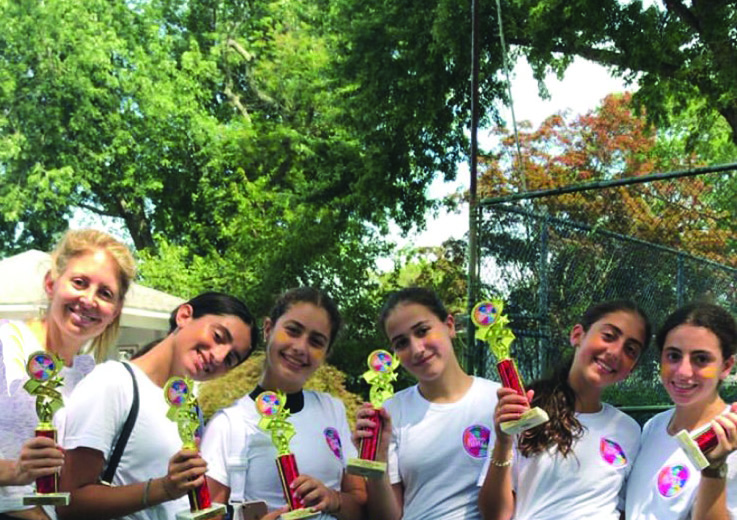
The girls practiced outdoors on the lawn. Everywhere you looked there were girls laughing, dancing, and having fun, and they picked up the moves effortlessly. Then, as if in the blink of an eye, it was time for the competition. The girls performed all of their dance steps flawlessly in front of three judges. Once all the teams had finished, it was up to the judges to deliberate and announce a winner, which wasn’t an easy task. Once the scores were tallied, Renee Marcus’ and Michelle Dweck’s team were the winners. Each of the girls took home a trophy with the Team Renee logo.
The dancing was wonderful, but the highlight of the day was when Lauren Dayan, Renee’s mother, video chatted with Renee, so she was able to see how much she was loved. The smile on her face was priceless!
Renee’s mother was so happy, she thanked all the girls for doing this tremendous mitzvah for her daughter.
Rachel and Samantha would like to thank all of the dance teachers: Paula and Linda Tawil, Helen Shalam, Shula Mann, Renee Marcus, Michelle Dweck, Lauren Lahar, and Margo Dayan. The day couldn’t have happened without their help.
“This was the best day of the summer! I feel so proud of myself and hope we can do this annually,” said a very joyous Rachel, shortly after the event, when she realized that the day she and Samantha had worked so hard for was a great success. Thank you to everyone who joined them on that magical day!
It was eye-opening reading a man’s point of view about how it feels to get married later in life, in last month’s IMAGE article “Change of Heart.” It prompted me to write about how it felt for me, as a woman, to get married later in life as well. We stand to learn so much from hearing other people’s tales, and the lessons they’ve learned. The irony is all along I thought that women suffered more than men, and that men had it so much easier!
When my friends and I were 16, my best friend got engaged. At 16, we went from first dates, to boyfriends, to engagements. By the time graduation came around, seven girls had gotten married! It was amazing! I didn’t see that for myself, because I honestly didn’t feel mature enough for marriage—but I had time.
At 19, the dates I was going on were not exactly what I thought they would be. The guys weren’t the coolest or best looking, but they were nice. Then, I met a really great guy, and we started dating. He took me to a lot of fun places. We went out for dinners and on double dates.
We were having a great time, so I was surprised when my mother said, “He’s not really right for you.” I think she thought he wasn’t from a family that she wanted for me. I thought he was a good guy and his parents seemed nice, but she didn’t approve and he could feel it. After 6 months we broke up. I was still sure the right guy would come along.
So, I continued to date. That summer was all about parties, the Casino, and getting dressed up. It was also about regrouping. Since my closest friends had gotten married, I needed to find another group to hang out with, and so I did. With a smile on my face and a great attitude, I returned to the social scene—but sometimes it was exhausting!
All I could remember was my family—cousins, aunts, and uncles—always asking, “are you dating?” How are the Center trips and the Casino?” “Did you meet anyone?” It was too much. I wanted to tell them I was dating someone, just to get them off my back. When I did say I was seeing someone, they’d want to know if it was serious, so I started to date guys longer than I really wanted to, just because I didn’t want to be alone, and I didn’t want to answer all the questions my relatives and friends asked.
When I was 20, a guy friend of mine told me that when a girl matures—when she’s around 26—she looks her best. This gave me a whole new perspective. I started looking forward to getting older, instead of worrying about it. It turns out, he was right! When I turned 26, the guys who were interested in me were the best guys from the best families. So, I dated a lot and had quite a few boyfriends, but what’s the point, if I didn’t want to marry any of them? Slowly, I got older. When I turned 32, I was still single.
What in the world happened? How did I slip through the cracks, I wondered. I was pretty, smart, and from a nice family. Why was I going to the birthday parties and bar mitzvahs of my friends’ kids?
The year I met my husband, I was 36. Ten people—literally—not exaggerating—suggested that I go out with him. They all told him that he should go out with me, as well. We weren’t interested, because we had gone on a date when I was 23, and it was not a good one. Luckily, Hashem had other plans.
One Saturday night, he came over to talk to me at a party. I actually walked away, to go back to my friends, but he watched me walk away, clearly he wanted to talk to me, so I went back to talk to him. We liked each other, dated for two months, then got engaged. No one could believe, how in the blink of an eye, it just happened. No issues, no stories, it just worked. I wish it would be that quick and easy for all singles. I spent all those years going to parties to meet people. Would you believe he never went to any parties, except for the one where we met.
The bottom line is this—there’s a feeling a girl gets as she ages— it’s the fear of missing the boat, of her biological clock ticking. She starts to wonder if there are any good guys left and if she should freeze her eggs. She wonders, why me? Any guy would be lucky to get me.
I know so many of you, out there, have similar feelings. I wish everyone finds the happiness that I have found. But id like to zero in on a specific point—I didn’t settle, but I became more open minded. When we met, my husband and I were on different religious levels. Perhaps when I was younger, that would have been a deal breaker. Being older, I was able to see that he’s a great man and we’re wonderful together. Religious levels didn’t matter at that point. Be open minded.
You never know where you’ll meet him or who he is, so try to remain positive. I know first hand how hard that is. However, your chances of meeting someone when you are down on yourself are very slim. I focused on who I was, and what I had to offer. I believed in myself, completely.
There were times I wondered if I missed something. I went to classes and received blessings from rabbis. Finally, I decided to put my fate in G-d’s hands. I believed wholeheartedly that there was no one else I could depend on—not my parents, my friends, or a matchmaker. I prayed often and with all my heart. I’m not quite sure if there’s a formula for meeting the right person and getting married, but I do know that somewhere along the line I broke the wall that stood between me and getting married.
Prayer is not something public. It’s a connection you have and a belief. It helps to know that every prayer is heard and answered. We just have to believe in it. You need to believe in something, why not believe that if you pray, and ask G-d to bring you the right man, it will happen?