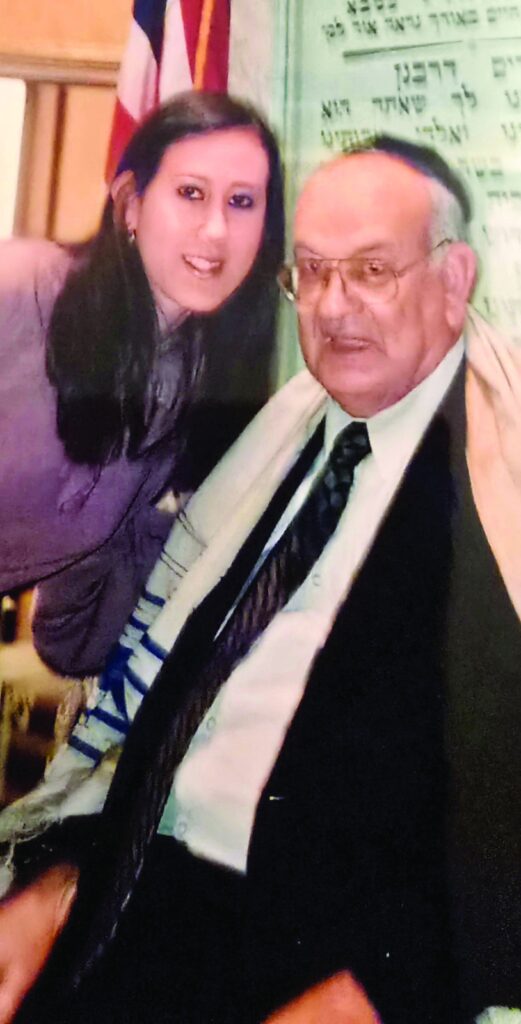
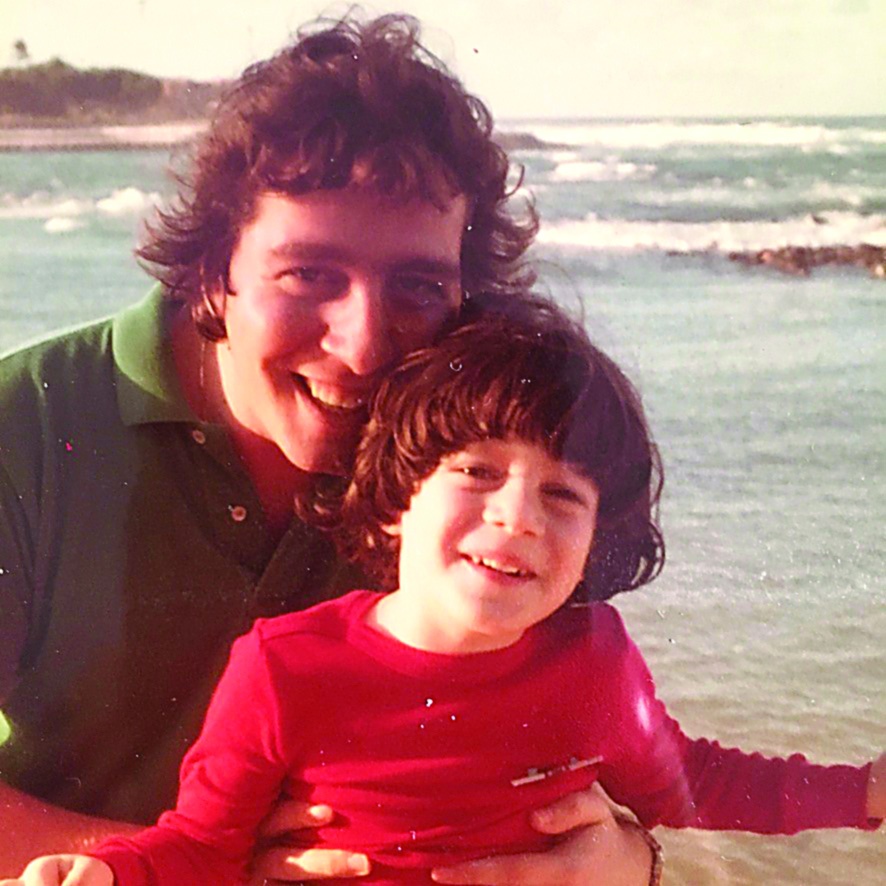
IN CONVERSATION WITH RACHEL GOLDBERG-POLIN AND JOHN POLIN AT MDYHS
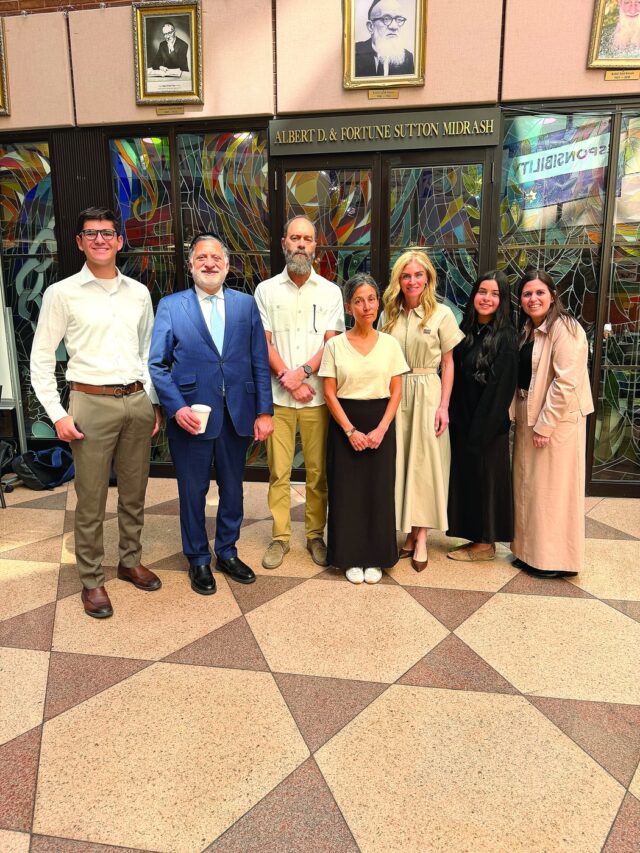
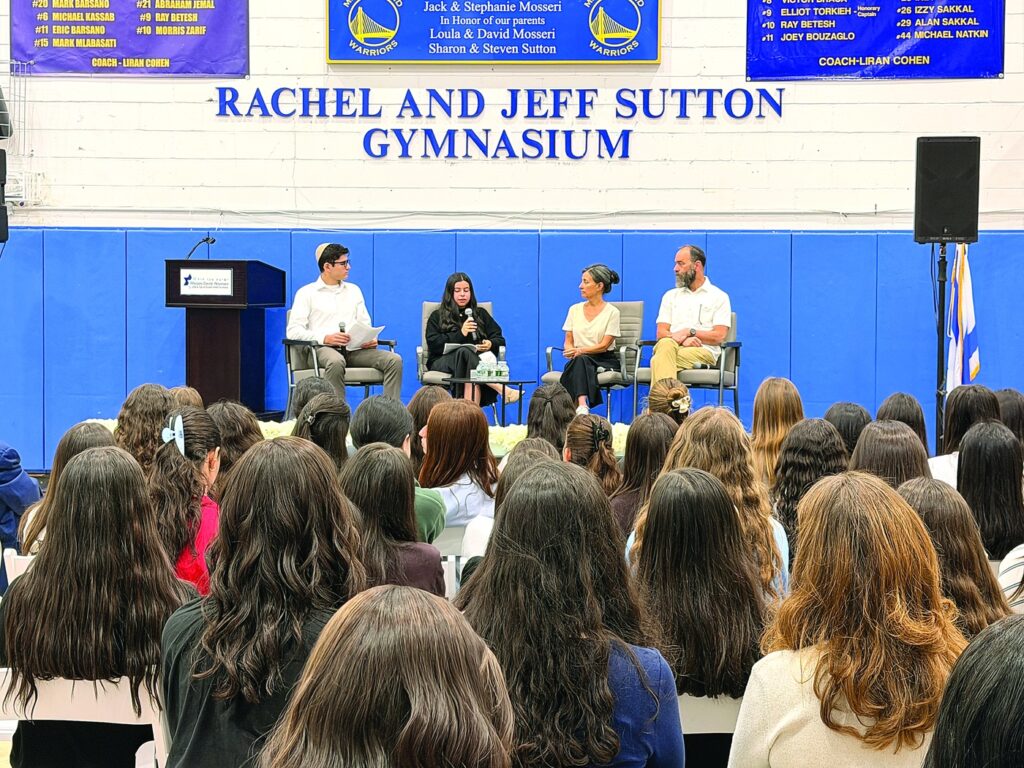
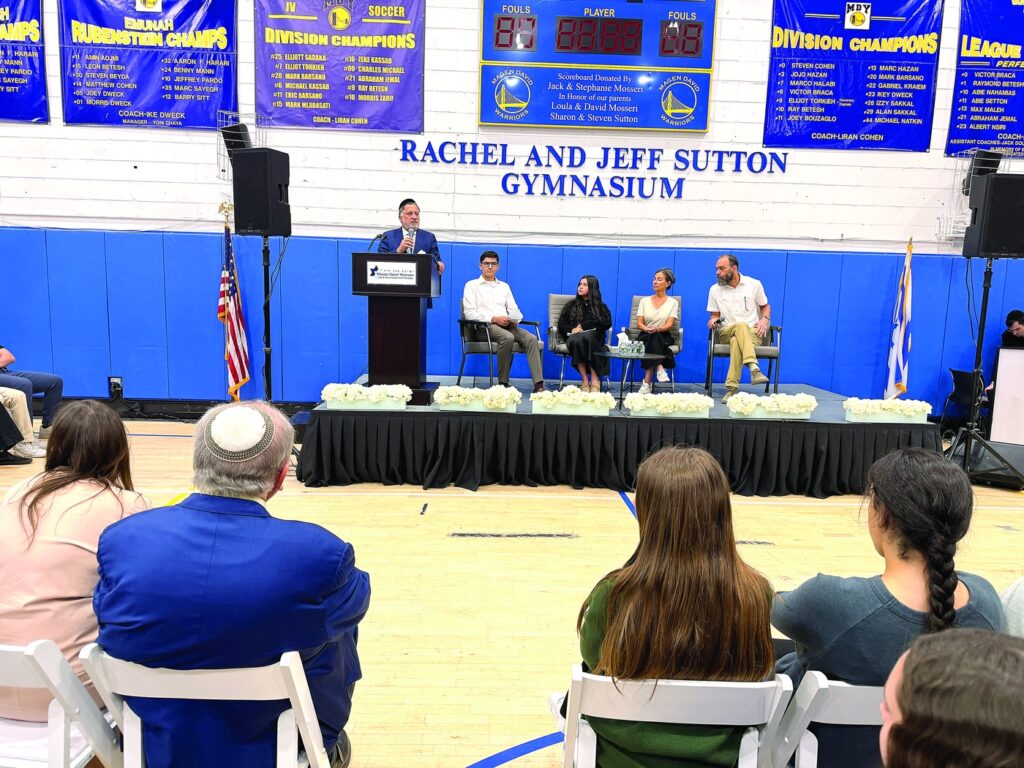
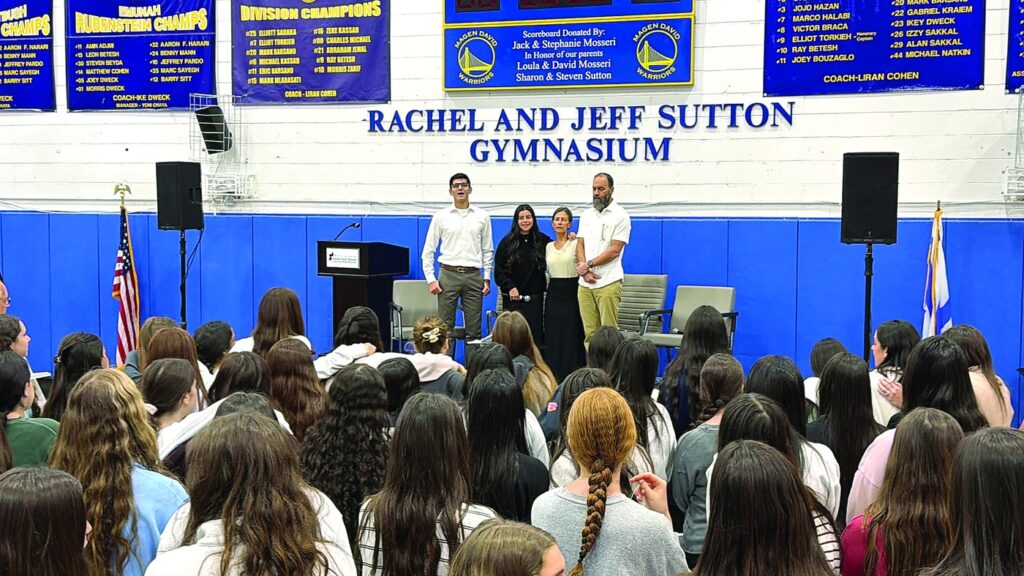
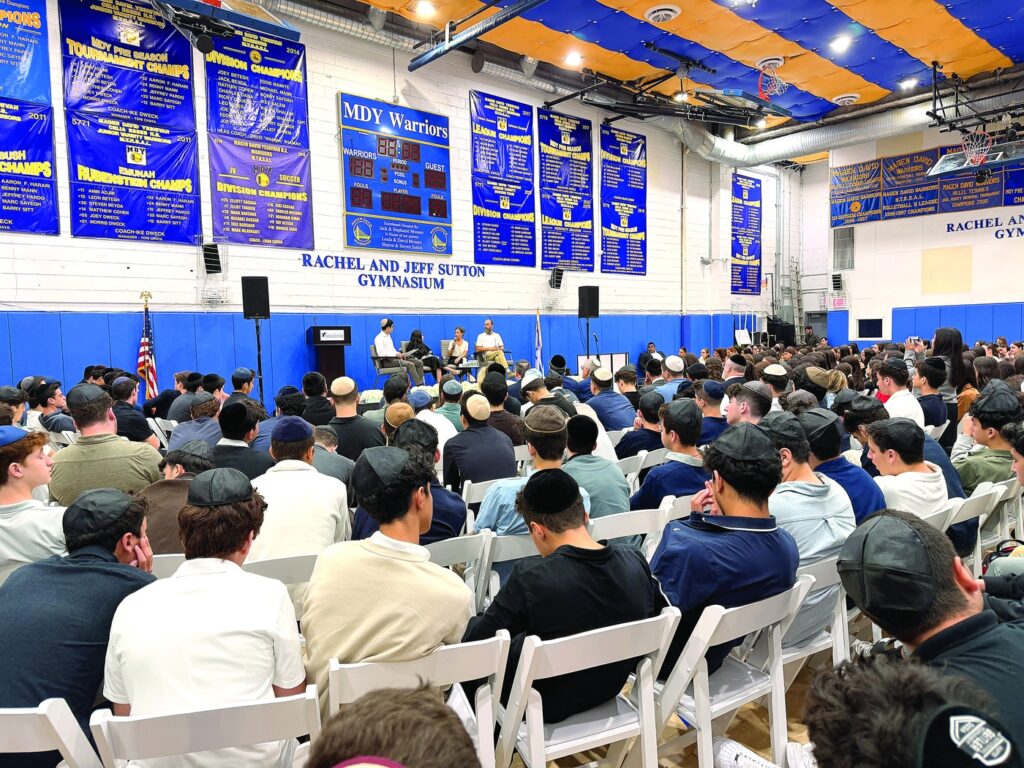
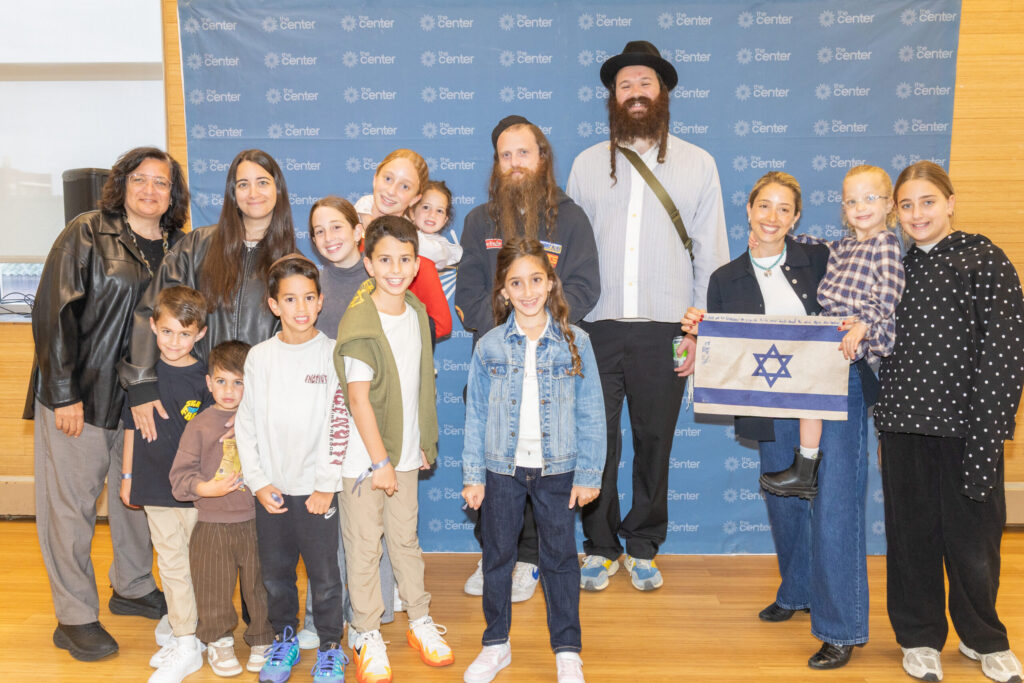
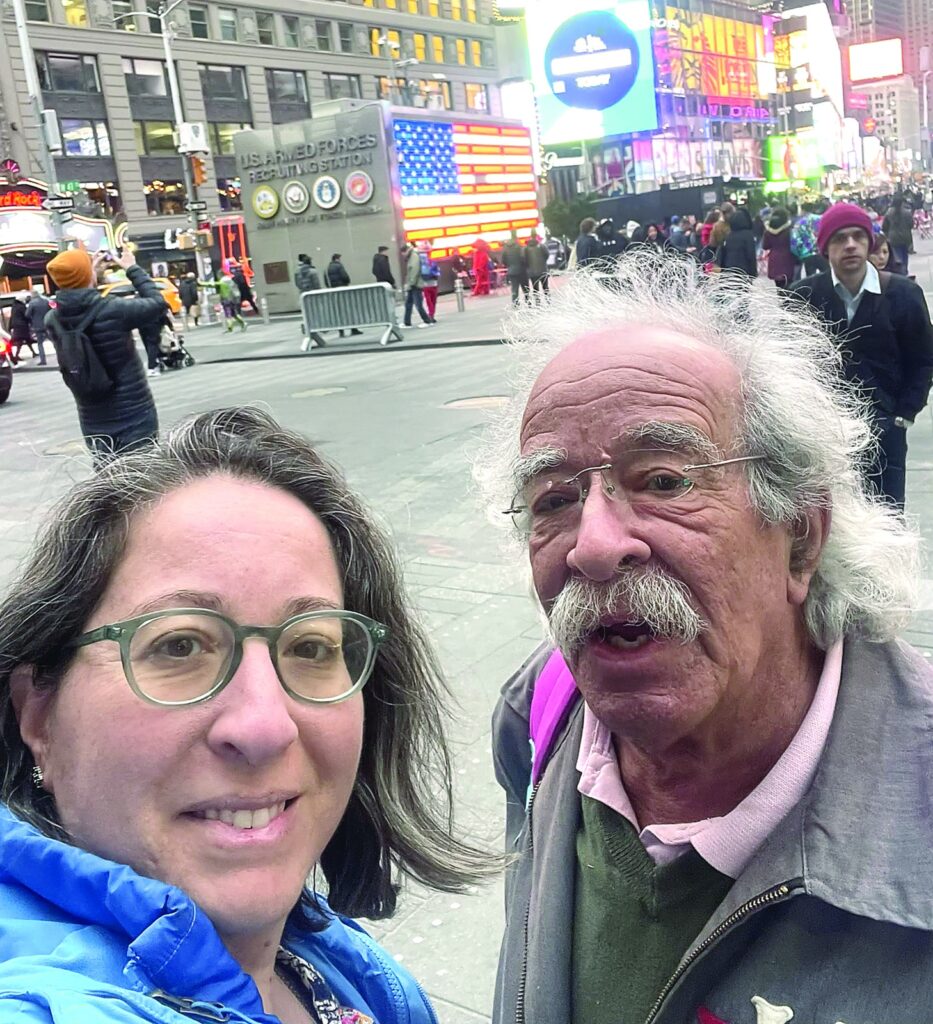
Magen David Yeshivah High School had the profound privilege of welcoming Rachel Goldberg-Polin and Jon Polin for a powerful and deeply moving conversation about grief, resilience, faith, and the enduring legacy of their son, Hersh Goldberg-Polin z”l.
Thoughtfully moderated by juniors Sandra Sassoon and Jason Waknin, the discussion explored themes from Rachel’s book, When We See You Again, including navigating “the before” and “the after,” finding purpose through pain, and the ways our Jewish heritage sustains us through life’s greatest challenges. Jon reflected on his experiences meeting Jewish communities around the world over the past many months, while Rachel shared how Shabbat continues to anchor her and how the tape she wore each day, marked with the number of days the hostages were held captive, became a simple yet powerful symbol that allowed Jews around the world to carry the hostages with them wherever they went. Introduced by Rabbi Eli Mansour and Mrs. Stefanie Cohen, who spoke movingly about how Rachel’s book helped guide her own grief journey following the loss of her brother, Sammy Harari, HY”D, the program resonated deeply with everyone in attendance. Rachel explained that she chooses to speak to students because she believes they are the generation that will carry these lessons forward. She encouraged our students to place these messages “in their pocket” and draw upon them as they navigate the challenges, complexities, and realities of the current climate facing the Jewish people. Her message was both timeless and urgent: everything we need can be found within our beautiful heritage, and it is our responsibility to carry those values with us wherever we go. In one of the most powerful moments of the afternoon, Rachel thanked the audience for carrying “a molecule” of their family’s pain and for standing with them throughout this unimaginable journey. Her words reminded us that even the smallest acts of empathy, solidarity, and remembrance matter. It was a special honor to host Rachel and Jon at MDYHS, and we extend our sincere gratitude to Ricky Novick for helping make this meaningful visit possible. May Hersh’s legacy continue to inspire us to live with purpose, resilience, and faith, and to always live for our why.
The Deal community resource for school-based therapy and support
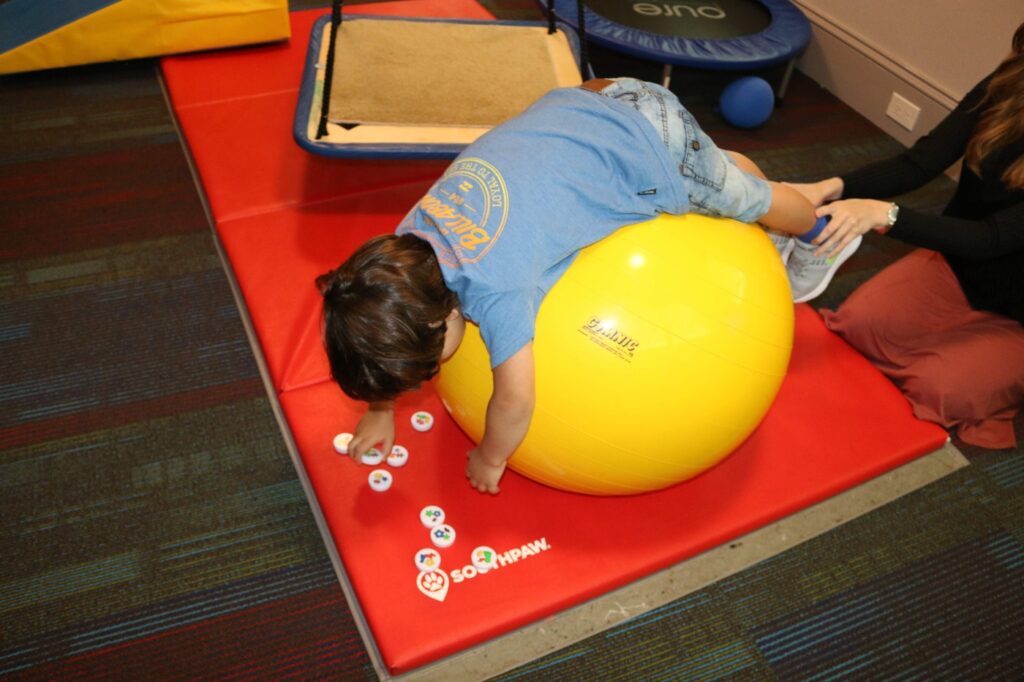
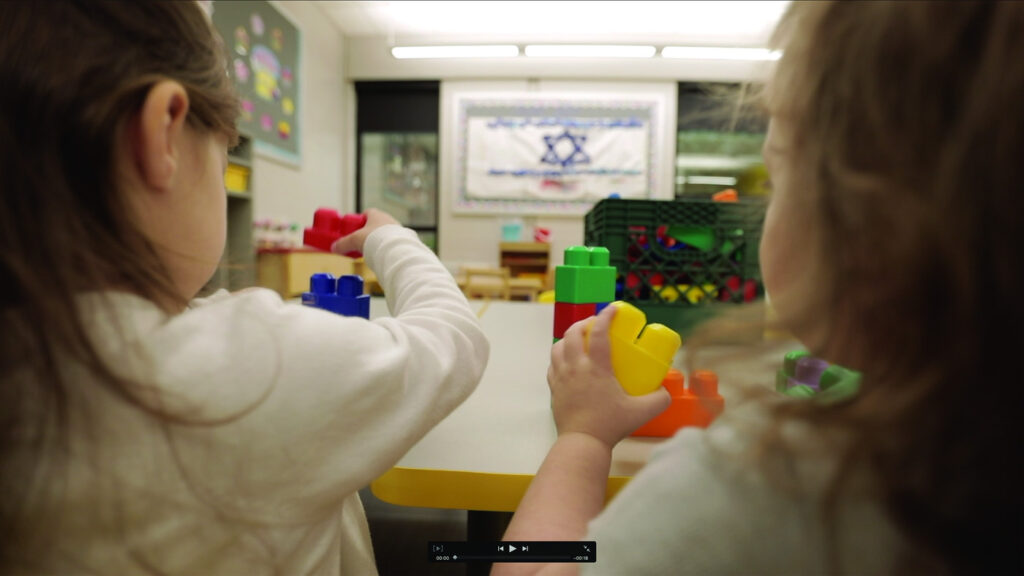
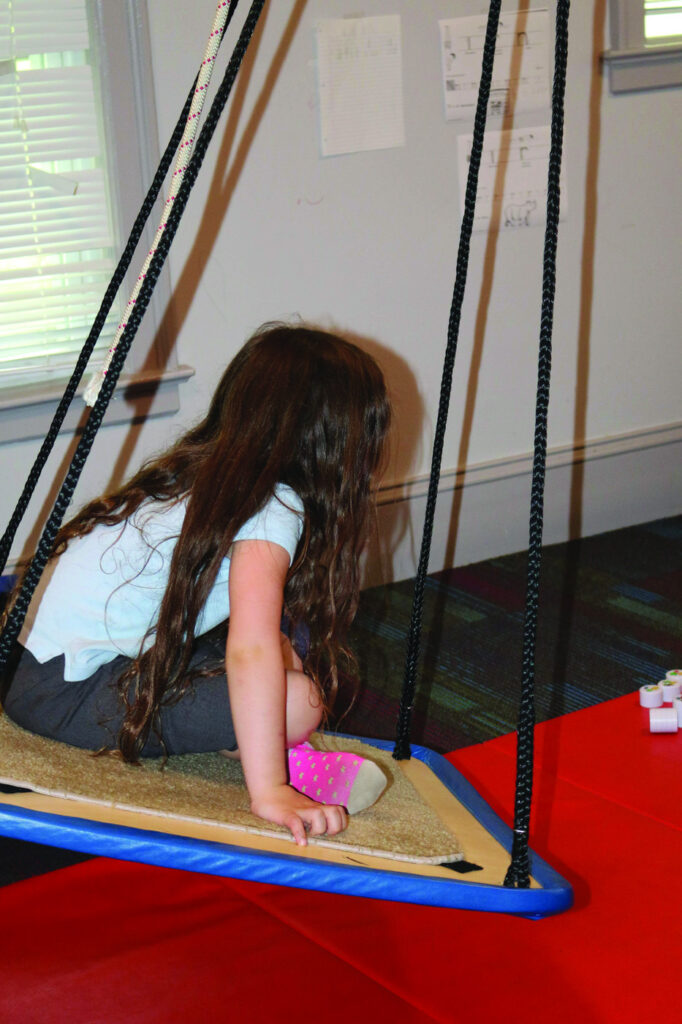
Bridge Linx is an organization that partners with community mainstream schools to offer therapy and support to children to help them thrive. Bridge Linx Therapy Center offers speech therapy, occupational therapy, and social behavior therapy in specially designed rooms in mainstream schools. We assist children so that they will receive the support they need to succeed and thrive in their everyday lives and activities. Bridge Linx currently serves over 200 students weekly through its unique nonprofit therapy model, which offers scholarships for those in need. Our experienced, professional team offers a high-quality, individualized therapy program, partnering with principals, teachers, and parents.
A Parent’s Point of View Before getting connected to Bridge Linx, I wanted to avoid my son’s parent-teacher conferences. It didn’t matter that there were new teachers every year, the message was always the same. They told me, “Sammy is a bright boy, but he struggles in class.” They told me he appears to listen, but when asked to respond to a question, his answers are incorrect and his notes are disorganized. Sammy was leaving out important information and therefore not performing well on tests. I remember turning to my husband with tears streaming down and asking, “What are we doing wrong? No amount of studying seems to help our son.” As a mother, I saw the disappointment in Sammy’s eyes when he came home with another bad grade. When he would cry in frustration, I sometimes cried with him. Finally, Bridge Linx was able to give him the proper support that he so desperately needed. After the first phone call with Bridge Linx, I was immediately put at ease. They set up a meeting to have Sammy evaluated. The Bridge team of therapists sent me to an audiologist to get further information. Finally, we had a diagnosis. My son had difficulty with auditory processing. Within a few short weeks, he was able to implement the strategies taught to him by his speech therapist to actively listen. He showed a major improvement in his notes. In therapy, they worked on following directions, responding to questions, listening, and retelling stories. I can’t begin to tell you what a difference it has made. I will never forget the day Sammy came home with the highest grade on his test! Tears once again filled my eyes. This time, they were tears of happiness and joy. My son was on his way to academic success!
Partnering with Bridge Linx The Teacher’s Point of View As a teacher of a mainstream class, students present many different challenges in the classroom. As an instructor, I need to take the number of students I teach and my limited resources into account. I do my best to help each student succeed. That has its own challenges. Partnering with Bridge Linx Therapy Center has made a tremendous difference in my ability to help my students. Bridge Linx evaluates the students to assess the source of their issues. They then take the step of making recommendations that I can immediately implement in the classroom. I have seen amazing results from the therapy and partnership with Bridge Linx. Most of all, I feel empowered having a resource of professionals to turn to for help and advice. A Therapist’s Point of View Working as an occupational therapist for Bridge Linx in our community school, it is so gratifying and inspiring to see the progress and growth coming from our students. It is clear that there is a team approach which includes input from the teachers and therapists, as well as communication with the parents, creating and implementing goals which make a real impact on the students. The quality of the therapists and the treatment delivery model truly develop a well-rounded student.
Bridge Linx: We’re Here for Our Community Bridge Linx provides speech therapy, occupational therapy, and social behavior therapy. Listed below are examples of specific goals that each therapy targets.
Speech Therapy Auditory processing • Expressive language • Articulation • Following directions • Listening comprehension skills • Language skills
Occupational Therapy Sensory integration • Fine motor strengthening • Motor coordination • Hand-eye coordination • Core strengthening • Body awareness
Social Behavior Positive self-image • Communication skills • Emotional regulation • Executive function skills
At Bridge Linx, we believe in the potential of every child. Please help us help them. Please call our office at (732) 493-3670 to see how Bridge Linx can help you.
New York Passes Buffer Zone Legislation to Help Protect Jewish Congregants from Harassment and Intimidation
Eddie Esses
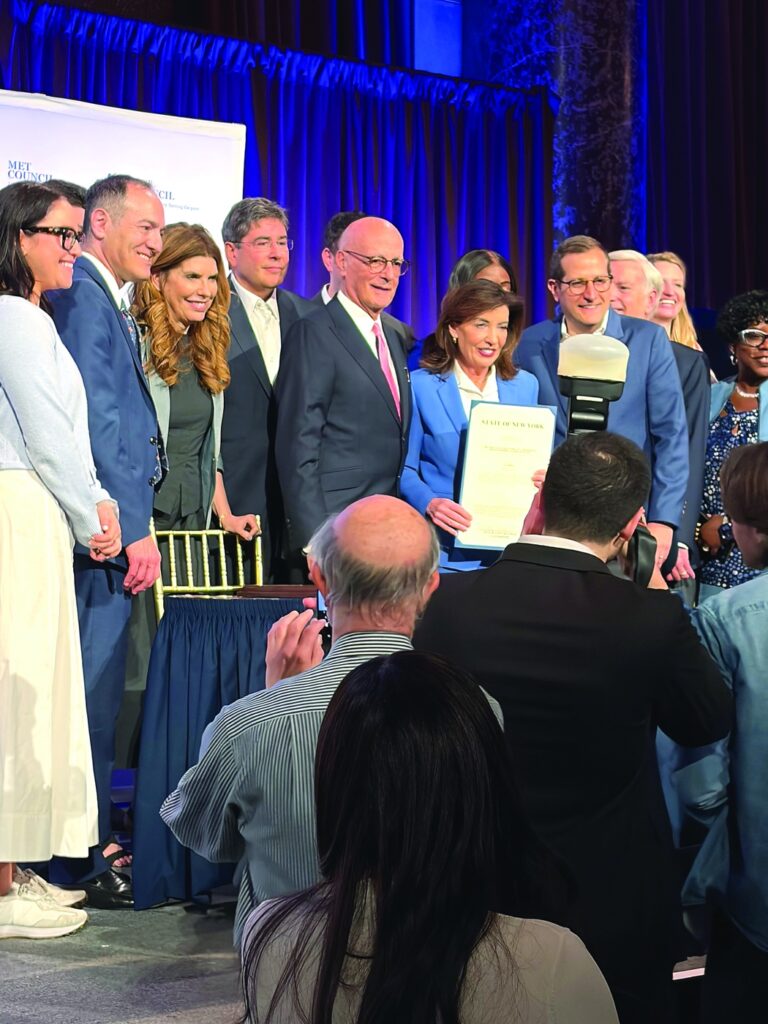
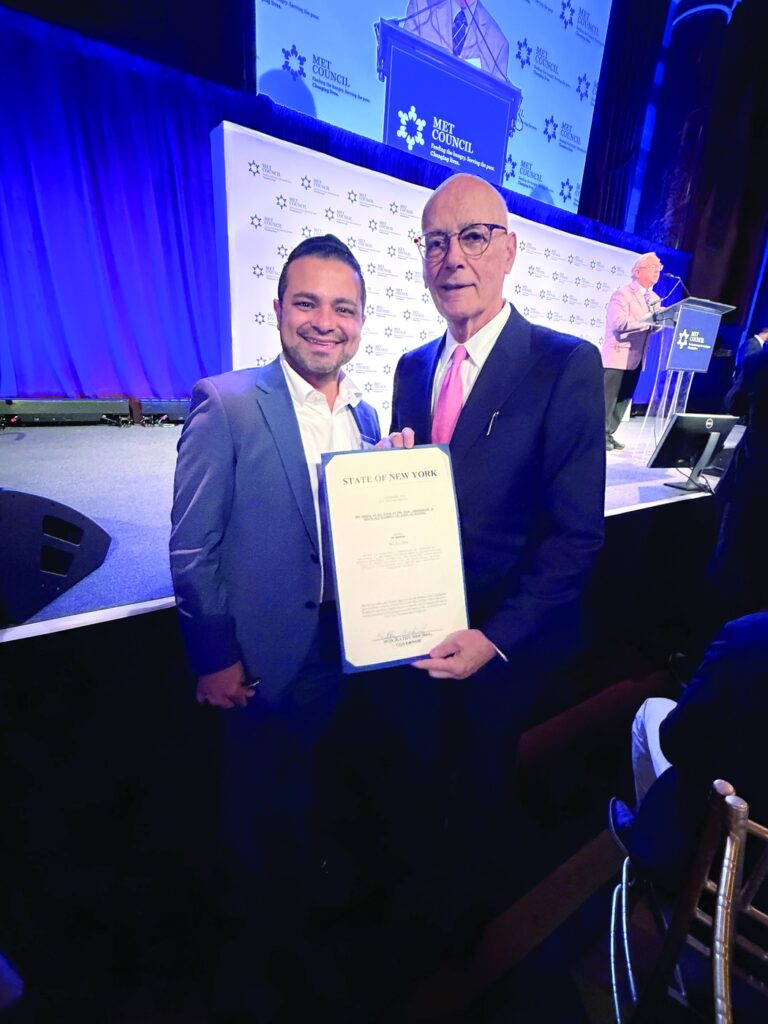
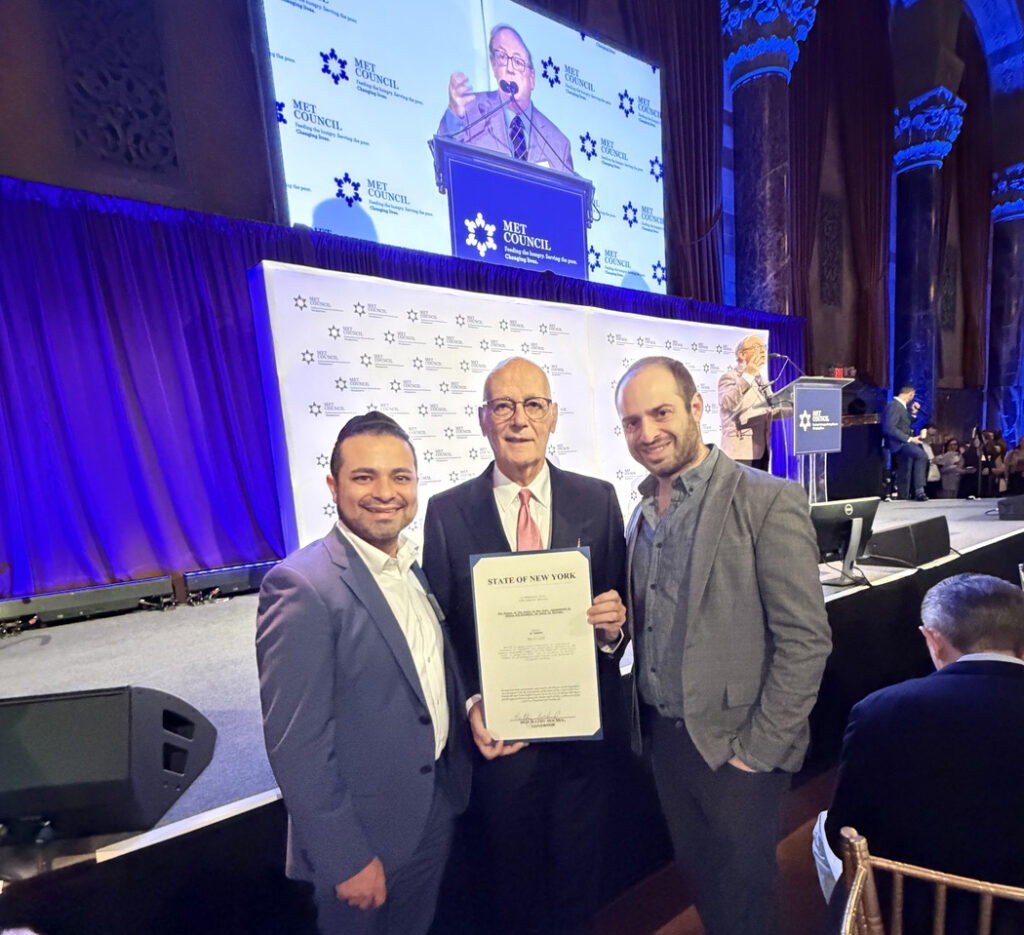
The inclusion of Senator Sutton’s buffer zone legislation in the New York State budget by Governor Kathy Hochul represents a landmark moment for Jewish New Yorkers, the culmination of months of sustained advocacy, coordination, and civic engagement. The legislation establishes a 50-foot buffer zone around synagogues, religious schools, and JCCs to help protect congregants and students from protests intended to harass or intimidate, and it is being widely described by community leaders as the most consequential piece of legislation for Jewish New Yorkers in recent memory.
The origins of the bill trace back to an immediate and urgent response following the November Park East Synagogue incident. Senator Sutton, Joey Saban, and Eddie Esses immediately convened a meeting in Sam’s office to confront the question of what meaningful protections could be put in place. Out of that initial discussion came the decision to draft and introduce what would become the buffer zone legislation. From that point forward, the process was defined by seven months of intense behind-the-scenes work. Senator Sutton and Joey Saban engaged in a relentless schedule of meetings with Senate leadership, Assembly counterparts, staff, and stakeholders across government. Throughout the process, there were many setbacks, shifting dynamics, and difficult negotiations. At various points, the legislation appeared stalled or uncertain, only to be revived again through persistent advocacy and renewed negotiations. A critical moment came when Governor Hochul chose to personally adopt the legislation as part of her executive budget proposal. The Governor not only embraced the bill, but actively fought for its inclusion, elevating it within the broader budget negotiations. Senator Sutton was told directly by Governor Hochul that the issue was a “red line” priority for her, underscoring the level of commitment behind ensuring its passage. This moment highlights the extraordinary role our community’s increased civic participation has had in making major change. In particular, it highlights the incredible impact that the election of Senator Sutton has truly made. This achievement demonstrates what becomes possible when a community organizes, votes, and places trust in one of its own to carry its voice into the halls of power. The passage of the buffer zone legislation is the direct result of that engagement, illustrating how sustained participation translated into tangible policy outcomes. Significant credit deserves to be given to key legislative partners who helped navigate the bill through both chambers. Assemblymember Simcha Eichenstein served as Senator Sutton’s negotiating counterpart in the Assembly. He, along with the full Jewish delegation in the Assembly, helped guide the legislation through negotiations, strengthening the bill significantly. Assemblymember Micah Lasher, the original Assembly sponsor of the bill alongside Sutton, played a foundational role in shaping and advancing the legislation from its earliest stages. Activism on the ground played a key role as well. The consistent and vocal activism of Abie Hamra was critical, whose online petition and sustained advocacy rallied the public in favor of the idea of buffer zones. After the bill was introduced, UJA-Federation of New York coalesced support among elected officials and interfaith leaders across New York State and coordinated a major online campaign to increase support in both chambers of state government. Ultimately, the passage of the buffer bill is both a policy victory and a broader civic lesson. It reflects what can be achieved when we as a community move beyond concern and into action by voting, organizing, and engaging directly in the political process. If this level of participation and engagement can yield such significant results, then just imagine what even greater achievements are within reach. The message that emerges from this victory is clear: when the community shows up, organizes, and participates fully in civic life, it has the power to shape history and deliver meaningful change for generations to come.
The month of Av is the saddest in the Jewish year, and Tisha b’Av is the saddest day. On it the two Temples were destroyed, the first in 586 BCE by the Babylonians, the second in 70 CE by the Romans. It is also the day on which Betar, the last stronghold of the Bar Kochba rebellion, fell in 135 CE, and on which, one year later, the Roman emperor Hadrian rebuilt Jerusalem as a pagan city, Aelia Capitolina. In 1492, Tisha b’Av was the day on which Jews were finally exiled from Spain. How did Jews survive these tragedies? That is one of the most enthralling questions about Judaism.
It is an iron law of history that civilizations rise, achieve greatness and appear indestructible, but in the end they fail and fall. Only Jews and Judaism have experienced catastrophe after catastrophe, exile after exile, but have endured. Each new defeat inspired resilience. Jews wept, but then rebuilt their lives, often in new and strange places. More remarkably still, each tragedy inspired a new burst of creativity. After the destruction of the first Temple came the renewal of Torah under Ezra and the returning exiles. After the loss of the second Temple came the great literature of the sages: Midrash, Mishnah and the two Talmuds. The Crusades gave birth to the spirituality of the Hassidei Ashkenaz; the Spanish expulsion to the mysticism of Sfat. The greatest tragedy of all in human terms, the Holocaust, was followed a mere three years later by the single greatest collective affirmation of life in 2,000 years, the rebirth of the State of Israel. There is something remarkable about this story, unparalleled in the history of any other nation. I remember the moment when I first stood on Mount Scopus, today the site of the Hebrew University, looking down on the old city of Jerusalem, and realized that it was here that Rabbi Akiva and his colleagues stood, contemplating the ruins of what had been Judaism’s holiest place. While the others wept, Rabbi Akiva smiled. “Why do you weep?” asked Rabbi Akiva. They replied, “How can we not weep, when we see a fox walking through the ruins where our Holy of Holies once stood? The question is, how can you smile?” Rabbi Akiva replied: “The prophets foresaw Jerusalem’s destruction and they also foresaw its rebuilding. I have seen the first prophecy come true. Now I know the second will also come true.” Rabbi Akiva shared with the prophets the courage to hope. Hope is not a mere instinct. It is born in faith, the faith that G-D exists, that He keeps His promises and that He forgives. That hope is contained in the very name tradition gave to this month: Menachem Av, the month of consolation as well as tragedy. A people that never loses hope cannot be defeated. The Jewish people kept hope alive. Hope kept the Jewish people alive.
Joseph Pulitzer, a Jewish immigrant from Hungary who prospered in America as journalist and newspaper owner, endowed the Pulitzer Prize to recognize excellence in journalism.
Today, the Pulitzer Prize committee is damaging its illustrious legacy by awarding journalists who slander Israel and Zionists. Its 2026 prizes honor figures who propagate falsehoods about the Jewish state.
Saher Alghorra Misleading Photographs Saher Alghorra, a twenty-eight-year-old independent freelancer living in Gaza, won the 2026 Pulitzer Prize for Breaking News Photography. The Pulitzer committee says it is rewarding “his haunting, sensitive series showing the devastation and starvation in Gaza resulting from the war with Israel.” In reality, they are rewarding highly misleading photos taken with the blessing of and in cooperation with Hamas. Alghorra’s most famous shot, published on the front page of the New York Times on July 24, 2025, was quickly exposed as a lie. It shows a young, nearly naked boy, Mohammed Zakaria al-Mutawaq, being cradled by his mother. His spine and ribs protrude through his skin. Mohammed’s appearance is horrifying; he is clearly very ill and underweight. “Mohammed…was born healthy but was recently diagnosed with severe malnutrition,” the New York Times asserted in its caption. Elsewhere in the article, the New York Times asserted that “Gazans are dying of starvation,” placed the blame for hunger in Gaza entirely on Israel, and reported that: “Hollow-eyed, skeletal children languish on hospital beds…” with Mohammed illustrating this terrible phenomenon. Within days, readers noted that posts about the family existed elsewhere online, describing Mohammed not as starving but as suffering from a degenerative muscle disorder which contributed to his emaciated state. This should have been obvious to Alghorra and his editors. In one of Alghorra’s photos of Mohammed that was not published by the New York Times, Mohammed’s older brother, who does not appear malnourished, appears standing in the background. The entire photograph seemed designed to promote a misleading narrative about the severity of food shortages in Gaza. Why?
Operating with Permission from Hamas Every journalist operating inside Gaza today, including photographers like Saher Alghorra, does so with the express permission of Hamas. One of the most cogent descriptions of the condition for journalists inside Gaza comes from Bret Stephens, who has covered the region for decades for the Wall Street Journal and the New York Times, and notes that journalists inside Gaza function as mouthpieces for Hamas propaganda. He writes: “The Palestinian territories… are republics of fear, fear of the Palestinian Authority in the West Bank and Hamas in Gaza. Palestinians are neither more nor less honest than people elsewhere. But, as in any tyrannical or fanatical regime, those who stray from the approved line put themselves at serious risk.” Take another one of his Pulitzer Prize-winning photographs, of Hamas soldiers carrying the remains of a murdered Israeli hostage to an exchange point to hand over the remains to Israel. The photo is incredible: Alghorra was directly in front of the Hamas fighters when he snapped the photo, at what was obviously an important and sensitive moment. This picture could only have been taken with Hamas’ permission; it’s unthinkable that a truly independent photographer would have been granted such access to Hamas’ elite fighting units. Indeed, a perusal of Alghorra’s Instagram feed shows how embedded he is in a number of terrorist groups in Gaza, including Hamas, the fearsome “Lions Den” terrorist group, the Popular Front for the Liberation of Palestine (PFLP), and Islamic Jihad. Over the past few years, he’s photographed militants with all these organizations up close and with seeming permission from their leaders. Saher Alghorra might be a talented photographer with an eye for artistic composition. He is also an extension of Hamas and its allied terrorist groups, granted access to their inner workings in exchange for parroting their propaganda. Despite this, he’s won awards for his propaganda masquerading as independent journalism. The Pulitzer committee just awarded a Pulitzer Prize to Hamas’ lies.
M. Gessen Useful Idiot At least Saher Alghorra has the excuse of living under Hamas’ tyrannical rule to excuse his lies about Israel. M. Gessen, who has won a Pulitzer Prize in Opinion Writing for a series of articles in the New York Times, has no such excuse. A Jewish journalist from Moscow, M. Gessen has had a distinguished journalistic career, and has seemed to abandon all journalistic caution in one of their prize-winning essays, “How to Be a Good Citizen When Your Country Does Bad Things,” which singles out Israel among the world’s nations for opprobrium. Gessen describes both Israel and the United States as showing a “monster” face to the world. Spoiler alert: when it comes to Israel, Gessen’s answer to how to remain a “good” person is simple: leave Israel entirely. The Jewish state is supposedly too bad for “good” people to live in any more. Anyone who does is “implicated” in its “crimes.” Gessen baselessly asserts that Israel has “all but dropped any pretense of democracy.” No mention is made of the many Arab members of Parliament, judges, teachers, doctors, police officers, etc. inside of Israel, nor of the fact that Arab citizens of Israel participate fully in Israeli democracy just as Jews and others do. Gessen explains they didn’t interview any non-Jews for their prize-winning piece, presumably because it’s only Jewish Israelis who need to be taught to be “good.” One of Gessen’s interviewees rails against Jewish Israelis: “I know how bad he smells,” she says of one. No similar criticism is directed at non-Jews, who are depicted as peaceful. Gessen quotes at length two Israelis who’ve left the country. “I had to get away,” one explained, saying he and his family moved to Italy. A second interviewee spends most of her time in an Arab town under the jurisdiction of the Palestinian Authority. Assiduously left out of Gessen’s prize-winning essay is any background about the wider situation in which Israel finds itself, with Hamas continuing to launch missiles, drones, and even incendiary kites into Israel on a regular basis and Hezbollah in Lebanon raining missiles down on Israeli communities. Gessen quotes Israelis who want the rest of the world to boycott, sanction, and isolate Israel, treating it as an international pariah. It’s only by destroying Israel, Gessen’s piece implies, that Jewish Israelis can be called “good.” This isn’t journalism; it’s Hamas propaganda, which would see the entire world turn against Israel and side with Hamas in aiming to destroy it.
Pulitzer Shame The Pulitzer Prize’s descent into reflexive anti-Israel advocacy is a serious blow for Western journalism. By rewarding openly biased, misleading, pro-Hamas, and antisemitic articles and photographs, they are chipping away at journalistic standards, and at our ability to distinguish robust, independent journalism from propaganda. This year’s Pulitzer Prizes are a reminder that we all have to be vigilant in scrutinizing the media we consume.
For many Americans, the phrase “hantavirus” entered the public conversation the same way unfamiliar diseases often do now, through alarming headlines and viral social media posts that quickly sparked comparisons to COVID-19. A deadly virus. A cruise ship outbreak. International quarantines. Within hours, people were asking whether another global health crisis was beginning. The concern intensified because the outbreak involved the Andes strain of hantavirus, the only known hantavirus strain capable of limited human-to-human transmission. That detail immediately drew attention from public health officials and a public still shaped by the pandemic years.
The current outbreak is linked to the MV Hondius, a Dutch expedition cruise ship that carried passengers through Antarctica and the South Atlantic. According to the World Health Organization and the Centers for Disease Control and Prevention, 11 confirmed cases and three deaths have been reported so far, while additional passengers and contacts continue being monitored by health authorities. Although the ship was carrying roughly 147 passengers and crew members, only 11 confirmed cases have been identified so far, a detail health officials say reinforces how difficult the virus is to spread through casual contact. Hantavirus is a family of viruses carried mainly by rodents, with different strains found around the world. People are usually infected after breathing in airborne particles contaminated by rodent droppings, urine, or saliva, often while cleaning enclosed spaces where rodents have nested. In North and South America, infection can lead to hantavirus pulmonary syndrome, a severe respiratory illness that affects the lungs and can become life threatening. Health investigators believe the MV Hondius outbreak likely began with exposure before boarding the ship, possibly involving infected rodents in South America, where the Andes strain of hantavirus circulates naturally. What makes the Andes strain unusual is that, unlike most hantavirus strains, limited person-to-person transmission can occur through prolonged close contact. Even so, public health agencies continue to emphasize that the virus does not spread easily through casual everyday interaction, and the overall risk to the public remains very low. Still, the outbreak triggered a major international response because passengers had already begun traveling home across multiple countries before the virus was fully identified. Passengers disembarked in Tenerife, Spain, before beginning repatriation efforts coordinated by governments and health agencies. Many passengers are now being monitored for up to 42 days, or longer depending on national health guidance, because the Andes strain of hantavirus can have a long incubation period. Several American passengers were transferred to the University of Nebraska Medical Center for quarantine and observation, while others continue being tracked and monitored in Atlanta and additional facilities abroad. The images associated with the outbreak naturally stirred anxiety. Quarantine facilities, medical transport teams, and reports of international monitoring immediately brought back memories of the early COVID period. For many people, the emotional reaction arrived before the medical facts did. That response is understandable. COVID permanently changed the way many Americans process public health news. Before 2020, most people rarely paid attention to outbreaks occurring outside their immediate area. Today, even a relatively contained virus can dominate online discussion within hours. Social media has amplified that shift. Headlines about a “deadly virus outbreak” spread quickly because fear and uncertainty generate attention. In many cases, the details that matter most arrive later, after public assumptions have already formed. In the case of hantavirus, the most important detail is also the least dramatic. The virus does not spread easily between people. COVID became a global crisis because it moved efficiently through ordinary daily interaction. The Andes strain behaves very differently. Health officials continue to stress that widespread community transmission is considered highly unlikely. That distinction matters because public anxiety can distort risk perception. The average American is far more likely to encounter seasonal influenza, RSV, or common respiratory infections than hantavirus. Most people living normal daily lives in cities and suburbs face extremely low risk. Public health guidance surrounding hantavirus remains focused primarily on preventing rodent exposure inside homes, garages, sheds, and workplaces. Health officials recommend sealing holes and gaps where rodents can enter, placing traps around the home, and removing exposed food sources that may attract mice or rats. If rodent droppings are found, experts advise against sweeping or vacuuming them dry because that can push contaminated particles into the air. Instead, the area should be ventilated first and cleaned carefully using disinfectant, gloves, and paper towels. In cases of larger infestations, professional exterminators or pest control services are often recommended to reduce ongoing exposure risks safely. The broader story surrounding the MV Hondius outbreak may reveal as much about modern public psychology as it does about the virus itself. Americans now live in a constant cycle of alerts, breaking news banners, and viral commentary. Every health story arrives with urgency attached to it. That environment makes it harder for people to separate a serious but limited outbreak from a widespread societal threat. It also creates fatigue. Many people want to stay informed without feeling trapped in permanent alarm. The hantavirus outbreak aboard the MV Hondius is serious, especially for the families directly affected and the passengers now under monitoring. It deserves careful investigation and a coordinated public health response. At the same time, global health authorities continue to say the risk of widespread transmission remains very low. That balance between awareness and perspective is easy to lose online, but it remains the reality experts continue to emphasize.
This article is intended for general informational purposes only and is based on publicly available information and health guidance available at the time of publication. Because public health information and official guidance may change as new developments emerge, readers should consult current updates from relevant health authorities.
Every year, as the weather gets warmer, something shifts emotionally for many women. The sweatshirts come off. Ads for diets become louder. Social media fills with “summer body” transformations, detoxes, before-and-after photos, and messages about getting “back on track.” Conversations suddenly revolve around carbs, bloating, fasting, shrinking your stomach, and how quickly someone can “fix” their body before vacation season begins. And quietly, many women begin to panic.
Some start cutting out foods they normally enjoy. Others skip meals all day only to feel out of control at night. Some become afraid of social events involving food. Others stare at photos of themselves and pick apart every detail before even allowing themselves to enjoy the summer ahead. What is supposed to be a joyful season slowly becomes another opportunity for self-criticism. The truth is, many women are not actually trying to achieve health before summer. They are trying to achieve worthiness. Worthiness to wear the bathing suit. Worthiness to go on vacation confidently. Worthiness to be photographed. Worthiness to feel accepted in their own bodies. Somewhere along the way, women were taught that summer is something their body must “earn.” What makes this especially painful is that the pursuit of the “perfect summer body” often leaves women feeling physically and emotionally worse, not better. Extreme dieting increases food obsession. Under-eating during the day often leads to intense cravings and overeating later at night. Over-exercising can elevate stress hormones, worsen fatigue, increase inflammation, disrupt sleep, and make women feel even more disconnected from their bodies. For many women, especially during midlife and menopause, the body is already undergoing hormonal shifts that affect weight distribution, water retention, sleep, hunger, and metabolism. Yet instead of responding with compassion and support, many women respond by becoming more restrictive, more critical, and more ashamed. Social media has intensified this pressure dramatically. Women are constantly exposed to filtered images, edited bodies, unrealistic standards, and unrealistic routines that often do not reflect real life. Comparison becomes exhausting. A woman can have a beautiful family vacation planned and still spend the weeks leading up to it consumed by anxiety over how her stomach looks in a bathing suit. That is not wellness. Ironically, the women who often look and feel healthiest long term are usually not the ones punishing themselves seasonally. They are the women who focus on consistency instead of extremes. They nourish themselves regularly. They move in ways that feel supportive rather than punishing. They sleep. They hydrate. They eat dessert sometimes without spiraling emotionally afterward. They understand that health is built through patterns, not panic. Feeling physically better for the summer is not a bad goal. Wanting more energy, strength, confidence, or improved health is valid. But there is a major difference between caring for your body and constantly fighting against it. A healthier approach to summer may look less dramatic than the internet promises. It may mean: • Eating balanced meals consistently instead of skipping meals • Adding more protein, fiber, fruits, and hydration instead of eliminating entire food groups • Exercising to feel stronger and more energized rather than to “undo” eating • Buying clothes that fit your current body instead of punishing yourself into smaller ones • Spending less time body-checking and more time participating in your actual life Most importantly, it may mean refusing to let your body determine whether you deserve to enjoy the summer. No one looks back on their life and remembers the summer they finally had completely flat abs. But people do remember the summers they were fully present. The trips they enjoyed. The laughter. The beach days. The dinners with family. The memories they almost missed because they were too busy criticizing themselves. Your body is not a problem to solve before June arrives. And perhaps the healthiest thing women can do this summer is stop waiting to feel “perfect” before allowing themselves to live. q
Here are some of the most effective anti-worry tools.
Many of us feel saturated with a boatload of worry. How do we conquer it? Here are 10 of the best anti-worry tools.
Know how bad worry is for you. Worry cripples us. It can even be paralyzing. At best, it’s a huge waste of our emotional energy. Worry is associated with all types of physical and emotional illnesses and even though we know this we still spend considerable time ruminating about all the things that could go wrong in our lives. Why do we do this? Somehow, we think that if we worry about something enough, we will gain control over it. But the opposite happens. The more we obsess about something the more it gains control over us.
Talk to somebody about your worries. This may seem obvious, but so many people don’t do it! Sometimes just talking to someone helps us realize that things aren’t as worrisome as we are making them out to be. We are making a mountain out of the proverbial molehill. Talking to someone helps us gain perspective, be more objective, think about the situation differently and prevents worry from building up so much that it becomes overwhelming. Who in your life is your go-to person for your worries?
Change what you can and let the rest go. Worries can be divided into two categories: things we can do something about and things we can’t. If you can do something, do it! If you can’t, convince yourself that your mental health is more important than obsessing over something you can’t change.
Cut down the amount of time you spend watching the news. Do we even realize how much stress and negativity we stream into our life every day? It is seriously bad for our emotional health to be too plugged in. The news needs to sell, so everything is a crisis. We all want to be informed but we have a responsibility to ourselves and our families to thoughtfully manage how much airtime we are giving to the news, the commentaries on the news and the commentaries on the commentaries.
Include some of your best stress-relieving activities in your day. Make a list of things that take your mind off of worry: exercise, calming music, meditation, prayer, cooking, talking to a friend, writing, painting, taking a walk, gardening, getting a massage, or soaking in a hot bath. Do something good for yourself today!
Forget your worries by becoming interested in others and creating a little happiness for them. Delivering food to front-line workers, cooking a meal for someone who is alone, or checking in with someone who has had a big loss are all ways to relieve our own anxiety because we are getting out of ourselves. We are reminding ourselves that we are not the only ones who struggle. Additionally, doing good adds up to feeling good.
Ask yourself: What’s the worst thing that could happen? Dale Carnegie, in his book How to Stop Worrying and Start Living, says whenever you are worried about something, ask yourself: what‘s the worst thing that could happen? What would you do if you lost your job? Visualize yourself working through the situation and calmly preparing yourself for how you would deal with the worst scenario. Once you accept the possibility in your mind and you can see yourself having the resources to cope you will find yourself much calmer. And remember, most of the things we worry about will never happen.
Focus on gratitude. Gratitude is a huge antidote to worry. Write in a gratitude journal every day. Talk about things that you are grateful for with your family. Notice and share that the things that are going right in your life outweigh the things that are not. It is hard to be a grateful person and a worrywart at the same time.
Cultivate Emuna (Faith) and Bitachon (Trust). Judaism’s greatest anti-worry solutions are cultivating faith in an all-powerful G-D who is guiding the world and our life with compassion and love. We don’t understand His ways but we trust that all G-D does is for our good and our growth. Faith and trust in G-D enables us to have the courage to live with the uncertainty of life, to live with our own lack of control and understanding and to know that life is not at all random. Emuna is being able to say every day “Everything I need I have, and everything I have I need.”
Turn your worry into a prayer. Prayer lets us know we have an address for our worries and reminds us that G-D can do anything. Even if the answer is “no” or “not right now” just verbalizing our worries to G-D can have a huge calming effect. And, while you’re at it, make sure to ask Him to help you not worry so much!
Summer meals tend to shift naturally toward lighter food, simple prep, and ingredients that can handle the heat. A good salad can work as lunch, dinner, a side dish, or something to bring to a gathering without much stress. The key is balance. Fresh vegetables, enough texture, and dressings that add flavor without overwhelming the ingredients.
These recipes focus on practical home cooking. They use familiar ingredients, straightforward techniques, and combinations that work well for weekday meals, Shabbat lunches, and summer get togethers.
Mediterranean Chickpea Salad Parve Yields: About 8 cups Serves: 6 to 8
Ingredients
2 cans chickpeas, drained and rinsed
1 pint cherry tomatoes, halved
1 cucumber, diced
1 red bell pepper, diced
1 small red onion, finely chopped
1 cup chopped parsley
1/2 cup sliced black olives
3 tbsp olive oil
2 tbsp fresh lemon juice
1 tsp garlic powder
1 tsp salt
1/2 tsp black pepper Instructions
Place the chickpeas, tomatoes, cucumber, red pepper, onion, parsley, and olives into a large bowl. In a small bowl, whisk together the olive oil, lemon juice, garlic powder, salt, and pepper.
Pour the dressing over the salad and toss well until evenly coated. Refrigerate for at least 20 minutes before serving so the flavors can blend together. Serve cold.
Grilled Chicken and Corn Salad Meat Yields: About 10 cups Serves: 4 to 6
Ingredients
2 boneless chicken breasts
4 ears corn, husks removed
1 romaine lettuce heart, chopped
4 cups mixed greens
1 avocado, diced
1 pint cherry tomatoes, halved
1/4 cup thinly sliced red onion
3 tbsp olive oil
2 tbsp red wine vinegar
1 tsp Dijon mustard
1 tsp salt
1/2 tsp black pepper
Instructions
Heat a grill or grill pan over medium high heat. Brush the chicken and corn lightly with oil. Grill the chicken for about 6 to 7 minutes per side, until fully cooked.
Grill the corn until lightly charred on all sides. Let the chicken and corn cool slightly. Slice the chicken into strips and cut the corn kernels from the cob.
Place the lettuce, mixed greens, avocado, tomatoes, onion, corn, and chicken into a large serving bowl.
Whisk together the olive oil, vinegar, mustard, salt, and pepper. Pour the dressing over the salad just before serving and toss lightly.
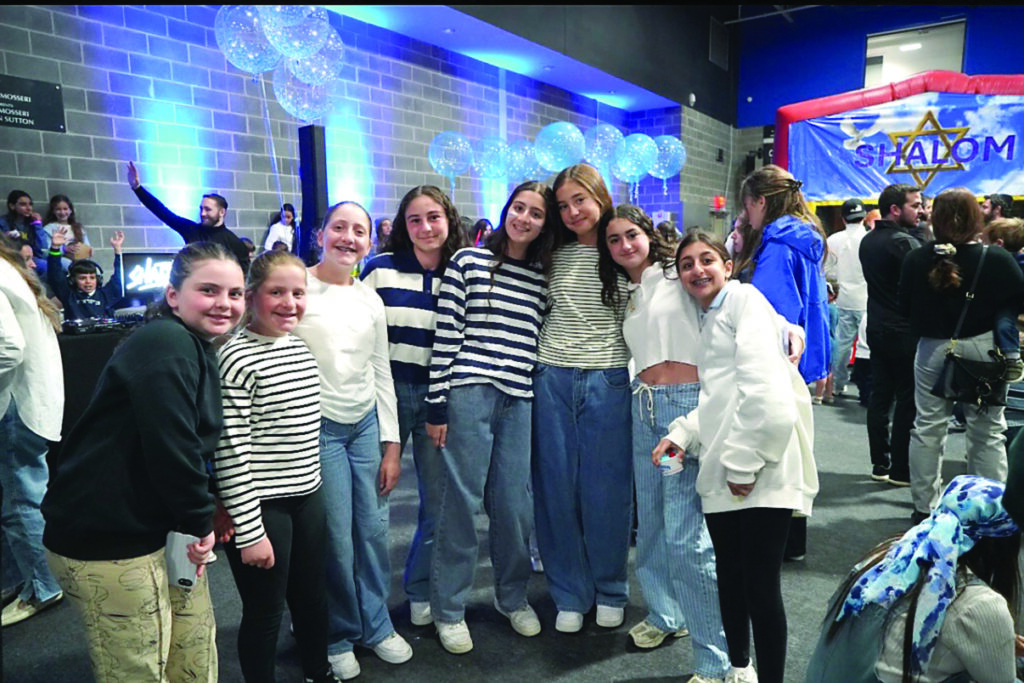
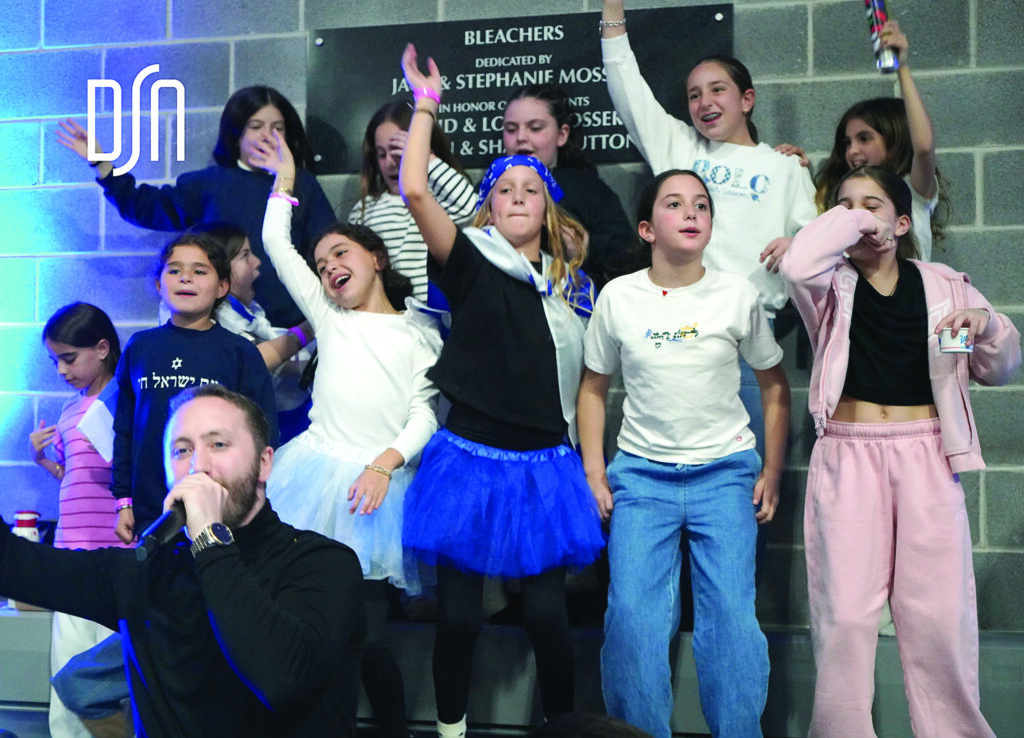
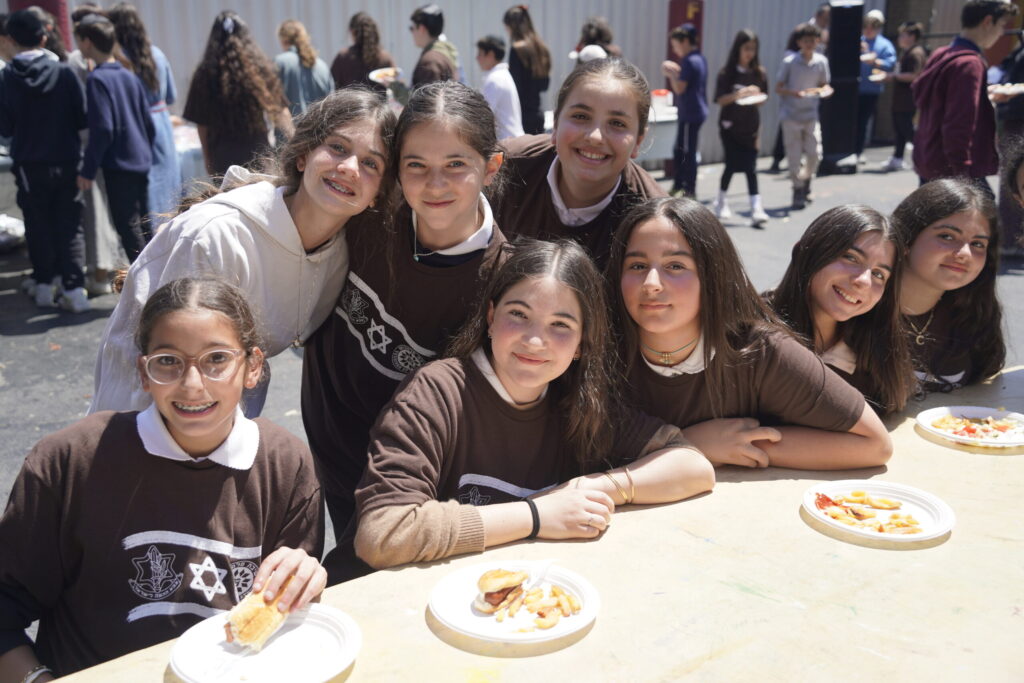
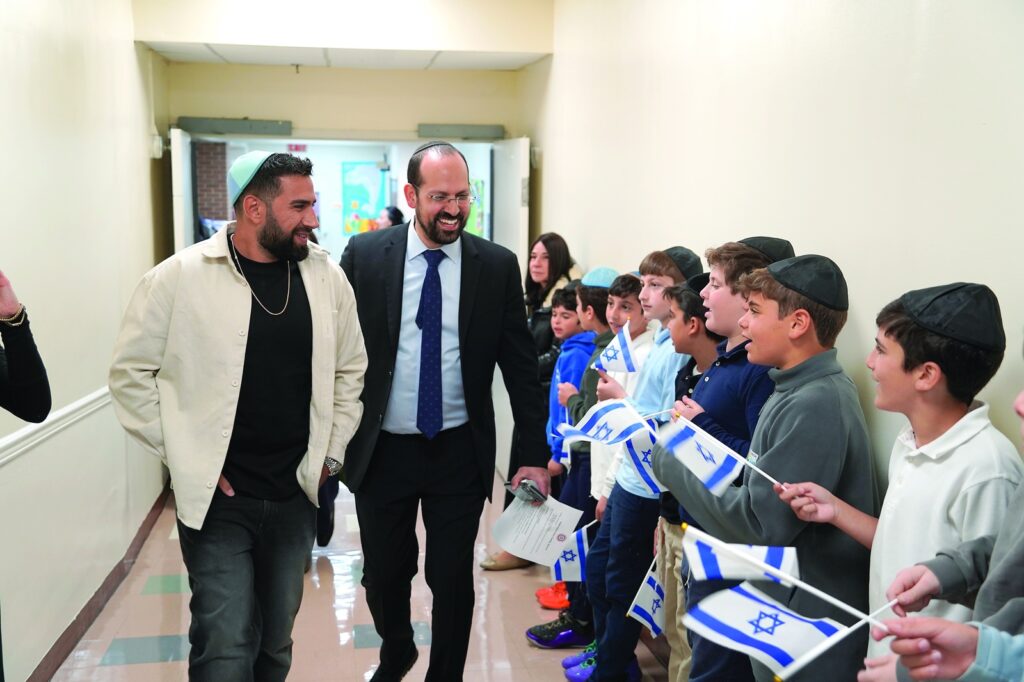
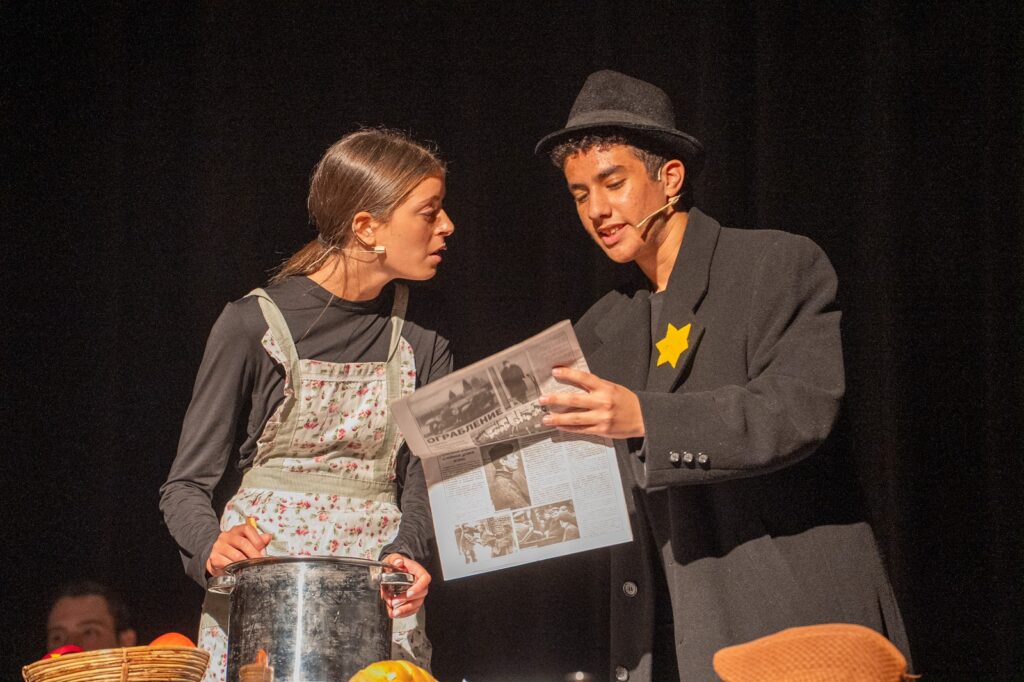
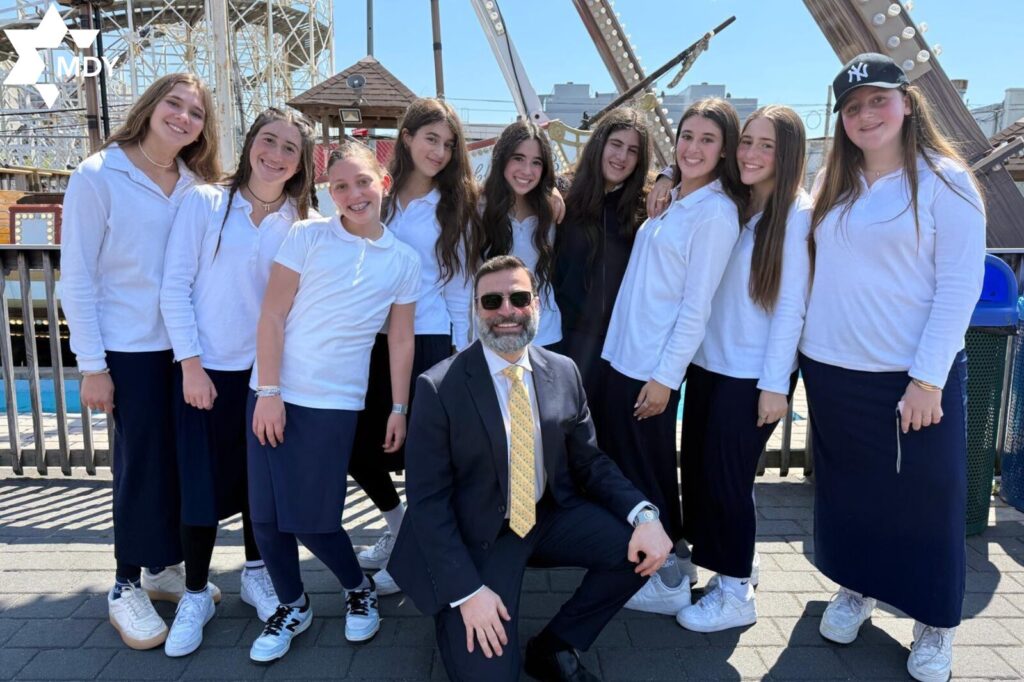
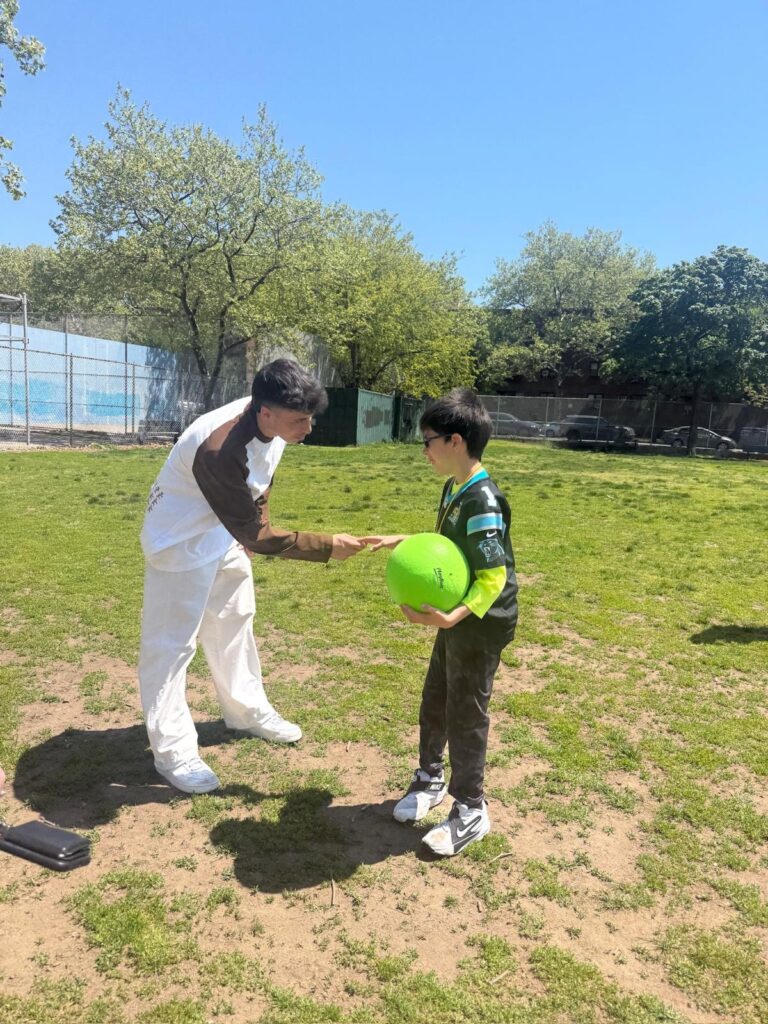
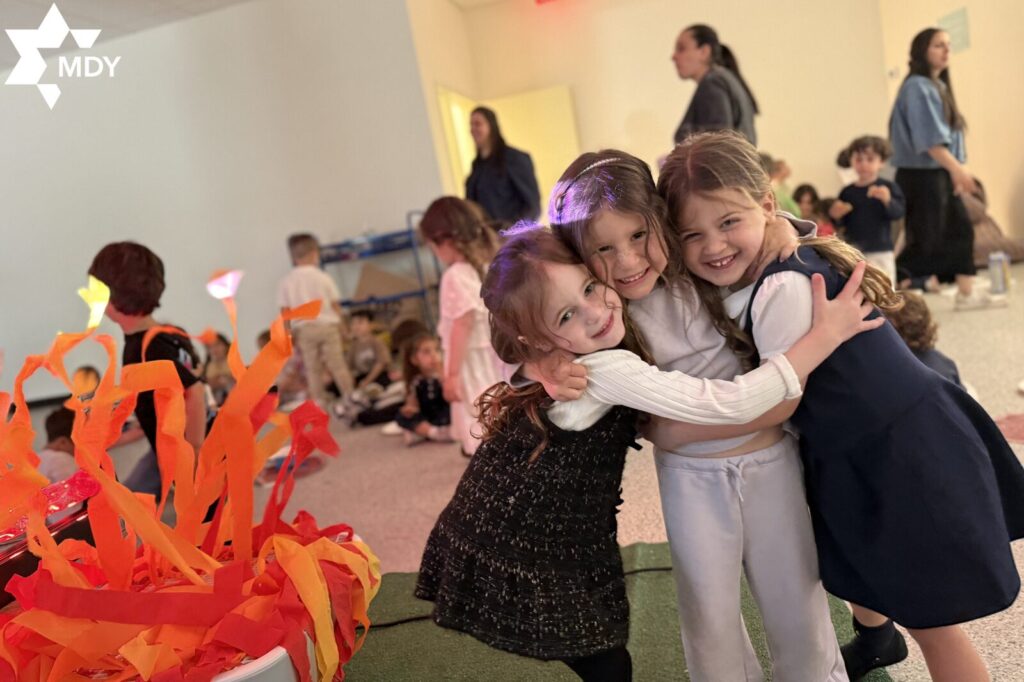
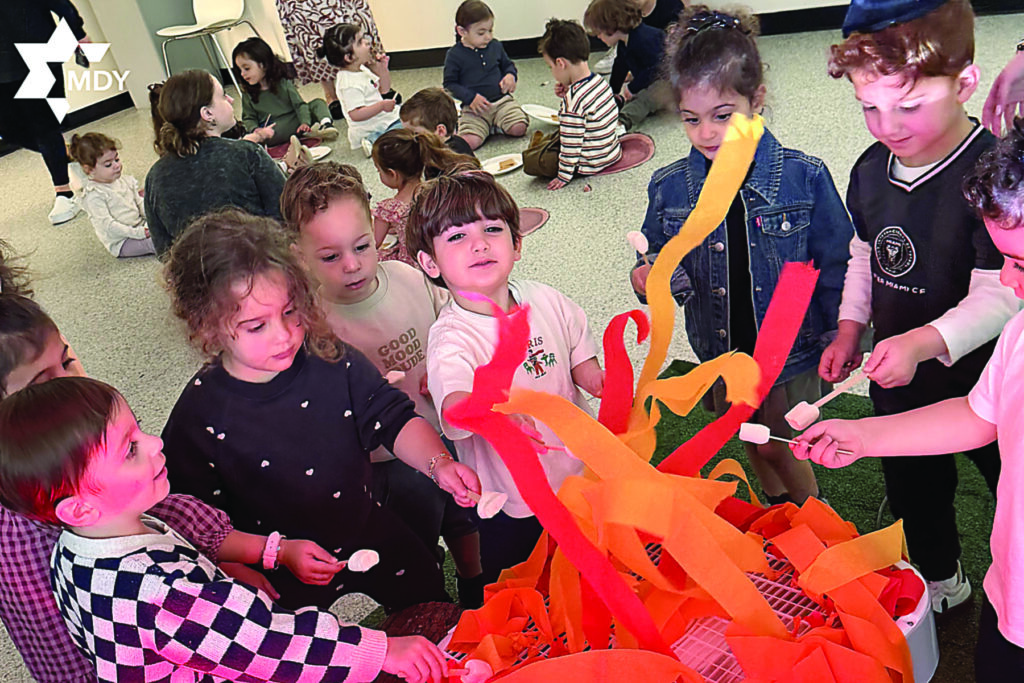
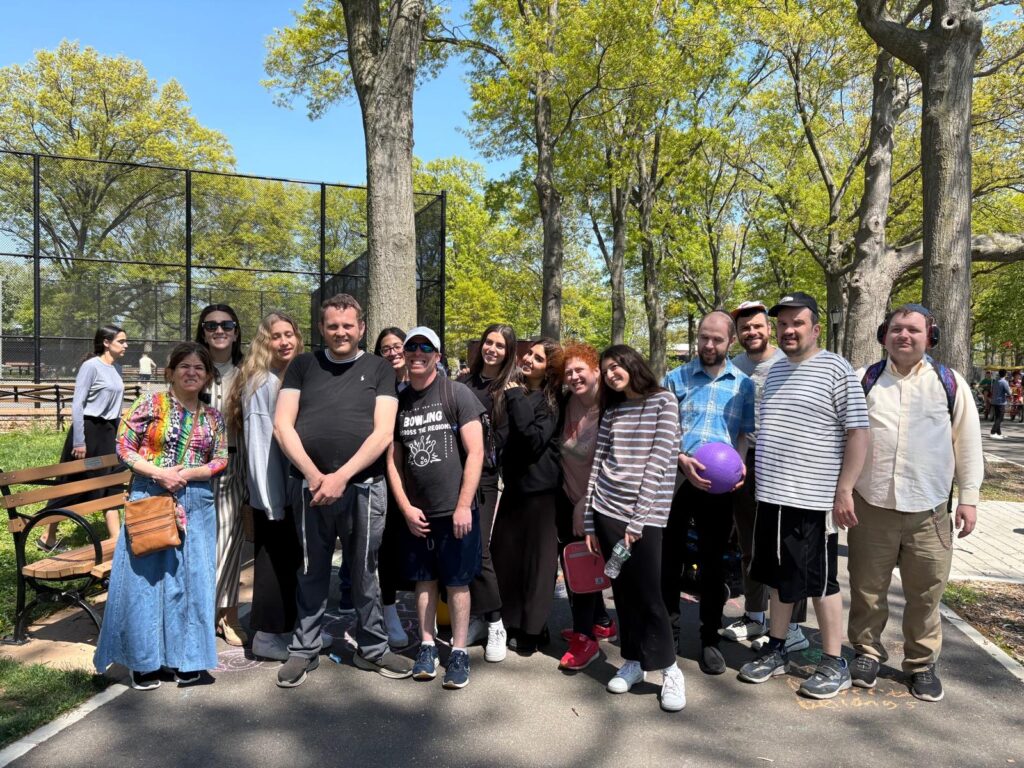
This month’s Community Photo Album highlights a spring season of Jewish memory and celebration. Our schools and organizations came together with meaningful programs, ceremonies, projects, and celebrations that brought people of all ages together. The photos capture Yom HaShoah programs, Yom HaZikaron commemorations, Yom HaAtzma’ut celebrations, Lag BaOmer events, school projects, assemblies, bonfires, and the many special moments that define this meaningful time of year.
The third Sunday of June each year is Father’s Day. Families get together with barbecues as it is the start of the summer. This special day was established in 1909 by Sonora Smart Dodd to honor her father, a Civil War veteran. It became a national holiday to honor fathers, celebrate paternal bonds, and recognize the influence of fathers in our lives. For me, it was the hour in the summer when he taught me to swim or to fish, or the times he took us to Coney Island on rides. They were special times. We asked people in the community to share with us things their fathers taught them.
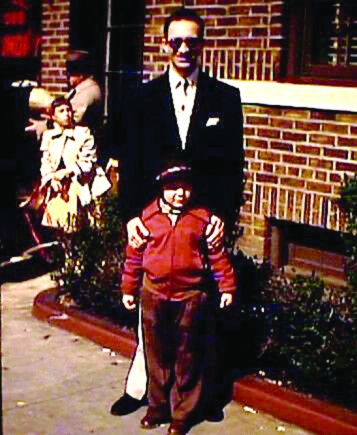
Abe a’h and Steven Salem, 1955
Abe Salem a’h By Steve Salem In 1956, my parents, Abe and Estelle Salem, bought a small house in Brighton Beach. It was a major “fixer-upper.” My dad spent a year renovating the house before we could move in. Every day, he came home from work, ate dinner, and went to the house to work on renovating the whole place. On weekends he would bring me along. We’d go to the home improvement or lumber store to get supplies and tools. I remember him saying, “You have to have the right tool for the job, or you’ll mess it up.” I watched him work and learned. I guess he learned out of necessity to DIY. We weren’t rich. When the major projects were done, we finally moved in. And as we lived there, he kept going with new DIY projects. And I learned more. I picked up his skills and used them when my wife Julie a’h and I bought our house in 1975, trying to emulate my dad with DIY projects. Thankfully my sons picked this up too. I am grateful for the experience. Also, Dad said, “Never go into an empty restaurant.”
Mara Attie with her father Mark Antar
Mark Antar By Mara Attie Growing up, my father instilled in me the importance of family, preserving traditions, humility, and treating others with honesty and integrity. He taught me that hard work and strong Torah-based values are the foundation of a meaningful life. Watching the way he carries himself each day taught me more than words or advice ever could. The values he lives by continue to guide me in every part of my life.
Jack Falack with Michelle Saad
Jack Ezra Falack By Michelle Saad My dad, Jack Ezra Falack, gave me a siddur for a bat Israel. He also gave me High Holiday machzors with my name engraved on them. My dad teaches me never to give up. Now that I think of it, he has given me the tools physically and spiritually to have faith in G-D!
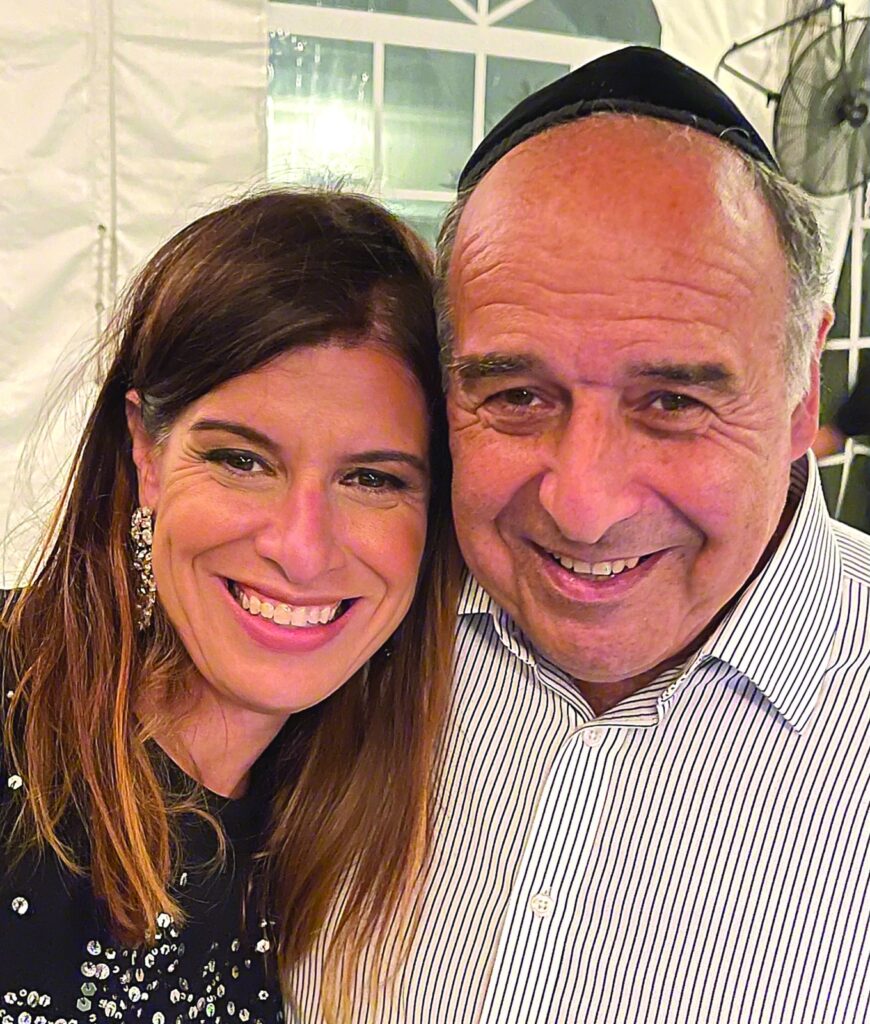
Harriet and David Roffé
David Roffé By Harriet J. Roffé My father always taught me never to laugh at someone else’s misfortune. He also taught me that if I am unhappy with my job because of a supervisor situation, but my boss likes me, there is no reason to leave, because ultimately, it’s the boss whose opinion matters. He also taught me not to live in fear.
Clement Dana and Viviane Darwish
Clement Dana By Viviane Darwish My father is my go-to person for advice! He taught me that Hashem is always first, to work hard, stay humble and move in silence with no ego. He also said that when people show you who they are the first time, believe it!
Sally Cohen and Laurie Mizrachi with their dad Charlie Saka a’h
Charlie Saka a’h By Sally Cohen and Laurie Mizrachi Our dad, Charlie Saka, was a leader and visionary in our family and community. He inspired us and those around him to get involved, work hard, and make sure the job gets done, no matter what. He believed deeply in giving back, always leading with kindness, being charitable, and having respect for others. He carried with him the wisdom and values of those who came before him, honoring them through the life he lived every day. Our family proudly carries his lessons and legacy in everything we do.
Henry, Stephen, Mark and Eddie Shalam
Mark Shalam By Eddie, Stephen and Henry Shalam Our father no doubt has taught us many things, but from a very young age he taught us to always treat people the way you want to be treated. He also taught us to be conscientious, hardworking and to do things right the first time. He taught us to be humble and to appreciate whatever we had. These are just a few of the life lessons we were taught, and they have always served us well.
Karen Cohen and her dad, Abe Missry a’h
Abe Missry a’h By Karen Cohen As a family, we spent our summers in a small town called Watch Hill, Rhode Island. My parents had a resort store there named Harvey’s and it was only open in the summers. From when I was a little girl, my siblings and I worked in the store and one of the things my father taught me was how to count out change to a customer at the register. First, we always put the money on top of the register, so there was no discrepancy. And we would always count out the change to the customer. We always counted up from the price of the sale to the dollar amount of money we were given. Counting out each penny, nickel, dime, quarter and dollar we gave back. For example, if the sale was $1.06 and we got a $5 bill. We would count each penny 7, 8, 9, 10 then the dime 20, then the nickel 25, then the three quarters $2, then each dollar 3, 4 and 5. Then we would put the $5 bill into the register drawer. It was a great lesson in math, courtesy, respect and professionalism.
Joseph and Louis Shamie a’h
Louis Shamie a’h By Joseph Shamie My father taught me many lessons but most importantly, he taught us to be respectful, to be kind and to be generous. He taught by example. His motto was, “Work hard, play hard, and enjoy life.” He taught me never to hold a grudge. Many of the things he did for others did not come to light until after his death. He believed everyone deserved a chance to succeed. Countless former employees told us how he employed them, treated them with dignity, gave them bonuses at holiday time, so they could have a good holiday with their families. They said, “Louis Shamie is the father I never had.” Most importantly, my father valued family, kept us all close, and loved my mother, Lorraine, with all his heart. He is my hero.
Isadore a’h and Harold Shamah
Isadore Shamah a’h By Harold Shamah Of all the gifts my father possessed, the ones that defined him most were his boundless compassion and his unwavering desire for peace. He never carried bitterness, no matter the circumstance. Instead, he met people with understanding, feeling their pain as if it were his own, and doing whatever he could, big or small, to ease their burden. I strive every day to follow the example he set.
Kimi with her father Sami Mandil a’h
Sami Mandil a’h By Kimi Mandil My father taught me the importance of hard work and perseverance. He came from Beirut not speaking a word of English. He knew the value in learning the language and what it would do to help him provide for his family down the line. These are some of the traits that he instilled in me and I am forever grateful.
Sarina E. (age 18) with her father Simon D. Roffé
Simon D. Roffé By Sarina E. Roffé My dad taught me the importance of independence. He always taught me to be able to live on my own by teaching me things like using a map and keeping up with him on busy sidewalks. He taught me how to be empathetic and put myself in someone else’s shoes, and he taught me how to be resilient no matter how bad your cards are. Lastly, he taught me that the world doesn’t owe you anything. We’ve all just got to make the best with what we’ve got, and that there is tremendous value in succeeding when the odds are against you. And he taught me how to hang a TV.
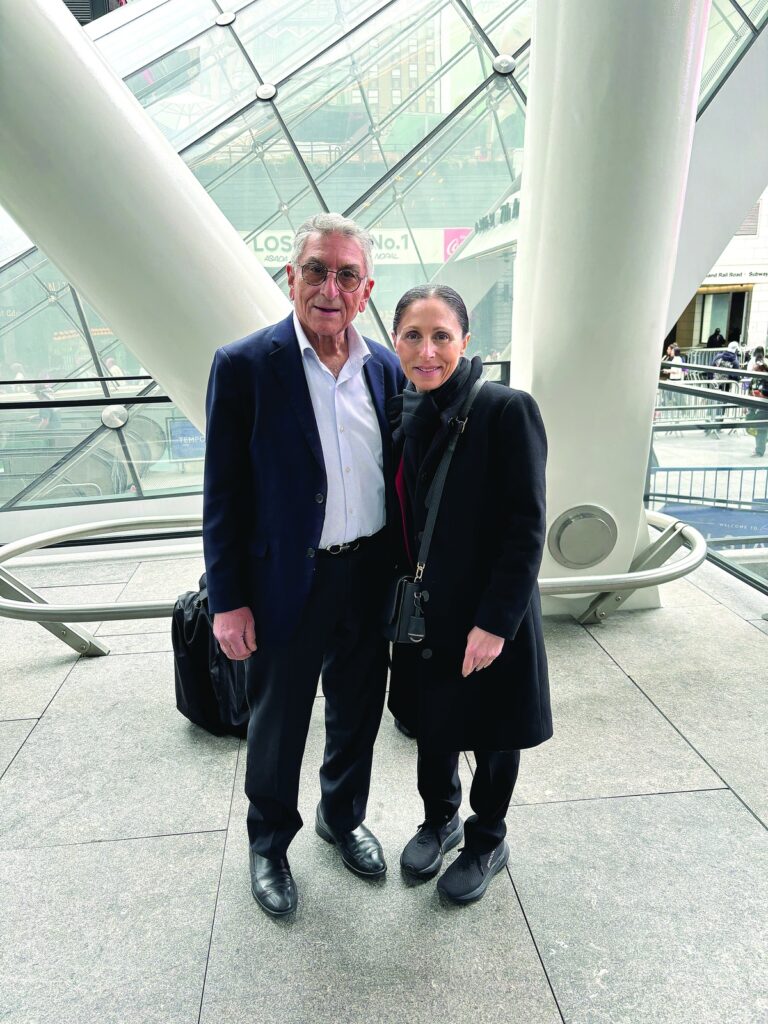
Susan Shamie with her father Jack Cattan
Jack Cattan By Susan Shamie My dad taught me to be honest and to help others through charity. He believes in working hard and doing the right thing, but he also understands the importance of enjoying life. He taught me that there is a time for work and a time for play and that balance is an important part of living well. Most of all, he taught me that family is very important and should always be valued, supported, and cherished. His kindness, generosity and community work have earned him the respect and admiration of many people while playing tennis, soccer, watching hockey or simply spending time with his family and friends. He continues to inspire us with his energy and spirit. I am proud to say my dad is wonderful. I wish him a long life filled with health, happiness and many beautiful moments together with my mom, his partner for life.
Victor Samuel Franco and his son Samuel V. Franco
Victor Samuel Franco By Samuel V. Franco My father, Victor, taught me that integrity isn’t something you announce. It’s something you live quietly, every day, in the way you treat people when no one is watching. He comes from a big, sprawling family, and he carried them all with him, honoring his father’s memory and caring for his mother with the same pride, loyalty, and love. But what I remember most vividly is his friendships: the laughter, the stories, the lifelong bonds that showed me friendship is something you earn, build, and protect. My father’s example is not only in what he has accomplished but in how deeply he loves, how faithfully he shows up, and how many people feel seen and cared for because he has been in their lives. I love you, Dad.
Starting a business today is easier than ever, but it wasn’t always that way. Starting a business often meant dealing with complex paperwork, confusing government requirements, and costly delays before a company could even open its doors. Entrepreneurs often had to visit state offices in person or hire expensive attorneys just to properly set up an LLC or corporation. Each state had different rules, and even small mistakes could lead to delays or rejected filings. For many business owners, the process was time-consuming, stressful, and costly before the business even began.
Today, everything has changed with the rise of the internet and modern technology. Business formation is now accessible to anyone with a laptop or phone. Online platforms guide entrepreneurs step by step through the setup process, making it simpler, faster, and more affordable than before. Automation tools help generate documents, reduce filing errors, and simplify the process for new business owners who may not know where to begin. Whether forming an LLC, corporation, or other entity type, entrepreneurs can now complete filings much more efficiently without the delays and complications that once made starting a business overwhelming. Another important advantage in today’s business environment is flexibility and privacy. Entrepreneurs are no longer limited to forming a business only in their home state. It is now possible to form companies in any U.S. state, depending on an entrepreneur’s business needs and preferences. In addition, many business owners choose to use a registered agent service, which provides a legal mailing address in the state where the business is formed. This is especially useful for those who want added privacy and a professional business presence, since the registered agent receives official government notices and legal documents on behalf of the business. This system allows entrepreneurs to keep their personal address off public records while helping business owners stay organized with important business documents and notices. It also makes it easier to manage multi-state businesses without physically being located in every jurisdiction. At the same time, online business formation has become much more affordable. Instead of paying high legal fees, entrepreneurs can now complete their business setup at a fraction of the cost. This allows business owners to focus more on building their company instead of spending valuable time dealing with paperwork and filing requirements. At Liberty Filing (libertyfiling.com), entrepreneurs can form a business in any state and obtain registered agent services when needed, giving them flexibility, privacy, and support throughout the filing process. The company helps entrepreneurs handle the filing process more efficiently and avoid many of the common mistakes that can delay business formation. Whether starting a first business or expanding into another state, Liberty Filing offers entrepreneurs a simple and affordable way to handle the filing process with greater ease and convenience. Business formation services are currently available for a special price, giving entrepreneurs an affordable and convenient way to get their business started without unnecessary delays or confusion. Visit libertyfiling.com to learn more and get started.
The information above is provided for general informational purposes only and should not be considered legal, tax, or financial advice. LibertyFiling.com provides document preparation and filing coordination services only and does not provide legal, tax, or financial advice.
The most memorable gifts you can give your father this Father’s Day.
1.The Gift Of Acknowledgement A father can feel like an invisible parent as children grow. Behind the scenes he has supported, cared, and been concerned, while mom handled the day to day goings on. A most incredible way of expressing love is recognizing the good that we have been given. Especially to one who is used to being overlooked. Jewish wisdom calls this ‘hakarat hatov’-literally ‘recognizing the good’. Beyond simply seeing, it means we take a moment to contemplate and acknowledge. This Father’s Day show your dad that you really see him and don’t take him for granted. Think back to all the trips taken, footballs thrown, nighttime snacks shared, whatever you can think of from your youth that remain etched in your mind. Acknowledge scenarios of your father’s patience, encouragement, and attention to help you attain your goals. Today is your chance to give the gift of recognition.
2.The Gift Of Uninterrupted Time Undiluted, pure, simple moments together are a gift. We are given the opportunity to bond, share conversation and experiences. Once the moment passes we can never get it back again. Plan a trip or take your father out, and do whatever it is he loves to do. Be patient. Be kind. Turn off your device. Sometimes we think we are present but emotionally, we are absent. When you are together, take the time to celebrate your dad. Recreate memories. Share thoughts that show your love. This is your opening to tell your father, “I’m so happy you are my dad” or “You’ve shown me how to get through the hard stuff and climb a mountain. Thank you, Dad.” The words may be hard to say, but you’ll be so happy you said them.
3.The Gift Of Relevance As years pass, a father may sense that he has become irrelevant. The child who used to ask for help is now the one called upon to figure out a new gadget. Instead of waiting by the window for daddy to come home, it’s Dad who is anticipating a child’s return. A father has much life wisdom to offer. Judaism teaches, “Ask your father and he will tell you.” With years come experience, heartbreak, loss, insight, and understanding. Seek out your father’s words, discover what life has allowed him to learn. “Dad, if you could meet yourself at my age, what would you say?” Listen. Don’t be snarky. Open your heart and mind. It’s not just about success and finances. We can learn, too, from all the mess-ups and disappointments. Dad has much to give. It is up to us to receive.
4.The Gift Of Peace When children get together, old rivalries tend to erupt. Arguing, fighting, divisions, and put downs between sisters and brothers sap the joy out of family time. Shalom, peace in Hebrew, is one of the most meaningful gifts you can give your father. Peace isn’t merely an absence of war. It is a sense of security, well-being and unity. Shalom is related to the Hebrew word shalem – wholeness. Because when we have peace we are whole. Complete human beings who love others as we love our very selves. Make an effort to create an atmosphere of peace as a tribute to your dad. Hold off from anger, bitterness, and resentment. Whether it is peace with your family, or even peace with your father, you will know that you have brought joy to your dad with your very presence.
5.The gift of forgiveness Most dads have tried their very best. Sure, mistakes were made. Perhaps there were hurts, missed opportunities, and nights that you found yourself crying in bed. But know that if your dad could, he would erase all those moments, go back, and try again. Life is too short to carry the heavy load of bitterness and resentments. We are all simply human beings. We fail. We fall. We want to love and to be loved. Forgiveness brings with it healing and serenity. Dig deep and draw upon your power of compassion and tolerance. It is time to walk a new path. Give your father a smile. Show him that you are glad to have this time together. That smile will be your gift that gives your father fortitude and spirit to face life’s storms. Approach this Father’s Day with the words of Rabbi Jonathan Sacks setting your path: “Love transforms us. It makes us beautiful in the eyes of those who love us. It makes us real.” Allow love to transform your relationship with your dad. Appreciate the blessing you’ve been given, the blessing of having a father in your life.