
DR. Loren Franco
An evidence-based guide to skin cancer, sunscreen, and what actually matters, from a board-certified dermatologist
Skin is the body’s largest organ. It’s also the only one we walk around showing to the world, the one that gets the most photographs taken of it, and the place where most cancers in the United States are diagnosed. As a dermatologist, the questions I’m asked most often haven’t really changed in years: What should I look for? What’s the deal with sunscreen? What about my kids? Can I really get melanoma if I tan easily? Here are the honest answers, the ones I’d give in the exam room.
Why should I be worried about skin cancer?
Because I see it every single day. Skin cancer is the most common cancer in the United States, with more cases each year than all other cancers combined. It comes from two patterns of exposure: intermittent, intense sun, such as beach days and vacations, and cumulative, long-term exposure, such as outdoor work, gardening, daily walks, and sports. Most of what we catch is treatable when found early. The challenge is finding it. Most patients I treat with significant skin damage tell me the same thing: They didn’t know. So the real answer isn’t to be worried. It’s to be checked.
Who is most at risk?
There’s a common assumption that only people with very fair skin, blond hair, and light eyes need to worry. That’s wrong. People of every skin tone, including darker, Mediterranean, and Middle Eastern complexions, can develop skin cancer, including melanoma. People with darker skin often catch their cancers later because neither they nor their doctors are expecting it. If you have skin, you can get skin cancer.
What should I look for when
checking my own skin?
Use the ABCDEs of moles:
• Asymmetry: one half doesn’t match the other
• Border: irregular, scalloped, or blurred edges
• Color: multiple colors or uneven coloration
• Diameter: larger than a pencil eraser, about six mm
• Evolving: changing in size, shape, or color over weeks or months
Any new or changing mole that doesn’t look like your others, the “ugly duckling,” is worth getting checked. When in doubt, get it looked at. That’s exactly what we’re here for.
How often should I see a dermatologist?
For most adults, an annual full-body skin check is the right baseline. If you have a personal history of skin cancer, a strong family history, many moles, or significant past sun exposure, more frequent visits may be appropriate, and your dermatologist will guide you. Many of the cancers I find are on patients who came in for something else entirely, often something they were almost embarrassed to mention. The visit takes about fifteen minutes. The value of finding something early is real.
At what age should I start protecting
my children’s skin?
From day one. Most of the sun damage I treat on adults was done when they were children and teenagers, and the data on this is sobering: five or more sunburns as a teenager roughly doubles the risk of melanoma later in life. Your skin has a long memory. For babies under six months, shade, hats, and clothing are the priority. For children over six months, use mineral sunscreen on exposed areas, apply it generously, and reapply it every two hours.
As your children grow into teenagers, the message has to keep being said: A base tan is sun damage, and the choices made at sixteen show up decades later. They will roll their eyes. Tell them anyway. We were teenagers too. We get it.
What’s the single most important
thing I can do for my skin?
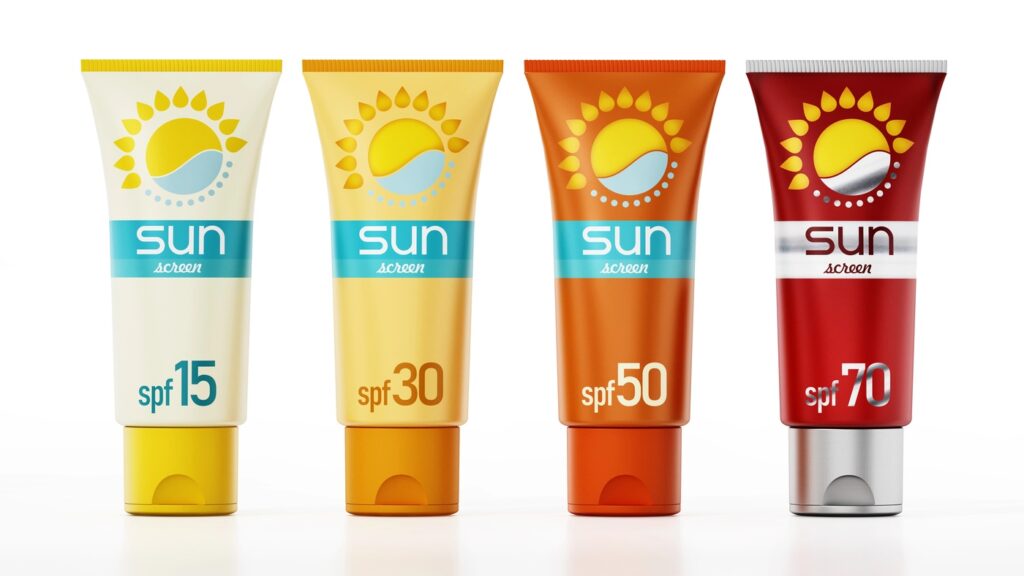
Daily, broad-spectrum sunscreen. Nothing else comes close. It prevents most skin cancers, prevents most premature wrinkles and sunspots, and helps keep conditions like melasma and rosacea under control. If you only do one thing, wear sunscreen every morning. Even on cloudy days. Even in winter. Even if you’ll only be inside, near a window. Yes, the kitchen or car window counts. UVA passes through glass.
Mineral vs. chemical sunscreen:
What should I use?
Both work. If you have no concerns, either is fine. If you’re worried about chemical sunscreens absorbing into the body, a question we haven’t fully resolved in the research, use mineral: zinc oxide and titanium dioxide. These sit on top of your skin, physically block UV, and have decades of safety data.
The most important thing is that you actually wear sunscreen and apply enough: about a teaspoon for your face and neck, and a shot glassful for the whole body. Most people use about a quarter of that, which is why patients walk into my office tan or burnt and tell me, “But I put on sunscreen.”
I keep seeing claims that sunscreen causes cancer. Is that true?
No. Sunscreen prevents skin cancer, including melanoma. The internet has gotten a little weird about this lately. The misinformation circulating online comes largely from misreading studies about chemical sunscreens absorbing in small amounts into the bloodstream. What that means long-term is still being studied. What is not in question: UV radiation causes skin cancer, and sunscreen blocks UV. If you’re concerned about chemical filters, use mineral. But not using sunscreen at all is the worse choice by far.
Is there a safe way to tan?
No. A tan, any tan, is your skin’s reaction to UV damage. The skin produces melanin to try to protect itself after the fact. There is no “safe” tan from the sun or a tanning bed.
The “base tan” myth, the idea that getting a tan first will protect you later, is also wrong. A base tan gives you about SPF 3, which is not meaningful protection. What worries me most are the trends I see among teenagers tracking the UV index to plan tanning sessions at peak hours. Because skin has a long memory, those choices show up decades later. The teenagers chasing UV 9 now will be the patients I see in twenty years.
If you want color, self-tanner is safe and effective. If you want protection, that is sunscreen. Both are at the drugstore. Neither requires a prescription.
What if I just want to take care of my skin without a 25-step routine?
Good news: You don’t need one. Your wallet will thank you. For most people, real dermatologic skin care comes down to four things:
- A gentle cleanser, morning and night
- A moisturizer suited to your skin type
- Broad-spectrum sunscreen every morning
- A retinoid at night, added gradually once your skin tolerates it
If you have a specific concern, such as acne, melasma, hair loss, or a stubborn rash, see a dermatologist. The 25-step routine isn’t dermatology. It’s marketing. Excellent marketing, but still marketing.
To connect with a dermatologist and schedule a skin cancer screening, call the Morris I. Franco Cancer Center – MedStar Medical Referral Service at 718-787-1800.