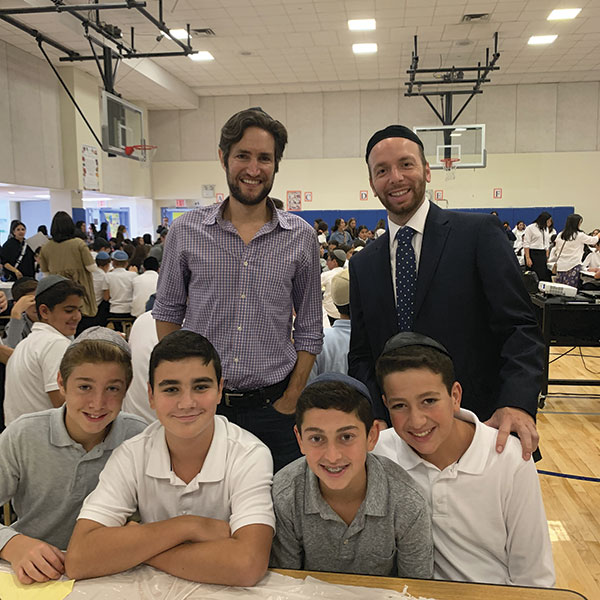
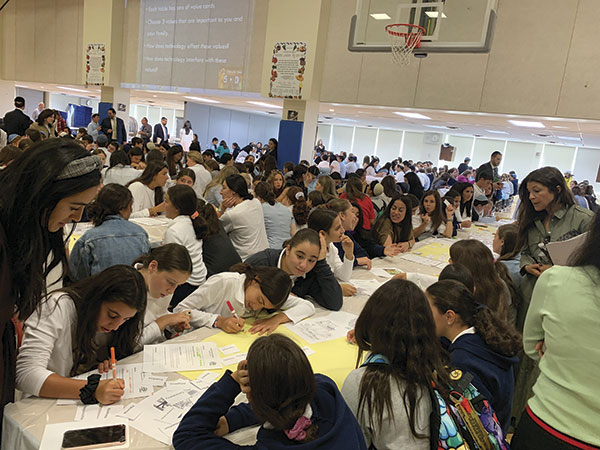
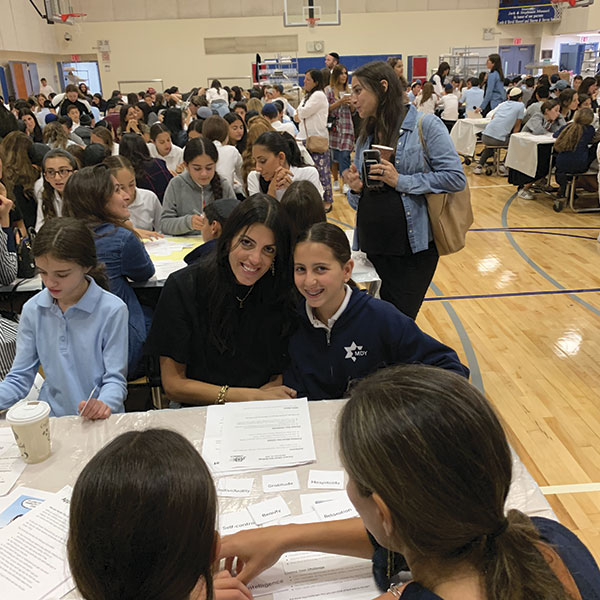
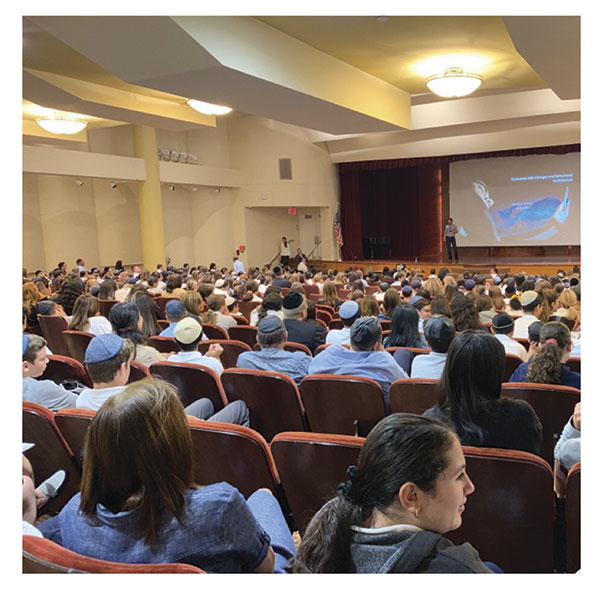
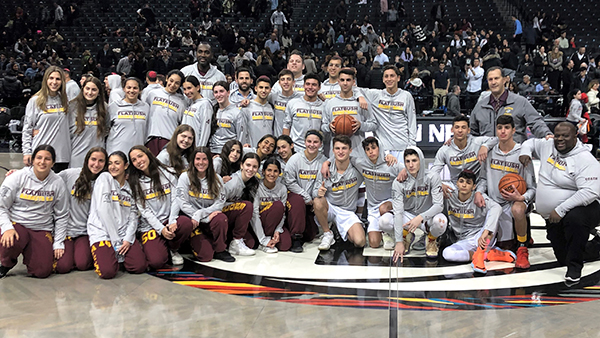
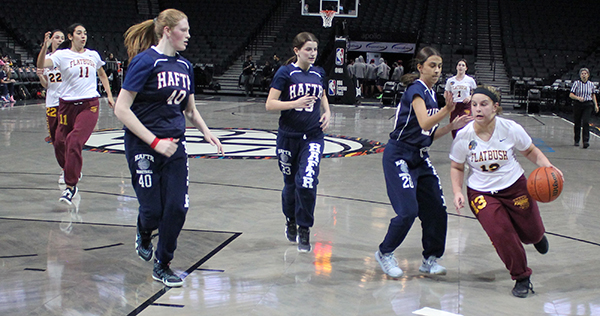
The Yeshivah of Flatbush Joel Braverman High School (JBHS) Falcons recently turned the Barclays Center into a falcons’ nest, for the night! The girls and boys varsity basketball teams traveled across the borough to the Atlantic Avenue home of the NBA’s Brooklyn Nets, where they took on MYHSAL (the Metropolitan Yeshivah High School Athletic League) rival HAFTR (The Hebrew Academy of the Five Towns) Hawks.
As the Varsity Falcons were introduced, the stands behind the player’s benches began to fill with Flatbush supporters—classmates, parents and friends, sporting maroon and gold, ready to cheer for their favorite team.
It wasn’t long before the action was underway, and the players’ focus turned away from the unique surroundings to the challenge of facing their league opponents. Girls’ Basketball Head Coach Rozan Mizrahi-Loudon and Boys’ Basketball Head Coach Michael Gurock were exceptional on the sidelines, ensuring that every player was able to make a significant contribution on the court, and that the games were both competitive and entertaining.
Afterwards, fans and players reflected on the once-in-a-lifetime experience. Flatbush senior Isaac Sutton said, “To know that I am playing on the same court that Kyrie Irving plays on, is just awesome!”
“This was an amazing night! The show of support from the students in the stands was absolutely unbelievable. I hope this is something we will be able to do again in the future,” said a Falcon parent.
Special thanks to YoF Athletic Director Eric Amkraut and his staff, who worked closely with representatives of the Brooklyn Nets to make the event possible. It was a fantastic evening for each and every Falcon, and a highlight of the season, for students on the court and in the stands.
When a couple is blessed with a child, they think about all the fun they will have nurturing the baby and teaching the child everything they know. Sometimes the parents get a wake-up call that stops them in their tracks—the flu, a late milestone, or in some cases a diagnosis of something that most people have never heard of, or never knew existed.
Special needs is an umbrella term for a wide array of diagnoses, some resolve quickly, others are a challenge for life, some are relatively mild, others are more profound. The term special needs can include, but is not limited to developmental delays, medical conditions, genetic disorders, learning disabilities, autism, Down syndrome, cerebral palsy, or a physical handicap. They all require special accommodations, so the children can reach their full potentials.
No matter the reason, the diagnosis is useful. It can help parents obtain the needed services, set appropriate goals, and gain an understanding of the child and the stresses the family may face. Often, a stressed child will find himself in a stressed home or school environment. True the stressful environment may have been caused by the child with special needs, but the end result is that the child finds himself having to deal with stressed out adults, which is the last thing he needs.
Special needs are commonly defined by what a child can’t do—milestones unmet, foods banned, activities avoided, or experiences denied. These hindrances can hit families hard and can make special needs seem like a tragedy. Some parents will always mourn their child’s lost potential and some conditions become more troubling with time. Other families may find their child’s challenges make triumphs sweeter, and that weaknesses are often accompanied by amazing strengths.
Special needs is a very broad term and every situation is unique. Families should focus on seeking the help and guidance needed for their particular concerns.
Parents, caregivers, and teachers are generally the first to realize that a problem exists. When you think about it, psychiatrists, therapists, neurologists, and physiatrists do not stand on street corners, and randomly pick children to evaluate. Rather, kids are sent to doctors because other people have noticed a problem. Those people, namely parents and teachers are the ones on the front line. When they notice there’s a difference—that’s when the parents seek the help of psychiatrists, neurologists, etc.
Developmental disabilities can change a parent’s visions of the future and provide immediate difficulties in caring for and educating the child. Diagnoses like autism, Down syndrome, and intellectual disabilities often cause children to be removed from mainstream settings and schools. Quite often, parents become fierce advocates to make sure their children receive the services, therapy, schooling, and inclusion they need and deserve.
Learning issues: children with learning disabilities like dyslexia, an auditory processing disorder (APD), struggle with schoolwork regardless of their intellectual abilities. They require specialized learning strategies to meet their potential and to avoid self-esteem problems and behavioral difficulties. Parents of learning-challenged kids need to be persistent. This includes working with the child at home, as well as with teachers and schools, to ensure they get all the help they need. They may want to remove the child from a mainstream school and put him in a school that specializes in this area.
Children with behavior issues may not respond to traditional discipline. A diagnosis of ADHD, dysfunction of sensory integration, autism, or Tourette syndrome require specialized strategies that are tailored to their specific needs. Behavior issues can increase the risk of problems at school. The parents need to be flexible, creative, and patient.
Children’s medical issues can include, but are not limited to, serious conditions like heart defects, muscular dystrophy, cystic fibrosis, and other genetic diagnoses. A child may need frequent medical testing, hospital stays, equipment, and accommodations for disabilities. Establishing a good support system is very important when dealing with the uncertainty of any medical crisis.
People will share what they feel is helpful. They will want to try and fix your child’s challenges for you. They may also share their absurd ideas. Take these ideas with a grain of salt, pondering the advice you think might prove useful. Although every child’s special needs are different, and every family is unique, there are some common concerns that link parents. These include getting appropriate care and promoting acceptance in the extended family, school, and community. For some, planning for an uncertain future may be necessary.
Parents might also find themselves adjusting routines and expectations. Sometimes, quite often out of necessity, parents of children with special needs may be more flexible, compassionate, stubborn, and resilient than other parents.
While it may not be something parents had hoped for or expected, it is important for the child that the parents do their best. As parents, you will learn more about yourselves, once you take ownership of the process of dealing with the diagnosis. It is going to be quite a ride, but take comfort in the fact that you’re not alone. So, feel comfortable reaching out for support and as crazy as it sounds now, one day you might want to share your failures and successes to help others.
In life, approaching issues with realistic expectations will spare you from disappointment. While positivity and hopefulness are important, one should be prepared for any outcome. If the result is better than expected, then appreciate the happy surprise. If the result is not what you had hoped for, the proper perspective will help you accept the outcome and move forward. This healthy attitude will help you navigate your single years and actually enjoy them, whether you socialize, work with a matchmaker, or join a responsible social dating app.
You should think about the high hopes you have of meeting someone when going to a party, on an organized singles trip, or to a popular vacation destination. You must realize that a small percentage of people actually do connect, and that less than half of those connections result in marriage.
If you don’t meet someone, even though you were open, friendly and charming, don’t blame yourself. It simply wasn’t your time, and B”H (with G-d’s help) the right time will come when its supposed to. For some it takes one party or one date while for others it can take months or years.
Matchmaking and social apps share many qualities. They may lead to dating, but you may or may not get the results you envisioned. In fact, many more will experience disappointment than success. Some may not receive a single match, which they shouldn’t take personally, perhaps it wasn’t their destiny to meet in this fashion.
You never know where or how you will meet your love, therefore keep enjoying the journey and when the time is right you will be ready.
By now you may realize that matchmaking is not a service that can guarantee results. For some it will create opportunities, for others it will provide new choices, and for a few it will not do anything .
Here’s How You Can Make The Most of Your Matchmaking Experience
Make sure you meet personally with your matchmaker (MM) for a full interview so they get to know you and what you are looking for. It’s best to continue your communication with your MM periodically, as feelings and circumstances often change. Don’t be afraid to ask your MM questions! Anything from what you should wear, date ideas, advice or feedback. One of the greatest perks you receive from matchmaking is a go-between—someone who knows how to guide you in the right direction.
Matchmaking is not to be misconstrued as a dating service. The MM’s responsibility is not to get you out of the house or fill your date schedule. The match has to make sense on many levels. Some people call a MM for the first time and ask, “Do you have anyone for me?” The MM may answer them with a no. What they mean to communicate is that they don’t have a potential prospect for you at this particular time. They are continuously searching their database and meeting new singles thinking of you. Instant gratification does not apply here. It is the quality of the match, not the quantity or speed.
The MM will never force you to go on a date. You have the prerogative to say no. Please make sure that if you do say no, that it is for the right reason. Your friends’ disapproval does not count nor does the social media presence of the potential match. If there’s the slightest possibility that this suggestion can succeed, then there is nothing to lose. Sharing a quick cup of coffee or having a drink is a pleasant alternative to a full date. If the same name of a match continues to come up, there must be a reason. You owe it to each other to explore what other people see.
Focus on one person at a time. The MM cannot control what you do on your own, but she will certainly not arrange for you to meet two people at once. If you are given a match, It’s best if you don’t pursue anyone else at the same time.
Do not be dismayed if a suggestion is not one you expected. Perhaps another MM or individual implored your MM to consider their recommendation. The guideline for a MM is that she must propose realistic suggestions made for you and let you decide.
Following a date, where a connection is not made, it would be generous on your part to pay it forward and suggest someone else who would be a better match for that person.
MMs work with many single people, so it is important to communicate with them and check in often. It is no bother to them. Many singles get upset when they do not hear from the MM. Help them to help you! A periodic reminder or text goes a long way. It is a two way street.
Declining suggestions too often will lead a MM to think you are not serious and that your expectations are unrealistic.
Now, in the year 2020, the Children of Abraham are afraid in a way we have never been before in America. As Jews, we are under threat of violence as we walk down a city street, attend classes on college campuses, and even enter our synagogues to pray. American Jews are being physically attacked simply because they are Jewish, which is a blatant form of anti-Semitism.
However, it is often difficult to determine if verbal and written statements directed at Jews are also anti-Semitic. In other words, what is the difference between legitimate criticism of the Jewish State of Israel, and a flagrant attack on Jews in general?
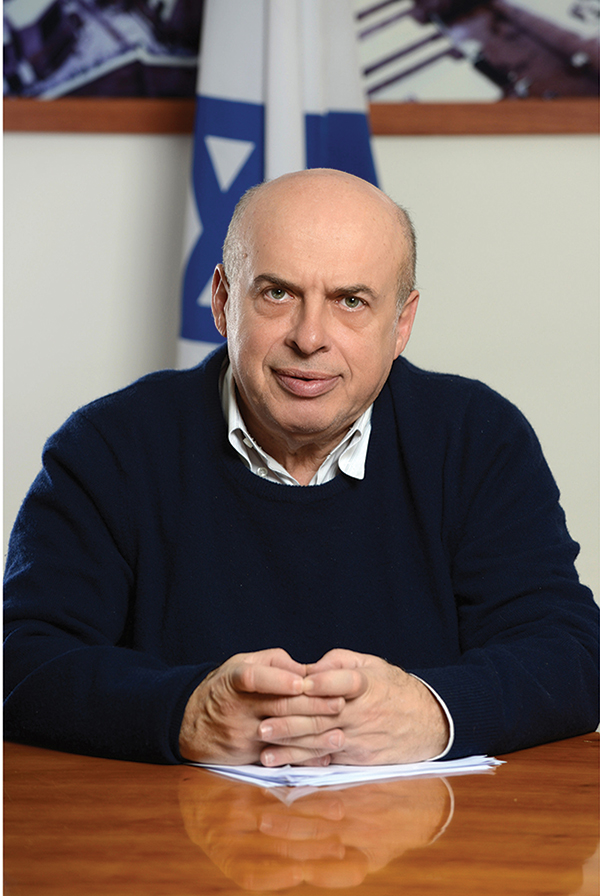
Former Israeli Minister of Diaspora Affairs and noted author Natan Sharansky, was also a prisoner who spent nine years in Soviet jails as a result of anti-Semitism. During his tenure as Minister, Sharansky developed an easy test to determine the differences between honest criticism on Israel, and obvious anti-Semitism. He named it “The Three D’s of Anti-Semitism,” and it has been a useful tool for politicians, media, educators, and more.
Demonization
“Jews have too much power in business and finance.” This concept has been haunting the Jews for thousands of years. The question could be asked, why does the fact that someone is Jewish have anything to do with having power in business and finance? There are plenty of non-Jews that are very powerful in business and finance. Why aren’t they discriminated against for their religion? Another horrific statement, “Jews are the children of apes and pigs,” is actually mentioned in the Quran itself, it is quoted by every Muslim leader in Middle Eastern countries, and it has become integral in the teachings of Militant Islam. These concepts work to demonize the Jews. This is anti-Semitism.
Delegitimization
The BDS (Boycott, Divest, Sanctions against Israel) Movement by the Palestinians has tried to delegitimize the Jewish claim to nationhood in the State of Israel. Although Jews have been living on the land for over 3,000 years, the BDS Movement seeks to destroy Israel “from the river to the sea,” calling Israel (among other things) an “apartheid state” that is violating international law. Especially prevalent on college campuses, the BDS Movement uses Jewish hatred as a way to fundamentally deny Israel’s right to exist. This is anti-Semitism.
Double Standards
The United Nations is an intergovernmental organization responsible for maintaining international peace and developing friendly relations among nations. Yet, year after year, the UN Human Rights Council passes countless resolutions condemning the State of Israel. Since the creation of the Council in 2006, it has passed more resolutions condemning Israel—than on the rest of the world combined. Israel has been condemned for the way it has defended itself. Statistics show that the Israeli army has by far the lowest civilian casualty ratio of any country in the world. Even lower than the United States. So why is the UN applying a different standard to Israel and its right to defend itself? This double standard is also anti-Semitism.
Minister Sharansky’s Three D’s of Anti-Semitism has become a useful tool in the fight against Jew hatred by helping to make clear the differences between constructive criticism and absolute hate toward Jews and the people of Israel.
“Two basic desires of people are to belong, and to be free: and they have to go together, they have to strengthen one another,” Minister Sharansky said. By using the Three D’s, one can more easily find solutions in fighting Jewish hatred, instead of fanning its flames.
Rabbi Shimon Alouf, Ezra S. Ashkenazi, Rabbi Harold Sutton and Rabbi Joseph Dweck
The Allegra Franco Sephardic Women’s Teachers College is doing more than opening doors to higher Judaic education for women in our community. By providing an opportunity for the women of our community to be exposed to an enlightened Torah and Judaic education, whether they become teachers, executive tutors, or whether they are primarily interested in advancing their post-high school Jewish education, it is creating a completely new direction in life for each student, for our community and for future generations as well.
The tragic passing of Edmond Safra sent shock waves all around the world. Many representatives of our community attended his funeral in Geneva. Leaders included Joe Cayre, Stanley Cayre, Jack R. Avital, Jacob Kassin, Sam Domb, Jack Dushey and Miro and Nora Sutton.
In Brooklyn, family, friends and business associates paid tribute to this giant of a man in memorial services, which were held at Shaare Zion Congregation and in Magen David Yeshivah Elementary and High School.
The technology sector offers record-level employment opportunities. Tech jobs in New York City are opening up at a pace four times as fast as overall private job growth. The obvious question begging to be asked is, Why don’t more women in our community pursue a career in technology?
There are three primary reasons, but they often can be softened to the point where they no longer appear as impediments.
Many people have misconceptions about technology or possess a narrow understanding of what technology careers exist. Contrary to common knowledge, tech is not limited to software development. Every industry now offers technology jobs because technology is erupting into every single industry. Furthermore, the skills you need today are different than what was needed for the previous fifty years. The next five or ten years will see increased tech skills as a prerequisite to entry as well as a requirement for advancement.
You can be a software developer, a cybersecurity specialist, a web designer, digital marketer, social media marketer, data scientist, systems analyst, and the list goes on. Every type of designer today must design using software. Nothing is done by hand. You may work in a corporate setting with a high powered job, or work for a smaller agency with more flexible hours. Propel discusses the reality of what these jobs entail so that each woman knows what kind of a commitment is necessary and whether or not it is something she chooses to pursue.
We’re here to help if you’re interested in a tech career, but you don’t know how to begin. If you would like to test the waters and see if the subject matter is for you, we may suggest resources that offer free courses. We can discuss the merits and shortcomings of online versus on-campus programs. It is possible that you did your own research and want to discuss your findings with us. Regardless of your area of curiosity, we will help you clarify choices and put together a step-by-step plan that makes sense for your life.
It seems unattainable, however we’ve proven that it’s not. PROPEL has placed three women into full-time tech careers: two as software developers and one as a project manager. Not one of them had considered entering technology as a career until they spoke with us. We supported them during their decision-making process because it is a big step.
When finding a job became challenging, we provided direction, as well. You have to work hard for an opportunity and when you get that opportunity you have to deliver. One of PROPEL’s graduates became pregnant with her second child during her studies. Her husband and family rallied to take care of her two-year-old, so she could power through the full-time, three-month coding boot camp. Having children definitely affected her choice of employers because she needed flexibility. Today, she is expecting her third child and continues to work for a small company that understands the realities of raising children. The point is, a career in tech is attainable if you really want it.
It’s true you can major in technology specialties while in college. These major subjects include, but are not limited to computer science and artificial intelligence, and other emerging areas of expertise. While this strategy does advance you faster, it is not necessary or possible for someone who has no intention of attending college, or for someone who has already graduated with a concentration in another field. The good news is that specialized programs can be completed in as little as three months (full-time) or as long as two years (part-time) by getting certified through continuing education programs.
As an example, opportunities to learn about software engineering are endless. There are free online courses that anyone can access. Khan Academy, Skillshare, edX, Alison, Audacity and Code Academy are just a sample of the schools that offer free learning. These are especially helpful if you want to try out the material before you commit to a more rigorous learning commitment.
New York City is emerging as the East Coast technology hub. It is anticipated that numerous jobs will be opening up in addition to the ones already available. New Jersey has its own tech hub that pulses with life as well.
Call PROPEL today to explore how you might take advantage of the best opportunities available.
If you are interested in a career, please reach out to PROPEL. We can help you fulfil your professional goal. Call (646)494-0822 or email info@thepropelnetwork.org.
Follow PROPEL on Instagram @PropelNetwork to find out information about upcoming programs and events.
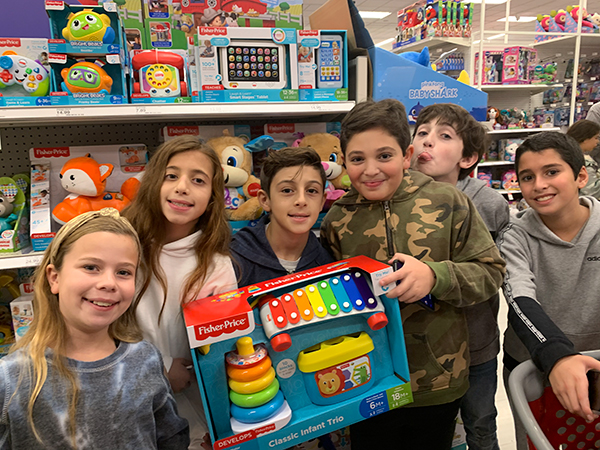
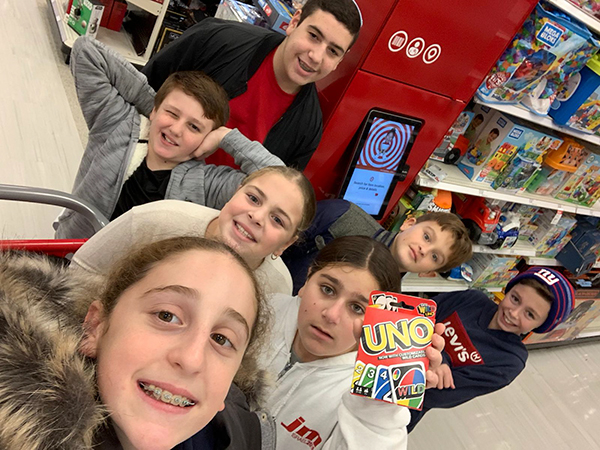
The DSN Community Center recently put together a fantastic Toy Scavenger Hunt at a local Target store to benefit children whose families could not afford to buy toys this Hanukkah season. Forty fifth graders collected over $300 worth of toys to give out on Hanukkah, and they had a blast doing it!
The youth arrived to DSN at 6 pm, excited and ready to roll. First all the rules of the hunt were explained to them, then teams were randomly picked by DSN. They were ready to work together to set a perfect example of what teamwork is about. They were loaded onto their buses, and taken to Target a few miles away.
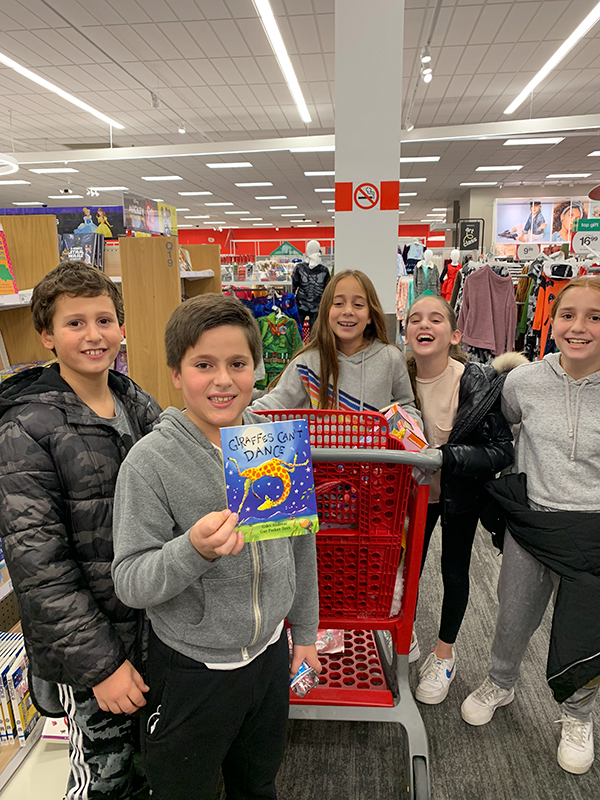
The hunt began at 7 pm. Each team of six players took a wagon and a packet of clues and began their journey. The clues, which led them to the toys, included riddles, such as “Red and orange, green and blue, shiny yellow purple too, all the colors that we know. Find a rainbow in a box and _ my Eggo.” Some kids were tricked into thinking we wanted Eggo waffles but others realized we meant Legos!
Some of the clues required them to be creative, with teams taking pictures in sunglasses, wearing cozy winter hats and even placing buckets on their heads! The creativity and fun they put into the night was captivating. Of course, DSN staff made sure that all teams respected store customers and staff.
Sandra Sutton, DSN board member and chairperson remarked, “My son had the best night! He loved being out late at Target and they all had a great time working together to find what they needed!”
Ruth Gindi, a DSN mother, commented on Instagram, “Best night!!!! Kids had so much fun!” Another mother, Jessica Esses, added, “They had the best time!!”
At the end of the hunt, they had carts full of awesome games and toys which DSN then purchased to donate to less fortunate children. Having fun while helping others, that’s what DSN is all about. It was a special night for everyone!q
How do we get our kids to put their phones down? It’s a good question, however are they the only ones that need to take a break from the Internet? The reality is that we are all attached to our devices. Our kids are not the only guilty parties. Social media, and other websites have become a way of life, and to many of us, even an addiction. While acknowledging that technology is our future and that it enhances our lives in so many ways, a healthy balance must be established.
Managing that fine line between too much usage and adequate/safe usage is what led a group of Magen David Yeshivah mothers—along with the PTA, faculty, and administration—to tackle this issue head on.
The students were overusing their devices, completely hooked on gaming, Instagram and Snapchat. The team decided that the time had come to take a community-wide stance. If we work together as a community, we can form healthy relationships with our devices and channel our tech use in a positive way.
And thus WeConnect was born. The tech awareness initiative officially launched on September 23rd with a special program for parents and students in grades 6 to 8. There was not an empty seat in the room—it was clear that this was important to everyone.
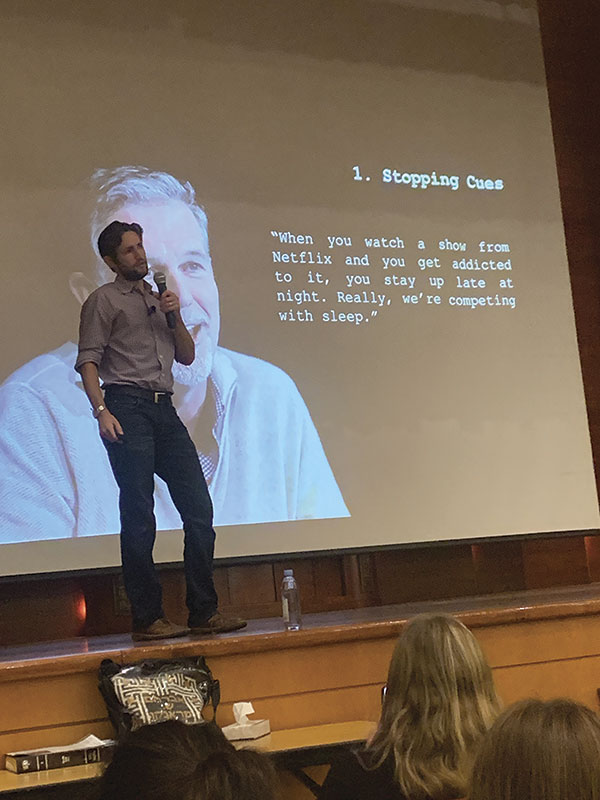
Famed psychologist and Ted Talk speaker Adam Alter PhD began the program by explaining the dangers of technology overuse and how rapidly the usage statistics have changed. (TED Talks are influential videos from expert speakers on education, business, science, tech, and more.) He spoke of the strategic ways that large tech companies like Netflix and Instagram use to keep us hooked (think auto play, and infinite scroll).
They make it exceedingly difficult to prioritize our white space. (White space represents the part of our day that’s left after we’ve spent time working, sleeping, and eating.) Our white space is what defines us as people, it’s where creativity thrives, hobbies are developed, and individuality is formed. He went on to offer tips and tools to help the audience develop a safer relationship with technology. He mentioned setting time limits, keeping devices tucked away at mealtimes and charging our phones outside of the bedroom.
The presentation was eye-opening. Afterwards, the WeConnect committee, led by Vicky Bawabeh, Shirley Feldman, and faculty advisor Helene Palacci, felt it critical to put these steps and tools to use right away with a parent-child workshop led by trained Magen David teachers. The goal was not only to help students become aware of their device use, but also to motivate them to come up with their own ideas to help strike the perfect balance.
The students clearly understood that both their family and their school would support them in this mission, and were eager to take the next steps. Magen David, in collaboration with SAFE, has already implemented WeConnect programming into the children’s curriculum, and the response has been phenomenal. The children are taking initiative, and motivating each other to disconnect more often.
The WeConnect team is currently working on new student-driven programming, and is already seeing some impressive first steps towards tackling this ever present challenge.
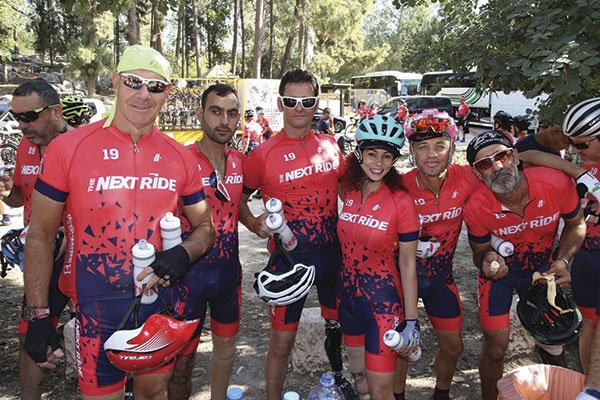
I was recently introduced to a spectacular organization called The Israel Medical Fund (IMF), by Jewish IMAGE Magazine’s Managing Editor Steven Matsas. We are both avid cyclists and IMF was having a cycling event in Brooklyn, which Steven invited me to take part in. How could I refuse such an offer? I thought it would be a nice day of cycling and a great event, but it turns out Steven had an ulterior motive. He knew I would be drawn to the organization once I got acquainted with it, and that I would want to participate in the upcoming cycling event—in Israel.
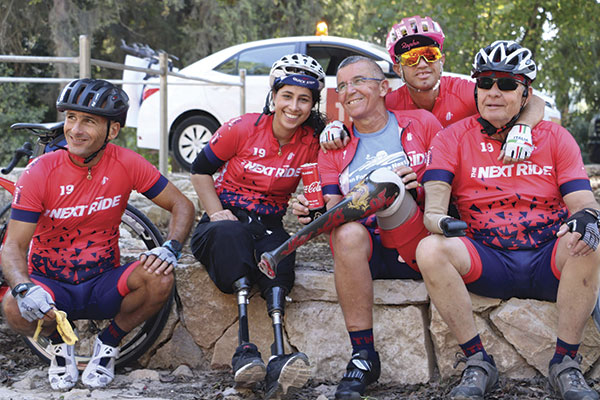
IMF has a program called The Next Step (TNS) which helps Israeli amputees get state-of-the-art prosthetic limbs, which the Israeli Health Ministry doesn’t provide. Israel’s socialized heath system doesn’t allocate much funding for amputees. They provide the equivalent of $7,000 for a prosthetic, but the cost can be 10 times that. The average price tag is over $50,000 and can even cost over $100,000. That’s where The Next Step comes in. TNS helps the amputees, many of whom had suffered through dramatic events, such as terrorist attacks, accidents, cancer, and some were wounded in the IDF—get the prosthetics and care they need to regain some sense of normalcy.
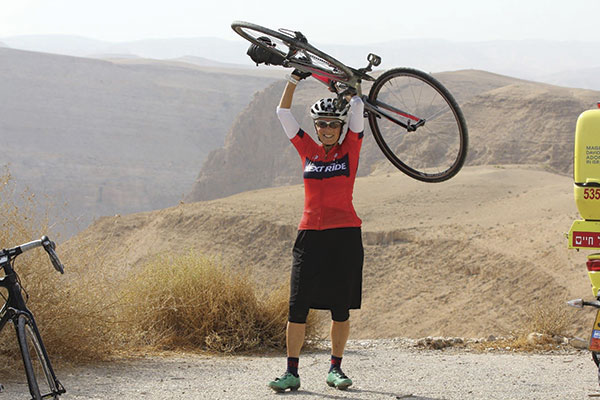
It’s very important that they stay active, for both their physical and mental states. So, in addition to the physical therapy and support TNS provides, they have a cycling club, a surfing club, a hiking and climbing club, running and walking clinics and tons of other programs. Getting back to cycling, it turns out, Steven was right. Once I learned about IMF and TNS, I wanted to participate in the Israeli cycling event—and I’m so happy I did. It was one of the most moving experiences of my life. I joined about 70 cyclist from the USA, including a handful of community members, and rode 200 miles throughout Israel, alongside the incredible amputees.
We started on Sunday, when we arrived, with a 4 mile ride at night through the Old City. Monday morning we set out from Jerusalem to Latrun and back, which was about 53 miles. We ended the day with a great dinner at the Menachem Begin Museum, where each of us received a gift—a coin from the time of Hasmonean rule and the Second Temple. Tuesday we woke up to the news that the IDF killed the leader of the Islamic Jihad, and as a result, terrorists fired over 150 missiles into Israel. We were not sure if we would be able to continue the ride. In the end, because our route was not where there were any air raid sirens going off, the IDF and other authorities gave us the green light to ride, but under extremely strict guidelines. Before the Mayor of Jerusalem cut the ribbon to signal the start, we were given instructions on what to do should the sirens sound.
The people who were there to ride with the amputees set out first, followed by the amputees. For their safety, the amputees are accompanied by a team of professional coaches and cyclists, including members of The Israel Cycling Academy who will compete in the Tour de France for the first time in 2020.
Both Steven Matsas and Stephen Shamosh rode with the amputees. Steven explained that because the amputees can’t handle some of the very big hills, they travel by bus, on and off throughout the day. He added that I was welcome to join them. I decided to join them on the bus, and it turned out to be the best day of the whole trip. Spending time with the amputees and helping them was why I was there. We got to bond and know each other very well.
On day three, we took a thrilling downhill ride from Jerusalem to the Dead Sea. After the ride, some participants opted to go on an ATV ride in the desert. I’m not going to lie, riding my bike through the Old City and down to the Dead Sea was extremely thrilling, but the entire trip was so much more than just another charity ride. I’ve done a few charity rides and all of the organizations are great, but what made this event so unique and special was the interaction with the amputees. We got to spend a week with them, riding, dining, drinking and getting to know them. To see the resolve that they have to move on, after experiencing such trauma, is so very inspiring. I got close to a number of them, and we will remain friends for life.
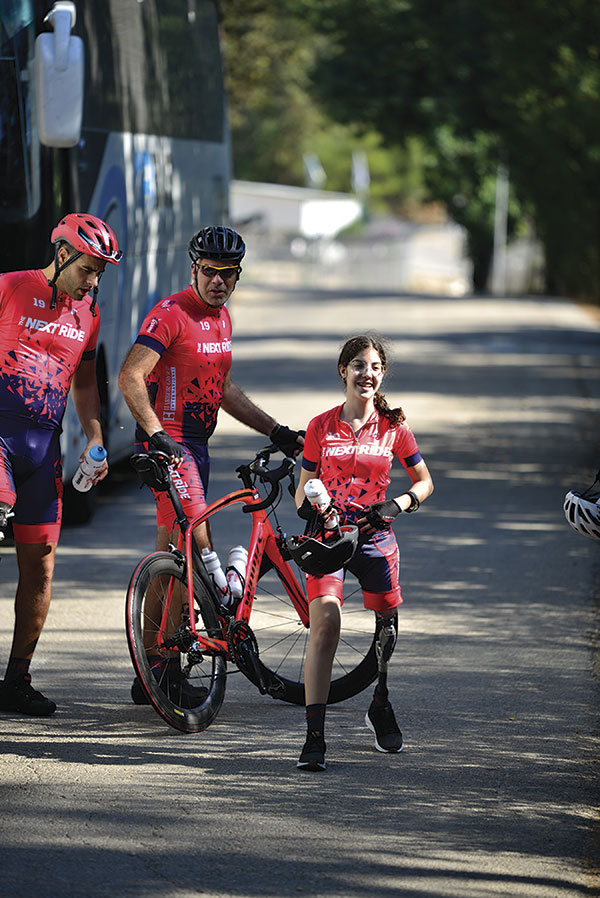
I got to know three of the amputees especially well, Noa, Shlomie and Chaya. All of their stories were heart-wrenching. Noa, who was barely a teenager, lost her leg when she was run over by a terrorist, while waiting for her school bus. Thanks to the generosity of our community and the hard work of Stephen Shamosh, Noa who turned 13 while we were in Israel, recently received a sparkling, pink, new, state-of-the-art prosthetic leg. Although she faces many challenges, she is full of joy and life.
One night, after dinner, I walked almost a mile back to the hotel with Shlomie Ager who is an amputee, and the grandson of the great Rabbi Akiva Ager. Shlomie was just 9 years old when he stumbled on some ammunition that a solider stole from the army. He and his friend starting playing with the weapons when an RPG detonated and blew his leg off.
One of the most amazing people I met is Chaya, who is 17, and was born with many health issues (that no one should know from). She rides a custom hand cycle that was donated by members of our community. She is so full of energy you would never believe she is disabled. Although in a wheelchair since birth, she wants to—and I can almost guarantee that she will—become a doctor.
Witnessing the perseverance of all the amputees and their love for life has inspired me to help them even more. I am looking forward to seeing all my new friends on my next trip to Israel and raising more money for this beautiful organization. For more information or to donate visit www.israelmedicalfund.org.
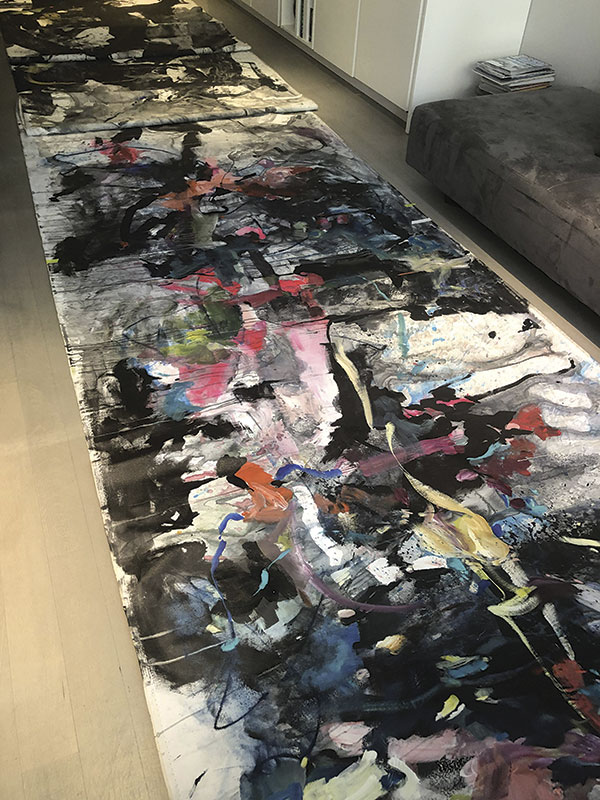
PROPEL is excited to be offering a six-week intensive program for female artists starting in February—OPTIMIZE YOUR ART BUSINESS—with Artist and Business Consultant Lauren Altman.
The goal of this art boot camp program will be to guide women to kick-start a sustainable business within the art industry.
The program will feature Lauren’s unique, three-pillar method OPTIMIZE, APPLY, IMPACT™, which combines: personal well-being, marketing, relationship building, leadership, influencing, pricing art, productivity tools, how to sell your skills, and funding and exhibiting your work.
Lauren’s interdisciplinary practice explores psychology through video, installation, photography, writing, and mixed-media. She has led talks and workshops at ICA Philadelphia, Arthur Ross Gallery at the University of Pennsylvania, and the Chelsea, New York-based David Nolan Gallery.
Further, Lauren co-chairs the Sotheby’s Institute of Art. New York Alumni Committee and serves on an art history lecture committee at Smith College Museum of Art. Her recent exhibitions include participation in “Cine Experimental,” a film screening curated by Dustin Dill at Escuela de Artes de Yucatán in Mérida, Mexico, and “DISARM,” an exhibition and benefit supporting anti-gun violence curated by Renee Valenti in Brooklyn.
Lauren completed her BFA in Communication Design at Parsons School of Design in New York, 2010; her MA in Contemporary Art at Sotheby’s Institute of Art in New York, 2011; and her MFA in Interdisciplinary Studio Art at the University of Pennsylvania in 2018.
You can read more about Lauren’s business at laurenaltmanstudio.com, and see her art at laurenirmaaltman.com.
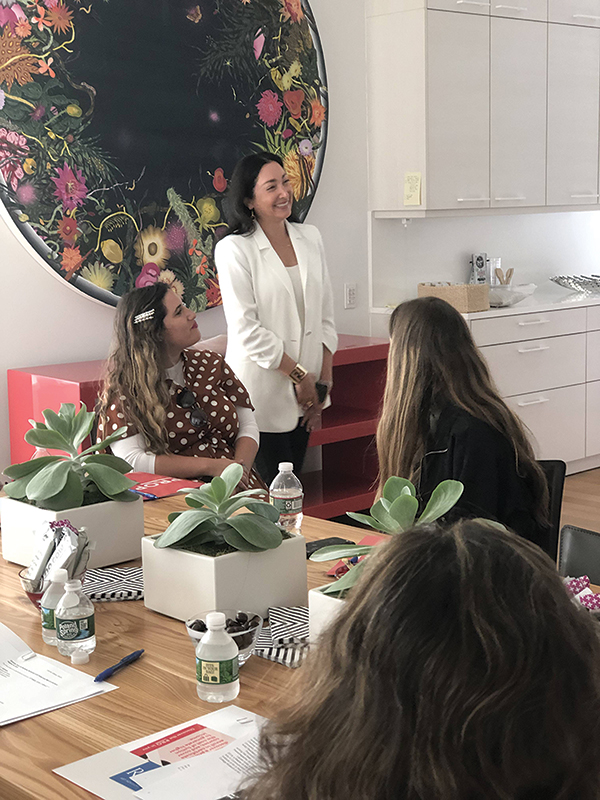
In the summer of 2019, in collaboration with PROPEL board member Robin Braka and her daughter Rachel Khafif of RBK Art Advisory, PROPEL hosted an event with Lauren that was attended by many community women in the art business.
Earlier in 2019, PROPEL had the pleasure of co-sponsoring a contemporary Latin American Art showcase with RBK Art Advisory. This event featured a Q&A with Uragyuan Artist Vicky Barranguet, inside Artemisa Gallery, a contemporary Latin American art space which is not only an exhibition gallery but also the home of its Gallerist, Mariana Broda. In the intimate setting of Broda’s Chelsea townhouse, approximately 30 women gathered around the living room sofa—with exotic iced teas and edible flowers crafted by Mariel Tawil Events—to hear Barranguet narrate her artistic journey. She described the challenges of balancing her career as an artist and raising two children, alongside her musician husband, Gustavo Casenave. She recalled how her creative process thrived when her husband played jazz or classical music.
PROPEL is committed to helping women seeking a career in the art industry.
Please reach out to PROPEL at info@thepropelnetwork.org to find out more information about this upcoming workshop.








 The tragic passing of Edmond Safra sent shock waves all around the world. Many representatives of our community attended his funeral in Geneva. Leaders included Joe Cayre, Stanley Cayre, Jack R. Avital, Jacob Kassin, Sam Domb, Jack Dushey and Miro and Nora Sutton.