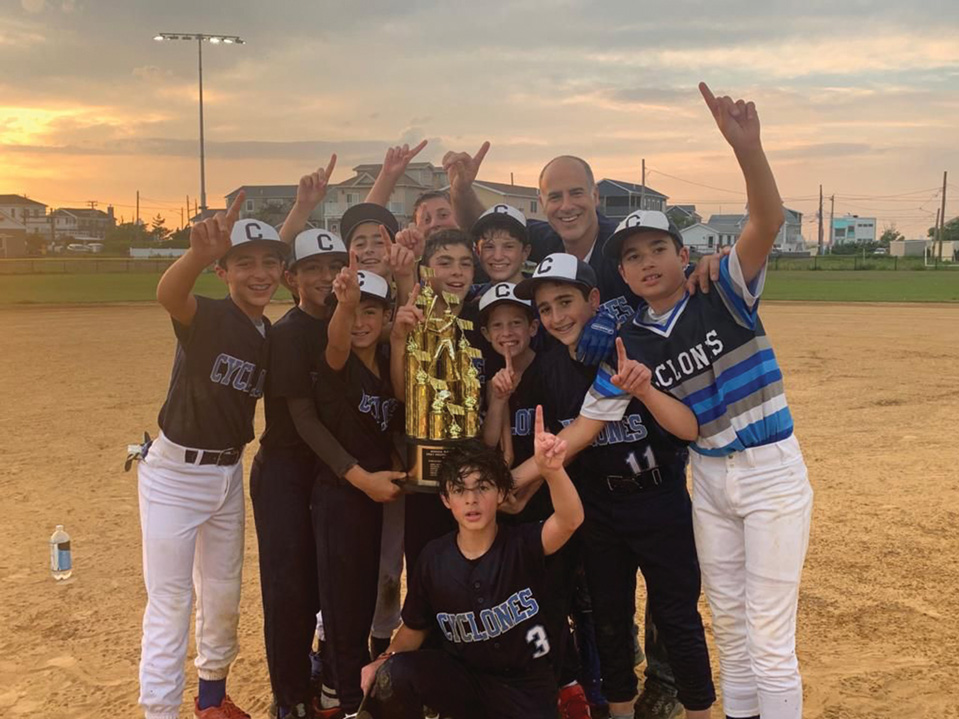
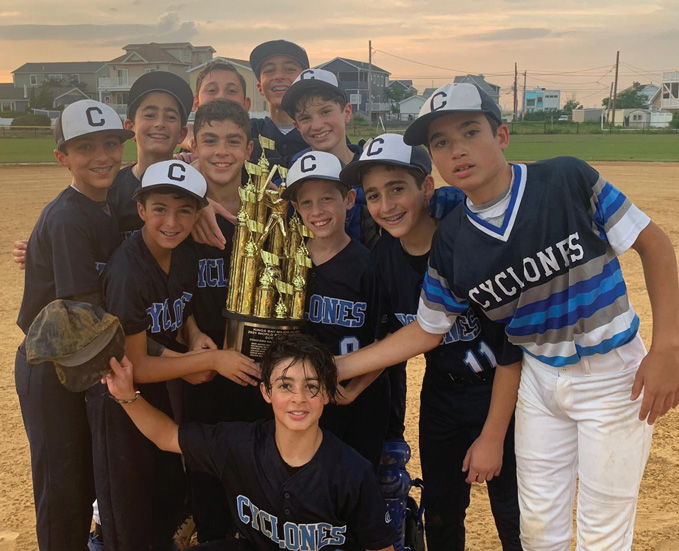
IT WAS A SEASON THAT BEGAN WITH MORE QUESTIONS THAN ANSWERS FOR THE SCC CYCLONES. WITH ONLY THREE PLAYERS RETURNING FROM THE 2021 CHAMPIONSHIP TEAM, NO ANALYST OR EXPERT WOULD BE ABLE TO FORECAST HOW THIS TEAM WOULD FARE IN A TOUGH KINGSBAY LEAGUE. HOWEVER, BY THE SEASON’S END, THIS GROUP OF 12-YEAR-OLDS LEFT NO DOUBT AS TO WHICH TEAM SHOULD BE CONSIDERED THE BOROUGH’S BEST.
Having played pivotal roles on last season’s championship team, veteran starters Abie Antar and Eddie Braha, along with lefty slugger Stephen Zekaria, knew what it would take to get this team title ready.
“We want to accomplish something no community team has ever accomplished—back-to-back championships,” said Antar. Braha added “We know what it takes to win, and we are going to set a good example for our new teammates.” Each of the newcomers, badly wanting to continue the championship pedigree of the Cyclones, worked tirelessly and within a few weeks the team had the look of a contender.
The season began with the team’s pitching, buoyed by righties Antar and Braha, consistently keeping the Cyclones in each game. The burden would fall on the bats and gloves to ensure their success. As the weather began heating up, so did the team’s hitting. The regular season saw five games where the Cyclones would win by a margin of four runs or more, but also six games that were decided by two or less runs. Having the experience of playing in those tight games proved to be an important factor in the squad’s post season success.
Clutch, Gold Glove caliber late game defensive plays by David Antar, Jack Swaid, and Max Shalom were needed to close out some of the tight contests, while two well hit balls off the bat of Zekaria provided dramatic walk-off wins in those nail-biters. With those standout plays receiving accolades, it was the season-long steady play by the key contributors of the team that had the Cyclones considered to be a tough team to beat. The lineup was a threat from top to bottom. Isaac Mizrahi and Mark Antar would be among the league leaders in on base percentage setting the table for the big bats of Jesse Setton, Swaid, Braha, Zekaria, and “Bash Brothers” Marshall and Jacob Levy who provided hard-hit balls—game in and game out—on the offensive side. It was signal caller Jesse Setton who set the defensive tone behind the plate, leading the league by a wide margin in runners thrown out while attempting to steal.
“I take tremendous pride in making opposing runners think twice before trying to steal,” noted Setton. “Abie and Eddie keep the ball in the zone most of the time, so it kind of makes my job easy.” Indeed, it was that same team first approach that helped propel the Cyclones to an undefeated regular season, and the World Series game.
The Cyclones knew they were in for a battle, because in their three regular season matchups vs. their World Series opponent, the games were decided by a total of just four runs! Abe Antar took the mound that June evening knowing that this championship game would prove no different. The game saw both teams manufacture early runs, but it was a go-ahead shot in the 5th inning by Jack Swaid scoring Mark Antar that proved to be the deciding run. The Cyclones would tack on an additional run in the top of the 6th inning to bring the score to 3-1. With steady team defense, stellar pitching by Antar, and a key pick-off of yet another base-runner by the catcher Jesse Setton, the Cyclones would not allow a run to be scored. Antar would strike out the final batter of the game—his 15th strikeout—securing the championship for the Cyclones!
The Cyclones would like to thank the entire SCC team, especially Harry Chazanoff for coordinating the league games, as well as their coach Eddie Antar who was a guiding force in the dugout. They would also like to thank all the parents who sacrificed their time to get to the games. The Cyclones can’t wait to triple down and go for an unprecedented three-peat next season!
IF YOU HAVE EMPLOYEES, YOU KNOW FIRSTHAND THAT THE LOSS OF A KEY EMPLOYEE CAN HAVE A PROFOUND IMPACT ON BUSINESS OPERATIONS. WHEN AN EMPLOYEE LEAVES, CUSTOMERS WHO DEALT DIRECTLY WITH THAT PERSON MAY WORRY ABOUT RECEIVING THEIR GOODS OR SERVICES IN A TIMELY MANNER; SUPPLIERS MAY BE CONCERNED ABOUT GETTING PAID FOR THEIR DELIVERIES; AND STAFF MORALE CAN ALSO TAKE A DIP AS REMAINING EMPLOYEES WORRY ABOUT ASSUMING A HEAVIER WORKLOAD.
That’s why it’s important to make sure that your business is prepared to deal with the unexpected departure of a key employee which usually happens for one of three reasons: the employee chooses to resign, the employee becomes disabled, or he or she passes away.
While life insurance cannot protect against employees choosing to leave, it is often used as a tool to help incentivize them to stay; deferred compensation plans are powerful vehicles for doing just this. Deferred compensation arrangements allow you to provide retirement income to select employees. The way it works is that you and the selected employee enter a contract that specifies the compensation you will pay out to him or her in the future. Since you may not set up a specific reserve fund in which a participant has a vested right, a life insurance policy is uniquely suited to informally finance a deferred compensation plan. The future of your business depends on attracting and retaining the right talent with the right tools.
It’s also important to protect your business against the economic losses it may face as the result of a top employee’s death with the use of key person insurance. The way it works is that the business applies for and becomes the owner and beneficiary of a life insurance policy covering the key employee. If the insured employee dies, the business receives the policy proceeds.
Deferred compensation and key employee insurance are benefits that are related exclusively to your top employees, but New York Life also has options that you can offer your entire team to help cultivate a rewarding work environment, such as life and disability insurance. These benefits can provide employees and their families peace of mind and added financial security, which can go a long way toward attracting and retaining valuable employees.
As a business owner, you’ve worked hard to get where you are today. Having a contingency in place will allow you to focus on making the best possible decisions for the future of your business.
This educational third-party article is provided as a courtesy by David Hoory, CLF®, LUTCF®, Managing Partner, Brooklyn General Office, New York Life Insurance Company. To learn more about the information or topics discussed, please contact David Hoory at (718) 486-4601 or email dhoory@newyorklife.com.
MAURICE HEDAYA WAS BEST KNOWN FOR HIS OBSESSION WITH REGISTERING PEOPLE IN OUR COMMUNITY TO VOTE. IN THE LATE 1980S, OUR COMMUNITY BARELY EXERCISED OUR RIGHT TO VOTE AND HAD NO VOICE. MAURICE REALIZED THAT ELECTED OFFICIALS WERE NOT PAYING ATTENTION TO OUR COMMUNITY FOR THIS REASON.
Maurice understood the importance of voting and its connection to our ability to leverage elected officials for the benefit of the community. It was as simple as that.
According to Sam Sutton, president of Sephardic Community Federation, “Maurice was one of the earliest guys to understand the voice of the community cannot be heard without voting. Only civil engagement can convince government officials to make significant changes that benefit us. No one registered more people to vote than Maurice Hedaya. He was a pioneer and a visionary. He was indefatigable worker on behalf of our community and the Jewish world at large.”
His grandson, Morris Hedaya said, “One time he brought voter registration cards to my sister’s dance recital. He showed us what dedication truly means and more importantly, we listened and followed what he taught us. There was never a shortage of voter registration forms in his pockets. He even took them to weddings at Shaare Zion. My grandfather was a leader with selfless devotion to so many others. He was a proponent of positive change.”
“We would go out to dinner, and we didn’t want him to bring the voter registration forms and bother people during their evening out,” said his daughter, Sarah Dabah. “He would say ‘Frisk me’ and we searched him and didn’t find any forms. Then we found out that he had them stashed under his shirt. My father set his eyes on a goal and never gave up. That’s what he taught us. It applied to everything we did. He told us to try our best and he raised the bar.”
“My father realized the Syrian community needed a voice in politics,” said his son Solomon Hedaya. “We gave so much in tax dollars, we needed to be heard and get government funding for tuition. He set out aggressively on Saturday mornings trekking from synagogue to synagogue and speaking in each. All the rabbi’s and committee members in each synagogue knew him well. They weren’t always happy to see him, but they always gave him the platform to speak. His speech was always the same. ‘In order to have a voice, we must register and vote—we as Jews have an obligation to vote and be heard.’”
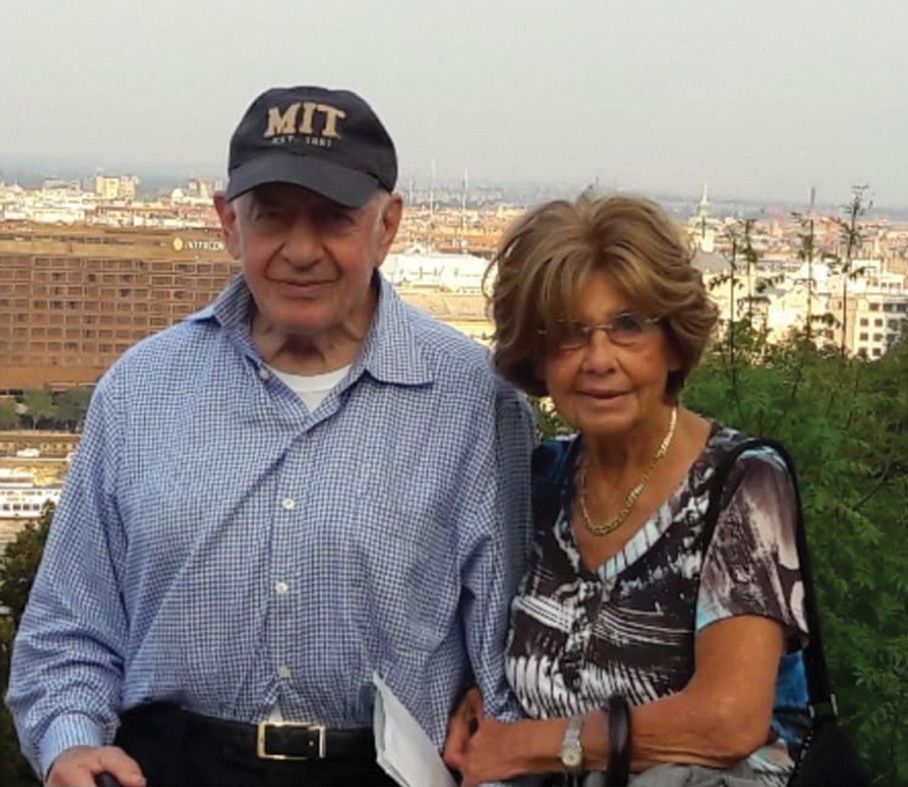
EARLY YEARS, MARRIAGE AND FAMILY Born in 1929, Maurice was a 1950 graduate of Massachusetts institute of Technology, completing a degree in Mechanical and Industrial Engineering. Very few people in the community went to college back then, much less to a prestigious Ivy League university in Boston.
He got a job in the engineering management of Martin Marietta (later known as Lockheed Martin). He was quickly promoted to financial control of a single $50 million atomic powered seaplane.
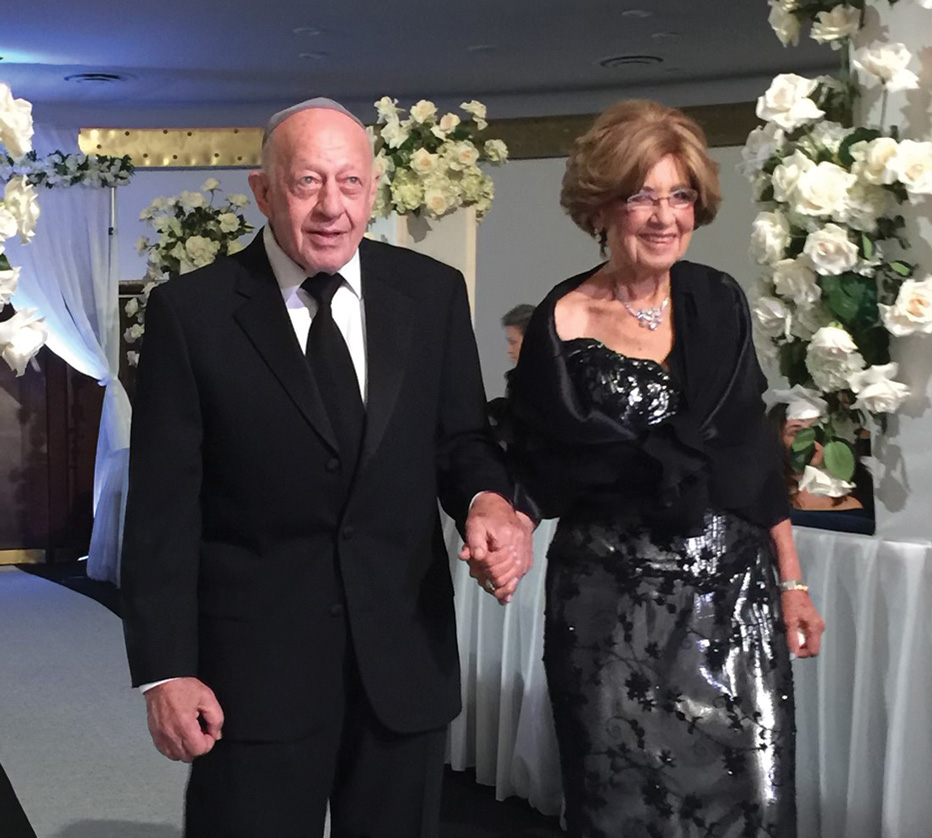
He met Gladys in the summer of 1951 in Bradley Beach. The love of his life, they were inseparable for the nearly seven decades they were married.
Maurice was drafted into the US Army during the Korean conflict. “They didn’t make him carry a gun. They gave him a pencil to work in weapons development and design rocket launchers,” said his son Ezra Hedaya. Maurice went on to work for three aircraft companies over a 10-year period.
Ezra said “My father was my hero. He always pushed us. If we had a question, he would make us look it up in the dictionary or the encyclopedia. He challenged me to move forward. He created new limits for us, and we had to go past them.”
A LOVING FATHER The father of four: Betty Hazan, Sarah Dabah, Ezra Hedaya and Solomon Hedaya, saw to it that his children had memorable life experiences. He took them horseback riding, skiing, sailing, and to the Jewish Community House on Bay Parkway.
When his children were teenagers, Maurice organized Friday night dessert get-togethers for them, so they could meet and socialize with others.
“Those were the days before we had the center and regular young adult gatherings. My father felt an obligation to the teens and young adults of our community to give them a safe place to meet and spend Shabbat with each other,” said Solomon. “He dragged us to the young adult minyan at Shaare Zion each week. The goal was to get as many young people as possible there so they could get to know each other.”
Maurice taught his children respect for their elders, with weekly visits to their grandparents each Saturday after synagogue services.
A few years ago, he decided he needed to spend more time with his daughters, so they began taking annual road trips. One of these trips was to Boston for the 65th Reunion of his class at MIT.
“My father was very humble,” said his Betty. “He never, ever spoke lashon hora about anyone, and he taught that to the four of us. He did everything from his heart. He was in a category of his own. No one did what he did. No one understood how important voting was for our future. He spoke to congressman and senators about school choice, another issue he was passionate about. And he never stopped.”
“My family and I always admired my Grandpa and Grandma’s marriage,” said his great-grandson Joseph Balassiano. “They always spoke to each other with kindness, respect, love, admiration, and nothing less. They always pushed each other to do their best. They supported each other to do what they felt was right. They had a tremendously deep love for each other.”
SAVING THE SYRIAN JEWS The plight of Jews in Syria was dire, and it was Maurice who enlightened a few community members to act and help them, long before people were aware of the situation.
In 1988, Maurice asked 28-year-old Ezra S. Ashkenazi “Do you know we have 3 to 4,000 Syrian Jews, our brethren, that cannot leave and they don’t have freedom?”
“We were in the dark and he literally begged me to get involved and help put Syrian Jewry on the map and to bring it out to the forefront,” said Ezra, who advised him to talk to men in their 50s and 60s who could network. “He explained to me a few of the problems and challenges that the people were going through in Syria, and I said to him, ‘Let me sleep on it.’”
Ezra continued, “Actually, I didn’t sleep too well the following few nights and that Saturday he came to my home, and asked me if I had made a decision.” Ezra told him that he was willing to go to the first meeting. Ezra recruited Ricky Cohen, and a meeting was held with Dr. Mayer Ballas, Clem Soffer, Alice Sardell, Albert Ayal, Janet Zalta, and Marcos Zalta.
“It was amazing that we were completely ignorant of our brethren. Even the names were foreign to us. At the meeting we were shown pictures of individuals who were physically abused. And of course, Ricky and I were very shaken up. We were pampered in America. The community did not recognize the horrible life going on in Syria and was told it was propaganda. But it wasn’t,” Ezra concluded.
The team raised awareness in the community as well as funds to hire a professional lobbyist to get Congress to negotiate the release of thousands of Syrians. This ultimately resulted in the 1992 airlift and the release of nearly 4,000 Syrian Jews who moved into our community. After they arrived in New York, Sephardic Bikur Holim and volunteers helped them settle. Maurice worked with authorities to help the new immigrants become citizens.
RELENTLESS COMMITMENT TO OUR COMMUNITY Multiple people spoke of the fact that Maurice was strong willed and never stopped when he had a goal.
“Maurice had tenacity and his love for our community was boundless,” said Ezra Ashkenazi. “He didn’t care if he came across pushy. He had one goal—to give the Jews in America a better quality of life. He encouraged us to vote before it was popular.”
Rabbi Sam Kassin, of Shehebar Sephardic Center, said “Maurice was the conscious or our community. He saw what needed to be done for the benefit of the community before others did. And his opinions were not always popular. He was a true leader in that respect.”
Today the community is better off due to Maurice’s relentless commitment. As a result of his lifetime of work, our community receives government grants and funding that provide youth and senior programming, security, senior citizen housing, mental health services and a long list of other government benefits. Our voice is heard in government because we vote!
Correction: Last month, Freddy Zalta should have been credited for some of the research and quotes in articles about Charles Saka and Lou Jerome.
A journalist, genealogist and historian, Sarina Roffé is the author of Branching Out from Sepharad (Sephardic Heritage Project, 2017), Sarina holds a BA in Journalism, MA in Jewish Studies and an MBA.
YOU’RE INTERESTED IN TAKING CONTROL OF YOUR MONEY, BUT YOU FIND YOURSELF IN SITUATIONS LIKE THESE: SITTING QUIETLY WHILE OTHERS TALK ABOUT MONEY, WORRIED YOU’LL SOUND SILLY IF YOU SPEAK UP; WATCHING THE NEWS AND WISHING YOU KNEW MORE, BUT THE WHOLE FINANCIAL WORLD FEELS SO COMPLEX AND INTIMIDATING; NOT WANTING TO BECOME ONE OF THOSE WOMEN WHO GETS TAKEN FOR ALL HER SAVINGS.
You’re good at what you do (hobbies, career, and running your busy life), but feeling in control of your financial life feels so out of reach and overwhelming. Yet letting the men have all the control and giving up your goals and financial ambitions doesn’t feel right to you either.
You definitely don’t want to retire years from now, look back and think, “If only I had taken hold of my financial strategy back then, I wouldn’t be clipping coupons and waiting for my check each month.”
Does it feel like the financial industry ignores your concerns? You’re not alone.
The good news is it’s not nearly as complicated as it may seem. You can take control without feeling frustrated or as if your money is out of reach.
Certain people in the money management industry benefit from making finances look too complicated for anyone who isn’t “numbers-oriented.” They’re the ones who just want you to hand your money over to them and let them do what they want.
Fortunately, that’s not how money management has to work. It is increasingly important for women, that it doesn’t work that way. You need to know how to handle your finances yourself—whether you’re currently single, married, divorced, or widowed. It’s a critical part of modern life. You might be wondering how you can create a savings plan, so you have a solid nest egg when it’s time to retire.
Modern culture might still be holding onto fairy tales about who can and who can’t handle money, but you don’t have to. Start building your money muscles instead.
WILD TRUTH BOMB #1 You & Your Finances Should Come First Did you flinch at this section title? Did your mind abruptly conjure up all the people in your life who you think come before you? If so, you’re definitely not alone. Modern culture encourages women to take care of everyone else first, before they think about themselves.
Have you ever flown on an airplane? The first thing they tell you in a crisis is to put on your oxygen mask first, before assisting others.
Are the flight attendants encouraging you to be selfish? Of course not, they’re being realistic. If you can’t breathe, you are not capable of helping anyone else.
The same goes for your finances. Do you want your kids taking care of you in your senior years because your money ran out? Of course not. Your kids would much rather have you living the good life in your old age because you were able to build a solid nest egg.
Put on your own oxygen mask first when it comes to your money—it’s not selfish—it’s smart.
WILD TRUTH BOMB #2 Money Management Is a Skill, Not An Inherited Trait If you really wanted to, you could go down the rabbit hole and spend the rest of your life finding the thickest investment books you can find and reading through them.
You don’t have time for all that, and it’s not necessary. Money management doesn’t actually have to be complicated. There are plenty of tried-and-true techniques that will help you create a solid financial footing for yourself and your family.
You need to know four basics when it comes to money: what’s coming in (income), what’s going out (expenses), how much you own (assets), and how much you owe (debt). The bigger the gap between income and expenses means more savings, which can then either pay off debt or be invested for the future.
FAIRY TALE IT’S BETTER TO DEFER MONEY MANAGEMENT TO MEN Have you ever been in a conversation about money or finances and men around you are taking up all the air in the room? Did you find yourself shrinking back or stepping away? Were you pretty sure a lot of it was wrong but you didn’t know (or want) to interject with truth?
Your voice deserves to be heard and recognized when it comes to your money. You need solutions that put your views and priorities front and center. Once you’re able to clear away the clouds, you can get clarity on what your own financial goals are. Then you can create a roadmap to achieve them.
Flex Your Money Muscles & Fall In Love With Your Financial Power It’s critical for women to get in the driver’s seat of their own financial strategy. There will be periods in your life where you probably won’t have someone else to rely on. Knowing the basics helps you determine who you can trust if you decide to get some advice.
Teamwork makes the dream work. The sooner you embark on your own financial journey, the sooner you can take control and lead the life that you want. Once you’ve got the basics under your belt, your financial skills will blossom. Then you’ll have a relationship with money that makes you feel powerful and in control.
The content is developed from sources believed to be providing accurate information; no warranty, expressed or implied, is made regarding accuracy, adequacy, completeness, legality, reliability, or usefulness of any information. Consult your financial professional before making any investment decision.
Ari Baum, CFP® is the founder and CEO of Endurance Wealth Partners, with over 25 years of experience in the Financial Services industry. He brings his in-depth experience to Conceive, Believe, Achieve, for his clients.
Securities and Advisory services offered through Prospera FinancialServices Inc. Member FINRA/SIPC.
Brokerage and Advisory accounts carried by Wells Fargo ClearingServices, LLC.
RAQUEL’S STORY IS INSPIRATIONAL, BUT, MORE IMPORTANTLY, IT IS A LESSON ABOUT NEVER GIVING UP HOPE AND WORKING HARD TO ACHIEVE A GOAL. IN 2019, RAQUEL GADELOFF WORKED PART TIME IN A REAL ESTATE OFFICE. ALTHOUGH SHE HAD HER LICENSE, SHE WAS EARNING NEXT TO NOTHING. SHE NEEDED A STEADY PAYCHECK.
The pressure on Raquel was enormous because her husband, David, was just diagnosed with late stage cancer. He needed major surgery and would be unable to work for months. Raquel had a heavy heart when she first spoke with her career coach at PROPEL. She had no idea what we could do to help her but she was open to ideas.
We suggested she achieve proficiency in Microsoft Office Suite to become a more valuable asset in her office and possibly get additional job offers. She began a comprehensive course in January 2020. Her father died in March. After sitting shiva, COVID hit. Classes went to ZOOM. From July through December 2020, her husband, David, had three additional surgeries. Raquel kept trying to finish her course, work at her job in real estate, and study for her Microsoft Office exam.
All this time her husband remained very ill and yet Raquel prevailed. “I always trusted the idea that you have to work hard in life; your body will achieve what your mind believes.”
Raquel completed her studies and became proficient in using Microsoft Office and other computer programs. Her newly acquired skills allowed her to process her own contracts and provide her own back office support for closed sales. She no longer had to wait for help from others. This changed the trajectory of her life as a realtor.
Today, Raquel is one of the top realtors in the State of New Jersey having earned the New Jersey Realtor Gold Circle of Excellence and proudly points out that she was only one sale away from winning platinum.
Fluent in Hebrew, Spanish and conversational Arabic, she shared her thoughts in a recent conversation. “My husband sold accessories in New York City until he became ill. I never believed I would be able to support my family. PROPEL knew what I needed and provided it. They are the reason I am able to take advantage of opportunities today. PROPEL helped me get the skills needed to succeed.”
Not everyone goes through the challenges that Raquel did, but everyone has challenges to overcome; if those challenges include finding a career or earning money, PROPEL is here to provide information, support your journey, and inspire your decisions.
Women searching for a path forward, please contact PROPEL.
In the words of Raquel Gadeloff, “Women can earn significant money. We can be resilient and get through anything.”
If you are interested in a career or in need of career guidance, please reach out to PROPEL to help you take the steps to fulfill your professional goals and dreams. PROPEL 646-494-0822. Info@thepropelnetwork.org Instagram @PropelNetwork
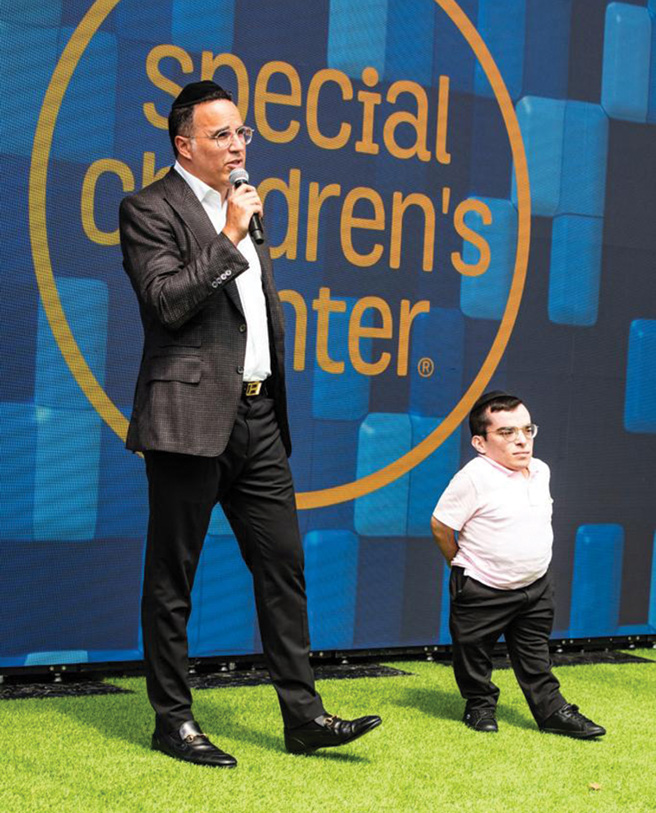
THE NEW FUTURE HOME OF THE SPECIAL CHILDREN’S CENTER OF BROOKLYN
EVERY DAY AT THE SPECIAL CHILDREN’S CENTER IS FULL OF LAUGHTER, LEARNING, AND LOVE. THE CENTER, AS IT IS AFFECTIONATELY KNOWN, WAS FOUNDED BY CHAYA BENDER AND JENINE SHWEKEY IN 1996. IT HAS GROWN TO BECOME A NUCLEUS OF SUPPORT AND A LIFELINE FOR OVER 750 SPECIAL CHILDREN AND THEIR FAMILIES THROUGHOUT BROOKLYN, THE FIVE TOWNS, AND NEW JERSEY.
Staff and volunteers go above and beyond to give each child opportunities to be treated like typical children and to know that they are loved. As Jenine often says, “These are my children.”
The summer has been full of exciting events and developments for the whole Center family.
A NEW BUILDING FOR THE BROOKLYN CENTER Previously, space constraints in Brooklyn have limited The Center from providing much-needed services to those in need. We are proud and grateful to announce that we have secured a new Brooklyn facility that will enable us to greatly expand our services for over 200 special needs children and adults.
We plan to offer programs for infants, toddlers, preschoolers and through each child’s school age years, teenage and adulthood. These programs offer support and guidance for parents from the day a child with special needs is born. We will be able to offer full day and half day programs, after school hours, Sundays, and legal holidays. These programs offer vital respite for families so they can function effectively and lead normal day-to-day lives.
The new building will feature updated amenities including a lobby, nine spacious specialty rooms, a fitness room, a kitchen and bakery, a two-story jungle gym, an outdoor playground, an enclosed Aquatic Therapy Pool center, a music performance center, and a recording studio.
THE DEAL BREAKFAST Our annual breakfast in Deal was graciously hosted by Mariel and Jack Cayre. This year’s breakfast celebrated the purchase of the new Brooklyn Special Children’s Center. Harry Adjmi offered welcoming remarks and presented an award to Richie Dweck and a gift to the Cayre family.
The most emotional moment was when Yehuda Newman, a member of The Center family, spoke about how The Center has positively impacted his life. He has even inspired other individuals with special needs to become more independent. He wrote the popular motivational song “Fighter,” and was joined by Yaakov Shwekey who sang it for the crowd.
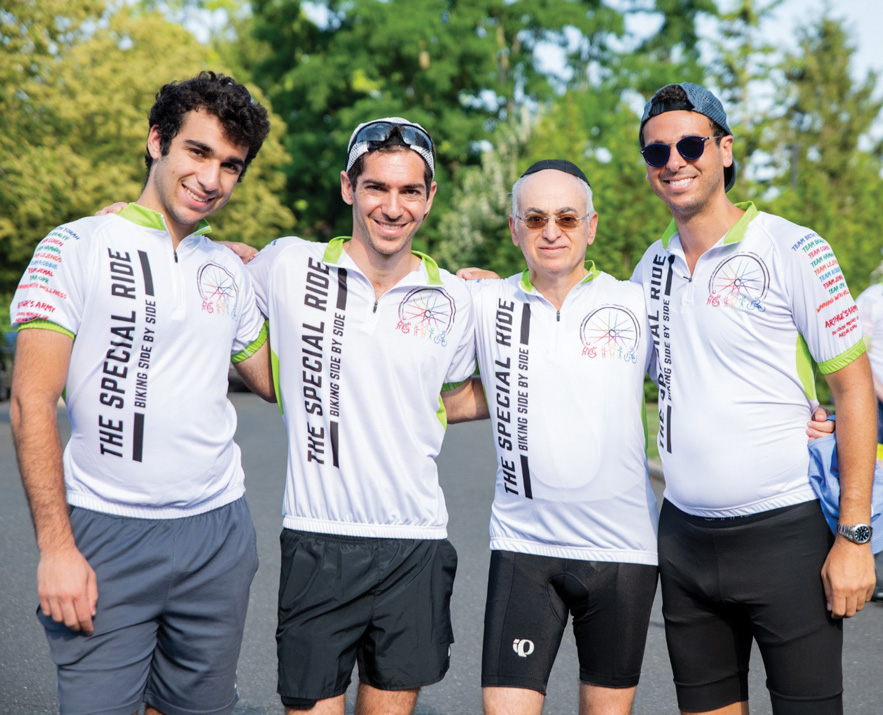
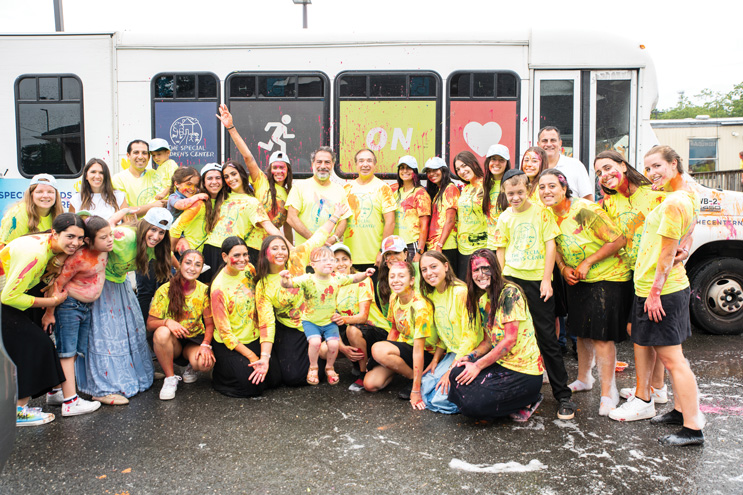
On Friday June 17, many elected officials, philanthropists, and hundreds of friends of The Special Children’s Center celebrated the expansion in a joyous and meaningful welcoming ceremony.L-R Joey Harary, Elliot Tawil, Jack Cayre, Michael Cayre, Alex Adjmi, Stanley H. Chera, Haim Chera, Mrs. Cookie Chera, Gayle Krost, Yeruchem and Dudi Berkowitz, Yaakov ShwekeyYehuda, who wrote Yaakov’s new song fighter, depicting his life and triumphs in powerful words, a must listen to Yaakov and Yehuda’s new song fighter on Apple MusicMarilyn and Jouky Chehebar with their sons at the Special Children’s Center Annual Breakfast. Celebrating the just purchased Marilyn and Jack Chehebar Brooklyn Building. The soon to be new home for our Brooklyn Center, construction to begin this AugustL-R Jack Klugmann, Yaakov Shwekey, David Korins (designer of the Oscars, Hamilton, Dear Evan Hanson and many more) Margalit Lankry, Chaya and Jenine. Celebrating the creation and design of the Adele Hanover Music CenterNo words needed! Two extraordinary women holding together over 750 families in our community!Jane and Sam Sutton started the Special Ride in honor of their son Robby, who has been part of The Center for over 20 years.The group biked an unbelievable ride from Deal to The Special Children’s Center New CampusThe Special Ride bikers, with boys from The Center who ride special adapted bikes, also biked in the race, was an unbelievable sight to see how they did the ride from beginning to end!
THE SPECIAL RIDE Jane and Sam Sutton and their devoted children organized an amazing bike ride event with nearly 70 participants. The riders started out from the Deal Shul on Sherman Avenue and rode to the Special Children’s Center’s new campus! They were accompanied by many special children for the last mile into the most incredible finish line ever! In unity, they rode through a huge banner and ran through the music-filled halls of The Center greeted by the smiling children who were lining the hallways, waving flags, dancing, and cheering on the riders for their great accomplishment. The event culminated in the brand-new, state-of-the-art Adele Hanover Music Center with singing and dancing by Yaakov Shwekey, who presented the Sutton family with a well-deserved award.
CAMP AFTER CAMP When most camps are over and typical children have some unscheduled time before school starts, special needs children still require full-time supervision and structure. The Center staff and volunteers provide a full day of exciting activities for the students and send them home clean and happy to parents and siblings who are so glad to see them and can give them the love they deserve and attention they need.
ELECTRIC CONCERT Get ready for the most incredible Yaakov Shwekey Concert you have never seen! Light up the Night, A Guy Ben-Gad production, is a show that will blow your mind! Brand new mixes, medleys and songs created for this event! Every year The Special Children’s Center Yaakov Shwekey Electric Concert is sold out, so get your tickets quickly at www.thecenternj.org
BARBECUE SEASON IS HERE. SO, WHAT SHOULD YOU PUT ON YOUR GRILL? CHICKEN IS A HEALTHY CHOICE, AS ARE VEGETABLES. BUT WHAT IF YOU’RE CRAVING A STEAK? IF YOU ARE WATCHING YOUR WEIGHT BEING AWARE OF SATURATED FAT INTAKE IS A GOOD IDEA, HOWEVER, THE GOOD NEWS IS EATING LESS FAT DOES NOT MEAN OMITTING BEEF FROM YOUR DIET TOTALLY. IF YOU ARE A STEAK LOVER YOU CAN LEARN TO EAT IN MODERATION.
It is important that you choose the right cut of steak, as all steaks are not created equal, some are much more fatty than others. Of course, the leaner the better. Lean cuts contain less fat, which is better for the heart and cholesterol levels. A 3.5-ounce serving of lean steak contains 10 grams of fat, 4 grams of saturated fat and 95 mg of cholesterol. However, an extra-lean cut of steak contains as little as 5 grams of fat, 2 grams of saturated fat and 95 mg of cholesterol for the same size piece of meat.
The top five lean cuts of steak are eye round, sirloin-tip side, top round, bottom round, and top sirloin. Steaks labeled “round” typically are the leanest of all cuts.
Now that you know it’s fine to eat a lean steak now and then, how do you pass up all the very tempting side dishes that are served along with your steak, when you’re at someone else’s barbecue?
Skip the cole slaw and potato salad if they’re swimming in mayonnaise. Corn on the cob is an excellent choice, as are all types of fruit. If there’s watermelon, or other summer fruits, they make great side dishes. Of course, a salad and vegetables are wonderful. If there’s salad, fill your plate with it.
If you are barbecuing, throw lots of vegetables on the grill. Offer guests chicken as well. Few things go as well with a delicious steak as onions, zucchini, and peppers and they taste amazing right off the grill.
Finally, skip sugary sodas and drinks. Unsweetened iced teas are a great refreshing option. It’s best to eat a filling high fiber and protein snack before you leave, so you don’t go to a barbecue hungry, and to prevent overeating.
Laura Shammah MS, RDN has a masters degree in health and nutrition and is a registered dietitian. She has been operating her own private practice in both New York and NJ for over 20 years. She is happily married and has four children.
JOYCE ZEKARIAIT IS MY PRIVILEGE AND HONOR TO HAVE LEARNED ABOUT THE LEADER OF THE SYRIAN SEPHARDIC COMMUNITY, HAKHAM SHAUL RACHAMIM KASSIN, WHO DEDICATED HIS TIME, LOVE AND LIFE’S WORK TO MAKE OUR COMMUNITY A BETTER PLACE.
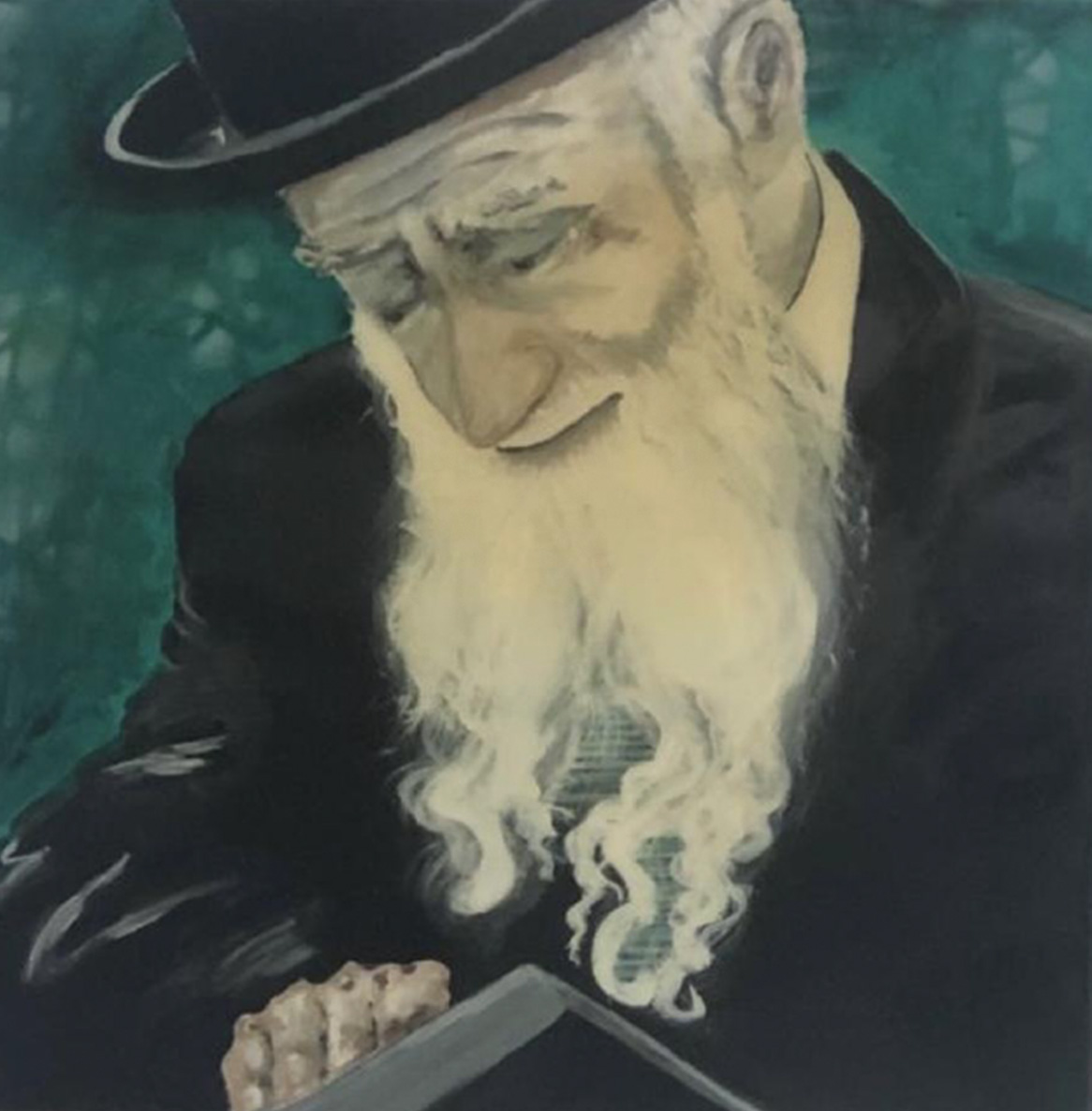
Hakham Shaul Kassin was born in 1921 and spent his early years in Israel. At the age of 12, he came to America and enrolled in public school. After just one day, he quickly ran off to his father demanding that he attend a yeshivah. The Hakham attended Yeshiva Ohel Moshe and soon went on to graduate Yeshiva University with the highest honors. There, he achieved his semicha to become a Rabbi. This was the beginning of the next chapter for our community.
After college, the Hakham became the right hand to his father Chief Rabbi Jacob Kassin, for 80 years. All decisions for the community were made by each other’s side, and Hakham Shaul documented all the declarations that were made during that time.
In 1935, Chief Rabbi Jacob Kassin established the famous edict stating that there were to be no converts allowed in our community. Rabbi Shaul Kassin then re-established and enforced the edict again in 1985. He made sure that a written version of this edict with the support and signatures of relevant rabbis was present in every shul and institution in our community.
In 1975, Hakham Shaul Kassin established the first mikvah on Avenue S, in Brooklyn. He had received criticism, and people stated publicly that they were against this new addition, however, he feared nobody. He then went ahead and established an eruv in Brooklyn for the whole community. The eruv brought such significance to our community, as it allowed Shabbat to be more enjoyable, and easier for people to visit one another. Again, he faced some opposition and criticism, but proceeded to do what he believed was right. Until today, that is one of the most commendable attributes of our former Chief Rabbi and one of his many additions that helped make our community what it is today.
The Rabbi always stood strongly by what he thought was right. When Hakham Shaul heard there were inappropriate bachelor parties going on, he prohibited rabbis from performing their weddings, in order to discourage the bad behavior. In addition, and together with the Rabbinical Council, the Rabbi emphasized the importance of modesty, and urged women to dress properly at weddings and occasions. If modesty wasn’t achieved, the rabbis wouldn’t come to the occasion or perform the wedding.
Hakham Shaul also expressed that he didn’t like the idea of Arab musicians playing for our community, due to their internal hatred of Jews. From these few examples, we see a pattern of an individual who feared nobody but Hashem, and who had a passion to do what was best for everyone in our community. He always aimed to do the correct thing, and did not let the criticism of others get in the way.
Hakham Shaul decided to share his wisdom and intelligent thoughts with our community, and wrote two books; The Light of the Law and Mitzvot Hashem. Hakham had a certain motto that had to do with fruit. If you were to ask a Jew, “How do you eat fruit?,” their answer would most probably be, “I make a blessing first and then eat the fruit.” However, Hakham Shaul would answer that this approach is somewhat incorrect. He would explain that if you have an orange or apple, you first begin to peel away the covering of the fruit. He compared the peel of a fruit to the flaws of a Jew. When dealing with a person, one should start by peeling away the flaws and seeking the good in all the Jews in every way, much like the good is revealed in the fruit once the covering is peeled away.
It is often said about the Rabbi that “he was beholden to nobody, and everybody to him was somebody.” Regardless of one’s social or financial status, he treated everyone equally.
Most importantly, Hakham Shaul was extremely sensitive to women’s feelings. In order to help the women in our community, he permitted those who needed to go to the mikveh on Friday evenings to instead go on Friday afternoons, on the condition that they would not be with their husbands until sundown. As a result, women who otherwise would not be pure by Friday night because of plans to be with guests or eat with others would be able to purify themselves for Shabbat.
Being that he comes from a long lineage of influential rabbis, he had international connections with kings, presidents, and prime ministers of foreign countries. He leveraged these relationships to communicate to the foreign leaders—including the kings of Morocco and Jordan, and the President of Syria—the importance of keeping the peace and protection for all of the Jews in their kingdoms.
After witnessing all the love and care Hakham Shaul had for this community, his father, Rabbi Jacob Kassin, appointed him the next Chief Rabbi, in his will, which took effect upon his passing. During this period, Hakham Shaul was able to help thousands of charitable organizations around the world while making our community a more religious and cohesive unit.
For 90 years, the Hakham’s routine was to get up at midnight and sit on the floor while reading tikkun chatzot, which is the midnight prayer for the destruction of the two temples. He would cry heavily, every single night, and pour his heart and soul into these prayers. Hakham Shaul really cared and felt for the Jewish people, and yearned for us to be able to live in the direct presence of Hashem’s shechina like we did thousands of years ago.
The main thing that I took away from the actions and mindset of Hakham Shaul Kassin was his fearlessness and principles. His passion and his drive to do what was best and right for our community stands as an inspiration to us all. He was determined to make a difference in this world, specifically the Syrian community. He had such a unique care and love for our community and did everything he could to make religion as easy and as beautiful as it should be. I feel so fortunate to have gotten to know the most special stories about the Hakham and to be able to learn from his outstanding character traits. What I will take away most is not allowing criticism to stop me from doing the right thing.
Joyce Zekaria is a graduate of Hillel Yeshiva of New Jersey. She works with Special Children’s Center and is engaged to Sonny Jack Cayre.
DURING 2020, AS MANY MINYANIM NEEDED TO HOLD SERVICES OUTDOORS, CONGREGATION MAGEN DAVID OF MADISON GAINED ENORMOUS POPULARITY WITHIN THE MADISON AREA. THE CHARACTER OF THE SHUL, WHICH IS BASED ON OUR TRADITIONAL CUSTOMS OF ARAM SOBA, HAS CREATED A DEFINITE BUZZ IN THE AREA.
Many congregants have said that the Shul has a spiritual camaraderie that is really heartfelt. It reminds them of their childhood, when their parents and grandparents had a yearning to be totally involved in the betterment of their synagogue, on an everyday basis.
Whether a person is contributing monetarily or just likes going shopping every Friday to fill the refrigerator for seudah shelishit, or Shabbat breakfast, the atmosphere is fun and energetic.
The founding members Elliot Betesh, Isaac Hamway, Joey Chabot, Morris Betesh, Marc Schmool, Adam Shrem, Elliot Bar David and several others remember the first High Holiday services of 2021 which were held in the driveway, on the side of Elliot Betesh’s house, outside—rain or shine—before the Shul moved to its current location on East 24th Street.
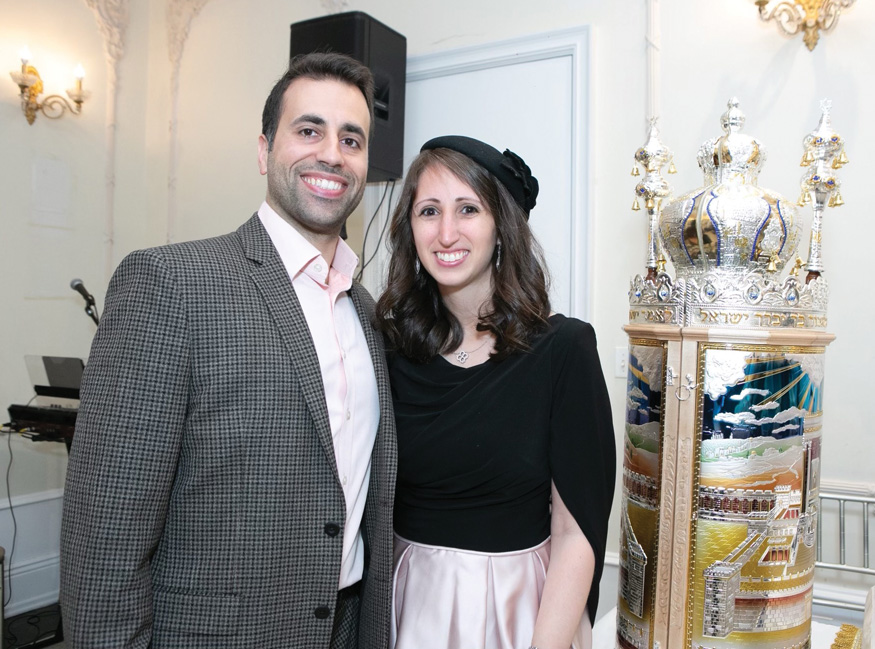
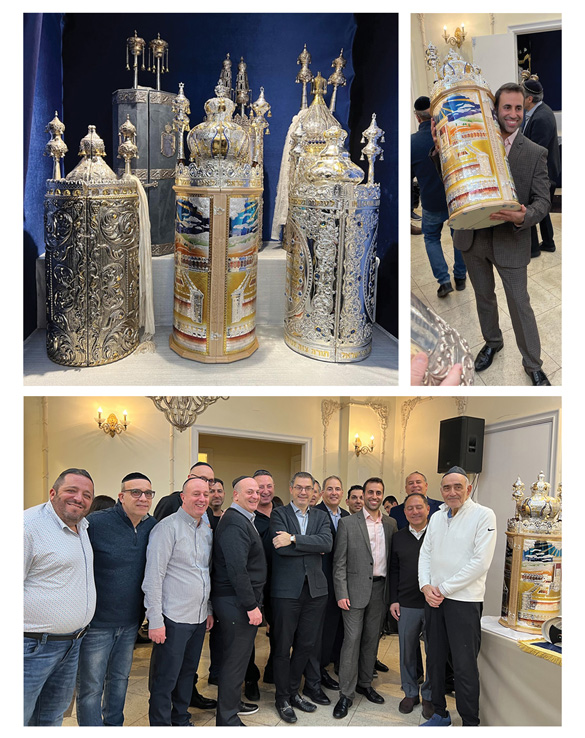
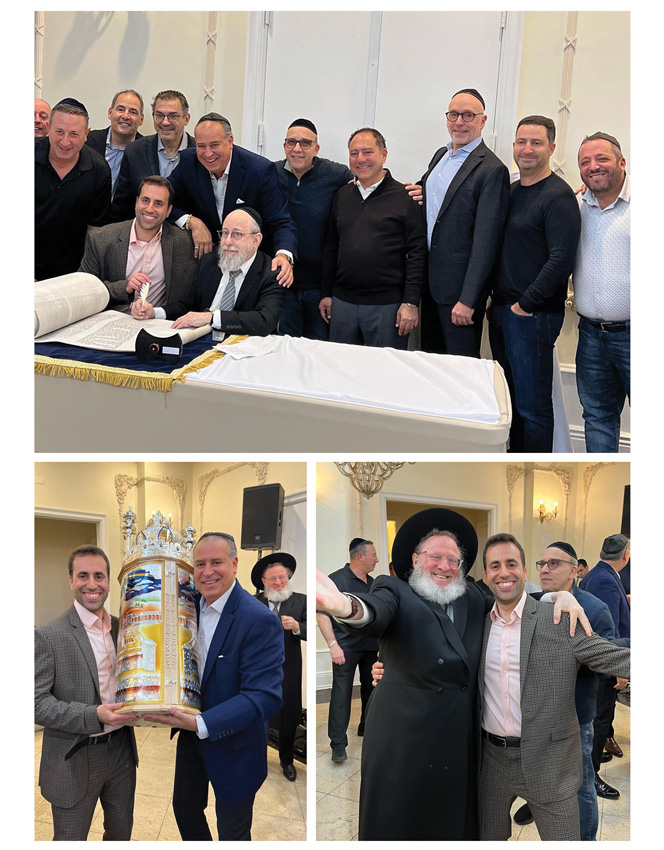
Magen David of Madison now has over 100 regular members for Shabbat, with weekly classes, guest lecturers and meals donated by generous supporters each week. Plus holiday prayers are in full swing. Magen David will also be instituting a youth program soon, and there have already been two beautiful Sefer Torah dedications, most recently by Mike and Gloria Masri.
The actual location of the Shul is the corner of Avenue P and East 24th, which is also a central connection point for the Madison area, as it is within easy walking distance for many young families on either side of Kings Highway or Bedford Avenue.
The Shul is quickly selling seats and becoming very popular in the neighborhood. Please come and pray at Magen David of Madison and experience something new which is inspired by the old glorious ways of our founding community members.
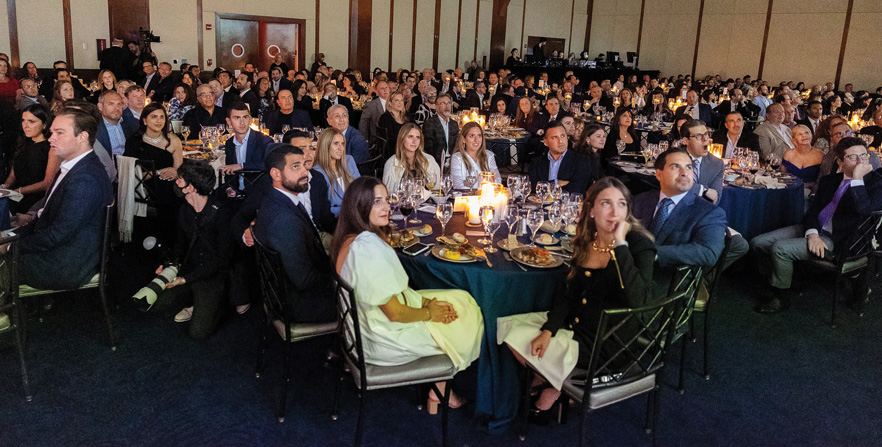
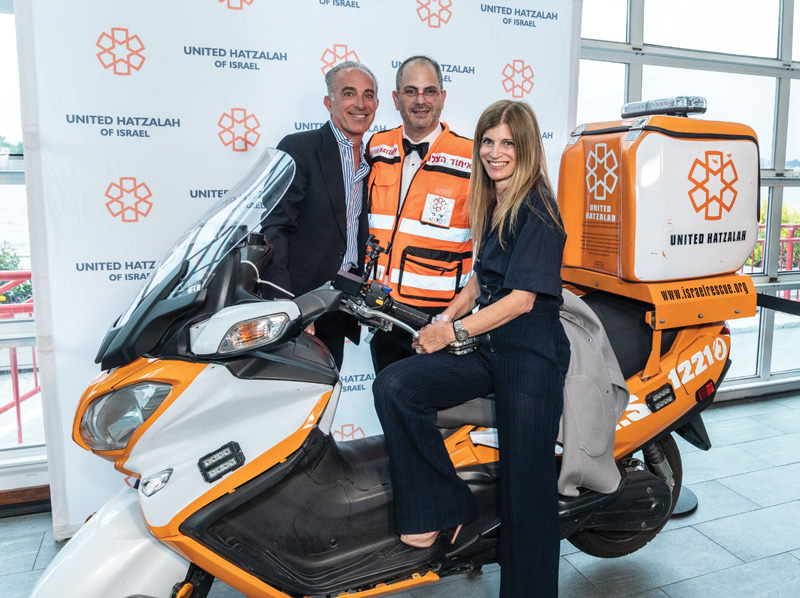
ON A RECENT TUESDAY EVENING AT PIER 60, IN CHELSEA PIERS, OVER 1,000 PEOPLE GATHERED IN SUPPORT OF FRIENDS OF UNITED HATZALAH, ISRAEL’S PREMIER FULLY VOLUNTEER EMERGENCY MEDICAL SERVICE ORGANIZATION. OVER 400 OF THOSE IN ATTENDANCE WERE YOUNG PROFESSIONALS UNDER THE AGE OF 35.
The crowd was there to attend the 3rd Annual Gala held by Friends of United Hatzalah of Israel, in support of the work done by the organization’s network of 6,200 emergency medical volunteers in Israel. Throughout the night supporters made donations which will go to support Hatazalah’s lifesaving efforts.
At the heart of the event, the organization featured Dr. Zevi Neuwirth, a Miami physician who volunteers with the organization during international crises. He conducted dozens of black-ops rescue missions inside Ukraine, over the first two months of the Russia-Ukraine war, as part of the organization’s relief efforts.
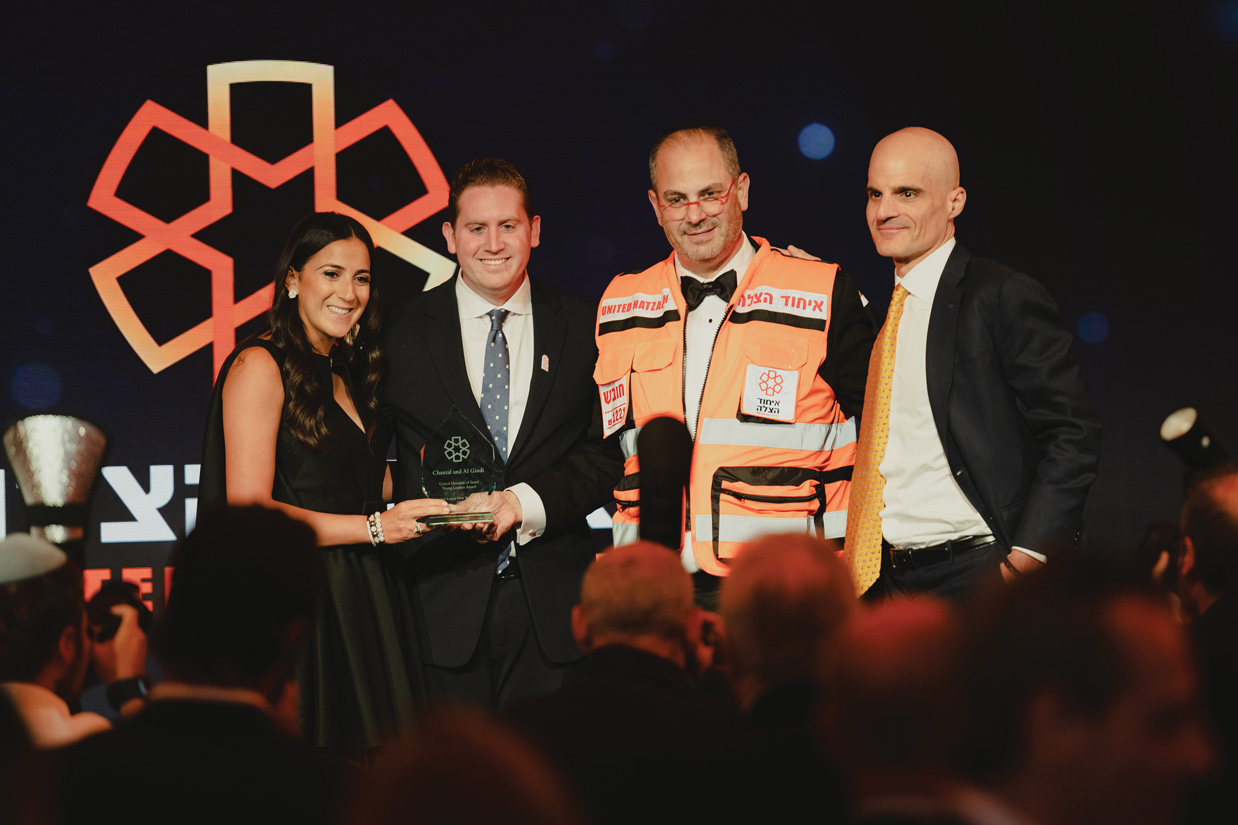
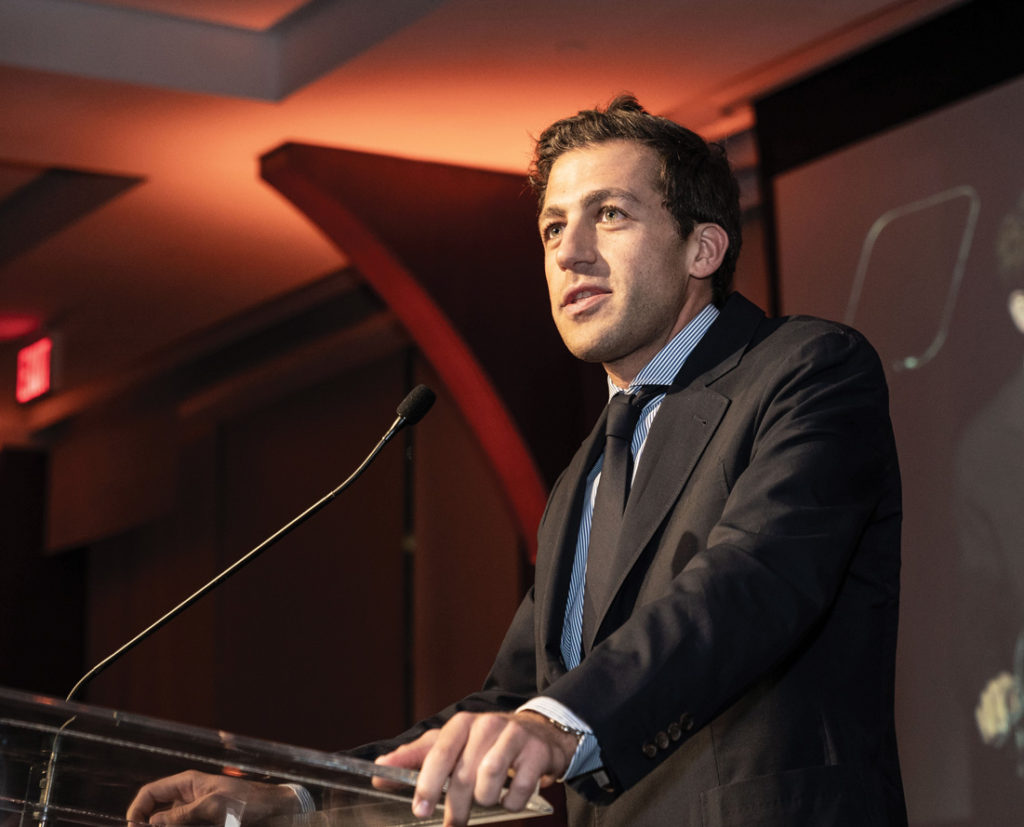
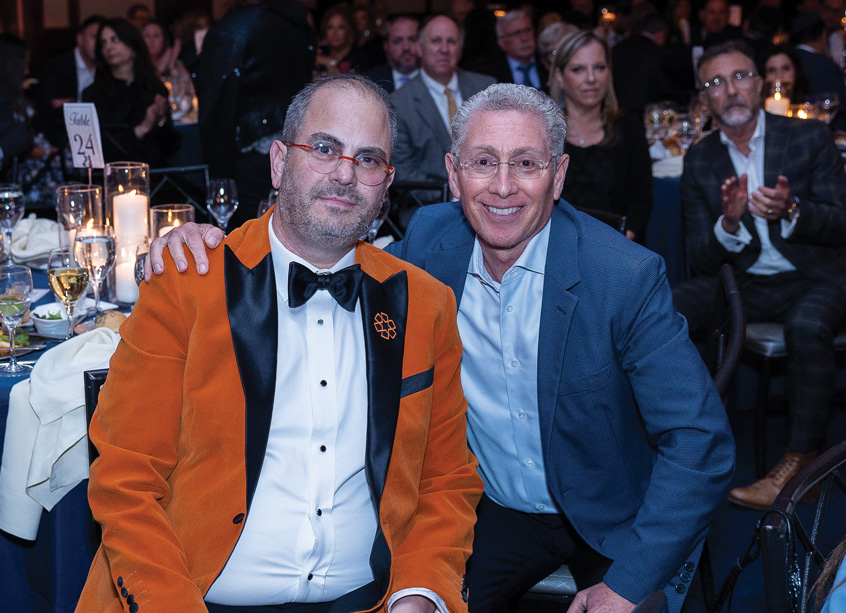
The event was chaired by supporter Alex Blavatnik, who flew in especially to support Hatazalah’s efforts in Israel and Ukraine. He was honored by the President and Founder of United Hatzalah, Eli Beer, as well as Chairman, Mark Gerson. Also honored were Cathy and Allan Weiss and Chantal and Al Gindi, for their continued support of Israel and the emergency services organization.
Al Gindi is a third-generation donor to many Jewish causes, both in the US and in Israel, among them is United Hatzalah. “I am grateful to have learned everything from the most amazing role models, my father Raymond Gindi, Uncle Isaac “IG” Gindi, and my grandfather Al Gindi A”H, the patriarch of our family. They taught me the importance of steadfastly upholding Jewish values, such as integrity, humility, and generosity,” AI said.
Eli Beer spoke about the qualities that he respects so much in Chantal, Al, and their family: charity, integrity, love, and kindness. “Most people give either annually, or only after their businesses make a profit. Chantal and Al take a different approach. They created a unique and thoughtful tradition. They make a donation whenever they close a new business deal, before any profits are realized, and they have encouraged their family and friends to give back to both their community and to Israel, as well. I can say that many lives have been saved because of their efforts and generous donations. They are a shining light in the Syrian community of New York.”
The event marked the third time that such a gala has been hosted in New York by Friends of United Hatzalah, and the first time since COVID began.
Beer concluded, “The Gindi family, as well as other members of the Syrian community who came out tonight, supported our efforts in Operation Orange Wings, which we undertook to provide humanitarian aid and medical care for refugees in Ukraine and Moldova. They even flew nearly 3,000 refugees to Israel. Now, they are here showing their support once again and donating to help us continue our work saving lives in Israel. I am grateful that we had the opportunity to honor Chantal and Al at this event, and I am simply in awe of how caring a community this truly is. Thank you.”
Raphael Poch is a volunteer EMT with United Hatzalah. He is the team leader for the Efrat region. In addition to his volunteer work, he serves as the International Media Spokesperson. He lives in the city of Efrat with his wife and two children and originally hails from Toronto, Canada.
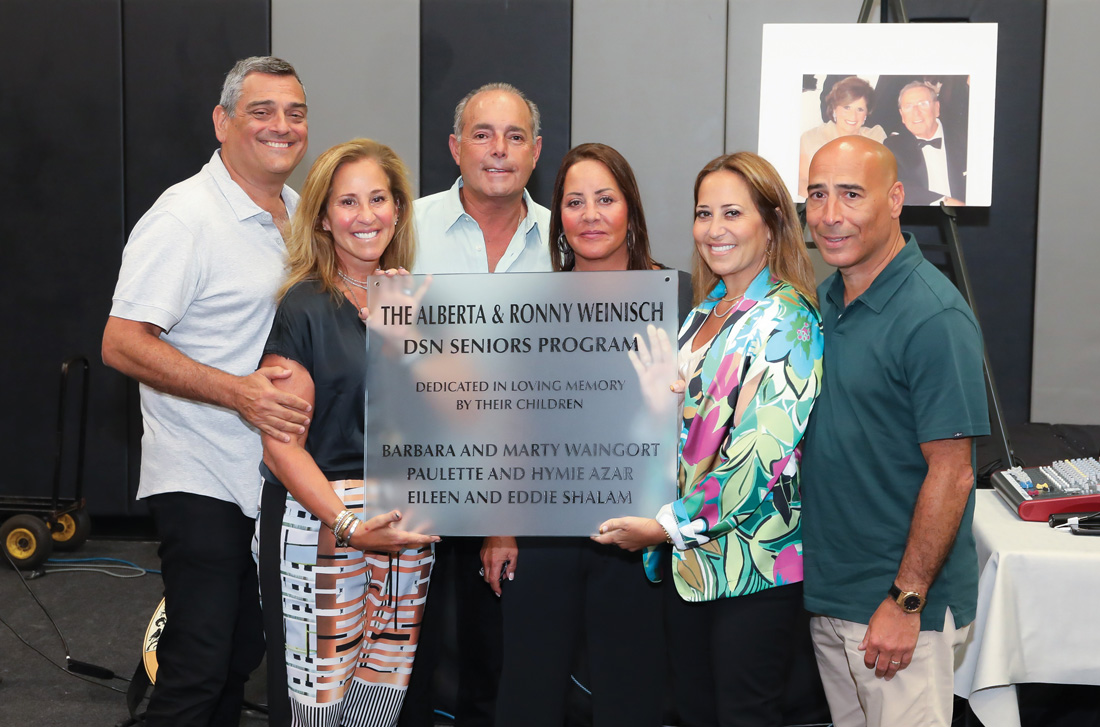
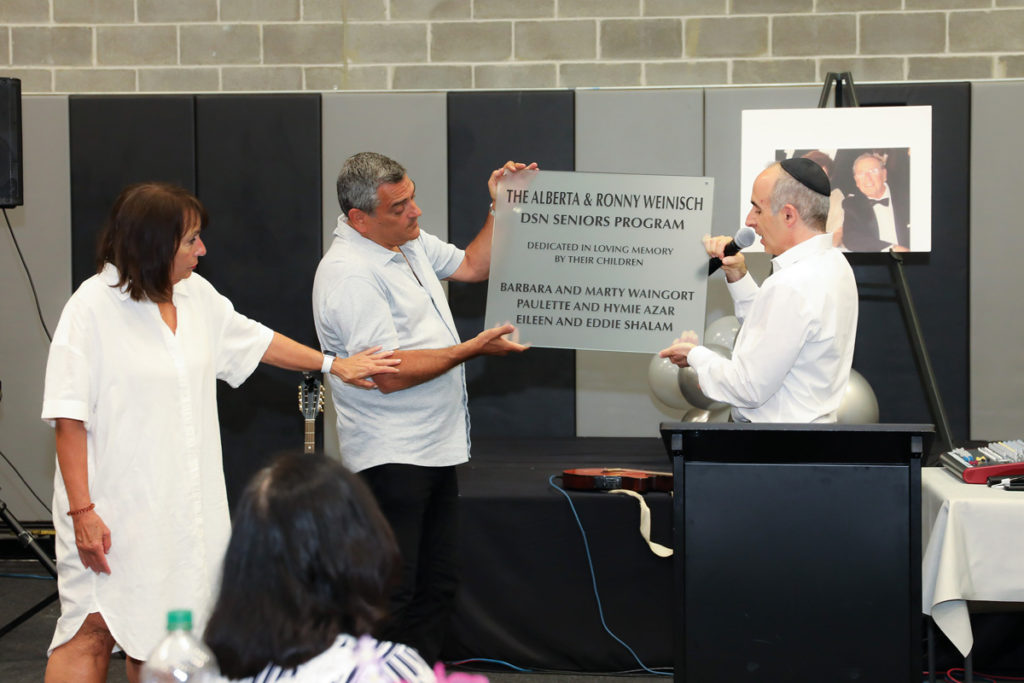
ON MONDAY, JUNE 13TH, OVER 150 PEOPLE ENJOYED A BEAUTIFUL AND SENTIMENTAL EVENT CELEBRATING THE NAMING OF THE ALBERTA AND RONNY WEINISCH DSN SENIORS PROGRAM. THE WEINISCH’S CHILDREN WERE SEARCHING FOR A WAY TO MEMORIALIZE THEIR PARENTS, AND REALIZED THAT THE MOST APPROPRIATE WAY TO DO THIS WAS TO NAME DSN’S SENIORS PROGRAM IN THEIR MEMORY.
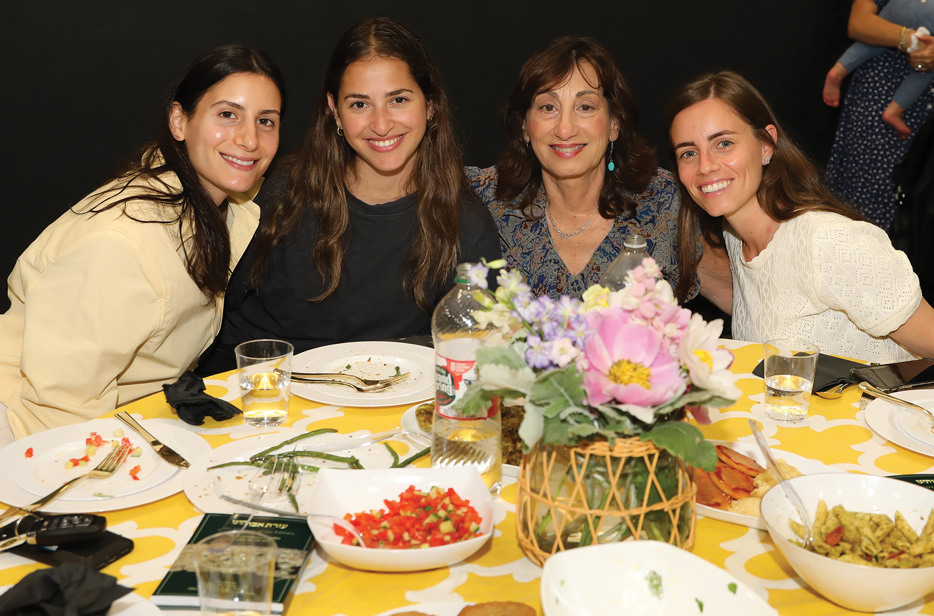
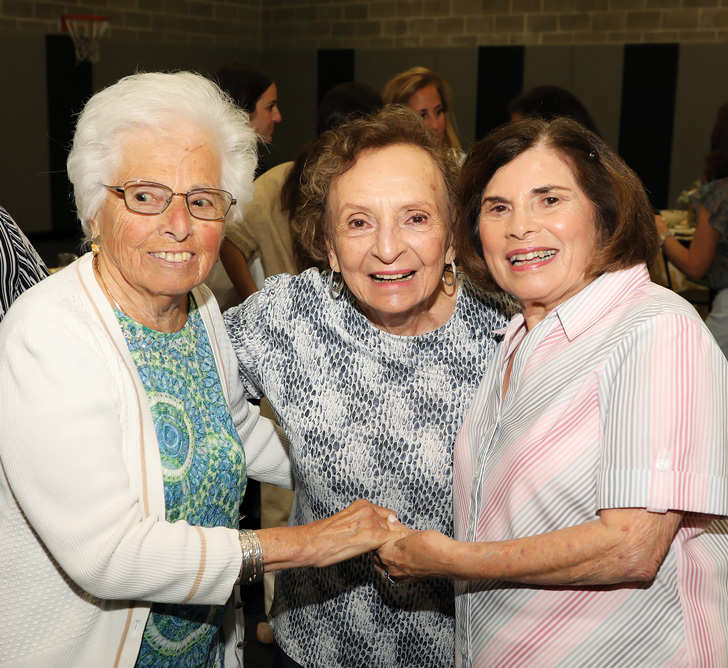
The Weinisch family, friends and a robust showing of community seniors filled the DSN gymnasium, which was transformed into a beautiful venue for an event with a catered lunch. DSN’s Executive Director Sammy Sitt opened the program welcoming all of the guests. He explained that “the seniors program is emblematic of all that DSN stands for: keeping people of all ages active and healthy, while allowing our community to socialize and stay together.”
Next, Fitness Director Sharon Carlstrom recalled how, in the summer of 2016, the program began with only exercise, but has since expanded to include many activities, and even a gourmet lunch. “My favorite part is that the seniors always know all the lyrics to songs from the 40s and 50s. It is undoubtedly the most fun class that I teach!”
Stephanie Massry and Vicky Schreiber, directors of the seniors program, worked tirelessly organizing the day. “We love being here every day and get just as much happiness as the seniors do!”
Next came a slide show of Alberta and Ronny through their years, shown on DSN’s jumbotron, which was followed by words from family members. Selma Cohen, Alberta’s sister who is an active member of DSN’s seniors program, described how much the program gave to her sister and how important the program is to the community. Granddaughter, Alberta Waingort-Sutton, spoke about how generous her grandparents were, and how they set an example by always doing things together. Son-in-law Marty Waingort spoke about his memories and how important the program is for the community.
Son-in-law Hymie Azar was the final speaker of the day and he explained how his in-laws, during their healthy years, “loved being together, playing golf together and shopping together.” He continued, “But two months before we lost my father-in-law, my mother-in-law completely shut down, as if not to face the reality of what was about to happen. After he passed, my mother-in-law, the person we knew for so many years, was nowhere to be found. She completely checked out.” He then revealed that, “There was one exception, and that was this amazing DSN seniors program. It was a godsend. This great place with these great people, great volunteers, and great other seniors found a way to reach her. For that, this place will always be in our family’s debt.” Hymie concluded, “G-d bless all of you involved in this program, for doing the hard work, keeping our most precious assets engaged, interactive and enjoying the most precious time of their lives.”
The décor of the event was gorgeous. There were beautifully decorated tables and exquisite flowers from Garden to Table by Andree Braha and Fortune Farca. Photographer, Lily Ades, was on hand to capture the memories, and the lunch was catered by Grace Sitt.
Singer Shlomo Haviv entertained the crowd with lively Israeli and American music. The seniors rose from their chairs, dancing and moving to the beats. Smiles were everywhere. Barbara Rahmey, a daughter of one of the seniors, summarized the sentiment shared by all, “My mother loved it today! She did the exercise and enjoyed the lunch and seeing so many of her friends and family. DSN’s team is really making our seniors so happy. Tizku Le mitzvot! Thank you DSN!”
IF YOU HAVE EVER HAD A LOVED ONE IN THE HOSPITAL WITH AN ILLNESS, YOU KNOW HOW TRAUMATIC AND LIFE-ALTERING IT CAN BE. A FAMILY’S WHOLE WORLD CAN BE TURNED UPSIDE DOWN. THEY SPEND DAYS IN THE HOSPITAL BY THE BEDSIDE OF THE ONE THEY LOVE, LISTENING TO DOCTORS OR NURSES TRANSMITTING COMPLEX MEDICAL INFORMATION AND OPTIONS.
The family often has to make life and death decisions, and it’s not unusual for them to sleep in the hospital each night, as well. All of this can leave many families feeling overwhelmed and lost, especially when there’s a need for support which hospitals are not equipped to provide.
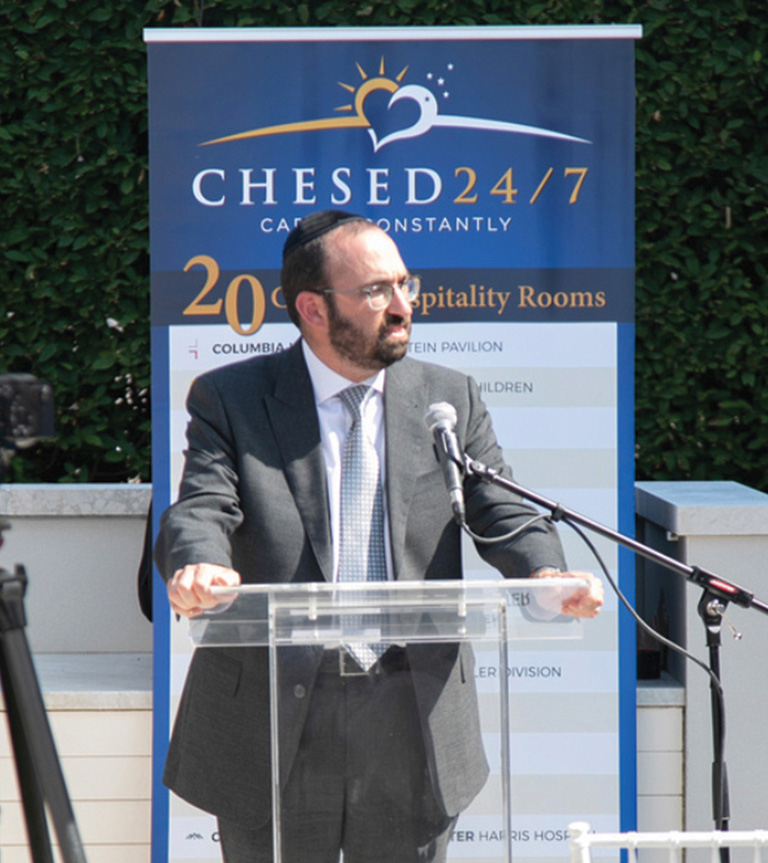
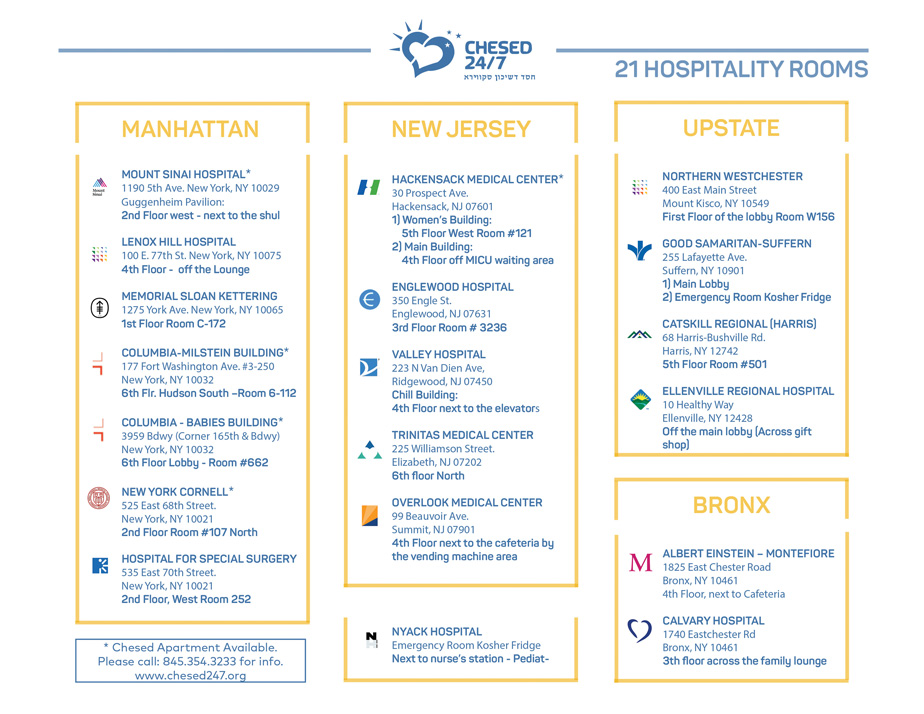
Stepping in to fill that need, in over 20 hospitals throughout the metro NY region, is Chesed 24/7. Yes, that’s the name of the organization, and true to its name, it operates 24/7 to help both patients and their overwhelmed families throughout their entire hospital stay, night and day. Chesed 24/7 has dedicated hospitality rooms, which are there for Jewish families regardless of their level of observance or religious affiliation. They’re open around the clock, 365 days a year, providing hot kosher meals, sandwiches, and snacks, Shabbat meals and services, siddurim, Tehillim, refrigerators, microwaves and more. The rooms serve as de facto places to recharge, and to find support from other people going through similar struggles, from a broad range of Jewish backgrounds and often from around the world. They also offer sleeping accommodations within walking distance of hospitals for those who need them, and patient liaisons who know how to help families navigate the challenging hospital systems. Their legendary patient liaison at Mt. Sinai Hospital, Mrs. Sima Bacharach, has helped many families from our community surmount the most challenging circumstances.
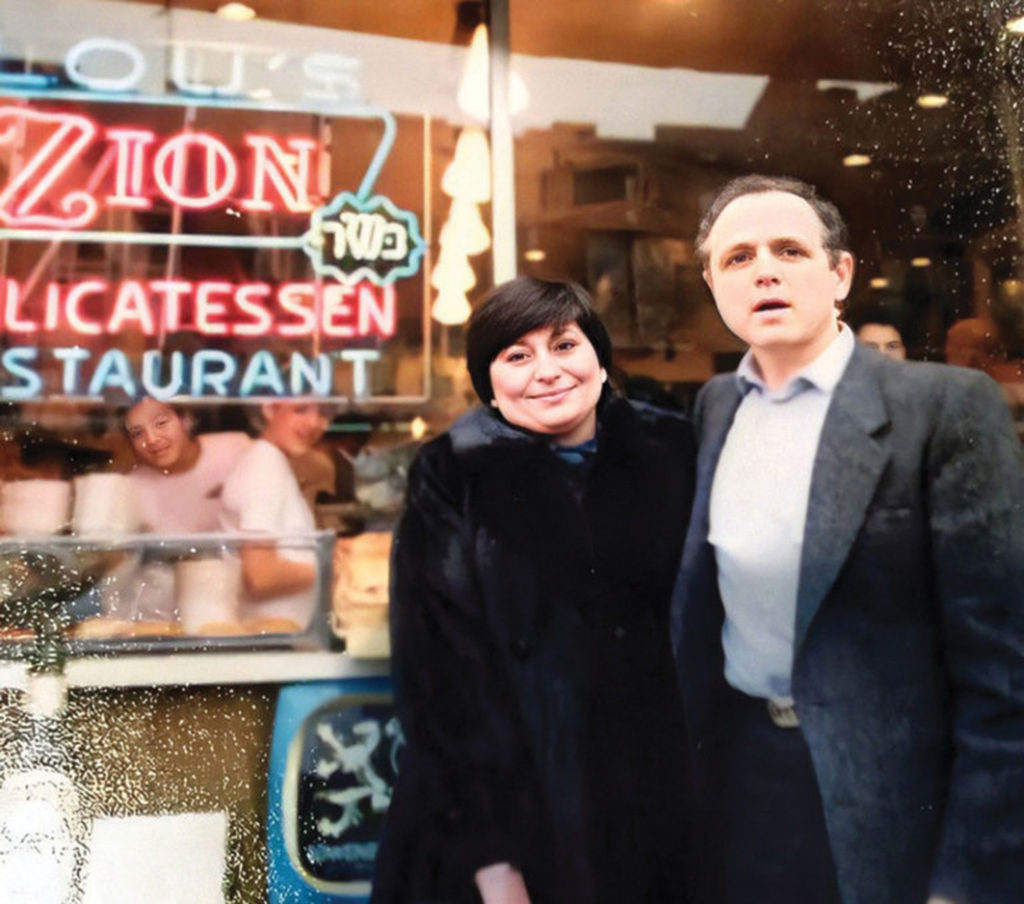
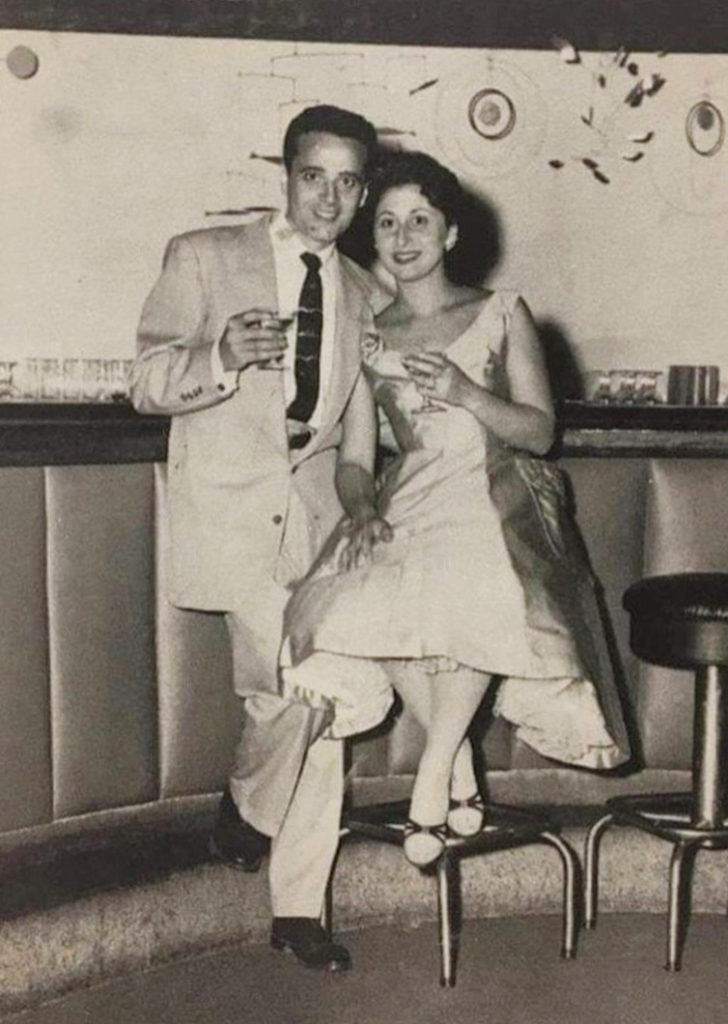
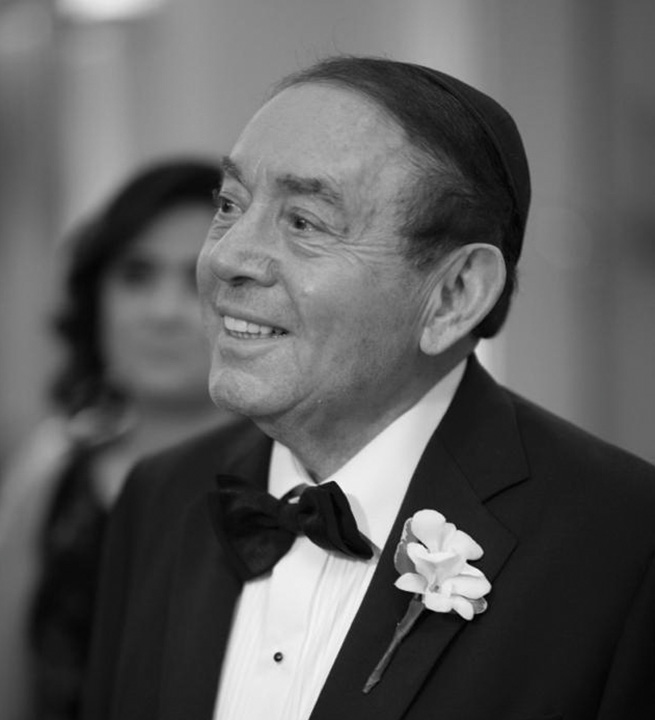
This tradition of giving, of being there for whomever needs support, and helping in any way they can, was embodied in the Jerome family for generations. Joey Jerome, remembering his parents Lou and Ruth Jerome A”H, owners of the famous Lou’s Deli on Kings Highway near East 2nd Street, said that while they were not wealthy people, they took care of people, providing food, jobs, and a surrogate home away from home, for many individuals and families.
Delicatessens ran through Lou’s blood, as his father owned a deli as well. When Lou’s opened in 1960, everyone in Ruth’s extended Missry family came to help. They filled ketchup and mustard bottles, set up chairs and tables, helped with meal preparation, and more. Together, Ruth and Lou worked side-by-side, almost 24/7, from the early morning lunch preparation, to the late-night, after-dinner clean up.
Ruth and Lou Jerome learned early on that if they couldn’t afford to donate a lot of money, they could feed people. There was a homey warmth to the deli that many community members called their second home.
Chesed was steeped in the Jerome family. Lou’s father Abraham fed anyone who came into his deli hungry, regardless of whether they could pay for a meal. He also reached out to people who needed food but didn’t come to the deli, by delivering sandwiches, soups, and other items to them unsolicited. It was in the Jerome blood to want to help those in need. He didn’t want any recognition or attention given to him for this. He simply wanted to help.
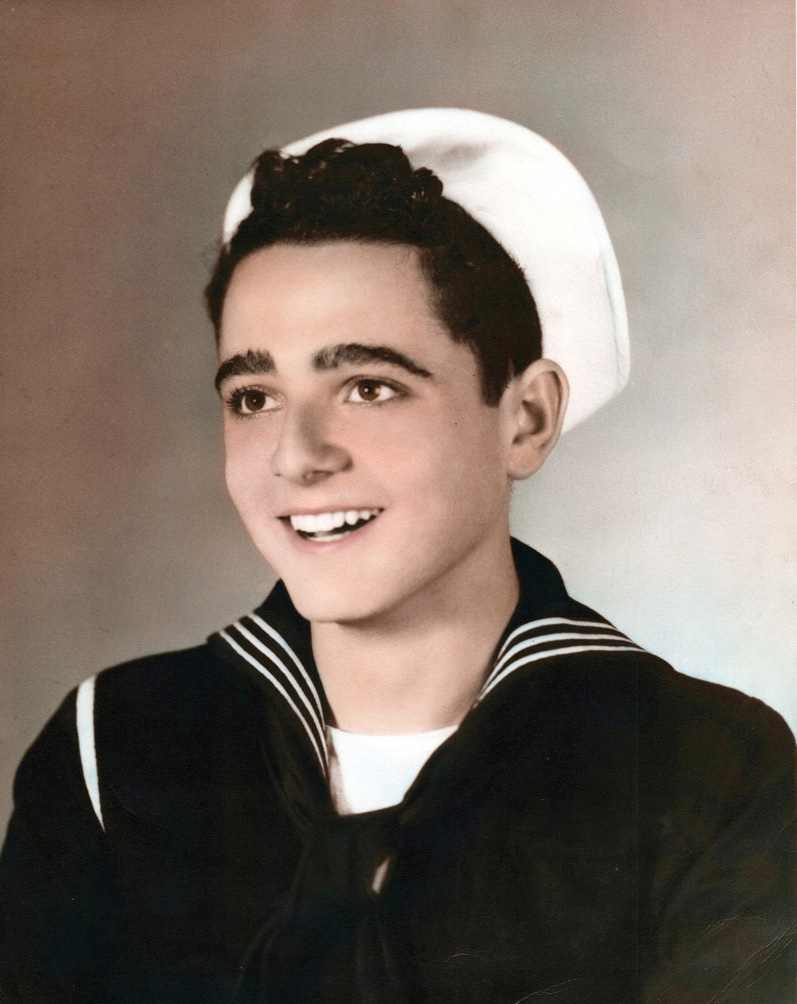
Lou and Ruth Jerome in front of their deliSailor Louis JeromeLou and Ruth Jerome
“My father wouldn’t stop anyone from ordering and eating, if they didn’t have money to pay,” said Abe Jerome. “He would take the check and write their information on the back. Most of the time people would come back, or their parents would come in and settle the bill, but not all the time. In his top drawer at home, he had an envelope filled with all the checks from people who never paid their balances—from opening day until the day they closed—but he never asked for payment.”
According to their daughter, Esther Haber, “If someone in the community was sick, my father would send them chicken soup. And my parents hired everyone who needed a job. Many of my cousins worked there, as well as many newcomers.”
“Often someone might come into the deli, and if my mother knew the family was struggling, the check would somehow disappear,” said Esther. “Or if she saw a student couldn’t scrape up the money for the bill, she would say, ‘don’t worry, I’ll get you next time.’ She never wanted someone to feel uncomfortable at the restaurant. My parents were very generous that way, even if they didn’t have a lot, they had a kind and giving nature.”
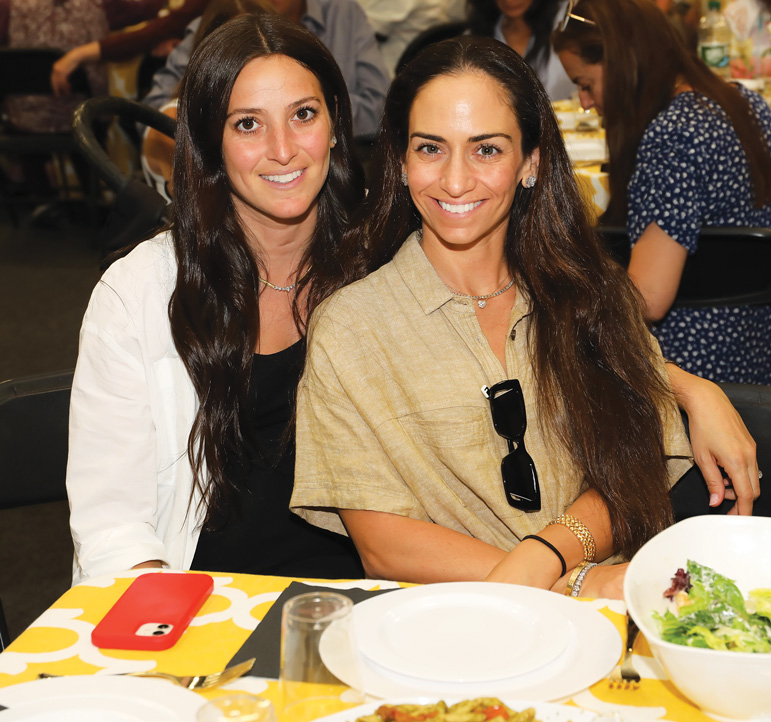
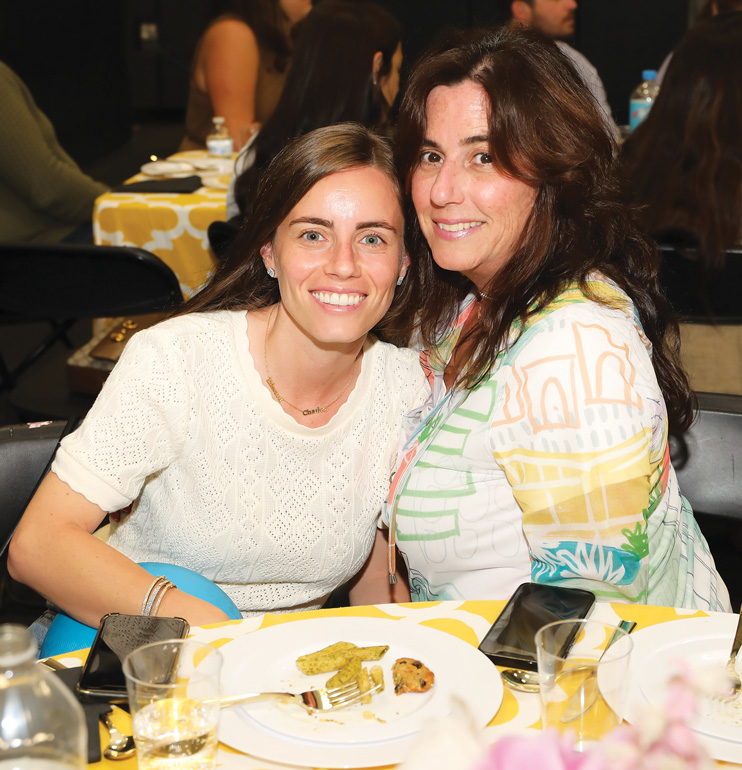
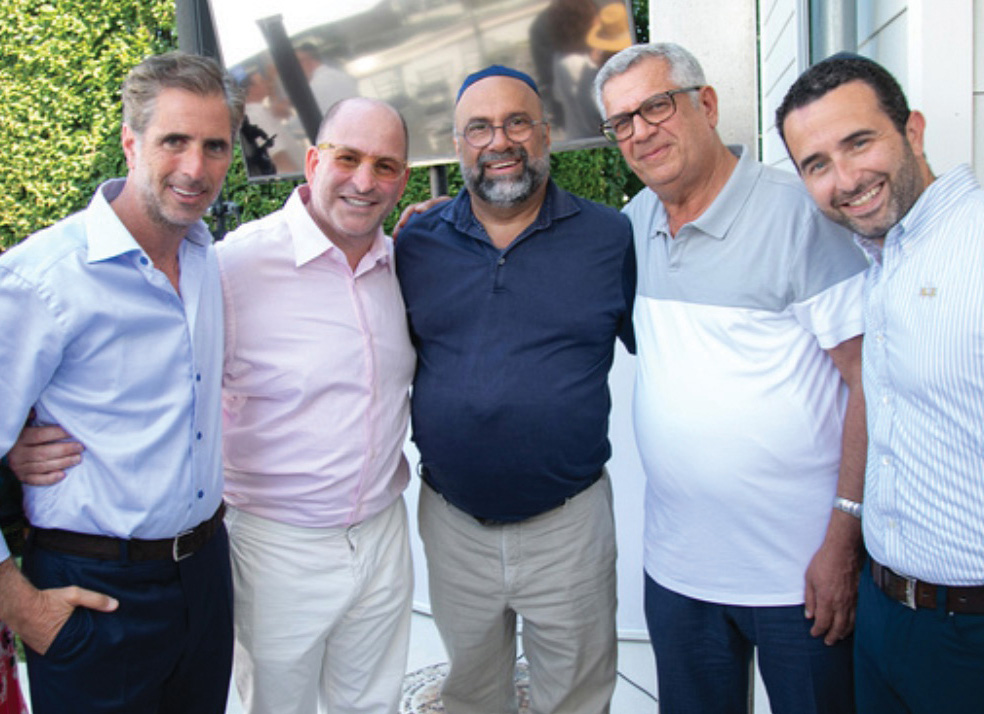
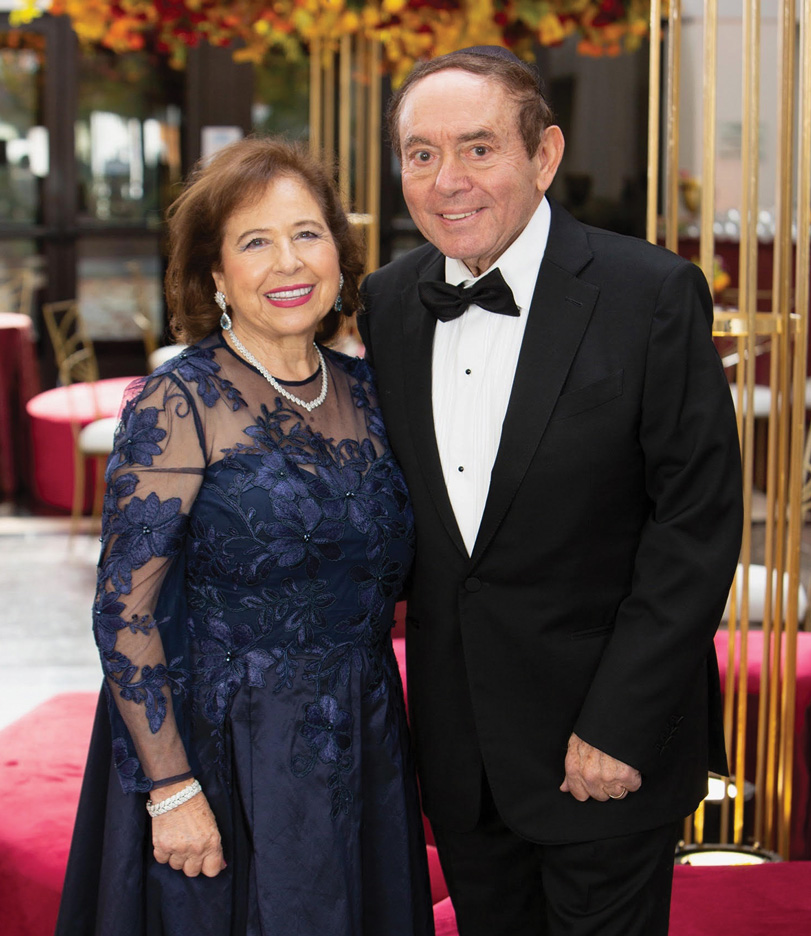
It is in their parents’ honor that Joe and Ester Jerome are hosting this year’s 6th Annual Chesed 24/7 Deal Summer Event. When Ruth was in the hospital at Cornell, the Chesed 24/7 hospitality room provided her three children and their families with a haven filled with kosher food and snacks, while she was getting much needed care. When Lou was ill and hospitalized in Columbia Presbyterian, the Chesed 24/7 hospitality room in the Milstein Pavilion was their lifeline, providing kosher meals and everything needed for Shabbat.
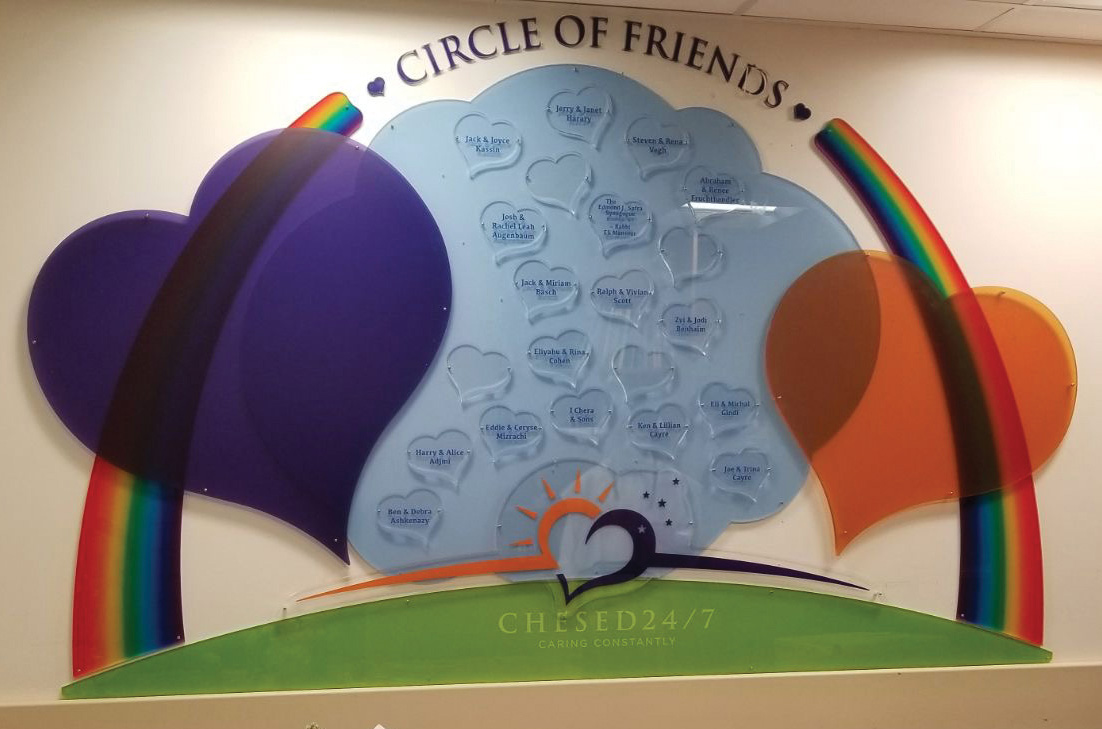
Previous hosts of the annual event have been Ken and Lillian Cayre (2016); Chaby and Nicole Orfali (2017); Joseph and Victoria Sutton and the Sutton Family, in memory of Mr. Alfred Sutton A”H (2018); David and Monique Haddad (2019); Tunie Missry and Family, in memory of Eddie Missry A”H (2020); and Morris and Linda Missry, in memory of Mrs. Priscilla Sutton A”H (2021).
In 2013, Jack Gindi A”H spent a significant amount of time in New York Cornell Hospital undergoing treatments. He did not have much of an appetite, so when he requested ice cream late one evening, his family went on a desperate search for some. It was 2 A.M., the cafeteria was closed, and the vending machines were sold out. When his family found the Chesed 24/7 hospitality room, they found more than just the ice cream Jack wanted—they found a home.
“That hospitality room was an oasis in the desert. It was a place where I knew what it meant to be a Jew anywhere in the world,” said his wife, Debbi. “It offered the comfort of home.” Debbi and her children generously sponsored the Jack M. Gindi Chesed 24/7 Hospitality Room in Cornell Hospital as a zechut for Jack. Several years later, she and her siblings sponsored the Pauline and Maurice R. Cohen Chesed 24/7 Hospitality Room in Memorial Sloan Kettering Hospital, in memory of their father.
Chesed 24/7 has 18 similar Chesed Rooms located in hospitals throughout the New York Tristate area. Each room contains a refrigerator fully stocked with fresh food, two microwaves, chairs and a table to eat on, a Shabbat food warmer, a hot water urn, cabinets filled with paper goods, cell phone chargers, prayer books and anything else that can make a hospital stay bearable for a Jewish family. The Chesed 24/7 Rooms provide an incredible source of comfort—even when you might not think you need it, but especially when you do.
Every week, Chesed 24/7 volunteers deliver families a Shabbat in a Box, complete with electric candles to light for Shabbat, Kiddush, as well as other items needed to bring in the Sabbath and food to eat.
Rabbi Eli Mansour, upon the opening of the Chesed 24/7 Hospitality Room at Columbia Children’s Hospital in 2017, spearheaded by Ken Cayre and Harry Adjmi, praised the work of Chesed 24/7. “When one visits a sick person in the hospital, usually the one in the bed gets the attention,” he noted. “But the family members are also sick. The spouse, the children, the parents, the siblings, they are not sick enough that they require medicine, but they are drained physically and they are drained emotionally. Chesed 24/7 takes care of them too. Chesed 24/7 takes care of everybody, and this is the perfect and purest way to fulfill the mitzvah of bikur cholim.”
Chesed 24/7 has seven areas in which they provide assistance to families with someone in the hospital.
Food and Respite: Chesed 24/7 Hospitality Rooms: located on-site at more than 20 hospitals are oases of refuge in a time of challenging illness, a place to receive support from others undergoing similar issues.
Shabbat Services: Chesed 24/7 provides Shabbat meals, sleeping accommodations within walking distance of hospitals, and Shabbat religious needs for families, caregivers and friends who spend Shabbat and Jewish holidays assisting in the care of a hospital patient.
Shabbat Meals: Chesed 24/7 stocks each hospitality room with hot meals for patients/family who arrive at the hospital unexpectedly on Shabbat or the Jewish holidays. Passover Seders are prepared as well. Meals can also be ordered from Chesed 24/7 and delivered to the patient’s hospital room.
Sleeping Accommodations: Chesed 24/7 provides sleeping accommodation in apartments located within walking distance of the New York Presbyterian—Columbia University campus, at Mt. Sinai Hospital, at Weil Cornel and at NYP Queens. Additional accommodations are planned to respond to growing need.
Lou Jerome A”H was in the US Navy during World War II and was so proud to have served his country, and later, his community. The Jerome family continues in their parents’ footsteps, supporting many charitable causes, and so many people in need. Chesed 24/7 is honored to remember Lou and Ruth Jerome A”H, whose love and care for the community lives on.
A journalist, genealogist and historian, Sarina Roffé is the author of Branching Out from Sepharad (Sephardic Heritage Project, 2017). She holds a BA in Journalism, MA in Jewish Studies and an MBA.
CHARLIE SAKA A”H WAS A VISIONARY WHOSE DREAMS AND ASPIRATIONS WERE GUIDED BY TWO THINGS: FAMILY AND COMMUNITY. HIS GOALS IN LIFE WERE SIMPLE: TO HELP, TO BUILD, TO GIVE AND TO INSPIRE. WHEN HE PASSED AWAY ON APRIL 22, 2022, THE ENTIRE COMMUNITY MOURNED HIS LOSS, KNOWING THAT THERE WAS NO ONE WHO COULD ADEQUATELY FILL THE SHOES OF YESHAYA BEN LAURA, MR. CHARLIE SAKA.
Charlie’s mother, Laura Saka, had been advised against having children due to her weak heart, but chose to have a child anyway, and her husband Sam agreed. It was almost as if the young couple knew their child’s destiny, and could not deny him his chance. Charlie was born July 30, 1941.
Nearly nine years later, Laura passed away, leaving Charlie to be raised by his father, with the help of a large extended family, including his grandparents, David and Jamileh Didia, as well as his many aunts and uncles. This team effort clearly put family at the forefront of Charlie’s priorities. For the rest of his life he would always keep family first, and help out any family member who needed him.
In November 1950, Charlie was seriously injured when he was hit by a car, while playing with his friends on the streets of Bensonhurst. Charlie survived multiple broken bones and six days in a coma, eventually making a full recovery. The odds were stacked against his survival, yet he triumphed. This fighting spirit was part of Charlie’s makeup. He used that spirit to get things done throughout his life, no matter the obstacles.
Charlie’s father, Sam Saka, married Mary Minyan in 1952, and from the beginning, she treated Charlie as her own son. The couple’s four children, Charlie’s younger siblings, had no idea during their youth that Charlie was not Mary’s biological child. Her commitment and wholehearted support taught Charlie the importance of making others feel important and valued. He learned never to let anyone in need feel helpless. This type of hesed was the foundation on which Charlie built his life.
Charlie at his granddaughter’s wedding
At the young age of 12, Charlie got his first job as a bicycle delivery boy for Dilbert’s on Bay Parkway, working for tips. Working at such a young age ingrained in him the principle that one must always make his own opportunities. Things do not just come without effort. Charlie always had a vision of success in business and he had already begun to see it through.
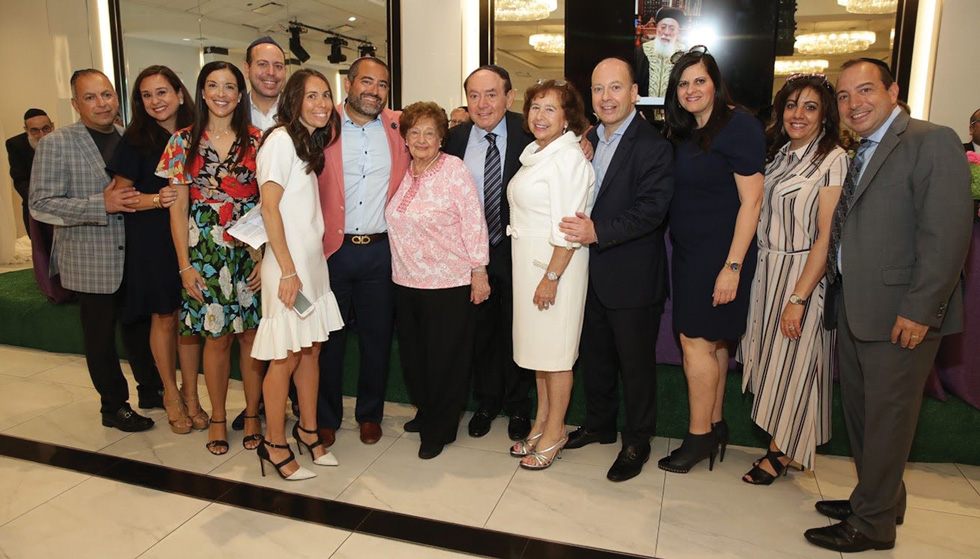
Charlie, Brenda, Grandma Sally Sultan and their children at the Mikveh opening, June 2018
In 1961, when Charlie was 20, he and his father opened 1581 Gift Shop, in Manhattan. Charlie persevered through the hard work and long hours because he understood that he was laying the foundations for his future.
Charlie would have been first to admit that he could not have accomplished all the things he did in his life without his wife Brenda. All of his projects were hers as well, and he was bolstered by the continued support she gave him. From his business to his religious observance, to his family, Brenda was with him wholeheartedly. Nowhere is Brenda’s support more evident than in Charlie’s crowning achievement—the building and expansion of Magen David of West Deal, including the Torah Center named in their honor, the Joe and Eileen Sutton and family Sephardic Social Center and the Gladys Kassin Mikveh.
Brenda and Charlie were introduced in the summer of 1964, by their mutual friend, Alfred Esses. On their first date, the couple got lost looking for their destination. This is somewhat ironic, since they were a couple whose direction in life for every moment afterwards was clear and unwavering.
After about a dozen years of marriage, two pivotal changes occurred. The first came in 1977 when, despite the success of his retail business, Charlie decided to begin a wholesale company. He knew that this would give him more time to spend with his wife and children, and allow him to be more religiously observant.
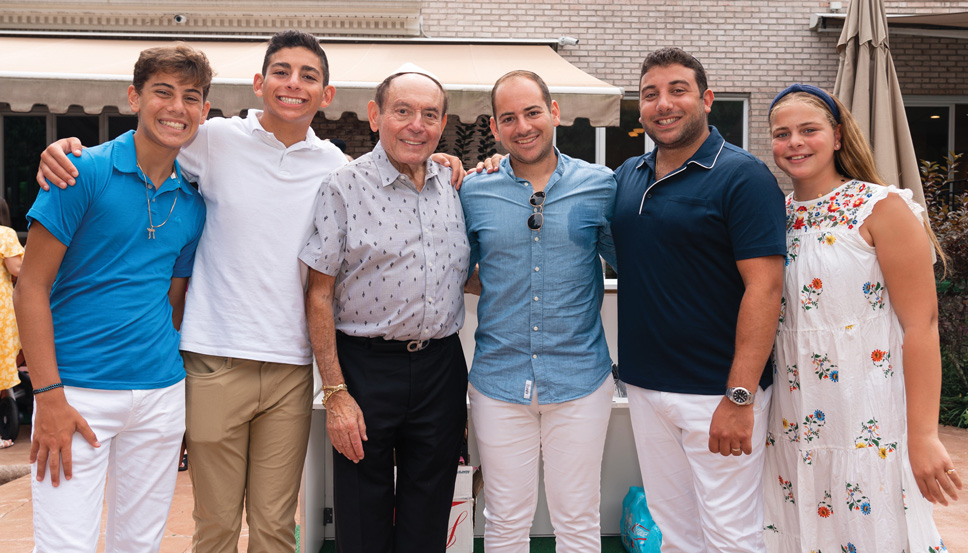
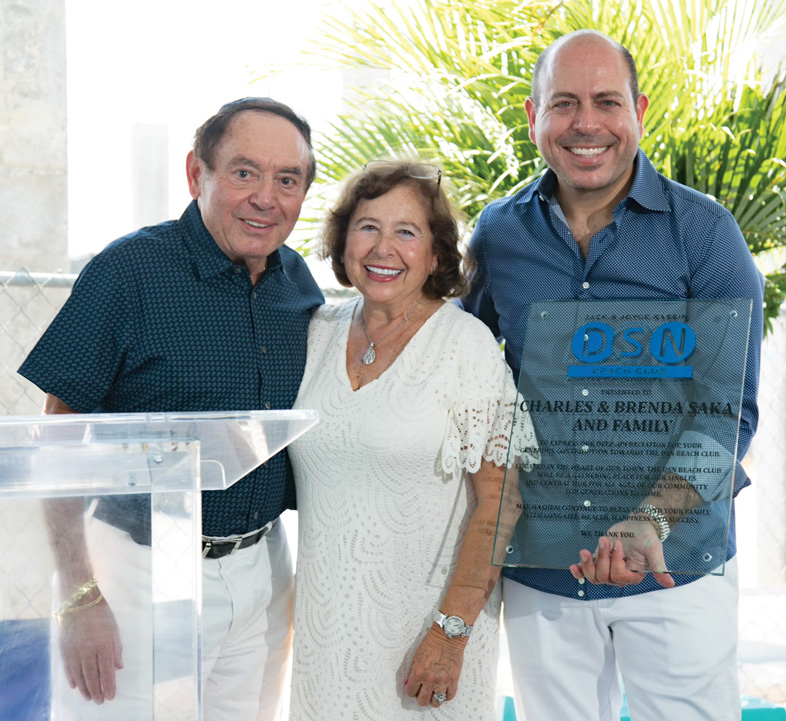
Charlie with his namesakes: Charles Cohen, Charlie Mizrachi, Grandpa Charlie, Charles S. Saka, Charlie R. Saka, and Charlotte SakaCharlie, Brenda and Jeffrey at the DSN Beach Club dedication event
Charlie’s best friend Mickey Abraham helped him make the transition from retail to wholesale, and Sakar International was born. Over the years, this company developed a global presence by incorporating new technology to produce on-trend, cutting-edge products. Sakar owns and licenses many entertainment and corporate brands, and maintains a diverse portfolio of products. All of this success is a testament to Charlie’s leadership, but he did not do it alone. Charlie established Sakar as a family company almost from the start, when he partnered with his brother, Allen. Then, as soon as they were old enough, Charlie’s children joined the company, working with the enthusiasm and commitment that their father expected. One of the most important guiding principles at Sakar is respect. Charlie treated everyone with respect, from the janitor to the biggest customer.
The second pivotal change happened in 1978, when Charlie and Brenda moved their family to the West Deal neighborhood of the Jersey Shore. It was this move that set Charlie on the trajectory to become “a builder of the community.”
Joe Betesh A”H, one of the founders of the shul next door to the Sakas’ new home, recruited Charlie to join the synagogue committee. Charlie had never volunteered for anything before, yet he rose to the occasion and found success in fundraising, but also in making decisions and getting things done.
Jeffrey, Sammy, and Raymond Saka, Mayor Chris Siciliano, Mrs. Brenda Saka, Laurie Mizrachi, Sally Cohen with Ocean Township board members
By being involved in the shul, Charlie had the privilege of becoming close to one of his strongest mentors, Rabbi Ezra Labaton A”H. Hired in 1982, he and his wife Emily helped bring the blossoming community together. The Rabbi taught Charlie the concepts of Tikkun Olam, making the world a better place, and Tzelem Elokim, recognizing Hashem’s presence in everyone. The Rabbi’s passion impacted the Sakas’ lives in numerous ways.
“The Rabbi had an intelligence that compelled people of all ages and backgrounds to gravitate towards him,” said Sammy Saka. “His Saturday morning speeches, over the thirty years in which he served as rabbi, were inspirational and we were all impacted by those speeches.” It was Rabbi Labaton’s influence that got Charlie and his sons involved in Torah learning, which has had a lasting effect on all of the Sakas.
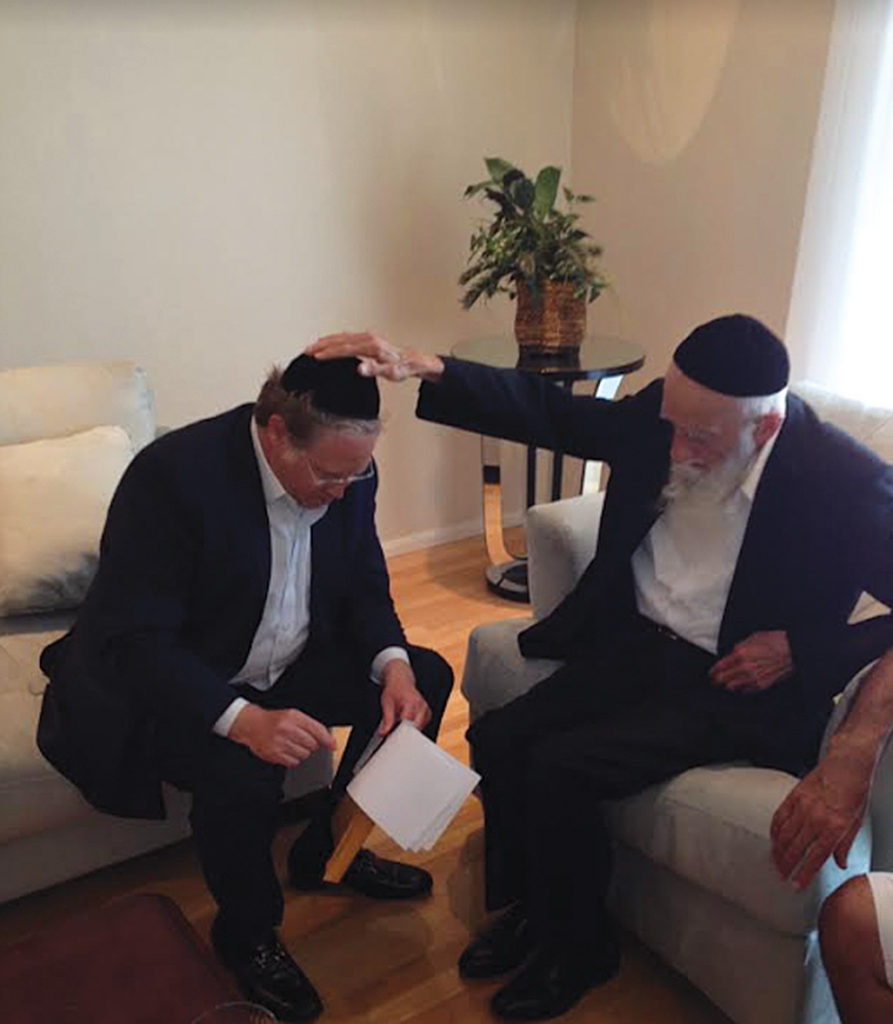
After Rabbi Labaton passed away, Rabbi Shaul J. Kassin, the new rabbi of the shul, became one of Charlie’s greatest friends and inspirations. Rabbi Kassin also admired the things Charlie could get done. “People knew that if Charlie was involved in a project, it was a good cause and would get completed, so they donated. He had an uncanny ability to raise money, and it would get done especially quickly, without delay. Once Charlie had an idea, it was in motion the next day,” said Rabbi Shaul Kassin. “He looked to see what was lacking. Then he dreamed it, wrote it up and built it.”
The fulfillment of Charlie Saka’s visions are all over the community. Aside from spearheading the building of the shul, Charlie was instrumental in adding to the property, assisting with each addition so that the community’s needs would be served. He pushed for a large social hall, and later its expansion, so there would be a beautiful place with room for the community’s special occasions. He took a leadership role in building the expanded midrash and Torah Center so that the growing shul would have more places to pray and to learn. When the Social Center, which had been built for parties and for the seniors was destroyed by fire, Charlie was not discouraged. He took it as a sign that it needed to be rebuilt “bigger and better.” He saw to it that the building was expanded to accommodate even more. When Charlie saw that the West Deal community needed a mikveh, he and Brenda took on the project and created a spa-like building that allows women to fulfill the important mitzvah of family purity. Since the complex has expanded and there is so much activity, a house on the property is made available for the caretakers, visiting guests and rabbis to stay.
Charlie helped support Hillel Yeshiva, assisted in building the DSN Community Center, and helped create the Saka Edition of Yalkut Yosef, an English translation of Sephardic halakha. Today, Batei Midrash all over the world house these books.
In each of his endeavors, Brenda was at Charlie’s side, helping and supporting, and doing the work people take for granted, such as shopping for groceries for the shul, and arranging the hanging of plaques.
It was not only at home in New Jersey that Charlie and Brenda’s graciousness was felt. It could be felt in other places when they traveled for business. Whether to New Orleans or Hong Kong, they always brought enough food to feed others. In Las Vegas, they sponsored minyanim and sebets to accommodate the businessmen and friends who were there. At first, Brenda would bring food from home and heat it up in her room, but eventually, since so many people attended, Charlie and Brenda had the meals catered, always wishing to make everyone as comfortable as possible.
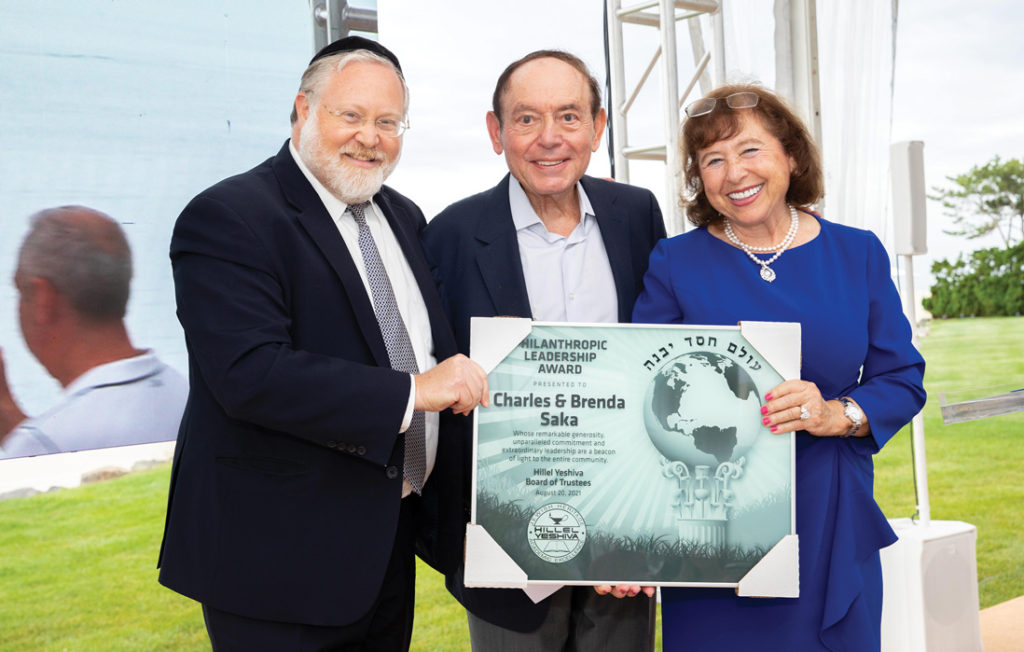
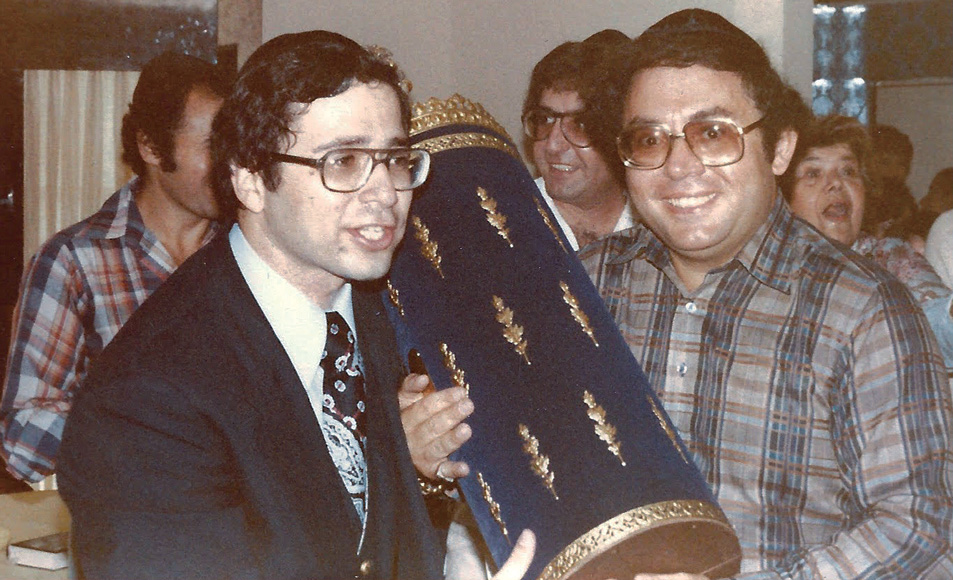
Rabbi Shaul Kassin with Charlie and Brenda at a Hillel event last summerCharlie with Rabbi Labaton early 1980s at the original West Deal Synagogue
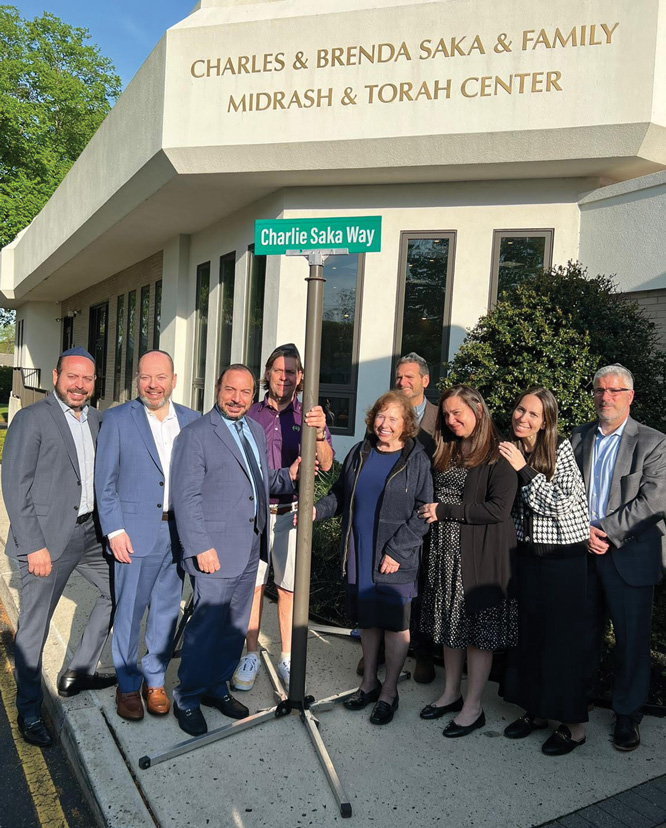
Charlie’s contributions even affected those outside the community. Weeks after Charlie’s passing, in a touching ceremony attended by Charlie’s family, friends and town council members, the mayor of Ocean Township dedicated the street leading to the Magen David Synagogue complex in Charlie’s memory. It is now “Charlie Saka Way.”
Charlie built a successful business and gave from his heart to help the community, but he was always focused on his family. He and Brenda raised their children to follow in their footsteps. All of their children are community leaders, a testament to how effective it is to lead by example.
Sammy has been leading Hillel Yeshiva for two decades, supporting every facet of the school from education to expansion. During his tenure its enrollment has grown to 1,200 students. Raymond is dedicated to ensuring the success of the shul. He fundraises, advises, innovates, and recruits others to get involved, ensuring that Magen David of West Deal can effectively and positively serve the community. Jeffrey is Chairman, and one of the founders of the DSN Community Center, which is the heart and soul of social activity in the Deal area. Everyone is looking forward to the opening of the DSN Beach Club later this year. Laurie (Saka) Mizrachi is Chair of Sephardic Bikur Holim’s New Jersey branch rejuvenating the organization and propelling it into the future. Sally (Saka) Cohen studies the community’s past, and as Director of Sephardic Heritage in Hillel Yeshiva, is active in bringing the community’s history to the next generation.
When Charlie Saka passed away, he left a legacy to his children, grandchildren, and great-grandchildren of which they can all feel proud. He accomplished so much because he dreamed big, but more importantly, because he turned his dreams into visions, and his visions into reality.
A genealogist and historian, Sarina Roffé is the author of Branching Out from Sepharad. She is president of the Sephardic Heritage Project, Co-Chair of the Brooklyn Jewish Historical Initiative and Chair of the Sephardic Research Division of JewishGen. Editor of the journal Dorot, Sarina holds a BA in Journalism, and MA in Jewish Studies and an MBA.