Freezer-friendly recipes that simplify Passover prep
Passover desserts are often treated as an afterthought, pushed to the end of long prep lists and late nights. Yet dessert is also the easiest place to plan ahead and reduce pressure. When it is already made and waiting, the holiday meals feel steadier and less rushed.
Many classic Passover desserts freeze well when they are built on eggs, oil, nut flours, and potato starch. These ingredients hold moisture and structure even after thawing. With a little foresight, dessert can be finished days or even weeks before the first Seder. Advance preparation for Passover is allowed when done properly. Food should be prepared with Passover-designated utensils and cookware, using ingredients that are kosher for Passover, and stored carefully to avoid contact with chametz. Because Passover cooking halachot are detailed, it is wise to review them before you begin cooking or consult your rabbi with any questions you may have. The recipes below are designed for advance preparation and freezing. They are practical, reliable, and easy to portion for guests.
Chocolate Chip Passover Loaf Cake Dairy or Pareve Yields: 2 loaves, 20 slices Serves 16 to 20
Ingredients
6 large eggs
1 1/4 cups sugar
1/2 cup oil
3/4 cup potato starch
1/2 cup finely ground blanched almonds
1/4 cup unsweetened cocoa powder
1 cup Passover chocolate chips, dairy or pareve as needed
1/4 tsp salt
Instructions
Preheat oven to 350°F. Line two loaf pans with parchment paper.
Beat eggs and sugar until pale and thick, about 5 minutes.
Slowly add oil while mixing.
Fold in potato starch, ground almonds, cocoa powder, and salt.
Fold in chocolate chips.
Divide batter evenly between pans.
Bake 40 to 45 minutes, until a toothpick inserted in the center comes out clean.
Cool completely before slicing, wrapping, or freezing.
Baked Passover Cheesecake with Almond Crust Dairy Yields: 2 nine-inch cakes, 24 slices Serves 20 to 24
Ingredients
Filling
2 pounds cream cheese, room temperature
1 1/4 cups sugar
5 large eggs
1 cup sour cream
1 tbsp lemon juice
1 tsp vanilla extract
Crust
2 cups finely ground blanched almonds
1/4 cup sugar
4 tbsp butter, melted
Instructions
Preheat oven to 325°F.
Combine crust ingredients and press firmly into the bottoms of two parchment-lined springform pans.
Beat cream cheese and sugar until smooth.
Add eggs one at a time, mixing after each addition.
Mix in sour cream, lemon juice, and vanilla.
Pour filling over crusts.
Bake in a water bath for 65 to 75 minutes, until centers are just set.
Cool completely, then refrigerate before freezing.
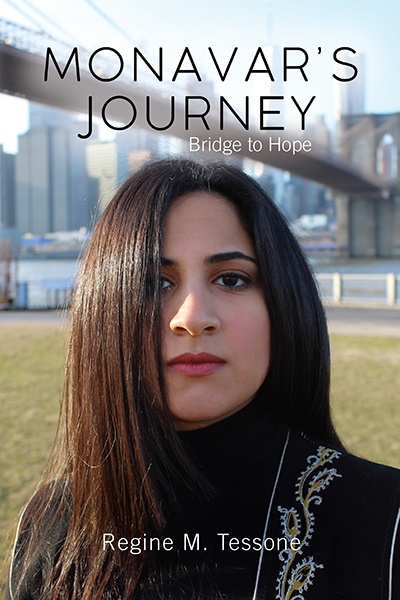
Regine Tessone was born in Tehran, Iran, in January 1970 to a wealthy family. It was a decade of tremendous prosperity for Jews. The decade ended with the Iranian Revolution, which was years in the making, the overthrow of the Shah of Iran, Mohammad Reza Shah Pahlavi, in 1979, and the beginning of an Islamic republic ruled by the Ayatollah Khomeini.
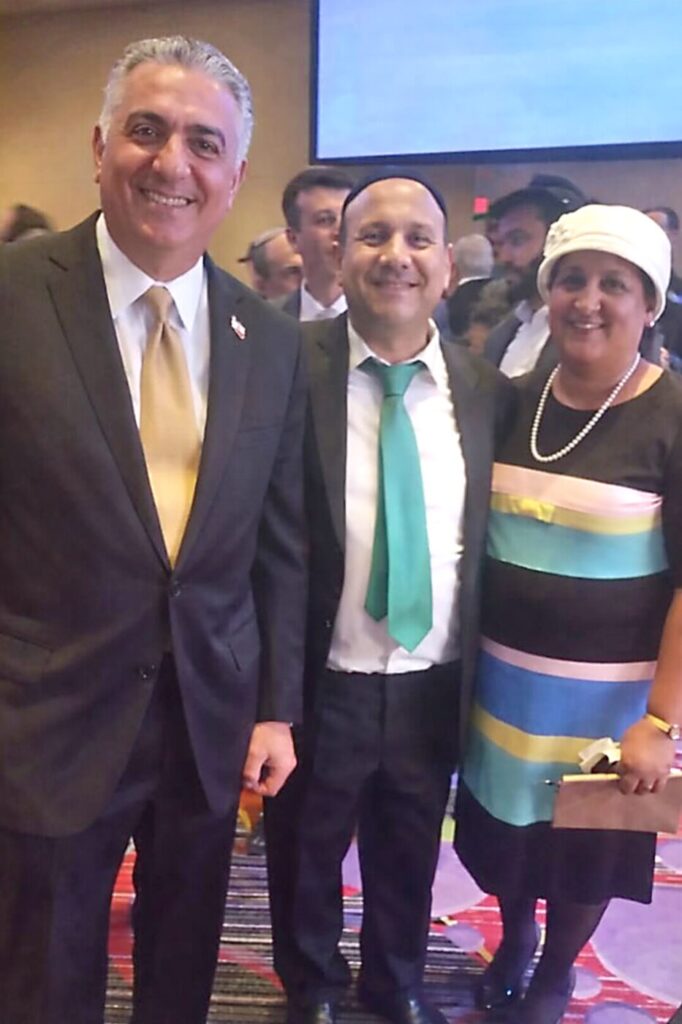
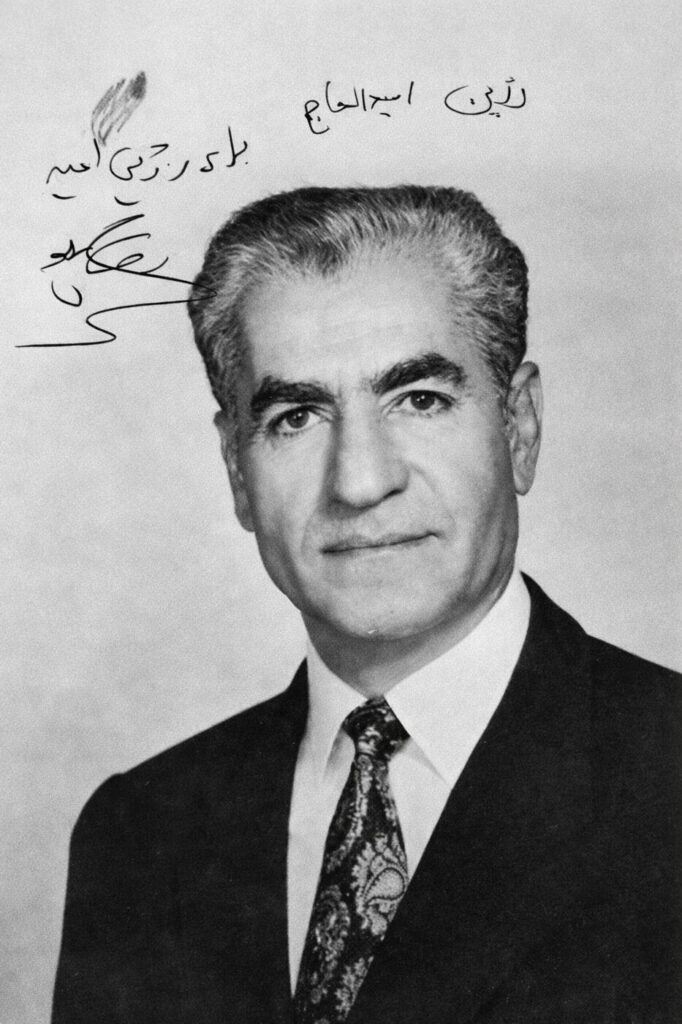
Crown Prince Reza Pahlavi with Rabbi Moshe and Regine TessoneAutograph of the Crown Prince Reza Pahlavi on Regine’s first grade Farsi language bookThe hand embroidered wool vest made in Iran that Sonia Omid (Regine’s Mom) passed down to herModel wearing Aqua Modesta swimwear and holding a copy of Monavar’s Journey
Regine’s maiden name is Omid Olhadj, which means, “I hope to make the hajj (pilgrimage).” Regine’s mother is Sonia Yedid Lawi, who was born in Beirut and is very educated. She speaks many languages fluently. Her brother, Max Yedid Lawi a’h, helped Syrian Jews escape from Syria to Beirut and then to Israel. He later settled in Brooklyn, New York. Regine’s father was a dentist, Dr. Eshagh Omid a’h. He studied dentistry and international law in various schools in France. Of their four children, Regine is the only girl. Her paternal family’s ancestry hails back to Jerusalem, having been exiled with the Jews to Babylon since the destruction of the Temple in Israel. Her paternal great-grandfather, Agha Mordehai, changed their surname from Gohar Sinai during a period of severe persecution against Jews. From the age of five, Regine, whose Farsi name is Monavar, meaning Aura, attended the Lycée Razi. “My father spoke many languages, German, Yiddish, French, English, Farsi, and some Hebrew. He knew many people in government and he got me into that school. We were raised to believe that the Shah loved everyone, all Iranians. He was like a father figure. His photo was on the first page of all our schoolbooks,” said Regine. The Lycée went from preschool to high school. It was a magnificent school with a large cinema, lake, and numerous pools. It was fun to go there, even in the summer. Regine learned varied arts, including weaving small Persian rugs. “I met the Shah in my school in 1978. It was quite emotional for me to see him because we were taught he loved us all. They told all the children to stand in line and when the Shah came, we were to bow and not look him in the eye, as it was considered disrespectful. I was curious and I looked up. The Shah looked at the principal, who said she is Jewish, she doesn’t bow. The Shah was a very handsome man.” At school, Regine learned fluent French and Farsi. She also learned respect. Regine said, “In kindergarten, I didn’t like my French teacher. If she asked me to bring her scissors, I would bring her paper. After doing this a few times, the principal called my father. When he addressed my father, I responded in fluent French, so he knew I understood. To teach me a lesson in life, the principal made me stay in kindergarten another year. The principal explained that no matter how much I like the teacher or not, I must do what is asked of me. From a very young age, I learned discipline and to be respectful of my teachers.” Jews were considered integral to Iranian society. Jews owned and operated stores in the bazaar, owned factories, had professions such as lawyers, doctors, and accountants, and were members of the Majlis, the Iranian parliament. Most Jews in Tehran were wealthy. The Shah allowed Jewish men and women to attend universities in Iran, where they excelled in their studies. “My father lived in poverty as a child; he had to share shoes with his brothers. He went from poverty to extreme wealth. His credo was education and diligent, honest work will lead to success. “We lived in a very large flat with numerous rooms, porches, and verandas. My mother never cooked. We had a chef, a chauffeur, and a maid nanny. Ornate Persian rugs decorated our walls and floors. We attended Yousef Abad Synagogue. The synagogue was located on a street named after Yosef from the Tanach. My mother worked as a secretary in a French company that sold construction machinery to the government of Iran, and that’s how my father received contracts,” she said. The family spent their summers in Israel with both her maternal and paternal families, as there were direct flights from Tehran. The revolution was developing for many months. Dr. Omid saw the signs and began preparations for travel to America. Post-revolution, among the items he sent were Regine’s schoolbooks, including the one with the Shah’s photo in it, at risk of his life, as he wanted Regine to retain her Farsi language. In the summer of 1978, Regine and her brothers vacationed in Israel for three months. Her parents traveled to Europe and at the end of August arrived in Israel to accompany them back to Iran. In Iran, taxi drivers know the pulse of the city. On the cab ride back from the airport, her father asked the driver what was new in Tehran. The driver said they burned a library, nightclub, and local cinema, and described what was happening with the revolution. It was then that Dr. Omid knew they had to get out of the country and he began to prepare. He instructed everyone to pack a suitcase and put it under their bed. They didn’t know when they would need to leave, but it could be any day. From September 1978 to February 1979, safety and quality of life in Iran deteriorated rapidly. The children went to school and there was a bomb threat, so Sonia took them out of school. Having grown up in Beirut, she knew about political dissention. Regine noted that her mother was a quiet, reserved person and she never saw that side of her. “She said, if teachers or anyone call, give me the phone.” She did not allow Regine to converse on the phone with anyone she deemed suspicious. During this period in Iran, everyone was deemed suspicious, as many Iranians switched sides from being pro-Shah to pro-Khomeini. Esfahan was the first city in Iran to witness tanks rolling in, as early as spring 1978. Many Jews left at that time to places like Europe, Israel, and America. Those who had children learning in American universities told them to remain there, as it was clear the country was headed toward a revolution. Mashhadi Jews were repeatedly persecuted by their Islamic neighbors throughout the years. Often, Jews were framed for crimes they never committed. If a Muslim boy was killed, neighbors would bury him in a Jewish person’s backyard and blame them for it. The Jewish community would have to pay exorbitant fees to release the accused from jail. This time, the persecutions proved more severe, as the Islamic regime empowered extremist neighbors further. Many migrated to Italy, Austria, and America. “During those few months, we saw graffiti in our Jewish neighborhood that read ‘Death to the Shah,’ ‘Death to the Jews.’ I couldn’t see my friends from shul,” said Regine. “The shul remained closed on most days. My Muslim neighbor threw a rock at my back. I didn’t understand why. Everything was one big no. No school, no after-school activities, no playdates, no parties, no shul. Nightly curfews were placed in Tehran, accompanied by sounds of gunfire and Khomeini’s Islamic sermons played on car loudspeakers throughout the city. There were frequent blackouts and long lines for food at grocery stores. “People saw my mother with a small child and let her go ahead of them. My mother stocked massive quantities of food, afraid of shortages. One time she sent my brother to get milk. He was gone for four hours and was out past curfew. He was stopped and showed them the milk. They took him for interrogation. Khoda-ro shokr (Baruch Hashem in Farsi), they let him go once he proved his innocence.” Iranian militants seized the U.S. Embassy in Tehran on November 4, 1979, taking 66 hostages. Fourteen were later released, while 52 were held for 444 days. The Shah had come to the United States for medical treatment, and Islamic militants demanded his return to Iran. In synagogues, “The heads of our Jewish community in Tehran pleaded with utmost urgency to send the women and children out. There were midnight rescue flights to Israel every Saturday night. In late fall 1978, the Israeli shlichim who served in the congregation and schools left Iran,” she said. “After tremendous delays en route to the airport amid total upheaval in Tehran, our family boarded the last flight out of Iran on Air France, the same flight that brought Ayatollah Khomeini to Iran. We left February 1, 1979. We stayed in Paris for one month. My mother did all the paperwork for us to come to America. Her brother David sponsored us, and we had to show we could support ourselves. We moved in with our maternal grandparents in Brooklyn. “We left at the peak of the hostage situation. Upon arrival at the airport in New York, there were long lines and we were not allowed to get a drink of water until we passed customs. A guard asked my mother and me to go to a room for a private search. She asked me to undress and my mother scolded her and said absolutely not, that she could check me fully dressed. They were not kind and it left a miserable dent in my memory. It was a bitter pill. My mother had to prove we had money to live on. We were not refugees. We lived off my parents’ money for three years. “My father left us at the Paris airport as we boarded the plane for New York and went back to Iran for a year. I didn’t understand why until years later, after he passed away. It was a difficult year. My mother and I cried often, as we did not know if my father would survive. He had previously been placed on a government blacklist. I vowed to become observant if my father survived. And I did. “Years later, my husband and I were invited to Great Neck to lead holiday services, as my husband is both a rabbi and hazan. That Rosh Hashanah, Rabbi Z, name withheld, whom we knew for years, invited us for the first night seder of Rosh Hashanah. He revealed that he was a former Mossad agent placed in Tehran in the early 1970s. He told us my father helped many people get out of Iran by giving much needed information to the Mossad so they could expedite the departures of those families first.” While Sonia and her children settled in New York, they still worried about getting Dr. Omid out of Iran safely. Many people left using the land route to Turkey, as the airport was mostly closed. They needed a note from a school principal, backed by a doctor, stating Regine was sick and needed urgent surgery and that Dr. Omid needed to go to the United States. Many doctors refused to write this falsehood, fearing license revocation. One angelic doctor agreed. The notes were not used, and Dr. Omid was extracted to Turkey, then made his way to Paris. He became sick and was hospitalized. It was Passover when the family flew to Paris to be with him. They were elated to see him, albeit gaunt. He had lost tremendous weight. In America, the freedom to speak and live as you wish empowered Regine. “In Brooklyn, my mother enrolled us in Magen David Yeshiva,” she said. “Some teachers understood what we went through, but the children didn’t. By Persian standards, they were very immature. I never acclimated to the mindset, the way you look at life. My son said I don’t think like a Westerner. I never take no for an answer. No means perhaps to me. G-D is big and anything is possible. “In Magen David, they placed me in first grade and every month moved me up. After five months, I was in fourth grade. I learned Hebrew and English fluently. I finished eighth grade, spent two years at Flatbush High School, and then my parents couldn’t afford it anymore. I continued at Lincoln High School. The Jewish principal saw I didn’t belong there and told me I could come to his office anytime. I completed two years in one year and graduated. Subsequently, I attended the Fashion Institute of Technology to study fashion design.” “The United States has never felt like home to me. It’s like a beautiful hotel that took care of me and pampered us with freedom. I feel tremendous gratitude to G-D and the United States for the blessings I received here. In Iran, no one dared speak badly in public. They could be held for sedition. Here, freedom is empowering. Now, after forty-seven years, the Iranian regime may topple. I await the day this evil regime collapses and a brighter future rises for us all. Israel remains my home in my soul.” After graduating FIT, Regine married Rabbi Moshe Tessone. They have three sons and a daughter. Years ago, she founded and pioneered a business selling modest swimwear and activewear named Aqua Modesta. “My husband and I traveled to numerous states over the years as part of his Sephardic outreach work. On one trip, we stopped at a farm in Maryland to purchase vegetables and fruit. As my skin is dark olive, particularly in the summer, the farmer offered me the items for free. He seemed anxious to get rid of me and told me to take everything. I left disappointed without taking anything. It is sad that people look at me, think I’m Spanish, and feel afraid. They can’t differentiate between Spanish, Persian, or people from the Middle East. You’re just the other. The foreigner. It never makes you feel at home. “When I go to Israel and get into a cab, they immediately play Persian music. I ask how they know I am Persian, and they say, ‘You look Persian.’ I’m always impressed. They just know. And they don’t look at you as the enemy. It’s different. It’s endearing.” Read more about her inspiring journey and exodus from Iran in Monavar’s Journey: Bridge to Hope, a memoir by Regine M. Tessone.
Empowering Members Through Fitness, Education, and Support
Linda J. Eber, LCSW
“Parkinson’s can be very frightening, and joining [the Center’s classes] has eased the fear. The class improved my mobility, increased my energy, and made me part of a group where we all understood each other. We all feel like a family and the class lifts our spirits. We network and share the knowledge we have gained.”
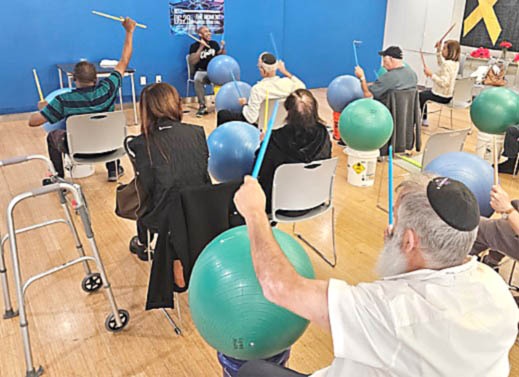
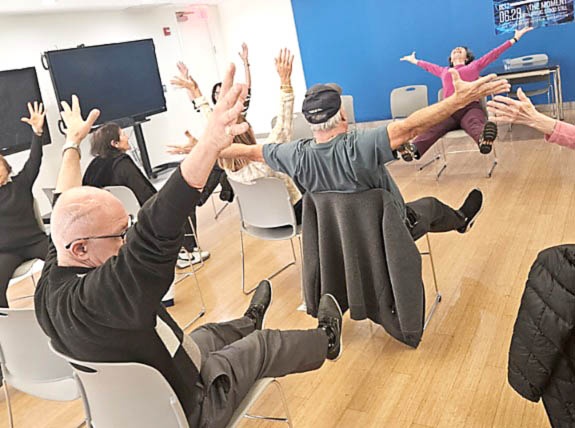
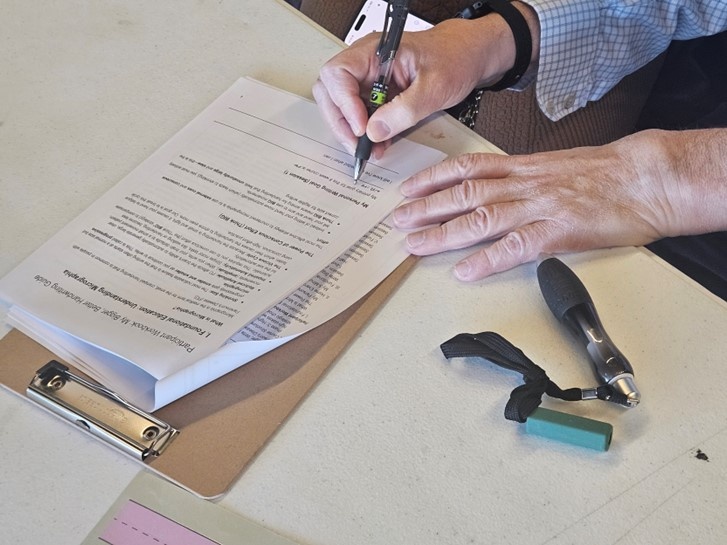
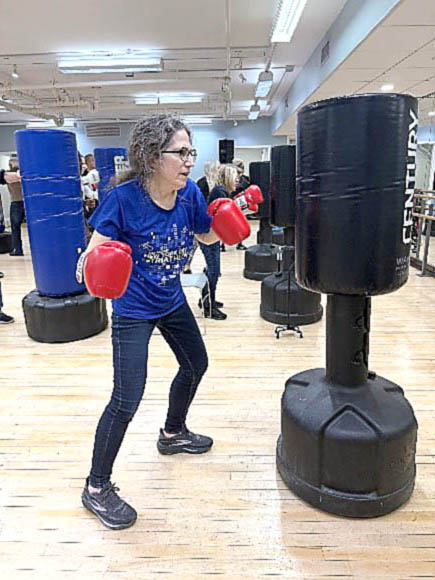
Seven years ago, a community member asked a staff person, “Can we offer programs at the Center for people like me with Parkinson’s?” That question led us to develop programs that promote awareness about Parkinson’s disease (PD) symptoms and ways to manage its progression. Funding from the Parkinson’s Foundation and the American Parkinson’s Disease Association enabled the Center to provide resources to individuals and families. Our various free programs address physical and emotional aspects of the condition. Teaming up with Evolve Physical Therapy, Rock Steady Boxing (RSB) has become one of the cornerstones of the Center’s classes for people with PD. Available in-person and virtually on Zoom, this non-contact boxing program helps reduce the progression of symptoms by incorporating stretching, strength training, core work, and reaction time to enhance mobility and flexibility, as well as improve gait and balance. “RSB provides good coordination and response training. This class is vitally important to me because it’s the only time of my week that I’m with other people with Parkinson’s. The camaraderie is supportive.” Recently, the Center began offering several new PD fitness classes. In Drum Exercise, participants use drumsticks and a large exercise ball to beat rhythms to dynamic, upbeat music. Whether seated or standing, this aerobic activity seems almost secondary to participants’ exuberance and enjoyment. Information about body structure and benefits of each movement is also included. “The teacher encourages us and puts everyone in a good mood. That makes my dopamine levels go up. I didn’t have tremors during the class. That’s not forever, but it stopped during the class.” Seated Yoga, for individuals with PD and family members, aids or friends, teaches movements to help combat stiffness and a reduced range of motion. Having a shared experience encourages physical and emotional support. “It’s hard to find a class for people with PD. Luckily, I found the classes at the Center. I feel significantly better both mentally and physically after taking the class.” Write On! Improving Handwriting, is taught by a certified Occupational Therapist. Step-by-step guidance and adaptive tools help increase hand strength and fine motor skills to help mitigate the illegible handwriting often experienced by people with PD. An evening Support Group for Care Partners is facilitated on Zoom by a Licensed Clinical Social Worker for participants to share experiences and obtain resources for managing their own health while managing their loved one’s care. “Being with others who are coping with this disease is so important. There are so many challenges in caring for my husband. I often forget about taking time for myself. This group reminds me how important that is.” This spring, the Center will offer Lunch & Learn Educational Seminars: Practical Tips for Managing PD for people with PD and their care partners. Interactive demonstrations will teach techniques to reduce fear of falling, enhance awareness of body mechanics, and promote more independent movement. Through the Center’s free interactive PD programs, participants gain confidence to “fight back against Parkinson’s.” Recognizing challenges faced by those living with PD, the Center’s services aim to improve their overall quality of life and foster a supportive network. Through these programs, the Center ensures that every member can face Parkinson’s with resilience and hope. For more information and class schedules, please contact Aimee Mishaan, Director of Community Services, at Aimee@scclive.org, or 718-954-3157.
MDY Kindergarteners Take on the 2026 Winter Games!
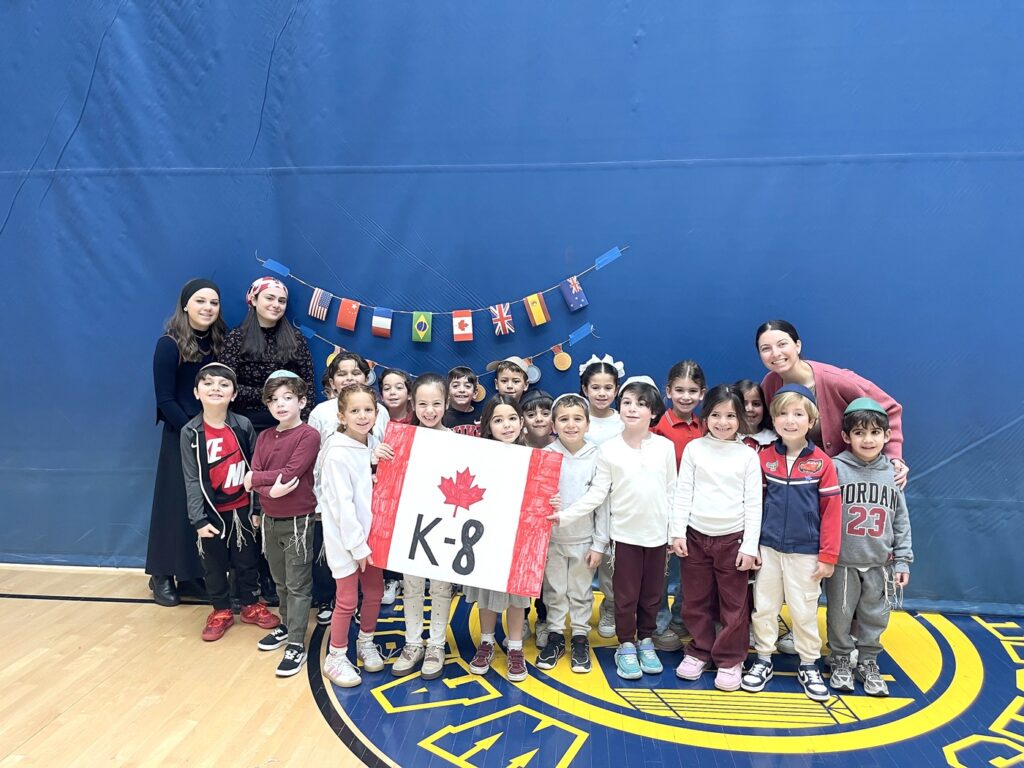
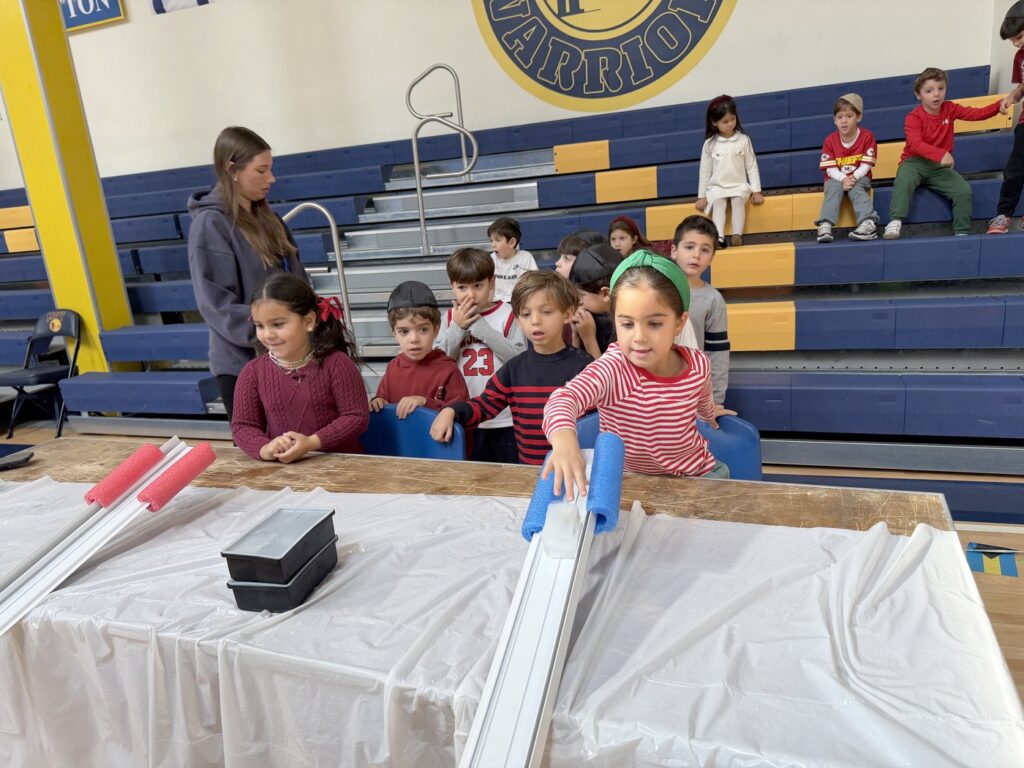
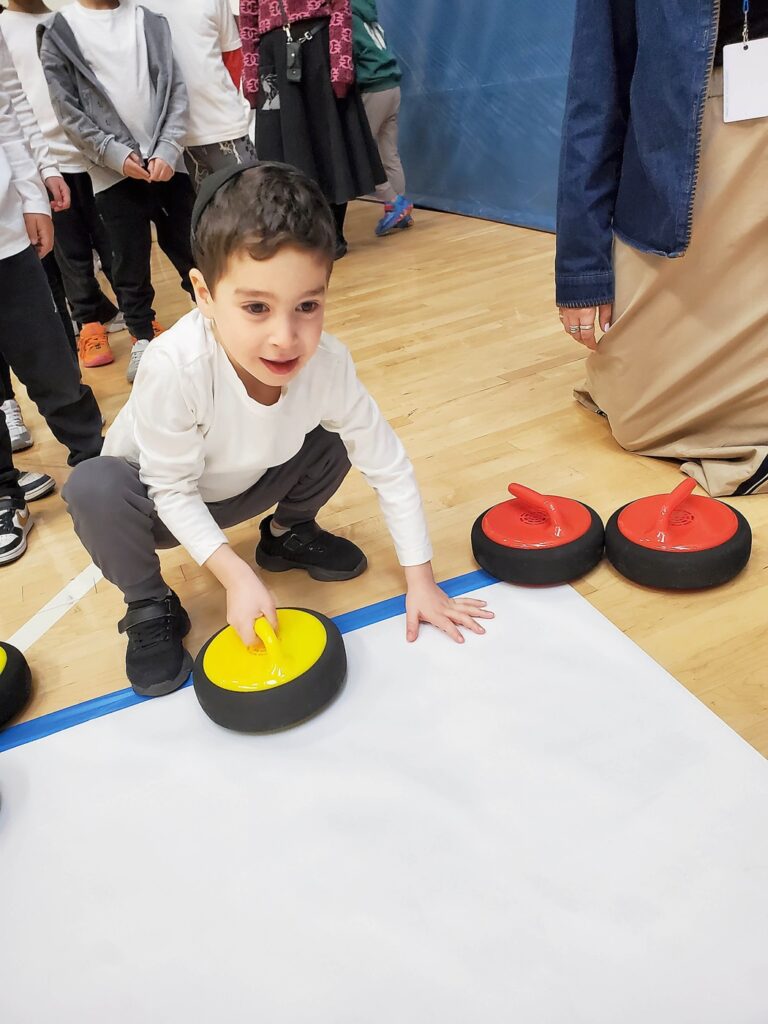
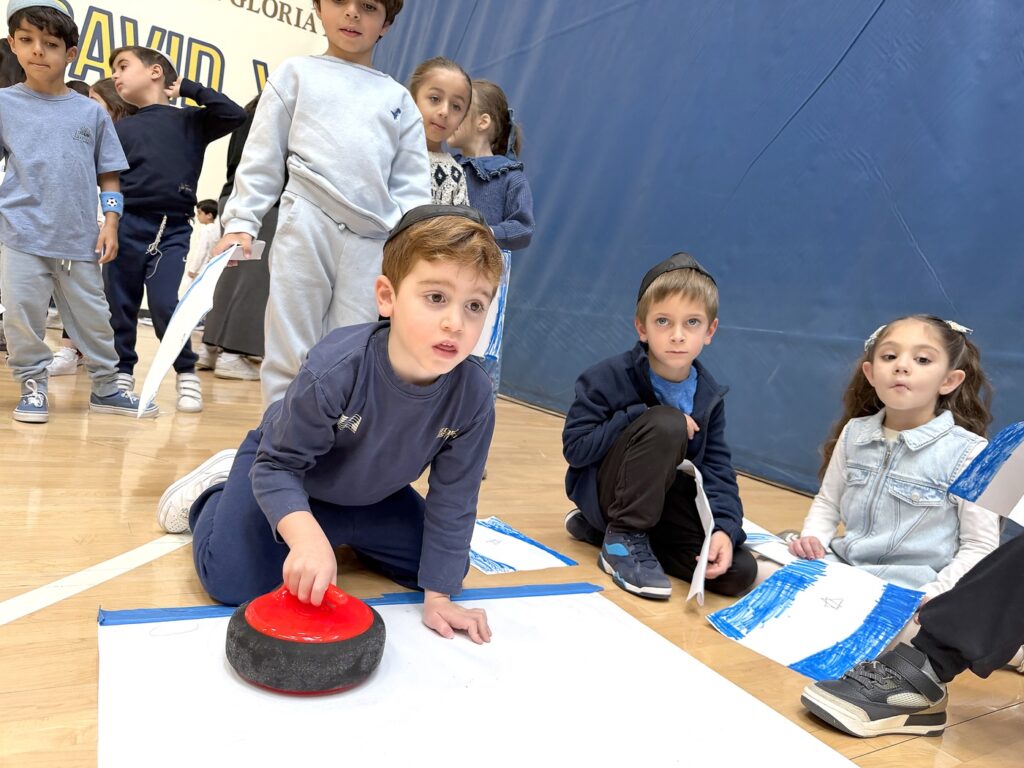
Who says you need two weeks to host the Olympics? The MDY Student Activities Department proved that you can travel the world and compete in the Winter Games, all from the comfort of the MDY gym! Our kindergarteners were treated to a high-energy, absolutely adorable “Winter Olympics” that transformed the gym into a global stadium.
Around the World in Minutes The event kicked off with a colorful “Parade of Nations.” It was heartwarming to see the children’s faces light up as they spotted the flags of countries competing in the 2026 Winter Games. Together, we spoke about how even though people live in different places around the world, we all come together to play fair, try our best, and celebrate one another’s achievements.
New Sports, Big Smiles For many of our students, the specialized sports played on ice and snow were brand new. But that didn’t stop them from becoming “pro” athletes in record time! The gym was filled with laughter and excitement as they tried their hand at: Curling: Learning how to “sweep” their way to victory. Luge: Experiencing the thrill of the track (without the sub-zero temperatures!). Speed Skating: Gliding across the floor and feeling the “wind” in their hair. Our kindergarten Winter Olympics was truly a win for everyone. Students not only had a blast, but also connected to current world events, gaining a sense of awareness about the real-life 2026 Games taking place. Most importantly, they discovered that while medals are exciting, teamwork and good sportsmanship are the greatest trophies of all. A heartfelt thank you to Lizzy Mizrahi, whose creativity knows no bounds. Our little champions walked away with unforgettable memories and a beautiful lesson in how healthy competition can be fun for all. They’re already looking forward to their next gold-medal moment!
Our Men’s Mornings program has quickly become a favorite gathering for senior men looking to connect, stay active, and enjoy meaningful conversation in a warm environment. Held twice a month, Men’s Mornings offer a full and engaging experience that nourishes both mind and body, plus a good meal and camaraderie along the way.
The morning begins at 10:30 a.m. with Men’s Meetup, led by Martin Salama, our very own Career Division Job Developer. The men take part in thoughtful and wide-ranging discussions on current events, history, and life experiences. The conversation is lively, reflective, and filled with shared perspectives, all enjoyed alongside light snacks and refreshments. “There’s something powerful about watching a room full of men who have lived full lives still show up eager to learn, discuss, move, and connect,” adds Martin. “Men’s Mornings gives our senior men purpose and a place where their voices matter. It’s an honor to lead a group of men who continue to show up with wisdom, strength, and heart.” At 11:30 a.m., the group heads downstairs for Men’s Fitness with Morris Didia. This one-hour fitness session is designed to keep our men moving, energized, and feeling strong, with exercises that are both accessible and effective. The morning concludes with lunch served at 12:30 p.m., giving everyone a chance to unwind, continue conversations, and enjoy each other’s company. The men themselves often say it best. According to longtime participant Al Savdie, “If you would like to talk and express yourself amongst friends about any topic you’re passionate about, Men’s Meetup is the place to do it. And right after we have Men’s Fitness where you’ll definitely come out feeling younger, better, and able to leap tall buildings!” Men’s Mornings are more than just a program. They’re a space where friendships are built, routines are strengthened, and everyone leaves feeling a little more connected than when they arrived.
At Magen David Yeshivah High School, education extends far beyond the classroom. As we prepare for this year’s NEXT Senior Internship Program, we are once again focused on creating meaningful, real-world opportunities that shape our students’ futures in powerful ways.
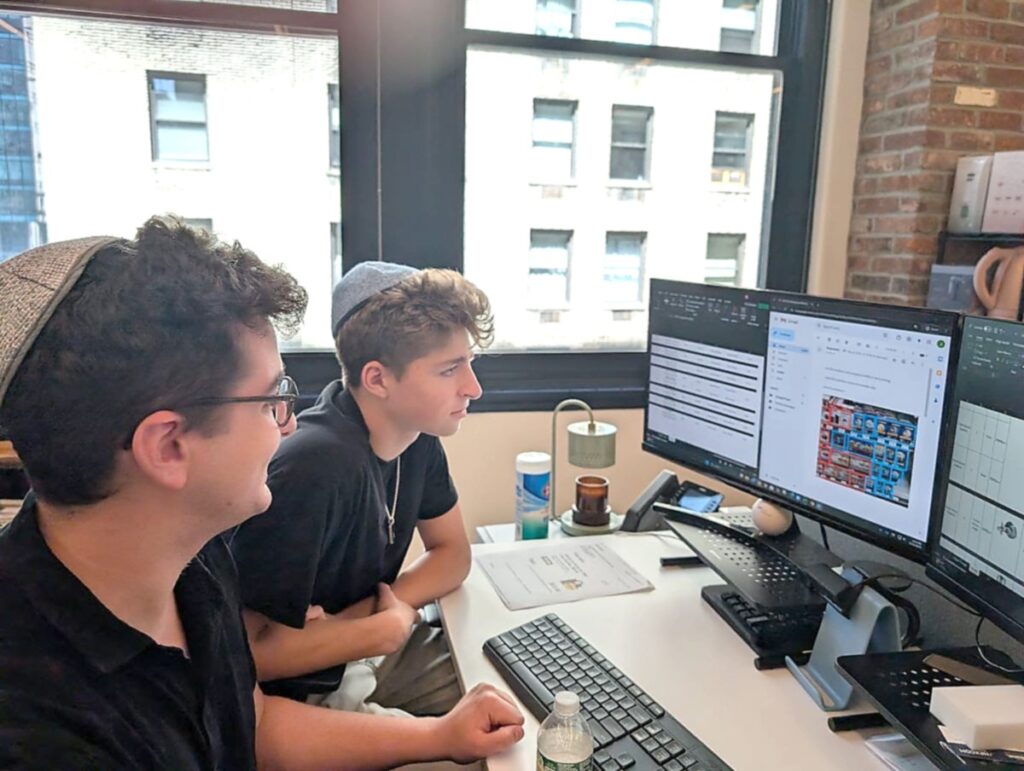
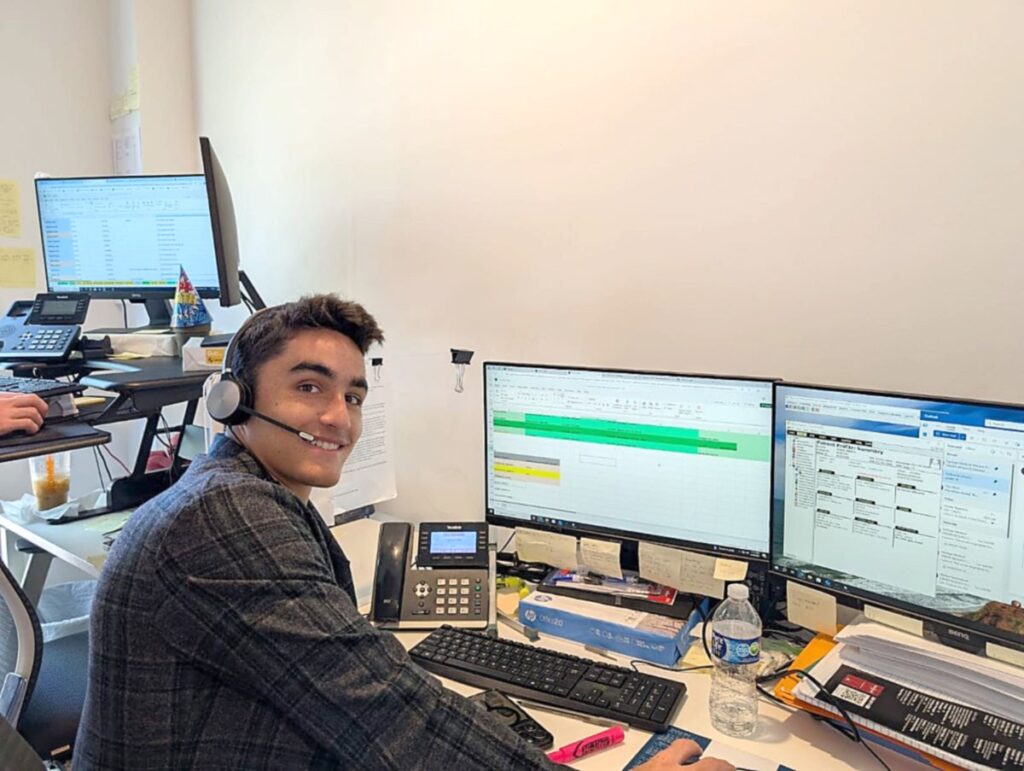
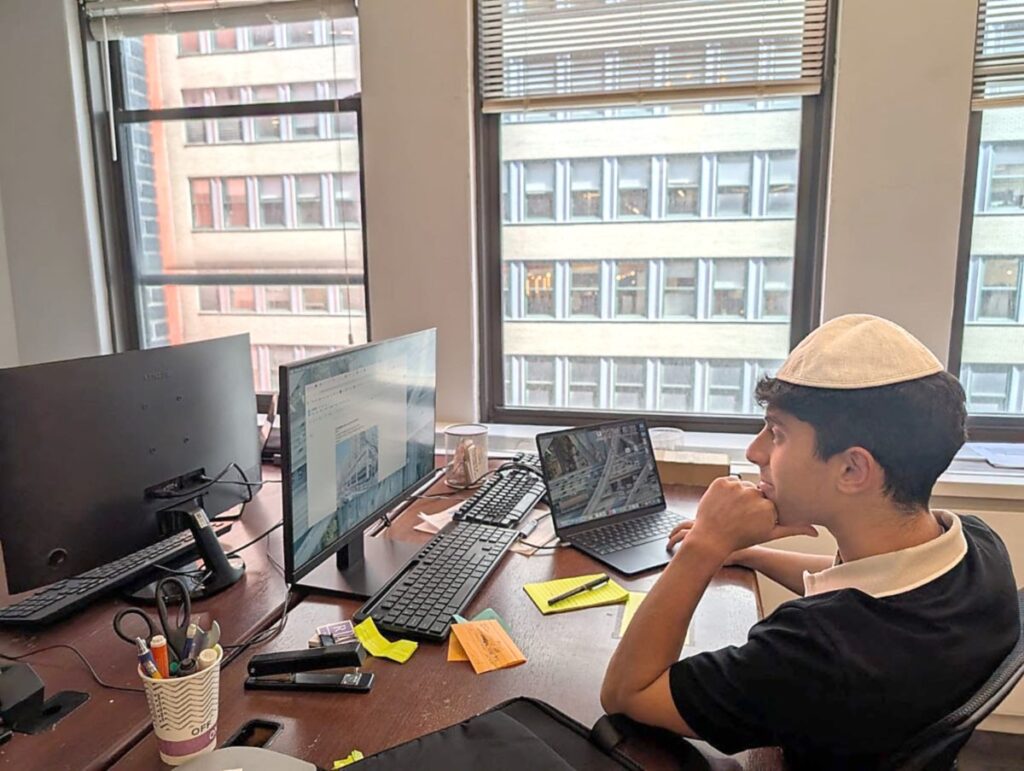
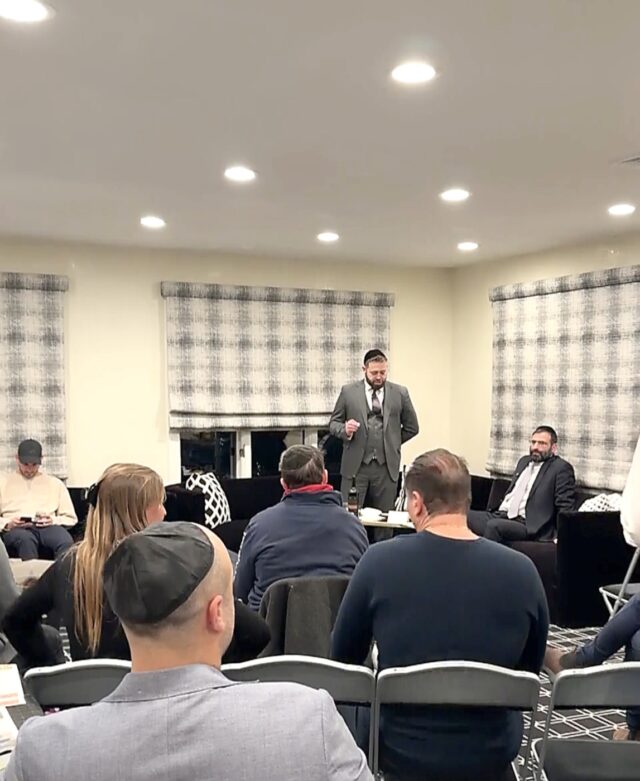
Running this year from April 16 to May 20, the NEXT Program is a defining experience of senior year. It is not simply about observing a workplace. It is about stepping into it. Students gain hands-on professional exposure, develop workplace skills, build confidence, and explore potential career paths under the guidance of accomplished mentors. Behind the scenes, thoughtful preparation is already underway. Program Director Mrs. Helene Dwek, together with Dr. Daniel Vitow and Mrs. Audrey Abade, meets individually with every senior to discuss goals, interests, strengths, and long-term aspirations. Students are guided through résumé refinement, interview preparation, and professional communication. From there, interviews are arranged if requested, and each student is mindfully placed in an in-person internship setting where they are positioned to thrive. The focus is never simply on finding a placement. It is on finding the right placement. What truly sets the NEXT Program apart is what happens after it ends. A remarkable number of our seniors are invited to stay on and continue working at their internship placements. Employers consistently recognize the maturity, professionalism, and strong work ethic our students bring to the workplace. What begins as a five-week internship often grows into summer employment, ongoing part-time roles, and lasting professional relationships that extend well into college and beyond. That continuity speaks volumes, not only about the strength of our partnerships, but about the caliber of MDYHS students. Through NEXT, our seniors don’t just prepare for the future, they step confidently into it. And often, they’re invited to stay. The story of last year’s program lives in these photos, in the faces of our students and the experiences that shaped them, reflecting the energy and growth that define NEXT.
Most serious movements don’t begin with press releases or ribbon cuttings. They begin quietly, with people who understand that waiting is no longer an option. Bonei Yisrael began in a garage. That detail matters.
During Purim 2023, Saul Ancona and Michael Kraiem were sitting together studying Torah. There was no agenda. No whiteboard. No planning document. Eretz Yisrael surfaced naturally, as it always does when the conversation is serious enough. The question that followed was not emotional, and it was not rhetorical: Where is the community actually going? What came next was not inspiration without consequence. It was commitment. A shared decision to build, rather than admire. To approach Eretz Yisrael not as a slogan or a trend, but as a mitzvah rooted in the Torah, because mitzvot are not symbolic gestures. They are obligations that move history forward. They were not debating whether Israel mattered. That question had already been answered. What remained unresolved, and urgent, was something far more demanding: What are we actually building? The answer to that question is Bonei Yisrael. For decades, Aliyah (immigration to Israel) was spoken about with reverence, but rarely with urgency. Bonei Yisrael reframes the conversation entirely. We exist because the old model no longer works. This is not about inspiration. It is about infrastructure, about turning conviction into a concrete plan.
What is Bonei Yisrael Bonei Yisrael serves as a liaison to communities in Israel already taking shape for the Syrian Jewish community, places that understand something essential: continuity does not happen by accident. It is designed. But Bonei Yisrael does not stop there. The aim is not to attach ourselves to what already exists. The aim is to build what comes next. Bonei Yisrael is working to establish a dedicated space in Eretz Yisrael, not a single building, but a comprehensive environment: homes, schools, synagogues, and the infrastructure required to sustain them. Not a retreat. Not an experiment. An extension of what has worked in Brooklyn and Deal, carried forward deliberately and built to last. That distinction matters. Because this is not about relocation. It is about rootedness. Relocation asks where people can live. Rootedness asks what a community chooses to preserve, and what it is prepared to leave behind. Rising costs. Public leadership that no longer governs with clarity or confidence. Institutions that have grown comfortable misunderstanding the communities they serve. An environment in which antisemitism is no longer an anomaly, but a statistic. These are not grievances. They are signals. And communities that know how to read signals do not wait for conditions to improve. They act before hesitation becomes habit. A community that builds its own space is not asking permission to belong. It is declaring permanence. It is stating, quietly and firmly, that it understands where history is moving and intends to arrive there together.
“We’ll do the work. You decide when to step in.” Under the leadership of Michael Kraiem and Saul Ancona, Bonei Yisrael has moved from idea to momentum with uncommon speed. Around them is a group of individuals who understand that vision only matters when it is translated into action. Isaac Zaccai is planning Bonei Yisrael’s pilot trip in 2026, setting the foundation for what comes next. Michael H. Mamiye opened his home as Bonei Yisrael’s operational base, hosting meetings and early gatherings. Albert Mizrahi is setting creative direction and cultural tone, shaping how the vision is experienced, not just explained. Jack Srour leads the Matobu Project, advancing large-scale development in Eretz Yisrael (Land of Israel) and opening resources to move the initiative forward. Sammy Saka, part of the Matobu Project, who is instrumental in transforming Jewish life and community in Deal, NJ, is bringing his real-world development expertise. Erez is on the ground in Israel, identifying and evaluating viable locations for the community. Zachary (Isaac) Levi handles public relations and communications for the initiative.
Bonot Yisrael (Women’s Division) Bonot Yisrael, headed by Sophia Shabot, Marsha Zakay, Hannah Elmekias, and Roz Levy, is not an auxiliary effort. It is a parallel leadership track focused on family life, education, culture, and the social fabric that determines whether a community merely exists or actually thrives. These are not symbolic roles. They are functional ones. Together, this group is building a framework for young families, one that allows Aliyah (immigration to Israel) to unfold not as a disruption, but as an upgrade: a vibrant Syrian Jewish community in Eretz Yisrael, designed to improve quality of life while preserving everything that matters.
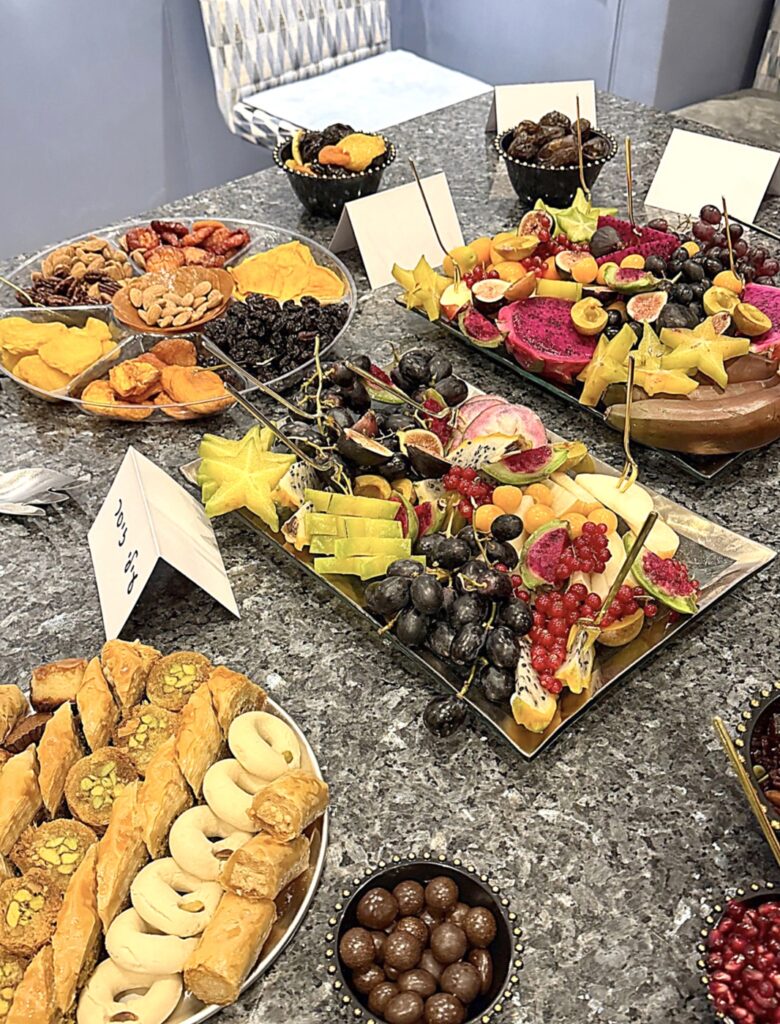
The First Event The first Bonei Yisrael event was not flashy. It wasn’t meant to be. Tu BiShvat. New fruit. Shared tables. Conversations about settling in Israel that were sober, practical, and quietly electric. No speeches designed to persuade. No slogans designed to sell. Just people confronting the same truth together. The kind of gathering where people leave changed, not because they were convinced, but because something finally made sense. That is how real movements announce themselves. They don’t shout. They organize.
Why This Matters Now History does not announce its turning points. It reveals them later. Bonei Yisrael exists because the Jewish future cannot be left to inertia. Because communities that last are the ones that build, deliberately, patiently, and together. What Bonei Yisrael understands, instinctively, is that communities do not drift into permanence. They decide. They plan. They commit. Every generation is tested not by what it believes, but by what it builds. The question is no longer whether Israel is central to Jewish life. That debate is over. The question is whether we are prepared to align our infrastructure with our convictions. Bonei Yisrael answers that question clearly. Not with slogans. With structure. This initiative is not asking people to leap blindly. It is offering something far more compelling: a place to stand. And once people have that, movement becomes inevitable. The real question is no longer whether Bonei Yisrael will grow. The real question is whether Brooklyn was ever meant to be the end goal?
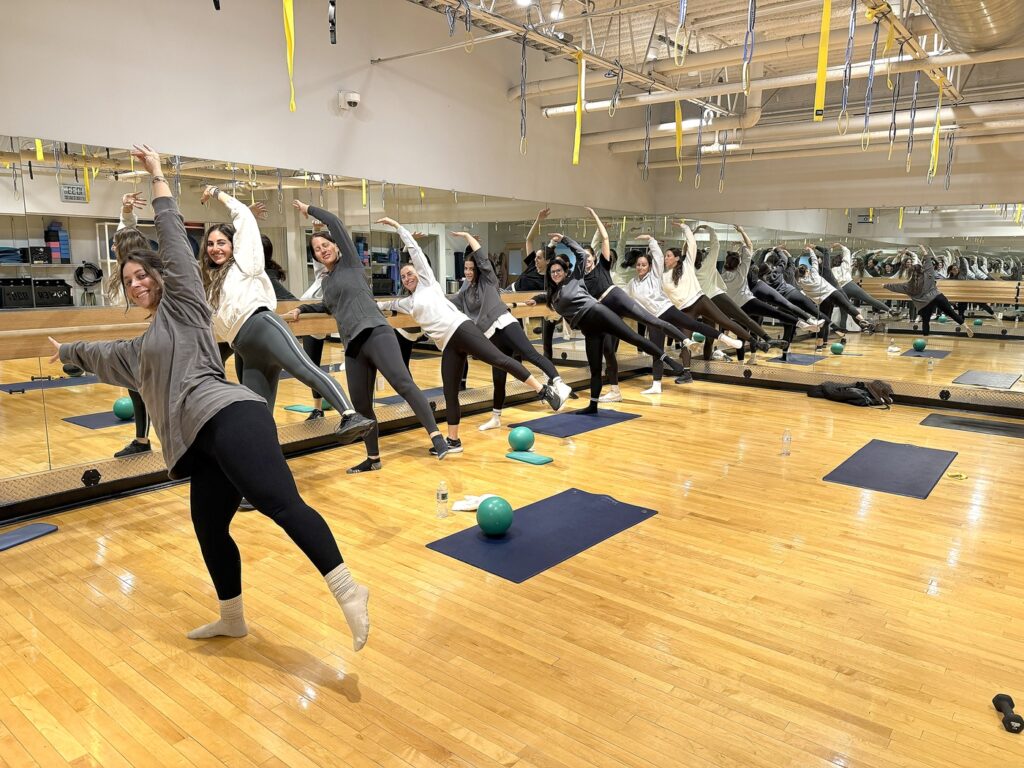
At the heart of DSN Community Center’s vibrant wellness culture is its thriving Fitness Department, led by Fitness Director Sharon Carlstrom. With a year-round commitment to movement, motivation, and professional excellence, DSN’s Group Exercise (Group Ex) has become a cornerstone of daily life for so many, both men and women, young and old, in the community.
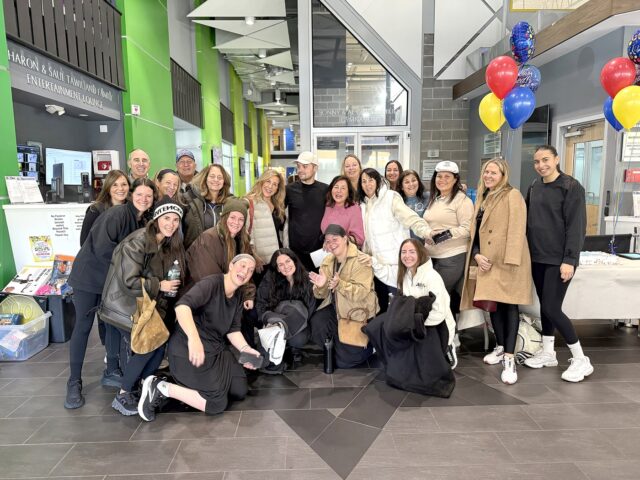
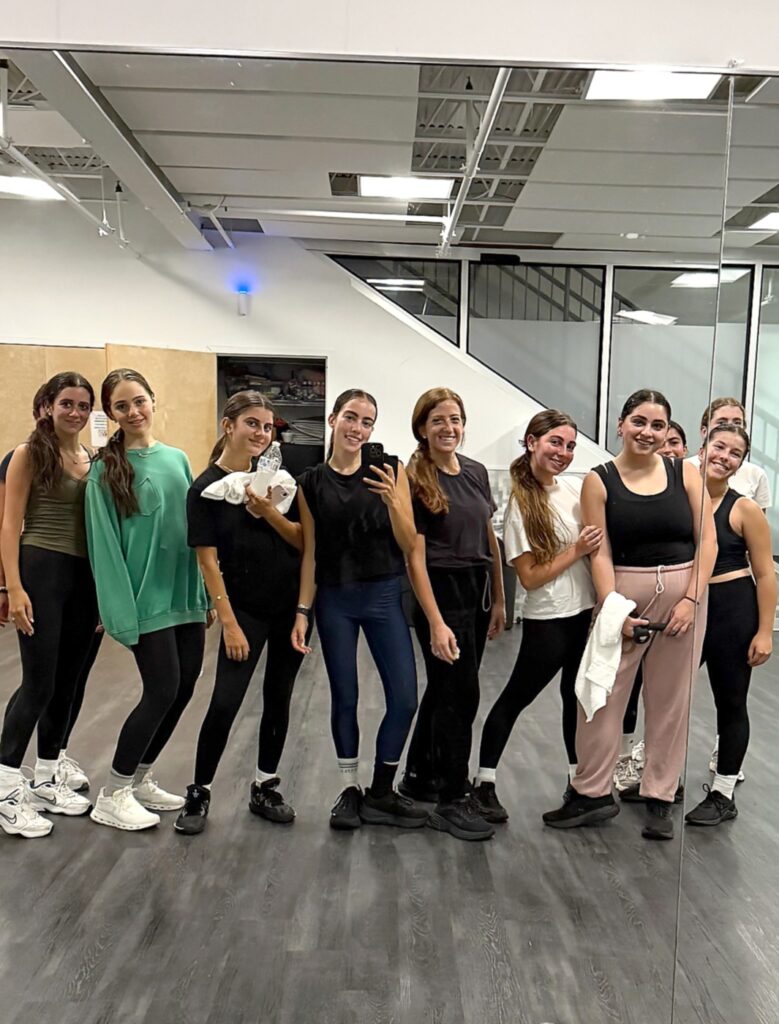
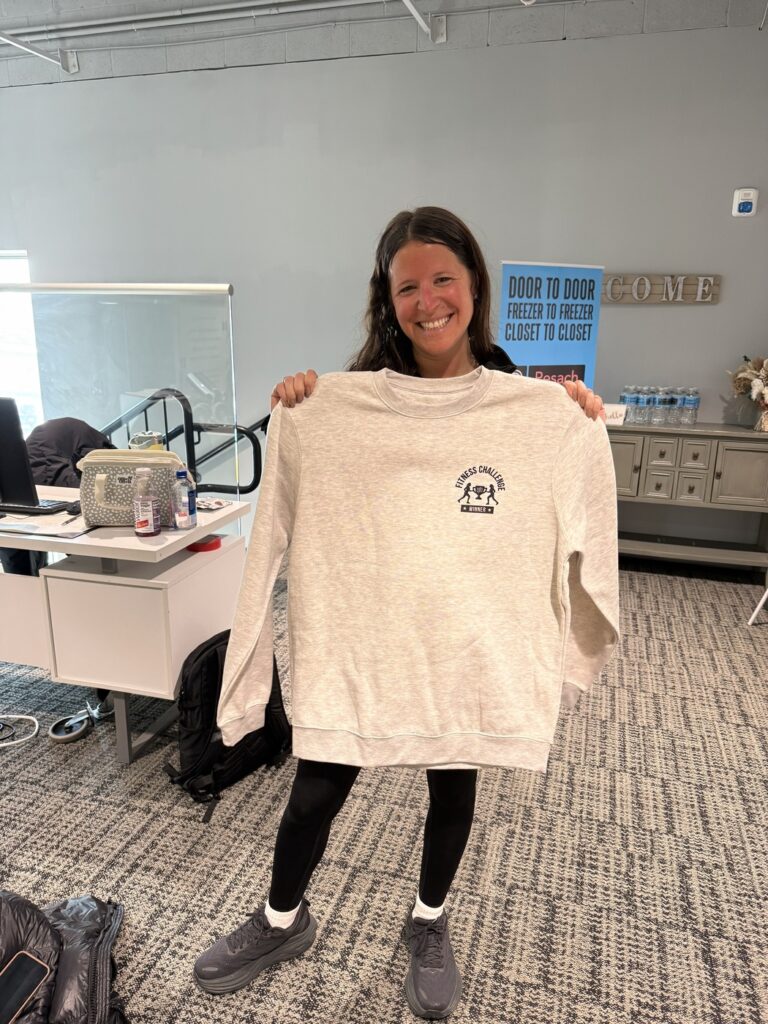
DSN’s Group Ex program offers an impressive average of 60 classes per week, drawing over 110 participants daily, as one can see from the parking lot. Whether members are looking to sweat, stretch, strengthen, or simply reset their minds, the schedule delivers something for every fitness level, interest, and goal. There is a class for everybody. The Group Ex schedule is thoughtfully designed and categorized to ensure balance, variety, and accessibility. Mind/Body Classes focus on flexibility, alignment, and recovery, including yoga, Wall Works, Pilates reformer & mat, foam rolling, guided and one-on-one stretch and barre. Cardio Classes bring the energy and elevate the heart rate with options like Kick A** Cardio, Sweat It Out, 305 Dance, Step, Spin, Boxing, Battle Ropes, and Fitness Center Circuits. Strength & Conditioning Classes help members build power and endurance through circuits, TRX, FeeLEEing It, Burn w/ Bren and Perspirology Toning. This wide-ranging lineup allows members to mix and match styles, prevent burnout, and stay consistently engaged with their fitness journeys. Earlier this year, the Pilates Reformers were relocated from the DSN Beach Club to Norwood Ave where the former Spin room was renovated to become a complete Reformer Studio, much to the appreciation of DSN’s members who find the space to be exclusive and the perfect vibe to match the reformer classes. The Spin bikes were relocated to a nearby space in Elberon where the space was renovated to create a Spin studio to accommodate 25 participants. Dani Rubin, owner of Pilates Blast, who provides instructors for DSN’s Reformer program, says, “Our instructors love the private, serene, fully equipped studio where every class includes access to all the props and thoughtful amenities.” What truly sets DSN apart is its unwavering commitment to quality, safety and professional excellence. All Group Ex instructors are required to hold certifications from nationally accredited organizations. A standard DSN takes seriously. Instructor Janie Fallas stated, “I love teaching at DSN because we have grown to be a family. Coming to exercise, seeing my friends, everyone with a smile on, sweating, laughing and having the best time is the best high in the world. The staff are all so accommodating and everyone greets you with respect and a smile. I feel so grateful to be a part of the DSN family.” To keep members inspired and energized, DSN offers semi-annual Group Ex incentive challenges, a favorite among participants. The first challenge of 2026 ran from December 28 through January 15, pushing members to stay active during a notoriously busy time of year. Participants received challenge cards with three class categories and were tasked with completing five classes per category, for a total of 15 classes in just 19 days. Every member who completed the challenge earned a DSN Fitness sweatshirt, and, of course, bragging rights. A special mention to the challenge winners, Rivka Bahary, Sherri Betesh, Danielle Brown, Suzie Chera, Lisa Cohen, Suzy Cohen, Allegra Cojab, Caroline Cornman, Danielle Gindi, Rena Golden, Elaine Grossman, Sally Grossman, Sarah Klein, Tzippy Maimon, Alison Mamiye, Laura Mizrahi, Jacqueline Shalom, Nicole Shamah, Joyce Shamosh, Gladys Sutton, Yvonne Tobias, and Leah Tobal Varver. Looking ahead, DSN is excited to launch its Six Weeks to Summer Challenge, kicking off April 12. Challenges are free to all Group Ex members, and details are shared regularly on Instagram at @dsngroupex. With inspired leadership, certified instructors, and a community that shows up day after day, DSN Community Center’s Fitness Department continues to prove that wellness is about more than exercise, it’s about connection, consistency, and showing up for yourself together. Sarah Kish, when asked for her thoughts on DSN’s Group Ex program, offered, “Classes at DSN are a highlight of my day and of Jersey life. The variety of classes keeps things always interesting, and it is a great social and healthy way to start my day. I also love babysitting and find it incredibly convenient and my kids love their early start at DSN.” Sharon Carlstrom reflects on how far DSN Fitness has come since opening eleven years ago. “Looking back at where we started, to the thriving programs and diversity of classes that we have today, is incredibly humbling. I am profoundly proud of how far this facility has come, but even more proud of our instructors and members who have evolved our classes to be more than just a workout, but a lifestyle. We’ve grown, we’ve adapted, and we’ve built something truly special together.”
Joey Cohen Saban Announces Campaign for NYS Assembly
Eddie Esses
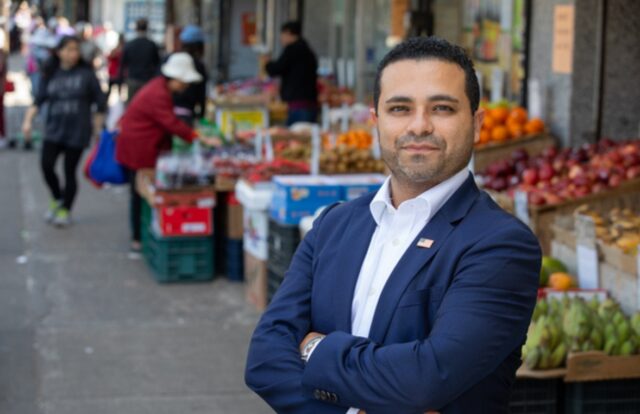
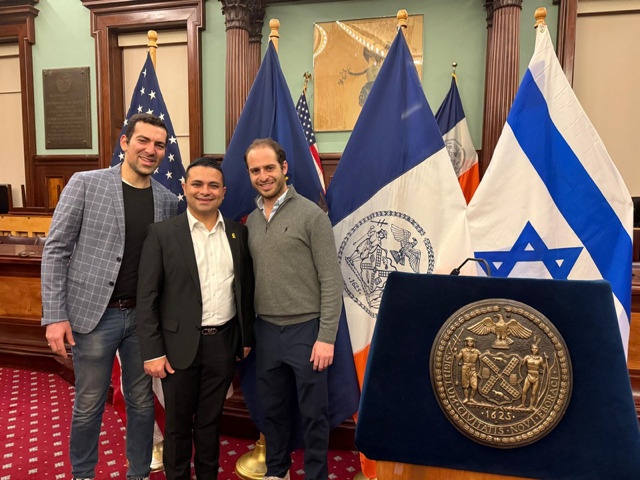
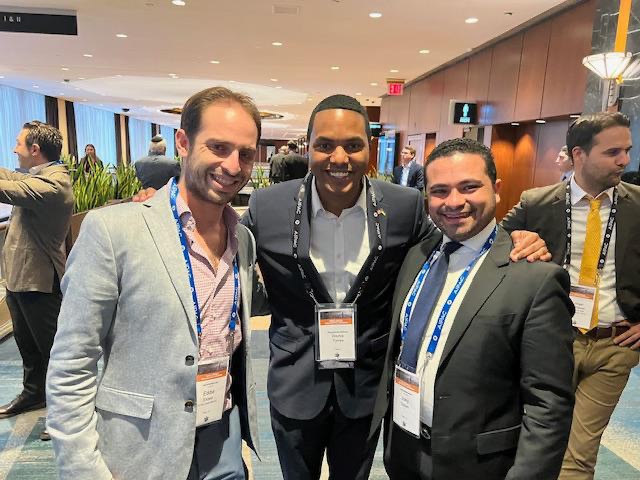
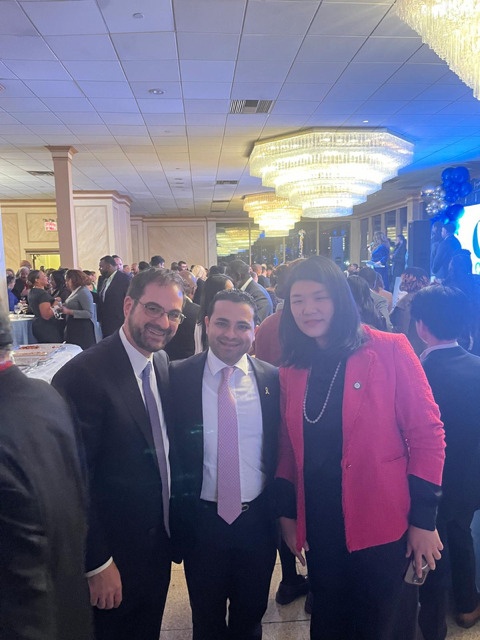
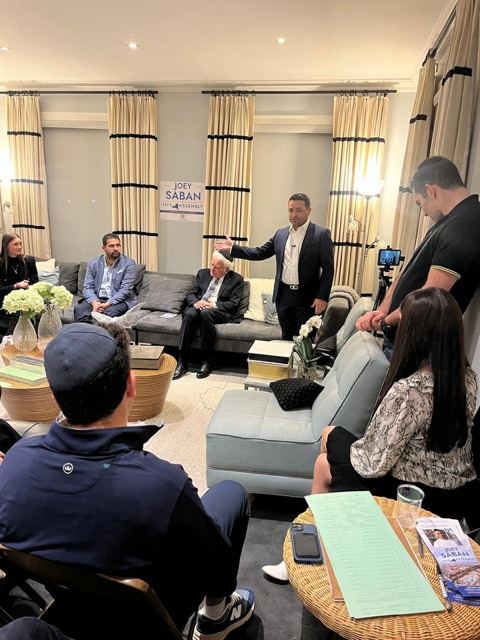
Community leader Joey Cohen Saban has officially announced his candidacy for the New York State Assembly’s 45th District, launching a highly anticipated rematch against the same incumbent opponent he nearly defeated in 2024 in one of the closest races in recent New York history.
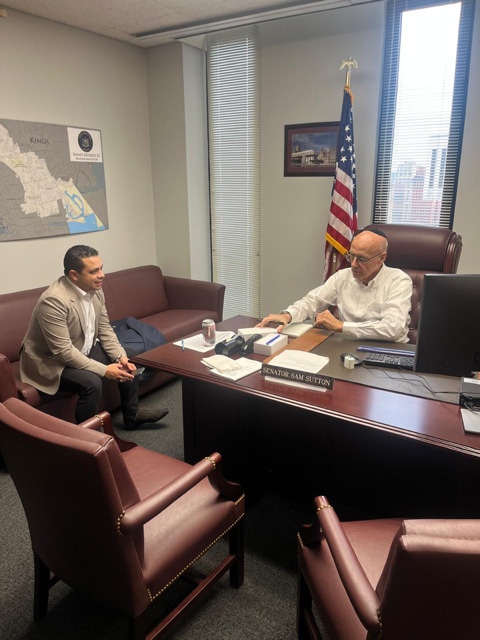
What was expected to be a routine election instead became one of the most shocking races in recent New York political history. Joey, a first-time candidate fueled by grassroots energy and community support, came within inches of victory and sparked a movement that continues to grow. Saban’s 2024 campaign energized the Sephardic community in unprecedented ways. Voter registration surged. Turnout reached historic levels. A new generation stepped into civic life. That momentum did not fade after Election Day. Instead, it expanded. Just months later, the same grassroots infrastructure helped power the successful election of State Senator Sam Sutton. As Sutton’s campaign manager, Saban built and executed the operation behind the win, organizing volunteers, coordinating outreach, and mobilizing voters across the district. The victory demonstrated what unified leadership and disciplined strategy could accomplish. Since then, Saban has served as Chief of Staff to Senator Sutton, playing a key role in shaping policy and delivering results in Albany. In the 2025 legislative session alone, he helped advance multiple bills into law and worked alongside Senator Sutton to secure $20 million in funding for religious institutions, along with millions more in capital grants for community organizations. He also helped craft legislation to prohibit protests outside houses of worship and has been leading efforts to codify the IHRA definition of antisemitism into New York State law. Beyond legislation, Saban helped spearhead one of the largest voter registration drives in the community’s history, adding approximately 15,000 new registered voters. The message was clear: this is a community ready to participate, organize, and lead. Now, with proven legislative experience, strong relationships in Albany, and a tested political operation, Saban says he is ready to finish what he started. His campaign centers on delivering funding for community institutions, fighting antisemitism at every level of government, strengthening public safety, securing security grants for synagogues and yeshivot, and ensuring the district has an influential voice in the state majority. Make sure to follow Joey throughout the campaign (@joeysaban on Instagram) and be sure to vote for Joey Cohen Saban for Assembly. He’s one of us, among us, and he will make sure our voice is heard in Albany. The movement that shocked New York once is returning. But this time it is stronger, larger, and more determined than ever. And it’s ready to win.
The Hidden Risks of Financial Advice on Social Media
Ari Baum, CFP®
Scroll through any social media platform today, and you’ll find no shortage of financial advice. One post promises early retirement through a “simple hack.” Another claims to reveal the “one investment” the wealthy don’t want you to know about. The messages are confident, urgent, and often wrapped in the appearance of authority.
For many, these voices have become the first stop for financial guidance. They are accessible, persuasive, and everywhere. But beneath the surface, the line between financial education and financial entertainment is far wider than it appears. Understanding that difference may be one of the most important financial decisions you make.
The Illusion of Credibility Popularity can create the appearance of expertise. A video with hundreds of thousands of views or a creator with a large following naturally feels trustworthy. But visibility and expertise are not the same. Social media rewards simplicity, certainty, and emotional impact. Real financial planning rarely offers those things. It involves tradeoffs, timelines, tax implications, and decisions that unfold over decades, not days. What works for one person in a specific situation may be entirely inappropriate for someone else. Without understanding your income, assets, goals, and risk tolerance, even well-intentioned advice can lead to unintended consequences. I’ve met investors who made meaningful financial decisions based on a single video or trend, only to later discover the strategy conflicted with their tax situation, liquidity needs, or long-term objectives. The advice wasn’t necessarily wrong. It was simply incomplete.
When Emotion Replaces Strategy One of the most powerful forces in investing is not logic, but emotion. Social media amplifies this effect. When thousands of people appear to be moving in the same direction, it creates a sense of urgency. This phenomenon, often called herd mentality, can push individuals to act quickly without fully understanding the risks. Fear of missing out (FOMO) becomes a stronger motivator than thoughtful decision-making. Financial decisions made under pressure rarely align with long-term success. Progress is not built on reacting. It is built on positioning.
Advice Without Accountability Traditional financial advisors operate under fiduciary standards. They are legally and ethically obligated to act in their clients’ best interests. Social media influencers operate under no such obligation. Their incentives are tied to engagement, visibility, and growth. The more compelling the content, the larger the audience. But there is no ongoing relationship, no responsibility for outcomes, and no understanding of your personal financial reality. Financial planning, by contrast, is not a moment. It is a process. It requires alignment, continuity, and accountability over time.
The Risk of One-Size-Fits-All Strategies Every financial decision exists within a broader framework. Income stability, tax exposure, family priorities, career trajectory, and long-term goals all influence what is appropriate. Generic advice cannot account for these variables. A strategy appropriate for someone early in their career may introduce unnecessary risk for someone focused on preservation. A tax decision that benefits one household may create unintended consequences for another. Context is what transforms information into wisdom. Without it, even correct ideas can lead to incorrect outcomes.
Financial Confidence Is Built, Not Found True financial progress rarely feels dramatic. It is built quietly through discipline, consistency, and thoughtful planning over time. It does not depend on reacting to trends or chasing certainty. It depends on having a structure that can withstand uncertainty. The purpose of a financial plan is not to predict the future. It is to prepare for it. When decisions are guided by a clear framework, short-term noise loses its power. Confidence no longer comes from what others are doing, it comes from knowing why you are doing what you are doing. The most valuable financial guidance does not come from someone speaking to millions. It comes from someone who understands you. q The content is developed from sources believed to provide accurate information. Investing involves risk including the potential loss of principal. No investment strategy can guarantee a profit or protect against loss in periods of declining values. Past performance does not guarantee future results. Consult with a financial professional regarding your specific situation.
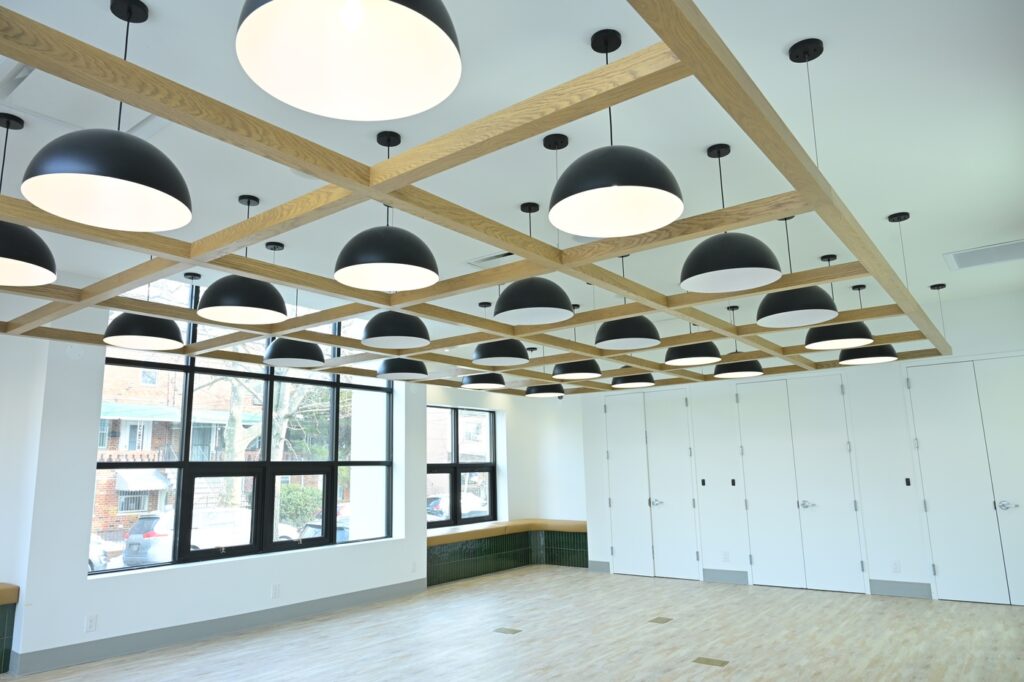
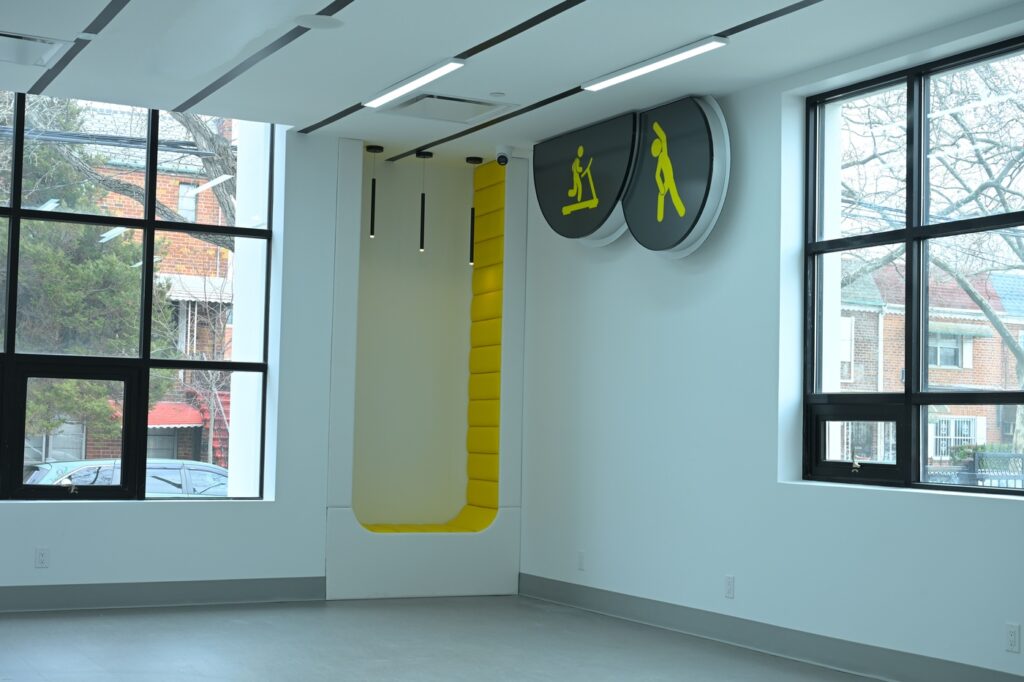
Inside the Special Children’s Center’s Beautiful All-New Vicki & Joseph Safra Brooklyn Center Eleven years after opening its doors in Brooklyn, the Special Children’s Center embarks on a powerful new chapter, expanding its services in a breathtaking new facility designed to serve children and families on an even greater level.
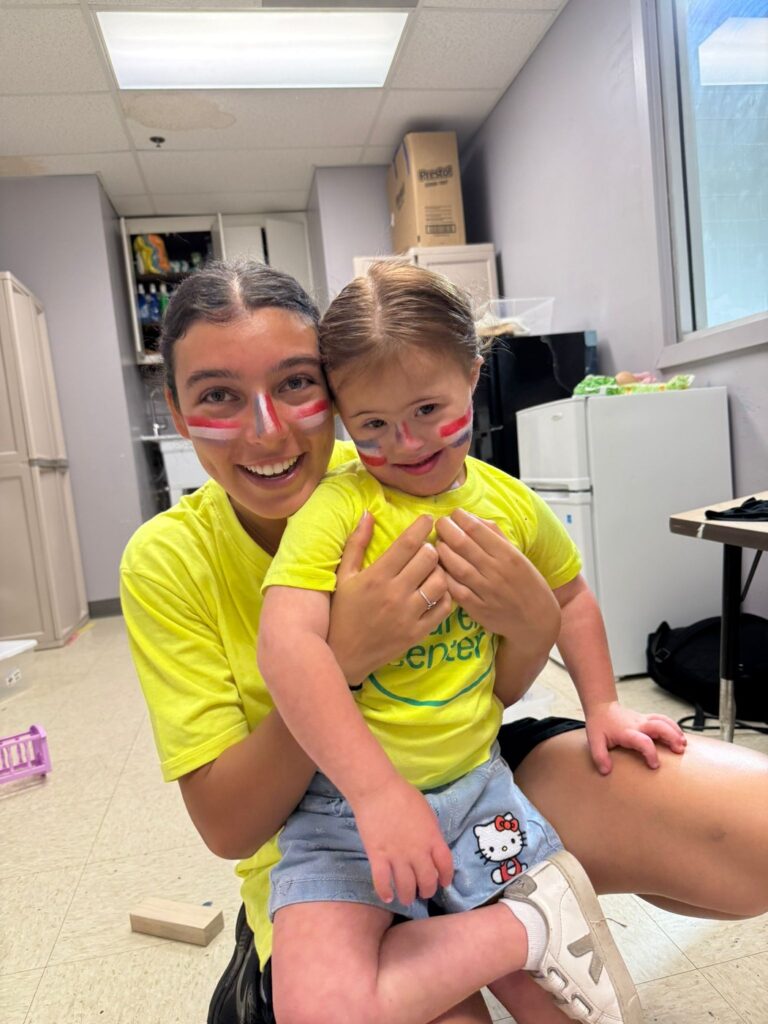
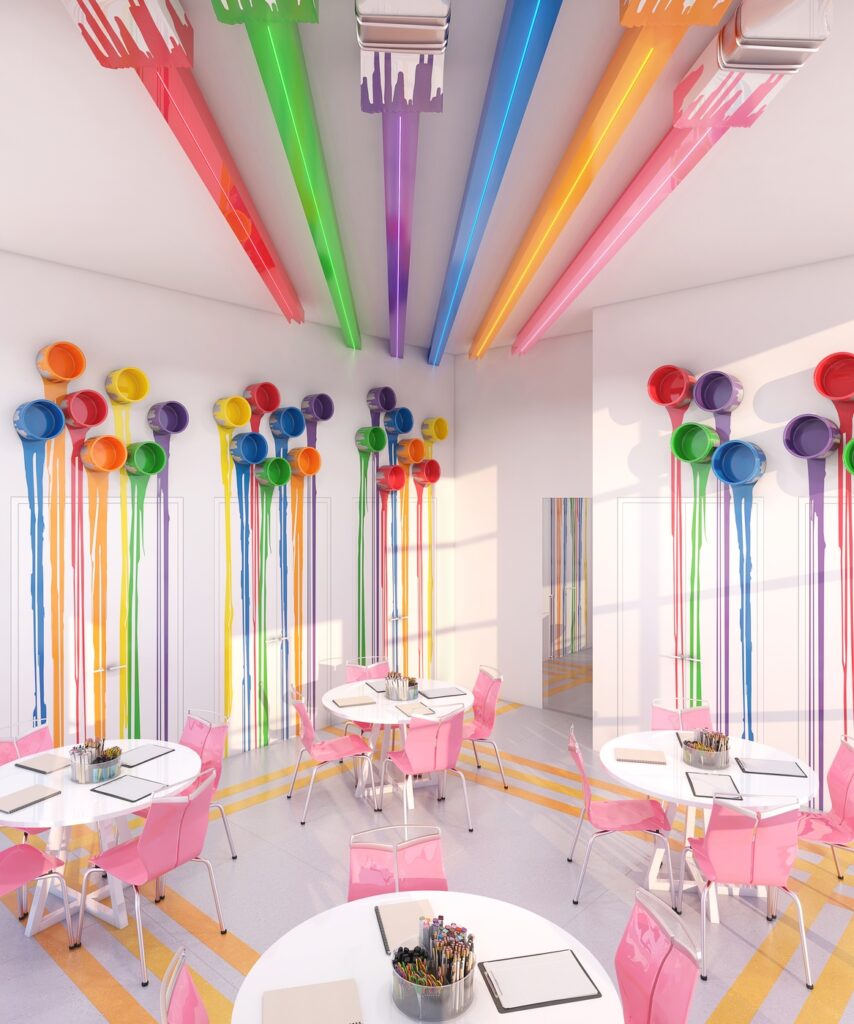
There are moments in the life of a community that feel transformative, when walls rise not just to house programs, but to hold dreams. The new Brooklyn home of the Special Children’s Center is one of those moments. Founded by visionary leaders Chaya Bender and Jenine Shwekey, the Special Children’s Center has always stood for one powerful promise: no family navigating special needs should ever walk alone. Now, with the opening of a breathtaking new building in Brooklyn, that promise is expanding in space, in services, and in heart. From the moment you step inside, it is clear this is no ordinary facility. Sunlight pours into thoughtfully designed classrooms. Wide hallways feel warm and welcoming. Every detail reflects dignity, safety, and care. There is a magnificent art room where children can build skills and confidence. A stunning music room where melodies become a language of expression, because music so often reaches where words cannot. A professional recording studio where voices can be heard and celebrated. A fully equipped baking studio, designed with child-height counters so small hands can measure, mix, and create with independence and pride. A spacious dining room will host wholesome, family-style meals prepared in the Special Children’s Center’s brand-new kitchens. There are classrooms for preschoolers and elementary students, spaces for services, and areas for adults in the program. A shower room and spa room offer both comfort and practical relief, easing the daily load for parents and allowing children to return home refreshed and relaxed. Parents often wonder: Will my child be cared for with dignity? Will they feel proud to be here? Inside these walls, the answer is yes. The Special Children’s Center has always been known for showing up when families need it most. Whenever school is closed, the Special Children’s Center is open. Legal holidays. Jewish holidays. Any day public school or yeshiva closes its doors, the Special Children’s Center opens wide. The respite programs are filled with laughter, warmth, and genuine joy. Designed to care for the children during a family’s busiest hours, these programs restore balance. Parents often share: “My child wakes up excited to go.” And perhaps even more telling: “For the first time, I can breathe.” While the Brooklyn Special Children’s Center already offers a robust range of services, such as after-school programming, Sunday programs including a special teen boys’ program, holiday programming, preschool and elementary classes, adult services, and support for children across a full range of diagnoses, this new building represents something greater. It represents growth. It represents capacity. It represents deeper opportunity. As Jenine Shwekey often shares, the Center’s mission is simple but profound: to truly be there for families on every level. Chaya Bender emphasizes that special needs care is not a part-time commitment. “Families don’t get days off,” she says. “So neither do we.” That philosophy is woven into the very structure of the new Brooklyn building. What makes this expansion so meaningful is not just the size of the space, but the spirit inside it. The Special Children’s Center does not see diagnoses first. It sees children: with personalities, humor, talents, and tremendous potential. In the music room, a shy child may find her voice. In the gym, a hesitant teen may discover strength. In the baking studio, a young boy may beam with pride over perfectly frosted cupcakes. And in every room, families find reassurance: We are not alone. This beautiful new building was thoughtfully designed as a work of love by Margalit Lankry Design as a gift to our children and their families. It is a testament to what becomes possible when a community comes together with extraordinary compassion and shared responsibility toward families navigating special needs. Heartfelt gratitude goes to Harry Adjmi, Alex Adjmi, Richie Dweck, Elliot Tawil, Izzy Nahum and Jack Scaba, who worked tirelessly to help ensure this vision became a reality. With deep appreciation, we thank Jack Chehebar and Marilyn Chehebar for dedicating our brand-new building, and the Safra family for dedicating our Brooklyn Center. There are no words adequate to express the enormous impact of your incredible generosity. Because of you, our children will grow, thrive, and shine in a space built just for them. As the doors prepare to open, the excitement is palpable. Staff members are eager. Families are counting down the days. This Brooklyn building is more than an expansion of services. It is an expansion of possibility. It stands as a promise to every parent navigating the complex journey of raising a child with special needs: We are here. We are open. We are ready. We will walk beside you, on holidays, on ordinary Tuesdays, on challenging days, and on days of celebration. Because every child deserves a beautiful experience. Every parent deserves support. And no family should ever have to do this alone. Reach out to get involved! 2990 Ave U 718-382-0099 dinag@thecenterny.org. Special Ride is coming up soon! Join the magic! specialride@thecenternj.org
Linda Argalgi Sadacka
The growing coordination between Jerusalem and Washington reflects a strategic reality that transcends any single diplomatic encounter. The subject is Iran.
Israel faces the Iranian regime as a direct security threat. Tehran arms and finances proxies on Israel’s borders and openly declares its intent to erase the Jewish state. Missiles are not symbolic. They are operational. The United States confronts the same regime from a broader vantage point. American forces remain positioned across the region. U.S. naval power secures critical maritime corridors. American deterrence shapes the behavior of adversaries well beyond the Middle East. If Iran alters the regional balance of power, the consequences will extend to both democracies.
The character of the regime is not speculative. It is visible. The world remembers Mahsa Amini, whose death in custody ignited nationwide protests. Teenagers like Nika Shakarami became symbols of a generation punished for demanding dignity. And now there is Diana Bahador. Nineteen years old. Known as “Baby Rider.” A young woman whose refusal to disappear behind imposed restrictions became an act of quiet resistance. She was shot by security forces during protests. These are not excesses of chaos. They are instruments of governance.
A regime that governs through repression at home does not transform into a reliable actor abroad. Internal strain does not soften ideological hostility. It can intensify it. When legitimacy erodes domestically, projecting strength externally becomes a tool of consolidation. This dynamic matters. Iran’s leadership defines itself in opposition to both Israel and the United States. Its hostility is structural. The rhetoric directed at Jerusalem and Washington is not incidental. It is foundational to the regime’s identity.
If Iran were to secure nuclear capability, the implications would not be confined to Israel’s security calculus. It would reshape deterrence across the region, embolden aligned militias, and test American credibility on a global scale. Alignment between Jerusalem and Washington is therefore not diplomatic theater. It is strategic necessity.
Israel cannot permit an existential threat to mature unchecked. Its doctrine does not allow it. If action becomes unavoidable, the repercussions will not remain localized. The United States would confront the strategic consequences whether by design or by default. The question is not whether the two nations are connected in this challenge. They already are. The question is whether that connection is acknowledged clearly enough to shape policy with precision rather than reaction. Iran views Israel and America as linked adversaries. Clarity requires that they respond as linked allies. A regime reveals itself first in how it treats its own citizens. The evidence is already before us.
Recognizing that everything, even experiencing the pain of a terrifying illness, is from the Almighty
Emuna Braverman
During the month of Adar, the Talmud tells us, we increase our joy. This sense of celebration culminates with the holiday of Purim, with costumes, Megillah reading, drinking, eating and the exchanging of gifts of food. Who doesn’t smile at the young girls dressed as Queens Esther or Vashti or the little boys acting as Mordecai or Haman? A little liquor, a little feasting – what could be more joyful?
Except that’s not really the source of the happiness. It’s not based on frivolity and laughter. It’s not based on sumptuous food and a good Scotch. It’s joy founded on a deep insight about the world, on important understanding of the Almighty’s role in our lives, of His constant providence.
When we drink on Purim there is only one goal (and it’s not what you think it is), to drink just enough to remove the barriers we’ve erected in our minds and psyches that block us from seeing the Almighty’s presence in the world. This is particularly true in situations that appear negative, desperate, painful or hopeless. Those are the moments when we are the most blocked, when we retreat behind our blockades. Those are the times we most need to peel back the layers and recognize that everything is from the Almighty and it is all in His hands.
The true lesson of Purim is that everything, the seemingly good and the seemingly bad, are one; they both stem from our perfect Creator. It is this realization that brings us joy. It is the recognition that everything is exactly as it should be, that there are no other forces at work, that allows us to accept our challenges with true joy.
All the commentators point out that the Almighty’s name is not mentioned once in the Purim story. At this bleak moment in the Jewish people’s history, He is behind the scenes, pulling the strings, turning sorrow into joy, revealing the meaning of our individual and collective travails.
This year, as I confront the medical challenges facing a loved one, I haven’t felt in the mood to celebrate Purim. Seeing and experiencing the pain of a terrifying illness, I haven’t been able to access that joy. I feel inclined to cancel all but the most obligatory of Purim activities.
But I know that’s a mistake. I know it actually misses the whole point of the day. This situation, too, is from the Almighty. This struggle too, is part of His plan. Although the curtains remain closed and we can’t peer behind them to discover the ultimate meaning, it is a fundamental tenet of our belief that the Almighty is in control, that there are no other powers.
We need to invest our experience of Purim with exceptional fervor on the years when it is hardest. It is the teaching of Purim, it is the relationship with the Almighty, it is the deeply internalized understanding that this too is good that will sustain all of us during our struggles. And that’s something to celebrate.
RABBI LORD JONATHAN SACKS ZT”L
THIS MONTH WE’LL BE CELEBRATING THE JEWISH FESTIVAL OF PURIM. IT’S A JOYOUS DAY. WE HAVE A FESTIVE MEAL; WE SEND PRESENTS TO OUR FRIENDS; AND GIFTS TO THE POOR, SO THAT NO ONE SHOULD FEEL EXCLUDED. ANYONE JOINING US ON PURIM WOULD THINK IT COMMEMORATES ONE OF THE GREAT MOMENTS IN JEWISH HISTORY, LIKE THE EXODUS FROM SLAVERY OR THE REVELATION AT MOUNT SINAI.
Actually though, the truth is quite different. Purim is the day we remember the story told in the book of Esther, set in Persia. It tells of how a senior member of the Persian court, Haman, got angry that one man, Mordechai, refused to bow down to him. Discovering that Mordechai was a Jew, he decided to take revenge on all Jews and persuaded the King to issue a decree that all Jews — young and old, men, women and children — should be annihilated on a single day. Only the fact that Esther, Mordechai’s cousin, was the King’s favorite allowed her to intercede on behalf of her people and defeat the plan.
Purim is, in other words, the festival of survival in the face of attempted genocide. It wasn’t until way into adult life that I realized that what we celebrate on Purim is simply the fact that we’re alive; that our ancestors weren’t murdered after all.
Like many of my generation born after the Holocaust, I thought antisemitism was dead; that a hate so irrational, so murderous, had finally been laid to rest. So it has come as a shock to realize in recent months that it’s still strong in many parts of the world, and that even in Britain yesterday a cleric appeared in court charged with distributing a tape calling on his followers to kill Jews. (This article was written 22 years ago, and since then antisemitism has just gotten worse.)
What is it about Jews — or black people, or Roma, or foreigners — that causes them to be hated? The oldest explanation is probably the simplest: because we don’t like the unlike. As Haman put it, “Their customs are different from those of other people.” And that’s why racial or religious hate isn’t just dangerous. It’s a betrayal of the human condition. We are different. Every individual, every culture, every ethnicity, every faith, gives something unique to humanity. Religious and racial diversity are as essential to our world as biodiversity. And therefore, I pray that we have the courage to fight prejudice, of which antisemitism is simply the oldest of them all. Because a world that can’t live with difference is a world that lacks room for humanity itself.