Home Blog Page 57

Prostate Cancer Prevention
A Q and A with urologist Dr. Ralph Madeb

What is the prostate gland?

The prostate gland is a small, walnut-sized organ located below the bladder and in front of the rectum in men. It plays a crucial role in the male reproductive system.

What is the recommended screening
age for prostate cancer?

For average-risk men, guidelines suggest beginning discussions about prostate cancer screening at age 50. For higher-risk men, those with a family history of prostate cancer or African American men, who are at higher risk, may start discussions earlier, around age 45. Make sure to ask family members if they or any other relative they know had prostate cancer.
How do you screen for prostate cancer?

Screening for prostate cancer typically involves several methods, each with its own benefits and limitations.

1. Prostate-Specific Antigen (PSA) Test: This blood test measures the level of PSA, a protein produced by the prostate gland. Elevated levels can indicate prostate cancer, but they can also be caused by other conditions, such as benign prostatic hyperplasia (BPH) or prostatitis.

2. Digital Rectal Exam (DRE): During this physical exam, a healthcare provider inserts a gloved, lubricated finger into the rectum to feel the prostate for any irregularities. It’s less sensitive than the PSA test but can sometimes detect abnormalities not picked up by blood tests.

3. Prostate Biopsy: If PSA levels are high or the DRE is abnormal, a prostate biopsy might be recommended. This involves taking small samples of prostate tissue to be examined for cancer cells.

4. MRI : An MRI of the prostate can be used to get a more detailed image of the prostate and surrounding tissues. It’s often used to evaluate the extent of cancer or to guide biopsies. It’s not typically used for initial screening but can be helpful in the diagnostic process.

5. Transrectal Ultrasound (TRUS): This imaging test uses sound waves to create an image of the prostate. It’s often used in conjunction with a biopsy to guide the needle. Like MRI, it’s not usually used for routine screening.

6. Genetic Testing: For men with a family history of prostate cancer or other risk factors, genetic tests can assess susceptibility to prostate cancer.

What are the signs and symptoms
of prostate cancer?

Prostate cancer often develops slowly and might not show symptoms in its early stages. When symptoms do appear, they can vary and may include:

1. Urinary symptoms such as frequent urination (especially at night), weak or interrupted urine flow or painful or burning sensation during urination.

2. Blood in Urine or Semen.

3. Painful ejaculation or pain in the lower back, hips, or pelvis.

4. Sexual Dysfunction such as erectile dysfunction.

5. Other Symptoms such as unexplained weight loss, fatigue or general feeling of being unwell.

In some cases, prostate cancer can spread beyond the prostate gland, leading to additional symptoms such as pain in the bones, swelling in the legs and loss of appetite.

It’s important to note that these symptoms can also be caused by conditions other than cancer, such as benign prostatic hyperplasia (BPH) or prostatitis. If you’re experiencing any of these symptoms or have concerns about prostate health, it’s crucial to consult a healthcare provider for evaluation and appropriate testing.

How can I reduce my risk
of prostate cancer?

Reducing your risk of prostate cancer involves adopting healthy lifestyle habits and staying informed about your health.

1. Adopt a Healthy Diet:

Eat a Variety of Fruits and Vegetables, Choose Whole Grains, Incorporate Healthy Fats: Opt for sources of omega-3 fatty acids found in fish like salmon, and nuts. Limit saturated and trans fats and consider soy products. Avoid Red and Processed Meat as much as possible.

2. Exercise Regularly:

Regular physical activity helps maintain a healthy weight and can have protective effects against various cancers. Aim for at least 150 minutes a week of moderate intensity (30 minutes a day 5 days a week) or 75 minutes of vigorous activity a week.

3. Maintain a Healthy Weight:

Obesity is associated with a higher risk of aggressive prostate cancer. Adopting a balanced diet and regular exercise can help manage weight.

4. Limit Alcohol Intake:

Alcohol consumption can increase the risk of several cancers, so it’s advisable to limit alcohol intake. If you choose to drink alcohol, keep your cancer risk as low as possible by having no more than a few servings per week.

5. Avoid Smoking:

Smoking is a risk factor for many types of cancer. Quitting smoking or avoiding tobacco use altogether can benefit overall health and reduce cancer risk.

6. Regular Health Screenings:

Discuss with your healthcare provider whether prostate cancer screening is appropriate for you, especially if you have risk factors like a family history of the disease.

7. Know Your Family History:

If you have a family history of prostate cancer, you might be at increased risk. Share this information with your healthcare provider to determine if you need to start screening earlier or follow additional preventive measures.

Call the Morris I. Franco Cancer Center/ Medstar Medical Referral at 718-787-1800 to guide and help you find the right doctor for your prostate screening.


DSN’s Night of Unity

A Powerful Anniversary Tribute
to Israel on October 7

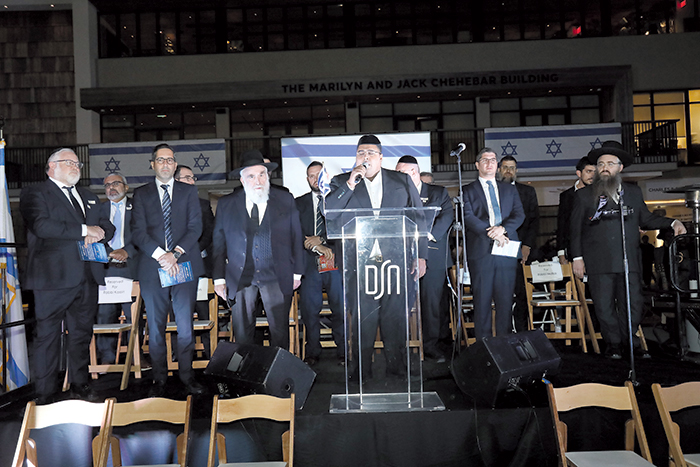
On the solemn anniversary of the October 7 attack, the Jersey Shore community and Rabbis gathered to commemorate the tragic events of the past year and pray for the strength and resilience of the Jewish people.

Over 1500 people filled the DSN Beach Club, standing together in support of Israel and reflecting on the profound connection that has only grown since that fateful day. The evening began with a moment of silence, marked by the powerful sound of a foghorn, creating a poignant atmosphere of remembrance. Nechamia Katz’s stirring rendition of Hatikvah followed, filling the air with hope and pride, as all stood united.

Jeffrey Saka began the night, offering heartfelt words of welcome and gratitude. “We feel very fortunate at DSN to host this Night of Unity commemorating the tragic events of Oct 7th. We’ve had so many wonderful programs throughout the year keeping Israel at the forefront. We are so proud of our team and community. The impact is everlasting and far reaching.”

In a surprise guest appearance, renowned singer Yakov Shweky captivated the audience with three deeply moving songs, including Im Eshkachech Yerushalayim (If I forget thee, O Jerusalem), a song that perfectly encapsulated the community’s shared longing for peace in Israel.

Leading community rabbis joined on stage, including Rabbi Shlomo Diamond, Rabbi Saul Kassin, Rabbi Elie Abadi, Rabbi David Tawil, Rabbi Joseph Dana, Rabbi Chaim Arking, Rabbi Joey Dayon, Rabbi Moshe Malka, Rabbi Moshe Doueck, Rabbi Label Shapiro, Rabbi Ari Katz, Rabbi Moses Hidary, Rabbi Yaakov Sadigh, Rabbi Nasanayl Braun, Rabbi Avi Yagen, and Rabbi Ozeri.

Victoria Sutton, DSN Executive Board Member and Chairperson of Beach Club Events & Marketing, orchestrated the evening as it transitioned into a beautiful prayer and torch-lighting ceremony, with prayers for the hostages, the IDF and the State of Israel. A stunning Magen David candelabra, skillfully crafted by Matania Aharonovitz, became the centerpiece as Rabbis lit the candles, symbolizing the eternal light of the Jewish people.

Rabbi Kassin shared inspiring Divrei Torah, recounting past trips to Israel and reminding the audience of the sacred bond between the Jewish people and the land. Rabbi Dayon followed with the introduction of a touching DSN montage video, showcasing the 65 Israel-related events and programs DSN has hosted over the past year, highlighting the community’s dedication to Israel. He concluded, “Throughout our history, putting aside our differences and uniting has always brought about salvation! BH in this merit we will bring the final redemption speedily”.

The audience was especially moved by the words of Yoni Diller, a survivor of the Nova tragedy and activist, who was introduced by Rabbi Shapiro, and shared his powerful story of survival and hope for the future. Yoni later said how he was “deeply thankful for the opportunity to speak for such an amazing and supportive crowd”. Israel Portnoy, a talented musician, then performed Shema Yisrael, bringing many to tears with his soulful performance.

The evening continued as the audience was honored to hear a Divrei Torah from Rabbi Diamond that encouraged reflection and gratitude. Rabbi Braun followed and introduced Bar Reuven, a reserve combat officer in Unit 669, sharing his experiences as a soldier in this elite special search and rescue unit. Nechamia Katz and Israel Portnoy followed with a beautiful duet rendition of Ten Li Tefilah (Give Me One Prayer) and the night concluded with the entire crowd joining together in a rousing rendition of Am Yisrael Chai, a declaration of the enduring strength and unity of the Jewish people.

Special thanks were given to Ricky Esses, who generously donated his expertise in sound and video, and to Marjorie Ayash, whose photos will help capture the evening’s memory.

As attendees waved Israeli flags, the evening’s message was clear: the essence of the Jewish people is unity, and through strength in numbers and faith, there is no limit to what can be achieved. DSN President Lee Zekaria was proud. “Led by our incredible Rabbis, it was so heartwarming to see our community come together on this night”.

Victoria Sutton, visionary of the event, summarized all of the feelings. “Tonight was filled with so many emotions. Being together on this one-year anniversary of October 7th meant everything. Unity and community are at the heart of DSN and since that day in 2023 we have continuously shown our love and support for our brothers and sisters in Israel. Over the past year so much has happened; with more than 65 Israeli events, we feel incredibly blessed to have shared these moments together and will always cherish the wonderful people we have met and the relationships and friendships formed. Our DSN family has grown closer and stronger than ever. BH. May this year bring home the return of all of the hostages, safety for the state of Israel, and peace for Jews around the world.” It was an emotional, inspiring, and deeply spiritual evening. With Hashem’s guidance, DSN and the Jersey Shore community look forward to accomplishing even more together in the years ahead. Am Yisrael Chai!

Sod Haadam ChangedThe Way I Live My Life

When I first discovered Sod Haadam, I was going through one of the hardest periods of my life. Everything felt overwhelming, and my adult children were pulling away from me. I didn’t understand what was happening. I had always thought I was doing my best as a mother, but it felt like our connection was slipping away.

From the very first class, Sod Haadam began to shift everything for me. The calming voice reached my heart, and I started to see things from a completely new perspective. I realized my children were carrying their own pain, and I needed to meet them where they were. Through the course, I began to understand them on a much deeper level and was able to rebuild stronger, more meaningful relationships with them. The program taught me the power of my own heart, and by opening up, my expanded heart has the ability to heal and support my children so they can live their lives with a solid foundation, without fear and anxiety.

The course gave me confidence, clarity, and helped me not take things out of context. I learned to focus on the good in my children and help them break through the emotional barriers we had unknowingly built. Sod Haadam came into my life at exactly the right time—when I needed it most—and it completely transformed my relationships.

I highly recommend Sod Haadam to any parent, teacher, or anyone seeking a deeper understanding of themselves and others. It goes beyond what any therapy can offer. It truly changed my life when I was at my lowest.

Sally Shalom is a wife, mother and grandmother living in Long Branch, NJ

Do You Like Wasabi?

The Hidden Truth About Inflation
in Your Financial Life

Ari Baum, CFP®

WHAT IF I TOLD YOU THAT MOST PEOPLE WHO CLAIM TO LOVE WASABI HAVE NEVER ACTUALLY TASTED THE REAL THING? AROUND 90% OF THE WASABI SERVED IN RESTAURANTS IS FAKE, TYPICALLY JUST DYED HORSERADISH WITH SOME ADDITIVES. THIS MIGHT COME AS A SURPRISE, BUT THERE’S A REASON FOR IT—REAL WASABI IS INCREDIBLY EXPENSIVE.

Some farmers charge $150 to $250 for just a couple of pounds of authentic wasabi, thanks to its labor-intensive cultivation. It takes up to three years for wasabi to mature, and it grows only under highly specific conditions, which makes production challenging. Because of this, many restaurants take shortcuts and serve imitation wasabi, offering a cheaper alternative that most diners unknowingly accept.

This story of “fake wasabi” offers an insightful analogy to personal finance: just as many consumers unknowingly settle for counterfeit wasabi, many people also overlook how inflation and subtle financial changes affect their lives. So, what lessons can we learn from this wasabi tale? Let’s explore how understanding authenticity, scarcity, and inflation can reshape your financial decisions.

The Hidden Impact of Inflation—
A Bit Like Fake Wasabi

Even if you’re consuming “fake” wasabi, you’ve probably noticed that the price of your sushi dinner keeps going up. This phenomenon is inflation, and whether you realize it or not, it has a silent but pervasive effect on your purchasing power. Just as counterfeit wasabi seems “good enough,” we often tolerate rising prices by telling ourselves it’s normal—after all, inflation is just part of life, right?

But here’s the problem: even small price increases can have a cumulative effect over time. A sushi roll that cost $12 last year might now be $14. If inflation continues unchecked, those increases will erode your ability to buy the things you need or want, including the essentials like housing, healthcare, and groceries. Just as fake wasabi is cheaper but less authentic, inflationary changes subtly push consumers toward cheaper substitutes—whether that means scaling back on vacations, dining out less, or opting for generic brands.

The challenge, then, is how to maintain your quality of life while protecting your financial future from inflation’s corrosive effects.

Scarcity and Value: Lessons from
Wasabi Cultivation

The scarcity of real wasabi demonstrates a key financial principle: things that are rare or hard to obtain hold greater value. Similarly, in your financial life, the things that are hard to build—like a healthy savings account or investment portfolio—tend to yield the most meaningful returns over time.

The wasabi farmer’s patience, tending crops for years before reaping the harvest, mirrors the patience needed in financial planning. Investments take time to grow, and enduring market fluctuations can be as frustrating as trying to grow a temperamental crop. But the rewards—whether in the form of financial independence or a secure retirement—make the effort worthwhile.

So, how can you apply this scarcity principle to your finances? Here are a few ideas:

•      Focus on long-term investments: Just like wasabi, your portfolio needs time to mature. Stick with it through market cycles.

•      Resist the temptation to chase trends: Just because something seems popular (like a flashy stock or cryptocurrency) doesn’t mean it’s valuable in the long run.

•      Practice financial discipline: Saving and investing consistently, even in small amounts, builds lasting wealth over time.

Beware of “Fake” Financial Strategies

Just as many sushi restaurants offer counterfeit wasabi to cut costs, there are also financial products that masquerade as valuable but deliver disappointing results. For example, some high-fee mutual funds or insurance products might look like a good deal but end up eroding your wealth with unnecessary costs over time.

In today’s world, where financial complexity abounds, it’s essential to seek authenticity in your financial strategies. That means:

•      Evaluating the true cost of investments: Are the fees on your accounts eating into your returns?

•      Avoiding financial fads: Quick wins are often too good to be true—just like cheap “wasabi.”

•      Working with trusted advisors: An expert can help you identify authentic opportunities and steer you away from counterfeits.

Inflation Is Inevitable—Plan for It

Whether it’s sushi or housing, prices are rising across the board. Inflation is often beyond your control, but your financial strategy doesn’t have to be. The key to staying ahead is planning for inflation and making intentional adjustments:

1.     Invest in inflation-resistant assets: Real estate, stocks, and Treasury Inflation-Protected Securities (TIPS) can help shield your wealth from inflation.

2.     Revisit your budget regularly: Adjust your spending to reflect changing prices, and make sure your savings goals account for inflation.

3.     Increase your earning potential: Just as farmers raise prices to reflect the scarcity of wasabi, you may need to negotiate raises or seek new income streams.

Know What You’re Paying For—
In Wasabi and Life

The next time you enjoy sushi, ask yourself: Is this the real deal? And take that same level of curiosity into your financial life. Are you settling for “good enough,” or are you actively working toward authentic financial success?

Just as authentic wasabi is rare and valuable, achieving long-term financial stability requires effort, patience, and intention. Inflation and hidden costs will continue to rise, much like the prices at your favorite sushi spot. The question is, will you let them catch you off guard—or will you prepare with a strategy as thoughtful and deliberate as a wasabi farmer’s harvest?

If you’re ready to cultivate real financial growth—like authentic wasabi—start planting the seeds today. It might take time, but the rewards will be worth it.

Bonus Tip: Next time you’re served wasabi, ask if it’s real. It’s a fun conversation starter—and a reminder that in both sushi and finance, authenticity makes all the difference.

The content is developed from sources believed to provide accurate information. Investing involves risk including the potential loss of principal. No investment strategy can guarantee a profit or protect against loss in periods of declining values. Past performance does not guarantee future results. Consult with a financial professional regarding your specific situation.

Ari Baum, CFP® is the Founder and CEO of Endurance Wealth Partners, with over 25 years of experience in the Financial Services industry. He brings his in-depth experience to Conceive. Believe. Achieve. for his clients. Securities and Advisory services offered through Prospera Financial Services Inc. Member FINRA/SIPC. Brokerage and Advisory accounts carried by Wells Fargo Clearing Services, LLC.

A Legacy of Leadership

Rabbi David Yosef Becomes Israel’s
Sephardic Chief Rabbi

Rabbi David Yosef, son of the esteemed Rabbi Ovadia Yosef, has officially been elected as Israel’s Sephardic Chief Rabbi, marking a significant moment in the continuation of a long-standing family legacy. He is the third member of the Yosef family to hold this influential position, following in the footsteps of his brother, Rabbi Yitzhak Yosef, and their father, who was widely revered for his leadership and scholarship. This appointment comes after a period of intense political negotiations and elections, solidifying the role of the Yosef family in guiding Sephardic Jewry.

The election, which took place after several delays due to political and legal challenges, saw Rabbi David Yosef emerging victorious among three candidates. His appointment was backed by the Shas party, reflecting the close ties between the political and religious sectors in Israel. The election was held by a statutory committee composed of rabbis, public figures, and municipal leaders, all working to ensure the continuity of leadership in the Sephardic community. Despite the political wrangling, Rabbi Yosef’s deep knowledge of Jewish law, his leadership in the religious community, and his connection to the Yosef family’s enduring legacy played a central role in securing the position.

Rabbi David Yosef is no stranger to leadership. A prominent figure in his own right, he has authored numerous volumes on Jewish law and served as the head of a prestigious yeshiva. His influence extends beyond his family name, earning respect from a broad spectrum of Israel’s religious community. In his new role, Rabbi David Yosef will oversee vital religious functions, including marriage laws, kosher certification, and rabbinical courts. These responsibilities hold immense weight in Israel, where the Chief Rabbinate plays a critical role in maintaining religious authority over Jewish life and practice.

This appointment is not just a personal victory for Rabbi David Yosef but also a reaffirmation of the Yosef family’s enduring impact on Israel’s religious landscape. His father, Rabbi Ovadia Yosef, was a towering figure who shaped much of modern Sephardic religious thought and law. Rabbi David Yosef’s election ensures that this influence will continue, providing continuity and stability in a time of change and uncertainty for Israel’s religious communities. As he steps into his new role, Rabbi David Yosef carries with him the weight of his family’s legacy and the expectations of a community that looks to him for religious leadership. His election represents both continuity and the ongoing evolution of Sephardic leadership in Israel. With his extensive scholarship and strong ties to the Sephardic community, Rabbi Yosef is well-positioned to guide Israel’s Sephardic Jews in the coming years.

Read Jewish Image Magazine Online – November 2024

November 2024 Jewish Image Magazine

Click Here to View Image Magazine online
==================================
==================================

_________________________________________________________________

_________________________________________________________________


How to Beat Investing FOMO:The Power of Patient Wealth Building

Ari Baum, CFP®

DO ANY OF THESE THOUGHTS SOUND FAMILIAR?

• “I SHOULD HAVE BOUGHT THAT STOCK BEFORE IT WENT PUBLIC!”

• “I WISH I HAD INVESTED IN THAT TECH COMPANY BEFORE IT TOOK OFF!”

• “WHAT’S THE NEXT ‘UNICORN’ THAT’LL MAKE ME RICH?”

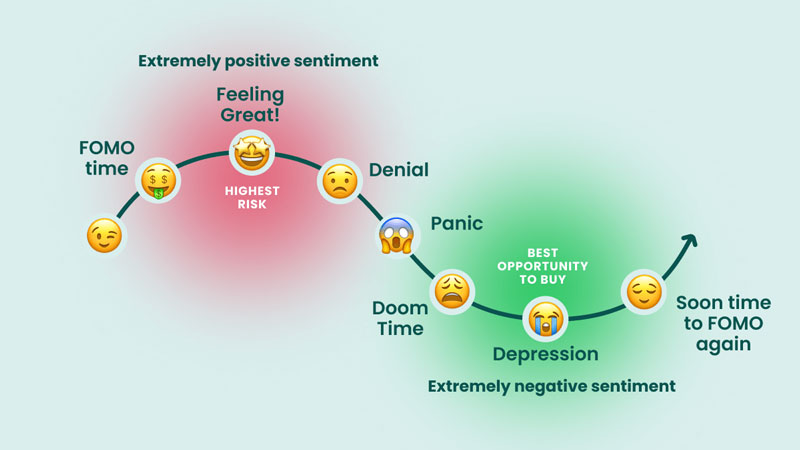
If so, you’re not alone. Many of us experience the “fear of missing out” (FOMO) in our financial lives. It’s that nagging feeling that we’ve missed a golden opportunity, driving us to make hasty decisions that could derail our long-term financial goals.

Understanding the FOMO Trap

Investing FOMO is closely tied to two powerful psychological forces: herd mentality and a scarcity mindset.

Herd mentality: We assume popular ideas are “good” because everyone else is on board. This can lead us to skip our due diligence and ignore contrary evidence.

Scarcity mindset: We overvalue opportunities simply because they seem rare or time-sensitive, often overestimating their potential based solely on their exclusivity.

When FOMO takes over, we’re more likely to:

• Make impulsive decisions based on incomplete information.

• Chase trends, buying high and selling low.

• Take on more risk than we normally would.

• Focus on success stories, ignoring the risks and failures.

These behaviors can set us up for significant losses, heightened anxiety, and even strain our relationships.

One recent example? The cryptocurrency boom of 2021-2022. Investors flocked to coins like Dogecoin, spurred by celebrity endorsements and fear of missing out. The result was a rollercoaster ride of wild gains and steep losses, with many left holding the bag when the hype fizzled.

The Power of Patient Investing

FOMO can be overwhelming, but it doesn’t have to dictate your financial choices. The antidote? Patient investing—building wealth steadily over time with a strategy focused on long-term growth.

Patient investing involves:

• Diversification: Spreading investments across different asset classes to manage risk.

• Index fund investing: Gaining broad market exposure with funds that track indices like the S&P 500.

• Compound interest: Harnessing the power of interest on interest to accelerate growth over time.

Warren Buffett is a prime example of the power of patience. At 21, he was worth just $20,000. He didn’t earn 99% of his wealth until after 50 and became a billionaire at 56. Buffett’s story underscores the value of playing the long game and resisting the siren call of FOMO.

How to Build a FOMO-Resistant
Investment Strategy: 7 Tips

1. Create a solid plan: Base your investment decisions on your long-term goals, risk tolerance, and time horizon.

2. Diversify: Don’t put all your eggs in one basket. Spread your investments to balance risk.

3. Automate your contributions: Set up automatic investments to stay consistent and remove emotion from the equation.

4. Stay focused on the long term: Remember that market volatility is normal. Don’t let short-term fluctuations derail your strategy.

5. Educate yourself: The more you know about investing, the easier it is to tune out FOMO.

6. Limit portfolio checks: Constant monitoring can lead to overreactions. Check in periodically but avoid obsessing over every dip and spike.

7. Take a cool-off period: Before jumping into any new investment, wait 24 hours, do your homework, and seek advice from a trusted source.

Goodbye FOMO, Hello Strategy

FOMO is a natural feeling, but it doesn’t have to control your financial decisions. By staying focused on your long-term goals and maintaining a patient approach, you can avoid the traps of FOMO and build a resilient, growth-oriented portfolio. When in doubt, consult with a financial professional who can provide guidance grounded in experience, not hype.

The content is developed from sources believed to be providing accurate information. Investing involves risk including the potential loss of principal. No investment strategy can guarantee a profit or protect against loss in periods of declining values. Past performance does not guarantee future results. Consult with a financial professional regarding your specific situation.

Ari Baum, CFP® is the founder and CEO of Endurance Wealth Partners, with over 25 years of experience in the Financial Services industry. He brings his in-depth experience to Conceive. Believe. Achieve. for his clients.

Securities and Advisory services offered through Prospera Financial Services Inc. Member FINRA/SIPC. Brokerage and Advisory accounts carried by Wells Fargo Clearing Services, LLC.

Summer Events Shine at DSN Beach Club

This past summer, DSN Beach Club was a beacon of entertainment, education, and community unity. With a bustling array of programming, the Club solidified its reputation as the place to be, offering something for everyone, every day of the week.

Besides DSN’s own curated programming, the Beach Club was proud to host events run by the community’s most well-known non-profit organizations to further their missions. SAFE held a Parenting event, featuring Jonathan Haidt, the acclaimed author of The Anxious Generation. Haidt’s visit brought meaningful discussion into the DSN Beach Park, engaging community members in vital conversations about parenting and technology in today’s world. Shortly after, DSN proudly hosted an event for the Sephardic Community Alliance (SCA), honoring 21 soldiers from Duvdevan, the elite Israeli counter-terrorism unit, acknowledging the bravery and dedication of its soldiers with a therapy mission to recharge them.

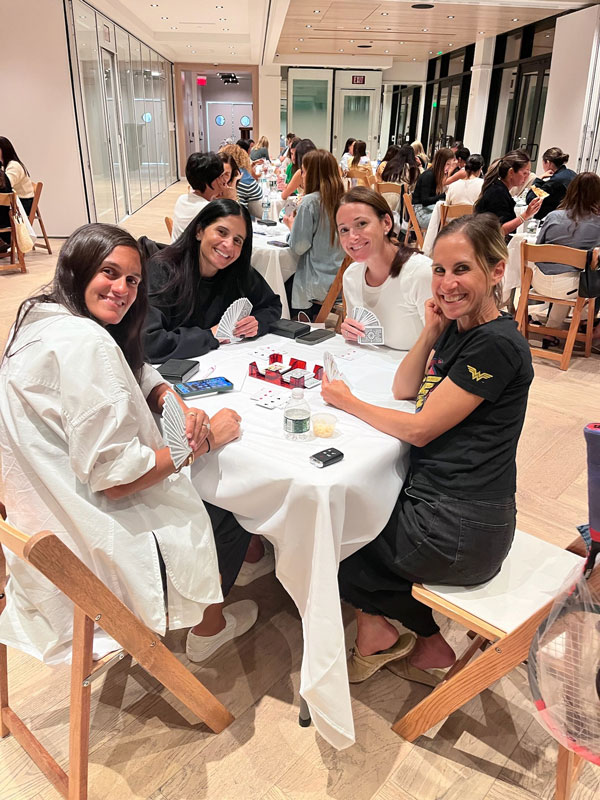
Other hosted events included Magen David Yeshiva’s High Heat Tournament, ILEAD’s Celebration of their 15th Anniversary Night, Stoop Talks, and Propel Night. Additionally, there was a dedicated Ladies Cards Night supporting community Yeshivot including Hillel, Flatbush, Barkai, MDY, and SAM, as well as special CARE event that drew parents of special needs children. DSN’s Non-Profit Events Coordinator Jen Sasson said, “Our community is great. Everyone came together for different causes and organizations. We are one big family who are here for each other, and we are so lucky! DSN Beach Club is truly the perfect place for us to all come together and unite!”

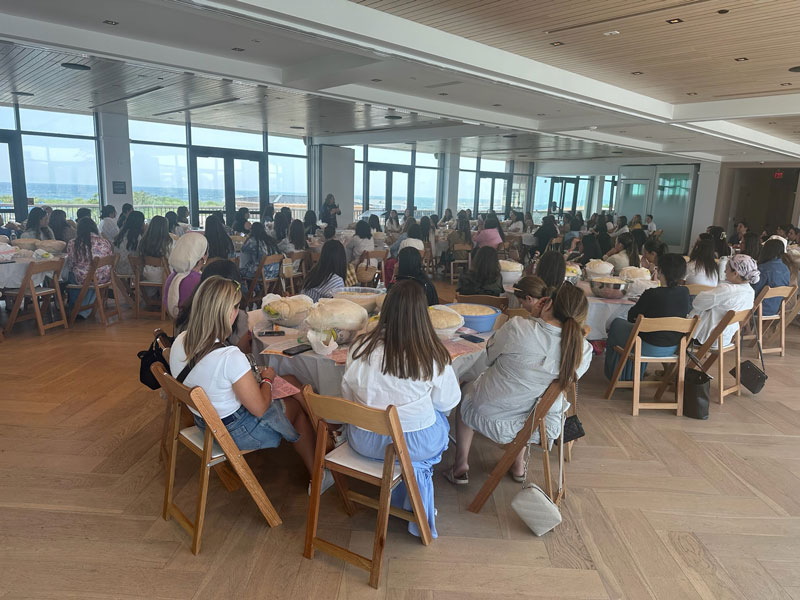
In August, DSN also rolled out a series of its own events, offering a wide range of programs to cater to diverse interests. The lineup included a thought-provoking book club with Alice Chera, where members delved into captivating literary discussions, and Challah Bakes with the world famous challah lady Suri Juroslawitz, that brought women together in a fun, interactive experience. The film screening of Tragic Awakening provided a cinematic journey that captivated the audience, while singles events at the beach park fostered new connections in a relaxed, scenic setting.

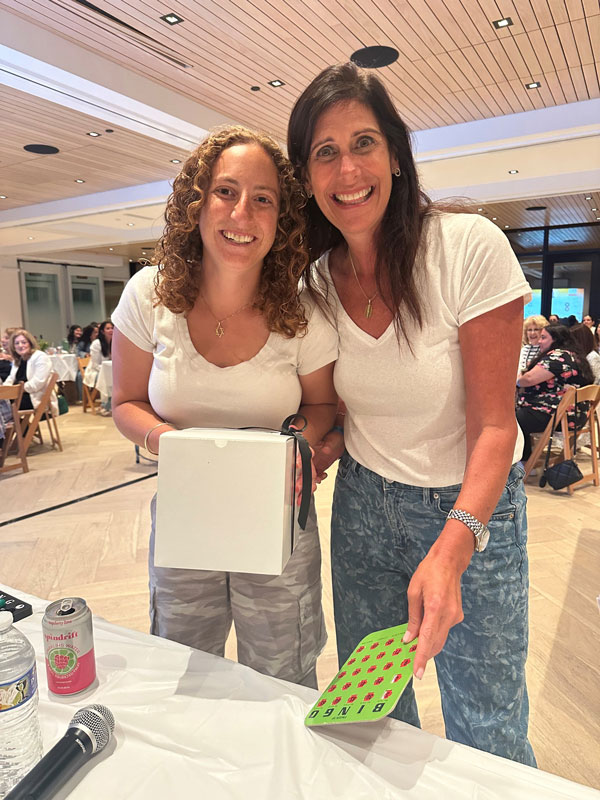
The Beach Club’s Jeli’s became a hub for creativity and fun with its themed character dinners, which delighted both children and adults. Meanwhile, Ladies Bingo Nights, with Joy Assoulin as MC, brought out a fun, competitive spirit. DSN member Danielle Bromberg loved Bingo Night. “I went to Bingo night with my family members and friends. The prizes were unbelievable. We laughed so hard and had the best time. We need to do this all the time!” DSN also had Steven Chera, along with his band, who wowed the crowd with an unforgettable Elvis Tribute Night that had everyone dancing.

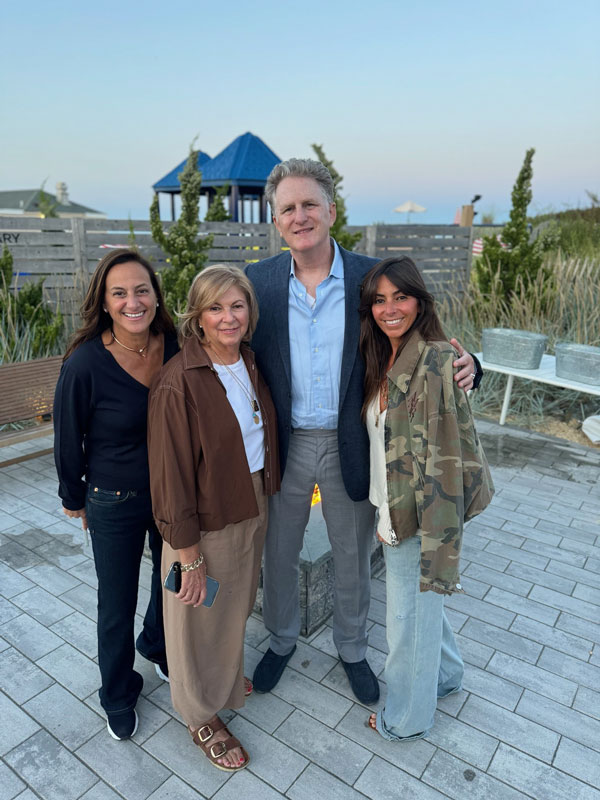
The month also saw larger-scale events, including a remarkable NOBEH Night, featuring Ariel Cohen and Jack Hamra with Orchestra by Victor Esses and his ensemble. There was an inspiring evening with actor and Israeli advocate Michael Rapaport, who took the stage with DSN Executive Board Member Steven Kassin to share his experiences and insights, leaving a lasting impression on all who attended. Caleigh Silvera, DSN’s Beach Club Programming Director, remarked, “We are honored by the abundance of accolades received for the outstanding programming this summer. I am truly proud to be part of an organization that brings so much goodness and happiness to our community.”

The Beach Club’s General Manager Keith Acker summarizes, “Summer events at DSN were sensational. With events happening day and night, it was a pleasure to provide the community with a home away from home.”

Victoria Sutton, DSN Executive Board Member & Chairperson of Beach Club Events & Marketing, stated “What a magical summer it’s been at the DSN Beach Club! We are filled with gratitude for our incredible members who supported every program and event, bringing life and energy to the club. Thanks to their involvement, DSN has become the vibrant heart of our community. We’re grateful for the success of this summer and humbled to see all our hard work pay off in such a rewarding way. We thank Hashem for the blessings that have allowed the club to flourish and become what it is today—a place that has exceeded all of our expectations. From the energy that the members brought to the memories we’ve shared, everything came together to create something truly special. Thank you for turning this beautiful project into a cornerstone of our community and making this summer a success beyond our wildest dreams. We can’t imagine our community without it!”  

A Giving Hand Bringing Hope and New Life to Couples Facing Infertility

A Giving Hand is more than just an organization—it is a lifeline for couples grappling with infertility, offering financial and emotional support when they need it most. Founded by Meyer and Golda Ashear, A Giving Hand was born from their own painful journey with infertility. As they navigated their struggles, they felt the profound isolation, the weight of the financial burden, and the emotional toll that infertility can take. They understood that no one should ever have to face this challenge alone, and thus, A Giving Hand was created to extend a supportive hand to couples facing the same struggles. Their mission is clear: to provide the resources and encouragement needed to help couples pursue medical fertility treatments and, ultimately, to bring new life into the world.


Meyer and Golda’s personal connection to infertility makes their work deeply meaningful. “When my wife Golda and I founded A Giving Hand, we envisioned a world where the financial burden and stress of infertility would cease to exist,” Meyer shares. “Our mission is to empower those on this journey to give thaem the support they need to turn their dreams into reality.” They approach each couple not just as clients but as members of the A Giving Hand family, maintaining close relationships and celebrating their progress every step of the way. The Ashears stay in touch, send thoughtful gifts, and constantly pray for each couple’s success. This personal touch is what sets A Giving Hand apart—it’s not just about financial assistance, but about creating a community of support, love, and hope.

Joyce Harari, one of the many beneficiaries of A Giving Hand, knows firsthand the profound impact this organization can have. Reflecting on her own journey through infertility, she says, “If you had told me a year ago that I’d be standing here speaking about my journey, I would’ve said you were crazy. Infertility is such a private struggle, and you often feel so alone, like your body isn’t working, and you’re constantly asking, ‘Why me?’ But A Giving Hand changed that for me.” Joyce’s emotional rollercoaster was met with unwavering support from Meyer and Golda. They not only helped her financially but were also there emotionally, offering friendship, reassurance, and a shared understanding that eased the burden. “Knowing that they themselves were going through the same thing made me feel normal,” Joyce recalls, “and able to not focus only on myself.” It’s stories like Joyce’s that highlight the true essence of A Giving Hand—an organization that not only offers financial assistance but restores hope to those who feel lost.

Harry Adjmi, a passionate supporter of A Giving Hand, articulates the value of the work the organization does. “What you’re doing is critical to couples who are struggling,” he says. “I think $18,000 is cheap—I think a million dollars is cheap—what is it to make a life? A billion?” His words reflect the deep impact that infertility has on individuals and families, and the priceless gift of giving life to those who yearn for it. He emphasizes the importance of the Ashears’ work not just for individuals but for the community as a whole. “You’re doing it for our community. You’re not doing it for some faraway place for people we don’t know.” Harry’s commitment to supporting A Giving Hand is evident in his desire to see the organization continue to grow and help more people. “Please don’t hesitate when the tank starts to get low,” he urges Meyer and Golda. “Call on me and anyone else who believes in what you’re doing.”

Rabbi Joey Haber also speaks to the unique mission of A Giving Hand and the incredible generosity of the Ashears. He paints a vivid picture of what life is like for couples struggling with infertility: “Imagine coming home, and the house is quiet, with no children running around, no toys scattered on the floor. It doesn’t get lonelier than that.” Yet, instead of allowing their pain to consume them, Meyer and Golda chose to extend their hand to others, saying, “We have your back. We will make sure you get to the finish line.” Their selflessness is inspiring, and Rabbi Haber marvels at their ability to take their own pain and turn it into something that brings hope and joy to others. “You’ve already helped 85 couples, and in 10 years, we’re going to look back and see hundreds of babies born because of you.”

The ripple effect of A Giving Hand’s work cannot be overstated. Rabbi David Haber, who has witnessed firsthand the impact of the organization, explains, “In my community alone, there are multiple couples who now have children because of the assistance they received from A Giving Hand.” He reflects on the profound spiritual reward of helping bring new life into the world, echoing the sentiment that saving a life is akin to saving the world. But what about creating a life? The joy and fulfillment that come from supporting a couple through their infertility journey cannot be quantified, but its impact is felt by the couples, their families, and the community at large.

A Giving Hand is not just an organization; it is a beacon of hope for couples facing one of the most challenging times in their lives. It offers not only financial assistance but emotional support, friendship, and the unwavering belief that no one should walk this road alone. Meyer and Golda Ashear’s commitment to helping others through their own personal struggles is a testament to the power of empathy, generosity, and community. As Joyce Harari so beautifully put it, “Without them, my beautiful Rachel Mazal would not be here.” A Giving Hand has already made an immeasurable difference in the lives of so many, and with continued support, it will bring many more miracles into this world.

Chai Lifeline Announces Launch of Dedicated Sephardic Division

Chai Lifeline, the Jewish communities’ leading children’s health and crisis support network, is proud to announce the establishment of a dedicated Sephardic Division, designed to meet the unique needs of the Sephardic community and provide culturally sensitive support and services. This new division will extend Chai Lifeline’s comprehensive range of assistance to better serve Sephardic families facing medical crises.

Under the leadership of Jack Tabbush, Director of the Sephardic Division, and with the visionary guidance and support of Joseph Dushey and the Dushey family, along with Jack Braha, this initiative is set to significantly enhance Chai Lifeline’s mission. The division will focus on delivering individualized case management, counseling, educational programs, crisis intervention, trauma response, and community-specific support services, ensuring a culturally resonant approach to aiding families in need.

“The creation of the Sephardic Division is a significant step towards addressing the unique needs of Sephardic families in our community,” said Rabbi Simcha Scholar, CEO of Chai Lifeline. “Staffed by local professionals and volunteers from within the community, the Sephardic Division will offer more targeted and impactful support that will help families as they navigate their medical journeys.”

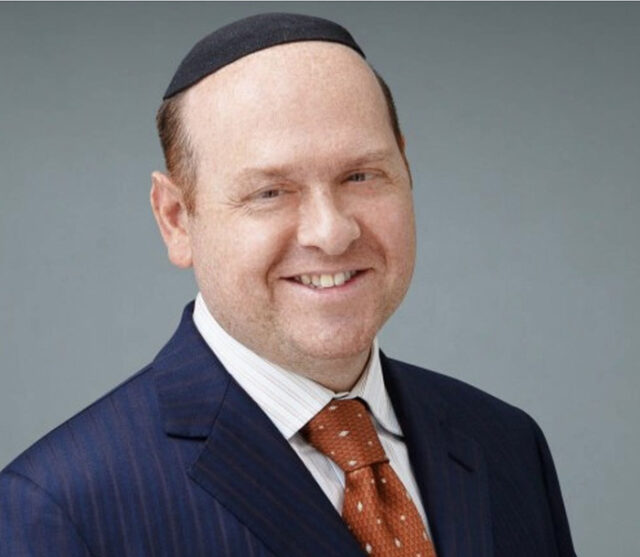
Jack Tabbush, an experienced leader within Chai Lifeline, has a deep connection with the community and brings years of experience in program management and community service.

Jack Tabbush Director of the Sephardic Division of Chai Lifeline

“I am honored to lead the Sephardic Division and excited about the potential to make a tangible difference in the lives of many families in our community. Our goal is to ensure that no Sephardic family faces illness or crisis alone,” said Tabbush. “We are deeply grateful for the Dushey family’s unwavering support and visionary leadership, which have been instrumental in shaping the direction of the Sephardic Division.”

To maximize the effectiveness and impact of the Sephardic Division, Chai Lifeline welcomes Debbie Mezrahi as its dedicated Case Manager. Debbie brings a rich background in communications, health, nutrition, psychology, trauma, and bereavement to her role. Her responsibilities include assessing the needs of families, developing comprehensive support plans, connecting clients with necessary services, and providing ongoing counseling and monitoring. She is trained in crisis counseling and has years of experience working in the crisis intervention field.

“Debbie’s deep understanding of the community’s needs will drive the success of the division’s outreach and support programs,” said Tabbush.

The Chai Lifeline Sephardic Division will operate out of its headquarters at 1115 Ocean Parkway in Brooklyn, NY, and will offer programs and services across various locations with significant Sephardic populations, including Brooklyn, Deal, Manhattan, and Lakewood. The division is currently rolling out several new programs, including community outreach initiatives, educational workshops, and expanded volunteer training programs tailored to the Sephardic community.

For more information about the Sephardic Division or to learn how you can support this vital initiative, please visit www.chailifeline.org/sephardic or call 718-475-0002.

How to Navigate the High Holidays in Eating Disorder Recovery

Mary Anne Cohen

The High Holidays are a beautiful time of spiritual renewal – a time to pause in our daily lives and routines to draw closer to Hashem and our inner spiritual selves. However, for many people who struggle with eating and body image problems, the Holidays can be a challenge and a source of stress. The Holidays take us out of our comfort zone and our familiar structure of work, school, family life and thrust us into lots of rich enticing meals, lots of socializing, lots of quiet time praying, as well as the strain of fasting. For those in eating recovery who depend on the security of a predictable routine, the Holidays may leave them triggered and unsteady.

Recovery from an eating disorder includes learning to eat when you’re hungry and stopping when you’re full. Feast days or fast days interrupt that recovery work by requiring you to ignore your hunger and fullness, which can trigger someone in recovery to relapse. So first, let’s put the holidays in perspective – they have a beginning, middle, and end. Remember, you will be back to your normal recovery eating routine shortly!

It’s been said, “Those who fail to plan, plan to fail!” Planning and preparing for the support you’ll need requires thoughtfulness ahead of time. You have lived through many High Holidays and need to look back at what has worked best for you in the past! Let your own inner experience be your teacher.

Here are six strategies to follow for both Rosh Hashanah and Yom Kippur:

1. Share with those who care: Isolating with your eating disorder will make things harder. Choose a friend or family member who knows what you’re going through and whom you’ll see often during the Holidays. Check in with them regularly as to how things are going for you, what issues are coming up, and how you’ll handle them. If you are in therapy or have a nutritionist, include them in your planning before the holidays begin.

2. Be of service to someone you know who is struggling. Reaching out to another person who may be suffering with their eating disorder is a compassionate act that may strengthen your own determination to take good care of yourself.

3. Remember, the holiday is about illuminating your spiritual path, not about what you ate, didn’t eat, or should have eaten!

4. Practice Self-Care: Before eating, take a long breath, relax your shoulders, and exhale slowly. Do this three times. Put your hand on your stomach or on your heart to keep you connected with your inner self.

5. Repeat a short prayer silently for comfort throughout the Holidays such as, “Help me find the courage to make my life a blessing.”

6. Avoid the temptation to join random conversations about food, fat, or appearance.

Some additional considerations about fasting for Yom Kippur: There is controversy about whether anorexics should be exempt from fasting. Jewish law does underscore the priority of honoring one’s health – mental health included. “Judaism is very clear that literally nothing comes in the way of saving a life — nothing,” explains Rabbi Yakov Saacks, director of the Chai Center in Dix Hills, New York. Rabbi Saacks understands the complexities of eating disorders and their intersection with Judaism in a very personal way because his daughter suffered from an eating disorder.

“After my daughter got sick, I had to make some hard decisions,” Rabbi Saacks says. “Once I realized that insisting on the Jewish laws on food and eating was an obstacle to her recovery, I let it go. The philosophy here is that only a living person can observe the commandment to fast on Yom Kippur, and if I even allow her to fast, then … fasting will serve to exacerbate her eating disorder and make her ability to fight to live another day more difficult.”

If fasting is an issue for your recovery, please speak to your rabbi for guidance.

Cultivate compassion for yourself. We, as human beings, are all imperfect. The High Holidays remind us of our intention to keep striving to lead our best lives physically, emotionally, and spiritually. We strive for progress, not perfection.

Mary Anne Cohen, LCSW, BCD is Director of The New York Center for Eating Disorders and author of three books on the treatment of eating disorders including French Toast for Breakfast: Declaring Peace with Emotional Eating. www.EmotionalEating.Org.

From Daddy Issues to Divine Connection

A Rosh Hashanah Imperative to Improve
Your Relationships

Rabbi Ezra Max

Rosh Hashanah is your opportunity to improve anything in your life and especially your relationship with the Almighty. It’s not only a time for reflection, but also an opportunity to mend and renew relationships, particularly with our Heavenly Father and our earthly families. As business leaders and parents, it’s crucial to recognize how our relationship with the Almighty and our personal dynamics with our families and employees reflect and impact our professional and personal lives. The upcoming New Year is a perfect moment to address and resolve any lingering “Daddy issues” and reframe our understanding of authority, guidance, and love.

Understanding the Impact of Loving Structure Versus Neglect

Imagine a business where you provide an employee with unlimited pay and benefits but fail to set clear expectations or provide structure. This employee would likely become confused, disengaged, and unproductive. Similarly, in the realm of parenting, a lack of structure and clear expectations can lead to frustration and poor outcomes. Too much freedom and enabling without guidance or accountability can result in chaos and even self-destructive behaviors.

Contrast this with a structured, loving environment where expectations are clear and support is consistent. In business, employees thrive under clear guidance, constructive feedback, and accountability. In parenting, children flourish when given boundaries coupled with affection and support. This approach helps them understand expectations and develop healthy self-discipline.

The Wisdom in Challenges: Necessity and Innovation

In our relationship with the Almighty, this dynamic is mirrored. Hashem provides us with the Torah and the Mitzvot as a blueprint—a loving structure to guide us and ensure we stay on the right path. Just as a structured environment leads to successful outcomes in business and parenting, so does adherence to this divine guidance lead to spiritual growth and fulfillment.

The saying “Necessity is the mother of invention” reminds us that obstacles often lead to innovation and breakthroughs. This principle applies to our personal and professional lives. Difficult situations, while challenging, can open doors to new opportunities and growth.

Addressing Daddy Issues: A Path to Connection

Reflect on how past difficulties have led to personal or professional breakthroughs. When you faced a tough situation, how did it eventually lead to a new opportunity or growth? This perspective is essential as we approach Rosh Hashanah. Recognizing that challenges are often the catalyst and stepping stones to success allows us to face them with faith and resilience.

Many of us struggle with unresolved issues related to our fathers or authority figures, including our relationship with Hashem. These issues can manifest as frustration, anger, or disconnection. On Rosh Hashanah, it’s crucial to address these feelings and seek to repair and renew these relationships. This is the specific moment to feel into the deep spiritual connection our Neshama (soul) has with the Divine. We have an opportunity to acknowledge and commit to improving our connection, communication, and compliance for the future.

Reality check: We as parents and business leaders also have the opportunity and even an obligation to reach out toward our children and employees to open lines of improved communication and connection. We must address conflicts and foster positive relationships with our children and engage in healthy, adaptive interactions with our employees. This means making the effort to connect, communicate, and model positive behavior.

For example, a client of mine, facing a significant crisis with a key employee who was undermining the company culture, initially struggled with frustration and a sense of failure. He decided to focus on his own self-improvement, which included a deeper commitment to prayer and reflection. He then began to build a better connection with the problematic employee, who was on the verge of being fired. This shift in approach not only transformed his relationship with the employee but also brought positive changes in his family dynamics. The improvements were significant, and he leveraged this challenging situation into a triple play WIN: enhanced employee relations, improved family harmony, and renewed business success.

The Rabbis have taught us that anyone making an effort to improve is Divinely assisted. This makes the seemingly impossible not only possible but probable, therefore—you must try.

Practical Steps for Improvement

Reflect and Repair: This Yom Tov (Holiday) season, take time to reflect on your relationships with your children, employees, and with Hashem. Identify areas where you might have fallen short and take steps to address these issues. Acknowledge any unresolved feelings and commit to making positive changes.

Engage in Connection: Make an effort to reach out and connect. For parents, this might mean planning activities with your children, having meaningful conversations, or simply being present. For business leaders, it could involve regular check-ins with your team, expressing appreciation, and fostering a supportive work environment.

Model Healthy Behavior: Demonstrate the behavior you wish to see. For parents and leaders, this means modeling emotional resilience, respect, and commitment. At home and at work, it involves setting clear expectations, providing constructive feedback, and creating a supportive atmosphere.

Seek Divine Guidance: Embrace the opportunity Rosh Hashanah offers to reconnect spiritually. Engage in prayer, Teshuva (repentance), and Tzedakah/Chesed (kindness) to strengthen your relationship with Hashem and align your actions with divine guidance.

Connect with Yourself: You are a Divine being with a unique task in this world that includes specific challenges you need to overcome. Apologize, forgive yourself, and commit to having an awesome year of improvement, growth, and expansion.

A Prayer for a Sweet New Year

As we approach Rosh Hashanah, I offer you this blessing: May your year be filled with renewed connections, personal growth, and divine guidance. May you find clarity in your relationships with yourself, your family, and Hashem. May your efforts lead to abundant outcomes, and may you experience a year of health, happiness, and spiritual fulfillment. Gmar Chatima Tova!

Navigating the Jewish Holidays with Food Freedom and Self-Care

By Laura SHAMMAH MS, RDN

The Jewish holidays is a hopefully a time of excitement, happiness and togetherness. But for many it is a time of anxiety, anxiousness, fear and worry, especially for those who struggle with their body image or relationship with food. For some the thought of what to eat and what not to eat is just too overwhelming. The holidays can be full of triggering comments, diet culture talk, and food-centered days.

Here are some tips for staying grounded and making decisions that honor your body with a feeling of food freedom.

Don’t skip meals to “save up”
for the holiday meal

DO eat during the day! Just because there’s a big meal that night doesn’t mean you should save up your calories. This is both unhealthy and could cause you to overeat. Eat breakfast, lunch and a snack that are rich in protein and complex carbs. When you see all your favorite foods over the holiday, you will be more satiated and calm and be able to enjoy without indulging. Too much restriction can lead to adverse effects.

Focus on your own plate.
Comparison is the thief of joy!

No matter what Aunt Sara, grandma, your siblings, mom or whoever are eating — remember that your body is your body. What someone else chooses to eat has no bearing on what you choose to eat. Your preferences, tastes, energy needs and cravings are uniquely yours. Looking at what others are eating to validate or guide your own choices should be avoided. focus on what foods bring YOU joy. Eat the things that you love, not the things that you think you “should” put on your plate.

Avoid body checking behaviors

This could be stepping on the scale, checking body parts in the mirror or putting on certain clothes. It could also be seeking approval or compliments from other people. The more you self-objectify, the worse your body image becomes. Body checking also negatively impacts your self-worth and self-esteem. It can also mess with your food choices and your mood. Stay grounded in how you feel, not how you look.

Stick to neutral language about food

Naming foods “good” or “bad” will only moralize some foods while demonizing others. Creating this all or nothing, black and white thinking-hierarchy of foods is what drives restriction and bingeing. Try to keep all foods neutral.

Identify when your inner critic shows up to the party.

If you have a negative head that talks to you, slowly you can learn to override it with positive thoughts. Don’t get thrown off-course just because that voice shows up. Just decide what you will do with it. This is social conditioning, after all, and it’s a product of all of your life experiences, family culture, friends, media, and much more. So instead of getting overwhelmed by the negative thoughts and giving into them, be ready for them. When they show up, identify them and remind yourself that you can do hard things. The presence of your inner critic does not mean that you have to disrespect your body. You can hear the voice and still choose to take care of yourself while eating the foods you love. In the end the more you override those inner critic voices, the quieter they’ll become.

Wear comfortable clothing

Getting dressed and putting yourself together in a way that is comfortable but makes you feel attractive is an important self-care tool that helps override many uncomfortable feelings.

Set boundaries about diet talk and or have an exit strategy for diet culture conversations

Keep Conversations Light! In most families, talking about food, body size, and exercise is common conversation at the table. Keep in mind that even if the conversation isn’t about your loved one’s body or eating habits – they will be applying any perspective to themselves. Keep conversation at the table or gathering positive and light! This will help your loved ones create a positive association with food and family time. If some topic is uncomfortable, nonchalantly change the subject or gently tell your family that you are working on your body and your relationship with food, and hearing negative body talk or diet comments is really unhelpful and unhealthy for you.

Remember that you are allowed to eat all foods any day of the year

This is a big one. While holiday meals are certainly special, I hope you can remember that these foods are available to you all year round. You can make your favorite kibbeh and mashed potatoes whenever you want. You can eat dessert any night. What’s the point? The point is that there is a ton of hype around these meals, when in fact, food is always just food. When you give yourself unconditional permission to eat what you want all the time, these occasions become less emotionally charged.

Be present and savor the special moments, delicious food, and memories

When you’re too wrapped up in food and body image, you can miss out on so much. So even if it gets hard, come back to the present moment. Come back to what is happening around you. Come back to making memories, seeing loved ones and the spiritual holiday. Don’t let life pass you by while the diet culture steals precious time from you.

If guilt or shame creep in around food or you feel like you need to compensate your food consumption with an extra workout, here are some Holiday Food Freedom affirmations you can use:

1.    Food is not my enemy. I thank it for nourishing me and giving me energy.

2.    Holiday foods are not indicative of my overall health.

3.    Guilt and negative feelings I have about my body do not serve me.

4.    I give myself unconditional permission to eat.

5.    I honor and trust my body and its needs by eating foods that are pleasurable, satisfying and nourishing to me and I give myself permission to enjoy all foods that make me feel good.

6.    There are no good or bad foods, every food has a purpose and will fuel me either mentally or physically.

7.    Movement is an act of self-care & self-love, not punishment.

8.    I honor my body.

9.    I am grateful for my body & all that it does for me.

10.  I will show my body that it can trust me by not restricting food.

11.  The foods I choose to eat do not impact my self-worth.

12.  I deserve to nourish my body.

Learning to embrace food freedom and letting go of food rules is a journey and won’t happen overnight. Be sure to show yourself some patience as you navigate through. If you or a loved one is struggling with emotional eating, consult a registered dietitian that specializes in eating disorders or your medical provider for additional support if needed.

Wishing you all a happy and healthy new year.

Is My Baby Meeting His Milestones?

Baby and Mother Kid Playing Blocks Toy Early Children Development Toys Young Family and Little Child one year old

Is My Baby Meeting His Milestones?

When Do I seek Help?

Carolyn Orfahli, MS, OTR/L

You’re a new mom who’s looking forward to your baby’s first mommy & me class. Around the room babies are sitting, facing their mothers, and playing “peak a boo” with colorful scarves. Your baby isn’t able to sit yet. You start to wonder if your child should be sitting like his peers. This is not something you foresaw to be a concern. You’re a pro mom, you’ve been acing it for the past 7 months. Your baby eats well and sleeps through the night, but sitting, who even thinks about it?

Occupational therapists (OT) are experts in developmental milestones that begin in infancy. These milestones, occur at specific windows of time to progress your baby throughout development. Milestones help integrate primitive reflexes and keep your baby playing and feeding age-appropriately.

As a mother, you aren’t supposed to inherently know about when these milestones occur. Luckily, your pediatrician goes over a list of milestones at each well visit. Your pediatrician may ask: “Is your child rolling?” or “Is your child pointing?” At a glance these questions may seem like easy yes or no questions. However, if you think about it, does anyone speak about how excited they are that their baby is rolling?

You may answer yes to the milestone questions at the appointment. That afternoon, while playing with your baby, you notice that your baby is only rolling to his left and is only using one hand to reach for toys. This observation may be nothing of concern or your baby may benefit from OT.

What do you do? With any concern, always consult with your pediatrician first. They may advise to seek OT right away, the earlier your baby is in therapy, the quicker they progress. Sometimes, your pediatrician may advise to “wait and see.” Now, the power is in your hands. If you are worried about your baby, you can decide to seek therapy instead of waiting. You are the expert on your baby. You are taking notice to how he plays compared to his peers. If your OT recommends therapy, now your baby has the best possible chance to get on track. Once your child is evaluated, your OT may recommend physical or speech therapy instead. If your baby doesn’t need therapy, your baby is doing well and your mind is an ease.

When an OT evaluates your baby’s skills, they are analyzing each of your baby’s body movements, checking their primitive reflexes and overall strength. For example, in regard to rolling: Is your baby rolling to his right and to his left? Is your baby rolling from their back to belly and from his belly to back?

During OT sessions, you’ll receive guidance on stretches, positioning, exercises and different activities to help your baby achieve his milestones.

The developmental milestones occur within a range of months. As a general rule, OTs give the baby time to “catch-up” before suggesting therapy. Each baby’s case is specific, whether they were born prematurely, have a muscle tightness or diagnosis will dictate the urgency of initiating OT.

The following is a list of milestones that your baby should be able to do by each age. Other milestones related to standing/walking and speech/communication are not listed; consult with a physical or speech therapist accordingly.

OTs address the following:

2-3 months:

•      Lifts head briefly during tummy time

•      Brings hands to mouth

•      Visually tracks toys

4-5 months:

•      Bears weight on forearms during tummy time

•      Rolls from back to belly and belly to back

•      Reaches and grasps toys

6 months:

•      Sits unsupported

•      Grasps small objects using all their fingers

8 months:

•      Crawls on hands and feet

12 months:

•      Pincer grasp with index finger and thumb with both hands

•      Self-feed finger foods

•      Transitions between all positions: laying down, sitting, crawling

Additionally, if your baby seems floppy, rigid or seems to exhibit sensory seeking behaviors (rocking or spinning) or sensory avoidant behaviors (refuses to touch certain textures in food or play), an OT may be of assistance. When in doubt, seek OT out!

Carolyn Orfahli, MS, OTR/L is a Pediatric Occupational Therapist and founder of MamaBear OT. She has extensive experience working at NYU Rusk Rehab pediatric outpatient unit and in Early Interventions/School settings. She can be reached at: (718) 490-5045.