Amazon (AMZN) shares took a hit on Friday, falling more than 3% in pre-market trading after the company provided a weaker-than-expected sales forecast for the first quarter of 2025.
Despite beating analysts’ expectations for both earnings and revenue in the fourth quarter, Amazon’s guidance for Q1 revenue, projected between $151 billion and $155 billion, fell short of Wall Street’s consensus estimate of $158 billion.
In a statement, Amazon attributed part of this outlook to unfavorable foreign exchange rates, which are expected to negatively impact revenue by approximately $2.1 billion. The company also noted that the leap year in 2024 had boosted net sales by $1.5 billion, an advantage not present this year.
Cloud Segment Under Pressure Amazon Web Services (AWS) reported Q4 revenue of $28.7 billion, narrowly missing expectations of $28.8 billion. The cloud market has faced challenges, with competitors Microsoft (MSFT) and Google (GOOGL) also underperforming due to capacity issues in meeting the rising demand for AI services.
Both rivals cited limitations in infrastructure as a reason for the cloud sales shortfall. Microsoft posted $40 billion in revenue, falling short of the expected $41.1 billion, while Google’s $11.9 billion in sales missed the $12.1 billion forecast.
Massive AI Investments Ahead During the earnings call, CEO Andy Jassy revealed plans for a significant increase in capital expenditures, projected to reach $105 billion in 2025, up from $75 billion in 2024. The bulk of this spending will go toward AI and data center development to enhance Amazon’s cloud capabilities.
The company’s aggressive investment strategy underscores its commitment to staying competitive in the rapidly evolving AI landscape. This move follows the rise of DeepSeek, a China-based AI startup whose new models have rattled Wall Street by offering AI services on par with those of well-established tech giants.
Q4 Earnings Performance For the fourth quarter, Amazon posted earnings per share (EPS) of $1.86 on revenue of $187.7 billion, surpassing analyst expectations of $1.50 EPS on $187.3 billion in revenue. This marked a significant improvement compared to last year’s Q4 EPS of $1.00 and revenue of $169.9 billion.
Looking Forward Despite its current challenges, Amazon remains focused on innovation. By making DeepSeek’s AI model available on its platform, Amazon aims to keep pace with rising demand for AI-driven solutions while continuing to lead the global cloud market.
However, concerns over its Q1 guidance signal potential hurdles ahead as the company navigates currency headwinds and increasing competition. Investors will be closely watching how these factors impact Amazon’s future growth trajectory.
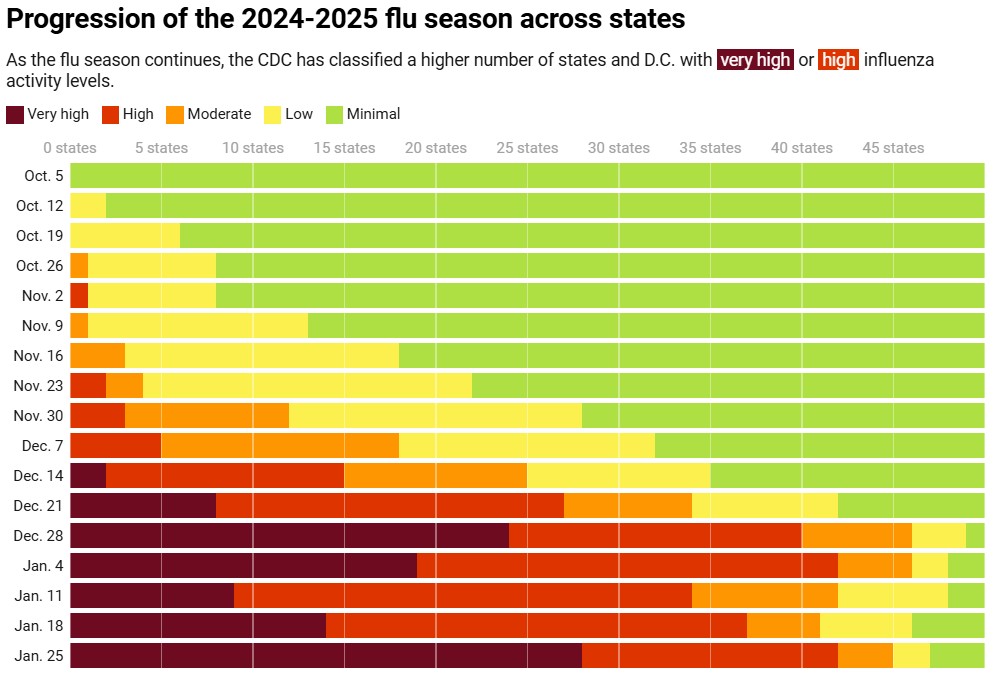
As flu cases continue to rise across the United States, health experts are urging individuals to take precautionary measures to avoid getting sick. In Maryland, Dr. Victor McLaughlin of Patient First reported a significant increase in flu cases, alongside other respiratory illnesses such as strep throat and pneumonia.
Data not available for Vermont. U.S. territories not included. Activity levels are a on a scale from “minimal” to “very high” and represent the prevalence of outpatient visits due to influenza like illnesses. Dates reflect the end of the week. Chart: Nicki Camberg/Hearst TVSource: CDC
“We’re seeing more pneumonia cases this year than I’ve ever encountered in my career,” Dr. McLaughlin stated. The flu remains a primary concern, with many patients experiencing rapid onset symptoms.
Recognizing the Symptoms Flu symptoms often come on suddenly and are described by patients as feeling like being “hit by a truck.” Common signs include:
Fever and chills
Fatigue and muscle pain
Dry cough
Vomiting and diarrhea in some cases
Medications such as Tamiflu are recommended for those under 2 years old, older adults over 65, or individuals at risk of complications. Early treatment can help reduce the severity and duration of symptoms.
How to Manage the Flu Dr. McLaughlin advises flu patients to:
Stay hydrated by drinking plenty of fluids
Use a vaporizer to ease breathing
Take over-the-counter cold medicines, pain relievers, and cough suppressants
He emphasized the importance of rest and isolation to prevent spreading the virus, as flu patients are contagious for up to seven days after symptoms begin.
Prevention Tips To reduce the risk of infection, Dr. McLaughlin offers these recommendations:
Wash hands frequently with soap and water
Avoid close contact with sick individuals
Stay away from large crowds
Consider wearing masks in crowded spaces
McLaughlin also stresses the importance of getting vaccinated. “It’s not too late,” he added, urging people to visit vaccines.gov to find flu shot locations nearby.
As flu season peaks between December and February, taking preventive measures can help protect yourself and your family from the virus.
John Ratcliffe, the C.I.A. director, at his confirmation hearing last month. The agency began offering employees the option to stop working, then resign effective Sept. 30.Credit...Haiyun Jiang for The New York Times
In a controversial development, the CIA has reportedly sent an unclassified email to the White House listing new hires with two years or less tenure. This move was made in compliance with an executive order aimed at downsizing the federal workforce, according to multiple sources familiar with the matter. The decision, described by officials as the “least bad option,” raises significant national security concerns.
The list reportedly includes first names and last initials of employees, ranging from analysts to trainees preparing for undercover roles. While designed to minimize risks, the choice to disclose even partial identities poses potential dangers. One source highlighted that some employees have “uncommon” first names, which could allow foreign intelligence services to cross-reference publicly available data and potentially identify these individuals.
Although the listed hires have likely not yet been deployed overseas in undercover roles, the exposure could impact their future assignments. CIA officials may now consider it too risky to send these individuals to high-risk postings, effectively jeopardizing their careers before they begin.
A CIA spokesperson confirmed compliance with the executive orders, stating, “We are providing requested information through the appropriate channels.” However, the decision has faced fierce criticism from lawmakers.
House Intelligence Committee ranking member Jim Himes of Connecticut condemned the action, emphasizing its potential harm to national security. “Those details are secret for a reason — because protecting the identities of CIA employees is critical to their safety and mission, a mission that helps keep Americans safe every day,” Himes stated. He also expressed concerns about the possible mass dismissal of provisional employees.
Adding to the workforce reduction efforts, the CIA recently became the first major national security agency to offer buyouts as part of a broader strategy to streamline operations and “infuse the Agency with renewed energy.”
The implications of this unprecedented move extend beyond workforce logistics. Experts and officials worry that compromising even partial employee information could embolden foreign adversaries and undermine the agency’s operational capabilities. As the situation unfolds, critics warn that the potential cost to national security and agency morale could be severe.
Elon Musk walks on Capitol Hill on the day of a meeting with Senate Republican Leader-elect John Thune, R-S.D., in Washington in December.
Benoit Tessier/REUTERS/FILE
In a groundbreaking development, Elon Musk’s Department of Government Efficiency (DOGE) has been granted access to key systems and technologies at the Centers for Medicare and Medicaid Services (CMS), according to an official statement released on Wednesday. This unprecedented collaboration aims to identify instances of fraud, waste, and inefficiency within one of the largest health care programs in the United States.
CMS administers Medicare, the health insurance program for older and disabled Americans, and Medicaid, which provides coverage for low-income individuals. Together, these programs serve over 140 million Americans and account for a significant portion of federal health care spending. The agency confirmed that two senior CMS veterans are overseeing the partnership with DOGE, ensuring that access to sensitive systems remains secure and compliant with existing regulations.
A Quest for Efficiency
The initiative is part of U.S. President Donald Trump’s directive to enhance accountability and efficiency within federal agencies. Musk, the world’s richest man, has been tasked with spearheading this mission, rapidly gaining influence over the federal workforce and reshaping government operations.
“We are taking a thoughtful approach to see where there may be opportunities for more effective and efficient use of resources in line with meeting the goals of President Trump,” CMS said in its statement.
DOGE representatives are reportedly reviewing CMS systems to identify potential instances of fraud and inefficiencies, including improper payments. These may result from administrative errors or deliberate abuse by state agencies, contractors, or providers.
Key Areas of Examination
The Wall Street Journal reported that DOGE representatives have been given read-only access to several CMS systems, including the Acquisition Lifecycle Management system, which holds vital information about contracts. The team is evaluating not only the technological infrastructure but also spending patterns to pinpoint fraudulent or wasteful practices.
Importantly, DOGE representatives have not been granted access to databases containing identifiable personal health information of Medicare or Medicaid enrollees. CMS emphasized that the access is limited to “read-only,” preventing any changes or modifications to system data.
Broader Implications
Musk himself highlighted the importance of this endeavor, posting on social media platform X, which he owns, “This is where the big money fraud is happening.” The post has drawn attention to the broader objective of rooting out inefficiencies in federal programs.
Despite the controversial nature of Musk’s involvement, White House representatives defended the initiative, stating that it aligns with President Trump’s vision of a more accountable government.
Safeguarding Public Systems
The U.S. Treasury also confirmed that Musk’s team has “read-only access” to payment system codes but assured the public that this access does not disrupt government payments, including those for Social Security and Medicare.
The CMS collaboration underscores a larger shift toward leveraging private sector expertise to improve government operations. While concerns remain about transparency and oversight, the initiative represents a novel approach to tackling inefficiencies in federal programs.
Looking Ahead
As DOGE continues its work at CMS, the public and policymakers alike will closely monitor the outcomes of this bold experiment. With billions of dollars at stake and the health care of millions hanging in the balance, the stakes couldn’t be higher. If successful, the initiative could set a precedent for future collaborations between tech leaders and government agencies.
In a remarkable effort to bridge the communication gap between humans and wildlife, the Earth Species Project (ESP), a pioneering nonprofit organization, is leveraging the power of artificial intelligence (AI) to decode animal communication. The project’s mission is not only to foster a deeper understanding of animal behavior but also to enhance global conservation strategies and help humanity reconnect with the natural world.
A New Frontier for Animal Communication Research
ESP recently secured $17 million in new grants to accelerate its groundbreaking research. The organization collaborates with leading scientists from McGill University to analyze the vocalizations of diverse species, including zebra finches, Hawaiian crows, and St. Lawrence beluga whales. The ultimate aim is to create basic dictionaries of animal languages, a feat that could revolutionize wildlife conservation.
By understanding how animals communicate, conservationists can better monitor species populations, identify environmental stressors, and develop more effective protection strategies. For example, insights gained from decoding whale songs may help researchers mitigate the impact of shipping noise on marine life.
The Role of AI in Wildlife Communication
AI plays a central role in this ambitious endeavor. Advanced machine learning algorithms are employed to process vast amounts of audio data, identifying patterns and structures in animal vocalizations. These AI tools can analyze sound recordings at a speed and scale that would be impossible for human researchers alone.
The use of AI allows researchers to distinguish between different types of calls—whether they signal danger, mating, or social bonding—and potentially map out complex communication systems. Similar techniques have been successfully used in linguistic studies, and ESP aims to adapt these methodologies to wildlife research.
Potential Conservation Impact
The implications of ESP’s work are profound. By better understanding animal communication, scientists can:
Monitor biodiversity: Vocalization data can serve as a non-invasive way to track population health and species diversity.
Detect environmental threats: Changes in communication patterns can indicate habitat degradation or the presence of pollutants.
Strengthen conservation strategies: Enhanced knowledge of animal communication may guide targeted conservation efforts, such as protecting critical habitats during breeding seasons.
Moreover, ESP’s research could foster a renewed sense of wonder and respect for the natural world, reminding humanity of its shared connection with other living beings.
A Vision for the Future
While decoding animal communication may seem like science fiction, ESP’s work underscores the possibilities that AI presents for wildlife conservation and scientific discovery. As the organization continues to build partnerships and refine its technologies, the prospect of understanding and communicating with animals moves closer to reality.
The Earth Species Project’s groundbreaking efforts represent a bold step toward a future where humanity not only protects wildlife but listens to it as well. With continued support and advancements in AI, we may one day share a conversation—in some form—with the animals that share our planet.
In a groundbreaking move, Russia has announced plans to roll out a free mRNA cancer vaccine by 2025, a bold initiative that aims to redefine cancer treatment and improve patient outcomes. This new development represents a monumental stride in the global fight against one of humanity’s deadliest diseases.
Game-Changing Potential of mRNA Technology
The mRNA cancer vaccine, which has shown promising results in early trials, is designed to inhibit tumor growth and metastasis. Utilizing the same mRNA platform that proved highly effective in COVID-19 vaccines, researchers have tailored this approach to trigger the body’s immune system to target cancer cells specifically.
One of the remarkable breakthroughs in the vaccine’s development has been the integration of artificial intelligence (AI) to accelerate production timelines. AI tools have dramatically reduced the time required for mRNA sequencing—bringing development down to less than an hour. This innovation allows for faster testing, adaptation, and rollout, offering patients quicker access to life-saving treatments.
How the Vaccine Works
Similar to its COVID-19 counterparts, the mRNA cancer vaccine works by instructing cells to produce a harmless protein associated with cancer cells. This prompts the immune system to recognize and attack malignant cells. By targeting cancer in this manner, the vaccine has the potential to slow down or even prevent tumor progression.
Russia Leads the Charge, But Global Competition Heats Up
While Russia’s announcement has made headlines, it’s far from alone in the race to deliver an effective mRNA cancer vaccine. Industry leaders like Moderna, Merck, and BioNTech are investing heavily in the development of their own cancer therapies using mRNA technology.
BioNTech—famous for its COVID-19 vaccine partnership with Pfizer—has already initiated clinical trials for mRNA-based cancer treatments. Similarly, Moderna is advancing its personalized cancer vaccine program in collaboration with pharmaceutical giant Merck. The global competition underscores the high stakes and transformative potential of this emerging medical frontier.
What It Means for Patients
If successful, Russia’s free cancer vaccine could democratize access to advanced cancer treatments, particularly for patients who lack financial resources for expensive therapies. The initiative also has broader implications for global healthcare systems, potentially reducing the economic burden of cancer care and extending patients’ lives.
A New Era in Cancer Treatment?
Medical experts are cautiously optimistic about the potential impact of mRNA cancer vaccines. While early trials are encouraging, large-scale studies are still needed to confirm efficacy and safety across diverse patient populations.
“We’re standing on the brink of a medical revolution,” noted Dr. Elena Novikova, a leading oncologist in Moscow. “If mRNA cancer vaccines deliver on their promise, we could see a future where cancer becomes a manageable condition rather than a terminal diagnosis.”
Looking Forward
As 2025 approaches, all eyes will be on Russia’s progress and the outcomes of its large-scale clinical trials. Whether Russia’s initiative becomes a global benchmark or merely a stepping stone in the race to cure cancer remains to be seen.
What is certain, however, is that the era of mRNA technology has just begun—and it holds the potential to reshape the future of medicine.
Police at the scene of an incident at Risbergska School, in Örebro, Sweden, Tuesday, Feb. 4. Kicki Nilsson | TT News Agency via AP
At least 10 people, including the gunman, were killed on Tuesday in a tragic mass shooting at Campus Risbergska, an adult education center in Örebro, Sweden. Prime Minister Ulf Kristersson described the incident as the worst mass shooting in the nation’s history. The investigation remains ongoing, with authorities still working to determine the exact number of fatalities, injuries, and the shooter’s motive.
The tragedy unfolded around 12:30 p.m. local time, shortly after students had completed a national exam. The school, which offers primary and upper secondary courses, vocational training, and Swedish language classes for immigrants, became a site of chaos as gunfire erupted.
Prime Minister and Justice Minister Respond
During a press conference, Kristersson condemned the attack, emphasizing the brutality of the violence against innocent victims. “This is the worst mass shooting in Swedish history,” he said. “Many questions remain unanswered, and I cannot provide those answers either. But the time will come when we will know what happened, how it could occur, and what motives may have been behind it.”
Justice Minister Gunnar Strömmer called the shooting “an event that shakes our entire society to its core,” noting that Sweden had previously seen itself as insulated from such tragedies.
Investigation and Community Impact
Local police chief Roberto Eid Forest stated that investigators were still working to confirm the exact death toll and identify the victims. Authorities believe the gunman acted alone and confirmed he was among the deceased. While no connection to terrorism has been established, the motive for the attack remains unknown.
“We all want to understand why this happened,” Kristersson said. “We will have to wait for those answers—in due time, the picture will become clearer.”
A search of the suspect’s residence has been conducted, but findings have not yet been disclosed. Police reported that there were no prior warning signs of the attack, and the suspect was not previously known to law enforcement.
International and National Reactions
The attack prompted widespread shock and condemnation both within Sweden and across Europe. European Commission President Ursula von der Leyen expressed her sorrow, stating, “Such violence and terror have no place in our societies—least of all in schools.” Danish Prime Minister Mette Frederiksen also extended support, calling the situation “a terrible tragedy.”
Swedish King Carl XVI Gustaf offered condolences and praised the swift response of emergency personnel. “We send our condolences tonight to the families and friends of the deceased,” the monarch stated.
Survivors’ Accounts and Evacuations
Teacher Lena Warenmark recounted hearing approximately 10 gunshots and noted that fewer students than usual were on campus due to the exam schedule. Some students sheltered in nearby buildings, while others barricaded themselves inside classrooms.
Andreas Sundling, a 28-year-old student, described the harrowing experience to Expressen newspaper. “We heard three bangs and loud screams,” he recalled while hiding in a classroom.
A Community in Mourning
As authorities continue their investigation, the community of Örebro is left grappling with the aftermath of this unprecedented tragedy. The nation stands united in mourning, seeking answers and solace in the face of unimaginable violence.
This March 23, 2010, file photo shows the Google logo at the Google headquarters in Brussels. (AP Photo/Virginia Mayo, File)
In a significant update to its artificial intelligence (AI) ethical guidelines, Google has removed its previous commitment not to apply AI technology to weapons or surveillance. This change, announced on Tuesday, comes as the tech giant reassesses its position in light of the expanding role AI plays globally, especially as competition intensifies for leadership in the field.
Previously, Google’s AI principles explicitly outlined four key areas it would avoid: weapons, surveillance, technologies that could cause overall harm, and uses that violated international law and human rights. However, these restrictions have now been lifted, signaling a shift in the company’s approach to AI in national security and defense sectors.
Revised AI Principles: Acknowledging the Changing Landscape
Google’s updated AI principles were explained in a blog post by Demis Hassabis, the head of AI, and James Manyika, senior vice president for technology and society. They stated that the company had updated its principles due to the widespread adoption of AI and the growing need for companies in democratic countries to serve national security clients. In the increasingly complex geopolitical landscape, Google emphasized the importance of democratic nations leading AI development, guided by values such as freedom, equality, and respect for human rights.
“We believe democracies should lead in AI development, guided by core values like freedom, equality, and respect for human rights,” the executives wrote. “Companies, governments, and organizations sharing these values should work together to create AI that protects people, promotes global growth, and supports national security.”
The updated principles include provisions to ensure that AI technologies are tested and monitored to prevent unintended harmful outcomes. They also highlight the importance of human oversight and feedback in ensuring that AI is applied in alignment with international law and human rights standards.
Historical Context and Shift in Policy
This update marks a notable departure from Google’s past stance on the use of AI in national defense. In 2014, when Google acquired DeepMind, co-founded by Hassabis, the agreement included a commitment that its AI technology would not be used for military or surveillance purposes. However, as AI’s role in global defense and security has become more prominent, Google’s earlier position increasingly put it at odds with other leading tech companies, such as Microsoft and Amazon, who have long worked with the U.S. Department of Defense.
The announcement comes on the heels of similar moves by other AI companies. Last year, OpenAI, the maker of ChatGPT, partnered with defense contractor Anduril to develop technology for the Pentagon. Similarly, Anthropic, the maker of Claude, formed a partnership with Palantir to provide AI services for U.S. intelligence and defense agencies.
Geopolitical and Market Implications
The policy change by Google highlights the growing intersection of AI and national security, as the U.S. government and its tech companies explore how AI can be responsibly deployed for defense purposes. Michael Horowitz, a political science professor at the University of Pennsylvania, noted that Google’s decision aligns with a broader trend of increasing collaboration between the tech sector and the U.S. military.
“It makes sense that Google has updated its policy to reflect the new reality,” said Horowitz, referencing the increasing importance of AI and robotics within the U.S. military. The evolving landscape of AI development suggests that technology companies will be increasingly required to balance ethical considerations with national security needs.
However, not everyone agrees with this shift. Lilly Irani, a professor at the University of California at San Diego, criticized Google’s move, suggesting that it was more of a continuation of the tech industry’s alignment with U.S. national interests, rather than a genuine ethical shift. She pointed out that Google’s original AI principles had already claimed the company would respect international law and human rights, but the enforcement of such promises has often been inconsistent.
The Pushback from Google Employees
The update also comes in the wake of protests by Google employees against the company’s involvement in military contracts. In 2018, Google employees pushed back against the company’s involvement in Project Maven, a Pentagon contract that used AI to analyze drone footage. Following the backlash, Google chose not to renew the contract, marking a significant moment in the company’s AI development history.
Additionally, some Google workers have expressed concerns about ongoing cloud contracts with Israel, fearing that AI technologies could be used to further policies that harm Palestinians. Internal documents have shown that Google provided Israel’s Defense Ministry and the Israel Defense Forces with greater access to its AI tools in the wake of the October Hamas attacks.
Global AI Tensions and Strategic Alliances
The timing of Google’s update is also notable given the escalating tensions between the U.S. and China over AI dominance. Following President Trump’s tariffs on Chinese imports, Beijing launched an antitrust probe into Google and retaliated with tariffs on U.S. goods. This geopolitical friction has further emphasized the importance of AI in international power dynamics, with China’s AI capabilities, including start-up DeepSeek, challenging the U.S.’s lead in the field.
As the competition for AI leadership intensifies, Google’s policy shift reflects a broader trend of tech companies adjusting their ethical stances to reflect the reality of global power struggles and national security demands. The evolving role of AI in defense, surveillance, and global growth will continue to shape the relationship between technology companies and governments, raising important questions about the ethical implications of this powerful technology.
Health care stocks saw a notable uptick after President Trump made a public pledge to “love and cherish” Medicare, Medicaid, and Social Security. The statement, made on Friday, fueled investor optimism in the sector, driving gains for several key health care companies.
Molina Healthcare (MOH), one of the largest health insurers in the U.S., saw its shares rise nearly 5%, making it the second-biggest gainer in the S&P 500 on Monday. Elevance Health (ELV), another prominent insurer, saw a 2% increase, while drugmaker AbbVie (ABBV) gained 3%, and managed care provider Centene Corp (CNC) saw a more modest 1% boost. This rally came despite a broader downturn in the stock market on Monday, as uncertainty spread from Trump’s tariffs on foreign imports.
Trump’s Pledge to Protect Health Programs
Trump’s remarks about Medicare and Medicaid were particularly significant. While the president had previously promised to protect Social Security and Medicare during his administration, this marked the first time that Medicaid, a crucial program for low-income individuals and families, was included in the list of social safety nets he vowed to safeguard.
“We are not going to do anything with [Social Security, Medicare, and Medicaid] other than if we can find some abuse or waste we’d do something, but the people won’t be affected,” Trump said on Friday. His words provided reassurance to investors, especially in the health care sector, which often faces policy uncertainties related to government funding and regulations.
Analysts Weigh In
Raymond James analysts highlighted that Trump’s inclusion of Medicaid was a significant shift. They pointed out that this was the first time they were aware of Trump explicitly committing to the protection of Medicaid, which serves millions of Americans. Given the importance of these programs to the health care sector, his comments sent a signal to investors that government spending on health care might remain stable.
The health care stock gains occurred amid a backdrop of broader market volatility. On Saturday, President Trump imposed new tariffs: 25% on goods from Mexico and Canada, and 10% on imports from China. The stock market responded with a sharp decline, but managed to recover some ground on Monday following announcements that the tariffs on Mexico would be delayed by a month. A similar pause on tariffs against Canada was announced after markets closed.
Impact on Health Care Sector
The health care sector tends to be sensitive to policy shifts, especially when it comes to programs like Medicare and Medicaid that play a significant role in funding for insurers and providers. Trump’s reassurance that these programs would remain protected, and his focus on waste reduction, helped to bolster investor confidence.
The slight rally in health care stocks on Monday, in contrast to the broader market’s decline, reflected this investor optimism. Molina Healthcare, Elevance Health, AbbVie, and Centene Corp, which all stand to benefit from a stable or expanding government health care framework, saw their shares outperform the market.
Looking Ahead
While Trump’s remarks may provide short-term confidence for health care stocks, investors will likely continue to watch for further developments in the ongoing trade negotiations and the potential impact on health care funding. The broader uncertainty surrounding tariffs and trade policies still poses risks to the market, and the health care sector is no exception.
For now, Trump’s commitment to Medicare, Medicaid, and Social Security has given health care investors a reason to cheer, with stocks in the sector seeing positive movement despite a tumultuous broader market environment. As long as these programs remain protected, companies within the health care space may continue to thrive, providing growth potential for investors.
In a move that briefly disrupted the flow of international parcels, the United States Postal Service (USPS) temporarily suspended the acceptance of packages from China and Hong Kong. The suspension, which took effect on Tuesday, follows the recent imposition of new trade restrictions by President Donald Trump that could significantly affect major retail players, including fast-fashion giant Shein and online discount store Temu.
The USPS clarified that the temporary suspension would not impact the delivery of letters or smaller “flats”—mail items that are up to 15 inches long and no thicker than ¾ inches—from these regions. However, the suspension did affect larger international packages, prompting concerns for shoppers and retailers reliant on affordable imports.
The suspension came in the wake of President Trump’s new tariff measures, including an additional 10% tariff on Chinese goods, and the removal of the “de minimis” exemption, which previously allowed US consumers to avoid paying tariffs on shipments valued below $800. This change is poised to increase the costs of goods from China and Hong Kong, particularly impacting online shopping platforms like Shein and Temu, which have gained popularity for their cheap clothing and diverse range of products.
Temporary Suspension Lifted
By Wednesday morning, the USPS reversed its position, announcing that it would once again accept all international packages from China and Hong Kong. While no specific reason was given for the initial suspension, the quick policy change came after the growing concern over the potential disruption to the thriving e-commerce trade between China and the US.
(FILES) A US Postal Service employee sorts mail at the Los Angeles Processing and Distribution Center in preparation for another busy holiday season, November 30, 2022, in Los Angeles. The US Postal Service (USPS) said on February 4, 2025 that it was temporarily suspending inbound parcels from China and Hong Kong, shortly after President Donald Trump’s imposition of fresh tariffs targeting Beijing. The halt will take place “until further notice,” and follows Trump’s order for an additional 10 percent levy on Chinese imports starting Tuesday. (Photo by Frederic J. BROWN / AFP)
The temporary halt in parcel shipments would have caused uncertainty for millions of online shoppers waiting for their orders from popular retailers such as Shein and Temu. These companies have become household names, especially among younger American consumers, due to their low-cost offerings and the ease of having items shipped directly from China.
Ram Ben Tzion, founder of Ultra Information Solution, a company behind digital shipment vetting platform Publican, commented on the impact, saying, “This is huge… People waiting for orders from Amazon, Shein, and Temu have no way of knowing when they can receive those orders.”
Impact on Retail Giants
Shein and Temu, both of which have surged in popularity in the US, were particularly vulnerable to the suspension. According to a report from the US Congressional Committee on China in June 2023, the two companies are believed to account for more than 30% of all packages shipped to the US each day under the now-eliminated “de minimis” provision.
This change in policy could potentially drive up the prices of Shein and Temu products, making them less attractive to consumers who were drawn to the platforms for their affordability. Shein, for instance, is known for offering inexpensive clothing, while Temu offers a wide array of discounted products, from toys to electronics. Without the exemption, these products would be subject to higher tariffs, ultimately raising the final cost to US shoppers.
Despite these tariff increases, experts have indicated that the overall shipment volumes are unlikely to be dramatically affected. US Customs and Border Protection (CBP) had previously reported that it processes over four million “de minimis” imports each week, but the change may result in greater scrutiny of smaller packages.
Preparing for Change
Logistics companies, such as Easyship, had already warned clients shipping goods from China to the US about the potential impact of increased tariff scrutiny. They advised businesses to consider setting up distribution centers within the US or partnering with local warehouses and fulfillment centers to circumvent the new trade restrictions.
While the USPS has resumed processing international packages, the broader implications of the new tariffs remain a concern for many in the e-commerce sector. As Shein, Temu, and other similar platforms continue to rely on affordable Chinese imports, the long-term effects of these changes on pricing and shipping logistics are yet to be fully realized.
As the situation evolves, both retailers and consumers will need to adapt to the shifting landscape of international trade and postal services.
Stuttering is a disorder of the communication process, affecting 5-10% of preschool children and 1% of school age children. It is characterized by dysfluencies in speech including repetitions and prolongations on whole words or certain sounds or syllables of words. For example, a child might say “What are you d-d-d-d-doing?” This is a part word repetition because the first sound of the word” doing” was repeated. A prolongation is when one gets stuck on a sound or syllable, such as “Llllllet go of me.” In addition, there may be silent pauses while conveying language called “stops”. This can happen in between words or in the middle of a word. For example, “I don’t (pause) want to go to school today.”, or “That was ex (pause) cellent.” Fillers in speech such as “um”, “like” and “you know” are also dysfluencies that may occur excessively in a child’s speech. Some or all of these dysfluencies occur periodically in most children, however when dysfluencies are more frequent and are accompanied by secondary characteristics such as, facial or neck tension, loss of eye contact or hand or head movements, a stuttering assessment by a speech language pathologist may be warranted.
Stuttering in preschool children aged 2-5 is a common developmental stage that can resolve on its own. Many times, it occurs when a child is experiencing a language spurt and the language demands are not in sync with the motor aspect of speech. However, when a child of this age is stuttering for longer than six months, has secondary characteristics accompanying the stuttering, avoidance of speech and/or a family history of stuttering, stuttering intervention is recommended by a speech language pathologist to prevent longer lasting stuttering patterns. At this age, parental involvement in the therapeutic process is a necessary component in efficiently managing the stuttering.
Stuttering intervention in school age children focuses on stuttering modification which promotes awareness and acceptance of the stuttering. Fluency techniques are provided as needed to help shape and produce a more fluent speech pattern. At this age, motivation is a crucial factor in the success of treatment.
There are multifactorial features and various theories as to the cause of stuttering. Some theories focus on neurological factors such as dysfunction of the cortical and subcortical areas of the motor control system. Abnormalities of inter-hemispheric relations and the neural mechanisms of speech-motor control may contribute to the speech dysfunction. Complex linguistic demands also may affect the preschool and school aged child. If a child is having difficulty processing language, the language produced may result in distorted speech containing dysfluencies. Genetics also play a role, as studies show people who stutter are three times more likely to have a first-degree relative who stutters. Environmental and psychological factors are also possible contributors; however, it should be noted that although anxiety can exacerbate stuttering, that in itself is not a root cause.
From preschool aged children and beyond, education for the parents of children who stutter is very important to foster healthy self-esteem in these individuals as they grow and learn how to navigate the world around them. The ultimate goal one could aspire to in therapy is for the child to realize that stuttering does not define the person, the person does.
Sophia Elbaz, MS., CCC-SLP, TSSLD is a speech language pathologist working privately with children specializing in stuttering intervention. She is Lidcombe Program trained and has experience working with families of children who stutter. She also provides therapy to increase language and articulation skills.
Montreal, CA - 25 November 2023: Ozempic semaglutide injection pens and box. Ozempic is a medication for obesity
How to Harness Psychology for Your Success
Weight loss drugs have burst on the scene with a frenzy. Take your injection of Ozempic, Wegovy, Monjauro, or Zepbound each week, and your weight will come off. It’s that simple.
But what if you’re my patient Janice?
Janice, who has struggled with binge eating in the past, had a flare up since her fourth child was born. Yes, Ozempic can help Janice lose weight. But it cannot help her deal with her underlying stress and disappointment at her husband’s lack of help. Will Janice’s weight loss with Ozempic solve her issues of loneliness and anger in her marriage? Unless Janice can confront these troubles directly with Mark, all the weight loss and injections in the world will not help her unhappiness with Mark. Unresolved sadness and anger eventually leads to the compelling urge to return to comfort eating and break-through bingeing.
Or what if you’re Melanie?
Melanie wants to get married like all her girlfriends. She believes losing weight will make her more “marriage eligible.” But, after losing some weight on Wegovy, Melanie became depressed. Not the reaction she was expecting! In her therapy, we discussed that, although she was feeling more attractive with the weight loss, she also realized how fearful she is of meeting a man and developing a committed relationship. “My parents had the worst marriage on the planet. I didn’t realize how frightened I am of repeating that history with a future husband. When I dropped some pounds and felt more hopeful to start dating, I also got in touch with a lot of worry about ever finding a loving relationship.” Fortunately, for Melanie, she has now brought these inner fears out to the light of day and can work to resolve them in her therapy.
Ozempic may be a step forward in resolving weight issues, but it’s only part of the picture of what healing looks like. If you’re an emotional eater who has depended on food to reduce your stress, numb your feelings, cope with depression, what will you do without the comfort and distraction of food once Ozempic has reduced your capacity to eat? Food, after all, is a “drug” that can help you detour, divert, and deny the undigested emotions that are gnawing at you.
To create your Comprehensive Personal Strategy and maintain your progress with weight loss, the psychological dimension of emotions that have fueled your overeating or bingeing in the first place needs to be addressed. Or you may be back “looking for love in all the wrong places.”
While on these drugs, it’s a perfect window of opportunity to address the psychological reasons and triggers that may have lead you to bingeing, eating compulsively, or finding yourself on a diet/weight gain cycle.
Key To Success: The Willingness To Feel
Sharon’s story is complex. Food, body image, and throwing up is woven into her history.
Sharon has been to many inpatient treatment centers, been prescribed a variety of medications, consulted psychiatrists, and has had multiple outpatient therapies. She came to therapy with me since going through another relapse. Nothing has sustained her recovery. Until now.
Sharon asks for my help to try Ozempic. Sharon began semaglutide injections two months ago, and twelve hours after the first injection, her urge to binge and purge lifted, she began eating normally, identifying when she was hungry and stopping when full. She began eating a variety of foods. She announces that she is now cured and has never felt better! The bulimia monster seems to have been driven away. Sharon is relieved and delighted. I am relieved and delighted. And yet…
And yet, I know that this relapse of Sharon’s bulimia was provoked largely because of her fear, anxiety, and denial that her mother is imminently about to die. She cannot face losing her mother which also means coming to terms with never having gotten what she needed from her. Changing her behaviors around food and losing weight is only part of the solution. But all the Ozempic injections in the world and all the weight loss she hopes for is not going to help Sharon with the emotional storm about to crash which she has pushed to the back burner with her consuming bulimia.
Anticipating the grief of her mother’s death is a deep hole within her that needs to be faced and spoken about, and Sharon needs to have the courage to feel and express her pain. People often “freeze” their grief by bingeing, purging, or starving. When there’s no excess food to keep numbing, the sorrow of grief will assert itself.
Now with Ozempic dialing down your hunger and your craving to emotionally eat, those unbidden feelings, previously numbed by food, will emerge to the surface. Emotions that are not “digested” will keep returning until they are dealt with. And we are not only talking about serious issues like grief and depression but also anger, loneliness, disappointment, frustration boredom, procrastination, – any uncomfortable feeling – can send emotional eaters to unwanted food.
The key to achieving success with the new weight loss drugs is to face the feelings that have been submerged behind your eating and to have the willingness and courage to feel your uncomfortable emotions.
Psychotherapy can be a vital component in the resolution of emotional eating, a place to work out anger, anxiety, depression, trauma, guilt, and grief. This can be a key ingredient for long-term and lasting recovery.
One crucial question a therapist may ask is, “After you lose weight with the semaglutide injections and are no longer obsessing about eating, what is the next issue that will come up for you?” This is a crucial question because you may have used food to push this “next issue” to the back burner. When asked this question, Emma offers, “Next up is thinking about divorcing my husband, but I’m really scared.” Jerry says, “Leaving my awful job, but I’m scared.”
Ozempic plus emotional exploration of your inner self can be the key to success. You can then learn to sink your teeth into life, not into your obsession with food!
Join Mary Anne and Bracha Banayan on February. 23 at 7:30 to discuss “Semaglutide and Emotional Eating” https://shorturl.at/ez3ey
Mary Anne Cohen is Director of The New York Center for Eating Disorder. www.EmotionalEating.Org.
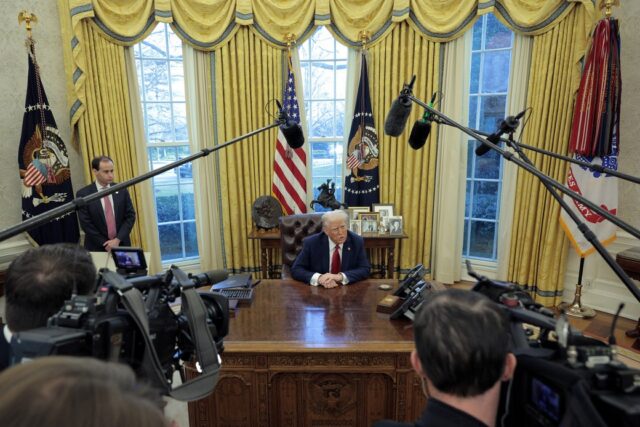
US President Donald Trump speaks to the press after signing an executive order in the Oval Office of the White House in Washington, DC on January 31, 2025. Mandel Ngan, AFP
Washington, D.C. — President Donald Trump’s recent executive order imposing a 10% tariff on Chinese imports is expected to have significant consequences for the pharmaceutical industry, leading to higher drug prices and potential shortages, according to experts.
The tariffs directly impact the supply of generic drugs, which account for approximately 90% of all prescriptions filled in the United States. Many of these drugs, including critical medications such as cancer treatments, antibiotics, and blood thinners, are manufactured overseas, where production costs are lower.
Dr. Aaron Kesselheim, a professor of medicine at Harvard Medical School who specializes in prescription drug research, highlighted the heavy reliance on foreign manufacturing.
“Around half of the generic drugs used in the U.S. are made entirely overseas,” he said. “Even more concerning, about 80% of the active pharmaceutical ingredients (APIs) come from abroad.”
China’s Growing Role in Drug Production
Data from the United States Pharmacopeia, a nonprofit organization focused on drug safety, shows that China’s role in API production is steadily increasing. The number of API manufacturing facilities in China rose from 134 in 2021 to 219 in 2023. While India remains the largest global producer, China’s expanding presence makes the country a critical player in the global pharmaceutical supply chain.
Vimala Raghavendran, vice president of informatics product development at the U.S. Pharmacopeia, noted that companies typically hold several months of API inventory. However, she warned that policy changes like tariffs could still disrupt the supply chain. “The effects may take a while to trickle through, but shortages are a real risk,” she said.
Consumer Impact and Price Increases
Dr. Kesselheim warned that shortages may develop quickly, with price increases becoming apparent in the coming months. “When generic drugs are sold through distributors and supply chains, there are usually contracts in place,” he explained. “It might take a few months for these contracts to turn over, but eventually, we’ll see higher prices.”
Because generic drugs are sold at prices close to their production costs, any disruption to the supply chain forces manufacturers to pass additional expenses onto consumers.
Industry Response and Calls for Exemption
John Murphy III, president and CEO of the Association for Accessible Medicines, a trade group representing generic drugmakers, has called on the Trump administration to reconsider the tariffs or provide exemptions for pharmaceutical imports.
“The healthcare of millions of Americans depends on a stable supply of affordable medications,” Murphy said. “These tariffs jeopardize that stability and could lead to increased costs for both consumers and healthcare providers.”
A Developing Situation
As pharmaceutical companies navigate the new tariff landscape, concerns are mounting over the potential impact on patients who rely on affordable generic medications. Policymakers and industry leaders continue to urge the administration to mitigate these effects before the full consequences are felt.
The next few months will be crucial in determining whether these tariffs will be adjusted to protect the pharmaceutical supply chain or if Americans will face a prolonged period of higher drug prices and medication shortages.
Hamra speaks out at rally encouraging US. Representative Nadler to sponsor a bill.
Viral Influencer and Activist for Israel
Sarina Roffé
Damascus-born Abraham Hamra, an attorney and managing Partner at Cohen, Tucker, & Ades, PC, has become a widely known influencer, advocating for Jews in the face of growing antisemitism, misinformation about Israel and the Palestinian cause. His videos on the subject have gone viral as he argues in both Arabic and English, attracting a wide audience and millions of views.
Hamra was seven in 1994 when he arrived at JFK Airport with his parents, Rafoul Hamra and Shella Fatiha Hamra, and two younger siblings from Syria. In New York, their family grew, with two more children. After graduating from Magen David High School, Hamra attended Hofstra University, graduating with a bachelor’s degree in business administration, graduating Magna Cum Lade and then attended Pace Law School.
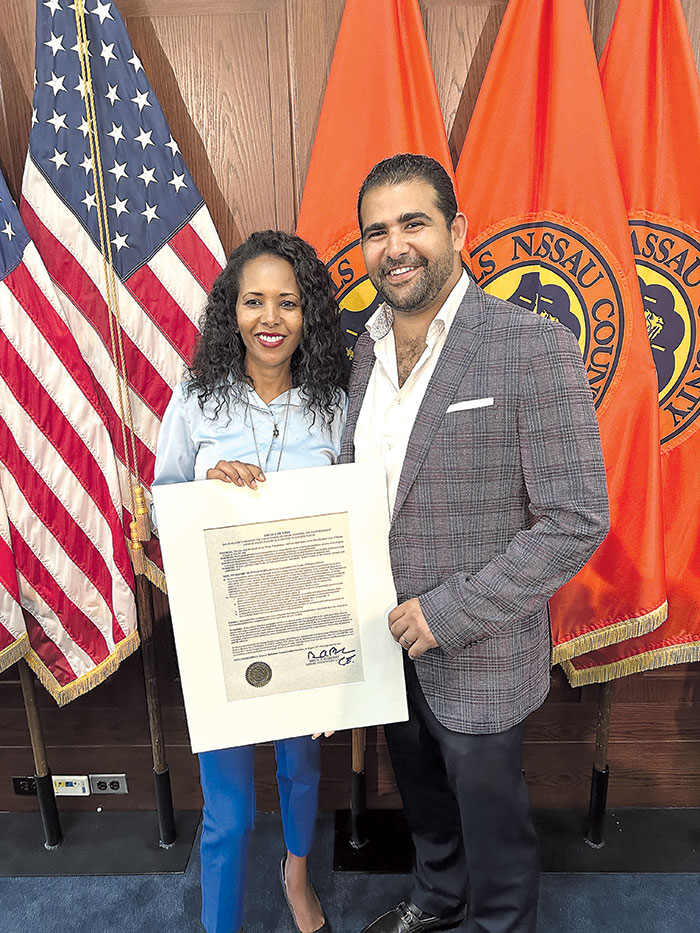
Hamra helps Nassau County pass a law prohibiting the use of masks in 2024.
Anyone on any social media platform will see his pro-Israel videos pop up. He posts in both English and Arabic, but it is his Arabic posts that get the most attention. With millions of views, he has become an important influencer, and an activist for Israel in ways we cannot imagine. Using the logic of an attorney, his arguments bring the Israel Palestinian issue to the fore, creating a dynamic argument. Muslims are surprised to see posts in Arabic from a Jew. Many Muslims did not even know Jews had ever lived in Syria, much less for thousands of years. This confusion wasn’t exclusive for Muslims, some Jews and others in America were surprised to learn of this fact as well, that Jews had lived and were displaced from Syria in the 20th century.
For Hamra, the catalyst for speaking out, was when a Palestinian gang beat up a Jewish kid in broad daylight in Times Square in 2021. They were released with no bail and hailed as heroes. Hamra organized an online petition, getting 20,000 signatures, and helped lead a pressure campaign that led to the case being elevated to a federal crime, the plea deal rescinded and the assailants sentenced to prison.
A staunch advocate of Jewish justice, Hamra refers to DEI (diversity, equity and inclusion), as being weaponized and misused to attack the Jewish community. He is staunchly opposed to a two-state solution or even the offer of a two-state solution for Israel and the Palestinians. He notes that every Palestinian argument establishes itself as the minority and the Jews as the white majority when the reverse is the truth.
US Representative Richie Torres and Abraham Hamra at the Stand Together Rally in Washington, DC.
“I realized the game that they’re trying to play,” said Hamra. “So if I come into the picture, as a darker-skinned Jew, if I start speaking as a Jew from Syria, it is an easier way to get the message across and to completely punch a hole in the what they have been spinning. My very existence (as a Jew born in Syria) stands in direct contradiction to everything they’ve been stating.
“My argument is very clear. I’m from the Middle East. The Jews were in the Middle East from before Islam. If you believe the Palestinians – who never had a sovereign country–deserve a piece of land, then you must also believe that Jews deserve a piece of Syria, Iraq, Lebanon and Saudi Arabia, because all of these countries were all created during the same time Israel was created, and all these countries are proof of my Jewish life. If you’re stating that every popular minority population in an area deserves their own section of land, then the Jews should have gotten their own land in these areas.
Rachel and Abraham Hamra
with their four children.
“Jews are that minority that have been historically oppressed by the Arab majority. Right now, what you’re telling me is that standing in the way of peace is that the minority (Jews) giving more of its land to the majority that used to oppress it after they colonized their lands? There is no defense to that. When they’re talking to someone like me someone with an Israeli or Sephardic or Syrian culture their arguments falter. We should not give back one inch of our land.
Hamra argues that it is critical for the Jewish people to be strong, demand respect and not be taken advantage of. Hamra is often a speaker at conferences on antisemitism and Israel. He protested U.S. Senator Chuck Schumer and U.S. Representative Jerry Nadler for ignoring the Campus Antisemtisim Awareness Act, which currently needs to be re-introduced because Schumer failed to move it in for a vote.
Abraham Hamra confronts a Palestinian protester on streets of New York.
So what does the future hold for Israel?
“Saudi Arabia, the United Arab Emirates and other Arab countries are starting to wake up to the fact that this war against the Jewish state is no longer a priority. I really do believe that tides are shifting the Palestinian cause is being abandoned by the Arab world because they no longer have the desire to fight Israel,” he said.
A genealogist and historian, Sarina Roffé is the author of Branching Out from Sepharad (Sephardic Heritage Project, 2017). She is researching a new book: Syria – Paths to Freedom. Sarina holds a BA in Journalism, and MA in Jewish Studies and an MBA.