Counting the Omer is a 49-day Jewish practice with a week-by-week roadmap to becoming more loving, more honest and more fully yourself.
Counting the Omer or as it is known in Hebrew, “Sefirat HaOmer” is at once one of the simplest and most complex Jewish observances. No matter where we are in the world, or however high or low we are feeling spiritually, counting the Omer for 49 days provides a simple opportunity each year for every Jew to feel connected. There is a peculiarity in the practice of counting the Omer, in which even in a communal setting every person must count for themselves. My childhood Rabbi Baruch Taub would say each year: every Jew counts, because every Jew counts. At the most basic level, counting the Omer is about recording the 49 calendar days between Passover and Shavuot when the Jewish People stood at Mount Sinai and received the Torah. But in the ancient tradition of Jewish mysticism, the seven weeks (and each day within each week) charts a journey through seven qualities of character (or “sefirot”) that can change your life.
Week 1 – Chesed (Lovingkindness) The Omer, like Judaism, is rooted in pure chesed or lovingkindness. Sometimes, when our lives are on autopilot, we can forget the love that exists as our core essence. In week one, we wake up from isolation to building intentional relationships with ourselves, our community, and the divine. A practical step for this week is to identify one relationship you’ve been neglecting and reach out, not with a text, but with a real conversation (or even a longer than usual journal entry to ourselves).
Week 2 – Gevurah (Strength) Without a container, the pure energy of love could become self-destructive. Our natural instinct to give needs boundaries, or it would be unsustainable. This week, identify one area of your life where you’ve been saying yes when you mean no, and practice saying no, cleanly, without guilt.
Week 3 – Tiferet (Harmony) In the Kabbalistic map of the soul, Tiferet sits at the center balancing the warmth of chesed and order of gevurah. It is the quality of someone who can be both honest and kind, neither a pushover nor a wall. This week, notice a moment where you sacrificed truth for the sake of comfort, and try to find the more courageous middle path.
Week 4 – Netzach (Perseverance) Netzach is the quiet strength of showing up, especially when we don’t feel like it. It’s the part of us that keeps going after the excitement fades. This week, choose one small practice, learning, exercise, prayer, or even five minutes of reflection, and commit to it every single day, no matter what.
Week 5 – Hod (Gratitude) Hod invites us to step back from the relentless pursuit of more and recognize the gift of what already is. It is the capacity to receive a compliment graciously, acknowledge a mistake honestly, and find beauty in someone else’s success. This week, write down three things you’re grateful for that you had no hand in creating.
Week 6 – Yesod (Integrity) Yesod is about alignment, when our inner world and outer actions match. It’s the foundation of trust, both with ourselves and others. When we live out of sync with our values, we feel it. This week, identify one area where your actions don’t fully reflect who you want to be, and take a concrete step to bring them into alignment.
Week 7 – Malchut (Sovereignty) Malchut is the culmination of the journey, the ability to stand fully in our lives with presence and responsibility. It’s not about control, but about ownership. After six weeks of inner work, we arrive here ready to lead our own lives with clarity and purpose. This week, ask yourself: what would it look like to truly take ownership of my life right now, and take one bold step in that direction. Counting the Omer is about much more than marking time. For 49 days, we’re given a map, step by step, to become more loving, more disciplined, more honest, more resilient, more grateful, more aligned, and more fully ourselves. Seven weeks. One small step each day. That’s all it takes to begin changing your life.
As one journalist documents what is happening on the ground, a broader shift in public awareness is quietly taking hold.
Every so often, a story does not begin with a policy debate or a legislative proposal, but with something far more immediate: exposure. In recent months, independent journalist Nick Shirley has drawn millions of views by doing something deceptively simple, walking into cities, turning on a camera, and documenting what he finds. What emerges from these recordings is not framed as analysis or argument, but as observation, and it is precisely that lack of mediation that has captured the public’s attention. Across multiple states, Shirley’s reporting has highlighted taxpayer-funded environments that raise difficult and often uncomfortable questions. Viewers are confronted with facilities that appear inactive, systems that seem loosely monitored, and conditions that do not always align with the purpose for which public funds were allocated. These moments, taken individually, may not constitute proof of wrongdoing. But taken together, they create a pattern that is becoming increasingly difficult to ignore. The response has been swift and far-reaching. His videos have circulated widely across platforms, drawing attention not only from everyday viewers but from national figures as well, including President Donald Trump. What was once peripheral, fragmented glimpses into underexamined systems, has now moved closer to the center of public conversation. This shift is not driven by any single clip or claim, but by repetition and accumulation. The same types of questions are appearing in different places, at different times, with enough consistency to prompt a deeper look. This attention is not emerging in a vacuum. In states such as Minnesota and California, authorities have already uncovered large-scale fraud and misuse within taxpayer-funded programs, resulting in criminal charges, ongoing investigations, and the exposure of significant systemic failures. These cases predate any individual journalist, but they provide essential context for understanding why this kind of reporting resonates so strongly. When exposure aligns with documented precedent, it no longer feels anecdotal. It begins to feel indicative. At the same time, there has been a broader shift at the policy level toward confronting what is commonly described as waste, fraud, and abuse within publicly funded systems. Efforts to reevaluate foreign aid allocations, reduce questionable overseas spending, and reassess contributions to international bodies such as certain United Nations programs have reflected a growing insistence on accountability beyond domestic borders. While these initiatives have been debated politically, they underscore a larger point: the expectation that taxpayer funds, whether spent at home or abroad, should be subject to meaningful oversight. What is now unfolding appears to extend that expectation further. Accountability is no longer confined to institutions or internal mechanisms. Increasingly, it is being driven from the outside. A broader wave of citizen journalists, armed with nothing more than a camera and a phone, is contributing to a new kind of visibility, one that does not rely on formal investigations to begin asking questions. This does not replace due process, nor does it establish guilt. But it does change the starting point. It brings scrutiny forward, often before systems have had the opportunity to respond. The institutional response reflects an awareness of this gap. In recent years, the expansion of whistleblower programs, many of which offer financial incentives for reporting misuse, has signaled that traditional oversight alone has not been sufficient to detect problems at scale. These programs represent a structural acknowledgment that accountability must be reinforced, not assumed. When systems begin to rely on external reporting to identify internal failures, it suggests that visibility itself has become a necessary tool of governance. For many observers, the issue ultimately resolves into something more practical than ideological. Individuals are expected to manage their own responsibilities with care, earning, budgeting, and contributing consistently. It follows, then, that the systems supported by those contributions should operate with comparable discipline. When that expectation begins to feel uncertain, the question is no longer abstract. It becomes immediate, and it becomes personal. This is why the current moment feels distinct. It is not defined by outrage, but by awareness. It is shaped not by a single revelation, but by the steady accumulation of observations, investigations, and documented cases that, taken together, suggest a broader need for scrutiny. From New York to Minnesota to California, similar concerns are surfacing with enough frequency to shift perception from isolated incidents to something more systemic. If continued exposure leads to meaningful reform, the result may be a recalibration of how public funds are managed and safeguarded. If it does not, the pattern risks deepening, with consequences that extend beyond any single program or jurisdiction. That is the question now taking hold: whether visibility will translate into remedy, or whether it will simply reveal the scale of what has yet to be addressed. As scrutiny intensifies and awareness continues to build, one reality becomes increasingly difficult to dismiss. The systems in question are not abstract constructs; they are sustained by the public. And as that connection becomes more visible, so too does the expectation that it be honored with clarity, accountability, and results. In that sense, the trajectory is becoming clearer. The questions are no longer going away, the attention is no longer fleeting, and the pressure for answers is no longer confined to the margins. The chickens are beginning to come home to roost.
This year, the halls of MDY resonated with a profound sense of Jewish pride, vibrant energy, and a global connection to our homeland. Celebrating Israel’s 78th year of independence, our school community came together for a day that was as magical as it was meaningful.
The moment you stepped into the lobby, the theme was unmistakable: “It’s a Small World.” In a stunning creative feat, the entrance was transformed into a wonderland where the magic of Disney met the spirit of Am Yisrael. The decor served as a powerful reminder that while the Jewish people are scattered across the globe, our hearts remain anchored to a single point on the map. This theme emphasized a core truth: no matter where we are, we are one family, united by our history and our future in the State of Israel. The festivities began with a powerful spiritual start. Fathers joined their children for Tefilot, filling the air with an inspiring rendition of Hallel. The bond of community was felt deeply as they enjoyed a beautiful celebratory breakfast, followed by a morning of dancing and engaging in themed activities together. Our youngest learners brought the geography of our homeland to life in a spectacular way. Our kindergartners took their friends and family on a guided “tour” throughout the country of Israel. Each classroom was meticulously decorated to represent an important landmark or region of our country. As students and guests moved from room to room, they were treated to a multisensory experience that made the beauty of Israel feel close enough to touch. As the day unfolded, the school became a stage for talent and joy. Students, who had been preparing for months, took to the floor with singing performances and special themed presentations. From important figures like our early prime ministers to famous landmarks found in Tanach, our students researched the land and its history in preparation for the day. Our 7th and 8th graders showcased their spirit in a “Battle of the Blue and White,” competing in an Israel-themed decathlon and presenting original banners, songs, and dances dedicated to our homeland. Every age group joined in the Rikudim, dancing with friends, teachers, and family members, turning the gym into a vibrant sea of blue and white. While the day was filled overwhelmingly with joy, we remained deeply mindful of the world outside our walls. In acknowledgment of the ongoing challenges facing our brothers and sisters in Israel, the day was anchored by special Tefilot in unity and solidarity with our family abroad. We prayed for the safety of our soldiers, the strength of our people, and peace and unity for our future as a nation. From the morning prayers to the final Daglanut (flag dance performance), the day was a testament to the strength of the MDY community. It was more than just a school event. It was a vivid display of Jewish unity and pride. As we celebrated 78 years of independence, the message was clear, Israel is our home, our heart, and our heritage. Even though “It’s a Small World,” the spirit of the Jewish people remains immeasurably large.
STANDING AT THE FINISH LINE OF A RACE, EVERYTHING FEELS CLEAR. THERE’S A CLOCK OVERHEAD, YOUR BODY IS EITHER SPENT OR TRIUMPHANT, AND THE RESULT REFLECTS MONTHS, SOMETIMES YEARS, OF PREPARATION. THERE ARE NO SHORTCUTS IN ENDURANCE SPORTS. YOU CAN’T FAKE YOUR WAY THROUGH A MARATHON OR AN IRONMAN. YOU EITHER DID THE WORK, OR YOU DIDN’T.
Investing works the same way. We often hear the phrase “investing is a marathon, not a sprint,” but in my experience, as both a financial advisor and an endurance athlete, that analogy is more than a cliché. It’s a framework for how people should think, behave, and ultimately succeed over time.
The Power of Consistency One of the biggest challenges clients face is psychological. They look at a long-term goal, saving $2 million, $5 million, or more, and it feels overwhelming. The number is so large that it creates paralysis rather than action. But the path to that outcome is far simpler than it appears. No one runs 26.2 miles at once. You run one mile at a time. The same is true financially. Wealth isn’t built in a single moment. It’s the result of disciplined, repeated actions over time. Saving consistently. Investing thoughtfully. Staying committed, even when progress feels slow. The people who succeed are not necessarily the ones who start with the most. They are the ones who stay in the race.
Preparing for Volatility Every endurance athlete knows about “mile 20,” the point where fatigue sets in and doubt creeps in. This is where races are decided, not by physical ability alone, but by preparation and mindset. Markets have their own version of mile 20. We’ve seen it during moments like the 2008 financial crisis and the COVID-19 downturn, periods when uncertainty rises, headlines turn negative, and fear takes over. These moments are inevitable. The real question is not whether they will happen, but how you will respond when they do. A well-constructed financial plan is designed for these environments. It prepares you mentally and structurally so that volatility doesn’t lead to panic. Instead of reacting emotionally, you rely on a process that was built with uncertainty in mind.
The Cost of Emotional Decisions When people are under stress, they tend to make poor financial decisions. It’s not a lack of intelligence, it’s human nature. In March 2020, many investors exited the market during the downturn, only to miss the recovery that followed shortly after. The issue wasn’t the market itself. It was the reaction to it. This is where guidance matters. A strong advisor doesn’t just build portfolios. They help clients navigate behavior. They ensure that risk levels align not only with financial goals, but with emotional tolerance. Because the best investment strategy in the world is useless if you can’t stick with it.
Filtering Out the Noise Modern investors face a constant stream of information. Financial media focuses heavily on short-term movements, quarterly earnings, daily volatility, and predictions about what comes next. This creates the illusion that action is always required. But consider this: What if your home had a ticker symbol, updating its value every day? One day it’s worth $1.2 million. The next, $900,000. Then back to $1.1 million. Would you sell? Of course not. Because you understand the purpose of your home. You live in it, you don’t trade it. Investing should be approached the same way. When your time horizon spans decades, short-term fluctuations become far less meaningful. The challenge is not avoiding volatility, it’s avoiding the temptation to react to it.
Discipline Over Prediction Both endurance sports and investing present the same temptation, chasing shortcuts. In racing, that might mean starting too fast. In investing, it might mean reacting to headlines or trying to time the market. But the outcomes are often the same, burnout, inconsistency, and missed opportunities. Long-term success comes from discipline, not prediction. It’s about committing to a process, trusting it through difficult periods, and staying focused on the finish line rather than the noise along the way.
Final Thought Delayed gratification is not easy. It requires patience, trust, and the ability to stay focused when results are not immediate. But just as in endurance training, the payoff comes over time. The work you put in today may not show up tomorrow, but it will show up. And when it does, it reflects a simple truth: Success is not about reacting to every moment. It’s about staying committed to the process. Conceive. Believe. Achieve.
The content is developed from sources believed to provide accurate information. Investing involves risk including the potential loss of principal. No investment strategy can guarantee a profit or protect against loss in periods of declining values. Past performance does not guarantee future results. Consult with a financial professional regarding your specific situation.
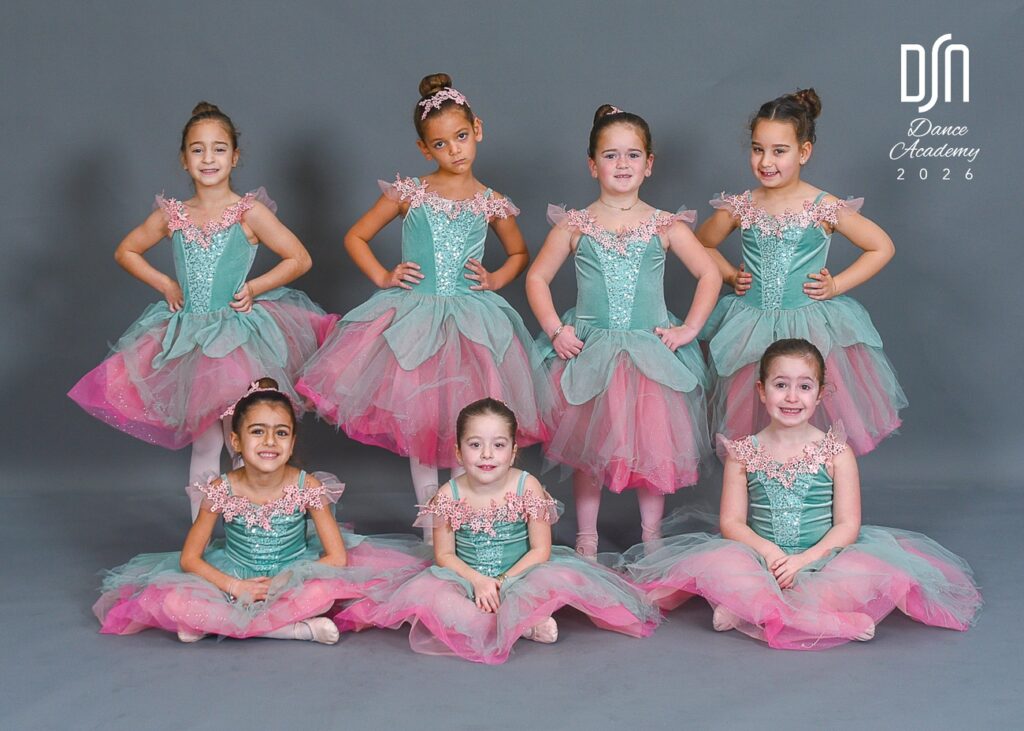
The DSN Dance Academy wrapped up an unforgettable season, celebrating a year filled with energy, dedication, and creativity. With an impressive schedule of approximately 36 classes each week, the program offered a wide range of styles including tap, jazz funk, ballet, hip hop, and contemporary, giving every dancer the chance to explore and grow.
The season began in September, as students from nursery through high school stepped into the studio with excitement and commitment. Over the months, dancers worked diligently, building technique, confidence, and friendships, all leading up to the highly anticipated end-of-program recital in March. The culmination of the season took place on March 9 at the Count Basie Center for the Arts, where the DSN Dance Recital lit up the stage from 6:30 to 8:30 PM. Featuring over 300 dancers, the performance embraced this year’s vibrant theme: Girls Just Want To Have Fun, showcasing routines inspired entirely by female artists. It was a night to remember. From the youngest performers taking their first steps on stage to seasoned high school dancers delivering polished routines, the evening was a powerful celebration of talent and joy. In addition to the recital, excellence went beyond the recital stage. DSN’s junior and senior dance teams had an outstanding competitive season. Both teams earned first place in two competitions, securing their spots at Nationals, an exciting milestone that reflects their hard work and dedication. The success of DSN Dance Academy is rooted in its exceptional staff, a passionate team behind the scenes. This year’s instructors included Rose Ashkenazi, Nicole Fera, Giana Forgione, Cynthia Pearsall, Katrina Portagallo, Nicole Trigani, Claire Whitmore, and Ava Yanucil. Guiding the program were Dance Director Danielle Hanan and Assistant Dance Director Sari Abraham, whose leadership helped shape a truly special season. Dance Director Danielle Hanan was thrilled. “The recital is a beautiful reflection of the dedication and effort our dancers invest throughout the year. Watching their growth, creativity, and confidence on stage is what makes the experience so meaningful for everyone involved. Year after year, I’m filled with an overwhelming sense of pride as the production comes to life. It’s moments like these that truly make the program so special.” Youth Director Frieda Shamah captured the spirit of the event saying, “Our DSN Dance recital is the highlight of the year. There’s nothing like seeing all of our dancers of all ages up on stage, having fun, building confidence, and just loving every second of it.” Assistant Dance Director Sari Abraham reflected on the deeper impact of the program, “What makes this program so special to me is the experience of it all, the energy in the rooms, the consistency, the connection. When recital time comes, it is such an amazing display of everyone’s hard work coming together in the most beautiful way. This year was simply magical. I already miss everyone so much and can’t wait to see them all again in September.” As the curtain closes on this season, the excitement is already building for what’s next. DSN Dance Academy continues to be more than just a dance program, it’s a community where passion thrives, friendships grow, and confidence shines. September can’t come soon enough!
The upcoming November election cycle in New York represents a pivotal moment for our community, one defined not only by political contests, but by the continued rise of Sephardic representation and influence at the highest levels of state government.
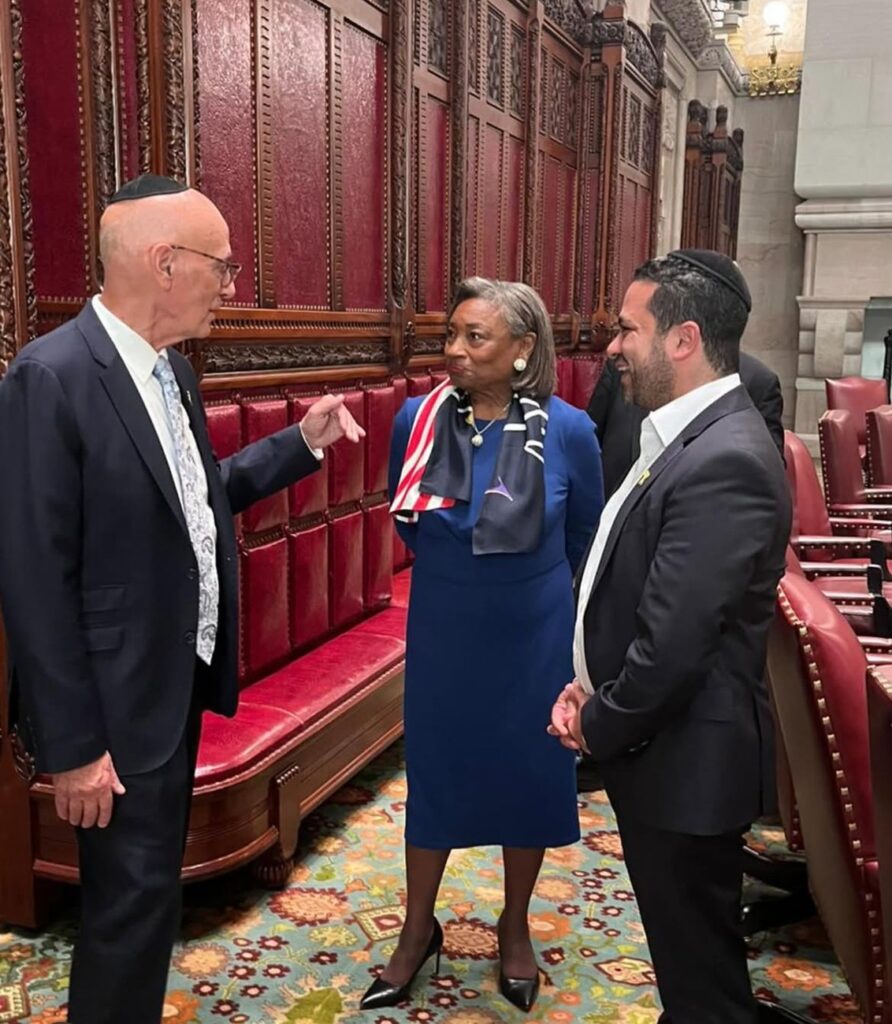
At the center of this movement stand Sam Sutton, up for reelection to the NY State Senate, and Joey Saban, now running for NY State Assembly after serving as Senator Sutton’s Chief of Staff. Together, they have built one of the most effective, outspoken, and impactful legislative operations in New York. And the results speak for themselves.
A Record of Results: Senator Sam Sutton For over 20 years, Sam Sutton served as the co-founder and President of the Sephardic Community Federation (SCF), delivering tens of millions of dollars in government funding to our community and advocating across government for our community’s biggest priorities. Last year, he took his public service to the next level with his successful bid for a seat in the NY State Senate. In a short time thus far in office, Senator Sutton has delivered tangible, meaningful results for our community at a scale rarely seen. Most notably, he secured $20 million in security funding for religious institutions, ensuring that our schools, synagogues, and community institutions are protected in an increasingly dangerous environment. Additionally, he has brought millions more in direct funding to our community’s institutions, resources that strengthen education, social services, and communal infrastructure. Legislatively, Senator Sutton has proven equally effective. He successfully passed multiple bills through the Senate in a very short time frame, demonstrating both policy leadership and the ability to navigate Albany’s complex political landscape. He played a key role in defeating the City Council’s COPA bill, taking a firm stand against anti-business policies that would have harmed our community and our businesses. Looking forward, his diligence continues with the major Buffer Zone Bill, a critical initiative he introduced to create buffer zones around houses of worship to protect worshipers from intimidation and harassment. The bill is now being incorporated into the State Budget, an extraordinary achievement that underscores his growing influence in Albany.
The Force Behind the Scenes: Joey Saban While Senator Sutton has led from the front, much of this success has been powered behind the scenes by Joey Saban. As Chief of Staff, Saban has been instrumental in turning vision into reality, coordinating legislative strategy, managing negotiations, and ensuring that priorities become policy. From securing historic funding to advancing complex legislation, Saban’s role cannot be overstated. His deep understanding of both the community and the political system has made him a driving force in these accomplishments. Now, as he steps forward to run for the State Assembly, he brings with him not only experience, but a proven track record of getting big things done. For example, Saban initiated and coordinated the press conference with the Governor after the antisemitic Swastika incident at Magen David, which led to securing the $20 million in security funding for religious institutions. He has also been the driving force behind the Buffer Zone Bill, coordinating the language of the bill and the full strategy behind passing it.
Standing Strong Against Extremism In today’s political climate, leadership is not just about delivering resources, it is about standing firm in the face of ideological pressure. Senator Sutton’s office has distinguished itself as the loudest and strongest Democratic voice in the majority party, importantly, pushing back against the policies and influence of Zohran Mamdani and the Democratic Socialists of America. Time and again, Sutton and his team have issued clear, unapologetic public statements and worked tirelessly within the legislative body to counter initiatives that threaten our values and way of life. At a time when many remain silent, their office has led with clarity and courage.
Looking Ahead: The Election That Matters While primary elections will take place in June, both Sutton and Saban enter this phase without challengers, a testament to the strength of their campaigns and the broad support they have already built. That means the real contest lies ahead in the general election this November. We know that elections are not won in a single day, they are built over months of grassroots effort. Every community member has an opportunity to play a role, whether by volunteering time or making a contribution. Thanks to New York’s public matching system, even small donations are amplified 9-to-1, turning modest support into a powerful force.
A Defining Moment for Our Community What Sutton and Saban have accomplished together goes far beyond legislation and funding. They have transformed our community’s civic engagement, elevating our voice, our presence, and our influence in ways that would have seemed unimaginable just a few years ago. They have shown that our community can organize, lead, and win, not just for ourselves, but as a major force within New York politics. And yet, this is only the beginning. With continued support, we have the opportunity to take this momentum even further and to ensure that the Sephardic community becomes a central pillar of the state’s political landscape, a community that not only participates, but in fact, leads. A community that stands strong, unified, and unafraid. A community that serves as a clear and consistent counterweight to the growing influence of the DSA for years to come. The path forward is clear. The leadership is proven. And the moment is ours to seize.
What the Israelites heard at Sinai has become known as the “Ten Commandments.” But this description raises obvious problems. First, neither the Torah nor Jewish tradition calls them the Ten Commandments. The Torah calls them aseret hadevarim (Ex. 34:28), and tradition terms them aseret hadibrot, meaning “the ten utterances.” Second, there was much debate, especially between Maimonides and Halachot Gedolot as understood by Nahmanides, as to whether the first verse, “I am the Lord your G-D …,” is a command or a preface to the commands. Third, there are not ten commandments in Judaism but 613. Why, then, these but not those?
Light has been shed on all these issues by the discovery, already mentioned, of ancient Near Eastern suzerainty treaties, most of which share certain features and forms. They begin with a preamble stating who is initiating the covenant. That is why the revelation opened with the words, “I am the Lord your G-D.” Then comes a historical review stating the background and context of the covenant, in this case, “who brought you out of the land of Egypt, from the slave-house.”
Next come the stipulations, first in general outline, then in specific detail. That is precisely the relationship between the “ten utterances” and the detailed commands set out in later chapters and books of the Torah. The former are the general outline, the latter, the details. So the “ten utterances” are not commandments as such but an articulation of basic principles. What makes them special is that they are simple and easy to memorize. That is because in Judaism, law is not intended for judges alone. The covenant at Sinai was made by G-D with an entire people. Hence the need for a brief statement of basic principles that everyone could remember and recite.
Usually they are portrayed as two sets of five, the first dealing with relationships between us and G-D (including honoring our parents since they like G-D brought us into being), the second with the relations between us and our fellow humans. However, it also makes sense to see them as three groups of three.
The first three, No other gods besides Me, no graven images, and no taking of G-D’s name in vain, are about G-D, the author and authority of the laws. The first states that Divine sovereignty transcends all other loyalties (No other gods besides Me). The second tells us that G-D is a living force, not an abstract power (No graven images). The third states that sovereignty presupposes reverence (Do not take My name in vain).
The second three, the Sabbath, honoring parents, and the prohibition of murder, are all about the principle of the createdness of life. Shabbat is the day dedicated to seeing G-D as creator, and the universe as His creation. Honoring parents acknowledges our human createdness. “Thou shalt not murder” restates the central principle of the Noahide covenant that murder is not just a crime against man but a sin against G-D in whose image we are created. So the fourth, fifth and sixth commands form the basic jurisprudential principles of Jewish life. They tell us to remember where we came from if we seek to know how to live.
The third three, against adultery, theft and bearing false witness, establish the basic institutions on which society depends. Marriage is sacred because it is the human bond closest in approximation to the covenant between us and G-D. The prohibition against theft establishes the integrity of property, which John Locke saw as one of the bases of a free society. Tyrants abuse property rights. The prohibition of false testimony is the precondition of justice. A just society needs more than a structure of laws, courts and enforcement agencies. It also needs basic honesty on the part of us all. There is no freedom without justice, and no justice without each of us accepting individual and collective responsibility for truth-telling.
Finally comes the stand-alone prohibition against envying your neighbor’s house, wife, slave, maid, ox, donkey, or anything else belonging to him or her. This seems odd if we think of the “ten words” as commands, but not if we think of them as the basic principles of a free society.
The greatest challenge of any society is how to contain the universal phenomenon of envy, the desire to have what belongs to someone else. René Girard, in Violence and the Sacred, argued that the primary driver of human violence is mimetic desire, that is, the desire to have what someone else has, which is ultimately the desire to be what someone else is. Envy can lead to breaking many of the other commands. It can move people to adultery, theft, false testimony and even murder. It led Cain to murder Abel, made Abraham and Isaac fear for their life because they were married to beautiful women, and led Joseph’s brothers to hate him and sell him into slavery. It was envy of their neighbors that led the Israelites often to imitate their religious practices and worship their gods.
So the prohibition of envy is not odd at all. It is the most basic force undermining the social harmony and order that are the aim of the Ten Commandments as a whole. Not only do they forbid it, they also help us rise above it. It is precisely the first three commands, reminding us of G-D’s presence in history and our lives, and the second three, reminding us of our createdness, that help us rise above envy.
We are here because G-D wanted us to be. We have what G-D wanted us to have. Why then should we seek what others have? If what matters most in our lives is how we appear in the eyes of G-D, why should we seek anything else merely because someone else has it? It is when we stop defining ourselves in relation to G-D and start defining ourselves in relation to other people that competition, strife, covetousness and envy enter our minds, and they lead only to unhappiness.
Thirty-three centuries after they were first given, the Ten Commandments remain the simplest, shortest guide to the creation of a good society.
Discover how 10,000 steps a day can be your secret weapon to resilience, clarity, and calm—no gym or extra time required.
The notification pings on my phone: “Great job! You’ve reached your daily goal of 10,000 steps.” It’s late at night and I’ve just finished pacing my living room to hit the number that has become my lifeline. Judaism has long emphasized the connection between physical and spiritual well-being. The concept of shmiras haguf (guarding one’s body) is considered a mitzvah, a religious obligation. The Rambam (Maimonides), a 12th-century Jewish philosopher and physician, wrote extensively about the importance of physical health as a prerequisite for spiritual growth. In his work “The Laws of Character Development,” the Rambam states: “Since maintaining a healthy and sound body is among the ways of G-d—for one cannot understand or have any knowledge of the Creator when ill—therefore one must avoid that which harms the body and accustom oneself to that which is healthful.” This ancient wisdom aligns perfectly with modern research showing that physical well-being creates the conditions for optimal human functioning. In our increasingly stressful world, I’ve learned that we cannot control outcomes, only the process of how we show up. And movement is crucial to showing up properly in life. During periods of personal stress—whether family challenges, job uncertainty, health scares, or any crisis—movement cannot be optional. It’s the difference between surviving and thriving, between barely coping and maintaining your capacity to show up for what matters most.
Who Has Time to Exercise? “I know I should exercise, but I just don’t have time.” This is the most common excuse I hear. Between work, family obligations, and constant demands, carving out 60 minutes for the gym feels impossible. 10,000 steps is the solution! Unlike traditional exercise, it doesn’t require finding extra time—you’re simply doing your existing activities more actively.
The Science Behind the Steps The magic number of 10,000 steps isn’t arbitrary. Research consistently shows this benchmark creates measurable changes in both body and mind. Tom Rath, in his groundbreaking work “Eat Move Sleep,” demonstrates how daily movement serves as a “keystone habit”—one behavior that triggers positive cascades throughout our entire day. People who walk 10,000 steps daily experience 12% better mood throughout the day, improved sleep quality by an average of 23 minutes, enhanced cognitive function and decision-making ability, and reduced cortisol levels. And the 10,000 steps brilliantly solves the time problem. Every phone call becomes a walking opportunity. Every period of waiting becomes pacing time. You’re not doing extra activities—you’re doing existing activities while moving. The Top 7 Ways to Hit 10,000 Steps Without Finding Extra Time Here are the most effective strategies for seamlessly integrating movement into your existing daily routine. (You can easily track 10,000 steps a day using a fitness tracker, smartwatch, or step-counting app on your phone that logs your movement automatically.)
Walk during every phone call–This is the single biggest game-changer. Business calls, catching up with friends, coordinating with family—all happen while walking. A 30-minute call easily adds 1,500-2,000 steps.
Transform waiting time into pacing time–Waiting for elevators, meetings to start, coffee to brew, kids at pickup—every waiting moment becomes walking time. These micro-movements accumulate surprisingly quickly.
Make transportation more active–Park farther away, get off one stop early, or take the stairs always. Whether driving to work or taking public transport, these simple changes add 600-1,000 steps twice daily without any extra time commitment.
Turn family time into walking time–After-dinner neighborhood walks, bedtime routine walks with kids while chatting about their day, or walking during children’s activities instead of sitting. This creates quality connection time while adding 1,200-1,500 steps.
Convert household tasks into movement opportunities–Walk while talking to family about their day, pace while helping with homework, walk around while dinner cooks, or take multiple trips carrying groceries. Transform necessary tasks into active time.
Implement walking meetings–For one-on-one meetings, brainstorming sessions, or creative thinking, suggest walking instead of sitting. Many breakthrough ideas happen during walking conversations.
Strategically add movement to errands–Walk to nearby stores instead of driving, browse different sections of larger stores, or walk around the perimeter while shopping. Make necessary tasks more active. The secret is recognizing that you’re already spending time on phone calls, family conversations, waiting, and performing daily tasks. These strategies simply add movement to time you’re already using.
Taking the First Step If you’re dealing with stress in your life, prioritize movement. Start with 10,000 steps. No gym required – just the decision to put one foot in front of the other. Sometimes, the most profound act of love—for ourselves and for those who depend on us—is to keep moving forward, one step at a time.
Rethinking balance, digestion, and nourishment during the holiday
Laura Shammah, MS, RDN
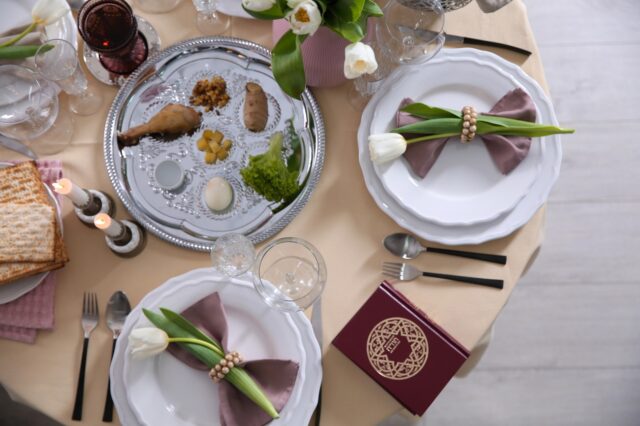
Passover is a holiday centered around freedom, yet for many people, food during Passover can feel anything but freeing. Between the removal of familiar foods, the abundance of rich holiday meals, and the pressure to “do it right,” Passover can become a week of digestive discomfort, food guilt, or all-or-nothing eating. But it doesn’t have to be that way. Passover offers a powerful opportunity to reconnect with nourishment, balance, and intention.
During Passover, eating patterns naturally change. Bread, grains, and many everyday staples disappear, while foods like matzah, potatoes, eggs, meat, chicken, and richer desserts often take center stage. This sudden dietary shift can affect digestion, energy levels, and hunger cues. Many people notice constipation from increased matzah and reduced fiber, feeling overly full from heavy meals, blood sugar swings from long gaps between meals, and eating out of structure rather than hunger. None of this means you’re doing Passover “wrong.” It simply means your body is adjusting.
Matzah Is Not the Enemy Matzah often gets blamed for digestive discomfort, but the issue is usually balance, not matzah itself. Matzah is essentially a refined carbohydrate without fiber or fat. When eaten alone, it digests quickly and doesn’t provide lasting satisfaction. Instead of avoiding matzah, pair it strategically. Matzah can be eaten with egg and avocado, tuna and vegetables, or nut butter. Adding protein and fat improves satiety, digestion, and blood sugar stability. It’s also worth noting that spelt and whole-wheat matzah are available each year, which can provide more fiber and help support digestion and fullness for those who tolerate them.
Preventing the “Passover Constipation” Problem Constipation is one of the most common Passover complaints. The solution is gentle consistency, not extreme fiber loading. Helpful strategies include drinking enough fluids throughout the day, including fruits and vegetables at meals, adding olive oil, avocado, or nuts daily, and incorporating light movement after meals. Cooked vegetables, soups, berries, kiwi, and stewed fruits tend to be easier on digestion than large raw salads during this week.
The Long Meal Reality Seder meals are long. Very long. It’s easy to arrive overly hungry and eat quickly once the meal begins. A small snack before the Seder, like yogurt, vegetables, and chicken, or eggs, can help regulate hunger so you can enjoy the meal comfortably. Eating slowly during the Seder also allows your body’s fullness signals to catch up with the pace of the meal.
Passover and Emotional Eating Holidays can bring joy, stress, nostalgia, and family dynamics, often all at once. Food sometimes becomes the easiest way to cope with these emotions. If this happens, it doesn’t mean you’ve failed. It means you’re human. Passover is actually a meaningful time to practice awareness by noticing hunger and fullness, eating foods you truly enjoy, sitting down while eating, and allowing meals to feel satisfying rather than rushed or restricted. Freedom includes freedom from guilt. Passover is only eight days. Your body does not need perfection during this time. It needs consistency and nourishment. You don’t need to compensate for heavier meals. You don’t need to avoid dessert. You don’t need to “start over” after the holiday. You simply return to your normal rhythm when Passover ends. That, too, is freedom.
Four pieces of Esther Perel’s incisive wisdom that keep marriages alive
Debbie Gutfreund
Esther Perel has been a couples therapist for over 40 years and has written extensively on desire and fidelity. One idea runs through all of it, “Love is a verb, not a permanent state of enthusiasm.” To protect and sustain your marriage, you need to nurture it every day. Here are four ways to do that, drawn from Perel’s teachings.
Protect the Space Between You. Perel teaches that in every relationship there are two individuals, but also a third entity, the relationship itself. She encourages couples to make decisions together that prioritize the health of the relationship over their individual preferences. Protect that space by being careful not to criticize your spouse in public and by keeping intimate details about your relationship private. “Don’t just protect yourself, protect the ‘us.’”
Maintain Autonomy and Mystery. One danger for couples who have been happily married a long time is that they stop preserving their individual autonomy. Perel cautions partners to maintain their own identity and interests. Over-merging can sometimes damage a relationship just as much as too much distance. Desire requires space, and when a couple becomes too fused, attraction can fade. Leave room for mystery by cultivating a rich inner life that does not require your spouse’s constant involvement. “Fire needs air. Too much closeness can extinguish desire.”
Stay Curious About Your Partner. The person you married is not the same person you are married to today. Perel encourages spouses to stay curious about each other and to recognize that both of you are constantly evolving. Try to see your partner with fresh eyes by asking different questions and avoiding mind-reading. Use open-ended prompts like “Help me understand what was happening for you in that situation.” Or go deeper, “When do you feel most like yourself? What makes you feel free?” The answers might surprise you. “Assumptions are relationship killers.” Ask before you assume you know how your partner feels.
Talk About Difficult Things Early. After decades as a couples therapist, Perel found that one of the best ways to maintain a good marriage is to address difficult issues as soon as they arise. Do not avoid hard topics just because they are uncomfortable. This is especially true when resentment or hurt has crept in. Address it before it festers and creates more distance. Perel believes that behind every criticism is a longing. What have you been wanting that you have not said? “It’s not the fight that destroys couples, it’s the silence. Resentment thrives in avoidance.” Own your part in the conflict, avoid scorekeeping, and steer clear of emotional disengagement. Jewish wisdom teaches that love changes both us and the world around us. As Rabbi Jonathan Sacks wrote, “Love transforms us. It makes us beautiful in the eyes of those who love us. It makes us real.” Perel encourages spouses to allow themselves to transform and be transformed through the different stages of a continuously evolving marriage. Through that growth, marriage can make you feel safe and free at the same time. “When we seek love, we look for safety. When we seek desire, we look for freedom. Strong marriages learn to hold both.” q
How Israeli Athletes Showed Resilience and Pride at the 2026 Winter Olympics
Israel rarely comes to mind when people think about the Winter Olympics. Snow and ice sports are not part of daily life in a Mediterranean country better known for beaches and desert heat. Still, every four years, a small group of Israeli athletes steps onto the world stage to compete in events shaped by cold climates and long traditions. Their presence is modest in size but meaningful in spirit. It reflects persistence, identity, and the steady growth of winter sports connected to Israel.
At the 2026 Winter Olympics in Milan and Cortina d’Ampezzo, Israel sent nine athletes competing in five sports: alpine skiing, cross-country skiing, figure skating, skeleton, and bobsleigh. The delegation finished the Games without a medal. Yet the results told only part of the story. Israel has participated in the Winter Olympics since 1994, and its delegation has always been small. Unlike countries with deep winter traditions, Israel relies heavily on athletes who train abroad. Many competitors grow up in colder climates or develop their skills in Europe or North America. Participation itself carries weight. One of the most notable developments at these Games was Israel’s first Olympic bobsled team. Pilot Adam “AJ” Edelman spent years building the program, recruiting athletes, raising funding, and securing training opportunities overseas. Edelman previously competed for Israel in skeleton at the 2018 Winter Olympics in PyeongChang before turning his focus to bobsled development. He is also recognized as the first openly Orthodox Jewish athlete to compete in the Winter Olympics while maintaining full religious observance during competition. In the two-man bobsled event, Edelman competed alongside brakeman Menachem Chen. The team completed its Olympic runs and recorded Israel’s first official Olympic result in the sport, finishing 26th. The four-man team completed two heats before being disqualified due to a substitution violation involving an attempted lineup change. Israel was also represented in skeleton by Jared Firestone, who finished 22nd overall. In alpine skiing, Barnabas Szollos finished 26th in slalom, continuing a career that included both alpine skiing and short track speed skating at the Olympic level. Figure skating remained one of Israel’s most visible winter disciplines. Mariia Seniuk finished 24th in the women’s singles event. Daniel Samohin continued to represent Israel internationally, and ice dancer Evgeni Krasnopolski added to his long Olympic résumé, having represented Israel in multiple Winter Games with different partners over the years.
Israel’s first Olympic bobsled appearance came with unusual challenges. During training in Italy, members of the Israeli bobsled team reported that their apartment had been burglarized while they were away at the track. Suitcases, equipment, personal belongings, and team passports were stolen, creating serious logistical obstacles just days before competition. The team continued preparing while working to replace essential documents and gear. The bobsled team, sometimes referred to as “Shul Runnings,” pressed forward despite the disruption. Their participation also drew international attention during a live broadcast when a Swiss television commentator questioned Edelman’s presence at the Games, prompting criticism and later removal of the remarks by the broadcaster. In a separate incident, an Italian state broadcaster issued a public apology after an inappropriate off-air comment about the Israeli bobsleigh team was inadvertently aired. During the opening ceremony in Milan, the Israeli delegation entered the stadium to a mixed reaction from the crowd, including a small number of boos that were largely drowned out by music and applause. The Olympics were meant to be politically neutral, focused on sport and international unity, yet global conflicts followed athletes onto the world stage. For Israeli competitors in Milan and Cortina, the ongoing war in Gaza and broader debates about Israel surfaced in public conversation around the Games. Israel’s delegation reflected the country’s diversity, including participation by a Druze athlete competing under the Israeli flag. Jewish sports organizations and Olympic observers also pointed to increased antisemitic incidents connected to international sporting events in recent years. Despite finishing without a medal and facing setbacks during the Games, Israel’s athletes expressed pride in representing their country and competing on the Olympic stage. They stood tall and focused on performance, even when the environment around them felt tense. Winter Olympic participation looks different for smaller delegations. Success is measured less by medals and more by qualification, completion, and growth. Each athlete who reaches the Olympic stage helps build momentum for future competitors. When the Milan Cortina Games closed, Israel returned home without a medal but with experience, historic firsts, and greater visibility for winter sports connected to the country. Competing on the Olympic stage as proud Jews and Israelis, the athletes represented their nation with determination and dignity. For a country without snow-covered mountains or sliding tracks, showing up and competing at the highest level remains an achievement in itself.
Are you headed to Florida for the Passover break? This is a wonderful exhibit to go see during Hol Hamoed. Head over to the Institute of Contemporary Art, Miami (ICA Miami) for a dose of high fashion with “From Heart to the Hands: Dolce & Gabbana.”
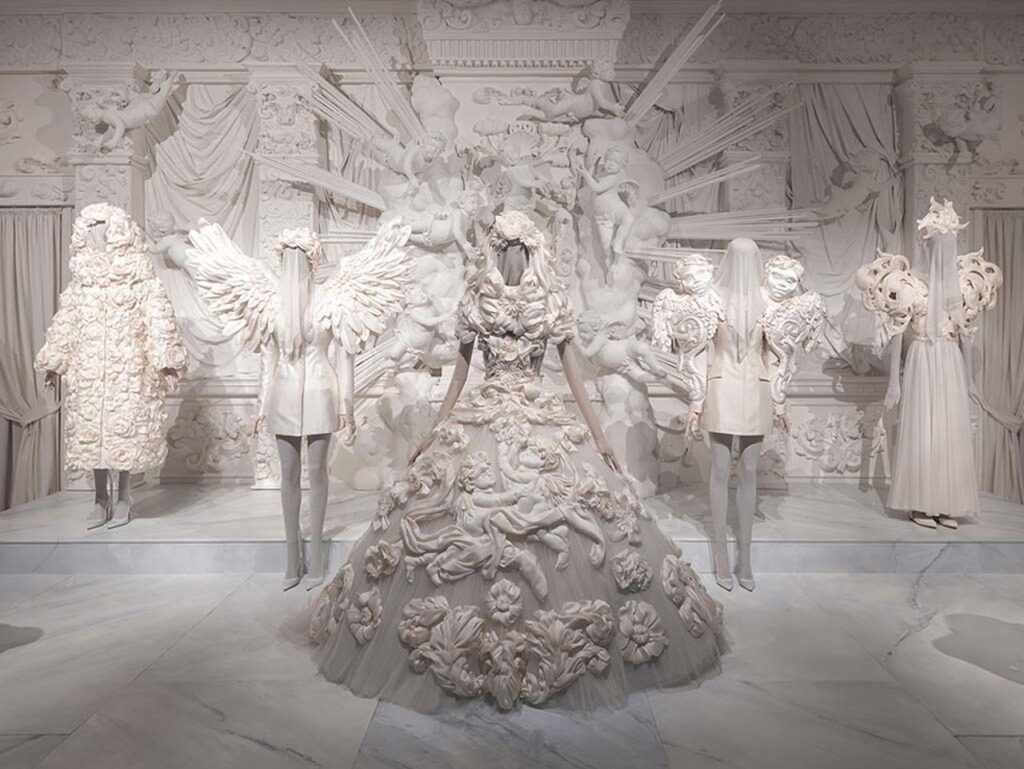
Following acclaimed, sold-out exhibitions in Milan, Paris, and Rome, this comprehensive retrospective represents the brand’s inaugural major exhibition in the United States. Curated by a renowned Italian fashion historian, the exhibition showcases more than 300 archival and modern pieces as a tribute to Italian culture. The exhibition is structured as a theatrical experience, encompassing 12 themed rooms that reflect the multifaceted nature of the designers’ vision. Each area examines a distinct aspect of the Dolce & Gabbana identity, seamlessly integrating elements of fashion, art, architecture, and folklore. Each collection vibrantly comes alive through one of twelve dramatic acts. Some examples of these are “The Sicilian Room,” which is designed for joy. This space showcases vibrant tile floors, painted walls, and folkloric-adorned refrigerators, along with whimsical items like cannoli-decorated purses. In “Opera and Ballet,” theater is celebrated with couture inspired by Puccini and Verdi, accompanied by opera music. “Glasswork and Mirrors” features intricate beaded garments set against a backdrop of mirrors and chandeliers. “The Atelier” space recreates the designers’ workshop with mannequins, sketches, and materials. In an interview with the curator Florence Muller, she describes the creation process of this exhibit: “Curating an exhibition like this is a very complex process. I began by delving into the history and archives, looking at what has been preserved and then discussing with the designers to understand their creative intention and what they wanted to communicate. The exhibition is an homage to the encounter between the creative idea, the master craftsmanship, and the creative passion that brings the designer’s desire to life. I feel very privileged to be able to understand their work, their intention, and their dream of creating beauty from the inside out.” Most visitors to the exhibit have raved that the show was absolutely beyond their expectations and, if given the opportunity, this show is not to be missed. They appreciated the ability to learn about the history, culture, art, and passion of Dolce & Gabbana. Located in the heart of the Miami Design District, the exhibition has become a must-see for locals and tourists alike. ICA Miami is located at 23 NE 41st St, Miami, FL 33137. The museum is open daily, with extended hours until 10:30 PM on Thursdays and Saturdays. Tickets are available for purchase at https://miami.dolcegabbanaexhibition.com/. It is recommended to purchase tickets in advance, as this show has been consistently selling out.
This popular Chinese game has been largely shaped by a group of Jewish women
Dr. Yvette Alt Miller
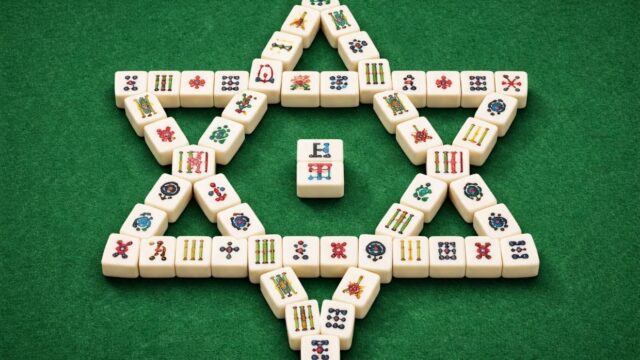
Mah Jongg began as a Chinese game but the version millions of Americans recognize today was decisively shaped by Jewish women in the United States. A fast-paced tile game played by four people, Mah Jongg challenges players to draw and discard brightly colored tiles in order to complete specific winning patterns. It demands strategy, memory, and nerve.
Over the past century, the game has traveled from late imperial China to Jazz Age Shanghai, from 1920s American department stores to suburban living rooms and synagogue fundraisers. Along the way, it has been reinvented, most influentially by a group of American Jewish women who standardized the rules and tied the game to philanthropy, giving Mah Jongg a distinctly Jewish American identity.
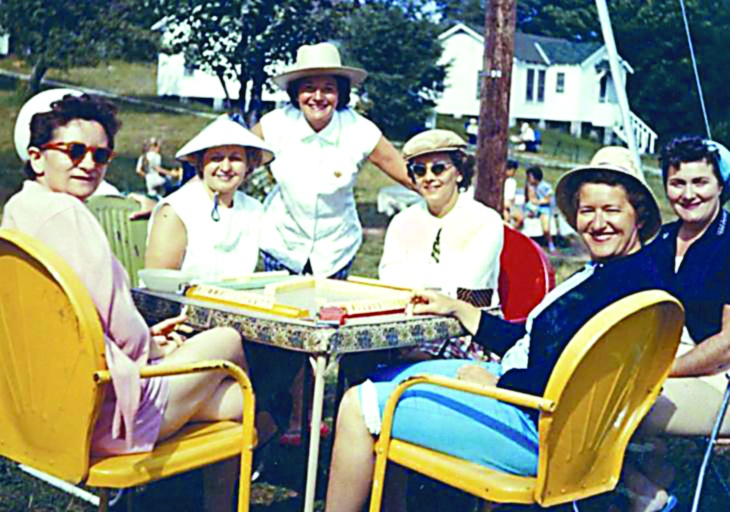
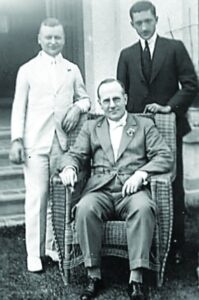
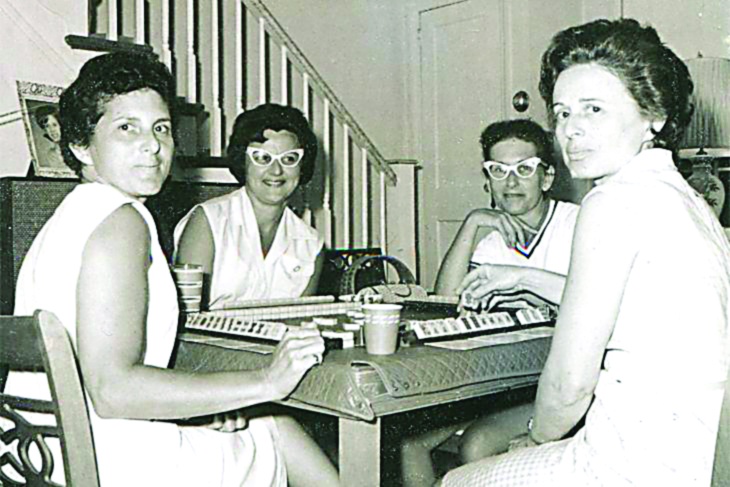
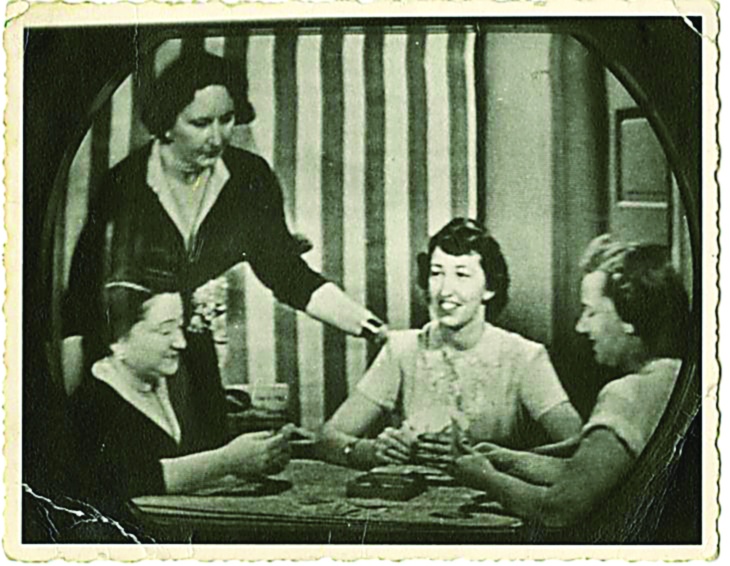
A group of women playing Mah Jongg at Gold-Dan’s Cottages in the Catskills, in 1960.From the left; Anton Lethin, Albert Hager and unknown. (Courtesy http://www.mahjongmuseum.nl/mijn-groot-vader-was-de-zakenpartner-van-joe-babcock/).Women playing Mah Jongg in the 1950s.Dorothy S. Meyerson teaching Mah Jongg on television, 1951 (photo courtesy of Maltz Museum of Jewish Heritage).
Origins in Shanghai In China during the late Qing Dynasty, which lasted until 1911, gambling games became extremely popular among men. New variations of old games sprang up all the time. One such innovation was a new way to play the old Chinese card game called madiao, instead of using cards, players began using ivory tiles instead. The tiles made a clicking game which reminded some people of the sound that sparrows make as they twitter together. In southern Chinese dialects, the word sparrow sounds like ma tsiang or ma chiang. Soon, the new game was called “Sparrow,” Mah Jongg, and pictures of sparrows appeared on some of the tiles. Mah Jongg became a sensation in the southern Chinese port city of Shanghai, which was home to a large European population of merchants and their families. Before long, European residents of the city were playing the game too. Unlike their Chinese counterparts, Europeans embraced Mah Jongg as a family game, with both men and women becoming avid players. Playing a “foreign” game like Mah Jongg was seen as a sign of sophistication by European expats, and the game dominated the evenings in European social clubs throughout Shanghai. In 1921, Elsie McCormick, an American living in Shanghai, described Mah Jongg’s ubiquity in the local China Press newspaper: “Visitors to Shanghai who ride past any of the clubs” heard an odd clicking sound, “the galloping ivories of China.” Mah Jongg was so popular, she wrote, that it soon might displace Bridge as the European game of choice.
Bringing Mah Jongg to America Bringing Mah Jongg, or Mahjong as it was spelled at the time, to the United States was the brainchild of three American men who met in Shanghai in the early 1900s and became fast friends. Albert Hager left the USA in 1901 to become a teacher in the Philippines. He eventually moved to China and set up a correspondence school in Shanghai. One of his employees was Anton Lethin. An adventurer with a longing to travel, Lethin had moved to Shanghai at the beginning of World War I and served in China’s volunteer force throughout the war. Joseph Babcock worked for Standard Oil, which sent him far from his home in Indiana to live and work in Shanghai. Together, these three men decided to shed their jobs and embark on a new enterprise, manufacturing Mah Jongg tiles and selling the game to new audiences in the United States. They formed the Mah-Jongg Company, employing Chinese artisans to manufacture beautiful game sets, and shipped them to New York. They were sold at Abercrombie & Fitch, which at the time sold games. Chinese immigrants played Mah Jongg in New York and elsewhere, but Babcock, Hager, and Lethin wanted the game to feel more upper class and accessible to American players. Babcock wrote a bestseller titled Little Red Book of Rules. The men tried to create a sense of mystique about the game, telling journalists that Mah Jongg was an ancient Chinese game and was played by Confucius over 3,000 years ago. They claimed, inaccurately, that Mah Jongg was called “the gift of heaven” and “the game of a hundred intelligences” back in China. “By creating this origin myth, which became really widespread and lasting, about the game, marketers separated it from contemporary Chinese immigrants in terms of class and status,” explains Dr. Annelise Heinz, author of Mahjong: A Chinese Game and the Making of Modern American Culture (2021). The ruse worked. Mah Jongg became a popular fad in the United States in the 1920s. Seen as cosmopolitan and exotic, players of all ages and ethnicities, first in New York, then elsewhere in the country, embraced Mah Jongg in clubs, at parties, and in their homes. Department stores offered in-store Mah Jongg classes, feeding the craze and providing new customers to buy Mah Jongg sets. The fact that it seemed exotic and foreign only added to its appeal. Jewish American songwriter Eddie Cantor wrote a comic song “Since Ma is Playing Ma Jong” for the 1923 Ziegfeld musical Kid Boots. Jewish American composer George Gershwin wrote the song “Mah-Jongg” the following year for a Broadway musical Sweet Little Devil. For a time, the game was a byword for faddish exoticism and fun.
Becoming a “Jewish game” Mah Jongg’s initial popularity in the 1920s was short-lived. After the stock market crash in 1929, the mood in America turned sharply away from seemingly frivolous pastimes like the game. By the time World War II broke out, Mah Jongg was rarely played in the US. Historian Dr. Annelise Heinz observes: “By the 1950s, most Americans had shelved their mahjong sets. Mainstream media rarely mentioned the game except…to reference the outmoded fad of the 1920s.” Jewish women were a major exception to this trend. By the 1950s, Mah Jongg was firmly established in American consciousness as a “Jewish” game, played by women. Media references to Mah Jongg in the 1950s overwhelmingly mention the game in conjunction with Jews. Some historians posit that this was because Jewish women were more highly educated than the general population and also disproportionately stayed home to raise their families. After doing housework all day long, some academics theorize, the prospect of getting together with other women over a leisurely game of Mah Jongg seemed like a tempting break. Jewish spaces embraced Mah Jongg. Resorts in the Catskills featured the game as a central activity, and Jewish networks in cities across America organized regular Mah Jongg gatherings. Over time, many Jewish women came to see playing not only as recreation but also as a way to raise money for charity. Although Mah Jongg originated as a gambling game, and some players still wager while they play, its growing association with philanthropy stemmed from a major innovation in the late 1930s, the founding of the National Mah Jongg League, created by a group of remarkable Jewish women.
Jewish Women Reinventing Mah Jongg The version of Mah Jongg most Americans play today was largely shaped in 1937 in New York City by five Jewish friends who loved the game. They founded the National Mah Jongg League, which standardized the rules, reshaped the game, and helped propel its popularity nationwide. Dorothy Meyerson, who grew up in an immigrant Jewish home in New York, developed a deep passion for Mah Jongg and had strong opinions about how it should be played. By the 1920s, countless variations of the game had emerged. Different social circles introduced their own elaborate rules. In some cases, the game became so complicated that interest began to decline. Even the wives of American Air Force pilots had created their own standardized version, known as the Wright-Patterson variation, which still exists today. Inspired by such efforts, Dorothy began envisioning a streamlined, Americanized standard of her own. She created a simplified version of Mah Jongg and in 1936 published a book promoting it titled That’s It!, a nod to the triumphant cry of a winning player. Energetic and determined, Dorothy hired women to promote the book, encouraging customers to purchase it for one dollar and adopt her method of play. For many of these women, the income mattered, and they worked diligently to spread the word about Dorothy’s innovations. As interest revived, department stores in New York and elsewhere, including the May Company, owner of Lord & Taylor, reopened Mah Jongg clinics they had closed a decade earlier. Around this time, another Jewish New Yorker, Viola Cecil, reached out to Dorothy. Viola loved Mah Jongg and lamented its fading popularity. Impressed by Dorothy’s efforts to revive the game, she proposed joining forces to restore it to prominence. In 1937, Dorothy and Viola organized a public meeting of Mah Jongg enthusiasts to discuss standardizing the rules. They chose the fashionable Essex House Hotel in Manhattan where Viola lived. Expecting perhaps a hundred attendees, they were astonished when nearly 400 women arrived. Participants traveled from across New York City and beyond, eager to help unify the rules and rescue the game from the factionalism that threatened its future. After hours of spirited debate, the group voted to form the National Mah Jongg League. Viola Cecil became president and Dorothy Meyerson vice president, positions they would hold for years. One of the League’s most visible changes was to the game’s name. Formerly spelled Mahjong or Mah Jong, it now became Mah Jongg, with an added “g.” The League also standardized the rules. “No one person created the new way to play,” Dorothy later explained, though the final version closely reflected the system outlined in her book. Together, Dorothy and Viola authored an instruction manual, How to Play Mah Jongg, presenting the game as transformed from an “ancient game of the Mandarins” into a “new American game made up of representative suggestions from different groups.”
Identifying Mah Jongg with Jewish Charities National Mah Jongg League rule cards are modestly priced, but the annual fees players pay add up. From its earliest years, the League closely linked the game to charitable fundraising, with Jewish charities representing a large and steadily growing share of the beneficiaries. During World War II, the League raised funds for both Jewish and non-Jewish war-related causes. After the war, much of its charitable giving supported Jewish and general organizations aiding victims of the conflict. As Mah Jongg increasingly came to be seen as a “Jewish” game, however, a larger proportion of donations went specifically to Jewish causes. The 1950 rule card was the last to list American charities on its cover. Thereafter, the cards simply stated, “Proceeds donated to charitable causes.” “After World War II, the League’s philanthropy noticeably shifted as more individual donations flowed to specifically Jewish organizations and, especially, to support the new state of Israel,” observes historian Dr. Annelise Heinz. One prominent beneficiary was Hadassah’s Youth Aliyah program, originally established to aid Jewish orphans in Europe and later focused on helping orphans and disadvantaged children in Israel. Dr. Heinz illustrates this pattern through the story of Martha Lustbader, who led her local Hadassah chapter in Newburgh, New York. Lustbader relied on Mah Jongg parties to raise funds through ticket and raffle sales, directing the proceeds toward building a hospital in Israel, a cause she passionately supported. She ensured that her Mah Jongg group actively backed these fundraising events. Throughout the postwar years, thousands of women like Lustbader used Mah Jongg gatherings, tournaments, and clubs to generate significant support for Jewish causes, channeling the charitable commitments of their friends and neighbors. Former National Mah Jongg League president Ruth Unger later explained that the Jewish value of tzedakah (charitable giving) helped sustain the game’s popularity. As synagogues and Hadassah chapters depended on selling Mah Jongg cards to raise funds, they had a vested interest in promoting the game, organizing classes, hosting tournaments, and ensuring that enthusiasm for Mah Jongg remained strong. Hadassah and other Jewish organizations remain among the League’s official charitable beneficiaries today.
Resurgence Today Mah Jongg is undergoing a resurgence today, with younger and more diverse players discovering the joys of the game. Mah Jongg events advertised on the online platform Eventbrite rose 170% between 2023 and 2024 worldwide. New York has seen the most new interest, followed by San Francisco, then Houston, where Mah Jongg events advertised on Eventbrite rose a whopping 867% between 2023 and 2024. As a new generation discovers the joys of Mah Jongg, let’s embrace this game’s rich history, including the many contributions made by generations of Jewish women.