Home Blog Page 3

Respect, Not Love, Is the Foundation of All Relationships

Rabbi Eric Coopersmith and Joseph Bornstein

Rabbi Akiva famously taught that “love your neighbor as yourself” is the overarching principle of the Torah. Why did 24,000 of his students die for failing to do exactly that?

Why did 24,000 students of Rabbi Akiva, the greatest Torah sage of his generation, die in a plague? The Talmud (Yevamot 62b) gives a single, devastating explanation: “Because they did not treat one another with proper respect.”*
Rabbi Akiva was the very sage who declared that the overarching principle of the entire Torah is the verse “Love your neighbor as yourself.” If any students should have understood the centrality of love in human affairs, it was his. How, then, did they fail so profoundly at the fundamental teaching of their own teacher?
The answer lies in a debate recorded in the same Midrashic passage about what is the Torah’s overarching principle. Rabbi Akiva’s colleague, Ben Azzai, offered an unexpected alternative candidate: “This is the book of the generations of man” (Genesis 5:1). What could a genealogical verse possibly teach that would rival the commandment to love your fellow neighbor?

Respect Versus Love
Rabbi Asher Weiss, a contemporary leading scholar, explains that Ben Azzai was pointing not to genealogy but to something more fundamental: the nature of what a human being is. The verse continues: “In the image of G-D He created him.” Ben Azzai’s principle is not about what we feel toward others, but about what others are. Every human being carries the image of G-D. Their value does not depend on whether we find them lovable. Their inherent G-dliness is independent from our feelings.
Here lies the crux of the disagreement. Rabbi Akiva built relationships on love. Ben Azzai insisted they must be built on respect. These are not the same thing.
Love, at its core, is about your experience of the other person: what is attractive, admirable, or kindred in them, the pleasure their presence brings. Respect is not a feeling but a recognition. It says, you exist independently of me. Your worth is not contingent on my affection. You have standing in the world that I did not grant and cannot revoke. Respect requires us to make space for another person’s reality, even when that reality is inconvenient or challenging to our own.
This, perhaps, is the mistake Rabbi Akiva’s students made. Love without the foundation of respect is unstable. You can love someone and still dismiss them, still fail to honor their dignity. Their love was unanchored. And so the plague came and the world was diminished.

One of a Kind
The Mishnah teaches: “Beloved is man, for he was created in the image of G-D” (Ethics of the Fathers, 3:14). The Maharal of Prague and the Vilna Gaon elaborate with a striking metaphor. Every human being shares the same basic form: two eyes, two ears, a mouth, a nose. And yet no two faces are identical. Human beings are not mass-produced prints from a single plate. Each one is a Rembrandt: singular, unrepeatable, irreplaceable. Rarity confers value. A one-of-a-kind painting is worth more than a thousand copies. How much more so a human being, of whom there has never been and will never be a duplicate in all of history. That is the metaphysical foundation of kavod, dignity. Their value is written into the fabric of creation itself.
Two thousand years after Ben Azzai, John Gottman, the world renowned couples therapist, spent decades studying thousands of marriages. He identified what he calls, “Four Horsemen” of relational destruction: criticism, contempt, defensiveness, and stonewalling. Of these, he found that the single greatest predictor of divorce is contempt: any act of diminishment, however subtle, that communicates to another person that they are beneath consideration. In other words, the absence of kavod, respect.
Gottman arrived at this through empirical observation. Ben Azzai arrived at it through the Torah. They are saying the same thing: love brings pleasure to a relationship, but respect is the ground on which it stands.

Failure of Respect, Failure of Love
Because Rabbi Akiva’s students perished during the counting of the Omer, between Passover and Shavuot, the Sages ordained a period of mourning for them. Now consider the second period of mourning in the Jewish calendar: the Three Weeks between the seventeenth of Tammuz and Tisha B’Av (the Ninth of Av). The Talmud tells us that the Second Temple was destroyed because of sinat chinam, baseless hatred. The commonly proposed remedy is ahavat chinam, unconditional love: love offered without precondition, without calculation, without requiring the other person to earn it first.
Place these two seasons of mourning side by side and a remarkable formula emerges. The Omer period addresses a failure of respect. The Three Weeks address a failure of love. Together, they map the full architecture of what human relationships require. Respect is the foundation: the recognition that every person, by virtue of bearing G-D’s image, is worthy of dignity.
Love is what we build upon that foundation: the warmth, the connection, the willingness to see the particular beauty in another person. Love without respect drifts toward self-interest. Respect without love lacks warmth. The rabbis gave us a dedicated time each year to work on each.
The Torah requires love grounded in respect and respect animated by love. This is the foundation of marriage, friendship, community, and ultimately of the covenant between G-D and Israel.
Staying mindful of the profound, intrinsic value of everyone around you during this period of mourning helps to transform the tragic death of Rabbi Akiva’s students into meaningful growth for ourselves and for the Jewish people.
Rabbi Akiva’s students were both exceedingly righteous and the leaders of the Jewish people, and were therefore judged in a very exacting way.

How We Spend Our Time

Six Graphs That Change Everything

Rabbi Dr. Yosef Lynn

A researcher charted how we actually spend our time. The patterns are stunning, a little brutal, and might change how you live. Look at six graphs and you’ll never think about your time the same way again.

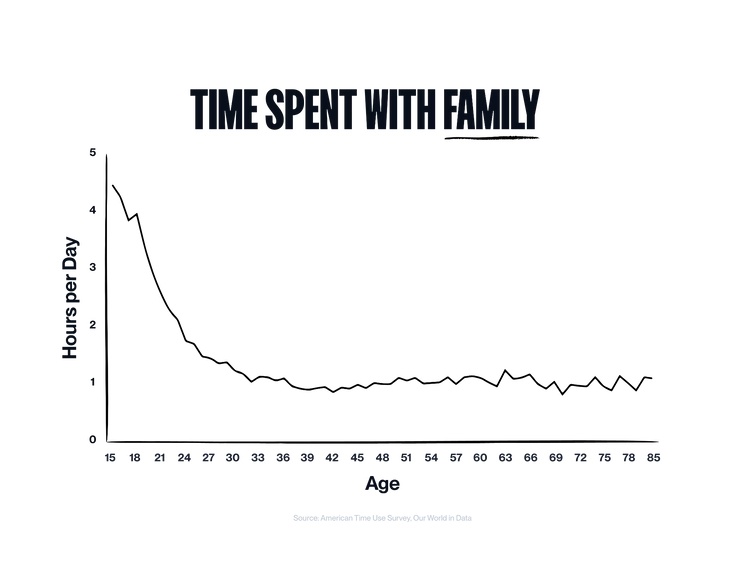
Writer Sahil Bloom pulled data from the American Time Use Survey and charted how we actually spend our hours across the key relationships in our lives. The patterns are striking, sometimes uncomfortable, and impossible to ignore. Here’s what they show, and what you can do about it.

1. Your Family: A Clock That’s Already Ticking
The data shows something heartbreaking: your time with parents and siblings peaks when you’re young, then falls off a cliff after age twenty. Here’s the reality check, if you’re in your thirties and your parents are in their sixties, and you see them maybe five times a year, you’ve got perhaps one hundred to one hundred fifty visits left. Total. Ever. That’s not a lot.
What you can do: Pick up the phone this week. Not because it’s someone’s birthday or a holiday. Just call.

      2. Your Friends: The Window Closes Fast
      Friendship time hits its peak at eighteen and drops dramatically from there. You go from spending hours every day with dozens of people to squeezing in occasional dinners with a handful. The shift is massive. This is when you learn who your real friends are, the ones Bloom calls “Darkest Hour Friends.” The people who would actually show up if everything fell apart.
      What you can do: Identify your two to three closest friends. The ones you’d call at 3 a.m. Send them a message this week telling them what they mean to you.

      3. Your Partner: The One Relationship That Grows
      Here’s the exception to every other curve on this list: time with your partner actually increases throughout your life. Which means this choice, who you marry, might be the most important decision you’ll ever make. And here’s what matters, you need to genuinely enjoy this person during the boring parts of life. Because most of life isn’t vacations and celebrations. It’s Tuesday nights on the couch.
      What you can do: Say one specific thing you appreciate about your partner today. Make it a habit.

      4. Your Kids: The Years That Disappear
      Your time with children spikes in your thirties and forties, then drops sharply when they leave home. Think about that. You’re working constantly to give them everything, but are you actually there for the moments that matter? There’s this tiny window when you’re their entire universe. Then it’s gone.
      What you can do: Commit to fifteen minutes of fully present time with your kids each day this week. No checking your phone. Just you and them.

      5. Your Coworkers: The Hidden Time Sink
      From age twenty to sixty, your time with coworkers stays consistently high. That is four decades. That’s more waking hours than you’ll spend with almost anyone else in your life. So the question becomes urgent, do these people energize you or drain you? Are you proud of what you’re building together?
      What you can do: Get honest with yourself. Do you gain energy from your coworkers? If not, maybe it’s time to consider a change.

              6. Being Alone: The Curve That Keeps Rising
              Time spent alone increases steadily throughout your entire life. When you’re young, this feels like a problem to solve. As you get older, it becomes your reality. The question isn’t whether you’ll spend more time alone. You will. The question is, are you comfortable with yourself? Can you be alone without needing constant distraction?
              What you can do: Practice being bored. Put your phone away for fifteen minutes each day. Just sit. Just walk. Get used to your own company.

                What This Means for You
                These patterns aren’t inevitable. They’re just what happens when you live on autopilot. These graphs are offering a chance to see the default path clearly, so you can choose something different. You can call your parents more often while you still can. You can protect time for your real friendships. You can choose work that gives you energy instead of draining you. You can put down your phone during the precious years your kids actually want you around.
                The curves will shift no matter what. That’s not in your control. But you can influence their shape through the choices you make today. What will you do differently now that you see the pattern?

                Meet the Jews Behind IconicFashion Brands

                Some of the most popular fashion brands today were founded by proud, committed Jews

                Dr. Yvette Alt Miller

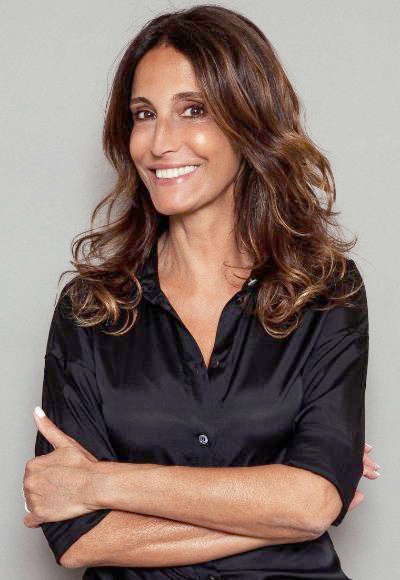
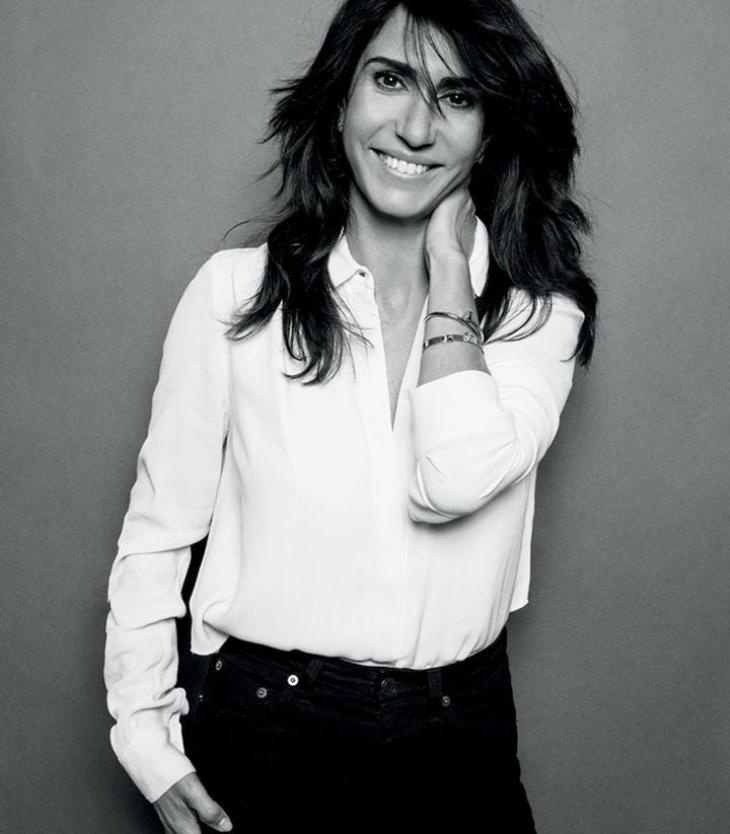
                Everyone knows fashion designers Ralph Lauren, Calvin Klein, and Donna Karan are Jewish. But some of today’s most sought-after brands were also founded by Jews you might not know about. Here are the innovators behind a few of the most popular high-end labels.

                Alexandre, Laurent, and Rafael Elicha

                Chloé
                This iconic French brand was founded by Gabrielle Hanoka Aghion, an Egyptian Jew who moved to Paris in 1940 and democratized fashion by inventing “ready to wear” (pret a porter) clothes, designing and selling to middle-class women who didn’t have the time or money for custom couture.
                Born in 1921 in Alexandria, Gabrielle grew up loving fashion. Her father managed a cigarette factory; her mother was fascinated by clothes and encouraged Gabrielle to design and sew her own. “There are these really beautiful images of her playing at the beach in these really lovely light dresses,” explained Kristina Parsons, a curator at the Jewish Museum in New York, which ran an exhibit on Gabrielle. “I think that outdoorsy, very casual, easy approach to living was something that she carried into her designs.”
                Gabrielle met her husband, the Jewish Egyptian artist Raymond Aghion, when they were children in school; they married at 19. Together they engaged in Resistance activity during World War II, then moved to Paris in 1945, socializing with artists including Picasso and other intellectuals. Raymond opened an art gallery. Gabrielle began sewing dresses and in 1952 founded Chloé, borrowing the name from a friend because she thought it sounded more French and appealing to customers. “All I’ve ever wanted was for Chloé to have a happy spirit, to make people happy,” she said.
                In the 1960s, Chloé gave a young unknown designer his break, hiring Karl Lagerfeld as house chief designer after Gabrielle stepped away. She sold the brand in 1985 and passed away in 2014 at 93.

                Maje and Sandro
                Sandro and Maje are both French brands, both fashion-forward, and both founded by sisters: Evelyne Chetrite launched Sandro in 1984, and Judith Milgom launched Maje 14 years later.
                The sisters grew up in the tight-knit Jewish community of Rabat, Morocco. Their family moved to Paris when Evelyne was 15 and Judith was 10. Evelyne learned the fashion business from her husband Didier, a fellow Jew who worked in Paris’ tailoring Sentier district, and launched Sandro to fill a gap in the market: high-fashion, classic French style at accessible prices.
                Judith worked for her sister and brother-in-law during teenage summers, then launched Maje in 1998 with a younger, more girlish aesthetic. The name is an acronym for their family: Moyal (Judith’s maiden name), Alain (her brother), Judith, and Evelyne. In 2009, the sisters jointly acquired the brand Claudie Pierlot.
                Both Judith and Evelyne, along with their large families, make a point of sharing Shabbat dinner every week. They start planning Friday night’s meal on Tuesday. In a 2012 interview, Judith described her commitment to not working on Shabbat: “About 20 years ago, I started to observe the Jewish Sabbath really seriously. From dusk on Friday until dusk on Saturday, I don’t do any work, don’t shop or look at my email or phone. It’s unbelievably therapeutic.”
                The Kooples
                This prestigious label was founded in 2008 by three Orthodox Jewish French brothers: Alexandre, Laurent, and Rafael Elicha. “The Kooples” is the French pronunciation of the English word “couples;” ads feature real-life couples wearing the brand. Alexandre has said that “love is really the essence, the philosophy of the brand,” and credits his wife Charlotte, whom he met in Israel, as his muse.
                The brothers grew up with front-row seats to the French fashion world. Their parents, Tony and Georgette Elicha, founded the brand Comptoir des Cotonniers in the 1990s. “Our parents were amazing teachers and through them, we got great experience and contacts,” the brothers have said. But their parents also gave them something more enduring: a love of Judaism and a sense of responsibility to lead the French Jewish community, even when it’s hard.
                Tony led the Jewish community in Toulouse for years and served as Vice President of the Consistoire de Paris, an umbrella group for French Jewish organizations. In 2013, Alexandre became administrator of the Consistoire, running France’s large Jewish community while also running The Kooples. His brothers helped shoulder the business. The three families celebrate Shabbat and Jewish holidays together and even vacation together.
                In 2012, Alexandre became president of the Ohr Hatorah school in Toulouse, after it became the site of one of the worst terror attacks on French soil. On March 19, 2012, an Islamist terrorist ambushed children and staff entering the Orthodox Jewish school and opened fire. He murdered Rabbi Jonathan Sandler, who was trying to shield his two young sons, then killed them: Arie, age five, and Gabriel, age three. He then shot eight-year-old Myriam Monsonego, the school principal’s daughter, in the head. He also shot and severely wounded Bryan Bijaoui, a 17-year-old student. Alexandre remains close friends with the principal, Rabbi Yaacov Monsonego, and is devoted to strengthening Jewish education in Toulouse and beyond.
                Shabbat, Alexandre has said, is the cornerstone of his week. “Life is so magic… Shabbat is a good way to take time and think about what you’re doing in this world.”

                Reiss
                David Reiss grew up in a traditional Jewish family in London and attended an Orthodox school. In 1965, he took over his father Joshua’s tailoring business in the East End, once a deeply Jewish neighborhood. “I had this entrepreneurial spirit and I suppose retail was in my blood,” he has said.
                He opened the first Reiss store in 1971, aiming to fill the gap between expensive designer menswear and cheap, poor-quality clothes. The brand offered elegant tailoring at accessible prices, took off quickly, and expanded into womenswear and stores worldwide.

                Canada Goose
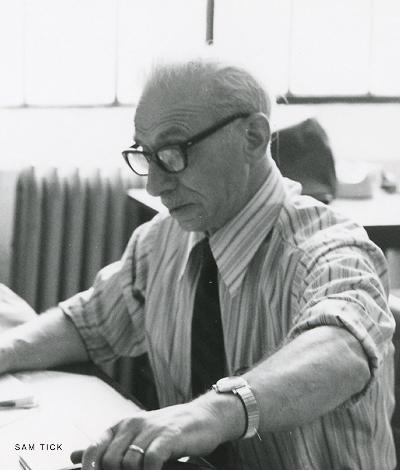
                This beloved brand started in 1957 when Samuel Tick, a poor Polish Jewish immigrant to Toronto, was working as a fabric cutter and decided to try making high-quality winter coats. He called the company Metro Sportswear and supplied parkas to better-known retailers, who put their own labels on the garments.
                In time, Samuel began selling directly to consumers under the name Snow Goose. The parkas quickly earned a loyal following: Canada’s Arctic Rangers, scientists at McMurdo Station in Antarctica, Ontario police officers, and Laurie Skreslet, the first Canadian to summit Mount Everest, who wore one on his climb. They all valued the coats’ extraordinary resistance to cold.
                Samuel’s son-in-law David Reiss eventually took over, followed by his son Dani Reiss, who became CEO in 2001 at 27, fresh out of the University of Toronto where he’d studied literature and philosophy. He had no plans to run the family business long-term and knew he was young and inexperienced. He proved to have a sharp instinct for business anyway. He renamed the company Canada Goose and began marketing the coats not just to outdoor workers but to city dwellers. The brand became a global phenomenon worn by celebrities worldwide.

                Avec Les Filles
                Avec Les Filles, French for “With the Girls,” is focused on dressing Millennial women. It’s the creation of Joyce Azria, an Orthodox Jewish designer and entrepreneur based in Florida.
                Joyce learned fashion from her father, legendary designer Max Azria, who founded BCBG. After running BCBG, she stepped back to focus on her family. She and her husband Ilan Trojanowski have seven children. She launched Avec Les Filles in 2017 with the goal of bringing French-inspired style to a wider audience. “I love Sandro, I love Maje,” she said at the time, “but they are so high-end that I thought, ‘I want a brand that brings me in at 18 bucks and is a little easier to digest. What I strive to do with Avec les Filles is allow customers to indulge in an experience that’s designer-led and authentic, but still feels playful.”
                Growing up, Shabbat dinner was a central family ritual for Joyce. She made sure it remained the cornerstone of her own family’s week too. Despite running an international business, she insists what truly brings her joy is family and spirituality. “On Shabbat, I leave behind the business world and focus on my family and my relationship with G-D. I am fortunate that I’m not a slave to my work.”

                Teri Jon
                This upscale American brand has an international origin: its founder and chief designer, Rickie Freeman-Platt, was born in Israel and draws inspiration from the real lives of her customers, guided by the belief that “every woman should have the opportunity to look great no matter what size or body shape she has.”
                Rickie moved to New York at 17 and worked for Jewish fashion designers Evan Picone and Elie Tahari before founding Teri Jon in 1978, a high-fashion brand specializing in special occasion dresses.
                An intensely private person, Rickie rarely gives interviews. Her philanthropy speaks for her. A board member of Stern College for Women, she opens her home and business to Jewish charities and actively campaigns for Jewish and Zionist causes.

                Sian Goldofsky

                Sian Goldofsky

                Encouraging High School Entrepreneurs

                Sarina Roffé

                “I believe the entrepreneurial spirit creates innovators with new ideas and a drive that exerts a force like no other. I enjoy sharing my experiences as an investor and practitioner, as well as studies, research, and readings to assist young entrepreneurs on their journey,” said Sian Goldofsky.

                Born and raised in Deal, New Jersey, the Hillel High School grad believes high school students should be encouraged to be entrepreneurs. The culture of the Syrian community is rich with self-made businesspeople who are excellent role models. “In business, it is really critical to have a strong network, which we have in the community. When combined with the entrepreneurial spirit, it drives the future of the economy. And that’s exactly what we have in our community,” said Sian.
                As background, Sian’s mom, Sima, is from the Ba’asher and Salamah families, whose roots trace back to Urfa, a satellite of Aleppo, and Yemen and who eventually settled in Eretz Israel. Sima met Sian’s dad, Dr. Sheldon Goldofsky, a descendant of Polish Holocaust survivors, on a trip to the United States. They married and settled in the Deal area. Hillel was Sima’s beacon of light as she wanted her children to learn Hebrew. Hillel enabled the family’s deeper integration into the Deal community, which ultimately led to the family becoming religious through their relationship with Rabbi Ezra Labaton A’H.
                After Sian’s older brother, Siel, moved to Israel to serve in the Israeli Defense Forces, Sian’s parents and younger sister, Shani, followed suit and made Aliyah (immigration to Israel). Sian stayed behind in America to finish high school. He then attended Binghamton University, where he earned a master’s and a bachelor’s degree in electrical and computer engineering with concentrations in information assurance (cybersecurity) and control systems, and where he met his future wife.
                Even before graduating from Hillel, “I always intended on serving in the Israeli military. I wanted to be in intelligence or MAFAT (Directorate of Defense, Research & Development). I entered college with that goal in mind and studied under professors who were world-renowned in the relevant subjects. I invested deeply in cryptographic, network communications, and control systems studies, critical technologies for cybersecurity and defensive applications like the Iron Dome. These are challenging disciplines, but I kept focused on my end goal. I assisted in the research of amazing professors in the field, and before long found myself working as a civilian researcher for the U.S. military. That led me to an early career as an enterprise cybersecurity consultant, one of very few of my age, working with some of the largest companies in the world.”
                Later, Sian made Aliyah (immigration to Israel) with his then-fiancé, Jasmine, and began a career in investing in startups on behalf of leading funds managing over $1 billion. Today, in addition to his work in venture capital, Sian is an advisor to MAFAT.
                “Throughout my career, it became apparent that there are those who innovate privately and those who want to spread innovation to the world.”
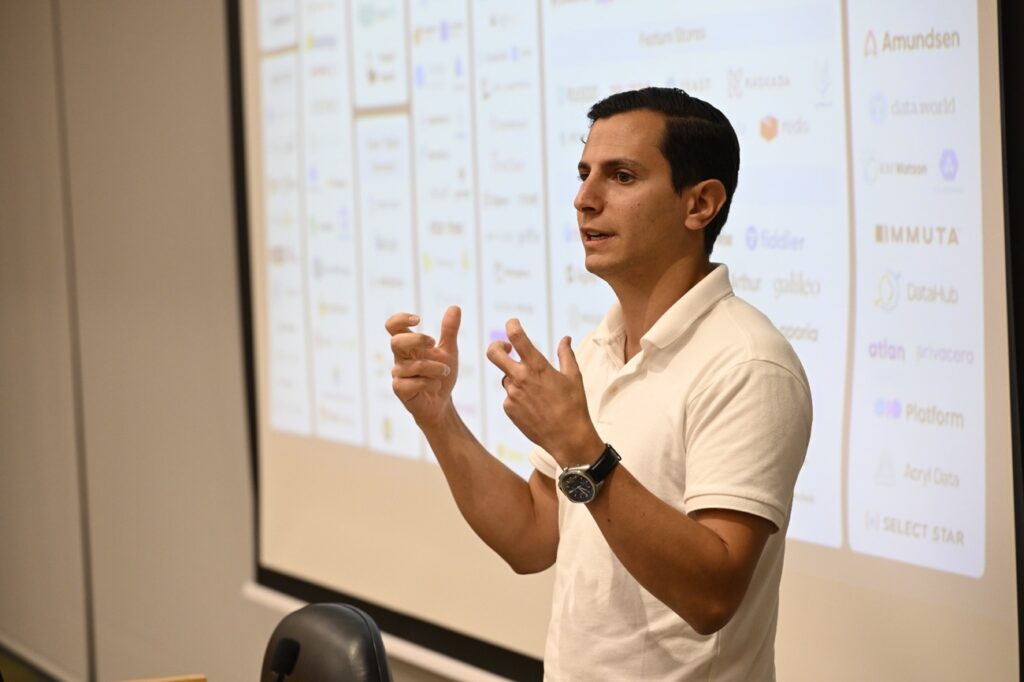
                Sian and his partners at SaaS Ventures recently launched a $30 million fund dedicated to investments in Israeli cybersecurity and AI companies. “This is an exciting time for small business owners. If they invest in AI tools, they will be well positioned for significant growth,” said Sian. The October 7 attack on Israel motivated his new fund’s creation, and the current war with Iran reminded Sian to take a moment and think about how he can help the community. He will be speaking to students at Hillel Yeshiva about entrepreneurship in the coming school year.
                “In our community, we have this incredible culture where everybody’s an entrepreneur. In Israel, it is very similar. Israel has one of the largest startup ecosystems and the largest number of startups worth over $1 billion per capita in the world. Everyone is helping one another. That’s partially inherited from the IDF, where everyone participates due to mandatory service, and it breeds a collaborative culture. Also, as Jews, everybody feels for one another. It’s like the community I grew up in but extended significantly.”
                Sian believes students should begin being entrepreneurial in high school. “High school students are already starting to play around with what it would be like to build their own business. There have never been lower barriers to entry. It’s never been more accessible to start something new, and the time it takes to go from an idea to a product has never been shorter. In high school, you have similar-minded close friends who can work and collaborate with you at a time when you have no external responsibilities beyond your studies. You are well positioned to begin a business, and I suggest you start one now,” he said.
                “Parents and others in the community can help provide guidance. Start with a problem that needs to be solved. People care about what they want to buy, not what you want to sell. After identifying the problem, tailor your solution accordingly. It is straightforward. If you have a low-priced item, then it needs to be something that can sell itself and not be expensive to create or maintain. If it’s expensive, it must be possible to support a sales team, and the product must deliver significant value. After identifying the problem, ask yourself, what does my customer look like and where can I find them?”
                “I want to encourage high schoolers to try their hand at entrepreneurship. I think that high school is the perfect time to begin. And I believe our community is well positioned for it. I’m excited about it. I’m hoping to invest in entrepreneurs from our community.”
                “I also want people to stop being so concerned and questioning the value of college after AI. College remains valuable, and it can provide value in many ways. Success in college can come from a great education, but also from your network and relationships established while there. It’s a fantastic place to collaborate with partners, build projects or businesses, and even find your spouse.
                “High grades are important, but as an investor I will take the person with experience growing a business quickly every time. For me, grades are an indicator of potential success. A Harvard graduate likely has resilience and a track record of working hard, so when comparing two individuals who do not have experience building a business prior, we lean heavily on education. That said, if one built a thriving business before, they are much more likely to succeed in building another regardless of where they went to school.
                “Age is not important. A person with little funding who built an application or a business that grew quickly at a young age, whether by user base or relative revenue, accomplished something that few people in the world have ever done.”
                Sian travels frequently between Israel and the United States and is glad to be a resource for schools and synagogues in our community that may benefit from conversations around Israel, innovation, startups, and venture capital.

                Passover Moments

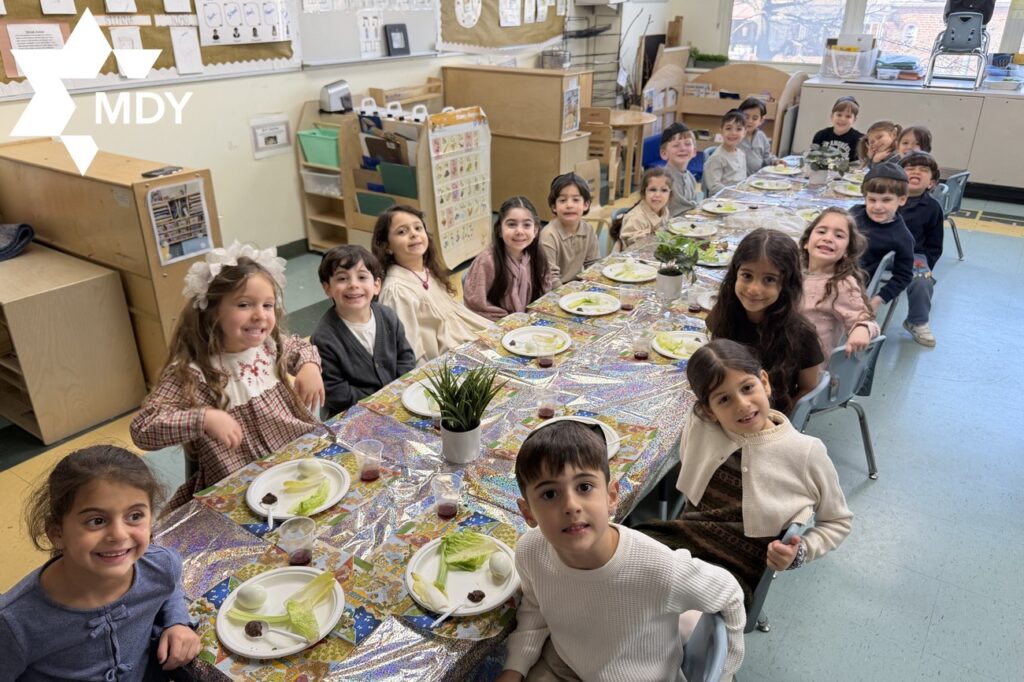
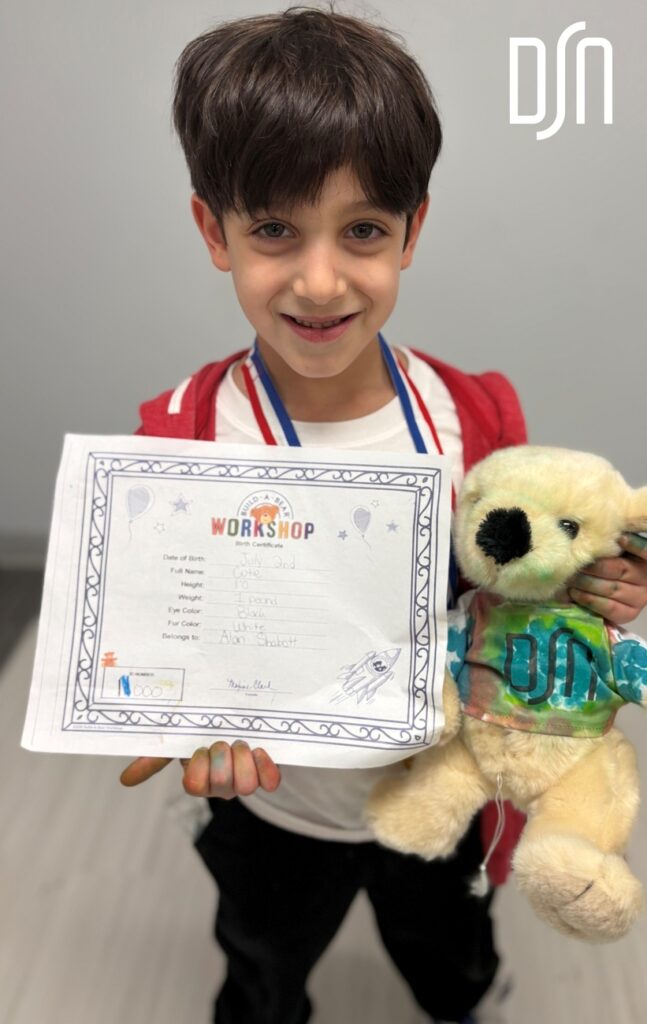
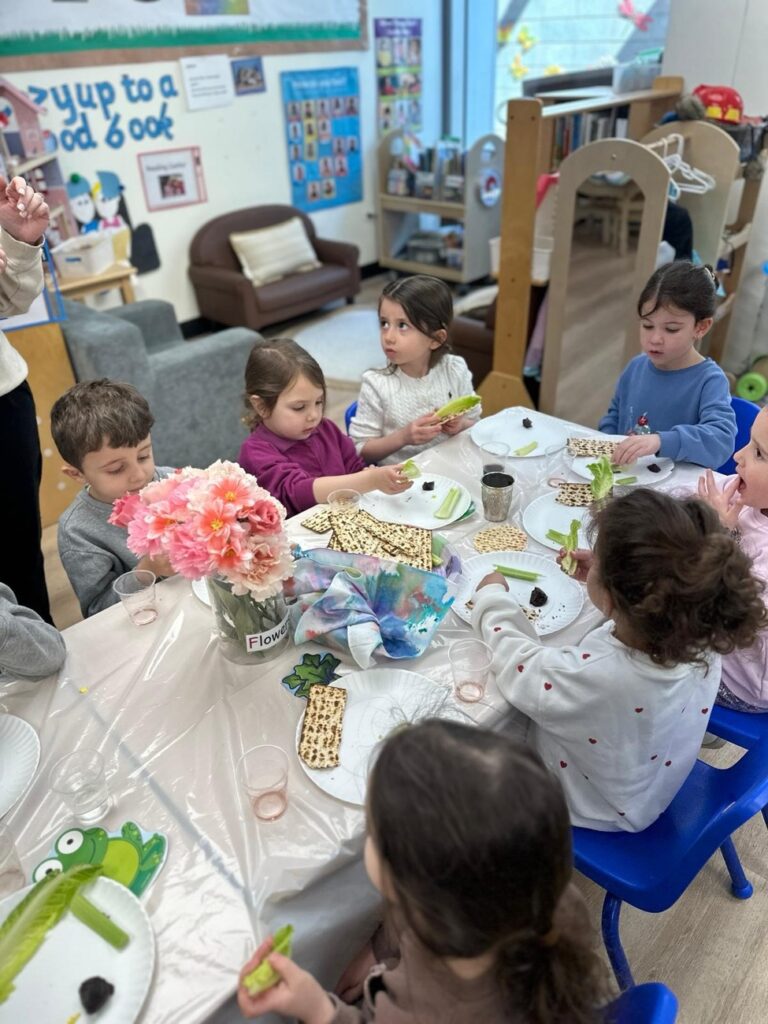
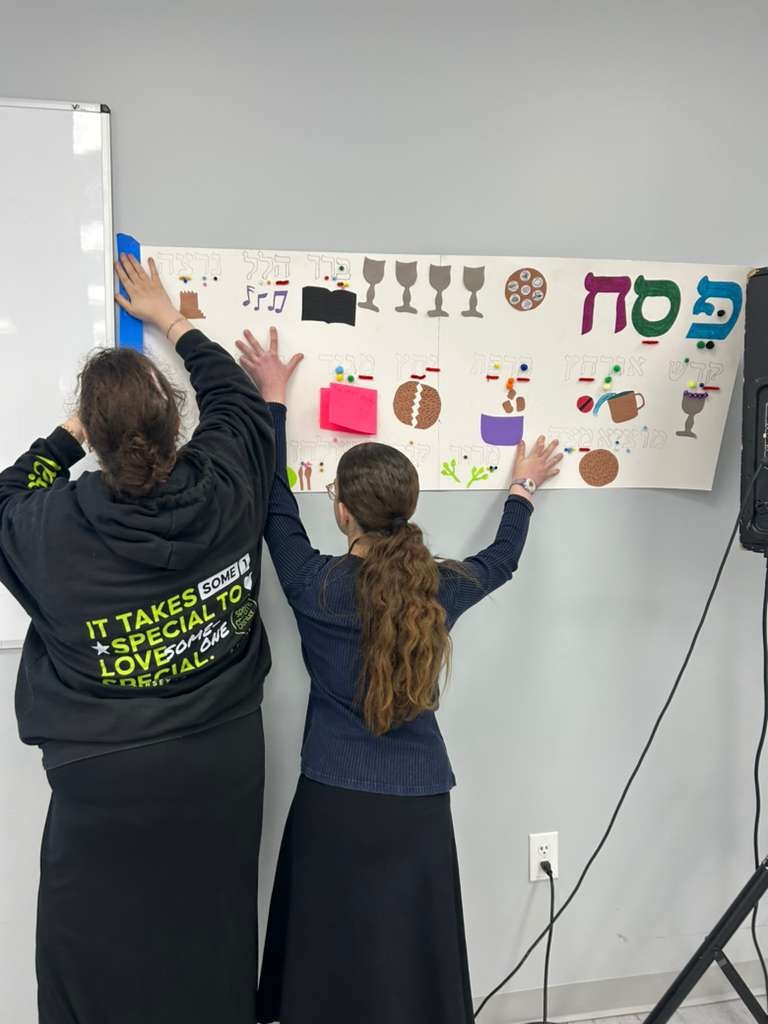
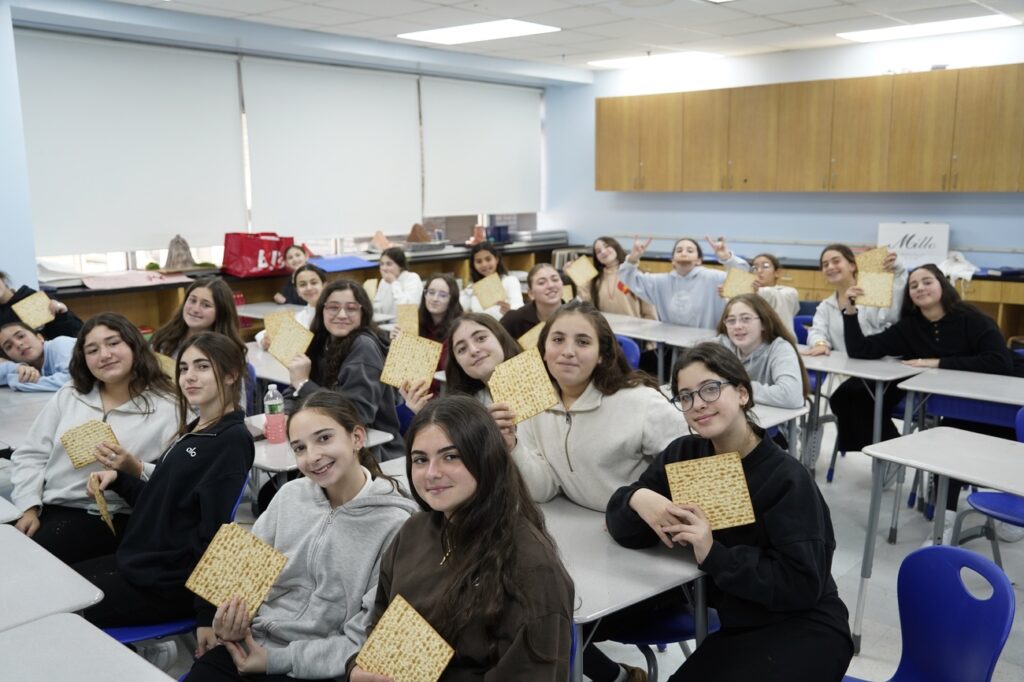
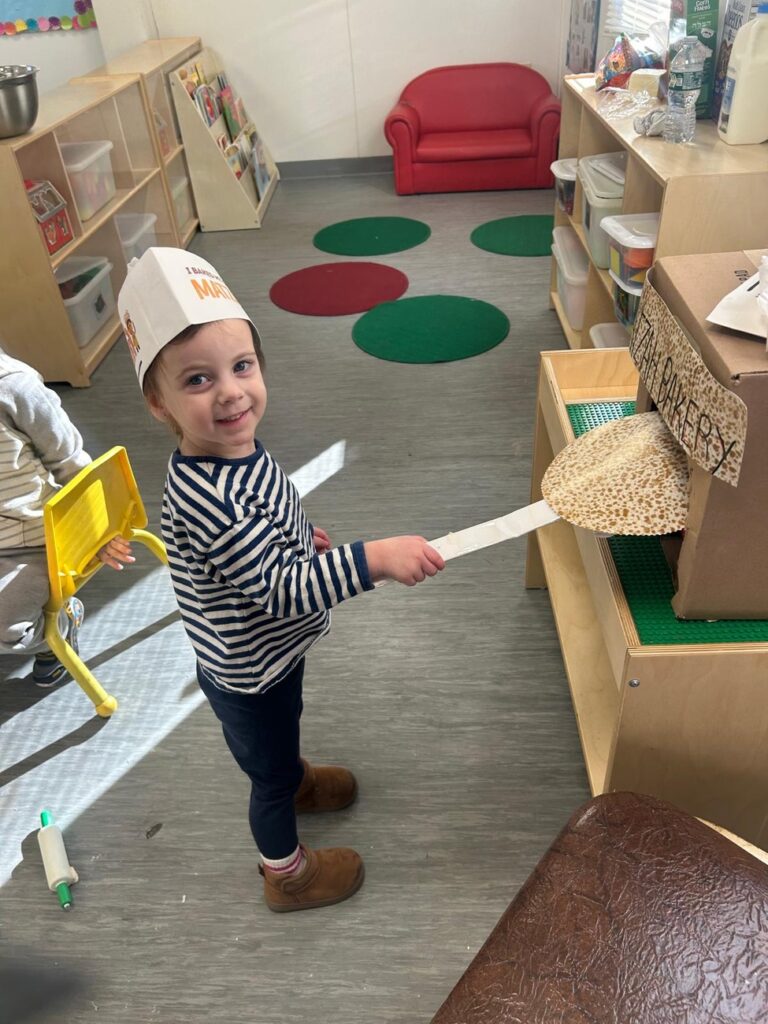
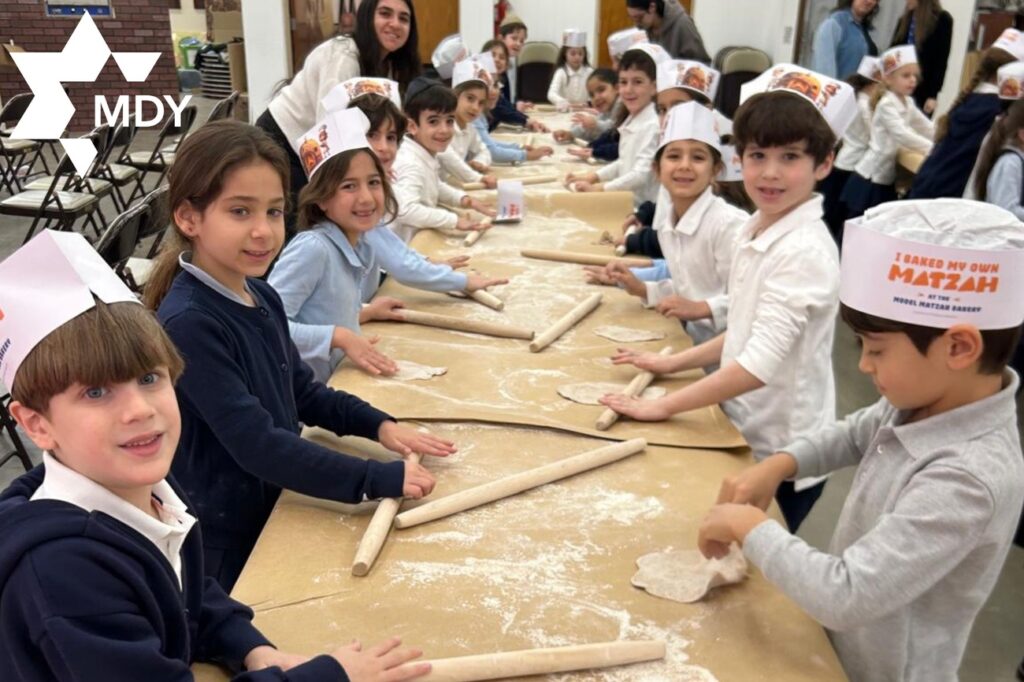
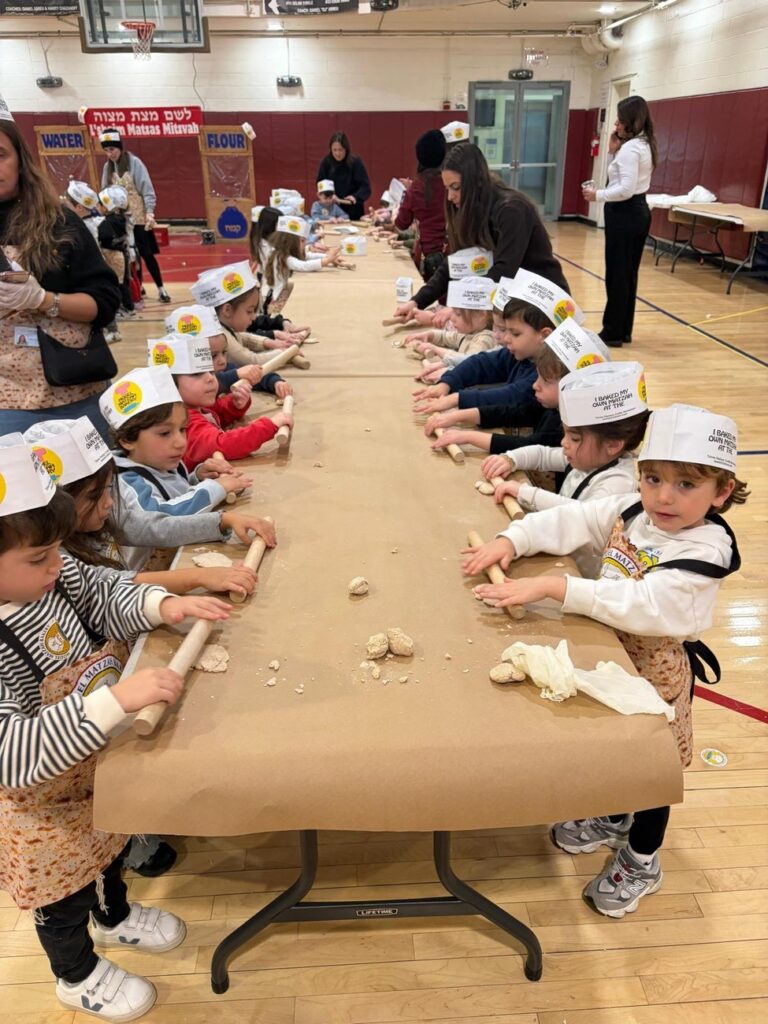
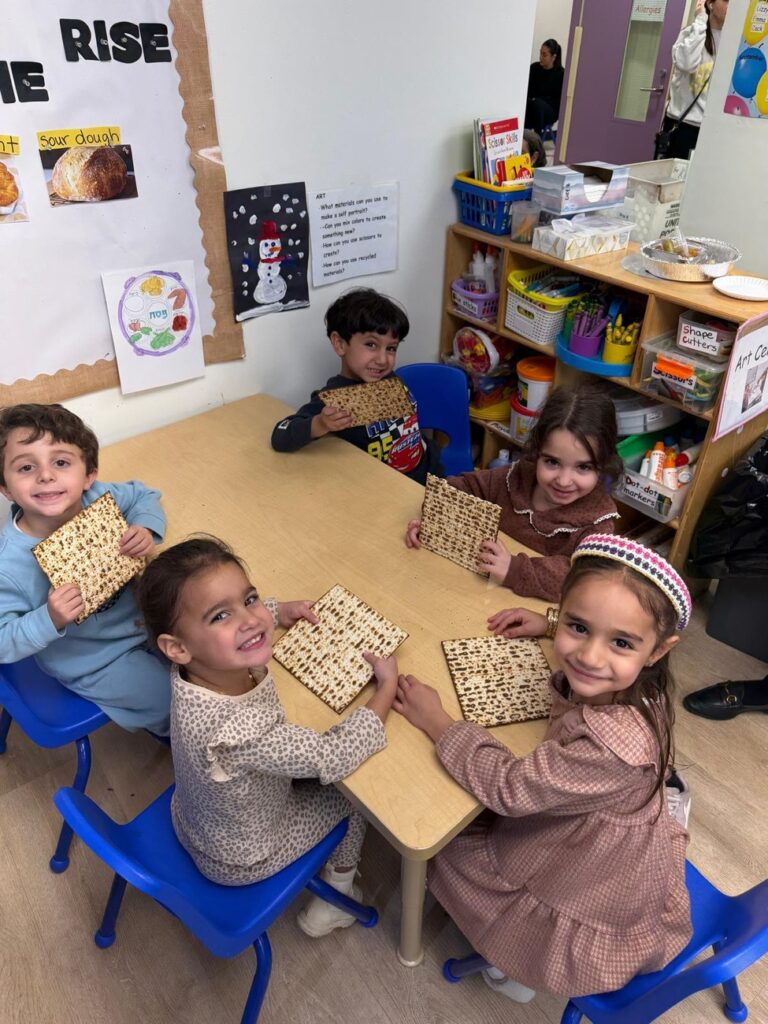
                This month’s Community Photo Album celebrates Passover. Our schools and organizations came together with meaningful programs, hands on projects, and preparations for Yom Tov that brought people of all ages together. The photos capture children making matzah, working on Haggadah projects, having practice seders, acting out the Passover story, events during HOL Hamoed, and the many special moments that define this time.

                Shavuot Cheesecakes

                Four dependable recipes, from traditional to modern

                Shavuot brings with it a table shaped by tradition and comfort. Dairy dishes take center stage, and cheesecake, in its many forms, has become a familiar favorite. Whether baked or chilled, simple or more layered, it is the kind of dessert that feels right for the season.

                In many homes, the classic version still holds its place, but there is also room to try something new. These recipes keep the focus on practical home cooking while offering a range of flavors and textures that fit naturally into a Shavuot menu.

                Classic Baked Cheesecake
                Dairy
                Yields: one 9 inch cake
                Serves: 10 to 12

                Ingredients

                • 2 cups graham cracker crumbs
                • 1/2 cup sugar
                • 6 tbsp melted
                  butter
                • 4 packages cream cheese, softened
                • 1 cup sugar
                • 4 large eggs
                • 1 cup sour cream
                • 1 tbsp lemon juice
                • 1 tsp vanilla extract

                Instructions

                1. Preheat the oven to 325 degrees.
                2. Mix the graham cracker crumbs, sugar, and melted butter in a bowl until combined. Press the mixture firmly into the bottom of a 9 inch springform pan.
                3. In a large bowl, beat the cream cheese and sugar until smooth. Add the eggs one at a time, mixing well after each addition.
                4. Add the sour cream, lemon juice, and vanilla, and mix until fully combined.
                5. Pour the filling over the crust.
                6. Bake for about 60 to 70 minutes, until the center is just set.
                7. Turn off the oven and leave the door slightly open. Let the cheesecake cool inside for 1 hour.
                  Refrigerate for at least 4 hours before serving.

                Chocolate Swirl Cheesecake Bars
                Dairy
                Yields: one 9 by 13 pan
                Serves: 12 to 16

                Ingredients

                • 2 cups chocolate cookie crumbs
                • 5 tbsp melted butter
                • 3 packages cream cheese, softened
                • 1 cup sugar
                • 3 large eggs
                • 1 tsp vanilla extract
                • 6 ounces melted chocolate

                Instructions

                1. Preheat the oven to 325 degrees.
                2. Mix the cookie crumbs and melted butter, then press into the bottom of a lined 9 by 13 pan.
                3. Beat the cream cheese and sugar until smooth. Add the eggs one at a time, then mix in the vanilla.
                4. Reserve 1 cup of the batter and mix it with the melted chocolate.
                5. Pour the plain batter over the crust. Spoon the chocolate mixture on top and swirl gently with a knife.
                6. Bake for 35 to 40 minutes, until set.
                7. Cool completely, then refrigerate before cutting into bars.

                Basque Style Cheesecake with Honey
                Dairy
                Yields: one 9 inch cake
                Serves: 8 to 10

                Ingredients

                • 4 packages cream cheese, softened
                • 1 cup sugar
                • 4 large eggs
                • 1 cup heavy cream
                • 1 tsp vanilla extract
                • 1 tbsp flour
                • 2 tbsp honey

                Instructions

                1. Preheat the oven to 400 degrees. Line a 9 inch pan with parchment paper, allowing the paper to come up the sides.
                2. Beat the cream cheese and sugar until very smooth. Add the eggs one at a time, mixing well after each addition.
                3. Add the heavy cream and vanilla, then mix until combined. Sprinkle in the flour and mix just until smooth.
                4. Pour the batter into the prepared pan and drizzle the honey over the top.
                5. Bake for 50 to 60 minutes, until the top is deeply golden and the center still has a slight movement.
                6. Cool at room temperature, then refrigerate for several hours before serving.

                No Bake Lemon Cheesecake Cups
                Dairy or Pareve
                Yields: 8 cups
                Serves: 8

                Ingredients

                • 1 1/2 cups crushed vanilla cookies
                • 4 tbsp melted butter or margarine
                • 2 packages cream cheese or dairy free cream cheese, softened
                • 3/4 cup sugar
                • 1 tbsp lemon zest
                • 3 tbsp lemon juice
                • 1 tsp vanilla extract
                • 1 cup whipped cream or non-dairy topping

                Instructions

                1. Mix the cookie crumbs with the melted butter or margarine and divide evenly into serving cups. Press lightly to form a base.
                2. Beat the cream cheese and sugar until smooth. Add the lemon zest, lemon juice, and vanilla, and mix well.
                3. Fold in the whipped cream until light and combined.
                4. Spoon the mixture over the crusts in each cup.
                5. Refrigerate for at least 2 hours before serving.

                Simplifying Property Transfers

                What property owners should know about Quitclaim deeds

                Ben G. Matsas

                Property ownership transfers, once known for paperwork, delays, and high legal costs, are being reshaped by digital platforms that streamline the process. New services are part of a growing wave of online solutions designed to simplify deed transfers, including quitclaim deeds, transfers to LLCs, and placing property into trusts for estate planning.

                A deed transfer is required whenever ownership of real estate changes. This can include situations such as transferring property between family members, adding or removing a spouse, moving ownership into a limited liability company (LLC) for asset protection, or placing property into a trust to better manage inheritance and long-term planning. Traditionally, these transactions required multiple appointments, extensive paperwork, and significant legal fees.
                “Quitclaim deeds” remain one of the most commonly used tools in these situations. They allow one party to transfer their interest in a property to another quickly, where there is no sale involved. While straightforward in concept, preparing and filing these documents correctly is essential to avoid future legal complications.
                Digital platforms are now addressing these challenges by offering guided, step-by-step systems that replace much of the traditional complexity. LibertyFiling.com, for example, uses an online interface combined with automation and AI to help users complete deed transfers more efficiently. Instead of navigating dense legal language, users are prompted with simple questions, and the system generates the appropriate documentation based on their responses.
                These services are designed for a wide range of users. Homeowners transferring property to a family member, adding or removing a spouse, real estate investors restructuring ownership through LLCs, and those planning their estates through trusts can all benefit from a more streamlined approach. By reducing reliance on in-person consultations, online platforms also make the process more accessible to those with limited time or resources.
                Technology plays a central role in this shift. Automated systems can ensure that documents meet state-specific requirements, reducing the likelihood of errors that might otherwise delay filings. In addition, users can complete the process remotely, often in a fraction of the time required by traditional methods.
                As the legal services landscape continues to evolve, platforms like LibertyFiling.com highlight how innovation can improve accessibility and efficiency in areas that have historically been slow to modernize. Documents are prepared by professional filers with years of experience and checked by AI for accuracy.
                Readers of Image Magazine are being offered a special rate of $599 for a deed transfer service through
                LibertyFiling.com/deed-transfer, plus applicable government filing fees. If you have questions, please email Ben G. Matsas at info@LibertyFiling.com. All information is kept strictly confidential.

                The information above is provided for general purposes only and should not be considered legal, tax, or financial advice. LibertyFiling.com provides document preparation and filing coordination services and does not provide legal or financial advice.

                The Power of Giving Compliments

                7 Ways to Do It Better

                Dr. Leslie M. Gutman

                “You are such a good listener. You really helped me.” I received this compliment the other day and it made my whole week. It wasn’t grand or poetic. It was personal and heartfelt, and I felt like I mattered. And yet chances are when you notice something good about someone, you say nothing. Or you think of the perfect words hours later. Or you assume they already know and don’t bother. Or you say something that rings hollow.

                Compliments are more than mere niceties. When you offer a compliment, you’re doing four things at once. You’re strengthening our connection to others. Compliments are moments of bonding, safety, and belonging. You’re elevating others. Most people would love a sincere, specific affirmation. Not flattery. Just being seen. You’re helping people grow. When you name a strength that someone is showing, you help them see their own potential more clearly. That tiny moment of recognition can motivate someone to step up, try again, or lean into a quality they didn’t fully realize they had. You’re boosting our own well-being. Recognizing the good makes you feel good, too.
                If we understood how powerful compliments are, perhaps we’d give more of them. And we’d give them better. Here are seven ways to give better compliments and how to give them more frequently.

                Notice the micro good
                Don’t wait for something big or impressive. The small things are where relationships thrive. Example: “You made me smile when you messaged me this morning.” Noticing the small things teaches us to see the world with gratitude.
                Tip: Give a compliment for one tiny act of goodness each day. Focus on something you’d normally overlook.

                Make it specific
                “Great job” is fine. But specificity can be transformative. It tells the person: “I really saw you.” Example: “Your message was so clear and thoughtful. It made my day easier.”
                Tip: If you want to make your compliments more meaningful, try using P.R.A.I.S.E. It’s a simple way to turn vague comments into something warm and memorable:

                  • Person: address them directly
                  • Reason: why you’re speaking up
                  • Action: what they did
                  • Impact: how it affected you or others
                  • Specifics: one concrete detail
                  • Emotion: how it made you feel

                  Compliment effort, not just outcome
                  Judaism teaches that we’re rewarded for effort, not results. Psychology says something similar: effort-based praise builds resilience and identity. Example: “I admire the persistence you showed.”
                  Tip: Start compliments with “I noticed how you…” to highlight process over perfection.

                  Say it in the moment
                  Don’t save it for later, and don’t wait for the perfect phrasing. A simple, sincere sentence right now is better than the perfect compliment that never gets said. Example: “That was such a thoughtful question you asked just now.”
                  Tip: If you notice something good, give yourself a five-second window to say it.

                  Let it be simple
                  You don’t need to justify it. Just saying the good thing that you noticed is enough. Example: “You’re really good at making people feel welcome.”
                  Tip: If you feel awkward, keep it to one sentence. Sincerity beats eloquence.

                  Compliment character, not just appearance
                  Appearance-based compliments can be lovely, but character-based ones build identity. Example: “You are so calm in stressful situations.” These are the compliments people remember years later.
                  Tip: Ask yourself: “What quality did this person show?” Say that.

                  Practice receiving compliments gracefully
                  Giving compliments is only half the equation. Receiving them well is its own form of generosity. When you deflect: “Oh, it was nothing,” you block the giver’s kindness. A simple “thank you” respects the moment.
                  Tip: If receiving a compliment feels uncomfortable, act as though you’re accepting a small gift.
                  Compliments are tiny acts of generosity, moments of truth-telling, flashes of appreciation. In a world quick to criticize and slow to notice, offering a sincere compliment stands out. You don’t need to follow all six principles. Even using two or three will give your compliments more sincerity and depth.

                      Living with Trust

                      Rediscovering Bitachon in a Modern World

                      “Trust in Hashem with all your heart, and do not rely on your own understanding.”
                      Mishlei (Proverbs) 3:5

                      In a world defined by uncertainty, where financial pressures rise, health concerns linger, and the future often feels unpredictable, the timeless concept of bitachon (trust) offers something rare: inner stability. Rooted in the teachings of Chovot HaLevavot (Duties of the Heart), particularly in Sha’ar HaBitachon (Gate of Trust), this approach is not simply a comforting belief. It is a disciplined way of thinking, a lens through which life itself is understood.
                      Many people mistakenly define bitachon as the belief that things will turn out the way a person hopes. But Rabbeinu Bachya ibn Paquda teaches otherwise. As Rabbeinu Bachya writes in Chovot HaLevavot, Sha’ar HaBitachon, Chapter 1: “The essence of trust is the tranquility of the soul of the one who trusts, and his heart relies on the One (Hashem) in whom he trusts, that He will do what is good and proper for him.” True bitachon, as presented here through Chovot HaLevavot, is not simply confidence in a specific outcome. It is confidence in Hashem Himself. It is the deep awareness that whatever unfolds is neither random nor accidental but part of a precise and purposeful plan.
                      This distinction changes everything. A person can spend years building a career, nurturing relationships, and carefully planning the future, only to find that life takes an unexpected turn. Without bitachon, such moments can feel destabilizing, even overwhelming. But with bitachon, a different perspective emerges: If this is what Hashem has brought into my life, then it must serve a purpose, even if I cannot yet understand it.
                      At the core of Sha’ar HaBitachon is the teaching that Hashem alone is the true provider. Human effort, hishtadlut (responsible practical effort), is necessary, but it is not the source of success. We are required to act and to engage with the world responsibly, but we must never confuse the vessel with the source. A person may believe that their intelligence, connections, or persistence are what bring results. In truth, these are merely tools. The outcome is always in Hashem’s hands.
                      Living with this awareness softens the constant pressure to control every detail. It allows a person to act diligently without becoming consumed by anxiety. Effort remains, but worry begins to fade. This is especially relevant in today’s culture, where control is often mistaken for security. We are taught to plan every step, anticipate every risk, and prepare for every possibility. Yet despite all our efforts, uncertainty remains. Bitachon offers an alternative, not the removal of uncertainty but the ability to live peacefully within it.
                      Another essential aspect of bitachon is emotional resilience. A person who truly trusts in Hashem does not escape difficulty, but he or she experiences it differently. Challenges do not immediately lead to panic. Delays do not automatically trigger frustration. Instead, there is a quiet steadiness, a sense that even this moment is being guided.
                      This does not mean suppressing emotion or denying struggle. It means framing those experiences within a larger truth. When something does not go as planned, the question shifts from “Why is this happening?” to “What is Hashem asking of me in this moment?”
                      Such a mindset creates a profound inner freedom. A person is no longer defined by outcomes, by success or failure, gain or loss. Instead, they are anchored in their relationship with Hashem. Their sense of stability comes not from external results, but from internal trust.
                      Sha’ar HaBitachon also emphasizes simplicity of heart. The more a person tries to calculate every possible scenario, the more anxiety grows. But when a person accepts that the future is ultimately in Hashem’s hands, the need to control begins to loosen. There is space to breathe, to live, and to move forward with clarity.
                      In practical terms, living with bitachon means doing what is necessary, working, planning, taking action, while simultaneously releasing the belief that everything depends on those efforts. It is a balance that requires constant awareness, but it leads to a quieter, more grounded way of living.
                      In a generation overwhelmed by information, pressure, and constant comparison, the message of bitachon feels almost radical. It invites us to step back from the noise and reconnect with something deeper, the understanding that we are not alone in navigating life.
                      Ultimately, bitachon is not about predicting a better future. It is about trusting Hashem, who is already guiding it. And in that trust, a person finds something far greater than certainty, they find peace.

                      TOP 7 LESSONS I WANT MY KIDSTO REMEMBER FOREVER

                      Loving family with a kid - parents kissing a little boy

                      Sarah pachter

                      WHAT SPIRITUAL LEGACY ARE YOU BEQUEATHING TO YOUR CHILDREN?

                      Nothing is as it seems
                      We don’t know anyone else’s financial situation, backstory, or personal struggles. People who seem like they are ruling the world may actually be crumbling inside. The Talmud refers to this world as olam hasheker, a world of deception, which social media depicts all too well. The people you think are wealthy may be in heavy debt, and the people you think are poor may have happiness that is priceless.
                      Everyone has their struggles; no one’s life is perfect. Remember that as you keep your head high when facing your own struggles.

                      People will remember how you made them feel — not what you said
                      Maya Angelou famously stated, “I’ve learned that people will forget what you said, people will forget what you did, but people will never forget how you made them feel.”
                      Your smile and warmth to others will be remembered forever. You may be the brightest, most eloquent entrepreneur, leader, or influencer, but if you make others feel inferior to you, they will walk away disheartened and unchanged. Your smile can break boundaries and give light to others who are struggling. Your encouraging words can change someone’s life on a bad day.

                      Kindness is your superpower
                      You have the most incredible superpower within you that can move mountains and defy nature: kindness. No matter what the situation, you can always choose kindness. Even when it’s hard or when someone is rude to you, you can select a response that reflects your compassion. When someone hurts you and you respond with kindness, you are tapping into an inner light that illuminates the entire world.
                      When someone you know is being bullied, either on the playground, in cyberspace, or in the workforce, you become a superhero when you choose to help the victim.
                      This popular quote says it all: “Let your child be the weird kid, the funny kid, the quiet kid, the smart kid, the athletic kid, the theater kid, the numbers kid, the teacher’s pet, the chatterbox, the valedictorian, the middle of the pack, or the barely made it kid. Just don’t let him/her be the mean kid.”

                      People may want to hear the gossip at the moment, but they’ll respect you and stay your friend if you don’t
                      Sometimes you’ll have a juicy piece of gossip to share. In the moment, everyone’s ears will perk up and the attention will be on you as they beg you to share what you know. When you are faced with the choice to share that secret, think twice.
                      People may be curious to hear what you know, but if you reveal the secrets of others, deep down they won’t trust you to keep theirs. You will find yourself with many true friends if you hold back from gossiping. People will trust you and know that you are worthy of hearing their stories.

                      Your integrity is your greatest asset
                      Life will present moments when you have to choose between your reputation and your integrity. Choose integrity. Reputation is defined by what does everyone else think of me? Integrity answers a different question: What do I think of me?
                      When you live with integrity, your moral compass guides you — not what others think. As long as you care more about the perception of others, you will be imprisoned. True freedom is when you do what is correct, even if it doesn’t seem that way to an outsider. Worry about what is right instead of what looks right.

                      Giving changes the giver
                      On the one hand, we all love receiving, but our soul thrives off of giving. The more you give, the more you express the deepest desires of the soul. I once heard a beautiful quote, “The only money you have is the money you give away.” Nothing physical comes with us to the grave.
                      Giving develops empathy, increases confidence, and breeds personal empowerment. When you see that your hard-earned money can help someone else, you feel powerful. Using your talents and your creativity to change the world is inspiring. Receiving feels good in the short term, but the great feeling you get from giving lasts forever.

                      Your spiritual choices remain
                      with you forever

                      Everything in the physical world can be taken from you in an instant. In seconds, your wealth can diminish in an economic downfall. Your properties can be destroyed from a natural disaster. An accident or sickness can destroy your mind or body. The only thing that can never be taken away from you are your spiritual choices. The moments you overcome your anger, the times when you bite your tongue and choose the high road over cattiness, and the spiritual growth you achieve behind closed doors remain with you forever. No one can ever take away your spiritual efforts; they last forever.

                      I hope that my children will live life with these principles to the best of their ability. When you live this way, it can become your legacy forever.

                      A New Generation of JewishSports Heroes

                      Rising Stars in American Sports

                      When people talk about Jewish greatness in American sports, a few names almost always come up first. Sandy Koufax. Hank Greenberg. Mark Spitz. For decades those names carried the story almost by themselves. Koufax dominated baseball in the 1960s and famously sat out Game 1 of the 1965 World Series because it fell on Yom Kippur. Greenberg was one of baseball’s first Jewish superstars and a Hall of Fame slugger for the Detroit Tigers. Spitz won seven gold medals at the 1972 Olympic Games, a record at the time. Today that list is growing again as a new generation of Jewish athletes reaches the Olympic podium, enters professional leagues, and builds careers at the highest level of competition.

                      In the past year especially, Jewish athletes have appeared across many different sports. Olympic ice rinks, NBA arenas, college basketball courts, and professional baseball stadiums have all seen Jewish players competing at elite levels. The results show how much the landscape has changed since the days when only a handful of names represented Jewish excellence in sports.
                      The 2026 Winter Olympics produced several proud moments for Jewish athletes, especially on the ice. The United States men’s and women’s hockey teams both captured gold medals. Jewish players were part of that historic achievement. Goalie Aerin Frankel helped anchor the United States women’s team on its way to the Olympic title with key saves throughout the tournament. On the men’s side, brothers Jack Hughes of the New Jersey Devils and Quinn Hughes of the Vancouver Canucks were part of the American roster during the Olympic tournament. Jack Hughes has developed into one of the NHL’s most dynamic young scorers, while Quinn Hughes is widely regarded as one of the league’s top defensemen. Their younger brother Luke Hughes has also reached the NHL with the New Jersey Devils, giving the Hughes family three brothers playing at hockey’s highest level, something that must give their Jewish mother, Ellen Weinberg-Hughes, plenty of reasons to kvell. Jewish representation in hockey can also be seen at the professional level with players like Zach Hyman of the Edmonton Oilers, who scored 54 goals in the 2023 to 2024 NHL season. Seeing Jewish players competing for and winning Olympic gold while also thriving in the NHL is another sign that Jewish athletes are now succeeding in sports that once had very little Jewish representation.
                      Another promising name rising in hockey is Zeev Buium, one of the most talked about young defensemen in American hockey. Buium played his college hockey at the University of Denver and was selected 12th overall in the NHL Draft by the Minnesota Wild before later becoming part of the Vancouver Canucks organization. His rapid progress has attracted strong attention from scouts and fans. Buium represents the growing presence of Jewish athletes in a sport that historically had very little Jewish participation.
                      Another highlight came from speed skater Emery Lehman of the United States Olympic team. Representing the United States, Lehman earned a silver medal in the men’s team pursuit. Speed skating requires years of intense training for races that last only seconds. Lehman’s medal placed him among the small group of Jewish athletes who have reached the podium in winter Olympic competition.
                      Basketball delivered another milestone. Israeli forward Deni Avdija of the Portland Trail Blazers reached a new level of recognition when he was selected to the NBA All-Star Game, the first Israeli player to earn that honor. Avdija’s steady improvement since entering the league has made him one of the most productive forwards in the game. His selection to the All-Star stage signaled that an Israeli player now belongs among the NBA’s biggest names.
                      The future of Jewish basketball also took a major step forward during the NBA draft. Two young players with Israeli ties, Ben Saraf and Danny Wolf, were selected in the first round by the Brooklyn Nets. First-round draft picks represent a team’s belief that a player can develop into a long-term contributor in the league. Their selections suggested that Israeli basketball talent is gaining increasing recognition in the global game.
                      Women’s basketball has its own rising Israeli star. Yarden Garzon of the Maryland Terrapins has emerged as one of the most successful Israeli players in NCAA women’s basketball, earning All-Big Ten recognition and previously setting the Indiana Hoosiers’ program record for career three-pointers.
                      College basketball has also produced one of the most inspiring Jewish sports stories of recent years at Yeshiva University. The Yeshiva University men’s basketball team, known as the Maccabees, captured national attention with a 50-game winning streak in NCAA Division III. Led by standout guard Ryan Turell, the team became one of the most talked about stories in college sports. Turell was selected in the 2022 NBA G League draft and later played for the Motor City Cruise.
                      Football has produced fewer Jewish stars than some other major sports, but there have still been notable figures in the NFL. Wide receiver Julian Edelman of the New England Patriots became one of the most accomplished Jewish players in league history during his career. Edelman won three Super Bowl championships and was named the Most Valuable Player of Super Bowl LIII after a standout performance in the Patriots’ victory. Today, players such as kicker Greg Joseph of the Las Vegas Raiders have continued that presence in the league, showing that Jewish athletes remain part of football’s highest level of competition.
                      Baseball continues to carry its own Jewish legacy forward. Players like Alex Bregman of the Chicago Cubs and Max Fried of the New York Yankees remain among the most accomplished Jewish athletes in Major League Baseball. Bregman has been an All-Star third baseman and a key player on championship teams. Fried has established himself as one of baseball’s top starting pitchers, earning All-Star honors and helping lead his teams into the postseason.
                      Taken together, these achievements tell a larger story. Jewish athletes are now competing and succeeding across a wide range of sports. Olympic ice. NBA arenas. College basketball courts. Major league ballparks. Each success adds another name to the growing list of Jewish sports figures.
                      The list that once started with Sandy Koufax and Hank Greenberg continues to grow. New Olympic medalists, rising young prospects, and professional stars are adding their own chapters. Each accomplishment strengthens a legacy of determination, pride, and achievement that continues to inspire the next generation of Jewish athletes.

                      Mother’s Day, Jewish Style

                      Rabbi Boruch Leff

                      Go ahead and take her out for dinner, but make sure your display of gratitude isn’t just a once-a-year occasion.

                      If your mother is anything like mine, she probably told you weeks ago, not to get her anything for Mother’s Day. “Since when did Mother’s Day become a Jewish holiday? ”Don’t bother yourself over me.”
                      Of course we know to ignore such self-defacing comments. But she may have a point. Isn’t every day supposed to be Mother’s Day? The Torah tells us to honor and revere our mothers at all times. So why go out of your way to show her your gratitude on Mother’s Day?
                      How can we benefit from using Mother’s Day? By treating it like a pseudo-Jewish holiday. If Mother’s Day is your way out of showing her how much she means to you during the rest of the year, the day actually becomes a vehicle to reduce true appreciation for moms.
                      Jewish holidays are fundamentally different than secular holidays like the Fourth of July or Presidents’ Day. Such holidays commemorate events, while Jewish holidays are portals in time when we can re-experience the spiritual forces that were unleashed due to a historical event.
                      For example, on the holiday of Shavuot, the Jewish People received the Torah. Thus, every year on Shavuot, we have the opportunity to accept the Torah anew and strengthen our personal commitment.
                      Rabbi Dessler describes that time is a spiral. As we travel through time, we return to key moments of the past and recapture the inherent spiritual energy. This is why Jewish holidays are referred to in Hebrew as “moadim,” meeting places. Similarly, the Hebrew word “zman,” time, means designated or appointed because every moment in time has been appointed with a specific spiritual purpose.
                      But doesn’t that purpose apply the rest of the year? For example, Passover celebrates G-D freeing the Jewish people from slavery in Egypt. But the Torah requires us to recall the Exodus from Egypt daily, as recited at the end of the Shema prayer. Why then do we celebrate Passover if we already recall the Exodus continuously the entire year?
                      The same question could be asked for almost every Jewish holiday. On Shavuot, we celebrate
                      G-D giving us the Torah on Mount Sinai. But we also have a general commandment to remember the events of Sinai as often as we can. How then does rejoicing on Shavuot enhance our religious experience?
                      We celebrate all Jewish holidays with the following idea in mind. Yes, we need to remember all of G-D’s miracles and kindness to us at all times, but such a proposition is difficult. Doing something constantly tends to weaken its intensity. Eventually the dramatic can become tedious, the glory can become rote.
                      Holidays allow us to concentrate on a vital component of our spiritual lexicon for a day or a week and then transmit that idea into our essence for the rest of the year.
                      Yes, we need to constantly work on attaining freedom, but Passover arrives and as we relive the Jewish people’s Exodus from Egypt for a full week, we become empowered to carry over the attitude of true freedom for the rest of the year.
                      So if you celebrate Mother’s Day, do it with the same approach as a Jewish holiday. Show her your appreciation, buy the card, and the roses, and go ahead and take her out for dinner. But make sure these displays of gratitude and affection are not just annual occasions. Mother’s Day should be a day full of love and endearment that helps you continue to experience such feelings throughout the year. This is Mother’s Day, Jewish style.

                      Jerusalem Day

                      59 Years Since the Reunification of Jerusalem

                      Rabbi Steven Pruzansky, Esq.

                      Yom Yerushalayim (Jerusalem Day), the annual celebration of the liberation and reunification of Jerusalem in 1967, is an opportune time to reflect on what was, what is, and what can be. Fifty-nine years ago, after the Jordanian army began shelling western Jerusalem, the IDF stormed the Old City, captured the Temple Mount and environs, and fulfilled the biblical prophecy that “Rebuilt Jerusalem is like a city that is united together” (Tehillim 122:3).

                      It is hard to imagine that the Jordanian occupation of Jerusalem lasted only nineteen years, from 1948 to 1967. The Jewish community of the Old City had dwelled there since ancient times. After a valiant struggle including a siege and bombardment that lasted weeks, the Jewish fighters surrendered on May 28, 1948, after their food supply and ammunition were exhausted. Only a small contingent of 35 soldiers remained and were taken captive by Jordan together with more than 200 civilians. The commander of the Jordanian Legion was shocked by the minuscule numbers of fighters that had withstood the onslaught of his large force, commenting that had he known there so few Israeli soldiers, he would have fought them with sticks.
                      The Jordanian occupation of Jerusalem, not recognized by the international community, was brutal. The Jewish Quarter was ravaged. Numerous synagogues were destroyed and residential buildings were demolished. The area lay desolate and forlorn, with the tiny space in front of the Western Wall desecrated and used as a garbage dump. In a mass grave on Gal Ed Street, 48 Jewish soldiers were buried. The divided city was a physical eyesore and a moral abomination as centuries of Jewish life was eradicated and the historic connection of the Jewish people to its spiritual center mocked. Jewish access to our holy sites was summarily denied.
                      Nineteen years later, Jerusalem was recaptured. The Old City was liberated and Jewish life flourished anew. The barricades that had divided the city were torn down. The 48 soldiers buried in the mass grave were reburied, each identified and each given his own grave, in the ancient Jewish cemetery on the Mount of Olives. Jerusalem was annexed and declared Israel’s eternal, indivisible capital. A new era dawned.
                      It is bitterly ironic, and extremely hypocritical, that to many people nineteen years of Jordanian occupation established a “reality” that fifty-nine years of Jewish presence has not. Multiple “peace” plans have called for the re-division of Jerusalem, with the newly added twist of declaring the eastern part of Jerusalem the capital of a Palestinian state. (Such deference to the Palestinians was never considered during the Jordanian occupation, perhaps because the “Palestinians” had not yet been invented or had not materialized as a political entity.) One should be forgiven for questioning the sincerity of these proposals, as if Jewish sovereignty in Jerusalem is a temporary concession rather than a recognition of our biblical and historical rights.
                      Since 1967, the population of Jerusalem has more than tripled. New construction has become routine, infrastructure has expanded, and the city has become a center of the high-tech industry. Its sacred spaces, synagogues and study halls, chesed organizations and religious life, are remarkably vibrant. Although we still await the rebuilding of the Holy Temple, the city of Jerusalem no longer “sits in solitude, like a widow” (Eicha 1:1) but has welcomed the return of its children as was prophesied millennia ago.
                      Yet, there are still challenges ahead. Several nations including the United States have already returned their embassies to Jerusalem, and others have committed to do so, but much of the world still denies Jewish rights and sovereignty. NATO members like France and Turkey maintain consulates in Jerusalem that function as embassies to the Palestinians, in defiance of law and reality. Other nations like Qatar are primary subsidizers of radical Muslim forces that seek to undermine Israeli sovereignty in Jerusalem and promote the fantasy of Israel’s demise. Just in the past year, UNRWA, a major source of hostility against Israel, was closed down and banned from Jerusalem. Israel will need to act against these and other nefarious forces in order to strengthen its sovereignty over the Holy City.
                      Israel’s administration of Jerusalem has guaranteed freedom of worship to all religions and the preservation of all holy places, a sharp contrast to the predation of the Jordanians and what could be expected if the city ever reverts to Arab rule in any form.
                      Our generation is privileged to have witnessed the liberation of Jerusalem earned through the sacrifice of our soldiers as well as the renaissance of the city now that its children have returned home. Jerusalem, today as always, is a conduit for the divine blessings that flow from heaven to earth. “Pray for the peace of Jerusalem, those who love you will find serenity” (Tehillim 122:6). Israel will meet all the challenges ahead and, we pray, usher in an era of universal peace, in which all nations will heed the “word of G-D that goes forth from Jerusalem” (Yeshayahu 2:3).

                      Lag B’Omer

                      Seizing Your Life’s Mission

                      Rabbi Benjamin Blech

                      Lag B’Omer is a remarkable enigma. On the calendar it marks the 33rd day of the counting of the Omer, the days between Passover and Shavuot. The days preceding are observed as a time of mourning. It is then that 24,000 students of Rabbi Akiva perished as a result of a horrible plague. To mark their deaths and to commemorate this tragic event, music, joy and celebrations are curtailed. But on the 33rd day we rejoice. Why? Because one of the greatest rabbis of the Talmudic era, Rabbi Shimon bar Yochai, who lived in the second century of the Common Era, passed away on this date.

                      The death of Rabbi Akiva’s students is recalled with grief. Yet the death of an illustrious rabbinic scholar continues to be observed with major festivities in the city of Meron, the mountain village in northern Israel where Rabbi Shimon is buried, and tens of thousands of pilgrims pour in from all corners of the world to rejoice together. How can we possibly reconcile these two different responses to the end of life of the righteous?
                      The answer perhaps lies in an extraordinary request Rabbi Shimon left with his disciples on the day of his passing. He instructed them to carefully note the time he left this earth as “the day of my joy,” the day, he explained, when he could happily leave this world knowing that he had fulfilled his divinely ordained mission.
                      The true tragedy of death is that it represents the closing curtain on our ability to do any more towards fulfilling the reason G-D sent our soul down to earth. It is only what we bring to that moment that can earn us a legacy of achievements. Death ends the story of our response to our life’s divine mission. Rabbi Shimon, master of Jewish mysticism and heavenly secrets, was one of those rare blessed individuals who knew that he had succeeded in carrying out his life’s purpose. Death for him was nothing less than heaven’s “Amen” to his life of blessing. Lag B’Omer is the holiday that serves as a reminder for the need for our lives to fulfill our mission.
                      Some years ago, I had the privilege of speaking at a retreat for the Gathering of Titans. They are a group of approximately 100 CEOs of major corporations who get together annually at the Massachusetts Institute of Technology to refresh themselves intellectually and spiritually. On the printed program, every one of them was asked to succinctly summarize the philosophy, aims and goals of their business by way of their mission statement. Mission statements are a fact of life for every successful company. They define what the company hopes to accomplish, how it believes it will succeed, what its ultimate plans are for the future–what they hope to look like in 10, 20 and 50 years hence.
                      I suggested to these titans of industry that they consider writing a mission statement for themselves, for their personal lives, just as they did for their businesses. It would allow them to think about the way they define success and to measure their progress as they try to balance finances and family, their wealth and their values, the way that they are judged by Forbes, and the way they will be judged by their faith and their G-D after they leave this earth. Imagine if we had the same kind of clarity about personal goals and how we plan to achieve them as we do for our bank books. Imagine if we took our personal mission statement as seriously as a business manifesto. Imagine if we took the time to decide why G-D put us here on earth and then went ahead and fulfilled our life’s purpose. Many of these Titans subsequently said to me that the need to think through their mission on earth, a task they had never previously attempted for their own lives, was nothing less than life changing.
                      And how can we discover exactly what our mission is? King David writes, “The steps of man are directed by G-D” (Psalms 37:23). The Baal Shem Tov, the eighteenth century founder of the Hassidic movement, explained this verse in the following manner: Although we go about our daily tasks at what seems to be our own initiative and will, our steps are “guided” for a spiritual and loftier purpose. We end up in a specific place so that we will have the opportunity to do what needs to be done from a divine perspective.
                      G-D leads us to the location where our mission lies, we do not always need to find it. He orchestrates the circumstances to ensure that we have the position and tools to fulfill it. The challenge is to seize the moment. When we find ourselves in a specific place and situation, that speaks to our abilities and calls for our involvement, it is the greatest indication that there is something for us to accomplish there.
                      There is one thing we have to be careful about as we try to determine the life task assigned to us, and that is that we cannot allow it to be the goals others have convinced us to pursue. The world tries to seduce us to spend our lives acquiring wealth and possessions. Its slogan is, “He who dies with the most toys wins.” But that is not why we were put here on earth, and that is also why our material goods immediately abandon us at our passing. Einstein is surely wise enough to be relied on for his advice: “Try not to become a man of success, rather try to become a man of value.”
                      Those who are mindful of the idea of mission take special notice of unexpected moments. A flight is rerouted and you suddenly find yourself in a foreign place. You unexpectedly meet people who share their problems with you. You are forced to relocate for the sake of your career and you abruptly discover new friends who need you. If we learn to view life from the perspective that nothing is merely coincidence and that, as the saying goes, “Coincidence is merely G-D’s way of choosing to remain anonymous,” we will find spiritual clues scattered among our daily activities.
                      The most unforeseeable and unexpected events are the ones that very often have the greatest meaning. They are the directional signals for our souls. The more we turn away from the worship of material objects and concentrate on affirming our values, the closer we come to fulfilling the mission that identifies the meaning of our lives.
                      Lag B’Omer is a powerful reminder to all of us that death may not be a curse. If, like Rabbi Shimon, we can reflect on the days of our lives as meaningful contributions to the betterment of ourselves, our family, our people and our world, if we leave a legacy of good deeds and a life of inspiration to others, our passing can partake of the extraordinary last instruction of the Rabbi who gave us a remarkable holiday, a holiday which is able to turn death into “the day of my joy.”