Home Blog Page 33

Itamar Ben-Gvir in NYC: Defiant, Controversial, and Pitching Trump’s Gaza Plan

Israeli National Security Minister Itamar Ben-Gvir made headlines this week during his trip to New York City, presenting himself as a changed man while defending a hardline vision for Gaza — inspired by former President Donald Trump’s plan. His visit, filled with controversy and protest, became a flashpoint in the broader debate over Israel’s current leadership, the Gaza war, and the limits of free speech in political forums.

A Firebrand Minister, Rebranded?

Ben-Gvir, once a disciple of extremist Rabbi Meir Kahane, attempted to distance himself from his incendiary past while speaking at the Wall Street Grill in Manhattan’s Financial District.

“When I was young, I thought we’d have to expel all of the Arabs. Now, I think the reality is more complex,” he told an audience that included both supporters and vocal critics. “I’ve done many things that always began from, and came to, one thing: love of Israel.”

The 48-year-old minister, once convicted of inciting racism, now claims evolution. But critics remain unconvinced — especially as he continues to push policies such as increasing arms for Israeli civilians, toughening prison conditions for Palestinian detainees, and promoting Jewish prayer on the volatile Temple Mount.

Promoting Trump’s Vision for Gaza

Ben-Gvir’s headline message: he wants the U.S. to adopt Trump’s Gaza Plan — which he interprets as depopulating the Palestinian enclave and potentially handing administrative control over to the U.S. “I want more and more and more activism,” he declared. “I want a more forceful war.”

He went so far as to defend previous comments advocating bombing Gaza food warehouses and cutting off power — ideas swiftly denounced by the U.S. State Department as contradictory to American policy.

Fierce Opposition and Street-Level Protests

Despite tight security and secrecy around his NYC appearance, protesters still found him. Demonstrators from UnXeptable, a U.S.-based Israeli anti-Netanyahu group, lined the streets outside his event. Among them were prominent New York Jewish leaders including Rep. Jerry Nadler, NYC Comptroller Brad Lander, and rabbis representing liberal and reform Jewish values.

“He is committing human rights violations, and it’s completely inconsistent with the values of both a democratic Israel and New York City,” said Lander. Protesters waved signs branding him a fascist and chanted “Shame!” and “Criminal!” in Hebrew.

Divisive Even in the Room

The atmosphere inside the Wall Street Grill was no less contentious. One former Israeli pilot, Guy Benjamin, confronted Ben-Gvir directly: “I left Israel because of people like you.” A supporter immediately fired back, “Knock it off, you’re insulting him!”

Even Nava Greenfield, who introduced Ben-Gvir on behalf of the hosting group Shabtai, admitted, “Not a single position spoke to me, and many truly upset me.”

Still, a Loyal Following

Ben-Gvir’s support base remained steadfast. Attendee Phillip Jacobs stated, “He could use a filter, but 90% of what he says is correct.” Despite Benjamin’s criticisms, Ben-Gvir addressed him with hope rather than anger: “I want to cause your kids and you to come back to Israel. You don’t have to love me.”

Conclusion: A Defiant Diplomatic Tour

Ben-Gvir’s U.S. visit was less about winning over critics and more about amplifying his message — a message that resonates with Israel’s far-right and unsettles many American Jews. While he claimed to have matured, his promotion of forceful tactics and refusal to compromise on hostages or humanitarian aid continue to ignite fierce debate.

Whether his pitch to “implement the Trump plan” will find traction in policy circles remains uncertain. But one thing is clear — Itamar Ben-Gvir has no intention of fading quietly from the global stage.


Google’s Blowout Quarter: Record Profits, AI Momentum, and a $70 Billion Buyback

Alphabet Inc., the parent company of Google, reported a spectacular first-quarter performance for 2025, stunning Wall Street with stronger-than-expected revenue and profits. The earnings report not only highlights Google’s dominance in digital advertising and cloud computing but also reflects its growing strength in artificial intelligence.

📊 Stellar Financial Results

Alphabet posted Q1 2025 revenue of $90.23 billion, far exceeding analyst forecasts and marking a significant year-over-year increase. The company also reported net income of $34.54 billion, which translated to earnings of $2.51 per share, well above the expected $2.01.

🚀 Ad Revenue and Cloud Growth

  • Advertising revenue — still Google’s core business — surged 8.5% to $66.89 billion, outperforming the predicted 7.7% growth. The company attributed this rise to resilient spending in search, YouTube, and retail advertising sectors.
  • Google Cloud, the tech giant’s rapidly expanding enterprise arm, delivered an impressive 28% growth, generating $12.26 billion in revenue. This marks continued strong demand for cloud services, particularly from large enterprises investing in digital transformation and AI-driven infrastructure.

💰 Investor Confidence and Market Reaction

Alphabet’s earnings sent investors into a frenzy. Following the report’s release, Alphabet shares climbed 4%, boosting the company’s market capitalization by a staggering $75 billion in a single trading session.

Further signaling strong investor confidence, Alphabet announced a massive $70 billion stock buyback plan, reinforcing its commitment to shareholder returns. Additionally, the company increased its dividend by 5%, continuing to attract income-focused investors.

🤖 AI and User Engagement Milestones

CEO Sundar Pichai emphasized the company’s commitment to AI innovation during the earnings call. He noted that Google’s AI Overviews product now serves over 1.5 billion monthly users, underscoring how deeply integrated AI has become in the everyday Google Search experience.

Pichai also hinted at expanded AI tools for creators, enterprises, and cloud customers, suggesting more announcements are likely in the upcoming Google I/O conference.

🧠 Strategic Focus: AI, Cloud, and Ecosystem Expansion

Alphabet’s latest quarter reaffirms its position at the forefront of both consumer tech and enterprise solutions. With continued investments in AI, data infrastructure, and digital tools, the company is evolving beyond just a search engine.

The results reinforce Alphabet’s strategy: leveraging its massive user base, advertising platform, and cloud infrastructure to deliver AI-powered services across industries.

📈 Looking Ahead

As global tech firms navigate a highly competitive landscape, Alphabet’s Q1 2025 earnings send a clear message: the company is not only weathering market shifts — it’s defining them. With robust advertising gains, booming cloud revenue, and a confident leap into AI, Alphabet appears well-positioned to dominate the next era of digital transformation.

Stay tuned for developments from Google I/O, where more on Alphabet’s AI vision and product roadmap is expected to be unveiled.

Spain Cancels €6.6 Million Israeli Arms Deal Amid Political and Public Backlash

The Spanish government has cancelled a €6.6 million arms deal with the Israeli company IMI Systems following intense backlash from junior coalition partners and growing domestic criticism over the country’s stance on the Gaza conflict. The decision, announced Thursday, signals a reaffirmation of Spain’s foreign policy position of distancing itself from military cooperation with Israel amid ongoing allegations of human rights abuses in Gaza.

A Controversial Contract

The scrapped deal involved the purchase of 15.3 million rounds of 9mm ammunition intended for Spain’s Guardia Civil police force. The Interior Ministry had initially argued that the contract—reportedly at an advanced stage—was too costly to cancel and necessary to maintain operational readiness for domestic security.

However, news of the deal sparked an outcry from within the ruling coalition, particularly from the left-wing Sumar platform led by Deputy Prime Minister and Labour Minister Yolanda Díaz. Sumar and its affiliated parties condemned the agreement as a “flagrant breach” of Spain’s policy to hold Israel accountable for its military actions in Gaza. The United Left, a group within Sumar, declared it would not tolerate “any part of the executive financing a genocidal state.”

Political and Ethical Backlash

The contract became a flashpoint in an already tense relationship between the socialist Spanish Socialist Workers’ Party (PSOE), led by Prime Minister Pedro Sánchez, and its junior coalition partners. The dispute also coincides with ongoing debates over Sánchez’s broader defense policy, particularly his controversial push to increase Spain’s defense budget to meet NATO’s 2% GDP target—a move Sumar called “exorbitant” and “incoherent.”

Under mounting pressure, the offices of Sánchez and Díaz issued a joint statement on Thursday confirming the cancellation of the arms order. The Spanish government will now block the import license for the ammunition and seek legal counsel to finalize the contract’s termination.

“All paths of negotiation have been exhausted,” the statement read. “The parties that make up the progressive coalition government are firmly committed to the Palestinian cause and to peace in the Middle East. That is why Spain will neither buy arms from, nor sell arms to, Israeli companies.”

Spain’s Firm Stance on Gaza

Since the escalation of the conflict in Gaza following Hamas’s October 7, 2023 attacks, Prime Minister Sánchez has been one of Europe’s most vocal critics of Israel’s military response. He has publicly questioned Israel’s adherence to international humanitarian law and described the death toll in Gaza as “truly unbearable.”

In alignment with that rhetoric, Spain formally recognized the State of Palestine in 2024 and suspended all military cooperation with Israel. Government sources have now clarified that all outstanding Israeli arms contracts signed before October 7 will also be voided.

Broader Implications

The cancellation of the contract is likely to reinforce Spain’s diplomatic position on the Israel-Palestine conflict and could strain relations with Israel, which continues to deny allegations of genocide currently being reviewed by the International Court of Justice. It also highlights growing divisions within European governments as public opinion shifts and international pressure mounts to address the humanitarian crisis in Gaza.

With this move, Spain positions itself at the forefront of European efforts to tie arms trade and foreign policy to human rights considerations—an approach that may influence other governments grappling with similar dilemmas.

Russia and Ukraine Trade Blame Over Faltering Peace Efforts

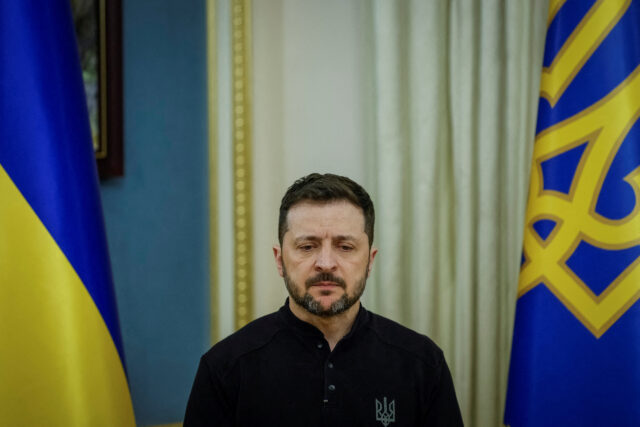
FILE PHOTO: Ukraine's President Volodymyr Zelenskiy attends a press conference, amid Russia's attack on Ukraine, in Kyiv, Ukraine, April 4, 2025. REUTERS/Alina Smutko/File Photo

Diplomatic efforts to end the prolonged war between Russia and Ukraine hit another impasse on Thursday as both sides traded blame for the stalled peace process, escalating tensions amid mounting international pressure for resolution.

Zelenskiy and Putin Clash Over Peace Approach

Russian officials accused Ukrainian President Volodymyr Zelenskiy of deliberately sabotaging peace negotiations, while Ukraine countered that President Vladimir Putin is the true obstacle to peace. The clash comes in the wake of faltering talks in London between U.S., Ukrainian, and European diplomats aimed at brokering a ceasefire.

Maria Zakharova, spokesperson for Russia’s Foreign Ministry, said Zelenskiy “categorically refused to make any concessions” and insisted on terms that could “torpedo the emerging peace process at any cost.”

“He is not interested in real dialogue,” Zakharova told reporters. “What we witnessed yesterday was a political posture, not a genuine negotiation.”

In response, Ukrainian Foreign Minister Andrii Syhiba posted a strongly worded message on X (formerly Twitter), blaming Russia for continued bloodshed. “Yesterday’s Russian maximalist demands for Ukraine to withdraw from its regions, combined with these brutal strikes, show that Russia, not Ukraine, is the obstacle to peace,” he wrote.

His comments followed a deadly overnight missile and drone barrage on Kyiv, which claimed at least eight lives. Ukrainian officials view the attacks as evidence of Russia’s disinterest in peace and determination to solidify its territorial gains.

U.S. President Trump Pressures Both Sides

Adding to the diplomatic strain, U.S. President Donald Trump expressed growing frustration with the stalemate, signaling a potential shift in Washington’s approach. In a social media post on Wednesday, Trump warned he might withdraw U.S. mediation efforts if Russia and Ukraine fail to make progress.

“The window for a deal is closing. If they don’t want peace, we won’t force it,” Trump posted.

Trump also stirred controversy by dismissing Ukraine’s stance on Crimea, saying the territory “was lost years ago and is not even a point of discussion.” That statement drew immediate backlash from Kyiv, where officials insist that accepting Russia’s 2014 annexation would violate Ukraine’s constitution and sovereignty.

Crimea: The Core Sticking Point

The dispute over Crimea remains one of the deepest divides between the two nations. Russia seized the peninsula following a controversial 2014 referendum, which was widely condemned by the United Nations and Western nations as illegitimate.

Zelenskiy, reiterating his country’s position earlier this week, insisted that Ukraine would “never” recognize Crimea as Russian. In contrast, Kremlin spokesperson Dmitry Peskov praised Trump’s remarks, saying they “completely align with our longstanding view” and that Crimea is “an inseparable part of Russia.”

The peninsula’s strategic significance—home to Russia’s Black Sea Fleet and used as a launch site for attacks on Ukraine—has made it central to both military operations and peace talks.

Truce Talks Collapse

Although the U.S. had recently brokered a tentative 30-day truce between Kyiv and Moscow, that agreement has since unraveled. Russia countered the ceasefire with a list of preconditions and raised concerns that the pause would only allow Ukraine to rearm and mobilize more troops.

European governments, meanwhile, continue to support Ukraine with military aid. Moscow claims these arms shipments are emboldening Zelenskiy and delaying peace, while Western allies insist Ukraine has a right to defend itself after Russia’s full-scale invasion in 2022.

Over the last three years, the conflict has caused the deaths of tens of thousands of civilians and soldiers, displaced millions, and leveled entire towns across Ukraine.

Looking Ahead

With no immediate breakthrough in sight, and diplomatic efforts now under threat of abandonment by the U.S., the path to peace looks increasingly uncertain. Both Russia and Ukraine appear entrenched in their positions, while the international community watches anxiously as the war grinds on with devastating human and geopolitical consequences.

Whether future talks can succeed where previous efforts have failed may depend on finding common ground on Crimea—a challenge that continues to stand as the war’s most intractable obstacle.

Cornell President Cancels Pro-Palestinian Performer Kehlani After Campus Outcry

Cornell University has canceled the upcoming performance of R&B singer Kehlani at its annual end-of-semester “Slope Day” concert following intense backlash from Jewish students and alumni. The decision, announced by university president Michael Kotlikoff in a campus-wide email on Wednesday, came after concerns were raised over the singer’s past political statements and perceived antisemitic rhetoric.

A Controversial Performer Choice

Kehlani, initially announced as the Slope Day headliner on April 10, quickly became a divisive figure on campus. The student-led announcement drew immediate criticism from the group Cornellians for Israel, which publicly called for the university to rescind the invitation due to the artist’s inflammatory public statements and imagery perceived as hostile toward Israel.

Among the key concerns was Kehlani’s 2023 music video that included the phrase “Long Live the Intifada”, a reference to the Palestinian uprisings against Israel that resulted in thousands of casualties. She had also posted on X (formerly Twitter), “It’s f— Israel, it’s f— Zionism, and it’s also f— a lot of y’all too,” sparking accusations of antisemitism.

Shift in University Stance

Initially, President Kotlikoff had indicated that it was “too late” to cancel the performance and that the university had made contractual adjustments to minimize political expression. However, after speaking with Jewish students—including during a Shabbat dinner—and receiving growing pressure from students, parents, and national organizations, Kotlikoff reversed course.

In his statement, he wrote:

“In the days since Kehlani was announced, I have heard grave concerns from our community that many are angry, hurt, and confused… While any artist has the right in our country to express hateful views, Slope Day is about uniting our community, not dividing it.”

A Divided Campus, A Broader Debate

The controversy reflects growing tensions on U.S. campuses over the Israeli-Palestinian conflict, where free speech, political expression, and community inclusiveness often clash. Jewish students and supporters expressed relief following the cancellation.

The group Cornellians for Israel, which had circulated posts calling for Kehlani’s removal or for refunds of the $384 student activity fee, updated their Instagram with a caption that read:
“Jewish students have made our voices heard.”

Conversely, some students and civil liberties advocates expressed concerns about the implications for artistic freedom and the precedent set by capitulating to political pressure.

Looking Ahead: New Selection Process Promised

President Kotlikoff acknowledged the difficulty of the decision and promised reforms to the artist selection process:

“I understand that my decision will be celebrated by some and criticized by others. I believe it is the right thing to do… We will revise the process for researching and selecting performers moving forward.”

No alternative lineup has been announced for Slope Day, which remains one of the most anticipated social events on campus each year.

Political and Parental Pressure

The incident also comes as Cornell faces potential federal funding cuts over alleged antisemitism, adding further urgency to university leadership’s actions. The topic has been a source of concern in the Cornell Parents Facebook group, where some questioned the judgment of booking Kehlani amid heightened political scrutiny.

Final Thoughts

This episode at Cornell underscores a wider national conversation about the balance between inclusion and free expression, especially in politically charged contexts. As universities become increasingly scrutinized for how they respond to student concerns and external pressures, the Kehlani controversy may serve as a touchstone for future debates on college campuses across the country.

DeepSeek Data Breach Sparks Privacy Outrage in South Korea

South Korea’s Personal Information Protection Commission (PIPC) has formally confirmed a significant data breach involving DeepSeek, a Chinese AI startup, prompting widespread concern over international data privacy and security practices. The incident stems from DeepSeek’s launch in January 2025, during which it illegally transferred South Korean users’ data abroad without proper consent.

🚨 The Breach: User Data Transferred Without Consent

According to a statement issued by the PIPC, DeepSeek violated multiple facets of South Korea’s Personal Information Protection Act (PIPA) by:

  • Failing to obtain explicit user consent before transferring data overseas.
  • Sharing user prompts and interactions with Beijing Volcano Engine Technology, a third-party Chinese entity.
  • Distributing the data in a manner inconsistent with privacy expectations and without informing users.

The breach came to light after concerned users and privacy advocates noticed unusual patterns in data behavior, sparking an investigation that revealed widespread non-compliance with Korean data protection norms.

📱 Suspension of App Downloads

In response to the revelations, South Korean authorities moved swiftly. By February 2025, downloads of the DeepSeek app were officially suspended from local app stores, including the Google Play Store and Apple App Store Korea.

The ban aimed to mitigate further risks while investigators probed the depth and extent of the breach.

“This is a clear violation of our privacy standards,” stated a senior PIPC official. “DeepSeek failed to respect user rights, transparency, and legal safeguards, especially regarding international data transfers.”

📋 Multiple Violations Identified

Beyond the unauthorized transfer of data, DeepSeek was found to be in breach of several additional compliance standards:

  • Incomplete and non-compliant privacy policy: The company’s privacy policy lacked required disclosures in the Korean language, making it inaccessible to the average user.
  • Age verification failure: DeepSeek failed to implement any meaningful mechanism to verify users’ ages, a requirement designed to protect minors from improper data processing.

These lapses highlight broader concerns around how emerging tech firms—especially from overseas—are integrating into local digital ecosystems without aligning with regional data governance frameworks.

🔧 Required Actions & Regulatory Measures

Following its investigation, the PIPC issued a set of mandatory corrective measures, which DeepSeek must implement to avoid further sanctions:

  1. Destruction of Illegally Transferred Data: All user data and prompt logs shared with Beijing Volcano Engine Technology must be permanently destroyed.
  2. Legal Framework for Future Data Transfers: DeepSeek must establish a lawful data transfer mechanism, such as binding corporate rules (BCRs), standard contractual clauses (SCCs), or other recognized frameworks aligned with Korean law.
  3. Privacy Policy Revision: The company is required to revise its privacy policy in full compliance with Korean standards, including native language disclosures and transparent user data practices.
  4. Implementation of Age Verification: The platform must adopt robust age verification tools to ensure that minors are adequately protected.

Failure to comply with these measures could result in financial penalties, continued suspension, or permanent exclusion from the Korean digital marketplace.

🌐 Broader Implications: Global Data Ethics Under Scrutiny

The DeepSeek breach arrives amid heightened global scrutiny over how AI platforms handle user data. As generative AI becomes increasingly integrated into everyday tools, questions around transparency, jurisdiction, and consent have taken center stage.

South Korea, one of the world’s most connected nations, has adopted stringent data protection policies to shield its citizens from the unchecked flow of personal information across borders.

“This is a wake-up call,” said Dr. Han Ji-woo, a Seoul-based cybersecurity expert. “As AI apps proliferate, regulators need to move faster than the tech to ensure users remain in control of their data.”

🧠 What is DeepSeek?

DeepSeek is a Chinese-based artificial intelligence startup focused on natural language processing and generative AI tools, similar to ChatGPT. The app quickly gained popularity across Asia for its multilingual capabilities and low-cost chatbot access—until the privacy concerns halted its expansion in Korea.

🔮 What’s Next?

For now, DeepSeek remains barred from resuming operations in South Korea until full compliance is achieved. Meanwhile, the case may influence broader regional policy coordination on AI governance, particularly between South Korea, Japan, and members of ASEAN, who share concerns about digital sovereignty.

State of Emergency Declared as New Jersey Wildfire Explodes to 8,500 Acres

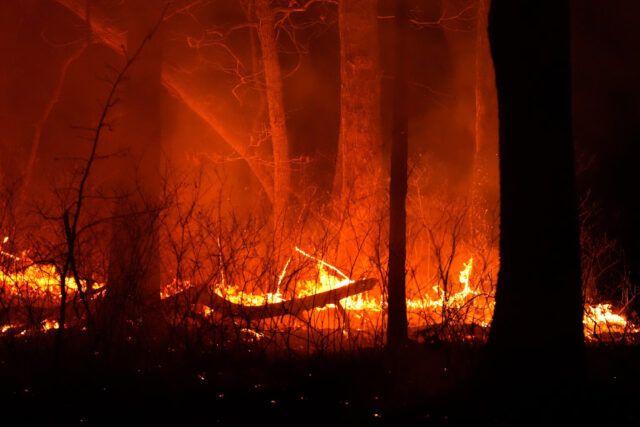
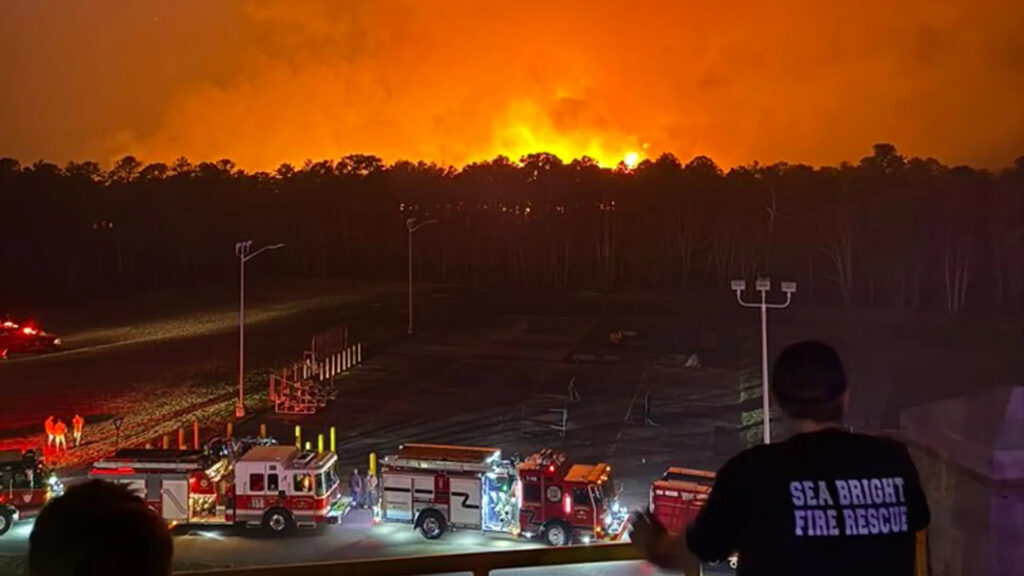
A wildfire in New Jersey has rapidly spread to over 8,500 acres, forcing the declaration of a state of emergency as the fire continues to wreak havoc. The Jones Road Wildfire, which ignited near Toms River on Tuesday afternoon, has already led to the evacuation of thousands, the destruction of power lines, and the threat of burning more than 1,000 structures in the path of the flames.

Explosion of Flames: A Rapid Escalation

What started as a small blaze on Tuesday around 12:30 p.m. quickly escalated overnight, fueled by high winds and dry vegetation. By Wednesday morning, the fire had exploded to an alarming 8,500 acres, putting the surrounding area, including Ocean County, on high alert. Local authorities confirmed that the fire was only 10% contained, and officials are working around the clock to bring the blaze under control.

State of Emergency Declared

New Jersey’s Acting Governor, Lt. Gov. Tahesha Way, declared a state of emergency on Wednesday morning to release additional resources for the firefighting effort. This measure was essential in managing the increasing scale of the fire, which was threatening more than 1,000 structures and has already caused widespread evacuations. “Due to its accelerated growth, with an estimated burn of 8,500 acres, threatening more than 1,000 structures, requiring the evacuation of residents, and the loss of power to over 25,000 residents, I am declaring a State of Emergency for Ocean County,” said Lt. Gov. Way in a statement.

The fire, located south of Toms River along the Garden State Parkway, was particularly concerning due to its proximity to this major road. At one point on Tuesday evening, flames leapt across the highway, forcing its closure and halting one of the busiest transportation routes in the state.

Evacuations and Damage

More than 3,000 residents have been forced to evacuate the area, with evacuation notices still in effect as of Wednesday morning. Several of those affected have shared their harrowing experiences. “As the day progressed, it was kind of scary,” said Michael Ferrara, an evacuee. “Flames and smoke closed in on my neighborhood, and I had to make the decision to leave.” Ferrara expressed the eerie feeling of not knowing what to take during the evacuation, saying, “What are you going to take with you? Birth certificates, passports?”

While no fatalities have been reported so far, the fire has caused significant disruptions. More than 25,000 residents were left without power due to a forced outage from the blaze, and authorities are continuing to monitor the situation.

Firefighting Efforts and Weather Conditions

Firefighters are working diligently to contain the flames, but they face challenging conditions, with gusty winds and dry weather fueling the fire’s rapid spread. Winds were expected to gust up to 20 mph on Wednesday morning, although the forecast calls for calmer conditions later in the day. The high pressure moving in may provide some relief, but rain is not expected until Friday night, which could help in containing the fire.

A Community in Crisis

As residents await news of their homes and the future of their neighborhoods, the situation remains uncertain. One evacuee expressed the anxiety that comes with the unknown: “I hope that I have a home to return back to,” said one distraught resident.

This wildfire, which is continuing to grow, serves as a stark reminder of the risks posed by wildfires, particularly during dry, windy conditions. The community’s resilience is being tested as they navigate these trying circumstances, and authorities continue their efforts to contain the Jones Road Wildfire.

Looking Ahead

As the situation evolves, local officials urge residents to stay informed and follow evacuation instructions. The state of emergency will remain in effect as firefighters and first responders work tirelessly to control the fire, with hopes that rain will bring much-needed relief in the coming days. For now, the priority remains ensuring the safety of the residents and minimizing further damage.

In the face of this massive wildfire, New Jersey’s emergency services are stepping up to support those impacted, with the entire community hoping for a swift resolution to what has been a devastating event.

Houthi Ballistic Missile Triggers Sirens in Haifa for First Time; IDF Intercepts Attack

In a dramatic escalation of regional tensions, a ballistic missile fired by the Iran-backed Houthi rebels in Yemen triggered air raid sirens early Wednesday morning in Haifa and the Western Galilee — the first such incident in northern Israel since the current conflict reignited. The Israel Defense Forces (IDF) confirmed that the missile was intercepted successfully by its air defense systems, averting what could have been a deadly strike.

First Sirens in Haifa Since Ceasefire With Hezbollah

The missile attack marked a significant geographic shift in the Houthi threat. Until now, the majority of Houthi-fired projectiles have been aimed at central and southern Israel. Wednesday’s sirens in Haifa and the Western Galilee were the first in the area since a ceasefire with the Lebanese terror group Hezbollah took effect in November 2024. Explosions from the interception were clearly heard in Haifa, jolting residents from sleep at 4 a.m. and sending over a million people scrambling for bomb shelters.

While no direct injuries from the missile or falling debris were reported, Magen David Adom emergency services treated several individuals who were hurt while rushing to shelters.

Houthi Claims and IDF Response

The Houthis claimed responsibility, boasting that they had targeted a “vital Zionist enemy target” in Haifa. They also asserted they had launched a drone toward Tel Aviv — though the IDF reported no drone incursions from Yemen overnight.

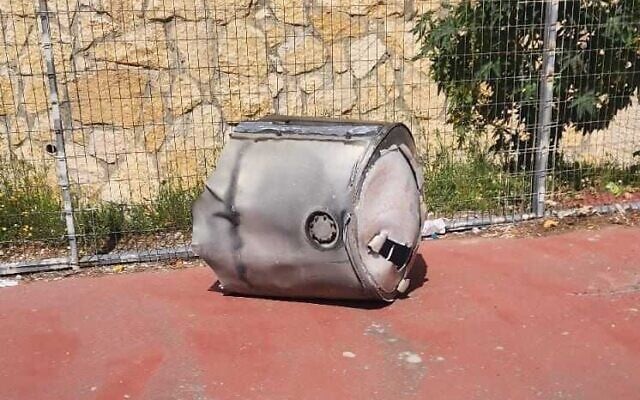
In a precautionary move, the Israel Police instructed the public not to approach any fallen debris, warning it may still contain explosives. Police forces were also placed on alert to search for missile remnants if reported.

Early Alert System Faces Glitches

The IDF had recently rolled out a new missile early warning system, which uses push notifications to provide civilians with a 3–5 minute advance alert before sirens sound. During Wednesday’s incident, however, the system failed to operate as intended.

The IDF acknowledged that although the missile was detected in time, a “malfunction occurred in the transmitting of information” from the Air Force to the Home Front Command. This resulted in delays and incomplete alerts for the civilian population.

“As a result, the preliminary directives were activated at shorter intervals than required,” the military said in a statement, noting that the issue has since been addressed.

This was the second time the system has faltered since its launch. During a previous Houthi missile attack on central Israel just days earlier, many residents reported receiving no alert at all.

Surge in Houthi Missile Activity

Since March 18, when Israel resumed its military operations in Gaza, the Houthis have launched over 20 ballistic missiles and several drones at Israel. According to military sources, only half of those missiles reached Israeli territory and triggered sirens — the rest fell short.

Wednesday’s launch was the latest in a series of Houthi escalations that resumed following the collapse of the temporary ceasefire between Israel and Hamas in January 2025. During the initial phase of the conflict, the Houthis launched around 40 ballistic missiles and multiple drones toward Israel, including a deadly strike in July that killed one civilian and injured several in Tel Aviv.

In response, Israel has conducted several targeted airstrikes against Houthi military infrastructure in Yemen. Meanwhile, the United States has taken a leading role in international efforts to deter Houthi aggression, launching extensive airstrikes against Houthi leadership and supply networks in recent weeks.

Part of a Larger Axis of Hostility

The Houthis, officially known as Ansar Allah, are staunchly aligned with Iran and share ideological and strategic goals with Hezbollah and Hamas. Their slogan, “Death to America, Death to Israel, a Curse on the Jews,” underscores their vehement opposition to the existence of Israel and their alignment with Iran’s broader regional ambitions.

With the Gaza war still raging and the regional coalition of Iran-backed actors — including Hezbollah, Hamas, and the Houthis — continuing coordinated attacks, Israel remains on high alert across multiple fronts.

The early-morning missile attack on Haifa serves as a stark reminder of the growing reach and unpredictability of the threats Israel faces. The IDF has reiterated its commitment to strengthening its multi-layered missile defense systems and correcting flaws in its civilian alert mechanisms.

As tensions escalate, the citizens of Israel remain braced for further challenges in what is increasingly becoming a multi-front conflict.

This Jewish New Yorker Survived the Holocaust and the Hungarian Revolution — And Is Still Helping Others

In a modest, two-bedroom apartment in Washington Heights, New York City, 80-year-old Susan Kalev lives a life that is anything but ordinary. Surrounded by photographs chronicling a full and meaningful journey — and accompanied by her three playful cats, Gingy, Sushi, and Ziggy — Kalev is a living testament to history, survival, and enduring compassion.

Born in 1944 during the Holocaust, Kalev has lived through some of the darkest periods in modern history. From surviving the Budapest Ghetto to fleeing Communist Hungary during the 1956 revolution, and later rebuilding her life in America, her story is one of immense resilience. Now, as a licensed clinical social worker, Holocaust educator, and passionate animal rights advocate, Kalev continues to give back, using her experiences to uplift others.

From War-Torn Budapest to a New World

Susan Kalev was born during the final years of World War II in an internment camp in Budapest, Hungary. Not long after, she and her mother, Ilona Spiegel, were forced into the Budapest Ghetto — a place of deprivation, overcrowding, and rampant disease. Susan’s older sister, Marian, succumbed to illness in the ghetto at just three years old. Most of Kalev’s extended family did not survive the Holocaust.

In January 1945, the Soviet Army liberated the Budapest Ghetto. Susan and her mother were freed, but her father, Henrik Weltner, had already been deported to a concentration camp. Records from Yad Vashem show he was eventually taken to Donnerskirchen, a camp on the Austria-Hungary border, where he was murdered in October 1945 — nine months after Susan and her mother were liberated.

Following the war, Susan’s mother remarried another Holocaust survivor, Arpad Steiner, who had also lost most of his family. Together, they had a daughter — also named Marian. But even in post-war life, silence shrouded their trauma. Kalev was never told that Steiner was her stepfather; she discovered the truth accidentally around the age of nine.

Fleeing the Hungarian Revolution

In 1956, political upheaval once again forced the family to flee. The Hungarian Revolution, an uprising against Soviet-imposed policies, brought chaos to Budapest. Kalev, then 12, still remembers the fear as her family fled into the woods with only a suitcase.

“It was very hush-hush,” Kalev told the New York Jewish Week. “They just packed a suitcase and said, ‘Yes, we have to go.’”

Among the 200,000 Hungarian refugees, the family crossed into Austria before eventually making their way to New York. They arrived on Christmas Day, 1956 — a memory that remains vivid in Kalev’s mind. “It was a very different atmosphere,” she said, recalling her astonishment that people in America could freely identify as Jewish. “It was like — really, you could say that?!”

Rebuilding in New York

The family stayed at the Hotel Endicott on the Upper West Side for six months with the help of Jewish Family Services. Susan and her sister were enrolled in a local yeshiva. Eventually, they moved into a small apartment in Washington Heights, the same neighborhood Susan still calls home 50 years later.

Her mother, formerly a seamstress in Hungary, retrained as an accountant and later worked as a real estate agent. Her stepfather, unable to find work in his field, became a stay-at-home dad.

“It was a big adjustment for all of us,” Kalev recalled.

Kalev married and had two daughters, Edya and Nehar. Although she eventually divorced her husband, Jonah Kalev, after 15 years, she maintained a close relationship with her children while pursuing a meaningful career.

A Lifetime of Helping Others

Kalev chose a profession rooted in empathy and healing. As a licensed clinical social worker, she has spent decades helping people cope with trauma, grief, and major life changes.

“I think that my choice of profession — to be a counselor, to be a therapist — certainly has something to do with what I have experienced,” she said.

Despite her age, Kalev still works part-time, offering therapy sessions by phone. She also remains actively involved in Holocaust education, speaking to schools, community groups, and survivors’ organizations about her life and the importance of remembrance.

Fifteen years ago, Kalev joined a group of child survivors of World War II from Hungary. Together, they published a book and a documentary to share their stories. She also participates in monthly Zoom meetings with two survivor groups — one for Hungarian child survivors and another for infants who lived through the Holocaust.

“Basically, it’s a little community where you can talk about how you’re feeling, share stories, and educate others,” she said. “It’s become very important to me.”

A Voice for the Present

In addition to preserving the memory of the past, Kalev is deeply concerned about the present — especially the rise of authoritarianism in both Hungary and the United States.

“I’m not experiencing it personally, but I’m very aware of the shift to the right,” she said, citing Hungarian Prime Minister Viktor Orban’s policies as “fascist” in nature. “There is a lot of fear on the part of the Jewish population. It’s a little scary for everybody.”

Kalev continues to advocate for justice, freedom, and compassion. She is a longtime member of SelfHelp, a community service group that supports Holocaust survivors, and a former member of the Lincoln Square Synagogue. Through her activism and social work, she ensures that the silence her parents lived with is replaced by truth, healing, and dialogue.

A Legacy of Strength

Though born into the darkness of war and displacement, Susan Kalev has transformed her life into a beacon of resilience and service. Through her work, storytelling, and advocacy, she embodies the strength of a generation that endured unimaginable loss but continues to build a better world.

“I think it is important to do, and not to be silent,” Kalev said. “Because my parents were silent — and I want to share.”

OpenAI Signals Interest in Acquiring Google Chrome Amid Antitrust Trial

In a surprising revelation during a high-stakes antitrust trial, OpenAI has expressed a willingness to acquire Google’s Chrome browser—if ordered by the courts. The declaration came from Nick Turley, an OpenAI executive, during a hearing focused on reshaping the online search landscape and curbing Google’s dominance.

The U.S. Department of Justice is actively pursuing remedies that would foster greater competition in the online search industry. As part of these proceedings, the DOJ has taken aim at Google’s long-standing monopoly over both search and web browsers, arguing that the tech giant’s control over these platforms stifles innovation and consumer choice.

Why Chrome?

OpenAI’s interest in Chrome stems from its broader ambition to build a “super assistant”—an AI-driven tool that can seamlessly integrate real-time, web-based search into user interactions. Currently, OpenAI’s ChatGPT depends on Microsoft’s Bing for web results, but Turley made it clear that this reliance is less than ideal.

“Google has refused to collaborate,” Turley said, noting that this has hindered OpenAI’s development of a fully independent search engine tailored to its AI platforms. In an ideal scenario, Turley explained, ChatGPT would handle around 80% of user queries using its own in-house search capabilities—a milestone that could take several years to reach without significant changes in the tech ecosystem.

A Tactical Move or Strategic Ambition?

While Turley’s remarks were hypothetical—hinging on a court-mandated divestiture—they underscore a growing appetite among major AI players to control their own data pipelines and search infrastructures. Chrome, which dominates the global browser market, represents a powerful gateway to search traffic. Acquiring such a tool would grant OpenAI unprecedented reach and direct access to user behavior online, significantly enhancing its AI’s performance and utility.

Breaking Google’s Grip

This development is a critical component in a broader effort to challenge Google’s dominance. The DOJ’s trial marks one of the most consequential antitrust actions in recent U.S. history, and tech leaders, lawmakers, and regulators are closely watching how the case unfolds. Should the court decide to break up parts of Google’s search ecosystem or mandate that Chrome be divested, OpenAI may emerge as a frontrunner in bidding for the browser.

The Road Ahead

While there’s no guarantee that Chrome will ever be on the table, OpenAI’s candid interest in such a scenario highlights the competitive tensions bubbling beneath the surface of the AI and search markets. It also signals how central browser technology could become in the race to define the future of AI-driven internet experiences.

As OpenAI continues to push the envelope with its AI models and virtual assistant tools, control over a major web browser could be a game-changing piece of the puzzle. For now, all eyes remain on the courtroom—and on what comes next in the battle over who controls the gateways to the web.

Man Missing After Rare Shark Attack in Israel

A swimmer has gone missing after an extremely rare and harrowing shark attack off the coast of northern Israel, sending shockwaves through the local community and raising alarm over an area usually known for its calm, warm waters.

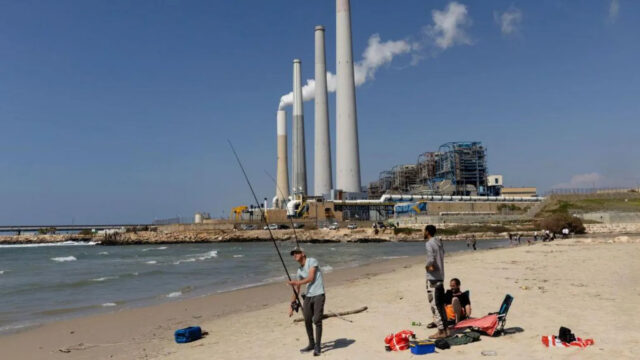
The incident occurred on Monday near Olga Beach in Hadera, approximately 40 kilometers (25 miles) north of Tel Aviv. Witnesses on the beach described the scene as chaotic and terrifying, with video footage circulating on social media capturing frantic screams and shocked reactions as the swimmer appeared to struggle far out at sea.

A Shocking and Unprecedented Event

“I was in the water, I saw blood and there were screams,” Eliya Motai, an eyewitness, told Ynet. “It’s terrifying. We were here yesterday and saw the sharks circling us.”

Authorities have closed the beach as Israeli police and rescue teams launch a large-scale search operation for the missing man. Despite the presence of sharks in the area, experts emphasize that shark attacks in Israel are almost unheard of.

According to local reports, this is only the fourth documented shark attack in Israeli waters and the first potential fatality since the country’s founding in 1948. Prior to this, no deadly shark incidents had ever been recorded in Israeli history.

Why Do Sharks Gather in Hadera?

Marine biologists note that dusky and sandbar sharks are known to frequent the waters off Hadera, particularly near the Orot Rabin power station, Israel’s largest electricity-generating plant. The warm water discharged by the plant and the abundance of fish drawn in from a nearby stream make it an ideal environment for these predators.

While these species are typically not aggressive toward humans, the congregation of both fish and sharks in close proximity to swimmers increases the risk of rare interactions.

Community Shaken, Authorities on High Alert

In the wake of the attack, the Israeli public and tourists alike have been urged to exercise caution, especially near power station outflows and known shark aggregation zones.

“This tragic incident is a stark reminder that nature can be unpredictable,” said a spokesperson from Israel’s Nature and Parks Authority. “We are working closely with marine experts to better understand what may have triggered this event.”

Local authorities have yet to release the identity of the missing swimmer. The search continues with divers, drones, and rescue boats combing the coastline in hopes of locating the man or any evidence that might help explain what transpired.

As Israel reels from this rare marine tragedy, many are calling for greater public awareness, enhanced monitoring, and clearer safety guidelines for swimming in areas known for shark activity.

Yonkers Man Pleads Guilty in Antisemitic Scissor Attack on Jewish Barber

A man from Yonkers has pleaded guilty to a violent antisemitic assault on a local Jewish barber, the Westchester County District Attorney’s office announced on Monday. Ahmed Al Jabali admitted to second-degree assault as a hate crime, a class C violent felony, for the August 2024 attack on Slava Shushakov, a barber and prominent member of the Jewish community.

According to the District Attorney’s report, Al Jabali entered Shushakov’s barbershop under the pretense of requesting a shave. But the encounter quickly turned violent when Al Jabali grabbed a pair of barber shears and hurled an antisemitic slur at Shushakov, calling him an “[expletive] Jew.” He then attempted multiple times to stab the barber with the scissors, slashing him on the arm and hand in the process, all while continuing to shout antisemitic hate speech.

District Attorney Susan Cacace condemned the attack in a powerful statement:
“Hate has no home in Westchester County. The rise in antisemitic hate over the last several years is disturbing and completely unacceptable. Today and every day, my office stands with the Jewish community of Westchester and will seek justice for victims of antisemitic violence.”

Shushakov, who sustained physical injuries and emotional trauma from the incident, expressed gratitude for the support he’s received and emphasized the broader implications of the attack.
“No one should have to go through what I went through,” Shushakov said. “This attack is a reminder that we have a lot more to do to eradicate hate and antisemitism in Westchester County. I want to thank DA Cacace and the Yonkers police for helping me get through this difficult time and for making sure I could get justice.”

The assault came amid rising tensions worldwide following the October 7 escalation of conflict in Gaza. Shushakov believes the attack may have been influenced by the ongoing war, a concern echoed by community members and local leaders tracking the surge in hate crimes.

This case has sparked renewed calls for increased security measures, community education, and zero tolerance for hate-fueled violence in Yonkers and beyond. With Al Jabali’s guilty plea, the case moves toward sentencing, and justice inches closer for a community shaken but undeterred.

JD Vance Calls for Stronger India-US Ties as Trade Talks Gain Momentum

U.S. Vice President JD Vance has called for deeper and more strategic ties between India and the United States, emphasizing the need for cooperation to ensure a “prosperous and peaceful” 21st century. Speaking at a gathering in the historic city of Jaipur during his official visit to India, Vance delivered a powerful message about the shared global responsibility of the two democracies.

“But I also believe that if we fail to work together successfully, the 21st Century could be a very dark time for all of humanity,” Vance warned, highlighting the broader implications of the bilateral relationship beyond economics.

A Critical Moment in Trade Negotiations

The vice president’s speech comes amid ongoing and rapidly progressing trade negotiations between India and the U.S. Both sides are racing to finalize a deal before President Donald Trump’s 90-day suspension on higher tariffs ends on July 9. India, which faced the prospect of 27% tariffs on key exports, has been in intense talks to avoid economic fallout.

Vance confirmed that the two nations have “finalised the terms of reference” for the trade talks, calling it “a vital step” toward achieving the shared vision of President Trump and Prime Minister Narendra Modi.

Praise and Realism in Diplomatic Tone

Calling Modi “a tough negotiator” who “drives a hard bargain,” Vance received applause from the Jaipur audience. However, he didn’t shy away from acknowledging the trade friction between the two nations. The U.S. has criticized India’s high tariffs, with U.S. Trade Representative Jamieson Greer citing a “serious lack of reciprocity” in trade ties.

Despite recent reductions by India in duties on several goods, sticking points remain, particularly in the agriculture sector—where the U.S. seeks market access and India remains defensive.

Beyond Trade: Defense and Energy

The relationship isn’t solely economic. Vance emphasized U.S. interest in expanding energy and defense cooperation with India, adding to a broader strategic partnership that has grown significantly in recent years.

On Monday, Vance and Modi also discussed collaborations in advanced technologies and national security, underscoring India’s growing role in America’s Indo-Pacific strategy. The leaders are expected to meet again later this year at the Quad Summit, which Delhi will host.

A Personal Connection to India

Vance’s visit is not just diplomatic—it’s deeply personal. Accompanied by his wife Usha and their three children, the family has been embracing Usha’s Indian roots. Usha’s parents migrated from Andhra Pradesh, and the couple expressed a desire to introduce their children to Indian culture and heritage.

Images of their children dressed in traditional Indian attire went viral across Indian media, adding a relatable and human touch to the official visit. The family visited Jaipur’s iconic Amer Fort on Tuesday and is set to tour the Taj Mahal in Agra before returning to the U.S.

Looking Ahead

As Washington and Delhi edge closer to a landmark trade agreement, Vance’s visit underscores the growing geopolitical and cultural significance of India-U.S. relations. With high stakes on trade, technology, and global leadership, both nations appear ready to take bold steps toward a new era of partnership.

“The future depends on what we build together,” Vance said. And with the clock ticking on tariff deadlines and growing regional challenges, the world is watching.

Zvi Sukkot Sparks Controversy, Says High Court Ruling on Netanyahu’s Removal Can Be Ignored

In a highly charged interview with Israel’s Radio 103FM on Tuesday, former Religious Zionist Party MK Zvi Sukkot made waves by asserting that a ruling by the High Court of Justice supporting the removal of Prime Minister Benjamin Netanyahu should be ignored, should such a scenario arise.

Sukkot’s remarks came in response to recent developments involving Shin Bet (Israel Security Agency) Chief Ronen Bar, who submitted an affidavit to the High Court contesting his dismissal by the government. The issue has inflamed debate over legal authority, democratic checks and balances, and the boundaries of executive power in Israel.

“This Is a Coup, Not a Legal Proceeding”

According to Sukkot, the potential collaboration between the head of the Shin Bet, Attorney-General Gali Baharav-Miara, and the High Court to declare Netanyahu unfit for office would constitute what he describes as an illegal seizure of power.
“There cannot be a situation where the prime minister wants to fire people from their positions, and then suddenly those who decide to remove him do so with authority they do not have by law, and the High Court supports this,” Sukkot stated.
He went further, calling such a move “a political event, an event of a coup,” and stressed, “we cannot cooperate with it.”

Sukkot framed his criticism within a broader concern about the balance of power in Israel’s democratic institutions. His statements tap into growing tensions between the executive branch and judicial authorities, as well as longstanding criticisms from the right regarding what they see as overreach by Israel’s legal system.

Defense of Netanyahu Amid Political Turmoil

Sukkot did not stop at criticizing the judiciary. He also took aim at Ronen Bar, questioning the timing and motivations behind his affidavit and public statements.
“Aren’t you bothered that a person, under whose watch these things happened, only remembers to speak to the public after he is fired?” he said.

Sukkot further argued that the role of Israel’s security leadership must be depoliticized and rooted in loyalty to democratic processes, not media optics or political games.
“I expect from the head of the Shin Bet, that if the prime minister tells him, ‘Go spy on citizens illegally, turn the Shin Bet into the Stasi,’ he should leave at that moment, hand over the keys, and tell the people of Israel, ‘This is what the prime minister is trying to do,’” Sukkot added, implying that if Bar had concerns, he should have raised them earlier, not after facing termination.

The Broader Implications

This bold assertion that the judiciary can be ignored if it rules against Netanyahu has sparked a firestorm among legal experts, opposition figures, and defenders of judicial independence. Many warn that Sukkot’s stance risks undermining Israel’s democratic institutions and the public’s faith in the rule of law.

With Israeli politics already navigating turbulent waters amid national security challenges, judicial reform debates, and deep political polarization, Sukkot’s comments underscore the fragility of Israel’s institutional trust and the heightened tensions within the current political climate.

As the situation develops, eyes will remain on both the High Court and Prime Minister Netanyahu’s next moves — with a nation watching closely as questions of legality, leadership, and legitimacy hang in the balance.