Home Blog Page 24

DHL Halts High-Value Shipments to the US Amid New Customs Rules

Global commerce faces new headwinds as DHL Express, one of the world’s leading logistics companies, has announced it will temporarily halt all high-value shipments over $800 to U.S. consumers starting April 21, 2025. This decision comes in direct response to recent changes in U.S. customs regulations that have lowered the formal entry threshold from $2,500 to $800, significantly altering the landscape for international e-commerce and shipping.

What Changed and Why It Matters

The U.S. government’s regulatory adjustment means that any shipment entering the country valued above $800 now requires a more detailed customs clearance process, similar to what was previously only necessary for goods exceeding $2,500. This shift, aimed at tightening import controls and increasing tariff enforcement, has led to widespread delays at customs checkpoints, prompting logistical bottlenecks and frustration among global shippers and importers.

While business-to-business (B2B) shipments will continue as usual, DHL warns that these too may face delays due to congestion and increased scrutiny by customs agents. Shipments under $800 will not be impacted by the temporary suspension but may still see cost increases, as U.S. Customs and Border Protection will begin applying duties to all packages arriving from China and Hong Kong effective May 2.

DHL’s Strategic Response

In a statement, DHL Express cited the need to maintain efficiency and minimize disruption to its network. “The revised threshold has created challenges in the customs clearance process,” a spokesperson explained. “Until further notice, we are suspending shipments over $800 to U.S. consumers to ensure operational reliability.”

DHL’s move has sparked concern among global retailers and exporters who rely on the company’s services for timely delivery of premium goods, especially in industries such as electronics, luxury fashion, and specialty equipment.

Impact on Retailers and Global Trade

For businesses exporting high-value goods to the U.S., especially small and medium-sized enterprises, this change poses significant financial and logistical challenges. Retailers now face the task of reworking pricing models, adjusting shipping practices, and potentially splitting larger orders to stay under the new $800 threshold.

“This is going to raise operational costs for companies that rely on high-ticket international sales,” said Jane Li, an international trade consultant based in Hong Kong. “Many will now have to consider domestic warehousing options or more expensive alternative logistics providers.”

Adding to the turmoil, Hongkong Post has already suspended sea shipments to the United States, directly citing frustrations with the new regulations and criticizing the lack of transitional planning by U.S. authorities. The postal service warned of “a growing ripple effect” across Asia-Pacific shipping corridors.

What Happens Next?

Logistics experts predict this may only be the beginning of broader disruptions in cross-border commerce, especially if other logistics giants follow DHL’s lead. Several international shipping firms are reportedly reviewing their U.S. shipping policies in anticipation of similar customs enforcement crackdowns.

In the meantime, DHL customers are being advised to closely monitor shipment values and consult with logistics coordinators to determine viable alternatives for high-value exports to the U.S.

As the global supply chain continues to navigate these abrupt regulatory changes, flexibility and strategic planning will be key for businesses to maintain resilience in the face of shifting trade policies.

Key Dates to Watch:

  • April 21, 2025: DHL halts U.S. consumer shipments over $800
  • May 2, 2025: Duties apply to all shipments from China and Hong Kong, regardless of value

Affected Parties:

  • E-commerce businesses
  • International retailers
  • U.S. consumers purchasing high-value goods
  • Freight forwarders and postal services across Asia

Sources: Reuters, BBC, MaritimeGateway, Sky, BusinessTimes.

Tragedy in Brooklyn: Speeding Driver Kills Jewish Mother and Two Children While Walking Home from Synagogue

A devastating car crash in Brooklyn on March 29 has sent shockwaves through New York City and the Jewish community, after a speeding driver fatally struck a mother and her two young daughters as they were walking home from synagogue on Shabbat. Prosecutors revealed that the driver, 32-year-old Miriam Yarimi, was traveling nearly three times the speed limit—at full throttle—when the collision occurred.

Brooklyn District Attorney Eric Gonzalez announced on Wednesday that Yarimi has been arraigned in Brooklyn Supreme Court on multiple charges, including second-degree manslaughter, criminally negligent homicide, second-degree assault, and other related offenses.

A Family’s Final Walk

The victims—Natasha Saada, 34, and her daughters, Diana, 8, and Deborah, 5—were crossing Ocean Parkway in Midwood, a neighborhood with a large Jewish population, when tragedy struck. The family was just steps from the sidewalk when Yarimi’s 2023 Audi, reportedly speeding at approximately 68 mph in a 25 mph zone, slammed into the back of a Toyota Camry waiting at the intersection and barreled through the Saadas.

The force of the impact flipped Yarimi’s car, which came to a stop 130 feet away, upside down. Natasha and her daughters were pronounced dead at the scene. A fourth child, 4-year-old Philip, survived but suffered life-threatening injuries, including skull fractures, internal bleeding, and the loss of a kidney.

“This horrific fatal crash was one of the worst I’ve seen in over 25 years as a prosecutor,” DA Gonzalez said. “It wasn’t an accident. This defendant’s unconscionably dangerous driving wiped out a family. We will now seek to hold her fully accountable.”

A Disturbing Pattern

Court documents and investigators say Yarimi ran a red light just blocks before the fatal crash, nearly colliding with other vehicles. Surveillance footage showed no signs of braking before the impact.

Yarimi, who ran a wig business and branded herself online as the “WIGM8KER,” had dozens of traffic violations and was driving with a suspended license at the time of the crash. Her past social media posts often highlighted her Jewish faith and celebrations of holidays like Purim and Passover.

Held Without Bail

Yarimi, who sustained minor injuries in the crash, was hospitalized and is now being held without bail. She faces a maximum prison sentence of 5 to 15 years if convicted. Her car, an Audi with vanity plates linked to her wig business, is now a symbol of the recklessness that ended three innocent lives.

Community in Mourning

The crash has ignited an outpouring of grief in the local and broader Jewish community. Vigils were held, and prayers circulated online. Mayor Eric Adams and other city officials visited the Saada family to offer condolences.

Saada and her daughters were flown to Israel for burial at Har HaMenuchot cemetery in Jerusalem. Philip remains in recovery from his injuries.

A Call for Reform

In the wake of the tragedy, local leaders are calling for new laws to address so-called “super speeders”—drivers with an excessive number of traffic infractions and reckless behavior behind the wheel.

“This wasn’t just a tragedy—it was preventable,” said one Brooklyn lawmaker. “We need to do more to ensure people with dangerous driving records aren’t allowed behind the wheel.”

As the case unfolds, the focus remains on justice for the Saada family—and on preventing future tragedies on New York’s streets.

Source: timesofisrael

Israel’s Military Presence in Gaza: Strategic Hold or Prolonged Occupation?

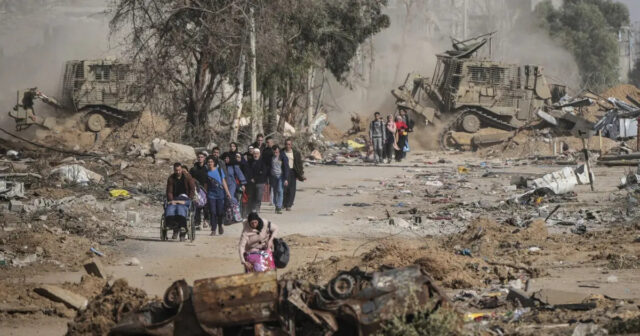
As the Israel-Hamas conflict continues to escalate, Israeli Defense Minister Israel Katz has confirmed that Israeli Defense Forces (IDF) will maintain an indefinite military presence within buffer zones across Gaza, Lebanon, and Syria. This declaration signals a long-term strategic shift in Israel’s security doctrine amid ongoing regional tensions.

Since March 18, Israeli ground operations have expanded dramatically, resulting in the occupation of more than 50% of Gaza’s territory. This includes strategic control of Rafah, a city near the Egypt-Gaza border, which has become a focal point in both military operations and humanitarian concerns.

The Buffer Zone Strategy

The creation and enforcement of buffer zones are seen by Israel as essential for national security, aiming to prevent cross-border attacks and curtail militant movements. Katz’s assertion underscores the belief that military presence in these zones will serve as a permanent deterrent against future threats from Hamas and Hezbollah.

Critics argue, however, that indefinite occupation blurs the line between defensive security and extended military control, raising questions about international law and the sovereignty of Palestinian territories.

Humanitarian Crisis Deepens

Israel’s seven-week-long blockade of Gaza has exacerbated an already dire humanitarian crisis. Access to food, clean water, and medical supplies remains severely limited, with aid organizations warning of looming famine and disease outbreaks. The Israeli government maintains that the blockade is necessary to pressure Hamas and prevent the smuggling of weapons into the region.

Hostages and Ceasefire Stalemate

Hamas continues to hold 59 Israeli hostages, a key point of leverage in any potential negotiation. The group has made clear that a ceasefire agreement will only be considered under two major conditions: the complete withdrawal of Israeli forces from Gaza and a full end to the blockade.

Despite international efforts—particularly from Egypt, Qatar, and the United States—ceasefire talks remain deadlocked. Israel’s position remains firm: there will be no ceasefire without the unconditional release of all hostages and long-term security guarantees.

The Road Ahead

As the situation develops, global attention is focused on how far Israel will go to maintain its newly established buffer zones and whether continued occupation will inflame tensions or bring about a strategic advantage. Meanwhile, Gaza’s civilians remain caught in the crossfire of geopolitics, military strategy, and humanitarian desperation.

The long-term consequences of Israel’s presence in Gaza—and the international community’s response—may redefine the regional landscape for years to come.

Sources: Reuters, AP News, France24, BBC.

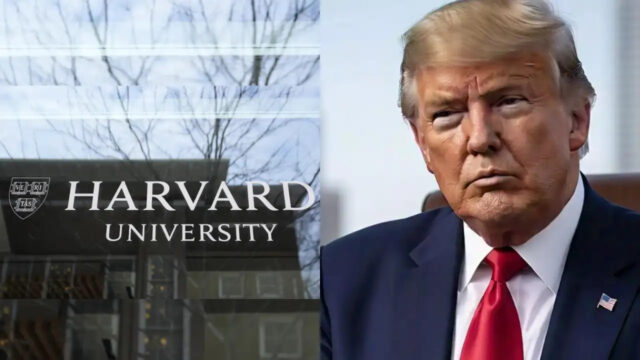
Trump vs. Harvard: Battle Over Tax-Exempt Status Heats Up

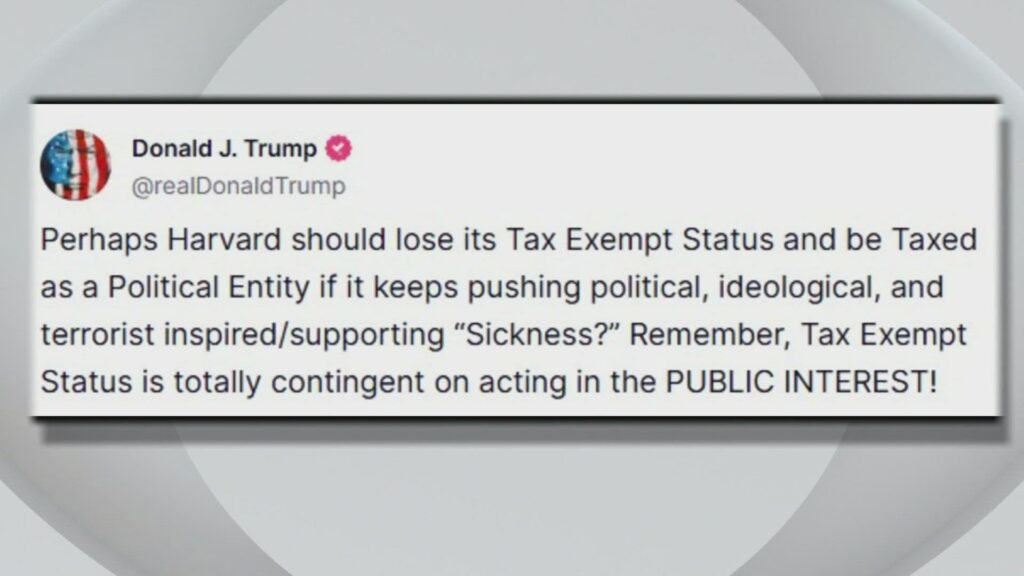
In a dramatic escalation of tensions between the Trump administration and one of America’s most prestigious universities, the IRS has been directed to review — and potentially revoke — Harvard University’s tax-exempt status. The move, led by the administration, comes amid allegations that Harvard has been promoting political ideologies in violation of its nonprofit charter.

A Political and Financial Power Play

At the heart of the controversy is Harvard’s classification as a 501(c)(3) nonprofit organization. Under this status, the university enjoys exemption from federal income taxes and offers tax-deductible benefits to its donors. However, under federal law, institutions with this designation must avoid overt political activity or lobbying efforts that favor a particular party or candidate.

According to administration officials, Harvard has crossed the line. “Taxpayer-funded privilege should not be used to promote partisan ideology,” a senior Trump administration source stated. “No university is above the law, no matter how elite.”

The Trigger: Refusal to Share Admissions Data

The battle was sparked, in part, by Harvard’s recent refusal to comply with federal requests for detailed admissions data, including metrics related to race, legacy admissions, and financial backgrounds. Critics argue the university’s opaque practices conflict with transparency standards expected of tax-privileged institutions.

This defiance, paired with increasing scrutiny over elite colleges’ ideological leanings, has fueled the administration’s argument that Harvard is engaging in political behavior, particularly in light of campus events and faculty statements that have been openly critical of conservative policies.

Billions at Stake

The financial consequences for Harvard could be historic. The university’s $52 billion endowment — the largest of any educational institution in the world — could become subject to taxation if its 501(c)(3) status is revoked. Additionally, its extensive real estate holdings in Cambridge and beyond could also lose property tax exemptions, potentially leading to tens or even hundreds of millions in annual tax liabilities.

As part of the administration’s initial actions, a staggering $2.26 billion in federal research funding allocated to Harvard has already been cut — a clear warning that more punitive measures may follow.

Harvard Responds

In a statement released late Monday, Harvard University expressed “deep concern” over the administration’s actions, calling them “a dangerous overreach and an attack on academic freedom.”

“Harvard has always upheld a rigorous standard of academic independence,” the statement read. “We strongly reject the implication that our teaching, research, or community engagement violates our tax-exempt obligations. This investigation is politically motivated and threatens institutions across the nation.”

Legal Battle Looms

Legal experts predict the issue could become a landmark case on the intersection of education, politics, and tax law. While the IRS has the authority to revoke tax-exempt status, it rarely does so for institutions of this scale and prominence.

Critics of the move argue it sets a dangerous precedent, where universities could face federal retaliation for dissenting viewpoints. Supporters counter that accountability is long overdue for elite institutions they say have become “ideological echo chambers.”

What Happens Next?

Harvard has vowed to challenge any IRS action in court, and legal proceedings could stretch over years. In the meantime, the outcome of the 2024 presidential election may play a decisive role in determining how aggressively the revocation is pursued or reversed.

Regardless of the outcome, the confrontation has already shaken the foundations of higher education’s relationship with the federal government — and raised urgent questions about the future of academic freedom, institutional transparency, and political neutrality.

Sources: WallStreetJournal, NYTimes, AXIOS, Bloomberg, Forbes.

Signs of Life Detected on Distant Planet K2-18b: A New Chapter in Cosmic Exploration

In a groundbreaking discovery that could reshape humanity’s understanding of life beyond Earth, scientists have detected potential signs of biological activity on the distant exoplanet K2-18b, located 124 light-years away in the constellation Leo. Using the powerful instruments aboard the James Webb Space Telescope (JWST), researchers identified dimethyl sulphide (DMS) and dimethyl disulphide (DMDS)—two molecules that, on Earth, are exclusively produced by living organisms.

A Glimpse Into Another World

K2-18b, a so-called “hycean world”, is classified as a type of planet believed to have a vast liquid water ocean beneath a hydrogen-rich atmosphere. With a mass approximately 8.6 times that of Earth, it exists within the habitable zone of its star—where conditions could allow for the presence of liquid water, a key ingredient for life as we know it.

What sets this detection apart is the concentration of these molecules, measured at over 10 parts per million, far surpassing natural background levels found on Earth. On our planet, DMS is largely emitted by phytoplankton in the oceans, while DMDS can be found in microbial and fungal activity. The high levels found on K2-18b suggest that something beyond simple chemistry may be at play.

The Science Behind the Signal

The presence of DMS and DMDS was confirmed with a statistical confidence of 99.7%, also known as three-sigma in scientific terms. While this level is highly suggestive, it does not meet the more rigorous five-sigma threshold typically required for scientific confirmation. In simple terms, the results are promising but not yet definitive—further investigation is required.

The findings underscore JWST’s unprecedented capability to detect biosignatures—chemical fingerprints that could indicate life—on planets light-years away. “This is one of the most compelling signs we’ve seen,” said a lead astronomer from the research team. “But we must be cautious. Nature can be deceptive, and we must rule out all non-biological explanations.”

What’s Next?

Given the significance of the discovery, scientists plan further observational campaigns over the next 1–2 years. These efforts aim to replicate the findings, monitor the atmospheric chemistry of K2-18b in more detail, and search for additional biosignatures. If future data continues to support the presence of life-related molecules, it could mark a monumental shift in our search for life in the universe.

A Cosmic Turning Point?

For decades, humanity has gazed into the stars with the question: Are we alone? This discovery on K2-18b may not be a definitive answer, but it is among the strongest hints yet that life might not be unique to Earth.

As scientists continue to scan the skies and probe distant atmospheres, the dream of discovering extraterrestrial life feels closer than ever before. The next few years could be critical—not just for space science, but for our understanding of life itself. 🌌🔭

Sources: BBC, Reuters, NYTimes, NewScientist.

Jewish Educators in NYC Schools Denied Religious Observance Day to Prepare for Passover: ‘Erases Core Jewish Values’

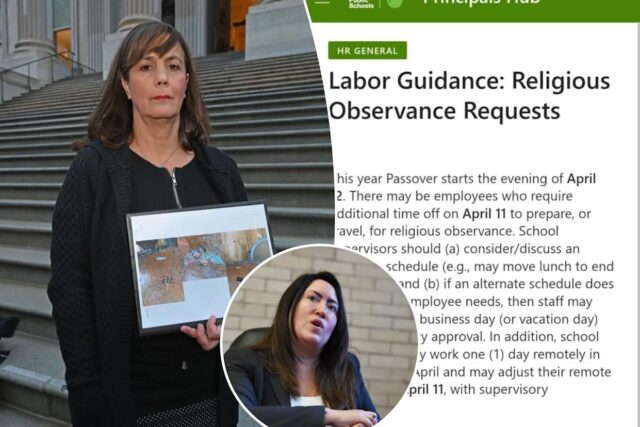
As Jewish communities across New York prepared for Passover, a major clash erupted between the city’s Department of Education and its Jewish educators. This year, the start of Passover fell on Saturday, April 12—coinciding with the Sabbath, making the day prior, Friday, April 11, critical for travel, preparation, and ritual observance. Yet Jewish school staff hoping to take that Friday off for religious reasons found their requests denied.

An internal memo circulated to school leaders earlier in the week acknowledged that employees might need time off but offered limited accommodations. Staff were told to “consider/discuss an alternate schedule,” take a personal or vacation day, or potentially work remotely. One suggestion even included shifting a lunch break to the end of the workday to leave early.

The decision sparked immediate backlash from educators and advocacy groups who felt their religious obligations were being sidelined. While the Department of Education insisted that it supports staff of all faiths and maintained that the offered alternatives were fair, many in the Jewish community strongly disagreed.

“There may be employees who require additional time off on April 11 to prepare, or travel, for religious observance,” the DOE memo stated, but it stopped short of officially recognizing the day as a religious observance day.

City Hall and schools chancellor Melissa Aviles-Ramos were urged throughout the week to reconsider, but sources confirmed that officials ultimately determined Friday was not a religious holiday, and thus would not be granted special observance status.

A DOE spokesperson reiterated their stance: “While Passover starts on Saturday this year, any staff member who needed time off on the day before could request that their schedule be rearranged to leave early Friday without loss of pay, or to take a paid personal business day or annual leave day.”

Mayor Eric Adams’ office added that the mayor remains committed to an inclusive work environment for all religious groups, but stopped short of overriding the DOE’s directive.

However, Jewish educators and advocacy leaders argue the decision undermines their religious freedom.

“We’re obviously disappointed with their decision and the Jewish staff impacted don’t agree that the accommodations were enough to fulfill their religious obligations of the day,” said Moshe Spern, president of the United Jewish Teachers group.

Tova Plaut, a teacher and co-founder of the New York City Public Schools Alliance, expressed deeper frustration, stating, “The DOE has taken it upon itself to override centuries of Jewish law — deciding it knows better than rabbis when and how Jews should observe Passover. This decision erases core Jewish values and disregards the voices of those who live by them.”

Such disputes are not new. Historically, scheduling conflicts have arisen when Passover and Christian holidays like Good Friday do not align with the public school system’s spring break, which this year begins on Monday.

As debates over religious accommodation in public institutions continue, Jewish educators and their allies say the city must take a more respectful and nuanced approach—especially when it comes to deeply held spiritual traditions and practices that span generations.

Source: nypost

China Trade War Heats Up as Tariffs Soar and Tensions Mount

The global economic battlefield just got hotter. The ongoing trade war between the United States and China has intensified sharply, with major developments emerging in both policy and economic performance. While China surprised analysts with a stronger-than-expected economic performance in the first quarter of 2025, tensions with the U.S. over trade practices are spiraling into a full-blown economic standoff.

China’s Economy Shows Strength—But With Caveats

In Q1 2025, China’s GDP grew by 5.4%, outpacing the 5.1% forecast and signaling resilience amid geopolitical pressure. Retail sales rose by 5.9%, showing a recovering domestic demand, while industrial output surged by 7.7%, driven by strong exports and renewed manufacturing activity.

However, not all sectors showed growth. Property investment—a key component of China’s economy—plunged 9.9%, reflecting ongoing challenges in the real estate market. As a result, economists are tempering expectations, forecasting overall GDP growth for the year at 3.4%.

U.S. Escalates Tariffs, Sparking Backlash

Amid accusations of unfair trade practices and technology theft, the Biden administration dramatically raised tariffs on Chinese imports. The total tariff burden now stands at a staggering 145%, including a 120% levy on small parcels under $800, a move seen as targeting Chinese e-commerce giants that cater to U.S. consumers directly.

The White House has warned that it may hike tariffs even further, possibly reaching 245%, if China continues what it calls “manipulative trade behavior” and fails to reform industrial subsidies and intellectual property enforcement.

Hong Kong Responds: U.S. Shipments Halted

In a direct retaliatory move, Hong Kong’s postal service announced it will suspend all shipments to the United States starting April 27, citing “unviable logistics and economic pressure” resulting from the increased tariffs. This decision will disrupt businesses and consumers on both sides of the Pacific, particularly small enterprises relying on cross-border e-commerce.

Beijing Eyes Stimulus as Trade War Drags On

In response to growing external pressure and internal economic fragility, Beijing is planning new stimulus measures to prop up investment and stabilize the real estate sector. Officials are expected to unveil a combination of infrastructure investment, tax incentives for manufacturers, and support for tech and green industries.

The Ministry of Commerce also stated it is exploring “countermeasures” to U.S. tariffs and will “firmly defend China’s economic sovereignty and interests.”

Global Ramifications

The implications of this deepening trade conflict are vast. Supply chains could become more fragmented, with companies seeking alternatives to China for manufacturing. Inflation could rise in the U.S. due to higher import costs, and global trade norms may shift further away from multilateralism toward economic nationalism.

As the U.S. and China continue to exchange economic firepower, the world watches closely. The next chapters of this trade war will not only shape the two superpowers but could redefine the future of globalization itself.

Sources: Bloomberg, NYTimes, AP News, Reuters.

OpenAI Enters the Social Media Arena: A New Era of AI-Generated Networks

In a bold leap beyond the chatbot space, OpenAI is quietly developing a social media platform focused on AI-generated content, particularly images—a move that could redefine how users create and consume visual media online. According to internal sources, a working prototype of the network already exists, though it remains unclear whether it will debut as a standalone app or be integrated into the existing ChatGPT ecosystem.

A Strategic Pivot Toward Visual Culture

The proposed platform seeks to carve a niche within the already saturated social media landscape by leaning into what OpenAI does best: generative AI. While platforms like Instagram and TikTok rely on user-generated selfies, videos, and memes, OpenAI’s new network will allow users to create and share AI-generated images and visuals effortlessly, using simple text prompts or collaborative tools.

The idea is to turn every user into a content creator—with AI as the creative partner. From surreal digital art to photorealistic scenes, the possibilities for visual storytelling could be endless, positioning the platform as a hub for artists, creators, influencers, and AI enthusiasts.

Tech Titans Collide: OpenAI vs. Musk and Meta

OpenAI’s move into social media also escalates tensions with Elon Musk, who previously co-founded OpenAI but later distanced himself amid philosophical and business differences. Musk recently made headlines by offering a whopping $97.4 billion to acquire OpenAI—an offer that CEO Sam Altman reportedly rejected outright. In response, OpenAI has countersued Musk, accusing him of harassment and attempting to disrupt their operations.

The backdrop to this legal drama is a broader struggle for dominance in the AI-powered social space. Meta’s suite of platforms (Instagram, Facebook, Threads) has already started integrating AI features, while Musk’s X (formerly Twitter) has faltered, showing an 8.4% drop in daily usage, despite its user base of 585 million.

The Competition Landscape

OpenAI’s entry intensifies the competition among a growing list of social platforms vying for attention:

  • Threads – Meta’s Twitter-like platform has reached 275 million users, thriving on Instagram’s integration.
  • X (Twitter) – Still large with 585M users but facing stagnation and user engagement challenges.
  • Bluesky – A decentralized platform with 30 million users, gaining traction with open-source advocates.
  • Lemon8 – A niche lifestyle app with 1 million daily active users, backed by ByteDance (TikTok’s parent company).

OpenAI’s advantage? It doesn’t just have AI—it is AI.

What’s Next?

While details remain under wraps, experts speculate that OpenAI’s platform could blend social interaction with advanced tools like DALL·E, ChatGPT, and future multimodal models. The result could be a more interactive, personalized feed powered by intelligent algorithms—not just to show you content, but to help you create it on demand.

Whether OpenAI can turn AI-generated content into a sustainable and engaging social experience remains to be seen. But one thing is certain: the lines between tech, art, and social interaction are about to get a lot blurrier.

Source: TheVerge, TechCrunch, Reuters, SAN.

Columbia Protest Leader Arrested by ICE at Citizenship Interview Sparks Legal and Political Uproar

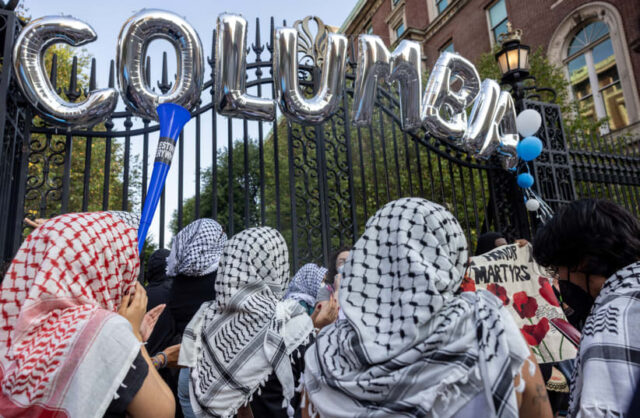
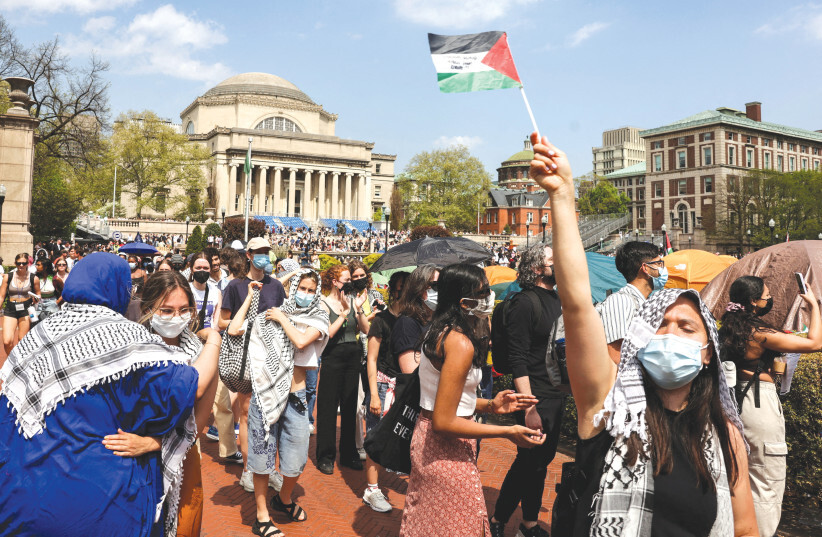
Mohsen Mahdawi, a prominent Palestinian student leader and Columbia University activist, was arrested Monday by Department of Homeland Security (DHS) agents during what was supposed to be a routine U.S. citizenship interview. The arrest has ignited a legal battle and public outcry, with supporters, lawmakers, and civil rights advocates rallying in his defense.

Mahdawi, a 35-year-old long-time U.S. resident born in the West Bank, was detained in Colchester, Vermont, sparking accusations of politically motivated retaliation tied to his pro-Palestinian activism. According to court filings and supporters, Mahdawi’s arrest is seen as a targeted attempt to silence dissent, raising serious concerns about free speech and due process.

Federal Judge Issues Temporary Protection

Later the same day, U.S. District Court Judge William Sessions III issued an order barring Mahdawi’s removal from Vermont or the United States while the court reviews his habeas corpus petition. The filing challenges the legality of his arrest, claiming that it violates both constitutional rights and procedural fairness.

According to the petition, federal authorities may attempt to revoke Mahdawi’s 10-year-old green card under provisions of the 1965 Immigration and Nationality Act—a move his legal team says is clearly retaliatory and without legal merit.

Political Support Grows

A wave of support from progressive lawmakers quickly followed. In a rare joint statement, Senator Bernie Sanders, Senator Peter Welch, and Congresswoman Becca Balint condemned the arrest as “illegal” and called for Mahdawi’s immediate release.

“He was at the final step in his citizenship process. Arresting him now is not only unjust but appears to be punishment for exercising his constitutional right to peaceful protest,” the lawmakers wrote.

A Life of Advocacy and Academic Excellence

Mahdawi has lived in the United States since 2014 and has an extensive academic record, having studied computer engineering at Birzeit University, followed by computer science degrees from Dartmouth College and Lehigh University. In 2021, he transferred to Columbia University to pursue a degree in philosophy and was set to begin a Master’s program in International Affairs this fall.

Beyond academics, Mahdawi is widely known for his activism and interfaith outreach. At Columbia, he founded the Columbia University Buddhist Association and led it for two years, emphasizing nonviolence and dialogue. He also co-founded Dar: Palestinian Student Society alongside fellow activist Mahmoud Khalil, focusing on cultural celebration and political awareness.

Mahdawi, who identifies as a Palestinian Buddhist, has consistently advocated for a peaceful resolution to the Israeli-Palestinian conflict. In a 2021 Instagram post, he wrote:

“I am so touched by the Jewish community that is able to see the oppression and to support the human rights and liberation of my Palestinian people. Be mindful that Judaism is not Zionism, and that so many Jews in the United States are opposing the apartheid and the discrimination of the state of Israel.”

The petition argues that Mahdawi poses no threat to public safety, has no criminal record, and that his detainment serves no purpose other than to penalize him for his activism.

Public Response and Ongoing Protests

The People’s Forum, a progressive advocacy group, has called for a protest in New York City on Tuesday, labeling the arrest “illegal” and part of a broader trend of government suppression of pro-Palestinian voices.

Supporters say Mahdawi’s case is emblematic of a growing concern: that student activists, particularly those of Middle Eastern descent, are increasingly at risk of surveillance, arrest, or deportation based on their political beliefs.

What’s Next?

With the court now reviewing Mahdawi’s petition, a legal showdown is underway that could set significant precedent on the rights of lawful permanent residents to engage in political speech without fear of deportation.

For now, Mahdawi remains in federal custody, but his case continues to rally activists, civil rights groups, and political leaders who argue that democracy demands protecting even the most dissenting of voices.

Sages, celebrities, veterans, crooks: Take a NY cemetery’s Jewish walks of fame – and infamy

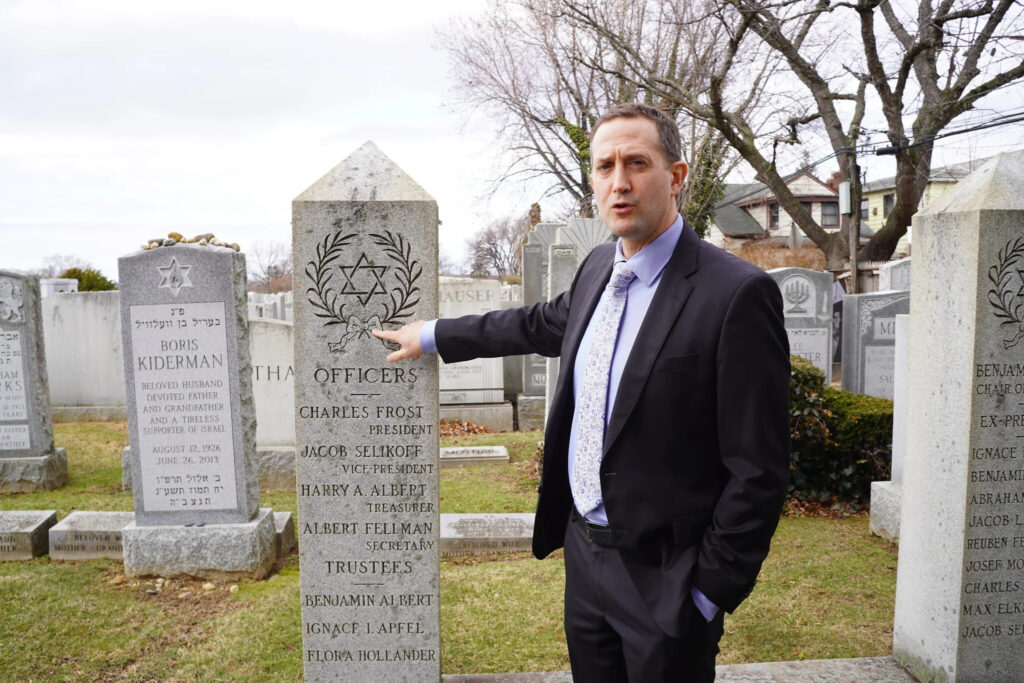
Tucked between the hum of the Long Island Expressway and the flight path of LaGuardia Airport lies a hidden gem of Jewish American history—Mount Hebron Cemetery. Spanning 215 acres in Queens’ Kew Gardens Hills, it’s home to more than just gravestones. It’s a timeless archive of voices that once shaped the cultural, political, and spiritual fabric of New York—and beyond.

On a misty morning, cemetery head Adam Ginsberg strolls the tree-lined paths with his phone in hand. He pauses before the grave of David Medoff, a Ukrainian-born Yiddish tenor. With one tap, Medoff’s powerful voice rises through the quiet, singing “Song of Praise.” It’s one of many stops on Mount Hebron’s Yiddish Walk of Fame, a self-guided audio tour that brings the dead back to life—at least in spirit.

This isn’t your average cemetery tour. Mount Hebron’s Legacy Foundation, established in collaboration with CUNY Queens College, ensures that the 231,000 souls resting here aren’t forgotten. Through student-led research projects, biographies and forgotten histories resurface, revealing a kaleidoscope of narratives—from Holocaust survivors and war veterans to iconic rabbis, Broadway performers, and even mobsters.

“The stories here tell the remarkable contributions Jewish Americans have made to the city, the state, and the country,” says Ginsberg. And he’s not exaggerating.

City of Stones, City of Souls

Mount Hebron’s layout is something any urban planner would envy: neatly organized “society grounds” represent tight-knit communities, families, and organizations who chose to remain together, even in death. The Russian block features polished granite headstones with etched portraits. The Workman’s Circle section packs in over 10,000 markers, whispering of labor movements and immigrant dreams.

Near an elegant Art Deco mausoleum—built in 1988 for none other than Barbra Streisand—lie the final resting places of historic figures like Raphael Lemkin, the Polish Jewish lawyer who coined the word “genocide” and helped shape post-Holocaust justice.

And then there’s Rabbi Solomon Schechter, a leader of Conservative Judaism, and Hyman Matza, a WWII vet who helped liberate Dachau—though he never once bragged about it.

“He was just a sweet Jewish grandpa,” Ginsberg recalls. “Humble to the core.”

But Not All Were Saints

Mount Hebron doesn’t shy away from its more sinister stories. The Mob Tour—yes, that’s a thing—features the grave of Louis “Lepke” Buchalter, executed in 1944 for running a brutal Mafia hit squad. It’s a reminder that history isn’t always heroic, but it’s always human.

There’s even a Holocaust Memorial Tour that spans 14 stops, honoring entire towns in Ukraine, Poland, and Belarus whose Jewish populations were wiped out. Some monuments are painfully blunt: “Brutally persecuted and slain by the Nazis.” Others, like the Yiddish Theater section, mix performance and remembrance with messages etched in stone: “Dedicated to the eternal memory of the members of the European Yiddish theatrical profession who were murdered by the Nazis and other tyrants.”

A Living Place for the Dead

Despite the somber surroundings, Ginsberg sees his work as anything but morbid.

“People ask if it’s depressing,” he says. “But it’s not. It’s service. It’s history. It’s community.”

On Memorial and Veterans Day, local ROTC students plant flags at the graves of 2,500 Jewish veterans. The cemetery also hosts annual klezmer-filled ceremonies courtesy of the Yiddish Theater Alliance. And thanks to modern technology, anyone can walk the grounds with earbuds in, guided by voices from another time.

Final Thoughts

Mount Hebron is a cemetery, yes—but also a museum, a classroom, a concert hall, and at times, a crime documentary. Through its Walks of Fame and Infamy, it preserves the echoes of laughter, prayer, struggle, and song.

So next time you’re in Queens, take a moment to listen to those who came before. Because in Mount Hebron, the dead still have something to say.

Bank of America Hit with $540 Million FDIC Fine Over Deposit Insurance Dispute

In a significant legal ruling, Bank of America has been ordered to pay $540.3 million to the Federal Deposit Insurance Corporation (FDIC) after a federal judge concluded that the bank underpaid its deposit insurance premiums between Q2 2013 and the end of 2014.

Background of the Dispute

The case centers on Bank of America’s alleged underreporting of risk exposure under a 2011 FDIC rule that modified how large banks calculate deposit insurance premiums. The FDIC filed suit seeking $1.12 billion, claiming that the bank had deliberately misrepresented its risk level, leading to significantly lower payments to the agency’s insurance fund—an essential financial safety net that protects depositors across U.S. banks.

The Court’s Ruling

Judge Loren AliKhan, presiding over the case, upheld the FDIC’s authority to determine how banks assess their insurance obligations but reduced the original claim to reflect what the court deemed recoverable based on timing and procedural limitations. Specifically, the court barred the FDIC from recouping funds owed before early 2013 due to the statute of limitations and filing delays.

In her decision, Judge AliKhan rejected Bank of America’s objections to the methodology used in calculating premiums and emphasized that a “perfect measure” of risk exposure is not required to validate the FDIC’s claims. The ruling reinforces regulatory power over how banks interpret and implement compliance standards—particularly around systemic risk.

Bank of America Responds

Bank of America has denied any wrongdoing throughout the case. In a statement following the ruling, the bank emphasized that it had already set aside funds in anticipation of the legal outcome and maintained that its reporting practices were consistent with industry standards and regulatory expectations at the time.

Despite the substantial penalty, Bank of America appears prepared to absorb the cost without immediate impact to its operations or liquidity.

What This Means for the Industry

This ruling may set a precedent for increased regulatory scrutiny over how major financial institutions calculate and report risk exposure. It also highlights the importance of timely and accurate reporting under federal insurance guidelines—especially as regulators continue to monitor stability in the banking sector following recent regional bank collapses.

Banks are likely to re-evaluate their compliance frameworks and risk assessment models to avoid similar disputes in the future. The case also underscores the FDIC’s ongoing role in maintaining accountability within the financial system, particularly when it comes to safeguarding the deposit insurance fund.

NYC Public Schools Apologize for Sharing Gaza Protest Toolkit, Vow Better Protection for Jewish Students

New York, NY — The New York City Public Schools system has issued a public apology after facing backlash for including a controversial “Stop Genocide Gaza Toolkit” in a recent internal newsletter. The material, which has been labeled antisemitic by critics, was shared with select teachers and parents, prompting an immediate response from school officials and community leaders.

The toolkit offered guidance on organizing protests against Israel, promoting the Boycott, Divestment, and Sanctions (BDS) movement, lobbying elected officials, and fundraising efforts tied to the ongoing conflict in Gaza. Critics argue that the content not only violates the district’s policy on political neutrality but also uses inflammatory language that alienates and endangers Jewish students and families.

A Troubling Oversight

Chancellor David C. Banks and Deputy Chancellor Melissa Avilés-Ramos released a statement acknowledging the error and expressing deep regret.

“Today, a troubling oversight was brought to my attention: an offensive political toolkit was hyperlinked in one of our published newsletters,” said Avilés-Ramos. “Its inclusion both violates our policies on political neutrality and uses hateful, antisemitic language that is hurtful to many in our Jewish community.”

Upon discovering the error, district leadership ordered the immediate removal of the link and launched a formal investigation to determine how the content made it into the newsletter. According to school officials, steps are already underway to strengthen the vetting process for future communications.

Commitment to Safety and Inclusivity

In their public apology, school leaders emphasized the district’s commitment to creating a safe and respectful environment for all students, especially in a time of heightened tensions surrounding the Israel-Gaza conflict.

“We remain focused on fostering respect, safety, and civil discourse in our schools,” Avilés-Ramos added. “We are working to ensure our Jewish students and families feel safe and supported, now and always.”

The backlash comes amid a broader national conversation on how public institutions handle sensitive political issues, especially when it comes to the Israeli-Palestinian conflict. While some activists defend the right to raise awareness on Gaza, many argue that school platforms must avoid promoting political activism that can marginalize or endanger specific communities.

Moving Forward

The NYC Public Schools system—the largest in the United States—serves more than one million students. In such a diverse and politically charged environment, the district’s leadership is under pressure to strike a balance between free expression and the responsibility to maintain neutrality and inclusivity.

As the internal investigation unfolds, the district has pledged transparency and promises to implement new protocols designed to prevent similar incidents in the future. The chancellor also thanked those who raised concerns, saying their vigilance plays a crucial role in holding the system accountable.

This incident marks a pivotal moment for New York schools as they navigate the challenges of political discourse, cultural sensitivity, and the need to protect all students—regardless of background or belief.

Tragedy Over the Hudson: Six Killed in NYC Helicopter Crash

New York City, NY — In a devastating accident that has shocked New York and reverberated across the globe, a Bell 206 sightseeing helicopter crashed into the Hudson River on Sunday afternoon, killing all six people aboard. The victims included a Spanish family of five and their pilot, who had taken off just minutes earlier for what was supposed to be a scenic tour of Manhattan.

The helicopter departed from Manhattan’s heliport at 3:00 p.m., and within 15 minutes, it plunged into the river near Jersey City, New Jersey. Witnesses described hearing a loud popping sound followed by parts of the aircraft falling midair. Several bystanders captured video footage of the helicopter breaking apart mid-flight before the final plunge into the water.

Among the victims were Agustín Escobar, a high-ranking executive at Siemens, his wife Mercè Camprubí Montal, and their three children. The family, who hailed from Spain, were reportedly visiting New York on vacation. The pilot, whose identity has not yet been officially released, was a seasoned professional familiar with the New York City airspace.

Emergency crews responded within minutes, but four of the six occupants were pronounced dead at the scene, while the remaining two succumbed to their injuries at nearby hospitals.

The Federal Aviation Administration (FAA) and the National Transportation Safety Board (NTSB) have launched a full investigation into the cause of the crash. Early reports suggest that mechanical failure may have contributed, though the exact cause remains unknown.

This tragedy adds to a troubling history of helicopter incidents in New York City. Since 1977, a total of 38 people have lost their lives in helicopter-related accidents across the city. The latest incident raises renewed concerns about the safety of non-essential and tourism-based flights in one of the world’s most congested airspaces.

The Bell 206 is a widely used aircraft in tourism and private charters, known for its relatively simple design and solid safety record. However, critics argue that the dense urban environment and unpredictable weather patterns of NYC make such flights inherently risky.

Mayor Eric Adams released a statement extending condolences to the families and vowing to support the federal investigation. “Our hearts go out to the victims of this heartbreaking incident,” he said. “We are committed to doing everything we can to prevent tragedies like this in the future.”

As investigators comb through wreckage and black box data, questions loom over the future of sightseeing helicopter tours in NYC. With public pressure mounting and a renewed spotlight on aviation regulation, significant policy changes could be on the horizon.

The city, the victims’ families, and the aviation community now await answers—and accountability.

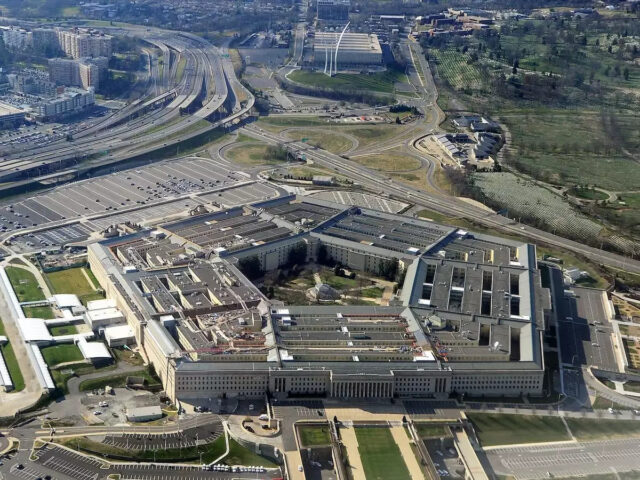
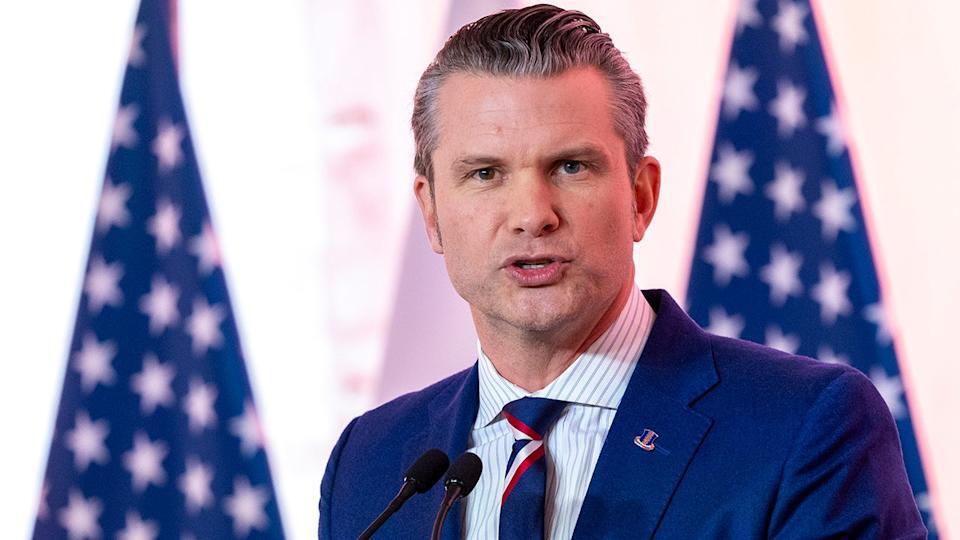
Pentagon’s Spring Cleaning: $5.1 Billion in IT Contracts Canceled to Boost Internal Capability and Cut Costs

In a decisive move that signals a shift in how the U.S. military handles its technological and operational support, the Pentagon has canceled $5.1 billion worth of IT service contracts with several major consulting and technology firms, including industry giants Accenture and Deloitte.

The decision, announced by Secretary of Defense Pete Hegseth, is being touted as a bold initiative aimed at cost-cutting, boosting internal competency, and reducing the Department of Defense’s reliance on outside consultants.

A Shift Toward Self-Sufficiency

Labeling the canceled contracts as “non-essential,” Secretary Hegseth stated that Pentagon personnel are more than capable of managing many of the duties previously outsourced to external firms. “We believe in the strength and capacity of our internal teams,” he said in a press briefing. “This move will enhance our operational independence while reinforcing fiscal discipline.”

By trimming down external service contracts, the Department of Defense expects to save nearly $4 billion, a significant chunk of taxpayer dollars that will now be reallocated to strengthen core military operations and workforce development. Hegseth added that this change will also reduce bureaucracy, speed up internal processes, and foster innovation from within.

The Firms Affected

Among the companies impacted are Accenture and Deloitte, two firms that have long provided IT support and digital transformation services to various government agencies. These services included systems integration, data analytics, cybersecurity advisory, and cloud migration support. While some elements of these partnerships may continue on a much smaller scale, the majority of the slated IT work will now be managed by in-house teams.

Neither Accenture nor Deloitte has issued a formal statement yet, though industry analysts say the move may prompt a reassessment of private sector involvement in federal IT contracts moving forward.

Broader Push for Reform

The cancellation is part of a larger Pentagon initiative to streamline operations, cut redundant spending, and prioritize strategic modernization. Over the past year, the Department of Defense has faced increasing scrutiny over bloated budgets and inefficient contractor management. Lawmakers and watchdog groups have criticized the Pentagon for outsourcing tasks that could feasibly be handled by government employees, often at a much lower cost.

“We are not anti-contractor,” Hegseth clarified. “But we are pro-efficiency and pro-accountability. This is about smart governance, not just slashing for the sake of slashing.”

Implications for the Defense Industry

This shake-up could send ripples throughout the defense contracting world. As one of the largest consumers of IT and consulting services globally, the Pentagon’s decision may inspire other federal agencies to reevaluate their own outsourcing strategies.

It also comes at a time when the tech consulting industry is facing a slowdown in federal spending amid broader economic uncertainty. Companies that have relied heavily on government contracts will likely need to diversify or pivot to private sector clients.

Building a Stronger, Leaner Defense Department

Hegseth’s strategy aligns with his broader vision of a more agile, accountable, and self-sufficient Pentagon. He has consistently voiced the importance of internal empowerment, especially in areas such as cyber defense, digital transformation, and operational planning.

In support of this pivot, the Pentagon plans to invest in retraining and upskilling its existing IT workforce, creating new roles for civilian specialists, and expanding recruitment programs to attract tech-savvy professionals directly into government service.

What’s Next?

While the decision marks a major transformation in the Pentagon’s approach to contract management, defense officials have made it clear that this is only the beginning. Future reviews are expected to assess additional areas where outsourcing can be reduced without compromising mission-critical functions.

As the Pentagon trims the fat and sharpens its focus, the message is clear: accountability, efficiency, and capability must come from within.