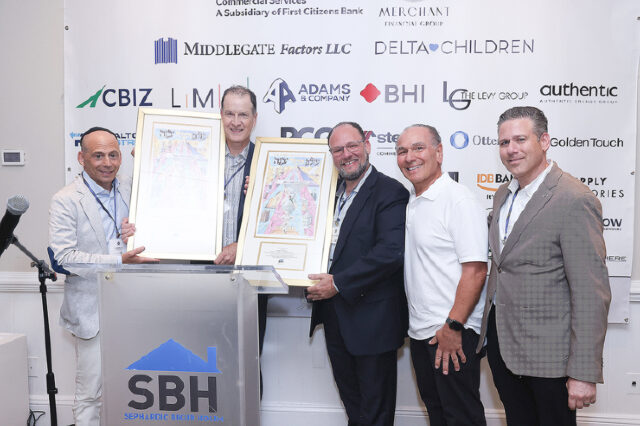
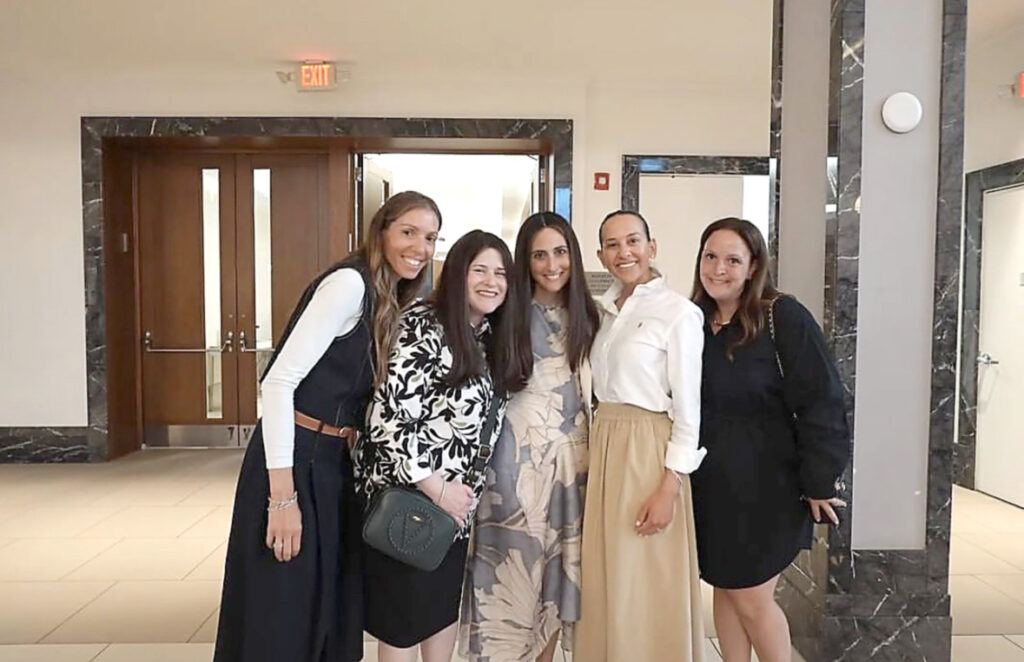
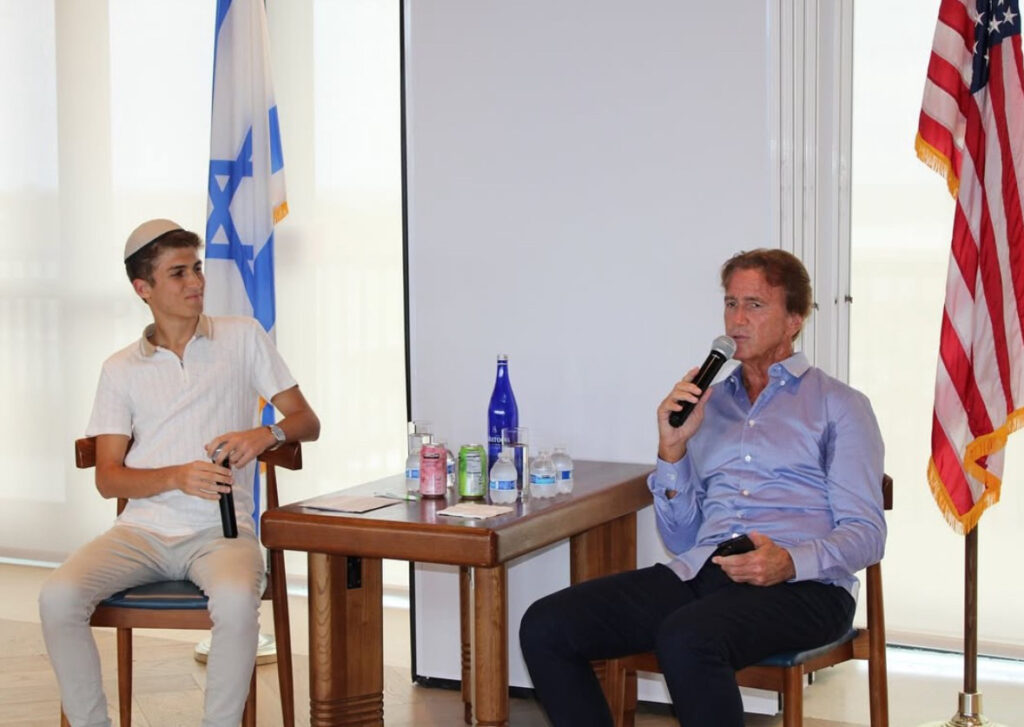
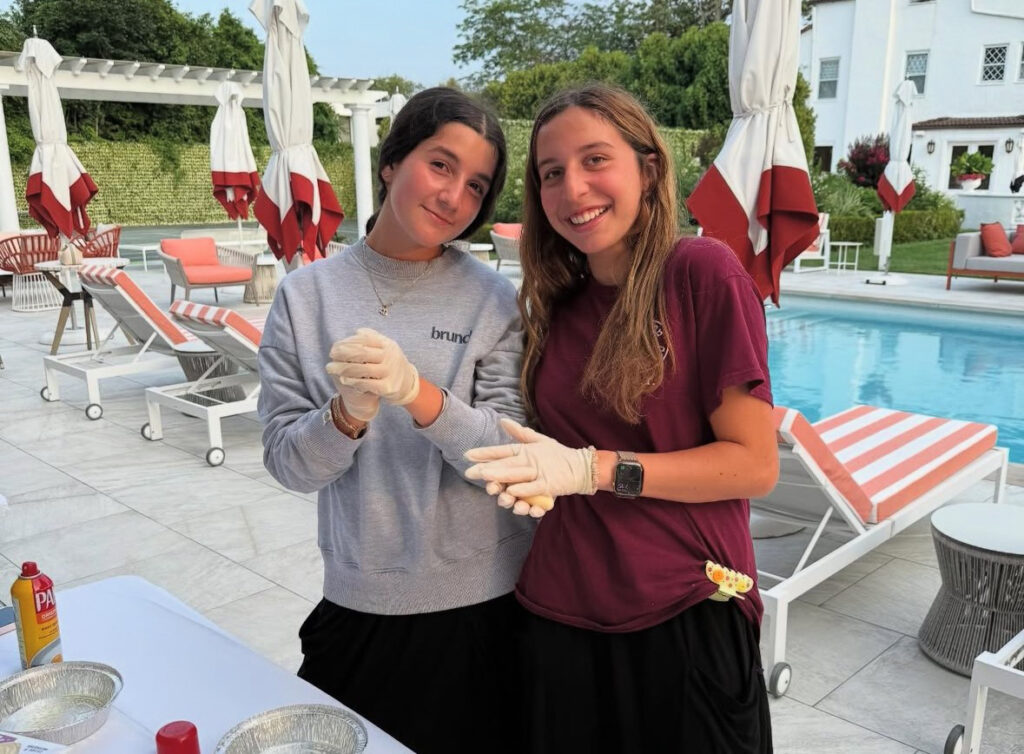
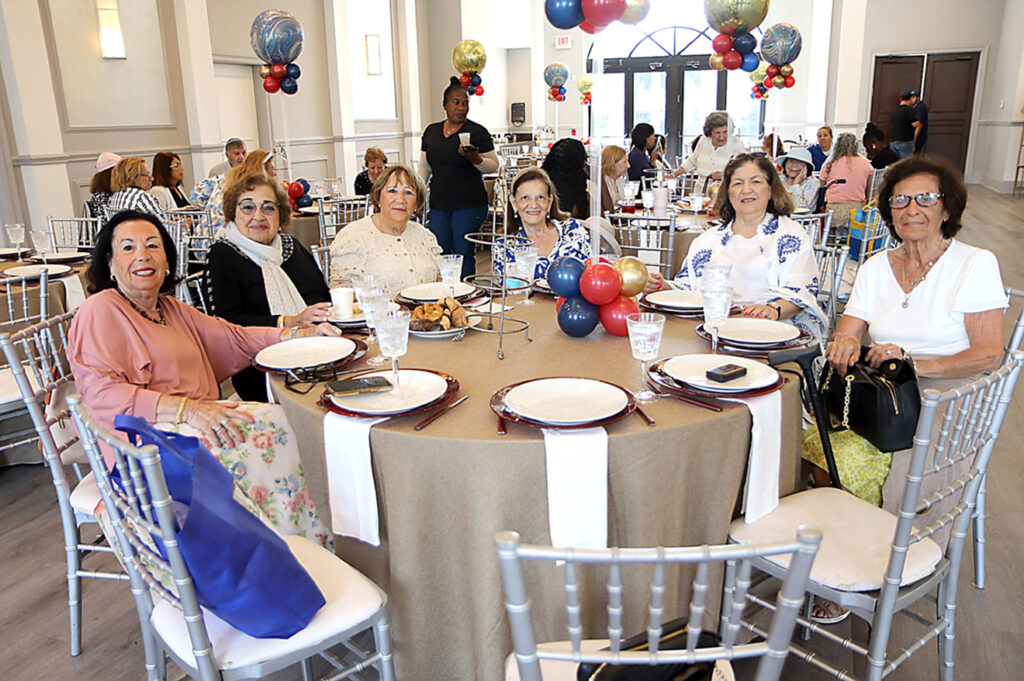
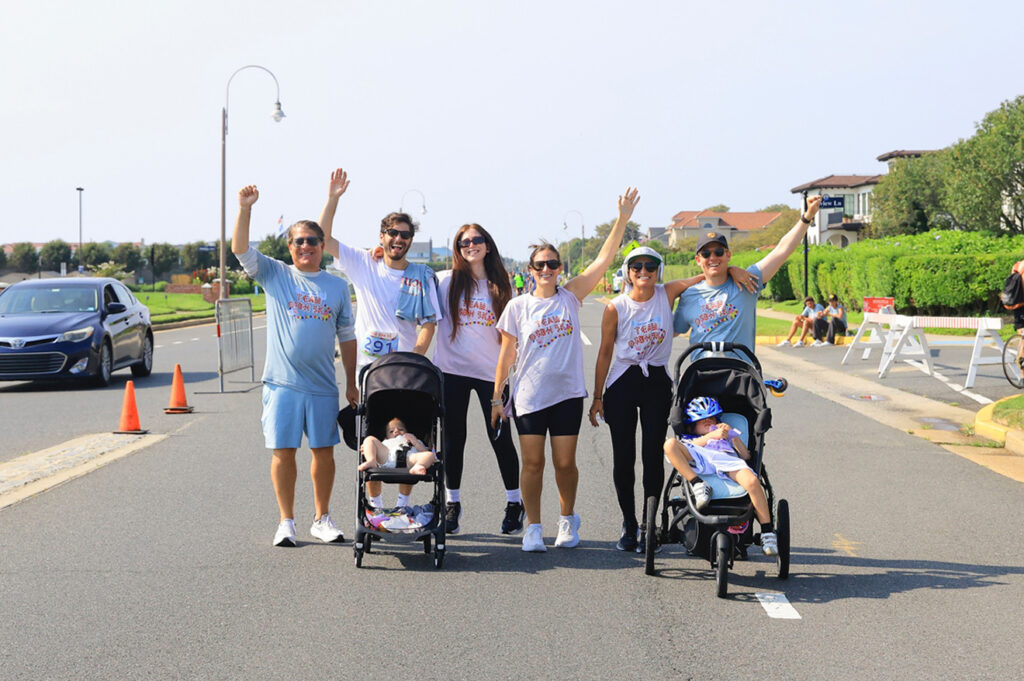
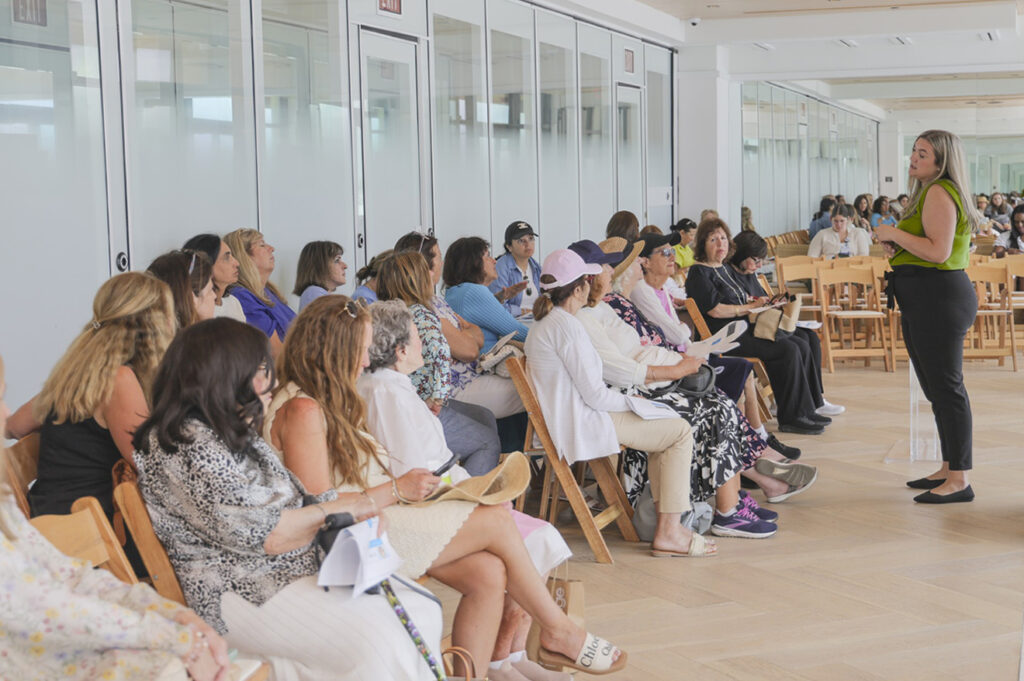
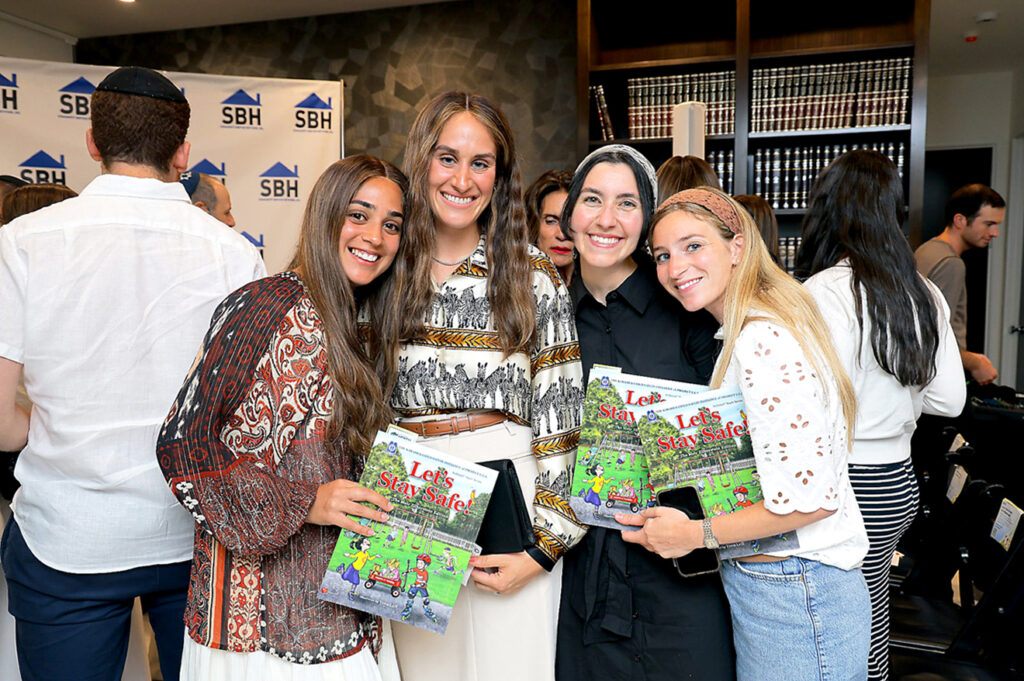
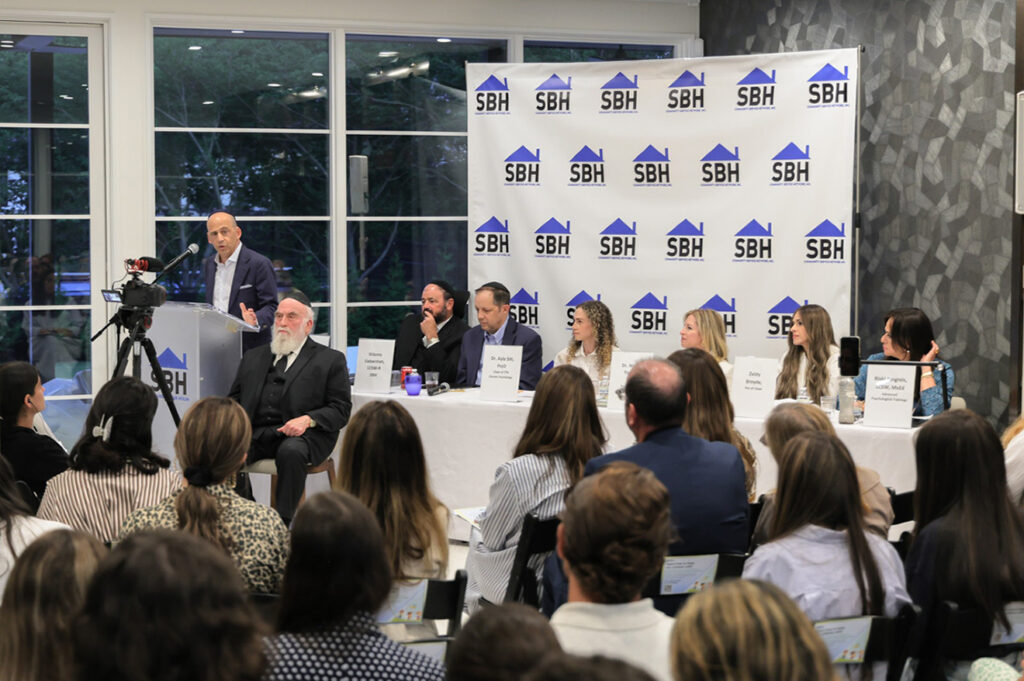
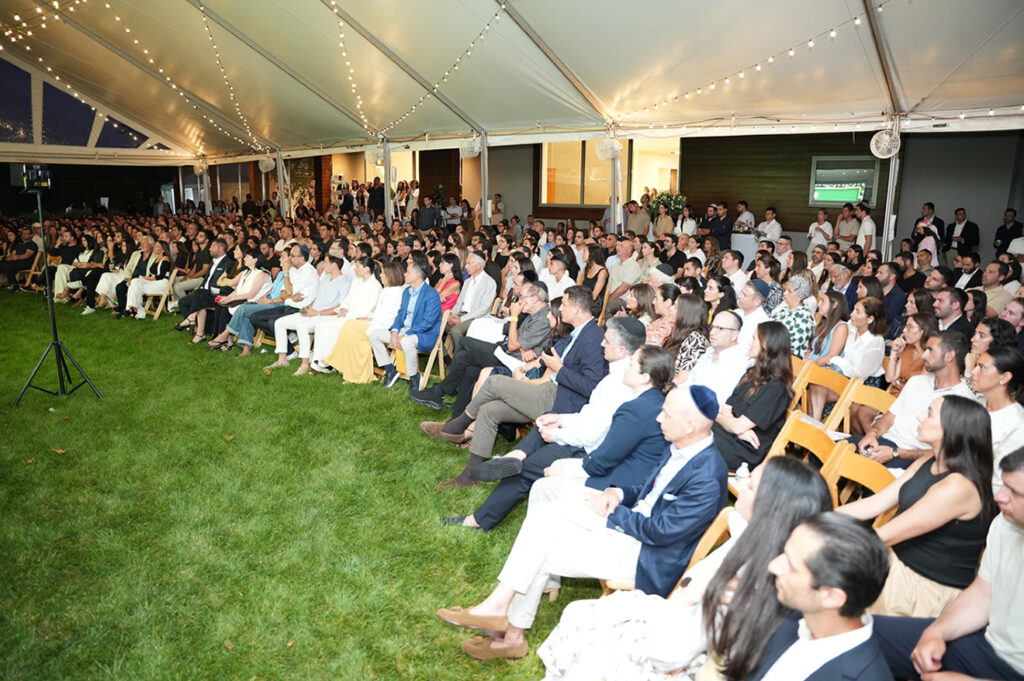
This summer at SBH was packed with moments that brought our community together in the best ways. We kicked things off with our favorite Saturday night of the year, Midnight Festival, where over 3,000 young adults gathered to play games and scream on rides with their friends. Soon after came Jaclyn’s Lemonade Stand, our sweetest event of the summer in memory of Jaclyn Ashear A”H. Ten families hosted stands that included snacks and activities like a bouncy house, face painting, pony rides, even a train ride, and of course, lemonade. That same day, our youth and young adults joined forces at Hoops4Hesed, competing in volleyball, basketball, and soccer tournaments. Parents had some opportunities to check in too, from SEARCH’s free screenings for children ages 0 to 4, to Recipe for Success, where families learned practical strategies for the upcoming school year. Shortly after, hundreds of women attended our Medical Day of Health at DSN Beach Club, which focused on bone health. Over 400 parents and grandparents showed up for our Courage to Heal event, where our expert panelists discussed body safety, boundaries, and prevention for children. Our Fertility Division hosted one of our most successful events of the summer with Together We Grow, an evening of speakers, connection, and a beautiful auction. Our speakers shared their own fertility journeys, bringing awareness and attention to such an important topic. We can’t forget about our Young Professionals, who impressed this summer with their Stoop Talks in collaboration with The Center, where over 400 young adults gathered on a Friday to hear from community leaders in real estate, including Jeff Sutton, and in hospitality. Our seniors also had a jam where they danced at the annual Senior Nobeh and sang as loud as they could with Stevie Chera at Young at Heart. Some even ran in our Diane Azrak A”H Team SBH 5K. Our Candy Land–themed marathon was a complete sugar rush, with community members running, strolling, skipping, and of course, crawling. We slowed things down with a day of golf at our 12th Annual Golf Outing, where we honored Michael G. Hudgens and Jason M. Goldberg with the Partners in Kindness Award. Back again with our youth, they planned an incredible program during the Nine Days. They packed their nights with hallah baking, hesed fairs, meal packing, hanging out with the Special Children’s Center, and an auction. A few weeks later, we held our Charles J. Anteby Youth Awards, where we honored our past presidents and welcomed our new youth presidents and vice presidents of Brooklyn and Jersey. We also celebrated our captains at Captain Appreciation Night, where we recognized volunteers who give so much to SBH.
From June to August, summer at SBH was filled with energy, excitement, inspiration, and education, just because it’s summer doesn’t mean we can’t learn new things! It reminded us once again that when our community comes together, we create something truly special.
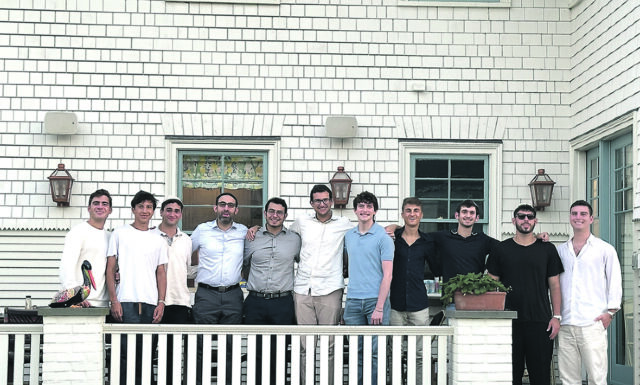
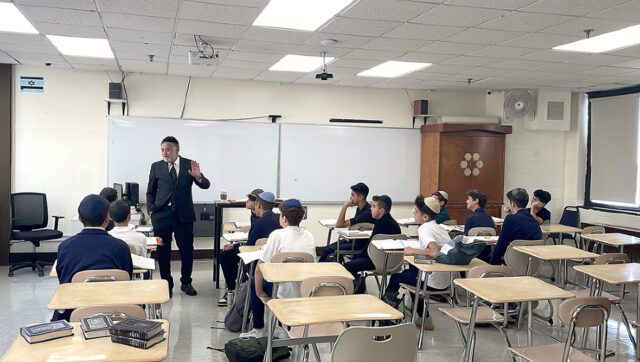
College Boys Class and BBQ with Rabbi Faur and Rabbi Setton
Anchoring the Sephardic Soul of Downtown NYC, entering a new era with Rabbi Joey Faur and Rabbi Sion Setton
In 2001, a small Friday-night minyan on West 16th Street drew Syrians, Israelis, and French Jews to pray in one crowded room. That spark has become Congregation Magen David of Manhattan (CMDM), now anchored on Sullivan Street.
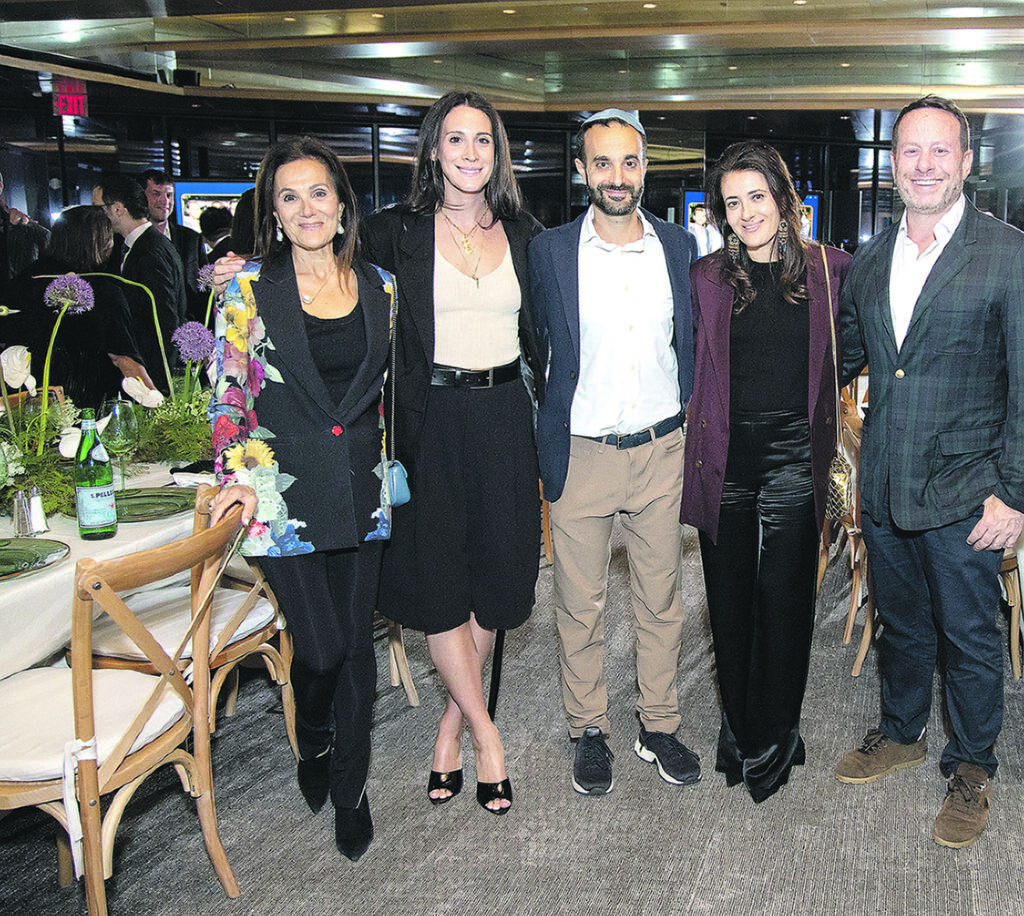
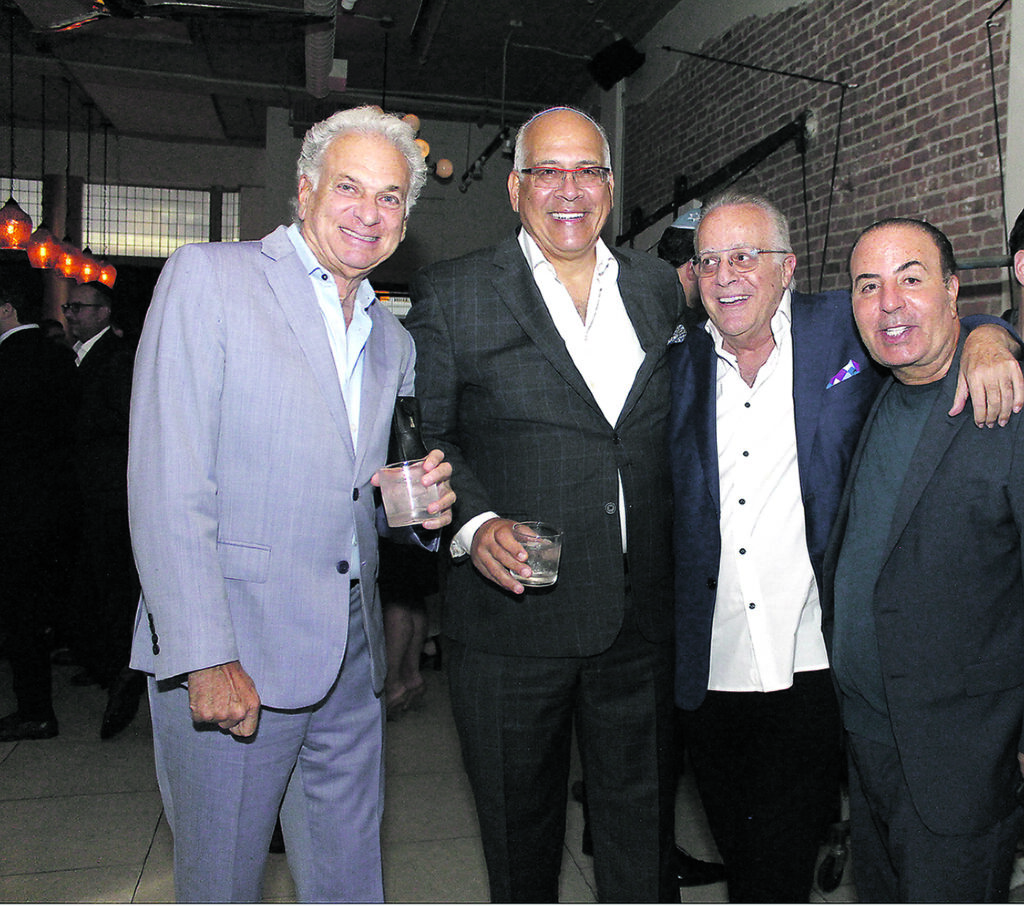
Left to Right David Dweck, Max Setton, Michael Abetan, Stephen Eliau, Rabbi Faur, Yossi Abraham, Rabbi SettonLeft to Right Norman Dwek, Harry Tawil, Eli Dweck, Martin Nussbaum, Ray ChalmeLeft to Right Mary Sultan, Sophie Sultan, Abie Sultan, Adele Yedid and Eli YedidLeft to Right Rabbi Joey Faur and Rabbi Sion SettonWeekly Women’s Class with Eileen Franco
Today CMDM offers daily services, Torah study, holiday meals, and soon a Downtown Sephardic Student Center. More than a synagogue, it is a movement, a home for families and young professionals building their lives downtown.
Left to Right Steve Chera, Charlie Mamiye,
Saul Tawil, Isaac Gindi
Welcoming Rabbi Joey Faur: A Rabbi for This Generation This year marks a turning point with Rabbi Joey Faur’s appointment as CMDM’s new spiritual guide. At just 27, Rabbi Faur brings a rare blend of Torah mastery, youthful vigor, and genuine warmth. His journey, which includes immersive Torah study, academic and business pursuits, and defending Am Yisrael in the IDF uniform, resonates deeply with young adults seeking identity, purpose, and faith. At the same time, his erudition, maturity, and experience allow him to connect with community members, young and old alike. Rabbi Faur’s impact was immediate. His lessons, rooted in Sephardic halacha and tradition, address contemporary challenges with both approachability and rigor. Reflecting on CMDM’s atmosphere, Rabbi Faur explains: “Our community is, above all, a home for students, young professionals, couples, families, and visitors from near and far. The moment you step into Magen David’s Sullivan Street building, you are greeted with warmth and invited into tefillot, shared meals, and engaging Torah classes. That all of this exists outside the traditional community hub is nothing short of remarkable.”
Rabbi Sion Setton and the Downtown Sephardic Student Center: A New Era of Leadership and Learning Alongside Rabbi Joey Faur, Rabbi Sion Setton, a long-time friend, teacher, and beloved rabbinic presence at CMDM, is serving full-time as Principal of Yeshivah Prep High School. Over the next few years, he will lead an exciting initiative: the creation of the Downtown Sephardic Student Center, which will serve the spiritual and communal needs of hundreds of Sephardic college students and young professionals who live, dorm, or study in downtown New York. Located in Greenwich Village/SoHo, and serving students from NYU, Baruch, Pace, Cooper Union, Cardozo, and beyond, the Center is both a sanctuary and a home. The Downtown Sephardic Student Center, housed in CMDM’s newly renovated Sullivan Street facility, offers:
Weekly Shabbat services and warm communal dinners.
Daily minyanim and hot breakfast for students.
Ongoing Torah classes and havrutot (study partnerships).
Holiday programming and social events.
Personal mentorship and halachic (Jewish law) guidance for young adults.
Internship and job placement opportunities.
Summer BBQs and get-togethers in Deal to strengthen community bonds.
“Jewish students today are facing a world of intense pressure socially, academically, and spiritually,” says Rabbi Setton. “Our job is to make sure they know they are not alone. That there is a community that sees them, supports them, and helps them stay connected to who they are.” Each weekday morning, as the city awakens, Hazzan Michael Gammal leads Shaharit melodically and efficiently, setting a grounded tone for the day. Soon after, Yossi Abraham hosts engaging Torah classes over coffee, fresh breakfast, and warm conversation, exploring everything from halachic insights to classical commentaries. These gatherings provide students and professionals with a meaningful spiritual anchor before they head off to work or school. On Shabbat and Jewish holidays, the local community gathers for spirited prayers led by Hazzan Leor Alkadda. After services, everyone enjoys Kiddush and festive meals lovingly catered by Events Director Erica Rolo. Throughout Shabbat, meaningful Torah classes taught by Rabbi Faur, Rabbi Setton, and guest speakers, along with engaging social programs, offer both spiritual nourishment and deep communal connection.
Magen David in Motion: A Community for Every Life Stage CMDM is more than a synagogue. It is a spiritual home, a vibrant social hub, and a center for Jewish life that serves all ages and stages. Our regular programming includes:
Lavish monthly Friday-night dinners for young professionals.
Purim celebrations that have become downtown’s most anticipated parties.
Rooftop gatherings, guest speakers, exclusive film screenings, panel discussions, and more. Events Director and chef extraordinaire Erica Rolo ensures that every gathering is thoughtfully prepared and beautifully executed. The result is a warm, joyful, and welcoming environment that fosters lasting relationships. In fact, over forty couples have met and married through connections made at CMDM, a testament to the depth and vitality of this community. Our newly renovated event space and modern kitchen on Sullivan Street, just steps from SoHo and Washington Square, now also hosts life cycle events, including:
Brit milot
Bar and Bat Mitzvahs
Sheba berachot
Engagement parties and memorials
Why Now: A Home for the Next Generation In an era when many young Jews are disconnecting from faith and tradition following high school, Magen David of Manhattan offers something powerful: a model for staying rooted without standing still. It is a place where young people do not have to choose between downtown life and Sephardic values. It is a synagogue where you can attend a morning minyan, learn Torah with your rabbi over coffee, celebrate your engagement, and find your community, all under one roof. It is where kids from Brooklyn or Deal who dorm in the city feel safe and grounded. It is where young professionals meet their future spouses. It is where downtown families bring their children for their first aliyah to the Torah. It is not just a synagogue. It is home. As Rabbi Elie Abadie once said in a dedication: “May this synagogue be a sanctuary, where prayers of all people will be heard and answered. Not only a place of worship but a place to touch eternity.” Magen David of Manhattan is that place. And the time to invest in it is now. Congregation Magen David of Manhattan is located at 177 Sullivan St. NYC. To host your simcha, learn more about our growing programs, or get the minyan schedule, visit www.MagenDavidNY.org. For direct inquiries, contact Erica Rolo at 212-673-0333 or email info@magendavidny.org.
An Interview with Shimmy Braun, Senior Director Community Relations and Physician Alignment
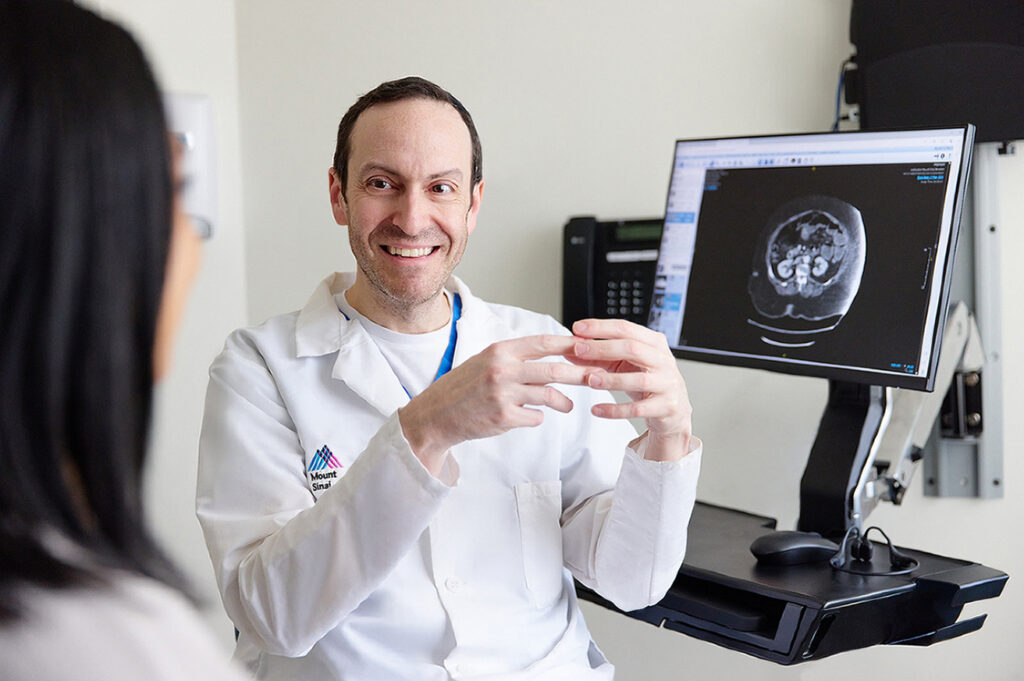
Mount Sinai Brooklyn, formerly known as Kings Highway Hospital, has for years been part of the Mount Sinai Health System while continuing to serve as a true community hospital. The facility has expanded its services, upgraded its standards of care, and deepened its ties to the neighborhoods it serves. To learn more about these developments, we sat down with Shimmy Braun, Senior Director of Community Relations and Physician Alignment, who shared how Mount Sinai Brooklyn is working to combine world-class resources with the warmth of a local hospital.
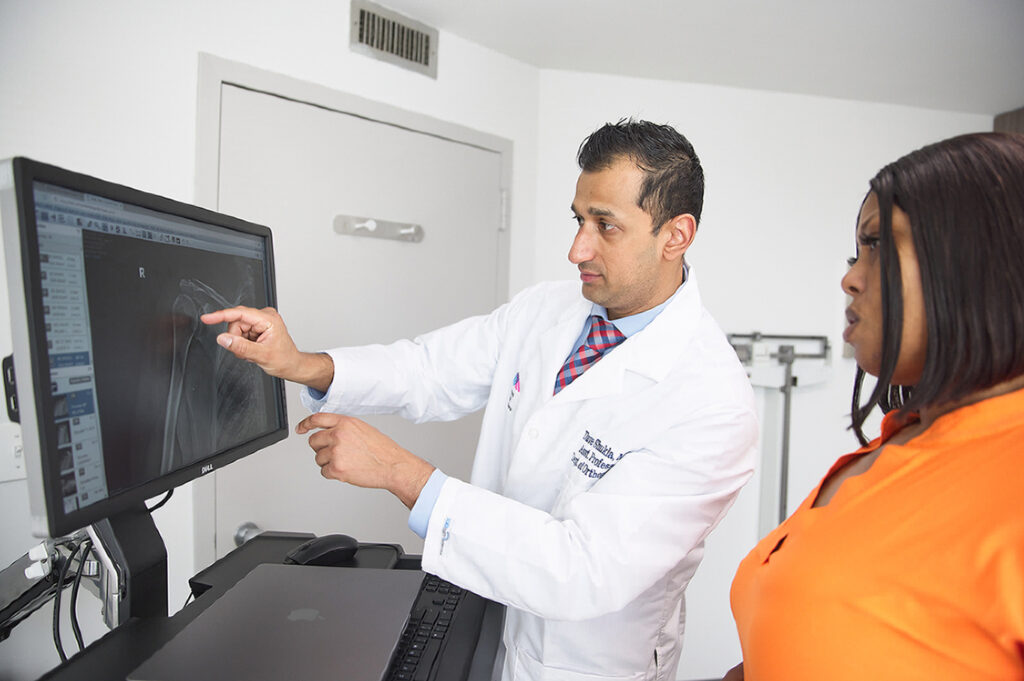
Q It has been four years since you joined Mount Sinai Brooklyn, and there have been many changes during that time. Can you share some of them with us? A Sure. When I joined the Mount Sinai Health System and Mount Sinai Brooklyn, I was given two areas of responsibility. I am responsible for recruiting physicians and surgeons to help expand the range of services offered to both in-patients and out-patients. My second area of responsibility is to serve as Senior Director of Community Relations. This responsibility includes representing Mount Sinai Brooklyn at assorted community events, and setting up Medical Education Presentations for the communities we serve. I also act as the liaison for the hospital to organizations such as Hatzalah, Sephardic Bikur Holim, Morris Franco Cancer Center (Medstar), Chaim Aruchim, Vaad Harefuah and RCCS, to name a few. I am in contact with many of the medical referral agencies, assisting with recommendations for specialists, and helping to expedite appointments for patients. Additionally, I work on some of the unique requests I receive on behalf of the religious community. Q That sounds like a lot of coordination on your part. Does a major hospital such as Mount Sinai concern itself with community requests? A Absolutely. The senior leadership has been extremely supportive of many of the requests that have been posed by community Rabbis and other community leaders. Q Can you give me some examples? A Of course. When I joined Mount Sinai Brooklyn, I discovered that although there was a Kosher certification on the food, it was dependent on leniencies (Kulot) that would apply for only sick patients (Holim) and not completely acceptable for employees and visitors. With the full support of the senior administration here at Mount Sinai Brooklyn, even with an increase in cost for the “upgraded” Kashrut certification, we are proud to tell everyone that as of December 1, 2022, the Kitchen and Cafeteria at Mount Sinai Brooklyn are under the hashgacha of Tarnopol Kashrus with the presence of Mashgiach Temidi (full-time kosher supervisor), and filters have been installed on the water supply. This certification can be relied upon by everyone and is not utilizing any of the leniencies used in the past. Q What other accommodations have been made for our community? A We gave our Bikur Cholim room a facelift and arranged with Yad Ephraim to keep it stocked with microwavable meals, salads, soups, drinks, and snacks. They also installed a warmer for individually wrapped Shabbos meals for those who require them. In response to a request by one of the community Rabbis, we customized a private restroom to be designated as a “Sabbath Restroom,” with all manual fixtures. It is situated across from the Bikur Cholim room. We also have a Sabbath elevator for those who require it. Q You mentioned that you recruit physicians and work on expanding the services offered at Mount Sinai Brooklyn. Please share with the community your accomplishments in that area. A As part of the Mount Sinai Health System, we provide our patients access to subspecialty services, groundbreaking research, and clinical trials available across all our hospitals. During my interview for the position, I was informed of the goal we were working towards: “No matter which hospital in the Mount Sinai Health System a patient comes to, there should be no difference, clinically and aesthetically, from one to the next.” With that in mind, Dr. Scott Lorin, President and Chief Operating Officer of Mount Sinai Brooklyn, laid out a plan of action. There was to be a concentration on raising the quality of care from that which previously existed for both in-patient and out-patient services and procedures. One of the first things accomplished was that all physicians are now Board Certified in their specialty, meeting the Mount Sinai Health System’s level of quality. Equipment at the Mount Sinai Brooklyn hospital was upgraded to the same level of quality as the rest of the system. One of my first recruits was Betzalel “Bitz” Bree to serve as an Emergency Room Patient Navigator. As an active Hatzalah member, the ER was not a change of pace for Bitz. His responsibilities include assisting patients and their families while in the ER, as well as follow-through should the patient be admitted. In the three-and-a-half years that he’s been here, the patients and staff have nothing but praise for him for helping to manage the needs of the patients, their families, and the ambulance personnel who brought them in. My next recruit was Dr. Danny Sherwinter, an accomplished and respected surgeon in General Surgery, Colorectal Surgery, and Bariatric Surgery. We now added Chief of Surgery, Mount Sinai Brooklyn, to his title. He has taken over the Department of Surgery, and in the three years since he started, Mount Sinai Brooklyn is recognized as an excellent facility to consider for surgery. The hospital has two DaVinci Robotic Surgical Systems, which offer a minimally invasive surgical solution that accomplishes surgeries with less pain and shorter hospital stays.
The surgeries performed at Mount Sinai Brooklyn include:
Bariatric Surgery
Breast Surgery
Colorectal Surgery
ENT Surgery
Advanced Gastroenterology Endoscopies and Surgeries
Gynecology Surgeries
Orthopedic Surgery and Joint Replacements
Pain Management treatment and procedures
Thoracic Surgery
Urological and Kidney Surgery
Vascular Surgery
Two Interventional Radiology Suites
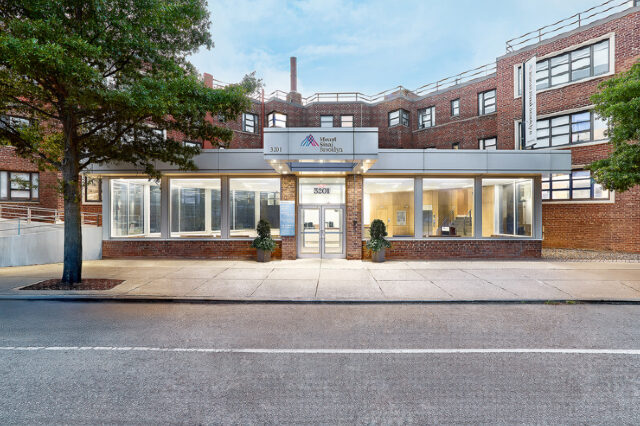
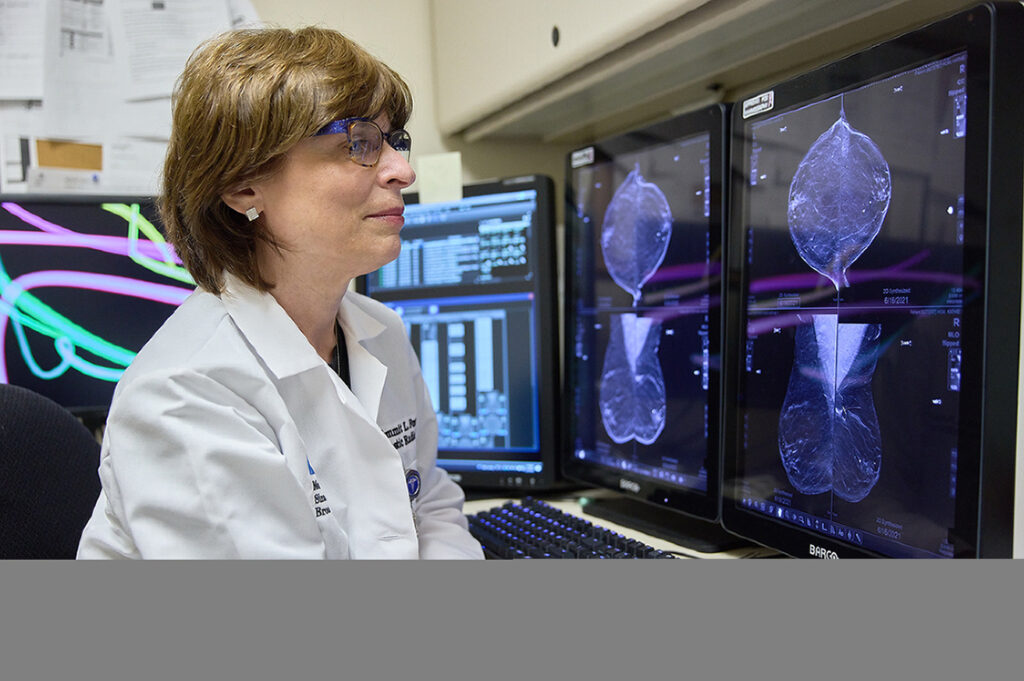
Q You mentioned earlier expanding services for out-patients as well. Can you elaborate on that? A We have done extensive renovations to our professional building located at 3131 Kings Highway, and have added several medical specialties to offer to the community. Many of our physicians and surgeons treat patients both at The Mount Sinai Hospital in Manhattan and at Mount Sinai Brooklyn. Patients can see a “Manhattan Doctor” in Manhattan, or right here in Brooklyn. In essence, we’ve successfully brought Manhattan to Brooklyn. We also have another site a few minutes away dedicated to our out-patient cardiology team. This state-of-the-art facility is located at 1977 Flatbush Avenue (right off Flatlands Avenue). It offers nuclear and non-nuclear cardiac testing on site. There are diagnostic cardiologists on staff full time, as well as assorted subspecialty cardiologists from The Mount Sinai Hospital in Manhattan seeing patients on select days of the week. This facility has free parking in the rear of the building for our patients’ convenience. Q The Mount Sinai Brooklyn Cancer Center at 3131 Kings Highway is an impressive addition to the hospital. Can you elaborate on that facility? A Sure. This facility occupies the first floor at 3131 Kings Highway. It is an extension of the Mount Sinai Tisch Cancer Center, including The Tisch Cancer Institute, a National Cancer Institute-designated cancer center, our Cancer Centers of Excellence, and our Cancer Network. Our cancer specialists participate in active clinical trials and treat a variety of cancers. If a patient has been seen by a physician in a Mount Sinai Hospital in Manhattan, they can have their infusions performed locally at the Mount Sinai Brooklyn Cancer Center. Adjacent to the Infusion Center at 3131 Kings Highway is our state-of-the-art Mammography Center, led by Dr. Frimmet Forman. The level of quality and sensitivity is excellent. Q With all the expansion of services that you mentioned, are there any plans for adding a maternity department? A That is an important question. While the size limitations of Mount Sinai Brooklyn won’t allow for a labor and delivery department to operate safely and effectively, we’ve done the next best thing. The Mount Sinai OB-GYN group, which performs baby deliveries at The Mount Sinai Hospital in Manhattan and is headed by Dr. Alan Adler, now has office hours two days a week to see patients at 3131 Kings Highway. This allows all the pre- and post-delivery visits to take place locally, while the actual deliveries happen in The Mount Sinai Hospital in Manhattan. The entire group rotates through here, so the patients get to meet all the doctors in the group. They are also seeing standard gynecology patients as well. Q What else can you tell us about Mount Sinai Brooklyn? A Mount Sinai Brooklyn is an accredited Stroke Center that is led by Dr. Steven Rudolph. Accreditation entails having multidisciplinary teams to provide the appropriate therapy within the clinical guidelines for the acute treatment of stroke. The Mount Sinai Brooklyn Stroke Center has been recognized by the American Heart Association and American Stroke Association, which granted Mount Sinai Brooklyn the “Get With the Guidelines” Stroke GOLD PLUS with Honor Roll Elite award in 2021. In 2022, we achieved the Gold Seal of Approval from The Joint Commission, which awarded Mount Sinai Brooklyn advanced certification as a Primary Stroke Center. In addition to all the specialists that are here, we are proud to offer the community a choice of two excellent primary care physicians in our PCP suite at 3131 Kings Highway. Drs. Diane Kantor and Milton Grunzweig bring years of experience in the field of primary care. We are also very pleased that our Pain Management Practice, led by Dr. Gary Esses, has gained tremendous popularity by helping patients who struggle with chronic headaches, neck pain, back pain, and joint pain. Q The public is always concerned regarding the nursing care in a hospital. What can you share with our readers about the nurses at Mount Sinai Brooklyn? A I’m very proud to say that my response is based on what patients have told me and have written to me. I am so inspired by the praise given to our nurses by the patients and their families. We strive to keep our nurse-to-patient ratio within our guidelines, offering safe and expert care delivered with a smile. Mount Sinai Brooklyn proudly boasts an impressive rating within the Mount Sinai Health System, proportionately having the lowest hospital-acquired infection rate. Q How would you summarize Mount Sinai Brooklyn? A Mount Sinai Brooklyn offers the best of both worlds. We retain the warm feeling that the staff has both with patients and fellow staff members, usually experienced in a community-style hospital, with the resources of the Mount Sinai Health System fully available to our patients. If we feel that a patient will benefit in any way at one of Mount Sinai’s hospitals, we’ll internally transfer the patient to the facility that will offer the best expected outcome. As we are all part of the same system, all patient records are available across the entire network, residing in the Electronic Medical Records system that we all operate on. This allows for a seamless continuity of care. Q Is there anything else you’d like to share? A I truly hope that our services remain not needed, but should they be, we are here to help. Patients can contact us using the phone numbers below. Primary Care Practice and Orthopedic Practice 718-758-7022 OB-GYN Group 212-731-3232 Surgery Department 718-677-0109 Flatbush Ave Cardiology Practice 718-758-7070 Mammography Department 718-951-2717 Infusion Center or Hematology/Oncology Physicians 718-758-7050 Urology Practice 212-844-8900 Stroke Department 718-677-2089 Chaplain, Rabbi Yaakov Hoenig 718-951-9323 Patient Representatives 718-951-3005
Exhausted young Caucasian mom sit on couch suffer from ill-behaved loud daughter, have headache, tired mother struggle with depression, annoyed by naughty preschooler girl child, parenting concept
Victoria Safdieh
Parenting a child with special needs can feel like running a marathon you didn’t sign up for. The days are long, the hurdles keep coming, and there’s barely a chance to catch your breath. We give so much of ourselves that it’s easy to forget one simple truth: you can’t keep going without rest.
Take time for yourself
Modern life doesn’t make it easier. Work deadlines, household demands, and social pressures pile on top of the unique challenges you already carry. Over time, stress becomes the background music of daily life, so constant you almost stop hearing it. But our bodies and hearts always notice. They send quiet signals: irritability where there used to be patience, tension in places that once felt relaxed, a heavy sigh before walking through the front door. Those “yellow lights” aren’t signs you’re failing. They’re your body’s way of saying, “Hey, I need a break.” Sometimes we’re so busy powering through that we miss the signals. That’s why it helps to leave yourself gentle reminders, like a sticky note on the fridge or even a reminder on your phone. Think of them as nudges to check in with yourself before burnout hits.
Rest is not selfish! Many parents hesitate to step back. We tell ourselves: No one else can do it like I can. I should be able to handle this. My child needs me all the time. But caring for yourself isn’t about stepping away from your child, it’s about ensuring you have the energy to keep showing up. Yes, you are the absolute ideal person to take care of your child, but taking a break from caregiving, or craving adult time instead of watching the same kid video for the 100th time, has nothing at all to do with your capability. Although many people feel they do not have the time or money to vacation or go out for dinner with their spouse, the truth is, you can’t afford not to. Taking a break or vacation is as important as charging your phone. Taking short breaks is like charging your phone for a half hour. Going out for dinner once a week, or even just for ice cream for an hour, is very helpful and important. No matter what, at some point, you will have to plug in your phone long enough for a full charge if you want it to work effectively for a long period of time. Similarly, you have to recharge yourself for a solid few days or a week so you can be the best spouse and parent. A vacation doesn’t need to be costly or long to have benefits. An affordable weekend getaway is far better than none at all. The key is to fully unplug from work and your regular routine. The Benefits of Recharging:
Health and energy. Rest lowers stress, protects your body, and restores emotional balance.
Clarity. Distance gives perspective. Stepping back can reveal solutions that were hidden in the fog of exhaustion.
Stronger relationships. Time alone with your spouse builds connection, joy, and trust. It reminds both of you that you are partners in life, not just co-managers of responsibilities.
We already know that breaks are good for us. The challenge is giving ourselves permission to take them. So, consider this your gentle reminder: rest is part of the job. It keeps your love sustainable. It gives your children the best version of you. The question isn’t whether you need to recharge. The question is: how will you choose to do it today, this week, or this month?
At Magen David Yeshivah High School, education doesn’t stop at the classroom door. Our faculty members are lifelong learners, continuing their studies, publishing, and presenting, proving that learning is a lifelong commitment, not confined to a school building or a grade level.
Rabbi Eli Mansour, our renowned rabbinical leader, speaker, and author, teaches a daily Gemara class to our freshmen and inspires the entire school each Friday with his Shabbat siha. Dr. Daniel Vitow, Head of School, is teaching an engaging elective titled Foundations of Education, modeling the very principles he teaches. From pursuing advanced degrees and publishing research to presenting at conferences and authoring books, our educators exemplify what it means to be lifelong learners, setting an inspiring example for our students every day.
Associate Principal Mrs. Audrey Abade is pursuing her doctorate through the Fanya Gottesfeld Heller Doctoral Program at Yeshiva University. This prestigious program offers an Executive EdD in Jewish Educational Leadership & Innovation, designed for professionals ready to lead in Jewish education. Coursework covers leadership across curriculum, administration, governance, student support, social-emotional learning, and community building. Students culminate their experience with a scholarly dissertation.
This year, Director of the Scholars Program Dr. Stephen Hequembourg will present at two major academic conferences: the British Milton Symposium in October and the Renaissance Society of America’s annual conference in San Francisco this February. In addition, Dr. Hequembourg has been invited to speak at Harvard University on November 10th, sharing his groundbreaking research on Galileo, Dante, and John Milton. Several of Dr. Hequembourg’s scholarly articles are also slated for publication in academic journals next year, further contributing to the field.
Over the summer, Mrs. Stephanie Shamah, Mrs. Helene Dwek, Mrs. Katie Btesh, and Mrs. Kimberly Djouejati proudly completed their M.S.Ed. in Educational Leadership: School Building and School District Leader at Brooklyn College. Over the course of this rigorous two-year program, they developed essential skills to strengthen their impact as leaders. In addition to six semesters of coursework, ranging from School-Community Relations and Education Law and Ethics to Management of Resources, they engaged in meaningful fieldwork, designing curriculum, leading professional development, and spearheading leadership initiatives across a variety of areas. Their colleague Ms. Susan Cohen is currently enrolled in the same program.
Mr. Mauricio Tawil is pursuing his B.A. in Psychology, Health Science Track, at Sara Schenirer in an accelerated, online undergraduate program offered through the University of Mount Saint Vincent.
Mrs. Maryana Sigalova is advancing her expertise by pursuing a Doctor of Education at the University of Illinois at Urbana-Champaign, College of Education. Her studies focus on Education Policy, Organization, and Leadership with a concentration in Learning Design and Leadership, equipping her with the skills to bring innovative approaches to teaching and leadership into our school community.
Ms. Stacey Wagoner is pursuing an M.Ed. in Curriculum and Instruction with an Advanced Certificate in STEM Education and Emerging Technologies, focusing on artificial intelligence in education. This summer, Ms. Wagoner completed two intensive AI courses through ISTE & ASCD, AI Exploration and Next-Level Skills, gaining cutting-edge knowledge of AI tools and teaching methods. With technology evolving rapidly, Ms. Wagoner is committed to preparing students to navigate AI responsibly and effectively, equipping them with the skills they’ll need to succeed in a workforce where AI literacy is essential. By exploring both the practical applications and ethical considerations of AI, Ms. Wagoner is helping students learn not just to use AI, but to think critically about when and how to use it wisely.
Our faculty are also published authors! Mr. Matthew Di Paoli, is the author of two acclaimed novels: Killstanbul and Holliday, both published by Sunbury Press, and Rabbi Moshe Baredes’s book, Unveiling the Dynamics Behind the Holocaust in Hungary: A New Perspective on Unfolding Events and Enduring Debates, was released on August 4 by De Gruyter. It has also been selected as one of ten Open Access history titles for 2025.
At Magen David Yeshivah High School, our faculty’s commitment to continued learning is more than personal achievement, it is a living lesson for our students. By modeling curiosity, discipline, and growth at every stage of their own careers, our educators show that learning is truly a lifelong journey. Their accomplishments not only enrich our school community today, but also inspire the next generation to pursue knowledge with passion, purpose, and perseverance.
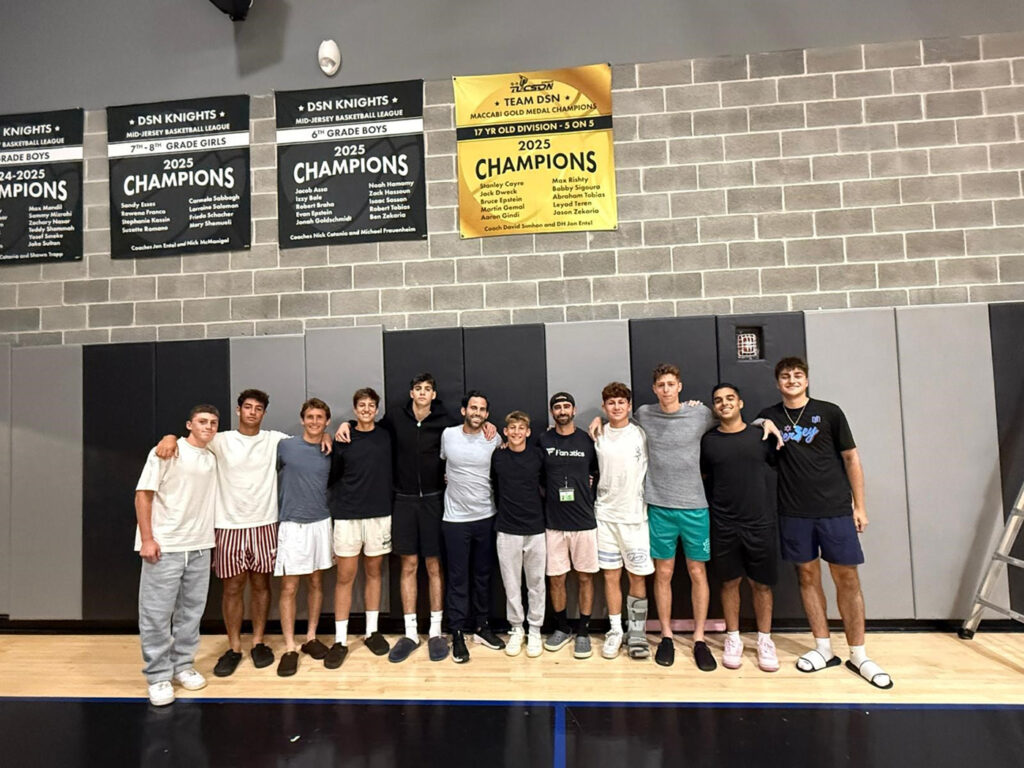
This summer, DSN proudly returned for the second time to the Maccabi Games, the Olympic-style sporting and cultural event for Jewish teens held annually across North America. What began just two years ago as an opportunity to expand DSN’s basketball program has already blossomed into something extraordinary for our community’s youth.
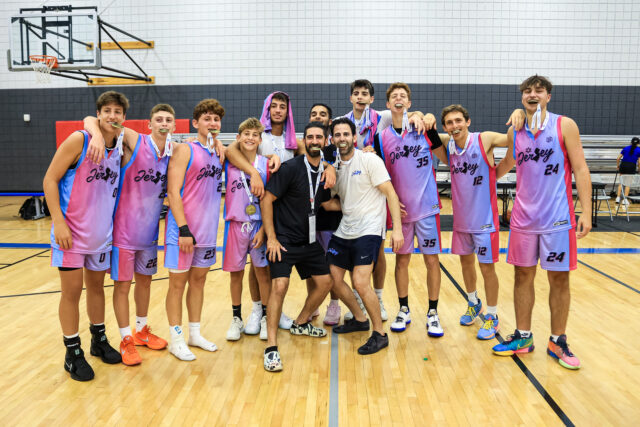
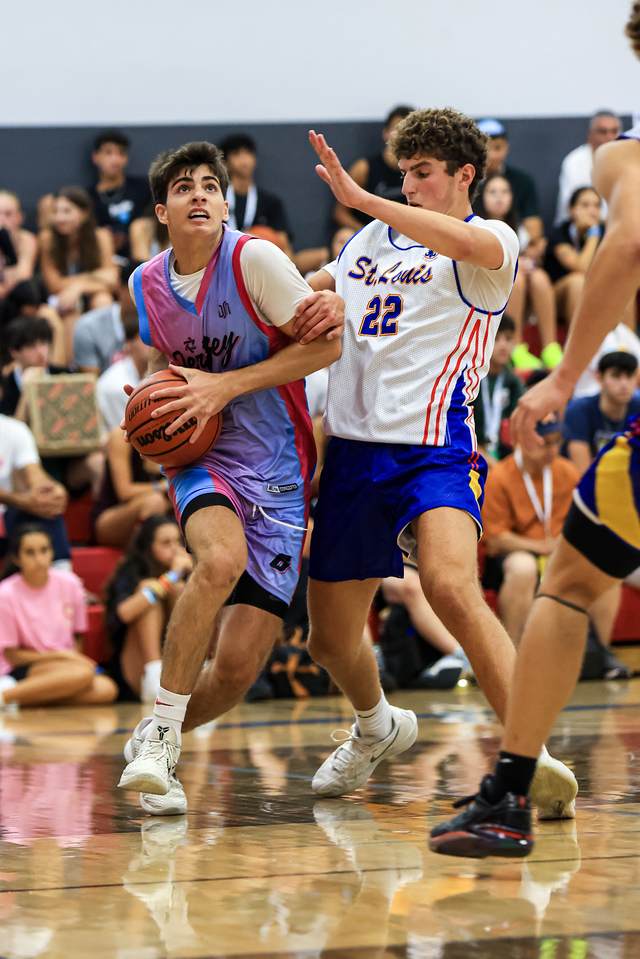
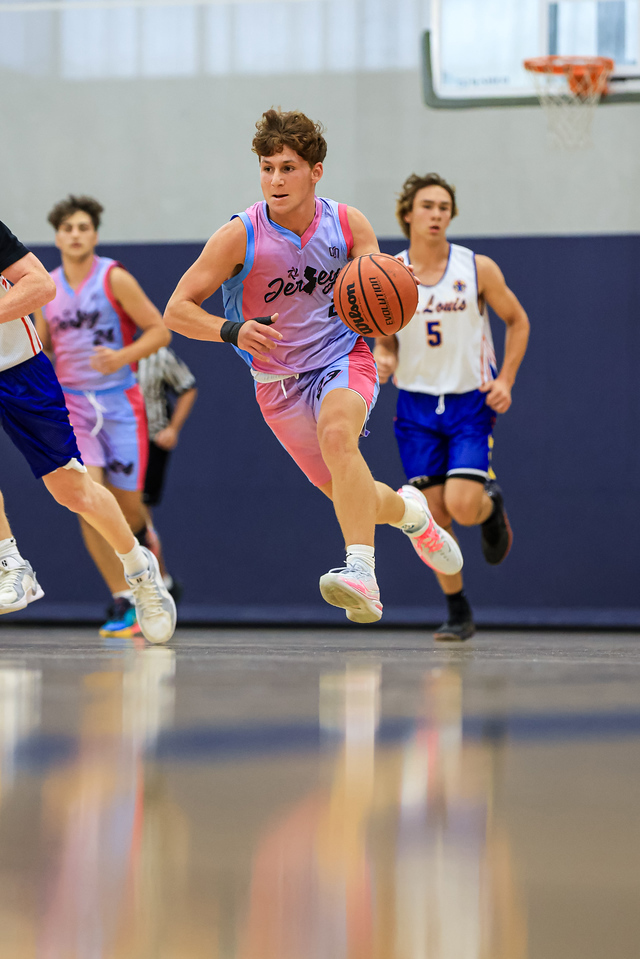
DSN brought 24 community athletes to Tucson, Arizona, in July, competing in two sports: basketball and tennis. DSN’s basketball team of 17-year-olds made history, becoming the first NY/NJ team to ever win a GOLD championship. In addition, its basketball team of 15-year-olds secured a BRONZE medal. In tennis, Jack Massry represented DSN in the 15-year-old division. He delivered a remarkable performance and brought home the GOLD medal. He also received a middot award for helping other players. DSN’s 17-year-olds faced crushing adversity early on. Starter Jack Dweck tore a ligament and broke his thumb, leaving the team short-handed. After dropping three straight games, many teams might have folded, but DSN’s coach David Simhon reminded the boys of their true strength, saying, “Teams may be more skilled than us, but the one thing they don’t have that we do, we are family.” Inspired, the team rallied. Jack kept playing through his injury and the squad went on to upset the number 3 and number 2 seeds, defeating every team they had previously lost to. In a dramatic finale, with the score tied, Bruce Epstein drained a clutch three-pointer to seal the GOLD medal victory. The celebration was electric. What started as heartbreak became a monumental triumph, showing the grit, brotherhood, and heart that defines DSN athletics. Reflecting on the experience, DSN Sports Director Jon Entel shared, “The Maccabi Games are a marathon and a rollercoaster of emotions. Being there with these boys who have been in the DSN program for eight years now and seeing how far they’ve each come in their journey is super special. Seeing them push through adversity in an unfamiliar city and rally around one another, becoming a family that motivated each other toward greatness. This is why I love what I do.” It was a whirlwind five days of competition, camaraderie, and unforgettable memories. From Tucson to triumph, DSN athletes showed what it means to compete with heart and pride. Next year, the journey continues as DSN heads to Kansas City, ready for new challenges and undeniably new victories.
A golden scale delicately balances stacks of coins against vintage clocks, symbolizing the eternal struggle between wealth accumulation and the value of time.
Ari Baum, CFP®
When it comes to money, most conversations begin with one question: How much do you make? Salary, bonuses, business revenue, investment gains — all are used as yardsticks for success. But if we measure financial health by income alone, we’re missing the bigger picture. The fact is, wealth isn’t defined by what you earn. It’s defined by what you keep.
I’ve seen business owners with millions in revenue who constantly feel broke, and I’ve seen teachers and mid-level professionals quietly retire comfortably because they made smart decisions along the way. What separates them isn’t hustle, luck, or market timing. It’s discipline around preserving wealth.
The Illusion of High Income High income can be deceptive. A $500,000 salary might sound impressive, but when you factor in federal, state, and local taxes, mortgage payments, private school tuition, and lifestyle upgrades, the take-home wealth may look very different. Many professionals fall into the trap of “lifestyle inflation.” The bigger the paycheck, the bigger the house, the nicer the car, the more expensive the vacations. Suddenly, despite earning more, they’re living paycheck to paycheck — only with better scenery. On the flip side, I’ve met clients with modest salaries who quietly built seven-figure portfolios by keeping their expenses in check and prioritizing long-term goals. It’s not about how much money flows in, but how much stays and compounds. Taxes: Your Largest Expense One of the biggest obstacles to keeping wealth is taxes. For many high earners, taxes dwarf every other line item in the budget. The IRS doesn’t care how hard you worked for that bonus or whether your investments had a good year. If you don’t plan strategically, taxes will quietly erode your ability to build wealth. Smart planning makes a huge difference. Strategies like maximizing retirement plan contributions, Roth conversions, charitable giving, and capital-gains harvesting can help you keep more. For business owners, entity structure and timing of income recognition can save hundreds of thousands of dollars over a career. It’s not about avoiding taxes — it’s about being efficient, so you’re not giving away more than you need to.
The Power of Smart Spending Keeping wealth doesn’t mean being cheap. It means aligning spending with your values and your goals. Ask yourself: Does this expense support the life I truly want? For example, a family may choose to invest more in education or experiences, while trimming down on material purchases that don’t add lasting value. Another might prioritize owning a vacation home because it’s central to family traditions, while choosing to drive their cars longer instead of upgrading every three years. The point isn’t to cut spending for the sake of it — it’s to ensure money is flowing into what matters most, instead of leaking into areas that don’t.
Investing with Discipline Building wealth also depends on how you invest what you keep. Markets rise and fall, and it’s easy to get caught up in headlines. But wealth grows when you stick to a disciplined strategy — one that matches your goals, time horizon, and risk tolerance. Too often, people chase the “next big thing” or pull back in fear during downturns. Both erode long-term wealth. By contrast, consistent investing, rebalancing, and staying the course through volatility are what create compounding — the quiet force that turns today’s savings into tomorrow’s legacy.
Protection and Preservation Finally, keeping wealth means protecting it. Unexpected events — an illness, a lawsuit, a sudden loss — can wipe away years of progress. Insurance, estate planning, and proper legal structures are not exciting dinner-table topics, but they are crucial tools for ensuring your wealth isn’t vulnerable to one bad twist of fate. Estate planning is particularly powerful. Without it, taxes and legal complications can significantly reduce what your family inherits. With the right structures in place — trusts, beneficiary designations, gifting strategies — you can make sure your wealth is preserved and passed on according to your wishes. A Marathon, Not a Sprint Think of building wealth like training for a marathon or an Ironman. It’s not one heroic workout that makes the difference — it’s the thousands of disciplined, consistent efforts over time. Similarly, wealth is built not through one bonus or investment win, but through the daily, weekly, and yearly decisions to keep more of what you make. You don’t need to sprint to the finish line. You need to pace yourself, avoid costly mistakes, and let time do its work.
The Bottom Line At Endurance Wealth Partners, we remind our clients that income opens doors — but it’s stewardship that builds legacies. You can’t control every twist and turn of the economy, but you can control how much you keep, how intentionally you spend, and how strategically you plan. It’s not what you make that defines your financial success. It’s what you keep. And what you keep — if cared for — can create freedom, security, and opportunities that last for generations. q The content is developed from sources believed to provide accurate information. Investing involves risk including the potential loss of principal. No investment strategy can guarantee a profit or protect against loss in periods of declining values. Past performance does not guarantee future results. Consult with a financial professional regarding your specific situation.
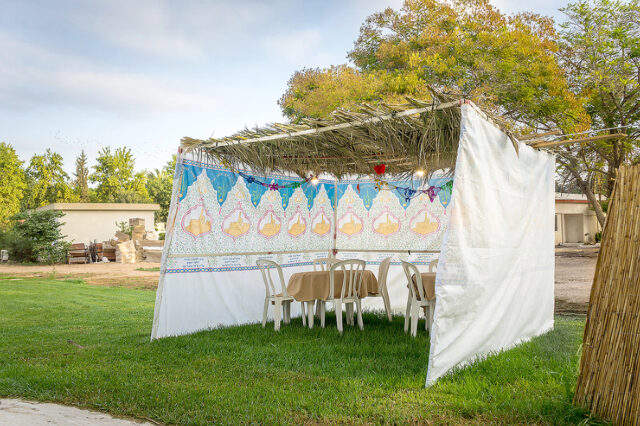
The holiday of Sukkot brings us to a place of joy, celebrating our newfound connection to the spiritual energy we’ve plugged into during the High Holidays. Here are 5 life lessons to reflect upon as we sit within the wall of our sukkah.
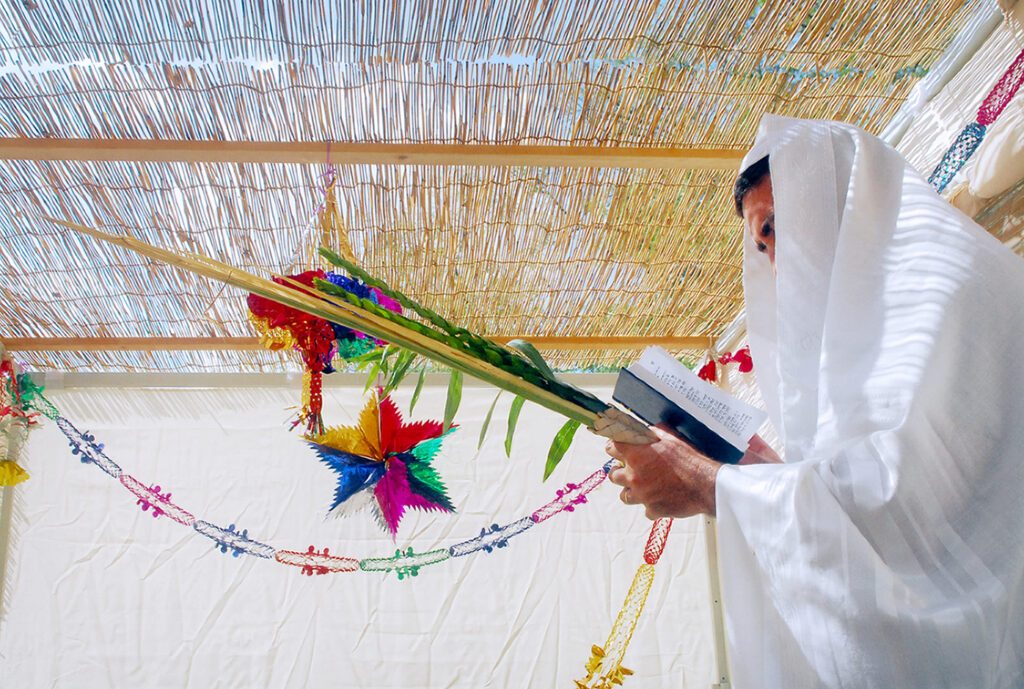
A Jewish man blesses on the four species in a Sukkah for the jewish holiday of Sukkoth.
Look Up When sitting in the sukkah one must be able to see the sky through the covering of the roof made out of leaves. It’s as if a mystical voice is calling out to us and whispering, “Look up.” Know that you will go through moments in life that will be terrifying. Your forefathers left Egypt and came into the desert wilderness not knowing how they would survive. No food. No water. The sun was scorching hot. There were snakes and scorpions. But G-d enveloped His children with Clouds of Glory that served as protection that continues to serve as a lesson until today. The sukkah is our reminder that faith and trust in G-d is the greatest weapon to combat fear. These past few years we’ve realized how much is out of our control. The world is spinning. It may feel difficult to hold on. Lift your eyes and see the Source of life. Don’t crumble. The sukkah is here for every single one of us to experience. Bask within the shelter of faith.
We Don’t Need All the Stuff The sukkah is a temporary dwelling. We leave our homes and for 7 days we live in the sukkah. All the comforts of home are inside. Somehow we are content, even tasting joy, as we join those we love in celebration. What happened to all the stuff we thought we needed to be happy? The 7 days represent the seven decades of a person’s life. What really counts in the end? Life is temporary. No one wishes that they had amassed more ‘stuff’. Rather we wish we would’ve spent more time with those we cherish. We regret moments lost, words not said, and opportunities for love that never return. Sukkot liberates us. We are given time to take a spiritual time out and think about what really matters.
We Come from Greatness Each night we are given a beautiful prayer to say as we invite a holy guest into our sukkah. All together there are 7 ushpizin (guests), who grace our sukkah with their spiritual presence: Abraham, Isaac, Jacob, Josef, Moses, Aaron and David. These 7 transformed a morally desolate world into a place of kindness, compassion and awareness of G-d. Each of us are given an ability to draw upon the blessings of those who came before us. Their every struggle and challenge become a stepping stone for our personal life journey. When we realize the greatness we come from, we are given the strength to pick ourselves up and keep walking. We, too, can bring light into a world of darkness. We must only invite greatness into our lives.
Discover the Gift of Humility A sukkah taller than 20 amot (around three stories) cannot be used. The lesson is deep. If there is one character trait that pushes G-dliness out of our lives, it is arrogance. When you are so full of yourself, there is no space for anyone else, even G-d. If you want your life to be filled with love and meaning, discover the gift of humility. Know how to put others first. Don’t live a ‘selfie life’, where the lens is only turned on yourself. Feel the pain of another. Each day ask yourself: how is this world better because I exist? Make space for others. Be a giver. When my child was once crying, my 6-foot 2 father bent down to hear him. He picked my little boy up, cuddled him on his shoulders and said, “No one should ever be too high to hear the cries of a child.” We are all that child. And none of us can ever feel too high to hear the cries of another.
Feel G-d’s Hug A sukkah requires at least two complete walls plus a third wall that can even be one handbreadth. The image is that of a hug. The sukkah is G-d’s embrace of us. Each and every one of us is precious. When you give someone a hug, you wrap your hands around their back and pull them close. Their face is not seen. So too, we are being embraced. It does not matter what we think we look like, spiritually, or mistakes we made that we believe may create obstacles as we try to plug into our souls. Enter the sukkah and know that you are loved. Every person who wants to come close is hugged. Unconditionally. The sukkah is speaking to us. We just need to open our hearts to hear its whisper.
CONEY ISLAND, USA - OCT 25, 2015: people visit famous old promenade at Coney Island, the amusement beach zone of New York.
Eddie M. Esses and Sari J. Setton
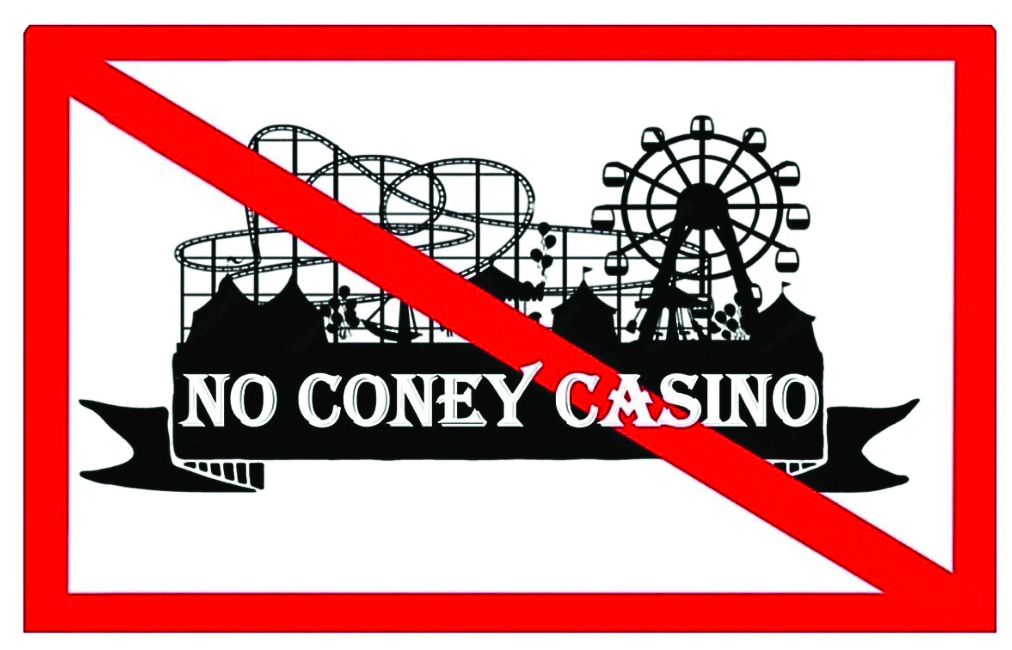
In a decisive victory for community advocacy, the proposal to bring a casino to Coney Island has effectively been defeated, thanks in large part to the tireless efforts of the Sephardic Community Federation (SCF).
After five years of dedicated opposition, including an especially intense campaign over the last 10 months, SCF’s leadership and grassroots mobilization helped secure commitments from four key local officials whose decision determined the project’s fate. Brooklyn Borough President Antonio Reynoso, State Senator Jessica Scarcella-Spanton, Councilman Justin Brannan, and Assembly Member Alec Brook-Krasny have each formally announced they will vote NO on the casino plan. These four “NO” votes effectively end the Coney Island casino proposal, with the decision set to be made official on September 29. This outcome is a testament to the perseverance of SCF and its leaders, most notably Sam Sutton and Ronnie Tawil, who guided the effort with vision and determination. Through sustained advocacy, coalition-building, and community outreach, SCF ensured that the concerns of our community, which almost unanimously opposed the project, were not only heard but prioritized. The campaign drew strength from years of hard work: countless meetings with elected officials, mobilization of community members, and consistent messaging about the potential risks a casino would bring to our neighborhoods and families. By focusing on protecting community values and preserving the character of our neighborhoods, SCF successfully framed the debate and persuaded key decision-makers. “We extend our deepest gratitude to everyone who worked tirelessly, through advocacy, outreach, and collaboration, to make this outcome possible,” SCF said in a statement. “Your voices were heard, and together we made a difference.” The defeat of the Coney Island casino is more than just a policy win. It is a powerful example of what sustained, organized community activism can achieve. For SCF and its partners, this victory reaffirms the importance of persistence, unity, and a commitment to safeguarding the future of our community.
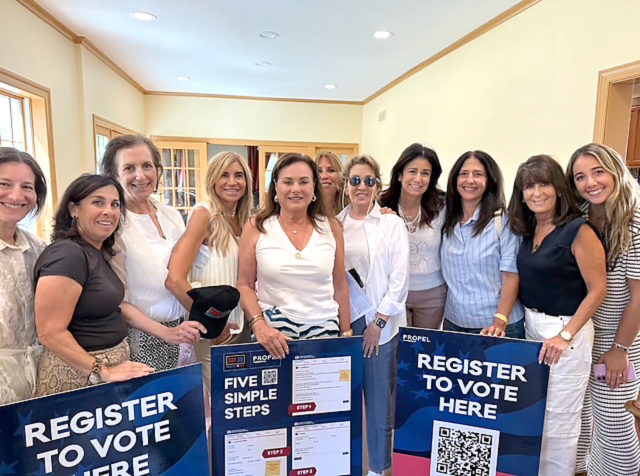
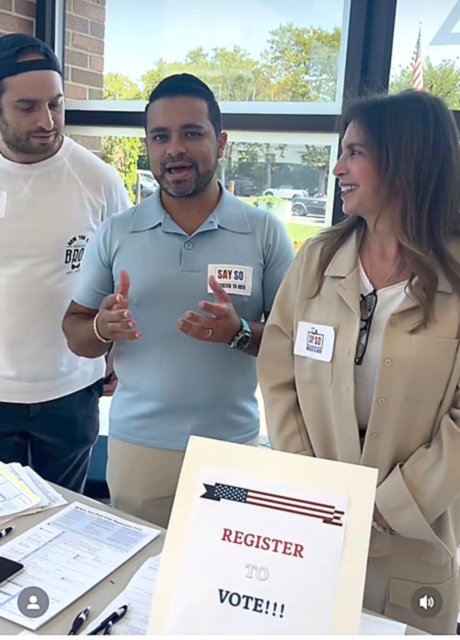
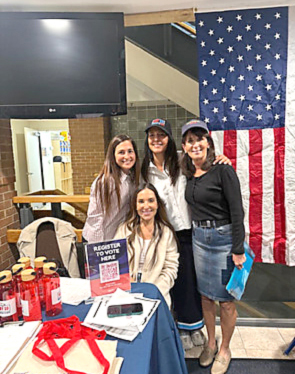
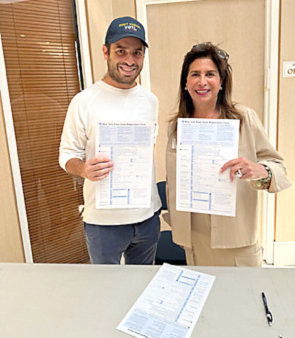
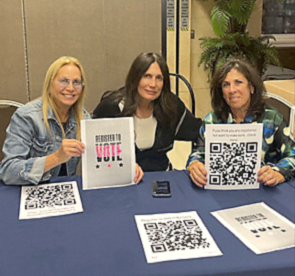
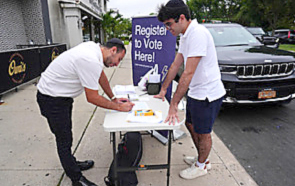
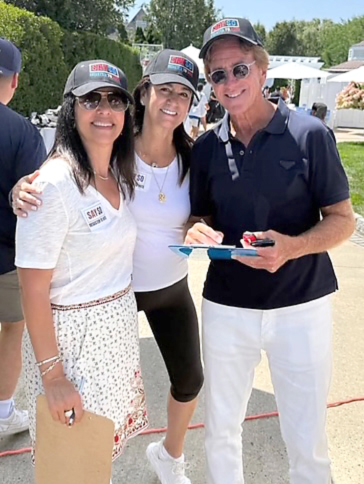
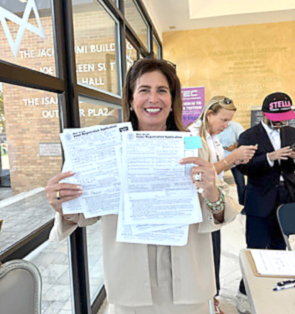
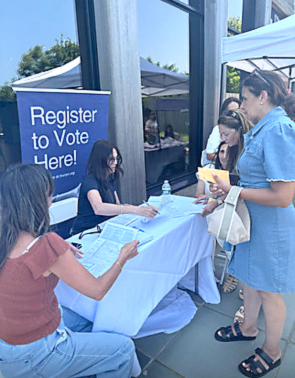
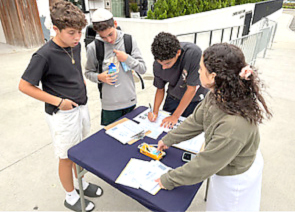
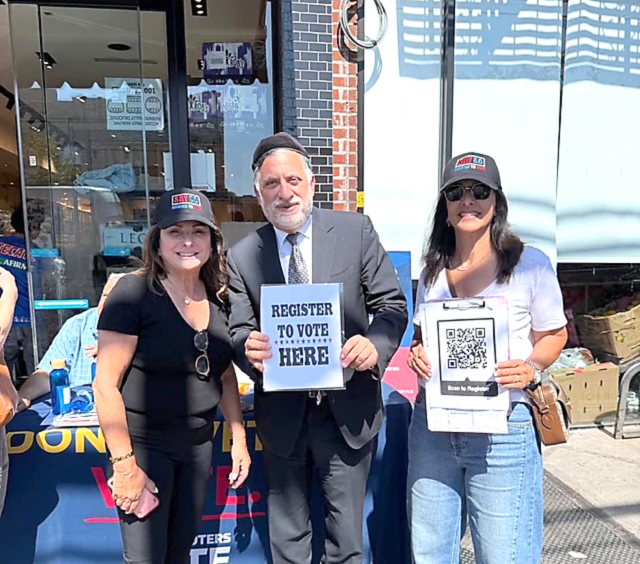
As the sun beat down relentlessly this past summer, a dedicated group of individuals emerged as shining examples of commitment and community spirit. Throughout the season and in the sweltering heat, these champions of civic engagement tirelessly worked to mobilize voter registration in the Sephardic Community. Their readiness to lend their talent and time, engage with community members, and encourage voter registration was a testament to their unwavering belief in the power of democracy.
With the most significant local race in recent history looming this November, the Sephardic Community Federation developed a multi-pronged plan to ensure that we not only protect our way of life and values, but that we are heard loud and clear in government. One integral facet was to get every eligible voter in the community registered. The SCF reached out to a well-known community leader, a true powerhouse in all she endeavors, Linda Ebani. Linda graciously accepted the role to lead, alongside Rebecca (Salame) Harary. They curated a think tank of critical thinkers, and brainstormed not only an idea, but a trending movement, decrying “If you want a SAY SO in your future, you must VOTE”. Thus, the SAYSO campaign emerged. Linda Ebani has led voter initiatives in the Sephardic Community for over 7 years, co-founded the KHBA, and served on the SCC Board for 22 years. She is a true community leader and organizer with an innate talent for motivating and unifying the community. She remarked, “This summer we registered over 1,500 people. This will have far-reaching impact on local elections for decades to come. Our community will be a real force in local politics. I believe, along with our dedicated volunteers, we spearheaded the movement to get the community registered.” Rebecca Harary is a founding board member of Imagine Academy, Yeshiva Prep HS, The Propel Network, and Safra Community Center, and has lent her expertise and guidance to countless community organizations and is an active community leader. Says Rebecca, “This summer our beloved community woke up to the news that the upcoming mayoral election could potentially lead to very difficult and dangerous times for all of us. By registering to vote, each and every person will now have a ‘SaySo.’ The more people we register, the louder our voice will become. Let’s keep it going!” With the dynamic leadership of these women, volunteers felt empowered and driven. Many shared personal stories, emphasizing how their own experiences shaped their commitment to ensure that every member of the Sephardic Community has the opportunity to register and vote. They relayed that this is not just about filling out forms; it is about empowering individuals and fostering a sense of belonging. It is about fulfilling an obligation that we have as Jews and community members to practice due diligence. Each conversation they had, every question they answered, and every person they encountered was a step toward building a more engaged and informed electorate. The impact of their work extends beyond the immediate goal of increasing voter registration. By participating in community events and fostering connections, these volunteers helped create a culture of civic responsibility within the community. Their passion and dedication are an inspiration to others to join the cause, turning a collective effort into a movement that resonates with the values of our heritage. To those who braved the elements, who dedicated their weekends and evenings, and who poured their hearts into this vital mission, we offer our deepest thanks. Your commitment is not just appreciated; it is celebrated. You have shown that when we come together as a community, we can achieve remarkable things. Linda Ebani, Rebecca Harary, Madelyn Abady, Alice Adjmi, Aileen Ades, Lisa Bailey, Bridget Ben-Dayan, Mijal Bitton, Trina Cayre, Arlene Chera, Suzie Chera, Rina Dweck, Sarise Dweck, Eddie Esses, Cindy Gindi, Robert Harary, Joelle Hedaya, Sharon Kattan, Sarah Maleh, Sadie Meyers, Esther Paskie, Joey Saban, Allison Safdieh, Gail Setton, Sari Setton, Adrianne Shamie, Victoria Sutton, Jennifer Tawil, Michele Tawil, and Stefanie Zeitounie, and to any we have inadvertently missed, thank YOU. As we look ahead to future elections, let us carry forward the momentum you have created. Let us continue to engage, educate, and empower one another. Your hard work has laid the foundation for a brighter future, and for that, we are eternally grateful. Thank you for your time, your energy, and your unwavering belief in the power of every single vote. Together, we can ensure that our voices are heard, our stories are told, and our community thrives. You are the heart of our democracy, and we are proud to stand alongside you as we move forward together. “Let’s keep it going”, indeed.
The Sephardic Community Federation (SCF) has launched one of the most ambitious voter registration drives in the history of our community. Led by Haim Dabah and Marshall Aronow, in partnership with SCF’s executive team—Ronnie Tawil, Sari Setton, Eddie Esses, Joey Saban, Joe Mansour, and Charles Chakkalo. This unprecedented initiative is already reshaping civic engagement across our community, having registered thousands of new voters with the goal of adding many thousands more before the November mayoral election.
The campaign was launched this past August at a meeting hosted by Haim Dabah at his home in Deal, NJ. Leaders from schools, synagogues, and community institutions gathered for a powerful morning of strategy and planning. Presentations by Haim Dabah, Marshall Aronow, and Ronnie Tawil set the tone for the weeks ahead, followed by a lively discussion among the assembled leadership. In addition to uniting our institutions around this mission, the meeting also raised enough money to fund the campaign’s rollout. From that moment, the SCF team, guided daily by Haim and Marshall, set in motion a wide-ranging and highly coordinated effort:
Rabbinical Proclamation: A landmark statement, signed by the majority of our community Rabbis, declared that registering to vote is both an obligation and a mitzvah, energizing the effort with moral clarity.
School-Based Registration: Magen David Yeshivah, under the leadership of Gladys Haddad, mandated voter registration among its parent body in order to receive class cards. The result was extraordinary: a 99% registration rate in just three days. Yeshivot nationwide have since reached out, seeking to replicate this model.
Synagogue Engagement: Congregation Shaare Zion instituted a policy requiring voter registration to reserve High Holiday seats, demonstrating the alignment of our institutions behind this effort.
Community Registration Tables: Under the leadership of Linda Ebani, along with Rebecca Harary, volunteers have been running registration drives at summer events, synagogues, and local stores across Brooklyn, engaging our community at every level.
Door-to-Door Canvassing: Joey Saban led a professional door-to-door campaign that has registered significant numbers of voters directly at their doorsteps.
Direct Texting Campaign: Most recently, the group launched a major texting initiative targeting unregistered voters. In just a few days, the effort has registered hundreds, and it is rapidly expanding to registering thousands.
Together, these initiatives have already registered thousands of voters in just weeks. The goal is to register many thousands more before November, ensuring that our community’s voice is heard loud and clear in this critical mayoral election and all future elections. This campaign is a testament to what can be achieved when vision, leadership, and unity come together. The extraordinary dedication of Haim Dabah and Marshall Aronow, combined with the tireless efforts of the SCF team, has inspired a wave of civic engagement unlike anything our community has seen before. With the upcoming mayoral election, we are living through uncertain times that call for decisive efforts, and community leadership is stepping up to the plate. With the continued energy and unity behind this campaign, the Sephardic Community is poised to play a significant role in shaping the future of our city and state.
Time management is more than management and larger than time. It is about life itself. G-d gives us one thing above all: life itself. And He gives it to us all on equal terms. However rich we are, there are still only 24 hours in a day, 7 days in a week, and a span of years that, however long, is still all too short. Whoever we are, whatever we do, whatever gifts we have, the single most important fact about our life, on which all else depends, is how we spend our time.
“The span of our life is seventy years, or if we are strong, eighty years,” says Psalm 90, and despite the massive reduction of premature deaths in the past century, the average life expectancy around the world, according to the most recent United Nations figures (2010-2015) is 71.5 years. So, concludes the Psalm, “Teach us to number our days that we may get a heart of wisdom,” reminding us that time management is not simply a productivity tool. It is, in fact, a spiritual exercise.
Hence the following life-changing idea, which sounds simple, but isn’t. Do not rely exclusively on To Do lists. Use a diary. The most successful people schedule their most important tasks in their diary. They know that if it isn’t in there, it won’t get done. To Do lists are useful, but not sufficient. They remind us of what we have to do but not when. They fail to distinguish between what is important and what is merely urgent. They clutter the mind with trivia and distract us when we ought to be focusing on the things that matter most in the long run. Only a diary connects what with when. And what applies to individuals applies to communities and cultures as a whole.
That is what the Jewish calendar is about. It is why chapter 23 parsha Emor, is so fundamental to the continued vitality of the Jewish people. It sets out a weekly, monthly and yearly schedule of sacred times. This is continued and extended in Parshat Behar to seven- and fifty-year schedules. The Torah forces us to remember what contemporary culture regularly forgets: that our lives must have dedicated times when we focus on the things that give life a meaning. And because we are social animals, the most important times are the ones we share. The Jewish calendar is precisely that: a structure of shared time.
We all need an identity, and every identity comes with a story. So we need a time when we remind ourselves of the story of where we came from and why we are who we are. That happens on Pesach, when we re-enact the founding moment of our people as they began their long walk to freedom.
We need a moral code, an internalized satellite navigation system to guide us through the wilderness of time. That is what we celebrate on Shavuot when we relive the moment when our ancestors stood at Sinai, made their covenant with G-d, and heard Heaven declare the Ten Commandments.
We need a regular reminder of the brevity of life itself, and hence the need to use time wisely. That is what we do on Rosh Hashanah as we stand before G-d in judgment and pray to be written in the Book of Life.
We need a time when we confront our faults, apologize for the wrong we have done, make amends, resolve to change, and ask for forgiveness. That is the work of Yom Kippur.
We need to remind ourselves that we are on a journey, that we are “strangers and sojourners” on earth, and that where we live is only a temporary dwelling. That is what we experience on Succot.
And we need, from time to time, to step back from the ceaseless pressures of work and find the rest in which we can celebrate our blessings, renew our relationships, and recover the full vigor of body and mind. That is Shabbat.
Doubtless, most people – at least, most reflective people – know that these things are important. But knowing is not enough. These are elements of a life that become real when we live them, not just when we know them. That is why they have to be in the diary, not just on a To Do list.
As Alain de Botton points out in his Religion for Atheists, we all know that it is important to mend broken relationships. But without Yom Kippur, there are psychological pressures that can make us endlessly delay such mending. If we are the offended party, we may not want to show other people our hurt. It makes us look fragile, vulnerable. And if we are the offending party, it can be hard to admit our guilt, not least because we feel so guilty. As he puts it: “We can be so sorry that we find ourselves incapable of saying sorry.” The fact that Yom Kippur exists means that there is a day in the diary on which we have to do the mending – and this is made easier by the knowledge that everyone else is doing so likewise. In his words:
“It is the day itself that is making us sit here and talk about the peculiar incident six months ago when you lied and I blustered and you accused me of insincerity and I made you cry, an incident that neither of us can quite forget but that we can’t quite mention either and which has been slowly corroding the trust and love we once had for one another. It is the day that has given us the opportunity, indeed the responsibility, to stop talking of our usual business and to reopen a case we pretended to have put out of our minds. We are not satisfying ourselves, we are obeying the rules.”
Exactly so: we are obeying the rules. We are following the Jewish calendar, which takes many of the most important truths about our lives and, instead of putting them on a To Do list, writes them in the diary.
What happens when you do not have that kind of diary? Contemporary Western secular society is a case-study in the consequences. People no longer tell the story of the nation. Hence national identities, especially in Europe, are almost a thing of the past –one reason for the return of the Far Right in countries like Austria, Holland and France.
People no longer share a moral code, which is why students in universities seek to ban speakers with whose views they disagree. When there is no shared code, there can be no reasoned argument, only the use of force.
As for remembering the brevity of life, Roman Krznaric reminds us that modern society is “geared to distract us from death. Advertising creates a world where everyone is forever young. We shunt the elderly away in care homes, out of sight and mind.” Death has become “a topic as taboo as sex was during the Victorian era.”
Atonement and forgiveness have been driven out of public life, to be replaced by public shaming, courtesy of the social media. As for Shabbat, almost everywhere in the West the day of rest has been replaced by the sacred day of shopping, and rest itself replaced by the relentless tyranny of smartphones.
Fifty years ago, the most widespread prediction was that by now almost everything would have been automated. The work week would be down to 20 hours and our biggest problem would be what to do with all our leisure. Instead, most people today find themselves working harder than ever with less and less time to pursue the things that make life meaningful. As Leon Kass recently put it, people “still hope to find meaning in their lives,” but they are increasingly confused about “what a worthy life might look like, and about how they might be able to live one.”
Hence the life-changing magic of the Jewish calendar. Philosophy seeks timeless truths. Judaism, by contrast, takes truths and translates them into time in the form of sacred, shared moments when we experience the great truths by living them. So: whatever you want to achieve, write it in the diary or it will not happen. And live by the Jewish calendar if you want to experience, not just occasionally think about, the things that give life a meaning.
Once seen as primarily a destination for retirees, South Florida has evolved. From outstanding schools and thriving synagogues to a robust economy and unbeatable weather, South Florida is no longer just a winter escape—it’s where Jewish life is flourishing all year round.
The growing uncertainty in NY political leadership makes Florida a compelling alternative. Florida offers optimism and a commitment to public safety, especially in the Jewish community. Business is championed, not punished. Government is a partner in growth, not a barrier—rooted in the idea that private sector success strengthens entire communities, not punishes them. Florida is growing, especially in fields like technology, finance, law, healthcare, and real estate, with major corporations, start-ups, and remote work options expanding. South Florida provides a more affordable lifestyle with zero state income tax. Families can often afford larger homes, more space, and higher quality of life for the same cost as what they’d pay in the Northeast. Property taxes tend to be lower, and private school tuition is often more manageable. LET’S NOT FORGET THE SUNSHINE. South Florida’s year-round warm weather promotes a healthy, active outdoor lifestyle—think beach days, boating, bike rides, and BBQ. What’s happening in South Florida isn’t a trend—it’s a shift. More young families are choosing to put down roots here, drawn by community, culture, opportunity, and values. With excellent schools and meaningful Jewish life, financial benefits, and unmatched lifestyle amenities, South Florida stands out as one of the best places in America to build a Jewish future. Some welcoming communities where Jewish life is supported include Aventura, Hollywood, Surfside/Bal Harbour, Boca Raton, and North Miami Beach—home to dozens of synagogues, kosher markets, and Jewish day schools. You’re never far from a Jewish preschool or a meaningful place to pray. The new Magen David coming up in Bal Harbour will be an amazing and vibrant part of our community. For families, education is often the deciding factor in a move—and South Florida delivers. With renowned Jewish day schools like Hebrew Academy in Miami Beach, Hillel near Aventura, Brauser Maimonides in Hollywood, and Katz Yeshiva High School, parents have access to outstanding education options that combine academics with strong Jewish values. If you’re dreaming about raising your family in a place that honors tradition while embracing modern life, South Florida may be just what you’ve been looking for.