Home Blog Page 15

The Jewish NationShattered Yet Unbreakable

Rabbi Dr. Yosef Lynn

At Daniel Perez’s second funeral, I witnessed the paradox of our people: devastated yet resilient, broken yet unbroken.

Standing at Har Herzl on a cool Jerusalem evening, I witnessed something that defies explanation—a people simultaneously shattered and unbreakable. How does the Jewish nation keep going?
I stood at the funeral of Captain Daniel Perez, joined by thousands who gathered at Mount Herzl. But this wasn’t just any funeral—this was the second funeral, a reality so cruel it seems impossible to comprehend.
For months after October 7th, his family clung to hope that he was alive. Then came the devastating notification of his death. Still, they waited—hoping, praying for his body to be returned so they could lay him to rest with dignity. Tonight, finally, they could say goodbye.
But the moment that broke me—and everyone around me—came when Matan Angrest arrived. One of the 20 hostages just released from captivity, he stood at the graveside of his commander—frail, pale, barely able to walk after his ordeal in Gaza. Yet there he was. Standing, present, honoring the man who had led him. He spoke briefly but with bravery. He said, “I can’t believe I even made it here. This is the least I could do for Daniel and the whole crew… My commander will always be my commander, until the day I die. You will go with me until my last day and even in the world to come.”
How can anyone fathom such strength? Then I looked to my left and saw something equally profound. A regular man in the crowd—except he wasn’t regular at all. It was Jon Polin, father of Hersh Goldberg-Polin, one of the hostages who never made it out of Gaza alive. There he stood, his own heart carved out by unimaginable loss, physically holding and supporting another grieving family through their pain. There wasn’t a dry eye in the crowd.
In all my years of studying Positive Psychology—a science focused heavily on the study of resilience, hope, and meaning—there is no data, no research, no theoretical framework that could explain the magnitude of what I experienced tonight. The textbooks speak of post-traumatic growth, of finding meaning in suffering, of the human capacity for resilience. But they fall silent before this. What I witnessed transcends every model and metric we’ve developed to understand human strength.
The dichotomy was awesome in the truest sense of the word—inspiring awe, wonder, and reverence. Here was a nation brought to its knees by grief, yet somehow standing taller than ever. Broken, but refusing to break. Mourning, but not losing hope. Burying their dead while embracing their returned living.
This is the paradox of the Jewish people that has sustained us through millennia. We cry—deeply, authentically, without restraint. Yet we don’t surrender to despair. We attend second funerals for our fallen heroes. We watch emaciated hostages stumble to honor their commanders. We see bereaved fathers comfort other bereaved families.
And somehow, impossibly, we keep going. Because that’s what Daniel would have wanted. That’s what Hersh would have wanted. That’s what this nation has always done—we hold each other up when standing seems impossible. We find strength not despite our brokenness, but somehow through it.
As I left Har Herzl last night, I carried two feelings that shouldn’t coexist but somehow do in the Jewish heart: profound sadness and profound pride. Sadness for all we’ve lost. Pride in who we are when faced with the unthinkable. This is how this nation keeps going—together, broken but unbroken, supporting each other through the unbearable until, somehow, it becomes bearable.
May Daniel’s memory be a blessing. May all our fallen be remembered.


Five Ideas for Life

Rabbi Lord Jonathan Sacks ZT”L

I spend a lot of time with young people — pupils about to leave school, students at university and graduates about to start a career. Often they ask me for advice as they begin their journey into the future. Here are some of the ideas worth thinking about as we begin our journey into a new calendar year.
The first idea is to dream. Seemingly the least practical activity turns out to be the most practical, and most often left undone. I know people who spend months planning a holiday but very little time planning a life. Imagine setting out on a journey without deciding where you are going to. However fast you travel, you will never reach your destination because you never decided where you want to be. In fact, the faster you travel, the more lost you will become.
Dreams are where we visit the many lands and landscapes of human possibility and discover the one where we feel at home. The great religious leaders were all dreamers.
Within my own tradition there was Moses, who dreamed of a land flowing with milk and honey, and Isaiah who dreamed of a world at peace. One of the greatest speeches of the 20th century was Martin Luther King’s “I have a dream”. If I were to design a curriculum for happiness, dreaming would be a compulsory course.
The second idea is, follow your passion. Nothing — not wealth, success, accolades or fame — justifies spending a lifetime doing things you don’t enjoy. I have seen too many people enter careers to earn money to give their partners and children everything they want, only to lose their partners and become estranged from their children because they never had time for them. People who follow their passion tend to lead blessed lives. Happy in what they do, they tend to spread happiness to those whose lives they touch. That is a life worth living.
The third idea I learned from the psychotherapist who survived Auschwitz, Viktor Frankl, whose Man’s Search for Meaning is one of the most widely read books of our time. Frankl used to say: Don’t ask what you want from life. Ask what life wants from you. The great lives are ones where people heard a call, had a sense of vocation. That is what set Abraham, grandfather of monotheism, on his journey and eventually it changed the world. Moses might have lived a life of ease as a prince of Egypt but he heard the cry of his people as they suffered under slavery, and G-d’s call to him to lead them into freedom.
There is a well-known story about three men who spent their lives quarrying rocks. When asked what they were doing, one replied, “Breaking rocks.” The second said, “Earning a living.” The third said, “Building a cathedral.” We don’t need to ask which of the three had the most job satisfaction. The late Steve Jobs spent his life making technology people-friendly. The creators of Google sought to make the world of information available to all. An overarching sense of the Why preceded the How. Where what we want to do meets what is crying out to be done, that is where we should be.
The fourth idea is: make space in your life for the things that matter, for family and friends, love and generosity, fun and joy. Without this, you will burn out in mid-career and wonder where your life went. In Judaism we have the Sabbath, a dedicated day of stillness each week, where we make space for all the things that are important but not urgent. Not every culture has a Sabbath, but life without dedicated time for renewal, like a life without exercise or music or a sense of humor, is a lesser life.
The fifth idea is work hard, the way an athlete or concert pianist or cutting-edge scientist works hard. The American psychologist, Mihaly Csikszentmihalyi, calls this the principle of “flow”. By this he means the peak experience you have when you are working so hard at a task that you are unaware of the passing of time. No great achiever — even those who made it seem easy — ever succeeded without hard work. The Jewish word for serving G-d, avodah, also means hard work.
There are many other ideas but these are some of the most important. Try them and you will be surprised by joy.

Read Jewish Image Magazine Online – November 2025

The Power of “Yet”

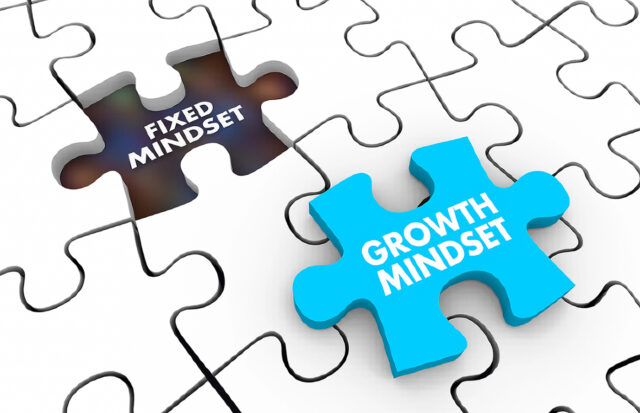
Fixed Vs Growth Mindset Puzzle Pieces 3d Illustration

A Jewish Perspective on Growth Mindset

Rabbi Dr. Yosef Lynn

You are never stuck. You are a work in progress.
At the heart of Judaism is the belief that people are not static—we are works in progress, capable of teshuvah (repentance and transformation). The Hebrew word teshuvah literally means “return,” but it represents far more than simple repentance. It’s the radical idea that we can fundamentally change who we are, that our past mistakes don’t define our future potential.

Moses initially doubted himself, saying he wasn’t eloquent enough to lead. Yet he grew into the greatest prophet and leader of the Jewish people. True greatness is born not from flawless strength, but from the courage to grow.
The Mishnah tells us: “According to the effort is the reward” (Ethics of the Fathers, 5:23). Not according to the outcome, not according to natural talent—according to the effort. Our Sages understood that the process of striving, even when we fall short, is where true value lies.
Think of the patriarch Jacob wrestling with the angel. He emerged wounded, but transformed, earning the name Israel—“one who struggles with G-d.” His injury wasn’t a defeat; it was a badge of honor, proof of his willingness to engage in the struggle of growth.
Even our greatest sages lived this truth. Rabbi Akiva didn’t begin learning Torah until the age of 40, starting as an illiterate shepherd. Through tremendous effort and dedication, he became one of our greatest teachers. His story embodies Judaism’s timeless conviction: it’s never too late to begin, and your starting point doesn’t determine your destination.

Psychology Meets Tradition
This Jewish way of thinking finds a fascinating parallel in modern psychology. In her groundbreaking book Mindset: The New Psychology of Success, psychologist Carol Dweck describes two fundamental ways of seeing ourselves:

  • Fixed Mindset: The belief that our talents, intelligence, and character are static traits—carved in stone and unchangeable.
  • Growth Mindset: The understanding that our abilities can be developed through dedication, hard work, and learning from failure.
    Echoing something Judaism has always known, humans are works in progress, constantly capable of change and renewal.
    The growth mindset transforms how we define failure. Instead of seeing setbacks as proof of our limitations, we begin to view them as data points for improvement. This shift is profoundly liberating—and profoundly Jewish.

The Language of Possibility
That’s part of the reason why Judaism has always been wary of permanent labels. The Talmud tells us that even someone who has committed serious transgressions can completely transform themselves. A person can change their entire spiritual trajectory in a single moment of sincere teshuvah.

This perspective invites us to add one small but powerful word to our self-talk: “yet.”

  • Not: “I’m not good at math.”
  • But: “I’m not good at math—yet.”
    By adding yet, we acknowledge our present reality while refusing to make it permanent.

Practical Applications
How can we cultivate this growth-oriented perspective in our own lives?

  • Reframe challenges as opportunities: When facing a difficult situation, ask “What can this teach me?” rather than “Why is this happening to me?”
  • Embrace the learning process: Celebrate small improvements and view mistakes as valuable feedback, not personal failures.
  • Use growth language: Replace “I failed” with “I learned.” Replace “This is too hard” with “This will take time and effort.”
  • Find your learning partner: Surround yourself with people who challenge you to grow, not those who simply affirm your current level.

Ultimately, cultivating a growth mindset is a spiritual practice. It requires faith—faith in our capacity to change, in the value of effort over outcome, and in the possibility that tomorrow’s version of ourselves can transcend today’s limitations.
This faith is deeply Jewish. Jews are the people who believe that a stuttering shepherd can become the greatest prophet and leader, that a barren woman can become the mother of nations, that slaves can become a light unto the world.
As you navigate your own growth journey, remember: the path isn’t about perfection—it’s about progress. Every challenge you face is an opportunity to choose: Will you see this as evidence of your limitations, or as a chance to expand your capabilities?
And the next time you catch yourself saying “I can’t,” try adding that transformational word: “yet.” In that simple addition, you’ll find not just a change in language, but a change in possibility—and perhaps, a return to one of Judaism’s most fundamental truths: we are all works in progress, beautifully and eternally unfinished.

Charlie Kirk’s Legacy and Takeaways of His Assassination

Elliot Mathias

Charlie Kirk inspired a generation with his passion and purpose. In the wake of his horrific murder, how can we draw meaning and direction from the life and example he left behind?

I first heard the name Charlie Kirk in 2013, during a meeting with a prominent California philanthropist who supported Hasbara Fellowships, Aish’s campus pro-Israel advocacy program I had founded. “Have you met Charlie Kirk?” he asked. I shook my head. His reply was instant: “He’s a powerhouse. He’s going to change college campuses for the better.”
At the time, it sounded like the kind of bold prediction donors often make. But in this case, he was right—though even he couldn’t have foreseen just how far Kirk would go. A college dropout from suburban Chicago, Charlie Kirk didn’t just influence campuses; he transformed the political landscape. As founder of Turning Point USA, he built the largest grassroots conservative movement in the nation, rallying and empowering students across all 50 states.
His brutal assassination has left so many reeling. The man who reshaped a generation of conservative activism—who embodied drive, conviction, and an unshakable belief in America’s future—was cut down in an act of senseless violence. The shock is still raw. Yet in the face of this horrific loss, we are left to wrestle with what his life meant, and what we can learn from the example he set. Here are my biggest takeaways I think we can learn from Charlie Kirk.

Fight for Your Cause Without
Demonizing Others

We can deeply believe in our own cause and fight for it vociferously—without demonizing or ostracizing those we disagree with. It is shockingly sad to see the state of political discourse in America today. Politicians, media personalities, and social media influencers compete to paint their adversaries in the darkest possible light. Each side proclaims that the other is destroying the nation.
Earlier this year, liberal commentator Keith Olbermann posted on X: “Every Republican is complicit. Every one of them is a collaborator in the destruction of America.” On the other side, right-wing commentator Steve Bannon declared on his podcast: “The radical left are demons. They worship power and chaos. They hate G-d, they hate America, and they hate you.”
Charlie Kirk stood for something else—conversation. He was known for setting up in the middle of college campuses and letting anyone engage him in debate. He offered the microphone to anyone who disagreed with him, though that person needed to be ready to have their ideas challenged. Charlie wasn’t a pushover and he had an agenda. But his agenda was to win the battle of ideas, not to demonize his opponents.
In this way, Charlie’s tactics echoed Jewish tradition. The Talmud is filled with debate, and two of its most famous combatants, Hillel and Shammai, disagreed constantly. Yet their aim was always to arrive at truth—not to humiliate or delegitimize the other side.
We can believe deeply in our own ideals while remaining committed to listening and respecting others. That’s the only way we can build our society.

Standing Up for Israel
Charlie Kirk made support for Israel a central platform of his advocacy. He spoke powerfully about Israel as both a strategic ally of the United States and a moral beacon in the Middle East.
In the past year, however, that position has become less popular among many outspoken conservative personalities. Bashing Israel—and even crossing the line into outright antisemitism—has sadly become increasingly normalized on right-wing podcasts and social media. Charlie would have none of it.
He argued that Israel was a key ally in the fight against America’s worst enemies, which in turn made Americans safer. He believed firmly that Israel held a historic right to the Land of Israel and was acting morally in defending itself.
At a time when young American conservatives are being fed hateful lies about Israel’s “bloodthirsty” intentions or its supposed attempts to drag America into unnecessary wars, Charlie Kirk offered another vision—one grounded in reason, knowledge, and passion.

Advocating That Religious Ideals
Can Strengthen Society

In Charlie Kirk’s early years of public advocacy, religion played little role in his message. But over time, he became increasingly outspoken about his faith and values. He argued that America was founded on G-d-given rights and responsibilities, and that the erosion of these core beliefs was fueling many of the nation’s ills and its growing sense of directionless drift.
Charlie was not seeking to evangelize. In fact, he was a deep admirer of Judaism and a loyal friend of the Jewish people. Yet he was unafraid to wear his religious convictions on his sleeve, insisting that faith was not the problem but the solution. For him, religion offered timeless answers to society’s deepest challenges—anchored in ideals like self-worth, charity, personal responsibility, strong family and moral clarity.

We Can Change the World if We
Have a Mission

Adam Rubenstein eulogized Charlie Kirk in the Free Press, writing: “He had a mission. It filled him with meaning. And that, above all, was why he convinced countless young people to listen to him, to change their lives for the better, to stand up for things that used to be called common sense.”
Judaism teaches that we are responsible for making the world a better place. We believe the values and morals of Judaism give us the tools to solve the world’s problems. And we believe deeply that if we are working to improve the Almighty’s world, He will help us succeed.
Charlie Kirk lived with this clarity. He knew he was responsible for fighting for a better America and a better world. He poured relentless passion into his mission, winning over countless allies, partners, and supporters.
His murder should stir us to reflect on these questions: What are we passionate about? What is our mission? How can we change the world? Charlie Kirk’s legacy—and the shocking way his life was cut short—urges us to face them with renewed seriousness and purpose.
May Charlie Kirk’s memory be a blessing, and may the impact he made in all these areas continue to inspire and endure far beyond his physical life in this world.

The Consistency Cure

Neon inscription of positive wise quote against brick wall .

Why Small, Steady Changes Beat Quick Fixes Every Time

Laura SHAMMAH MS, RDN

Everywhere you turn, there’s a new diet promising dramatic results: “Drop 10 pounds in 10 days,” “Cut out carbs and reset your metabolism,” “Intermittent fasting is the secret to longevity.” It’s tempting to believe that the next trend will be the one to solve all your health struggles. But while quick fixes can spark short bursts of motivation, they rarely deliver lasting results.
Real health, energy, and balance come from something much less flashy: consistency.

Why Quick Fixes Don’t Last
Most people who try restrictive diets or aggressive health challenges discover the same pattern: initial success followed by burnout. Here’s why:

  • They create an all-or-nothing mindset. If you “mess up,” it feels like failure.
  • They’re unsustainable. Cutting out entire food groups or living in constant hunger isn’t realistic.
  • They can backfire. Metabolism slows when the body senses deprivation, leading to regain once the diet ends.
    That cycle leaves many people feeling like the problem is them, when in reality, it’s the strategy.

The Science of Small, Steady Change
Habits aren’t built on extremes, they’re built on repetition. Your brain and body thrive when behaviors become predictable. Consistency supports health in ways that quick fixes can’t:

  • Blood sugar stability. Eating regular, balanced meals helps prevent crashes and cravings.
  • Hormone regulation. Your body feels safer and functions better with a steady rhythm.
  • Sustainable progress. A 10-minute walk every day compounds into hours of movement over the month.

Consistency in Action
Small doesn’t mean insignificant. Here are a few examples of consistent choices that truly move the needle:

  • Swapping soda for sparkling water most days.
  • Adding one serving of vegetables to lunch and dinner.
  • Taking a short walk after meals to support digestion and blood sugar.
  • Going to bed 20 minutes earlier each night.
  • Planning protein at every meal.
    Over time, these choices compound. One skipped workout or indulgent meal doesn’t undo progress; it’s the overall pattern that counts.

What About GLP-1 Medications?
Today, many people are using GLP-1 medications like Ozempic or Mounjaro to help with appetite control and weight management. These can be powerful tools, but they’re not magic wands.
Even with GLP-1s, consistency and healthy habits are non-negotiable. Why?

  • These medications may reduce appetite, but they don’t teach you what to eat.
  • Long-term success still depends on balanced meals, exercise, hydration, and sleep.
  • Without consistent habits, it’s difficult to find true, lasting success in both mind and body.
    Think of GLP-1s as training wheels—they can provide stability, but you still need to learn the skills to ride the bike.

The Power of Patience
It’s natural to want results yesterday. But just like planting a seed and tending to it day after day, health requires patience. Consistency may not give you dramatic overnight change, but it offers something much more valuable: progress that lasts.
Consistency is the quiet, steady force that transforms health. Quick fixes may create excitement, but it’s the daily, repeatable habits that build energy, confidence, and resilience. Whether you’re adjusting your diet, adding movement, or even taking GLP-1 medication, the real “cure” is in showing up again and again.
Small steps, done consistently, will always outshine big leaps that can’t be sustained.

Pilgrimage Revival

JERUSALEM, ISRAEL - CIRCA MAY 2018: View of the the Western Wall in Jerusalem, Israel circa May 2018 in Jerusalem.

Rabbi Steven Pruzansky, Esq.

One of the most familiar and elevating of Jewish rituals in ancient Israel was the thrice-yearly pilgrimage to Jerusalem, the Aliya Laregel. Jews came with their families and offerings to Jerusalem to celebrate Pesach, Shavuot, and Sukkot, “to behold the pleasantness of the Lord and to meditate in His sanctuary” (Tehillim 27:4). It was not only a life-changing experience; it was also life-shaping, life-affirming. It placed Jerusalem and the Holy Temple at the epicenter of every Jew’s consciousness. And it did more than that.

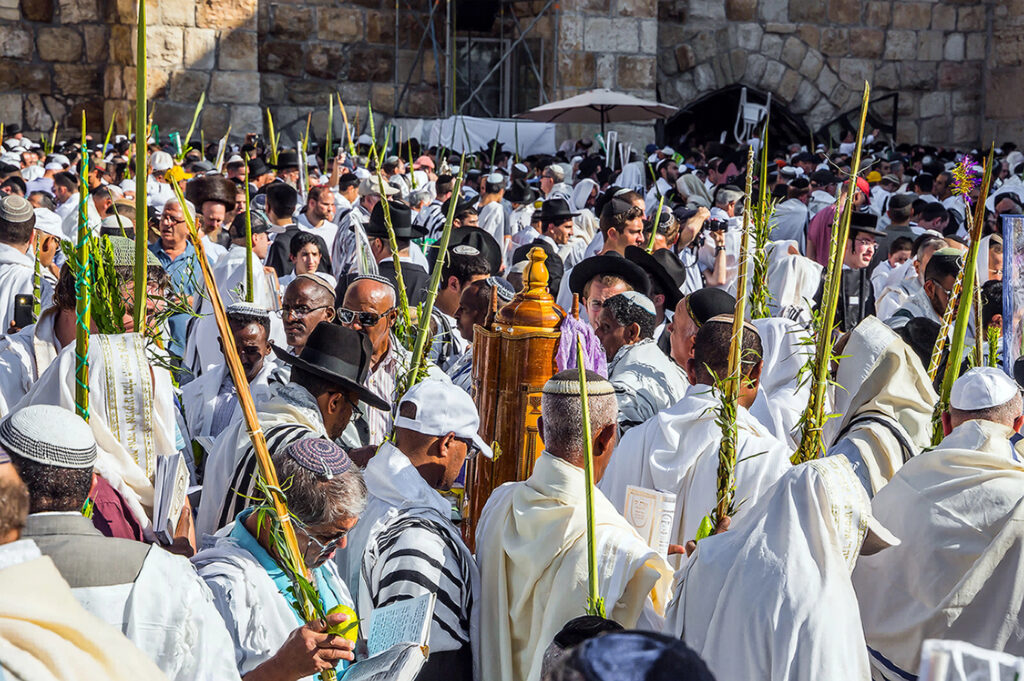
JERUSALEM, ISRAEL – SEPTEMBER 26, 2018: Jews praying at the Western Wall wrapped in festive white Talit. The blessing of the Cohanim. Touching ceremony at the Western Wall. The concept of pilgrimage

The Aliya Laregel was a time of bonding for all Jews, as Jerusalem was celebrated as “the city that is united together” (Tehillim 122:3), the city “which confers fellowship on all of Israel. And when? Only when the tribes ascend together on the festivals” (Talmud Yerushalmi, Chagigah 3:6). All Jews assembled in Jerusalem: the young and old, the rich and poor, men and women, the various tribes from the north, center, and south of Israel. Despite the throngs of people, “no person ever said, ‘there is no room for me to lodge overnight in Jerusalem’” (Avot 5:5). The great medieval commentator Don Yitzchak Abarbanel noted that, in truth, it is a great miracle, that in an overcrowded setting, no one ever felt uncomfortable.
Even diverse levels of religious observance were muted on the festivals. All Jews were presumed to heed the laws of ritual purity. Everyone could eat other’s food and drink each other’s wine. No Jew could be declared impure, such as with tzara’at, on the festivals. A nation that was divided into tribes – today, into political parties and religious factions – found its commonality on the festivals, with Aliya Laregel. Jerusalem, which we are taught was never divided among the tribes (Washington DC paralleled this practice), reached its spiritual apex on the holidays, as all Jews felt a deep, personal, and intimate connection with the Holy City, their nation’s capital and seat of government, the spiritual center of Jewish life, the place where the Divine presence was intensely experienced.
Imagine if Aliya Laregel could be revived today, not in the strictly halachic sense because the Holy Temple has not yet been rebuilt, but practically. Imagine if Jews from across the world ascended to Jerusalem three times a year on the festivals. The spiritual, political, and psychological benefits would be enormous and overwhelming. We would strengthen the attachment of all Jews to each other, a connection that is often frayed for sundry reasons. Most simply, we would affirm in the eyes of the world (and Jews) the profound bond between the Jewish people and the city of Jerusalem, our capital since the time of King David – and a bond that is important to underscore in light of our enemies who seek to delegitimize and disenfranchise the Jewish people from Jerusalem and the land of Israel.
Imagine if all Jews, of all backgrounds and various ethnicities, gathered in Jerusalem on Pesach to re-experience our formative moment as a nation some thirty-three centuries ago, liberated from bondage to become G-d’s chosen people; on Shavuot, to reclaim the Torah as our heritage and birthright; and on Sukkot, to acknowledge and be grateful for G-d’s protective hand that has preserved us until today, after millennia of exile, persecution, and suffering, only to return us to our land, declare independence, and reestablish the Jewish state – a feat without precedent in all of human history.
Together, we would celebrate our origins (Pesach), our mission (Shavuot), and the blessings of Divine Providence (Sukkot).
The Jewish people would be uplifted and transformed. The world – we can continue to imagine – would be galvanized to appreciate the extraordinary return of the Jewish people to the land of Israel and to the world stage in all our glory.
Reviving Aliya Laregel – the pilgrimage dimension of the three festivals – is more feasible than we might otherwise think. Many tens of thousands of Jews already come every festival to Jerusalem. The streets are packed, the Old City is alive, the Kotel is buzzing. We already have realized the vision of Zecharia the prophet: “Old men and old women will again dwell in the streets of Jerusalem, every man with his staff in his hand because of old age. And the streets of the city will be filled with boys and girls playing in its streets” (4:4).
That already is the reality – and the renaissance of Aliya Laregel will further unite all Jews and deepen our connection with Jerusalem. Start with one festival. Let’s do it!

Sukkot Sweet Endings

Desserts That Celebrate the Harvest

In ancient times, Sukkot was also celebrated as Hag Ha Asifuse, the Festival of the Ingathering, when our people gathered the produce of their fields and vineyards and brought offerings to the Beit HaMikdash, the Holy Temple in Jerusalem. It marked not only the close of the agricultural year but also the recognition that all blessing comes from G-D. Although most of us no longer live as farmers, the Torah’s message remains timeless. Sukkot calls us to leave the comfort of our homes, dwell in the sukkah, and give thanks for the abundance we are given. One of the ways we can connect to that spirit today is by preparing foods that honor the harvest, especially fruits and sweets that remind us of the blessings symbolized in this season.

As with every Jewish holiday, food has always been part of how we celebrate and remember. On Sukkot, desserts that feature pomegranates, figs, pears, apples, and honey bring forward both the flavors of autumn and the themes of sweetness and gratitude. Preparing them for family and guests in the sukkah becomes not just a culinary task but an act of remembrance, linking us to generations past who celebrated the gifts of the land.
The following recipes are designed to serve six to eight people, making them ideal for sharing at the holiday table. Two are parve, suitable after a meat meal, and two are dairy, perfect for a Yom Tov lunch. Each one reflects the season’s bounty and gives a beautiful close to your Sukkot meals.

Pomegranate Olive Oil Cake
Parve – Serves 8
Ingredients

  • 1½ cups all-purpose flour
  • 1 cup sugar
  • ½ tsp baking soda
  • ½ tsp baking powder
  • ¼ tsp salt
  • ¾ cup extra-virgin olive oil
  • ¾ cup pomegranate juice
  • 2 large eggs
  • 1 tsp vanilla extract
  • Seeds from 1 pomegranate
    Instructions
    Preheat the oven to 350°F. Grease and flour a 9-inch round cake pan. In a large bowl, whisk together flour, sugar, baking soda, baking powder, and salt. In another bowl, combine olive oil, pomegranate juice, eggs, and vanilla. Mix the wet ingredients into the dry until smooth. Fold in half the pomegranate seeds. Pour batter into the pan and bake 35 to 40 minutes, until a toothpick comes out clean. Cool, then scatter the remaining seeds on top for decoration.

Honey-Roasted
Pear Tart
Parve Serves 6–8
Ingredients

  • 1 sheet parve puff pastry, thawed
  • 3 ripe pears, peeled, cored, and sliced
  • 3 tbsps honey
  • 2 tbsps brown sugar
  • 1 tbsp lemon juice
  • ½ tsp cinnamon
  • Pinch of salt
    Instructions
    Preheat oven to 400°F. Place puff pastry on a parchment-lined baking sheet. Arrange pear slices in rows on top. In a small bowl, combine honey, brown sugar, lemon juice, cinnamon, and salt. Drizzle over the pears. Fold pastry edges slightly inward to create a border. Bake 25 to 30 minutes until golden. Allow to cool slightly before serving.

Apple and Honey Cheesecake Bars
Dairy Serves 8
Ingredients

  • 1½ cups graham cracker crumbs
  • 5 tbsps melted butter
  • 16 ounces cream cheese, softened
  • ½ cup sugar
  • 2 eggs
  • 1 tsp vanilla extract
  • 2 apples, peeled and finely chopped
  • 3 tbsps honey
  • ½ tsp cinnamon
    Instructions
    Preheat oven to 325°F. Line an 8×8-inch baking pan with parchment. Mix graham cracker crumbs with melted butter and press into the pan. In a medium bowl, beat cream cheese, sugar, eggs, and vanilla until smooth. Pour over crust. In a skillet, cook apples with honey and cinnamon for 5 minutes. Spoon over cheesecake layer. Bake 35 minutes until set. Cool completely before slicing.
Homemade figs galette made with fresh organic figs on wooden table

Fig and Ricotta Galette
Dairy-Serves 6
Ingredients

  • 1½ cups all-purpose flour
  • ½ tsp salt
  • ½ cup cold unsalted butter, cubed
  • ¼ cup ice water
  • 1 cup ricotta cheese
  • 2 tbsps honey
  • 6–8 fresh figs, sliced
  • 1 tbsp sugar
    Instructions
    In a food processor, combine flour and salt. Add butter and pulse until mixture resembles crumbs. Add ice water gradually until dough forms. Shape into a disk, wrap, and chill 30 minutes. Preheat oven to 375°F. Roll dough into a 12-inch circle and place on a baking sheet. Spread ricotta in the center, leaving a 2-inch border. Drizzle with honey and layer fig slices on top. Fold edges over filling. Sprinkle figs with sugar. Bake 35 to 40 minutes until crust is golden.

These desserts do more than satisfy a sweet tooth. They remind us of the fruits praised in the Torah and the blessings that Sukkot urges us to acknowledge. By bringing pomegranates, figs, pears, apples, and honey to the table, we recall how our ancestors gathered their harvest and gave thanks to G-D. Preparing and sharing these sweets in the sukkah allows us to connect our modern lives to the eternal message of ḥag hāʾāsif—that gratitude, joy, and blessing come when we recognize all that we receive from above.

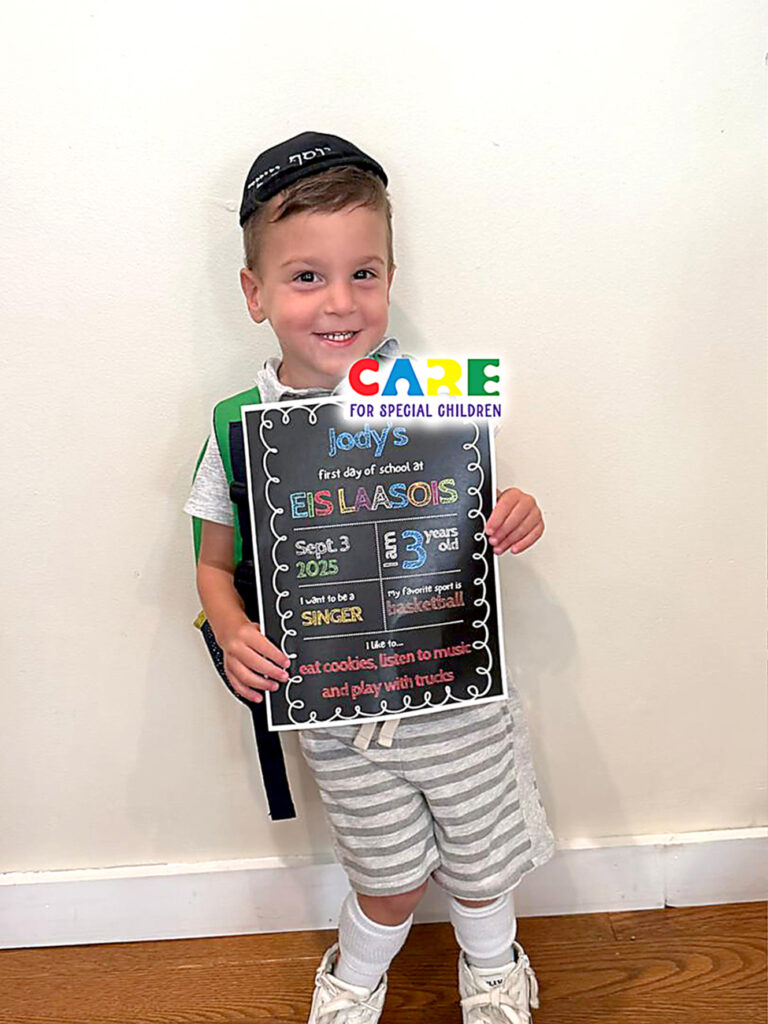
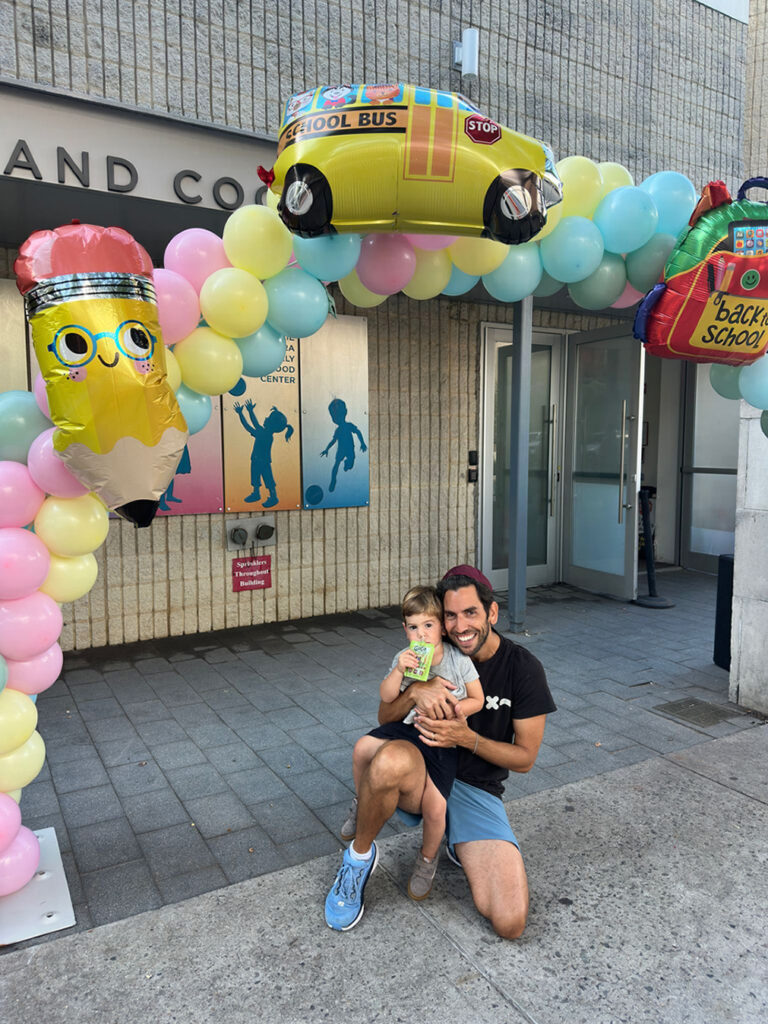
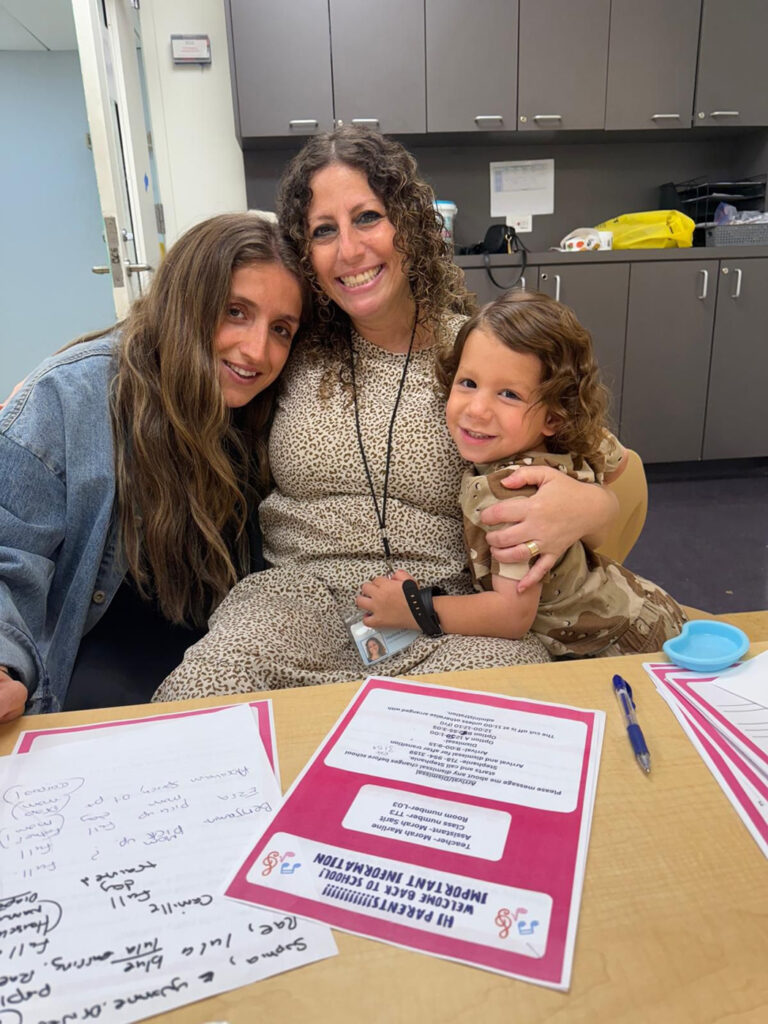
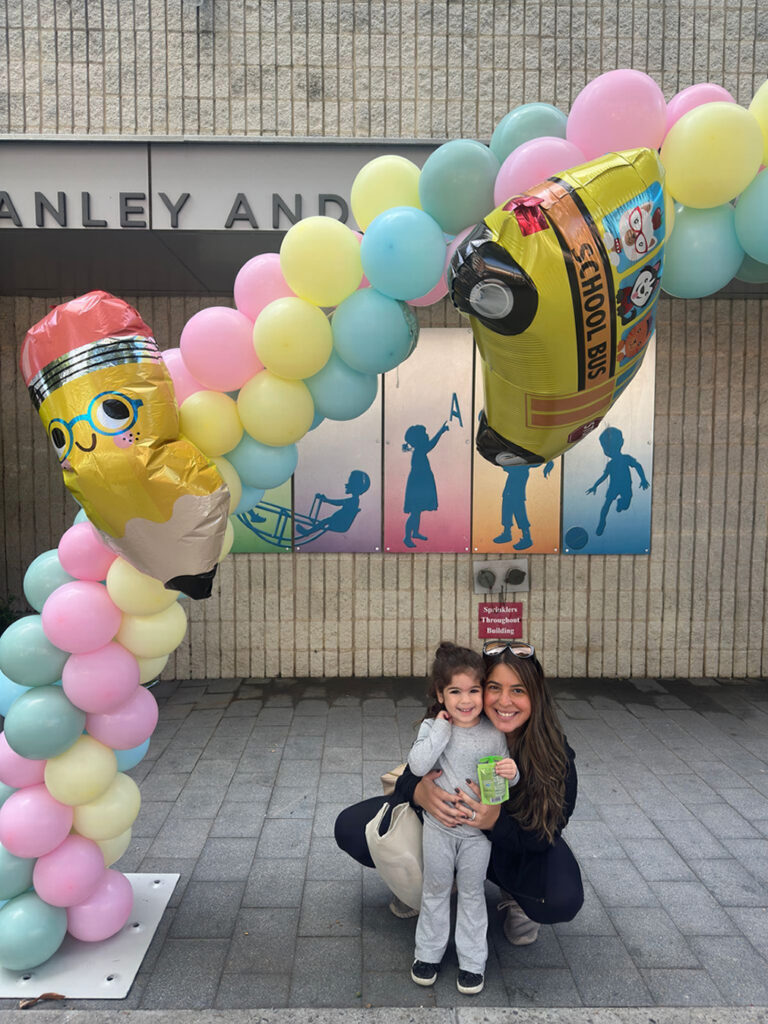
Back to School Moments

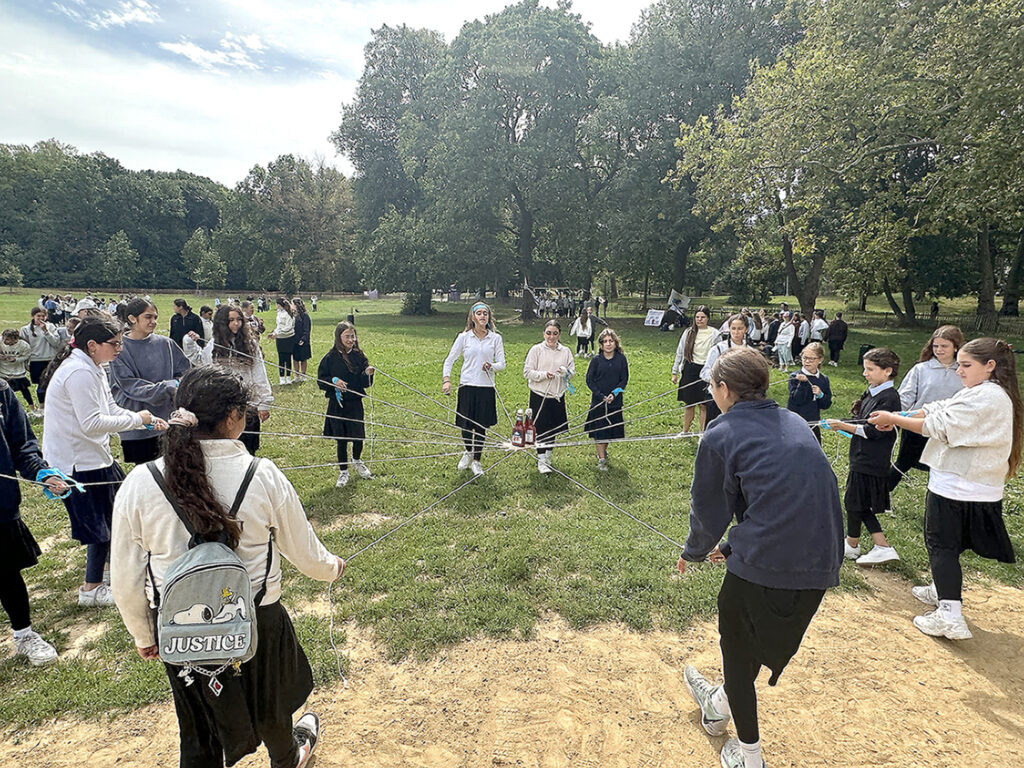
This month’s Community Photo Album highlights the excitement of a new school year. From first-day smiles and classroom activities to after-school clubs and team spirit, our children are stepping into learning with energy and enthusiasm.
These photos capture more than just the start of another academic year. They reflect the friendships that continue to grow, the dedication of our teachers, and the pride of families cheering on their students. Whether it’s a group project, a school event, or a quiet moment at a desk, each picture tells the story of a community coming together to support and celebrate education.

The Power of Vulnerability

Jerusalem Israel June 19, 2019 View of unknown people praying at the Western wall in the Old city of Jerusalem in the afternoon

A Lesson I Learned From My Son

Rabbi Meyer Laniado

While my wife was in labor, I prepared myself for a powerful and uplifting spiritual experience. I stood by her side with only the doctor and nurse in the softly lit room, and began reciting Tehillim. After a few short minutes, I noticed hospital staff entering the room very quickly: two, three, four, then what seemed like ten. Lights brighter, movements quicker, frenzy where just before was calm. Without knowing how I got there, I found myself backed into a corner of the room. My heart was racing, my stomach in knots, everything uncertain. I could no longer focus on Tehillim. I put my head against the wall and began to cry. I felt, as we recite in our mahzor, Pahad veEma: fear and trepidation. I felt helpless, a passive observer with no control of the situation.
As I prepared myself for the worst, I heard a small cry, looked up, and there he was. Overcome with relief, joy, and gratitude, I walked over to tell our son how much I loved him and I enthusiastically thanked G-d. As hard as I tried to express myself, I could not manage any more than sobs. Those eight minutes of uncertainty were terrifying — not the calm, uplifting moment of prayer I had imagined, but a plunge into feelings of fear, helplessness, and vulnerability.
We often expect spiritual highs to come when we experience awe, gratitude, or joy, such as when we behold a natural wonder or a momentous lifecycle event. Though, as we know, life does not solely consist of these grand moments. We often experience challenges and struggles, feeling low, fearful, and helpless. These moments of feeling helpless can also be a source of connection, inspiration, and spirituality. In these moments, when we acknowledge our vulnerability, we run, as Banim atem laDonai Eloheikhem (Debarim 14:1), as children into our Father’s embrace.
There are many biblical models of prayer in times of desperation and need. One of the most famous that serves as the model for our modern prayer is that of Hannah who, after so many years, remained childless. Yet, the shofar’s cry on Rosh Hashanah is modeled after an enemy of the Jewish people! (Tbavli Rosh Hashanah 33). The mother of the Canaanite general Sisera confidently waited by her window year after year, expecting her son to return victorious. When her son did not return, she cried out in desperation, recognizing her vulnerability (Shofetim 5:28-30). That is the cry of the shofar on Rosh Hashanah. While many of our Yamim Tobim and other holidays are about gratitude, our Yamim Noraim, Rosh Hashanah and Yom Kippur, are about relying on G-d, and acknowledging that some elements of our lives are not in our control.
Note how we plead with G-d on Yom Kippur. We do not say “thank you for all you have given me,” but instead, we recite phrases like: anshei Emunah abadu, “those whom we used to rely on are gone” and tamahnu meraot, tashash kohenu missarot, “I plead with you G-d because I have found my troubles bewildering, and they have sapped my strength.”
Sephardic communities open the first night of Rosh Hashanah with the prayer Ahot Qetana, written by Abraham Hazan Girondi (13th Century, Spain). It features the refrain tikhle Shana veqileloteha, let this year and its troubles end. This phrase closes each paragraph which details our need for G-d’s help. The song concludes with leSur hohilu, look hopefully to the Rock [G-d] and tahel Shana uBirkhoteha, begin this year with its blessings. Ibn Ezra (12th Century, Spain), too, expresses this message of turning towards G-d in distress in his famous poem, Lekha Eli, You are My G-d, with which we open Yom Kippur in Sephardic synagogues. There, referring to G-d, he writes leKha Ezra beEt Sara, heye Ezri beSarati… You are a helper in times of trouble; please be my help in my distress. Turning towards God for His support is also portrayed in one of the key phrases frequently repeated on our Yamim Noraim, lifnei Adonai Titharu, before G-d, we will be purified. Emphasis is often on the word Titharu, our purification, but maybe it belongs on the phrase lifnei Adonai, before G-d. Only when we shift our focus and turn our hearts toward Him, lifnei Adonai, relying on Him for His support, can we become tahor.
Unfortunately, many view expressing vulnerability, and acknowledging that we indeed need help, as a show of weakness, so they try to save face by projecting that everything is under control. But the truth, as University of Houston professor Brene Brown suggests, is more likely that: “Vulnerability is the birthplace of love, belonging, joy, courage, empathy… If we want… deeper, meaningful spiritual lives, vulnerability is the path (Daring Greatly pg. 32).”
It is counterintuitive, but, in my view, she is right. When we are open and honest, we let other people in, connecting more meaningfully and creating a deeper relationship. This is true both in our relationships with other people as well as with G-d. Challenging times when we feel afraid, uncertain, or distraught are not the moments we would choose to experience, but they are inevitable parts of every single one of our lives. They can lead to more enriching relationships when we are open and honest with ourselves and others.
When I put my book of Tehillim down on the bedside table in my wife’s hospital room, unable to recite, overwhelmed with fear and uncertainty, I began to reach out to G-d and plead. That moment is certainly one I would have chosen to skip over, but it helped me understand how asking G-d for help can deepen my relationship with Him.
The prayers and Torah portions of Rosh Hashanah and Yom Kippur acknowledge our vulnerability and need for help. We are asked to recognize that we are not in total control and to shift our paradigm from a world centered around the individual to one centered around G-d. As we chant the prayers and verbalize our transgressions in each other’s presence, we acknowledge our humanity, become aware of our individual and collective vulnerability, and unearth a unique opportunity to connect with our Creator and one another.

Celebrating Simchat Torah

Five ways that the Torah brings us joy

Debbie Gutfreund

Jon Krakauer describes reaching the top of Mount Everest in his book, Into Thin Air: “Straddling the top of the world, one foot in China and the other in Nepal, I cleared the ice from my oxygen mask, hunched a shoulder against the wind and stared absently down at the vastness of Tibet. I understood on some dim, detached level that the sweep of earth beneath my feet was a spectacular sight. I’d been fantasizing about this moment, and the release of emotion that would accompany it, for many months. But now that I was finally here, actually standing on the summit of Mount Everest, I just couldn’t summon the
energy to care.” (Jon Krakauer, Into Thin Air, p.5)

Haifa, Israel, April 5, 2025, Interior view of an Aram Tzova Synagogue. Close-up inside a wooden cabinet reveals several Sefer Torah scrolls with ornate silver decorations and a dark blue embroidered Parochet (Torah ark curtain) partially visible.

I was so startled by his description I had to read the paragraph a few times. It shook me up that a person could work for years training for a climb like this, dreaming about standing on the top of that mountain, looking out at the thousands and thousands of feet that he had found a way to rise above and be too tired to care.
But this happens often in life. We imagine that once we reach our destination, we will be ecstatic. We fantasize about that moment of happiness, but it is elusive, falling so easily out of our grasps, disappointing us just at the moment when we are straddling the top of the world.
How can we find and hold onto joy in this world without it slipping out of our hands? The holiday of Simchat Torah provides an answer. As we dance with the Torah, we bask in the unique, eternal happiness that only Torah can bring into our lives. “It is a tree of life for those who grasp it” (Proverbs 3:18).
Here are five ways that Torah brings us this lasting joy and life.

  1. It gives us higher goals.
    The highest predictor of a person’s lasting happiness is a goal that transcends himself. All of our personal goals, however important they may be, are part of a greater mission that all Jews share – to bring light to the world, to honor G-d’s Name, to pass on our sacred traditions. The Torah gives us higher goals to strive for.
  2. It shows us how to be grateful.
    Most people understand why gratitude increases our happiness levels, but we don’t necessarily know how to feel grateful on a daily basis. The Torah shows us how to be grateful several times each day. With prayer three times a day, with blessings over food and mitzvot. It imbues within us a constant awareness that we are receiving goodness and kindness from the Source of all life from the moment we open our eyes in the morning.
  3. It teaches us hope.
    Life is hard and often unpredictable. Many of us have different challenges that make it difficult to see a way forward. But the Torah teaches us that nothing is impossible. That G-d never gives us circumstances that we can’t handle. That tomorrow will be brighter. That redemption is in our future. That we are not struggling in vain.
  4. It connects us.
    In a world where so many are lonely and dependent upon virtual company, the Torah pulls us each out of our isolation. It shows us how to set up communities and bring people together. It teaches us that we need each other. It helps us give even when we’re not sure how. It connects grandparents to their grandchildren. It bridges the cultural gaps that so often divide us. It gives us a common language and a shared truth. It connects us to each other.
  5. It gives us flow.
    Our happiest moments occur when we are in the “flow,” completely engaged and absorbed by an activity we are doing. We transcend our physical and emotional limitations by immersing ourselves in the energy of the moment. Torah gives us this sense of flow when we are doing a mitzvah that is challenging for us but within our grasps. We visit the sick even when hospitals make us nervous. We invite the widow from across the street to Shabbos dinner even though we aren’t in the mood for guests. We give tzedakah even though we are anxious about our finances. We choose to overcome a limitation inside of us and move forward even when we have to push ourselves to do so.
    But the Torah also gives us this sense of flow through song and dance. This is the flow of Simchat Torah, celebrating the Torah that teaches us how to transcend our limits, how to be happy, how to be connected. How to sing songs that weave circles into circles that climb beyond the dancers themselves. The words that we sing bring us back to the core of who we are. The higher goals, the gratitude, the hope, the sheer joy of connecting to our Creator. For this moment He created us. For this joy He created the world. It is a happiness that won’t slip away whether we are straddling the top of the world or just beginning our climb. It is in fact right there in our arms – the gift of the Torah that He gives to us. A happiness, a joy, that dances beyond itself. q

Why You Should Join Toastmasters

Kimy Mandil

Think about this. You’re being given an award at your child’s school for all your help this past year, but there’s one catch—they want you to give a speech. Suddenly your palms are sweaty and it feels like you’re about to pass out. You’d rather have a root canal than speak in public.

What if I told you there was a place to hone these skills that will build your confidence so that speaking at any public engagement (personal or business) will be a piece of cake?
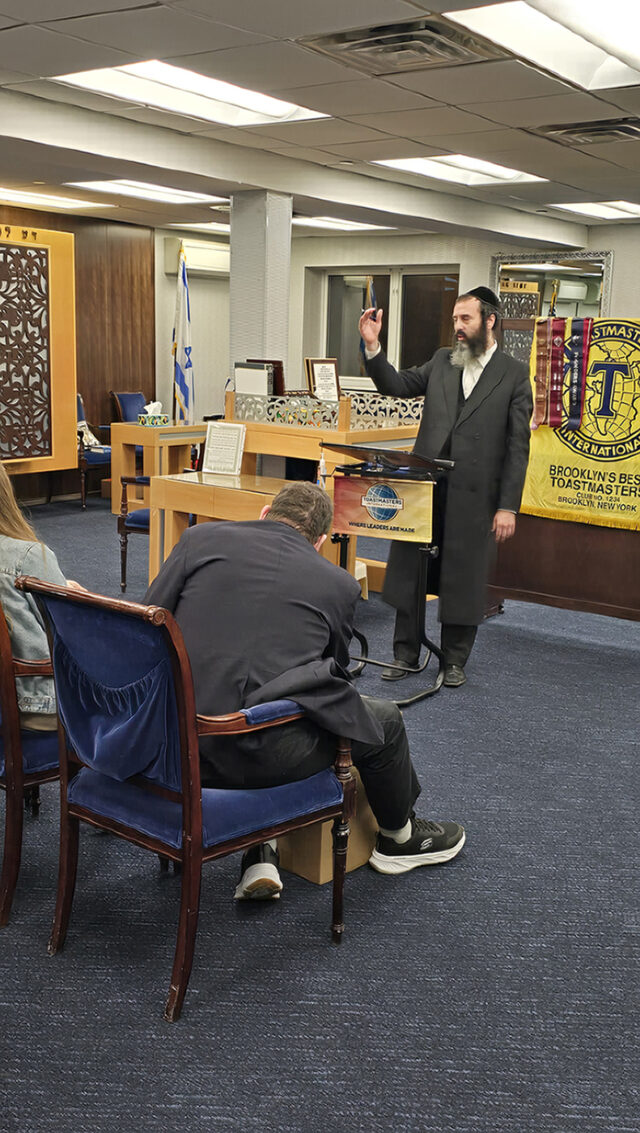
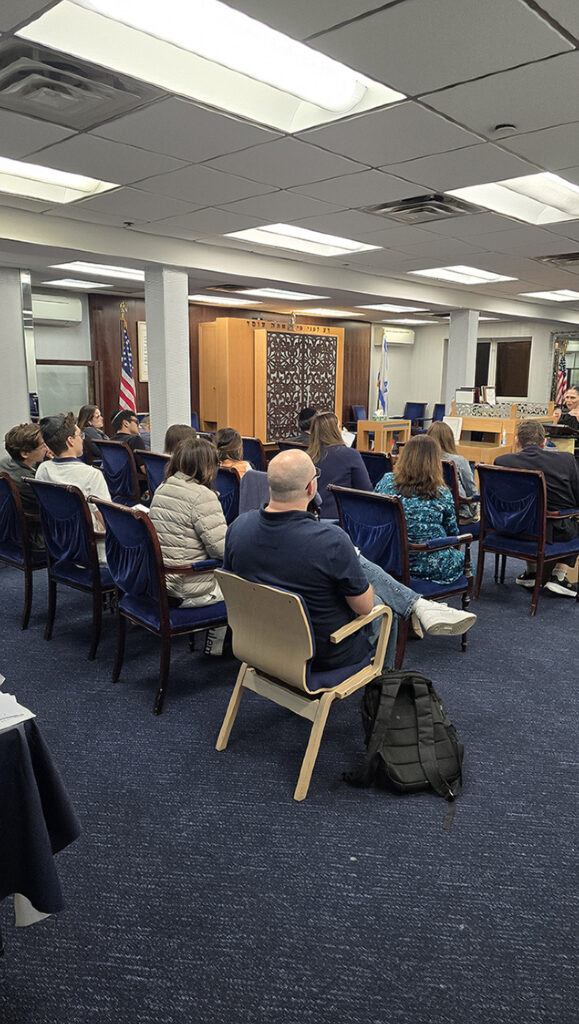
I’d like to introduce you to Brooklyn Best Toastmasters, a part of Toastmasters International, right here in the heart of our community. Think of Toastmasters as your way to build the muscles of confidence.
People fear speaking in public more than going to their dentist. So much so, that glossophobia, or the fear of public speaking, affects millions of people worldwide.
I joined Brooklyn Best Toastmasters two years ago to help me gain back my voice. I work in a predominantly male industry and felt I was lacking the confidence to speak among my peers. Now I feel more confident to not only give speeches but also to lead our meetings, and I recently became a club officer.
When you join our club, you learn to give speeches that have objectives. We don’t tell you what subject to speak on, but the program gives you tasks to accomplish so members build up a toolbox of public speaking skills. Our meetings usually include three speeches.
Toastmasters also helps you learn to think on your feet and give impromptu speeches by giving evaluations or answering table topic questions that require some thought. Evaluations by fellow club members are also mini speeches and help provide positive feedback to your speech in a friendly environment.
Until recently I had no idea the accomplishments of some members of Brooklyn Best Toastmasters. Here are some examples to highlight where some of our Toastmasters have been.
Does the name Ari Siegel ring a bell? Not only was Ari on the famous show Shark Tank, where he ultimately struck a deal with multiple members of the show, but Ari was also a member of Brooklyn Best Toastmasters.
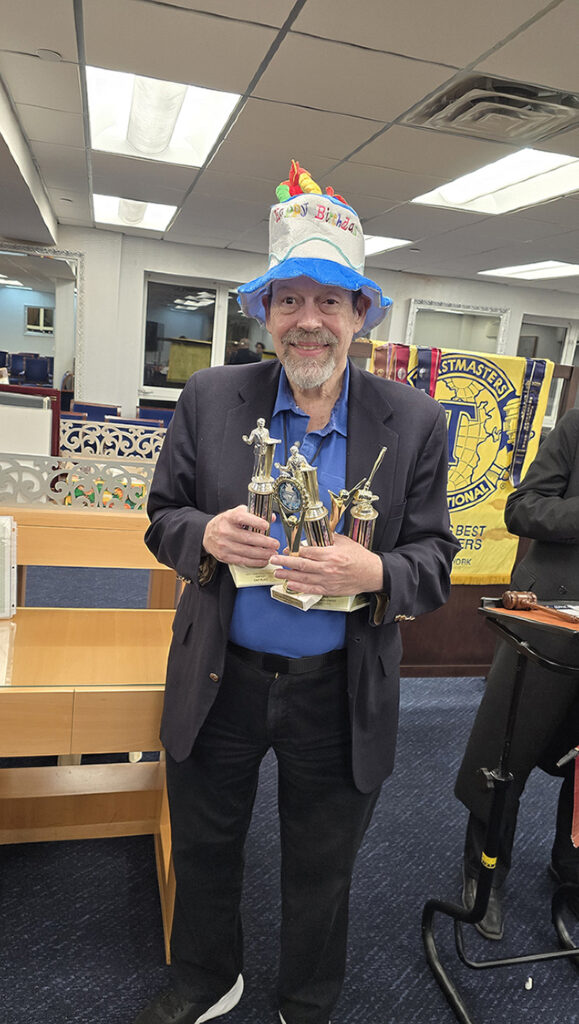
Ever heard of Old Jewish Men of New York? It’s a popular tag on social media, and our very own David Roffé is the face of Old Jewish Men, which has millions of followers. If you’re lucky you may even catch David at one of our meetings. Not to be outdone by his amazing wife, the extraordinary Sarina Roffé. I wouldn’t even know where to start with the many accomplishments of Sarina.
And then there are community members like Ronnie Tawil and Alan Kishk, among others—all terrific speakers. These are men and women just like you and me who decided to take control. It’s not a miracle drug, but if you do the work that Toastmasters has to offer, you’ll see a world of difference.
So, what are you waiting for? Meetings are held twice a month from 8:00–9:30 PM on Monday evenings at Sephardic Synagogue on Avenue R. Email bbtm1234@gmail.com to get on our list.

Remembering Jack Setton

Through the eyes of the woman who knew him best, his wife Lillian Setton

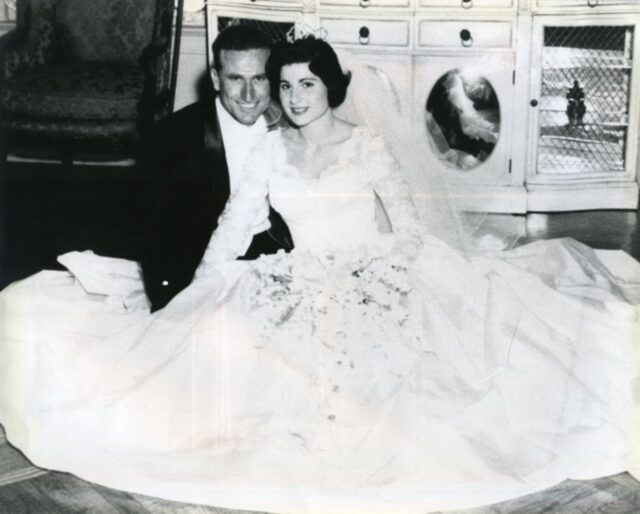
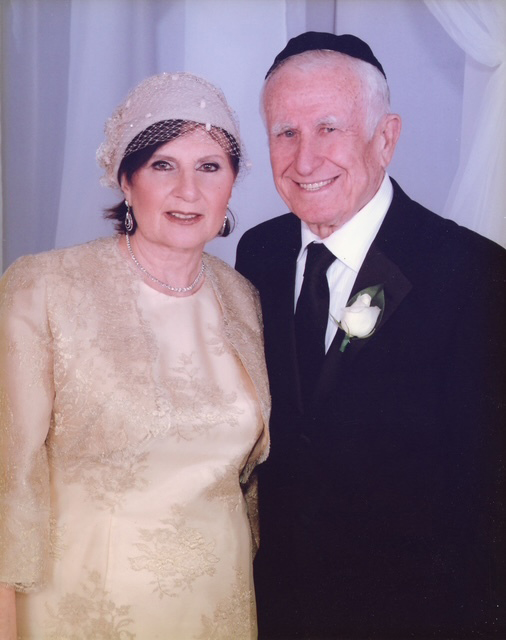
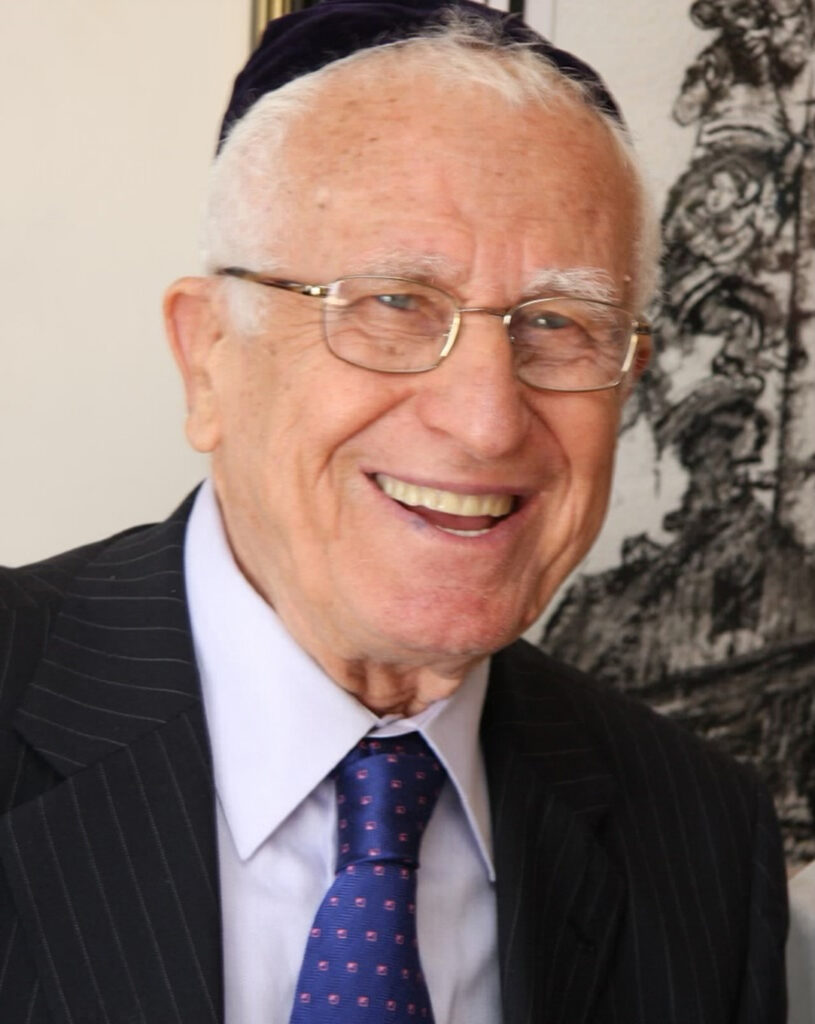
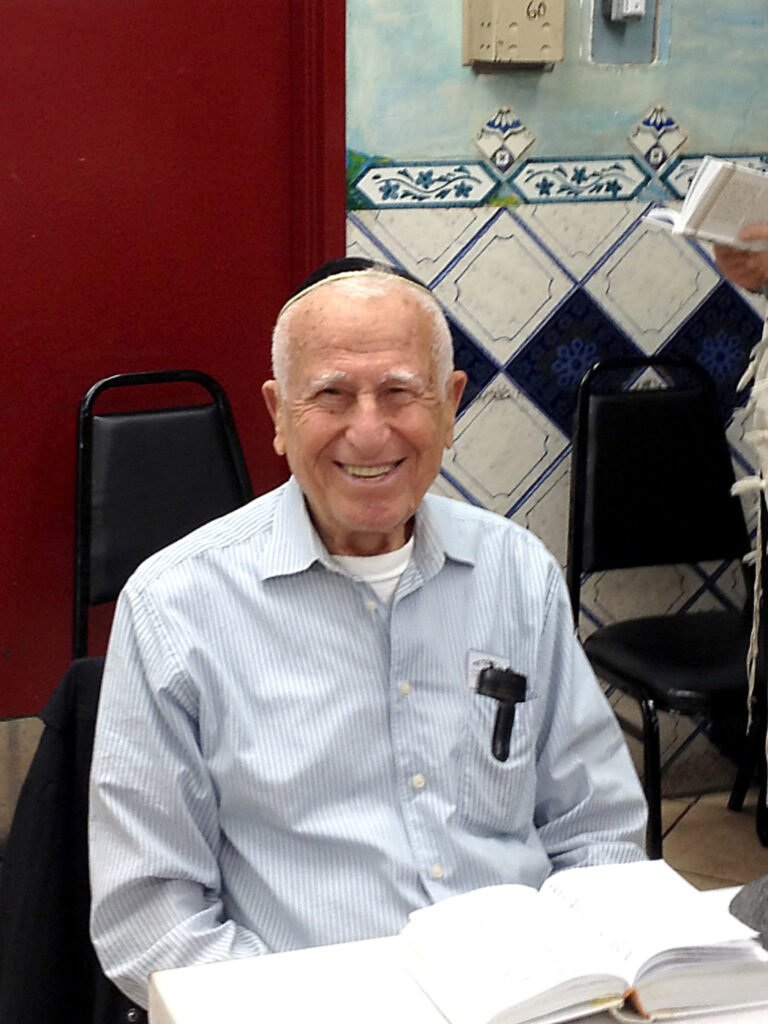
Who could truly know the essence of a man? The answer is HIS WIFE! My husband Jack and I were married for 64 years before he passed away at the age of 101.

Screenshot

Even before our marriage, I saw his essence, his good heart, good nature, loving kindness, devotion, as well as his ever-welcoming smile. Indeed, those virtues remained steady throughout those years. Not only did he share them with me and our children, he also shared them with people he met.
In 1948, Jack and his family fled Syria due to the Arab uprising against the Jews. They settled in Jamaica, West Indies. There he and his brother Isaac became business partners and were very successful.
Before our marriage, he asked me if I would live in Jamaica. I declined, explaining that I wanted to raise our children and not have to ship them off to Brooklyn in order to procure a yeshiva education. He understood, and we agreed to stay in Jamaica for one year so as to allow him to close his business. Actually, we stayed there for 3 years. However, all of my children were born in the USA. Upon our arrival in New York, he found it very difficult, as he now went from being an employer to becoming an employee.
There is so much that I loved and admired about my husband. However, there was one particular time that my admiration for him became overwhelming. I would like to share it with you: He held various managerial positions in retail stores. He was working on Shabbat (the Sabbath). He was not happy about it, nor was I. We had many conversations about it, as I kept encouraging him to stop working on Shabbat.
Then one day he came home and announced: “I informed my bosses that, ‘I will no longer work on Shabbat (the Sabbath) as well as the Jewish holidays. If it is not agreeable to you, then I quit.’” When he did that, he did not have any job lined up. His bosses refused to let him go, and so they agreed on his terms. I cannot express the joy I felt thanking Hashem for this gift and how proud I was of my husband! He had complete bitachon (trust) in Hashem. Soon after, he became the much-loved mesader (prayer organizer) in the Sitt shul.
The last job he took was as a manager working for David Nissim at Gizelle Ladies Wear on the Lower East Side. He was there for many years before he retired at the age of 92. His relationship with David was like father and son. David loved him, and he loved David. The workers loved him, the customers loved him, as he was known for his warm smile.
Besides his being a wonderful loving husband, he was a terrific loving father. When our children were asleep at night, he always placed a candy bar or gum or some other treat on their windowsills. The children would awake with such glee as they retrieved the items.
I am so thankful to Hashem for allowing me to be at my husband’s bedside towards the end, where I was able to thank him for 64 wonderful years.
My dear Jack, I know that you are praying for all of us, and I look forward to our reuniting again with the coming of Mashiach.

8 Jewish Maxims to Live By

Old books on wooden planks with blur shimmer background

Timeless teachings on self-mastery and personal growth

Rabbi Dovid Campbell

Long before the modern self-help genre, rabbis of 19th-century Europe forged a systematic path of character development. Rooted in classic Jewish ethical texts but attuned to the challenges of the modern era, Mussar (Jewish ethics) emphasized self-reflection, worldly wisdom and ethical action.

The movement spread rapidly across the Jewish world and its teachings remain as relevant today as ever—pointing us toward practical ways of living with mindfulness and integrity. Here are a few gems that speak across boundaries of culture and time.

Change Begins Within
“At first, I would get angry at the world but not at myself. Later, I would get angry also at myself. Finally, I got angry at myself alone.” — Rabbi Yisrael Salanter
Rabbi Yisrael Salanter (1809–1883), the founder of the Mussar movement, was a brilliant Talmudic scholar who recognized the urgent need for a renewed emphasis on character refinement. His journey began with a bold self-assessment—he saw that it is far easier to rail against the faults of the world than to confront our own shortcomings. His insight points to a fundamental truth of growth: meaningful change begins with personal responsibility. We cannot hope to fix what is broken outside if we ignore what is broken within.

Spiritual Responsibility
“Someone else’s material needs are my spiritual responsibility.” — Rabbi Yisrael Salanter
We often divide life into “spiritual” versus “material,” as if feeding the hungry is less holy than meditating or studying. Rabbi Salanter turns that dichotomy on its head. True spirituality is lived in acts of generosity and kindness. Meeting another’s physical needs is itself a sacred duty.

The Gift of Peace of Mind
“A person who has mastered peace of mind has gained everything.” — Rabbi Simcha Zissel Ziv of Kelm
Rabbi Simcha Zissel Ziv (1824–1898), known as the Alter (“Elder”) of Kelm, was one of the foremost disciples of Rabbi Salanter. His Mussar school was famous for its emphasis on clarity of mind and meticulous order, even in the smallest details. To him, a student’s messy wardrobe was no trivial matter—it signaled a lack of inner tranquility, the very foundation of self-mastery.
When our minds are turbulent, we struggle against ourselves. But peace of mind calms the waves, allowing us to reflect, choose, and grow. In today’s overstimulated world, cultivating stillness may be the most radical practice of all.

Redefining Success and Failure
“If you see that someone came to the station after the train he wanted had already left, do not say that the man was late and missed his train, but that he came early for the next train. For everything is in the hands of Heaven.” — Rabbi Yosef Yozel Hurwitz of Novardok
Rabbi Yosef Yozel Hurwitz (1847–1919), known as the Alter of Novardok, was a younger disciple of Rabbi Salanter who charted his own radical course in Mussar. His school emphasized uncompromising self-criticism and absolute trust in the Creator. He rejected society’s obsession with success, status, and control—warning that such pursuits distort our values.
Life is not just about missing or catching trains; it is about recognizing that even mundane events are part of a larger design. Instead of despairing when our plans falter, we can step back and reframe: perhaps we are simply arriving early for what comes next.

Guarding the Mind
“Some people allow their minds to be a free hotel open to all. Anyone who wishes can dump his trash there.” — Rabbi Yosef Yozel Hurwitz
Decades before the digital deluge, Rabbi Hurwitz warned of the danger of mental clutter. Being open to ideas is vital, but discernment is just as important. Wisdom requires filtering—carefully curating what we allow into our mental and emotional space.

Living in the Present
“A person should give up his whole future for today, so that he will not waste all his todays for one tomorrow.” — Rabbi Yosef Yozel Hurwitz
How often do we sacrifice today’s opportunities for an imagined tomorrow that may never come? Rabbi Hurwitz reminds us of a simple but radical truth: life is lived only in the present. Planning is important but not at the cost of neglecting today’s irreplaceable moments.

The Litmus Test of Hope
“When you have a true ambition for something, you will not give up hope. Giving up hope is a sign that you are lacking ambition to achieve that goal.” — Rabbi Eliyahu Eliezer Dessler
Rabbi Eliyahu Eliezer Dessler (1892–1953), a disciple of the Kelm school, brought its Mussar teachings first to England and later to Israel, where his work Michtav Me’Eliyahu (Strive for Truth in English) became a classic of modern Jewish thought.
For Rabbi Dessler, hope is not just a feeling but a barometer of commitment. If we truly yearn for a goal, we will keep hope alive even in difficulty. Losing hope, then, is not only discouragement—it is a sign that perhaps the goal no longer stirs our deepest will. Hope tells us what we truly want.

The Miracle of Change
“To change a person’s nature—to reverse their character traits—requires a miracle.” — Rabbi Yerucham Levovitz of Mir. Rabbi Yerucham Levovitz (1875–1936), a leading student of the Kelm school and spiritual guide of the Mir Yeshiva, was renowned for his eloquent sermons and penetrating insight into the human soul. His famous teaching about change highlights one of Mussar’s central truths: transformation is no small task. Rather than minimize the challenge, Rabbi Levovitz actually magnifies it—calling real character change nothing less than miraculous. But the point is not to discourage us. On the contrary, he means to inspire awe at our capacity for growth. Each small victory over anger, pride, or laziness is nothing less than a wonder—evidence that human beings are capable of transcending themselves.
Taken together, these Mussar teachings offer a powerful framework for self-development. They call us to begin within oneself, to merge the spiritual and the practical, to guard our inner lives, to live in the present, to persist with hope, and to marvel at the miracle of growth. In an age hungry for wisdom, the voices of these masters remind us that the tools for transformation are already in our hands.