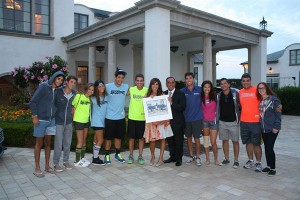
Steve Jobs’ words have been the guiding principle behind the work of a freelance committee dedicated to helping change the worlds of individuals in our community every single day. With the youngest member only 16 years old and the oldest 26, these individuals have devoted so much time and energy to giving back to the community.
It is no surprise that they found themselves at the helm of another spectacular and successful summer, netting over $200,000 for the Sephardic Food Fund and uniting thousands of our community members for the same cause.
The SFF summer began with their 2nd Annual Shootout event, graciously hosted by Esther and Joey Jerome. The day saw over 450 participants competing in various sports, including basketball, soccer, tennis, and volleyball, with over 1,000 spectators showing their support. The BBQ was absolutely mouth watering, and the Chinese Auction was a huge hit! At an awards ceremony, trophies and iHomes were given to all of the winners.
Although it was wonderful, that wasn’t the biggest event of the summer. On August 18, 968 runners, over 200 cheering spectators, and 30 volunteers showed up for the largest community run to date. This was no ordinary run, though. With a growing popularity around the world, the SFF decided to organize its 2nd Color Splash Community Color Run.
It was a spectacular morning of color and fun as participants ran through the streets of Long Branch. Runners of all ages were covered in blue, pink, green and orange paint. Some even rolled in the paint-filled street to cover every inch of their bodies.
With Joe Betesh at the DJ stand, the final throw of paint came with a countdown to the drop to the song Colors. One thousand paint packets met the clouds, creating an artsy and symbolic notion of many individuals joining together to become one communal family.
We would like to thank everyone for their continued support of the SFF and for their support of our soldiers in Israel, who received some proceeds from the event.
A special thank you to our selfless sponsors, our gracious hosts, and our awesome volunteers! Special thanks to our photographer Morris Anteby, DJ Joe Betesh, Stormins Sports, Bobby Morabia, Stacey Gindi, Vicki Hoffstein, Edlo Sorcher, Prime Cut, Ray T. and the entire SFF family.
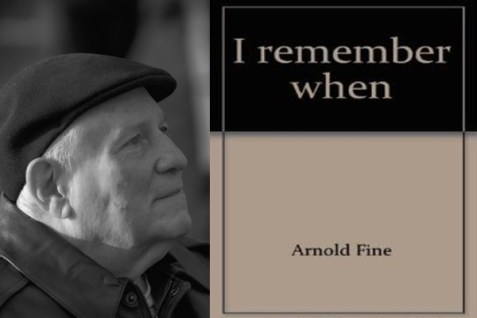
Arnold Fine, a beloved fixture at The Jewish Press for more than half a century, passed away in his sleep at his home in Battery Park City, Manhattan, on Friday, September 5, at age 90.
Fine’s association with the late founder of The Jewish Press, Rabbi Sholom Klass, began before The Jewish Press was launched when Fine worked for The Brooklyn Daily and Brooklyn Weekly, both published by Rabbi Klass.
In the mid-1960s Fine started writing a weekly Jewish Press column called “I Remember When” (an exclamation point would eventually be added to the title). The column, which brought to life the sights, sounds, and smells of New York City in the 1930s and ‘40s, quickly became one of the paper’s most popular features and to this day has continued to enchant readers of all ages.
The paper will continue to publish the column, said associate publisher Naomi Klass Mauer.
“The subjects Arnie wrote about are timeless and new generations have always taken to the column’s warmth and nostalgia,” she said. “His writings will live on even though he is no longer with us.”
Fine’s writing spoke to generations of readers, both Jewish and non-Jewish. Several of his articles appeared in the Chicken Soup for the Soul series of inspirational short stories; his article “The Letter in the Wallet” appeared in Reader’s Digest and has been reprinted in numerous anthologies and appeared on countless websites and blogs (sometimes under the shorter title “The Wallet”).
In addition to his work at The Jewish Press, where he eventually served as senior editor, Fine was a photographer, a musician, and an educator.
An armed forces veteran, he had the distinction of being in both the Navy and the Army. He joined the Navy at the end of World War II and then found himself drafted by the Army a few weeks later.
After the war he roamed New York City as a press photographer with a 4×5 camera shooting for local newspapers. Looking to get ahead in the newspaper business, he went to college and earned a bachelor’s degree thanks to the GI Bill.
Later on, after going back to college for a master’s in education, he became a celebrated special education teacher in the New York City school system. He was a pioneer in teaching brain-injured children and was loved by his students and their parents.
A natural musician, he played the clarinet, saxophone, and piano and loved the old big bands and their music.
Late in life he developed Parkinson’s disease but was still able to get around with the aid of a wheelchair. He was a frequent sight in Battery Park City where he could occasionally be spotted with the family poodle, Lisette, sitting on his lap as he wheeled down the Esplanade.
A loving husband, father, grandfather, and great-grandfather, he was predeceased by his wife, Edith, who passed away in 2006. He is survived by three children, Jay (spouse Cindy), Brian (spouse Dina), and Martin (spouse Janet); six grandchildren, Eric (spouse Cece), Daniel (spouse Tara), Joan, Sarah, Max, and Adam; and two great-grandchildren, Ella and Eve.
Interment was at New Montefiore Jewish Cemetery in West Babylon, New York.
Do you ever think about why we are here, on this earth? Ask your friends; I bet at least one of them answers, “To give,” though others may not. That was the Mitzvah Man’s answer, when he began to think about his purpose, years ago, before this organization ever existed. We function daily, we work, we keep our houses tidy and running, we go from day to day dealing with problems of all shapes and sizes. We rest, we celebrate, we mourn, and the circle of life continues. Through it all, we create bonds. I believe the way we do that is through giving.
When the Mitzvah Man founder heard about a family living in their car, he was floored. “It was just heart wrenching for me,” he explained. “Imagine a couple and their two children sleeping, eating and functioning out of the small space we squirm in if we have to go more than an hour away? You really can’t understand the depth of these people’s pain and suffering until you see it with your own eyes.”
Baruch Hashem, the Mitzvah Man’s task force got to work. Through their volunteers and services this family was put up in a hotel for two weeks until better arrangements could be made. Finally, a kind-hearted soul from our community offered his home, rent-free for one year. Along with that came assorted large and small appliances. Soon clothing, footwear and many everyday needs began to arrive. This presented a much-needed opportunity for a struggling couple to grow and rise up. We are happy to report that six months later this family is back up on their feet, working and doing beautifully, thanks to the Mitzvah Man.
This year, the Mitzvah Man’s 4th Annual Chinese Auction took place at Maggie and David Bawabeh’s home. The outpouring of generosity was a testament to this beautiful family who truly exemplify hesed, and a cause that does its best to multiply it ten thousand fold. When the crowd arrived on Wednesday evening Michael Cohen, founder of the Mitzvah Man, opened his heart and shared the story of the beginning of this multifaceted organization. It started simply, with visits to the sick and kind favors to people in need during his spare time. Sometimes it was a ride to a doctor, a bulb that needed replacing, or assistance putting on tefilin in the morning. No job was too big or small, but quickly one soul in need became 10, 20 and 100. Fortunately, where there is need, there will be volunteers. This community is incredible, and this one-man show grew as quickly as the problems that needed tending. A force that started with one volunteer soon manifested itself into an army of over 1,900 soldiers, all giving of themselves to help anyone and everyone in need.
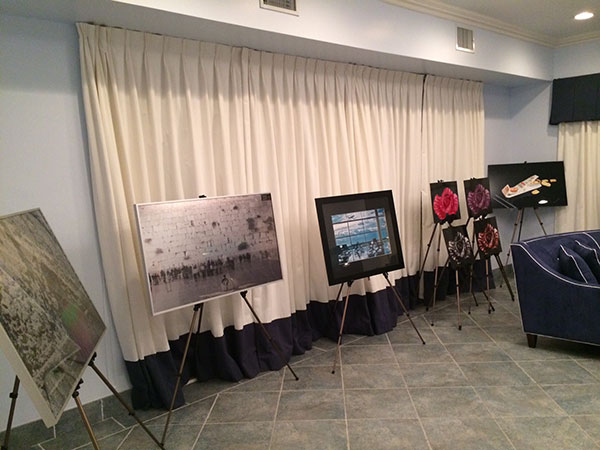
As a backdrop to the evening, there was a beautiful photo display of the many volunteers in action, along with food by Nicole Shammah, wine and a beautiful auction. Playing throughout was a spectacular video of hands-on hesed through the eyes of both volunteers and clients. It quickly became clear that whether the giver or the receiver, these mitzvot have changed their lives.
Rabbi Joey Haber topped off the afternoon with over 200 women listening raptly to his words. “There is nothing like the feeling of putting a smile on someone’s face. I want to thank Mitzvah Man, not for what he does and the hesed that people receive, but for turning 1,800 community members into hesed machines. And for giving them the opportunity to see life and experience life as someone who does…”
Today, reaching volunteers is easy. Texting, Facebook and Instagram can create hesed opportunities all around us, and there is truly something for everyone. This week three autistic teens volunteered to do hesed. Mitzvah Man explained, “Hesed is real, tangible and do-able. Everyone can help in their own way either monetarily, or through volunteering time, goods or services. Every day acts of kindness for those in need are diamonds for those who rely on the Mitzvah Man for assistance. It has been said that those who survived the sinking of the Titanic could not rely on the huge ship to rescue them—it was the little tiny rowboat that saved them in the end. Michael is carrying the oars, but he needs more people to row. A simple act of kindness goes beyond comprehension.
Another touching story occurred when a 95-year-old blind client had a volunteer visiting. The mitzvah girl realized that a woman like this, living alone was in grave danger should anything unexpected happen at home. She thought about it and decided that a voice activated, hands free telephone might keep this woman safe. It was a simple expense that was generously donated, but in the end, it literally saved her life.
This woman lives alone and has no family and no aid—nothing. When she woke up one evening with pains in her chest, she yelled into her phone, “Hatzalah!” Hatzalah came within minutes, and brought her straight to Maimonides Hospital. When Mitzvah Man was alerted, volunteers reached community contacts in the ER and set her up with the best doctors and care. The woman had in fact had a heart attack. As soon as she was released, a private ambulance was arranged, and volunteers were waiting at her doorstep to carry her up to her apartment. Baruch Hashem, she is doing wonderfully.
Each one of us has the potential to create our very own storybook of hesed. We all have it in us; we just have to let it out. Giving is an incredible feeling. It is amazing, uplifting and inspiring. Join the force and be a part of our team. For more info please visit our website atthemitzvah-man.org, or call our hotline 1(866) 355-1825.
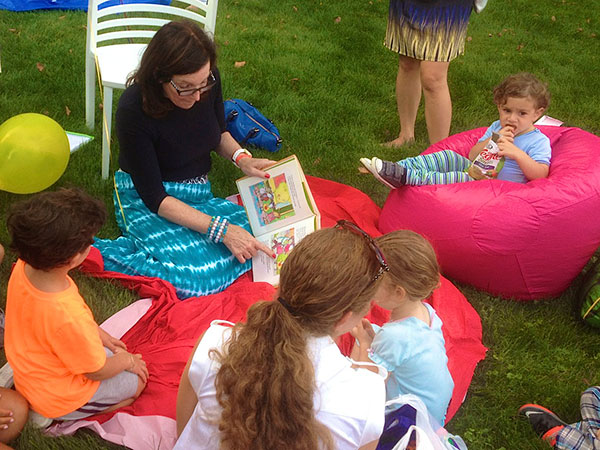
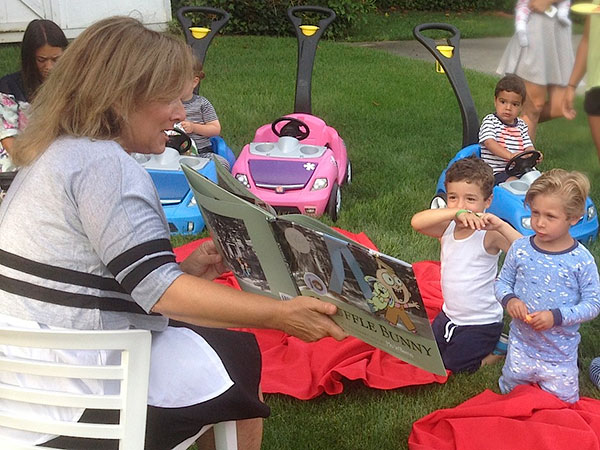
On a warm Monday evening in mid-August, a quiet street on the Jersey Shore was transformed for the young members of our Magen David Yeshivah family and their exciting literacy event. The students, along with their parents, were thrilled when they arrived and saw a backyard filled with colorful balloons, an assortment of delicious foods, and countless books for their very special “read aloud.” It was an MDY summer literary happening set in a warm and nurturing atmosphere.
The youngest students were invited to A Summer Night of Reading and Fun, which featured a read aloud with MDY teachers and administration and craft projects for all ages. Children were welcome to wear storybook themed pajamas and share their favorite storybook characters.
The beautiful home of Joyce and Raymond Betesh served as the setting for the event. Children, parents, and faculty had an unforgettable, fun-filled and educational evening organized by MDY’s talented and creative PTA.
The director of the early childhood division, Mrs. Terri Mizrachi, the Assistant Principal of the elementary school lower division, Mrs. Debra Hamburg, the director of the elementary school’s learning center, Mrs. Stacy Katzwer, the literacy coach and associate program director, Mrs. Carly Mavorah and other faculty members read iconic children’s literature—The Day the Crayons Quit, Knuffle Bunny, Chrysanthemum, and Miss Brooks Loves Books—to the attentive children Mrs. Hamburg said, “It was a perfect evening.
Our children and parents experienced one of our major school goals—reading and enjoying books. The listeners were totally engaged. The storytellers did what they love to do, read to and experience books with their cherished students. It was the perfect combination for a night whose impact will last well past this event.”
MDY elementary school has become a haven for readers. Celebrated authors of children’s books often visit and students are engaged in literacy activities consistently during the year.
As the sun began to set, it was time for the spectacular evening to come to a close. Mrs. Norma Chehebar, a parent of two MDY students, perhaps best summed up the evening, “Wow! It was a really amazing night. It gave my young children a great foundation for the love and enjoyment of reading and enhanced my excitement and eagerness to read to them.”
Sold out—that’s what happens when so many people put their all into an event. When the recent Gesher Yehuda Yeshiva Annual Bake Sale and Chinese Auction wound down, the delicious breads, cakes, cookies and 75 gourmet lunches were wiped out. Even the ticket coupons were running in short supply! It is safe to say that this year’s event, in honor of Susan and Ted Salame was a huge success drawing supporters from nearly every corner of the community.
Hosted by the Salames’ children, Joyce and Saul Ashkenazi, the fundraiser brought awareness of the school’s importance to many new families. “It was a true pleasure hosting the recent annual Gesher Yehuda Auction and Bake Sale in our home. The turnout was amazing and we thank the community members for attending,” said Saul. He and Joyce generously gathered sponsors and encouraged family and friends to participate. A huge crowd turned out for a couples’ wine tasting event, where Ted spoke about the school.
What is significant about a day of prizes, food and fun is that people are pulling together for a cause that unifies the community. At the Bake Sale, Rabbi Sananes, always a supporter of the school, gave a Torah class and occupational therapist and creator of Know it all Moms, Michelle Cohen, showed how parents can be proactive with their toddler’s development through everyday activities.
None of this would have been possible without the coordination of volunteers. Saul added, “We also thank the Gesher committee for their efforts in setting up a beautiful bake sale and auction.” He praised Jack and Claude Setton and Susan and Ted Salame for their continued loyalty and support for the school.
The committee this year included, Grace Benun, Eliane Chattah, Rebecca Maleh, Susan Salame, Claude Setton, Marjorie Sitt, Elana Wahba and Pauline Wahba. In addition Annie Abadi, Sarina Setton, Shannon Wahba and many others assisted to make the day special.
“We make a great team!” exclaimed Claude, one of the school’s founders. She, like many others, is clearly proud of what this dedicated group is able to accomplish. From shopping to soliciting donations, from setting up the tables to rolling up their sleeves to prepare foods, they each performed a task and did it all seamlessly. They appreciate and thank the community for its support.
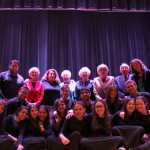
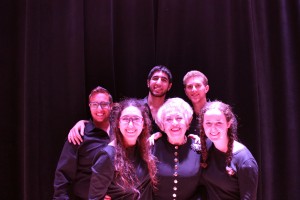
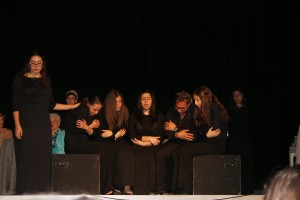
The Khezrie Auditorium at the Yeshivah of Flatbush Joel Braverman High School was filled to capacity on the eve of Yom HaShoah, as the community joined together for Witness Theater, (a production in which students told the stories of Holocaust survivors in a very special way).
At the beginning of the school year, YOF seniors were paired with Holocaust survivors, to learn their stories and prepare to portray them on stage. Students met with the survivors weekly, diligently taking notes, listening to and recording their harrowing stories of survival. Through the use of drama therapy, guided by Creative Arts Therapist and Director Sally Grazi-Shatzkes, students and survivors developed dramatic representations of the survivors’ experiences during the war.
“Drama therapy is the perfect vehicle through which to facilitate this kind of deeply emotional group process, because it allows us to tell, hear, and respond to very difficult material without words. Through these creative therapeutic techniques the students and survivors could support each other with movement, human sculpture and story enactments,” explained Grazi- Shatzkes.
As the auditorium lights dimmed, the audience was reminded that while most of the survivors and students had never been on stage before, they were motivated by their dedication to making sure that their stories were never forgotten. JBHS Head of School Rabbi Raymond Harari opened the evening with a recitation of the apt passage from Sefer Yechezkel, 37: Prophecy of the Valley of Dry Bones. The survivors ascended the stage, guided with care by the Witness Theater students, while the JBHS choir, directed by Musical Director Brian Gelfand, sang a beautiful rendition of the song, Katonti. Then began the production.
As each survivor narrated, the students reenacted the survivor’s story. The completely darkened auditorium, aside from stage lights, created an atmosphere that allowed the audience to forget all else, save for the drama on stage. The audience was drawn into the world the students and survivors created, experiencing the performers’ painful, sad and strong moments, and effectively becoming witnesses themselves to the stories being brought to life by the survivors and students.
Hearing tales of the survivors’ most sorrowful memories, stories of the families they lost, and the difficult conditions they endured, was hard. But in Witness Theater, after each story was told, the student and survivor discussed the survivor’s life after the war.
“It shouldn’t have happened, but it did. It’s a fact of life. Hitler wanted me dead and here I am, with grandkids and great-grandkids,” said Hy Abrams, who survived harsh conditions in many concentration camps.
Despite the difficult times the survivors lived through, they rebuilt lives for themselves. Survivor Editha Avishai was born in the ghetto in Hungary, where she lived with her mother and five siblings. After the war, she spent her childhood separated from her mother in an orphanage in Israel, feeling unwanted and unloved. “It wasn’t easy after all those years of suffering; it was very hard for me to love,” she said during the performance. However, Mrs. Avishai did marry and raise children and grandchildren.
It was clear, through the powerful and moving performances, that the survivors and students had developed strong bonds, as each story was reenacted with care and sensitivity. Grazi-Shatzkes said of the Witness Theater journey, “Each Wednesday night, the students and survivors deepened their relationships. As the survivors told and recreated their childhood memories and their losses during the Holocaust, the two generations acted as pillars of support for each other. The students and adults cried together and shared many moments of sadness and grief, but at the same time they looked to each other for laughter, love, hope, and faith. They became witnesses to each others’ personal growth. Not only were the stories told and enacted and shared, but now there are these beautiful, unique friendships full of deep respect and understanding that will last forever.” The students plan to stay in touch with the survivors after the program, and often reinforce their relationship by calling before Shabbat. One student is hosting a survivor for Shabbat dinner.
Every student was affected by the Witness Theater project. Participant Edan Malca was so moved by her experience that she was inspired to write a song, “Present and Past,” that she performed in tribute to the survivors along with the student choir. Mr. Gelfand set the lyrics to an original score. The participating survivors were Hy Abrams, Edith Avishai, Sol Goldberg, Sabina Green, Toby Levy, Rena Nudel, Edith Kozma and Trudy Tajerstein. The students included Eden Malca, Joy Feinberg, Michele Schewe, Lital Nainshtein, Lauren Levi, Celia Tawil, Nina Esses, Jacqueline Baum, Aliza Kantarowitz, Raizy Cohen, Chana Sitt, Sarah Cohen, Linda Gindi, Victor Dweck, Daniel Hoffstein and Ezra Idy.
Witness Theater is a joint venture between the Yeshivah of Flatbush and Selfhelp Community Services. This program was coordinated by Sally Grazi-Shatzkes, Project Assistant Joey Mandil, Selfhelp Administrative Director Adeena Horowitz and Selfhelp Social Worker Fran Tarshish.
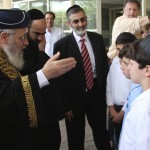
During his inspiring first visit to the United States, Rishon L’Sion Chief Rabbi Rav Yitzhak Yosef visited the Magen David Yeshivah Elementary School.
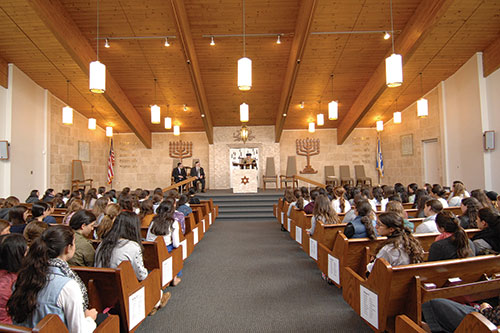
When the Rishon L’Sion arrived, Rabbi David Shelby, a teacher at MDYES and a student of Rabbi Yosef’s father, Rabbi Ovadia Yosef zt’l, introduced his class. The Rabbi blessed them with health and strength to continue to learn Torah.
Why were residents of the Jersey Shore in such a good mood despite the gloomy weather, recently? The anticipation in the air overcame the intense humidity—young and old alike awaited the arrival of the Rishon L’Sion, Hacham Yitzhak Yosef, the Sephardic Chief Rabbi of Israel.
Chief Rabbi Yitzhak Yosef speaking at Hillel Yeshiva
That anticipation began several days earlier, as schools and community institutions feverishly prepared for the Rabbi’s arrival. His schedule would be packed, as he planned to visit each yeshivah in succession and end the day with a community-wide gathering at Congregation Magen David of West Deal.
He began the tour at Keter Torah, where Rabbi Dabbah’s students greeted him and stood in awe listening to his words of Torah and berachot.
Next was Bet Yaakov, where the Rabbi addressed the 200+ girls in the auditorium, with words of inspiration and wisdom. Rabbi Choueka eloquently translated the Rabbi’s speech.
Rabbi Yosef at Rabbi Diamond’s Kollel
The students and staff of Hillel Yeshiva welcomed the Rabbi outdoors, with the entire student body greeting him in song as his car pulled up to the large parking area. What a sight of blue and white! Outside, Rabbi Kassin introduced Middle School Student President, Michael Ancona, who presented the Rabbi with hand-written letters of comfort and consolation on the loss of his father, Hacham Ovadia Yosef zt”l. He also gave the Rabbi a picture of his father’s visit to Hillel Yeshiva years earlier. Hacham Yitzhak was escorted into the auditorium where his inspirational words were heard by hundreds of middle school and high school students, as Rabbi Ovadia Alouf translated. The program opened with a warm and powerful introduction by Rabbi Moshe Dweck and concluded with passionate words by Rabbi Howard Bald.
Next, the Rabbi was off to Ma’or Yeshiva (Rabbi Semah), where he spoke to the boys about the importance of finishing their Torah studies. He advised them to progress one masechet (tractate) at a time until they finish the entire Shas (full Sephardim Shomrei Torah).
The Chief Rabbi at Magen David of West Deal
At Ilan High School, Hacham Yitzhak relayed to the girls how great his mother was; how she built a beautiful family. He instructed them on the proper way to create their future homes based on his mother’s example. Rabbi Diamond then translated the inspirational speech.
He finished the afternoon with a shiur over an hour long for Rabbi Diamond’s rabbinical students. The room was packed and everyone thirstily drank up the Rabbi’s words.
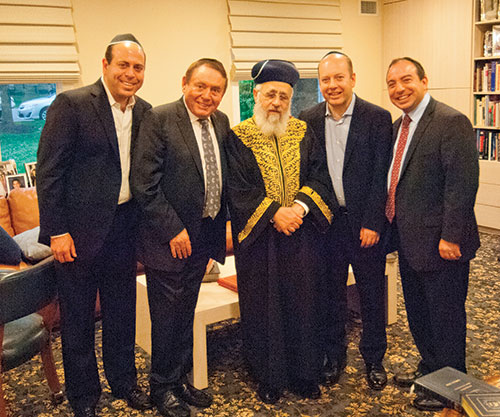
Community leaders met with Chief Rabbi Yosef at the home of Charles Saka
Later that evening, as promised, the Rabbi was led through a standing-room-only crowd into the sanctuary at Magen David Synagogue. President Elliot Braha welcomed the Rabbi, his assistants and the guests into the synagogue. Rabbi Saul J. Kassin then spoke about his experience with the Chief Rabbi during his years of semicha program in Jerusalem. Rabbi Isaac Farhi introduced the Rabbi, who spoke next, to an audience of nearly 800 people. Throughout his entire message, one could hear a pin drop. He closed with a beracha for the entire Jersey Shore community—for health, for prosperity, and most of all, for unity. Rabbi Shmuel Choueka then translated the Rabbi’s speech into English. Much of it focused on the greatness of his father, Hacham Ovadia zt”l.
The evening closed with a spiritually meaningful minyan for Arbit. It was a whirlwind day, but the effects will be felt for years to come!
The summer is upon us and during these months we enjoy a more relaxed lifestyle, away from the formality of the city. This is the time to let our hair down—literally.
During the summer most of us are outdoors a lot, swimming, golfing, and sitting on the beach. The weather, especially if you are at the shore or by the water, is usually misty and humid and wreaks havoc on even the best hair. Some of us get frizzy or too full to be tamed easily.
There are many hair products on the market. Some de-frizz hair, some are meant to tame it. There are gels that keep hair slick and there are a wide variety of mousses. There are even products to add shine. Sometimes it gets confusing. For my hair, anything I put in it takes away the shine and feels dirty after a day, however some people swear by their hair products. Have you ever wondered what the difference is between all these products? Here’s a quick lesson.
Mousse, sometimes called styling foam, is a styling product that is packaged under pressure and expands when released. It is much lighter than other products, and some brands are created as a combination leave-in conditioner and styling product. Mousse works well for most hair types, but people who have dry hair should avoid products that contain alcohol. Those who require strong hold or who are looking to maintain a short, molded hairstyle might want to try gel instead.
Gel can be quite versatile, and it’s available as either a spray or direct application. Spray products are good for a quick, overall covering, but they generally provides less hold than direct application hair gel. The direct application type requires you to work it in evenly by hand, but it typically provides a stronger hold. Hair gel works well for scrunching curls and helping create sleek shapes. Again, people with dry hair should avoid hair gel containing alcohol.
Glossing or polishing drops, also sold as anti-frizz serum, are silicone-based hair styling products that are designed to smooth rough hair shafts, reducing or eliminating frizz. Most products are applied in small amounts and can be used on wet or dry hair. Users should be careful, however, because too much can make the hair look heavy and greasy.
Hair volumizers are used to temporarily add volume, body, and shine to thin or flat hair. They come in many forms like shampoos, conditioners, sprays, pomades and lotions. They contain humectants, which work by attracting moisture from the surrounding areas to the hair strand, thereby swelling the hair and making it look thicker. Various polymers present in the volumizer coat the hair strand, making it look thicker and shiny.
Shampoo and conditioner forms of the volumizers are used just like ordinary shampoo or conditioners.
The spray and lotion form of volumizers are used in damp hair, near the roots.
To use, flip your head downward and gradually blow dry your hair, with the air being blown along the shaft of the hair; once the hair is dry, you can flip your head up.
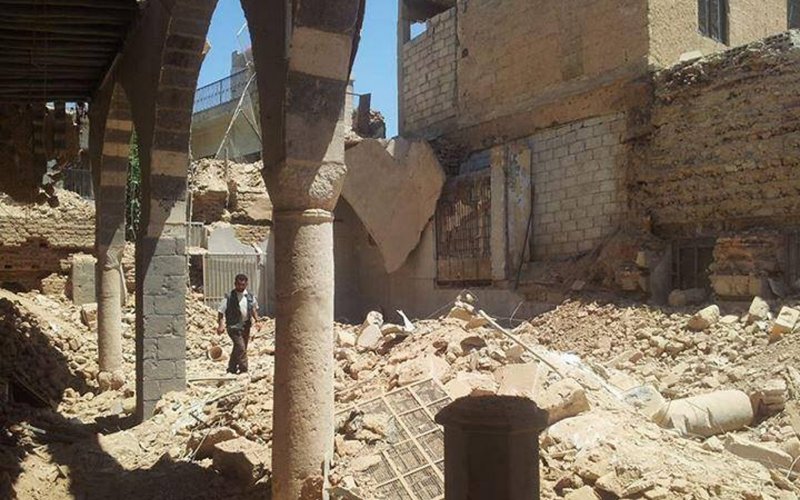
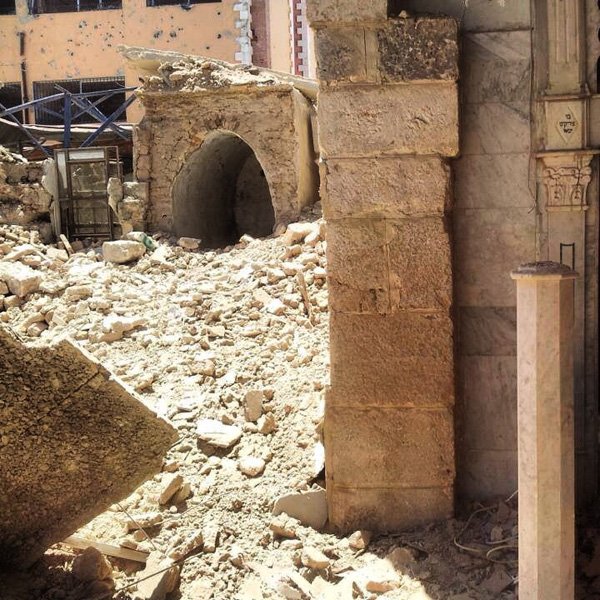
Exclusive Photos: Syria’s Oldest Synagogue, Destroyed by Assad
The Jobar Synagogue was one of the holiest Jewish sites in Syria and contained priceless historical artifacts. Now it’s destroyed—and the opposition says Assad is to blame.
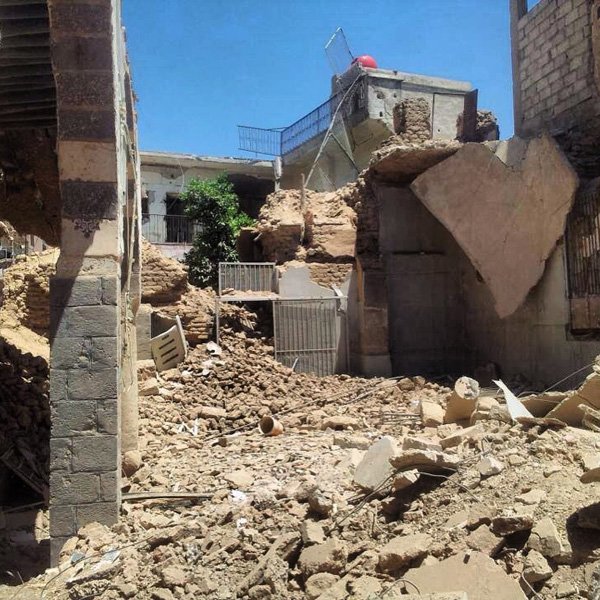
Syrian Arab Army forces flattened the Eliyahu Hanabi Synagogue in the Jobar neighborhood of Damascus over the weekend. The attack not only wrecked a site that’s at least 400 years old. It may have destroyed thousands of irreplaceable Jewish artifacts contained inside the synagogue, according to opposition leaders and photos obtained at the site.
The area where the synagogue once stood has been under bombardment by the forces of Syrian President Bashar al-Assad for months. The Syrian regime is laying siege to the town, one of the few rebel strongholds in the area. It’s all part of what the opposition calls Assad’s “scorched earth” policy, which includes random and violent attacks on civilian populations.
“I am deeply saddened to learn of the destruction of Jobar Synagogue, which was a treasure of Jewish and Syrian cultural heritage,” said Shlomo Bolts, an official at the Syrian American Council, an American charity connected to the Syrian opposition.
The Jobar Synagogue in Damascus laid in ruins Monday after being shelled by Syrian government forces. All photos provided exclusively to The Daily Beast by witnesses on the ground. ()
Bolts, a Jew of Syrian ancestry, said that the Syrian Jewish community is only the latest victim of Assad’s strategy to target religious and cultural institutions.
“Yet this is hardly the only place of worship to be destroyed by the Assad regime. The Umm al-Zinar Church [a house of worship in Homs that locals say dates back to the first centuries of Christianity], the [1,400 year-old] Khalid Ibn Walid Mosque, and countless other irreplaceable cultural sites are now lost to history due to a dictator’s manic desire to keep power at all costs,” he said.
The Syrian American Council is part of the Coalition for a Democratic Syria, an umbrella organization that claims to represent over 100,000 Syrian-Americans. The group’s contacts inside Syria shot photos of the rubble where the Jobar Synagogue stood until days ago. Those photos were provided to The Daily Beast.
This week’s attack, though the final blow, was not the first time the Syrian regime had bombarded the Jobar Synagogue. An Israeli news report from April 2013 noted that the synagogue had been “looted and destroyed,” although later photos proved that the synagogue had taken only moderate damage from a mortar shell.
Activists estimate that at least 33 churches and hundreds of mosques have been destroyed by the Assad regime since the start of the Syrian civil war. Six UNESCO World Heritage Sites in Syria have been destroyed in Syria since the fighting began.
Last December, photos emerged in another Israeli news report showing that many of the synagogues most precious artifacts were intact. The report stated that the bulk of the synagogue’s artifact collection was being held safely in the hands of local leaders.
Before the conflict, the synagogue held thousands of religious and cultural treasures, including hundreds years old Torah scrolls, historical texts, precious dining ware, and ancient Judaica of all sorts. Some of the items were reportedly looted in the early days of the war. Some were reportedly placed in safekeeping. Many remained in the building until its destruction.
Opposition sources told The Daily Beast that the damage assessment following this week’s devastating attack on the Jobar synagogue was ongoing but all of the Jewish heritage items that remained inside the synagogue are feared lost.
The Eliyahu Hanabi Synagogue, built to honor the prophet Elijah, had existed at least since medieval times. The site has been a destination for Jewish pilgrimage for centuries. It was said to have been built atop the cave where Elijah hid from his persecutors. The Prophet Elisha, who allegedly built the synagogue, was said to have anointed King Hazael on its steps, now gone.
The town of Jobar was home to a significant Jewish population throughout the medieval period, although the community was eventually driven out of Syria and the synagogue was taken over in 19th Century by local Arab leaders. Following the establishment of the State of Israel, the synagogue was used as a school for displaced Palestinians.
Activists estimate that at least 33 churches and hundreds of mosques have been destroyed by the Assad regime since the start of the Syrian civil war. Six UNESCO World Heritage Sites in Syria have been destroyed in Syria since the fighting began.
As early as March 2012, UNESCO Director General Irina Bokova was publicly warning about damage to precious sites and calling on both sides to protect Syria’s cultural legacy.
“Damage to the heritage of the country is damage to the soul of its people and its identity,” she said.
Memorial Day, an American holiday observed on the last Monday of May, honors men and women who died while serving in the U.S. military. Originally known as Decoration Day, it originated in the years following the Civil War and became an official federal holiday in 1971. Many Americans observe Memorial Day by visiting cemeteries or memorials, holding family gatherings and participating in parades. Unofficially, at least, it marks the beginning of summer.
In my early twenties, I managed one of my family’s stores. On slow days, or when I had downtime, I would visit a fellow shopkeeper across the street to shoot the breeze. He was a community member, about 25 years my senior, from a different generation, yet we enjoyed each other’s company and got along despite the differences. Our conversations would always start the same, “So, how’s business?”
As we grew more comfortable with each other, we covered an array of subjects such as politics, religion, and life. The more we spoke, the more I admired him, both for his knowledge and his insightful wisdom.
One day, I walked into his store, and announced that I had become engaged the night before. After a congratulatory hug, I shared the exciting details, then asked, “Joseph, if you could give me only one piece of advice to take into my marriage, what would it be?” And without missing a beat, came the surprising answer, “Every Friday, without fail, be sure to bring home an arrangement of flowers.”
It was a simple answer to a complex question and I suppose I looked puzzled. So, he continued, “Doing this will help you remember the value of three important things: Shabbat, Hashem’s beauty in nature and the love you feel for your wife.”
It wasn’t the answer I expected, so I changed the subject. However, later on, I found myself following his advice, if only because buying flowers seemed like the right thing to do. It became part of my Friday afternoon routine. I would buy them from street corner vendors, or I would chose a convenient flower shop on the way home. I adopted the habit and it stuck. I didn’t think much about why I was buying them, or my old friend’s advice, I just did it.
I am now approaching the age that my shopkeeper friend was when he planted this seed of advice in me, and I believe I finally see exactly what he meant. Over the last year, I find myself driving to the other side of town on Friday afternoons to pick up flowers—and it’s all starting to make sense.
I walk into the small flower shop and as the proprietors—a lovely husband and wife team—prepare my arrangement, we make small talk about how welcome this Shabbat will be after such a hectic work week. I am reminded of the tranquility and calm that the fast approaching Shabbat will bring, and I smile, realizing that my friend was right.
As the door closes behind me, I’m struck by the fragrant botanical scents, brilliant variety of colors and characteristics of the lush collection of flowers before me. Once again, the man was on the mark, I am reminded of Hashem’s beauty in nature.
As I inhale and savor the scent of my selection, I’m imagining the look on my wife’s face when she sees this week’s choice of flowers—and my friend’s advice becomes clear, for I remember again how much I love my wife.
It took nearly 25 years to understand, but now I know—sometimes it’s the simple things in life that can be the most extraordinary.q
One hundred years ago two small local synagogues combined to form Or Ve Shalom (which means Light and Peace). Congregation Ahavath Shalom was founded in 1910 and Or Hachiam in 1912. The names were combined to form Or Ve Shalom. The congregation has decided to celebrate this significant anniversary with a year long series of spiritual, educational, fund raising and entertaining events.
Congregants are primarily from Rhodes and Turkey, but Jews, who can trace their roots to North Africa, the Middle East, Eastern Europe and the former Soviet Union are also members.
The synagogue and its members have a rich history and tradition of serving the Jewish community and the city of Atlanta. Many of us are familiar with the family names Arogetti, Alhadeff, Benator, Capeluto, Franco, Habiff, Maslia, Shemaria and Tourial among many others. Those families are as committed to Jewish values today as in the past.
The kickoff event for this year of celebration was an address by Rabbi Marc Angel. He is Rabbi Emeritus of Congregation Shearith Israel, the historic Spanish/Portuguese Synagogue in New York City, whose origins date back to 1656.
Born in Seattle’s Sephardic community, his family’s roots are from Turkey and Rhodes; he grew up in a Ladino speaking home. He received a BS, MS, PhD, Th.D
honors causa and a rabbinal semicha from Yeshevia University. As if those degrees were not impressive enough, he also earned an MA in English Literature.
Rabbi Angel was the spiritual leader of the congregation until 2007, when he established the Institute for Jewish Ideas and Ideals; an organization focused on fostering an intellectually vibrant, compassionate and inclusive Orthodox view of Judaism.
He has written more than 30 books and scores of enlightening and stimulating articles; his awards, honors and achievements are too numerous to list.
Rabbi Angel’s address to Or Ve Shalom was entitled Applauding the Past, Appreciating the Present, and Planning the Future.
In his address, he said many profound things, including: we have a unique rich history and culture and our lives resound with the voices and teachings of our ancestors.
Prior generations, while often not highly educated were wise, brave, bold people who loved life, lived with risk and were optimistic for their future. Our current generation, while highly educated, can learn much from reflecting on the lives of our ancestors.
Our roots have an impact on our lives today, far more than we realize. Judaism is flexible enough to withstand honest, sincere different points of view. Judaism welcomes a variety of viewpoints and encourages discussion.
We should not be judgmental toward other Jews and their religious practices, but seek to be understanding and inclusive.
Each Jew, with a sincere point of view, can make a contribution.
The challenge is to maintain a balance, adhering to old values while assimilating into the new culture. Over time, some old world practices and values are lost, but there is value in maintaining our links with the past.
Judaism is not meant to be a burden but a blessing. Its teachings and values are meant to enrich, guide and empower our lives.
Rules are offered to provide society with order and reduce chaos. Our lives are empowered and enhanced as we are more productive and we benefit society. We are taught how to appreciate the seemingly mundane parts of life and to recognize the miracle of our lives and all around us.
While a devout and committed Orthodox Jew, Rabbi Angel sees our Creator as a loving, kind, compassionate Father who, on occasion, needs to redirect our path.
He stressed that each Jew should strive to find a place in the Jewish community that is right for him. And from that point, he can begin to grow his Jewish values, education, and understanding. People should not feel intimidated by the synagogue process or its practices.
Two life lessons that Rabbi Kassorla of Or Ve Shalom learned while a student of Rabbi Angel were: Each time you teach, teach something new so that your efforts will impart enthusiasm and recognize and acknowledge the efforts of those who work on behalf of the community.
My own Jewish roots are similar to Rabbi Angel, my father, Sam Shams, was born in Beirut and my mother, Sylvia Levy, was born in Damascus. I was raised in a Syrian/Lebanese culture but attended an Ashkenazi synagogue in Pensacola, Florida.
We are looking forward to many more anniversary events.
There are action heroes, superheroes, and everyday heroes. Then there are those, like Eli Beer, founder and head of United Hatzalah of Israel, who seem to embody a little of all three.
Mr. Beer, 40, traveled from Israel recently to visit Bergen County as part of an ongoing crusade to promote the rapid-response EMS model that has allowed United Hatzalah to save thousands of lives throughout the Jewish state. It is the same model he has helped implement in Panama, Brazil and, soon, India, as well.
United Hatzalah is an independent, non-profit, fully volunteer-based team of emergency medical technicians who deliver fast, free first-response throughout the Jewish state. The volunteers work in what might be called a “pre-ambulance” capacit
Working with Ambulances
In Israel, emergency calls are placed to a central 911-like number and then a United Hatzalah volunteer is located via a GPS-enabled phone. The volunteer might be anywhere, from a yeshivah library to a restaurant or even in his office, when the call comes in, but when it does, he drops everything to attend to the emergency. Once the ambulance arrives, the volunteer’s job is over and he can return to his regular job or the library or the café.
According to Mr. Beer, sometimes the volunteer plays an equally important role by calling off the ambulance if it has been summoned and no longer needed.
“This frees the limited number of ambulances in Israel to respond more rapidly to true emergencies,” said Mr. Beer.
Some of the close to 2,300 United Hatzalah volunteers are paramedics, physicians, or nurses. All are trained EMTs, certified by the Israeli Ministry of Health after undergoing 200 hours of rigorous course work, practical training, and ongoing active duty.
As a group, they are on-call 24/7 to respond to more than 200,000 emergencies each year, and the number is climbing. It is estimated that 25% of the calls are for critical lifesaving situations.
Cooperation
While United Hatzalah serves the entire country of Israel, including all areas of Judea and Samaria, it is not always the only such emergency service called into action. Hatzalah Yehuda v’Shomron, for example, is a small local unit which serves only that area and is not connected to the larger organization. Nevertheless, according to Juli Kristof, a United Hatzalah spokeswoman, when the situation arises, volunteers from both organizations meet in the field and work effectively together.
“Both organizations provide critical lifesaving services to residents of the area,” said Ms. Kristof.
That cooperation frequently makes the difference between life nd death, especially after a terrorist attack, according to Yehudit Tayar, a volunteer with Hatzalah Yehuda v’Shomron. In the disputed areas, volunteers frequently work alongside the IDF, Israel Air Force’s Airborne Rescue, and security officers and personnel.
Ambucycle
In NJ, Mr. Beer met with Bergen County Executive Kathleen Donovan. He then toured the county’s EMS Training Center in Paramus and addressed the future EMTs.
“You can and will save lives,” Mr. Beer told the students. “You’re young. Your whole lives are ahead of you. If your dream is like mine— and that dream is to help people—then chase it. Go out there, save lives, and do good.”
It is no wonder the students were impressed. Mr. Beer had motored to Bergen County from his Manhattan hotel on a United Hatzalah “ambucycle,” a souped-up motor scooter used by United Hatzalah volunteers when they need to traverse Israel’s traffic-choked streets while rushing to victims. The organization’s nearly 250 ambucycles are outfitted with trauma kits, defibrillators, and other emergency supplies.
Less Than 3 Minutes
In Israel, the ambucycles’ average response time is less than three minutes. Most ambulances take more than three times as long.
“Receiving initial treatment within five minutes of an incident assures a higher chance of survival in critical situations and speedier recovery in many other injuries and sicknesses,” said Mr. Beer.
“In fact, brain and heart death start to occur in four to six minutes after the onset of cardiac arrest, and a victim’s chances of survival are reduced by 7 to 10% with every minute that passes without defibrillation and advanced life support intervention,” he said.
Mike Taratino, director of the Bergen County EMS Training Center, called Mr. Beer’s visit an eye-opener and an honor.
“I hope it is the start of a relationship between us and him, a working relationship that I sincerely hope to build upon in the months ahead. Who knows where all of this will eventually lead?” he said.
Trauma-Inspired
As part of Mr. Beer’s visit, Ms. Donovan, Mr. Taratino, and the students learned about the founding of United Hatzalah.
On June 2, 1978, Mr. Beer was a five-year-old returning from school to his Jerusalem home on a Friday afternoon when the #12 bus exploded, its passengers victims of a terrorist suicide bomber. He has never forgotten the chaos of the incident, the wounded lying prone on the street, bloodied and begging for help, and the relative paucity of emergency rescue resources.
“I ran away that day out of fear, but I decided that, someday, I would make it my business—my dream—to help the people I wasn’t prepared to help on that day. I knew I would become an EMT,” he said.
True to his dream, at 14, still in school and working part-time in his family’s book and real estate businesses, he joined Jerusalem’s EMT squad.
Unnecessary Death
He still remembers the emergency call he received concerning a young Jerusalem boy who was choking on a hotdog. Caught in a Jerusalem traffic jam, Mr. Beer arrived 20 minutes after the call came in—too late to save the boy. A doctor working in the house adjacent to the boy’s knew nothing about the emergency next door until he saw the lights on Mr. Beer’s ambulance.
“If the doctor had known what was happening in the next-door home, he could have saved the boy, and he would be alive today,” said Mr. Beer.
Determined to establish a more flexible system to improve emergency response times, Mr. Beer, at the age of 17, began to organize a Hatzalah organization in Jerusalem based on the models he had seen in the US.
New Equipment
Mr. Beer’s new unit purchased its own communication gear, medical equipment, and supplies, and managed to get funding from the community.
Eventually, he forged a connection with NowForce, a Maryland-based high-tech company that was created to keep emergency response and security organizations connected, thereby minimizing response times and maximizing situational awareness.
NowForce created a GPS app which is loaded onto all United Hatzalah volunteers’ Smartphones. When an emergency call is fielded in Israel, this app locates the nearest five United Hatzalah volunteers, all of whom receive a “ping” followed by instructions. The volunteers then hop onto their ambucycles to respond to the victim’s location.
“Every town in the world should have this app,” Mr. Beer told Ms. Donovan. “Imagine if every nurse, doctor, EMT in the county had this app and knew when an emergency was occurring and where. If they were close, they could respond. They could arrive before the regular EMTs. They could save more lives.”
On several occasions, Mr. Beer stressed that the United Hatzalah model is not intended to replace traditional ambulance squads. Its function is to assist and act in tandem with them.
“It took a while in Israel because the EMT squads thought we were encroaching on their turf,” he told Ms. Donovan. “But now we work like a hand in a glove with them.”
Goal Is 90 Seconds
Mr. Beer is well aware that there is more to be done if he is to meet his goal of reducing United Hatzalah’s response time to under 90 seconds. First, it will require doubling his current ambucycle fleet, and each unit costs $26,000.
Because the organization charges no fees and receives no compensation, it must rely wholly on grants and donations. While the Israeli government provides limited funding and local municipalities provide some project-related support, the majority of United Hatzalah’s budget is funded by individuals and foundations in Israel and abroad.
The organization’s budget last year was $3.5 million, of which approximately 92.4% went directly to services, including training, vehicles, equipment, and volunteer activities. Approximately 7.6% was applied to management of the organization.
A detailed account of projects and ways to help can be found on the organization’s website, www.IsraelRescue.org. In the US, Friends of United Hatzalah, a tax-exempt organization, can be reached at 646-833-7108.
“We need help. Nothing worthwhile or important or even essential gets done by one person alone, or even 2,300 volunteers. There are lives at stake and people lost every day that we can save,” said Mr. Beer.










 During his inspiring first visit to the United States, Rishon L’Sion Chief Rabbi Rav Yitzhak Yosef visited the Magen David Yeshivah Elementary School.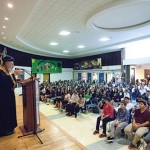

 New Equipment
 Goal Is 90 Seconds