Home Blog Page 110

This Day In History – 01/05/1933 The Golden Gate Bridge is Born
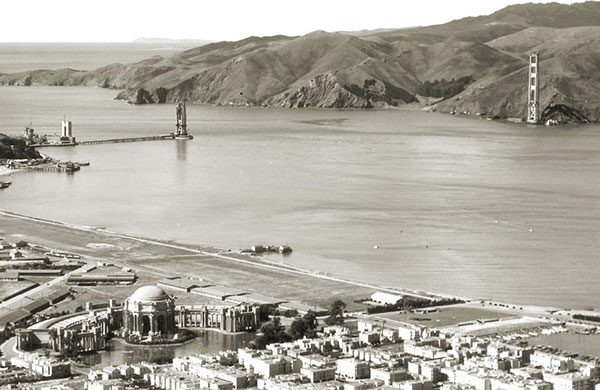
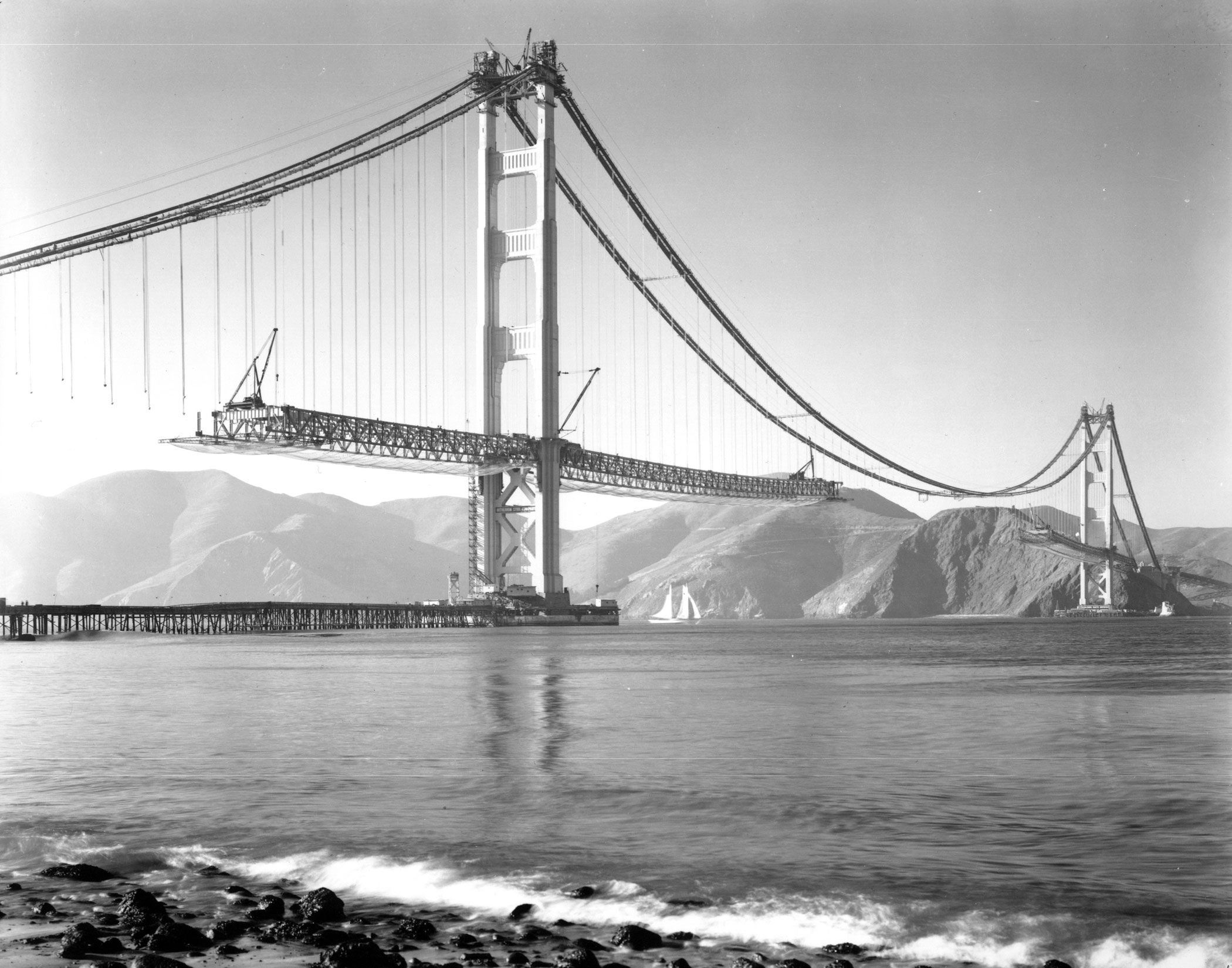
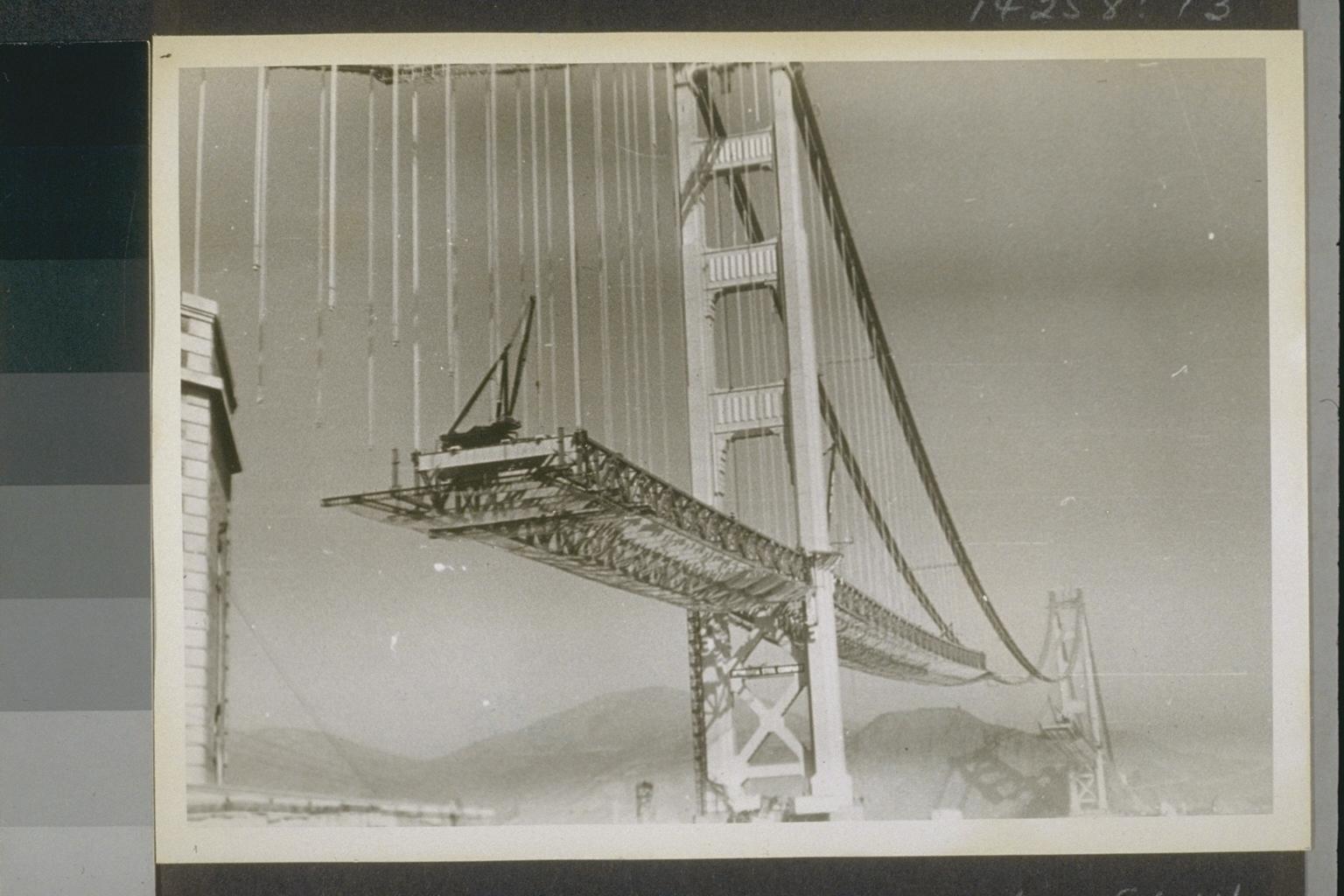
On January 5, 1933, construction begins on the Golden Gate Bridge, as workers began excavating 3.25 million cubic feet of dirt for the structure’s huge anchorages.

golden-gate-bridge-construction-begins-01-05-1933

Following the Gold Rush boom that began in 1849, speculators realized the land north of San Francisco Bay would increase in value in direct proportion to its accessibility to the city. Soon, a plan was hatched to build a bridge that would span the Golden Gate, a narrow, 400-foot deep strait that serves as the mouth of the San Francisco Bay, connecting the San Francisco Peninsula with the southern end of Marin County.

Although the idea went back as far as 1869, the proposal took root in 1916. A former engineering student, James Wilkins, working as a journalist with the San Francisco Bulletin, called for a suspension bridge with a center span of 3,000 feet, nearly twice the length of any in existence. Wilkins’ idea was estimated to cost an astounding $100 million. So, San Francisco’s city engineer, Michael M. O’Shaughnessy (he’s also credited with coming up with the name Golden Gate Bridge), began asking bridge engineers whether they could do it for less.

Engineer and poet Joseph Strauss, a 5-foot tall Cincinnati-born Chicagoan, said he could.

Eventually, O’Shaughnessy and Strauss concluded they could build a pure suspension bridge within a practical range of $25-30 million with a main span at least 4,000 feet. The construction plan still faced opposition, including litigation, from many sources. By the time most of the obstacles were cleared, the Great Depression of 1929 had begun, limiting financing options, so officials convinced voters to support $35 million in bonded indebtedness, citing the jobs that would be created for the project. However, the bonds couldn’t be sold until 1932, when San-Francisco based Bank of America agreed to buy the entire project in order to help the local economy.

The Golden Gate Bridge officially opened on May 27, 1937, the longest bridge span in the world at the time. The first public crossing had taken place the day before, when 200,000 people walked, ran and even roller skated over the new bridge.

With its tall towers and famous red paint job, the bridge quickly became a famous American landmark, and a symbol of San Francisco.


 GGB-exhibit3-1

0sjBQ

bridgehanging

I0036916A

Construction Timeline Golden Gate Bridge

December 1932 to April 1937

Additional KEY DATES in the History of the Golden Gate Bridge

December 22, 1932: Extending from Fort Baker pier, the construction of a 1,700 foot-long access road began to access the construction sites for the Marin anchorage, pier and tower.

January 5, 1933: Construction officially started.

January 1933 to February 1936: Marin and San Francisco anchorages and associated pylons.

January 1933 to May 1935: San Francisco anchorage.

January 1933 to June 1933: Marin pier.

January 1933 to June 1935: Marin anchorage.

February 1933: Work began on the east approach road from San Francisco that extended through the Presidio to the south end of the Golden Gate Bridge.

March 1933: Steel for the San Francisco and Marin towers that was prefabricated in Bethlehem steel foundries in Pottstown and Steelton, PA was brought by flatcar to Philadelphia and transferred to barges and shipped through the Panama Canal to Alameda, CA where it was stored until the Marin pier was completed and ready for tower erection.

March 1933 to March 1934: San Francisco tower access trestle was constructed extending 1100 feet offshore. Just as the trestle was completed, it was significantly damaged for the first time on August 14, 1933, when the McCormick Steamship Line’s Sidney M. Hauptman plowed through the thick fog and crashed into the access trestle, damaging about 400 feet. After repairs were made, on December 13, 1933, as a southwest gale battered the Golden Gate Strait for two days, the access trestle was again battered and this time there was 800 feet of wreckage. Trestle repairs began shortly thereafter and completed March 8, 1934.

November 7, 1933: Marin tower construction started. Depending on the source referenced, it was completed either on June 28, 1934 or sometime in November 1934.

October 24, 1934: San Francisco fender wall completed.

November 27, 1934: San Francisco pier area within the fender wall was un-watered.

January 3, 1935: San Francisco pier reached its final height of 44 feet above the water.

January 1935 to June 28, 1935: San Francisco tower construction.

August 2, 1935 to September 27, 1935: Harbor Tug and Barge Company strung the first wire cables to support the footwalks (aka catwalks) constructed across the Golden Gate Strait in preparation for main cable spinning.

October 1935 to May 1936: Main cable spinning and compression.

April 1936: Start of the Sausalito lateral approach road which was constructed as a W.P.A. project.

July 1936 to December 14, 1936: Suspended structure.

July 21, 1936: Start of San Francisco approach viaduct structures and Fort Point arch construction.

November 18, 1936: Two sections of the Bridge’s main span were joined in the middle. A brief ceremony marked the occasion when groups from San Francisco and Marin met and exchanged remarks at the center of the span. Major Thomas L. McKenna, Catholic Chaplin of Fort Scott, blessed the span while sprinkling holy water.

January 19, 1937 to April 19, 1937: Roadway.
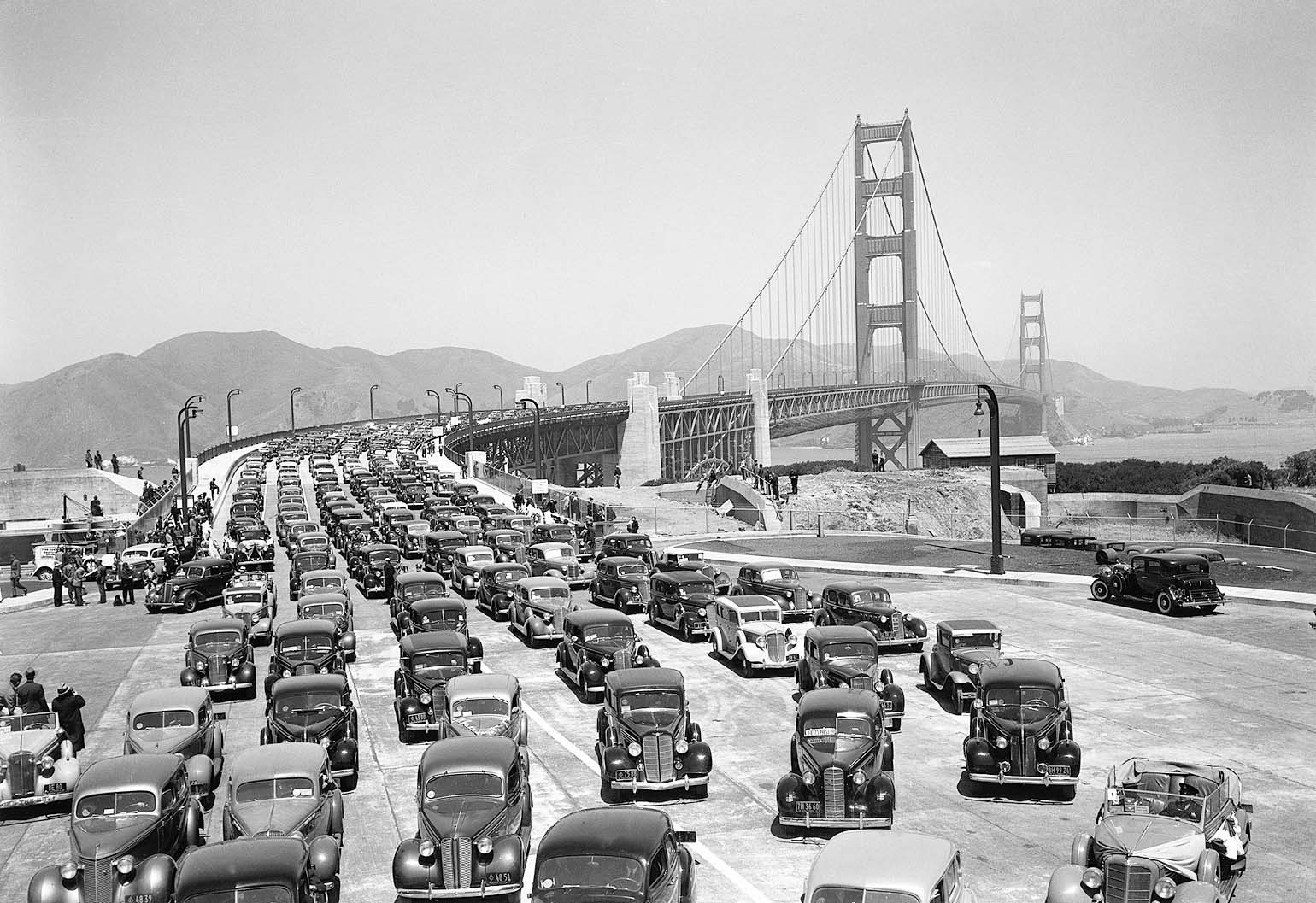
GGBridge_web_06_23_12

This Day In History – 12/24/1979 – Soviet tanks roll into Afghanistan

Soviet paratroopers aboard a BMD-1 in Kabul

On December 24, 1979, the Soviet Union invades Afghanistan, under the pretext of upholding the Soviet-Afghan Friendship Treaty of 1978.

As midnight approached, the Soviets organized a massive military airlift into Kabul, involving an estimated 280 transport aircraft and three divisions of almost 8,500 men each. Within a few days, the Soviets had secured Kabul, deploying a special assault unit against Tajberg Palace. Elements of the Afghan army loyal to Hafizullah Amin put up a fierce, but brief resistance.

On December 27, Babrak Karmal, exiled leader of the Parcham faction of the Marxist People’s Democratic Party of Afghanistan (PDPA), was installed as Afghanistan’s new head of government. And Soviet ground forces entered Afghanistan from the north.

The Soviets, however, were met with fierce resistance when they ventured out of their strongholds into the countryside. Resistance fighters, called mujahidin, saw the Christian or atheist Soviets controlling Afghanistan as a defilement of Islam as well as of their traditional culture. Proclaiming a “jihad”(holy war), they gained the support of the Islamic world.

The mujahidin employed guerrilla tactics against the Soviets. They would attack or raid quickly, then disappear into the mountains, causing great destruction without pitched battles. The fighters used whatever weapons they could grab from the Soviets or were given by the United States.

The tide of the war turned with the 1987 introduction of U.S. shoulder-launched anti-aircraft missiles. The Stingers allowed the mujahidin to shoot down Soviet planes and helicopters on a regular basis.

New Soviet leader Mikhail Gorbachev decided it was time to get out. Demoralized and with no victory in sight, Soviet forces started withdrawing in 1988. The last Soviet soldier crossed back across the border on February 15, 1989.

It was the first Soviet military expedition beyond the Eastern bloc since World War II and marked the end of a period of improving relations (known as détente) in the Cold War. Subsequently, the SALT II arms treaty was shelved and the U.S. began to re-arm.

Fifteen thousand Soviet soldiers were killed.

The long-term impact of the invasion and subsequent war was profound. First, the Soviets never recovered from the public relations and financial losses, which significantly contributed to the fall of the Soviet empire in 1991. Secondly, the war created a breeding ground for terrorism and the rise of Osama bin Laden.

Hanukkah Alegre!

Washington-area Sephardic Jews share traditional foods and converse in the disappearing language of their ancestors

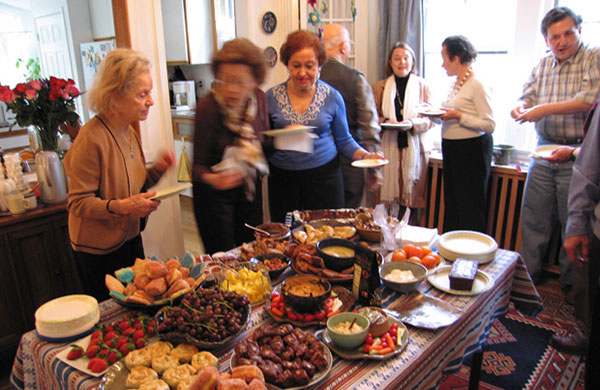
[Podcast audio below.] It all started back in 2001, when Sarajevo-born folk singer Flory Jagoda invited roughly a dozen other Sephardim in the Washington area to join her for conversation over burekas and bumuelos (fritters, or doughnuts). More specifically, she invited them for conversation in Judeo-Spanish, also known as Ladino, the language spoken by Jews in medieval Spain and later in the far-flung lands to which they fled after the expulsion in 1492.

Today, the language is all but forgotten, except by those like Jagoda who spoke it growing up. The group has grown to include more than 20 participants. At their monthly meetings—which members call vijitas de al’had, or “Sunday visits,” after a centuries-old tradition from the Old Country—the men and women eat Sephardic treats, sing songs, and study a Judeo-Spanish reading exercise, complete with vocabulary lists. Vox Tablet’s Julie Subrin visited their annual Hanukkah gathering in 2008 for this audio postcard from our archives.

770 Stabbing Victim Levi Rosenblatt Released from Hospital

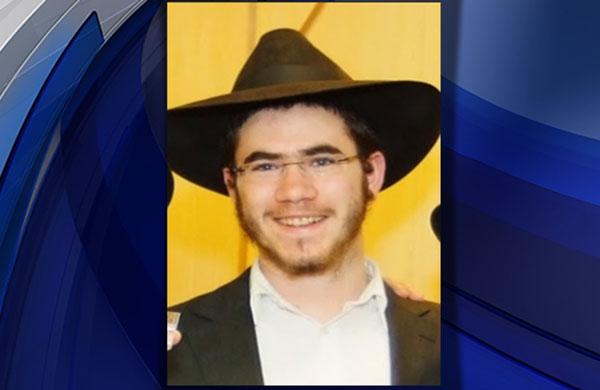
Levi Rosenblatt, the 22-year-old Bochur who was stabbed inside 770 last week is now home from the hospital.

Levi underwent emergency surgery after he was attacked with a knife by Calvin Peters, a mentally unstable man who was subsequently shot during a standoff with police.

“Mr. Rosenblatt suffered a knife injury to the blood vessels in an extremely sensitive area of his brain,” chief of neurosurgery at Bellevue Hospital Dr. Paul Huang said in a news release.

“Because of the resources available to us, as well as the experience and expertise of the nurses and physicians at Bellevue Hospital, we were able to deliver a very sophisticated level of care to this patient. He underwent a procedure to repair two blood vessels, which was successful. He has had an amazing recovery.”

Levi expressed gratitude for his successful treatment.

“I have a lot of people from way back in the beginning to thank, above all, God and the Rebbe who provided his blessings,” he said in the release. “Thanks to the Hatzalah of Crown Heights volunteer ambulance service, the NYPD, the doctors and nurses here at Bellevue and at Kings County Hospital, my friends who stayed with me in my room around the clock, my family who came from Israel to be with me, and all the people all over the world who have prayed for me.”


Happy Hanukah from Image Magazine

Happy Hanukah
from all of here at Image Magazine

Letters to Afar: By Péter Forgács on view at the Museum of the City of New York

Letters to Afar:

By Péter Forgács, music by the Klezmatics

At the Museum of the City of New York

The Museum of the City of New York and YIVO Institute for Jewish Research premiere Letters to Afar: By Péter Forgács, music by the Klezmatics, an immersive video art installation based on home movies made by Jewish immigrants who traveled from New York back to Poland during the 1920s and 30s. Letters to Afar opened on Wednesday, October 22, and remains on view until Sunday, March 22, 2015.

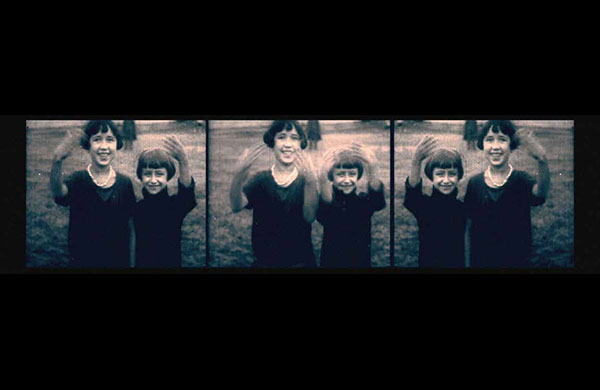
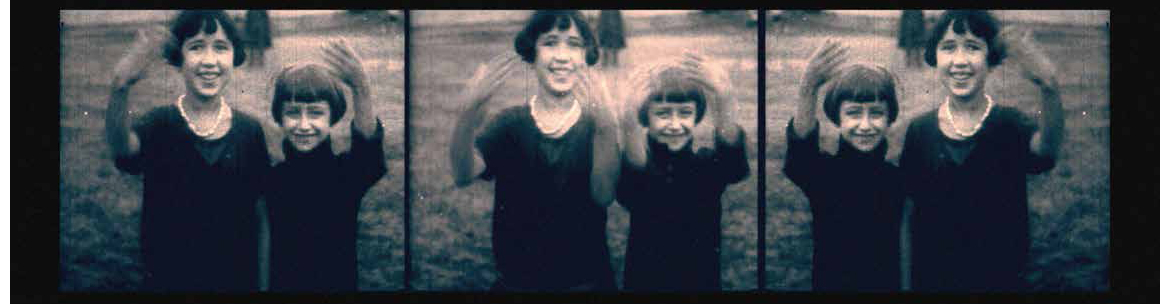
The individual films, interpreted as “letters” and knitted into a single work of art, document poignant family reunions and everyday life in cities, small towns, and villages throughout Poland in the years before the Second World War, capturing a culture on the brink. Internationally acclaimed Hungarian artist Péter Forgács created the audiovisual art installation under a commission by the Museum of the History of Polish Jews in Warsaw and the YIVO Institute for Jewish Research. With a haunting soundtrack by the New York-based band, The Klezmatics, these films bring a lost world to life in startling and moving detail.

20130508_1617_MHZP_Album_EN-20

Letters to Afar provides a glimpse of life in Poland prior to World War II, and poignantly speaks to the complex dual identity that is fundamental to the New York immigrant experience and essential to our understanding of the dynamism, creativity and progress of New York City,” says Susan Henshaw Jones, the Ronay Menschel Director of the Museum of the City of New York. “This innovative art installation powerfully evokes the emotional as well as historical reality of Polish New Yorkers who loved both their homeland and their adopted city. It embodies a core aspect of the New York identity, and I am sure it will deeply move and educate the diverse visitors who come to our museum.”

“Drawn from the collections of the YIVO Institute, Letters to Afar is a magical work of synthesis, both history and imagination, a window onto a largely forgotten past whose vibrant and varied existence gave birth to American Jewry,” said Jonathan Brent, executive director and CEO of the YIVO Institute for Jewish Research.

Filming for their families back in New York in the 1920s and 30s, amateur filmmakers recorded Polish relatives and friends in their daily surroundings. Unknowingly, they also provided extraordinary documentation of joyous family interactions in interwar Poland. In Letters to Afar, acclaimed filmmaker and video artist Péter Forgács, who specializes in working with archival footage, adapted these home movies or “letters” for the 21st century museum visitor. Avoiding a broad historical narrative, Letters to Afar captures intimate human behavior—a look, a gesture, an interaction—replayed at different speeds set to a score of traditional Jewish music, and accompanied by captions and spoken text drawn from memoirs, letters and literature. As a result, viewers are offered more than a historical perspective on prewar life; they experience the longing and complex forces that drew New York immigrants back to revisit their homeland, family and friends.

At once particular and universal, Letters to Afar documents a lost society while highlighting the immigrant experience of being caught between two worlds. In 2013, the installation opened at the Museum of the History of Polish Jews in Warsaw.

Letters to Afar at the City Museum was made possible with the generous support of the Kronhill Pletka Foundation, The Righteous Persons Foundation, The Seedlings Foundation and Sigmund Rolat. Additional support is provided by the New York City Department of Cultural Affairs.

About YIVO

The YIVO Institute for Jewish Research was founded in Vilna, Poland, in 1925, and relocated to New York City in 1940 with the mission to preserve, study and perpetuate knowledge of the thousand-year history and culture of Jewish life in Eastern Europe. Today, YIVO’s archival and library collections are the single largest resource for such study in the world. YIVO offers cultural events and programs throughout the year, educational programs, scholarly publications, and fellowships. www.yivoinstitute.org 


About the Museum of the City of New York


The Museum of the City of New York celebrates and interprets the city, educating the public about its distinctive character, especially its heritage of diversity, opportunity, and perpetual transformation. Founded in 1923 as a private, nonprofit corporation, the Museum connects the past, present, and future of New York City. It serves the people of New York and visitors from around the world through exhibitions, school and public programs, publications, and collections. For more information, visit www.mcny.org.

Woman who survived Auschwitz when gas ran out is about to turn 101

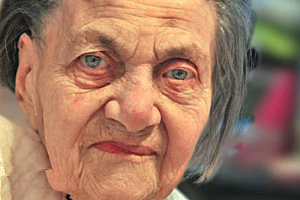
Klara Marcus was a 30-year-old Auschwitz prisoner in 1944 when she was forced to strip naked and march into the gas chamber — only there was no more gas left.

“God was watching over me that day,” said Marcus, who is about to celebrate her 101st birthday, the Central European News reported.

“I was chosen towards the end of the day with a large group of other women and we were made ready for the gas chamber,” said Marcus, of Sighetu Marmatiej in northern Romania.
Modal Trigger

“But when they put us inside and went to turn the gas on, they found they had run out,” she said. “One of the guards joked that it was our lucky day because they had already killed so many, they didn’t have any gas left for us.”

She then managed to escape from the infamous Nazi death camp in southern Poland, where more than a million people were killed.

“After I got free, I managed to make my way back to my home to look for my family,” said Marcus — but she discovered that they had gone.

Anton Rohian, a government representative, turned up at her home to mark her Jan. 1 birthday.

“I brought you a bunch of flowers, a bottle of champagne and an excellency diploma to thank you because you’ve returned to Maramures after all you’ve been through,” Rohian said, referring to her county.

“It’s important not to forget what happened in the past,” he said.

Kissing the Romanian flag, Marcus said: “I’ve had terrible experiences in my life, but this is a wonderful moment.”

Pic shows: Klara Marcus who survived a Nazi gas chamber is preparing to celebrate her 101st birthday.  A woman who survived a Nazi gas chamber because it ran out of gas is preparing to celebrate her 101st birthday.  Klara Marcus, 100, from the town of Sighetu Marmatiej in the northern Romanian county of Maramures was captured in 1944 and sent to the infamous Nazi death camp Auschwitz in southern Poland.  Then aged 30, she was forced to strip naked along with hundreds of other women and marched into the gas chamber.  She said: "I was chosen towards the end of the day with a large group of other women and we were made ready for the gas chamber.  "But when they put us inside and went to turn the gas on, they found they had run out.  "One of the guards joked that it was our lucky day because they had already killed so many they didn’t have any gas left for us.  "God was watching over me that day."  She said that realising she had nothing to lose she had taken her life in her hands and managed to escape before they called for her again.  She said: "After I got free I managed to make my way back to my home to look for my family."  It was then that she found that they too had gone and she had to rebuild her life alone.  In celebration of her upcoming birthday on January 1st, government representative Anton Rohian turned up at her home.  He said: "I brought you a bunch of flowers, a bottle of champagne and an excellency diploma to thank you because you’ve returned to Maramures after all you’ve been through.  "It’s important not to forget what happened in the past."  Kissing the Romanian flag, Klara said: "I’ve had terrible experiences in my life, but this is a wonderful moment."  Over one million people were killed in Auschwitz which was liberated by the Red Army in January 1945.
Pic shows: Klara Marcus who survived a Nazi gas chamber is preparing to celebrate her 101st birthday. A woman who survived a Nazi gas chamber because it ran out of gas is preparing to celebrate her 101st birthday. Klara Marcus, 100, from the town of Sighetu Marmatiej in the northern Romanian county of Maramures was captured in 1944 and sent to the infamous Nazi death camp Auschwitz in southern Poland. Then aged 30, she was forced to strip naked along with hundreds of other women and marched into the gas chamber. She said: “I was chosen towards the end of the day with a large group of other women and we were made ready for the gas chamber. “But when they put us inside and went to turn the gas on, they found they had run out. “One of the guards joked that it was our lucky day because they had already killed so many they didn‚Äôt have any gas left for us. “God was watching over me that day.” She said that realising she had nothing to lose she had taken her life in her hands and managed to escape before they called for her again. She said: “After I got free I managed to make my way back to my home to look for my family.” It was then that she found that they too had gone and she had to rebuild her life alone. In celebration of her upcoming birthday on January 1st, government representative Anton Rohian turned up at her home. He said: “I brought you a bunch of flowers, a bottle of champagne and an excellency diploma to thank you because you‚Äôve returned to Maramures after all you‚Äôve been through. “It‚Äôs important not to forget what happened in the past.” Kissing the Romanian flag, Klara said: “I‚Äôve had terrible experiences in my life, but this is a wonderful moment.” Over one million people were killed in Auschwitz which was liberated by the Red Army in January 1945.

Finally, The First Star Wars: The Force Awakens Trailer

It’s not much—in fact, it might feel like the shortest 88 seconds of your life—but the first trailer for director J.J. Abrams’ Star Wars: The Force Awakens is finally here, and they weren’t kidding when they called it a “teaser.”

“There’s been an awakening, have you felt it?” a voiceover bellows before cutting to shots of a soccer ball-shaped droid, Stormtroopers, and X-wing starfighters in flight. A dark cloaked figure wielding a red cross-shaped lightsaber treks through the snow as the voiceover continues “the Dark Side … and the light,” and then the money shot: the Millennium Falcon! It’s really happening!

(Side note: Does that voiceover sound an awful lot like Benedict Cumberbatch doing his Khan thing to anyone else?)

The trailer, which hit the web today and is playing in select theaters this weekend, ends by reminding us that this movie doesn’t come out until December 2015. So, like, a whole year from now. That’s a long time to wait, but it looks like it’ll be worth it.

#‎TheForceAwakens‬

How To Thank Your Body This Thanksgiving

Turkey, stuffing, mashed potatoes and all the comfort foods that come along with Thanksgiving make us all really excited for the holiday season!

happythanksgiving

Here are some great ways to “Thank Your Body” this Thanksgiving!

1. Avoid the SUGAR!

Make homemade desserts such as Apple Pie.  When you cook homemade meals and desserts, you control exactly what goes in them! Choose natural sweeteners such as honey, maple syrup, and organic stevia to have your Thanksgiving treat you won’t regret!

pie

2. Go Gluten Free.

There are tons of recipes containing gluten free Thanksgiving traditions such as this Classic Gluten free Stuffing recipe!


3. Don’t worry about the FAT.

If you didn’t realize yet, I am a BIG fan of FAT! Add  organic grassfed butter to all your dishes that require it, and don’t forget to it enjoy it! Click here to find out why Fat doesn’t make you FAT!.


4. Avoid Food Preservatives.

Many products we deem as “harmless” are in fact pretty harmful. Check your food labels for any ingredients you don’t understand. If you find a word you can’t pronounce, odds are its a food preservative. Words like disodium phosphate, Monosodium Glutamate and BHA/BHT all indicate toxic food preservatives. Try to steer clear of these by buying organic spices and seasonings.


Have a Happy, Healthy Thanksgiving!


Happy Thanksgiving from the staff @ Image Magazine

Happy Thanksgiving

Happy Thanksgiving
from the staff @ Image Magazine

Check out our webpage
@ http://www.imageusa.com

Try Some Jewish Ham This Thanksgiving

The dish was a staple for Sephardic Jews during the Spanish Inquisition

Searching for a new twist on the traditional Thanksgiving buffet? Look no further than the Spanish Inquisition.

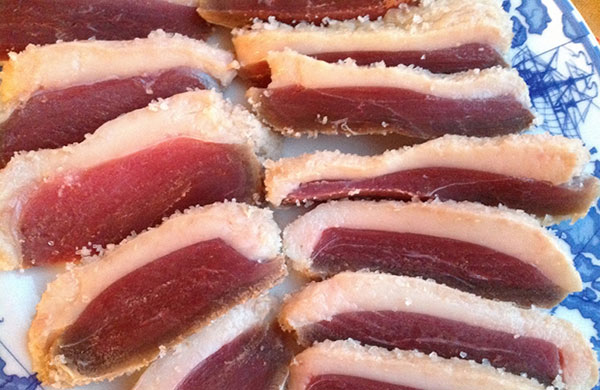
A new online publication, The Converso Cookbook, offers unique dishes based on the recipes of 14th- and 15th-century Jews who were persecuted by Spanish authorities. One of these recipes, Jewish Ham—or cecina de ansarón or ansarón cecinado—is a perfect Thanksgiving alternative. The “ham” is actually salt-cured duck or goose; when sliced, the final product looks rather similar to salted pork.

The Converso Cookbook is the work of Ana Gomez-Bravo, a professor of Spanish and Jewish Studies at the University of Washington. She’s involved with the university’s Sephardic Studies Program, featured in a Tablet article this summer about Seattle’s Ladino revival.

A native of Madrid, Gomez-Bravo specializes in medieval and early modern Spanish literature. She has long been fascinated by the culture of converso Jews—those who were forced to convert to Christianity during the Inquisition period. Gomez-Bravo realized that food practices could serve as a rich source of information about medieval Sephardic identity, and began to hunt for textual evidence in both Jewish sources and Inquisitorial records.

Then, she started cooking.

The result is an intriguing online gallery that is part cookbook, part photo essay, and part history lesson. Recipes for Jewish Ham: Cured Goose, Almodrote: Spicy Eggplant, and Adafina: Sabbath Stew can be found alongside blog posts explaining the story behind each recipe, based on Gomez-Bravo’s archival research.

To her surprise, Gomez-Bravo found that attempting to replicate these dishes in a modern kitchen—and locating ingredients as similar as possible to those described in her medieval sources—shed new light on the complex (and age-old) connection between food and Jewish identity. It’s also a useful tool for familiarizing modern Jewish audiences with a dark period in Jewish history.

“Food is a good way to present hard topics and periods that are generally perceived as difficult to understand,” Gomez-Bravo explained. “I also hope to help retrieve an important part of Jewish heritage and to help Jews know their own history.” (Her current book project examines how the Inquisitors used the food practices of Jews and Muslims as the basis of racial profiling.)

American Jews have long embraced Thanksgiving as a time to celebrate their integration into American society. Like other secular national holidays, Thanksgiving offers a chance to synthesize a variety of culinary traditions. So why not use kosher poultry to recreate a 15th-century Sephardic Jewish dish that itself was akin to Spanish cured pork? This Thanksgiving, try some Jewish Ham and revel in the complexity of flavors—and of history.

Jewish Ham: Cured Duck/Goose

Ingredients:
2 duck or goose breast halves (If you can’t find fresh duck or goose or don’t want to debone a bird yourself, you can easily find frozen duck breasts in many supermarkets.)
1 pound kosher salt
black pepper (optional)
bay leaves (optional)
thyme (optional)
juniper berries (optional)

The simplest way to prepare duck or goose ham is to just bury the breasts in kosher salt. It is common to pat cracked pepper on the breasts before tying them together with the fat side out, but you can skip this step. If you have a smoker, you can smoke the meat after it has dried or, for a more traditional effect, you can hang it by your chimney the next time you light a fire!

If you are using salt that has been out of the package for a while or you live in a damp climate, you can dry the salt before use by stirring it in a cast iron pot on a medium-high fire for five to ten minutes or until it looks dry. Be careful when handling it after you have removed it from the heat because it will be scorching hot.

After the salt has cooled down to room temperature, lay a bed of it in a glass bowl. Lay the meat on the salt and cover it with another layer.

If your bowl is not large enough to hold both breast halves in one layer, you can place one breast half on top of the other, first making sure that you have spread a thick layer of salt between them.

It is important that the meat be covered with salt on all sides and that the layers are thick, as the meat will be releasing its juices as it becomes cured.

Place the bowl with the duck or goose meat in the salt in the refrigerator for a week.
To consume, slice thinly and serve as an appetizer or put a piece in your adafina!

Once you become comfortable with this recipe, you can try adding some garlic and dry spices like black pepper, bay leaf, thyme, and juniper berries alongside the salt.

Hannah Pressman has a doctorate in Hebrew literature and is co-editor of Choosing Yiddish: New Frontiers of Language and Culture. Her writing has appeared in Lilith, the Forward, eSefarad.com, and MyJewishLearning.com. She lives in Seattle, where she is affiliate faculty for the UW Stroum Center for Jewish Studies.


Secret Service and STAR-K Kosher Certification

What it Took for STAR-K to Certify the GA, Under Secret Service Surveillance

by Margie Pensak


Security was tight at STAR-K Certification’s largest and most challenging food service supervision, to date–The Jewish Federations of North America’s 2014 General Assembly (GA), the premier annual North American Jewish communal event, held at the Gaylord National Resort & Convention Center, in National Harbor, Maryland, November 9-12. Vice President Joe Biden was one of the several scheduled speakers and I had to make sure I arrived early enough before Gaylord’s security lockdown. I never did get to see the Vice President, while I was touring the kosher kitchen with STAR-K Assistant Director of Supervision Rabbi Mayer Kurcfeld, who spearheaded the kashrus team for this event. But, I did feel the thrill of the anticipation of his arrival, as I went through more than one security checkpoint and watched a sniffing K-9 attack trained German shepherd police dog check out the crowd!


The Gaylord National Resort & Convention Center is a luxurious city in itself, with its 19 floors; 1,886 rooms; 110 suites; 89 meeting rooms; and 470,000 square feet of total meeting space. That is more than eight times the size of an American football field, or 10.8 acres. This was the facility’s first-time ever to host a kosher event and Rabbi Kurcfeld’s first-time ever to oversee such a gargantuan event in his 30+ years in kosher supervision.


Before any food could be prepared, half of the kitchen which Gaylord permitted to be partitioned off for the event, had to be kashered. By Friday afternoon, two days before the arrival of the 3000 expected GA convention participants, Rabbi Kurcfeld oversaw the 90% of the kashering which was completed. The remainder he did on motzei Shabbos. The list of things to be kashered included: a dishwasher, multiple ovens, a stove, hotboxes, two soup kettles, industrial-sized pots, a steam kettle, silverware, serving pieces, metal pitchers, and bread baskets.


Unlike the 2012 GA event, held in the Baltimore Convention Center–where the entire facility was kashered and participants and non-participants, alike, were served kosher–this event would be preparing for approximately 3000 participants who would be served Star-K certified kosher meals, while approximately 1500 non-participating Gaylord guests would be served treif at simultaneously held events and in six on-premises treif eateries.


To give you some idea of what was involved, Rabbi Dovid Lapin, Star-K’s Head Mashgiach and Kosher event planning specialist, put in 67 hours for the four day GA Convention. His longest stretch of consecutive hours was clocked in from midnight on motzei Shabbos until 11:30 p.m. on Sunday evening. In those 67 hours, he oversaw the supervision of, among other things, Sunday breakfast which was held in five separate locations, and Monday breakfast which was held in six separate locations. One of the six locations served 1100 of the 3000 conventioneers; another upscale one was served on china with silverware.


“On Monday evening, there were nine receptions held at one time, in one area of the convention center/hotel, while in another area, simultaneously, there were five other receptions taking place for 300 people,” related Rabbi Lapin. “More than 500 people attended one of the nine receptions; the other eight were attended by between 30-100 people.”


Veteran Star-K mashgicha, Emunah Friedman, clocked in 67-3/4 hours in the six days she worked. She was one of the 13 mashgichim posted at various food checkpoints in Gaylord, “manning” the area between the kitchen and the hallway adjacent to the loading dock. Describing the kosher kitchen scene prior to Vice President Biden’s arrival, she noted, “On Monday, the Secret Service shut down our production at 4 a.m. The kitchen staff had to report in by that time, although we were shut out of the kitchen until 6:30 a.m. We had to be down the hall from the kitchen, and the Secret Service kept changing our location throughout the process, constantly clearing the hallway.  After they ensured that there was nothing dangerous for the vice president, with the help of a K-9 unit that checked every nook and cranny, we were able to return to the kitchen. By the time we were let back into the kitchen, at 6:30 a.m., it left the staff little time to prepare for breakfast, which was scheduled to start at 7 a.m.!”


What does it take to feed close to 3000 conventioneers for four days? “A lot of advance planning went into ensuring that an event this size would be a success,” explains Rabbi Kurcfeld. “I started planning and talking about the GA event more than a year before it happened. Our initial Gaylord-Star-K meeting took place before Pesach, on March 27. From then on, there were four in-person on-site and subsequent in-office meetings plus many communications via email, text messaging, and phone calls. I faced my biggest challenge in food service yet, with much trepidation. Somewhat like Eisenhower must have felt when planning “D-Day”, I thought of it as “GA-Day”. Boruch Hashem, in the end, all went as planned.”


According to Gaylord’s Food Purchasing Manager, Wazir Chagla, the GA Convention order comprised of: 4000 chicken breasts,400 pounds of raw turkey breast, 3 cases of chicken wings, 120 pounds of chicken fajita meat, 250 pounds of fish, 500 pounds of beef, 23 cases of eggs, 198 cases of yogurt, 75 pounds of Greek yogurt, hundreds of pounds of potatoes, fruits and vegetables, and thousands of pre-made salads, sandwiches, cookies, and muffins, in addition to various baked goods and groceries.


Not having had the opportunity to see the vice president with my own eyes, I was curious to know if he partook of the Star-K certified food. My reliable sources tell me that he did not. Of course, with such impeccable kashrus standards as Star-K’s, no doubt, it had nothing to do with religion and, presumably, everything to do with politics—White House policy is strict when it comes to the president and vice-president eating out!

#   #   #   #

Will this make me FAT?

“Will this make me fat?” That seems to be the running question in our office these days.

Many are confused as to what foods may be contributing to their weight gain. Obesity is an epidemic that is running rampant in America, and yet no one seems to know what is causing it. Is it the soda? Is it the DIET soda? Is it the fatty pastry I had for breakfast this morning? What is it in our food that is making Americans so FAT! Yes, I said it, FAT!

The CDC says:

“The Trust for America’s Health projects that 44 percent of Americans will be obese by 2030, while the Centers for Disease Control and Prevention it projects 42 percent of adults will be. CDC also reported that 12 states have an adult obesity rate of over 30 percent.”


I don’t know about anyone else, but that is one scary number! 44 percent of adults will be obese? If that’s the case, what are those adults teaching their children? What will that number look like by 2060?

We all know that being obese, or overweight is not healthy. We also know that this contributes to other diseases such as heart disease, cancer, metabolic syndrome and many more.


The question I raise to ask is, is obesity a cause, or a symptom?

Many of the diseases becoming more prevalent are merely symptoms of one thing, BAD FOOD!

As a nutritionist, I can say the most common phrase I hear is, “I am concerned about my weight because it’s causing all my other issues!”

Let me just say, of course your weight is contributing to this, but your weight is not what is causing you to have high blood pressure. It is the food you are eating that is causing you to gain weight AND have high blood pressure. Obesity is not a disease, but is simply a symptom of BAD FOOD.

The first thing everyone must know about weight gain is that the culprit is not FAT. Fat does not make you fat.

Really?… No it doesn’t!


What is Fat made-up of?

  1. Fatty Acids 2. Glycerol

Fatty Acids are important because they help build cell walls, produce hormones and digest fat-soluble nutrients. Ever hear of fat soluble vitamins? Fat soluble means it can only be digested with fat. So we need fat to be nourished with vitamins that can only be used with FAT. (Hence why I am not a fan of the low fat diet) If the fat we eat is turned into fatty acids and glycerol, which is used for building cell walls, digesting vitamins, and making energy, how could it possibly bed bad for us? I don’t think building, producing and digesting are bad things for our bodies to be doing, do you?

Glycerol is where many get confused into thinking that it turns into fat. Glycerol is an alcohol that turns into a fancy word called dihydroxyacetone phosphate. Dihydroxyacetone phosphate is used in a cycle called glycolysis to make… Drum roll please? ENERGY!

Energy we use and need every day. “But we use carbohydrates to make energy?” Yes, this is true, we’ll get to that part soon.


If Fat isn’t causing obesity, what is?

CARBOHYDRATES & SUGAR!

Most patients I have spoken with about fat seem to have many misconceptions about how fat is produced by the body and what type of foods to eat if you are trying to lose some unwanted weight.

In the liver and muscles, most of the glucose (aka SUGAR!) is changed into glycogen by the process of glycogenesis (anabolism). Glycogen is stored in the liver and muscles until needed at some later time when glucose levels are low.

Our liver and body tissue is where our FAT is stored if our bodies are ever in need of energy reserves.

Without getting in too much detail about how our bodies digest fat, Carbs and sugars are what cause most of the issues in people trying to lose unwanted weight.

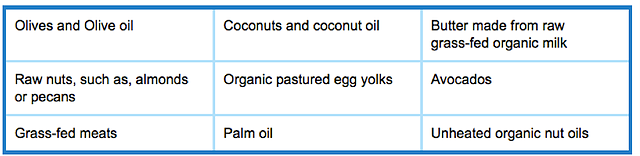
Go ahead, eat that fat! Here are some great sources of fat that will help build up those cell walls and help vitamin absorption:

blogchart

Let me also make it clear that we do need to eat carbohydrates. Our bodies were designed to utilize all 3 nutrients – Fat, Carbohydrates and Protein. Our bodies do use carbohydrates in conjunction with FAT to produce ENERGY. So if you want some carbs (as we all do) go for some of these:

Good Sources of Carbohydrates

Fruits

Vegetables

Ezekial bread

*Gluten free foods (this will help keep your carb cravings down)

If your next question is about fat and how it can affect your cholesterol check out next week’s article, “Cholesterol Myth Busters”.


Alexandra Blydenburgh is a clinical nutritionist practicing out of her Rockville Centre practice Wellness Done Naturally. To find more of Alexandra’s posts visit her website at www.wellnessdonenaturally.com

STAR-K Kosher Certification

STAR-K Takes Kashrus Training Program on the Road to Beth Medrash Govoha Yungerleit

On October 21-23, STAR-K Kashrus Administrators traveled to Lakewood, New Jersey, to present their Kashrus Training Program to twenty-five Beth Medrash Govoha (BMG) Kollel fellows who are participants in the Ner Le’Elef program.

STAR-K Rabbinic Administrator HaRav Moshe Heinemann, STAR-K Institute of Halacha Rav Mordechai Frankel, and STAR-K Kashrus Administrator-New York/New Jersey Rav Shmuel Heinemann joined STAR-K Kashrus Administrators Rabbi Eliyahu Shuman, Rabbi Mayer Kurcfeld, Rabbi Dovid Heber, Rabbi Avrohom Mushell, Rabbi Zvi Goldberg, Rabbi Zvi Holland, Rabbi Moshe Schuchman and Rabbi Sholom Tendler, in covering topics ranging from the kashrus of medicines, alcoholic beverages, milk/cholov Yisroel, meat, and fish to foodservice challenges, commercial and residential kashering and industrial kashrus. Practicums included: vegetable checking/insect recognition; nikkur; koshering; and, chicken shaylos. Kosher accountability, answering consumer shaylos properly, overseeing plants overseas, and agency administrative issues were also discussed. Tours of a catering facility and a mikvah rounded out the seminar experience.

Since 2005, the Ner Le’Elef Training Program, a division of Torah Links, has helped capable Beth Medrash Govoha yungerleit fill crucial communal roles – rabbanim, kollel yungerleit, educators, kiruv professionals and institutional administrators- -across North America and beyond. Its two-year course covers general hashkafa,

da ma shetashiv, Jewish history and pertinent halacha topics, such as eruvin, mikvaos and taharas hamishpacha. Lectures also focus on various leadership skills, such as teaching, public speaking, fund-raising and marketing techniques.

“It was fascinating to hear shiurim from the rabbonim of the STAR-K,” noted BMG Kollel fellow/Ner Le’Elef participant Yaakov Lyons. “They showed us how the sugyas in yoreh deah combine with technology and science in the world of Kashrus.”

BMG Kollel fellow/Ner Le’Elef participant, Moishe Botnick, concurred. “It was great to hear about the practical application of hilchos kashrus in a commercial setting and to get hands on experience in bug checking and nikkur. I was impressed with the halachic knowledge of all the star-k speakers in addition to their expertise in the practical issues relevant to hashgacha.”

“It’s a pleasure working with Rabbi Holland,” said Rabbi Moishe Katz, director of Ner Le’Elef Lakewood. “The Kashrus seminar is one of the highlights of our program.”

“STAR-K has always been dedicated to our various training programs in the world of Kashrus,” remarked STAR-K President Avrom Pollak. “It is something that makes us very proud and we are committed to continuing it.”

http://star-k.org/cons-new-bignews.htm