31 Healthy Breakfast Recipes That Will Promote Weight Loss All Month Long

[Best_Wordpress_Gallery id=”4″ gal_title=”31 Healthy Breakfast Recipes”]
[Best_Wordpress_Gallery id=”4″ gal_title=”31 Healthy Breakfast Recipes”]

[Best_Wordpress_Gallery id=”3″ gal_title=”Weight Loss”]
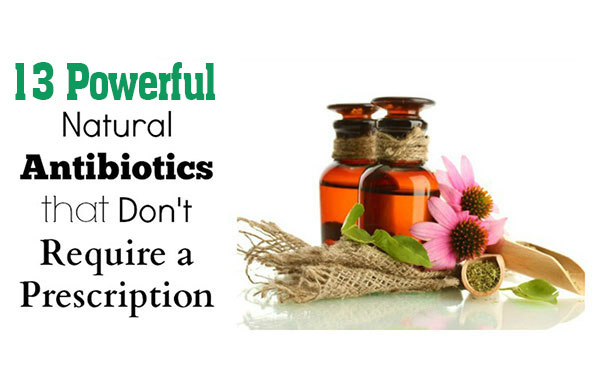
Antibiotics are a group of medicines that are used to treat infections caused by bacteria and certain parasites and they are among the most commonly prescribed medications in the US.
Antibiotics are used to kill bacteria and they don’t differentiate between good or bed bacteria. As a result every time you swallow antibiotics, you kill the beneficial bacteria within your intestines. Good bacteria in the gut help people in many ways, including helping make vitamins and boosting immunity. Some researchers think that killing them off with antibiotics may be contributing to an increase in chronic health conditions such as obesity, asthma and cancer. If you do need to take antibiotics you should also take probiotics which will help to restore the good bacteria in your gut.
Nature has several other highly effective substances with antibacterial, antifungal and antiviral properties, all able to protect the human body safely and with deep healing powers.
Here are 13 natural antibiotics still in use around the world. I would like to note that this article is not intended to replace medicine, a doctor’s care or in place of medical treatment.
1. Goldenseal
Goldenseal is easily grown in the United States and has become a popular natural method of killing bacteria. Uses include treating digestive problems, UTIs, eye infection and canker sores. It’s also sometimes mixed with echinacea to alleviate cold symptoms. The berberine found in it can destroy bacteria, parasites, and even strengthen white blood cells.
Use – There are several forms of Goldenseal including pills, extracted liquid and glycerites. The most popular method of ingestion is mixing liquid extract to wash over your skin since it doesn’t absorb effectively when taken orally.
Precautions
Ask your doctor before taking goldenseal if you’re currently on any other type of medication. It may cause irritation of the skin and heighten it’s sensitivity to sunlight in some users. Avoid use if you have high blood pressure.
2. Oregon Grape
This antibiotic functions a lot like its close relative goldenseal. Medical practitioners are beginning to shift toward this herb because it’s less difficult to produce. The alkaloid berberine is the most effective ingredient in the root. It aides in digestion and can kill a variety of harmful microbes that cause viral sickness.
Use – People tend to use this supplement in tincture or tea form. The root can be chopped into hot water and actually tastes pretty good thanks to the alkaloids.
Precautions
The dried root shouldn’t be exposed to much light or heat and should be thrown away after a year of storage. Some people experience nausea after the first few doses.
3. Andrographis Paniculata
The root and leaf of this South Asian plant has a commonplace in relieving cold symptoms. It’s also been used to treat insect bites, hemorrhoids and a wide variety of infections. The active ingredient in most andrographis supplements is called andrographolide.
Use – The best bet for this supplement is to search for capsules and tablets containing no less than 20% andrographolide. Look at the recommended dosage on the label.
Precautions
Don’t use the product for longer than three months. If you experience diarrhea, upset stomach, or a headache stop taking immediately.
4. Manuka Honey
Interestingly enough this natural antibiotic comes from New Zealand bees that pollinate the manuka bush. It can be used to repair infected tissue, reduce cholesterol and treat diabetes. Methylglyoxal is the compound identified as the active ingredient primarily responsible for the antibacterial action of Manuka honey. The UMF (Unique Manuka Factor) level in manuka products measures the concentration of methylglyoxal and should be no lower than 10 UMF for medical benefit.
Use – You can apply manuka honey directly to a wound or burn for optimal results.
Precautions
Manuka honey may elevate blood sugar or cause an allergic reaction. It also interacts negatively with chemotherapy medication.
5. Tea Tree Essential Oil
Tea tree oil extracted from the Melaleuca Alternifolia tree is now becoming a widely-used natural health remedy thanks to its versatility. The most recurrent use is treating cuts, acne, toenail fungus, infections and lung issues. It works effectively in both infection preventing and healing bacterial issues. Read my article about the top 5 medicinal uses for tea tree oil.
Use – You can find tea tree oil in in many products such as toothpastes, hair products, lip balms, lotions, soaps, and pure essential oil. It shouldn’t ever be taken by mouth. If you are interested to learn more about essential oils you can find useful information in my e-book Magical Aromatherapy. This book will help you to discover the power of essential oils and the most effective ways to use them.
Precautions
Test the oil on a small area of your skin to check for allergies prior to use.
6. Garlic
While it may not actually ward off vampires, garlic still has much more use than simply adding flavor to your meals. It fights heart disease, cold symptoms, boosts your immune system, and has effective antibacterial properties. Research found that some sulfuric compounds in garlic contribute to heart health but the main medical component is allicin, a chemical that also contributes to its trademark smell. Garlic is one of the superfoods mentioned in my e-book about superfoods which is part of the Natural Health Revolution Program. This program will help you to achieve your health, nutrition or weight loss goals.
Use – The most popular way to use garlic is by cooking it into your meals, eating it raw or in powdered form. There are also garlic oils, extracts, and freeze-dried tablets available. Find more information in my article how to use garlic as a medicine.
Precautions
Some people that take too much garlic may experience a burning sensation in the mouth or stomach, heartburn, gas, nausea, vomiting, body odor and diarrhea. These side effects are often worse with raw garlic. Also garlic might prolong bleeding, so stop taking garlic at least two weeks before a scheduled surgery. It can also interfere with certain medications.
7. Echinacea
Native Americans have used echinacea as a way to fight off infections and treat injury for over 400 years. Studies have revealed its ability to lessen pain, diminish inflammation, and act as an antiviral as well as an antioxidant. The glycoproteins, volatile oils, flavonoids, and alkamides in the root all help treat athletes foot, UTIs, ear infections, and injuries that heal slowly.
Use – Echinacea is available in tinctures, pills, extracts, and ointments. It’s commonly found in capsules and tablets mixed in with other natural health supplements. The root can also be put into hot tea. See here the recipe for echinacea tea to boost your immune system.
Precautions
Some supplement companies use misleading labels with products that contain very little echinacea so read carefully. Avoid taking if you have diabetes, HIV, liver troubles or multiple sclerosis. Echinacea can also cause a rare allergic reaction in some people.
8. Pau D’Arco
This supplement is extracted from the wood and bark of the Pau D’Arco tree. Evidence suggests that it can help treat intestinal worms, ulcers, yeast infection, and sexually transmitted diseases (STDs). The main chemical extracted from the tree for medical purposes is called lapachol.
Use – Pau d’arco is sold as tablets, dried bark tea and tincture. The chemicals that give pau d’arco its medicinal effects don’t dissolve well in water, so a tea is not recommended.
Precautions
Exercise extra caution when using this natural antibiotic. High doses can result in serious diarrhea, nausea and internal bleeding. It interferes with medications that slow blood clotting, so talk to your physician before using a Pau D’Arco product.
9. Ginger
Ginger is a common staple in the culinary world that has a prevalent presence in holistic medicine. It’s considered an effective way to ward off nausea brought on by motion sickness or pregnancy. The phenol compounds like shogaols and gingerols are the main medicinal component in the root that contribute to the anti-inflammatory benefits as well as lowering cholesterol.
Use – Ginger is best known for use as a spice in the kitchen. You can also find ginger extracts, tinctures, capsules and oils. A popular method is brewing hot ginger tea and you can find here how to make anti-inflammatory and pain relief ginger turmeric tea, and find more information in my previous post how to use ginger as a medicine.
Precautions
Pregnant women should consult with a doctor before taking a concentrated amount of ginger as in ginger supplement (ginger is considered safe when used in amounts found in food), and ginger should not be given to children under 2. Ginger may also interact with certain prescription medications. For example it may not be safe if you have a bleeding disorder or take blood-thinning drugs. Therefore talk with your doctor before taking it.
10. Olive Leaf Extract
The fruit, leaves, and seeds of the olive tree are packed with natural health benefits. It can treat infections, both viral and bacterial, and also increases healthy purifying bacteria in the stomach. The polyphenol called oleuropein and fatty acids found in the plant are the main components in medical use. Find more information in my article about the health benefits of olive leaf including how to make your own olive leaf extract.
Use – Olive leaf extract is most effective as a pill, topical cream, and liquid extract. It can be applied directly to the skin or consumed with a suggested maximum of 60g per day.
Precautions
Generally one of the safest options on this list. The pollen created by the plant will sometimes irritate people with seasonal allergies.
11. Oil of Oregano
The leaf of the oregano plant has been used for a variety of medical purposes. The main use lies within respiratory health by treating symptoms of coughing, asthma and bronchitis. When the carvacrol is extracted from oregano it has the potential to fight off parasites, eliminate bacteria and alleviate acne.
Use – Oregano oil can be mixed with hand sanitizer, vaporized into the air, rubbed onto the skin, or taken in pill form. 600 mg a day is sufficient for stomach parasites.
Precautions
Oregano is relatively harmless when found in recipes for cooking. In medical amounts it can cause upset stomach if too much is taken and can interfere with medications containing lithium. Also pregnant women should avoid taking it. There’s also potential for allergic reactions.
12. Turmeric
A relative to ginger, turmeric has a lineage of antibiotic use. It’s been suggested to help with stomach ulcers, indigestion, heart disease, and viral as well as bacterial infections. The curcumin found in the root of the plant is the main source of antioxidant and antibiotic benefits.
Use – Turmeric root can be consumed raw but is most commonly dried and powdered. The powder can either be ingested in a drink, sprinkled onto food, or simply found in a capsule. There are also tinctures dissolved in alcohol and liquid extracts of turmeric. Find more informetion in the article about the health benefits of turmeric, including a recipe for a golden milk.
Precautions
Turmeric is considered a generally food safe herb but when used too much it can cause an upset stomach and even ulcers. If you have surgery scheduled within two weeks turmeric should be avoided because of the blood thinning properties. Also taking turmeric by mouth in medicinal amounts is likely unsafe in pregnancy.
13. Coconut oil
The saturated fats found in coconut oil contain antibacterial, anti-viral, anti-fungal and anti-parasitic properties which strengthen your immune system. Coconut oil can further benefit the skin by treating and preventing skin infections and also helps in treating various skin problems such as eczema, psoriasis, dermatitis and many more. Coconut oil has anti-microbial properties which help to fight indigestion-causing bacteria, fungi and parasites and has been effectively used to prevent and cure candida. Some of the most promising research in recent years has been in the area of using lauric acid or monolaurin, both derived from coconut oil, in treatments for antibiotic resistant super germs. One study was conducted at Georgetown University in 2005 and found the these substances can inhibit the growth of many pathogenic microorganisms. Lauric acid in coconut oil in combination with oregano oil, has even been found more effective in fighting the staph bacteria than antibiotics. Find more information in the article about the many health benefits of coconut oil.
Use – Coconut oil can be added to smoothies, hot drinks, stir fries or as a spread on a toast.
Precautions
Always opt for organic, virgin coconut oil and avoid all the refined stuff. Coconut oil is safe for most people if used in amounts commonly found in foods, and despite the many health benefits of coconut oil, like many things in life, moderation is the key. This means that up to 3 tbsp. daily per adult is an appropriate dose.
Mother Nature gives us great natural alternative to antibiotics – next time the you feel unwell try these natural alternatives to antibiotics. if you are pregnant or breastfeeding please consult with your doctor before using any of these herbal antibiotics.
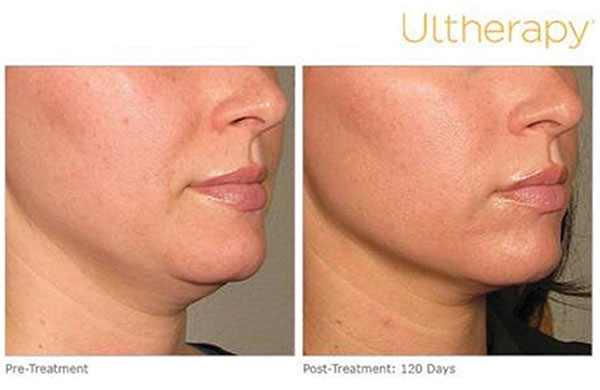
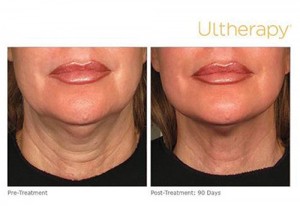
Are you tired of looking in the mirror and seeing sagging skin on your face, neck, decolletage (upper chest), even under your chin? Then you need to check out Ultherapy, the only FDA-cleared, non-surgical lift for the decolletage, neck, chin and brow! There’s no downtime either! One single in-office Ultherapy treatment uses ultrasound to stimulate the growth of new collagen to achieve a lift!
Laxity commonly first occurs on the forehead, which leads to brow descent, excess skin/hooding on the lids, a less open-eyed appearance. Cheek and neck tissue laxity can lead to flattening of the cheek, nasolabial folds, “marionette” lines; down-turned mouth, loss of jaw line angular “jowls,” and sagging skin under the chin.
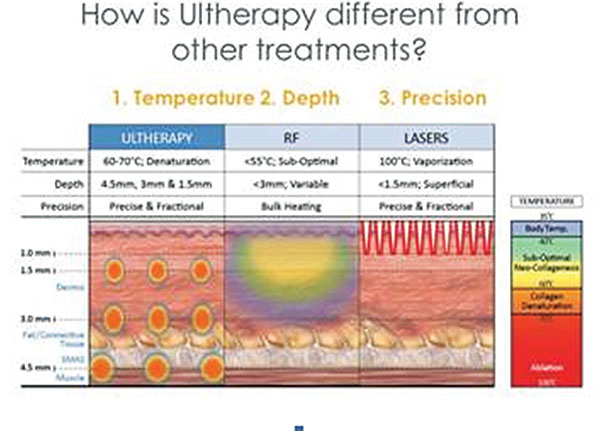
Ultherapy uses tried-and-true ultrasound to see, and then treat, the skin’s foundational layers—including what’s typically addressed in cosmetic surgery, but is not a face lift. It deposits focused energy that bypasses the surface of the skin to stimulate the body’s natural production of collagen and elastin. As a result, skin will actually begin to lift and tighten over time. Because Ultherapy is the only cosmetic procedure to use ultrasound imaging, practitioners can actually see—for the first time ever—the layers of tissue deep beneath the skin as they are treating.
Key Benefits of Ultherapy
• There’s no downtime
• It takes approximately 60 minutes
• It’s non-surgical
• Most people only need one treatment
Following are the answers to the most common and frequently asked questions about Ultherapy.
How Does Ultherapy Work?
Like other ultrasound procedures, a smooth applicator is placed on top of your skin—in this case to heat the tissue below the surface to naturally and gradually create new collagen. Natural-looking results build gradually over 2 to 3 months, and the collagen-building process can continue for up to 6 months (no one will know you had any work done; they will just notice that you look better with each passing day!). (See diagram)
How Many Treatments
Will I Need?
There have been good clinical results based upon just one treatment. Some people who have a fair amount of laxity may benefit from more than one treatment, but that can be discussed during your consult.
Does It Hurt?
A recent upgrade called “Ultherapy Amplify” now affords a more comfortable procedure. While comfort thresholds vary from patient to patient, most people now report that the procedure is quite tolerable. If and when any discomfort does occur, it happens while the ultrasound energy is being delivered. This is temporary and a positive signal that the collagen-building process has been initiated.
How Long Does
the Treatment Take?
Treatment time is based on your individual treatment protocol (e.g. partial vs. full face treatment), which will be discussed at your consultation.
How Soon Will I See Results?
There can be some lifting and tightening immediately following the treatment, but the full effect will build gradually over the course of two to three months. Most patients have seen results continue to build for up to six months.
Do I Have To Do Anything Special Afterwards?
You are able to return to your normal activities right away, and there are no special measures you need to take. Your skin may be a little red, but this disappears within a few hours.
How Long Do the Results Last?
You still have fresher, younger collagen after a year’s time, but your skin continues to age. We recommend that you see your doctor a year or so after the procedure to assess whether a ‘touch-up’ treatment may be helpful.
Can Anyone Have the Treatment?
A good candidate is someone with skin that has some laxity, to the point of looking, and often feeling, less firm. Both men and women can benefit from an Ultherapy treatment, and because Ultherapy bypasses the surface of the skin, patients of all skin colors can experience the treatment!
Is Ultherapy Safe?
Ultherapy has an excellent safety profile. Over 210,000 procedures have been conducted worldwide with no complaints
What Age Can a Person Start?
Most people opt for Ultherapy at the first signs of aging. This helps to slow the aging process down.
Dr. Edward J. Gindi, the owner and director of Laser Light MD, is a noted and esteemed pediatrician and allergist in the community,
who has been in practice for over 25 years. Both he and his well trained staff are certified Ultherapy and laser technicians.
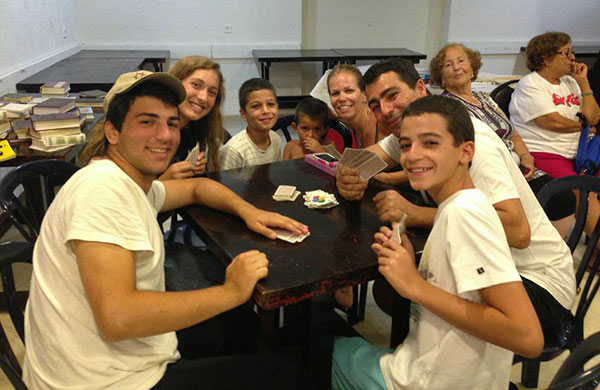
I anticipated my ILEAD trip to Israel for months—finally the day came. Upon our arrival, we immediately attended the funeral of the three Israeli teenagers that were found a day earlier—a very unexpected way to begin our trip. Two weeks into the trip, our head advisor, Shiloh Plesser, gathered the 40 members of my group together to emphasize the dangers that the country was facing. He explained that over 100 rockets were already fired in the South, and luckily for us, we were high up in the North, therefore clear from the danger.
A few nights later, while we were based at Rosh Hanikra, which borders Lebanon and the Mediterranean, a group of us gathered together to watch Germany play Argentina in the World Cup championship. Enthralled by the game, we were startled when we heard a knock at the door at 2 am, and then the piercing sound of a siren. The adrenaline rush that came over me was a sensation I had never experienced before. We hurried down the stairs, leaving everything behind, because in that moment, the only concern we had was for our lives. As I ran to the shelter, the siren grew even louder. I felt as if the rocket was coming straight toward me. We all arrived safely in the shelter, many of us disheveled and in disbelief. Typically unaffected, I had a flood of feelings come over me. Suddenly, the war became a shocking reality.
The next night, the siren went off around 11 pm. This time, we were all prepared for it, so the scramble for the shelters was a little more under control. We were all safe and sound, but had a clear understanding of what the Israelis go through every day.
This experience incited within us an idea—to bring families that were in bomb shelters all day—up North for a few days of relief and relaxation. Four groups were created. We named ourselves Kipat Tikvah (Dome of Hope). The first group handled raising money to fund our project. They did a phenomenal job—raising around forty-thousand dollars. The second group had to figure out who to bring, and how to get in contact with them. Being a part of that group, and being able to speak Hebrew fluently, I spoke to the municipals of Sderot, Ashkelon, Eshkol and Sde Avraham.
Each municipal linked me with the proper resources, and within the hour, families from Sde Abraham and Ashkelon were calling to speak with me. Eventually almost 50 families came up North and spent the weekend with us.


Our trip revolved around the war, and doing what we were able to do to help. We visited the family of an Ethiopian Jewish soldier who fell during the war, and went to the funeral of a soldier named Yuval. The unity of the Jewish people was something that I had never seen before. Families, who didn’t even know the fallen soldier, were not just tearing up, but crying, as if it were their own child.
The most difficult part of my trip was not our eight hour hikes, or the little sleep we received, but it was on Har Hertzel. As we listened to a lecture about the famous heroes that were buried there, like Yoni Netanyahu and Roi Klein, I witnessed grave diggers preparing a fresh grave. They knew a soldier would be killed, and started working in advance. At that moment, I prayed to Hashem that these men would find no need for that empty grave.
Our trip reached its end a few days early because our counselors were called up as reservists to protect their country—our country, a country with limitless strength, faith in Hashem and solidarity—that I was blessed to experience during the trip of a lifetime.

According to the National Eating Disorders Association, approximately a half million teenagers struggle with eating disorders or unhealthy eating patterns. The Archives of General Psychiatry states that nearly one in 60 adolescents qualifies for a diagnosis of anorexia, bulimia or binge eating disorder. Ninety percent of young women who develop an eating disorder are between 12 and 15 years old and one-half of 4th grade girls are on a diet.
Clearly, many young girls are in trouble with their eating, bodies, and self-esteem. Let’s explore: Why do girls develop eating disorders? What can parents do? When can professional help be beneficial?
Why Girls Develop Eating Disorders
Although many people believe that our culture’s worship of skinny models and actresses is responsible for causing eating disorders, this only has a limited influence. Comparing themselves to skinny models may contribute somewhat to girls feeling inadequate, but the truth is that girls are prone to eating problems when their basic self confidence is shaky and they feel insecure.
Adolescents—both girls and boys—face weighty emotional and social challenges at this stage of development: separating from their parents; finding a supportive group of friends; figuring out who they really are and what they want to do with their lives. These are critical and anxiety provoking transitions.
The New York Times article, “Why Teenagers Act Crazy,” explains that teens are uniquely vulnerable to anxiety because of the way their brains develop during adolescence. The part of the brain that will eventually help them develop calm reasoning matures only later, after a biological upsurge of anxiety and fear. Therefore, although teens are grown-up in some ways, they are still dependent on the comforting of their parents. Here is an example of how Mrs. H. helped her worried and upset daughter: “Yes, you do have a pimple on your nose, but I will put on a little makeup for you, and we will make it fade away. You believe that pimple is the only thing that people will see but it is so small compared to what a wonderful, lovely girl you are.” The girl with good self-esteem—let’s call her Rosie—will be comforted by her mother and will feel reassured (even if she huffs off to her room and slams the door).
A girl who is insecure, like Sharon, will not feel reassured but, instead, will continue to obsess about the pimple or another body part that doesn’t measure up to her standards.
How come Rosie can calm down and Sharon cannot? How come Rosie eats normally and Sharon is a binge eater? (All names are changed for confidentiality). The key is self-confidence.

What Parents Can Do To Build Self-Esteem
Teens turn to eating disorders as coping mechanisms, as “solutions” to deal with what makes them anxious. The key ingredient to prevent eating disorders is by building a child’s self-esteem. Parents and kids need to talk openly about feelings, problems, emotions, disagreements, and have everyone listen respectfully to the opinions of the other family members. In psychotherapy we call this type of supportive talking and listening “empathic attunement.”
Which Is an Example of Empathic Attunement?
Mrs. C: “You shouldn’t feel disappointed. When I was growing up, my parents never gave me half of what we give you.
Mrs. D: “I understand that you are feeling deprived and mad that we can’t afford to send you on that trip. I’m sorry. I know this is tough.”
Mr. A: “If your sister can lose weight, so can you. Just try harder.”
Mr. B: “I know you feel bad that your sister is losing weight, but everyone’s different. Why don’t we do something special on Shabbat and go for a walk together? Then we can have time to chat about how things are going for you.”
Mrs. E: “So your father and I yell and fight sometimes? I had it much worse than you with my parents. You’ll get over it. Don’t be so sensitive.”
Mrs. F: “I know it’s scary when Daddy and I fight. I wish we could talk about things more calmly. We are trying to work things out. Just know that we always love you even when we are having a hard time with each other.”
(Of course, the second example in each case is the right response.)
There are a host of reasons for childhood and adolescent eating disorders ranging from biological issues to psychological vulnerability to anxiety and depression. But parents can play a strong role in preventing eating disorders by “inoculating” their children’s self-esteem. When parents empathize with their children, kids feel understood. Talking and listening to a child’s feelings encourages her to express herself directly without the need for the soothing—but temporary—comfort of an eating disorder.
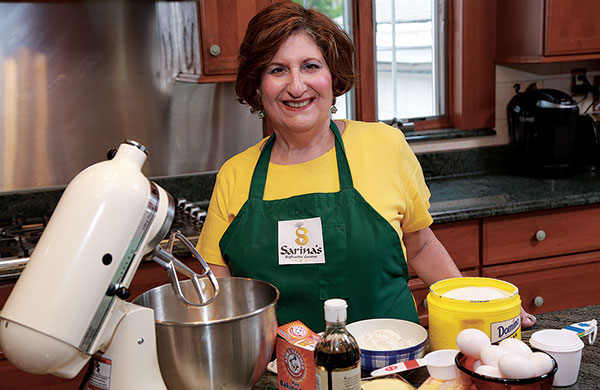
If you are like me, the weeks before the holiday are a hustle and bustle. Kids are back in school, and we have to shop for holiday and school clothes, Shabbat shoes and more. Like any cook, in the weeks before a holiday, I look for new ideas, something to breathe fresh air into the holiday and create new interest in the foods I prepare for family and guests.
Here are some new—and some old—recipes for Rosh Hashanah, that I would like to share with you. To honor the tradition of eating pomegranate on the holiday, try my Pomegranate Balsamic Glazed Chicken. It’s a delicious, healthy chicken dish. Honey Cake is a classic on this holiday. Honey is traditionally used to create sweet dishes in the hopes of a sweet year ahead. My Honey Cake is light and airy, while still very sweet.
I am also sharing two recipes for the brachot said by Sephardic Jews on this holiday. My leek patties are a take on egeh, and a different way to meet the brachot for leek. My grandmother’s Hilu, or candied squash, uses spaghetti squash for the bracha.
All of these recipes are included in my upcoming cookbook, which will be out at the end of the year and will include cooking tips, hundreds of new and many traditional recipes, entertaining tips, food preparation and several other sections.
The Sarina’s Sephardic Cuisine cooking app is available for iPhones and iPads and is receiving an update. It has over 200 recipes. Understanding that today’s cooks look for recipes with technology, and do not cook from cookbooks, the app is embedded with over 50 videos to help young cooks learn traditional recipes, in which we demonstrate how to make difficult recipes and provide viewers with important cooking tips. There are tricks to preparing many recipes and we share those in the videos.
Proudly, I am my mother’s daughter and the granddaughter of Esther Salem, the first caterer in the Syrian Jewish community in Bensonhurst. Esther’s older sister was the Egyptian Rose (Rose Misrie), who ran a restaurant of the same name on the Lower East Side, for new immigrants from the Middle East in the early 20th century. So the recipes in the app—as well as the cookbook—were handed down from mother to daughter for generations.
There are many ways to prepare the recipes we need for the brachot on Rosh Hashanah. You can prepare Lubya as vegetarian, with no meat. There is no right or wrong way to cook. There are Syrian, Moroccan, Persian and Lebanese varieties of the same or similar foods. Cooking is an adventure and with these ancient recipes, I hope you will renew the traditions of our Sephardic past.
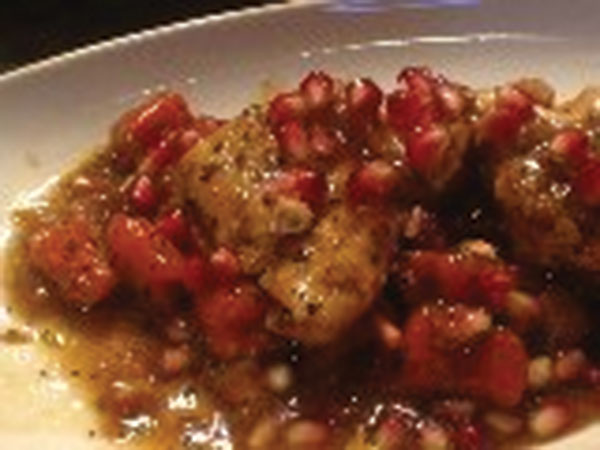
Pomegranate Balsamic
Glazed Chicken
This chicken recipe is easy and seasonal, and especially elegant and delicious. It’s a very different holiday main course, plus it incorporates pomegranate, typically eaten on Rosh Hashanah.
Ingredients
• 4 tablespoons oil
• 6 chicken cutlets, seasoned with salt, pepper and oregano
• 1 package baby carrots
• 2 small onions, peeled and sliced
• 1 cup chicken broth
• ¾ cup pomegranate juice
• ¼ cup balsamic vinegar
• 2 teaspoons cornstarch
• 2 teaspoons brown sugar
• ½ teaspoon salt
• ¹/³ cup pomegranate seeds
• 1 teaspoon basil
• ¼ teaspoon oregano
Directions
Heat oil in skillet. Add cutlets, onions and carrots. Brown cutlets 5-6 minutes on each side until tender and cooked through. Remove chicken from pan.
Add chicken broth to deglaze skillet. Add chicken back to skillet and simmer 15 minutes, covered. Remove chicken and vegetables and place on serving platter. Reserve ¹/³ cup cooking liquid.
Add cooking liquid to skillet and stir in pomegranate juice, vinegar, brown sugar, salt, oregano, basil and cornstarch. Reserve a few pomegranate seeds for garnish and add the rest to the skillet. Bring to a boil over medium heat and simmer 3-4 minutes. Drizzle the sauce over the chicken. Garnish with seeds.

Classic Honey Cake
Ingredients
• 3 eggs
• 1 ¹/³ cup honey
• 1½ cup sugar
• 1 cup strong black coffee
• 2 teaspoons baking powder
• 3 tablespoons margarine
• 1 teaspoon baking soda
• 4 cups flour
• 1 teaspoon cinnamon
• 2 cups confectioners sugar
• 2 teaspoons orange juice
• 2 teaspoons orange zest
Directions
Preheat oven to 350˚. Grease 9 x 13 inch cake pan or bundt pan by spraying with cooking spray and coating with flour.
In mixing bowl of mixer, beat eggs and honey together. Add sugar and mix again. Mix coffee with baking powder. Add to egg mixture with margarine and mix again.
Sift baking soda, flour and cinnamon together. The sifting lightens the cake. Add slowly to egg mixture, beating well after each addition.
Pour into baking pan and bake one hour or until toothpick comes out clean. Cool completely and turn onto serving plate.
Mix orange juice with confectioners’ sugar and zest. You may need to add a few drops more orange juice. Do not add too much. You want a smooth consistency, not too loose. Pour onto honey cake and allow to drizzle over sides.
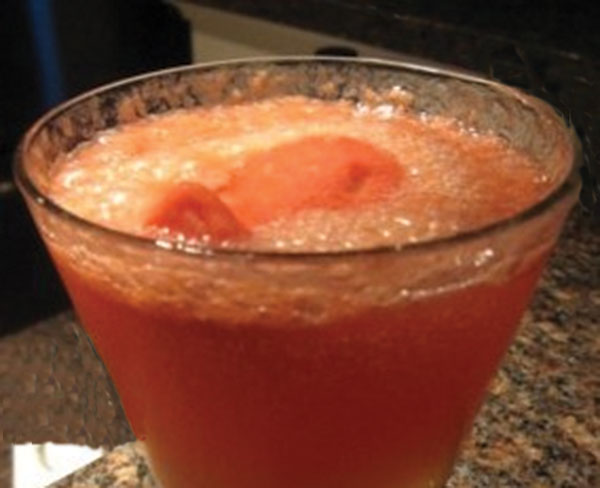
Pomegranate Strawberry Cocktail with Sorbet (Virgin)
Ingredients
• 2 cups pomegranate juice
• 2 cups strawberries
• 2 peaches
• 5 tablespoons honey
• 30 large mint leaves, plus more for garnish
• 1 cup ice
• Sorbet of your choice
• Seltzer
Directions
Pour juice, strawberries, peaches, ice, honey and mint into food processor. Puree and refrigerate until ready to serve.
Pour into wine glasses and fill half way. Add a scoop of sorbet. Fill glass with seltzer. This adds fizz. Garnish with mint leaf.
Candied Spaghetti Squash or Halu
Ingredients
1 spaghetti squash
Syrup
3 cups sugar
1 cup water
1 small lemon, squeezed
Dash of salt
Directions
Spray cookie sheet with cooking spray. Cut spaghetti squash in half. Scoop out seeds and place open side down on baking sheet. Bake one hour in preheated 350˚oven.
Mix the sugar, water, lemon and salt in saucepan and simmer on low flame until thick.
Scoop out the squash with a fork tine, so that it is like spaghetti. Squeeze out all the liquid. Add squash and mix. Store in a jar in refrigerator.
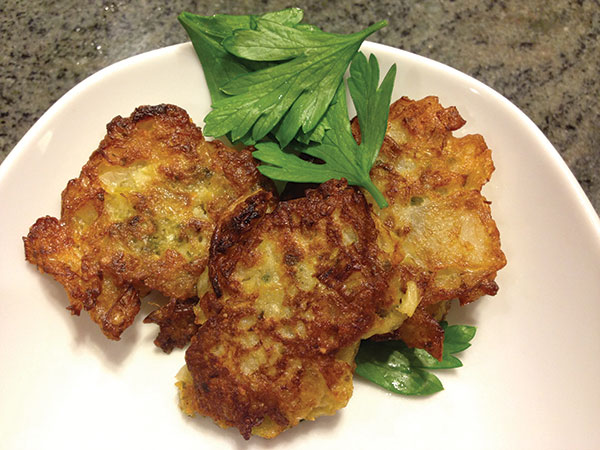
Leek Patties
We eat leeks at Rosh Hashanah to protect us from our enemies. These mini patties are perfect for the brachot before the meal.
Ingredients
• 3 Leeks
• 3 tablespoons oil
• 1 chopped onion
• 2 eggs
• 2 tablespoons matzo meal
• 1 tablespoon salt
• ½ teaspoon pepper
• Oil for frying
Directions
Cut off ends of leek and peel off hard outer shell. Slice the long way to quarter the leek and then slice. Soak and clean leek in cold water. Drain.
Heat oil in saucepan and sauté onion and chopped leek for 5 minutes. Cover with water. Bring to a boil and simmer 30 minutes. Pour into colander to drain and cool. Squeeze out all excess water (by taking handfuls at a time).
In bowl, mix leeks, eggs, matzo meal, salt and pepper.
In skillet, heat oil and drop by spoonfuls into oil. Brown on both sides. Drain on paper towels. Can be frozen at this point. Serve warm.
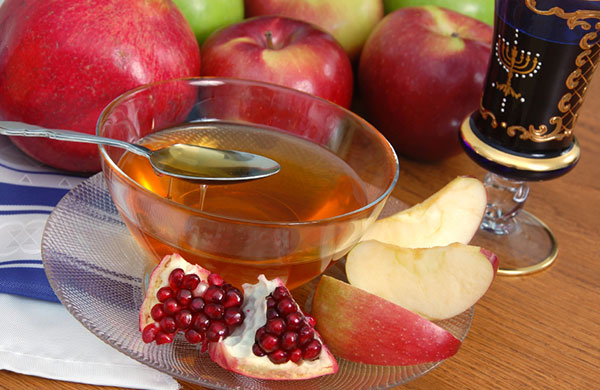
On Rosh Hashanah it is traditional to eat symbolic foods that either taste sweet or have names that sound similar to our hopes and prayers for the new year. On Rosh Hashanah, everything we do is imbued with extreme significance. The foods are not magical. Eating these foods is just a little reminder to G-d of our desire and hopes for a happy and blessed new year.
The foods are: apples dipped in honey, leek, black-eyed peas, dates, gourds, pomegranate, head or tongue of cow or fish head and swiss chard.
Circular challahs represent the unending cycle of life and the round bread looks like a royal crown, a reminder of the coronation of G-d as king.
These round challahs are customary on Rosh Hashanah and often raisins are added to sweeten the taste.
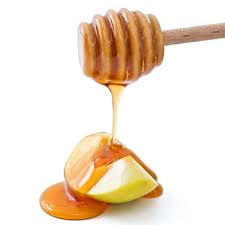
Apples Dipped in Honey
One of the primary reasons why we use an apple is because of its sweetness. Coupled with the added sweetness of the honey, it is symbolic of the ultra-sweet year we hope G‑d will grant us.
There are many other sweet fruits, like peaches and mangos. The apple was specifically chosen because it symbolizes the Garden of Eden, which according to the Midrash has the scent of an apple orchard.

Swiss Chard
The Arabic word silleq means to remove or throw out. Syrian Jews usually eat Swiss chard in hope that G-d will remove enemies from their midst.
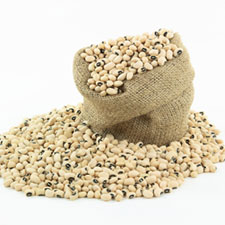
Black-Eyed Peas
Sephardim eat black-eyed peas for good luck in the new year.
Head, Fish Head or Tongue
Rosh Hashanah literally means “head of the year” in Hebrew. For this reason in some communities it is traditional to eat the head of a fish, head of cow or tongue during the Rosh Hashanah holiday meal. Fish is also eaten because it is an ancient symbol of fertility and abundance, they never sleep and they swim in water. We hope the year will be one of plenty, just as fish are extremely fruitful. Just as fish never sleep, we hope to maintain a constant awareness of our mission in life and to remain cognizant of G-d’s expectations at all times.
Gourds
The Hebrew word for gourd is k’rah, which means proclaim, as in “May our merits be proclaimed before G-d.” K’rah also means “rip up” as in “May harsh decrees be torn up.”
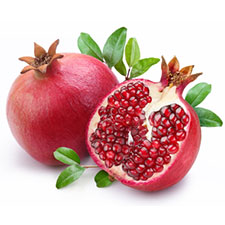
Pomegranates
Pomegranates often serve as the “new fruit,” a fruit not yet eaten this season. There are two reasons why the pomegranate is used as the new fruit. The Land of Israel is praised for its pomegranates in the Bible and because pomegranates supposedly contain 613 seeds. Thus, we display the desire to fulfill G-d’s 613 mitzvot by eating the pomegranate.
Leeks
These vegetables are known as karsi, related to the word karet, to cut off or destroy. By eating leeks we are asking, “May it be your will Eternal G-d that our enemies will be cut off.”
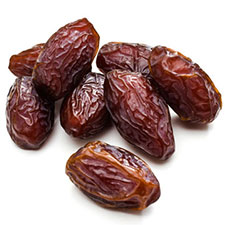
Dates
Dates are known as tamri, meaning consume or finish. This food is similar to the leeks in that it is eaten with the intent that all enemies will end their wrath.
In the year that we are now parting with, 5774, it became dangerous once again to be a Jew. Israel, subject to sustained missile attack, discovered how hard it is to fight an asymmetric war against a terrorist group ruthless enough to place rocket launchers beside schools, hospitals and mosques. It found itself condemned by large sections of the world for performing the first duty of any state, namely to protect its citizens from danger and death.
Anti-Semitism returned to the streets of Europe. One hundred and twenty years after the Dreyfus trial, the cry “Death to the Jews” was heard again in Paris. Seventy years after the Holocaust, the call of “Jews to the gas” was heard in the streets of Germany. There were times when it felt as if the ghost of a past we thought long dead had risen to haunt us. More times than was comfortable I heard Jews say, “For the first time in my life I feel afraid.”
Let us stay with those fears and confront them directly. We are not back in the 1930s. To the contrary, for the first time in the almost four thousand years of Jewish history, we have simultaneously independence and sovereignty in the land and state of Israel, and freedom and equality in the Diaspora. Israel is strong, extraordinarily so. The success of the Iron Dome missile defense was the latest in an astonishing line of technological advances — not just military but also agricultural, medical and commercial — designed to protect, save and enhance life.
Israel has lived with the disdain of the world for a very long time. Even the most lukewarm among us knows that it is infinitely preferable to have a state of Israel and the condemnation of the world than no Israel, no Jewish home, and have the sympathy of the world.
The unity Israel showed during the Gaza conflict was deeply moving. It reminded us that in a profound existential sense we remain one people. Whether or not we share a covenant of faith, we share a covenant of fate. That is a good state to be in as we face the Yamim Noraim, when we stand before God not just as individuals but as a people.
As for anti-Semitism, rarely has it been more self-evident that the hate that starts with Jews never ends with Jews. The most significant enemies of the Jews today are the enemies of freedom everywhere. Worldwide we may feel uncomfortable, anxious. But there are parts of the world where Christians are being butchered, beheaded, driven from their homes and living in terror.
As for Muslims, one prominent academic recently estimated that of the hundreds dying daily, at least 90 per cent were doing so at the hands of their fellow Muslims. Bahai are at risk. So are the Yazidis. So in other parts of the world are Buddhists, Hindus, Sikhs, and for that matter atheists. No historian looking back on our time will be tempted to call it the age of tolerance.
Which brings us back to the Yamim Noraim. There is a note of universality to the prayers on Rosh Hashanah and Yom Kippur that we do not find on other festivals. On other festivals the key section of the Amidah begins, Atah bechartanu mikol ha-amim, “You chose us from among all the nations.” The emphasis is on Jewish singularity. On the Yamim Noraim the parallel prayer begins, “And so place the fear of Lord our God, over all that You have made… so that all of creation will worship You.” The emphasis is on human solidarity. And human solidarity is what the world needs right now.
One message resonates through these days: life. “Remember us for life, King who delights in life, and write us in the book of life for your sake, God of life.” We sometimes forget how radical this was when Judaism first entered the world. Egypt of the Pharaohs was obsessed with death. Life is full of suffering and pain. Death is where we join the gods. The great pyramids and temples were homages to death.
Anthropologists and social psychologists still argue today that the reason religion exists is because of people’s fear of death. Which makes it all the more remarkable that – despite our total and profound belief in olam haba and techiyat ha-metim, life after death and the resurrection of the dead – there is almost nothing of this in most of the books of the Bible. It is an astonishing phenomenon. All of Kohelet’s cynicism and Job’s railing against injustice could have been answered in one sentence: “There is life after death.” Yet neither book explicitly says so.
To the contrary, King David said in a psalm we say daily: “What gain would there be if I died and went down to the grave? Can dust thank you? Can it declare your truth?”
Almost at the end of his life Moses turned to the next generation and said to them: “Choose life, so that you and your children may live.” We take this for granted, forgetting how relatively rare in the history of religion this is.
Why so? Why, if we believe the soul is immortal, that there is life after death and that this world is not all there is, do we not say so more often and more loudly? Because since civilization began, heaven has too often been used as an excuse for injustice and violence down here on earth. What evil can you not commit if you believe you will be rewarded for it in the world to come? That is the logic of the terrorist and the suicide bomber. It is the logic of those who burned “heretics” at the stake in order, so they said, to save their immortal souls.
Against this horrific mindset the whole of Judaism is a protest. Justice and compassion have to be fought for in this life not the next. Judaism is not directed to fear of death. It is directed to a far more dangerous fear: fear of life with all its pain and disappointment and unpredictability. It is fear of life, not fear of death, that have led people to create totalitarian states and fundamentalist religions. Fear of life is ultimately fear of freedom. That is why fear of life takes the form of an assault against freedom.
Against that fear we say from the beginning of Ellul to Sukkot that monumental psalm of David: “The Lord is my light and my salvation. Whom then shall I fear? The Lord is the stronghold of my life. Of whom then shall I be afraid?” On Rosh Hashanah we blow the shofar, the one mitzvah we fulfill by the breath of life itself without needing any words. On the first day of Rosh Hashanah, the “anniversary of creation,” we read in the Torah and haftorah not about the birth of the universe but about the birth of Isaac to Sarah and Samuel to Hannah as if to say, one life is like a universe. One child is enough to show how vulnerable life is – a miracle to be protected and cherished. On Yom Kippur we wear the kittel, a shroud, as if to show that we are not afraid of death.
Never before have I felt so strongly that the world needs us to live this message, the message of the Torah that life is holy, that death defiles, and that terror in the name of God is a desecration of the name of God.
The state of Israel is the collective affirmation of the Jewish people, a mere three years after emerging from the valley of the shadow of death, that Lo amut ki echyeh, “I will not die but live.” Israel chose life. Its enemies chose the way of death. They even boasted, as did Osama bin Laden, that the love of death made them strong. It did not make them strong. It made them violent. Aggression is not strength; it is a profound self-consciousness of weakness. And the main victims of Islamist violence are Muslims. Hate destroys the hater.
Today it is not just Israel or Jews whose freedom is at risk. It is the whole of the Middle East, large parts of Africa and Asia, and much of Europe. Therefore let us approach the New Year with a real sense of human solidarity. Let us show, by the way we celebrate our faith, that God is to be found in life. The love of God is love of life. Let us take to heart King David’s insistence that faith is stronger than fear. No empire ever defeated the Jewish people, and no force ever will. May God write us, our families, the people and State of Israel and Jews throughout the world, in the book of life. And may the day come when the righteous of all nations work together for the sake of freedom, peace and life.
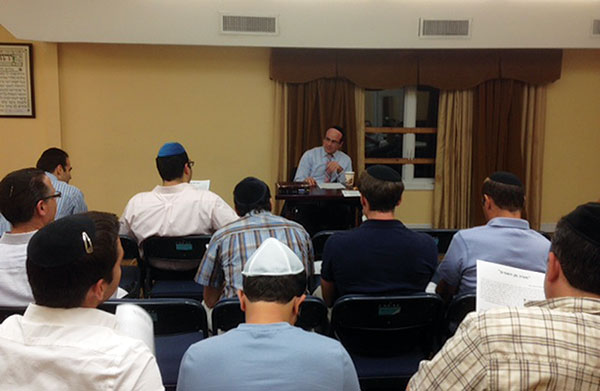
With many men home alone in Brooklyn in the summertime, or just enjoying a more relaxing schedule, Congregation Shaare Shalom introduced The Home Alone Summer Series with newly appointed Rabbi Avi Harari. The weekly series has been a wonderful opportunity for the congregants to get to know the Rabbi, while enjoying a delicious dinner and class. With a different topic every week, Rabbi Harari has captivated the attendees with its diversity. The simple concept has kept the Shaare Shalom congregation close during the summer months.
“I immediately felt comfortable in the warm atmosphere of Shaare Shalom. It is a kahal (congregation) that has grown so much under Rabbi Joseph Dweck, and I hope to continue it forward in all aspects of growth and avodat Hashem (service of G-d),” said Rabbi Harari.
Born in Brooklyn, Rabbi Harari studied several years in yeshivot in Israel and at Yeshivah University, and currently teaches Tanakh (Torah) and Talmud at the Yeshivah of Flatbush High School. He and his wife have three children—two boys and a baby girl.
![securedownload[1]](http://imageusa.com/wp-content/uploads/2014/09/securedownload1.jpg)
“The Rabbi’s smooth and effortless delivery translates to an easy explanation of the topic discussed, making his classes so enjoyable,” said Joey Shomer.
Moshe Hazbany added, “The weekly Monday night class at Shaare Shalom has allowed those spending most of the summer in Deal to stay connected to our shul and committing time to learning Torah. Over the course of the summer, I had an opportunity to bond with my fellow congregants through Rabbi Harari’s thought-provoking and insightful shiurim (classes). This program offers only a glimpse of what lies ahead in Shaare Shalom’s exciting future.”
“Monday night is the night of the week when many men, who spend most of the summer with their families in Deal, spend the night alone in Brooklyn. Providing them with a ready dinner and a class is an obvious draw,” said Rabbi Harari, adding, “A few years ago, I ran a similar set of classes during the summer at Magen David of New York, and judging by its success, I knew it would work at Shaare Shalom as well.” The topics of the classes range from Torah and Livelihood to The True Meaning of the Kaddish.
“Rabbi Avi Harari has captivated all that have attended his class. He has been excellent in engaging his audience. His topics are well presented with subjects that are pertinent to today. The dinners offered before the classes have been great and have given our congregants an opportunity to mingle,” said Salomon Cohen.
“Although this class was intended for the ‘home alone’ men, a good 50% of the attendees were men that don’t go away. It’s really very exciting what’s happening here. We plan to expand on these types of programs in the coming year,” said Moses Maya.
Please visit the Congregation Shaare Shalom website at shaareshalom.com to learn more about the fall class schedule.

Steve Jobs’ words have been the guiding principle behind the work of a freelance committee dedicated to helping change the worlds of individuals in our community every single day. With the youngest member only 16 years old and the oldest 26, these individuals have devoted so much time and energy to giving back to the community.
It is no surprise that they found themselves at the helm of another spectacular and successful summer, netting over $200,000 for the Sephardic Food Fund and uniting thousands of our community members for the same cause.
The SFF summer began with their 2nd Annual Shootout event, graciously hosted by Esther and Joey Jerome. The day saw over 450 participants competing in various sports, including basketball, soccer, tennis, and volleyball, with over 1,000 spectators showing their support. The BBQ was absolutely mouth watering, and the Chinese Auction was a huge hit! At an awards ceremony, trophies and iHomes were given to all of the winners.


It was a spectacular morning of color and fun as participants ran through the streets of Long Branch. Runners of all ages were covered in blue, pink, green and orange paint. Some even rolled in the paint-filled street to cover every inch of their bodies.
With Joe Betesh at the DJ stand, the final throw of paint came with a countdown to the drop to the song Colors. One thousand paint packets met the clouds, creating an artsy and symbolic notion of many individuals joining together to become one communal family.
We would like to thank everyone for their continued support of the SFF and for their support of our soldiers in Israel, who received some proceeds from the event.
A special thank you to our selfless sponsors, our gracious hosts, and our awesome volunteers! Special thanks to our photographer Morris Anteby, DJ Joe Betesh, Stormins Sports, Bobby Morabia, Stacey Gindi, Vicki Hoffstein, Edlo Sorcher, Prime Cut, Ray T. and the entire SFF family.
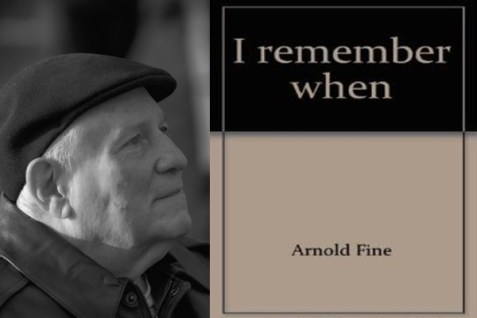
Arnold Fine, a beloved fixture at The Jewish Press for more than half a century, passed away in his sleep at his home in Battery Park City, Manhattan, on Friday, September 5, at age 90.
Fine’s association with the late founder of The Jewish Press, Rabbi Sholom Klass, began before The Jewish Press was launched when Fine worked for The Brooklyn Daily and Brooklyn Weekly, both published by Rabbi Klass.
In the mid-1960s Fine started writing a weekly Jewish Press column called “I Remember When” (an exclamation point would eventually be added to the title). The column, which brought to life the sights, sounds, and smells of New York City in the 1930s and ‘40s, quickly became one of the paper’s most popular features and to this day has continued to enchant readers of all ages.
The paper will continue to publish the column, said associate publisher Naomi Klass Mauer.
“The subjects Arnie wrote about are timeless and new generations have always taken to the column’s warmth and nostalgia,” she said. “His writings will live on even though he is no longer with us.”
Fine’s writing spoke to generations of readers, both Jewish and non-Jewish. Several of his articles appeared in the Chicken Soup for the Soul series of inspirational short stories; his article “The Letter in the Wallet” appeared in Reader’s Digest and has been reprinted in numerous anthologies and appeared on countless websites and blogs (sometimes under the shorter title “The Wallet”).
In addition to his work at The Jewish Press, where he eventually served as senior editor, Fine was a photographer, a musician, and an educator.
An armed forces veteran, he had the distinction of being in both the Navy and the Army. He joined the Navy at the end of World War II and then found himself drafted by the Army a few weeks later.
After the war he roamed New York City as a press photographer with a 4×5 camera shooting for local newspapers. Looking to get ahead in the newspaper business, he went to college and earned a bachelor’s degree thanks to the GI Bill.
Later on, after going back to college for a master’s in education, he became a celebrated special education teacher in the New York City school system. He was a pioneer in teaching brain-injured children and was loved by his students and their parents.
A natural musician, he played the clarinet, saxophone, and piano and loved the old big bands and their music.
Late in life he developed Parkinson’s disease but was still able to get around with the aid of a wheelchair. He was a frequent sight in Battery Park City where he could occasionally be spotted with the family poodle, Lisette, sitting on his lap as he wheeled down the Esplanade.
A loving husband, father, grandfather, and great-grandfather, he was predeceased by his wife, Edith, who passed away in 2006. He is survived by three children, Jay (spouse Cindy), Brian (spouse Dina), and Martin (spouse Janet); six grandchildren, Eric (spouse Cece), Daniel (spouse Tara), Joan, Sarah, Max, and Adam; and two great-grandchildren, Ella and Eve.
Interment was at New Montefiore Jewish Cemetery in West Babylon, New York.
Mitzvah Man Auction 2014
Do you ever think about why we are here, on this earth? Ask your friends; I bet at least one of them answers, “To give,” though others may not. That was the Mitzvah Man’s answer, when he began to think about his purpose, years ago, before this organization ever existed. We function daily, we work, we keep our houses tidy and running, we go from day to day dealing with problems of all shapes and sizes. We rest, we celebrate, we mourn, and the circle of life continues. Through it all, we create bonds. I believe the way we do that is through giving.
When the Mitzvah Man founder heard about a family living in their car, he was floored. “It was just heart wrenching for me,” he explained. “Imagine a couple and their two children sleeping, eating and functioning out of the small space we squirm in if we have to go more than an hour away? You really can’t understand the depth of these people’s pain and suffering until you see it with your own eyes.”
Baruch Hashem, the Mitzvah Man’s task force got to work. Through their volunteers and services this family was put up in a hotel for two weeks until better arrangements could be made. Finally, a kind-hearted soul from our community offered his home, rent-free for one year. Along with that came assorted large and small appliances. Soon clothing, footwear and many everyday needs began to arrive. This presented a much-needed opportunity for a struggling couple to grow and rise up. We are happy to report that six months later this family is back up on their feet, working and doing beautifully, thanks to the Mitzvah Man.
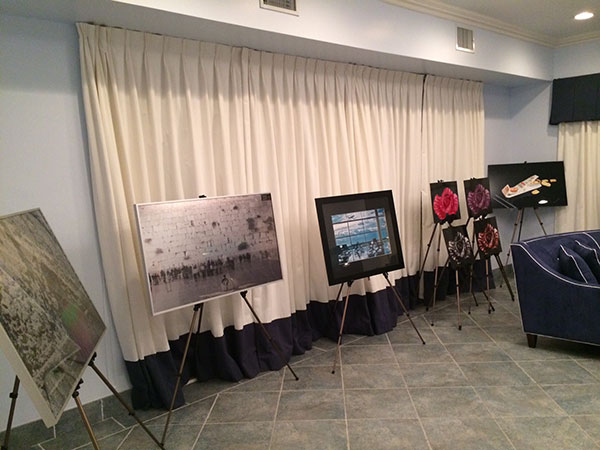
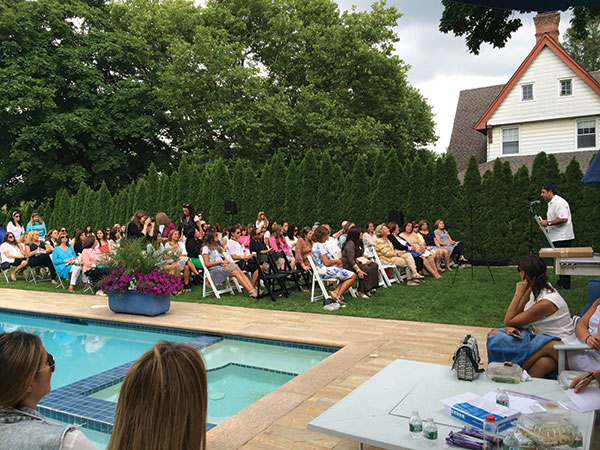
This year, the Mitzvah Man’s 4th Annual Chinese Auction took place at Maggie and David Bawabeh’s home. The outpouring of generosity was a testament to this beautiful family who truly exemplify hesed, and a cause that does its best to multiply it ten thousand fold. When the crowd arrived on Wednesday evening Michael Cohen, founder of the Mitzvah Man, opened his heart and shared the story of the beginning of this multifaceted organization. It started simply, with visits to the sick and kind favors to people in need during his spare time. Sometimes it was a ride to a doctor, a bulb that needed replacing, or assistance putting on tefilin in the morning. No job was too big or small, but quickly one soul in need became 10, 20 and 100. Fortunately, where there is need, there will be volunteers. This community is incredible, and this one-man show grew as quickly as the problems that needed tending. A force that started with one volunteer soon manifested itself into an army of over 1,900 soldiers, all giving of themselves to help anyone and everyone in need.
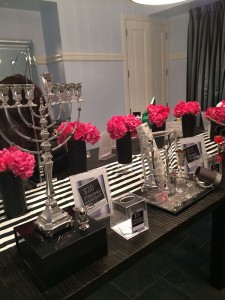
Today, reaching volunteers is easy. Texting, Facebook and Instagram can create hesed opportunities all around us, and there is truly something for everyone. This week three autistic teens volunteered to do hesed. Mitzvah Man explained, “Hesed is real, tangible and do-able. Everyone can help in their own way either monetarily, or through volunteering time, goods or services. Every day acts of kindness for those in need are diamonds for those who rely on the Mitzvah Man for assistance. It has been said that those who survived the sinking of the Titanic could not rely on the huge ship to rescue them—it was the little tiny rowboat that saved them in the end. Michael is carrying the oars, but he needs more people to row. A simple act of kindness goes beyond comprehension.
Another touching story occurred when a 95-year-old blind client had a volunteer visiting. The mitzvah girl realized that a woman like this, living alone was in grave danger should anything unexpected happen at home. She thought about it and decided that a voice activated, hands free telephone might keep this woman safe. It was a simple expense that was generously donated, but in the end, it literally saved her life.
This woman lives alone and has no family and no aid—nothing. When she woke up one evening with pains in her chest, she yelled into her phone, “Hatzalah!” Hatzalah came within minutes, and brought her straight to Maimonides Hospital. When Mitzvah Man was alerted, volunteers reached community contacts in the ER and set her up with the best doctors and care. The woman had in fact had a heart attack. As soon as she was released, a private ambulance was arranged, and volunteers were waiting at her doorstep to carry her up to her apartment. Baruch Hashem, she is doing wonderfully.
Each one of us has the potential to create our very own storybook of hesed. We all have it in us; we just have to let it out. Giving is an incredible feeling. It is amazing, uplifting and inspiring. Join the force and be a part of our team. For more info please visit our website atthemitzvah-man.org, or call our hotline 1(866) 355-1825.