When the air turns crisp and the days grow shorter, few things feel as comforting as a warm, hearty meal at the end of the day. The challenge is finding time to cook something satisfying when weeknights are already full. That is where one-pot recipes shine. With a single pot or Dutch oven, you can bring together flavors that taste like they simmered all day, without leaving a sink full of dishes behind.
These dishes are practical, cozy, and deeply rooted in the idea that cooking for your family should nourish body and soul without adding stress. The following four recipes highlight two classic soups and two filling main courses. They are designed to be simple enough for a weeknight, yet warm and rich enough to become seasonal favorites.
Hearty Lentil Soup (Serves 6) This soup is earthy, filling, and perfect for when you want something nutritious without fuss.
Ingredients
2 tbsps olive oil
1 large onion, diced
3 carrots, peeled and chopped
3 celery stalks, chopped
3 garlic cloves, minced
2 cups dried green or brown lentils, rinsed
1 can (14 oz) diced tomatoes
8 cups vegetable broth or water
1 tsp cumin
1 tsp paprika
Salt and pepper to taste
2 tbsps fresh parsley, chopped
Instructions
Heat the olive oil in a large soup pot over medium heat. Add onion, carrots, celery, and garlic. Cook for 6–8 minutes until softened.
Stir in lentils, tomatoes, broth, cumin, paprika, salt, and pepper. Bring to a boil.
Lower heat and simmer, partially covered, for 35–40 minutes until lentils are tender.
Taste and adjust seasoning. Stir in parsley before serving. This soup keeps well for several days and thickens as it sits, making it even more flavorful the next night.
Butternut Squash and Apple Soup (Serves 6) A sweeter option that balances autumn produce with warming spices. It is smooth and elegant enough for Shabbat dinner but easy enough for a weeknight. Ingredients
2 tbsps olive oil
1 medium onion, diced
2 pounds butternut squash, peeled and cubed
2 medium apples, peeled and chopped
4 cups vegetable broth
1 tsp ground cinnamon
½ tsp ground nutmeg
Salt and pepper to taste
Instructions
Heat oil in a large pot. Add onion and cook until golden, about 5 minutes.
Add squash and apples. Stir to coat with oil.
Pour in broth and bring to a boil. Reduce heat and simmer for 25–30 minutes until squash is tender.
Use an immersion blender to puree until smooth. Stir in cinnamon, nutmeg, salt, and pepper.
This soup can be prepared in advance and reheated gently. It pairs beautifully with a slice of challah.
Chicken and Barley Stew (Serves 6–8) This dish is a hearty one-pot meal that has the comfort of a long-simmered stew but cooks in a fraction of the time. Ingredients
2 tbsps olive oil
1 large onion, chopped
3 carrots, chopped
2 parsnips, chopped
3 garlic cloves, minced
2 pounds bone-in chicken thighs, skin removed
1 cup pearl barley, rinsed
8 cups chicken broth
1 bay leaf
1 tsp thyme
Salt and pepper to taste
Fresh dill for garnish
Instructions
Heat oil in a Dutch oven over medium-high heat. Add onion, carrots, parsnips, and garlic. Cook until softened, about 6 minutes.
Push vegetables to the side and add chicken thighs. Brown lightly on both sides.
Add barley, broth, bay leaf, thyme, salt, and pepper. Bring to a boil, then reduce heat.
Cover and simmer for 50–60 minutes, until chicken is cooked through and barley is tender.
Remove bay leaf. Serve hot, garnished with dill. The barley adds a nutty texture that makes this dish filling on its own, no side dish required.
Beef and Root Vegetable Braise (Serves 6) This recipe delivers rich, comforting flavors with minimal effort. A slow simmer allows the beef and vegetables to melt together into a satisfying fall supper.
Ingredients
2 tbsps vegetable oil
2 pounds stewing beef, cut into large cubes
2 onions, sliced
3 carrots, peeled and cut into chunks
2 parsnips, peeled and cut into chunks
1 small turnip, peeled and cubed
4 garlic cloves, minced
2 tbsps tomato paste
4 cups beef broth
1 tsp rosemary
1 tsp thyme
Salt and pepper to taste
Instructions
Heat oil in a large heavy pot over medium-high heat. Brown the beef on all sides, working in batches if needed. Remove beef and set aside.
Add onions and garlic to the pot. Cook until fragrant, about 5 minutes.
Stir in tomato paste and cook another 2 minutes.
Return beef to the pot along with carrots, parsnips, and turnip. Pour in broth, rosemary, thyme, salt, and pepper.
Bring to a simmer. Cover and cook on low heat for 2–2½ hours, until beef is fork-tender. This braise tastes even better the next day, making it an excellent choice for preparing ahead. Fall weeknights rarely leave us with time to linger in the kitchen, but with the right recipes, you do not need hours to create something memorable. These one-pot wonders save time and dishes, while still offering the depth of flavor that makes a meal feel special. With a little chopping and one pot, you can have soup simmering on the stove or a stew gently bubbling away while you tend to everything else. When it is time to sit down together, you will have a warm, nourishing dinner that celebrates the best of the season.
Everywhere we turn, it’s protein this, protein that. Smoothies boast extra protein, bars scream “20 grams!”, and even cereals are fortified with it. Yet beneath all the hype, real questions remain. How much do we actually need? Is there such a thing as too much? And what if you don’t even like protein foods?
As a dietitian specializing in eating disorders, I believe protein shouldn’t become another food rule to obsess over. It should instead be understood as one part of a balanced picture, one that supports not just your body, but also your mood, appetite, and relationship with food.
What Protein Actually Does Protein is far more than a muscle builder. It repairs and maintains every cell in the body, from skin and hair to hormones and enzymes. It supports immunity, helps regulate appetite and blood sugar, and prevents sharp highs and lows. It also supports mental health by providing amino acids that become neurotransmitters like serotonin and dopamine.
How Much Protein Do We Really Need? For most adults, about 0.8–1 gram per kilogram of body weight, or roughly 0.36–0.45 grams per pound, is enough. Active adults, older adults, or those on weight loss medications (like GLP-1s) may benefit from 1.2–1.6 g/kg to help preserve muscle mass and manage satiety. The body can handle moderate extra protein, but chronic excess, such as multiple scoops of powders on top of a high-protein diet, is not magic. It will not double your strength and can crowd out other important foods like fruits, veggies, and whole grains.
Choosing the Right Protein Animal sources such as chicken, turkey, fish, eggs, and dairy are complete and easily absorbed. Plant based options like beans, lentils, tofu, tempeh, edamame, nuts, and seeds bring fiber, minerals, and variety. They do not have to be combined in one perfect dish, since your body balances them across the day. What matters most is how these foods make you feel, whether they give steady energy, help with focus, or leave you sluggish. Your experience matters as much as the nutrition facts. What If You Don’t Like Protein Foods? Not everyone loves eggs or steak, and that’s okay. Cottage cheese or Greek yogurt can blend into smoothies. Lentils can disappear into soups or sauces. Roasted chickpeas or edamame make satisfying crunchy snacks.
Protein Through the Lens of Exercise and Age Exercise increases demand, and protein helps muscles recover and adapt. Spreading intake throughout the day is better than loading up at dinner. Age shifts the picture. Muscle naturally declines, so after 30 years old, protein becomes more protective against weakness and frailty.
Protein’s Influence on Mood, Appetite, and Binges Adequate protein provides building blocks for healthy brain chemistry. Skipping it often leads to irritability or fatigue. Consistent protein helps stabilize blood sugar and reduces the roller coaster of hunger and cravings. Balanced protein can also decrease the extremes of hunger that often drive overeating.
Pairing Protein for Balance Protein works best in combination. Pair it with fiber rich carbs like fruits, vegetables, and whole grains for lasting fullness and energy, and add healthy fats such as avocado, nuts, or olive oil to support hormones and brain health. This trio: protein, carbs, and fat, is the true recipe for satiety and balance. But What If You Only Like Carbs? This is common, especially if protein is not naturally appealing or if carbs have always been your comfort zone. Try adding protein alongside your favorite carb, like toast with eggs, pasta with chicken, or crackers with cheese. Just as coffee or dark chocolate are acquired tastes, many protein rich foods can be too. Over time, your body connects them with steady energy and fewer crashes, and you may even start to crave them. Building these pairings step by step helps your body and brain relearn trust in food without restriction, just gentle experimentation.
Balance Over Perfection Protein is essential, but it is not a magic bullet. Too little leaves you tired, too much can crowd out balance, but the sweet spot supports energy, mood, and stability. The real goal is not chasing a number, but creating meals that nourish your body and mind. Pair protein with foods you enjoy, listen to your body’s signals, and remember that balance always wins over extremes.
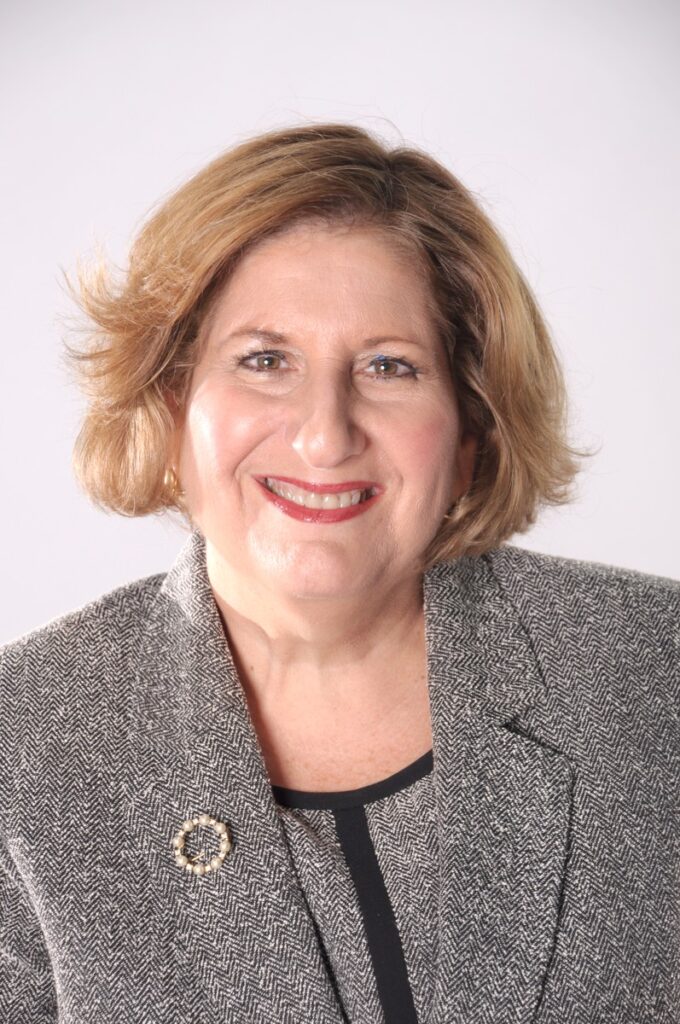
Laura Shammah, MS, RDN, specializes in eating disorders and works with a wide range of clients, including those managing PCOS, infertility, hypertension, high cholesterol, Crohn’s disease, diabetes, and cancer. She also supports clients training for marathons, women who are pregnant, and individuals seeking to lose or gain weight in a healthy way.
Think of your body as a high-powered device. Just like your phone needs a charger, your cells rely on something to keep them going. That “charger” is a molecule called NAD, and without it, the body’s energy supply quickly falters. Researchers are fascinated by NAD because its levels decline as we get older, and that drop may play a role in fatigue, slower metabolism, and the body’s ability to repair itself.
This is where the conversation about longevity comes in. While no one has discovered the secret to living forever, scientists are exploring how supporting NAD could help us live healthier for longer. The buzz around it can feel overwhelming, but the science, while still young, is pointing toward some promising ideas. NAD, short for nicotinamide adenine dinucleotide, is found in every cell of your body. It helps turn food into usable energy and acts as a kind of traffic director for countless reactions that keep you alive. It plays a key role in metabolism, DNA repair, and communication between cells. If you picture your body as a city, NAD is the power grid and the maintenance crew rolled into one. Without enough of it, the system begins to slow down, and that’s part of why scientists suspect it may influence how we age. Animal studies have shown that higher NAD levels are linked to improved energy, stronger endurance, and even better repair of DNA damage, which is one of the drivers of aging. Some early human research is also encouraging. Small trials suggest that boosting NAD might improve insulin sensitivity, reduce inflammation, and support healthier blood sugar levels. Still, it is important to keep perspective. Much of this work is in its earliest stages, and we don’t yet know if NAD therapies can actually extend human lifespan. What we do know is that it plays a central role in health, which makes it a promising area of study. With so much attention, it’s no surprise that supplements aimed at raising NAD have become popular. The two main ones are NMN (nicotinamide mononucleotide) and NR (nicotinamide riboside), both of which are forms of vitamin B3. They are sold in capsules or powders, marketed as ways to “boost NAD naturally.” So far, they appear safe in short-term studies, but questions remain about long-term effects. Supplements are not strictly regulated, which means quality can vary, and prices can be high. For anyone considering them, it’s wise to consult a doctor, especially if you already take other medications or have health concerns. The good news is that you don’t need to buy a pill to support your NAD levels. Your everyday choices have a big impact, and they come with no side effects and almost no cost. Regular exercise is one of the most powerful ways to keep NAD pathways active. Even brisk walking or cycling a few times a week makes a difference. Sleep is another critical factor, since the body replenishes and repairs itself at night. Eating patterns matter too. Intermittent fasting and balanced diets rich in whole foods appear to encourage healthier NAD activity. Foods that contain natural sources of B vitamins, such as leafy greens, fish, eggs, and whole grains, also provide the building blocks your body uses to make NAD. Taken together, these habits not only support this molecule but also strengthen nearly every part of your health. Longevity is about more than how many years we get. It’s about the quality of those years, what scientists call healthspan. While the idea of boosting NAD with supplements is intriguing, it should not distract from the fundamentals of living well. Moving your body, resting deeply, and eating thoughtfully will always matter more than any capsule. In Jewish tradition, there is a concept called shmirat haguf, caring for the body as a sacred responsibility. It’s a reminder that each day of life is valuable, and maintaining our health allows us to live fully in the time we are given. The science of NAD is still unfolding, and it may one day offer tools that transform how we age. For now, what’s within reach are the choices we make every day. Think of them as simple ways to keep your body’s battery charged: walk more, sleep better, eat real food, and embrace the rhythm of caring for yourself. The promise of longevity may not lie in a bottle, but in how we choose to live right now.
In our age of self-promotion and personal branding, humility can appear outdated—almost a weakness. We expect modern leaders to be confident, decisive, even forceful. Yet we also sense that these traits often hide insecurity rather than reveal true strength. Judaism and modern psychology both show why humility is the real key to confidence, leadership, and happiness.
The Torah presents a strikingly different model. It praises Moses—the greatest and most brilliant of Jewish leaders—not for his power, but for his humility. The Talmud describes his humility as total, so much so that he saw himself as “nothing.” But how can this be? How can a leader embody immense authority and still view himself as nothing? Doesn’t humility mean self-doubt that undermines leadership? Conversely, doesn’t power negate humility altogether? Judaism offers a deeper understanding: humility is not weakness or self-negation, but strength rooted in self-awareness and clarity. This article, co-written by a rabbi and a psychologist, was itself an exercise in humility. Rabbis focus on sources and tradition; psychologists on lived experience and data. Only by combining perspectives—dialogue instead of dominance—could we begin to understand humility in its fullness. What follows blends classical Jewish teachings with modern psychology, showing how both converge on the same truth: humility is not the opposite of strength. It is the foundation of emotional health, effective leadership, and lasting happiness.
Arrogance Masks Insecurity Rabeinu Yona of Girona (c. 1200–1264), a leading medieval Spanish rabbi, ethicist, and Talmudist, best known for his classic work Gates of Repentance, taught that arrogance does not flow from greatness, but from deficiency. The human spirit is lofty; when it senses something missing, it strains under the weight of that gap. To cover the emptiness, a person asserts dominance over others who possess what he lacks. Arrogance, then, is not strength but fragility. The egomaniac does not mistreat others because he truly feels superior but because he fears he is inadequate. Wealth, beauty, influence, or intellect become shields to hide a gnawing void. But these shields never work. This insight explains why those who project the most dominance are often deeply insecure. Their arrogance is a desperate strategy to mask fear of being unloved or unworthy. Yet the mask cracks: external superiority cannot replace inner security. Modern psychology echoes this. Narcissists often appear supremely confident, demanding admiration and bristling with indignation. Yet research shows narcissism is tied to low self-esteem and vulnerability. The appearance of strength is often only a fragile defense. One CEO Dr. Rosmarin treated, seemed the epitome of toughness: decisive voice, commanding posture, uncompromising authority. But at home, his arrogance alienated his family until they gave him an ultimatum—therapy or separation. In therapy, his facade collapsed. For the first time, he admitted his lifelong fear of inadequacy. His arrogance, he realized, was not confidence but a coping mechanism. Centuries earlier, Rabeinu Yona captured this truth: arrogance is an attempt to cover insecurity. True humility, by contrast, grows out of emotional wholeness. The humble person does not need to dominate, because their worth is already secure.
Humility as Self-Assurance Without Entitlement Rabbi Naftali Tzvi Yehuda Berlin, (1816–1893), known as the Netziv, the Rosh Yeshiva of the famed a theological dimension Volozhin Yeshiva and a leading Torah commentator and halakhic authority of his time, defined humility in a counterintuitive way. A humble person does not belittle themselves or deny their gifts. They may recognize their greatness clearly. The difference is that they do not demand honor or privilege because of it. The Talmud offers proof. Rabbi Yosse once called himself humble, and the Talmud confirmed it. If humility meant a lack of self-awareness, such a statement would be contradictory; no one, let alone a great sage, could not accurately describe themselves as “humble” if humility means blindness to one’s own worth. Instead, humility means knowing one’s value without insisting on special treatment. Rabbi Berlin extended this idea further into the theological realm, noting that even G-d is described as humble. Obviously, this cannot mean a lack of self-awareness. It means that true greatness does not require recognition. Humility, therefore, is greatness without entitlement. This redefinition reframes humility as strength. The arrogant person asserts superiority to hide insecurity; the humble person leads forcefully without needing external validation. Moses could be both decisive and “the humblest of all people” because his self-assurance was rooted in wholeness. Psychology supports this. Research on authentic self-esteem shows that those whose self-worth is secure—not dependent on others’ approval—are more resilient, less defensive, and more open. Confidence rooted in stability makes humility possible. One of Dr. Rosmarin’s patients, a gifted young physician, feared being labeled arrogant. She downplayed her achievements and exhausted herself proving her humility. Over time, she learned that acknowledging her gifts was not arrogance but freedom. By accepting recognition without demanding it, she led with grace instead of fear. This is Rabbi Berlin’s insight: humility is not erasing oneself, but standing in greatness without entitlement.
Humility as the Source of Honor and Happiness Rabbi Avraham Yeshaya Karelitz (1878–1953), known as the Chazon Ish, a preeminent Torah scholar in Israel, took humility in another direction. He taught that character growth does not require erasing self-love. Human beings must love themselves, seek honor, and desire happiness. The real question is: what kind? True honor, Rabbi Karelitz said, lies in humility—the refusal to chase external accolades. True happiness lies in freeing oneself from the endless pursuit of status. This reframes humility not as self-denial but as redirection. Instead of building identity on wealth, beauty, or power, the humble person builds on goodness, kindness, and sensitivity. Unlike status, intrinsic goodness cannot be outdone. It lifts others instead of competing with them. Psychology confirms this. Self-determination theory shows that people who live by intrinsic values—growth, kindness, deep human connection—experience greater well-being than those chasing validation. Studies of self-transcendence also reveal that meaning beyond the self brings higher life satisfaction and resilience. One entrepreneur Dr. Rosmarin treated spent years chasing luxury and acclaim, yet felt perpetually empty. When he shifted toward mentoring and philanthropy, the emptiness faded. His honor came not from others’ applause, but from a life of substance. Rabbi Karelitz’s wisdom shines through: humility does not erase self-love, it refines it. By rooting worth in intrinsic goodness, a person gains honor that cannot be taken and happiness that cannot be shaken.
Moses A Paragon of Humility We can now understand how Moses embodied both greatness and humility. The teachings of Rabeinu Yona, Rabbi Berlin, and Rabbi Karelitz form a unified vision:
Arrogance is a mask for insecurity.
Humility is self-assurance without entitlement.
True honor and happiness come from rooting worth in goodness. Moses embodied this vision. He led decisively yet never demanded honor. That paradox made him history’s most enduring teacher—and remains a challenge for us today. In a world obsessed with image, promotion, and competition, Judaism’s vision of humility is countercultural. Real strength is not in domination but in the quiet confidence of knowing one’s worth. Arrogance hides insecurity; humility reveals true self-worth. Humility allows individuals to thrive without fear of comparison, families to grow without rivalry, and leaders to guide with conviction and compassion. In a society that prizes appearance over substance, humility is the most radical and transformative form of greatness.
Rabbi Meir Bier is an educator with Meor at the University of Pennsylvania. He studied at the Philadelphia Yeshiva, Brisker Kollel, and Beth Medrash Govoha. He was a member of the Boston Kollel and served as a synagogue rabbi in Newton, Massachusetts. David H. Rosmarin, PhD, is an associate professor at Harvard Medical School, a program director at McLean Hospital, and the founder of the Center for Anxiety. He is an international expert on spirituality and mental health, and his work has been featured in The Boston Globe, The Wall Street Journal, The New York Times, and on Good Morning America.
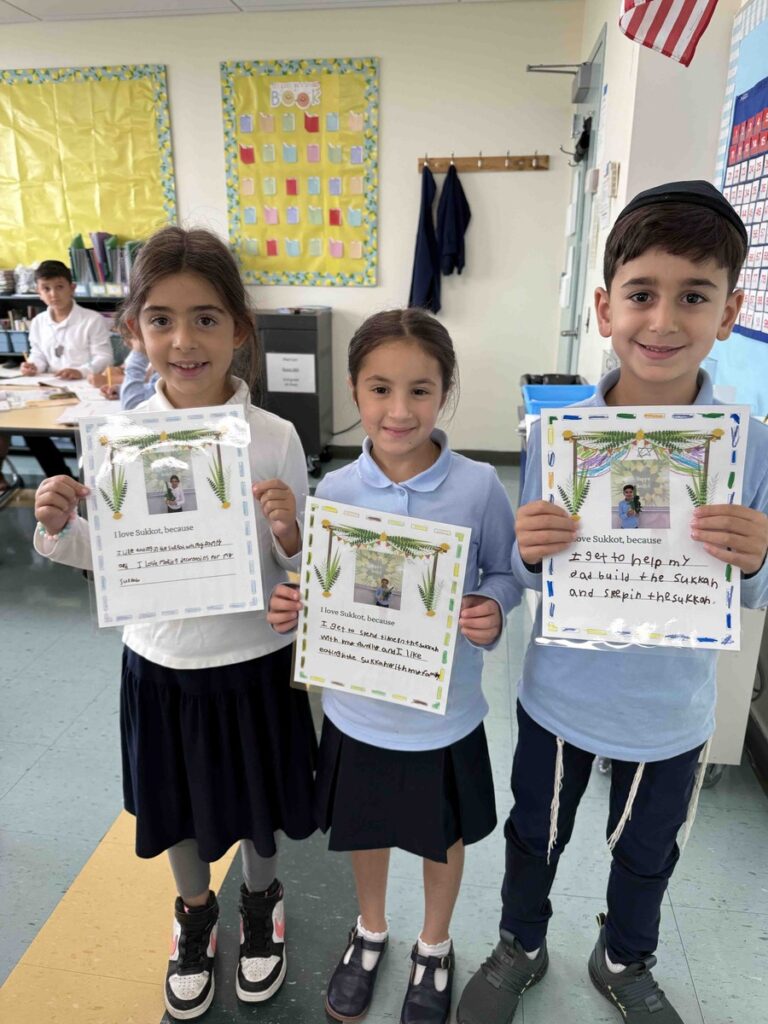
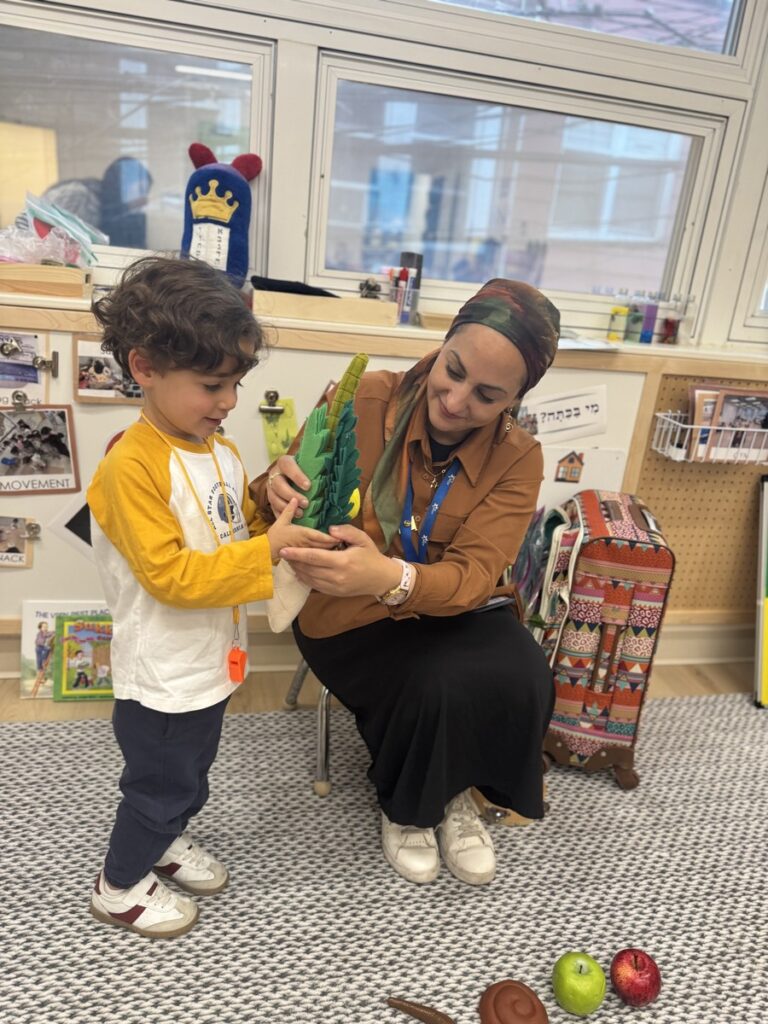
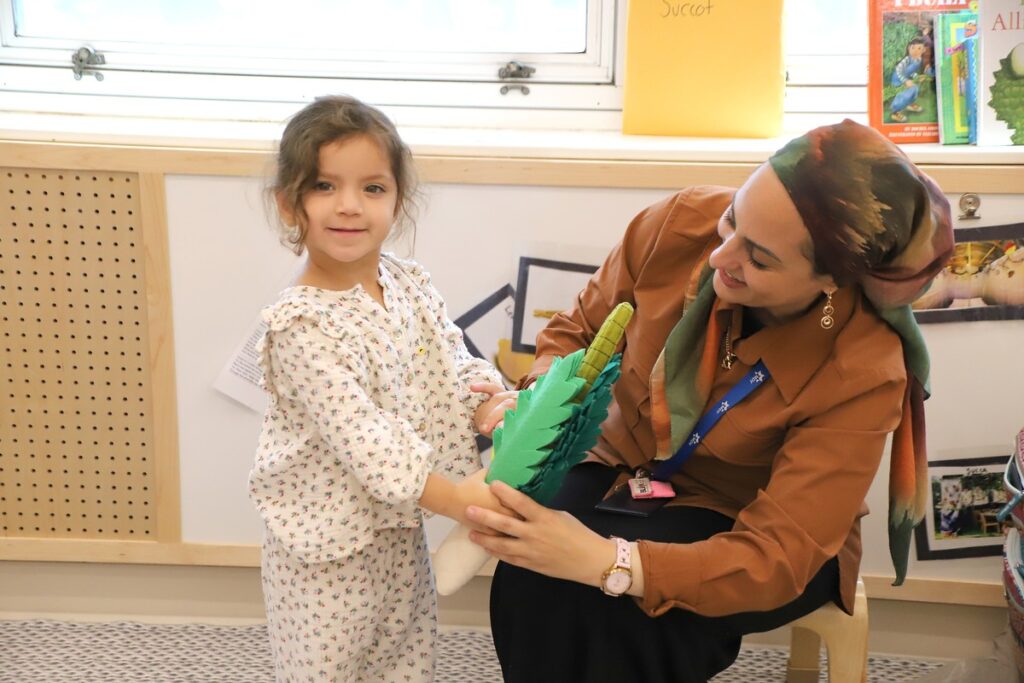
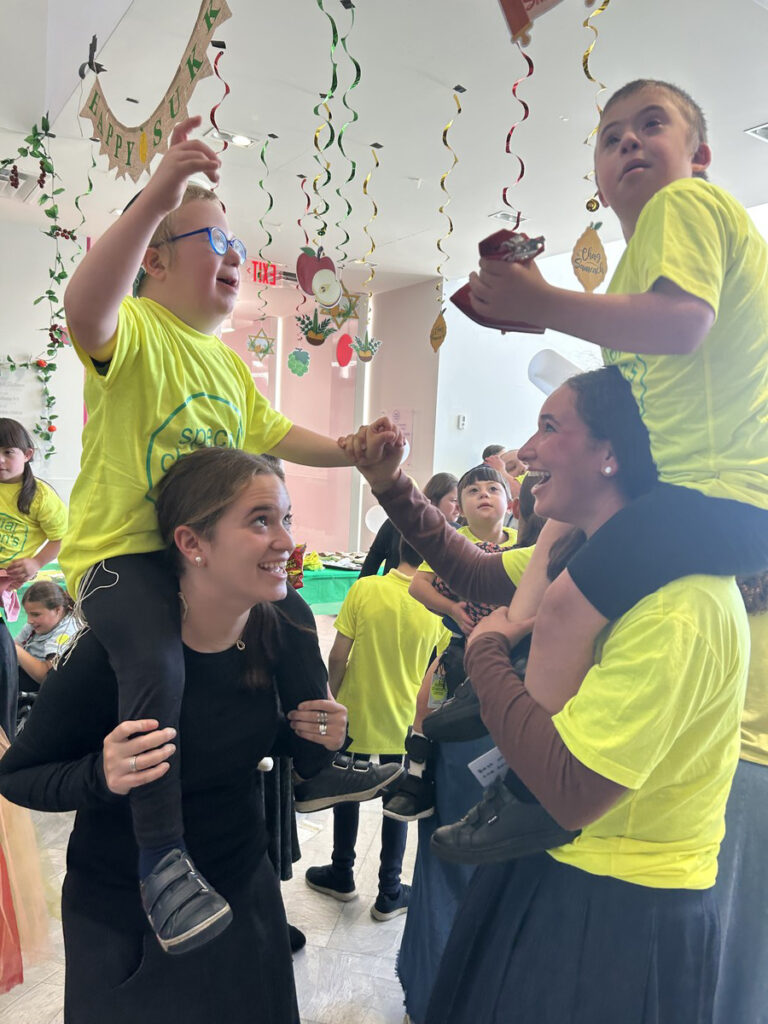
This month’s Community Photo Album celebrates the joy and togetherness of Sukkot. From children creating colorful decorations and learning about the lulav and etrog to families gathering for meals in the sukkah, these moments capture the beauty and meaning of the holiday. Our community came alive during Chol Hamoed with trips, outdoor events, and classes held beneath the schach. Each photo tells a story of connection, celebration, and gratitude. It reminds us how special it is to share these festive days with family and friends.
If you’ve ever wondered how your favorite platforms always seem to know what you want to watch, how your phone finds the fastest way around traffic, or how shopping tools predict your next purchase, the answer is artificial intelligence. AI may sound futuristic, but it has already become part of daily life in ways most people don’t notice. It isn’t only driving research labs or robotics, it’s quietly shaping everyday choices, habits, and routines.
That makes AI both exciting and a little unsettling. On one hand, it saves time and makes life more convenient. On the other, it raises questions about how much data we share and how it’s used. To understand this balance, it helps to look at the ordinary places where AI is already at work. Think about the last time you opened a streaming service or music app. Behind every recommendation is an algorithm that studies what you’ve watched or listened to, how long you stayed with it, and what people with similar habits enjoyed. The goal is to keep you engaged by predicting your next interest. This can be useful when you’re looking for a new series or playlist, but it can also trap you in a bubble, serving more of the same instead of encouraging variety. Experts suggest mixing in your own searches from time to time so you don’t miss out on something new. Navigation apps are another quiet showcase of AI. They don’t just map routes, they constantly process live traffic updates, accident reports, and even how fast other drivers are moving. Directions adjust on the fly, shaving minutes off commutes or steering you around a jam. It’s a simple example of machine learning, but it shows how much we already rely on AI to guide us without a second thought. At the same time, these apps know where you go, when you travel, and how often. That information isn’t only used for navigation, it can also feed into advertising profiles, making it worth reviewing your privacy settings. Shopping tools highlight AI in a different way. When a site suggests products based on what you browsed, or when a grocery app remembers your weekly order, that’s AI predicting behavior. Some retailers use it to keep popular items in stock, while others rely on it to run customer service chatbots. If you’ve ever called a toll-free number and spoken to an automated system that directs you to the right department, or clicked on a website chat box only to find a program answering, you’ve interacted with AI support. It often speeds up simple requests, though it can feel impersonal when you want a human touch. Advertising is perhaps the most visible sign of AI in daily life. Targeted ads appear in your email, on your social feeds, and across the web. They’re not random, they reflect the messages you open, the posts you like, and the searches you make. AI can even draw on voice commands or your location. Walk past a store, step inside a mall, or type about a product, and you may see an ad for it within hours. Many of the free services we rely on every day stay free by collecting and selling this data to advertisers or third-party companies. The trade-off is personalization at the cost of privacy, with our information treated as a commodity. Social media takes this influence even further. AI decides which posts rise to the top of your feed, learning quickly from every like, comment, and share. That’s why it often feels like the app “knows” you. The upside is that it connects you with content and communities that match your interests. The downside is that it can trap you in cycles of distraction or feed misinformation. Digital wellness experts recommend setting time limits or clearing your history now and then to help reset the algorithm. Even the devices in your pocket and home are full of AI. Voice assistants interpret natural language to carry out commands. Smart thermostats learn your patterns and adjust temperatures automatically. Fitness trackers record heart rates and sleeping habits, then suggest routines to improve your health. These tools act like personal helpers, but they also collect sensitive details that can reveal more than you may want shared. So what can you do if you’d rather limit how much AI follows you? The first step is to explore your phone or app settings. Many services automatically turn data sharing on, so you need to look for options labeled “privacy,” “ad preferences,” or “do not share.” Turning off ad personalization, disabling location tracking when it isn’t needed, and choosing not to share activity history are small but powerful steps. On websites, you can often click “manage cookies” or “opt out” instead of accepting defaults. These tools don’t shut AI off completely, but they give you more say in how your data is used. The larger point is that AI is not separate from daily life, it’s woven into it. Recognizing that fact helps you make smarter choices, balancing convenience with caution. And you don’t need to be a tech expert to take control. A few quick checks in your settings can limit what is collected without losing the benefits that AI brings. Artificial intelligence is here to stay, and most of its uses aim to make life more comfortable. But comfort should not come at the cost of control. By noticing how AI shapes your day, from the shows you stream to the ads that follow you, you can enjoy the benefits without giving away too much. The key is not to fear AI, but to approach it with awareness and deliberate choices.
Walk through Tel Aviv on a weekday morning and you’ll see a city buzzing with ideas. Cafés double as office spaces, rooftop terraces host meetings, and co-working hubs brim with young founders and engineers. Israel has earned the nickname “Startup Nation” for good reason. With one of the highest numbers of startups per capita in the world, the country has built a reputation for innovation that stretches far beyond its borders.
What many people don’t realize is how often these ideas end up on Wall Street. Over the past two decades, more than 100 Israeli companies have gone public on U.S. exchanges. They span industries ranging from cybersecurity and biotech to artificial intelligence and communications, highlighting how Israeli innovation doesn’t just stay local but plays out on the global stage. Israel now ranks fourth in the number of Nasdaq-listed companies by country, behind only the United States, Canada, and China. There is no single type of company that defines Israel’s presence on the market. Instead, the variety is striking. Cybersecurity firms, biotech researchers, software providers, mobility innovators, and financial technology platforms all call Israel home. Each represents a piece of the country’s wider story: a small nation that punches far above its weight in science and technology. Some of these names may already be familiar. Mobileye, founded in Jerusalem, pioneered the vision systems used in advanced driver-assistance and autonomous vehicles. The company’s technology is inside cars around the world, even if drivers don’t realize it. monday.com, with its colorful and easy-to-use project management tools, has become a fixture in offices globally. CyberArk is another standout, recognized as one of the world’s leading cybersecurity firms. Behind each of these tickers, MBLY, MNDY, and CYBR, is a story rooted in Israel’s culture of innovation. Beyond the big names are dozens of smaller, specialized firms. Israeli biotech startups have listed on U.S. exchanges with research ranging from oral insulin capsules to new cancer therapies. Satellite technology companies have raised capital to expand communications infrastructure far beyond Israel’s borders. Software firms that began in modest offices in Herzliya or Haifa are now shaping how international businesses operate. For every well-known giant, there are five lesser-known innovators quietly pushing their fields forward. This variety is not accidental. Israel invests more in research and development as a share of GDP than any other country in the world, about 4.3 percent compared to the U.S. at around 2.8 percent. That level of investment helps explain the breadth and pace of innovation that fuels new public offerings and global impact. Just as important, venture capital firms around the world see the opportunity and continue to pour money into Israeli startups. Billions of dollars in VC funding flow into the country each year, giving entrepreneurs the backing they need to grow from small labs and offices into global players ready for Wall Street. The sectors where Israel excels also reflect broader global trends. Cybersecurity remains a constant focus as companies and governments around the world look for ways to protect their data. Health and biotech draw on Israel’s strong medical research institutions, producing therapies and devices that have the potential to improve lives worldwide. Artificial intelligence and mobility solutions connect Israel’s engineering talent with industries that are rapidly reshaping everyday experiences. For market watchers, this mix of innovation ensures that Israeli companies appear across a wide spectrum of sectors. One of the most exciting traits of Israel’s tech ecosystem is its velocity. Startups can rise quickly, attract international attention, and reach the stock market faster than many of their global peers. Some companies go public, while others are acquired by larger firms eager to capture their talent and intellectual property. The result is a steady stream of fresh names for those who keep an eye on market listings. It is important to remember that following these developments does not require being a professional investor. The stock market is simply another lens through which to watch Israel’s impact on global innovation. Spotting an Israeli name in financial headlines can be a reminder that the technology shaping our work, health, and transportation often began in a small office or lab across the Mediterranean. Looking ahead, a number of Israeli companies are set to expand their reach and capture worldwide attention. Navan is reinventing corporate travel and expense management with a sleek software suite. Claroty and Cato Networks are cybersecurity firms protecting everything from Fortune 100 companies to national infrastructure. Gauzy is pushing the boundaries of smart-glass and vision-control technology now used by automakers and aircraft manufacturers. eToro, a retail trading platform, recently made its Nasdaq debut, opening global access to new kinds of investing. Israel Aerospace Industries (IAI), the country’s largest defense and aerospace company, is preparing to go public with a massive valuation. And StoreDot, still privately held, is drawing attention for its ultra-fast electric vehicle batteries that promise to charge a car in minutes. For investors there is an added dimension. Buying shares of Israeli companies not only offers the potential for profit, but also supports the country’s thriving culture of innovation. Many Israeli firms on U.S. exchanges have delivered strong results, especially in sectors where Israel has a global edge. Even carving out a small slice of a portfolio for Israeli companies can be a meaningful way to align financial goals with confidence in the Startup Nation’s future. So the next time you skim the financial pages or hear about a tech company making headlines, take a closer look at its origins. If it started in Tel Aviv, Jerusalem, or Haifa, you are seeing the Startup Nation’s story unfold in real time, not just in research labs or office parks, but on the global stage of the stock market where performance and pride often go hand in hand.
How Jews helped to create the quintessential American holiday
Dr. Yvette Alt Miller
Modeling the first Thanksgiving on Sukkot America’s first Thanksgiving holiday took place in 1621, just a few months after the first Pilgrim settlers first landed on the shores of Cape Cod in Massachusetts. They arrived in the New World just as winter was approaching, and spent their first few months in Massachusetts huddled on the Mayflower boat that had brought them from England, subsisting on the ship’s stores of food. Fully half of the Pilgrims perished over the winter. When the weather began to improve, they ventured onto land. March 21 was the day the Pilgrims officially left the Mayflower and began to farm and build homesteads. The Pilgrims were aided by members of the local Abenaki, Pawtuxet and Wampanoag tribes, particularly by a Pawtuxet man named Squanto who had an amazing history. He had been kidnapped some years previously by an English ship captain, had learned English, and eventually returned to his tribe in Massachusetts. With Squanto’s aid, the Pilgrims succeeded in cultivating native crops. At harvest time, the Pilgrims declared a three-day long feast of Thanksgiving to thank G-d for their harvest. Deeply religious Christians, the Pilgrims were well acquainted with the Hebrew Bible and Jewish holidays, including the autumn festival of Sukkot, when Jewish pilgrims brought offerings from their harvests to the Temple in Jerusalem. Some see the first American Thanksgiving was an attempt to thank G-d for His beneficence in a new place, and to a new set of Pilgrims, a conscious imitation of Sukkot. Pilgrim leader William Bradford had another Jewish custom in mind when he declared a service of thanksgiving soon after the Pilgrims made landfall in 1620. He opened his Bible and led the Pilgrims in reciting Psalm 107. Incredibly, the annotations in Bradford’s Bible, written by the English clergyman Henry Ainsworth, quoted the Medieval Jewish Sage Rabbi Moshe Ben Maimon (Rambam), whose legal work the Mishnah Torah directs Jews to recite a prayer based on Psalm 107 after making a dangerous journey and overcoming other obstacles. It seems that the very first American act of Thanksgiving had Jewish roots as William Bradford incorporated Jewish traditions into his first thanksgiving prayers in the New World.
Ensuring Jews Can Celebrate Thanksgiving During Colonial times, it was common for colonies to declare special days of thanksgiving at times of prosperity and good fortune. Shearith Israel, the oldest synagogue in America, eagerly took part. Established in 1654 by Sephardi Jews seeking refuge from the Portuguese Inquisition in Brazil, Shearith Israel (also known as the Spanish and Portuguese Synagogue) took part in various thanksgiving celebrations that were declared by New York’s colonial governor. Shearith Israel wrote new prayers and included prayers of thanksgiving during these colonial thanksgiving days. There were times, however, when New York’s Colonial Governor insisted that special days of thanksgiving have a specifically Christian character. (This was true of other colonies as well, which sometimes insisted that days of thanksgiving be celebrated with Christian prayers.) At these times, Shearith Israel had no choice but to refrain from taking part. The synagogue’s predicament became known to George Washington, thanks to the synagogue’s leader, Gershom Mendes Seixas, the congregation’s cantor who was devoted to the cause of American Independence, and his family. Many of Shearith Israel’s members joined the Continental Army and fought with George Washington; approximately 20 members of the synagogue died in America’s revolutionary war. After the war, Seixas was selected to be one of the small number of clergy people present at George Washington’s presidential inauguration. When the new President declared a national day of Thanksgiving for the new United States in 1789, he specifically made his day of thanks non-denominational, ensuring that his Jewish supporters could fully take part in America’s first national thanksgiving festival. Gershom Mendes’ Seixas brother Moses was active in his own synagogue in Rhode Island, Kahal Kadosh Yeshuat Yisrael (later called the Touro Synagogue). In 1790, seven years after the conclusion of America’s War of Independence, President George Washington visited that synagogue and Moses Seixas delivered him a warm letter of affection on behalf of his congregation. President Washington responded with a letter of his own, in which he famously reiterated his strong belief that America was not to be a Christian nation, but one to which all peoples could equally contribute and call home. “All possess alike liberty of conscience and immunities of citizenship,” Washington wrote. “For happily the government of the United States, which gives to bigotry no sanction, to persecution no assistance, requires only that they who live under its protection should demean themselves as good citizens, in giving it all on occasions their effectual support…” It was a strong reminder that America’s national character must include all its citizens, no matter what their religious persuasion.
The Shavuot Connection Thanksgiving only became a regular, annual holiday in 1863. That was thanks in large part to one woman: Sarah Josepha Hale, editor of America’s most popular journal, Godey’s Ladies Journal. Hale was a progressive idealist. Each year, starting in 1846, she published a public appeal in Godey’s, asking the government to establish a national day of Thanksgiving across the entire country. Notably, she called for a day of Thanksgiving in which all Americans, including Jews, could take part. Hale made specific reference to a key Jewish holiday in her annual appeal, “Pentecost,” which is a Greek name for the Jewish holiday of Shavuot, the day G-d gave the Torah to the Jewish people at Mount Sinai. Hale saw this Jewish holiday as a time for family gatherings and giving charity so that no poor household would be left out of the national celebration. (Hale lived in New Hampshire, which had a small Jewish population, it’s possible she observed the ways that Jews support their communities with charity, ensuring that all members have the resources to celebrate festivals such as Shavuot and other Jewish holidays.) “The noble annual feast day of our Thanksgiving resembles, in some respects, the Feast of Pentecost, which was, in fact, the yearly season of Thanksgiving with the Jews,” Hale insisted in the pages of her magazine, year after year. Fixing a regular Thanksgiving day “would then have a national character…. It is a festival which will never become obsolete, for it cherishes the best affections of the heart – the social and domestic ties. It calls together the dispersed members of the family circle, and brings plenty, joy and gladness to the dwellings of the poor and lowly.” President Lincoln finally listened to Hale’s entreaties – and those of her many readers and admirers – and proclaimed the final Thursday in November to be an annual holiday of Thanksgiving across the United States. Deep in the Civil War, it was the hope of many that a national day of Thanksgiving could help heal the country’s wounds.
The Jew Who Changed the Date of Thanksgiving For years, Thanksgiving was celebrated on the last Thursday in November: until a Jewish businessman helped alter the date – and provoked a firestorm across America. In 1939, there were five Thursdays in November and Thanksgiving fell on November 30. With the economy in depression, merchants were worried that a late Thanksgiving would mean an unusually short Christmas shopping season, as in the 1930s it was customary to start decorating stores and promoting Christmas merchandise only after the Thanksgiving holiday. American retailers lobbied President Franklin Delano Roosevelt to bring Thanksgiving forward a week, to November 23, to help America’s embattled retailers. The leader of the push was Fred Lazarus, Jr., the Jewish chairman of the Federated Department Stores, a national retailing grouping he’d organized in 1930 to link stores in different communities by sharing a financial base. (Federated Department Stores eventually became Macy’s.) Lazarus’ logic appealed to President Roosevelt, who changed Thanksgiving from the final Thursday of November to the third Thursday of the month in order to help the nation’s merchants. This provoked a swift backlash from conservative states and politicians, some of whom seized on the change to promote antisemitic tinged criticisms of President Roosevelt’s New Deal policies. Critics called the “new” Thanksgiving “Franksgiving” and many states refused to celebrate it. The backlash fell along party lines. As the New England Historical Society notes, “Republicans called Roosevelt’s declaration an affront to the memory of Lincoln. People began referring to the ‘Republican Thanksgiving (last Thursday) and the ‘Democratic Thanksgiving’ (fourth Thursday) as ‘Franksgiving’.” President Roosevelt changed Thanksgiving back to its original date in 1941. Fred Lazarus Jr. went on to contribute to the American war effort, serving as vice-chairman of the Retail Advisory Council of the National Council of Defense. He also served on the Office of Price Administration and the War Production Board during World War II. After the war, President Eisenhower appointed Lazarus to the President’s Committee on Government Contracts, where Lazarus was a voice for fair labor practices. He passed away in 1973.
Inventing Thanksgiving Day Parade No Thanksgiving would be complete without watching a Thanksgiving Day Parade, a tradition started by the descendants and business partners of a Jewish immigrant named Adam Gimbel. Born in 1817 in Bavaria, Gimbel moved to America where he worked as a dock hand and then a travelling peddler. He soon gained a sterling reputation as a scrupulously honest businessman who treated all people fairly, no matter what their background. Gimbel founded Gimbels Department Store in Milwaukee. He later expanded to Philadelphia; after his death, he sons expanded Gimbel’s further, opening a store in New York City. In 1920, Bernard Gimbel, Adam’s grandson, held the first Thanksgiving Day Parade, sponsoring a huge spectacle that marched from the Philadelphia Museum of Art to Gimbel’s Department Store at 8th and Market Streets. Each year, until the last Gimbels’ Parade in 1986, the department store sponsored Philadelphia’s annual Thanksgiving Day Parade. Macy’s in New York started their own Thanksgiving Day Parade in 1924, in a clear imitation of Gimbels’.
Creating America’s Green Bean Casserole The iconic green bean casserole topped with crunchy fried onions that many Americans enjoy on Thanksgiving has a remarkable story, and was popularized in the 1950s by the Jewish food writer Cecily Brownstone. In 1955, Ms. Brownstone wrote a story about a journalists’ dinner she’d attended at the home of John Snively Jr., a pioneering citrus grower in Florida. At the dinner, Mrs. Snively served a delicious green bean casserole – and shared a remarkable story about that signature dish. The Snivelys had recently hosted the Shah of Iran and his wife, and Mrs. Snively made her delicious green bean casserole. The Iranian Queen was so taken with the dish that she kept asking about its ingredients. The Snivelys’ butler answered each question, until he finally lost his patience and told the royal, “Listen, lady, it’s just beans and stuff.”
Sing a New Song: The Psalms in Medieval Art and Life
Natalie Senior Greenberg
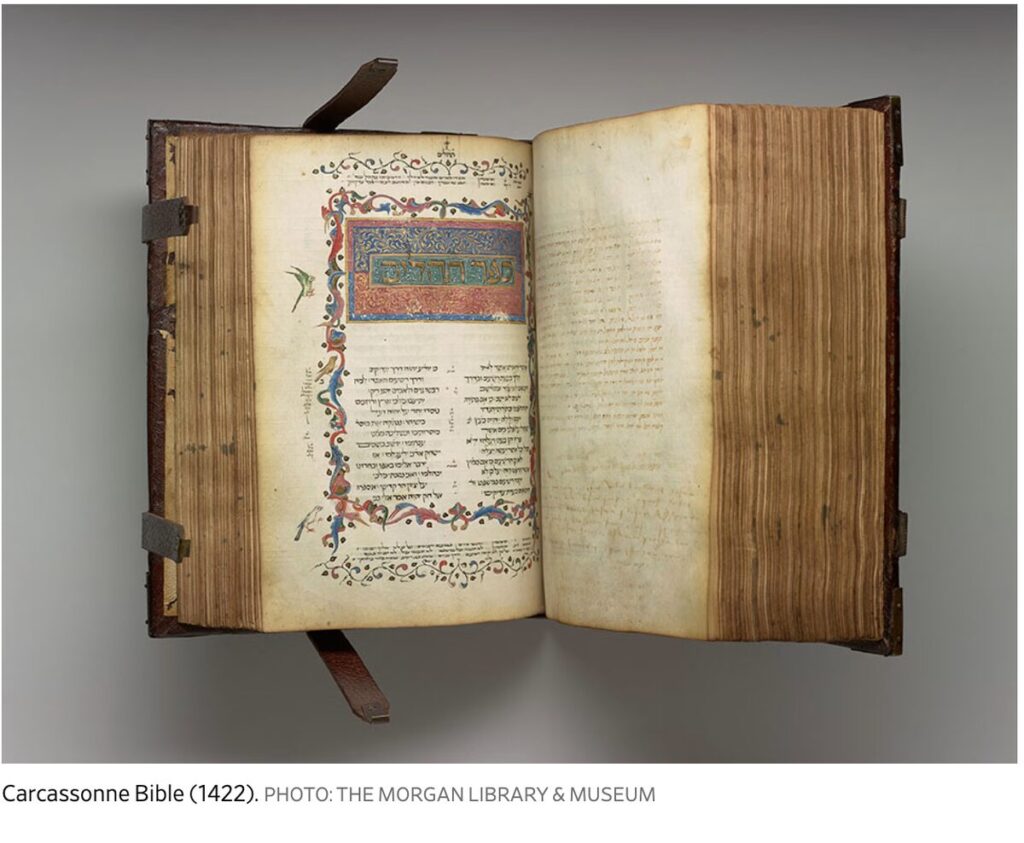
Carcassonne Bible (1422). Photo: The Morgan Library & Museum
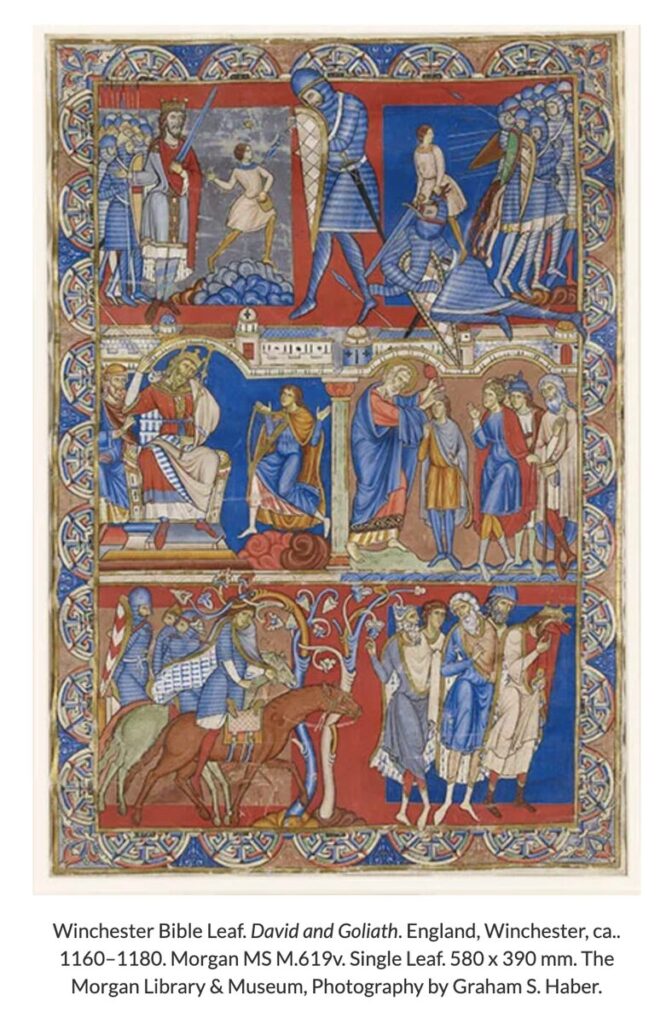
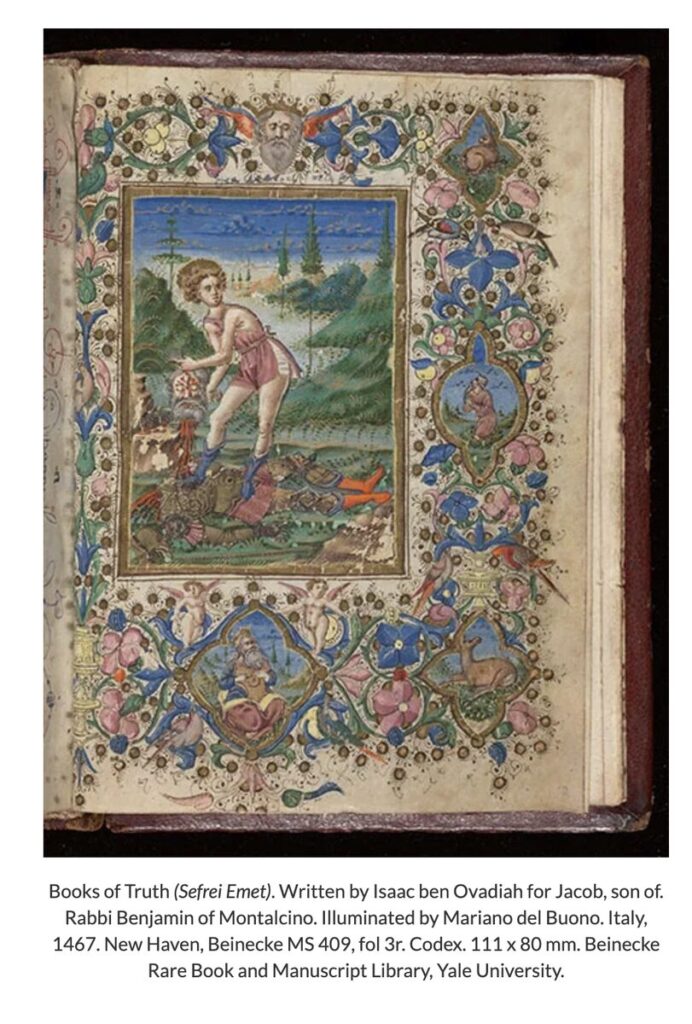
The Morgan Library & Museum in New York City has unveiled a fascinating new exhibit dedicated to the Book of Psalms and the art of illuminated manuscripts. This exhibition offers visitors a rare opportunity to explore the intricate beauty, religious significance, and historical context of some of the world’s most remarkable medieval artworks. The exhibit underscores the enduring power of Tehillim and the creative genius of the scribes and artists who brought these sacred texts to life.
Winchester Bible Leaf. David and Goliath. England, Winchester, ca. 1160–1180. Morgan MS M.619v. Single Leaf. 580 x 390 mm. The Morgan Library & Museum, Photography by Graham S. Haber.Books of Truth (Sefrei Emet). Written by Isaac ben Ovadiah for Jacob, son of Rabbi Benjamin of Montalcino. Illuminated by Mariano del Buono. Italy, 1467. New Haven, Beinecke MS 409, fol 3r. Codex. 111 x 80 mm. Beinecke Rare Book and Manuscript Library, Yale University.
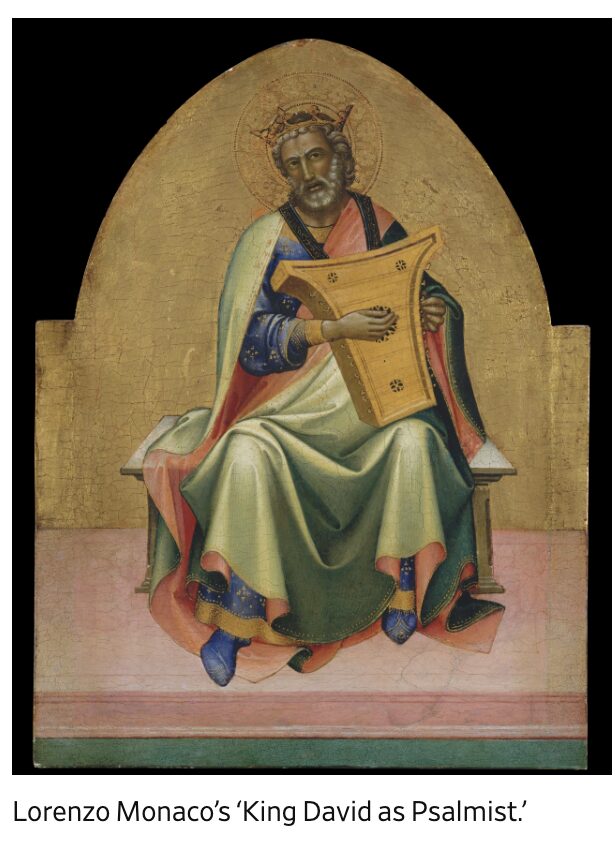
Tehillim is the Hebrew name for the Book of Psalms, which translates to “praises.” It consists of 150 poems or chapters. These psalms are songs of praise, lament, gratitude, and supplication to Hashem, used in both joyous and desperate times. In medieval Europe, during the 12th to 14th centuries, these texts were not only read and recited but were also lavishly decorated, forming part of personal prayer books. The Morgan Library’s exhibit centers around illuminated manuscripts, the handwritten books adorned with gold leaf, vibrant pigments, and intricate illustrations. These manuscripts were created by skilled artisans working in scriptoria, or writing rooms, set aside for the writing, copying, and illumination of manuscripts. Each page is a testament to painstaking labor and artistic vision, featuring elaborate initial letters, border decorations, and miniature paintings that interpret the Psalms’ themes. The illumination of Psalms served both aesthetic and devotional purposes. Gold and rich colors reflected the heavenly realm, while images of biblical figures and scenes helped readers visualize the stories and prayers. The show begins with the exquisite Carcassonne Bible made in Avignon in 1422 for a Jewish physician. On display is the introductory page to the Book of Psalms. “Tehillim” is embellished in gold letters and surrounded by decorative stripes of green, blue, and red. The borders are highly decorated with ribbons, flowers, and birds. Due to religious persecution and censorship, few Hebrew manuscripts from this era have survived, but fortunately we are able to view another rare example from Bologna, Italy. King David, who composed and compiled the Book of Psalms, is frequently depicted in the manuscripts as a wise elder, wearing a gold crown and holding a harp. Visitors can also view medieval Psalters from the Morgan’s renowned collection, some dating back to the 12th century. Not all are Hebrew or Jewish, as non-Jews also used books of Psalms or Psalters. These books feature extraordinary examples of calligraphy and illuminated initials. Many of these Psalters include pages depicting scenes from the life of King David, as well as religious figures and scenes from other faiths and traditions, rendered in stunning detail. There are also interactive displays allowing guests to “turn” virtual pages and examine details up close, revealing techniques and materials used by medieval craftsmen. The new exhibit at the Morgan Library & Museum is on display through January 4, 2026. Whether you are an art lover, a student of history, or simply curious about the spiritual and artistic heritage of the Psalms, this show offers a window into a world where beauty and devotion intertwine. Through its extraordinary collection and innovative displays, the exhibit honors the legacy of medieval scribes and illuminators, reminding us that art and faith have long been partners in the human quest for meaning.
A raw and unflinching firsthand account of 491 days in Hamas captivity
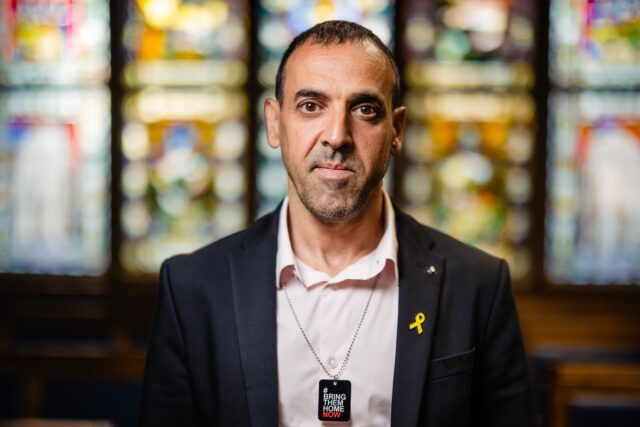
HOSTAGE by Eli Sharabi is a raw and unflinching firsthand account of his experience in Hamas captivity. In this first memoir by a released hostage (and the fastest-selling book in Israel’s history), Sharabi recounts the starvation, isolation, physical beatings, and psychological abuse he suffered at the hands of his captors.
On October 7, 2023, Hamas terrorists stormed Kibbutz Be’eri, shattering the peaceful life Eli Sharabi had built with his British wife, Lianne, and their teenage daughters, Noiya and Yahel. Dragged barefoot out his front door while his family watched in horror, Sharabi didn’t know it would be the last time he would see them. In heart-pounding prose, Sharabi brings readers along as he is kidnapped into Gaza, first into the private homes of his captors and then into the suffocating darkness of Gaza’s tunnels where he and his fellow hostages endured the unimaginable. Then, on February 8, 2025, after 491 days in captivity, the world watched as Sharabi emerged—a shadow of his former self. Weighing just 95 pounds, he was paraded in front of a rabid crowd in a macabre ceremony orchestrated by Hamas. Despite the horrors he endured, Sharabi held onto his unyielding resolve to survive and be reunited with his loved ones. But when he finally made his way home to Israel, Sharabi was devastated to learn that his wife and daughters were killed on October 7.
In HOSTAGE, Sharabi reveals: • Details of where he was kept before being transported into the tunnels of Gaza • How his fluency in Arabic allowed him to understand everything his captors were saying, revealing insight into their motivations, belief system, and the hierarchy inside Hamas • The complicated relationships he and his fellow hostages developed with their various captors • How his life experience as a father and manager gave him the tools to navigate complex human dynamics and allowed him to be a source of comfort to his fellow hostages • The rituals he and his fellow hostages adopted to survive, including: a gratitude practice, the tools and routines they employed to stay as fit as possible, in mind and body and more • The hunger and gruesome sanitary conditions within the tunnels • How his Hamas captors were stockpiling boxes of UN aid, brimming with food. Meanwhile, Sharabi and his fellow captives subsisted on as little as one pita a day, at some points. • The sophisticated and elaborate propaganda tools the terrorists employed: including choreographed video productions they forced the hostages to partake in, containing propaganda messaging • The psychological torture, including calls to renounce their Judaism for Islam; misinformation about what was happening to their families and the war raging outside • The agonizing lead-up to their release, including threats from the terrorists about what would happen if they went off script; the fears of being lynched by the frenzied and ecstatic crowds, and more • What Sharabi said to the Red Cross representative when they were finally face to face, 491 days after his kidnapping • How he was stunned by the number of people involved with the release process on Israel’s side, the level of planning, attention to detail and sensitivity • His road to recovery Eli Sharabi’s story is one of hunger and heartache, of physical pain, longing, loneliness and a helplessness that threatens to destroy the soul. But it is also a story of strength, of resilience, and of the human spirit’s refusal to surrender. It is about the camaraderie forged in captivity, the quiet power of faith, and one man’s unrelenting decision to choose life, time and time again. In the months since his release, Sharabi’s road to recovery has included the urgent mission to share his story and how he advocated for the release of the remaining hostages. As Sharabi writes, “hope is never something that comes easily. It’s always something you’ve got to fight for, to work on.”
Now celebrating its 15th year serving community organizations, Sarina Roffé Consulting Group continues to expand its reach and reputation for excellence in nonprofit management.
Abraham RofféSarina Roffé
What began in Sarina Roffé’s home office as a way to help “Friends of” organizations supporting Jewish causes in Israel has grown into a trusted institution offering comprehensive services to nonprofits worldwide. Drawing on her experience as a journalist, a national nonprofit president, and former National Director of Communications at Jewish National Fund, Sarina Roffé built a firm rooted in ethics, professionalism, transparency, and a deep understanding of her community. Operating from her centrally located Marine Park office, Sarina and her team provide a full-service, turnkey operation for nonprofits with annual budgets ranging from $10,000 to $5 million. Her office provides nonprofits with an address and a reputation. “Her QuickBooks service always provides clean ledgers for 990 filings and audits,” said Jacques Erdos, CPA. “Sarina Roffé is also an expert at handling nonprofit applications with the Internal Revenue Service, with 100 percent of applications approved. Sarina’s high ethical standards and expertise make her the community’s go-to expert for nonprofit management.” Services include bookkeeping, donation processing, donor management, payroll, invoicing, collections, and coordination with CPAs on annual filings. The firm also supports organizations with fundraising, event management, grant administration, and collateral materials such as brochures, newsletters, email blasts, annual reports, videos, and pledge cards. She works closely with graphic artists to produce and print materials within the organization’s budget. “Sarina and her team are personable, professional, and always ready to help,” said Elliot Horowitz, CEO of H Equities. “Her full turnkey operation for small nonprofits fills a vital niche. Sarina helped launch a nonprofit organization of which I am treasurer. She provided invaluable advice, managed all our finances, attended every board meeting (even on weekends), managed fundraising events, spoke to donors, and supervised all marketing efforts.” Roffé’s writing and editing expertise extends to crafting bylaws, policies, procedures, and employee manuals. Clients consistently praise her reliability, integrity, and commitment. “Sarina has been honest, organized, and dedicated for more than 15 years,” said Rabbi Ronnie Kassin. “Her knowledge of our community and expertise in nonprofit management make her an invaluable asset.” The firm’s clients include organizations supporting Jewish communities in China, Argentina, France, and Israel, as well as numerous local synagogues and charities. “Beyond her professional skills, Sarina’s warmth and integrity have left a lasting impression,” said Rabbi Netanel Meoded, Chief Rabbi of Kehilat Zion of Kowloon. “She takes professionalism to an unheard-of level,” added Alan Kishk, President of Roofing Repair Team. “Working with her is like forming a true partnership. Sarina is one of the most efficient professionals I know. She is organized, effective, and intelligent.” Notably, all of Sarina Roffé Group’s clients have come through referrals, a testament to the firm’s stellar reputation and results-driven approach. Sarina holds degrees in Journalism, Jewish Studies, and an MBA in Nonprofit Management—a rare combination that blends communication skills, cultural understanding, and business acumen. Her team includes her son, Abraham Roffé, who also holds an MBA, along with two additional staff members dedicated to delivering exceptional service.
Parenting a child with special needs comes with unique challenges. Choosing the right therapy can feel overwhelming with so many options available. At our Brooklyn DIR/Floortime Clinic, we focus on what truly matters — helping your child build meaningful connections, emotional regulation, and confidence through play and relationships.
What is DIR/Floortime? DIR, or Developmental Individualized Relationship Based Therapy, also known as the Floortime approach, was developed by Dr. Stanley Greenspan and Dr. Serena Wieder. This evidence-based model builds on your child’s natural interests and motivations to strengthen emotional development, thinking, and problem solving. Rather than relying on external rewards, Floortime invites children to engage joyfully through play, conversation, and imagination — at their own pace and from a foundation of trust and connection.
How Our Approach Works • Child-Led, Relationship-Based: We meet each child where they are emotionally and developmentally. Sessions use toys, games, and symbolic play to help children express themselves, connect, and think more flexibly. • Parent Involvement: Parents play an essential role. Our therapists support and collaborate with families so that the strategies learned in sessions become part of everyday life. • Skill Building Through Joy: From regulation and attention to communication and social confidence, every moment of play is an opportunity to strengthen core developmental skills. • Confidence Through Independence: We support children to discover their own problem-solving abilities rather than imitating others. The goal is a confident, self-directed thinker ready to thrive in the real world.
Why Families Choose Our Clinic Our therapists have decades of experience helping children with developmental, social, emotional, and behavioral needs. DIR/Floortime is a proven model that transforms not only how children relate to others but also how families connect and grow together. Even one to two sessions per week can translate into meaningful gains for the entire family.
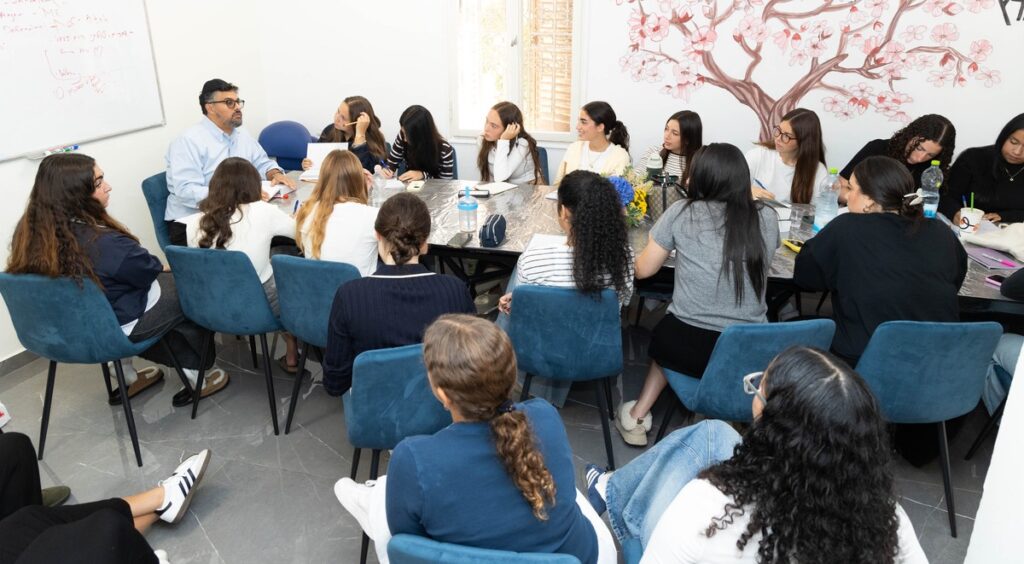
The excitement was palpable as 56 new students found their new home away from home at Midreshet Eshel last month. Living just a five-minute walk from the Kotel, students quickly began to adjust and make new friends from New York, New Jersey, Florida, Los Angeles, Seattle, Montreal, Brazil, and Belgium. Though they come from different Sephardic communities across the world, these young Sephardic students eagerly came together for a similar purpose, to learn, grow, and develop themselves spiritually and personally. “Eshel was definitely the right choice,” explains Caroline Palacci, graduate of Flatbush and current student at the Midrasha. “I’ve met so many great friends, and I’m able to really dive into my spirituality surrounded by a supportive Sephardic community.” “My experience at Eshel has been incredible,” enthuses Emma Kamagi, graduate of Flatbush High School. “I’m growing and learning more than I ever imagined. It’s empowering me to become more independent and confident in everything I do.”
IMG-20250929-WA0077.jpg
R to L: Corrie Beyda, June Rahmey, Esther Watren, Norma Shamah, Tunie Terzi, Charlotte Daniel, Janet Sasdon, Grace Weiss, Rachel Moghrabi, Maya Bendayan, Paulina Gamel.
Students are immersed in a warm learning environment that promotes their intellectual and emotional growth. Classes on both advanced and regular levels challenge students to expand their thinking and deepen their understanding of G-D, Torah and Misvot (commandments), their relationships with others, as well as their relationship with themselves. As Sofia Choueke of Brazil explains, “I feel the classes provided at Eshel are changing me as a person.” Sarah Tawil, graduate of Flatbush, agrees. “Being at Eshel has been such an inspiring experience. I feel like I’m constantly growing through everything I’m learning.” Sarah continues, “The classes motivate me to think independently and push me in new ways every day.” Outside the classroom, students continue learning and connecting to the people and the land of Israel. Frequent walking tours, hikes, activities, and guest speakers keep students engaged and inspired. “It’s been an amazing experience so far,” says Janet Sasson from Magen David. “I love how much I’m learning inside and outside of the classroom.” Lydia Mohadeb from Flatbush concurs: “My experience at Eshel so far has been eye-opening. I’ve learned so much about myself through the lens of Torah. I’m excited to continue growing and learning even more.”
Monthly Shabbatonim (group Shabbat retreats) with different teachers are a highlight as students have just returned from a water hike at Nachal Hakibbutsim and a spiritually uplifting Shabbat in the holy city of Sefat. Norma Shamah of Hillel reflects, “It was such a spiritual place, and learning about its deep holiness made the experience even more special.” Underlying the success of the Midrasha is the modest, talented, and highly committed teaching staff comprised of rabbis and female teachers who have been with the Midrasha for many years. “We don’t hire teachers easily,” explains Miriam Tawil, Founder and Director. “While each one has been chosen specifically for the unique role they play at the Midrasha, taken together the synergy between them is incredible.”
One of the newest additions to the staff is Victoria Chabot Berman, who teaches Halacha (Jewish law) and Rambam (Maimonides) and serves as a Rakezet or Supervisor to the students. “Not only do the students get to live in the Old City and learn Torah in the Old City every single day, the students are set up for a year of growth that will serve as a basis for their future growth for many years to come.” With G-D’s help, the combination of its unparalleled location, international student body, and professional and highly dedicated staff produces an experience like no other. As Stacey Gelber of Flatbush summarizes, “Eshel is truly the best seminary. I’ve never felt more alive, happy, and connected than I do in this incredible place.” Recruitment for September 2026 is underway. For more information please visit us at www.sephardicseminary.org
Nobody wakes up one morning and becomes a great athlete. Even the most talented basketball players don’t just roll out of bed and sink every shot. They train consistently, practice the basics, and build their skills one day at a time.
I know this because I am a runner. I ran my first half marathon in 2014, the Disney SBH Half Marathon. I barely trained and just pushed through to the finish line. I didn’t think this event would start my journey to become a runner; I just thought it would be fun to hang out with my friends. It wasn’t until Covid that I started taking running seriously. At first, I couldn’t run a mile without stopping. I wasn’t fast, and long distances felt impossible. But over time, I improved. I got faster, became more consistent, and today I consider myself a solid runner. A few months ago, one of my colleagues suggested I try a triathlon. I knew I had the running part down, but I didn’t swim or bike much. He pointed out that the season was almost over, and if I skipped it, I would have to wait a full year for the next one. So I decided to go for it. I wasn’t going to be the fastest or the most prepared, but I wanted to do it. If I waited, something else would always come up, and I might never start. That same mindset applies to investing. Nobody wakes up with millions to invest. Success is built the same way athletic ability is built—through consistent habits and small steps over time. At some point, you must stop waiting for the perfect moment and just start. I see a few clear similarities between investing and training.
Training Schedule and Dollar-Cost Averaging When I first started getting serious about running, I needed a routine, otherwise I would always find an excuse not to run. I got a training manual and stuck to it, planning which days to run long, which days to run short, and which days to focus on speed. The same applies to investing. There is always a reason not to invest, but that is where dollar-cost averaging comes in. Pick an amount and invest the same every month, whether the market is up or down or whatever else is happening in the world. Consistency is the most important factor.
Patience and the Power of Compounding In the beginning, it doesn’t feel like much is happening. From one week to the next, my speed stayed about the same, and my distance may only increase a little. Over time, though, it really makes a difference. Back in 2020, I was probably running a 9-minute mile. Today, I can run between 7- and 8-minute miles. That’s almost 20 percent faster, not to mention the distance I can now cover. This didn’t happen overnight. The more I trained, the stronger my muscles became and the more my endurance improved. The same applies to investing. When you start out, it may feel like you are barely making progress. One down year can even feel like going backward. But over time, consistent effort adds up, and growth begins to compound.
Training With Others and Working With a Financial Advisor One of the things I love most about running is doing it with others. Earlier this year, I planned to run only 4 or 5 miles. About three miles in, I ran into another runner I know. He said he was planning to run three miles, so I joined him. We kept going, both feeling strong, and ended up running much farther. He ran six miles, and I ended up running 13. I left my house with no intention of running a half marathon on a random Sunday, but running with someone else pushed me beyond what I thought I could do. The same is true in investing. Having someone to help monitor your goals, keep you on track, and hold you accountable is what a financial advisor does. They cannot make you invest, but they can help you stay consistent, disciplined, and focused on reaching the goals you set for yourself. I ended up doing the triathlon. My swim was weak, my biking was okay, and my run was great. But I am very happy I did it. I learned a lot and now I know exactly how to train for next year. Investing works the same way. You don’t have to be perfect when you start, and you don’t need everything figured out. What matters is that you begin, stay consistent, and learn as you go. Over time, effort compounds, and results grow in ways you might not even notice at first. As Wayne Gretzky said, “You miss 100% of the shots you don’t take.” The only real mistake is never taking one. Start today, stay consistent, and let time and discipline work in your favor.
Joseph Shalom is a financial advisor with the Power Forward Group and loves helping his clients ‘run’ their financial lives. Some goals are like marathons that require more long-term thinking to get there, other goals are like the 100-meter dash that are closer in sight. Each requires your training to start now. What’s stopping you?