
A Therapist’s Note for the High Holidays
Joanne Gerr, LCSW
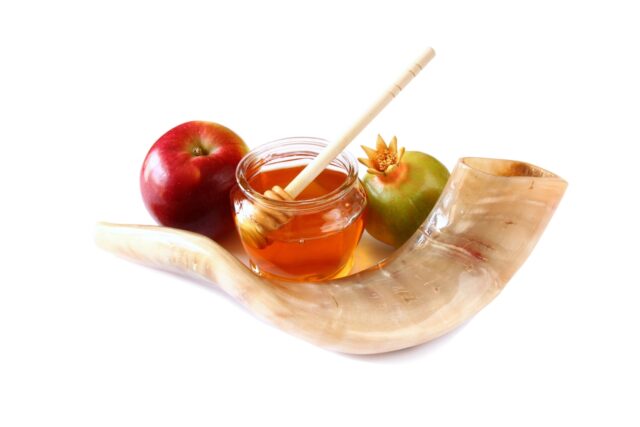
On Rosh Hashana, we dip apples in honey and pray for a sweet year ahead. A few days later, many of us walk to a body of water for tashlich, and empty our pockets of bread crumbs, a small physical ritual for something much harder. Releasing what we’ve actually been carrying. I think about tashlich often in my work, because so much of what I do with the people who sit across from me is exactly that. Helping them empty their pockets of years of food rules, body-checking, and guilt that never once kept them safe, and that they’re finally ready to put down.

The shofar is supposed to wake us up, a call to pay attention before the year moves on without us. But for a lot of the people I see, what actually wakes them up this time of year isn’t the shofar. It’s the sound of their own stomach after twenty-five hours without food. It’s the quiet in the car on the way home from a family meal, where nobody says out loud what everyone was thinking while the food was on the table. It’s a comment about someone’s plate, or someone’s body, made lightly, that lands and stays for days.
I think about the men in their cars, because they’re so rarely the ones anyone asks about. Many of the men I work with have spent years quietly overeating, managing stress, exhaustion, and pressure through food, without ever having language for what they were doing or permission to talk about it. More of them lately are coming in already on a GLP-1 medication, prescribed by a doctor who is treating a number on a chart. That’s a legitimate medical decision, and not mine to question. But a medication that quiets appetite doesn’t teach anyone how to sit with a hard feeling without needing to eat it away. That’s a different kind of work, and it’s the work we do together, whether or not there’s a prescription involved.
For the women I work with, the pattern often looks different but comes from the same place. Bingeing, bulimia, a private cycle of overeating followed by an attempt to undo it. Yom Kippur can act almost like a pressure valve for this. Some people overeat in the days before the fast, as though stocking up against what’s coming. Others find that breaking the fast at the end of the day turns into something they can’t quite steer, no matter how much they promised themselves it would be different this year. I say this to every person who tells me this about themselves, and I’ll say it here too. This is not a failure of willpower. It is a pattern your body and mind learned for a reason, and patterns that were learned can be unlearned.
And then there’s the exercise, the surge of it, every year around this time, as people try to outrun a holiday meal or manage their fear of a changing body by pushing harder at the gym. Healthy movement and exercise addiction can look identical from the outside. The difference lives in the why. Are you moving because it feels good in your body, or because you’re afraid of what happens in your head if you skip a day? Have you trained through pain an orthopedist told you to rest? Has a workout ever come before a holiday meal with people you love? I’ve worked alongside orthopedists treating stress fractures and worn joints in people whose real injury had nothing to do with bone or cartilage at all. The orthopedist can mend the fracture. My job is to help someone understand what that fracture was protecting them from feeling.
Here’s what I want to leave you with. Recovery from emotional eating isn’t a smaller, quieter version of the problem you started with, something you manage forever instead of solve. In my years of doing this work, I have helped many, many people find real, lasting peace with food. Not a truce. Peace, the kind where a holiday meal is just a meal, where a mirror stops running the show, and where a person is finally, comfortably, living in the body they actually want to live in. That peace is attainable, and it’s permanent, in the same way tashlich is permanent, not because the current never carries anything back to shore again, but because you now know exactly how to let it go the next time it does.
If any of this sounds like your table this year, I’d be glad to talk with you. I see individuals, couples, and families, and I run support groups as well, with offices in Midtown Manhattan and Highland Park, New Jersey, and teletherapy for those who prefer it.
Wishing you a sweet and peaceful New Year.