

A Spiritual and Historical Perspective
A Bar Mitzvah is more than just a milestone; it is a defining moment in a young boy’s life, marking his transition from childhood into Jewish adulthood. While today’s celebrations often focus on grand parties and elaborate festivities, the true essence of a Bar Mitzvah lies in the spiritual transformation that takes place. Rooted in centuries of tradition, this sacred rite of passage connects a young man to generations of Jewish history, responsibility, and commitment to mitzvot.
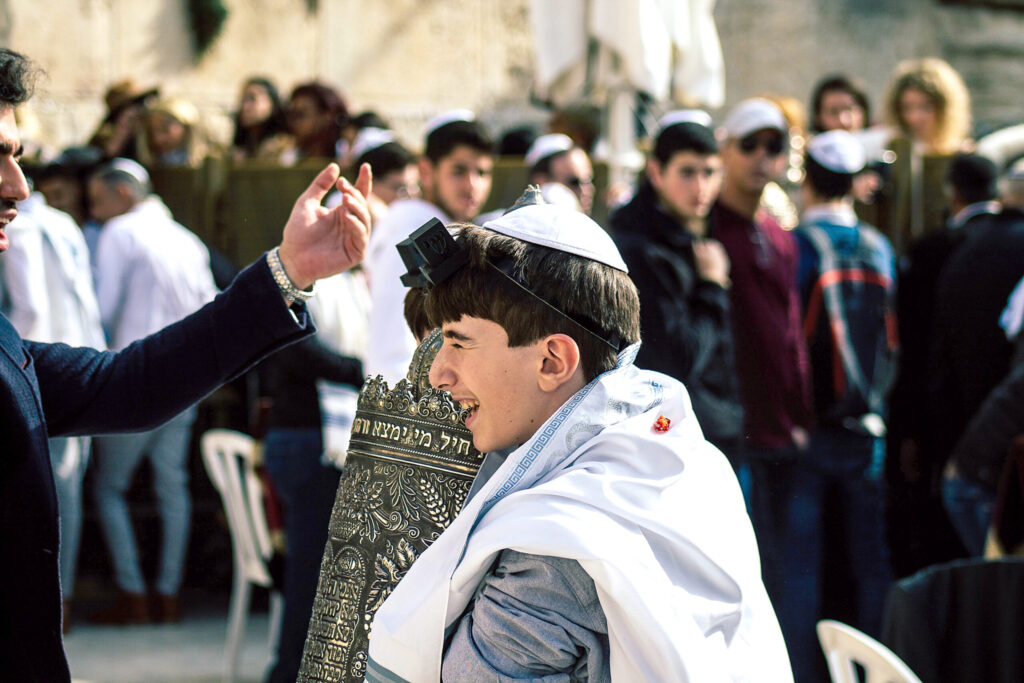

The origins of the Bar Mitzvah date back to ancient times, though the concept has evolved over the centuries. The Torah does not explicitly mention the age of thirteen as the defining moment of adulthood, but the Mishnah in Pirkei Avot (Ethics of the Fathers) states, “At thirteen for mitzvot,” signifying that at this age, a boy becomes obligated in the commandments. Before this time, his parents bear the responsibility for his actions, but once he turns thirteen, he is accountable for observing mitzvot on his own. This transition is not merely symbolic; it represents a fundamental shift in a boy’s spiritual standing. He is now counted in a minyan, can be called to the Torah, and is expected to take his place as a full-fledged member of the Jewish community.
Throughout Jewish history, the ways in which a Bar Mitzvah was marked varied across different communities. In some Sephardic traditions, a young boy would take on the responsibility of fasting on Yom Kippur for the first time, while in Ashkenazi communities, the primary focus was on the boy receiving his first aliyah to the Torah. In medieval France, Rabbi Shlomo ben Aderet (the Rashba) described the custom of a father reciting the blessing Baruch she’patrani (“Blessed is He who has freed me from the responsibility for this child”) upon his son’s Bar Mitzvah, acknowledging the shift in religious obligation. While the formal celebrations may have varied, the essence remained the same—the moment when a boy publicly assumed his role as a responsible Jew, bound by Torah and mitzvot.
Over time, the celebration of a Bar Mitzvah expanded. In Eastern European shtetls, families would host a modest meal after the young man’s first aliyah, often with Torah learning and words of Torah from the boy himself. In the Sephardic world, grand feasts with communal participation were common, emphasizing the collective joy in welcoming another young man into the covenant of Torah and mitzvot. However, it was not until the modern era, particularly in the 20th century, that Bar Mitzvah celebrations took on a more extravagant nature. Today, it is not uncommon to see lavish parties, live entertainment, and elaborate themes, sometimes overshadowing the spiritual weight of the occasion.
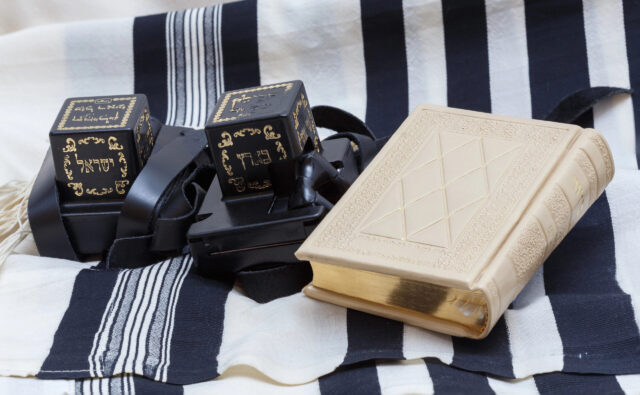
While there is certainly nothing wrong with celebrating this joyous moment, it is important to remember the deeper significance of the Bar Mitzvah. It is not about the size of the event or the grandeur of the party, but about a young man stepping into his spiritual heritage with purpose and commitment. The heart of the Bar Mitzvah is found in his first mitzvah observances as an adult—donning tefillin, leading prayers, or delivering a Devar Torah. These actions reinforce the idea that becoming a Bar Mitzvah is not a culmination but a beginning, the start of a lifelong journey of Torah learning and mitzvah observance.
For many, the experience of preparing for a Bar Mitzvah becomes a transformative period of growth. Learning to lay tefillin each morning instills discipline and a connection to Hashem. Studying a Torah portion, whether through traditional chanting or an in-depth explanation, builds confidence and pride in one’s heritage. Engaging in a mitzvah project, such as helping those in need or dedicating time to a meaningful cause, teaches responsibility beyond oneself. These experiences shape not only the Bar Mitzvah boy but also his family and community, who rally around him to support his journey into Jewish adulthood.
Even as times change and customs adapt, the core of the Bar Mitzvah remains unchanged. It is a reaffirmation of our commitment to Torah, a celebration of continuity, and a moment of profound spiritual elevation. When a thirteen-year-old boy stands before the congregation, wrapped in his tefillin, reading from the Torah with conviction, he carries with him the hopes and prayers of generations past. His voice joins the echoes of history, uniting him with the countless young men who came before him and those who will follow in his footsteps. It is this unbroken chain of Jewish faith and responsibility that defines the Bar Mitzvah—not just the moment, but the mission it represents for a lifetime.