

Encouraging High School Entrepreneurs
Sarina Roffé
“I believe the entrepreneurial spirit creates innovators with new ideas and a drive that exerts a force like no other. I enjoy sharing my experiences as an investor and practitioner, as well as studies, research, and readings to assist young entrepreneurs on their journey,” said Sian Goldofsky.
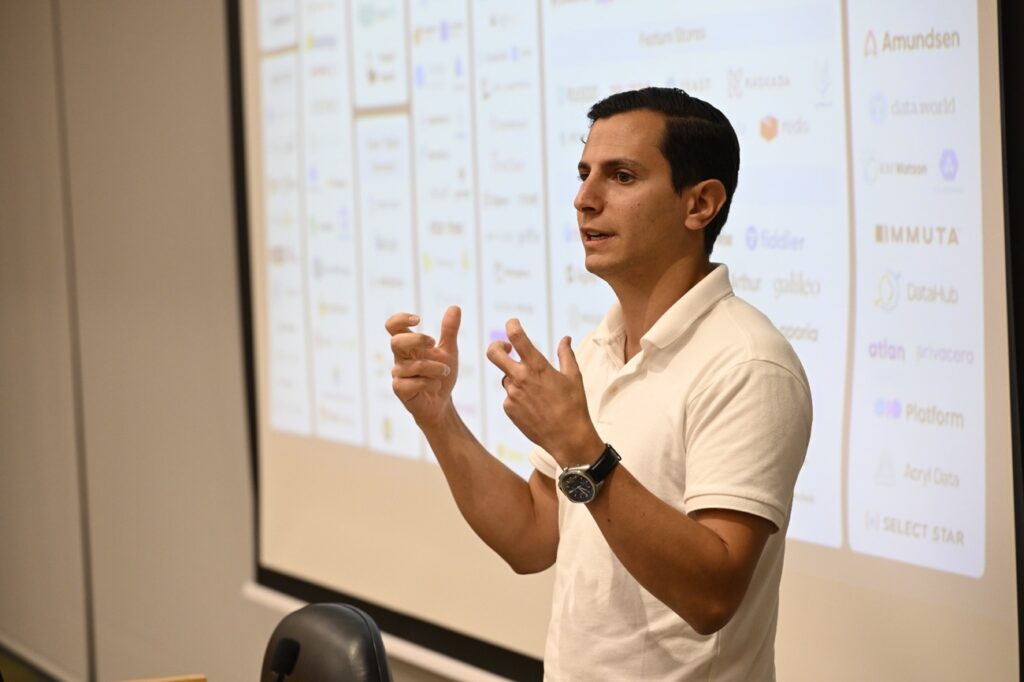

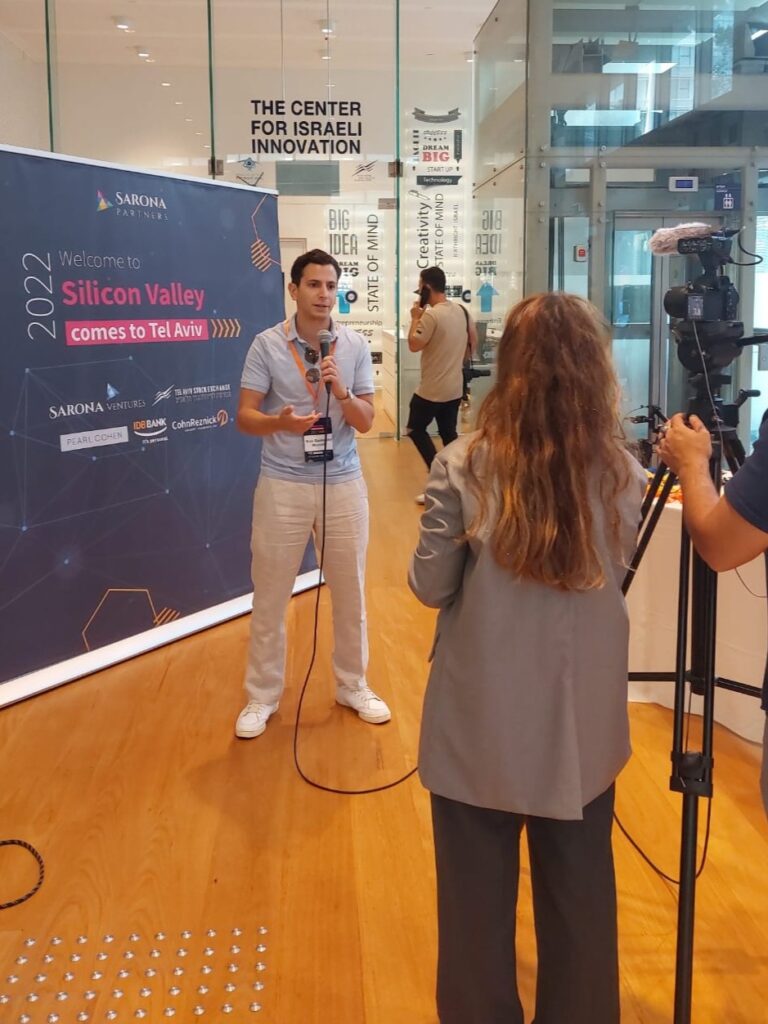
Born and raised in Deal, New Jersey, the Hillel High School grad believes high school students should be encouraged to be entrepreneurs. The culture of the Syrian community is rich with self-made businesspeople who are excellent role models. “In business, it is really critical to have a strong network, which we have in the community. When combined with the entrepreneurial spirit, it drives the future of the economy. And that’s exactly what we have in our community,” said Sian.
As background, Sian’s mom, Sima, is from the Ba’asher and Salamah families, whose roots trace back to Urfa, a satellite of Aleppo, and Yemen and who eventually settled in Eretz Israel. Sima met Sian’s dad, Dr. Sheldon Goldofsky, a descendant of Polish Holocaust survivors, on a trip to the United States. They married and settled in the Deal area. Hillel was Sima’s beacon of light as she wanted her children to learn Hebrew. Hillel enabled the family’s deeper integration into the Deal community, which ultimately led to the family becoming religious through their relationship with Rabbi Ezra Labaton A’H.
After Sian’s older brother, Siel, moved to Israel to serve in the Israeli Defense Forces, Sian’s parents and younger sister, Shani, followed suit and made Aliyah (immigration to Israel). Sian stayed behind in America to finish high school. He then attended Binghamton University, where he earned a master’s and a bachelor’s degree in electrical and computer engineering with concentrations in information assurance (cybersecurity) and control systems, and where he met his future wife.
Even before graduating from Hillel, “I always intended on serving in the Israeli military. I wanted to be in intelligence or MAFAT (Directorate of Defense, Research & Development). I entered college with that goal in mind and studied under professors who were world-renowned in the relevant subjects. I invested deeply in cryptographic, network communications, and control systems studies, critical technologies for cybersecurity and defensive applications like the Iron Dome. These are challenging disciplines, but I kept focused on my end goal. I assisted in the research of amazing professors in the field, and before long found myself working as a civilian researcher for the U.S. military. That led me to an early career as an enterprise cybersecurity consultant, one of very few of my age, working with some of the largest companies in the world.”
Later, Sian made Aliyah (immigration to Israel) with his then-fiancé, Jasmine, and began a career in investing in startups on behalf of leading funds managing over $1 billion. Today, in addition to his work in venture capital, Sian is an advisor to MAFAT.
“Throughout my career, it became apparent that there are those who innovate privately and those who want to spread innovation to the world.”
Sian and his partners at SaaS Ventures recently launched a $30 million fund dedicated to investments in Israeli cybersecurity and AI companies. “This is an exciting time for small business owners. If they invest in AI tools, they will be well positioned for significant growth,” said Sian. The October 7 attack on Israel motivated his new fund’s creation, and the current war with Iran reminded Sian to take a moment and think about how he can help the community. He will be speaking to students at Hillel Yeshiva about entrepreneurship in the coming school year.
“In our community, we have this incredible culture where everybody’s an entrepreneur. In Israel, it is very similar. Israel has one of the largest startup ecosystems and the largest number of startups worth over $1 billion per capita in the world. Everyone is helping one another. That’s partially inherited from the IDF, where everyone participates due to mandatory service, and it breeds a collaborative culture. Also, as Jews, everybody feels for one another. It’s like the community I grew up in but extended significantly.”
Sian believes students should begin being entrepreneurial in high school. “High school students are already starting to play around with what it would be like to build their own business. There have never been lower barriers to entry. It’s never been more accessible to start something new, and the time it takes to go from an idea to a product has never been shorter. In high school, you have similar-minded close friends who can work and collaborate with you at a time when you have no external responsibilities beyond your studies. You are well positioned to begin a business, and I suggest you start one now,” he said.
“Parents and others in the community can help provide guidance. Start with a problem that needs to be solved. People care about what they want to buy, not what you want to sell. After identifying the problem, tailor your solution accordingly. It is straightforward. If you have a low-priced item, then it needs to be something that can sell itself and not be expensive to create or maintain. If it’s expensive, it must be possible to support a sales team, and the product must deliver significant value. After identifying the problem, ask yourself, what does my customer look like and where can I find them?”
“I want to encourage high schoolers to try their hand at entrepreneurship. I think that high school is the perfect time to begin. And I believe our community is well positioned for it. I’m excited about it. I’m hoping to invest in entrepreneurs from our community.”
“I also want people to stop being so concerned and questioning the value of college after AI. College remains valuable, and it can provide value in many ways. Success in college can come from a great education, but also from your network and relationships established while there. It’s a fantastic place to collaborate with partners, build projects or businesses, and even find your spouse.
“High grades are important, but as an investor I will take the person with experience growing a business quickly every time. For me, grades are an indicator of potential success. A Harvard graduate likely has resilience and a track record of working hard, so when comparing two individuals who do not have experience building a business prior, we lean heavily on education. That said, if one built a thriving business before, they are much more likely to succeed in building another regardless of where they went to school.
“Age is not important. A person with little funding who built an application or a business that grew quickly at a young age, whether by user base or relative revenue, accomplished something that few people in the world have ever done.”
Sian travels frequently between Israel and the United States and is glad to be a resource for schools and synagogues in our community that may benefit from conversations around Israel, innovation, startups, and venture capital.