Home Blog Page 84

NAVIGATING THE METROPOLITAN MUSEUM OF ART

NATALIE SENIOR GREENBERG

THE METROPOLITAN MUSEUM OF ART (OR THE MET) IS ONE OF THE WORLD’S GREATEST ART MUSEUMS. ITS COLLECTION SPANS 6,000 YEARS AND THE ENTIRE GLOBE. VISITORS FROM ALL OVER THE WORLD COME TO SEE ITS TREASURES. WHERE ELSE CAN YOU SEE THE INSIDE OF AN EGYPTIAN TOMB, A FULL SET OF JAPANESE ARMOR AND A ROOM OF RENAISSANCE PAINTINGS ALL IN ONE DAY?

As New Yorkers we are fortunate to call the Met our own, and New York City residents can “pay what they wish” to enter the museum, instead of the hefty $25 fee for tourists. I love to take advantage of this policy, and whenever I am on the Upper East Side of Manhattan, I pop into the Met for an hour to enjoy.

Planning a visit to the Met can be overwhelming, and I know that the thought of spending hours trudging around the museum may sound boring and tiresome. However, if you plan correctly, your visit will be very enjoyable.

The Met has 16 departments or collection areas, and each department can and should be treated as its own mini-museum. I recommend choosing only one or two areas per visit. A newcomer’s mistake (or the mistake of many tourists) is trying to cram in as much as they can in one day. Do not do this! It will leave you feeling tired, bored and overwhelmed; you will not want to return anytime soon. As a New Yorker, you can pay a small amount (even $1.00!) and return as often as you wish. Spending just an hour or two in one or two areas will give you a better understanding and appreciation of the area you are visiting and will leave you wanting more! Following are some recommendations (some, but not all of my favorites) for a great Met Museum visit.
EGYPTIAN ART
While wandering through the galleries of the Egyptian Art Wing of the museum, you will encounter statues of pharaohs, goddesses, animals and mummies. You will also see jewelry and tomb paintings. The highlight of the Egyptian collection is the Temple of Dendur, located in gallery 131. It is the only complete Egyptian Temple in the Western Hemisphere. A beautiful soaring gallery was built specifically to accommodate the temple. It is one of the most popular rooms in the museum and a must see.

GREEK AND ROMAN ART
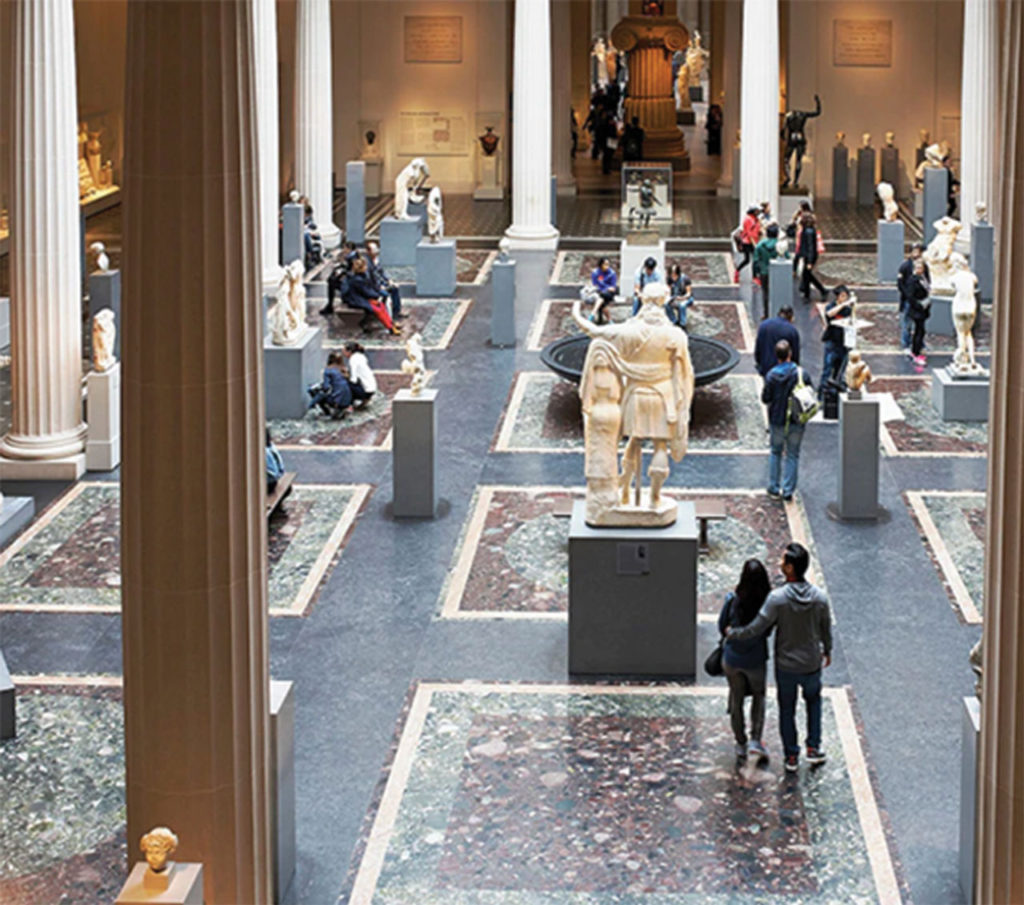
The Greek and Roman Sculpture Court, located in gallery 162, is an exquisite two-story hall filled with objects from the Roman and Greek civilizations and the entire Mediterranean area. Many of the statues on display were intended to fill ancient gardens to create delight and comfort. There is a sense of calm in this space and you can sit on a bench and think about what it might have been like to be a wealthy Roman in ancient times. Look for the statue of the Three Graces, who represent beauty, charm and abundance. Be sure to check out the mezzanine above the sculpture court (gallery 170) to see an ancient Etruscan chariot.

EUROPEAN PAINTINGS
The Met’s collection of European paintings dates from the days of the early Renaissance to the present time. While I love to wander through the Renaissance portion, my favorite areas are the galleries of 19th and early 20th century art. Here you will find some of the Met’s greatest works by Impressionist master Claude Monet. The Impressionists were most interested in portraying the effects of light and air as well as an interest in the urbanization of Paris in the late 19th century. Look for the light effects as well as city paintings showing how Parisians liked to spend their leisure time.
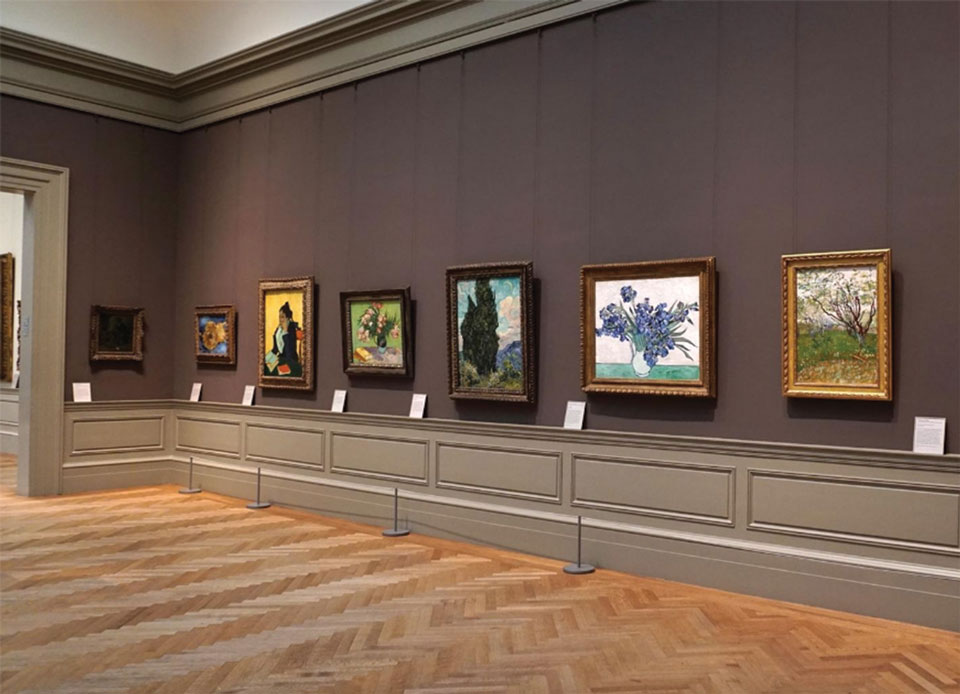
Vincent Van Gogh’s paintings are displayed in galleries 822 and 825. His style changed rapidly during his short career, and you can see the transformation clearly. His early paintings are quite gloomy, but his later works are lighter and brighter with the thick brushstrokes that he became famous for. One of my favorites is Wheat Fields with Cypresses, which I consider to be the daytime version of The Starry Night (which is located at MoMA).

Check out the rooms nearby for paintings by Manet, Degas, Cezanne, Pissarro, Picasso and more; all masters of late 19th and early 20th century painting.

Here is a listing of all the departments at the Met Museum. My suggestions should get you off to a good start, but feel free to check out some of the other areas. Remember to keep your visit to less than two hours, and try to stick to only two areas to explore. Go back and visit often! There is always something new to see, as well as special exhibits. Have a wonderful time!

Metropolitan Museum of Art Departments

African Art
American Art
Ancient Near Eastern Art
Arms and Armor
Asian Art
Costume Institute
Drawings and Prints
Egyptian Art
European Paintings
European Sculpture and Decorative Arts
Greek and Roman Art
Islamic art
Medieval Art
Modern and Contemporary Art
Oceanic Art
Photography

The Metropolitan Museum of Art is located at 1000 Fifth Avenue (entrance at 84th Street) New York City. Bring proof of residency (like your driver’s license), so you can pay what you wish.

Natalie Senior Greenberg is a Brooklyn College Art History professor, and the founder, curator and owner of an online art gallery.

SYC IS BRINGING OUR COMMUNITY TOGETHER ONE MATCH AT A TIME

GOING INTO SUMMER 2021, WE AT SYC WERE NOT SURE WHAT TO EXPECT. WE KNEW WE WANTED TO CONTINUE TO MAKE EVENTS FOR OUR SINGLES, BUT WE DIDN’T KNOW IF IT WOULD BE POSSIBLE. LOOKING BACK, WE CAN GLADLY REPORT THAT THIS PAST SUMMER WAS ONE OF OUR MOST SUCCESSFUL YET!

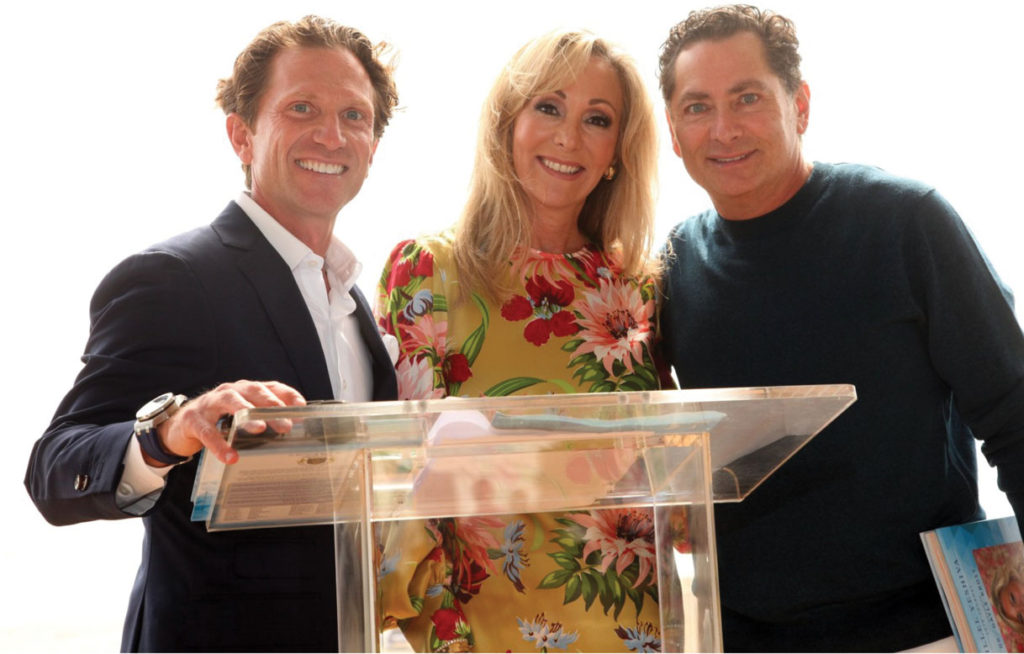
We kicked off the summer with a collaboration with Jeffrey Sitt. Together, we planned a party for singles of the ages 25 and up. We had music, food, dancing and an awesome crowd of people all ready to meet someone. We are happy to report that at that very event a couple found each other and is now engaged.

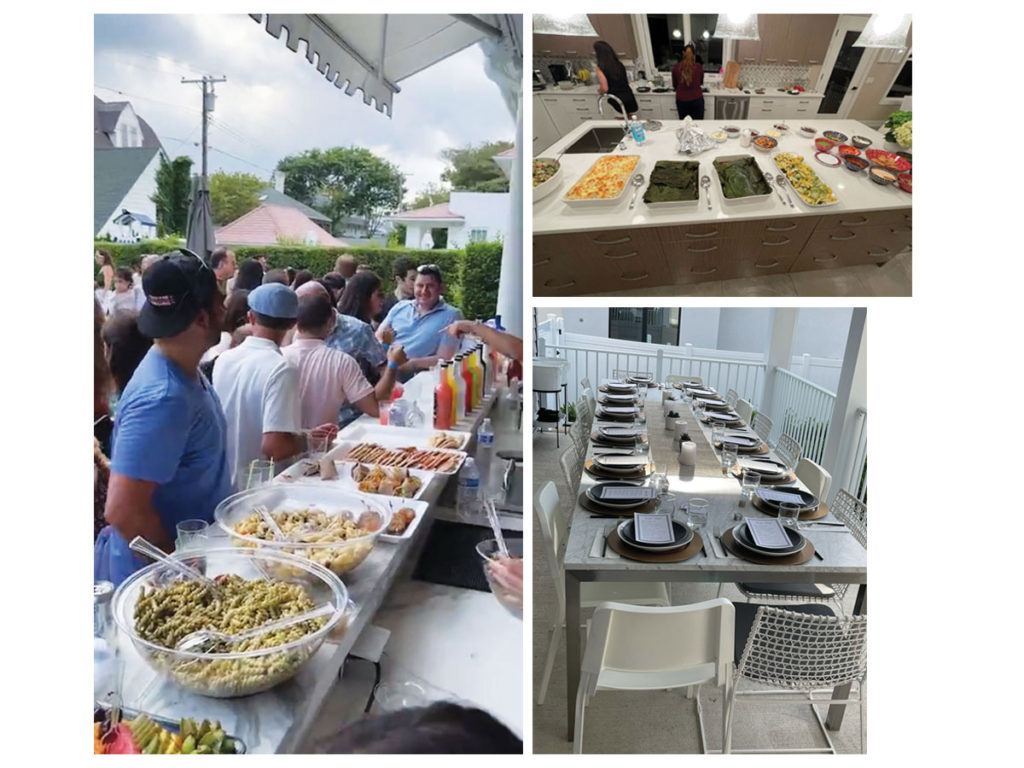
Another successful event worth mentioning is our Mexican-themed dinner party. We arranged an intimate evening with Chef Vivian Saade Gartenberg of Vivian’s Cocina. The event was co-sponsored by Nissim Metta in honor of his wife, Frieda. We planned this event differently than a regular party. We carefully chose eight young ladies, and eight young men who we thought might make good matches. We set the table lavishly and meticulously. We then planned a cooking class. The singles had a great time learning how to make fresh tortillas, salsa, guacamole, and tetelas.

After the delicious dinner and cooking demonstration, everyone roasted marshmallows around a fire pit and ate desserts. It was a beautiful night and the atmosphere was relaxed. Our singles had fun while meeting some new people. BH we have a few couples dating from this event as well!

SYC is now in the process of planning more original events, including Shabbat dinners and theme nights. If you are single and looking for your match, we invite you to join us and see what all the talk is about! You really never know who is out there waiting for you.

Follow us on Instagram @syc.events for all our upcoming events.

THE RABBINICAL ALLIANCE OF AMERICA

HONORS 4 NYPD OFFICIALS

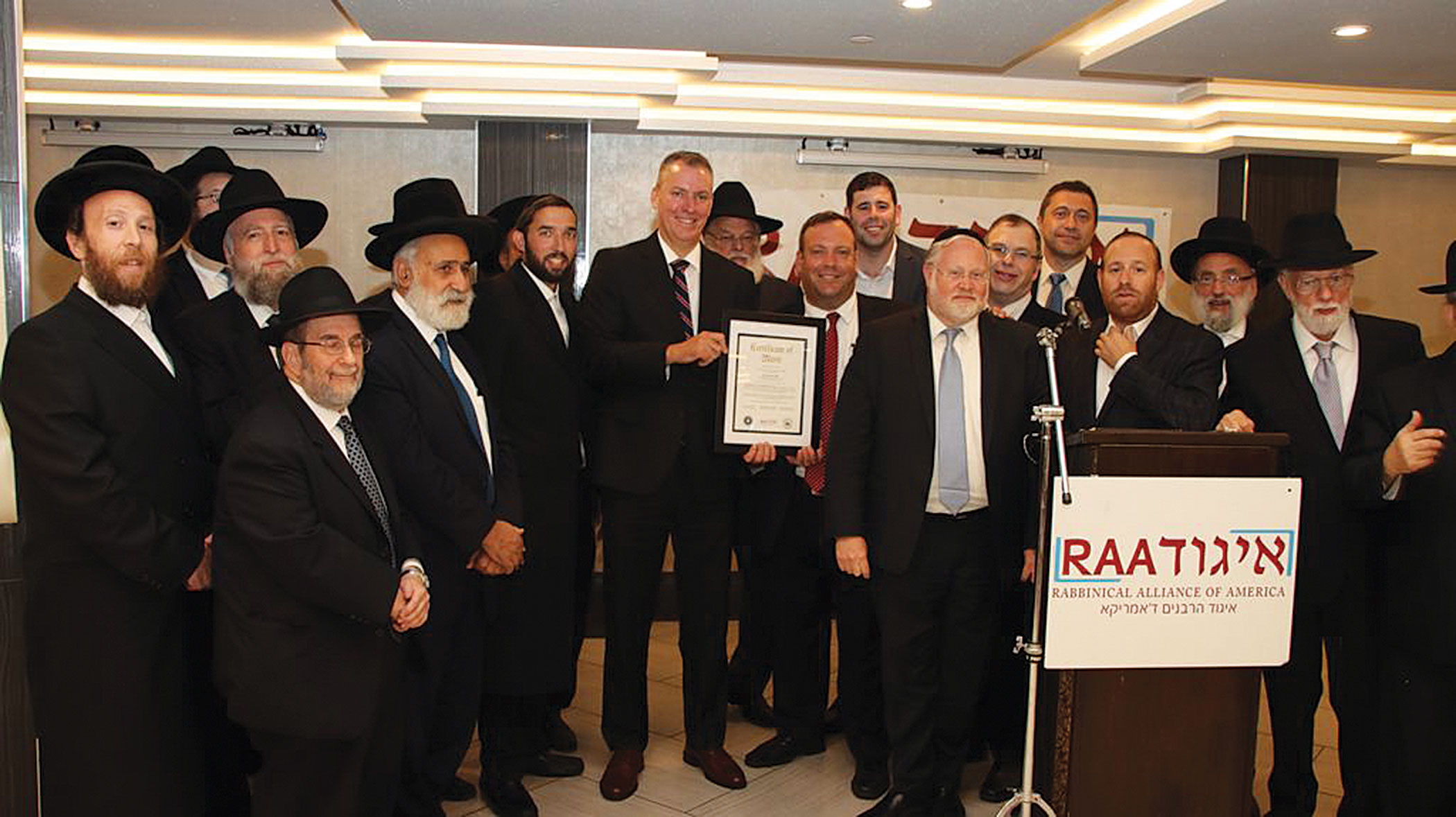
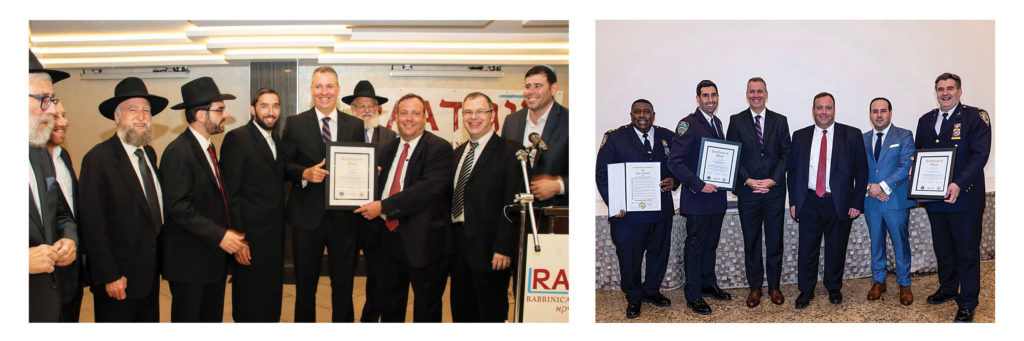
THE IGUD HARABANIM (RABBINICAL ALLIANCE OF AMERICA, RAA) RECENTLY HELD THEIR ANNUAL ELUL SIYUM HASHAS AND HONORED FOUR NYPD OFFICIALS FOR THEIR DEDICATED SERVICE TO THE CITIZENS OF NEW YORK. THE RECIPIENTS OF THE RAA’S PRESTIGIOUS AWARDS WERE POLICE COMMISSIONER DERMOT SHEA, CHIEF OF COMMUNITY AFFAIRS JEFFREY MADDREY, DEPUTY INSPECTOR RICHIE TAYLOR, AND CHAPLAIN IMAM DR. TAHIR.

The ceremony was held at Rabbi Eliyahu Elbaz’s Shul, the Sephardic Lebanese Congregation on Avenue T in Brooklyn. The Rabbinical Alliance of America was founded in 1942 and has over 800 members across North America. It also operates its own binding bet din.

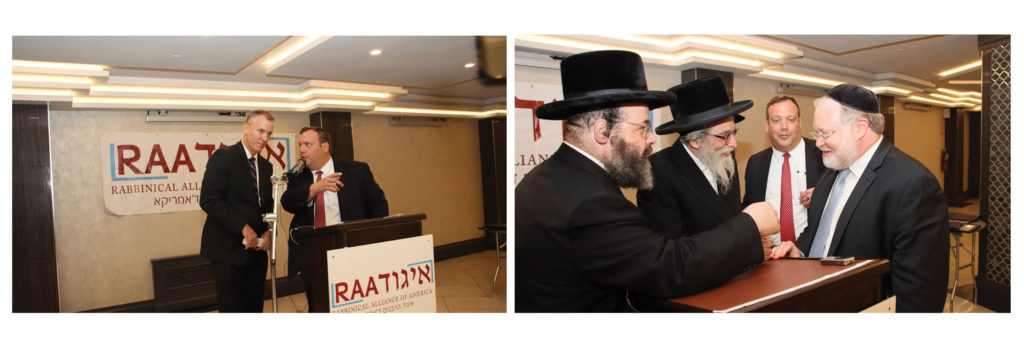
Elected officials in attendance included Assemblyman Simcha Eichenstein, Councilman Kalman Yeger, representing Mayor Bill de Blasio was Assistant Commissioner Pinny Ringel, representing US Congresswoman Yvette Clarke was Gabriel Torres. Eli Slavin presented Congressional Proclamations to the honorees. Rabbi Mendy Mirocznik, Vice President of the Igud served as MC, Rabbi Michael Melnicke served as Dinner Chair and NYPD Clergy Liaison David Heskiel served as Chair of the Organizing Committee. The siyum was made by Rabbi Shaul Kassin, and the Hascholas Hashas by Rabbi Leibel Wulliger, Rosh HaKollel, Nachas Dovid, Yeshiva Torah Vodaath in Brooklyn. Rabbi Yaakov Klass serves as the Presidium member of the RAA, Rabbi Yehoshua Hecht serves as Convocation Chairman.

Commissioner Dermot Shea said, “we are going to get New York City back to where we want it to be. We need everyone’s help. We need help from our clergy, we need help from the private sector, we need help from elected officials, and we’re getting it. We’ve seen terrible things in this city before, and we’ve gotten to incredible heights. I’ll say to Jeff, to Richie, to Imam Tahir, we couldn’t do it without you and congratulations on your recognition. We are going to take this city back to those incredible heights, I have no doubt. In the spirit of togetherness, and where do you know the spirit of togetherness better than in Brooklyn. If there’s a hate crime against an Asian individual it’s a hate crime against us all. If there is a hate crime against a Jewish individual it’s a hate crime against us all. If there’s a hate crime against a Muslim individual it’s a hate crime against us all. And in the spirit of what we have seen this year, New Yorkers standing up together, is why I have no doubt that we will get New York City back to where we want it to be.”

Chief of Community Affairs Jeffrey Maddrey stated, “It’s an honor to be recognized by the Rabbinical Alliance of America, an organization that builds the community through its love of G-d and its love of people. The NYPD and the Jewish community enjoy a strong relationship.Here’s to many more years of friendship.”

Deputy Inspector Richie Taylor spoke about Hakarat Hatov (appreciation for good). “When I was a regular police officer studying for the sergeants exam in 2008, I evaluated many instructors, but one instructor stood out. At the time, he held the rank I currently hold, Deputy Inspector. Commissioner Dermot Shea was that instructor and I used to travel over an hour each way to attend his classes. He taught from the heart and he ensured that his students were prepared, because even back then he cared immensely about the future of his students, the police department, and New York City. When the four shuls in Riverdale had bricks thrown through their windows a few months ago, Commissioner Shea was hands-on, calling me and visiting the shuls. When we saw violent hate crimes against Jewish individuals, just a couple months ago in Flatbush and Boro Park, I was constantly on the phone with Commissioner Shea and Chief Maddrey who came to the community to ensure that community members were safe, and felt safe.”

DI Taylor also stated that he worked for Chief Jeffrey Maddrey as a sergeant, lieutenant, captain and now deputy inspector and credits Chief Maddrey for his hands-on leadership and for mentoring him in the best way possible. He further acknowledged his wife Miri, who attended just a week after giving birth to their fifth child, for her unwavering support.

NYPD Chaplain Imam Dr. Tahir stated “when I came from Egypt to the United States, the first community that welcomed me and gave me a microphone to speak to an American audience was the Jewish community and I am honored to be here. We love New York and we love our Jewish brothers and sisters. Happy and blessed Rosh Hashanah.”

NYPD Clergy Liaison David Heskiel said “I’ve worked closely with both, the Rabbinical Alliance of America and each of the four honorees and I stand here proudly as we join together for the betterment of our city and our future generations. Even during the toughest of times, in unity we will always prevail.”

FAISR’S UNIVERSAL EXPEDITION

TAYLOR CALLAHAN & ALEXANDRA NAVA-BALTIMORE, PHOTOS COURTESY OF ALEXANDRA NAVA-BALTIMORE

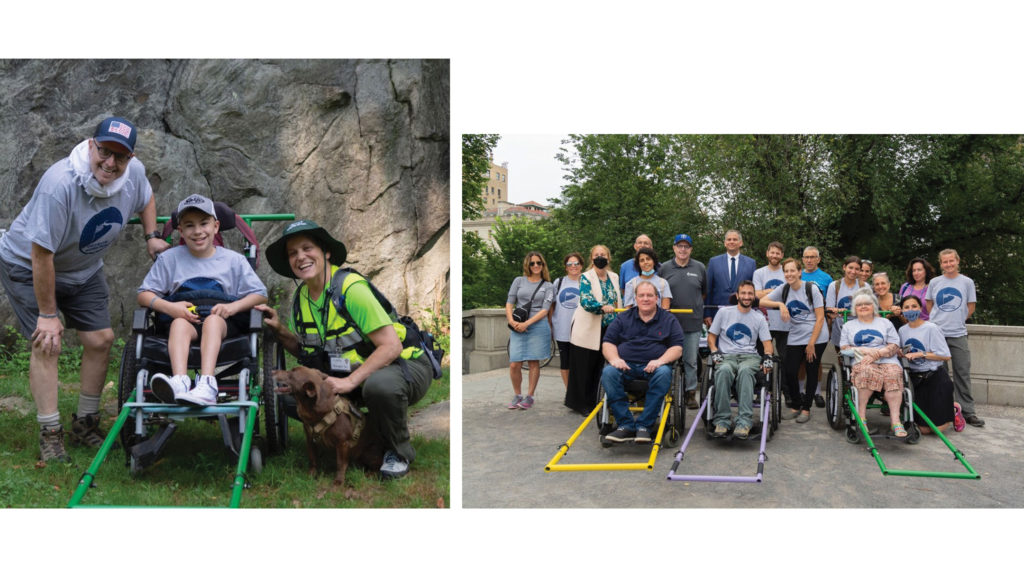
RECENTLY, FRIENDS OF ACCESS ISRAEL (FAISR) LAUNCHED ITS FIRST UNIVERSAL EXPEDITION IN NEW YORK. FAISR, A NONPROFIT ORGANIZATION THAT WORKS TO IMPROVE UNIVERSAL ACCESSIBILITY FOR ALL INDIVIDUALS WITH DISABILITIES, PARTNERED WITH PARATREK AND ACCESS ISRAEL FOR A TWO-WEEK TREK THAT INCLUDED ROCKEFELLER STATE PARK, BEAR MOUNTAIN, AND CENTRAL PARK.

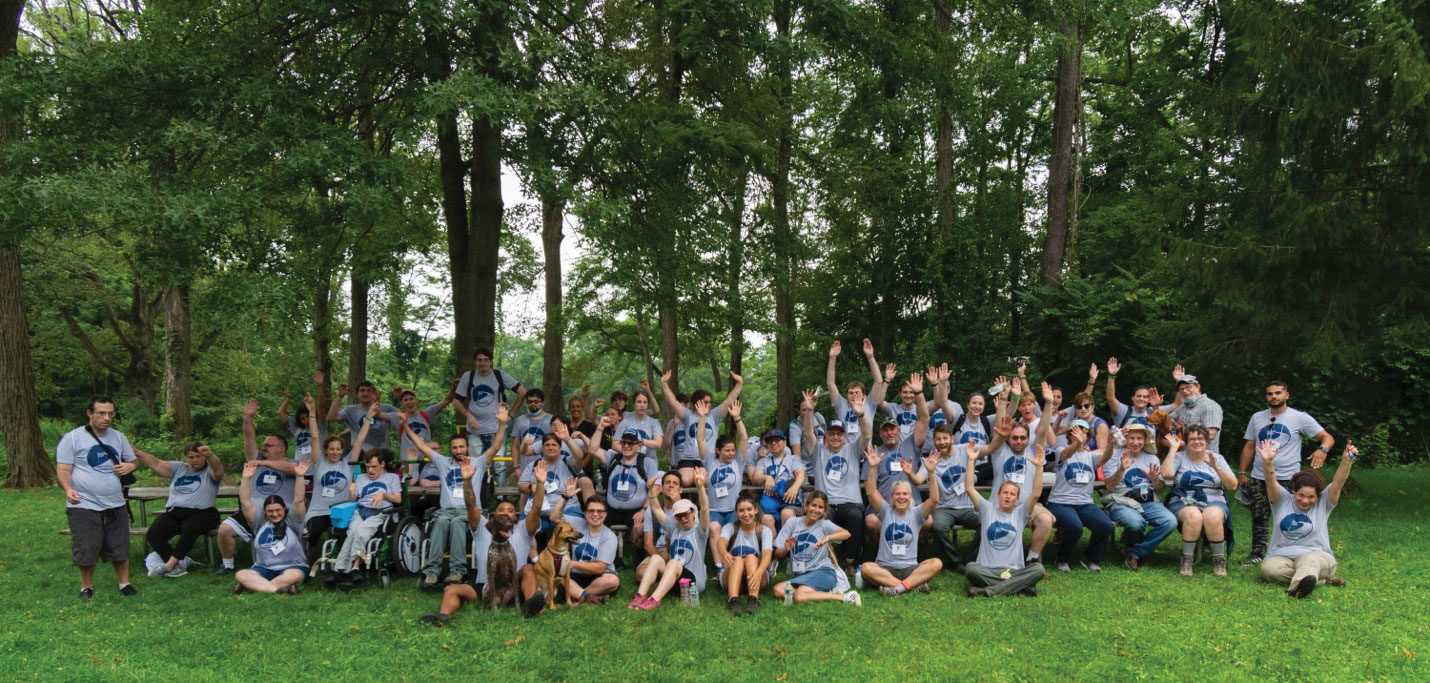
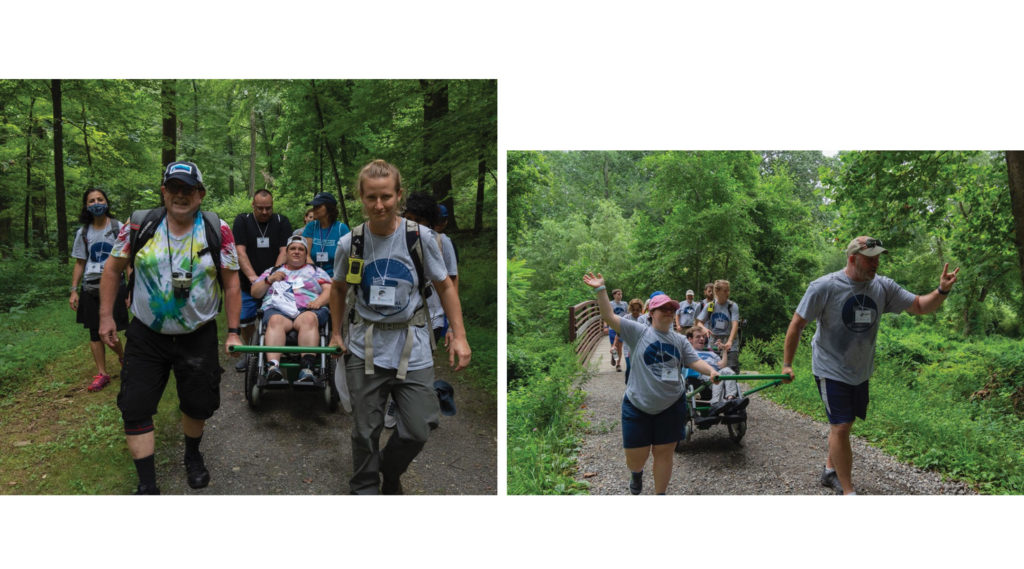
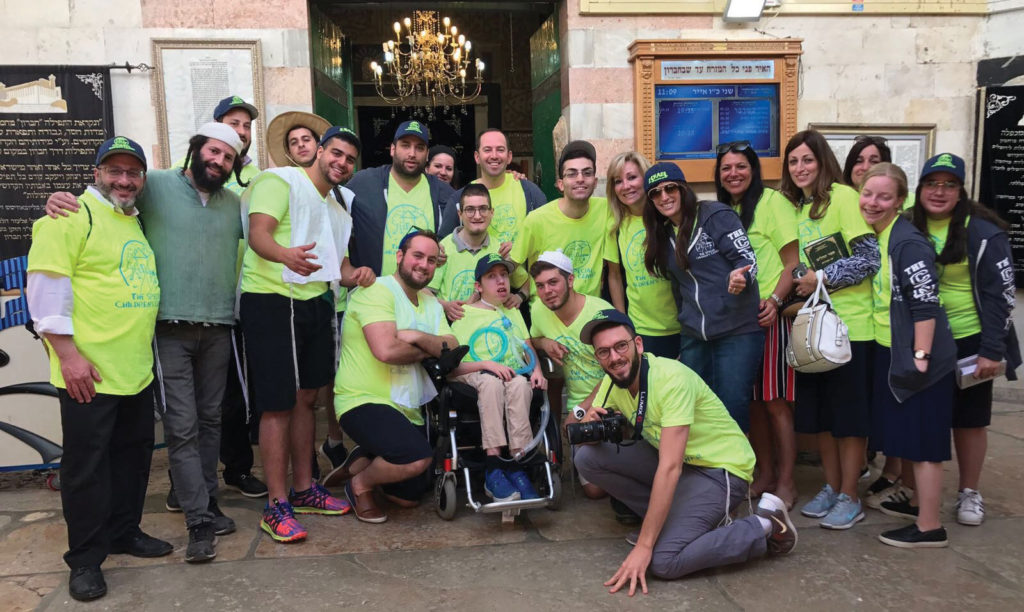
In total, over 56 miles of hiking were covered by teams of people with and without disabilities. All who participated arrived as individuals and left as part of a united family. They grew close by working together during a total of 12 hikes, using communication, conversation, and a sense of togetherness. Through the collaborative efforts of Executive Director of FAISR Jamie Lassner and Omer Zur, founder and creator of Paratrek, the impossible for many was made possible for all.

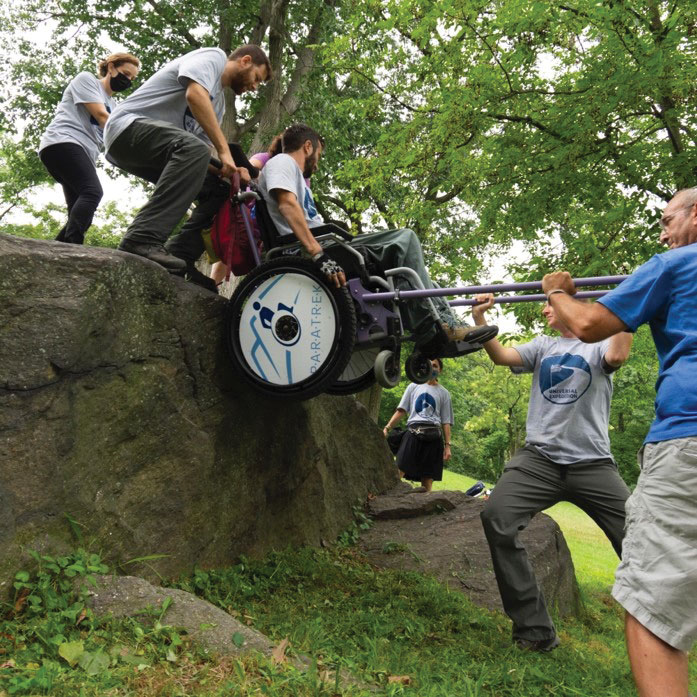
Zur and two members of his team traveled from Israel, and for the first time in the United States debuted the 5.0 edition of the Paratrek trekker, which has covered grounds as low as the Dead Sea and as high as Kilimanjaro (a FAISR trip that took place in early in 2019). An all-terrain wheelchair, referred to as a trekker, allows people with disabilities to hike in non-accessible terrain or routes through the manual operation of the rider and hikers.

Throughout the first week, hikers were taken out of their comfort zones physically and emotionally as they completed morning and afternoon treks. Each day a new group was able to experience the expedition regardless of their ability, race, religion, or age. On the third day of hiking, Fred Mahhs Jr, the founder and CEO of Mahhs Travels, who was paralyzed from the chest down in a diving accident, joined the expedition to go through rugged terrain. He stated it gave him the “feeling of freedom.” For several decades, he has been an internationally renowned disability advocate and went on to say, “the opportunity to be with friends and hike on trails and experience new things together was liberating and exciting!” The trekker united the entire team who were admiring the surrounding beauty of the outdoors. Through the teamwork all participants were able to navigate obstacles along the hike.

Chapel Haven Schleifer Center, a residential community and special education school for adults, joined FAISR and their partnering teams for three days of hiking and new experiences during the second week—many had never hiked before. The state of the art facility and award winning staff, work on the specific needs of each adult and create individualized goals and programs with them. Working together, over 60 residents, their staff, and the FAISR, Paratrek, and Access Israel team hiked through a variety of trails in Rockefeller State Park with one being a most memorable traverse to the highest point with magnificent views, Eagle Point.

Relationships flourished through the hiking and sharing that took place during trek #1 of the Universal Expedition.Strong connections, lifelong friendships, and influential changes were created. Next stop The Israel National Trail.

Taylor Callahan and Alexandra Nava-Baltimore are FAISR Amabassadors and are each completing multiple degrees in college.

GAYLE KROST

A ROLE MODEL WHO LEADS BY EXAMPLE

SARINA ROFFÉ

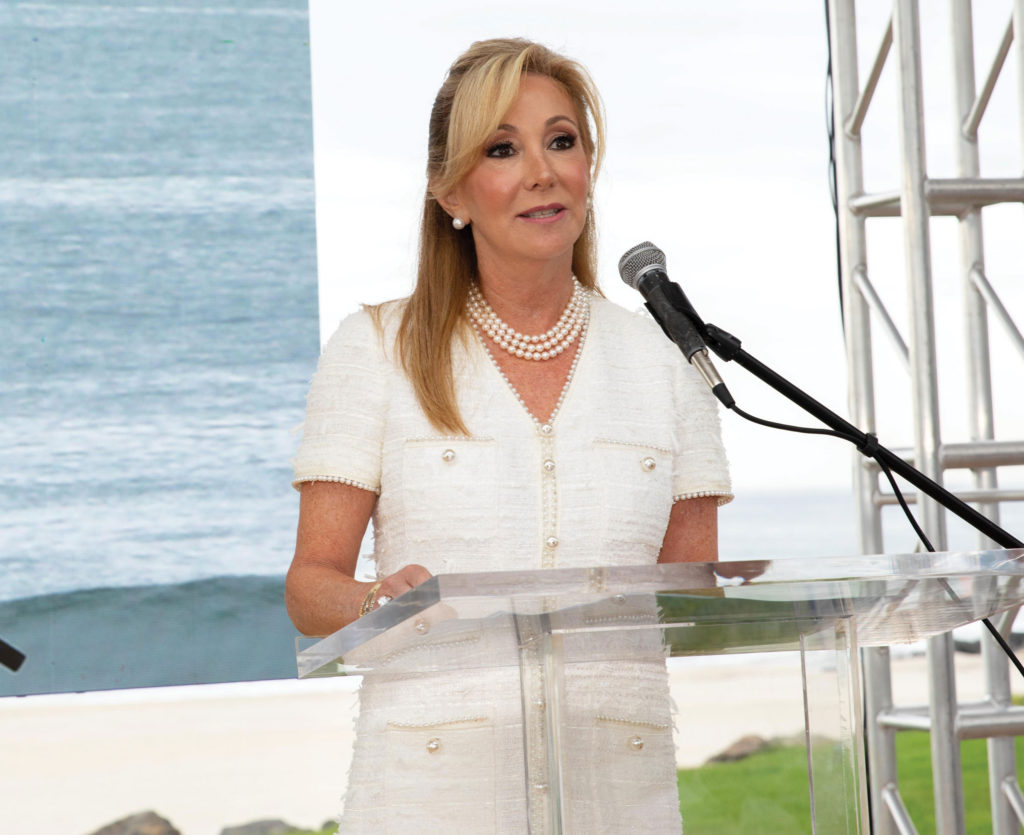
DR. GAYLE KROST’S BEAMING SMILE GREETS THE CROWD OF STUDENTS AS SHE ENTERS THE HILLEL SCHOOL BUILDING ALMOST EVERY DAY. WHETHER IT’S VOLUNTEERING AT HILLEL YESHIVA, HER WORK GUIDING WOMEN AT PROPEL, OR HOSTING SPECIAL EVENTS FOR THE MORRIS I FRANCO CANCER CENTER OR THE SPECIAL CHILDREN’S CENTER, GAYLE IS A DYNAMO IN ACTION.

The take charge mother of four grew up in Oakhurst, attended Hillel Yeshiva and lived among the community her entire life—all while managing a professional career.

“You can have a family, be a professional and volunteer—you can have it all. If I can do it, so can you,” said Gayle. Her husband, Dr. Brian Krost is an oral and maxillofacial surgeon. He wholeheartedly and unequivocally supports and encourages Gayle in all of her philanthropic work.

Motivated into a life of volunteerism and hesed by a community she grew to love and cherish, Gayle says that volunteerism was ‘in the air’ as she was growing up. Gayle’s father, Dr. Barry Elbaum, is a Holocaust survivor who came to America from Poland, mastered English and became an oral surgeon. Her mother, Libbie Elbaum, is a Certified Public Accountant.

Gayle

“My parents were always doing the right thing and taking care of people. My mother was on the Hillel board and worked on their scholarship committee. I grew up with that. They led by example, helping everyone around them, and were wonderful role models,” she said. “My parents graciously opened their home and hosted fundraising events for a variety of charities whose work was meaningful to them.”

An endodontist (root canal specialist) by profession, Gayle received her undergraduate degree from Rutgers University, earned a DDS from New York University College of Dentistry, and then finished her endodontics training at The University of Medicine and Dentistry of NJ (now part of Rutgers University).

“Many of my values came from being entrenched in this fabulous community. The community has so much to offer. Our traditions and values and charity,” she stated.

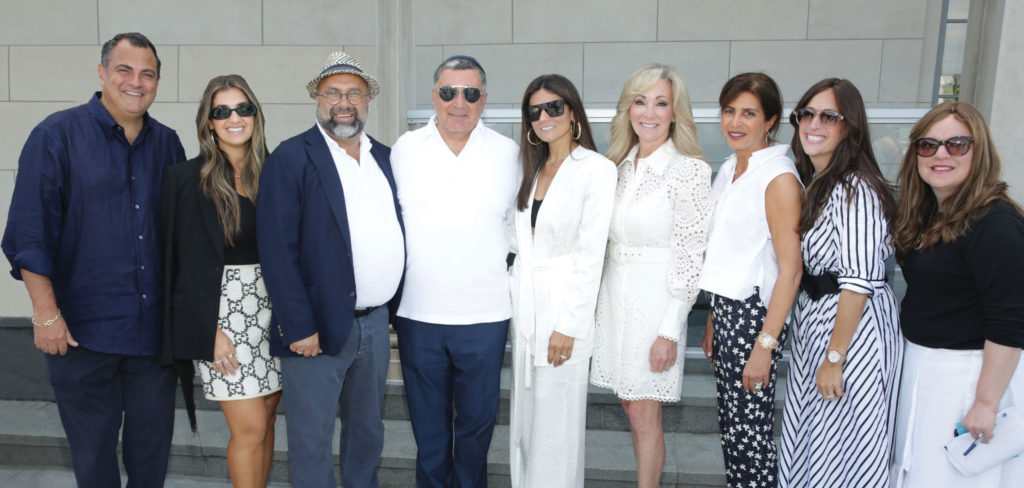
Richie Dweck, Gloria Dweck, Harry Adjmi, Eli and Rena Cohen (event hosts), Gayle Krost, Alice Adjmi,
Jenine Shwekey, and Chaya Bender

Multi-tasking her professional life with her family obligations and volunteering is in her DNA. Married while in dental school, Gayle was pregnant and taking care of children as she studied. Her amazing parents helped with childcare while she was in school, allowing her to pursue her career.

When the Krosts enrolled their children in Hillel, Gayle was immediately invited to be on its Board of Education. Her parents instilled in her and her siblings that education was the foundation for the future, a principle she brought with her when she joined the Board of Education in 1994. Almost three decades later, she sits on the Board of Education (she was chair for 13 years). She is currently vice president of the Board of Directors and the Executive Board of Hillel Yeshiva and is actively involved in the school, bringing her positive energy with her. Her contributions to the school are immeasurable, She spearheaded the school’s Middle States Accreditation.

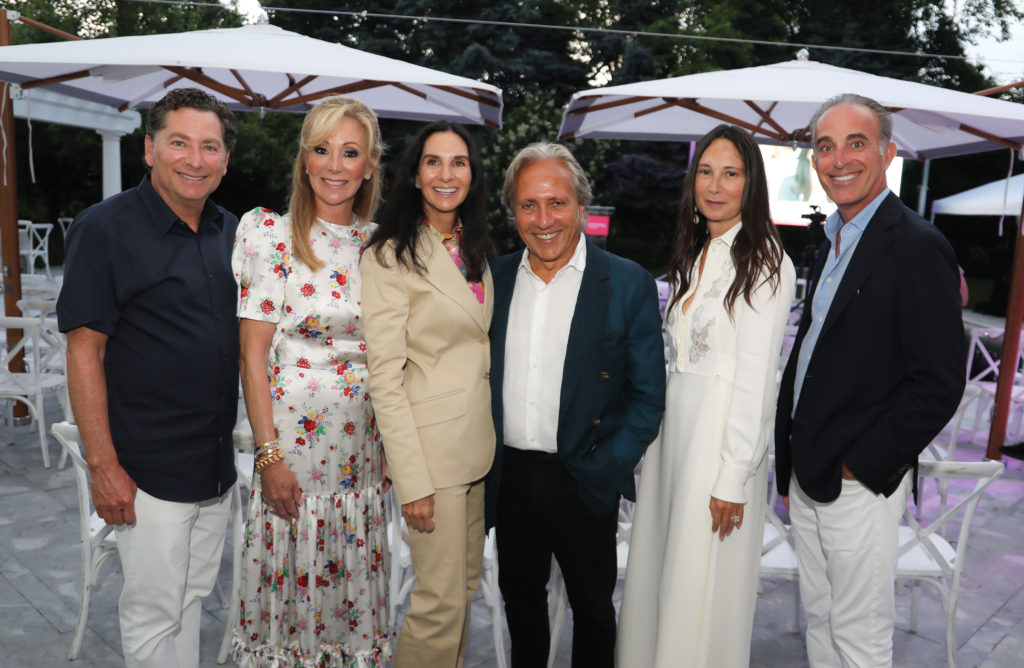
Ezra Askenazi, Gayle Krost, Jacqueline Harary, Haim Dabah, Marcy Feldman, and Michael Haddad

“When you love what you do it’s not work. I get true joy by talking to people and am lucky I can help with their problems.” Gayle’s professional career ended when she injured her hand. She viewed it as a gift from Hashem that she should give more time to her family and hesed work, something her husband and family completely support.

“Hillel Yeshiva has been blessed with Gayle’s warmth, compassion and positive energy over the last 27 years,” said Sammy Saka, Chairman of the Board.

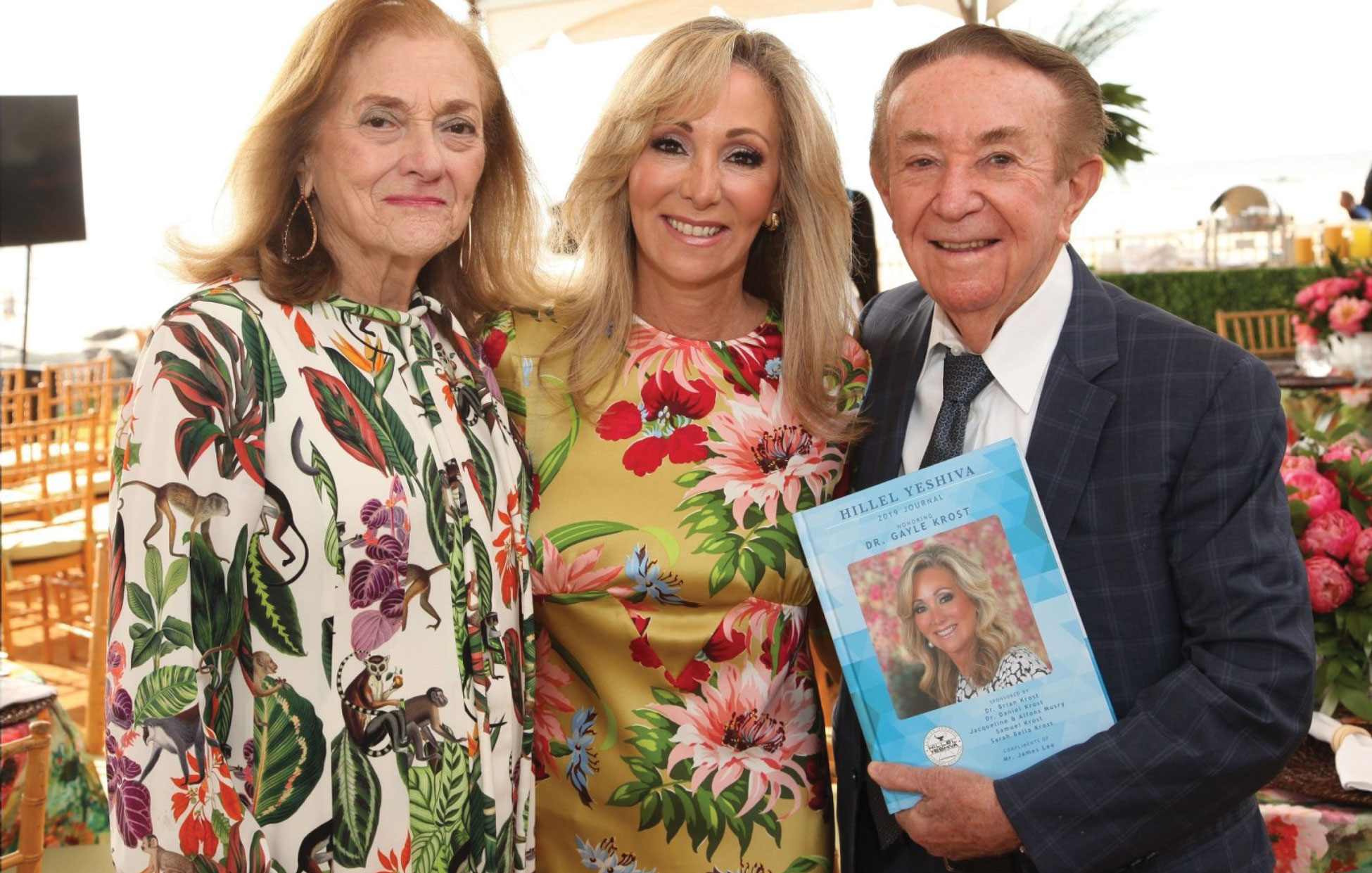
In the 2019 Hillel Journal it said “Gayle’s most lasting legacy would certainly be the Follow Your Dreams program that she created ten years ago with the aim of inspiring and motivating students to reach their full potential professionally and as leaders of the community. Each year, through this program, various alumni and other community trailblazers share with high school students the paths they took towards realizing career success.” She also created a Career Track program to inspire and expose high school students to the many career options available.

Gerrie Bamira, Gayle Krost, Sally Tawil, Grace Sertouya, and Laurie Mizrachi

Ezra Ashkenazi said, “Truly, there is no one like Gayle. She is professional and an excellent listener who evaluates the issues at hand and comes to a sound solution for all parties. She is usually my first pick when preparing a list of board members for any community organization. She does not like drama. She’s a pro, a go-to person with a great attitude and one you can trust.”

“I grew up in a highly educated household. It was assumed you would go to college,” she said. “In today’s world, a higher education is essential for career success. Rebecca Harary recruited me when she had the vision to start PROPEL, a community organization to help women get into the workforce. Women in the community needed jobs to help pay the bills. A one income home was not enough to meet their financial obligations.”

Six years later, PROPEL is sending young women to many different types of programs, as well as college and graduate school, to learn and expand their horizons in different career paths. “The determination and tenacity of today’s women is so different from when I was growing up, and I am so proud of where these community women are today,” she said with a smile.

Isaac Massry, Gayle Krost and Ezra Ashkenazi

According to Rebecca Harary, “Gayle has demonstrated an incredible capacity for leadership for many years in our community. I am both thrilled and excited to see the new heights Gayle will bring us to as our new President at PROPEL.”

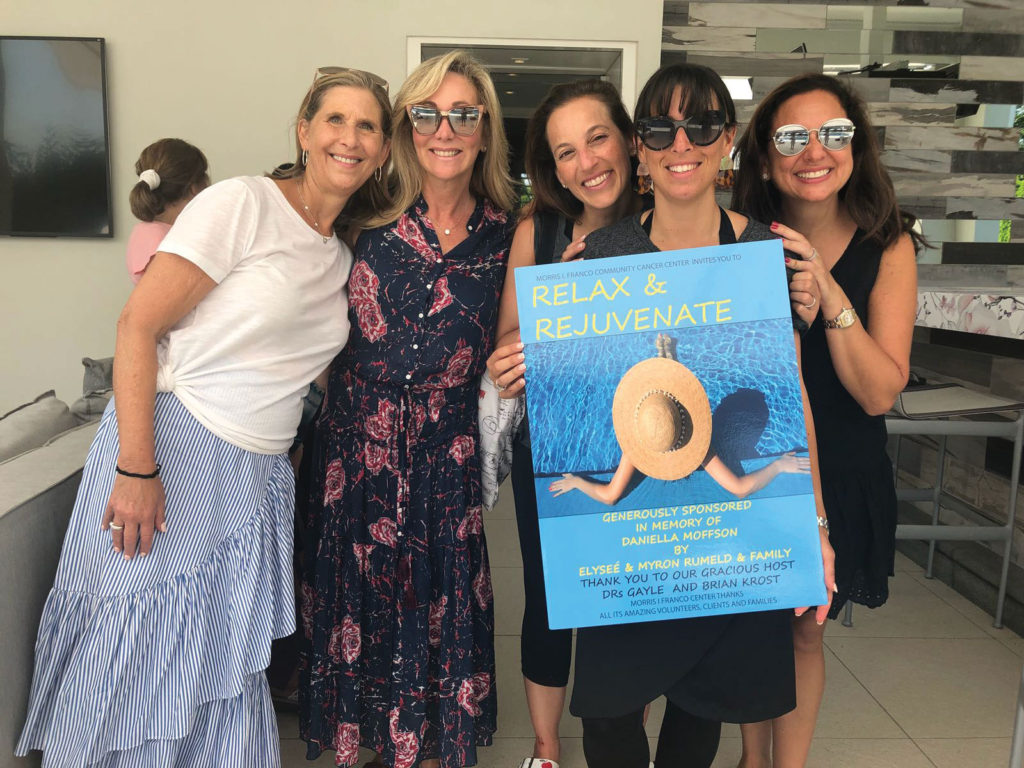
Each summer, Gayle hosts the Morris I. Franco Cancer spa day. The clients receive a catered lunch and swim in the pool, do arts and crafts, plant herbs, and for one nice day, they forget about their illness and enjoy themselves, along with volunteers.

“Gayle and Brian have graciously hosted our Cancer Center‘s annual Day at the Shore event for the past few years,” said Gerrie Bamira, Jersey Shore coordinator for the Cancer Center. “It’s a day of respite and fun for all. They not only open their home but open their hearts to our Brooklyn and Jersey clients and their families. We are very grateful to their commitment and generosity.”

Gayle on a trip with the Special Children’s Center

Fifteen years ago, Gayle became involved with The Special Children’s Center, a respite for families with over 400 special needs children. The Center slogan is Special Needs Never Take A Break, Neither Do We.” The Center runs on love and provides gentle loving care in its after school and summer programs for children with specialized needs and multiple disabilities. The respite program provides programming, feeds the children snacks and dinner, bathes them and sends the children home ready for bed. All with the care and nurturing they would find in their homes.

Gayle works with them to organize a huge fundraising event that supports the Center’s year round and summer camp programs, which are staffed entirely by volunteers. At the end of the summer, she hosts a BBQ and pool party for the volunteers to thank them for all they do for the children.

“You get so much more from helping others than what you give; to me life is so much more fulfilling when you give back and help people. As Jews, we take care of each other. So, I want to help in any way I can, with whatever talents Hashem gave me,” she concluded.

Gayle’s parents had an influence on her and her volunteer work. Not only is she an extraordinary leader and role model, her unparalleled commitment is both elegant and compassionate. Now her four children are helping others and giving back with their involvement in many community organizations—and her grandchildren are Hillel students!

A genealogist and historian, Sarina Roffé is the author of Branching Out from Sepharad, cookbooks and the app, Sarina’s Sephardic Cuisine. Editor of Dorot, Sarina holds a BA in Journalism, an MA in Jewish Studies and an MBA. She is president of the Sephardic Heritage Project, Co-Chair of the Brooklyn Jewish Historical Initiative and Chair of the Sephardic Research Division of JewishGen.

CREATE YOUR OWN PATH TO A DREAM RETIREMENT

ARI BAUM, CFP®

HOW OFTEN DO YOU THINK ABOUT RETIREMENT? MOST OF US THINK ABOUT IT A LOT—AT LEAST FOUR TIMES A WEEK. WE THINK ABOUT WHEN WE’LL RETIRE AND HOW WE’LL SPEND OUR TIME IN RETIREMENT. AS EXCITING AS THAT CAN BE, IT CAN ALSO BE NERVE-RACKING TO THINK ABOUT TRYING TO FILL UP ALL OF THAT FREE TIME. NO MATTER WHAT WE DREAM OF, THE REALITY OF RETIREMENT DOESN’T ALWAYS MATCH OUR EXPECTATIONS.

In fact, nearly half of us miss the mark on when we expect to retire. Most folks who get it wrong end up retiring years earlier than they expected. And that’s just one miscalculation. We also tend to underestimate our psychological needs and our options for enjoying our retirement. That can make it more difficult to adjust. It can also leave us feeling unhappy and dissatisfied with the retired life we worked so hard for.

So, how can we make better plans and enjoy a truly rewarding retirement? We can start by stepping outside of the box of convention and considering some alternatives to traditional retirement. These novel approaches can open up new paths to growth, happiness, and deeper satisfaction in our next phase of life. Lets look at creative paths to retiring on our own terms.

PHASED RETIREMENT
Ease into life as a retiree instead of abruptly ending your career. With phased retirement, you can scale back your hours, limit your work, or work as a consultant. You can also become a mentor and pass on your knowledge to the next generation. Not all employers offer phased retirement options. However, more and more are considering it because they’re enjoying benefits such as lower training costs.

Is it right for you?
Phased retirement can be ideal if you are passionate about your career and you want to stay connected to an industry or business. You may also want to consider this alternative if you want to keep earning some income or retain certain benefits from an employer while transitioning into retirement.

PART-TIME OR SEASONAL WORK IN RETIREMENT
Pick up a part-time job to explore new interests and learn new skills. Like phased retirement, part-time retirement gives you the chance to continue earning while releasing you from the stress of the 9 to 5 grind. It can involve gig work, seasonal jobs, and even consulting work. Part-time retirement is popular these days, and there are plenty of opportunities for older workers to pick up part-time jobs. In fact, more than two in five folks say they plan to work part-time when they retire.

Is it right for you?
If you want to get out of the house or earn a little money doing something you enjoy, part-time retirement could be a good fit for you. This is also a nice alternative when an employer doesn’t offer phased retirement, but you still want to work a bit while easing into full retirement.

SABBATICALS & MINI-RETIREMENTS
Take a sabbatical from your career to test out retirement. Give yourself a few months or even a few years to step away from your job and totally immerse yourself in something new and exciting. Whether you try it once or several times during your career, a sabbatical can give you the chance to get some healthy distance from the day-to-day of your job while nourishing other interests.

Is it right for you?
If you’re looking for new adventures and opportunities in retirement, a sabbatical can give you a taste of what’s to come. In fact, this route can offer a preview of what a new career, business, or educational experience could be like when you retire.

PASSION PROJECTS IN RETIREMENT
Embrace the pursuits you deeply care about by taking up passion projects in retirement. You can volunteer to support causes or organizations. You can also learn new skills or join social groups related to the things you care most about. With this alternative, your personal interests replace your career, and they can keep your time filled with purpose. Most retirees can start a passion project as soon as they know what they want to do or turn a hobby into a full-time activity. There aren’t any rules, and you may only be limited by your imagination.

Is it right for you?
Any retiree can focus some of their time on activities or projects they’re passionate about. The great thing about passion projects is that they can be as active, social, or personal as you want.

ENCORE CAREER IN RETIREMENT
Not ready to leave full-time work? Stage the next act of your career by leaving your old job behind for something totally new. With an encore career, you can focus on work that gives you a true sense of purpose, instead of just a paycheck. You may also want to start your own business. Some fields are better suited for encore careers than others. In fact, it’s usually easier to start a new career when you choose something related to your skill set or you find an option with a fast-tracked training program.

Is it right for you?
An encore career can be a smart choice if you love to learn or if there’s something you’ve always wanted to do but never had the chance. This route may also be good for folks who want to keep working but not necessarily in the same way or in the same industry as they did previously.

SCHOOL DREAMS IN RETIREMENT
Enroll in college, a university, or a trade school and take classes that excite you. You can go the traditional education route, but there are also programs fully dedicated to learners over 50. Plus, you can explore in-person and online courses, and you don’t have to commit to semester- or year-long options. Going to seminars and taking fast-track courses can also be options for living out your school dreams in retirement.

Is it right for you?
You may want to live out your school dreams in your golden years if you love to learn, you want to earn a new degree, or you want to take a step towards an encore career. This is also a good option for folks who never got the chance to experience or finish college.

FINANCIAL LESSON
Tailor Your Retirement & Live Out Your Dreams
Retiring is a goal most folks share. It’s baked into the American dream, and most of us dream about it for years, maybe even decades. As common as that goal is, it doesn’t necessarily mean we have to share the same vision for retirement.

The truth is retirement isn’t about crossing some imaginary finish line or closing the door on work for the rest of your life.

It doesn’t have to be an all-or-nothing venture. And it doesn’t have to follow the same path as anyone else. In fact, you don’t even have to go with the same program year after year. It can be easy to forget that and get tunnel vision with conventional thinking about retirement.

But that just offers one option, and it’s not always the ideal path to fulfillment. When we’re able to look past convention, we can start to see some better alternatives. They could help us transition into retirement more easily and adjust to it better.

And may even help us discover more meaningful ways to invest our time and stay connected to the things we love when we retire. If we can do that, our next phase can be deeply enriching and far more satisfying than we may have ever imagined.

Ari Baum, CFP® is the founder and CEO of Endurance Wealth Partners. With over two decades of experience in the Financial Services industry. He brings his in-depth experience to Conceive. Believe. Achieve. for his clients.

Securities and Advisory services offered through Prospera Financial Services Inc. Member FINRA/SIPC Brokerage and Advisory accounts carried by Wells Fargo Clearing Services, LLC.

POWERED BY DSN, THE KNIGHTS ARE CROWNED YMSL 2021 CHAMPIONS

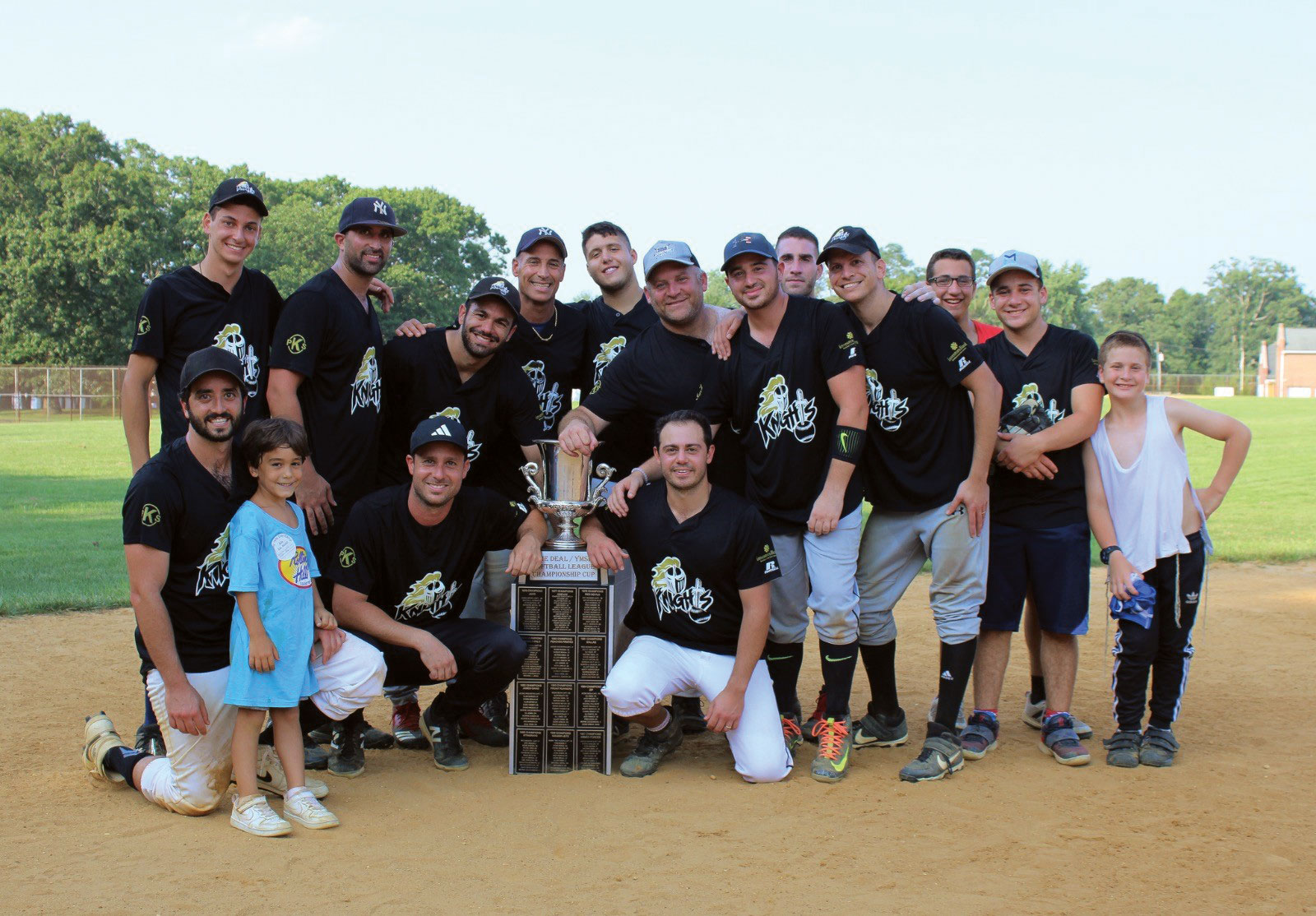
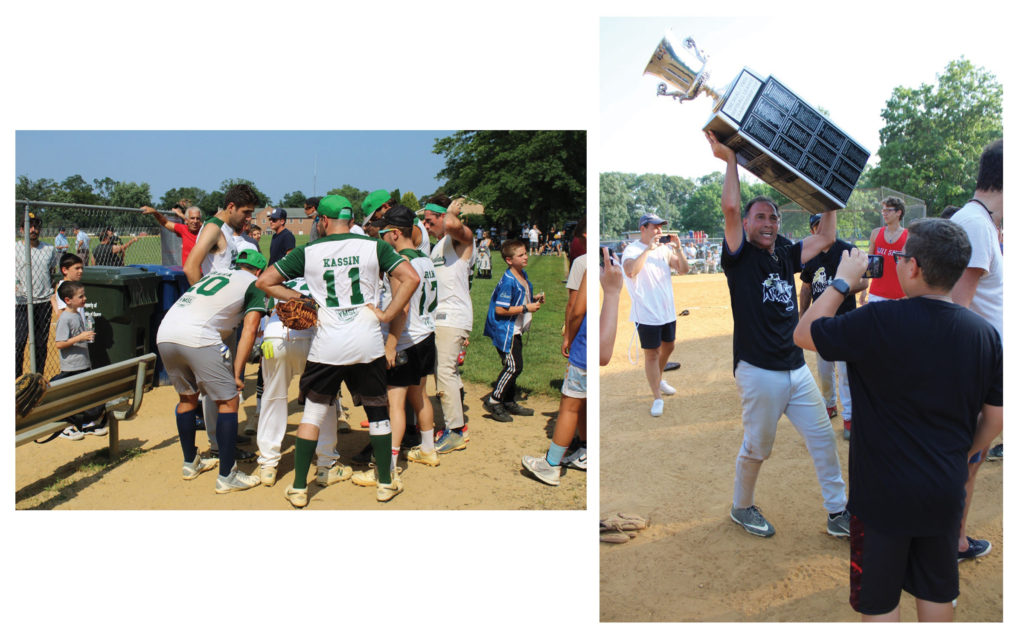
YMSL (THE YOUNG MENS SOFTBALL LEAGUE) IS TRULY THE LEAGUE OF THE COMMUNITY, CONJURING EXCITEMENT FOR PLAYERS AND FANS SPANNING ACROSS GENERATIONS OF FRIENDS AND FAMILY. THE 45TH SEASON OF YMSL, A LEAGUE NOW INCORPORATED UNDER DSN, WAS ONE FOR THE AGES! CAPTAINED BY JOE ASHKENAZIE, THE ‘KNIGHTS’ TOOK A CIRCUITOUS ROUTE TO THE CHAMPIONSHIP.

They entered the final week of the regular season as a team that appeared ready to go home—but they suddenly caught fire at exactly the right time and led their way into the postseason.

Due to their low seeding, the Knights were forced to play a one-game playoff against the red hot To The Moon squad, and they prevailed by the minimal margin, 3-2. That game was marked by the very emotional pregame ceremony in which the entire league came together to honor the legacy of their recently deceased umpire, Kenny O’Donnell. Kenny was a mainstay in the Deal community, as he refereed, umpired, taught and coached in every sport for decades. It shows how much more YMSL is than a regular league. It embodies the DSN value of unity within the community.
Having survived their one-game first round playoff game, the Knights were tasked with facing the best team in the league, Threat Level Midnight, in a two-of-three second round playoff series. The Knights refused to go quietly. There was marathon-style drama, the likes of which have never been seen before, with extra innings and a full three games.
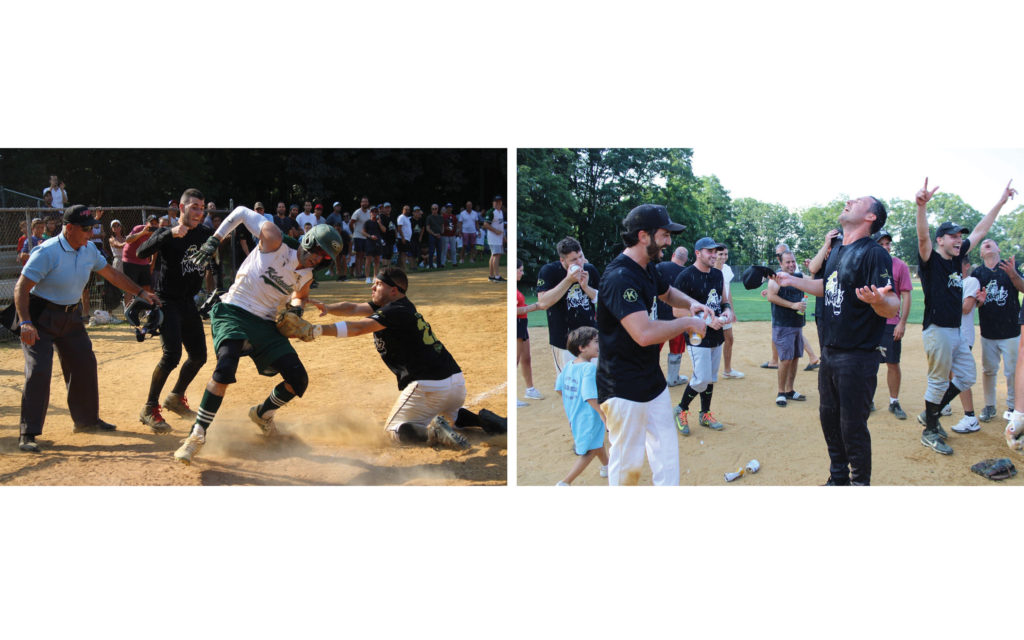
Next, the Knights went to the World Series against Jack Abady and the Kekambas for a best of five game series. The pinnacle game 5 was attended by a record unimaginable crowd of 500 fans due to all the hype, and got quite a show. Rabbi Raymond Beyda threw out the ceremonial first pitch and Charles Saka sang the anthems—and with that, magic was in the air from the very start! League historian Sandy Shalom called the game, “one of the greatest punch-counterpunch contests I’ve witnessed in recent memory. The Knights, these comeback kids, refused to lose and were ultimately crowned champions of the YMSL.“

“I have played in leagues and tournaments my whole life, but nothing compared to winning the YMSL,” said championship captain Joe Ashkenazie. “In my career, I was involved in four different game 5s. They’re so hard to win. But when it finally happens, you realize why we work so hard all year and dedicate our springs to the YMSL,” said right-fielder Abe J Cohen. “People said I couldn’t do it, but my team believed in me, and I believed in them,” said a jubilant Leo Kassin. Kassin has won two championships in the last three years.

At the end of the season, DSN provided a great night to remember with dinner, drinks, entertainment, and awards. The star-studded awards ceremony was packed with players to celebrate the Knights, and to honor the late, great, Robert ‘Red’ Nesser, who posthumously became the first player in 12 years to enter the Hall of Fame. He was inducted by Jack Haddad, and was celebrated by league greats Eddie Beda, Eli Gindi, Marty Gemal, and countless others. Red holds the record for having won a remarkable eight championships, and countless MVP, Cy Young, and batting title awards.

At the ceremony, Commissioner Norman Jemal was asked what makes the YMSL such an integral part of the community?

He replied, “The history is unparalleled, and what the players will do to win this league, is what separates the YMSL from all other leagues. It is the league of the community, and we have a responsibility to protect that. With the league being powered by the great DSN organization, we have the ability to maintain the league’s history, and continue to grow its competition level to greater heights!”

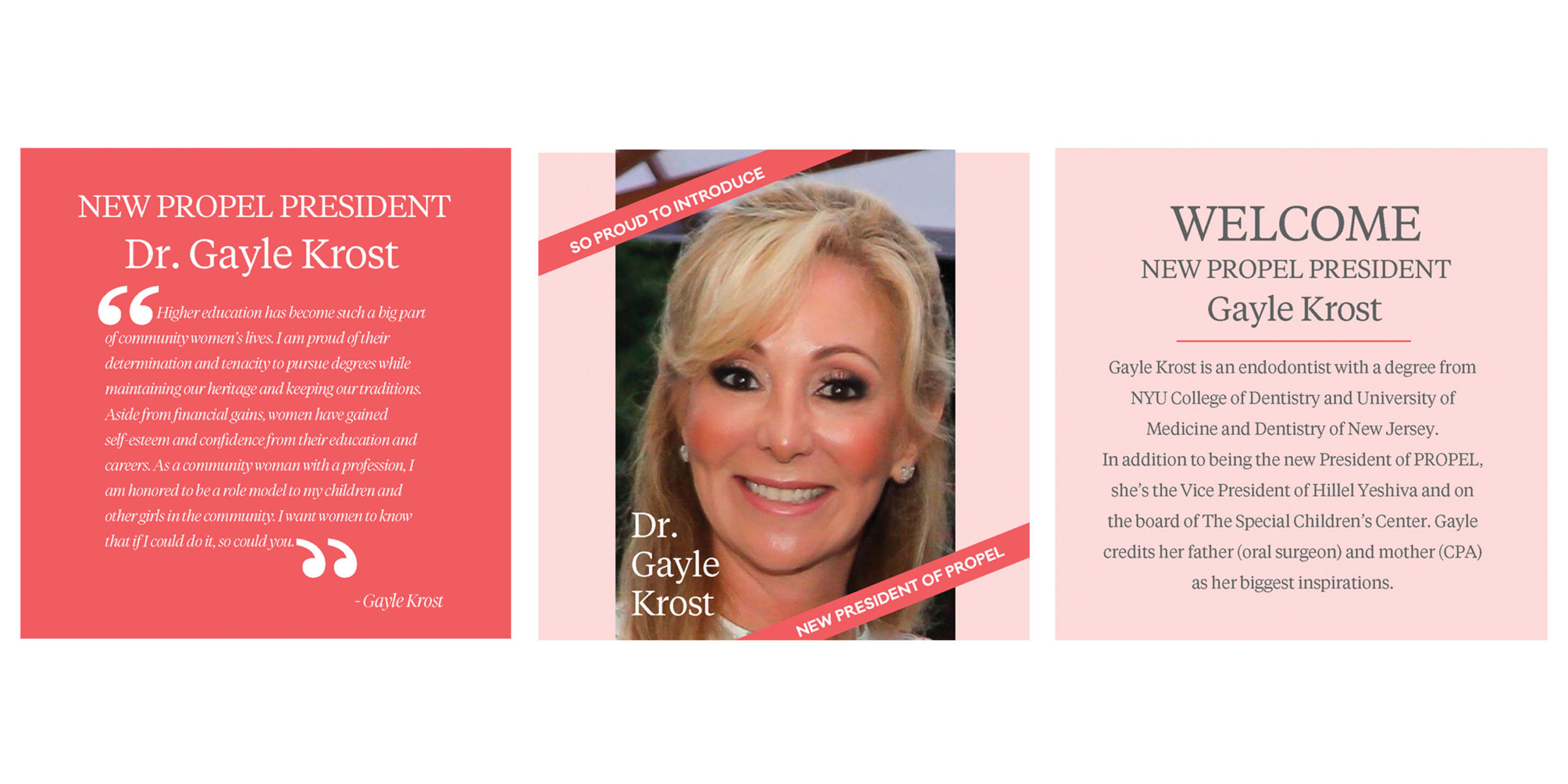
PROPEL WELCOMES NEW PRESIDENT DR. GAYLE KROST

WE ARE EXCITED TO WELCOME OUR NEW PRESIDENT, DR. GAYLE KROST! GAYLE HAS SERVED AS VICE PRESIDENT ON THE PROPEL BOARD FROM ITS INCEPTION AND IS A LEADER WHO HAS DONE SO MUCH FOR OUR COMMUNITY. GAYLE ROLE MODELS THE ORGANIZATION’S MISSION OF ENCOURAGING WOMEN TO PURSUE HIGHER EDUCATIONS THAT LEAD TO FANTASTIC CAREERS AND DUAL HOUSEHOLD INCOMES.

Jacqueline Harary and Haim Dabah (Co-Presidents Emeritus) note, “As we enter our sixth year serving and leading PROPEL, we know that change in leadership is critical for every organization in order to grow and to stay relevant. Each leadership team brings its own skills and enthusiasm to the entity. That said, we are both committed to staying with PROPEL to support Gayle in every way we can.”

Rosh Hashanah represents the beginning of a New Year, and with our new president, we hope that the PROPEL mission of inspiring women to enter the workforce continues to improve the lives of our community families.

If you are interested in a career, please reach out to PROPEL and we can help you take the steps to fulfill your professional goals and dreams. PROPEL 646-494-0822 | info@thepropelnetwork.org | Instagram @PropelNetwork

THE SCF SITS DOWN WITH JUDGE GINA LEVY ABADI

CIVIL COURT JUDGE & NYS SUPREME COURT NOMINEE

SARI J. SETTON

ORTHODOX SEPHARDIC FEMALE MAKES HISTORY!
JUDGES MUST POSSESS EXCELLENT LOGICAL REASONING, ANALYTICAL, AND DECISION MAKING SKILLS. THEY MUST BE ABLE TO ANALYZE COMPLEX CASE AND STATUTORY LAW, AND RENDER FAIR AND SOUND LEGAL DECISIONS. THEY MUST BE ETHICAL AND COMPETENT, AND ACT WITH INTEGRITY AND INDEPENDENCE.

They must be impervious to corruption and endure immense pressure. Judges enter their careers knowing that they will initially earn far less than if they had gone into private law practice, or worked with a large firm. They often feel a greater calling, wanting to serve their communities and help shape the law.

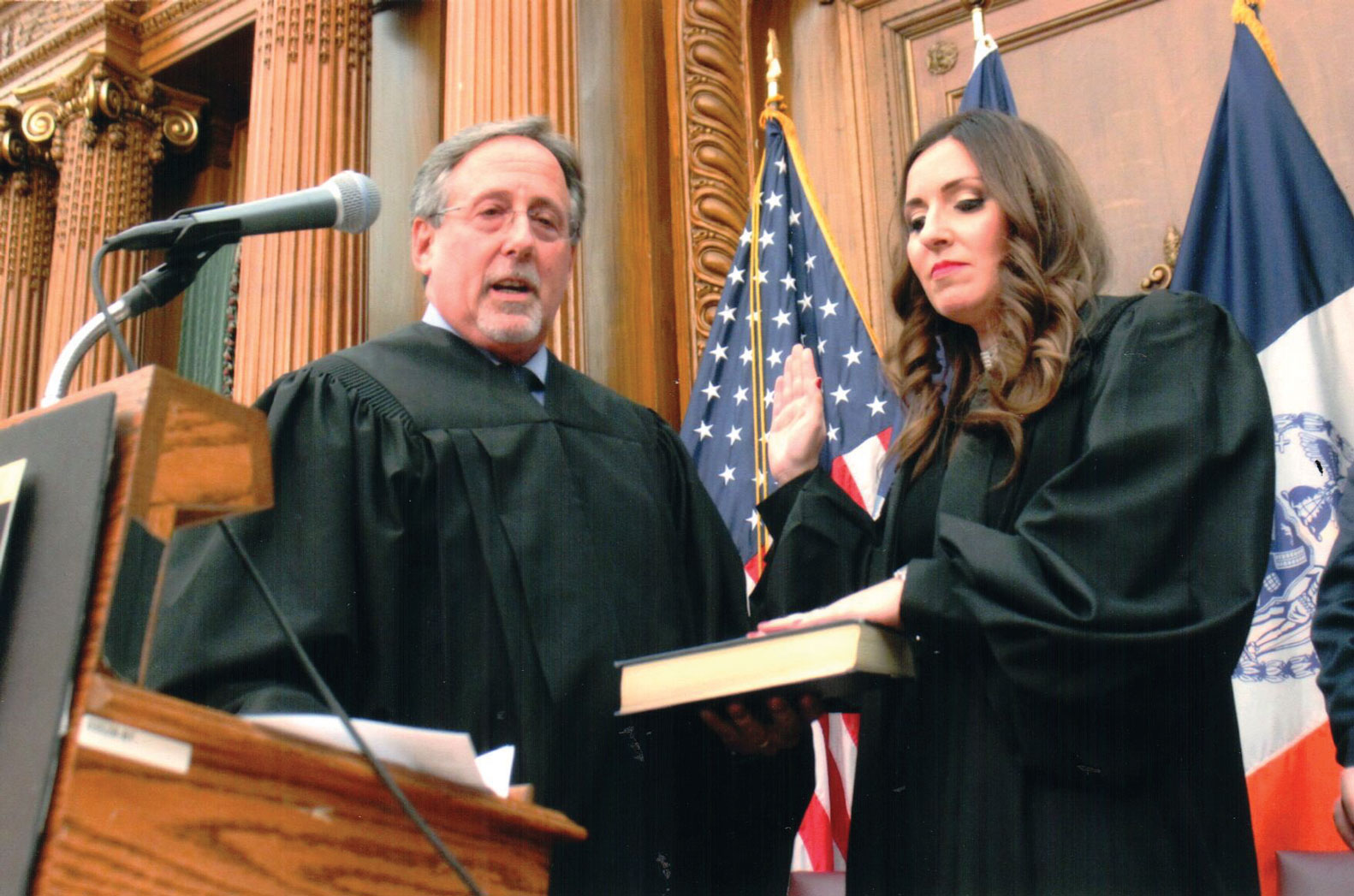
Gina Levy Abadi was elected to Kings County Civil Court in 2018. She is up for election this November to The New York State Supreme Court. Not only does she embody the characteristics mentioned above, but she is a fantastic daughter, sister, wife, mother, friend, and mentor. Rounding it all out, she is grounded and humble—a truly inspiring woman.

Sari J. Setton (SS): State Supreme Court Justice nomination! So well deserved, any opening remarks?
Gina Levy Abadi (GLA)
:
Yes, I do want to first thank all the individuals within government who helped secure my nomination. Kings County Democratic Chair Assemblywoman Rodneyse Bichotte Hermelyn, Councilman Mark Treyger, and District Leader David Schwartz secured wide reaching party support. Major community organizations such as the SCF, and Jewish leaders throughout Brooklyn advocated for, and supported, my advancement.

SS: What was your personal journey like?
GLA:
I attended Magen David Yeshivah for high school, where—believe it or not, I wasn’t a great student. I had maybe a “B” average. I then attended Brooklyn College where I majored in philosophy. I have to say that coming from yeshivah, college was a very easy experience. I graduated college with high honors. After I graduated, I met the man who would later become my husband, Joey Abadi. I applied to Brooklyn Law School and received a merit based scholarship. I entered law school in the summer of 1998, and was married in the summer of 1999. I sat for the Bar Exam in July of 2001, and started work the next day, clerking for a judge.

SS: Why work for a judge and not a law firm, where you could have made more money?
GLA:
I succeeded in law school. When it came time to interview for jobs, I wanted a 9 to 5 schedule so I could still be home for my family. I decided on a government job because it afforded me all of that. I clerked for my judge for 18 years. Through working as a clerk, I watched my judge render decisions and felt confident that I could serve in that capacity. I knew I was in the right place when I was needed at home during a work day and my judge—my boss—said to me “family comes first.”

SS: What can you tell me about your work-home balance dynamic?
GLA:
For the first ten years of my marriage, I lived next door to my parents. It was harder when my children were little. B”H the community instills a strong family support system on which we can hopefully lean. It’s that support that enabled me to achieve success. My mother sometimes cooked and helped in caring for my children. My mother is such a fantastic cook. Everyone wanted to be in my law school study groups because she fed us! My father taught my sons Hebrew and the weekly parashah. My sister also provided immeasurable support. I feel blessed in so many ways.

SS: What is an example of how you apply your career in helping to raise your children?
GLA:
I feel like I am very fortunate in that regard. I have brought my children to court where they watch me rule on drunk driver cases, drug cases, and other cases where people made very poor choices. I then spoke candidly to them about the perils of life and how to avoid them. Because my children have seen women as well as men, in positions of power, I believe that it has shaped them and instilled in them a positive way.

SS: Are you elected or appointed?
GLA:
I am elected, which means I must raise money and spend my own money to run a campaign, much like elected politicians. My term as a Civil Court Judge is for 10 years. This November I hope to be elected to the New York State Supreme Court where my term will be for 14 years.

SS: You won your election in 2018 by a large margin. What were some of your take-aways from that election and the process itself?
GLA:
Community involvement is extremely important. Having run a campaign and seeing first-hand how many people actually vote, I was surprised at the number of registered voters vs how many people actually vote. We as a community need to have our voices heard by going to the polls.

SS: If elected, how do you plan to use your position aside from adjudicating cases?
GLA:
For 20 years I have been coaching (as a volunteer) the Magen David Yeshivah Mock Trial Team. I do it to educate and inspire youth—to show them what is possible. Many of my students have gone to law school and graduated under my mentorship. Outside of that, I will continue educating the public on laws and accepting speaking engagements when invited.

SS: You mentor the students of Magen David Yeshivah. What is your mentoring style?
GLA:
I encourage my students to come to court and see what a lawyer does, see what I do, and watch court proceedings. I answer questions, and I’ve also had fellow judges speak to them and answer questions too.

SS: What key challenge do you face regularly in your line of work?
GLA:
Judges are human. We must often listen to irrational arguments, while trying to maintain a calm and even demeanor—listening impartially even when nature would force otherwise.

SS: Judges are regular people who live in our neighborhoods. Crime affects us all. How do judges understand the ripple effects of both the crimes committed and the punishments served on the criminals?
GLA:
Judges who sit in criminal court are required to tour the jails—and it happens periodically. It is necessary for judges to understand where they are sending a defendant if they cannot post bail. I remember a difficult decision I had to make once. I let a young woman out on bail. The newspapers wrote criticizing me, criticizing that decision—but the decision was based on whether she was going to return to court for her hearing, not whether she had committed the crime. Bail law doesn’t always allow you to put someone away. Judges are not permitted to have a view publicly. We take an oath and follow the law, we don’t always have to agree with it, we must uphold it.

SS: You are a Democratic candidate. You believe strongly in family values, the values of our community. We are in a heated political climate all around the country, over so many issues. What would you say to both Democrats and Republicans?
GLA:
There are good people on both sides of the political aisle. You may not agree with everything, but I believe in bringing people together, working on solutions to create a better society. When people choose to work together on issues of quality of life and crime prevention, great things can be achieved.

SS: What message would you want to impart to the girls, young women, and women of our community?
GLA:
You can have everything. You can balance work and career. Don’t be afraid to ask for help along the way, you would be surprised how many people, both friends and family, are there to support you. Have positive mentors and surround yourself with people who are encouraging.

Judge Gina Levy Abadi is running for New York State Supreme Court Judge on all party lines this November, which means she is listed on the Democrat, Republican, and Conservative lines on the ballot. When elected, she will continue to work hard to execute the duties of her position with integrity. She realizes the uniqueness of her position, and the responsibilities that it carries, and will continue to mentor and inspire the young adults of the community.
The SCF encourages all registered voters to vote in the Tuesday, November 2nd general election in NYC.

Sari J. Setton is the SCF’s executive director.

THE SEPHARDIC COMMUNITY FEDERATION SUPPORTS STEVE SAPERSTEIN FOR CITY COUNCIL 48TH DISTRICT – WHY YOU SHOULD TOO!

BY SAM SUTTON AND RONNIE TAWIL

THE SEPHARDIC COMMUNITY FEDERATION’S GOAL IS TO ENSURE THAT CANDIDATES RUNNING FOR PUBLIC OFFICE SHARE OUR CONCERNS AND NEEDS, SUCH AS PROTECTING OUR VALUES, SECURING IMPORTANT FUNDING, AND SUPPORTING SERVICES THAT BENEFIT OUR COMMUNITY. WE DEVELOP RELATIONSHIPS WITH ELECTED OFFICIALS WHO ARE RESPONSIVE TO THE DAY-TO-DAY ISSUES THAT IMPROVE QUALITY OF LIFE FOR OUR FAMILIES.

Two critical issues facing the community are quality of life and security. The alarming rise in hate crimes makes it difficult to send our children to yeshivah, ride the NYC subway, or even ride a NYC bus alone. For our families to thrive, we have to feel supported and secure as we have in the past. We need elected officials to bring our city back on track.

This coming Election Day, Tuesday, November 2, there are two candidates running for election to City Council in District 48. Both candidates present ideas that align with our values. After careful consideration of each politician, the SCF believes that Steve Saperstein is the best candidate to represent us in City Hall.

Steve studied law and education, and as a special education teacher with a law degree, he understands the importance of a strong education for our children and the obligation of the city and state to support our schools. This is why he advocates for community yeshivot, working closely with Maury Litwak and Teach-NYS (which was founded jointly by the Orthodox Union and the Sephardic Community Federation).

Steve believes that our students need to be prepared for the future and strongly supports state funding for secular studies in private schools (STEM). After all, non-public school students represent 15% of the student population, and incredibly only receive 1% of state funding for education.

The New York City Council is overwhelmingly made up of a 48 to 3 majority to Democrats. The Democrat Speaker of the Council has an enormous impact on which organizations receive significant financial support. As a Conservative Democrat, Steve has the necessary relationships to deliver for our community.

The vast majority of our closest community allies and elected officials, including Assemblyman Steve Cymbrowitz, Councilman Mark Treyger and the next Mayor, Eric Adams, support Steve Saperstein for City Council.

Steve also has the very important endorsements of the major police unions (PBA, DEA, CEA), as well as endorsements by FDNY, Dept. of Corrections, and Local 831-Sanitation.

Steve will deliver for our community. We are confident he will be an excellent representative who will work hard to preserve our values.

We urge you to go out and vote for Steve Saperstein on November 2, 2021. Some prior elections have been won by a margin of only a hundred or so votes. Your vote counts.

Sam Sutton the President of the SCF, Ron Tawil is the Co-Chairman.

Read Jewish Image Magazine Online – October 2021

To View Jewish Image Magazine in PDF

Click Here

THE EPIDEMIC OF LONELINESS

RABBI MEYER LANIADO

“A GREAT FIRE BURNS WITHIN ME, BUT NO ONE STOPS TO WARM THEMSELVES AT IT, AND PASSERSBY ONLY SEE A WISP OF SMOKE.” VINCENT VAN GOGH PENNED THESE POIGNANT WORDS IN A LETTER TO HIS BROTHER, THEO, IN JUNE 1880 EXPRESSING HIS PROFOUND LONLINESS.

While we may not admit our own loneliness, many of us know at least one person who can relate to this sentiment. Even before COVID-19 and its consequent social isolation, loneliness was reported as being experienced by three in five Americans. Social isolation and loneliness were pronounced a behavioral epidemic due to their widespread presence across Europe, America, and China.

Loneliness is not only harmful emotionally and psychologically—it also takes a serious toll on our physical health, significantly increasing mortality rates. Dr. Vivek Murthy, our 19th Surgeon General, has made it his mission to combat what he calls ‘the loneliness epidemic.’ He wrote in a Harvard Business Review article that the pathology he witnessed most often when caring for patients was loneliness, not heart disease or diabetes. The CDC reports that loneliness leads to a 29% increased risk of heart disease and a 32% increased risk of stroke, while other studies show that loneliness could decrease one’s health as much as obesity, physical inactivity, air pollution, and smoking 15 cigarettes per day.

Some countries have elevated the loneliness epidemic to the highest levels of priority, including The United Kingdom which established a Commission on Loneliness, and set in place a Minister of Loneliness to develop and implement a national strategy to combat loneliness. In 2018, they published a report on grappling with loneliness, laying out a plan to address the problem and help in implementing solutions. They note that “it is possible to be isolated without feeling lonely and conversely to feel lonely while surrounded by people.”

I have found this to be true in my experiences with congregants, as one shared before the pandemic: “I’m in a city full of people but I feel completely alone.” Pre-COVID, this person was working with colleagues and social with family and friends, yet he felt isolated. This may be counter to our view of loneliness, which we generally perceive as being alone, without human interaction. Yet, many people, at least before the era of Zoom and remote everything, sit across from and interact with us while feeling completely disconnected.

A recent CIGNA study found that loneliness is more prevalent among younger than older generations: “Nearly eight in 10 Gen Zers (79%) and seven in 10 millennials (71%) are lonely, versus half of boomers (50%).” Before COVID-19, these young adults attended high school and college classes regularly, surrounded by others their age, yet felt disconnected. This is because loneliness is not aloneness or solitude, both of which can be healthy. Loneliness has less to do with the number of people around you and more to do with whether you feel seen and known by those people.

As my wife, Talia, so eloquently portrayed loneliness in an unpublished poem: “It is standing alone at a party, shifting from foot to foot awkwardly—knowing no one, afraid that no one wants to know you. It is being the only one in the room holding your opinion, your values, wondering whether you are the crazy one or everyone else is.”

It is the feeling of being physically seen yet invisible, of others not interested in getting to know you or understanding what you have to offer the world, what your unique passions and ideas are, and why. How lonely it is not to connect on this level with any of the possibly tens of people one speaks to each day.

One reason that individuals feel lonely is they realize that many of our social interactions are transactional. Too often, the routine greeting “How are you?” is a perfunctory question we ask, not seeking to receive a sincere response but to follow up with our next question, “Could you do the following for me?” We are looking to leverage the relationship rather than deepen it. We are not truly inquiring about the other’s wellbeing, rather attempting to maintain our reputation as a kind and thoughtful person, but in fact we are offering an empty platitude, not an outstretched hand.

We have become so accustomed to others solely reaching out or connecting when they desire something from us that we are caught off guard when someone genuinely asks how we are doing, waiting for us to move beyond the standard, “I’m good,” to what lies beneath the surface. While being transactional is necessary in many of our relationships, one way to counter loneliness and be present for others is to dedicate one or two interactions a day to truly listen and care, without an ulterior motive or planned outcome in mind.

Abraham, our forefather, serves as a paradigm of this, expanding out of his immediate circles to connect and show concern for others. The Torah relates in surprising detail how he cared for his ‘guests’ as a model for how we should reach out to others with genuine care.

Abraham offers his guests, “Take bread, satisfy yourselves, and then you may continue on your way. Understanding that they would initially refuse, he sent the message that he would like to give and is expecting nothing in return. He had no request for them to stick around, hear a pitch, or even stay in touch. He told them they could carry on with their journey, knowing he would likely never see them again and have no opportunity to ask for a favor in the future (he didn’t offer his business card or Instagram handle).

Furthermore, he was proactive, sensitive, and aware. He sat outside his tent, knowing that there were people who needed help and would not seek it out. He did not wait as Lot did for someone to happen past him. He actively searched for someone to help, ran to greet them when they did, and expressed that he was at their service. He did this not as a tedious obligation but as an opportunity for which he was grateful and excited. He rushed to have fresh bread made for them from fine, high-quality flour and ran towards the field to select his choicest cows for steak, ribs, and a roast. The most important part, however, was not the carefully prepared meal, but what was expressed: he was present with them and empathetic to their needs. His actions went beyond being merely polite or transactional. He could have felt he had done his duty and walked away to resume managing his multitude of flocks and other business ventures. Instead, he waited on his guests, staying with and tending to them, showing genuine caring.

This powerful lesson demonstrated by Abraham over four thousand years ago was recognized by Dr. Vivek Murthy as he wrote in his book Together, “What often matters is not the quantity or frequency of social contact but the quality of our connections and how we feel about them.”

The cure for loneliness is not simply interacting or even giving—it is being present and authentic, actively focusing on, and lending an ear to, another human being. It is letting the other person know they are not simply a task to cross off your list or a deposit in your emotional bank account to enable a future withdrawal for a favor. It is being there for another person even if there is no benefit to you, as Abraham was there for his guests, attentive, caring, and other-focused.

Rabbi Yisrael Meir Kagan, the Hafetz Haim, echoes this in his book Ahavat Hessed: Taking care of guests is not solely for those in material need; it includes the wealthy, and it is the caring and honoring of another human being regardless of economic or social status. This is also expressed by Rabbi Eliezer Melamed in his book Peninei Halakhah in the context of hakhnasat orhim (welcoming guests). There he relates that inviting guests is not only taking care of another’s physical needs; it is showing another person they are valued:

… to some extent the physical abundance has highlighted the anguish of the soul, and many today feel loneliness and alienation, and there is nothing like hospitality to alleviate their anguish. Good, sympathetic, warm hospitality can re-instill in them the belief that their lives have value, that people value them, are happy to be with them and are interested in helping them.

Throughout the coronavirus pandemic, studies have been conducted to determine whether loneliness had escalated as a result and, surprisingly, the 3% increase, as noted in the Journal of the American Medical Association, was viewed as relatively insignificant and essentially consistent. Brigham Young University Professor of Psychology Julianne Holt-Lunstad remarked that a cause might be “a real outpouring of communities really trying to band together and look out for neighbors and for those who might be most vulnerable” during this crisis. It is heartening to observe the heightened connectivity communities have experienced this past year despite the social isolation born of this pandemic.

This camaraderie stems from feeling that although we were distanced from one another in many ways, we were not alone. Whether virtual or in person with safety measures in place, we were strengthened and uplifted by sharing meaningful moments together. We connected with our fellow New Yorkers, community, friends and family, which gave us a sense of support and togetherness.

While we are no longer in lockdown and much of our lives have gone back to “normal,” loneliness remains. We can be the antidote, modeling Abraham our forefather, proactively reaching out to others—making a phone call, offering a helping hand, asking “how are you” with real interest in the response — exchanging being polite for being present, working together towards a cure for the epidemic of loneliness.

Rabbi Meyer Laniado is the associate rabbi of Congregation Kehilath Jeshurun and serves as the leader of its thriving Sephardic community on New York’s Upper East Side.

JEFF BEYDA IF YOU BUILD IT THEY WILL COME

SARINA ROFFE

DO YOU REMEMBER THE MOVIE FIELD OF DREAMS? KEVIN COSTNER PLAYED RAY, WHO KEPT HEARING VOICES THAT TOLD HIM “IF YOU BUILD IT, THEY WILL COME,” SO HE BUILT A BASEBALL DIAMOND. AND PEOPLE CAME FROM FAR AND WIDE TO WATCH BASEBALL.

When parents follow their passion, it is bound to have an effect on their children. Such was the case for Jeff Beyda, who saw his parents Barbara and Joseph Beyda A”H, work tirelessly for the benefit of the community.

“My parents never told me explicitly to involve myself in community work. Because it was such a high priority in our house and we always saw it happening it didn’t need to be said; we lived it,” said Jeff Beyda. “My father was always involved in community work and in helping people. Even after he retired, he went back to school to earn a degree in social work because he loved helping people so much, he wanted to do it full time. Unfortunately, he died at age 57, so only had a few years in practice.”

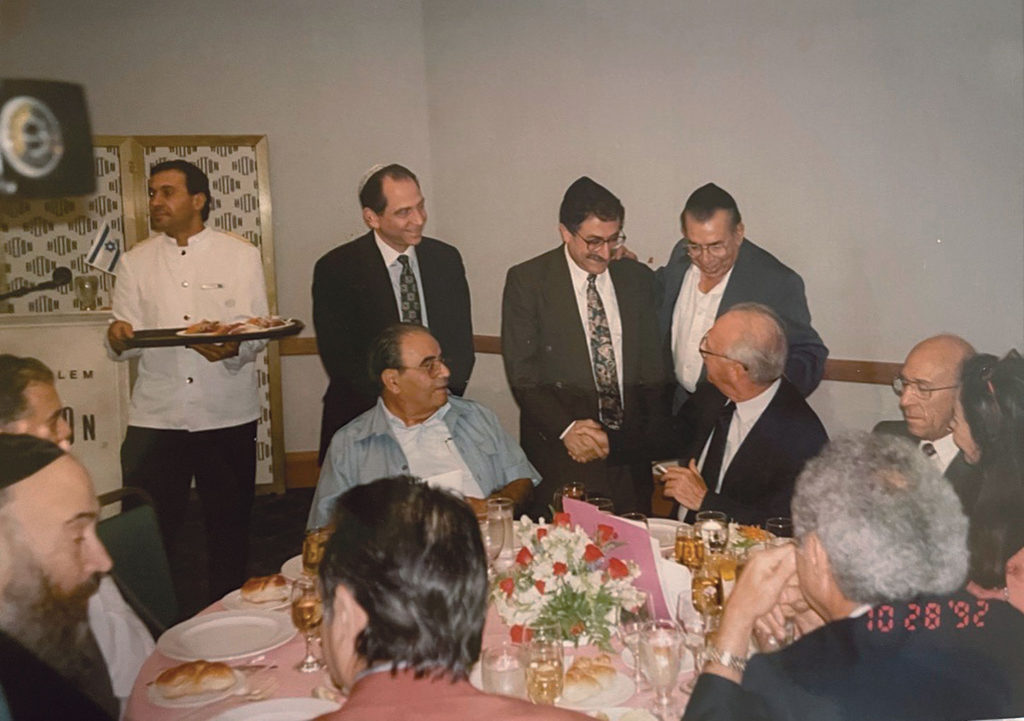
Joseph Beyda and Albert Ayal with Yithak Rabin
as they work with the Israeli government on resettling Syrian Jews in 1992.

Joseph Beyda is best known for his work as president of Sephardic Bikur Holim (SBH) and affecting its rise from a small organization to a premier mental health organization. Like Costner, Joseph forged forward, believing that if you build a program that serves an important need, people will use it. “My father felt an intense responsibility to meet the needs of our community. He, with others at the time, made tremendous efforts to remove the stigma around mental health, and to their credit it was largely successful. The amazing work done in the mental health field today at SBH is in part a testament to the correctness of his vision, his dedication to the work, and all the committed volunteers and professionals who joined him in the effort, then and now.”

But it was more than that. Jeff watched as his father, along with many other committed community members, work tirelessly to help in the resettlement of the new Syrian immigrants in the early 1990s. “There was so much to do that it was a full-time job for him. The new immigrants were arriving so quickly and needed housing, to learn English, and schools for their children. SBH, to their great credit, led the effort. They even even made hotel arrangements until they could find everyone someplace permanent to live,” he said.

Barbara Beyda, Jeff and his siblings David and Shirley, learned to share Joseph with the community. “When we walked home from synagogue it took an hour because people always stopped him to chat along the way. One day, my dad came home from synagogue upset and sad that some of the newcomers felt their accommodations were inadequate. He took his work very personally,” said Jeff. “Yet, despite all the time and effort he put into his work, he was always there for us, as a family, very present and active in all our lives.”

Jeff went to East Midwood Hebrew Day School and Sephardic High School, finishing his education with a Political Science Degree from Boston University. He met his wife Nava while living in Israel, when they both served in the Israel Defense Forces. Now 52, the couple has two sons and two daughters.

“I watched how my father emphasized working with young people. He made SBH a cool place for youth volunteerism, encouraged them to be involved by visiting the sick in hospitals or at home, and by delivering Shabbat packages to the elderly. Many young people met each other and bonded through the camaraderie,” he said. Here again is an example of how a program was built to inspire youth to volunteer.

Over the years, Jeff has volunteered for organizations he believed in and was passionate about. He was on the national board of Friends of the IDF, helping them raise millions of dollars in the community,

He was on the board at Barkai Yeshiva and was the co-founder of ILEAD with Shilo Plesser (currently run by Richie Chalme) a five-week summer program for high school junior and seniors to motivate future leaders to be active and give back to the community, as well as form a connection to Israel. The ILEAD program is named The Joseph D. Beyda Leadership Program, in memory his father and how important youth development was to him.

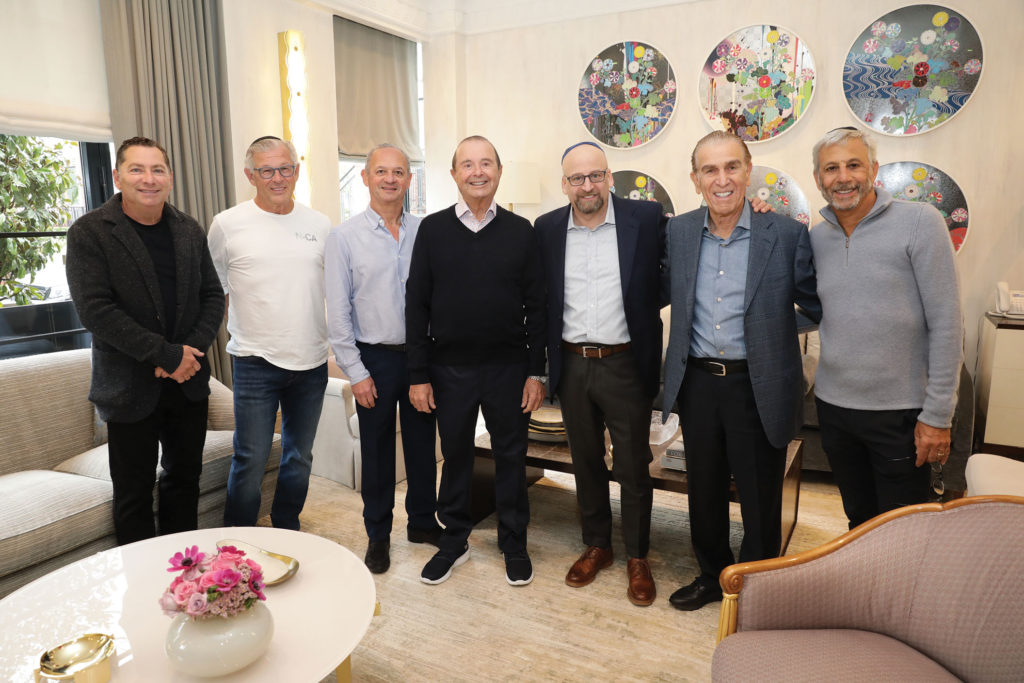
SCA Trustees (L-R) Ezra Ashkenazi, Ronny Hersh, Eli Harari, Joe Cayre, Jeff Beyda, Morris Bailey, and Alan Shamah

Jeff agrees that sometimes you need to build programs to address current and future needs of the community despite initial skepticism. For example, when starting The ILEAD program many felt the program, which took teens out of their comfort zone, might be too rustic and challenging for our youth, and parents and kids alike would not be interested. More than 400 teenage boys and girls have since gone through the selective program, which fills up each year with a waiting list.

Jeff is now President of the Sephardic Community Alliance (SCA). He believes in maintaining the Sephardic culture and heritage we all grew up with. Among the core values of SCA are Torah, education, tolerance and respect for others. SCA has 48 community organizations as affiliates.

“I wanted to be part of SCA so my kids could grow up in the same kind of place I did,” said Jeff. “The community has become a much bigger place with many specialized professional groups and institutions. So as a community, we are more capable of handling complicated challenges—but it requires a higher level of coordination and collaboration amongst our rabbis, lay leaders, institutions, and the community at large than it did in the past—and the SCA is very good at facilitating.

And this was more important than ever during the coronavirus pandemic. With so many organizations signed on to its mission, the SCA utilized its resources and network by bringing together rabbis, medical professionals, and community leaders to help give both medical and halachic guidance. They held many webinars that helped inform and advise community institutions and members on effective actions, strategies, and responses.

The ILEAD team: Richie Chalme, Shilo Plesser, Esther Sabbagh, Lillian Amar and Jeff Beyda

Today, the SCA is using that same collaborative model to address other strategic issues. It is helping develop our youth’s ability to be strong and self-assured advocates for Israel. As students attend the nation’s college campuses and encounter anti-Israel, Anti-Semitic and Anti-American sentiments, they are well prepared and have a strong sense of their identity. Social media literacy is also a focus area, to equip people with critical thinking skills that allow them to more easily discern for themselves what is misinformation and to form their own opinions, and not be led astray from the values that have served our community and our families so well.

“While the SCA agenda addresses a variety of existing and emerging challenges, the core of everything we do, as in life, rests on the foundations of our Torah learning. Ensuring that we continue to platform our phenomenal teachers and make them as widely accessible as possible, is and will always be our number one priority. We recently completed a large and lengthy investment with the launching of virtualmidrash.com where our live and recorded classes are available. There is also a free app you can download for mobile access.

“At its core, we hope to inspire and have a respectful, tolerant community that lives in the modern world, while retaining our Torah values, Sephardic heritage and culture and have pride in who we are,” said Jeff. He continued, “Things aren’t the way they are because it’s the way they have been. To preserve and build the great aspects of our community and minimize the negative impacts society delivers to our door, it requires an effort by everyone, it doesn’t just happen by accident. And BH that’s exactly the kind of people that make up our great community. If programs are developed for the benefit of the community as a whole, people will participate.” If you build it, they will come.

A genealogist and historian, Sarina Roffé is the author of Branching Out from Sepharad, Backyard Kitchen: The Main Course, Backyard Kitchen: Mediterranean Salads, and the cooking app, Sarina’s Sephardic Cuisine. Editor of Dorot, Sarina holds a BA in Journalism, and MA in Jewish Studies and an MBA. She is President of the Sephardic Heritage Project, Co-Chair of the Brooklyn Jewish Historical Initiative and Chair of the Sephardic Research Division of JewishGen.

ESTELLE HEDAYA A”H

A SHINING LIGHT EXTINGUISHED

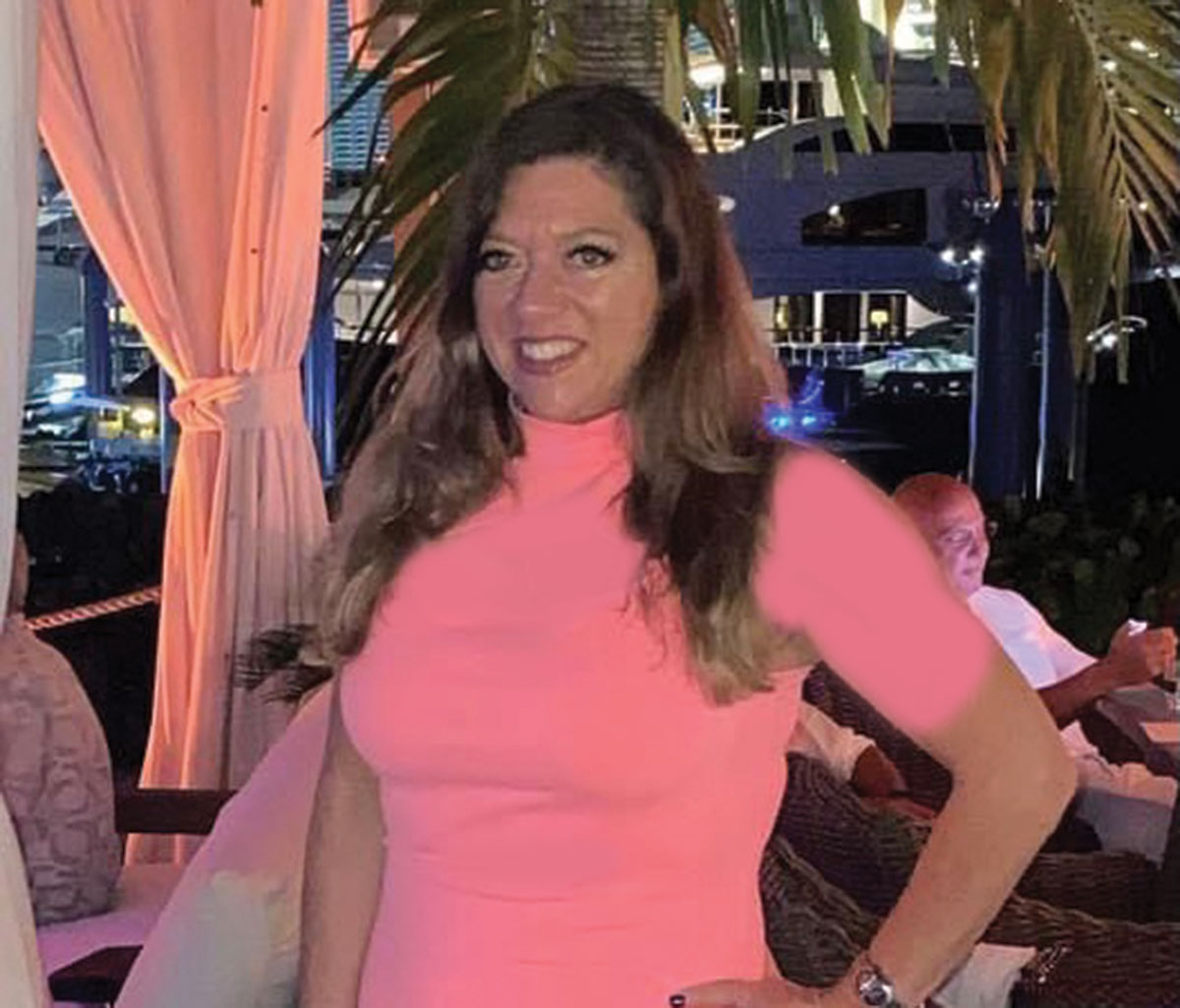
SOMETIME IN THE MIDDLE OF THE NIGHT OR EARLY MORNING OF JUNE 24, HALF OF THE CHAMPLAIN TOWERS CONDOMINIUM, LOCATED IN SURFSIDE, FLORIDA COLLAPSED, LEAVING MORE THAN A HUNDRED PEOPLE MISSING. ONE OF THOSE UNACCOUNTED FOR WAS BELOVED COMMUNITY MEMBER ESTELLE HEDAYA A”H, DAUGHTER OF LINDA AND ABIE HEDAYA AND SIBLING TO IKEY AND JILL. THUS BEGAN A NIGHTMARE FOR HER FAMILY AND FRIENDS AND EVERYONE WHO HAD CONNECTIONS TO PEOPLE RESIDING IN THE BUILDING.

Rescue crews worked around the clock in difficult conditions and an Israeli team was brought in to aid the rescue mission. The search lasted almost a month and Estelle was the last person to be found. A friend of hers said, “Of course, she was. She had to make sure everyone got out before she’d leave.”

Her mother described her as “fearless. She would take on any adventure and try anything. She was optimistic and had a love for life. She was happy, funny and always laughing, from the time she was a baby. She was also honest, trustworthy, and had a great work ethic. After 30 years working in the jewelry business, she moved to Miami six years ago, to accept a job with Continental Buying Group and Preferred Jewelers International, where she excelled beyond anyone’s expectations.” Her mom continued, “she was a wonderful daughter, sister, and friend. Everyone loved her.”

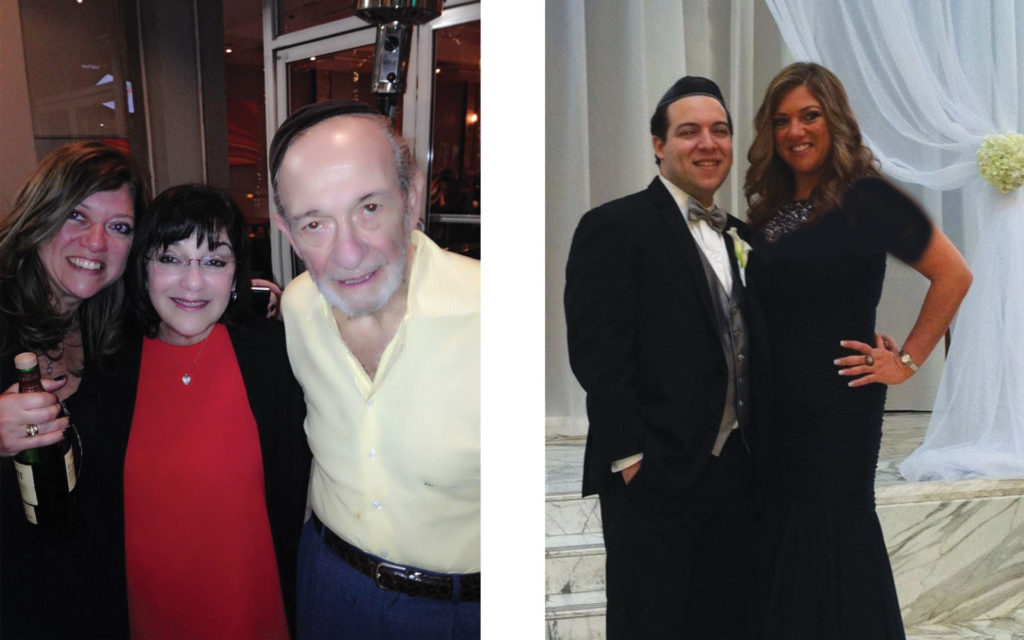
There’s a Facebook page “Estelle Hedaya Remembered,” where family members and friends wrote about their favorite memories of Estelle, also known as Stella, and ChaCha, due to her love of dancing. It’s amazing how everyone remembered her exactly the same way—fun, funny, caring, and loving. One person said, “she always saw the glass half full.” Another said, “she never had a lemon, she always had lemonade.” When issues arose, Estelle sought solutions never dwelling on the negative. During the height of the pandemic she initiated a Friday afternoon happy hour on Zoom where many of her friends would meet with their own drink and snacks. They would talk and laugh; it was Estelle’s way to help them overcome the isolation. She saw the good in everything. She never judged anyone. Many people looked to her for advice, and several of them mentioned that now they have to ask themselves, WWED—what would Estelle do?

A man from our community, who was an acquaintance of Estelle’s, said he was sorry that they hadn’t been better friends, but he enjoyed following her online. He felt that “her life was good and the best was yet to come. She was the symbol of determination, optimism and hope.” He added, “All lives are precious, but hers was unique. Few people are as beloved as she was and we see it every day through her friends. Her tragic loss is among the hardest things any of us have ever gone through. We should all aspire to be like her.”

Always a trailblazer, at Estelle’s arayat (traditionally where only men speak), with the blessing of community rabbis, a room was provided for women where female family and friends gave moving speeches. It was mentioned that she was proud to be a member of this community. She loved her heritage and she’d always come home to spend the holidays with her parents. A friend pointed out, “Estelle was a single Syrian girl, grounded in her Syrianess, grounded in her Judaism, and attached to Hashem. She did nothing without Him.”

“It has been devastating to all of us,” her aunt, Regina Elo said. “Estelle was our shining star. She was the joy of all of our lives and we’re going to miss her terribly.”

Her mom concluded, “Estelle was 54, and it’s hard to be single after a certain age, but she accepted it and she was happy. There should be a place where single girls can go to gain the confidence that my daughter had, in order to live life to the fullest. That I feel would be a fitting legacy.”

It’s no surprise that her funeral at Magen David Synagogue in Bensonhurst was overflowing with those who loved her.