WITH THE NEW YEAR UPON US, MANY PEOPLE USE THIS TIME TO REFLECT ON LIFE CHOICES. CONSIDER THE AMAZING OPPORTUNITIES AVAILABLE TO DIRECTLY AFFECT THE COMMUNITY YOU LIVE IN. CULTIVATING YOUR CAREER AS AN INSURANCE AND FINANCIAL PROFESSIONAL MIGHT BE A CHANGE WORTH CONSIDERING. HERE’S WHERE YOU’LL START.
After connecting with a recruiter, you’ll participate in a thorough interview process. It may seem lengthy, but it’s important to make sure that this is the right choice for you. Once the interview process is complete, you’ll obtain your licenses, and, once you’re on board, you’ll start training for your new career.
CONNECTING THE DOTS As part of your training, you’ll begin developing your own book of business by promoting yourself to people you already know—friends, family, and colleagues. Our work is founded on relationships. It’s never been easier to start a successful career as an insurance and financial professional because people have never been so connected. Take a look at your phone. You’ll be surprised how big your network already is and how far it can take you.
WHAT YOU MAKE IS UP TO YOU Let’s be clear. This is not a 9-to-5 job with a set salary. You will be building your own practice, but with help from us. Your commissions are generated from what you sell, so the more you produce, the higher your income. It’s empowering to know that you don’t have to wait for your boss to give you a raise. You’re in complete control of your success.
David Hoory
GET A LITTLE HELP ALONG THE WAY We understand that it takes time to learn our business and to build a client base that can sustain your lifestyle and family. That’s why we offer a Training Allowance Subsidy (TAS) Plan that can provide an additional source of income during your first two years as a full-time insurance and financial professional at New York Life.
THIS IS A CAREER FOR THE LONG-TERM Insurance and financial services are at the heart of our business, and it’s the people who sell our products, and help their communities, that are the key to our ongoing success. We understand the importance of a vibrant sales force and we’re committed to its growth. Plus, as an insurance and financial professional at New York Life, you’ll benefit from the stability and reputation of working with a recognized and respected leader in the industry. We’ve been serving the insurance and financial needs of Americans for more than 175 years. It’s a history of achievement that you can be proud to be a part of.
Together let’s explore promising sales career opportunities for you at New York Life. Help secure your community’s financial future as well as your own. It’s time to be in business for yourself, but not by yourself. Contact me today to learn more. Make the most of this New Year with a new career.
New York Life is an Equal Opportunity Employer – M/F/Veteran/Disability/Sexual Orientation/Gender Identity
David Hoory, CLF®, LUTCF® Managing Partner Brooklyn General Office New York Life Insurance Company 390 Berry St. 4th Floor Brooklyn, NY 11249 (718) 486-4601 dhoory@ft.newyorklife.com
ON JULY 15TH, AFTER OVER A YEAR OF PLANNING, REVISING, AND BUILDING, THE COMMUNITY CELEBRATED THE BEAUTIFUL GRAND OPENING OF A NEW STATE-OF-THE-ART DENTAL PRACTICE, SAKA DENTAL SPA, LOCATED AT THE CHABAD OF THE SHORE, IN LONG BRANCH, NJ.
On this beautiful Friday morning, major pillars of the community, including Mayor John Pallone, Chief Rabbi Saul Kassin, Rabbi Label Shapiro, Harry Adjmi, Mark Massry, Gayle Krost, and Sammy Saka joined Dr. Saka in the ribbon cutting ceremony.
Dr. Sammy Saka is the creator and operator of Saka Dental Spa. His intent was not just to open a dental practice, rather he wanted to create an environment where patients look forward to sitting in the dental chair, rather than fearing it.
Dr. Saka is a Hillel Yeshiva High School graduate. He received his undergraduate degree in chemistry from Monmouth University and earned his Doctor of Dental Medicine degree from Rutgers School of Dental Medicine. Following dental school, he completed his one-year residency at Montefiore Medical Center in the Bronx.
After working for several years in Matawan, Dr. Saka decided it was time to represent his community and open his own practice a mile from his childhood home. With the establishment of Saka Dental Spa, Dr. Saka has created a luxury dental office in the heart of Long Branch with the intention of giving back to the people who have given so much.
Dr. Saka explained, “the community has given so much to me and represents something so close to all of us. To create an office in the heart of it all and to be given the opportunity to serve everyone is my life’s goal and passion.”
Saka Dental Spa is now open and seeing new patients. Make an appointment today. Call 732-800-9178, or visit their website at sakadentalspa.com.
DSN WENT INTERNATIONAL WITH A TEN-DAY HESED MISSION TO ISRAEL FOR YOUNG ADULTS. IT WAS A PHYSICAL, SPIRITUAL AND EMOTIONAL JOURNEY OF A LIFETIME.
DSN partnered with Camp Gesher, a day camp in Israel for the children of the Neve Michael Children’s Village in Pardes Hana. The village hosts at-risk children who have been removed from dysfunctional families due to various types of abuse or neglect. DSN’s young adults traveled across the globe to be camp counselors for the children.
Rabbi Chaim Levy, the founder of Camp Gesher, worked with DSN’s staff and a committee of young adults: Sonia Dweck, David Cohen, Henry Barnathan, Jill Mamiye and Joe Gindi to prepare for this historic trip.
One week before the trip, the young adults attended a barbeque orientation, hosted by Jill Mamiye. Rabbi Levy, who had traveled to Deal from Israel, spoke to them about the significant responsibilities of their upcoming trip, and at the same time assured them that they would have loads of fun. Eric Sigoura, DSN’s Director of Security, explained that he would be traveling with the group to ensure their safety and security.
Upon arrival at camp, each young adult was paired up with two campers. Then the fun started! Camp activities during the week included visiting Yarn Park Tel Aviv, Skytown Climbing, a water hike in Ein Chardalit, Superland Amusement Park in Rishon L’zion and Carnival Day, where all the counselors set up and volunteered at stations including foam blasting, face painting and bouncy slides. A beautiful Shabbat weekend in the heart of Jerusalem was arranged by DSN with catered meals.
Lydia Haddad, one of the young adults, decided to write down her feelings about the trip. Here’s what she wrote. “Growing up, I’ve always done some small acts of hesed. Whether it would be delivering food to people in need, taking a special child for ice cream, helping around my house or matching couples together, I never felt the feeling I did when taking care of my campers on the DSN Camp Gesher trip. Going into the trip, I really had no idea what to expect. Yes, I do have younger siblings, but I was never of age to take care of them. I knew that by accepting to volunteer on the trip, I was going to be taking care of kids and that made me quite nervous. But I also knew that whenever I put my mind, heart, and soul into something, I was always able to accomplished it. Before the trip, we were asked to choose the age group we wanted. I had the choice of taking care of kids from ages seven to nine or ages ten to twelve. I was placed with two beautiful 7 year old, female campers. On the first day, we walked into the camp to meet our campers. We played a little game where the campers had to look for us. They knew what color eyes we had, what hair color, what shoe size, and how tall we were. My campers, being the smart little girls they were, found me in just minutes. Meeting them and watching them run into my arms was a feeling I cannot even describe. After just one day, we exchanged phone numbers and sat together on the bus. I helped them overcome their moments of fear during activities, we taught each other Hebrew and English, I learned about their lives, we laughed together, cried together, ate together, danced together and so much more. When dropping them off at camp at the end of day one, I already couldn’t wait to go back the next day to see them run into my arms again. Being an adolescent, it is very hard to wake up early. But once my alarm went off, I was up and out of bed ready to make a change in my campers’ lives. As days went on, we became closer and closer. We learned more about each other and created amazing memories together. In a blink of an eye, I realized I never wanted to leave them. I went from being nervous about taking care of kids, to wishing that the trip would last forever. Not only did I never want to leave my campers, but I also didn’t want to leave all of the new friends I made, including Rabbi Levy. The reason we all felt so connected was because of the mindset Rabbi Levy taught us from day one. He was open, honest, caring and made us feel like we were home. That being said, since I returned home, I have not missed a day speaking and FaceTiming with my beautiful campers. This trip made me realize the important things in life. Not only did we do hesed, but we all learned about ourselves in ways we’d never thought. If I could go back in time and do it all over again, I would. But of course, that is not an option so—until next year!
After the trip, the bonds between all the young adults continued to grow and flourish. Lydia Haddad hosted a mazza at her house only three days after the trip! The group learned about themselves and grew in unexpected, beautiful ways. Another participant, Lydia Cohen, explained, “This trip was truly a life changing experience. I am grateful to DSN and Gesher for giving us the opportunity to learn, grow and help find the right balance in our lives!”
By the time it was all over, Rabbi Levy was ecstatic with the results. “There is nothing more fulfilling than seeing the young adults of today take ownership of something and make a difference. That’s what happened on this trip. Forty-two young adults became one unit—an army of hesed.”
Sammy Sitt, DSN’s Executive Director, summarized. “It was truly an honor for DSN to arrange this most special trip. We provided our young adults with an exhilarating experience where they not only helped others who are less fortunate, but they learned about the potential of their own capabilities. We are very proud of each of them. With Hashem’s help, we continue to see that there are no boundaries to what DSN can do to make our community the best in the world!”
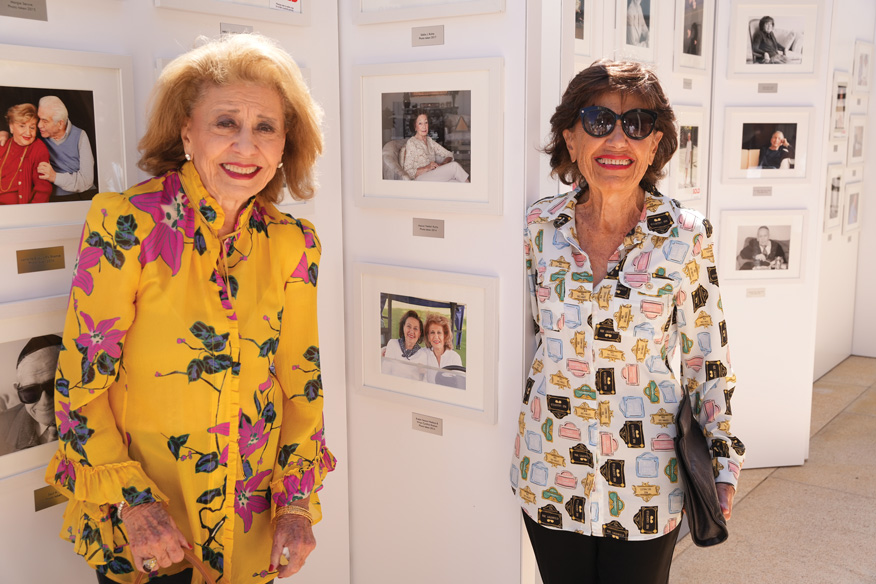
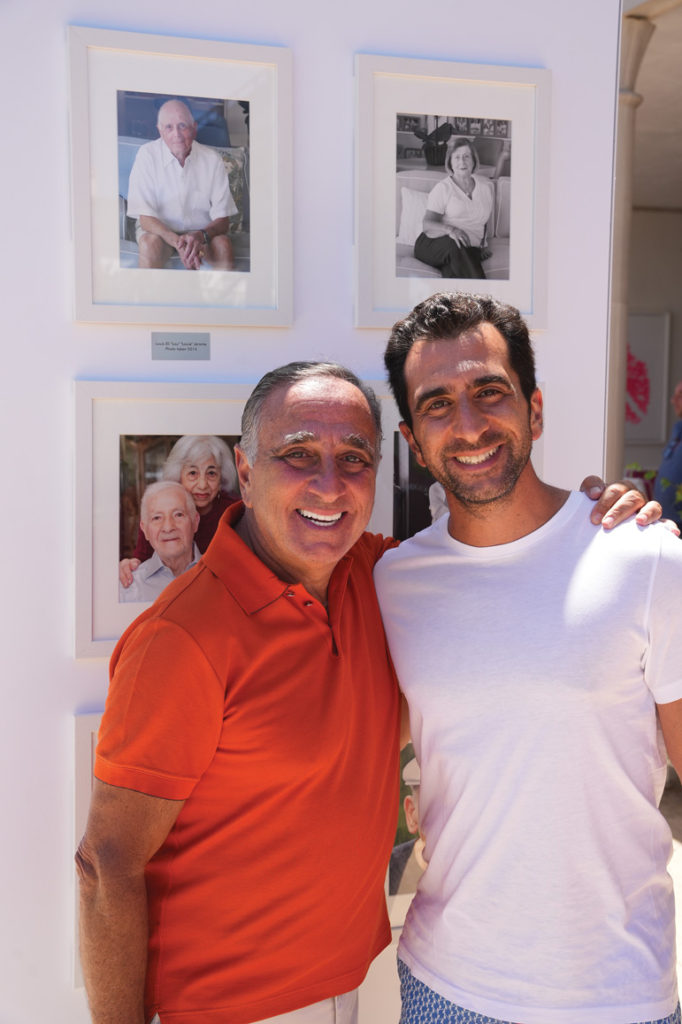
ON FRIDAY, AUGUST 12, SBH CELEBRATED THE LAUNCH OF LEGENDS VOL. 2 AT THE BEAUTIFUL HOME OF ESTER AND JOEY JEROME. LEGENDS VOL. 2 IS THE SECOND IN A SERIES OF PHOTOGRAPHIC COLLECTIONS BY SUSAN MENASHE, THE TALENTED PHOTOGRAPHER WHO HAS BEEN CAPTURING THE FACES OF OUR COMMUNITY FOR DECADES.
This book was generously dedicated by the Jerome family, in memory of Ruth and Lou Jerome A”H and in honor of Paulette and Morris Bailey, as well as by the Shamie family in memory of Louis Shamie A”H and in honor of Lorraine Shamie.
The book is filled with portraits of our community’s elders, posing alone, with their spouses, cousins, siblings and even grandchildren. Each page features a gorgeous portrait that captures a piece of the subject’s personality, along with a beautiful quote or fun fact. The back of the book includes lengthy and interesting bios about each of the LEGENDS, with details ranging from the names of their family members to their most notable childhood memories growing up in the community. The book truly is a special piece of art that belongs in every community home.
The launch was held on a beautiful sunny morning by the sea. Attendees were able to purchase a book and have it signed by Susan on-site. The gallery wall featured all of the portraits from the book. A very special part of the day was when the LEGENDS themselves saw their portraits hanging up on the wall. Many (happy) tears were shed as family members took pictures with the photos of their loved ones who are no longer with us. It truly was special to see. Following opening remarks by SBH’s own Charles Anteby and SBH President David Beyda, we had an opportunity to hear from Joey Shamie and Susan Menashe about the process behind the book. Proceeds from the book benefit SBH and will be used to help those in need.
WE KNOW RECESSIONS ARE INEVITABLE. WHEN THEY HAPPEN, THE SCARY NEWS IS BLASTING ON CABLE 24/7. YOUR FRIENDS, NEIGHBORS, AND COLLEAGUES MIGHT PANIC ONCE THEY SEE THEIR PORTFOLIOS DROPPING, AND TO MAKE MATTERS WORSE—IT’S UNLIKELY THAT THE NEXT RECESSION WILL LOOK LIKE THE LAST ONE—SO HOW DO YOU KNOW WHAT TO EXPECT?
To the savvy (and well-prepared) investor, a recession can be a financial gift. They allow prices to pull back and bubbles to deflate. Smart investors have the chance to buy on sale, taking advantage of bargains when others panic, selling because they weren’t prepared.
The market bottom of the last pre-pandemic recession was March 9, 2009, but no one knew that at the time. For all investors knew, the market had farther to fall. We only know that was the bottom in hindsight.
It’s not likely to be high-flying dot-com stocks or the financial sector that take the economy down next time. What will it be? No one knows for sure, but whatever it is, it’s coming.
The good news in all the uncertainty is something wealthy individuals have long known: there are juicy opportunities hiding in the dips. Easy to say, but what about when the next recession arrives?
The trick is to keep your head level and stay alert. When you have the right tools, it’s possible to seize opportunities to make money and avoid the ugly mistakes that average investors tend to make during hard times.
Escape Lever #1: How exposed are you? If you’re early in your working career and all of your investments are designated for retirement, you’re able to ride out the inevitable recession with a portfolio that’s entirely invested for growth. You just have to avoid panicking and selling out.
In this case, you’re a couple of decades away from needing the money. Staying invested through a nasty experience like the Great Recession, can potentially lead to a much larger portfolio later when markets recover.
On the other hand, if you’re closer to retirement, you can’t afford for your entire portfolio to drop right when you need to start withdrawing money. That means having some money in other assets like cash and bonds.
Escape Lever #2: Flex your flexibility When it comes to buying cars, clothes, and even vacations, what are the three magic words all purchasers love to hear? “It’s on sale.” Yet too many investors start pushing the panic button and selling when the stock market goes on sale.
Stock dips (and yes, crashes) are the time to scoop up some potential bargains. To paraphrase Warren Buffett, be greedy when others are fearful and fearful when others are greedy.
Just make sure that you’ve still got your cushions against the freefall of the market. Don’t deplete your protection against stock market dips. Keep your hedges intact and your income flowing.
Ugly Mistake #1: Investing with your heart and not your head Contrary to popular belief, acting like an ostrich and sticking your head in the sand may not be a bad way to deal with a recession! It helps to ignore the financial news because it’s going to be full of gloom and doom in a recession.
Many investors turn paper losses into real ones by making the mistake of panicking and selling at the wrong time—after prices have already started dropping. When recessions arrive, it’s easy to be paralyzed by fear and stop investing completely. This happens even to smart people!
Wealthy investors know that it’s too easy to get caught up in the fear around a recession, and so they hire professionals who have been through recessions to help prevent them from leaping off the ledge. They also diversify their portfolios when necessary, so that they can sleep at night knowing that a stock market drop won’t wipe out the value of their portfolio.
It’s very easy to get greedy when prices are rising and fearful when prices are falling. But smart investors find ways to stay out of the fray so they can focus on building wealth for themselves.
Ugly Mistake #2: Going it alone When recessions arrive, things can get really ugly very quickly. It’s hard to tell exactly when the recession has arrived, since the economic data takes a while. Market drops don’t always predict a recession, either. Is a one-day market drop just the start of a massive plummet to the bottom—or is it just a blip?
Doing it yourself looks fine when prices are on the upswing, because a rising tide lifts all boats, but when the seas get rough, and your portfolio may be threatening to overturn during the onslaught, experienced deckhands can help keep you afloat.
You may notice that wealthy investors ask for help all the time! They have dedicated financial professionals to help them navigate when the economy gets choppy. They’re not trying to figure everything out by themselves, because they recognize when they don’t know what they may need to know.
The content is developed from sources believed to be providing accurate information; no warranty, expressed or implied, is made regarding accuracy, adequacy, completeness, legality, reliability, or usefulness of any information. Consult your financial professional before making any investment decision. Risk Disclosure: Investing involves risk including the potential loss of principal. No investment strategy can guarantee a profit or protect against loss. Past performance does not guarantee future results.
Ari Baum, CFP® is the founder and CEO of Endurance Wealth Partners, with over 25 years of experience in the Financial Services industry. He brings his in-depth experience to Conceive, Believe, Achieve, for his clients.
Securities and Advisory services offered through Prospera FinancialServices Inc. Member FINRA/SIPC.
Brokerage and Advisory accounts carried by Wells Fargo ClearingServices, LLC.
SO, YOU’VE BEEN HIRED—NOW WHAT? STUDIES HAVE BEEN DONE ABOUT NEW EMPLOYEES WHO PERFORM EXCEPTIONALLY WELL ON THE JOB. THE STUDIES SHOWED THAT PEOPLE WHO MAINTAIN THEIR JOBS AND GET SALARY INCREASES AREN’T JUST ORDINARY PEOPLE—THEY ARE EXTRAORDINARY PEOPLE.
How you perform on the job and your overall attitude, rather than your skill level, usually have an impact on whether you get promoted or get let go.
Understand that your hiring was not a mistake and that your qualifications are valued and in demand by your company. However, if you’ve been working from home for a significant amount of time, there might be a reluctance on your part to return to your office in light of COVID. Realize that your employer might ask you to return to the office to continue your duties for the organization to go on and prosper. This is the time for you to negotiate a favorable outcome that satisfies both of you. If you dig your heels in the sand and refuse to return, you may be signing your own termination and appear to be a disgruntled employee which no one wants.
You can offer to work virtually from home several days per week, checking in daily. Offer to “meet” with customers or your employer by Zoom to maintain your relationship. Give yourself a quota and establish a goal that you want to achieve each week, with your employer. If you insist on not returning to the office, you can be charged with job abandonment and terminated at will.
It is important that you show your willingness and respect in meeting your employer’s agenda. Make sure you have your COVID vaccine and booster shots up to date with proof. If getting the shots is against your personal agenda, stress the fact that you would happily work from home at the employer’s schedule and seek a compromise which satisfies your employer and you.
Following are skills that you can put into practice each day when you start a job.
Learn All You Can About The Company. Investigate the company who hired you. How long have they been in business? Who founded the company and why? What is their vision? What are their short and long term goals? Having such information is helpful if you ever have to use it in front of company executives. If shows you have an interest in the company.
Be Friendly. Try to meet someone new each day. Getting to know new people helps you understand the job titles and responsibilities of your coworkers just in case you might need them at a later date. Remember, it’s not who you know, but who knows you. In addition, develop the habit of speaking to coworkers before they speak to you. This builds a friendly image.
Arrive Early. Just being on time isn’t good enough. If you want to be recognized as an outstanding worker, show up 15 minutes early each day, if possible. This will give you preparation time and will give your boss the impression that you are an outstanding worker. Bill Parcells, the Hall-of-Fame coach said, “Showing up 15 minutes before you have to is being on time.”
Don’t Take Time Off, Unless You Absolutely Must. Employers are looking for people they can rely on. If you are perceived as loyal and dependable, you will be singled out for special projects. Then, when and if you need time off for special emergencies, management will likely be willing to accommodate you.
Have A Positive Attitude. It’s important to have a positive attitude. If someone asks you how you feel, always reply “I feel great!” or “I’m outstanding!” A person with a positive attitude can do almost anything. If you are in a “funk,” “fake it until you make it.”
Learn About Other Jobs. Learn about other department’s, and the duties of other employees. Find out about pay scales and necessary qualifications. This will give you a better opportunity to find out if there’s another job you might want in the future and what you need to do to get it.
Observe People Who Are Successful At The Job You Want & Copy Their Behavior. Ask the person who has the job you want to teach you what you need to know about what he/she does (without becoming threatening or offensive). Prepare yourself, so when that person is sick or on vacation, you can volunteer to do his work while he is away.
Arrive at work on time and looking energetic
Always Do A Little More Than What Is Asked Of You. Try to do work before you are asked. Approach your direct supervisor asking if there is anything you can help him/her with. This is effective, especially if you have down time. You will be perceived as an excellent worker. Also, when you finish a task, ask if there’s anything else you can do. Time passes faster when you are busy.
Learn All About Your Supervisor. Have conversations with your boss. Ask questions, him/her how he got started in this line of work, and what his first position in the company was. Be likeable.
Be Motivated & Energetic. Get rest at home, so you have lots of energy at work and you’re not dragging yourself around. Highly motivated and energized people are always prime candidates for promotions.
Volunteer For Overtime When Given The Opportunity. Volunteering for overtime not only means more money for you, but it also helps the organization. Stay away from coworkers who are negative. Volunteering shows that you are willing to go the extra mile.
Respect Yourself & Others. Set some rules and guidelines that you plan to live by and follow those rules. Treat yourself well and others will treat you well. If you are abusive and use foul language when others are around, they will feel comfortable to use abusive language around you as well.
Learn How To Ask For Help. If you aren’t completely sure about an assignment you are given, don’t be afraid to ask for assistance. It takes courage to admit you don’t know something, rather than going ahead and risking damaging or delaying the assignment.
Ask People To Teach You New Jobs. Learn other jobs, but only on your own time. Learn as much as you can—this is called cross training. Today, organizations want individuals who can function at more than one position, and the individuals are much more likely to get promotions.
Never Give Up Or Quit. Never, ever quit—even if you’re having difficulties at work, either with the work itself or with your coworkers. Never bring troubles from home with you to the office. If things aren’t going well at work, find a solution. A winner never quits and a quitter never wins. (Unless, of course, they’re quitting smoking.)
Do Not Listen To Or Repeat Office Gossip. Stay away from people who engage in gossip. You can’t throw mud at someone without getting some on yourself.
Be Honest. If you can’t do something, admit it. Never take anything from the job without permission (this can lead to dismissal). If you get an hour for lunch, just take the hour or less—never more.
Be Happy. Even if things aren’t great at work, be happy. Things don’t make you happy—since happiness is a state of mind. It’s important to appear happy, because people are generally attracted to happy people and those with a good sense of humor.
Smile. When you smile, you look happy and approachable. It takes 7 muscles in your face to smile—and 36 to frown, so there’s no reason not to smile.
Be Trustworthy. When your manager trusts you, it means he/she has confidence in you and can confide in you. One of the first traits a manager looks for in a new hire is trustworthiness. If you violate a person’s trust, it is difficult to earn it back—like trying to piece together a broken crystal vase.
Never Borrow From Others On The Job. Never borrow anything—especially money—from a coworker. You’ll get a negative reputation.
Always dress for success
Take Care Of Your Personal Appearance & Hygiene. Always show up clean and neat. Even if your clothing is not the latest style, you must always look presentable. Never go to work without bathing or with stained clothing.
Find Ways To Improve The Job. Keep in mind that there is always a better way to complete a job that might save time and money. Find that way.
Give Input When Asked. If asked for your opinion, offer good, polite and constructive criticism. Don’t give advice when it’s not requested.
Do Not Speak Badly About Anyone. Never put anyone down on the job. This is a form of harassment. It’s fine to praise someone, however.
Never Drink Alcohol Or Take Drugs On The Job. It is never ok to drink or do illegal drugs when you’re working. Even if your employer asks to lunch and tells you it’s fine to order an alcoholic drink, order a Perrier, instead. You want all of your wits about you.
Learn How To Listen. Developing listening skills is very important no matter what you do for a living. All successful people know how to listen and laser in on what is being said. They say that President Clinton made each person he met feel important by looking them in the eye and concentrating on what they were saying to him. Learn how to block out everything around you when it comes to listening—especially when you’re receiving important instructions.
Barry Cohen is ranked by Google among “The Top 5 Career Counselors in New York City” and is credited for having successfully transitioned more than 10,000 job hunters into new and more rewarding positions.
DAVID CALLED FOR HELP IN SOME DISTRESS, “I THINK I HAVE AN EATING DISORDER AND WOULD LIKE TO MAKE AN APPOINTMENT. I BET I’M THE FIRST MAN WHO’S EVER CALLED FOR AN EATING PROBLEM. “ACTUALLY,” I RESPONDED, “MANY MEN HAVE EATING PROBLEMS. THEY’RE JUST NOT AS BRAVE AS YOU TO PICK UP THE PHONE AND GET SOME HELP!”
David is expressing a common misconception—that eating disorders are problems of girls and women, not boys and men. In truth, more women than men do have anorexia, bulimia, and binge eating disorders, but men are not exempt from these struggles. Between 10% and 15% of people with eating disorders are estimated to be men, but this figure may be low since many men often suffer in silence and feel too ashamed to come for help. Men may also be under-represented in the statistics of eating disorders because they can hide their eating problems better than women. Our society is more tolerant and forgiving of extra pounds on men, while women are held to a stricter standard. Also, men who are obsessed with working out and building muscle may be admired as strong, masculine guys, and this may camouflage that they are suffering anxiety about their body image.
During his therapy consultation, David, a 21 year old man, spoke of his girlfriend who had recently left him for another guy. He was depressed, felt quite rejected, and decided that if he were thinner and more handsome, she would have stayed with him. David embarked on a strict dieting regime to make himself feel more attractive. But his undereating backfired, and he found himself bingeing and then making himself throw up. David revealed that he had always felt clumsy as a boy, was the last to be picked for team sports, and felt inadequate compared to his older brother whom he considered more masculine than himself. David’s story highlights some particular dynamics of male eating disorders: low self-esteem and worries about one’s masculinity, unfavorably comparing oneself to other men, and feeling inadequate in traditional male pursuits, such as sports.
Our media is replete with images depicting what a real man should look like. Where advertising once exclusively focused on skinny female models, now “buff” male models with “buns of steel” and “six-pack abs” are featured on billboards and magazines everywhere. Sports figures and handsome actors dominate the male imagination. Now, men compare themselves with the muscular often steroid-enhanced bodies of unattainably perfect male bodies and athletes and struggle with similar insecurities as women.
Men are so driven to look muscular with bulging chests and slender waists that liposuction to remove “love handles” is popular. Some men even seek saline implants to enhance their chests’ pectoral muscles and also have six saline packets surgically inserted to define the “six-pack” ripped abdomen muscles. Herb supplements to help men get “cut” and steroid drug use is more frequent to “bulk up.” In other words, male body image dissatisfaction has become rampant.
A new diagnostic category exists called “male body dysmorphia.” It means that even a man who is well built may suffer from feelings of being puny and too small. No matter how much he works out, his feelings of body inadequacy still persist. This psychological distortion is the opposite of anorexia, in which the girl feels too fat despite being quite thin. The male with body dysmorphia views himself as inferior despite being muscular while the anorexic girl feels too large despite being emaciated.
A new diagnostic category exists called “male body dysmorphia.” It means that even a man who is well built may suffer from feelings of being puny and too small. No matter how much he works out, his feelings of body inadequacy still persist. This psychological distortion is the opposite of anorexia, in which the girl feels too fat despite being quite thin. The male with body dysmorphia views himself as inferior despite being muscular while the anorexic girl feels too large despite being emaciated.
RISK FACTORS FOR MALES DEVELOPING EATING DISORDERS INCLUDE: • They were fat or overweight as children. • They participate in a sport that requires them to be thin, for example runners, jockeys, body builders. • They have a job or profession that requires thinness , for example athletes, male models, actors. • Some men with eating disorders have a history of physical or sexual abuse.
Matt was a successful business man with a family of five young children. Although he had been athletic as a younger man, the demands of his business, traveling for work, and supporting his family eroded his opportunity to exercise. Matt described coming home from work and raiding the refrigerator before and after dinner. No matter how much food his wife, Dina, prepared, it was not enough. Matt wasn’t content unless he was stuffing himself throughout the evening. He was gaining weight, and his wife urged him to get help because of her anxiety about his health.
In his therapy, Matt identified that overeating was his way to destress, to shift gears after an intense work day. Overeating was his way to reward himself for his grueling schedule, but it was beginning to take its toll on his appearance and health. Matt initially felt selfish for admitting he needed some private time for himself, given that Dina took care of the house and children all day. But, much to his surprise, Dina supported his efforts to break the binge cycle, encouraging him to join a gym and work out with a trainer. We also explored why Matt always put himself at the bottom of the list of people to be taken care of. We discovered this was related to Matt’s having to support his family of origin from an early age because of his father’s ill health. Ignoring his own needs had become automatic for him. Recognizing this pattern was illuminating in helping Matt change this behavior with his present day family.
Eating disorder therapy for men, as well as for women, involves creating a comprehensive treatment plan based on the unique needs of each person. This includes a blend of psychotherapy for resolving emotional stress plus behavioral strategies to change unwanted eating patterns. Men with eating problems can be helped; sometimes it takes a little extra courage to reach out for that help.
THE MINDFUL EATING PROJECT CAN HELP YOU GET THE CONTROL OF YOUR EATING BACK INSIDE YOURSELF We will work with you to: • Custom tailor an individual approach for your unique needs. • Help you get the control of your eating back inside yourself. • Develop and maintain healthy eating patterns. • Regain body confidence. Unlock what may be keeping you stuck in your eating problems.
Schedule an initial assessment with The Mindful Eating Project, and we’ll help you determine if you can benefit from treatment. To start a conversation about your eating, please contact us. Your contact is absolutely confidential.
Please feel free to call (718) 336-MEND. The Mindful Eating Project is a division of The Safe Foundation.
Mary Anne Cohen, LCSW, BCD has been Director of The New York Center for Eating Disorders since 1982. She is also author of French Toast for Breakfast: Declaring Peace with Emotional Eating and Lasagna for Lunch: Declaring Peace with Emotional Eating. Mary Anne has hosted her own radio show on eating disorders, appears frequently on national television, and is the professional book reviewer for EDReferral.com, the largest international resource for eating disorders.
THERE’S NOTHING LIKE THE SUMMER: WARM WEATHER, LONG DAYS AND FUN ACTIVITIES. BUT ONE OF THE BEST PARTS OF THOSE LONG DAYS IS THE DELICIOUS FRUITS THAT ARE IN SEASON. FRUIT IN THE SUMMER IS REFRESHING SINCE ITS MADE UP OF PLENTY OF WATER AND ON TOP OF THAT, IT’S SUPER SWEET.
To make things even better, many summer fruits contain unique nutritional benefits that make them irresistible. Following are the best.
Watermelon – It ‘s hard to think of summer fruits and not automatically think of watermelon. Watermelons are made of over 90% water, hence their name. That’s why they’re so hydrating and refreshing on a summer day. They also contain lycopene, which is associated with heart health as well as bone health.
Peaches – A fresh, juicy peach on a hot day could be doing a lot more than just satisfying your sweet tooth. Peaches are an excellent sources of both Vitamins C and A. Vitamin C is linked to an improved immune system and vitamin A can enhance your skin by rebuilding healthy skin cells.
Apricots – Although they are usually found in very small sizes, do not underestimate the amazing nutritional qualities of apricots! They contain high amounts of fiber, which helps with your digestive system and fills you up. They also are a great source of Vitamin E, which helps with high blood pressure and other heart-related issues.
Mangos – If the warm weather has you craving a tropical taste, mangos are a great choice for a snack. Their bright yellow color is not a coincidence; mangos are high in beta-carotene, which is essential for your vision. They also provides you with Vitamins C, A, B and E, while keeping you satiated, because of their high amounts of fiber.
Strawberries – Simple and easy to add to all your favorite foods like salads, yogurt and water, strawberries are a great summer fruit as well. Although they are super sweet and taste almost like candy, strawberries are incredibly beneficial for you health. They have been shown to reduce inflammation, have high amounts of fiber and even helps with immunity.
While the hot weather is still here, make sure to enjoy yourself and take advantage of the amazing weather, experiences and especially all of the delicious and healthy fruits.
Laura Shammah MS, RDN has a masters degree in health and nutrition and is a registered dietitian. She has been operating her own private practice in both New York and NJ for over 20 years. She is happily married and has four children.
ARE YOU EAGER TO SPEND SOME TIME OUTDOORS, AWAY FROM THE CITY THIS SUMMER? A VISIT TO STORM KING ART CENTER, MAKES A GREAT OUTDOOR DAY TRIP FROM NEW YORK CITY. IT’S ONLY AN HOUR AND A HALF AWAY.
Storm King is an extraordinary 500-acre open-air art museum, filled with large-scale sculptures that bring nature and art together in a very unique setting. The scenery is absolutely magnificent, and no matter what time of year you decide to visit, the fields, meadows, hills, woodlands and the artwork will delight and surprise you. Whether you are a fan of contemporary art or you’re seeking an outdoor adventure, Storm King has it all.
Storm King features more than 100 sculptures by major international artists such as Alexander Calder, Isamu Noguchi, Sol Lewitt and David Smith. The relationship between art and nature is a focus for the center.
You have the choice of walking from exhibit to exhibit or taking a shuttle which runs every half hour and will show you some of the highlights of the collection. The grounds are divided into four sections North Woods, Museum Hill, Meadows and South Fields, each defined by the type of natural area where it is located.
Don’t leave your cell phone in the car, because there is a free online audio guide is available, so you can learn more about the composition, materials, artist and inspiration behind the pieces in Storm King’s outdoor gallery. The site is easy to access.
Many of the sculptures at Storm King are “Site Specific.” This means that the artist was asked to create a sculpture especially for the site where it is located, the space and position. When a sculpture is labeled “Site Specific,” it cannot be moved, sold or placed anywhere else. It must remain in the spot it was designed for, or it will become a different work of art. So while you wander through the park, imagine that you are an artist and you were asked to create an artwork for Storm King. Would you choose a meadow, a lawn, a wetlands area or a wooded area? Try to visualize how each type of topography would affect the type of sculpture created for that particular space.
In addition to the natural areas of woodland, field, wetlands, lawns, grasses and water, some of the landscape at Storm King is sculpted or altered to accommodate and enhance the collection. These manipulations of the landscape encourage movement through the site and sometimes frame vistas or the artwork themselves, lending to a more enjoyable viewing experience.
Children will love Storm King! It is wonderful to be strolling and then to see a sculpture “pop up” in a vista over a ridge and to experience the artwork through a child’s eyes. (Just make sure that your children know not to touch the artwork).
It’s best to arrive early in the day, because the parking lot fills up quickly, especially on the weekends. In order to enhance your experience, plan to spend at least a few hours at Storm King, wear comfortable shoes, bring a picnic and plenty of water. There are designated areas where you are allowed to eat. It’s also a good idea to bring insect repellent, since you will be outside all day.
There have been many new sculptures added during the last few years. The landscape is always changing, so if you have been to Storm King, it’s time for another visit, as there are many new sculptures to see. Storm King is located in the town of Cornwall, New York; about 1½ hours drive from Brooklyn. It is open Wednesdays through Mondays, from 10 A.M. to 5:30 P.M. You should purchase advanced tickets from the Storm King website: Stormking.org. Enjoy your visit!
Natalie Senior Greenberg is a Brooklyn College Art History professor, and the founder, curator and owner of an online art gallery.
I PONDER THAT AGE OLD QUESTION—TO DEAL OR NOT TO DEAL? SHOULD I RENT A PLACE I WILL HAVE TO CLEAN, OR STAY IN BROOKLYN WHERE MY HOUSE IS SPOTLESS AND BELONGS TO ME? MY KIDS ARE GOING, SO TRUTHFULLY I KNOW I WILL FOLLOW THEM. I ALWAYS, ALWAYS WANT TO BE WHERE MY CHILDREN ARE.
And so the hunt begins. One of my best friends, Barbara, happens to be a real estate agent, and we start the journey. I go to Jersey in winter. It is freezing, it is raining, it is windy. We knock on doors, we go to open houses, and we Zillow and Zillow and Zillow. Buying is out of the question, because—well—just because. We all know why. The prices are insane. So the decision is to rent.
Sometime later, after believing the rental market is fruitless, Barb calls me with an idea. She found an apartment near the ocean. It is teeny tiny, old fashioned, but clean. I cannot go there because I am working. We FaceTime. Wind is blowing in Barb’s face, and it is snowing. From what I can see on my iPhone, the apartment is not much, and very small, but when Barbara turns the phone around, I see the blue of the ocean, so I blurt out that I will take it, without seeing it in person! Uh oh, right—I am taking a chance. I jump right in.
Fast forward to a month later. I clean an already spotless apartment. I bring my own mattresses, and some furniture to warm up the place. I look and look and look at the view and am totally mesmerized. I see the sand, I see the blue, blue, blue of the water. I am reminded that the best things in life really are free.
But the absolute prize, the gift I receive, is about to come. I meet my neighbors. They speak to one another in Arabic. I am surprised and thrilled. I am transported back back, back to Tetas, Gidos, Aunts, Uncles, and Bradley Beach. My new neighbors are sitting on beach chairs on the lawn, in a semicircle, so they can all see the ocean. Out comes the kaak, the grapes, the bizzit. I tear up. Memories of the good ol’ days are special and forever.
I make sure to keep my windows open so I can hear the language of my ancestors. I wish I knew what was being said, but it doesn’t really matter at all. I feel my relatives in their melodic chit chat. My neighbors are warm and kind. They offer me a beach chair, to join them, to have a bite. I am American and speak English. They are Syrian and speak Arabic. We are all the same.
And so what I was taught from the summer at the shore—the simple things in life are all that I need. My richest summer is turning out to be my simplest summer. That is the absolute truth, and if you are in my neck of the woods, fadal!
Miriam Shamah is a psychotherapist who has been practicing in Brooklyn for 24 years.
THE RECENT SPIKE IN INTEREST RATES CAUSES SOME SELLERS AND BUYERS TO PANIC AND SOME TO SHRUG. AS A RESULT, MANY PEOPLE OUTSIDE THE REAL ESTATE INDUSTRY, WHO MAY NOT BE BUYING AND SELLING PROPERTIES DAILY, START ASKING WHETHER NOW IS STILL AN EXCELLENT TIME TO BUY OR SELL A PROPERTY. WITH SOME MINIMAL QUALIFICATIONS, THE ANSWER IS STILL A RESOUNDING “YES!”
When it costs more to borrow money, buyers get nervous, which is understandable. No one wants to find out their mortgage payment has suddenly jumped up before they even find a house. But, at the same time, anyone buying a home should expect some market fluctuation during their search. Sometimes it works more in favor of sellers, sometimes buyers. There is, however, good news for patient buyers.
Inventory remains relatively low, but sellers cannot expect to be inundated with multiple offers the day their house hits the market. In addition, buyers faced with increased interest rates are more discerning when homes become available, particularly those buyers able to pay in cash or substantially reduce their borrowed amount. As a result, houses may remain on the market for longer than they would have at the market’s peak, but buyers still need to act with deliberate speed when they find the right property.
Sellers have reason to be optimistic, too. The number of houses on the market is still historically low, so buyers will not wait forever before making an offer. In addition, sellers willing to keep a listing updated and be realistic about their asking price are still in the catbird seat. No one wants to wait to pounce on a great house once it hits the market, because they know it won’t last long.
So, what’s the bottom line for buyers and sellers? There is no need to feel caught between paralysis and panic, even with interest rates creeping upwards. Whether in the market for a new home or selling a house you’ve loved for a long time, take a breath and step back. Work with your trusted realtor and ask for his/her advice. You’ll find the right house or the right buyer before you know it.
Century 21’s Melanie Kishk is a full-time Broker/Owner. Her team consists of top performing real estate agents serving Brooklyn, New York and the surrounding communities.
AS WE APPROACH ELUL AND THE JEWISH NEW YEAR, IT’S A TIME FOR REFLECTION AND INTROSPECTION. THE CHALLENGE IS THAT WE’RE HUMAN AND NO HUMAN WILL EVER BE PERFECT. IN FACT, EVEN THE MOST PIOUS TZADDIK WILL STUMBLE ALONG THE PATH OF LIFE. YOU MAY NOT FEEL LIKE THE MOST PIOUS JEW, AND YET, YOU JUST MIGHT BE. IT DEPENDS ON HOW YOU RELATE TO YOUR MISSTEPS ALONG THE WAY.
THE KEY IS TO KNOW WHERE YOU’RE HEADED • Define your purpose as best you can. • Know your values as they are your moral compass. • Make choices that are in sync with this purpose based on your true values. • Take steps towards achieving this purpose. • Nurture yourself along the way.
It is important to remember that it is impossible to always get it all correct, and still always strive to do so. We know that whatever hishtadlus (personal effort) you make, whichever direction a person is headed, you are guided there with divine assistance.
We also know that Satan tries to convince us to give up hope, not believe in ourselves and feel depressed, hurt and lost. This is important to Satan because when we feel down, lost, hurt, lonely, and broken, then we feel like there’s no point—there’s no use in striving for more or to be better.
So, we don’t even attempt to improve. And this, my friend, is the biggest travesty. Because as long as you and I are alive, we always have a choice. We have a choice to take one step forward, an option to make amends, and a choice to improve and do what the Torah instructs us. You also can choose not to.
For example, my client Isaac is a young business owner with a team of about 26. He is building his business. He is clear about his market, the opportunities, the customers he wants to serve and the value he wants to create for them. Suddenly he is facing a huge dilemma. He can cheat a vendor and make a few extra bucks, or he can highlight the vendor’s mistake and maybe even take a loss. It’s a tough choice and it’s a choice that will have a lasting impact.
Most things in life are “caught, not taught.” Suppose Isaac makes a choice to cheat his vendor. In this case, it will potentially begin a downward spiral of becoming a dishonest businessman. Ultimately, he will not be happy with himself and will never believe in his own success. His neshama (soul) will always feel like he cheated his way to profitability.
Isaac made the tough choice. He made the correct choice. He said, ”My parnassa (income) was determined and sealed from Rosh Hashanah to Rosh Hashanah. This amount is not going to change without prayer and charity. Shady business and stealing will not increase my income and I can’t trick the Almighty. I prefer to be honest in business and stand tall and proud in my choices and relationships.”
This year, as Isaac approaches Elul and Rosh Hashanah He said, ”It was a challenging year and I feel fantastic about myself, the team and the business we are building.” He recognized a little dark side of himself and knows that he might be tempted again in the future. He prays that he will continue to make correct decisions. He took the high road because, at the end of the day, he wants to know that he did business honestly for himself, with his employees, his customers and vendors. He can sleep at night knowing that he made a Kiddush Hashem.
The economy seems to be crashing and it looks like we’re headed for a bumpy road ahead. Know this dear friend, Hashem is always in charge and running the show. Nothing is too big for him to handle. It’s all just a test for you and me. Hashem has enough money, and ways to send it, for us to all be wealthy. There’s absolutely no reason to do something we shouldn’t, even when times are tough. During economic dips, it’s crucial to keep your head above water to maintain your faith and be hopeful. Keep to the basics, pray, give charity and do acts of kindness to keep the cycle of giving and receiving healthy.
Remember this, during down economies, some people become millionaires and billionaires. I pray this will be you.
With Rosh Hashanah almost upon us, I’m asking myself—and you—these questions. • What are you going to accomplish? • Who are you going to become this year? • How will you positively impact the world next year?
Here are some coaching tips to best find clarity and answer these questions. Ask yourself: • Where have I been successful in the past? • What are my unique skills and abilities? • How can I best bring them forward into the world?
You were born to be amazing, great and to do something phenomenal in this world. It won’t come without some stress and struggle. As you develop the muscles to overcome struggles, you will discover you are stronger than you ever imagined. Tough times create strong men and women. Yes, you can, and you will do anything you put your mind to. You just need to try and put your best foot forward.
Wishing you a year filled with success, happiness, good fortune, insight and the wisdom to make the best choices at every juncture.
Mazal & Bracha.
Rabbi Ezra Max, PCC, MHMP, Xchange Guide & Creator of “The Max Method” assists businesses and professionals deal with stress and achieve success. Rabbi Max has witnessed 20 years of results helping executives, parents and teens overcome struggles, improve communication and thrive. He lives in New York with his wife and five children.