Home Blog Page 67

AJ GINDI OF RENEWAL

LIVE TO GIVE

SARINA ROFFÉ

AJ GINDI’S PATH TO LEADERSHIP AND VOLUNTEERISM WAS LAID IN STONE FROM THE TIME HE WAS A CHILD. HIS PARENTS, IRVING A”H AND TOOTSI GINDI, ALWAYS PROVIDED THE EXAMPLE OF DOING FOR OTHERS.
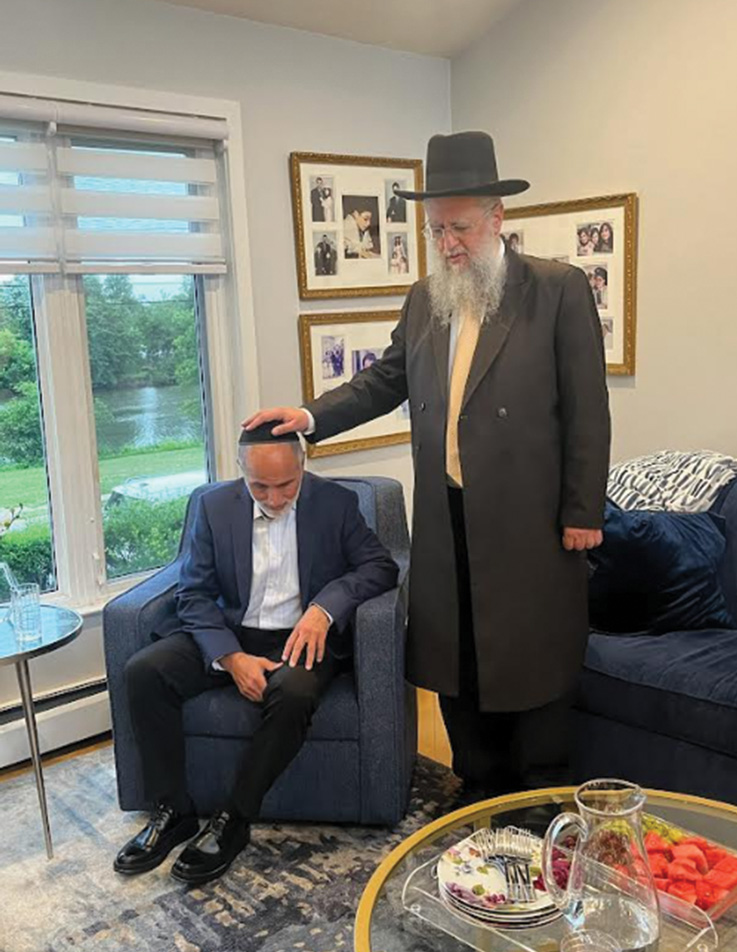
Irving “lived to give,” according to AJ, which stands for Aaron Jay. “My father always said life is not about you, it’s about what you can do for others.”

While most people associate AJ with Renewal, the organization dedicated to facilitating kidney transplants in the community and around the world, AJ’s path to helping others began in 1983, when he was a newly married, young man, who had just moved to the Deal, New Jersey area.

Ralph Hazan, then president of Congregation Magen Abraham on Monmouth Road, asked AJ to be on the shul’s committee. Having just moved to the area, AJ was surprised and hesitant. So Ralph asked him to handle only three tasks and he would be done. They needed a home for the rabbi closer to the synagogue, approval to put in a sidewalk, and funds to build a nice new Hechal. A year later those items were accomplished, and AJ was appointed president, a job he kept for two decades. Together with Rabbi Semah and Charlie Gammal, they built a beautiful synagogue in West Long Branch. Today the synagogue building is thriving through the leadership of Lee Cohen, and AJ is proud that he had the opportunity to help.

Soon after, he became involved in the New Jersey committee for Sephardic Bikur Holim. AJ was invited to a meeting with Rabbi Michael Haber by the then president, David Bibi. Suddenly David Bibi announced that AJ was the new president of SBH NJ division, a term he had for six years from 2002 to 2008. He continued as a board member until 2018.

In 2013 something dramatic happened that changed AJ forever. Seven-year-old Stella Laniado needed a bone marrow transplant and unfortunately passed away. Tragically, the Laniado’s lost their youngest child. Those who visit their ancestors at the cemetery each year, pass Stella’s grave, filled with fresh flowers and toys, as such a young life was lost.

As an outcome, the Stella Laniado Foundation was formed and each summer, swabs are taken at the fundraising events for a bone marrow registry. One day, AJ had a swab taken and a few years later, he was notified that he was a match! Unfortunately, the recipient fell ill and the bone marrow donation did not happen.

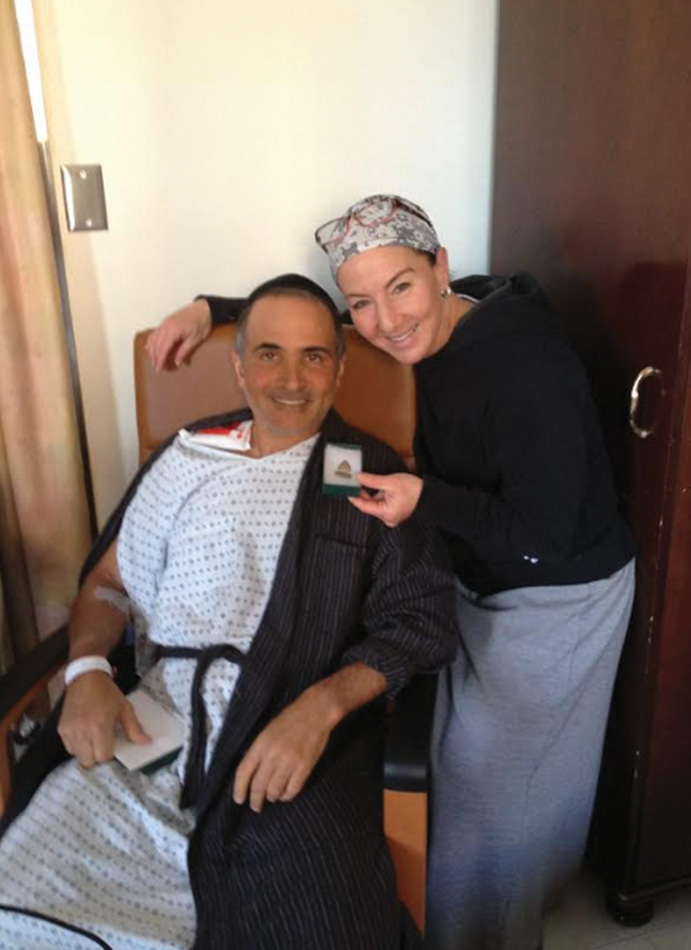
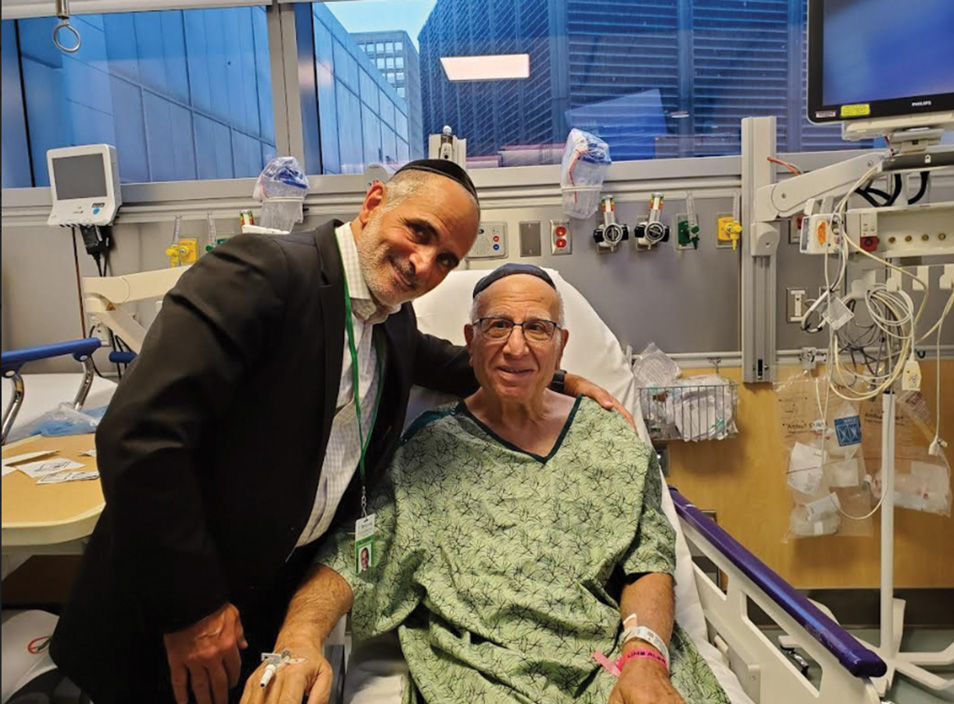
Several months later, AJ was called as a match for a kidney transplant by Renewal, an organization that began in 2006. Without hesitation he graciously agreed to give his kidney. AJ had forgotten he had also expressed interest in kidney donations when Joey Barnathan needed a kidney years before.
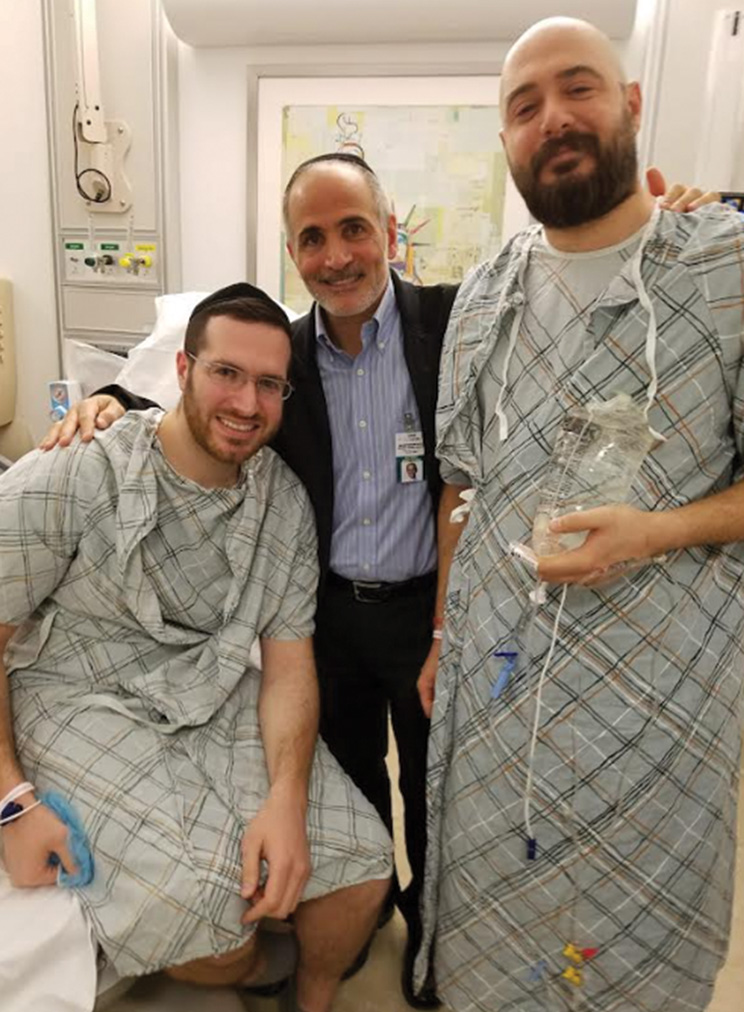
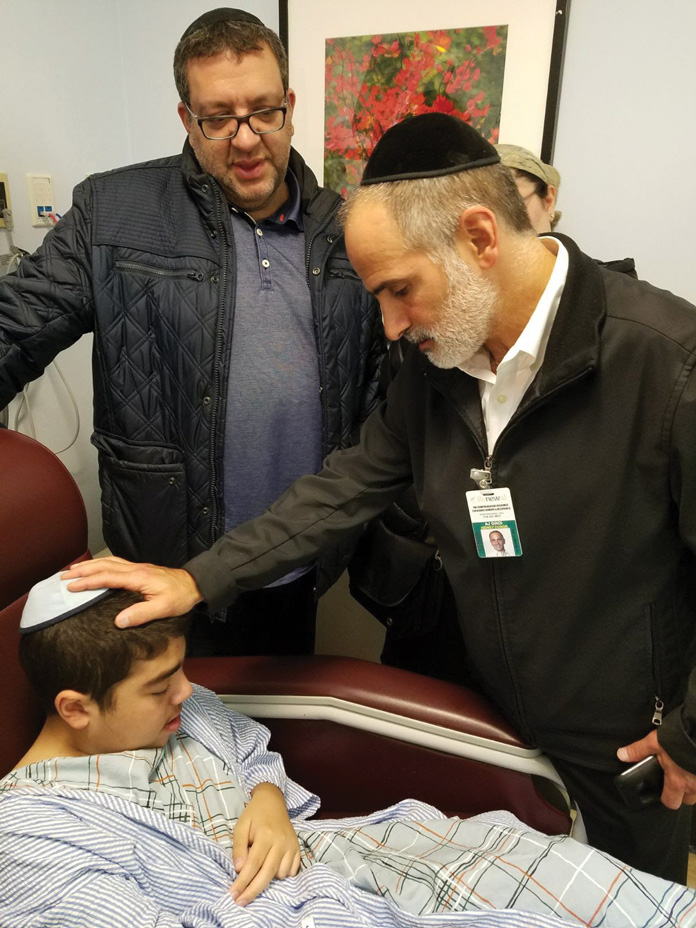
“A person only needs 25% of one kidney to live a healthy life, so if I am healthy and have two, why not help save a life. When you give a kidney, you get the best physical ever. There are a multitude of tests and a psychological exam. They try to talk you out of it, because they want to be sure you are giving for the right reason, and that you know what you are getting into,” said AJ, the father of six.

“The psychologist asked me ‘How much are you getting paid?’ I said I’m not getting paid. There is a man whose life is on the line and I am helping him survive. The psychologist said ‘If you donate your kidney, you put your kids in danger.’ I asked how they were involved. She said, ‘If your kids need a kidney one day, you won’t be able to give it to them.’ I told her that I believe that Hashem will protect my children from ever needing one. Then she asked about my wife. And this went on.”

He continued, “My wife Joy stepped in and said, ‘I want him to do it.’ Their job is to try and test you and convince you not to do it. They want to break you and make sure you really want to do it.”

On the day of the surgery, AJ went to the hospital. He had not met, nor did he know who the recipient was. Recipients are warned that the donor can choose to back out even up to the last second before the surgery without any obligation.

AJ saw a man who looked like a rabbi come in and asked the rabbi if he came to give him a blessing. The man was from Renewal, who came to spend the day with him.

“Giving my kidney to save a life was a great feeling and has very little if any effect on the donor. I am fortunate to live my life the way I always did with no limits,” said AJ.

When he went home a couple of days after the transplant, his friend Ralph Hanan visited, got inspired, and said he wanted to do it as well—and sure enough a few months later he did. Today, over 40 of AJ’s friends and relatives have donated their kidneys in order to save lives.

In 2014, Renewal asked him to join their team to promote kidney transplants. In 2013 the organization facilitated and found matches for 40 successful transplants. In 2014 that number went to 48, then 65 then 78 and then over 100. And the number keeps growing each year. Kidney donors receive tremendous rewards for their acts of kindness and giving the gift of life.

“At one time it was taboo to even speak about kidney donations and now it is very accepted,” said AJ.

In March 2014, AJ was contacted by Renewal founder Mendy Reiner, the president Sendy Orenstein, and transplant coordinator Menachem Friedman, who asked AJ to join the Renewal team as a community advocate.

At the time, Renewal was limited to helping people in the New York, New Jersey area. But this became difficult at times for the donor or recipient, who had to remain near the hospital for extended periods of time.

To make the transplant process less stressful and relieve some of the anxiety, Renewal established relationships out of New York with hospitals in Los Angeles, Tampa, Minnesota and Atlanta, all areas where there was enough activity for these relationships to thrive.

Each year, AJ speaks at the Safra Synagogue in Aventura, which has a large number of South American attendees, most of whom never knew kidney transplants were an option. Rabbi Yosef Galimidi from Safra Synagogue is a liaison to potential donors and recipients from South America. Renewal has facilitated quite a few international transplants, including from Panama, Argentina, Brazil and Mexico.

“Renewal is a community advocacy organization; it’s not just Sephardic. If you are in need of a kidney, we will help,” said AJ.

The organization has about 4,000 swabs in its database with almost half of those as very active. There is currently a waiting list of 350 patients who they are assisting. The average wait in the United States is seven to nine years and most of those people will get the kidney from a deceased donor. Patients will live three times longer with a live donor than a cadaver kidney.
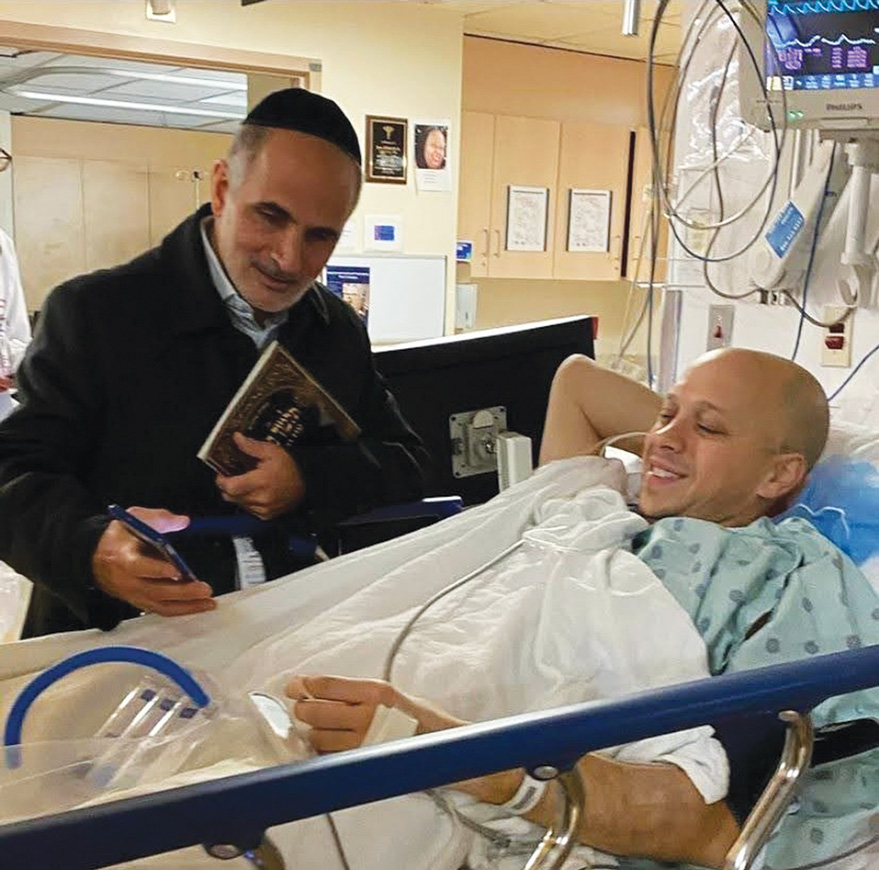
Long gone are the times when people desperately in need of a transplant needed to go overseas to procure one. Renewal is saving lives every day by matching donors to recipients.

Renewal has streamlined the process by working together with transplant centers to make the experience more efficient. Please note that Renewal believes in a zero-pressure approach. This means that nobody will guilt you into this and that you are free to back out at any time. To inquire further about becoming a kidney donor please email info@renewal.org or call 718-431-9831 ext. 209. All information provided will be kept strictly confidential.

AJ is there to help you along, a living example of a kidney donor.

A genealogist and historian, Sarina Roffé is the author of Branching Out from Sepharad (Sephardic Heritage Project, 2017), Sarina holds a BA in Journalism, and MA in Jewish Studies and an MBA.


DSN’S SPORTS LEAGUES POWER UP THE JERSEY SHORE

IF ANYONE WAS WONDERING WHERE CHILDREN AND PARENTS WERE ON SUNDAYS THIS FALL, YOU COULD FIND THEM AT DSN’S OUTDOOR SPORTS FIELDS, WHERE OVER 500 PLAYERS PLUS HUNDREDS OF SPECTATORS CAME TOGETHER FOR COMPETITIVE FUN AND EXCITEMENT.

DSN’s Executive Director Sammy Sitt believes the real winners are every family on the Jersey Shore. “Since DSN’s founding over 15 years ago, our Girls Soccer and Boys Flag Football Leagues have been an integral part of life in our Deal community. The leagues are vital for children to learn discipline, teamwork, and sportsmanship. Plus, there is no better feeling for a child than seeing their family gracing the sidelines, cheering and rooting for them. This is how we build community.”

The Football League caters to boys from kindergarten through high school and the Soccer League attracts girls from 1st through 8th grades. The leagues have professional referees and volunteer parent head coaches.

Marc Braha, a football head coach, put his role in perspective. “Coaching is not always about winning. It’s about finding each player’s strengths and weaknesses and maximizing their potential. It’s about instilling confidence in each player to see real progress as a united team.”

Irving Betesh, a parent head coach, had as much fun as the kids. “I am grateful for the opportunity to have been a coach this season. The interaction with the kids and parents was something to look forward to each week. DSN and Sports Director Jon Entel did an outstanding job making things run smoothly. The league gets better and better every year!”

Entel has been directing both the football and soccer leagues for six years. He sees the difference time has made. “Each year the competition gets better, the coaching progresses and the overall quality of the league improves.“ His colleague, DSN’s Girls Sports Coordinator Danielle Shemueli is the Jersey Shore’s biggest advocate for girls sports. She takes immense pride in the soccer program which continues to expand.

Parents were elated, including Joseph Silvera, father of a 1st grade soccer player. “These young girls are only beginning to learn soccer skills along with the life skills that go with it. I see my daughter’s team hustling, playing with their hearts, and feeling confident when the parents cheer them on. My daughter lost in the semi-finals this year and learned the hard lesson that winning isn’t everything, but we were still so proud of her. I am grateful to DSN for making learning so enjoyable for her.” Another parent, Karen Kameo, loved the league. “My daughter had the most wonderful experience. The practices helped her learn the rules as well as how to pass and kick. She scored lots of goals! I also had so much fun watching her.”

Having everyone play at the same time and the same location every Sunday created an amazing community atmosphere. Sammy Sitt continues to stress the big picture. “Yes, certainly DSN has been providing exceptional sports league experiences so that our children can reap the health benefits of being active. But more than that, our leagues bring our community together. Children and families from different schools and different shuls meet on our fields and build friendships. With Hashem’s help, DSN will continue to build and strengthen the best community in the world.”

THE PRIME LENDING RATE & MORTGAGES

MELANIE KISHK

NEWS THAT THE FEDERAL RESERVE BANK (THE FED) RAISED THE PRIME LENDING RATE AGAIN HAS LEFT MANY HOMEOWNERS ASKING HOW THIS WILL AFFECT MORTGAGE RATES IN THE NEAR TERM. MANY PEOPLE MISTAKENLY BELIEVE THERE IS A DIRECT CORRELATION BETWEEN THE TWO, BUT THAT’S NOT NECESSARILY TRUE. SO LET’S EXAMINE THE FACTS.

The FED meets several times yearly to address the country’s economic picture and raise or lower interest rates if necessary. Rates may go up or down depending on inflation or the overall outlook for the economy. With inflation on the rise, rates have steadily adjusted throughout this year.

When interest rates go up, some types of loans are immediately affected. Unlike other types of loans—such as credit cards, home equity lines of credit, and car loans—mortgage rates do not automatically increase. This is because mortgage rates are generally calculated by forecasting economic trends and predicting whether more people can afford a home. The prime lending rate is just one of the factors accounted for, so it takes a while for the market to react to the FED’s announcements.

The spike in mortgage rates this year has primarily been the result of the FED increasing the rate of interest banks use to lend to each other. When these rates go up, the rise tends to drive up the rate of the 10 year treasury note, a better gauge for how mortgage rates react.

What does this mean for people who would like to buy or sell a home in the current market? First, it leaves them with two basic options: wait and see what happens in the future, or continue their plans to buy or sell a house. Since no one, not even economic forecasters, knows what the future holds, waiting until just the right moment may mean waiting forever. The best approach is to pay attention to the news and long-range forecasts, but don’t let the information keep you from following through with your plans, particularly if you’re ready to find your next home.

You might ask yourself how the recent change in housing inventory affects all of this. It is true that in some markets around the country, housing inventory is down from last year. As a result, some people are holding on to properties, waiting to see what happens, while others are renovating houses and hoping for higher prices when the time comes to sell. Inventories are not down across the board, however. On the contrary, some markets have seen an increase in the number of homes available, making it an excellent time to start looking.

So, here’s the bottom line: In a fluctuating market, don’t allow yourself to get trapped between panic and paralysis. Instead, keep moving forward with your plans. Talk to your local realtor about market trends and inventories. Listen to their advice and keep doing your research, as well.

Remember, inventories and market forecasts have always been, and will continue to be moving targets. Qualified realtors and lenders know this and will help guide you in the right direction. Work with the professionals you know and trust, because one day you will find your dream home. When you do, be ready to make your move.

Century 21’s Melanie Kishk is a full-time Broker/Owner. Her team consists of top performing real estate agents serving Brooklyn, New York and the surrounding communities.

THE SANDWICH GENERATION IS GROWING, AND SO ARE ITS RESPONSIBILITIES

ACROSS THE UNITED STATES, MILLIONS OF MIDDLE-AGED ADULTS STRUGGLE WITH THE DUAL RESPONSIBILITIES OF RAISING A CHILD AND CARING FOR AN AGING PARENT. THEY ARE MEMBERS OF WHAT IS COMMONLY CALLED THE SANDWICH GENERATION.

In fact, a 2020 report by New York Life found that 48% of the sandwich generation are expected to be in a caregiving position in some capacity for six or more years.

The rise of the sandwich generation is a byproduct of two powerful trends: (1) women giving birth later in life, and (2) the increasing longevity of the US population. When you combine these factors with a growing number of young adults living with their parents, it’s easy to see why so many middle-aged Americans are concerned about the future. If you are one of them, here are a few steps you can take to protect your loved ones and prepare for the financial responsibilities ahead.

Have a plan for eldercare
Talk to your parents about the kind of care they’d prefer, and discuss it with your siblings. See which, if any, family members have the capacity to help provide care and which home would be the most accessible. In case external help is needed, research local resources to see what is available—and at what cost. Most importantly, consult an attorney and make sure you have all the legal documents needed to make sudden medical and financial decisions if the need arises.

Evaluate your resources
Before determining a course of action, make sure you know what resources are available. Can your parents pay for care on their own? Do they have long-term care insurance? Do they own any whole life insurance policies with living benefits that they may be able to use to pay for care? Can other family members contribute financially? Is public assistance a viable option?

Protect your children’s lifestyle and future
While caring for a parent is a huge responsibility, it’s important to make sure your children’s needs and your own retirement needs are also met. If you haven’t done so already, set up a college fund and make funding it a priority. If your place of employment offers a 401(k), try to contribute the maximum amount allowable, and make sure you contribute at least enough to get the full company match. Also, consider purchasing a term or whole life insurance policy that can help to protect your family’s future in case anything tragic happens to you.

Caring for children and aging relatives at the same time is never easy, but with the right planning and resources, it is possible to do both. With so many people joining the ranks of the sandwich generation, now’s the time to start planning for the future.

This educational third-party article is provided as a courtesy by David Hoory, CLF®, LUTCF®, Managing Partner, Brooklyn General Office, New York Life Insurance Company. To learn more about the information or topics discussed, please contact David Hoory at (718) 486-4601 or dhoory@newyorklife.com to get in touch with the agents in your area.

HOW TO RAISE YOUR MENTAL GAME WHEN RECESSION ANXIETY CREEPS IN

ARI BAUM CFP®

ARE YOU WORRIED ABOUT A MAJOR RECESSION? DO YOU THINK THE MARKETS ARE ABOUT TO COME TO A STANDSTILL ANY DAY NOW? “YES,” IS THE ANSWER FROM MOST FOLKS THESE DAYS AND MOST SMALL BUSINESS OWNERS AGREE, AS DO LOTS OF SO-CALLED ECONOMIC EXPERTS AND TALKING HEADS ON THE NEWS.

Still, no one really knows when the next recession will happen—or how severe it’s going to be. And worrying about it isn’t helpful or good for you. In fact, it’s more challenging to make money moves when your judgment is clouded by recession anxiety.

So, how can you cope? What can you do to set your recession fears aside, make confident decisions, and weather the slowdowns better?

6 STEPS TO BRAVING RECESSIONS WITH A COOL HEAD, CALM NERVES & CLARITY

1: DON’T BUY INTO THE HEADLINES

Strategy

Limit your news intake. Headlines are designed to scare us and attract as many eyeballs as possible. That clickbait can be toxic for anyone who takes in too much.

Put it in action
Stick to one (or a few) news sources you trust. Limit the time you spend checking the headlines. Also, do not take the news as gospel, especially when making significant financial decisions.

2: RESIST IMPULSIVE ACTIONS

Strategy
Think twice (or more) before making big money moves. Panic can snowball, especially when it feels like the bottom is falling out. Resist the urge to act immediately because it can lead to mistakes, not sound financial decisions.

Put it in action
Ask yourself, “Why am I doing this?” and “Is now really the right time to make this move?” Give yourself time, like days or weeks, to consider significant decisions carefully and think how they’ll affect you now and in the long-term.

3: RUN A WORST-CASE SCENARIO

Strategy
Think about your biggest recession fears and what the worst-case scenario would look like for you. Then, troubleshoot it.

Put it in action
Ask yourself, “Worst case, what could I lose in this or the next recession? What would I do if that happened?”

Running worst-case scenarios can help you see possible solutions—and maybe even some silver linings. That can put some of your bigger fears about a recession in a new light. It may even show you that your fears aren’t as bad as you’ve built them up to be.

4: DO A TEMPERATURE CHECK

Strategy
Now may be the time to make some shifts, or take a new approach. And you won’t know that if you just keep things on autopilot.

Put it in action
Carefully consider your risk tolerance, your investments, and how diversified your portfolio is. While you may want to make some changes now, it can also be smart to check in on your finances more frequently as markets shift. That will keep your finger on the pulse of things, so you can keep your expectations and reactions in check.

5: MAKE TIME TO RELAX

Strategy
Carve out time in your schedule to do activities that help you relax. Make that relaxation time part of your daily or weekly routine, even if it can’t be on the same day every week or at the same time every day.

Put it in action
Start simple with breathing exercises for 10 to 20 minutes a day. Of course, you could do anything you enjoy that helps you unwind and relax. That could mean exercising, reading, cooking, crafting, or learning new hobbies. Whatever you do, taking the time to relax can calm your brain and clear your head. This can help you think a little more clearly, even when you start to feel recession anxiety set in.

6: EXPAND YOUR OUTLOOK

Strategy
Extend your perspective—start looking past the next year or two. Opening up your outlook to the long-term can put current market conditions in context.

Put it in action
Ask yourself, “Will I still have these recession worries 10 or 15 years from now?” Remember that recessions are part of healthy market cycles and that over the long-term, market gains have historically outperformed their losses.

Since 1926, the S&P 500 has risen about 72% of the time, year-after-year. So, play the long game and keep an eye on the horizon, as well as on your next step.

WHAT RECESSION PANIC REALLY COSTS
& HOW TO TRULY BEAT IT
Are you surprised by any of these strategies? Do you already use some of them to deal with recession anxiety—or stress in general?

No matter how many recessions you’ve lived through, another one may rattle you. If that happens, you can get hung up on the things that you can’t control, like when the next recession will strike or how long it’s going to last.

That mindset does not help us make prudent decisions. When we give in to recession anxiety, it can cost us, both financially and psychologically.

On the financial side, any of us—even the savviest folks—can abandon their investments and strategies, losing sight of long-term goals and what it takes to reach them.

The anxiety can mean we focus on the negative and our mental health suffers. We are more likely to experience these effects if we’re feeling alone or out of options.

We can break free of that mindset! The truth is that when we focus on what we do control—like our outlook and our financial choices—we start seeing past the doom and gloom of recessions. Then we can start to make a plan for how to respond and make adjustments as circumstances change.

The content is developed from sources believed to be providing accurate information. Consult your financial professional before making any investment decision. Investing involves risk including the potential loss of principal. No investment strategy can guarantee a profit or protect against loss. Past performance does not guarantee future results.

Ari Baum, CFP® is the founder and CEO of Endurance Wealth Partners. With over 25 years of experience in the Financial Services industry, he brings his in-depth experience to Conceive, Believe, Achieve, for his clients.
Securities and Advisory services offered through Prospera Financial Services Inc. Member FINRA/SIPC.
Brokerage and Advisory accounts carried by Wells Fargo Clearing Services, LLC.

SPOTLIGHT ON CAROL MISSRY READING SPECIALIST

ELLEN ADES

READING IS THE GATEWAY TO LEARNING IN SCHOOL AND LIFE. IN MANY INSTANCES READING SPECIALISTS HAVE BECOME THE SECRET SAUCE UNLOCKING THE UNLIMITED POTENTIAL OF YOUNG MINDS—AND THEN THERE IS CAROL MISSRY.

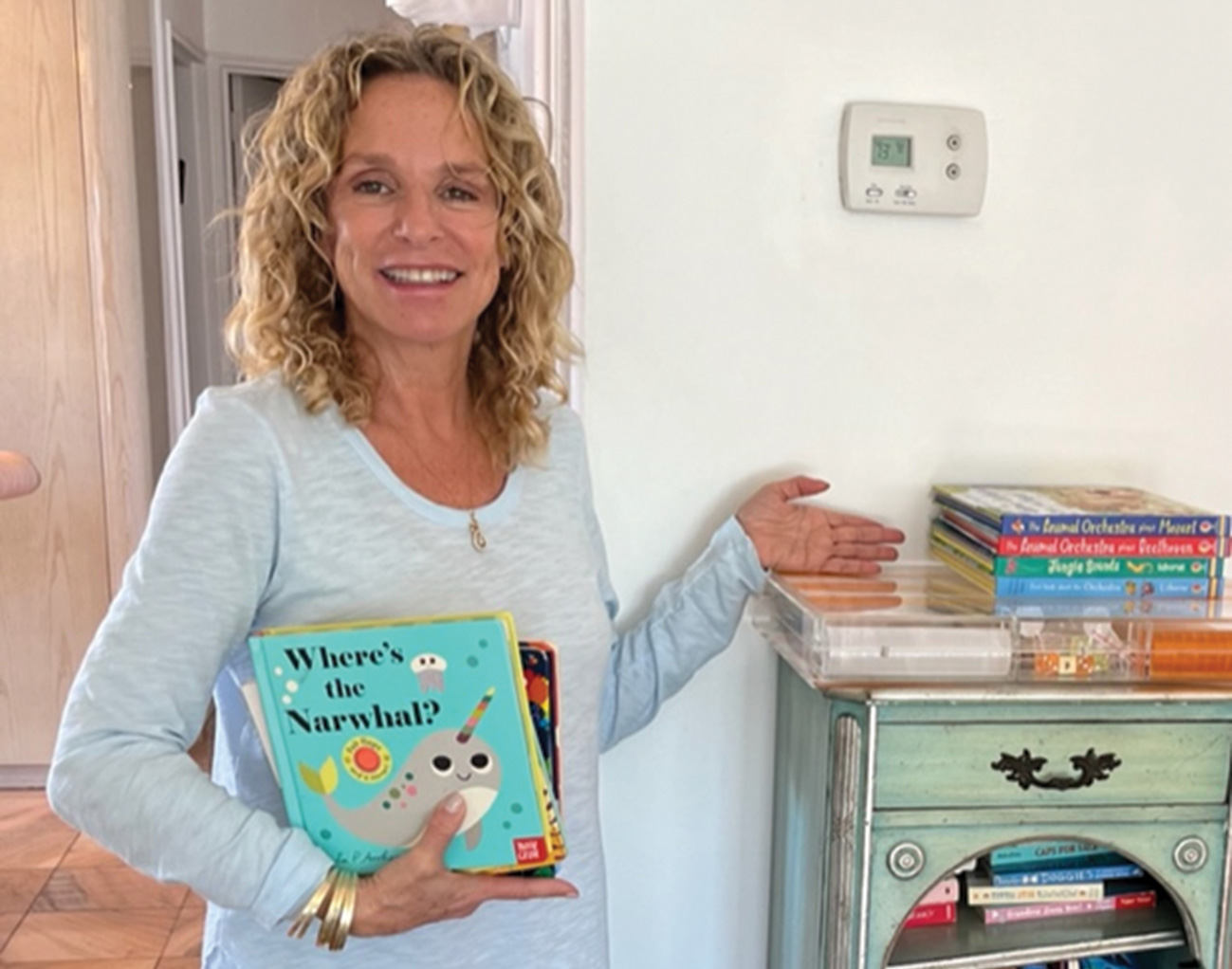
Carol studied for her Bachelor of Science at New York University. She worked as a certified special education teacher for over twenty years in the most challenging public schools New Jersey has to offer. She eventually focused on becoming a reading specialist trained in Orton-Gillingham, but currently savvy enough to use other methods as she sees fit. Carol knows how to focus on each unique client to yield optimal outcomes. She has been successfully teaching private clients for the past ten years and takes particular pride in having helped children struggling in math and language arts reach fluency level.

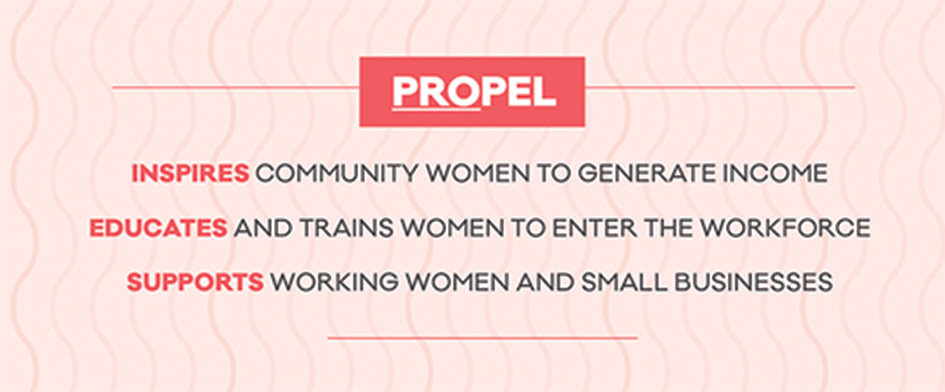
Carol shared, “When I came to PROPEL, I was advised to brush up on my computer skills by signing up for classes through SBH Career Services Division. That advice led me to acquire skills that help me manage and market my business more efficiently. PROPEL is a great resource for every woman no matter where she is on her journey to earn.”

The unique thing about Carol is her talent for connecting with students. When asked about this she replied, “The students enjoy the sessions because I create a fun and inviting learning environment.”

When I asked Carol to share a success story she harkened back to her public school experiences. “I remember one 9th grader who could not read any of the letters of the alphabet. He was not interested in Shakespeare so I had to identify what did interest him. We began focusing on song lyrics. After two years he was able to read and write.”

Carol’s strengths as a teacher allow her to meet students wherever they are academically. She knows what it takes to engage pupils—and she does fully engage them. This ability to adjust teaching methods and be creative with learning tools has given her students the opportunity to achieve. She has taken unmotivated children who don’t do homework and helped them through a metamorphosis to emerge as fully participating members of the classroom.

With all her student success stories and decades of experience, Carol believes parents are the best advocates for their children and they must become involved.

I asked her for two pieces of advice. Regarding students she said, “All children want to do well. We must develop skills and strategies that remove obstacles to learning.”

When I asked her what advice she might offer parents, she said, “Reading can be fun. Education can be fun. Make it enjoyable.”

If you are interested in a career or career advice, please reach out to PROPEL. We can help you take the steps to fulfill your professional goals and dreams.

Call 646-494-0822 | Email info@thepropelnetwork.org| Instagram @PropelNetwork

Ellen Ades is a PROPEL career coach.

Emotional Wellness & Beyond

SBH Mental Health Division

Sandy Eller

With a dozen divisions in place to meet the many needs of the local community, it should come as no surprise that Sephardic Bikur Holim, more commonly known as SBH, has a dedicated mental health department to help those who are struggling with emotional wellness.

Founded in 1974 on foundations of altruism and responsibility, SBH rapidly expanded from its initial mission of visiting the sick when it became clear that patients who had been discharged from the hospital were often facing significant obstacles that couldn’t always be resolved by kind-hearted volunteers.

Evolving organically, SBH launched divisions to meet communal needs, focusing on areas including fertility, senior citizens, careers, food, clothing and more. While SBH initially began offering mental health care through its social services arm, the Mickey Kairey Mental Health Division was formed as a standalone unit to provide free treatment and referrals while also shattering the stigmas that left those in pain suffering in silence, fearful that seeking treatment could lead to repercussions.

Dr. David Sitt, co-chair of SBH’s Mental Health Division and an SBH board member, believes the fact that anyone reaching out to the Mental Health Division also has access to more than 150 other free programs offered by SBH at no charge is a game changer.

“Someone who comes in for therapy may have other needs, whether they are financial burdens, medical issues or needing help with a job search,” said Dr. Sitt. “What makes SBH stand out is that we have multiple divisions to treat the whole person and the whole family and if someone starts out in a different division and it turns out that they need mental health support, we are ready to receive them as well.”

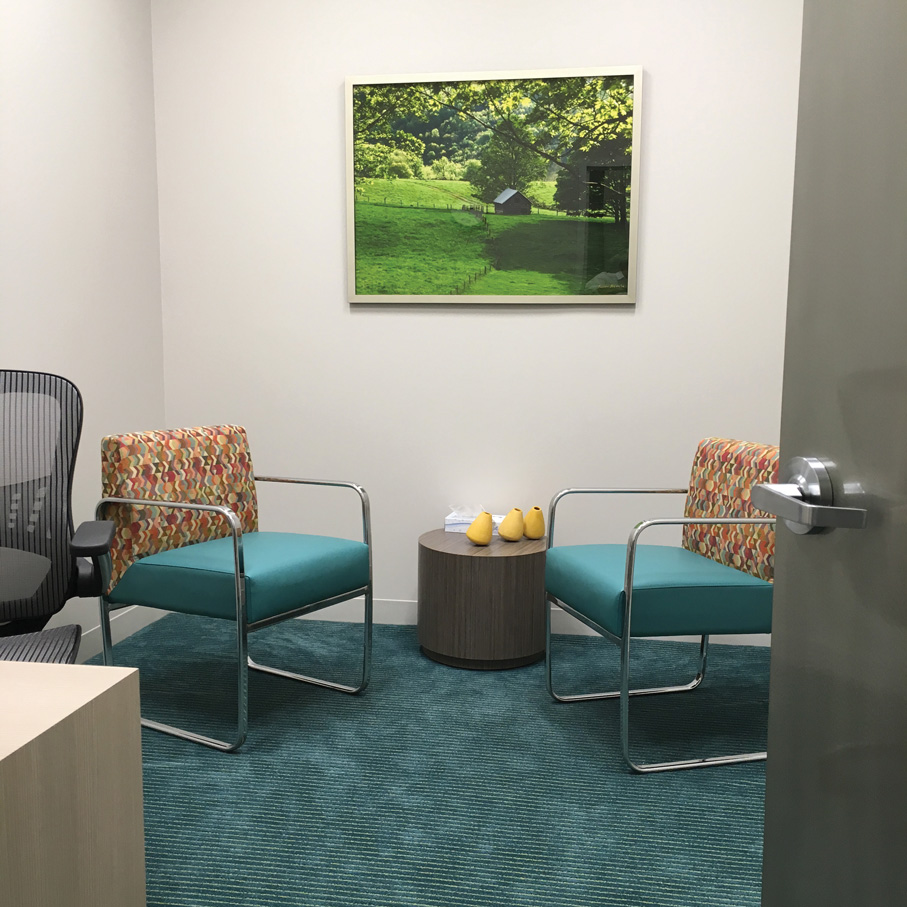
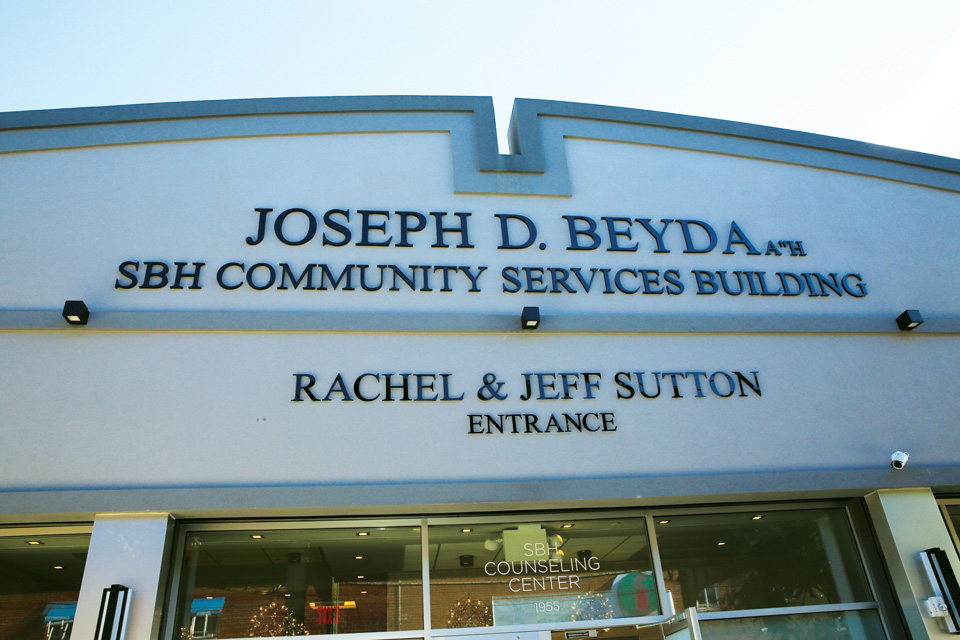
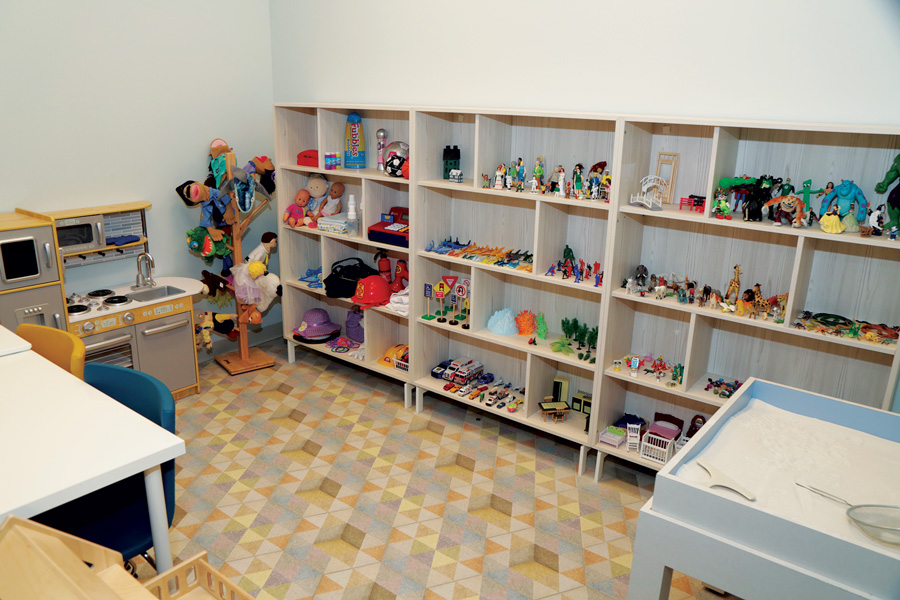
The MHD’s counseling center employs over 30 clinicians, two psychiatric nurse practitioners and a psychiatrist who treats patients of all ages. The counseling center recently streamlined its intake process so that even patients with multiple issues can get the help they need with a single call.

A tenured professor at Baruch College, Dr. Sitt earned his PsyD from Yeshiva University, with a clinical specialty in adult ADHD, which has become increasingly prevalent in recent years, particularly through the pandemic. SBH saw its numbers skyrocketing during COVID, providing 20,000 counseling sessions to over 500 families in 2020.

“There was a very real uptick in mental health crises, whether it was anxiety, depression or substance abuse disorders,” said Dr. Sitt. “We are still feeling the impact of the destruction of the school and work environments.”

“Kids are really, really struggling,” added Dr. Susan Schmool, director of SBH’s Mental Health Resource, known as the MHR. “We are seeing a rise in bullying, more disruptive behavior and a lack of socials skills, boundaries and communication skills, all due to COVID.”

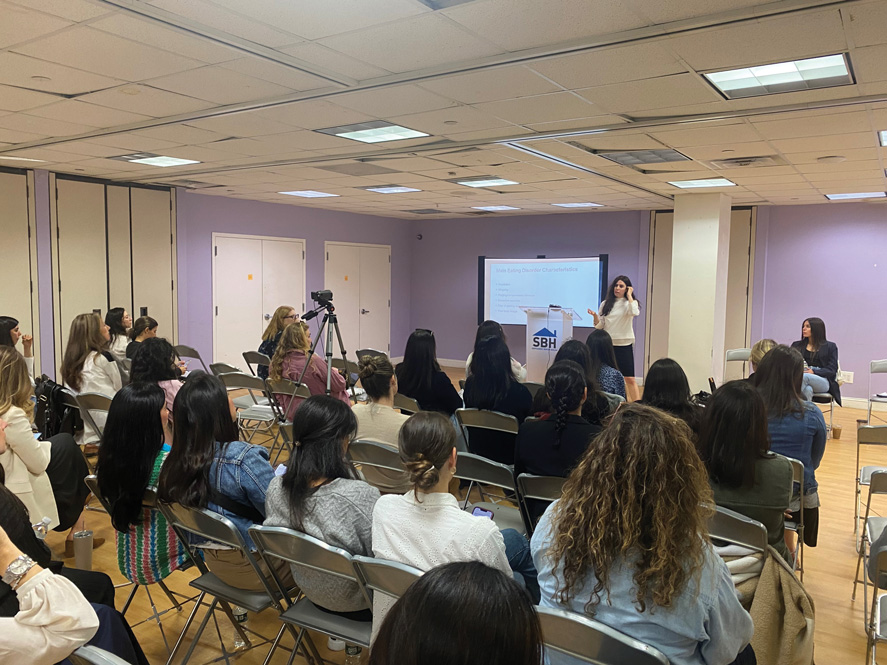
Dr. Schmool also has a prior history with SBH, having volunteered with its Medical Division and its Sephardic Educational Advocacy and Resources for Children program, known as SEARCH, 25 years ago. Inspired by her time at SBH, she decided to pursue a degree and earned a PhD in educational psychology, ultimately paving the way for her return to SBH last year to head up the MHR, a program that encompasses a referral line and offers preventive and educational programming to promote emotional wellness. This program gives Dr. Schmool the ability to keep her finger on the communal pulse, with offering targeted lectures, support groups and other services as particular needs arise.

“Sometimes I have clinicians telling me that they have several clients who would benefit from participating in a particular support group, or we could have a program about respect, going into community high schools to teach them about relationships,” said Dr. Schmool. “Our Courage to Heal program in schools raises awareness about sexual abuse and we do staff trainings and parent training as well.”

That willingness to continue broadening its scope of operations is what turned SBH into the multi-faceted entity that it is today, one that has prioritized excellence and compassion for close to 50 years. That same sense of responsibility and commitment are the underlying foundations of the Mental Health Division, which prides itself on being an all-in-one resource for emotional and mental wellness for children, adolescents, couples and families.

“We are excited to get the word out about what we have to offer,” said Dr. David Sitt. “SBH was founded on helping people in distress and we are proud to be carrying on that tradition in the Mental Health Division, treating the whole person in order to ensure their mental and emotional wellness.”

“We try to get people the help they need, whether it is relationship issues, depression, anxiety or trauma,” added Shlomo Lieberman, LCSW, director of SBH’s Mental Health Division. “Whatever the issue, we are here to treat people with the right care.”

Lieberman began working with SBH in 1991 as a social work student, returning again in 2000 after a two year stint in Israel. He left SBH in 2005 to open a private practice, rejoining the SBH family once again in 2021. As director of the MHD, ensuring that all of SBH’s many divisions are readily available to those seeking mental health treatment through either the counseling center or MHR has become Lieberman’s top priority.

“We want people to understand that it takes just one call to get the right treatment,” explained Lieberman. “We have concierge services to make sure that people are directed to the right divisions, so if someone calls us for a mental health issue we can work on the other pieces of the puzzle as well.”

MHD committee member Dr. Ayla Sitt co-chairs SBH’s Courage to Heal, which runs a confidential, anonymous hotline providing support to victims of domestic, sexual and emotional abuse as well as preventative training programs. A senior psychologist and dialectical behavior therapy specialist at NYCBT who specializes in peri and post-natal therapy, Dr. Ayla Sitt credited the counseling center’s administrative and clinical directors, Rhonda Chabbott, LMHC and Tziporah Langer, LCSW, for their joint efforts, which have impacted the community far and wide.

“They are role models for all, bringing dedication, skill and heart to SBH’s counseling center,” said Dr. Ayla Sitt. “Their efforts will help SBH continue providing top-level care for the community.”

Despite its growing size, SBH’s Mental Health Division remains an initiative whose heart and soul is the close-knit community, one that goes all out to take care of its own.

“While our division is staffed by incredible mental health professionals, what makes it extra unique is the dedication of our volunteers,” noted SBH president David J. Beyda. “Community leaders like Steven Balasiano, Ronnie Tawil and Rena Ashear dedicate so much of their time to ensuring that our Mental Health Division—and SBH as a whole—can support the growing needs of our community.”

SBH Mental Health can be reached at 718-787-1300, mentalhealth@sbhonline.org, or by visiting sbhonline.org/mental-health-referral. All calls and emails are strictly confidential.

Sandy Eller is a freelance writer who writes for websites, newspapers, magazines and private clients.

Read Jewish Image Magazine Online – December 2022

To View Jewish Image Magazine In PDF

Click Here

COMMUNITY IS ESSENTIAL

Anna X. Tripolitis

It takes a village—A phrase typically used when referring to raising children can also point to an essential part of recovery—community. Although recovery is a very personal journey, being a part of something larger than yourself gives you a sense of purpose, belonging, and inclusion. A community serves as a reminder that you are not alone and provides a lifeline when your journey feels too daunting to move through.

Addiction is an isolating disease. As addiction progresses, those struggling become increasingly desperate to hold onto the things that are destroying them at all costs. When someone isn’t willing to give up the substances to face what is happening in their lives, they begin to distance themselves from their community. However, this doesn’t mean that their community is lost forever.

When one chooses to recover, it requires opening up, being vulnerable, sharing feelings, and, perhaps most importantly, asking for help. And while the desire and drive to stay sober take personal power and internal strength, it is amplified by having a caring community to provide friendship and support throughout the recovery process. Experiencing a sense of belonging and inclusion encourages the development of trust. It builds meaningful relationships with people who can help them face newfound feelings and challenges by providing accountability and encouragement. For example, suppose someone’s friend suspects they might be struggling or isolating; that friend can talk to them about it before it becomes unmanageable. This friend can walk them through the challenges they may be facing, helping them stay on a stable path and avoid relapse.

Now, how does someone even find community? Where do they start? Establishing a community can feel very intimidating, but the good news is that community can be found anywhere; in the workplace, through family, synagogue or school. However, establishing a sober community is the best way to secure community support in early recovery. Those found in these communities are more likely to provide specific support that is valuable in the early days of recovery. One way is to find community meetings like Alcoholics Anonymous or SMART Recovery, which people can usually locate online. People have also found sober support online via social media and websites like meetup.com. Although it may feel intimidating, establishing a sober specific community early in recovery could be the difference between life and death.

However, expanding their support network to communities outside of recovery and sobriety can also be beneficial as people move through their recovery journey. Expanding a support network can mean volunteering, participating in a book club, or joining a fitness or wellness community like a gym or yoga studio. By creating a community with interests other than sobriety, a person in recovery creates consistent and healthy habits. These habits encourage regular social interaction and positive coping skills, which are valuable aspects of recovery.

While finding a community can feel like a daunting task, it has been an essential part of human nature throughout history. Unfortunately, those struggling with substance use disorder often ignore their need for social connection to hold onto their addiction when in active addiction. But suppose they return to their need for connection and embark on their recovery journey. In that case, their future can quickly become a more positive one. By having a community, those who struggle with addiction decrease their isolation and, as a result, reduce the risk of depression, resentment, and relapse.

If you or someone you love are looking for a way to find community support and need help getting started, The SAFE Foundation can offer ways to help. In addition to individualized counseling and various support groups, counselors can provide other ideas to create a community so that each individual makes a community that’s helpful for them. If you are struggling, reach out and ask for help. You don’t have to do this alone; nobody should have to. For help, call 1-718-GET-SAFE, 24/7 for assistance.

Anna Tripolitis, originally from St. Louis Missouri, is a passionate member of the recovery community. After getting an undergraduate degree in psychology, she shifted her focus to using her graphic design, art, and social media skills to help aid causes she cares about. Being able to work with The SAFE Foundation and utilize social media to educate and empower the community has been fulfilling work and further deepens Anna’s passion for mental health and recovery awareness.

CHIA SEEDS: THE NUTRIENT POWERHOUSE

LAURA SHAMMAH MS, RDN

SEEDS, IN GENERAL, ARE GREAT SOURCES OF FIBER. THEY ALSO CONTAIN HEALTHY MONOUNSATURATED FATS, POLYUNSATURATED FATS AND MANY IMPORTANT VITAMINS, MINERALS AND ANTIOXIDANTS. WHEN CONSUMED AS PART OF A HEALTHY DIET, SEEDS CAN HELP REDUCE BLOOD SUGAR, CHOLESTEROL AND BLOOD PRESSURE. CHIA SEEDS, IN PARTICULAR, ARE AMONG THE HEALTHIEST FOODS ON THE PLANET.

One tablespoon of chia seeds has more calcium than a glass of milk, more Omega-3s than salmon, and more antioxidants than blueberries.

They’re rich in polyunsaturated fats, especially omega-3 fatty acids. The omega-3s in chia seeds can help reduce inflammation, enhance cognitive performance and reduce high cholesterol. They are also an excellent source of fiber, with 10 grams in only 2 tablespoons. That is one-third of the daily recommended intake of fiber per day. Fiber is associated with reducing inflammation, lowering cholesterol and regulating bowel function.

Chia seeds are rich in antioxidants that help protect the body from free radicals, aging, and cancer. The high antioxidant profile also helps them have a long shelf life. They last almost two years without refrigeration.

As if that were not enough, they’re also high in phosphorus, magnesium and manganese. These nutrients help prevent hypertension and they help you maintain a healthy weight. And they are very filling and keep you satisfied, which helps lower food cravings between meals. The combination of protein and fiber contribute to their satiating effects. They’re also gluten free.

Unlike flaxseeds, chia seeds can be digested whole. They lower triglycerides and cholesterol levels while increasing HDL or “good” cholesterol, and they play an important role in regulating insulin levels. They reduce insulin resistance and decrease abnormally high levels of insulin in the blood.

HOW TO COOK WITH CHIA SEEDS
Chia seeds can be used as an egg replacer. The outer layer of the seeds swell when mixed with liquids to form a gel. This can be used in place of eggs to lower cholesterol and increase the nutrient content of foods and baked goods. To make the egg replacement, mix 1 tablespoon of chia seeds with 3 tablespoons of water and let it sit for 15 minutes.

They can also be used to thicken soups or gravies, and to thicken meatballs instead of breadcrumbs. They taste great sprinkled on salads and yogurt and as a breading for fish or chicken.

Laura Shammah MS, RDN has a masters degree in health and nutrition and is a registered dietitian. She has been operating her own private practice in both New York and NJ for over 20 years. She is happily married and has four children.

GUSTAV KLIMT: GOLD IN MOTION

NATALIE SENIOR GREENBERG

A new and exciting cultural destination will open this fall in New York! called Hall de Lumières, it will be the city’s first permanent venue to experience immersive digital art and showcase a new, innovative way for audiences to interact with artists and their work. It will present new, exhibitions every ten to twelve months based on the work of different world-renowned artists, beginning with their first exhibition—Gustav Klimt: Gold in Motion.

This exhibit will feature glowing, animated images of historic artworks by this early modernist master, blended with music and displayed against the landmark interior architecture of the former Emigrant Industrial Savings Bank located at 49 Chambers Street, across from City Hall. If you have seen and enjoyed Van Gogh: The Immersive Experience, then you will love Gustav Klimt: Gold in Motion.

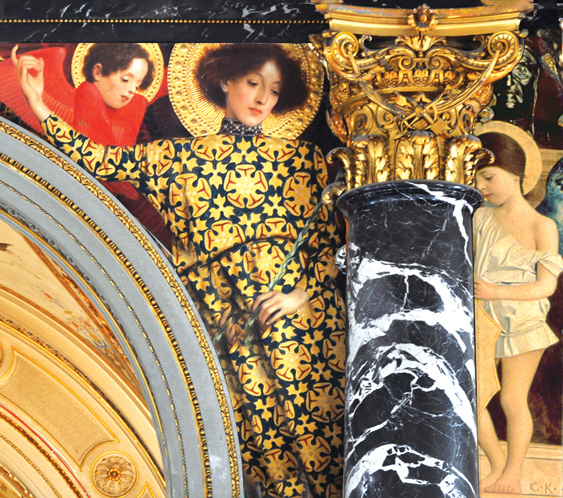
Gustav Klimt painted at the beginning of the 20th century and was influenced by the then current styles of Art Nouveau or Jugendstil. These styles were originally applied to the decorative arts but then extended to the fine arts. They were organic motifs with the curlicues, asymmetry, and swirling lines of nature.

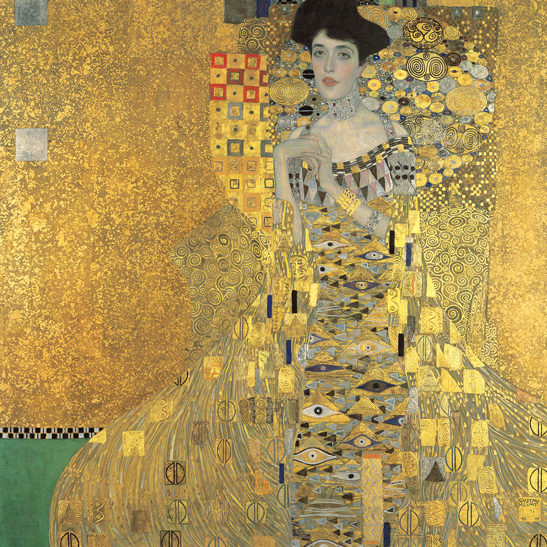
He is most famous for his Gold Period of paintings, where he used actual gold and silver leaf for a gleaming effect in his work. The son of a gilder, Klimt integrated the fine layers of gold and silver leaf into his work to merge the figures with the background and convey an impression of otherworldly treasure. His use of gold gives his works a timeless quality; the absence of perspective and shadow make them look like religious icons reminiscent of medieval paintings and illuminated manuscripts. Klimt’s Gold Period produced many beloved masterpieces including The Kiss, Judith, and Adele Bloch Bauer.

In one of Klimt’s most famous works, The Kiss, he depicts a couple locked in an embrace. All that is visible of the couple are parts of their heads. The rest of the painting dissolves into a shimmering, flat patterning of gold and geometric shapes. He uses rounds and ovals on the woman’s clothing and mostly rectangular shapes on the man’s garment. The entire work glows and visually expresses the emotional and physical explosion of love.

At Gustav Klimt: Gold in Motion, visitors will experience six distinct sequences carrying them through the artist’s life and the major themes of his work. Visitors will be able to learn about his early days as a painter in the late 19th century, decorating the lavish public buildings of Vienna. In the early 20th century, Klimt began to express himself in a more personal style. He became a leader of the Vienna Secession, a movement that broke from the traditional styles of the past and moved toward a more modern view.

The installation features luminescent, 30-foot-high images of famous works by Klimt, moving across the spectacular architecture and aligned precisely to the specifications of the building. A musical soundtrack created specifically for this presentation completes this beautiful, sensory experience.

Visitors to the Hall de Lumières will also be able to learn about the history and design of the Emigrant Savings Bank, which was built around the same time as Klimt was creating his masterpieces. It was one of the first skyscrapers built in the Beaux-Arts style. Also on view will be panels displaying images of Klimt’s paintings shown at actual scale, with information about the museums across the globe where these works can be seen.

In addition to his works, the show will feature other early 20th century Austrian artists who were influenced by Klimt, including Egon Schiele and Friedensreich Hundertwasser.

If after seeing this exhibit you would like to see actual paintings by Gustav Klimt, here are some other New York museums that feature his work: The Neue Gallerie (86th Street and Fifth Avenue) houses Klimt’s Adele Bloch Bauer, a painting so dazzling, that it is difficult not to be totally entranced by it. This painting has an interesting back-story. In 1938, the Nazi’s stole it from the Jewish Bloch-Bauer family. The descendants of its original owners recently recovered it from the Austrian government after a prolonged court battle. It was then sold to Ronald Lauder, who is now displaying it as the centerpiece of his Neue Gallerie Museum.

The Museum of Modern Art (West 54th Street, between 5th and 6th Avenues) exhibits Klimt’s Hope, a painting of a pregnant woman who is praying for the safety of her baby. This work, with its swirling shapes and exuberant colors, embodies the feelings associated with the miracle of childbirth. It is the gift of this painter to be able to draw the viewer into his paintings and impart such emotion.

On view at the Metropolitan Museum of Art (82nd Street and Fifth Avenue) are two noteworthy paintings by Klimt; Mada Primavesi, a portrait of a 9 year old girl. It was commissioned by her parents, who were supporters of progressive Viennese art. An earlier portrait by Klimt, of Serena Pulitzer Lederer, was painted with soft sinuous brushstrokes in all white. Lederer’s husband commissioned this portrait of his wife and became one of Klimt’s most important patrons in the years to come. Other works commissioned by Klimt for the Lederer family were seized as Jewish property by the Nazi’s in the early 1940s and then stored at Schloss Immendorf, a castle in Austria. The German troops set it on fire as the Russians approached in 1945, in the last days of WWII. It is so sad that the world has lost these important paintings.

Hall de Lumieres opened on September 14, 2022. Hours: Sunday through Wednesday, 10 A.M. to 7 P.M. Thursday through Saturday, 10 A.M. to 10 P.M. It is located at 49 Chambers Street New York.

Natalie Senior Greenberg is a Brooklyn College Art History professor, and the founder, curator and owner of an online art gallery.

THE POWER OF POSITIVE THINKING

BEN-GURION MATSAS

Download the eBook from: www.deltadigitalacademy.com/product/positive/.

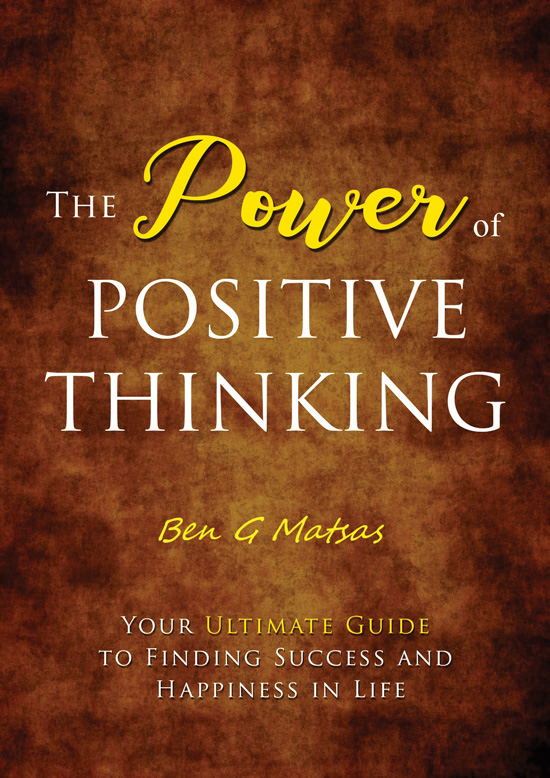
THE BOOK THE POWER OF POSITIVE THINKING IS THE ULTIMATE BLUEPRINT FOR PEOPLE WHO WANT TO PROGRESS FURTHER IN LIFE WITH A SIMPLE MINDSET SWITCH. POSITIVE THINKING AND RELENTLESS OPTIMISM IN ANY CIRCUMSTANCE ARE THE SECRETS TO LIVING A HEALTHY, HAPPY, FULFILLED AND MORE SUCCESSFUL LIFE.

In this book you will discover everything you need to know about The Power of Positive Thinking. Proven and powerful strategies the elites use to mold their winning mindset, the benefits of adopting a positive mindset, simple step-by-step action plans to train your mind to think positively in bad situations, and how to develop your thinking systems for success.

If you want to unleash your full potential in life and create your own success story—then this is the ultimate success book you have been looking for.

Do you view yourself as someone who has a positive outlook on life? Do you hope that good things are coming your way soon? Well, one thing that is important to note is that positive thinking is a mental and emotional attitude. It pays a closer focus and interest on the bright side of life with the hope of having a positive outcome.

Thinking positively does not mean that you should bury your head in the sand. It does not mean that you should ignore life’s painful and unpleasant situations. It simply means having the ability to approach life more positively and productively even in the face of unpleasantness. Even when things are not going your way, you keep your head up and look for hidden lessons and opportunities in bad situations!

It is important for you to notice that you have the power to change your mindset. It all starts with self-talk. In other words, you must begin by stimulating endless streams of positive thoughts running through your head. The truth is, these thoughts can take two forms; the negative and the positive mainly because most of what you think is derived from logic and reason. However, other self-talks may arise from having misconceptions and assumptions that result from a lack of information.

If you have more negative thoughts running through your mind, most likely you are a pessimist. On the other hand, if most of the thoughts you have about life are positive, there is a good chance that you are an optimist. In other words, you are someone that exercises positive thinking.

When you focus on the positive, you will mentally anticipate good health, success, and happiness. You believe that even when faced with the most challenging and difficult situations, you will eventually overcome them. In other words, having positive thinking is not a concept that everyone believes in. Some people will see it as nonsense and scoff at those that believe in the power of positive thinking. The good news is that there are so many people who are slowly seeing the important role that positive thinking has on their lives and believe that it is effective.

One thing that you must bear in mind is that if you want to use the power of positive thinking in your life, you must be more than just aware of the fact that it exists. You must be ready to adopt it in all your daily activities! There is so much research that reveals that positive thinking is not just about happiness and having an upbeat attitude. It is through positive thinking that you can create real value in your life by establishing long-lasting skills that last longer than a mere smile.

Ben-Gurion Matsas is the editor/publisher of Image Magazine, specializing in advertising and marketing. He is also a business consultant and personal coach.

RABBI ZAKI SARDAR A NATURAL TEACHER

SARINA ROFFÉ

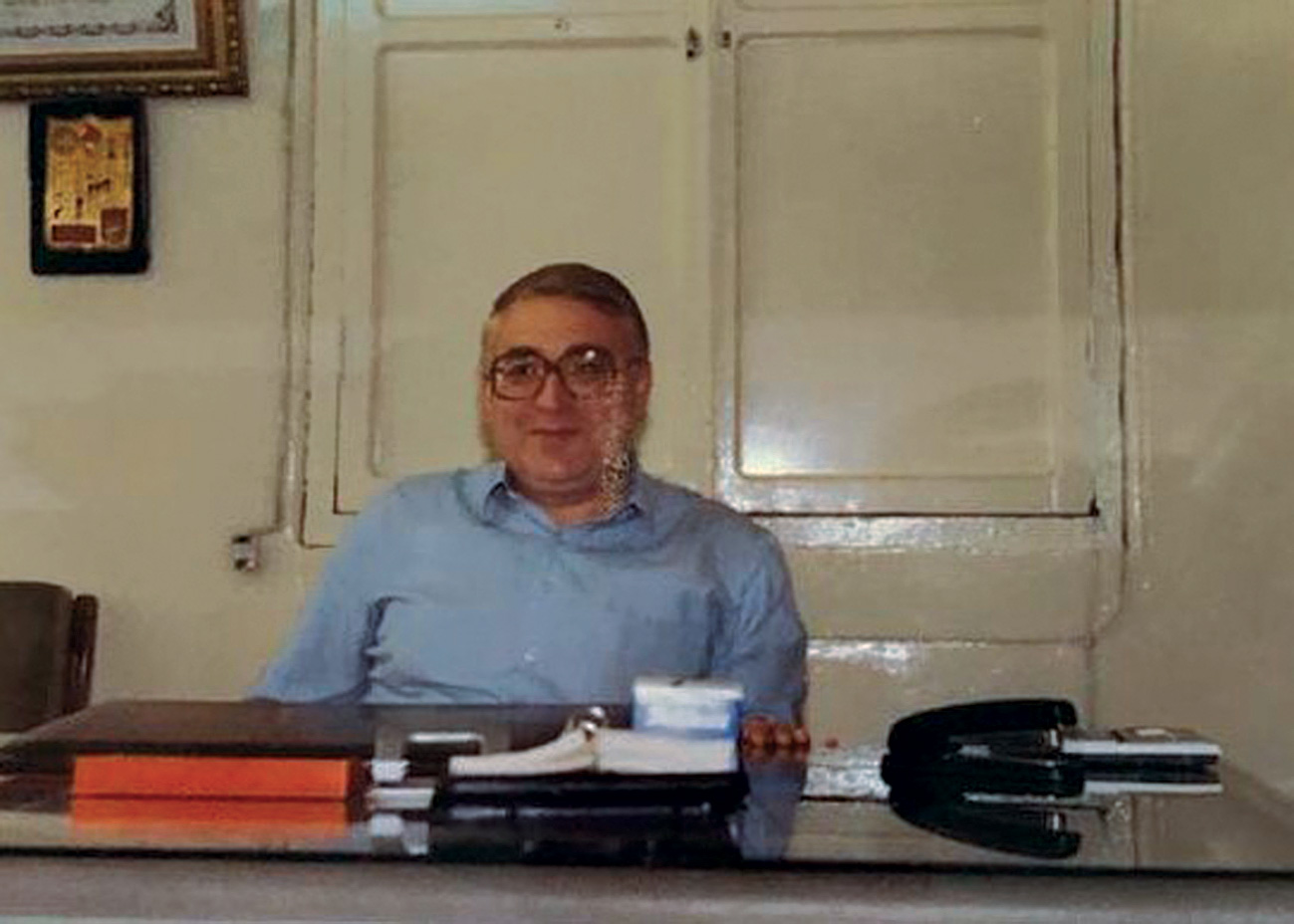
JEWISH EDUCATION HAS BEEN AT THE FOREFRONT OF RABBI ZAKI SARDAR’S LIFE SINCE HE WAS A YOUNG MAN IN ALEPPO. FOLLOWING IN THE STEPS OF HIS FATHER, ELIYAHU SARDAR A”H, AND GRANDFATHER, MORDECHAI SARDAR A”H, BOTH OF WHOM WERE SHOKHETS IN ALEPPO, RABBI SARDAR HAS COMMITTED HIS ENTIRE LIFE TO TEACHING BOYS ALL ASPECTS OF JEWISH EDUCATION.

Raised in the post 1948 years in Aleppo, Rabbi Sardar had a difficult life under the Syrian regime. With no Jewish high schools, he had to attend Catholic school.

When he was just 19, Rabbi Sardar was the gabbay (assistant) in the knees (synagogue) in Jamileh. He took meticulous care of the synagogue, managed the school and assisted the many needy families. He collected donations before holidays to give gift certificates for food for to the poor.

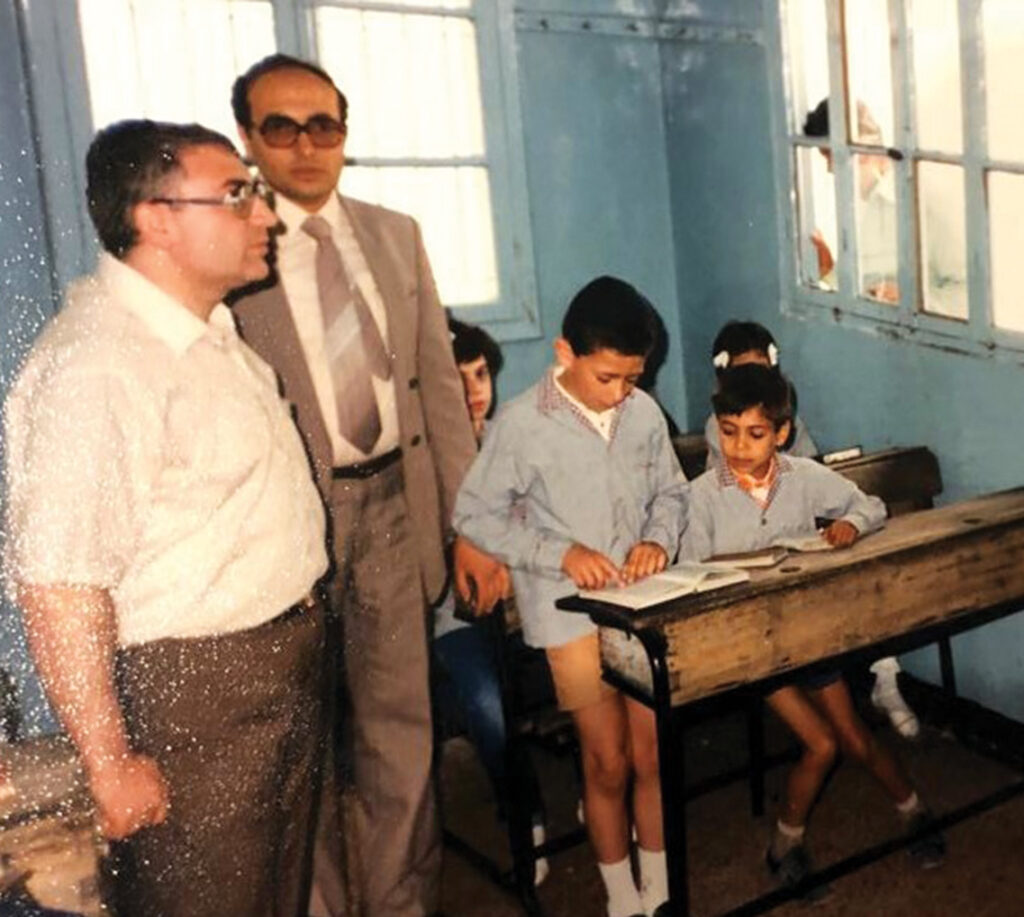
A student of Hakham Yomtob Yedid A”H, Rabbi Sardar learned how to be a teacher. It came naturally and the students connected with his sincerity. He taught elementary Hebrew and Talmud Torah in Aleppo. He quickly became assistant principal at the high school in Aleppo, where he also taught Arabic to high school students.

“He was my teacher when I was in sixth grade,” said Morris Bawabeh. “Rabbi Sardar does a lot of things for the community, the shul and our religion. He enjoys teaching the children and makes them superior in any subject he teaches. He brings out the best in the students. All of his classes loved him. He is patient and puts a lot of effort into teaching in a way that engages the students and keeps them interested. He is very unique among teachers.”

There are many in the community who were students of Rabbi Sardar in Aleppo. He taught Arabic reading and grammar to Rabbi Edmond Nahum and Rabbi Isaac Farhi. He also taught Hebrew prayer to girls from 1976 to 1992.

The children needed other things as well, such as food to keep them in good health. Indoor heat was rare in Aleppo and there was no heat in the synagogue or any community buildings. Rabbi Sardar, worried about his students, found a way to bring heat into the classroom, by running a line from the basement.

Married to Adele Gindi, they have five sons who married in the community. One son is a doctor, another is a lawyer and three are in business. Adele and her sons Edmond and Michael came to the United States in 1988 because there was no future in Aleppo. Rabbi Sardar and his other three sons came in 1992. The family speaks Arabic at home and in the office. Rabbi Sardar left Syria on July 7, 1992, with the 1992 airlift that brought a majority of the remaining Syrian Jews to New York.

“After I left school, I hired him to work with me in Syria,” said Mr. Bawabeh. When we came to New York, he began working with my brother. He handles Mattan Besseter and deals with all the schools. He helps a lot of people.”

“When I came to America, Aslan Bawabeh opened a business,” said Rabbi Sardar. “He called me when I came and he asked me to work for him.”

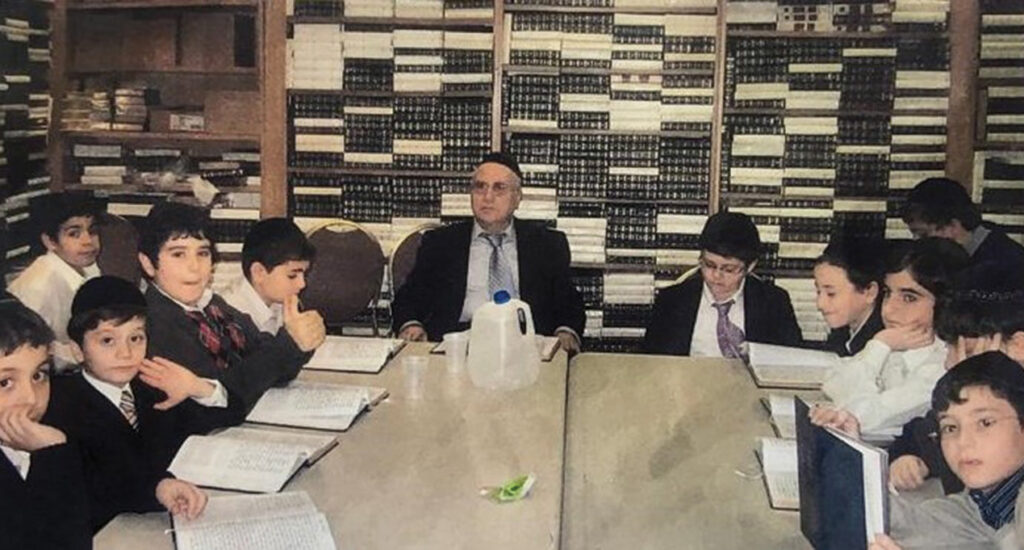
Shortly after arriving in New York, Rabbi Sardar also began teaching boys to read Torah at Congregation Shaare Zion. Today, he works full time as a volunteer with Mattan Basseter, a project of the Bawabeh family, which helps students at community yeshivot with tuition. The organization began in 1993.

“Tuition at yeshivahs is very high,” said Rabbi Sardar. “We help about 100 families a year by sending tuition to the schools. I meet with the families to see their income and expenses. Some are divorced or have health issues. Sometimes they need food, so I give them gift cards to buy food or clothing. The amount varies based on the family’s needs.”

Frida Tessone, now retired from Yeshivah of Flatbush, said “Rabbi Sardar is very good hearted. There isn’t one time when I asked him to help a family when he didn’t do it. He answers texts and emails immediately. I had a neighbor who had a lot of children and no job. He sent her money to buy food; he answered the call. If I told him a person needed help, he didn’t question it. I wish there were more people like him. What sets him aside is he listens and answers. He doesn’t push you away; he always does what he says he will do. He never reneged. A lot of parents can vouch for him.”

“Rabbi Sardar is an expert on the customs of Syria,” said Rabbi Eli Mansour. “He is the go-to guy about anything that happened in the old country. He has pure motivation to help people and preserve our traditions. When people go up to the Torah on Shabbat, he gives them a blessing and it is very flowery. He is very humble. He is always happy and passionate. Everyone loves him; I am a big admirer.”

A genealogist and historian, Sarina Roffé is the author of Branching Out from Sepharad (Sephardic Heritage Project, 2017), Sarina holds a BA in Journalism, and MA in Jewish Studies and an MBA.

DSN HOSTS MOMMY & ME PROGRAMS

FOR MOMMIES & INFANTS

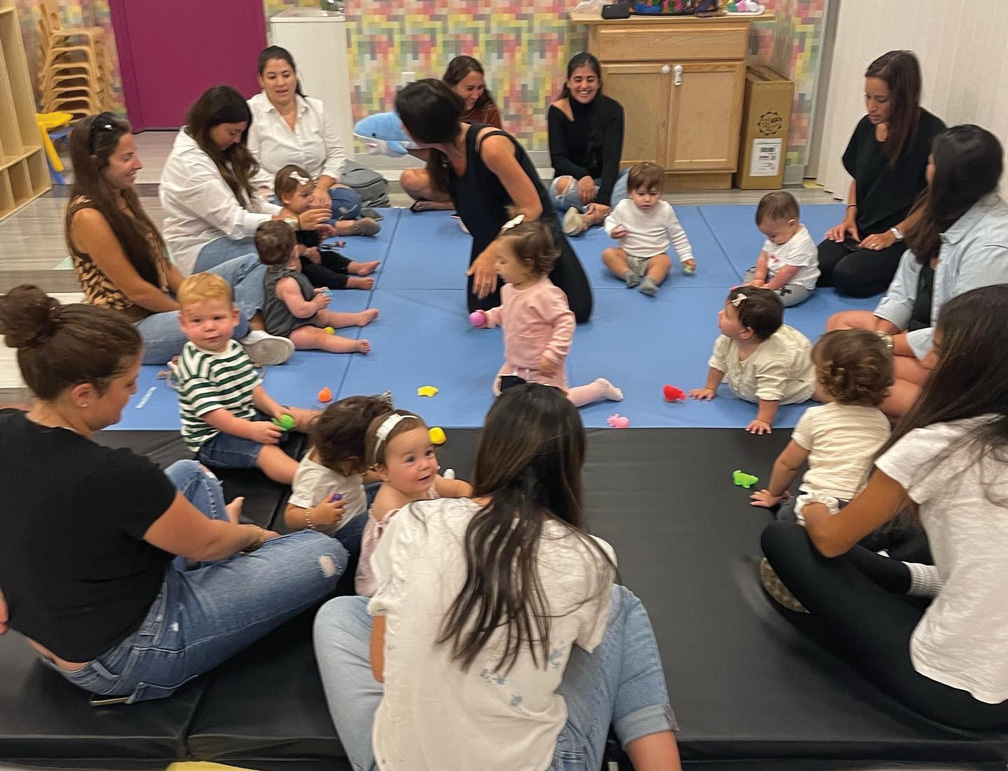
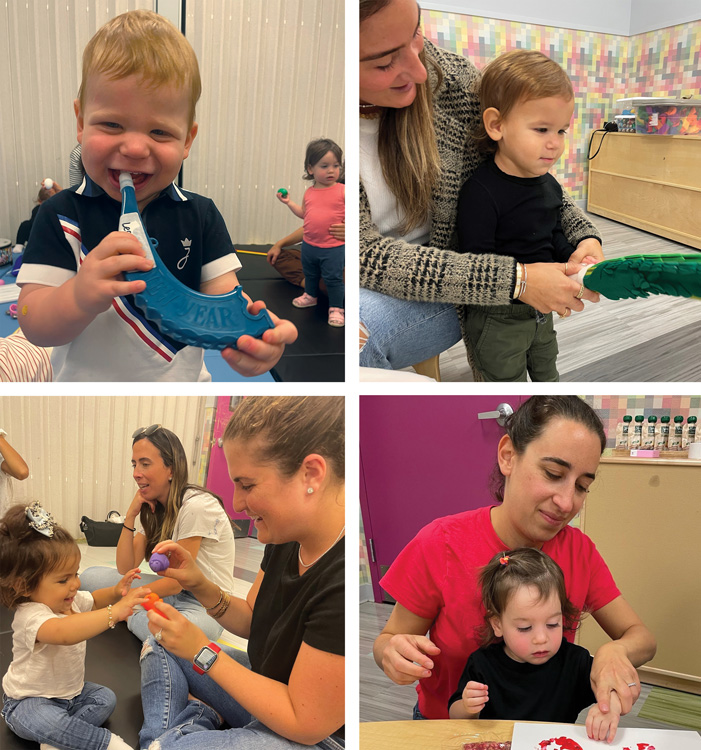
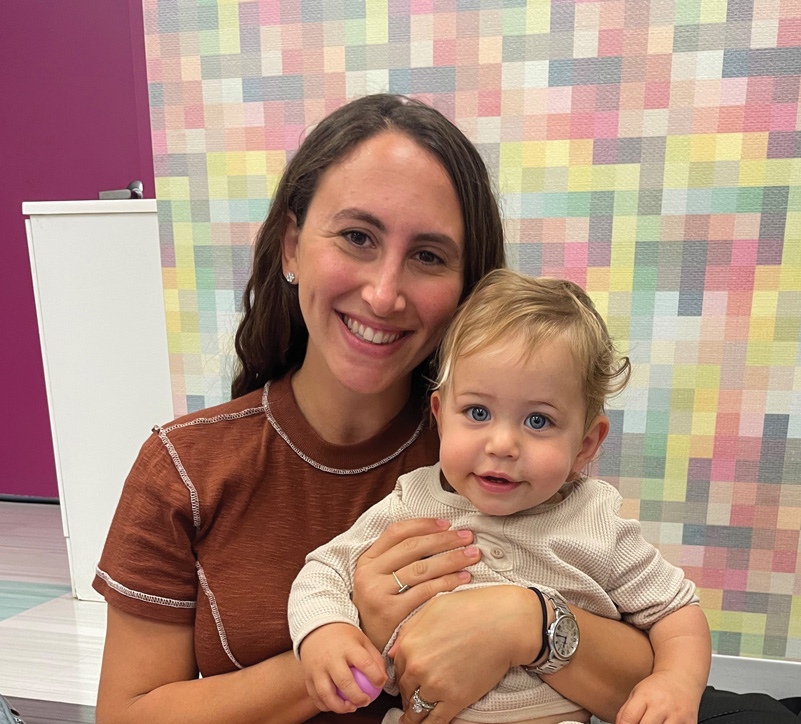
DSN AIMS TO WARMLY ENVELOP NEW FAMILIES THAT MOVE TO NEW JERSEY. FOR THE YOUNGEST OF FAMILIES, DSN PROVIDES THE PERFECT PLATFORM. CATERING TO INFANTS 0-12 MONTHS, MOMMY AND ME PROGRAMS SERVE A FUNDAMENTAL PURPOSE AND ARE ALWAYS A SUCCESS.

They welcome new families to DSN and the community. The program keeps things fresh and vibrant with a variety of offerings: one-day events, hesed- related events, stroller walks, hangouts, music programs and several baby series’. One critical reason DSN membership is a lifeline for the Jersey Shore community is because of its vital programs and entertainment for children.

Every parent agrees that although the adult fitness and other adult programs are beneficial, their kids always come first. Adult Program Director Caleigh Silvera, who champions the program, enthusiastically stated, “We love organizing Mommy and Me programs, and the turnouts have been tremendous. We are grateful to be able to serve mothers and their precious, adorable babies.”

In September, DSN arranged stroller walks on the Asbury Boardwalk. Many mothers who are new to New Jersey were looking for ways to socialize and stimulate their children. Fortune Chalme, a mother of three noted, “I tell all my friends to do the stroller walks. What an easy and fun way to get some fresh air, hang with other moms and also spend time with your baby! I never miss one.”

DSN just welcomed Jacqueline Bailey, a new mother herself, who recently moved to New Jersey, as a Baby Music Instructor. Her first class boasted over 20 babies. It was immediately clear that everyone loved the class. So, reflecting the desire of the community, DSN created a music series, offered at different times for children with different nap schedules. Mom Becky Kassin stated, “Jacqueline was a burst of energy that captivated the children and left smiles on everyone’s faces. Mine included!”

DSN also proudly implemented its first ever Jewish Holiday Series with Gila Sutton, who previously taught children’s classes in New York City. Gila, a mother of three, noted, “tremendous planning and thought went into the execution of each of her four-part series, focusing on Rosh Hashanah, Yom Kippur, Sukkot and finishing with Shabbat. I love that children could start to be softly introduced to different facets of Judaism.” Mom Liat Kassin was elated. She stated, “I have wanted something like this for so long! I’ve seen it done before in the city and was thrilled when I saw DSN post about this. I must have been the first to sign up!”

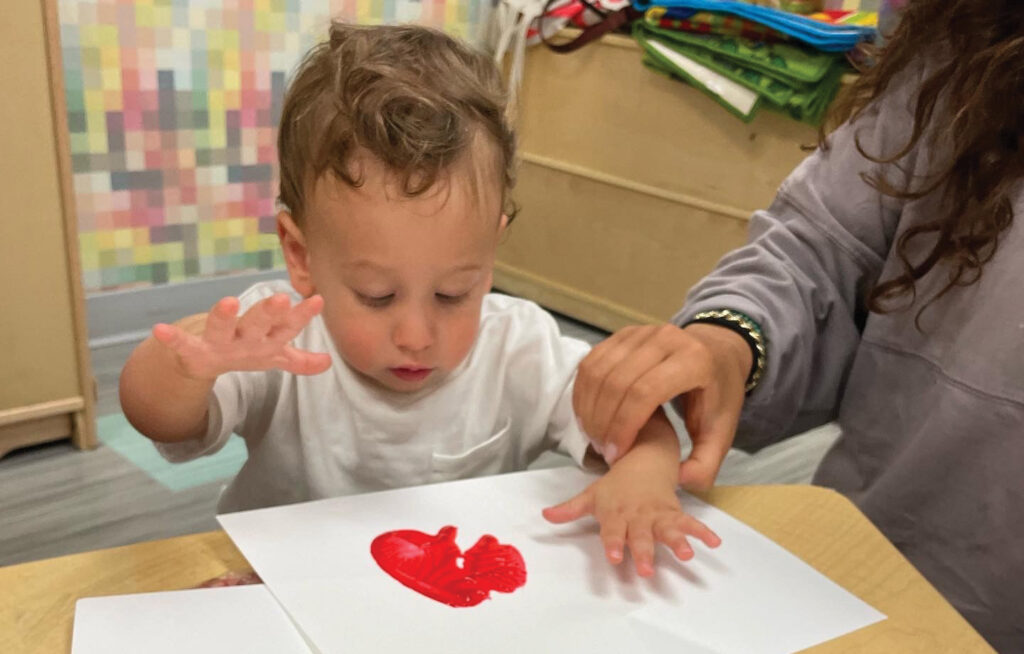
In each class the children did a focused activity—sensory play, book time, music and bubbles. On Rosh Hashanah the children stamped apples with washable red paint to make their first art pieces, played with pomegranate seeds and honey in separate plastic Ziplocs, read the book Rosh Hashanah is Coming by Tracy Newman, and truly had the best time.

Executive Director Sammy Sitt summarized, “There’s nothing that our community treasures more than our children. Seeing mothers and their infants coming together within DSN’s professional programming is very gratifying. Thanks to Caleigh Silvera and our entire staff for their passionate commitment to ensure our community is the best in the world.”