


Six Graphs That Change Everything
Rabbi Dr. Yosef Lynn
A researcher charted how we actually spend our time. The patterns are stunning, a little brutal, and might change how you live. Look at six graphs and you’ll never think about your time the same way again.
Writer Sahil Bloom pulled data from the American Time Use Survey and charted how we actually spend our hours across the key relationships in our lives. The patterns are striking, sometimes uncomfortable, and impossible to ignore. Here’s what they show, and what you can do about it.
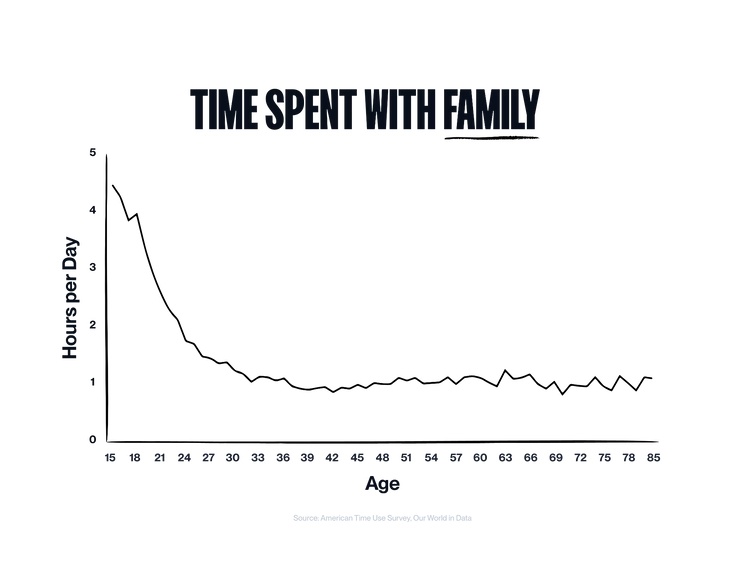
1. Your Family: A Clock That’s Already Ticking
The data shows something heartbreaking: your time with parents and siblings peaks when you’re young, then falls off a cliff after age twenty. Here’s the reality check, if you’re in your thirties and your parents are in their sixties, and you see them maybe five times a year, you’ve got perhaps one hundred to one hundred fifty visits left. Total. Ever. That’s not a lot.
What you can do: Pick up the phone this week. Not because it’s someone’s birthday or a holiday. Just call.
2. Your Friends: The Window Closes Fast
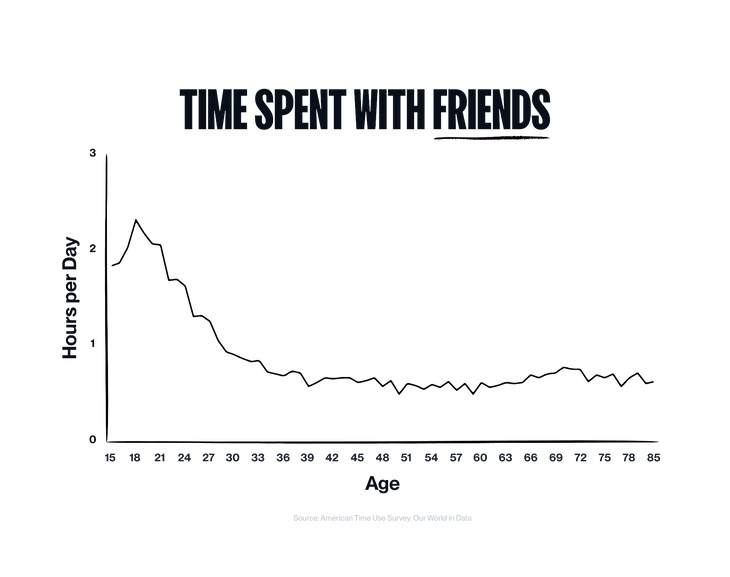
Friendship time hits its peak at eighteen and drops dramatically from there. You go from spending hours every day with dozens of people to squeezing in occasional dinners with a handful. The shift is massive. This is when you learn who your real friends are, the ones Bloom calls “Darkest Hour Friends.” The people who would actually show up if everything fell apart.
What you can do: Identify your two to three closest friends. The ones you’d call at 3 a.m. Send them a message this week telling them what they mean to you.
3. Your Partner: The One Relationship That Grows
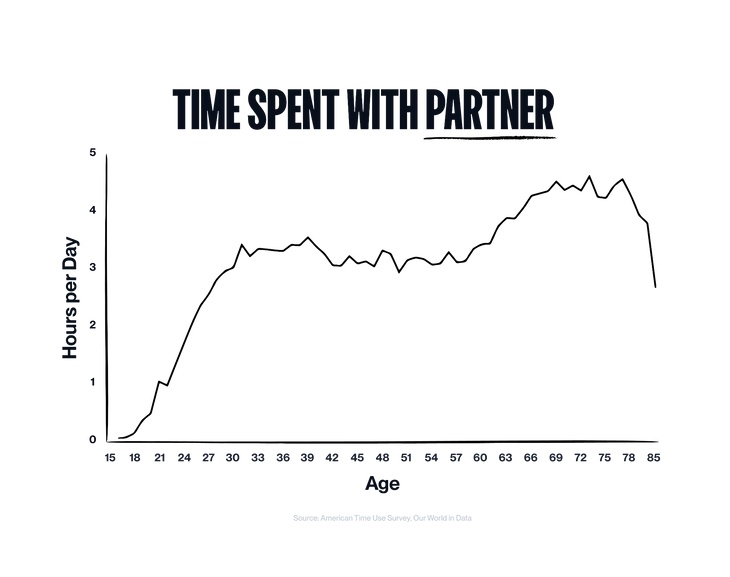
Here’s the exception to every other curve on this list: time with your partner actually increases throughout your life. Which means this choice, who you marry, might be the most important decision you’ll ever make. And here’s what matters, you need to genuinely enjoy this person during the boring parts of life. Because most of life isn’t vacations and celebrations. It’s Tuesday nights on the couch.
What you can do: Say one specific thing you appreciate about your partner today. Make it a habit.
4. Your Kids: The Years That Disappear
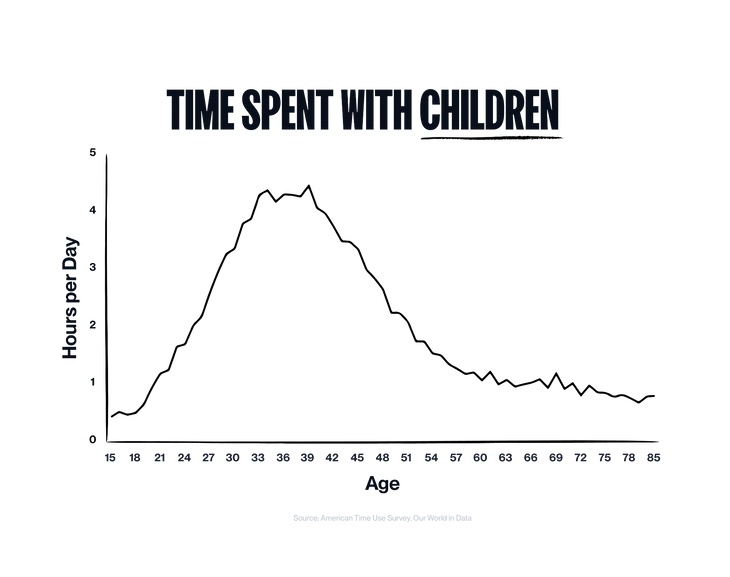
Your time with children spikes in your thirties and forties, then drops sharply when they leave home. Think about that. You’re working constantly to give them everything, but are you actually there for the moments that matter? There’s this tiny window when you’re their entire universe. Then it’s gone.
What you can do: Commit to fifteen minutes of fully present time with your kids each day this week. No checking your phone. Just you and them.
5. Your Coworkers: The Hidden Time Sink
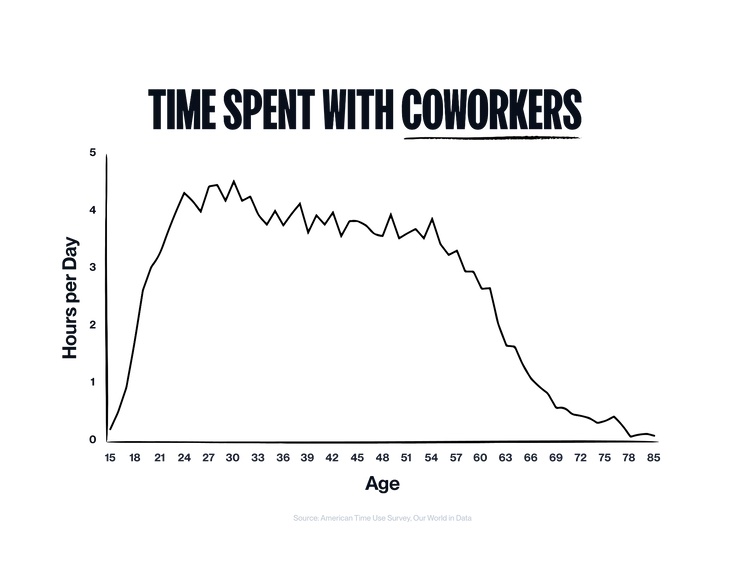
From age twenty to sixty, your time with coworkers stays consistently high. That is four decades. That’s more waking hours than you’ll spend with almost anyone else in your life. So the question becomes urgent, do these people energize you or drain you? Are you proud of what you’re building together?
What you can do: Get honest with yourself. Do you gain energy from your coworkers? If not, maybe it’s time to consider a change.
6. Being Alone: The Curve That Keeps Rising
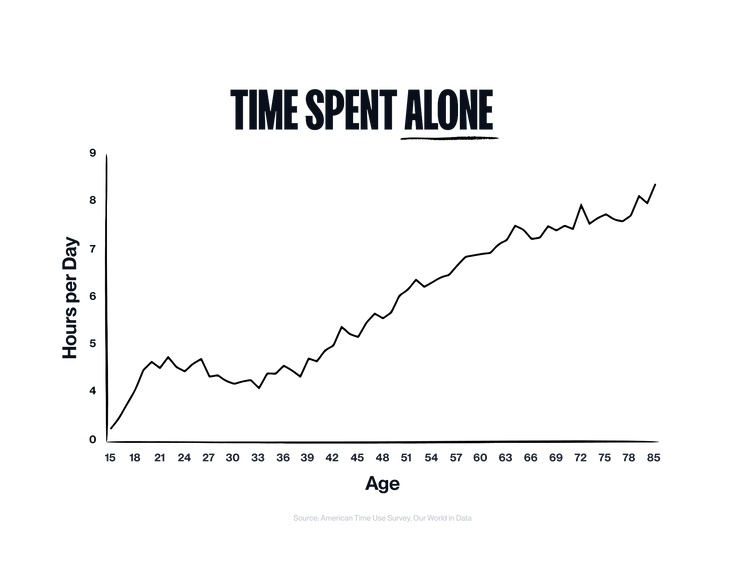
Time spent alone increases steadily throughout your entire life. When you’re young, this feels like a problem to solve. As you get older, it becomes your reality. The question isn’t whether you’ll spend more time alone. You will. The question is, are you comfortable with yourself? Can you be alone without needing constant distraction?
What you can do: Practice being bored. Put your phone away for fifteen minutes each day. Just sit. Just walk. Get used to your own company.
What This Means for You
These patterns aren’t inevitable. They’re just what happens when you live on autopilot. These graphs are offering a chance to see the default path clearly, so you can choose something different. You can call your parents more often while you still can. You can protect time for your real friendships. You can choose work that gives you energy instead of draining you. You can put down your phone during the precious years your kids actually want you around.
The curves will shift no matter what. That’s not in your control. But you can influence their shape through the choices you make today. What will you do differently now that you see the pattern?