

Sarina Roffé
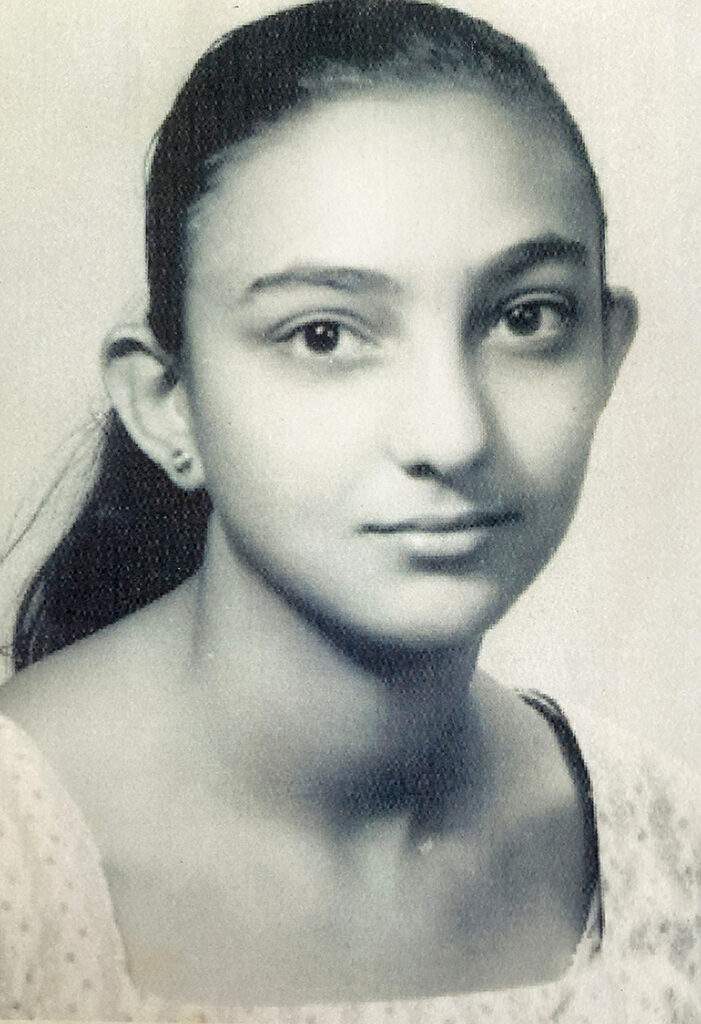
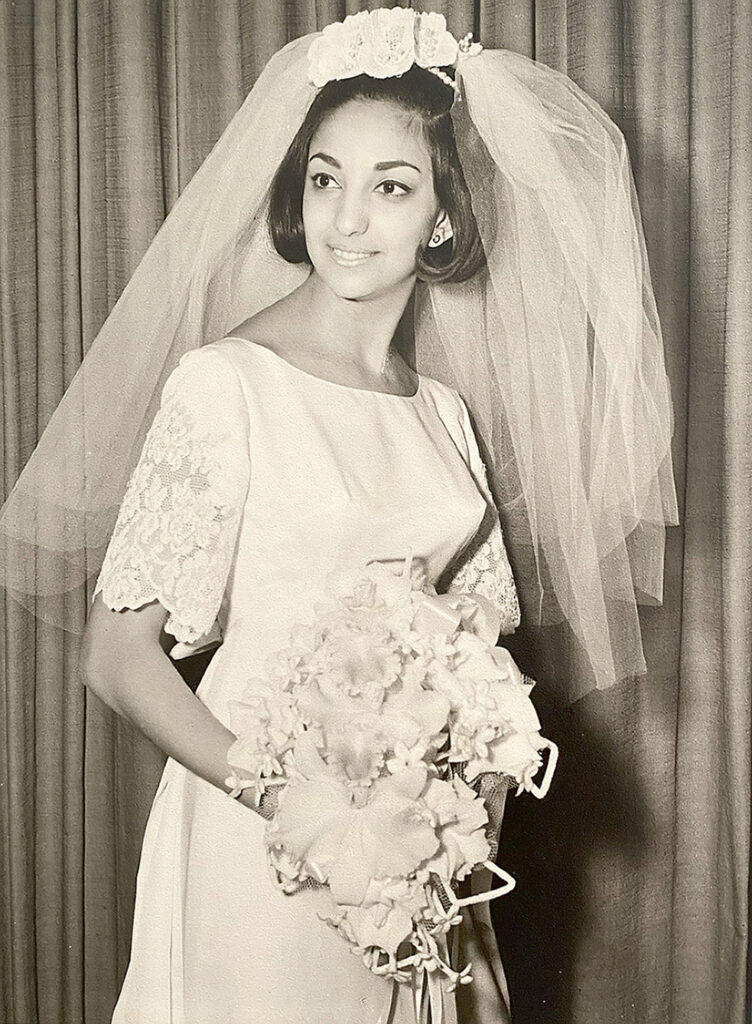
My Uncle Joe Salem was an eligible bachelor until he met Viviane Marcos. She took his breath away. The youngest of six children of Joseph and Sarine Marcos, Viviane was born in Alexandria, Egypt. Beautiful, exotic, with her olive-colored skin, and very smart, she was shy, religious, and traditional. Educated and with the patience of Job, she was a perfect match for my uncle. They met in Bradley Beach, where she went on weekends and stayed with her cousin Frieda Tessone.
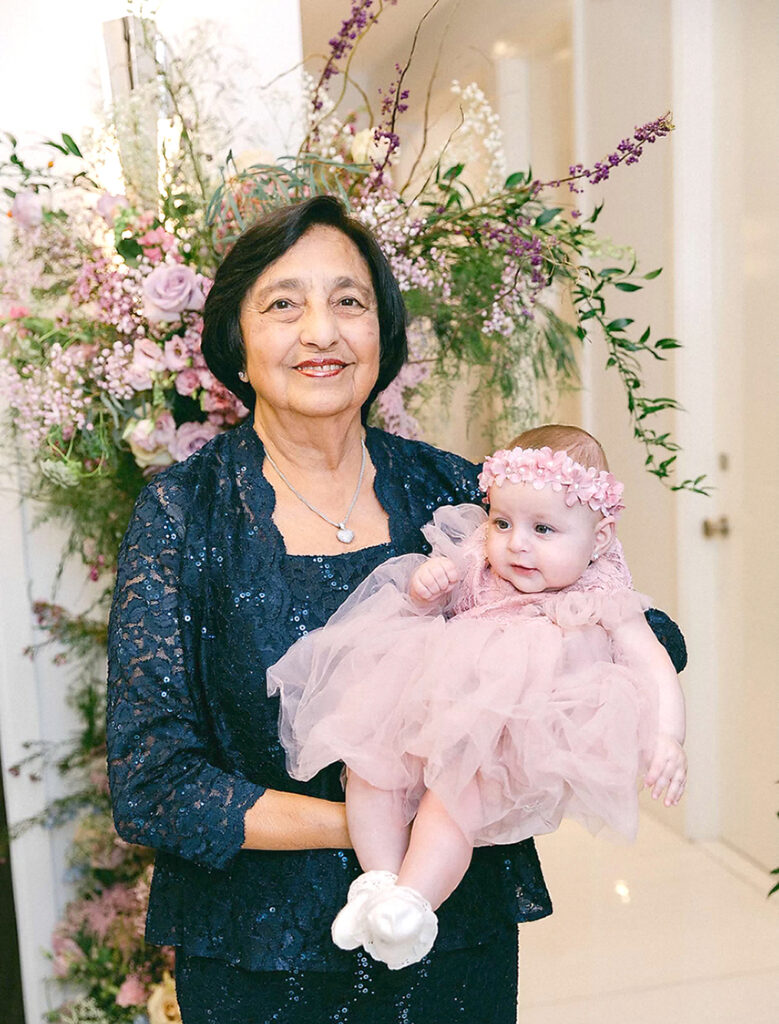
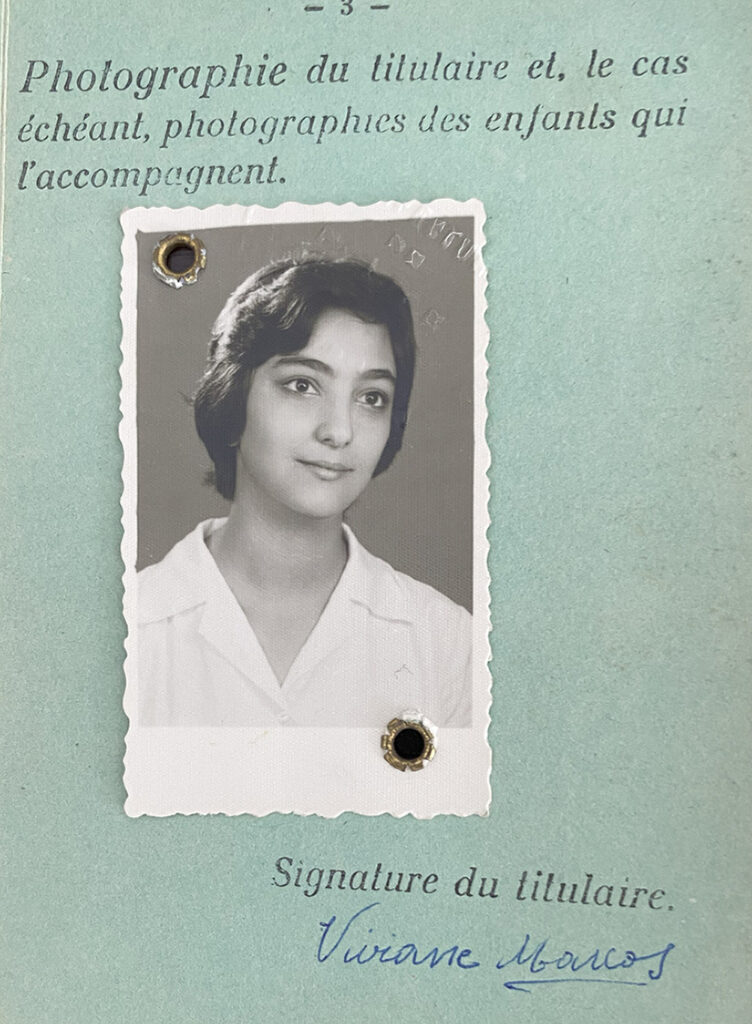
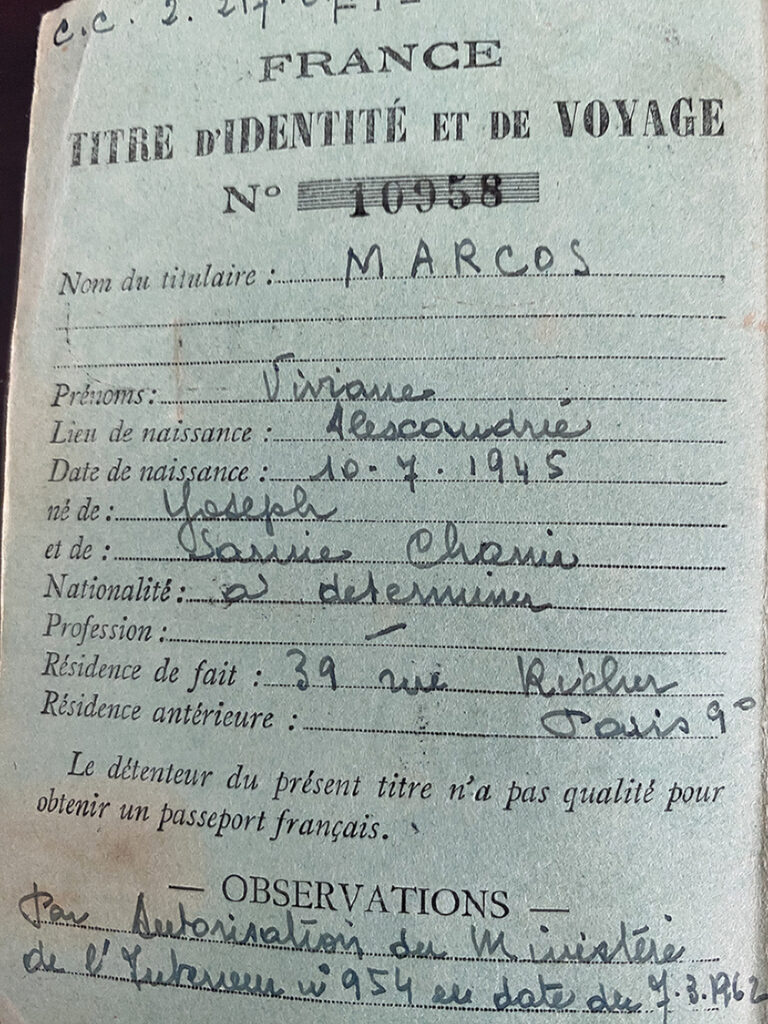
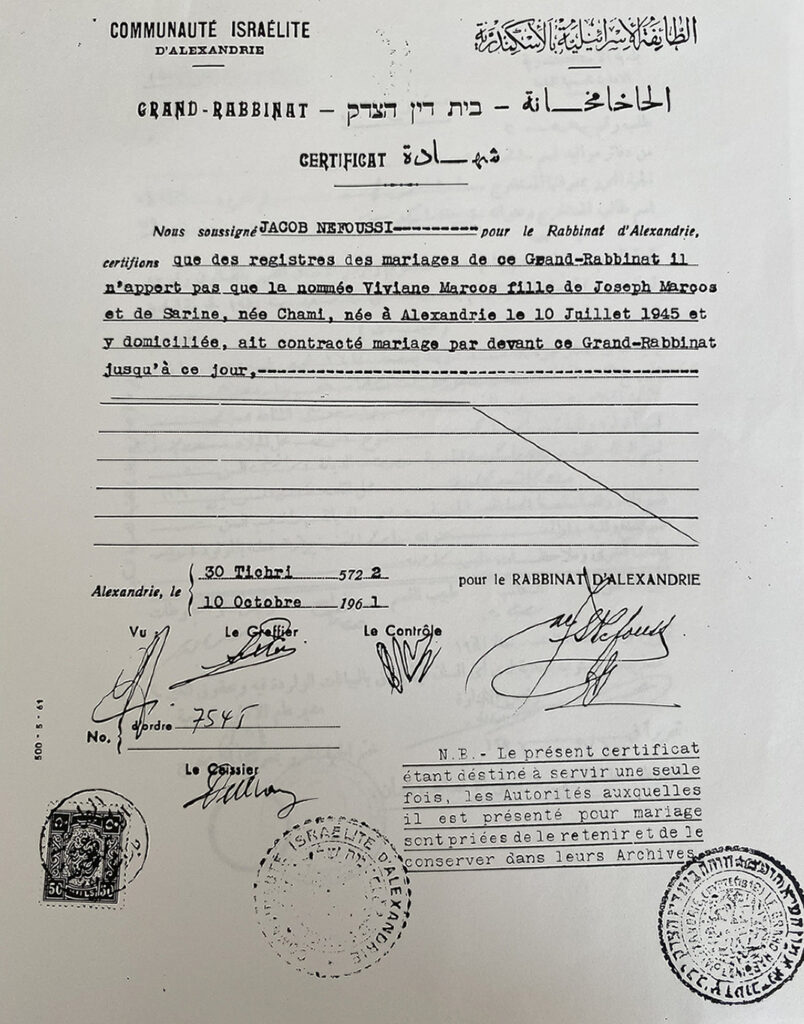
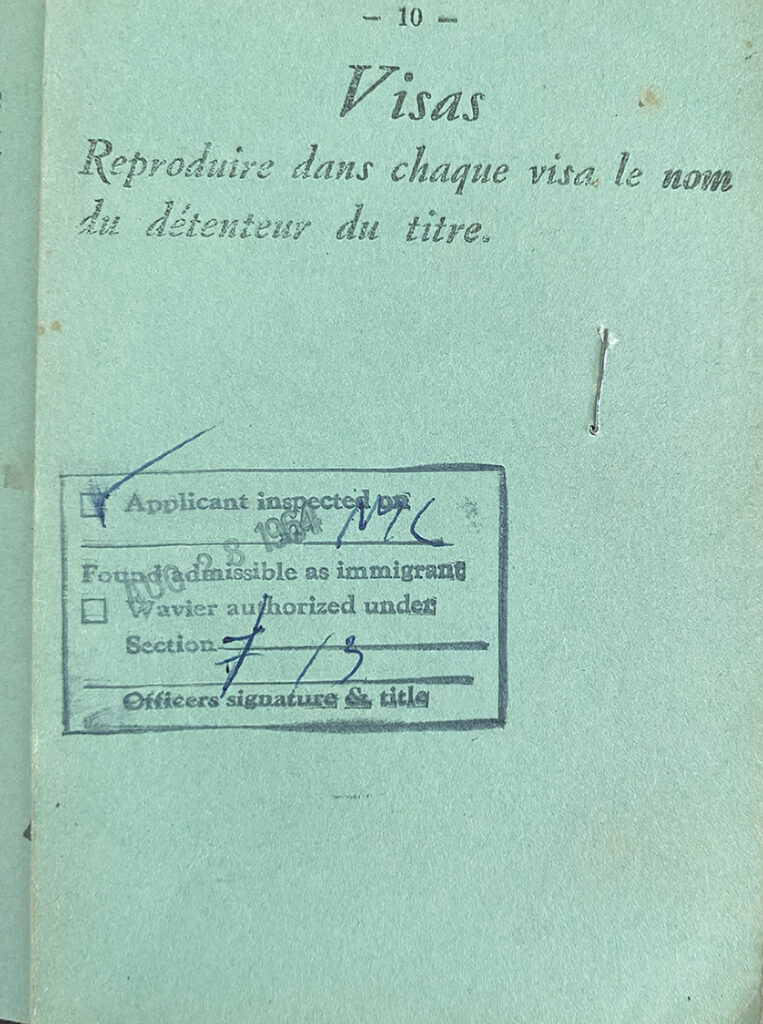
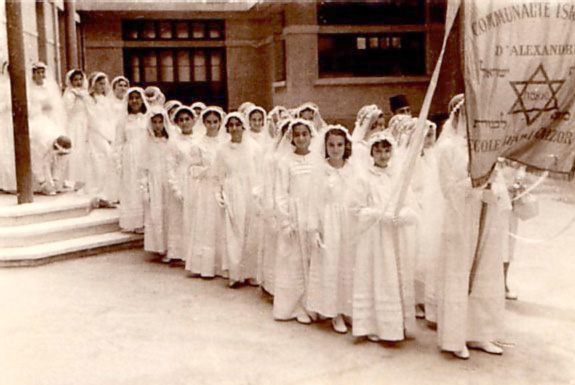
The only one of her siblings to be born in a hospital, Viviane grew up in Alexandria, Egypt, attending a Catholic preschool and then La Communité Israelite d’Alexandrie for elementary school. There she learned French, Arabic, and Hebrew.
Abdul Nasser became president of Egypt in 1956. He immediately nationalized the Suez Canal. The nationalization led to a military intervention by Britain, France, and Israel, who feared losing control over the canal and its strategic importance to the region. Viviane remembers they had to keep their windows closed and lights off so they wouldn’t be bombed. There were two types of sirens—one warning of the bombs and another announcing all clear.
Nasser created the United Arab Republic with Syria from 1958–1961, effectively ruling Syria as well. The UAR continued after Syria withdrew. Viviane’s father Joseph Marcos was born in Aleppo and came to Egypt when he was four years old. Sarine her mother was born in Palestine (now Israel). They met and married in Egypt.
Following the 1956 Suez Canal Crisis and Nasser’s rise to power, a campaign of Arabization and increased hostility led to the expulsion and forced emigration of most Jews from Egypt. This resulted in a dramatic population decline from around 80,000 to a handful today. Viviane and her family were Egyptian, so they were not asked to leave, but the decline in the community left a strong signal.
“They did not like us. But they never forced us to leave,” said Viviane. “When we did leave, they stamped our passports ‘Leaving Never to Return.’ My older sister Fortune, married to Egyptian Chief Rabbi Jacob Nefoussi, stayed with her family until 1968.”
Seeing the handwriting on the wall, her father Joseph transferred Viviane to the Scottish School for Girls in 1957 when she was 11, which she attended for four years and where she learned English. She described the school as very cosmopolitan, with students from many different backgrounds and religions.
The family attended a small synagogue for Aleppan Jews in Alexandria. There was also a synagogue for Moroccans. The main synagogue was Eliahu Hanavi, which was used for life cycle events such as weddings and bar mitzvahs. Viviane said it was too far from their apartment to walk there each week.
Joseph Marcos supported his family as an accountant, and the family lived comfortably. They had a large apartment with five bedrooms. Servants helped with the laundry, cleaning, and serving.
“We had no phone or washing machine or refrigerator,” said Viviane. “My father went shopping every morning on his way home from shul. He’d stop at the market, buy fruit and vegetables, and anything we needed for that day. Meat was bought twice a week—Monday and Thursday. We were happy and managed.
“We went to the beach every Sunday. Early in the morning, I had to go to the beach club and reserve a cabana. That was my job, and the family came later. My mother brought food to eat. We also took school trips. One time they took us to Cairo to see the pyramids.”
Viviane was just 15 when the family lost her mother to leukemia. Sarine died in May 1961, and in October they left for Paris en route to the United States. France was one of the few countries that would allow Egyptian Jews to come.
They left Egypt by ship, but there was a strike in France, so the ship took them to Genoa, Italy. From there they took a train to Paris, where HIAS (Hebrew Immigration Aid Society) placed them in a hotel—one room for all of them.
“It was me, my father, and my brother Isaac in one room. My sister Denise and her family left at the same time. Denise’s husband had Spanish citizenship. In the hotel, there was a bathroom down the hall. We had to go to Le Richer, a place where they served us lunch each day. We weren’t allowed to take any money with us when we left. I had a silver coin, and they took the coin from me,” she said.
“My brother Elie left in 1957 and had been sent to Denver, Colorado. He stayed there a few years and was able to get back to New York by the time we came. Elie sponsored us, filling out all the papers so we could come to America. We were in Paris for six months in Hotel Richer.
“Because I went to the Scottish school, I was one of the few girls my age from Egypt who spoke English. I was lucky to go to that school.”
When the paperwork was finally approved, the family was flown to New York and met by NYANA, who helped them until Joseph Marcos found work. The family stayed a few months in Elie’s apartment on Dahill Road. Then they moved to 503 Kings Highway, above a grocery store. Joseph enrolled Viviane in Lincoln High School, where she graduated ahead of her class.
“I remember the school principal was Italian, and she was impressed that my father spoke to her in Italian,” said Viviane.
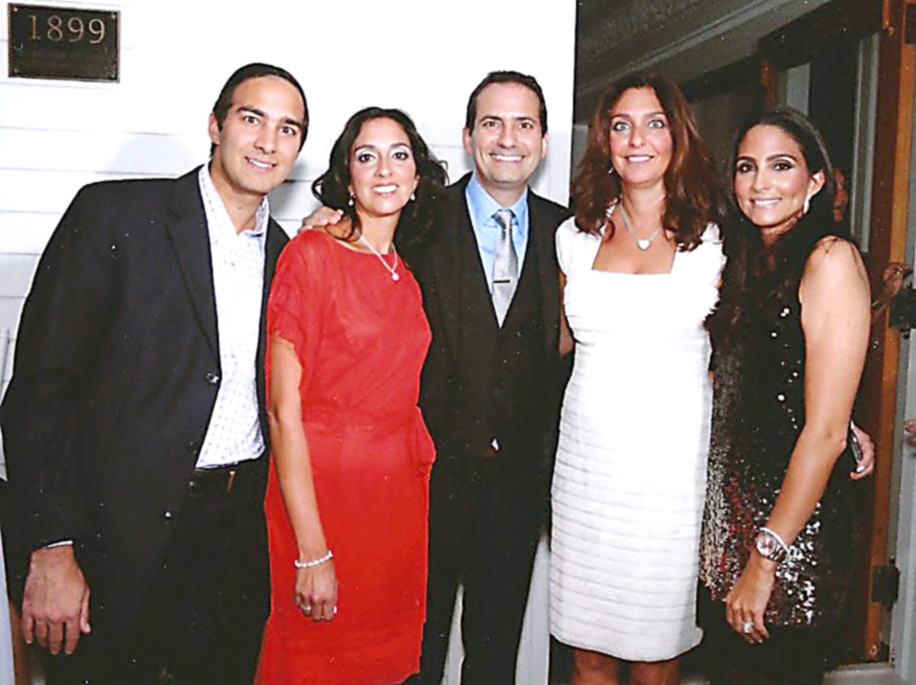
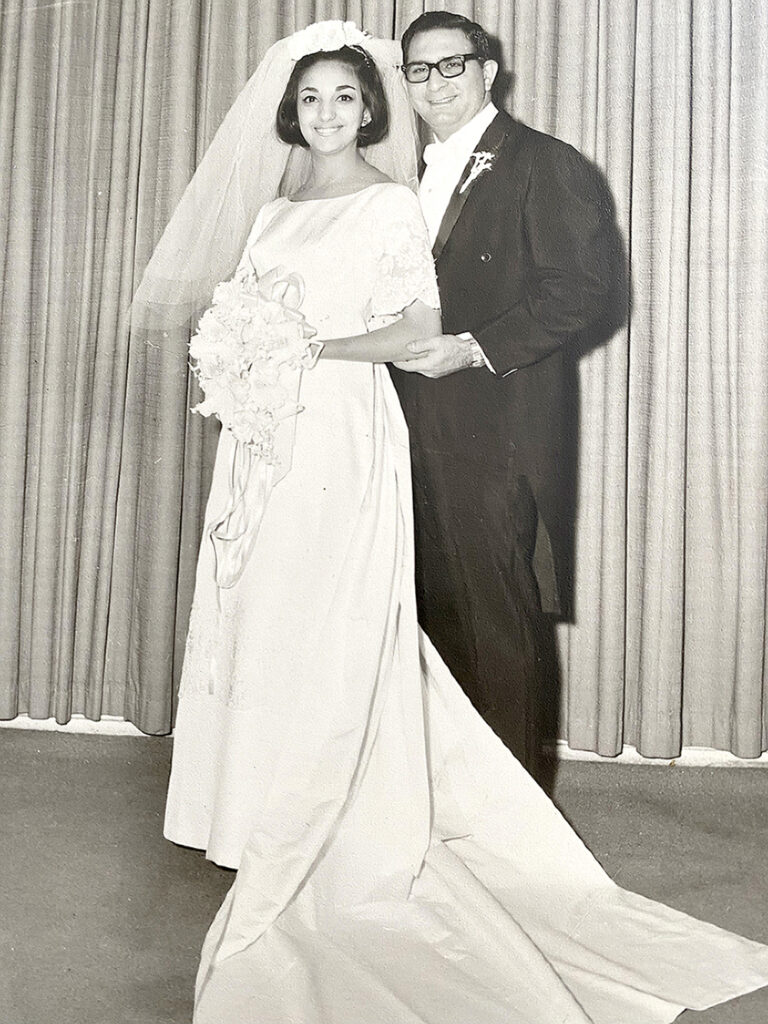
Viviane went to work for Manufacturers Hanover Bank in an office on Wall Street until she married Joseph Salem. Joseph’s parents were Selim and Esther Salem, of Salem Catering, the first caterer in the community. Viviane loved Joe’s convertible, but he sold it when they married in March 1966. They have been happily married for 59 years. Their three daughters and two sons are pillars of the community.
I was 11 years old when Aunt Viviane came to our family. I saw her serenity and patience for my Uncle Joe. Her cup is always half full, with nice things to say about everyone. She brought up her family with tremendous love and kindness and was an example of the traditions and values inherent in the Syrian and Egyptian communities. She is a terrific cook and decorates magnificent cakes. We often share cooking tips.
Her son Abraham is a hazan in Kol Yaacov (Lawrence Avenue Shul) and reads the Torah weekly. Her son Steven reads in Magen David Synagogue and Sephardic Synagogue. She is very proud of all her children and is always there to support them and our family in whatever way we need.
Viviane loves Arabic music, knitting, and the theater. Although Uncle Joe has taken Aunt Viviane many places, she has never been back to Egypt, and would love to visit her childhood home again someday. I would love to take her.