


Raising Confident Teens & Young Adults in a Status Obsessed World
Henry Barnathan, LMHC
Ah, the teens and young adults of today, they get such a bad RAP. Adults often view them negatively, citing mental health struggles, social media addiction, and low motivation. How often have you heard: Good luck to this generation? How many teens feel that their parents just don’t get them? After working closely with teens and young adults for many years, what I have found is this: Our youth aren’t just misunderstood, they’re being shaped by forces they don’t even see. Yet despite the challenges, there are many ways for parents to connect with, help, and guide our new digitally immersed generation.
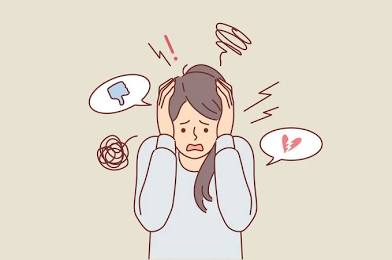

Teens and young adults today live under intense, often invisible pressure, as if driven by a motor they can’t turn off. Many experience shame and doubt, not feeling quite sure of themselves and lacking confidence. There wasn’t always this much pressure. The CDC reports more than 1 in 3 high school students experienced poor mental health during the last three years and almost half of students felt “persistently sad or hopeless.” That’s a 40% increase since 2009. Before TikTok and Instagram, kids could feel successful in their own circles. There was more room for imperfection and less fixation on how others perceived them. Cameras weren’t everywhere. Success wasn’t always on display. Today, teens scroll through endless images of people who appear more attractive, more talented, more admired, and it leaves them feeling like they’re always behind. One study found that 46% of American teens say social media makes them feel worse about themselves. Only 14% said it made them feel better.
Social Media Addiction & The Comparison Trap
Comparison isn’t new, but social media intensifies it in ways we’ve never seen. As soon as your child starts scrolling, the measuring begins. Recent neuroscience research confirms what many parents suspect: social media “likes” can act like digital dopamine hits. Studies using brain scans have shown that when teens receive likes on Instagram, it activates the same reward centers in the brain, specifically the nucleus accumbens and ventral tegmental area, that respond to pleasurable stimuli like food or cocaine. That dopamine surge creates a feedback loop: the more likes, the more they crave them. This makes teens want to check their phones constantly. And because likes arrive unpredictably, it mimics the psychology of slot machines, keeping kids hooked. Imagine sending your child to a casino every day but instead of playing with cash they’re playing with likes.
As this cycle deepens, teens begin to attach their value to external approval. An addiction to other people’s opinions starts to form. They may start thinking, I have to succeed, I must be skinny, I need to be invited. If they don’t meet those expectations: I’m not enough, I’m a loser. Our reputations can either increase or decrease within milliseconds. We can suddenly appear more competent than we are, and it feels good, for a moment. But as time goes on, with every post and with every social rung successfully climbed, teens may reject and lose a part of their real selves. These devices are powerful, and when misused, can erode our character and trap our teens. This isn’t just online. It leaks into real life. Teens may start to care more about being seen than being real. They might fear being judged more than being lost. And ultimately, they may start tying their worth to an ever-shifting metric of social approval. But it doesn’t have to be this way.
Real Confidence
In nearly every session I’ve had with teens or young adults who’ve felt outcasted, betrayed, or pressured to fit in, I ask them one question: “What would it mean for you if you didn’t achieve what you’re trying to achieve?” Most answer with some form of: “Then I’d be a failure.” That’s where the work begins, rebuilding a sense of self that isn’t dependent on achievement or applause. Because here’s the truth: our children need confidence. Not ego. Not bravado. Real, rock-bottom confidence, the kind that says: I’m worthy enough to the point where I know I don’t need to prove myself. Your child won’t have to compensate, they’ll naturally be respected and admired for their strength. That’s powerful. Teens and young adults need to know who they are, regardless of how others see them. And to do that, they need to anchor their worth in something deeper than likes or approval. They need to be aligned with their truth. Few lessons illustrate this better than the contrast between King Saul and King David.
A Tale of Two Kings
Saul looked the part: tall, strong, and chosen. But his concern for public opinion is what ultimately led to his downfall. In Shmuel Aleph Chapter 13, Saul sees his soldiers scattering and panics. Instead of waiting for the prophet Shmuel, as instructed by G-D, he unlawfully offers the sacrifice himself and states: “When I saw that the people were scattering from me… I forced myself and offered the burnt offering.” (Shmuel Aleph 13:11–12). In Chapter 15, after disobeying G-D’s command to destroy Amalek completely, he states: “I feared the people and obeyed their voice.” (Shmuel Aleph 15:24). David also faced intense public pressure but handled it in a different way. In Shmuel Bet Chapter 6, David dances before the Ark. His wife Michal mocks him for looking foolish, unbecoming of a king. But David says: “I will become even more undignified than this… I will be humbled in my own eyes.” (Shmuel Bet 6:22). That reaction right there is what made him a true king. He was tested and tempted by the public, yet held onto his character.
Stop Eating Bugs
External pressure isn’t the only force that pulls teens away from their truth. Consuming endless amounts of content when scrolling, binge-watching, or gaming can act like a medicant, dulling uncomfortable emotions instead of addressing them. It feels harmless, even comforting, but when extreme can quietly erode a teen’s sense of self. Just like alcohol can numb pain without healing it, constant consumption can mute the very voice they most need to hear: their own.
What happened to Simba in The Lion King is a great example. When Simba ran away from his past, he filled his days with Hakuna Matata and eating bugs, the animal kingdom’s version of low-class dopamine. The bugs were easy to get, instantly satisfying, and required no courage or growth to obtain. As parents you must ask yourself: what are my kids consuming? Are they settling, eating bugs, not knowing who they are? Do they know that they’re capable of so much more? Simba was a prince, a lion, yet he was acting like a mouse. When his father’s voice called to him, “Remember who you are,” he stopped running. He stopped eating bugs. He remembered his mission and purpose, and returned to face his fears, living in alignment with his true identity. This is the message our youth need to hear.
They don’t need to settle for the bugs constantly being offered in life as a way of avoiding purpose. That’s what happened to Jonah. When we avoid our destiny, the call of G-D, we end up at the bottom of the ocean. They are meant for more than numbing out. They are meant to live fully with courage, aim, and purpose.
Stand Up Straight with Your Shoulders Back
So how do we help our teens and young adults? By teaching them to stand up straight with their shoulders back. For them to take on the world with all of its opinions, tension, and ferocity. For them to know that they’re more capable than they think, that they have inner strength that can withstand any form of social pressure or distraction as long as they align with their truth. Albert Einstein was originally rejected as a teacher. The Beatles were once told they had “no place in show business.” Michael Jordan was cut from his own basketball team in high school. Public opinion is often wrong, and if these individuals took what others had said to heart we would never have known their names. Instead of listening to public opinion or drowning in distraction they listened and acted on their truths. Psychoanalysts such as Freud, Adler, Jung, Frankl, and Rogers have all stated in one form or another that finding, expressing, and aligning with our authentic truth is curative, and that the more we live in a lie the more mental health issues will arise. Our teens must learn to take authentic action, even when it’s hard. You can help them do this by being curious, not corrective. Ask questions before you advise. Show them you’re not just trying to enforce, you’re trying to understand. And after all that, you can remind them of their potential.
Long-Term Change
Helping your teen become aware of these dynamics is half the battle. The other half is helping them act from their values, not from fear or approval-seeking. Sometimes though, deeper emotional work is needed. If your child continues to struggle with self-worth or confidence, I highly recommend looking into Internal Family Systems (IFS), a therapy model that helps people reconnect with disowned parts of themselves and build self-worth from the inside out. It’s a modality I specialize in, and I’ve seen it change lives. But regardless of whether therapy is needed or not, here’s the bottom line: Teach your children to act like King David, to value truth over image. To stand tall, even when mocked. To stop eating the bugs that are offered by the world. To answer the call of destiny like Abraham and Jonah did. Show them how to resist the trap of trading authenticity for validation. Public approval is fleeting, but integrity? That lasts. Your children will become more attractive and respected. And when your children anchor themselves in that, they become unstoppable.