The Measure of a Life
Linda Argalgi Sadacka
“Do you think I should do it?” It was a question no thirteen-year-old boy should ever have been asked. His mother was preparing to undergo a delicate operation for a brain tumor. Medical options were limited, certainty was impossible, and before entering surgery she turned to her eldest child and asked for his opinion. He told her yes.
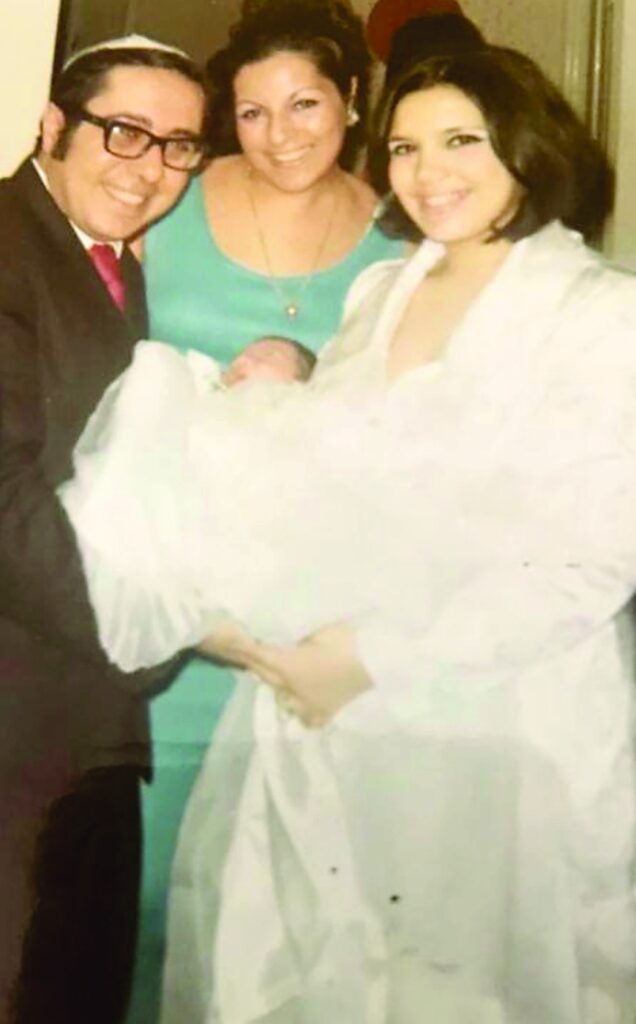
She never came home. For the rest of his life, my father carried that conversation with him. Not because anyone blamed him. Not because he was responsible. He was only a child. Yet grief does not always obey reason. Long after he became a husband, a father, a grandfather, a businessman, and eventually the patriarch of a large family, that memory remained one of the deepest sorrows of his life. In many ways, the operation ended his childhood.
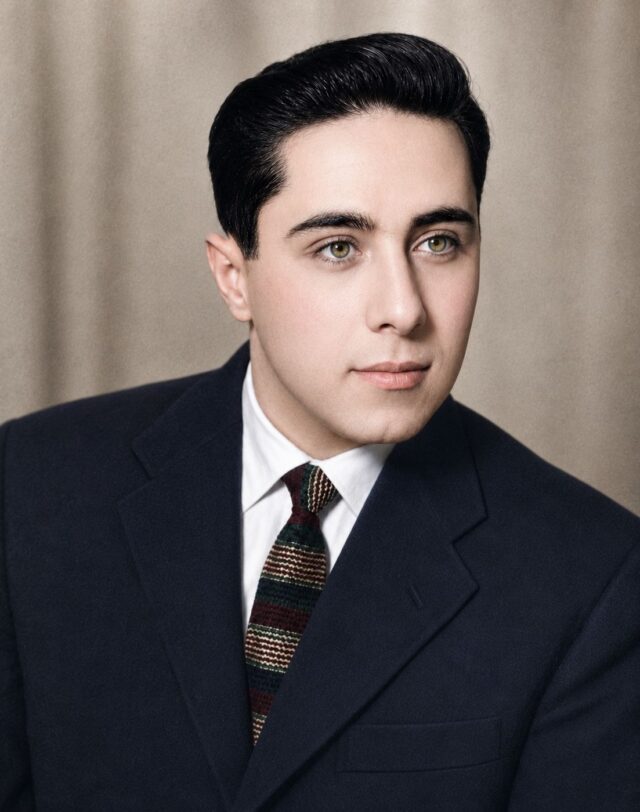
Shlomo Salim Argalgi was born in Beirut, Lebanon, in December 1938, into a vibrant Jewish community that had existed for generations. Long before Montreal, before the jewelry business, before children, grandchildren, and great-grandchildren, he was simply a boy growing up in a world that would soon ask far more of him than any child should be required to bear. The loss of his mother changed everything.
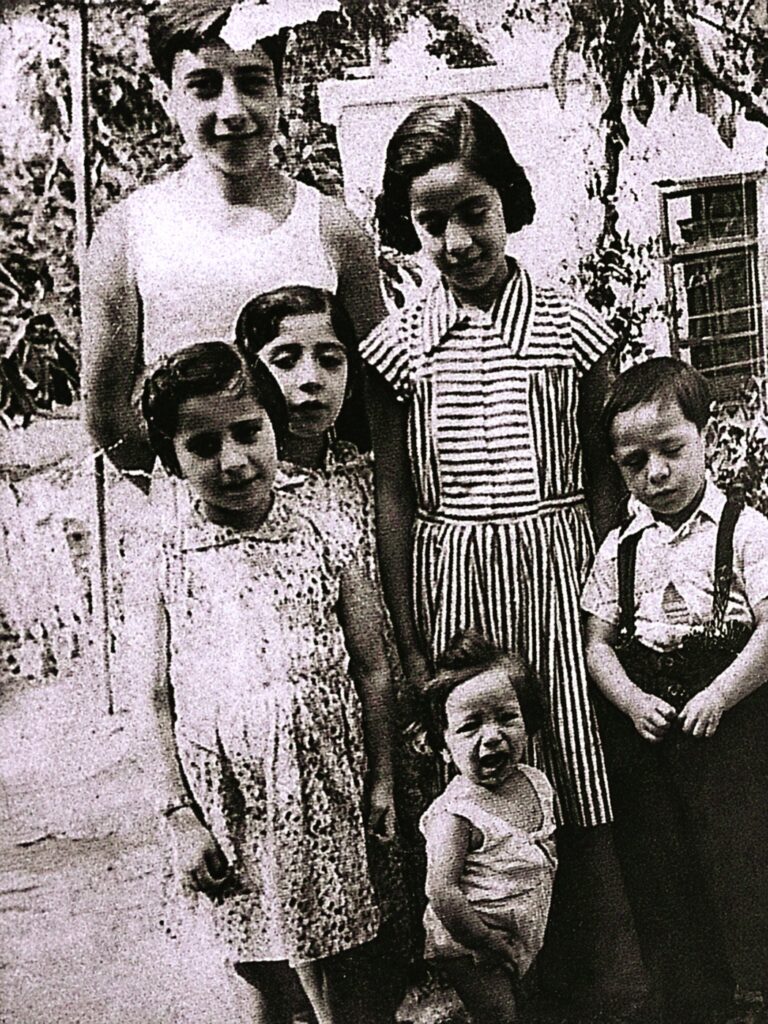
As the eldest child, he suddenly felt responsible not only for himself but also for his younger siblings: Sophie (Ballas), Esther (Aghai) a”h, Allegra (Aboud) a”h, Albert, and David. The absence of his mother created a void that could never truly be filled. His grandmother, overwhelmed by grief after losing her daughter, could barely bring herself to enter the family home. The pain was simply too great.
He remembered being pushed backward in school because it was easier for those making decisions. A child in more ordinary circumstances might have had someone fighting for him. My father was growing up in a home still reeling from loss, and there was simply no one available to advocate on his behalf. The experience stayed with him. Not because it made him bitter. Because it taught him something about human dignity.
Throughout his life, he became fiercely sensitive to injustice. He could tolerate hardship. He could tolerate disappointment. What he could not tolerate was seeing people treated unfairly or taken advantage of. If there is one lesson he passed on to me more than any other, it was this: never look away when something is wrong.
Yet what makes my father’s story remarkable is not what happened to him. It is what he chose to become. Many people emerge from hardship hardened. My father emerged from hardship determined to build. He left Beirut and arrived in Montreal in 1967, carrying very little in the material sense but possessing the qualities that would come to define his life: courage, intelligence, faith, humor, and a work ethic that did not know how to quit. Like so many immigrants of his generation, he did not arrive to comfort. He arrived to possibility. Whatever future he would have, he would have to build himself.
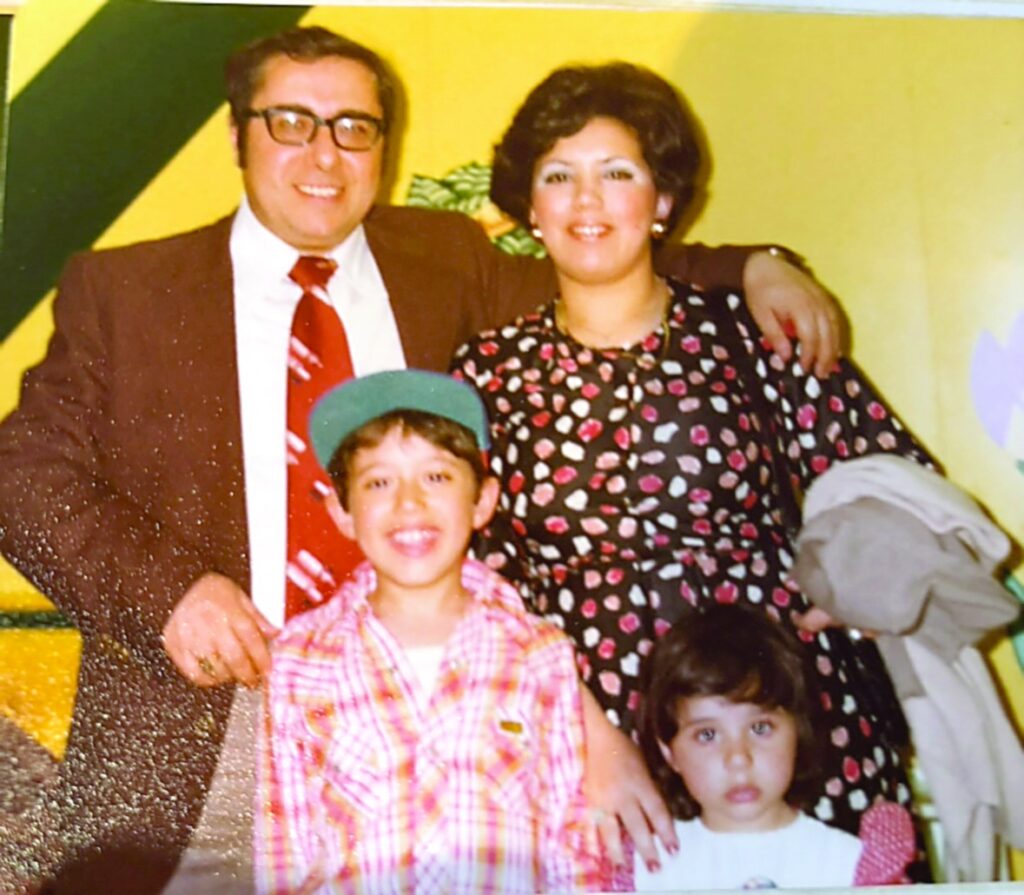
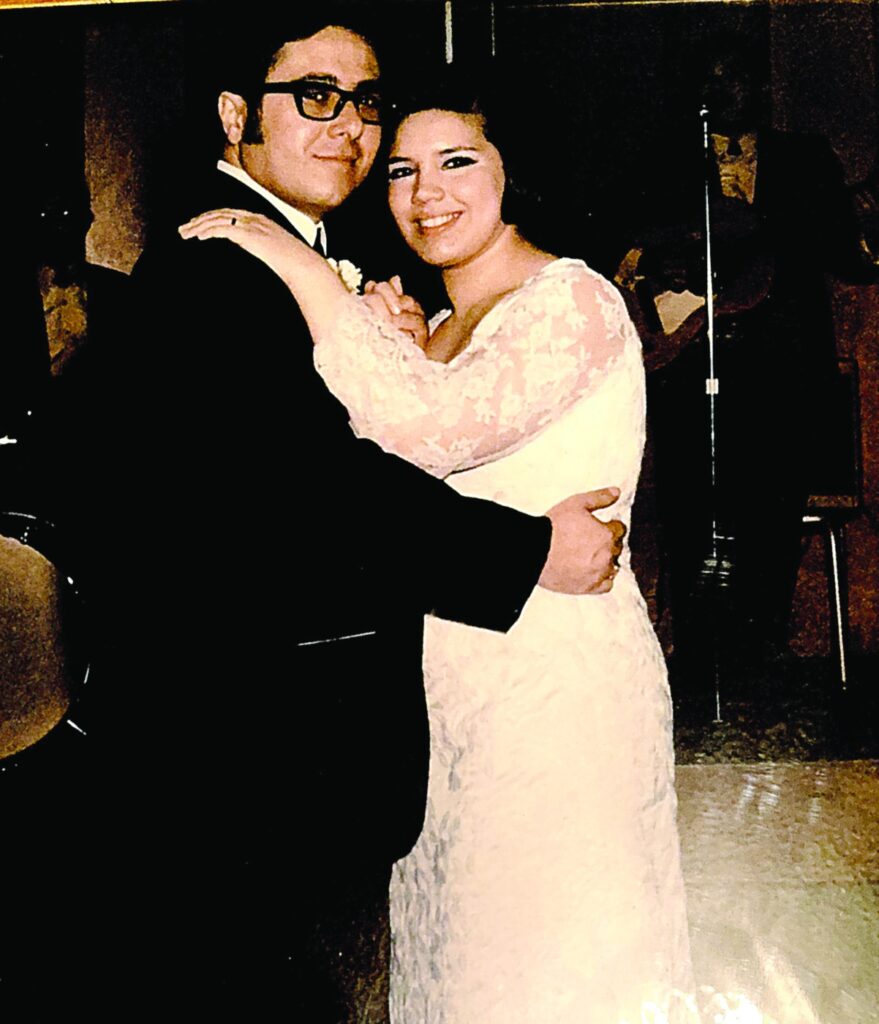
It was in Montreal that he met my mother, Gladys, who came from a family of Egyptian descent and had arrived through Milan, Italy. From the day he met her, he was completely taken with her. I do not know the details of how he proposed, but I know the more important truth: he was madly in love with her from the beginning.
For fifty-seven years, he treated her like the queen he believed she was. He loved dressing her beautifully, adorning her with diamonds and jewelry, and taking pride in the life they built together. But the deeper beauty of their marriage was not found in the jewelry he gave her. It was found in the loyalty, partnership, respect, and devotion that carried them through every chapter of life.
Together they built a family. Their eldest child was Morris, followed by me, Linda, and later their twin daughters, Cara and Edna. My father loved the surprise of twins. To him, it was not double the responsibility; it was double the fun and double the blessings. He was a father who loved deeply, laughed easily, and made his children feel that family was the center of the world.
The early years in Montreal were not easy. One story remained part of our family’s foundation. Morris was still a newborn baby when my mother called my father and told him there was no money left to buy milk. For a young husband and father desperate to provide, it was heartbreaking. That day, my father turned to Hashem, in his own words. My father poured out his heart and prayed. He asked G-D not to punish his innocent wife and child. He begged for help.
When he finished praying, he noticed a jewelry store nearby. Carrying merchandise that had sat unsold for some time, he decided to try one more door. The owner purchased everything. My father never forgot that moment, not because of the sale itself, but because to him it confirmed something he always believed: prayer matters.
In Arabic, prayer is sali, and for my father, sali was not a side part of life. It was the rhythm of life. He knew his prayers by heart. He prayed faithfully, wrapped tefillin, went to synagogue, and taught us that a Jew speaks to Hashem not only in crisis, but constantly.
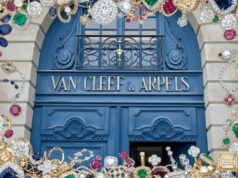
From that modest beginning, he built a successful jewelry business. What started in 1967 eventually grew into Importex and David Edouard, a respected family enterprise with an atelier, more than twenty employees, and a clientele that included prominent figures and celebrities. Yet the true story was never simply that he succeeded. It was how he succeeded. He built through hard work, perseverance, intelligence, and integrity.
He was brilliant despite limited formal education. The same boy who had been pushed back in school later taught himself English, French, and Chinese, in addition to Arabic and Hebrew. His mind was vast. He loved history and had the memory of an intellectual. He could speak about politics, ancient civilizations, Lebanese Jewish history, world events, and almost any subject with depth and confidence. He was self-taught, but never uneducated. He learned from life, from people, from business, from travel, and from an endless curiosity about the world Hashem created.
His honesty was legendary. In the early years of business, a supplier named Plotkin mistakenly sent him a hundred more pearls than he had ordered. Money was tight. Every item mattered. No one would have known if he had remained silent. But my father could not live that way. He immediately called Mr. Plotkin and told him there had been a mistake. The extra pearls were returned.
Years later, a Muslim businessman accidentally left behind a very valuable bag of gold in my father’s office. Again, no one else knew. Again, no one would have questioned him had he said nothing. But my father contacted the owner and returned everything.
The detail matters because it shows that his integrity was not selective. He did not have one standard for those close to him and another for strangers. He did not have one standard for Jews and another for non-Jews. He had one standard for himself: do what is right. That was why dishonesty wounded him so deeply.
At one point, a worker whom he had trusted and treated like family called him “Baba,” father. My father, with his generous heart, believed in him. When that trust was abused and the man stole from him, the pain was not only financial. What hurt most was the betrayal. Money could be replaced. Trust could not.
My father hated injustice because he had experienced it. He understood what it meant to be vulnerable, overlooked, and taken advantage of. He taught us that a person’s word should mean something. He taught us not to look away when something is wrong. That lesson became part of me.
One story from his travels captures his soul perhaps better than anything else. While traveling through Bulgaria, he encountered a man stranded in a remote area who desperately needed a ride. The man offered to pay him. My father refused. He told him, in essence, “I don’t want your money. I am Jewish. One day, if a Jew is ever in need, remember this moment and help him.” That was my father.
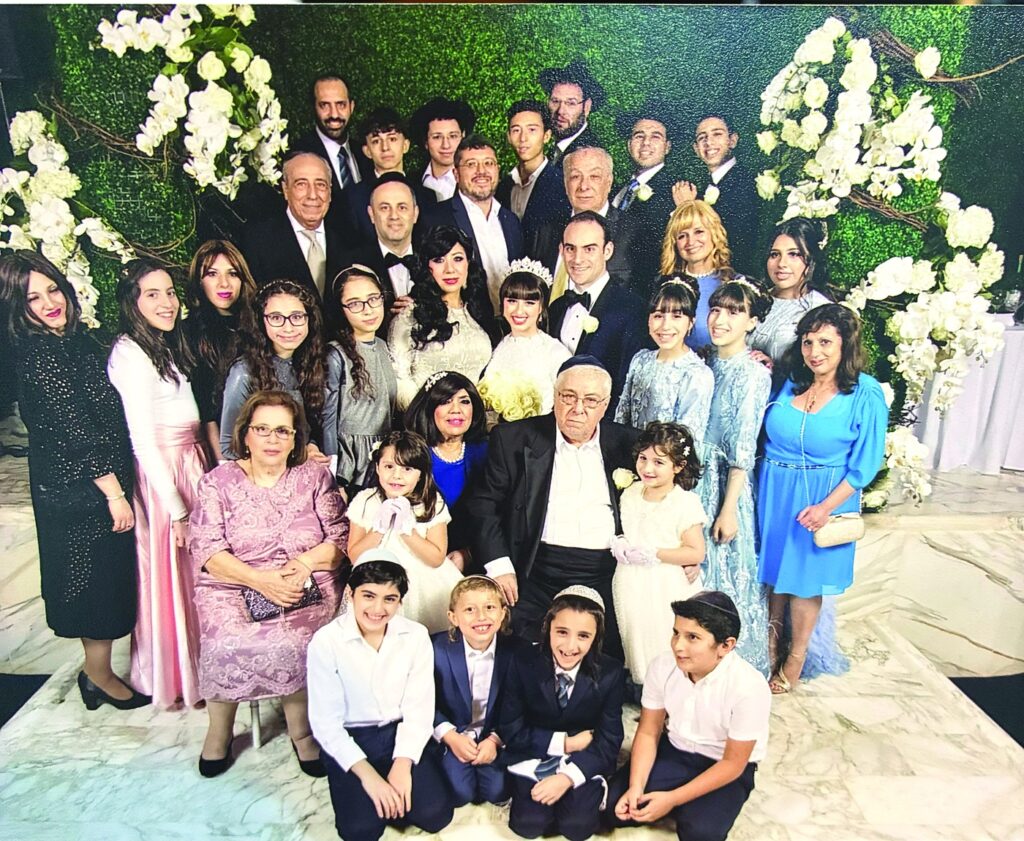
Shlomo Salim Argalgi, z’l, the beloved patriarch.
He did not think only about himself. He thought about the Jewish people, about the image of a Jew in the world, and about kindness as something that could ripple forward long after the original act was forgotten. For all of his seriousness, integrity, and responsibility, he was also one of the most joyful people one could ever meet.
Everything with him became an experience. A simple trip to the grocery store became an outing. A visit to our favorite chocolate shop in Montreal felt like an adventure. He danced. He joked. He smiled easily. He had a sharp wit and a hilarious personality. People loved being around him because he made life feel bigger, brighter, and more alive.
He also had an extraordinary sense of wonder. Everyone who knew him knew his phrase: “Subhan Allah.” He would say it when looking at a beautiful fruit, the sky, the sun, or anything in nature that moved him. In English, it expressed his awe at Hashem’s greatness. He saw creation and wanted us to see it too. He did not simply eat fruit; he admired it. He did not simply notice the rain; he marveled at it. He lived with gratitude, and his gratitude was contagious.
Even his face carried something unforgettable. His eyes were green with striking flecks of gold and yellow, eyes that people remembered long after meeting him. When friends from his youth later saw me, they would stop and say how unbelievable it was that I looked so much like him. I used to hear those comments and smile. Today, they feel like another form of inheritance, not only resemblance, but connection.
By the time illness entered his life in a serious way, my father had already built more than a business. He had built a home, a family, a reputation, a name, and a way of living. He had taught us that faith mattered, that honesty mattered, that family mattered, that prayer mattered, and that every human being had to answer for the way he treated others. Then came the stroke.
Fourteen years before his passing, my father’s life changed in an instant. He suffered a devastating stroke. The prognosis was not discouraging. It was devastating. The doctors did not tell us he might never recover. They told us he would not. We were told in no uncertain terms that he would never eat normally again. He would never drink. He would never swallow. He would never walk. He would never talk.
There was no optimism. There was no encouragement. There was no expectation that he would ever return to the life he had known. But by that point, our family was already deeply rooted in faith. We respected the doctors. Their responsibility was to tell us what medicine could see. Our responsibility was to do everything within our power and place the rest in the hands of Hashem.
At the center of that effort was my brother Morris. Refusing to accept that nothing more could be done, Morris realized the head surgeon spoke Arabic. The doctor did not know that Morris was Jewish. Speaking to him in fluent Arabic, he pleaded with him to reconsider and give our father a chance. Eventually, the surgery was performed. What followed left an impression not only on our family but on many of the medical professionals who witnessed it.
The man who was not expected to swallow swallowed. The man who was not expected to eat ate. The man who was not expected to drink drank. The man who was not expected to speak spoke. The man who was not expected to walk walked. One prediction after another fell away. My father fought. Our family prayed. And Hashem carried the rest. The recovery was extraordinary.
Several members of the medical team who had openly identified themselves as atheists witnessed what unfolded over the following months. By the time my father left the hospital, some of those same individuals openly acknowledged that the experience had changed the way they viewed the world.
After the successful surgery, but before his remarkable recovery, I asked my father to strengthen his commitment to Shabbat. He was already a believing Jew who prayed faithfully, attended synagogue, wrapped tefillin, and maintained a kosher home. But Judaism teaches that growth never ends, and I believed that strengthening Shabbat would bring additional blessing into his life. I drafted a simple commitment and asked him to sign it. He did.
What happened next became one of those things our family would never stop marveling at. My father lived another fourteen years. Fourteen. Twice seven. Seven is the number that represents Shabbat, the day that reminds us every week that the world has a Creator and that our lives have purpose beyond ourselves.
We do not pretend to understand Heaven’s calculations, nor do we claim to know why one person receives one blessing and another receives something different. But as a family, we could not help but see those fourteen years as a remarkable gift. Years filled with Torah. Years filled with grandchildren and great-grandchildren. Years filled with family celebrations. Years filled with opportunities to continue serving Hashem. Those years were not simply added time. They were added purpose.
As he grew older, his commitment to Torah deepened even further. He loved listening to Rabbi Uri Lati’s Torah classes in Arabic and to Rabbi Eli Mansour. Torah classes played constantly in the background of his life. Learning brought him joy. Prayer brought him comfort. Growth never stopped.
Even when walking became painful, he made every effort to attend synagogue. Community members later told us how inspiring it was to see him slowly make his way forward, one determined step at a time. What many people would have viewed as an excuse became an opportunity for him to demonstrate commitment. Prayer had sustained him when there was no money for milk. Prayer sustained him through recovery. Prayer sustained him until the very end.
The final eleven months of his life revealed the values he had spent decades teaching. My mother, Gladys, rarely left his side. For fifty-seven years, they had built a life together. Through success and hardship, health and illness, she remained devoted to him. During those eleven months, she was there day after day, morning until night. It was impossible to witness without being moved.
Yet perhaps the most remarkable thing about those months was not simply her devotion. It was how many people showed up. My father was rarely alone. If my mother was not there, one of his children was. If one of his children was not there, a grandchild was. Family members rotated constantly around him. People prayed. People hoped. People fought for him.
In many ways, those months revealed the culture my parents had spent a lifetime creating. For decades, my paternal grandfather had lived in our home. Caring for elderly parents was never viewed as a burden. It was simply what family did. We learned that lesson not through speeches but through observation.
Years later, when my father’s health declined, we found ourselves following the example our parents had set. Today I see that same devotion reflected in the way children, grandchildren, nieces, and nephews continue caring for my mother. Values are rarely taught through lectures. They are taught through example.
Even in the hospital, my father’s legacy continued to ripple outward. During his hospitalization, Morris became friendly with a nearby family facing a heartbreaking situation. After the passing of a Jewish woman, it became clear that her family lacked the means for a proper Jewish burial and was considering cremation. Morris could not allow that to happen. He made calls. He connected people. He helped secure support and resources. Through his efforts, she received a proper Jewish burial.
To me, that story belongs in my father’s story. Because children are part of a parent’s legacy. The kindness my brother showed did not appear out of nowhere. It was planted decades earlier by the values our parents lived every day.
Several months before my father’s passing, around Hanukkah, I received a gift that I will carry with me forever. My father was still cognizant. Still aware. Still present. I sat beside him and said everything I needed to say. I thanked him for the sacrifices I had only come to understand as an adult. I thanked him for his kindness, his guidance, his generosity, and his example. I apologized for moments when I may have taken him for granted, as children sometimes do. Most importantly, I told him how deeply I loved him.
Tears filled his eyes. He puckered his lips and kissed me. Then he squeezed my hand. He heard everything, and he understood. That moment gave me a kind of peace many people never receive. I left knowing I had said everything. And I left knowing he had heard it.
When the time finally came for him to leave this world, he did so surrounded by family and accompanied by something he loved deeply. A Torah class was playing in his room. The same Torah that had guided him. The same Torah that had comforted him. The same Torah that had become increasingly central to his life.
At his funeral, a respected dayan, rabbinic judge, remarked that, because of his role, he had to be careful about the words he used. He could not simply say something nice because the moment called for it. Then he described my father as a zaken kasher v’shalem, an upright and complete elder. Those words brought our family enormous comfort because they captured exactly who he was.
Not a perfect man. A good man. An honest man. A man whose word meant something. A man who loved his wife. A man who loved his children. A man who loved Hashem. A man who loved the Jewish people.
Today, when people speak about my father’s accomplishments, they often mention the business he built, the employees he supported, the languages he taught himself, and the success he achieved. Those accomplishments mattered. But they were not his greatest achievement. His greatest achievement was the family he built.
The thirteen-year-old orphan from Beirut who once felt he had no one to advocate for him left this world surrounded by generations who would do anything for him. Children. Grandchildren. Great-grandchildren. People committed to Torah and mitzvot, commandments. People who value honesty because he valued honesty. People who care for family because he cared for family. People who stand up against injustice because he stood up against injustice.
Those are the true jewels he leaves behind. Far more precious than any diamond that ever passed through his hands. He spent a lifetime building them. And through them, his legacy continues to shine.
May the memory of Shlomo Salim Argalgi forever be a blessing, and may his neshamah, soul, continue to have an aliyah, spiritual elevation, through the Torah, mitzvot, kindness, faith, and family devotion carried forward by the generations who proudly call him their father, grandfather, and great-grandfather.