Sarina Roffé
I had been to Istanbul about 10 years ago when my husband and I did a tour of Turkey. During that time, I met with Rabbi IZAK Peres and we became friends. I loved touring Turkey and visiting the seat of modern Turkey, since it became a sovereign nation after the fall of the Ottoman Empire. I met with Rabbi IZAK Peres again during this visit, but it was under different circumstances. He visited me in the hospital and made sure I had food for Shabbat.
Istanbul has become a popular destination for high-quality plastic surgery and I was no exception. The price and the first-class treatment made it an amazing experience. If you ever want to go for plastic surgery, this is the place to go and I can definitely find you a connection. In fact, my connection was someone from the community who hooked me up with her sister, Miryam Sulam. She was my go-between, coordinating with the doctor and the hospital and making sure that I was taken care of when I came.
Rabbi Peres was also there. He got his semicha (Rabbinic ordination) from Shehebar Sephardic Center and Rabbi Sam Kassin. In Istanbul, Rabbi Peres is not only a congregation rabbi, he is also a dayan (rabbinical judge), a teacher in the Jewish day school, and a shochet (kosher ritual slaughterer). He told me he was going the next day to Bulgaria to slaughter meat to send to Greece, since they are not allowed to slaughter in Greece. He is a busy guy.
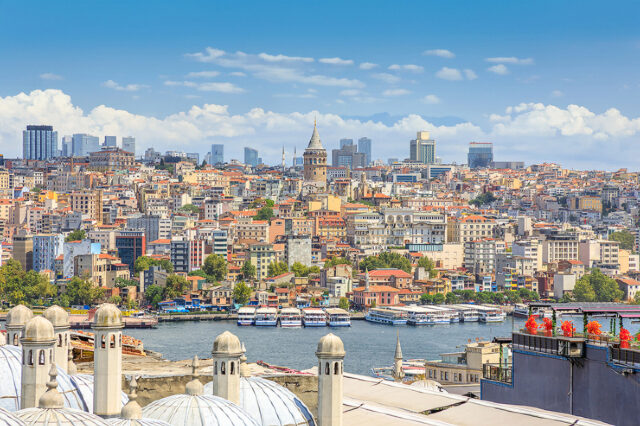
During my visit, Miryam also took the time to take me around a little bit. The first day after my pre-op exam was finished, we went to Neve Shalom Synagogue in Galata, which is a neighborhood on the European side of Istanbul. Istanbul has a European side and an Asian side.
As a little background, Jews came to what was then the Ottoman Empire in 1492 when Sultan Bayezid II invited them after the expulsion from Spain by Queen Isabella and King Ferdinand. The sultan sent ships to bring Jews to the Ottoman Empire. Jewish communities all over the Ottoman Empire took root from Istanbul to Antakya for over 530 years.
A century after the creation of the nation of Turkey, there are still several Jewish communities, primarily in Izmir and Istanbul. The communities are 96 percent Sephardic and a few Ashkenazim. The presence of Jews in Eastern Turkey—in places like Iskenderun, Gazi Anteb, Kilis, Antakya, and cities that border Syria—has decreased to minuscule numbers.
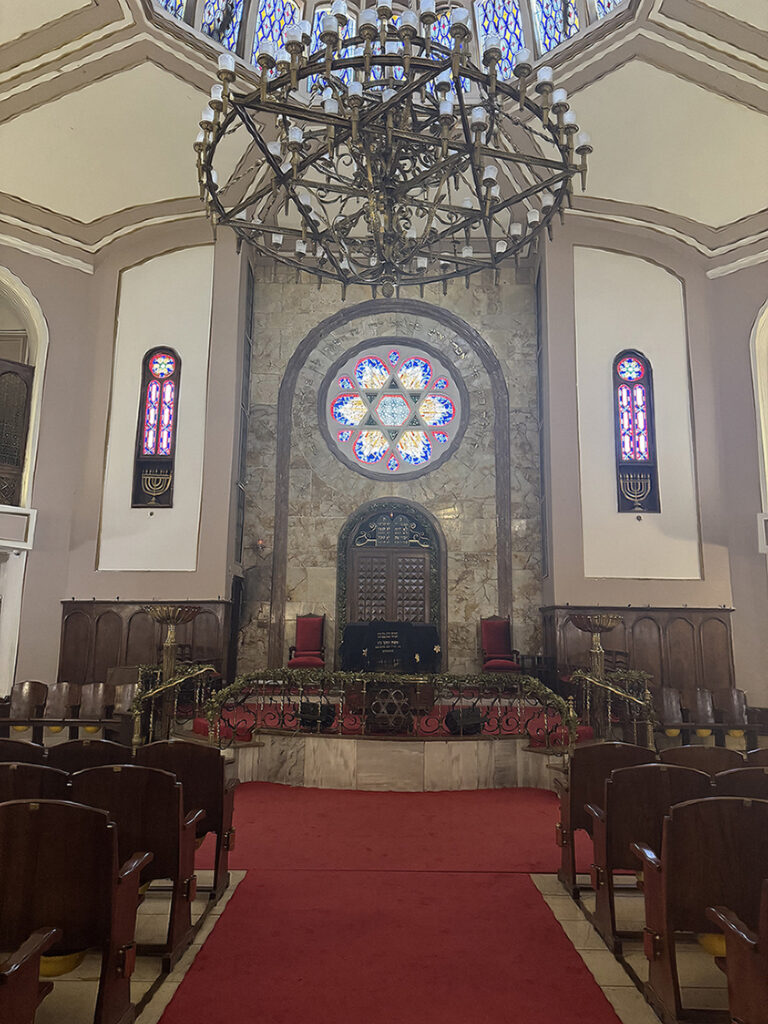
The Neve Shalom Synagogue is located near the Galata Tower, a famous site. People were lined up for hours to go to the top of the tower. Neve Shalom is not only Istanbul’s central Sephardic synagogue and the seat of the Istanbul Chief Rabbinate, it is also the largest house of worship of the Jewish community in Turkey. Weddings, funerals, and bar mitzvahs, as well as the inauguration of the Chief Rabbi, are regularly held there. It is the only synagogue on the Golden Horn that has an intact mikveh.
There are important traditions I learned about the Jews of Turkey. Their lahamagene is the size of a personal pan pizza. Each year, they have a day dedicated to Limmud. Limmud was originally a conference in the United Kingdom for Jewish educators. It evolved over the years into a community gathering of Jewish learning and has grown into a large international organization based in over 40 countries and almost 100 communities worldwide. In Turkey, there are over 1,000 participants each year.
During the second week of May each year, a concert is held in the Great Edirne Synagogue to celebrate the Week of Foundations. The synagogue in Edirne was rebuilt and reopened in 2015.
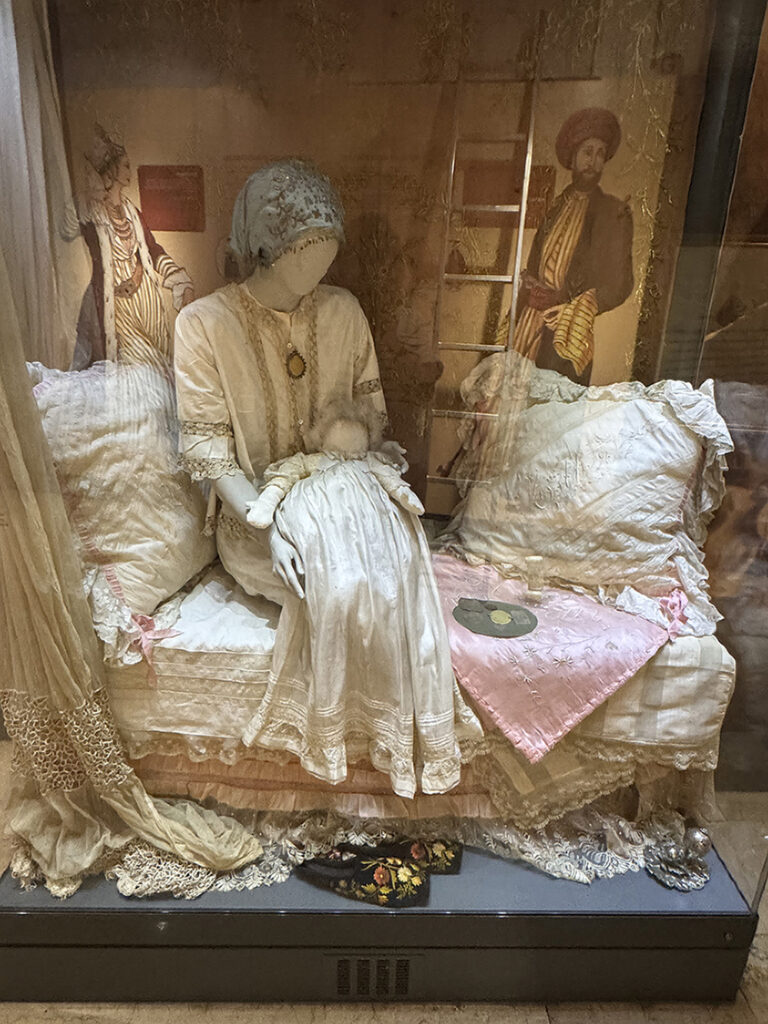
While many Americans hold baby showers for a pregnant mother, it is seen as bad luck in American Jewish families. Not so in Istanbul. Fashadura is a time-honored ceremony held in the fifth or seventh month of pregnancy, always on a Monday or Thursday, the day the Torah is read. Family and friends gather and a garment of cotton or linen is sewn for the unborn child to be worn when born, and it is believed to give the child long life. The first cutting is by someone who has no children.
Before leaving New York, many people asked how I felt going to Turkey when, due to the Gaza War, the nation had broken off relations with Israel. I am a staunch Zionist and supporter of Israel. However, I did not see any reason not to go to Turkey for this purpose, especially since I knew Jewish people and a prominent rabbi. Turkey is not a place to advertise you are Jewish. Miryam is encouraging her two children to find jobs outside Turkey. The community is decreasing in numbers. Thousands have gone to Israel or gotten Portuguese or Spanish citizenships.
Neve Shalom means “Oasis of Peace,” but the peace came to a sudden end in 1986 and 2003 when the house of prayer became a target of vicious terrorist attacks, both on Shabbat.
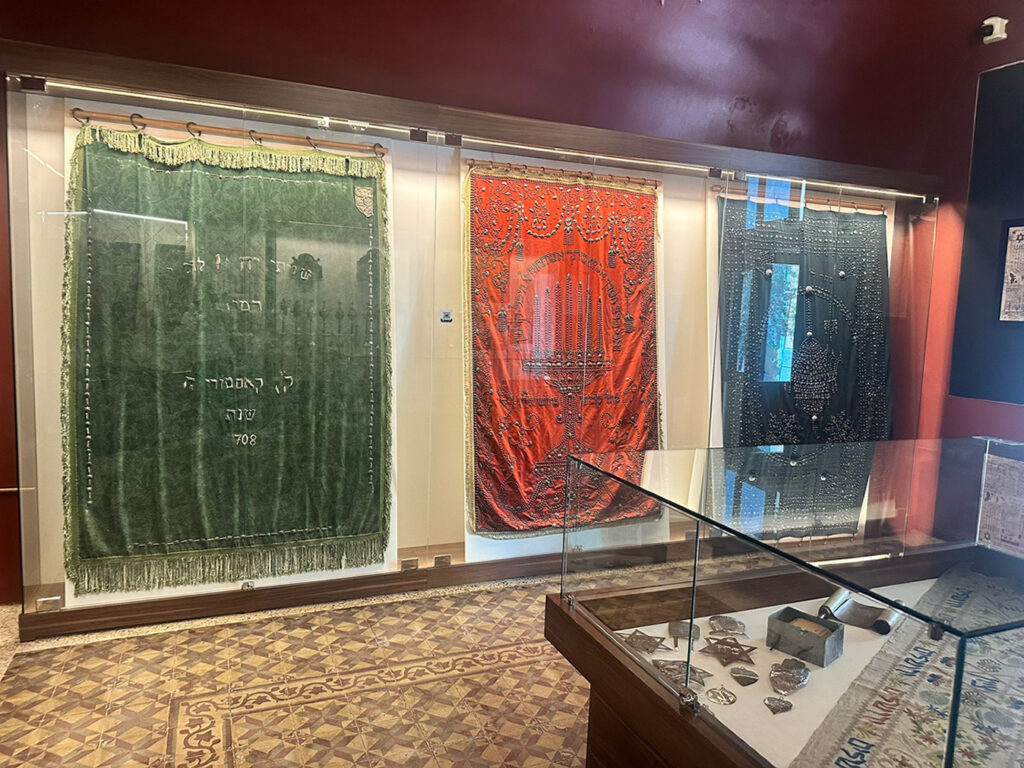
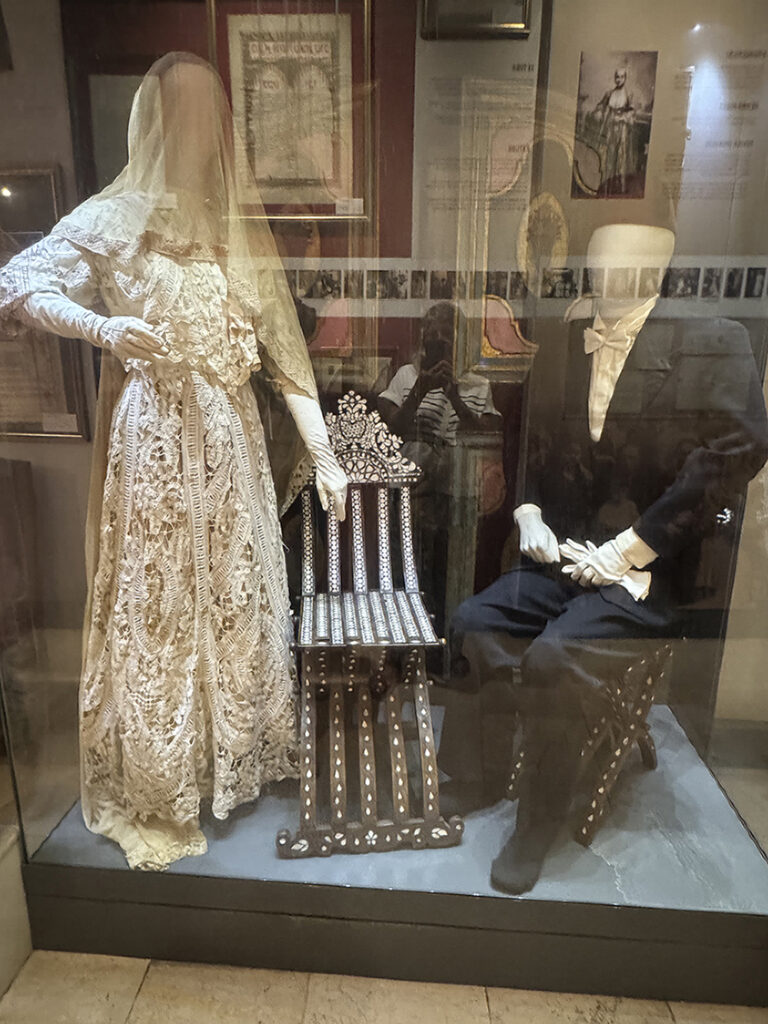
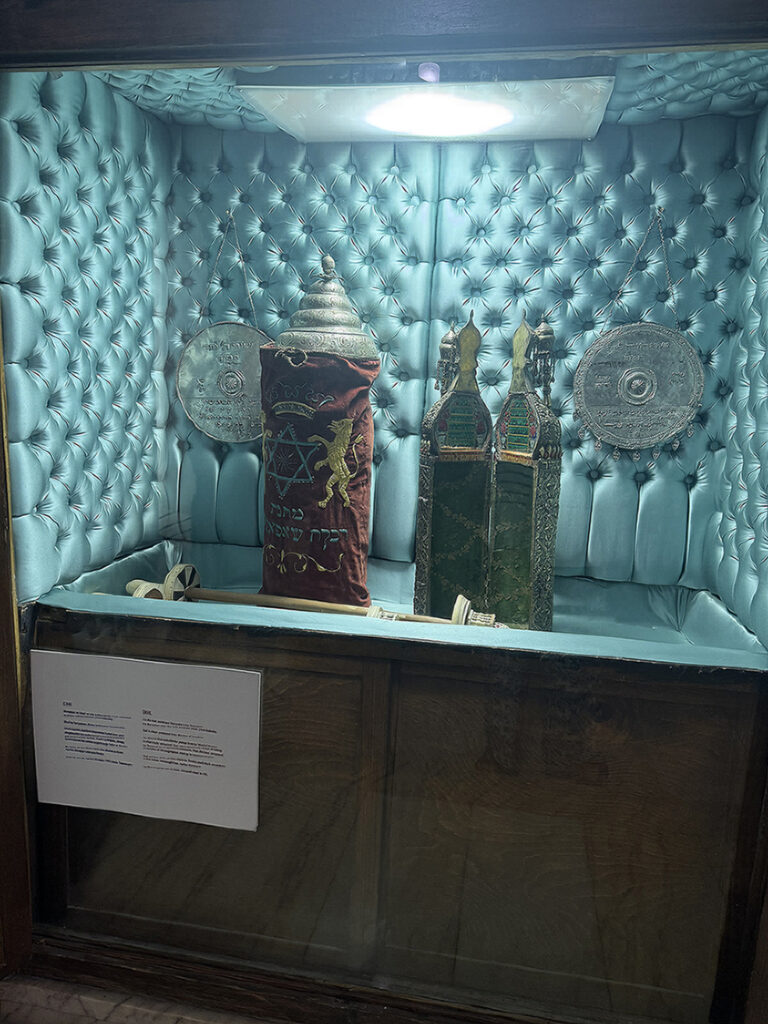
The Jewish Museum of Turkey is also in Neve Shalom. The inside of the synagogue is truly magnificent, and you can see how the community once thrived here. The museum shows the rich 700-year history of Jews in Turkey. Part of the museum shows the history of the Jews in Anatolia dating back to the 4th century BCE and continues with the arrival of Sephardic Jews expelled from Spain in 1492 and later from Portugal.
I spent two days in the hospital for the procedure and then was moved to the Sheraton to recuperate. I noticed the hotel had tight security, with every vehicle being scanned. Packages, bags, and purses had to go through a scanner and people through a metal detector.
A few days after my procedure, I returned to the hospital for a post-op check-up and clearance to fly home. After I was cleared by the doctor, I felt like I needed to get some fresh air and the weather was perfect for a little walk.
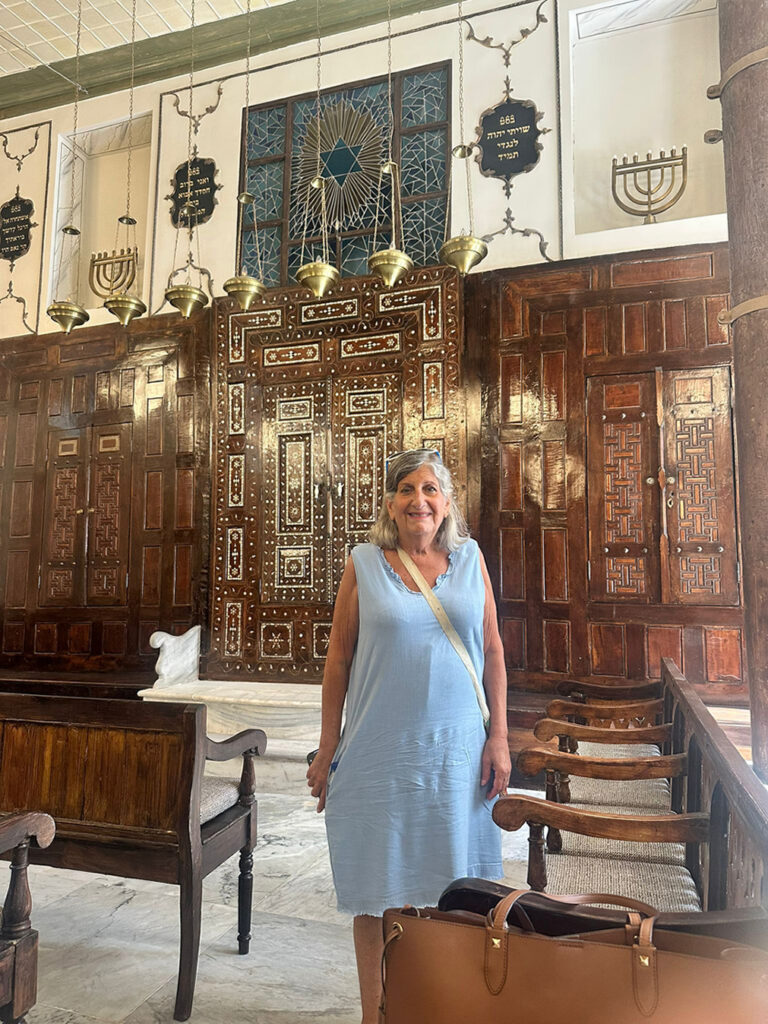
So before I came back to New York, I suggested to Miryam that I wanted to visit the Yanbol Synagogue in Balat. I had read that it had been renovated and it was one of the four surviving ancient synagogues in Balat, a district once densely populated by Jews. Miryam called the synagogue and arranged for us to visit. We would see the synagogue and get lunch.
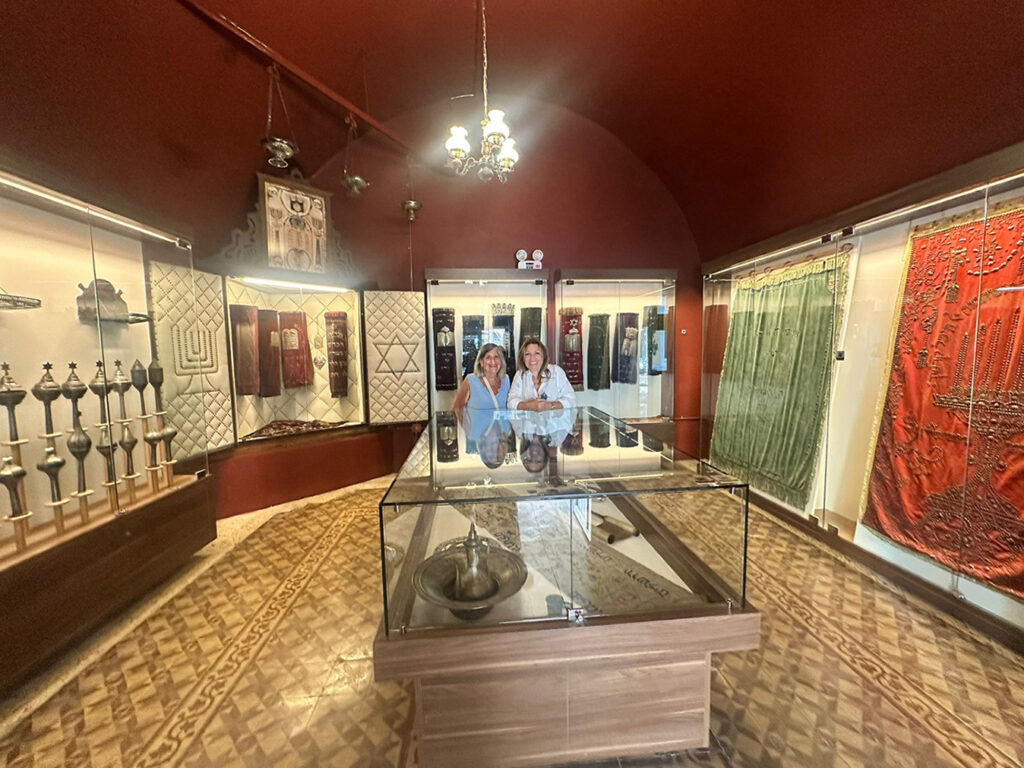
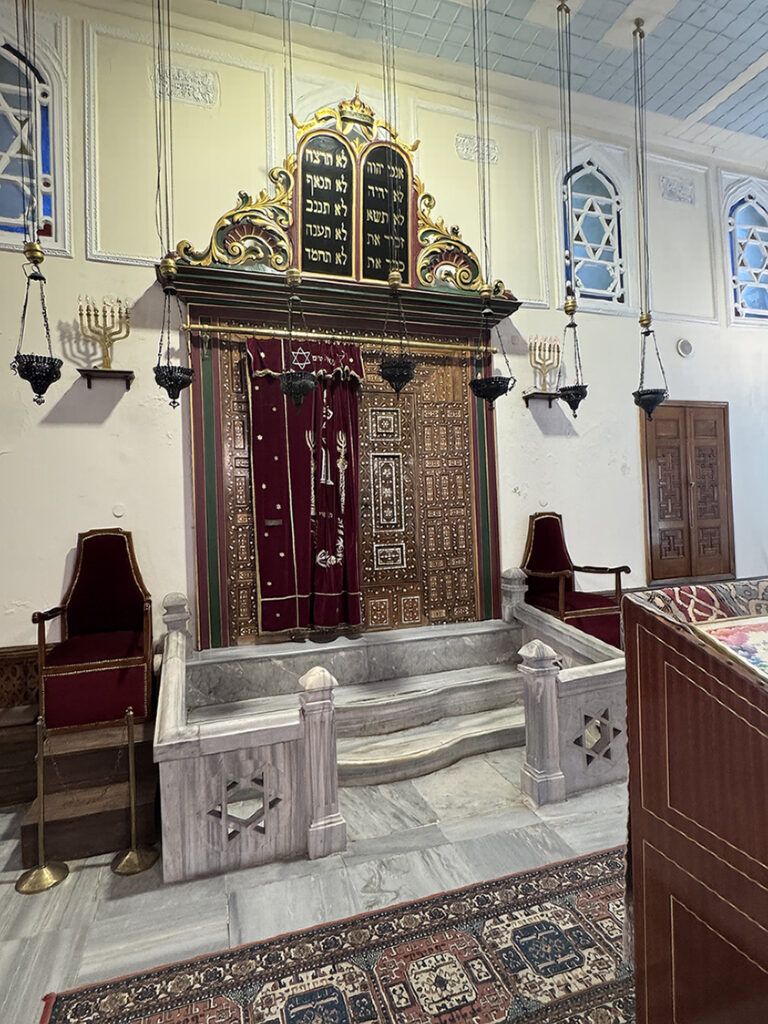
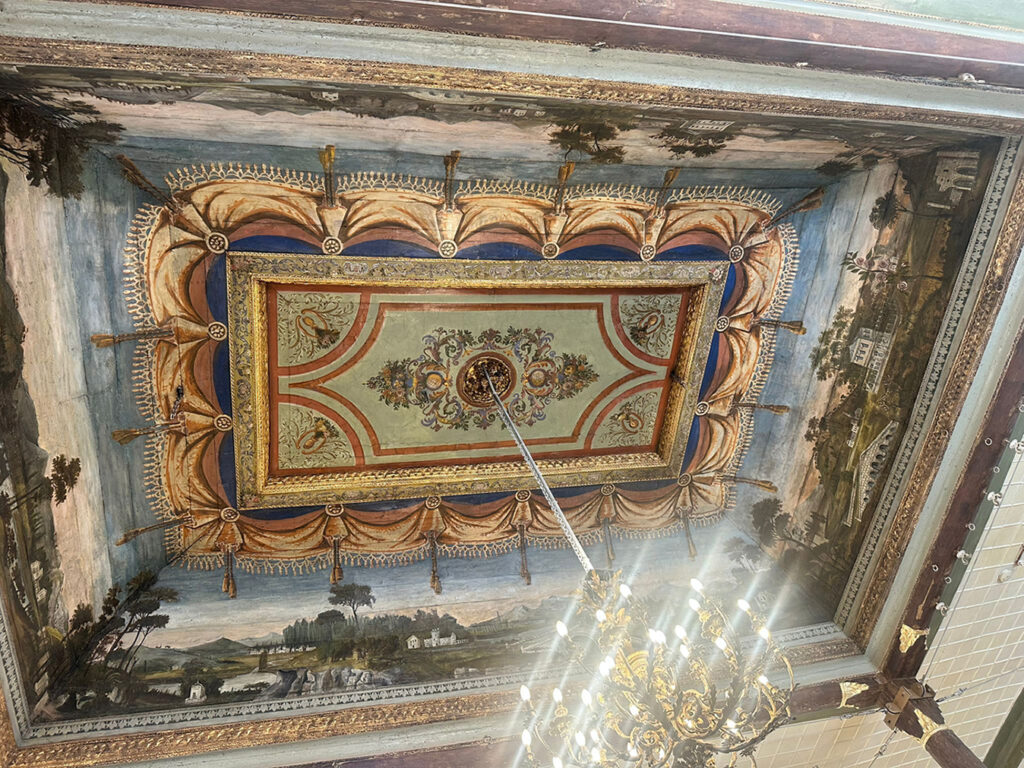
The two-year renovation of Yanbol was financed by the German Consulate. The sanctuary was just breathtaking as you will see from the photos in this article. It is a fully functioning synagogue with regular services. There is a small museum there as well, featuring rimonim (Torah finials), Torah crowns, and other religious articles discovered in a hidden storeroom. All of the artifacts were restored and turned into an exhibition in cooperation with the Quincentennial Foundation Museum of Turkish Jews. It contains elements dating from Byzantine times in its courtyard, and its ceiling is decorated with oil paintings of nature.
The sanctuary hall features a mixed stone and wood structure. Special care was taken to conserve and restore the synagogue’s original artwork, decorative elements, and wall paintings.
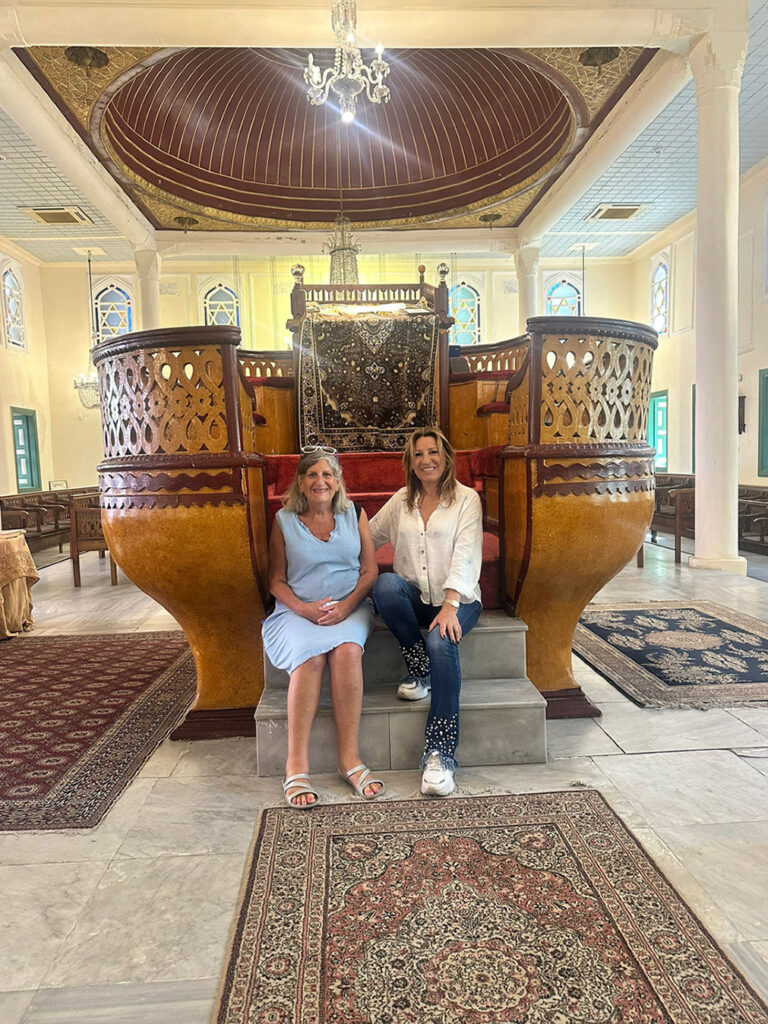
Just a few feet from the Yanbol Synagogue was Ahrida Synagogue. The caretaker walked us down the street and opened its doors, taking my breath away. It was built by Romaniotes (Greek Jews), dating back to the 1430s, from the city of Ohrid in what was then the Ottoman Empire and is now North Macedonia. Ahrida Synagogue is known for its boat-shaped tebah (reader’s platform). Ahrida Synagogue is also the only synagogue in Istanbul at which Sabbatai Zevi, founder of the Jewish Sabbatean movement, prayed.
Despite the decreasing numbers, Istanbul and its suburbs still have a community large enough to support at least 19 synagogues, youth and family clubs, social support, and a 500-student Jewish day school. The curriculum is taught in Turkish, Hebrew, and English.
There is also a Talmud Torah, clubs, and ways for families and youth to be together and make friends on both the Asian and European side of Istanbul. Young adults have many opportunities to socialize, meet, and marry within the community. There are also summer synagogues that open as people leave the city for the beach communities.
The community has a full agenda of social services: pocket money, scholarships for higher education, ambulance services, caregivers, counseling, a weekly and monthly Ladino newspaper, senior citizen housing, and programs.
Would I come back to Istanbul in the future? Probably, but I would need to consider the current state of affairs. Turkey is one of the few nations with a primarily Muslim population I felt safe in.