



Sarina Roffé and Drora Arussy
Fourteen local yeshiva students took center stage at a major Manhattan conference on the Departure and Exile of Jews from Arab Lands, sharing their family histories before an audience of nearly 300 at the Museum of Jewish Heritage, A Living Memorial to the Holocaust, this December. The annual gathering, dedicated to raising awareness of the often-overlooked story of Jews forced to leave or persecuted in Arab countries, brought together scholars, community leaders, and descendants of Jews from across the Middle East and North Africa.

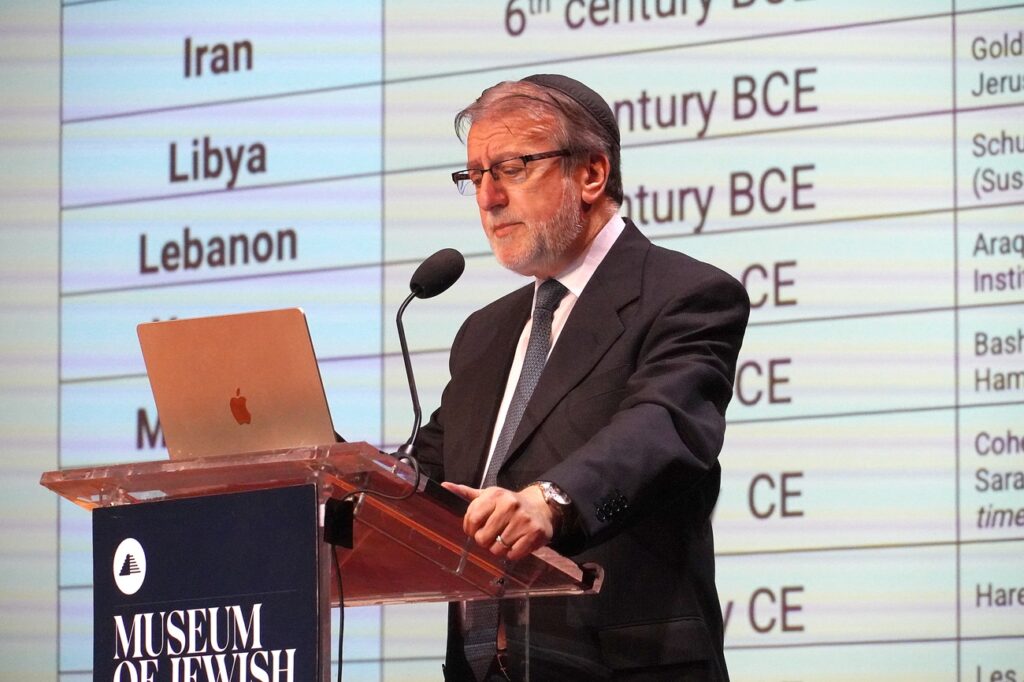

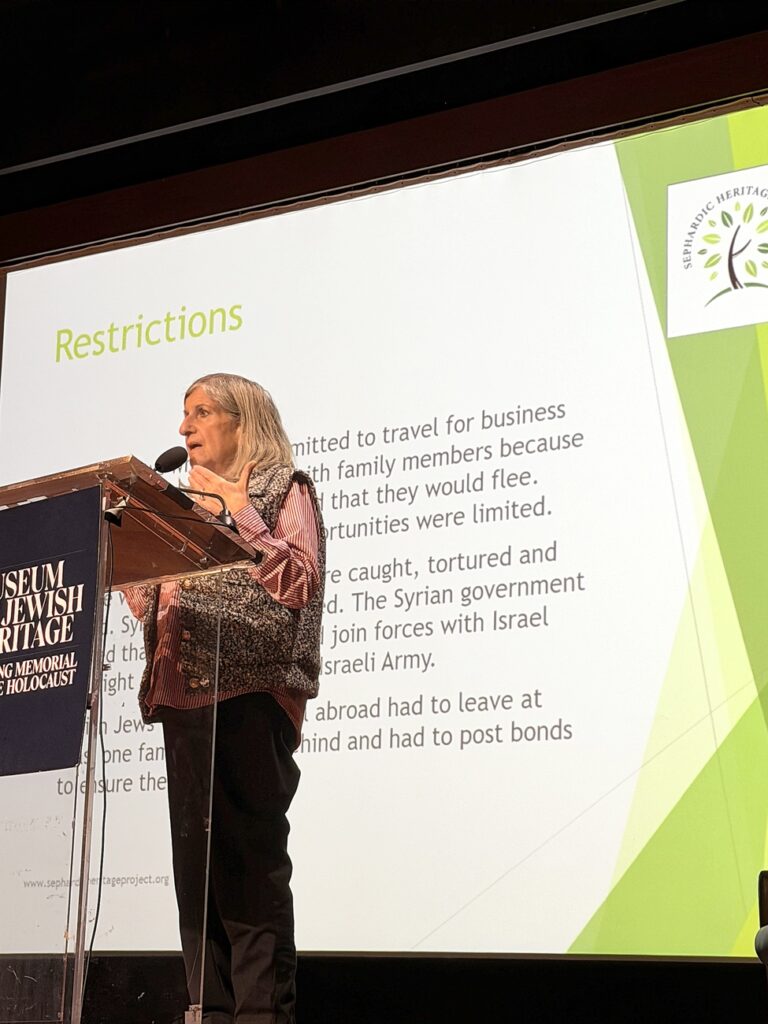

Organized by the Dahan Center at Bar-Ilan University, the conference was co-sponsored by the Museum of Jewish Heritage, JewishGen, the Sephardic Heritage Project, the Ben-Zvi Institute, and Jewish Unity Through Diversity, in cooperation with Israel’s Ministry of Diaspora Affairs and Ministry of Foreign Affairs. Welcoming remarks were delivered by Dr. Shimon Ohayon, director of the Dahan Center, and Yaakov Haogel with Michal Slawny Cababia, of the World Zionist Organization, who underscored the urgency of preserving the history of Jews from Arab lands for future generations.
Rabbi Elie Abadie, MD, former Senior Rabbi of the Jewish Council of the Emirates, Shaarei Mizrah, Rabbi of the Association of Gulf Jewish Communities, and Chairman of the Council of Sephardic Sages, delivered a keynote address titled “Who Are the Jews Who Were Expelled?” In a detailed historical overview, he described how Jews lived for millennia in Arab countries and traced what befell those communities in the twentieth century, including persecution, expulsions, and demographic collapse.
Rabbi Abadie highlighted that Jewish communities in the region are among the oldest in the world, predating Islam by many centuries. The Aleppo community in Syria traces its roots back to the time of King David, 3,000 years ago, the Yemenite community to King Solomon, approximately 2,900 years ago, the Iraqi and Iranian communities to the first Babylonian exile, 2,500 years ago, and the Egyptian Jewish community to more than 2,000 years ago. As World War I, World War II, and the upheavals of the modern Middle East reshaped the region, these once-thriving communities faced torture, imprisonment, ghettoization, alienation, and murder, ultimately dwindling to the point that most no longer exist in their ancestral lands.
Journalist Ben-Dror Yemini of Yedioth Aharonoth spoke on “The Jewish Nakba,” employing the Arabic term “Nakba,” commonly used for the displacement of Palestinians in 1948, to frame the parallel story of Jews who were uprooted from Arab countries in the same period. Additional academic presentations included Dr. Mordechai Kedar of Bar-Ilan University on “The Exile from Arab Countries and the Concealment of Property,” Dr. Benjamin Berman-Gladstone of Columbia University on “The Hell That Was Hashed, Yemen,” and Sarina Roffé, president of the Sephardic Heritage Project, on “The Jews of Syria, Persecution, Escape and Exodus.”
Interwoven between the scholarly lectures were moving student presentations from Hillel Yeshiva, SAR Academy, and Barkai Yeshiva, focusing on Sephardic family narratives of persecution, migration, and resettlement. To prepare, students interviewed relatives about life in their countries of origin, their journeys to the United States, and the challenges and opportunities of building new lives, while also collecting family photographs and documents to deepen their understanding of their heritage.
Hillel students Mimi Levy, Daisy Esses, Joy Cohen, Stephen Franco, Shelly Kassin, Eddie Habbaz, Sophia Barnathan, and Sonny Dweck presented under the guidance of their teacher, Sally Cohen, who has brought students to the conference for several years. From Barkai Yeshiva, presenters included Grace Tawil, Susan Caracoccly, and Benny Mizrahi, while SAR Academy was represented by Colette Alan, Abie Saliman, Netanel Sadigh, and Shana Katan. Their stories traced family origins from Egypt, Syria, Lebanon, Iran, Yemen, Iraq, and Israel. Students from Hannah Senesh, DRS Yeshiva for Boys, Yeshivat Frisch, Ramaz, Ben Porat Yosef, and Ma’ayanot also attended, highlighting the growing interest in Sephardic and Mizrahi history across the wider day school community.
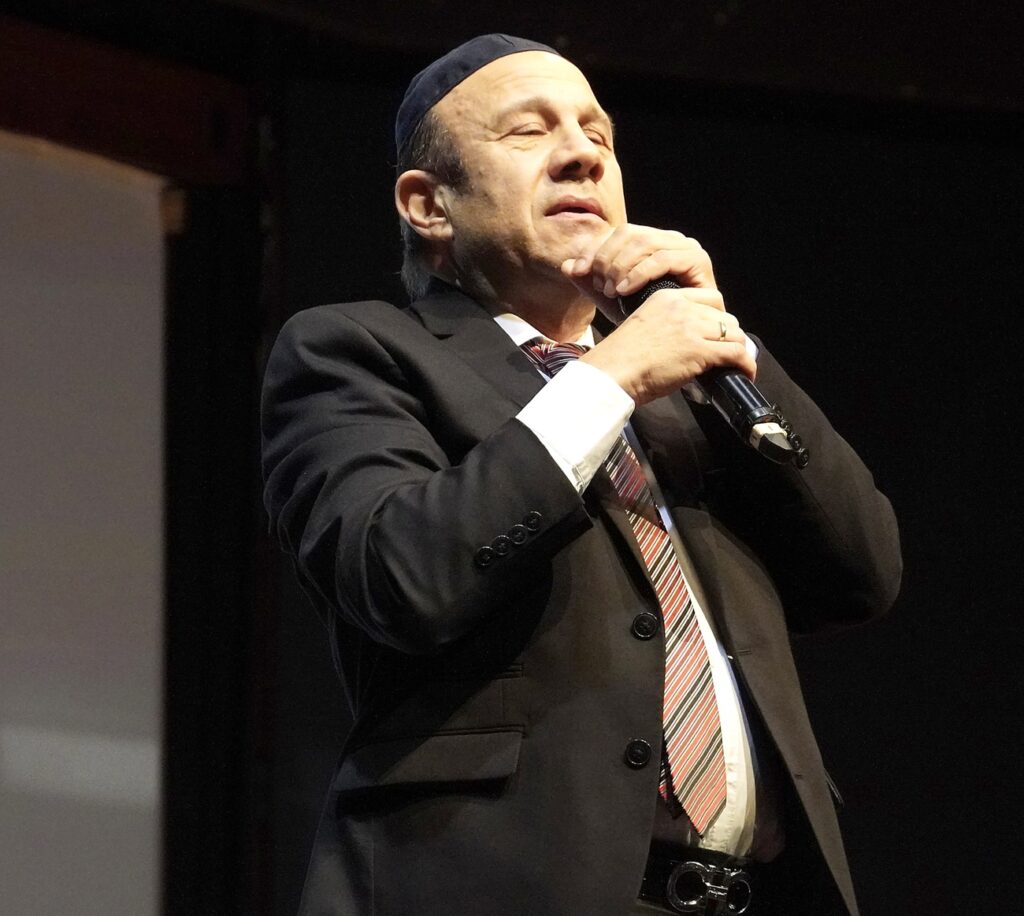
The program included a vibrant presentation by Rabbi Dr. Moshe Tessone of Yeshiva University on “The Music of Jews of Arab Lands.” Drawing on the liturgical and folk traditions of various Sephardic communities and ethnicities, he engaged the audience in the distinctive melodies and modes that once echoed through synagogues and homes from Baghdad, to Aleppo, to Sana’a, offering a powerful reminder that the cultural legacy of these vanished communities continues to live on in song.
You can watch a recording of the full program on YouTube https://youtu.be/p_P1odG-C6w
A genealogist and historian, Sarina Roffé is the author of Branching Out from Sepharad (Sephardic Heritage Project, 2017). She is researching a new book: Syria – Paths to Freedom. Sarina holds a BA in Journalism, an MA in Jewish Studies and an MBA.
Drora Arussy is the Executive Director of Jewish Unity Through Diversity and the author of Leah Nassi of Lisbon. She is an active content creator and scholar of Mizrachi and Sephardi heritage and history.


