


Rabbi Meyer Laniado
On September 7th, 2025, at 6:00 am, I received a call from my father telling me that my grandfather had passed. While I knew this moment would come one day, and had even thought of writing a funeral speech for him over the years, I was at a loss for words.
What could I say that would encapsulate my grandfather’s life, who he was, how he lived, how he impacted me and others?
On my way to the funeral, while crossing the George Washington Bridge, I remembered that, while in high school, I had interviewed my grandfather for a paper on his life. With only ten minutes to spare before the funeral, I stopped by my parents’ house. I went to my old room and, in my frantic search, found the filing cabinet with my old papers, including a drawer labeled ‘Writings.’ In that drawer, there it was! ‘The Life of Irwin Leventer.’ At the very end of that essay, to my surprise, was a section entitled: “Advice for Future Generations.” There, in my hands, were my grandfather’s words, to me, and to my family, from more than twenty years ago:
“Stay close to good, learned, and religious people, who stay with Torah. You will be influenced by them and learn how to be a good person. Money is not the most important thing in the world. Don’t let money corrupt your soul.” (Irwin Leventer, March 2002).
These words don’t capture the totality of his life, but they do capture a part of what mattered most to him, and what he wanted to pass to the generations that would come after him. I shared this with those who came to honor my grandfather, and I keep coming back to these words.
We often think of inheritance in terms of physical possessions, but more enduring than heirlooms is an ethical inheritance. What I have recorded in that paper is my grandfather’s ethical will; not his estate, but his real legacy: what he lived for, and the guidance he left his children, grandchildren and great-grandchildren.
Sometimes, when a person passes, suddenly or not, we are left wondering: What would they have said if they had one more chance? What would their parting message be?
But what if we didn’t wait? What if we took the time to ask those whom we love what their message is? In turn, what if we asked ourselves the same question, to crystallize and pass on what really matters to us?
Imagine your children, one day, opening a drawer with your writings. What would you want them to discover? What is the idea, the value, the teaching you most want to carry forward? That’s what an ethical will, a sava’a, is. It is a genre that originates with the Jewish people, with G-d saying about Abraham: Lema`an asher yesavve et banav ve’et beto aharav, veshameru derekh Hashem la`asot sedaqa umishpa` — “So that he [Abraham] will instruct his children and his household after him to keep the way of G-d, by doing righteousness and justice” (Bereshit 18:19; Hebrew Ethical Wills by Israel Abrahams).
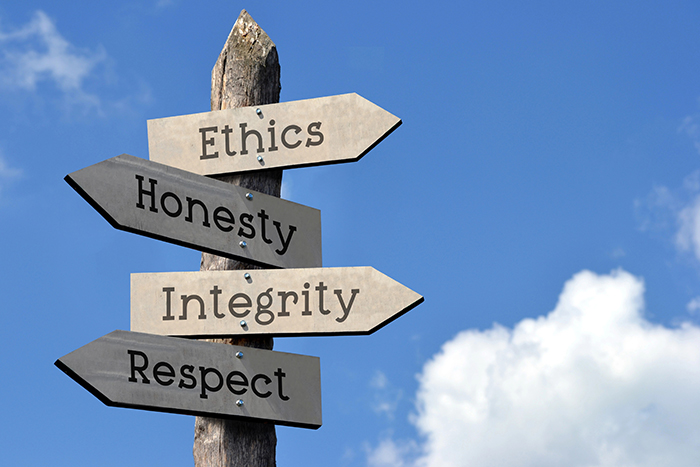
We are familiar with this type of literature from Pirqe Abot. Literally “The Chapters of Our Fathers”, a book filled with, one-line aphorisms of our greatest sages: the solitary idea and message they each thought was the most important to preserve for the next generation. We also have models of longer, more elaborate ethical wills. The most well-known are those of Yehudah Ibn Tibbon and The Ramban (12th–13th Centuries).
The Ramban, after winning the debate against Pablo Christiani in Spain, had to flee for his life. While in Israel, far from his son, he wrote a letter to guide his son through life. He emphasized the importance of humility, distancing oneself from anger, and speaking calmly as core traits for his son to cultivate for a successful life. This letter is still read regularly, included in siddurim, and published as a stand-alone book by major Jewish publishers.
Another example that I find so powerful is from Rabban Yohanan ben Zakkai, one of the greatest rabbis of the Mishna. At great personal risk, he secured Judaism’s survival after the Second Temple was destroyed by his request to the Romans to save the city of Yavneh and its scholars.
On his deathbed, with his students requesting a final blessing, Rabban Yohanan ben Zakkai left them one piercing line: “May the fear of Heaven be upon you like the fear of flesh and blood.” His students protested: Ad kan? Is that it? And he answered: Halevai. If only we could live at that level (Babylonian Talmud, Berakhot 28b).
These messages were said by our greatest scholars during their lifetimes, some directly to their children, and others to their students. This is how we should think of ethical wills. Not as documents to be read after we pass, but even while we are living, to make clear to our loved ones what is most important to us. This will also serve us well ourselves, to remind us the way we think is most important to live, maybe even to frame on our wall or place on our desk as our guiding message: as a living ethical will.
Two challenges often arise when discussing the writing of these documents: feeling our message isn’t unique, and finding just a few values that truly define us.
Firstly, to address the matter of uniqueness. The impact of a living ethical will is not that it is a hiddush, a new insight that was never said before. It is that it is your message. It powerfully encapsulates how you genuinely live, what is most important to you, describing what guides your life, and your message to your loved ones about how they should live theirs. That is why it is so impactful on those closest to you, your family, and your students.
Secondly, to address the challenge of choosing a few main points. Even regarding Avraham, our forefather, whom we describe as ish hesed, our model for hakhnasat orhim, how we invite in and host guests in our home. He is also described by G-d as a man of sedaqa u-mishpat, righteousness and justice. Both of those are true, and speak to aspects of who Avraham was, yet our prayers highlight one trait, that of his hesed. We also all live by multiple values that animate our lives, but when we distill them to one or two, we bring to the forefront, in clear articulation, part of the core of who we are.
The process demands honesty, and is not about trying to sound noble and virtuous. It is about clarifying what truly matters to us, what we strive for in our choices, and how we want to be remembered, through verbalizing it succinctly and sharing it with others, either orally or in writing.
This idea began to take shape for me when I invited a group of rabbis and mentors to share the single verse from Tanakh that most captures how they try to live and what they hope to pass on. I shared their responses over the High Holidays with my congregation, and the reaction was overwhelming. Many people told me how much the verses resonated with them, and how they were inspired to search for a verse or a teaching of their own. Not everyone is comfortable or familiar with Tanakh, and choosing a single verse that crystallizes your message may not come easily, but you may find yourself drawn to a line or teaching that feels true to you, one that captures the through-line of your life and the conviction that guides it.
For me, this question, “What’s my verse?”, my message, began in a very real moment, when I read my grandfather’s words, his living ethical will, and later, when, as a family, we searched for a verse that could capture the essence of his life. In that moment, I realized he had left us a gift, and with that gift came a responsibility: to begin writing my own. To ask myself: What is my message? What will I leave for my children, grandchildren, students, and congregation?


So the question for us is: What is your one message? Your key value? Your lesson for future generations? What are the words that will be your life, your legacy, your ethical will, your gift to the generations who come after you?
Rabbi Meyer Laniado is an associate rabbi at Congregation Kehilath Jeshurun and leads its Sephardic community on New York City’s Upper East Side. He teaches at Ramaz and is a growing voice in the broader conversation on Sephardic history, ideas, and culture, having shared perspectives at UJA, the Maimonides Fund, and the Bronfman Fellowship.


