



Becoming a Character in the Story of the Jewish People
Rabbi Meyer Laniado
In 2007, I traveled to Leipzig, Germany, to help lead community Pesah seders as part of a Yeshiva University program. Most of the participants were teenagers from the former Soviet Union with little Jewish education. For many of them, it was their first Seder.

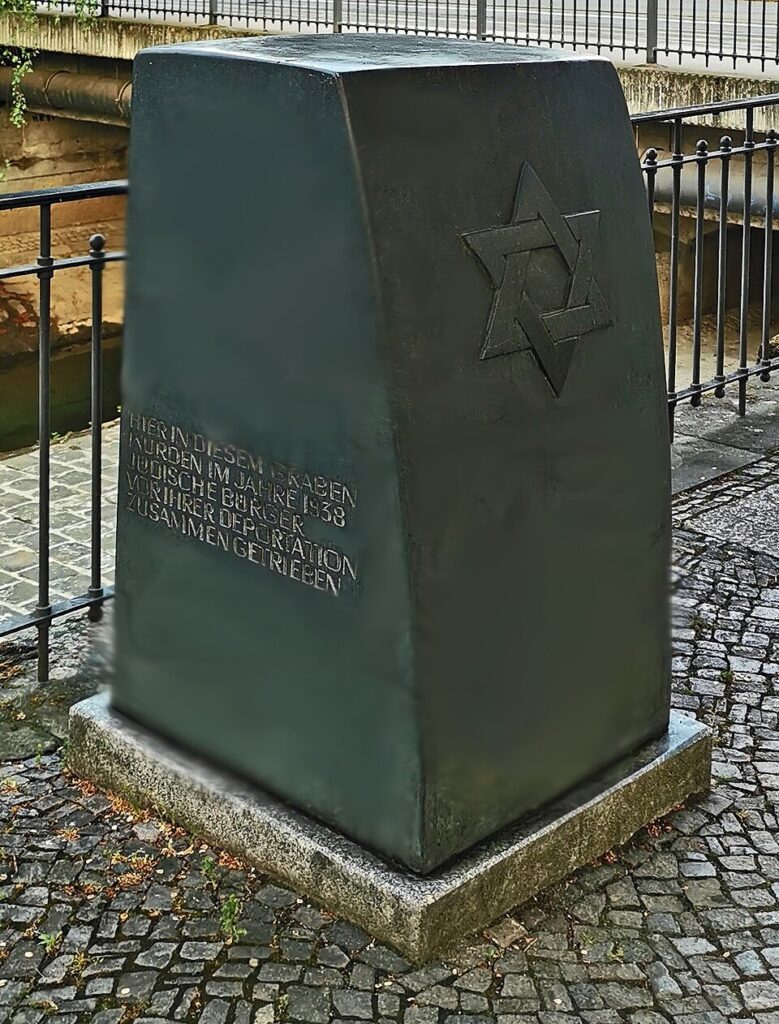
When we arrived in the city, the local rabbi brought our group to the Torah Center, where we would run the three-day seminar and seders.
Before entering the building, the rabbi led us past iron gates, through a small garden, and down into a concrete, sunken canal with a stream flowing through its center. As we stood there, he told us that in 1938, on the night of Kristallnacht, Jews from Leipzig had been rounded up in that trench before many were arrested and deported to concentration camps.
The place where we were about to introduce Judaism to these young Jews stood only steps away from that trench. I remember thinking: What a response to Hitler! In the very place where he had tried to destroy Jewish life, we were working to rebuild it.
The moment that really stayed with me, though, was a question from one of the participants. She was maybe sixteen years old, with bright red dyed hair. For most of the seminars and workshops, she remained on the sidelines, watching our programs with a distant curiosity. Every so often, I would hear her offer a quiet expression of “cool.” before retreating again into the background.
Then we ran the Seders, the culmination of our three days together. We performed plays and even an interactive rap battle of one of the sections of the Haggadah. At two in the morning, as the rest of the group was singing Chad Gadya at the close of the Seder, this girl pulled me aside for a conversation. I could not imagine what she would ask me after three days of barely speaking.


She looked up at me and asked a question I have never forgotten. “What’s my Hebrew name?”
While I don’t remember the name I gave her, what has stayed with me is what the question really was: a desire to be a character in the story of the Jewish people. Moshe, one of the most central figures of the Exodus story, also begins on the sidelines. His name, which today sounds unmistakably Jewish, was originally an Egyptian name, given to him by Pharaoh’s daughter, the woman who raised him in the Egyptian palace. He flees to Midian and builds a life there as a shepherd, far from the center of the Jewish story. There, in the middle of the desert, G-D approaches Moshe and invites him to assume the role of leader of the Jewish people. Moshe is not eager, to say the least. In fact, he is reluctant and says, “Who am I that I should go?” Moshe goes even further, asking G-D to send someone else.
And yet, Moshe, the man who was recognizably Egyptian in dress and name, is the one who becomes the figure through whom our entire people finds its freedom. His name was never changed to a “Jewish name.” What changed was his choice: to step into the story and take ownership of his role.
Many people encounter Judaism from the sidelines and don’t see themselves as participants in the story of the Jewish people. They are satisfied with Jewish identity inherited from birth but disinterested in taking an active role. These are the ones the Haggadah addresses with the rasha (wicked son). The rabbis portrayed the rasha not as rebellious but as someone who takes no ownership of his Judaism. He postures himself as distant and aloof. He makes clear that this Jewish practice has nothing to do with him, and so he comments from afar and judges at a distance, but never engages in taking responsibility.
Elie Wiesel articulated this idea well when he said, “The opposite of faith is not heresy, it is indifference.” Heresy still takes faith seriously enough to wrestle and argue with it. Indifference is what happens when a person no longer feels responsible for the story of their people, when it becomes something they observe from the outside rather than something that calls them to respond. That is the rasha. He is not a rebel. He is someone who watches the rituals, hears the words, and experiences them as belonging to someone else, something that places no demand or responsibility on him.
The Rasha asks, “What is this ritual that you are doing?” emphasizing to you, and not to me, drawing a line between himself and everyone else. The problem is not rebellion or disbelief. It is his standing at a distance, outside the story, watching others perform rituals he no longer feels are his own. And the Haggadah’s response: had he been there [in Egypt], he would not have been redeemed.
The misvot (commandments) of the Haggadah and the Seder are meant to move us from observer to active participant. We are asked to see ourselves as if we personally left Egypt. We eat the matzah of affliction, taste the bitterness of Egyptian slavery with the maror (bitter herbs), and recline like free people while drinking the wine of redemption. In fact, that is literally the misva: lirot et ‘asmo (to see oneself), to see ourselves as the actors, not merely the acted-upon. This is not about remembering what happened to others, but about actively living in the present story of the Jewish people. That is the message of Pesah. It is not only about what G-D did for His people. It is also about how Benei Yisrael (the Children of Israel) responded.
The first Pesah demanded the same decision and, in fact, became the prerequisite for redemption. Bringing the qorban Pesah (Passover sacrifice) was an act of identification, a deliberate choice to align oneself with the people who were preparing to leave Egypt. The midrash even suggests that only twenty percent of the Israelites made that choice and left Egypt, emphasizing that the Exodus was not something that simply happened to the Jewish people. It was something they had to choose to be part of.
Because in the end, the only ones who truly leave Egypt are those who decide the story belongs to them. When that girl asked me, “What’s my Hebrew name?” she was asking for more than a name. She was asking the question every Jew must eventually ask: What role will I play in the story of the Jewish people?


