



An Interview with Shimmy Braun, Senior Director Community Relations and Physician Alignment



Mount Sinai Brooklyn, formerly known as Kings Highway Hospital, has for years been part of the Mount Sinai Health System while continuing to serve as a true community hospital. The facility has expanded its services, upgraded its standards of care, and deepened its ties to the neighborhoods it serves. To learn more about these developments, we sat down with Shimmy Braun, Senior Director of Community Relations and Physician Alignment, who shared how Mount Sinai Brooklyn is working to combine world-class resources with the warmth of a local hospital.
Q It has been four years since you joined Mount Sinai Brooklyn, and there have been many changes during that time. Can you share some of them with us?
A Sure. When I joined the Mount Sinai Health System and Mount Sinai Brooklyn, I was given two areas of responsibility. I am responsible for recruiting physicians and surgeons to help expand the range of services offered to both in-patients and out-patients. My second area of responsibility is to serve as Senior Director of Community Relations. This responsibility includes representing Mount Sinai Brooklyn at assorted community events, and setting up Medical Education Presentations for the communities we serve. I also act as the liaison for the hospital to organizations such as Hatzalah, Sephardic Bikur Holim, Morris Franco Cancer Center (Medstar), Chaim Aruchim, Vaad Harefuah and RCCS, to name a few. I am in contact with many of the medical referral agencies, assisting with recommendations for specialists, and helping to expedite appointments for patients. Additionally, I work on some of the unique requests I receive on behalf of the religious community.
Q That sounds like a lot of coordination on your part. Does a major hospital such as Mount Sinai concern itself with community requests?
A Absolutely. The senior leadership has been extremely supportive of many of the requests that have been posed by community Rabbis and other community leaders.
Q Can you give me some examples?
A Of course. When I joined Mount Sinai Brooklyn, I discovered that although there was a Kosher certification on the food, it was dependent on leniencies (Kulot) that would apply for only sick patients (Holim) and not completely acceptable for employees and visitors. With the full support of the senior administration here at Mount Sinai Brooklyn, even with an increase in cost for the “upgraded” Kashrut certification, we are proud to tell everyone that as of December 1, 2022, the Kitchen and Cafeteria at Mount Sinai Brooklyn are under the hashgacha of Tarnopol Kashrus with the presence of Mashgiach Temidi (full-time kosher supervisor), and filters have been installed on the water supply. This certification can be relied upon by everyone and is not utilizing any of the leniencies used in the past.
Q What other accommodations have been made for our community?
A We gave our Bikur Cholim room a facelift and arranged with Yad Ephraim to keep it stocked with microwavable meals, salads, soups, drinks, and snacks. They also installed a warmer for individually wrapped Shabbos meals for those who require them.
In response to a request by one of the community Rabbis, we customized a private restroom to be designated as a “Sabbath Restroom,” with all manual fixtures. It is situated across from the Bikur Cholim room. We also have a Sabbath elevator for those who require it.
Q You mentioned that you recruit physicians and work on expanding the services offered at Mount Sinai Brooklyn. Please share with the community your accomplishments in that area.
A As part of the Mount Sinai Health System, we provide our patients access to subspecialty services, groundbreaking research, and clinical trials available across all our hospitals. During my interview for the position, I was informed of the goal we were working towards: “No matter which hospital in the Mount Sinai Health System a patient comes to, there should be no difference, clinically and aesthetically, from one to the next.”
With that in mind, Dr. Scott Lorin, President and Chief Operating Officer of Mount Sinai Brooklyn, laid out a plan of action. There was to be a concentration on raising the quality of care from that which previously existed for both in-patient and out-patient services and procedures. One of the first things accomplished was that all physicians are now Board Certified in their specialty, meeting the Mount Sinai Health System’s level of quality. Equipment at the Mount Sinai Brooklyn hospital was upgraded to the same level of quality as the rest of the system.
One of my first recruits was Betzalel “Bitz” Bree to serve as an Emergency Room Patient Navigator. As an active Hatzalah member, the ER was not a change of pace for Bitz. His responsibilities include assisting patients and their families while in the ER, as well as follow-through should the patient be admitted. In the three-and-a-half years that he’s been here, the patients and staff have nothing but praise for him for helping to manage the needs of the patients, their families, and the ambulance personnel who brought them in.
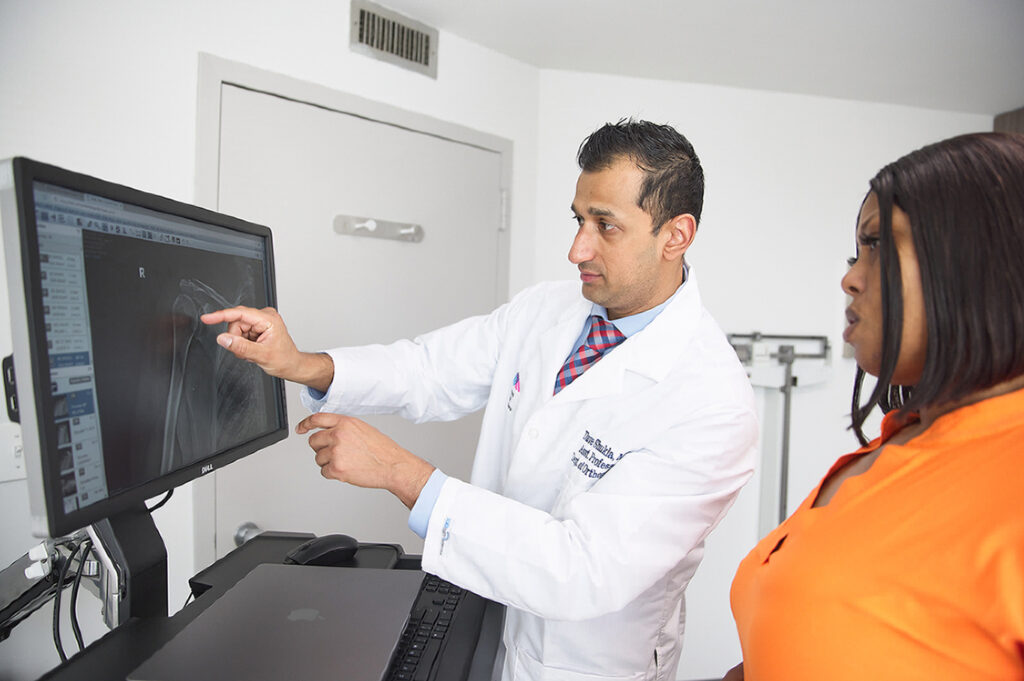
My next recruit was Dr. Danny Sherwinter, an accomplished and respected surgeon in General Surgery, Colorectal Surgery, and Bariatric Surgery. We now added Chief of Surgery, Mount Sinai Brooklyn, to his title. He has taken over the Department of Surgery, and in the three years since he started, Mount Sinai Brooklyn is recognized as an excellent facility to consider for surgery. The hospital has two DaVinci Robotic Surgical Systems, which offer a minimally invasive surgical solution that accomplishes surgeries with less pain and shorter hospital stays.
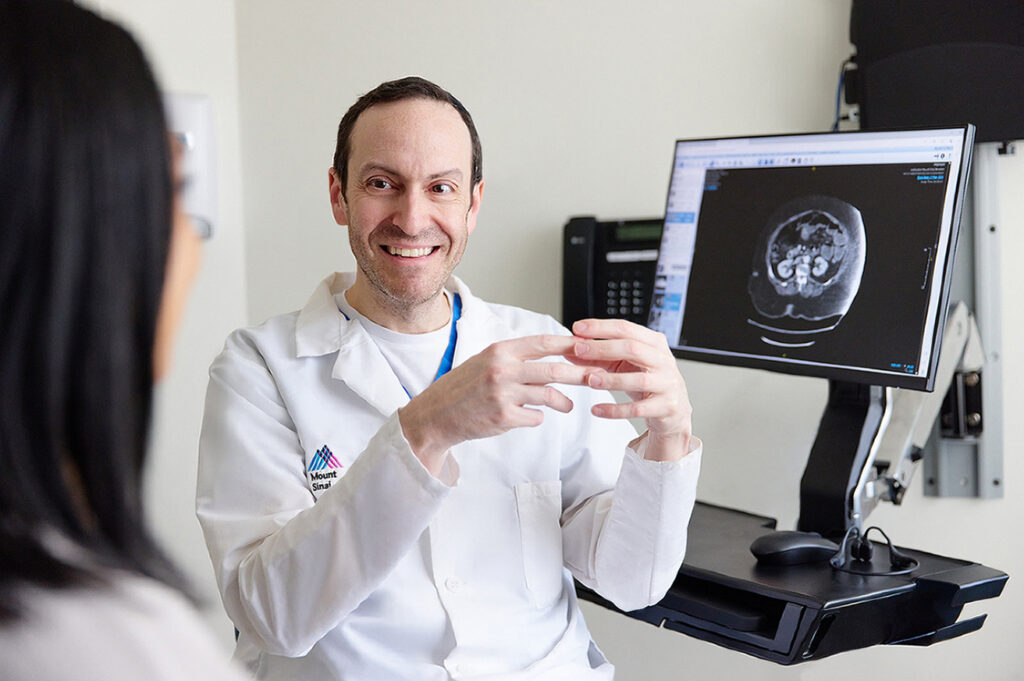
The surgeries performed at Mount Sinai Brooklyn include:
- Bariatric Surgery
- Breast Surgery
- Colorectal Surgery
- ENT Surgery
- Advanced Gastroenterology Endoscopies and Surgeries
- Gynecology Surgeries
- Orthopedic Surgery and Joint Replacements
- Pain Management treatment and procedures
- Thoracic Surgery
- Urological and Kidney Surgery
- Vascular Surgery
- Two Interventional Radiology Suites
Q You mentioned earlier expanding services for out-patients as well. Can you elaborate on that?
A We have done extensive renovations to our professional building located at 3131 Kings Highway, and have added several medical specialties to offer to the community. Many of our physicians and surgeons treat patients both at The Mount Sinai Hospital in Manhattan and at Mount Sinai Brooklyn. Patients can see a “Manhattan Doctor” in Manhattan, or right here in Brooklyn. In essence, we’ve successfully brought Manhattan to Brooklyn.
We also have another site a few minutes away dedicated to our out-patient cardiology team. This state-of-the-art facility is located at 1977 Flatbush Avenue (right off Flatlands Avenue). It offers nuclear and non-nuclear cardiac testing on site. There are diagnostic cardiologists on staff full time, as well as assorted subspecialty cardiologists from The Mount Sinai Hospital in Manhattan seeing patients on select days of the week. This facility has free parking in the rear of the building for our patients’ convenience.
Q The Mount Sinai Brooklyn Cancer Center at 3131 Kings Highway is an impressive addition to the hospital. Can you elaborate on that facility?
A Sure. This facility occupies the first floor at 3131 Kings Highway. It is an extension of the Mount Sinai Tisch Cancer Center, including The Tisch Cancer Institute, a National Cancer Institute-designated cancer center, our Cancer Centers of Excellence, and our Cancer Network. Our cancer specialists participate in active clinical trials and treat a variety of cancers. If a patient has been seen by a physician in a Mount Sinai Hospital in Manhattan, they can have their infusions performed locally at the Mount Sinai Brooklyn Cancer Center.
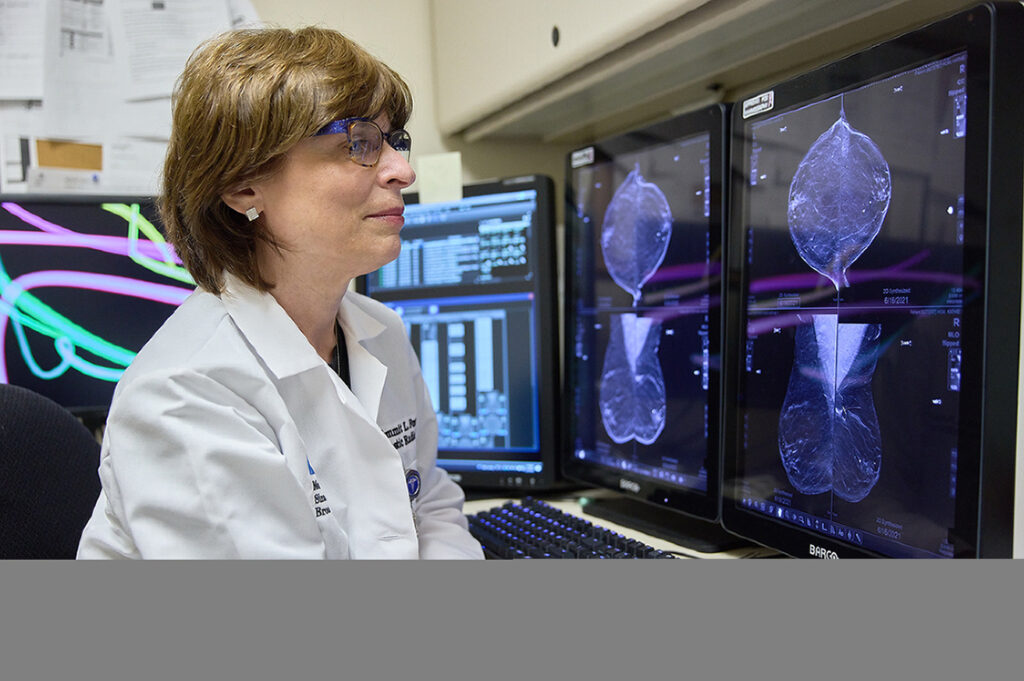
Adjacent to the Infusion Center at 3131 Kings Highway is our state-of-the-art Mammography Center, led by Dr. Frimmet Forman. The level of quality and sensitivity is excellent.
Q With all the expansion of services that you mentioned, are there any plans for adding a maternity department?
A That is an important question. While the size limitations of Mount Sinai Brooklyn won’t allow for a labor and delivery department to operate safely and effectively, we’ve done the next best thing. The Mount Sinai OB-GYN group, which performs baby deliveries at The Mount Sinai Hospital in Manhattan and is headed by Dr. Alan Adler, now has office hours two days a week to see patients at 3131 Kings Highway. This allows all the pre- and post-delivery visits to take place locally, while the actual deliveries happen in The Mount Sinai Hospital in Manhattan. The entire group rotates through here, so the patients get to meet all the doctors in the group. They are also seeing standard gynecology patients as well.
Q What else can you tell us about Mount Sinai Brooklyn?
A Mount Sinai Brooklyn is an accredited Stroke Center that is led by Dr. Steven Rudolph. Accreditation entails having multidisciplinary teams to provide the appropriate therapy within the clinical guidelines for the acute treatment of stroke. The Mount Sinai Brooklyn Stroke Center has been recognized by the American Heart Association and American Stroke Association, which granted Mount Sinai Brooklyn the “Get With the Guidelines” Stroke GOLD PLUS with Honor Roll Elite award in 2021. In 2022, we achieved the Gold Seal of Approval from The Joint Commission, which awarded Mount Sinai Brooklyn advanced certification as a Primary Stroke Center.
In addition to all the specialists that are here, we are proud to offer the community a choice of two excellent primary care physicians in our PCP suite at 3131 Kings Highway. Drs. Diane Kantor and Milton Grunzweig bring years of experience in the field of primary care.
We are also very pleased that our Pain Management Practice, led by Dr. Gary Esses, has gained tremendous popularity by helping patients who struggle with chronic headaches, neck pain, back pain, and joint pain.
Q The public is always concerned regarding the nursing care in a hospital. What can you share with our readers about the nurses at Mount Sinai Brooklyn?
A I’m very proud to say that my response is based on what patients have told me and have written to me. I am so inspired by the praise given to our nurses by the patients and their families. We strive to keep our nurse-to-patient ratio within our guidelines, offering safe and expert care delivered with a smile. Mount Sinai Brooklyn proudly boasts an impressive rating within the Mount Sinai Health System, proportionately having the lowest hospital-acquired infection rate.
Q How would you summarize Mount Sinai Brooklyn?
A Mount Sinai Brooklyn offers the best of both worlds. We retain the warm feeling that the staff has both with patients and fellow staff members, usually experienced in a community-style hospital, with the resources of the Mount Sinai Health System fully available to our patients. If we feel that a patient will benefit in any way at one of Mount Sinai’s hospitals, we’ll internally transfer the patient to the facility that will offer the best expected outcome. As we are all part of the same system, all patient records are available across the entire network, residing in the Electronic Medical Records system that we all operate on. This allows for a seamless continuity of care.
Q Is there anything else you’d like to share?
A I truly hope that our services remain not needed, but should they be, we are here to help. Patients can contact us using the phone numbers below.
Primary Care Practice and Orthopedic Practice
718-758-7022
OB-GYN Group 212-731-3232
Surgery Department 718-677-0109
Flatbush Ave Cardiology Practice 718-758-7070
Mammography Department 718-951-2717
Infusion Center or Hematology/Oncology Physicians 718-758-7050
Urology Practice 212-844-8900
Stroke Department 718-677-2089
Chaplain, Rabbi Yaakov Hoenig 718-951-9323
Patient Representatives 718-951-3005


