



A New Lens on Ability at 19,341 Feet
Stefanie Diamond
As a photographer, I am often called to photograph life’s most precious moments, and those moments and those people often change me in some way. In August, I had the opportunity of a lifetime to capture an extraordinary journey to Tanzania. I can say with certainty that I am impacted and changed in more ways than I can fully process yet.

I had been to Tanzania once before on a trip that opened my eyes and heart to the people of East Africa, and when I boarded the plane to come home, I did so with tears in my eyes, afraid I’d never get the opportunity to return. But six years later, when I had such an opportunity, I excitedly accepted but wasn’t sure I’d see or experience anything that would impact me like my first trip. How very wrong I was. This time I came to Tanzania to photograph two teams climbing Mount Kilimanjaro. My job was to capture them bonding as a team on the ground, to walk alongside them and take photos of them as they started their climb, and then to capture one group’s return a week later. And somewhere between those two moments, the story changed.
Across two consecutive #AccessibleTogether expeditions organized by Accessibility Accelerator in partnership with Paratrek, 66 climbers of different abilities, backgrounds and life experiences approached Africa’s highest mountain. Among them were adults with spinal cord injuries, a teenager with a genetic disease which has affected his ability to walk, injured soldiers, students, educators, physicians, first responders, families, advocates and community leaders. Some used adaptive equipment or required physical assistance. Others carried challenges invisible to my lens.

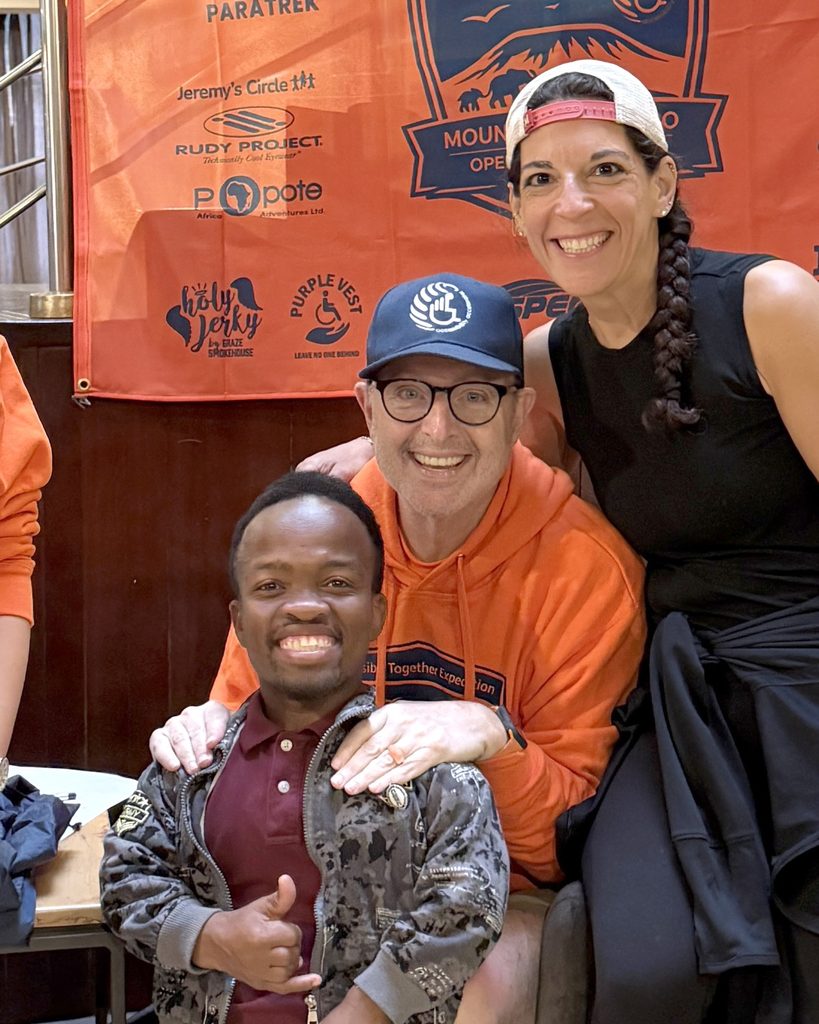

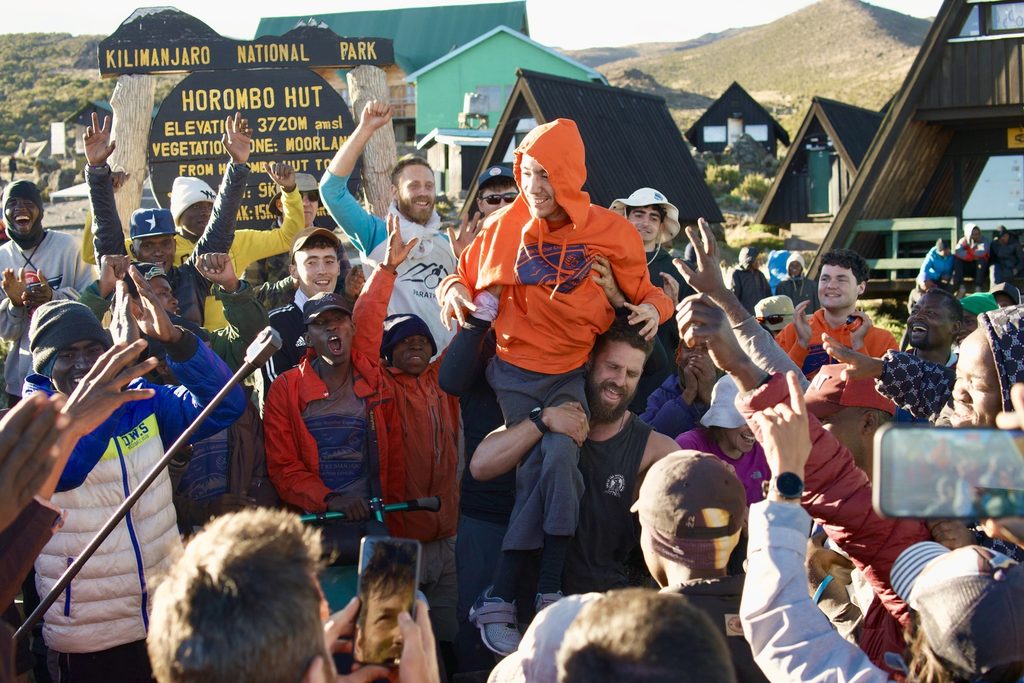
They did not arrive with the same abilities, and they would not reach the same altitude. That was never the point. What they shared was the right to discover what was possible. From the ground I learned a lot about the mountain, namely that Kilimanjaro offered no concessions. At 19,341 feet, the mountain remained demanding and indifferent. The air did not get easier to breathe for a climber with a disability. The terrain did not soften for someone carrying an injury. Inclusion did not make the mountain easier. Careful preparation, adaptive equipment, medical planning, staffing and logistics simply made the opportunity to attempt it broader.
That distinction is powerful because our world so often does the opposite. We see a wheelchair, an injury, or a different way of moving and begin calculating limitations. Sometimes we decide what another person cannot do before that person has been given the chance to try. This has been the greatest lesson to me after spending time with those who needed the assistance of Paratrek’s trekkers.
Jamie Lassner, executive director of Accessibility Accelerator, explained, “The achievement was never that everyone reached the same place. It was that everyone was given the dignity to discover their own possibilities. Inclusion begins when we stop deciding another person’s limits and start creating the conditions in which possibility has a chance.”
As a photographer, those words stayed with me. Photography is about what we see, but this expedition repeatedly reminded me of everything my camera cannot capture. A lens can record a wheelchair, adaptive equipment or a hand extended toward another person. It cannot photograph determination. It cannot show years of struggle inside a single frame. It cannot capture trust, fear, faith or the courage required to accept help. By spending time talking to the participants, I got to see some of this struggle, trust, fear, and courage.
During that first kilometer I hiked alongside them, I watched climbers, guides and porters begin moving together. Equipment was adjusted, people waited for one another, encouragement came easily. Then I turned back, and they continued upward. I got to know these incredible individuals for a few days before we laced up those hiking boots. They shared their stories. I saw their souls. And while I only walked up the first kilometer of the mountain with them, a part of me followed them. I was surprised to be so invested in their stories and in their journey, but what happened higher on Kilimanjaro was theirs to experience.
When the teams returned, however, their stories revealed something striking. Achievement on the mountain was rarely singular. A guide steadied a climber. A porter carried weight. A physician watched over a team. Someone struggling physically became another person’s emotional strength. The roles of helping and being helped shifted constantly.
“No one climbs Kilimanjaro alone,” said Omer Zur, founder of Paratrek. “Every guide, porter, and climber becomes part of one team. Every person contributes something that helps another person move forward.”
We live in a culture that prizes independence, sometimes to the point of confusing needing help with weakness. Kilimanjaro suggested something more honest. We can only accomplish extraordinary things through interdependence. There is strength in extending a hand, but there is also courage in taking one.

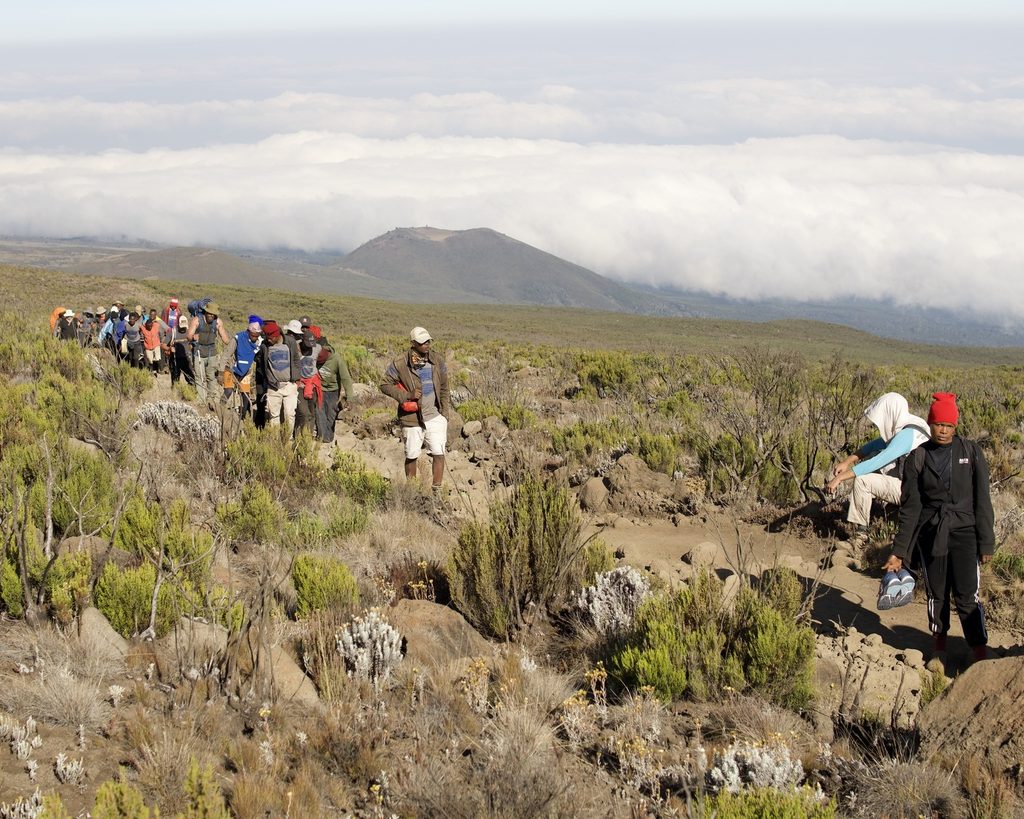
its midnight ascent toward the summit.
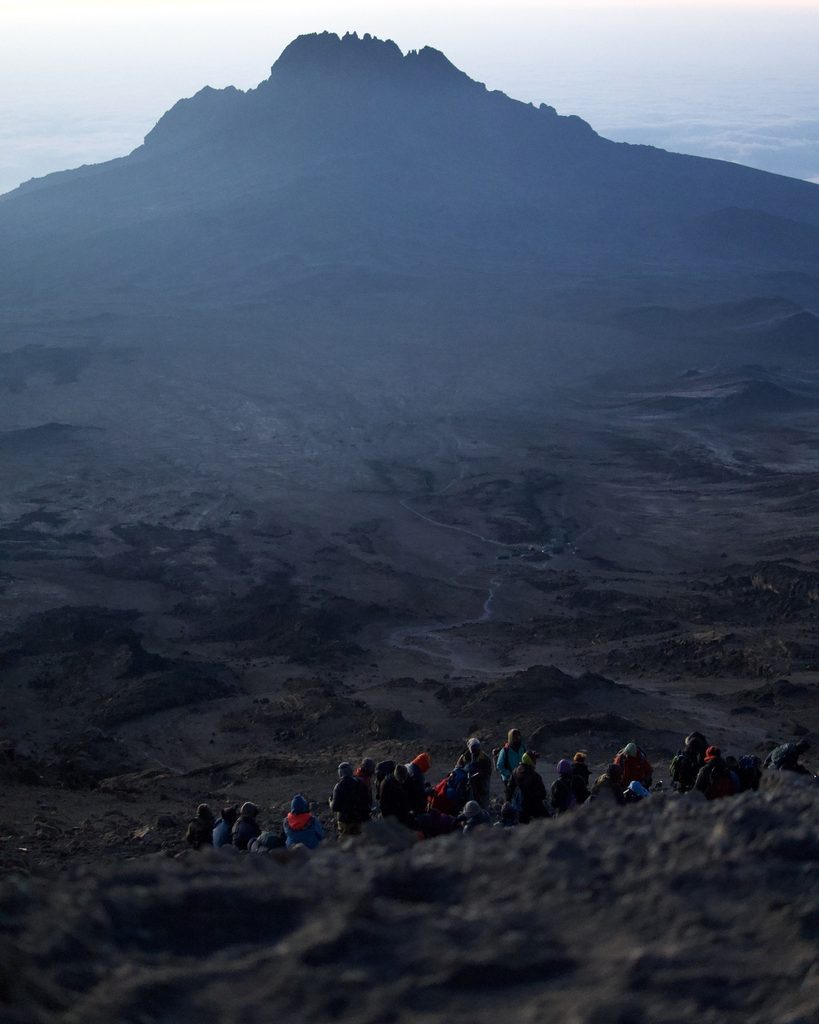
The mountain also challenged the definition of success. Asking a climber ‘how high did you climb?’ and ‘did you summit?’ only tells where a person stood, not what it took to get there. Some participants reached Kilimanjaro’s outer summit rim while others continued toward its highest points. For one person, success might have been another step. For another, it was knowing when to stop. For someone else, it was slowing down so a teammate could continue. For me there was incredible pride in just watching them begin. Perhaps success was never a place on the mountain. Perhaps it was having the opportunity to stand at the bottom and begin, and then to find your own place upon it.
Tanzania was inseparable from that story. The guides and porters were not supporting characters in someone else’s adventure. Their knowledge, endurance and humanity were fundamental to it. Drivers, hotel staff and local partners surrounded the teams with warmth. Some of the most memorable moments were the quietest. A hand offered without hesitation, laughter between people who shared little language, someone patiently waiting for another person to catch up.
Photography teaches you that what is visible is never the whole story. Disability should teach us the same thing. A wheelchair may be visible. Ambition is not. An injury can be seen. Determination cannot. Adaptive equipment can be photographed. Courage, intelligence, humor and generosity refuse to fit neatly inside a frame.
Eventually, everyone leaves the mountain. That is when Kilimanjaro’s lesson becomes more demanding. Most barriers in life are not 19,341 feet high. They are a staircase without another entrance, a classroom designed without considering one student, an emergency plan assuming everyone can run, or a workplace treating accessibility as an inconvenience. Sometimes the greatest barrier is invisible. An invitation never offered because someone else decided the answer would probably be no.
These climbers did not prove that everyone can climb every mountain. They demonstrated something more important. No one should have their mountain chosen for them. I went to Tanzania to photograph an expedition. I returned thinking about how we see one another.
Kilimanjaro did not become lower. The trail did not become shorter. The mountain changed nothing. What changed was who had the opportunity to approach it. And perhaps that is what inclusion looks like at its best, not lowering the mountain, but refusing to stand at its base and tell someone else they do not belong there.


