



Two Jewish Families Created the Iconic
Jewelry Company
Dr. Yvette Alt Miller
Van Cleef & Arpels is one of the world’s top luxurious jewelry brands, with an annual revenue of over half a billion dollars and nearly 200 stores worldwide, servicing Hollywood stars and royalty for over a century. But few know the company’s Jewish history, and how its owners endured the Holocaust and rebuilt after World War II.

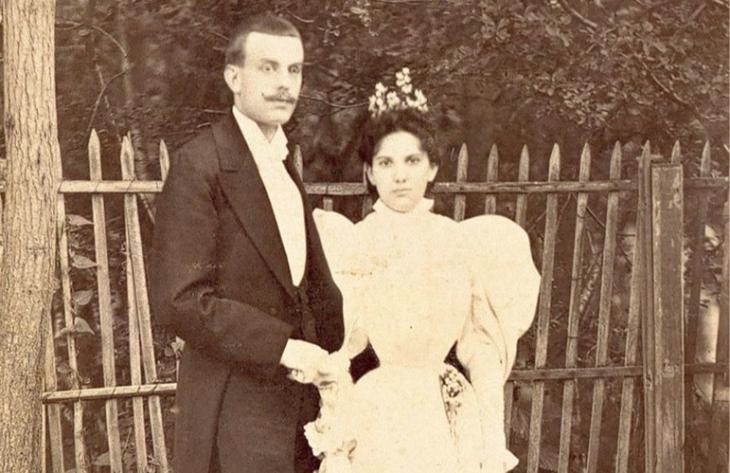



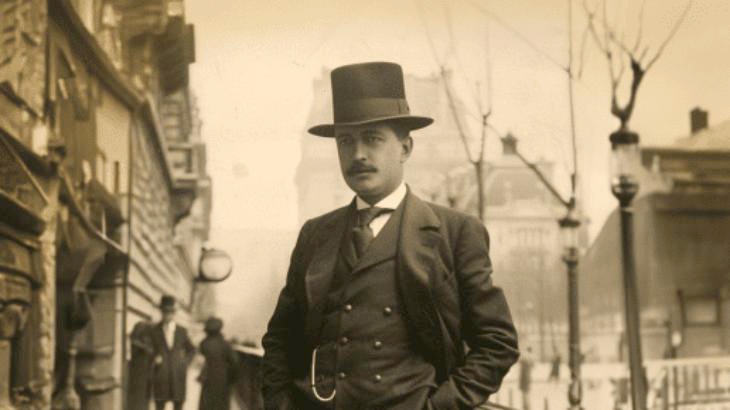
In the “Belle Epoque” of the 1890s, Paris was the world’s most fashionable city. Creative artists and artisans flocked there to ply their trades and create the most up-to-date styles. Among the jewelers who opened workshops was a young Jewish goldsmith and stone cutter from the Netherlands, Alfred Van Cleef.
Born in 1873 into a family of Dutch Jewish jewelers, Alfred learned how to cut precious gems from his father Charles. Alfred completed an internship in jewelry-making, then immediately moved to Paris to open a workshop of his own there. He was welcomed to Paris by the close-knit world of Jewish gemsmiths, including a friendly middle-aged cousin of his, Leon Salomon Arpels. Alfred and Leon Salomon’s daughter, Esther, fell in love, united in part by their love of high style and interest in jewelry-making. They married in 1895 and gave birth to a daughter, Rachel, in 1896.



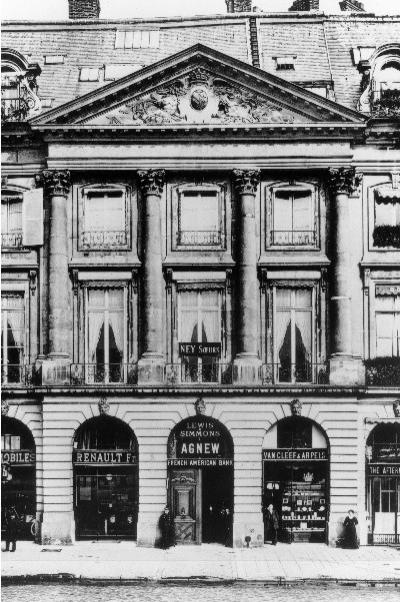
22 Place Vendome,
circa 1906
Alfred opened a cutting-edge jewelry atelier in Paris’ gritty 10th Arrondissement along with his new brothers-in-law, Charles, Julien, and Louis Arpels. Their beautiful pieces and exquisite settings earned them a loyal following, and soon the young jewelers began looking for a larger space in a more fashionable quarter of Paris in which to work.
When the Ritz Hotel opened in the Place Vendome in 1898, Alfred and Esther, now going by the less Jewish-sounding name Estelle, decided to move to this newly fashionable square. They opened a larger store at 22 Place Vendome, which remains the center of the Van Cleef & Arpels empire to this day. They first focused on pearl jewelry, which was all the rage at the time. Soon, their impeccable gem settings began attracting notice and a loyal customer base.
Decorated During World War I
The Van Cleef and Arpels served with incredible bravery during World War I. Louis Arpels enlisted in a Field Artillery Regiment and fought in Verdun, among other battles, before being injured by poison gas and decommissioned. Louis Arpels fought with distinction. Estelle worked as a nurse. Alfred Van Cleef, who was in poor health, worked for the army’s auxiliary service in Paris. After the war, Alfred Van Cleef, Estelle Van Cleef, Louis Arpels, and Charles Arpels were each awarded France’s Legion d’honneur.
During World War I, Van Cleef & Arpels produced jewelry out of cheap materials, eschewing finery during wartime. They introduced a wildly popular “touch wood” collection, combining decorative pieces made out of wood with a popular belief in France at the time that touching wood somehow brought good luck. When World War I ended, the company switched gears, expanding and emphasizing luxury for a population that was weary of austerity and craved expensive trinkets.
Creating France’s Iconic Style
In the 1920s, Van Cleef & Arpels opened new stores in fashionable holiday destinations such as Nice and Monte Carlo. The company embraced the new Art Deco style and sold to actors and royalty. It introduced one of the first ladies’ wristwatches in 1923. In 1933 they introduced a cutting-edge way of creating invisible settings so that jewels appear to be floating on top of jewelry.
In 1939 they introduced a wildly popular piece that could be used as a necklace, belt, or broach. In 1939, Van Cleef & Arpels created a priceless diamond and platinum set of jewels for Egyptian Princess Fawzia’s marriage to Mohammed Reza Pahlavi, who became the Shah of Iran. Other fans included King Edward VII of England, who bought Van Cleef & Arpels jewelry for his paramour Wallace Simpson.
In 1926, Alfred and Estelle’s daughter Rachel Van Cleef took over as Artistic Director of the thriving company. By now, the Van Cleef family was intermarrying into non-Jewish French and European high society. Rachel ditched her Jewish-sounding name and went by Renee. She was briefly married to Emile Puissant, a dashing racecar driver, until his death in a crash in 1926. Renee threw herself into her family business, guiding its expansion and ensuring that Van Cleef & Arpels remained on the cutting edge of jewelry design.
During the Holocaust
With antisemitism rendering life for Jews in France ever more difficult, the Arpels brothers who ran the company opened a branch in New York in 1939. (Often sickly, Alfred Van Cleef had died the year before.) The move to New York saved their lives. Other members of the Arpels family were living in the southern French city of Vichy when World War II broke out. Estelle Van Cleef assumed a false identity and worked secretly for the Free French resistance forces, which commended her after the war. The only family member still living openly in Paris was Estelle’s daughter Renee, who worked to keep the store open amidst the chaos and death all around her.
German troops arrived in Paris on June 14, 1940. Under Nazi rule, it became impossible for Jews to own businesses. In 1941 Renee transferred ownership of Van Cleef & Arpels to a French nobleman, Comte Paul de Leseleuc, in order to “aryanize” the company and enable it to stay in business. Renee secretly packed the most valuable pieces in the Paris store into a suitcase – it weighed almost too much to carry – and travelled to Vichy, which by then was the seat of France’s collaborationist government.
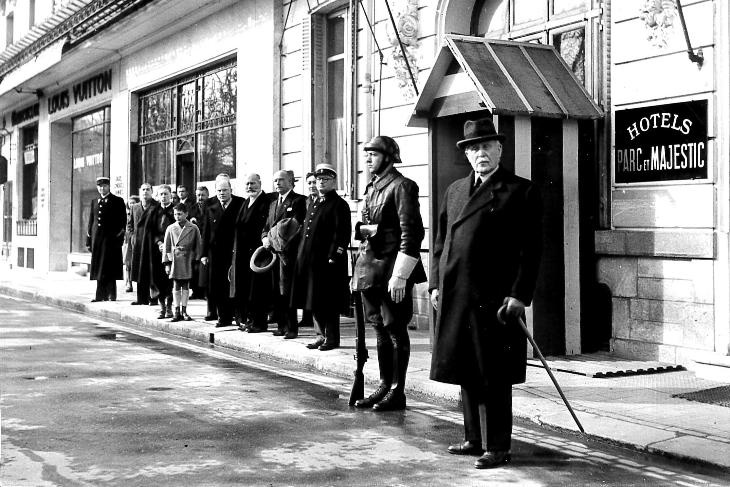
Renee rented a suite of rooms in Vichy’s best hotel, the Hotel Parc et Majestic, which also housed Marshal Petain, the Prime Minister of Vichy France, the French republic which governed the south of France and actively colluded with the Nazis. Renee was used to socializing with people at the very pinnacle of French society, and was sure her friends would protect her from the anti-Jewish decrees that targeted her co-religionists. She was sadly disappointed.
At first, Vichy officials forced Renee to move out of her fancy hotel, refusing to countenance a Jew living in the same building. Renee took daily walks and worked in her company’s Vichy store, maintaining a semblance of normality. In 1942, however, Nazi Germany took control of Vichy France directly. Renee appealed to her father’s old friend Colonel Rene Marty (who had signed her uncle’s Legion d’honneur certificate after World War I), who was living in Vichy, to help her to no avail.
Renee’s old friend Arlette Scali described: “She could not cope with all the goings-on, all the laws, and had been counting on Colonel Marty, the trusted administrator of her father, Alfred Van Cleef…. She was not only frightened, she was sick with fright.” (Quoted in Les Parisiennes: How the Women of Paris Lived, Loved, and Died Under Nazi Occupation by Anne Sebba: 2016.)
On December 11, 1942, all Jews in Vichy France were ordered to wear a Jewish star on their clothes. The following day, French police burst into her third-floor hotel room; whether they were seeking to question her or arrest her will never be known. Panicked, Renee threw herself from the window and died on the pavement below.
Becoming a Ubiquitous Brand
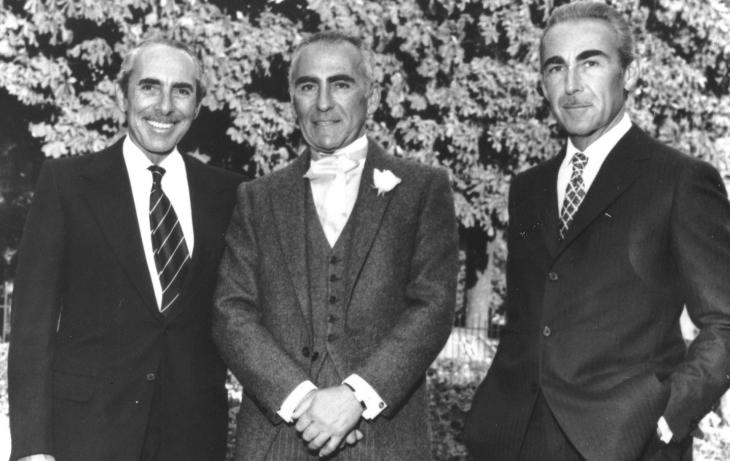
The Arpels family regained control of Van Cleef & Arpels in 1944 after the Allied liberation of Paris. Julien Arpel’s sons Claude, Jacques, and Pierre became directors. They continued to innovate, introducing playful animal and floral styles into the brand’s jewelry design. In 1956, Prince Rainier of Monaco bought a set of diamond and pearl jewelry as a wedding present for his fiancé Grace Kelly, giving the brand another boost to its growing prestige. In 1967, the Empress Farah Pahlavi of Iran flew Van Cleef & Arpels artisans to Iran to create a crown and necklace for her coronation made with gems from Iran’s crown jewels.
The last Arpels family members to lead the business would be Jacques Arpels’ children Philippe and Dominique in the 1990s. In 1999, the brand was sold to the Richemont Group, a Swiss corporation that owns many luxury brands.
Little memory remains of Van Cleef & Arpels’ Jewish origins. The company offers no Jewish-themed Stars of David or other Jewish designs. Among the company’s scores of boutiques around the world, not one operates in Israel.


