

Linda Argalgi Sadacka
For decades, American presidents tiptoed around the Israeli-Arab conflict, recycling the same tired talking points about a “two-state solution,” pretending the Palestinian Authority was a legitimate peace partner, and turning a blind eye to the corruption, incitement, and terror coming out of Gaza. Then came Donald J. Trump—and the Overton Window shattered.

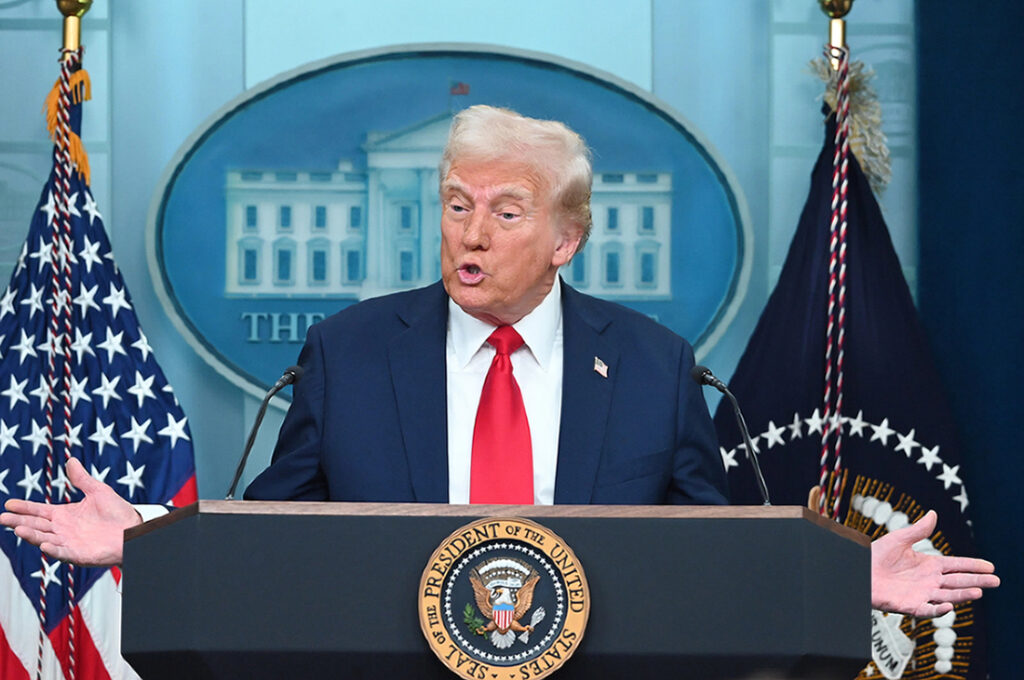
In case you’re unfamiliar, the Overton Window is a political theory that defines the range of acceptable discourse in public policy. What can be talked about. What can be considered. What’s “mainstream” and what’s “radical.” For decades, even to suggest that Gaza might one day be demilitarized or that the Palestinians could be absorbed by other Arab states was considered taboo. The Overton Window was tightly shut, bolted, and guarded by the foreign policy establishment, media elites, and the usual “peace process” parrots. Trump changed all that.
From Embassy to Abraham:
Trump’s Historic Recalibration
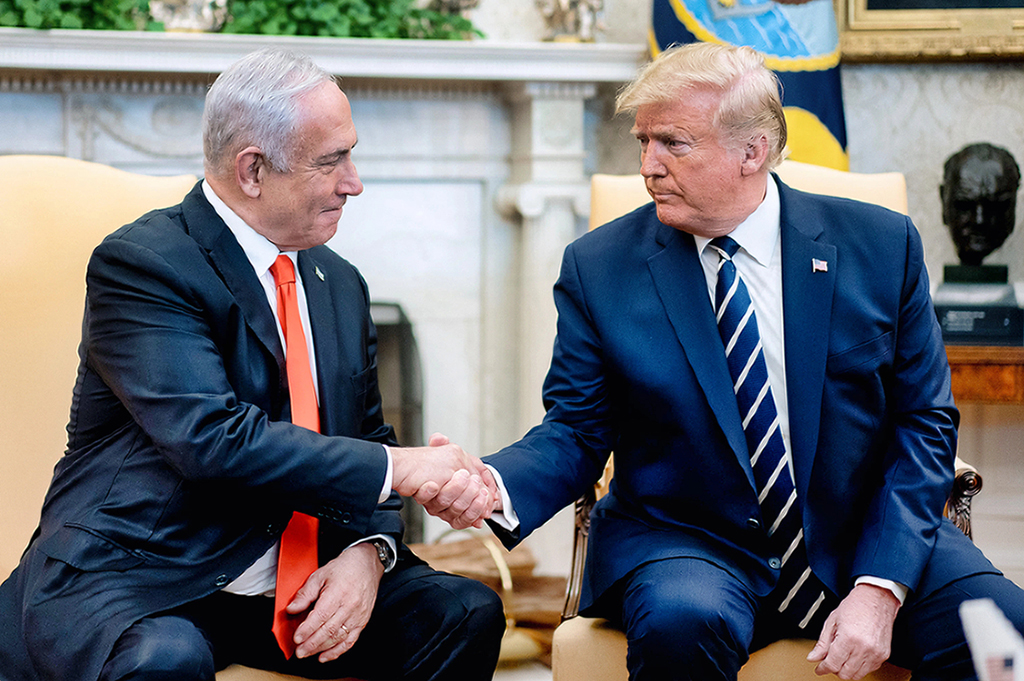
Let’s be clear: Trump didn’t just move the window. He blew it wide open and threw out the stale furniture. He started by doing what every president promised but never delivered: moving the U.S. Embassy to Jerusalem. The foreign policy class screamed it would spark World War III. It didn’t. It sent a message instead: America recognizes reality, and Jerusalem is Israel’s eternal capital.
Then came the Abraham Accords. One by one, Arab states began normalizing relations with Israel—not because of some pie-in-the-sky peace pipe dream, but because of strength, shared security interests, and economic opportunity. Trump demonstrated that peace in the region didn’t require bending over backwards to appease Hamas, the Palestinian Authority, or the terror-supporting infrastructure of Gaza.
He effectively sidelined the Palestinians—not out of malice, but out of clarity. You can’t build peace with people who glorify murder, raise their children to hate, and refuse to recognize your right to exist. Trump treated the Middle East like the real world, not a State Department simulation. And the region responded in kind.
The Gaza Wake-Up Call and the “Unthinkable” Conversation
Fast forward to October 7, 2023. Hamas—the terror government of Gaza—launched the most horrific massacre of Jews since the Holocaust. Babies burned alive. Women raped and paraded through the streets. Families executed in their homes. And yet, astonishingly, many in the West still clung to the fantasy of “Palestinian liberation” as a noble cause.
But for millions of people around the world, something clicked. The mask came off.
And suddenly, things that were once “unthinkable” are being openly discussed.
- That Gaza should be cleared of Hamas permanently — with no “day after” scenario that includes putting the Palestinian Authority back in charge.
- That the residents of Gaza—most of whom voted for Hamas and support terrorism—might need to be resettled in other Arab states.
- That maybe, just maybe, the so-called “Palestinian cause” has been a decades-long political weapon wielded by the Arab world to delegitimize Israel and destabilize the region.
This conversation would have been impossible ten years ago. Even five. But Trump’s presidency, his unapologetic support for Israel, and his willingness to treat the region like the strategic chessboard it is—not a fantasy novel—paved the way.
Arab States: No Longer Buying the Palestinian Myth
Here’s the kicker: some Arab nations are now more openly expressing what they used to only whisper behind closed doors—that the Palestinians have been given chance after chance, and instead of building, they’ve destroyed. Instead of peace, they’ve chosen terror.
And while leftist Western elites cry crocodile tears for Hamas, many Arab countries are showing a different calculus: they’d rather focus on progress, not perpetual war. The Abraham Accords were the beginning. What’s coming next could be even more transformative—if the window stays open.
Trump’s Doctrine: Clarity Through Strength
Trump’s gift wasn’t just policy—it was permission. He gave Americans—and the world—permission to say what they knew deep down was true: that Israel is the moral actor in the Middle East, that peace doesn’t come from appeasing terrorists, and that national sovereignty and unapologetic strength are not only acceptable—they’re necessary.
He forced the conversation out of the shadows and into the light. He normalized what was once off-limits. And while the D.C. class clutched their pearls, the world began to move on—from the broken Oslo frameworks, from empty U.N. resolutions, and from the lie that Israel is the obstacle to peace.
The Path Forward
As we watch new alliances form and old myths crumble, we owe it to ourselves to keep the Overton Window wide open. Trump made it possible to talk about real solutions to an intractable conflict—and one of those solutions may very well include encouraging Arab states to finally take responsibility for the decades-long political pawn that is the Palestinian cause.
The road ahead won’t be easy. But if we want a safer, saner Middle East, we can’t go back to the old rules. Thanks to President Trump, we don’t have to.
Linda Argalgi Sadacka is a political strategist, writer, and CEO of the New York Jewish Council. She serves as lead strategist for World Likud and is a candidate in the ZOA Coalition for the World Zionist Congress elections. A passionate advocate for Jewish and conservative causes, she is also the founder of Chasdei David, a nonprofit. Follow her on Instagram @lindaadvocate


