



The Wives of Israeli Soldiers
Sarah Pachter
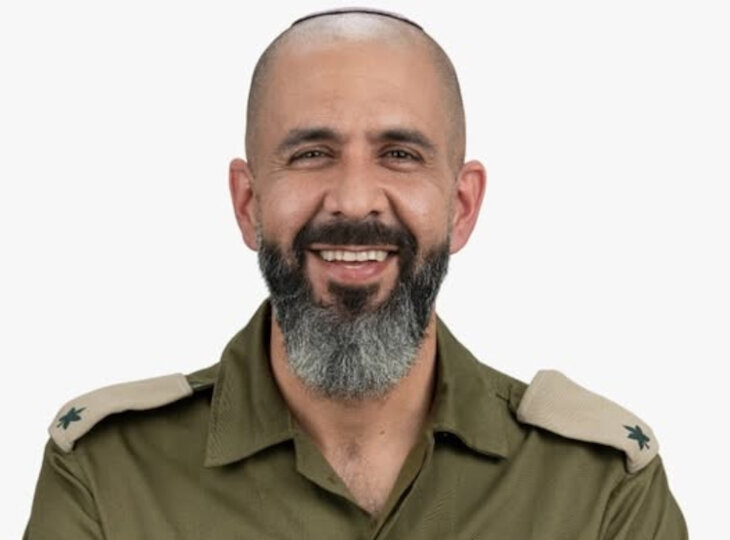
As reserve commander of the Operational Support Battalion of the 460th Armor School Brigade, Itai Naamat is responsible for transporting crucial supplies to the combat forces fighting inside Gaza. “It’s our responsibility to supply them with much-needed weapons, gas, water, and food,” Itai said in an interview with Aish. “Not only is this necessary for their survival but it also boosts their morale.”
Itai retired from active duty more than 20 years ago and serves as a reservist. After October 7, he felt he had to fight again. “On October 7, no one understood what was happening. I had to bring 350 soldiers to the base in the South. All my soldiers were looking to me for answers and I didn’t have any.” On Friday, Oct. 27, 2023, Itai led his 350 soldiers into battle. They sang Hatikvah, made Kiddush, and entered Gaza.
Even though Itai is not required to serve at his age, he feels a responsibility to his country. “This is my country. If I won’t do it, no one will do it. Consider this: If I had told my great-grandfather from Afghanistan 80 years ago that I would be an officer in the Israeli Army, he would have said, ‘You are out of your mind!’ It is incredible that today the Jewish people have an army and can protect themselves. I am one in the chain of the Jewish people. If I don’t do it, then in 20 or 30 years, the Jews will be forced to go back to where they came from – Afghanistan, Morocco, Lebanon… They won’t take us, and we won’t have a place to live. The Jewish people do not have any country. We have no choice but to fight.”



Fear in Battle
While Itai puts on a brave face, it hasn’t always been easy. “My scariest moment was when I lost three soldiers during a Hamas ambush. They put explosives near the road we were traveling on and they were shooting at us. I lost one officer and two soldiers, Uri Moshe Bornstein, Netanel Hershowitz, and Zvi Matitiyahu Maranz. It was devastating.”
After that tragedy, Itai needed to go back to the same area to bring supplies to the troops that were inside. “You know you need to be the first Hummer on the road. You have about 20 soldiers behind you, and a lot of trucks with food and fuel and supplies. As I was in the car approaching, I had a sinking feeling in the pit of my stomach when I thought about what happened just earlier that day in the same spot. This was my most frightening moment.”
Itai describes the gamut of emotions he experiences when fighting. “We have high hopes, devastation, and fear. I know that if I don’t arrive, my brigade won’t complete their mission. You can literally feel the eyes of your soldiers on your back. All of us are afraid, some more and some less. We all have to get over it and perform our mission. As a Commander, I have a lot of people trusting that I will do the job in the best way possible.”
My Wife Is the Brave One
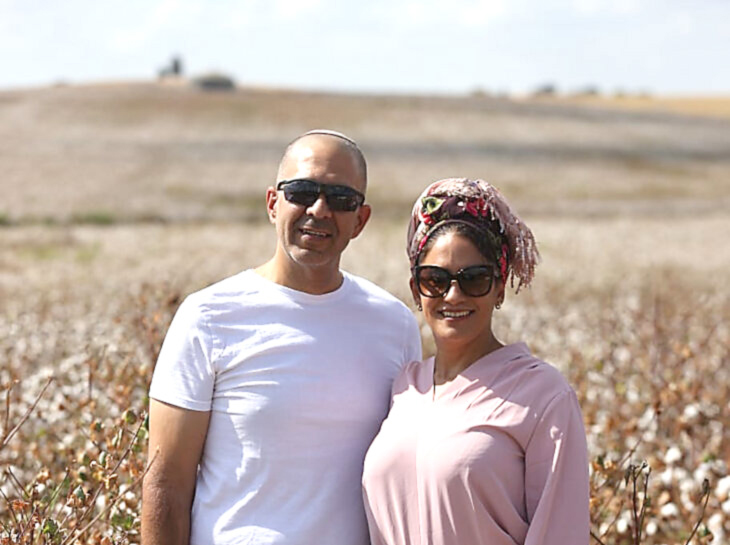
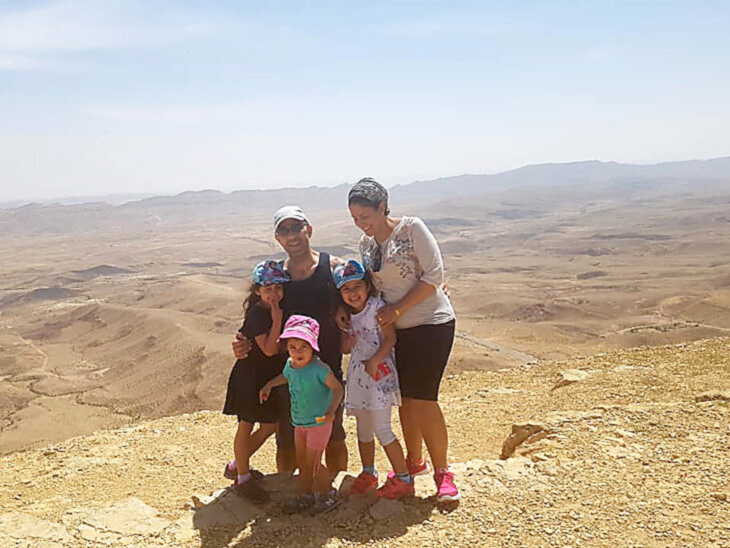
Itai maintains that the real hero of his story is his wife, Shimrit. “I’m a reservist, it’s my job. But my wife is the brave one. She works crazy hours as an attorney in a large Israeli law firm. She also takes care of our young kids. In the recent 17 months, she does it all alone. She is the bravest woman ever.”
On Wednesday, October 4, a few days before the massacre, Shimrit was diagnosed with thyroid cancer. “On October 7, the day of the horrible attack, I was called to fight,” Itai explained. “It was such a huge surprise and shock that I almost forgot about my wife’s cancer. I knew she would eventually need to have surgery, but we didn’t know when it would be.”
Itai had to handle the imminent danger in front of him first. “I have a lot of soldiers. I have to take care of them, and keep them safe.” Two weeks after the war began, when Itai went back to his jeep, the driver told him to call his wife. When Itai spoke to her, he heard that something was not right in her voice.
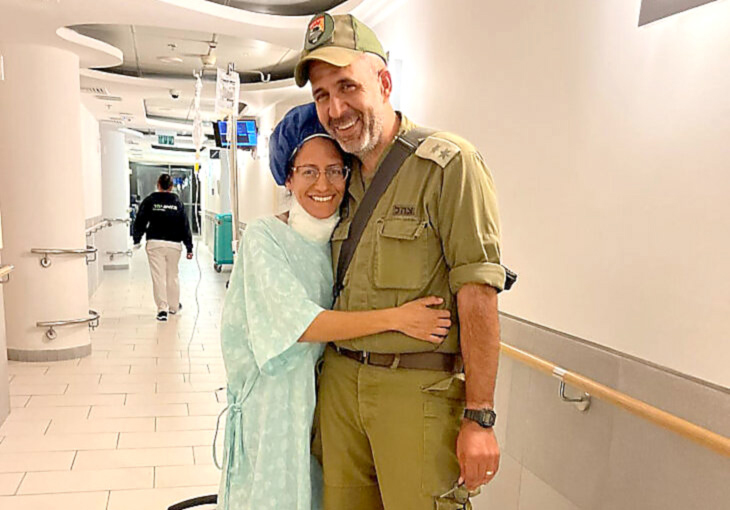
Shimrit told him, “I wanted to let you know that ten hours ago I had my surgery.” Itai couldn’t believe it. He had no idea that she had undergone the operation, all by herself. He gained permission to go to the hospital and see her. “I arrived at midnight to give her a hug and comfort her.”
Shimrit insisted that Itai immediately go back to his soldiers, despite his concern for her health. “This is my wife. She is the brave one between the two of us.”

Focus on the War, Not Me
Shimrit explained that after Itai left on October 7, she didn’t inform him of anything regarding her illness. She wanted him to be focused on the battle and the safety of his soldiers.
Shimrit’s friend, Anat, was a top surgeon at the same hospital where she was receiving her cancer treatments. Anat arranged an appointment for Shimrit to meet with a cancer surgeon. The doctor was supposed to fly to Poland the week after October 7 but because of the war, his flight was canceled, leaving him a last-minute slot for Shimrit’s surgery. He asked her if she wanted to take it.
Shimrit hesitated because she knew her husband would probably be in Gaza at that time. She thought it over and realized, I have to do it, and I have to do it now. Otherwise, the surgeon won’t be available later, and my health could decline.
“I wanted Itai to focus on the war and the soldiers. After all, he is not the one undergoing the surgery. He won’t be a big help to the Jewish People if he’s sitting next to me.”
Shimrit wasn’t afraid about going into surgery. “I didn’t have the time to be afraid. Plus, the doctor told me it was a relatively mild type of cancer.” She also made the difficult choice to hold off telling her children about the cancer. She didn’t want to worry them since they already had a father fighting in Gaza.
On October 17, Shimrit went into the hospital with her sister and had the surgery. “I was saying my usual morning prayers and hoping for the best. My sister and I were joking to keep our morale high.” The surgery was successful, and she called her husband’s driver afterward to inform him. “I told him, ‘Tell Itai I’m looking for him, but it’s not that urgent.’ That same night when Itai came to visit me at the hospital, he was crying. Don’t tell anyone—commanders don’t usually cry.”
Shimrit’s journey to recovery did not end with the surgery. “The real fear came when I had to do the CT scan afterward. The surgery wasn’t scary to me, it was the aftermath.” She and Itai recently found out that she has been completely healed.
Before learning she was in remission, Shimrit didn’t have time to dwell on her health status. She and her girls were busy volunteering, preparing and packing food for soldiers as well as packages for the families of the battalion. Shimrit organized a special day for the families of Itai’s soldiers. There was food and activities for both the mothers and their children.
Itai proudly shared, “It was a great day for my soldiers and their families. There was a Moon bounce, air hockey table, video games, cotton candy, and popcorn. While the kids were entertained, the women were able to enjoy a concert. All the children and mothers were given prizes and gifts. Shimrit arranged everything.”
The wives graciously told Itai, “This event gives us the assurance that you are taking care of our husbands, because if you remember the kids and us, and remember there is a family behind each soldier, we know our husbands are in good hands.”
There are many Israeli women who are carrying a huge burden at home while their husbands are fighting. Itai believes they are the real heroines of Israel and the beacons of light for the Jewish people at this challenging time. “We have to remind ourselves why we are here, and how the State of Israel is a miracle.”
Shimrit and Itai are among the quiet heroes that are holding up the Israeli Army and the Jewish People today.


